← The Team House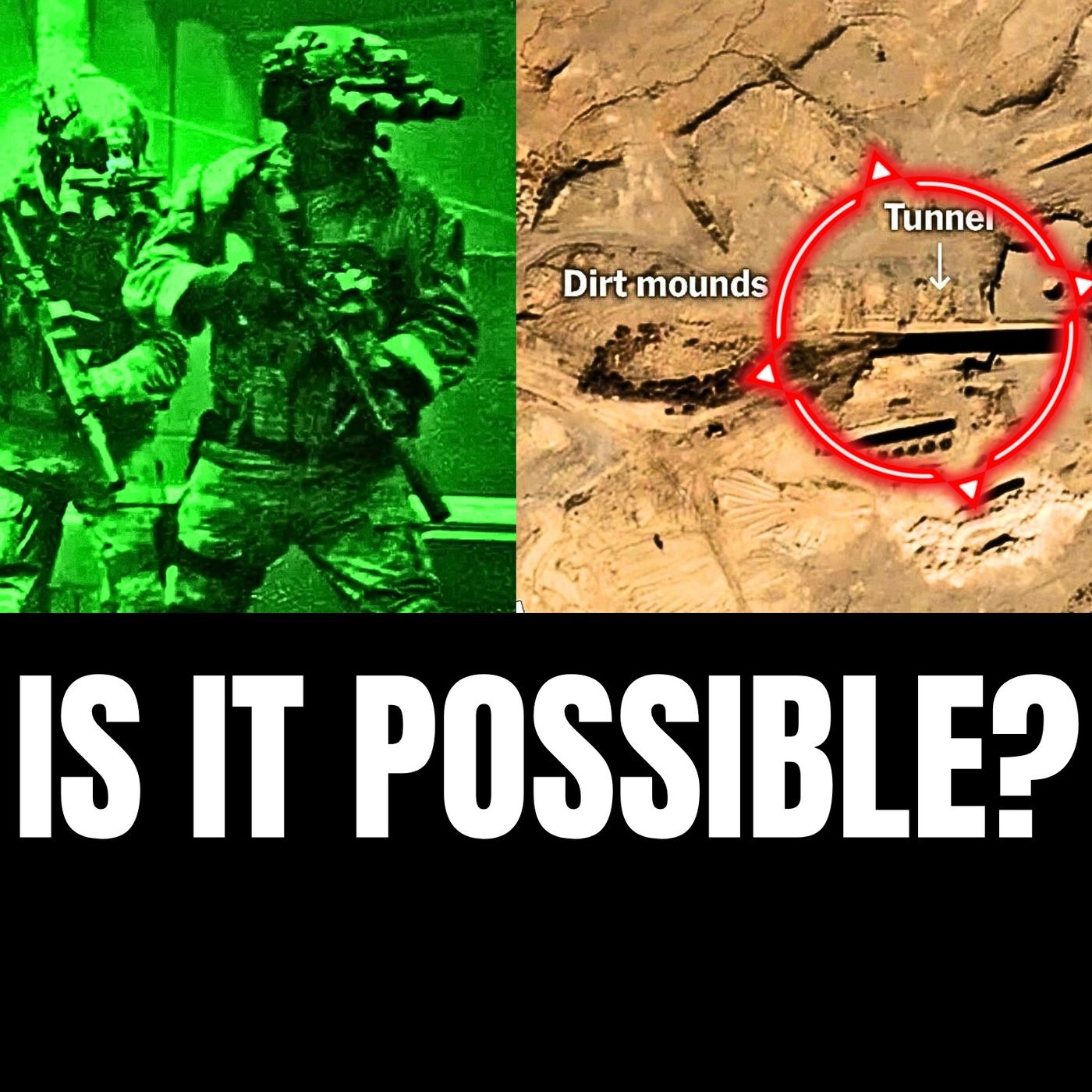
The Team House
Is JSOC Spinning Up to Capture Uranium in Iran? | EYES ON GEOPOLITICS
00:58:42
We break down the escalating war between the United States, Israel, and Iran, including strikes on nuclear facilities, the risk of a Strait of Hormuz blockade, and whether regime change in Tehran is actually possible. The conversation also dives into...
Loading summary
Transcript248 lines
- [00:01]
Ryan Seacrest
Busted appliance. This is your sign to upgrade shop
- [00:05]
Dan Morgan
at Lowes to get up to 35%
- [00:07]
Ryan Seacrest
off and next day delivery on hundreds of major appliances.
- [00:11]
Dan Morgan
Lowe's we help you Save.
- [00:14]
Ryan Seacrest
Valid through 318 while supplies last selection varies by location. Order by 4pm available Monday through Saturday.
- [00:19]
Mick Mulroy
Subject to availability, fees, exclusions and restrictions apply.
- [00:22]
Ryan Seacrest
See Lowes.com appliancedelivery for more details.
- [00:25]
Andy Milburn
Visit your nearby Lowes on Colorado street in Kennewick.
- [00:30]
Ryan Seacrest
Hey, it's Ryan Seacrest for Albertsons and Safeway. It's stock up savings time now through March 31st. Spring in for storewide deals and earn four times the points. Look for in store tags to earn on eligible items from Oreo, Haagen, Dazs, Charmin, Tide, Sparkling Ice, Reese's and Special K. Then clip the offer in the app for automatic event long savings. Stack up those rewards to save even more. Enjoy savings on top of savings when you shop in store or online for easy drive up and go pickup or delivery restrictions apply. See website for terms and conditions.
- [01:00]
Demetri Kontakos
Hey, what's up guys? This is D. Do us a favor and check out our patreon page. It's patreon.com the teamhouse. You get both Teamhouse episodes and Eyes on Geopolitics episodes completely ad free. You get them early too. You can ask us questions. You can also watch the team ass episodes live as we shoot them. So. And you help support the show and support what we're doing here. It's patreon.com theteamhouse those links are in the description or if you're listening, it's in the show notes down below. So you can click it real quick and easy and it helps us keep the lights on. So we appreciate it and we appreciate you guys listening. Thanks a bunch. Hey everybody. Welcome to another episode of Eyes on Geopolitics. I'm Demetri Kontakos. I'm here with Mick Mulroy, Jack Murphy. The Irish contingent of the Eyes on team house crew. Didn't do it on purpose, I swear. We might be joined by an Englishman slash American with Andy Milliburn soon. Let's get right into it. You know, still happening. I think we're like second week into like the US Israeli strikes on Iran. We just saw yesterday that they we started hitting some like oil infrastructure and stuff like that ton going on. There's also talk, there was initial talk about the courage getting in on the fighting in terms of as a ground force that kind of has gone. No like hasn't really materialized as of yet there is also some talk. There was a couple articles that came out yesterday that the President and the US are mull and Israel are mulling a special operations move to go and secure Isfahan, where, you know, all the. The enriched uranium is. You know, that is in j Socks wheelhouse. Obviously they train for that. So there's a ton more stuff going on. Let's just start off. Let's get up to speed, make what's going on.
- [03:01]
Mick Mulroy
There's a lot to cover.
- [03:02]
Demetri Kontakos
Yeah.
- [03:03]
Mick Mulroy
You could do a show on each one of those.
- [03:04]
Demetri Kontakos
I know.
- [03:05]
Mick Mulroy
Things you just listed off there. I guess we start from the beginning. I can see if you look at it from an Israeli point of view, if I was a national security advisor, if I thought I had the opportunity to dismantle the Islamic Republic, I'd probably take it. Right. And that's why they were going to go either way and they were going to unleash everything they had. And they would love the fact that they kind of pulled their big brother along with them. And we'll get to that. Right. But I think the interests are similar, especially the military objectives. Right. Degradation of the nuclear capacity, reduction of the ballistic missile stock and launchers and ability to make more manufacturing sites. And the navy, which of course, I think we're at something like 78 ships, vessels sunk right now. And that has to do, of course, with Iran's ability to blockade the Straits of Hormuz, which we can get into, which in and of itself could be a whole episode, but it diverges a bit because what I would be saying if I was in the White House would be we need to have very specific objectives. When we meet those objectives, we need to be able to bring it into this. It could be a pause, right. I'm not into chest dumping and declaring victory like on board a aircraft carrier, if you remember those days. I just say we have a pause, we see what happens, and then we really push for negotiations. And they can either do it or don't, and it's in their own interest because right now it looks like the regime is going to survive. The military objectives, we go a little bit about those and then we'll talk about some of the issues that we have to address. The military objectives, we struck isofan Fordow and one more with 12 mops. Right. We essentially buried the uranium, which makes it a challenge now to say that we're concerned about Iran get a nuclear weapon because we were successful. Right. We obliterated, but now we're concerned. Right.
- [05:15]
Demetri Kontakos
So it essentially like was Frozen since that, that strike. They didn't really like, make moves to continue their enrichment or whatever.
- [05:24]
Mick Mulroy
Right. There's some indication that they were starting to rebuild. Okay. And I'm all about making sure they never get a nuclear weapon. So I support the strikes on the nuclear facilities. The challenge, and we can do a whole other part on the JSOC operation. But generally speaking, units trained for what exists, not what's been demolished. So I'm not quite sure how that would go, but we can get in that separately. But degradation of the nuclear facilities, 100% degradation of the ballistic missile capacity, also the same thing. That's their biggest threat. They reach out and strike their, you know, their perceived enemies and with those missiles. And if they get to a certain point, they can overwhelm even the Iron Dome, Iron Beam, Thaad, Patriot, which of course are super expensive. Another whole topic, you know, you think about a PAC 3 is about $12 million shooting down a $30,000. But so that, that was important. And then the naval aspect I agree with. The other thing that they are talking about, which I think we should come off of, is a regime change. I would love for it to change, love for it to change. But simply telling unarmed people to go into the streets and protest is not going to facilitate a change. It's probably just going to get them all killed. I do think there's, and obviously I'm biased. This is what I did for 11, working a covert program, if that's in fact accurate reporting, to give the regime a dilemma. But I don't think, I think there's around 4,000 fighting Iranian Kurds. IRGC is over 200,000. The ash test is, you know, I don't know, the besieged alone's, you know, a million. I mean, you're, you're, you're fighting an impossible fight. You could be a gnat. You can give the regime a hard time, you can give them another reason to come to the negotiation table. But I don't think you're going to be able to facilitate a regime change from the air with just, you know, 4,000 fighters. And then, last thing I'll say before throwing it to Jack. And then Andy, I suppose the Straits of Hormuth.
- [07:36]
Andy Milburn
Right.
- [07:36]
Mick Mulroy
This is a problem. Gas is going up. 30% of the nitrate fertilizer comes through there. The whole world uses 20% of the oil. 20% of the liquefied gas, including 30% of Taiwan's liquefied gas comes from there. Right. So this is going to start having like. And I'm not an Economist, but you don't have to be an economist to, to realize that this is going to get worse and worse and worse. So another reason why I think the US can both claim they met their military objectives and also find an off ramp. And I think that's in our interest, maybe not in Israel's interest. That was Israel probably doing what they're doing. But our interest, I think is to find a way to get back to the negotiation table and potentially a better agreement than we ever expected.
- [08:25]
Jack Murphy
Yeah. So I mean, just a couple things that I would mention here is, I mean, I think one of the big ones is we're about a week in, I think, what is this? Day nine. So we're in the week two and we've run out of military targets to hit, it seems. So we're moving on to economic targets and even civilian infrastructure. That is debatable how legitimate the target is allegedly an oil refinery, allegedly a desalination plant. But then we also have Israel as plausible deniability, because did they hit it or did we hit it? And that's something that will come out in the wash down the line. But the point is we've run out of military targets and now we're having to look for other things to blow up. And it seems that although this isn't really a public dispute or feud right now, if you just listen to the public statements between President Trump and Netanyahu, they seem to be at loggerheads as far as what their strategic goals are, because Netanyahu is saying Israel is going to kill every successor that the Iranians put forward, whereas President Trump seems like he's looking and desiring Iran to put forward successors and he wants to have a role in choosing who it's going to be. So these goals are obviously incompatible. And as Mick pointed out, I mean, there's going to come a strategic conflict there about which direction we're going to go in. And quite frankly, I think Israel kind of dog walked America right into this conflict without any sort of long term planning or long term strategic goal. And now we're at a point where, you know, one of the, one of these views is going to have to prevail and probably it'll be something closer, you know, I suspect, to what Mick mentions. As the administration starts not seeing the regime change that they hoped for, they're going to start looking for an off ramp and declaring, and I think President Trump could declare victory in a sense. He probably already achieved the thing that he really wanted to achieve, which is killing the leadership element. Of, of the Iranian government and maybe he can move on. He's already talking about Cuba in public statements. As far as the, the JSOC piece of it, that is a mission that I've looked at and written about a little bit in the past. It's high risk, but these guys have trained for it extensively out at the Nevada test site. They go and do these full mission rehearsals where they'll jump in with all their equipment and go in and train to breach underground facilities. Like, I mean underground actually like blowing up bunker vault doors and things like this. And none of that's administrative. Like they do it with real explosives to train for exactly this scenario. And then they would have to go in and destroy the centrifuges or if it's some sort of other WMD facility, there's like chemical vats and things like that that, that would be destroyed during an operation like that in the context of Iran. I mean, and I'm not a, I'm not a JSOC planner, but when I think about it and I look at it, it feels like a one way trip. I mean you can get in there and you can do the operation, but my question is sort of how are you going to get out? So it is a high risk mission if they decide to do it. And as Mick pointed out, we've already hit those facilities I think numerous times. So it's even a question of like is there anything to breach or is it just a collapsed facility at this point filled with sand and dirt? And then the last thing I would point out is the Kurdish situation that we spoke with John Hackett on the last episode. And as Mick said, there's something like 4,000 to 3,000, some estimates put it as low as one able bodied Kurdish fighters in Iran. They are in several regions or one fairly small region in northwest Iran. And can you get them armed? Can you get them fighting? Do they want to fight? I mean, I believe they'll fight for an autonomous Kurdish region, but then there's the entire rest of the country. It's a country of like 90 million people and they would be fighting in non Kurdish areas. And how are the locals going to respond to that? The Iranians aren't as tribal as say the Iraqis are, but still it's going to be like you're carving out a Kurdish homeland like over in this, you know, other part of Iran. It doesn't make any sense. And it seems like the, you know, so called Kurdish resistance, at least for the moment is vaporware, that it's something that was proclaimed and declared quite loudly in the press over the last week. But it almost is like a coping mechanism because we don't have a plan for what comes next. It doesn't seem that they're even close to ready to get serious about that. So I'll pause there and, you know, let Andy jump into it.
- [13:24]
Andy Milburn
Hey, guys. Yes. I'll keep this short because very sadly, I find myself agreeing with Mick and Jack. But so rather just, you know, go over what they've said. I. I want to emphasize or ask this question, actually, because I don't know the answer. So, you know, we talked about the disparity between Netanyahu, Netanyahu's goals and President Trump's, you know, between Israel and the United States, because our interests are not. Are always 100% in alignment. And it's becoming clear here what I'm interested in. I'm interested in that, but I'm interested also in the fact that we're in the situation that Jack just described. I'll sum it up very briefly. Essentially, we, United States attained our military goals. If our military goals are confined to reducing Iran's capability, kind of a mowing the grass approach. But the fact that we've removed a significant amount of the leadership, Iran's leadership, we've reduced their iads almost to nothing. That's an integrated air defense system. We've clearly reduced, although who knows whether it's to zero. Their inventory of ballistic missiles and drones, their connection with proxies, their support for proxies has been reduced at the user end, right at the demand level that Hezbollah is, if not on the ropes, capability has been severely impeded in the last year or so. So all of these things, so the military side, all of these things that were perhaps, you know, practical objectives have been achieved. My question is this, what happens now? Right? I mean, are you guys getting a sense for whether the military and perhaps the intelligence community are saying, hey, boss, this is about it? You know, if we need to go further and continue this campaign, we need clearly outlined strategic goals. And if the strategic goal is regime change, as we've learned in the last couple of days, the recommendation, the intelligence community is that we're not going to get there from here. In other words, we're not going to get there from the air campaign. And as Jack just described it, hopefully someone is also saying we're not going to get there even by backing 4,000 Kurds, because that is a drop in the bucket. Does anyone sense, Is there any talk of this tension at the nexus between military leadership and political leadership, that nexus that has failed us so often before.
- [16:16]
Jack Murphy
There was a story that came out, maybe it was in the New York Times a day or two ago about how the CIA was warning the White House prior to initiating this campaign that it wasn't going to work. Hey everyone, I want to tell you about my new novel the Most Dangerous man out in June. It is a novel about a Regimental Reconnaissance Company soldier who gets kidnapped while he's on a mission to West Africa and when he wakes up he finds that he is now being hunted for sport by a group of tech billionaires through the wilds of West Africa. This book is based on stories that I heard over the years about safari guides taking wealthy clients hunting for poachers on game reserves in Africa. I took that and I took a century old short story, the Most Dangerous Game and modernized it and the product is this book which I think will feel contemporary and resonate with audiences today. Thank you and please check it out.
- [17:18]
Ryan Seacrest
Hey, it's Ryan Seacrest for Albertsons and Safeway. It's stock up savings time now through March 31st. Spring in for storewide deals and earn four times the points. Look for in store tags to earn uneligible items from Activia, General Mills, Nature Valley, A and W, Monster Energy, Coffee Mate and Pete's Coffee. Then click the offer in the app for automatic event long savings. Stack up those rewards to save even more. Enjoy savings on top of savings when you shop in store or online for easy drive up and go pick up or delivery restrictions apply. See website for terms and conditions. Are you a fraud paying American? It's a fact that one in four honest, hard working, taxpaying Americans has been a victim of identity theft. With Lifelock Identity Theft Protection though, if your identity is stolen they fix it guaranteed and get you your money back. Last year the IRS flagged over $16 billion in refunds for identity fraud. That's billions of dollars that could come from your salary, overtime or second job. But this year you don't need to stay a victim. LifeLock monitors millions of data points per second for your personal information and alerts you to threats you could easily miss on your own. And if your information does fall into the wrong hands only, LifeLock has US based work restoration specialists who are backed by the million dollar protection package. Because this tax season, fraud paying American is something no American should have to claim. Visit lifelock.com iheart and save up to 40% your first year. That's 40% off@lifelock.com iheart terms apply day or night.
- [18:51]
VRBO Announcer
VRBoCare is here 247 to help make every part of your stay seamless. If anything comes up or you simply need a little guidance, support is ready whenever you reach out. From the moment you book to the moment you head home. We're here to help things run smoothly because a great trip starts with the right support. And, hey, a good playlist doesn't hurt either.
- [19:31]
Mick Mulroy
As far as regime change goes.
- [19:32]
Ryan Seacrest
Right?
- [19:33]
Andy Milburn
Right.
- [19:33]
Mick Mulroy
Yeah, yeah, yeah. I think you're right, Jack. I think the. The intelligence community, CIA has said the regime is likely to stay in place because think about it. I mean, that's why I think they start talking about the ground force. But that's not enough of a ground force, not even close to right. And if I was the Kurds, there'd have to be some serious promises for getting involved in this thing because it could easily turn south on them fast. But I think that the chances of the regime surviving are probably more importantly, the IC thinks that the chances of the regime surviving is high and it might be mostly controlled by the irgc. I think there is a power struggle. We're seeing the president, you know, apologize and then immediately another element in the government say, don't pay any attention to the president. He doesn't control the military. We're not going to apologize for any of it. Right. So I think what's happening is you've got like Laranjani's former irgc, the Iraqis, you know, the foreign minister, irgc, they want to take control. Yes. There'll be maybe another supreme leader picked in the next 24 hours, but I don't think he'll be the same type of leader as Khomeini. Right. I think he's going to be like, sit there, shut up and say prayers. The IRGC is going to run this stuff because this is how we got into this. Right. Because the irgc, even though I. I'm one that thinks they should never get a nuclear weapon, they're the ones been pushing for them to get a nuclear weapon, Right. So we might. Might end up with a worse scenario, at least as far as attitudes toward us, but a much better scenario in that they don't have the capacity to do much about it. So that's why I think the US Needs to step up. I mean, step up in the sense that our foreign policy should be our foreign policy, understand Israel's. Understand. If I was them, I might be wanting the same thing. But we're not going to get led around. Right. We're the U.S. i think we should decide. We meet our military objectives, we move to a pause, we try to get this back on the diplomatic track, which means the intelligence agency's got to talk first. And then once they get something going, they throw it over to the traditional side, which is the Foreign Ministry and, you know, State Department. But that's why I think we should be going. I also think we need to get our stuff in one sock when it comes to messaging. I mean, the idea that, you know, it was an imminent threat because they had ICBM. Oh, wait, that's going to take 10 years. That's not imminent. Wait, they were going to attack us first? Nope. The IC just briefed Congress that that wasn't the case. And then the idea that Israel's going to attack them, so they're going to attack us. So now we have to go to war because Israel wants the war. That was not helpful at all. And then the President talked that back. Right. They need to have one message and just keep saying it. Not an influence guy, but that needs to happen and might as well just call it a war. You've named it the War Department. The President keeps calling it a war. You just get in arguments with the media and then you're countering your own argument literally in the next press conference. So this is small potatoes, but the messaging is.
- [22:36]
Jack Murphy
Needs to get the other like, no, no word that they really don't want to use is regime change. But they keep talking about changing the regime. And so the double talk is, at best, it's confusing.
- [22:47]
Demetri Kontakos
Unconditional surrender, too is.
- [22:50]
Jack Murphy
Yeah, yeah, yeah.
- [22:53]
Andy Milburn
And some kind of explanation to the American people, or at least certainly to elected representatives. All right. Which whatever shape or form that that takes on what the strategy is, rather than kind of opaque comments about how long this could last and you know, and just kind of double tap what everyone's been saying here. I mean, the Iranian regime is going to survive because it spent four decades building a system designed to survive. Right. To resist external pressure politically, militarily, economically. I mean, that it's just so firmly embedded, as we said. It's like all the surviving regime has had to do is close all water type doors. Right. It's the contingency plan and will emerge from this. Although how else Iran will emerge from this is anyone's guess. Yeah. Coherent strategic messaging for the domestic and international audience and for Iran.
- [24:01]
Mick Mulroy
And I support it. I just think we need to fix that.
- [24:04]
Andy Milburn
Yeah, undoubtedly. I agree. Good things have happened. I mean, guys, you know, Nick, of course, you're familiar with this. But I mean, the plan is not a new plan. The plan has crossed many administrations. It's not something that was pulled out in the last few weeks, months. And the plan was there for a reason, because we had national interest at stake. But arguably now we have, you know, we've assuaged those national. Those interests as much as we can through military force, and it's time to perhaps declare victory.
- [24:44]
Mick Mulroy
Another side issue we probably should touch on is the fact that Russia is providing intelligence to the Iranians.
- [24:49]
Demetri Kontakos
Yeah, I was going to bring that up, too. Yeah.
- [24:51]
Mick Mulroy
Oh, okay. Yeah. Do you want to summarize that?
- [24:53]
Demetri Kontakos
Yeah, sure. There were reports saying that Russia was basically providing targeting information to Iran on our positions. Asked about it, the president kind of spun a little bit, said like, oh, Russia, we do this to Russia and Ukraine, so why wouldn't they do that to us? Which is insane for a fucking US American President to say about Russia. You know, clearly Russia is the enemy. They've started a war in Ukraine, unprovoked war. And we should continue to support Ukraine with everything we can possibly do. So, yeah, that's also another little wrinkle. Another thing was, you know, about a month ago, the president was, you know, berating India about buying oil from. From Russia, put tariffs on that, and now they have lift the tariffs and ease sanctions on Russia to be able to sell oil to India. So another little, I guess, piece of blowback, economic blowback anyway, is there's money going into Russian pockets that are still going to continue to fuel the war in Ukraine. So, yeah, there's that little tidbit.
- [26:10]
Mick Mulroy
So we have a friend and we have a foe. Right. So Ukraine is our friend and they're willing to send folks during the time of war and we should come back to Ukraine war because there's actually stuff happening there. They're willing to send us to help us and our partners that are getting attacked because of our war to help them. And then we have Russia, who's willing to give very detailed, exquisite intelligence on the location of our naval assets. They're very hard to hit, but they're a lot easier to hit with that kind of intelligence. That's beyond just a foe, that's an enemy. The idea that we justify them attacking us because some, you know, because we're helping Ukraine is, I mean, maybe as an objective observer, you could say that, but certainly not as the commander in chief of the US Army, Navy, Air Force and Marine. Right. Your. Your responsibility to protect us, period, or us being the US Military. So there is no justification for providing critical intelligence to our enemy that could use the target and God hope they don't actually, you know, get successful because there's talk about us escorting tankers through the Straits of Hormutz. Right, what's that at like 21 km or something like that? Like we're going to be super vulnerable. Right. So and if they got intelligence of where are we going to be, where they can place mines, they can place a mindset detached to come up right at the, I mean there's all sorts of stuff that they could do based if they have the type of information they need to do the targeting and if Russia is providing it, we need to be giving them a straight up warning to the intelligence channels, which you know, is usually believed like you do, this bad thing's going to happen. Super bad things going to happen to you. Not just making, you know, okay, well they're going to do what they're going to do.
- [27:58]
Andy Milburn
Hey, you know, on that point Mick mentioned countries within the Middle east asking for Ukrainian help specifically. I think that was Bahrain and UAE and perhaps Jordan, I can't remember. But you know what that emphasizes again, aside from the fact that Ukraine's kind of a natural ally rather than Russia? What it emphasizes I think is that the United States and our allies were just not prepared for the scale of drone attacks. I know that seems like we're stating the obvious, but the real issue here, and it's just going to get worse, is there's a lot of talk about cost matching with a Patriot interceptor. A million dollars a pop against a $10,000 Shahad drone. I would argue it's not so much about cost for the United States, it's about magazine depth. Right. How many defensive shots you actually have available. And clearly. And also the fact that it's a mismatch of capability that high end defenders like Thad, like Patriot are just simply not the most effective counters to, to drones. You know, the low altitude, slow, relatively slow moving, small radar intersections. So there's, there's clearly a gap in, in our capability and the capability of our, of our allies.
- [29:25]
Demetri Kontakos
Andy?
- [29:26]
Andy Milburn
Yeah.
- [29:27]
Demetri Kontakos
I have a question for you. What do we use outside of Patriot? We're not using Thaad missiles on Shahid, I hope because we have like 200 of them in total. Are we using just C Ram? Is there other things? John Hackett last week mentioned that we do have capabilities that are classified that we don't really want to show. So we, instead of using that stuff, is it just cram, like what are we using?
- [29:52]
Andy Milburn
No, I mean There are, you know, and I don't have John's expertise, but yes, there's a, there's a spectrum of capabilities, all right? Kinetic, non kinetic. Yes, there is a layer of UAS defense. My point is it's not effective enough. Right, because we're still. And again, I mean, this is, I'm not getting into classified info. I don't have the classified info and don't have access. And if I could, I couldn't discuss it here. But the point is, clearly they're not effective because enough drones are still getting through. Right. Even when those drones have to travel however many thousands of kilometers it is. So there's plenty of time for interception. These aren't, you know, for the most part, aside from in Iraq, these are not short range attacks. So. And we're dealing with an enemy whose inventory of drones has been vastly depleted. We're not going against, you know, a major power, and yet we're still struggling to, to intercept all those drones coming in. So clearly our short range air defense isn't where it needs to be, regardless of how much classified shit that we have. All right? And so my point is that on the other hand, Ukraine has been dealing with this kind of exact inventory problem for years, right, in the war with Russia. And they're doing it pretty effectively with $1,000 interceptors, interceptor drones. Right. And with help from U.S. companies. And yet we haven't adapted this technology as if we have. We haven't done it on scale, so we haven't done it quickly enough. And I think the events of the last couple of weeks have been evidence of that. You can say, well, there's been very few casualties. There have been very few casualties. But on the other hand, we're dealing with an adversary on the ropes and we still can't stop these things from getting through. And the Iranians aren't at the high end when it comes to target acquisition and direction of drones. They're pretty good in other areas and they're getting help from the Russians. But my point is this does not all go well if we go against a peer competitor with mass use of drones. And so, yeah, so the Gulf states are kind of bypassing us now and turning directly to Ukraine. Zelenskyy has said, yeah, sure, we'll help you. And you know, and the Ukrainians have been remarkably successful. And when you look at the scale of drone attacks on Ukraine, on Kiev alone, and the fact that the interception rates, they are, well, they're very impressive. But we didn't reach out to Ukraine beforehand We know that for sure. Well, we don't know that for sure, but there was an article in the Atlantic by Nancy Yousef in the last few days who pointed out that Ukraine is now offering it out, but we haven't reached out beforehand.
- [32:46]
Mick Mulroy
A phenomenal journalist, I'd add. Nancy Yousef, that is the other part about Ukraine is they are starting to take back territory. There's so much other stuff in the news that we're not talking about it. And Russia's advance have, in, in certain sectors have slowed. Right. So it's, it's actually, I'm not saying, you know, it's, it's all over and we should, you know, help them celebrate, but that is much better than the opposite. Right. So we should, we should increase our support to Ukraine, period. And we should help them capitalize on the gains they're making. And right now, I mean, Russia's at what, 1.2, 1.3 million casualties in this, by the, I think the UK's estimate. They're not going anywhere. The Ukrainians aren't going anywhere. They have not only fought Russia to essentially a standstill, they've become the most effective military in Europe, period, period. So they're now, not only should we just be supporting a partner because they're a partner, but they would be a great ally for the United States. They're an exceptional military and they have more experience probably than any right now. So that's why to Andy's point, all these Gulf countries are going to them
- [34:00]
Andy Milburn
Vice US we sometimes seem collectively, perhaps it's arrogance, I don't know. But reluctant to learn these lessons. And I'll give you a quick example. The. So in, in the, in the offensive right of, way back, it was the summer of 2004, sorry, summer of 2024, Ukrainian offensive. You know, the UK and the US have provided Ukraine with all this training, all this breaching equipment. And, and then afterwards, when the offensive didn't achieve its objectives, our comments were whether Ukrainians didn't use our assets the way they were supposed to be used. And all of our focus, our filter, was through the combined arms breach that we used to practice for the Cold War. The things that, remember, we do in the marine Corps in 29 palms. It's a very set piece. Sosa. You lay down obscuration, you lay down suppression, you do this, you do that. But it never occurred to us that our methodology might just be obsolete. Right. On a transparent battlefield. And the Ukrainians learned the hard way. We kept saying, well, they didn't listen to Us they're just not experienced enough in combined arms. The Ukrainians learned from that. And now the way they launch attacks or they defend attacks is quite different. When they launch attacks and the Russians too, it's in these penny packet assault groups, right? On quad bikes, on motorcycles, having the idea they have a very low profile, right. These guys are all and the way down to individual camouflage, total face fails because drones can identify faces. I mean just the techniques, tactics and procedures at the tactical through the operational level that have been developed in the conflict. We haven't looked at this and we haven't adapted it and we've been too dismissive saying yeah, but those things won't apply if we go to war with China. Well, a lot of them will probably will apply, but we just, yeah, we just seem reluctant to do this. And drones are just one example, right. Why don't we have an inventory of interceptor drones at $1,000 a pop with a 99% interception rate. Why are we still relying on these old on high end interceptors combined with a few exquisite platforms that we can't afford to spread liberally or out through every place that needs it?
- [36:48]
Mick Mulroy
Good point. What is the answer for that? Is it just because we think it has to be expensive to be worth it?
- [36:55]
Demetri Kontakos
I think we talked about it like. Andy, you've mentioned it about the procurement process, right?
- [36:59]
Andy Milburn
Yeah.
- [37:00]
Demetri Kontakos
Isn't like the procurement process super slow?
- [37:02]
Andy Milburn
It is. We keep saying we're going to fix it. Mick's got a good point. I think we've got this kind of attraction to expensive shit, right. I mean we've never, I mean we developed the Pred and that was like $30 million a pop. And we thought, okay, that's it. Right. And if we didn't realize it only
- [37:24]
Mick Mulroy
went up from there, right?
- [37:26]
Andy Milburn
Yeah. And it suddenly became more and more and obsolete to the point where we wouldn't fly, we would, we wouldn't fly high end ISR platforms over areas with, with a strong EDA threat. I mean that happened, right? And Mick knows this is true. So it came to the self defeating. But the whole point of having unmanned systems is that they are ultimately expendable. At least they're more expendable than manned systems. Right. I think we can all agree on that. And yet we don't manufacture them that way and we don't treat them that way.
- [38:03]
Mick Mulroy
And we need to start
- [38:07]
Andy Milburn
to include unmanned tanks.
- [38:08]
Demetri Kontakos
Yeah, here, here. I don't know, let's start an unmanned tank company. Let's get in on it, I think.
- [38:14]
Andy Milburn
But I Want to.
- [38:15]
Mick Mulroy
Israelis already started an unmanned tank, didn't it?
- [38:18]
Demetri Kontakos
I think so.
- [38:19]
Mick Mulroy
Heck yeah.
- [38:20]
Andy Milburn
Yeah, the Ukrainians have developed an unmanned tank. Pretty impressive by all accounts. You can look it up on YouTube video. Heavily incorporates AI for targeting and navigation. And it's exactly what you need in any environment where you're using infantry or I mean any environment. Right. You've got a rolling, stable, relatively survivable, very capable gun platform to support maneuver, direct fire gun platform, which is really what tanks provide and the gap that is left when we abandon tanks.
- [39:03]
Mick Mulroy
Yeah, and once you take out the people, then the cost of the actual tank itself goes down considerably. A lot of the expenses to keep people alive inside the tank. And we do tactical training out here in Montana and we have started incorporating lessons learned from Ukraine. Andy said a couple of them, but another one we hear a lot of is they don't want any more armored personnel carriers. Like those things are death traps. They'd rather drive a motorcycle. Like they put their whole platoon on individual motorcycles, disperse and then, you know, consolidate, you know, prior to whatever objectives they're going after. But they, the expensive Bradleys, et cetera, at least from what we're hearing. I'm sure the Department of Defense is collecting their own information, but they don't want them. They just don't want them. It's too expensive. They drive. I mean, think how many motorcycles you could buy, electric motorcycles you could buy for the cost of a Bradley.
- [40:01]
Andy Milburn
Yeah, and it's as simple, it's, it's an understanding of the enemy's target prioritization. Right. You, you stick whatever it is, you know, you stick 10 dudes in a, in a Bradley, which is a high end, expensive system, and you start rolling across the, the battlefield now you've become a target. But it's a much more difficult targeting proposition when you've got 30, 40, 50 dudes all tearing towards an objective from different directions. Even if you pick them all up right, I mean, you just don't have enough systems now to intercept. And you got to target prioritization calculus becomes that much more difficult. Yeah, it's really interesting. But before we get more on the serious stuff, I just want to welcome Jack and say Jack, your social media feeds I recommend to everyone because they are hilarious. They're very acerbic, quite rightly acerbic and cynical about all the, some of the chest beating rhetoric out there from those who are perhaps least qualified to beat their chests. Who had the most narrow and sunken chests seemed most prone to chest beating. I should say,
- [41:31]
Jack Murphy
are you talking about the post I made about how I've seen military veterans kind of oscillate back and forth, being pro war and anti war, depending on which way the wind is blowing.
- [41:42]
Andy Milburn
That's right.
- [41:43]
Jack Murphy
I mean, yeah, just briefly on that. I mean, what I was commenting on was that, you know, during the war, the war on terror, you know, and I include myself in this to some extent. You know, we were all gung ho, you know, kill the enemy. And some guys were all into the Spartan warriors and the Templar Knights and all this sort of stuff. And then after, you know, they left service. And I would include myself in this to some extent also. Again, you start reflecting on the wars in Afghanistan and Iraq and you get kind of angry about them. You get kind of angry with your government. And there are some reasons for that, some good reasons, I think. And a lot of guys, So a lot of guys I saw went from being very pro war to being very anti war, actually. And like, even some of it plays into the, like, America first, like we got to take care of America here and not be fighting these Middle Eastern wars. And it's sort of dismaying to see in the last month or so, I mean, all of those guys kind of swing right back to supporting a seemingly endless war in the Middle east that doesn't have any strategic end state, at least none we've been told about. And it's very. That's a very disorienting thing to see and to be a part of, to some extent.
- [43:01]
Andy Milburn
Well, you made a good point. I mean, I think the. This primary motivator now is politics. Right. More so than a decade, more so than two decades ago. Even among veterans, I've noticed big change, perhaps especially among veterans and perhaps among active duty troops too. I think just the politics has become the deciding point on, on how you judge any of these foreign adventures. It's what the rationale has been behind them.
- [43:38]
Jack Murphy
What I was saying was that we sort of use politics today to fulfill a role that we used to use religion for in the past. We use politics to seek reassurance and affirmation. And in my opinion, that's really looking in the wrong place for those things.
- [43:56]
Mick Mulroy
So, I mean, I'm not political, but I hope the trend toward independence continues. Right. You're seeing it with the young people, in other words, not necessarily tied to a political party, because just speaking as an American, we should be able to rationally decide each issue based on the issue, not just ask what you're supposed to think. And then that's your position, because you don't actually have to think to do that. You can just say whatever that guy said or galaxy. Hopefully Americans go back to and get their independence from political parties. Not just independence from tyranny, but it
- [44:35]
Andy Milburn
involves seeing the wider picture, doesn't it? So, for instance, it involves when the Senate refuses really to debate the Iran war, the rights and wrongs of the Iran war, whether the executive has overstated, stepped its limit, it becomes a kind of. It becomes yet another political battleground. And what those perhaps on the right don't realize is that by kind of saying, hey, that doesn't matter, we don't need congressional oversight, you put yourself in the position where any administration can do the same.
- [45:12]
Mick Mulroy
But maybe they should adjust the War Powers act to say if you don't act, then you just endorse the war.
- [45:18]
Andy Milburn
Yeah, yeah, exactly.
- [45:19]
Mick Mulroy
They're within a certain amount of times. 60 days, I think, is what's in there. But if you don't, if you don't act to, you know, either stop the war or continue the war, then you're complicit.
- [45:31]
Demetri Kontakos
Yeah.
- [45:31]
Mick Mulroy
Listed and we. That is a declaration of war by the. Because Congress doesn't want, politically, they don't want to actually claim any ownership so that they can let her sit later, say, it wasn't us, it was him.
- [45:43]
Jack Murphy
Isn't that like the most bizarre thing of all of this is, you know, I mean, not that we have a particularly high expectation for Congress, but this, this position they've chosen of like, we don't support the war, but we also don't not support it. What is going on here?
- [45:59]
Andy Milburn
Yeah, it's. It's just too difficult.
- [46:02]
Jack Murphy
Yeah, it's just too much. It's just too much, guys.
- [46:06]
Mick Mulroy
And then the fact that, I mean, if you look at the War Powers act, every president, not just current president, has said it's not unconstitutional. Well, there's a means to find out whether it is constitutional. It's right across the street from Congress. Like, why don't they just decide? This is like the core thing of any federal government. Right, right. War or not, the idea that we're still. And that was passed in 1972, and so presidents comply with what's laid out in it, but they don't agree that they actually have to. So why hasn't the Supreme Court decided under the Constitution, which is their job, whether the War Powers act is constitutional or not? The idea is still. That's still a mystery. Is a mystery to me. Right. Because that is like one of the number one things in Article 1 is the power to declare war and raise and support armies and navies. Right. For Congress. And one of the first things in Article 2 is the President as Commander in Chief. So how is that supposed to actually work? Does the President get to be the one to declare war and be the Commander in chief or does Congress actually have a constitutional responsibility? Right, and that's what the War Powers act was supposed to address. But it's still a mystery on whether it's, you know, binding on the Commander in chief.
- [47:25]
Demetri Kontakos
I read a hilarious tweet. It said, I wish Congress was alive to see this. Oh, thank God. Yeah, thank God Congress isn't alive to see this. Which is funny, but it's kind of sad too, you know, like they're not doing their job.
- [47:39]
Andy Milburn
It is. Hey, I'd like to pick up on something, you know, Mick mentioned about when we started talking about Ukraine briefly and, and Mick said, hey, the, the tide appears to be turning there. At least things aren't as dire for Ukraine as perhaps the US is made out. And I think absolutely that's true. I mean it's not that Ukraine's about to conquer Russia or even quickly retake all territory, but instead it's clear that Ukraine is perhaps winning in the strategic sense. Preventing Russia from achieving its objectives while imposing really harsh long term costs. Right. I mean, think about it. So Russia's failed in all its core strategic objectives. Toppling the Ukrainian government, installing a pro Russian regime, destroying Ukraine's military, preventing Ukraine's integration with the West. All right, those were the stated objectives and in fact none of those have occurred. And if anything, Russia strengthened Ukraine, certainly strengthened NATO. We've talked about it. Ukraine's army is now the most powerful in Europe, as Mick said, expanded dramatically. NATO's expanded and Ukraine potentially is moving towards EU membership. Meanwhile, the Russian offensive has stalled. And how long have we been reading about Russian forces closing on Pokrovsk for instance, which every time I mention that town I have to mention it's a shithole because one of our favorite listeners is from there and gets incensed every time I do that. It is indeed a shithole. Pokrovsk is a horrible, horrible place. And it's worse now. But the Russians have failed to take it and they've been trying now for 18 months. Okay, so they've, they, they've, they've advanced. I think it was, it's like a kilometers, right, Total square kilometers in, in all of February, which is apparently the slowest according to Rusi, slowest progress in two years. And multiple of their attacks have failed. And Kharkiv, you know, across the front in Donbass.
- [49:57]
Ryan Seacrest
Hey, it's Ryan Seacrest for Albertsons and Safeway. It's stock up savings time now through March 31st. Spring in for store wide deals and earn four times the points. Look for in store tags to earn uneligible items from Lays, Jack Links, Cheez It, Classico, Hidden Valley, and Best Foods. Then clip the offer in the app for automatic event long savings. Stack up those rewards to save even more. Enjoy savings on top of savings. When you shop in store or online for easy drive up and go pickup or delivery restrictions apply. See website for terms and conditions.
- [50:25]
VRBO Announcer
Early birds always rise to the occasion for summer vacation planning because early gets you closer to the action. So don't be late. Book your next vacation early on VRBO and save over $120. Rise and shine. Average savings, $141. Select homes only. You know what they say, early bird gets the ultimate vacation home. Book early and save over $120 with VRBO because early gets you closer to the action, whether it's waves lapping at the shore or snoozing in a hammock that overlooks, well, whatever you want it to so you can all enjoy the payoff come summer with VRBO's early booking deals. Rise and shine. Average savings, $141. Select homes only.
- [51:11]
Andy Milburn
So they clearly, they can't break through. Even if they could. Even if they could form a penetration, they don't have enough. But they don't have a tactical or operational reserve to exploit it. And we talked about they're losing tens of thousands of soldiers per month, right? I mean, we've talked about the RUSI saying that they're losing, on a good day, a thousand guys a month. Now, those are casualties, but average around 1200 guys a month. I mean, that's. I mean, I'm sorry. Per day.
- [51:44]
Mick Mulroy
Per day. Yeah.
- [51:45]
Andy Milburn
Per day, yeah. Which is just phenomenal. Think about it. I mean, what. What impact does that have on Russian society? Hard to tell, but certainly rural regions inside Russia are experiencing heavy casualties and demographic depletion. You know, there's reports coming out of Russia about that. So Russia's bleeding manpower and equipment faster than it can replace them. That's the key part here. But because we can talk about will to fight all we want, but the key thing is our replacements meeting attrition rates and they are not. And meanwhile, Ukraine's striking deep inside Russia, right? You know, drone strikes on oil terminals, naval bases, taking out general officers you know, even in the heart of Moscow, damage to the Black Sea fleet has been removed from the chessboard. Right. And the continued attacks on logistics and energy infrastructure. So. And while all that's happening, Ukraine's defense industry is expanding rapidly. You know, I mean, so I think, yeah, I mean, it's difficult to predict an outcome, but Russia is not in a good position right now at all, vis a vis Ukraine.
- [53:07]
Jack Murphy
I would like to ask you guys a question that was. Would have been maybe an academic question until fairly recent, but now it's, I think, pragmatic. The situation that we're in right now with Iran, with Ukraine, we talked about the Ukrainians sending people to the Gulf states to help them with drone defense. We talk about Russia feeding intelligence to Iran. I'm sure in the past, we've spoken about, you know, North Korean soldiers being sent to Ukraine. I read an article about Colombian mercenaries fighting in Ukraine. On the Ukrainian side, like, 500 of them have died during the war. All the partisan warfare and, you know, behind enemy lines stuff that Andy just mentioned, acts of sabotage and assassination and espionage. At what point do we call this situation that we're in right now a global World War Three?
- [54:00]
Mick Mulroy
I think we'd have to see the major players
- [54:04]
Jack Murphy
focus on each other directly.
- [54:07]
Mick Mulroy
Yeah. Right. So, yeah, on each other. Right. That's. That's another way of saying it. Right. So once we. We've done this throughout the Cold War, where we don't directly fight each other, but we go through proxies and, you know, you name it, from Latin America to Africa to Afghanistan. I think to be a global war, it would have to be a peer on peer type or close to it. Right. You take China and Russia and you get too close to a peer to the United States. Right.
- [54:36]
Jack Murphy
You could see something like that maybe happening, Mick. And I mean, making predictions about the future and speculating, it almost feels pointless. But just for hypothetically speaking, if the Russians helped the Iranians blow up an American, you know, aircraft carrier or whatever it is in the. In the Persian Gulf, we could respond to that in Ukraine by establishing a no fly zone over Ukrainian airspace and blowing the hell out of Russian targets. I mean, that would probably satisfy the prerequisites that you're laying out.
- [55:11]
Mick Mulroy
That's a great idea. I think they should write that down. If any. Any intelligence that they use does anything to any of our assets, military assets, then I think. I mean, I actually think we should be doing a lot more, as you guys know, in Ukraine right now. But that'd be a perfect Opportunity, no fly zone, take away Russian air power, unleash all the weapon systems that we've given them, no more range restrictions, none of that. And then of course, increase the actual security assistance itself. But to your point, if we get, we don't want to get into direct conflict with Russia, but you know, we also don't want to be pushed around by Russia. They've got to be scared of us. And right now, I mean, I agree with a lot of the military objectives I've already stated in Iran, but it is going to give China an opportunity. Right. They realize that even though we wrote a strategy that said everything was supposed to be focused on the Western Hemisphere and now we're at war in Iran, China's like, these guys don't know what they want, but they're not paying any attention to us. So if they, if there's a time to do Taiwan, probably not an invasion, that wouldn't go well for the Chinese, but potentially a blockade which could have the same impact. Right?
- [56:23]
Jack Murphy
Yeah.
- [56:24]
Mick Mulroy
I don't know what the US Would do.
- [56:26]
Jack Murphy
So far, the Chinese are kind of fence sitting on this. They're just like, hey, we're going to sit here and watch what you guys do. We're just going to watch you make mistakes.
- [56:34]
Mick Mulroy
And the longer this goes on, the longer we're depleted of the resources we need to fight globally. We're already having challenges. So, I mean, I imagine the Chinese intelligence service is looking at when would be the opportune time when the U.S. i mean, we're sending the third aircraft carrier, Striker. Right. I think the George H.W. bush is kind of, I think it's
- [56:57]
Demetri Kontakos
supposed to relieve the Ford.
- [57:01]
Mick Mulroy
Okay, so it's just a relief in place kind of scenario. Yeah, yeah, that makes sense because as Jack said, we're getting close to running out of targets. I don't know why we'd necessarily need three aircraft carrier strike groups there, but I'm sure the chairman is looking at all that stuff. But yeah, it's a, it's a challenge. When is China going to say it's never going to get better than now?
- [57:24]
Demetri Kontakos
Wow. We talked about a lot. I mean, you guys really think that if we could find intel and like it's reported widely and it's like obvious that Russia gave Iran intel to not, let's say, you know, severely hit aircraft carrier or destroyer or something, that this administration would actually do anything to PP whack Russia back?
- [57:47]
Mick Mulroy
I mean, I think it's an absolute obligation as Commander in Chief.
- [57:51]
Andy Milburn
I think, I think it brings up the, you know, this, this tawdry cliche of best military advice, you know, I keep coming back to what. What is. What is his military leadership strategic level, right? What. What are they advising? And so, I mean, outside the scope of military advice is, hey, boss, you know, you really should punish Russia because blah, blah, blah. But a way to influence that is certainly to say, hey, listen, there are a lot of things, you know, if you, if you do, you know, here's the evidence, right? Here's what we're saying. Here are ways, potentially best military advice that we could counter this or we could punish Russia or dissuade Russia from doing this again. Right? I mean, hopefully those conversations, the type of things, the type of actions, courses of action that Jack just outlined are being briefed to the President. We don't know, but normally there's a little more. The dialogue's a little more open, right? And we're just not seeing that. So it's very opaque. And it's the same thing with these discussions about regime change. We're not expecting to hear covert plans announced out loud, although indeed that has happened before. But some kind of indication that there is a plan would be nice, right? Or that is the goal. That is essentially what we're coming back to, that in a democracy waging war. We understand, everyone understands the requirements for keeping classified things classified. But at the same time, there needs to be an open dialogue about the whys and wherefores of what's going on. And that seems to be lacking right now.
- [59:42]
Demetri Kontakos
Anything else, guys? Jack, you got anything covered? A lot?
- [59:45]
Jack Murphy
No, I don't think so.
- [59:47]
VRBO Announcer
Cool.
- [59:48]
Demetri Kontakos
I want everyone to do us a favor. I want everyone to go check out the high side. Jack's news outlet with Sean Naylor. Incredible stuff coming out there, stuff you won't read about anywhere else. Check that out. That links in the description. Whitefish security summit is happening April 2nd through the 4th. That link is in the description. Grab tickets there. Andy Milburn, the man, the myth of Legend. His book when the Tempest Gathers, Incredible memoir. That link is in the description as well. If you want any and all other information about the guys. Links are all in the description. Take a look there. Best place to help.
- [60:23]
Andy Milburn
Don't forget the team house. Jack's here. You know, the one that, that great New York Times one liner plug for the team house that the where. Where guests get to drink hard liquor in a living room setting.
- [60:37]
Jack Murphy
By guests, they meant you.
- [60:39]
Demetri Kontakos
Yeah, yeah, yeah. That is the team ass. Check that out too. The best place to support d this show and the team house patreon.com the team house. You get ad free episodes and early and you help support the show. Thanks guys as always. We'll see you next week.
- [60:58]
Jack Murphy
Hey guys, I want to tell all of you today about a new newsletter that we're launching that encompasses both the Team House Podcast, the Eyes On Podcast and the High side news outlet which I run with Sean Naylor. The newsletter is going to be once a week, it's going to come into your inbox and you're going to get the most current podcasts on Eyeson and the Team House and whatever's topical or current on the High side. So it's another way for us to get the information out to you as social media algorithms are pretty iffy and you never really know what you're going to get. So this is a once a week email. It'll slide into your inbox and it will have the greatest hits of that week.
- [61:39]
Dan Morgan
It's really good man.
- [61:40]
Andy Milburn
Checking it out.
- [61:42]
Jack Murphy
The website for it is teamhousepodcast kit.com join teamhousepodcast kit.com join go there and you enter into your email list or you enter your email into the little thing on the website and you're good to go. And that'll be it. So we really appreciate your hey, it's
- [62:03]
Ryan Seacrest
Ryan Seacrest for Albertsons and Safeway. It's stock up savings time now through March 31st. Spring in for storewide deals and earn four times the points. Look for in store tags to earn uneligible items from Activia, General Mills, Nature Valley, A and W, Monster Energy Coffee Mate and Pete's Coffee. Then clip the offer in the app for automatic event long savings. Stack up those rewards to save even more. Enjoy savings on top of savings when you shop in store or online for easy drive up and go pick up or delivery restrictions apply. See website for terms and conditions.
- [62:33]
VRBO Announcer
Early birds always rise to the occasion for summer vacation planning because early gets you closer to the action. So don't be late. Book your next vacation early on VRBO and save over $120. Rise and shine. Average savings $141. Select homes only.
- [62:50]
Podcast Host
I've got Dan Morgan here on the pod. Say hi Dan.
- [62:53]
Dan Morgan
Hey, how's it going today?
- [62:54]
Podcast Host
It's going good, man. Tell us who you are and what you do.
- [62:57]
Dan Morgan
I'm Dan Morgan. I'm an attorney and a managing partner at Morgan and Morgan, which is America's largest injury law firm.
- [63:03]
Podcast Host
That's pretty awesome. I think I saw a billboard of yours recently that said 20 billion. 120 billion is an insane number.
- [63:12]
Dan Morgan
Yeah, 20 billion recovered. It's actually I think somewhere north. Probably closer to 22, 23 after this year. And each year we get bigger and badder and our army grows. So the number will hopefully keep getting bigger and bigger as time goes on.
- [63:24]
Andy Milburn
Awesome.
- [63:25]
Podcast Host
So how does someone get in contact with Morgan and Morgan, what would I do if I got into an accident?
- [63:30]
Dan Morgan
Probably the easiest way is dialing pound law. That's £529 from your cell phone. We are always open. Our call center is always waiting to take your call. 247 365.
- [63:40]
Andy Milburn
Wow.
- [63:40]
Podcast Host
Dan Morgan from Morgan and Morgan, America's large injury law firm. Thanks for coming by the show.
- [63:44]
Dan Morgan
Thanks for having me. Visit forthepeople.com for an office near you
- [63:48]
Jack Murphy
support and hope you'll consider signing up.
- [63:51]
Dan Morgan
Where's the link?
- [63:52]
Jack Murphy
The link will also be down in the description if you're looking for it. There's and that's teamhouse Podcast dot kit,
- [63:59]
Mick Mulroy
K I T, Kilo India Tango.
- [64:02]
Ryan Seacrest
It's Ryan Seacrest for Albertsons and Safeway. It's stock up savings time now through March 31st. Spring in for storewide deals and earn four times the points. Look for in store tags to earn uneligible items from Activia, General Mills, Nature Valley, A and W, Monster Energy, Coffee Mate and Pete's Coffee. Then click the offer in the app for automatic event long savings. Stack up those rewards to save even more. Enjoy savings on top of savings. And when you shop in store or online for easy drive up and go pick up or delivery restrictions apply. See website for terms and conditions.
- [64:32]
VRBO Announcer
Early birds Always rise to the occasion for summer vacation planning because early gets you closer to the action. So don't be late. Book your next vacation early on VRBO and save over $120. Rise and shine. Average savings $141. Select homes only.
- [64:49]
Podcast Host
I've got Dan Morgan here on the pod. Say hi, Dan.
- [64:52]
Dan Morgan
Hey, how's it going today?
- [64:54]
Podcast Host
It's going good, man. Tell us who you are and what you do.
- [64:57]
Dan Morgan
I'm Dan Morgan. I'm an attorney and a managing partner at Morgan and Morgan, which is America's largest injury law firm.
- [65:03]
Podcast Host
That's pretty awesome. I think I saw a billboard of yours recently that said 20 billion. 120 billion is an insane number.
- [65:12]
Dan Morgan
Yeah, 20 billion recovered. It's actually I think somewhere north, probably closer to 22, 23 after this year and each year we get bigger and badder and our army grows. So the number will hopefully keep getting bigger. And bigger as time goes on.
- [65:24]
Andy Milburn
Awesome.
- [65:25]
Podcast Host
So how does someone get in contact with Morgan and Morgan?
- [65:27]
Andy Milburn
What?
- [65:27]
Podcast Host
What would I do if I got into an accident?
- [65:29]
Dan Morgan
Probably the easiest way is dialing pound law. That's £529 from your cell phone. We are always open. Our call center is always waiting to take your call. 247 365.
- [65:39]
Andy Milburn
Wow.
- [65:40]
Podcast Host
Dan Morgan from Morgan and Morgan, America's largest injury law firm. Thanks for coming by the show.
- [65:44]
Dan Morgan
Thanks for having me. Visit forthepeople.com for an office near you Foreign.
- [65:55]
Ryan Seacrest
Hey, it's Ryan Seacrest for Albertsons and Safeway. It's stock up savings time now through March 31st. Spring in for storewide deals and earn four times the points. Look for in store tags to earn uneligible items from Activia, General Mills, Nature Valley, A W Monster Energy, Coffee Mate and Pete's Coffee. Then clip the offer in the app for automatic event long savings. Stack up those rewards to save even more. Enjoy savings on top of savings when you shop in store or online for easy drive up and go pickup or delivery restrictions apply. See website for terms and conditions.
- [66:26]
VRBO Announcer
Early birds always rise to the occasion for summer vacation planning because early gets you closer to the action. So don't be late. Book your next vacation early on VRBO and save over $120. Rise and shine. Average savings $141. Select homes only.
- [66:42]
Podcast Host
I've got Dan Morgan here on the pod. Say hi, Dan.
- [66:46]
Dan Morgan
Hey. How's it going today?
- [66:47]
Podcast Host
It's going good, man. Tell us who you are and what you do.
- [66:50]
Dan Morgan
I'm Dan Morgan. I'm an attorney and a managing partner at Morgan and Morgan, which is America's largest injury law firm.
- [66:56]
Podcast Host
That's pretty awesome. I think I saw a billboard of yours recently that said 20 billion one. 20 billion is an insane number.
- [67:05]
Dan Morgan
Yeah, 20 billion recovered. It's actually, I think somewhere north, probably closer to 22, 23 after this year. And each year we get bigger and badder and our army grows. So the number will hopefully keep getting bigger and bigger as time goes on.
- [67:17]
Andy Milburn
Awesome.
- [67:18]
Podcast Host
So how does someone get in contact with Morgan and Morgan?
- [67:20]
Andy Milburn
What?
- [67:21]
Podcast Host
What would I do if I got into an accident?
- [67:22]
Dan Morgan
Probably the easiest way is dialing pound law. That's £529 from your cell phone. We are always open. Our call center is always waiting to take your call. 247 365.
- [67:32]
Andy Milburn
Wow.
- [67:33]
Podcast Host
Dan Morgan from Morgan Morgan, America's largest injury law firm. Thanks for coming by the show.
- [67:37]
Dan Morgan
Thanks for having me. Visit forthepeople.com for an office near you Foreign.
- [67:48]
Ryan Seacrest
Hey, it's Ryan Seacrest for Albertsons and Safeway. It's stock up savings time now through March 31st. Bring in for storewide deals and earn four times the points. Look for in store tags to earn uneligible items from Activia, General Mills, Nature Valley, A W Monster Energy Coffee Mate and Pete's Coffee. Then clip the offer in the app for automatic event long savings. Stack up those rewards to save even more. Enjoy savings on top of savings. When you shop in store or online for easy drive up and go pickup or delivery restrictions apply. See website for terms and conditions.
- [68:21]
Podcast Host
I've got Dan Morgan here on the pod. Say hi, Dan.
- [68:24]
Dan Morgan
Hey, how's it going today?
- [68:25]
Podcast Host
It's going good, man. Tell us who you are and what you do.
- [68:28]
Dan Morgan
I'm Dan Morgan. I'm an attorney and a managing partner at Morgan and Morgan, which is America's largest injury law firm.
- [68:34]
Podcast Host
That's pretty awesome. I think I saw a billboard of yours recently that said 20 billion. Wonderful. 20 million is an insane number.
- [68:43]
Dan Morgan
Yeah, 20 billion recovered. It's actually, I think somewhere north, probably closer to 22, 23 after this year. And each year we get bigger and badder and our army grows. So the number will hopefully keep getting bigger and bigger as time goes on.
- [68:55]
Andy Milburn
Awesome.
- [68:56]
Podcast Host
So how does someone get in contact with Morgan and Morgan? What would I do if I got into an accident?
- [69:01]
Dan Morgan
Probably the easiest way is dialing pound law. That's £529 from your cell phone. We are always open. Our call center is always, always waiting to take your call. 24, 7, 365.
- [69:11]
Andy Milburn
Wow.
- [69:11]
Podcast Host
Dan Morgan from Morgan Morgan, America's large injury law firm. Thanks for coming by the show.
- [69:15]
Dan Morgan
Thanks for having me. Visit forthepeople.com for an office near you.
- [69:19]
Andy Milburn
I used to be overwhelmed managing my
- [69:21]
VRBO Announcer
diabetes and helping my husband keep his blood pressure in check.
- [69:23]
Andy Milburn
Then I got Teladoc Health through my Tricare benefits at no cost to me. Teladoc Health offers support for diabetes, hypertension and even weight management.
- [69:30]
VRBO Announcer
See if you're eligible today@teladochealth.com TRICareWest Foreign.
- [69:40]
Ryan Seacrest
Hey, it's Ryan Seacrest for Albertsons and Safeway. It's stock up savings time now through March 31st. Bring in for storewide deals and earn four times the points. Look for in store tags to earn uneligible items from Activia, General Mills, Nature Valley, A W Monster Energy Coffee Mate and Pete's Coffee. Then clip the offer in the app for automatic event long savings stack up Those rewards to save even more. Enjoy savings on top of savings. When you shop in store or online for easy drive up and go, pickup or delivery restrictions apply. See website for terms and conditions.
- [70:13]
Podcast Host
I've got Dan Morgan here on the pod. Say hi, Dan.
- [70:16]
Dan Morgan
Hey, how's it going today?
- [70:17]
Podcast Host
It's going good, man. Tell us who you are and what you do.
- [70:20]
Dan Morgan
I'm Dan Morgan. I'm an attorney and a managing partner at Morgan and Morgan, which is America's largest injury law firm.
- [70:27]
Podcast Host
That's pretty awesome. I think I saw a billboard of yours recently that said 20 billion won. 20 million is an insane number.
- [70:35]
Dan Morgan
Yeah, 20 billion recovered. It's actually, I think somewhere north. Probably closer to 22, 23 after this year. And each year we get bigger and badder and our army grows. So the number will hopefully keep getting bigger and bigger as time goes on.
- [70:48]
Andy Milburn
Awesome.
- [70:48]
Podcast Host
So how does someone get in contact with Morgan and Morgan? What would I do if I got into an accident?
- [70:53]
Dan Morgan
Probably the easiest way is dialing pound law. That's £529 from your cell phone. We are always open. Our call center is always waiting to do.
- [71:00]
Mick Mulroy
Take your call.
- [71:01]
Dan Morgan
24, 7, 365.
- [71:03]
Mick Mulroy
Wow.
- [71:03]
Podcast Host
Dan Morgan from Morgan and Morgan, America's large injury law firm. Thanks for coming by the show.
- [71:07]
Dan Morgan
Thanks for having me. Visit forthepeople.com for an office near you.
- [71:11]
VRBO Announcer
Early birds. Always rise to the occasion for summer vacation planning because early gets you closer to the action. So don't be late. Book your next vacation early on verbo and save over $120. Rise and shine. Average savings $141 select homes only.
- [71:32]
Ryan Seacrest
Hey, it's Ryan Seacrest for Albertsons and Safeway. It's stock up savings time now through March 31st. Spring in for storewide deals and earn four times the points look for in store tags to earn uneligible items from Activia, General Mills, Nature Valley, A W Monster Energy Coffee Mate and Pete's Coffee. Then clip the offer in the app for automatic event. Long savings stack up those rewards to save even more. Enjoy savings on top of savings. When you shop in store or online for easy drive up and go pickup or delivery restrictions apply. See website for terms and conditions.
- [72:05]
Podcast Host
I've got Dan Morgan here on the pod. Say hi, Dan.
- [72:08]
Dan Morgan
Hey, how's it going today?
- [72:09]
Podcast Host
It's going good, man. Tell us who you are and what you do.
- [72:12]
Dan Morgan
I'm Dan Morgan. I'm an attorney and a managing partner at Morgan and Morgan, which is America's largest injury law firm.
- [72:19]
Podcast Host
That's pretty Awesome. I think I saw a billboard of yours recently that said 20 billion. Wonderful. 20 million is an insane number.
- [72:27]
Dan Morgan
Yeah, 20 billion recovered. It's actually, I think somewhere north, probably closer to 22, 23 after this year. And each year we get bigger and badder and our army grows. So the number will hopefully keep getting bigger and bigger as time goes on.
- [72:40]
Andy Milburn
Awesome.
- [72:40]
Podcast Host
So how does someone get in contact with Morgan and Morgan? What would I do if I got into an accident?
- [72:45]
Dan Morgan
Probably the easiest way is dialing pound law. That's £529 from your cell phone. We are always open. Our call center is always waiting to take take your call. 24, 7, 365.
- [72:55]
Andy Milburn
Wow.
- [72:55]
Podcast Host
Dan Morgan from Morgan and Morgan, America's large injury law firm. Thanks for coming by the show.
- [72:59]
Dan Morgan
Thanks for having me. Visit forthepeople.com for an office near you.
- [73:03]
VRBO Announcer
At Vrbo, we understand that even the best of plans sometimes need a little support. So we've planned for the plot twists. Every booking is automatically backed by our VRBO care guarantee, giving you confidence from the very start. Whenever you need help, it's ready before your stay, through the moments in between and after your trip. Because a great trip starts with peace of mind and maybe a good playlist. But we've got the peace of mind part covered.
- [73:36]
Ryan Seacrest
Hey, it's Ryan Seacrest for Albertsons and Safeway. It's stock up savings time now through March 31st. Bring in for store wide deals and earn four times the points. Look for in store tags to earn uneligible items from Lays Jack Links, Cheez it, Classico, Hidden Valley and Best Foods. Then clip the offer in the app for automatic event long savings. Stack up those rewards to save even more. Enjoy savings on top of savings. When you shop in store or online for easy drive up and go pickup or delivery restrictions apply. See website for terms and conditions.
- [74:07]
Podcast Host
I've got Dan Morgan here on the pod. Say hi, Dan.
- [74:10]
Dan Morgan
Hey, how's it going today?
- [74:11]
Podcast Host
It's going good, man. Tell us who you are and what you do.
- [74:14]
Dan Morgan
I'm Dan Morgan. I'm an attorney and a managing partner at Morgan and Morgan, which is America's largest injury law firm.
- [74:20]
Podcast Host
That's pretty awesome. I think I saw a billboard of yours recently that said 20 billion. 120 billion is an insane number.
- [74:29]
Dan Morgan
Yeah, 20 billion recovered. It's actually I think somewhere north, probably closer to 22, 23 after this year and each year we get bigger and badder and our army grows. So the number will hopefully keep getting bigger and bigger as time goes on.
- [74:41]
Andy Milburn
Awesome.
- [74:42]
Podcast Host
So how does someone get in contact with Morgan and Morgan?
- [74:44]
Andy Milburn
What?
- [74:45]
Podcast Host
What would I do if I got into an accident?
- [74:47]
Dan Morgan
Probably the easiest way is dialing pound law. That's £529 from your cell phone. We are always open. Our call center is always waiting to take your call. 247 365.
- [74:56]
Andy Milburn
Wow.
- [74:57]
Podcast Host
Dan Morgan from Morgan and Morgan, America's largest injury law firm. Thanks for coming by the show.
- [75:01]
Dan Morgan
Thanks for having me. Visit forthepeople.com for an office near you.
- [75:06]
VRBO Announcer
You know what they say. Early bird gets the ultimate vacation home. Book early and save over $120 with VRBO. Because early gets you closer to the action, whether it's waves lapping at the shore or snoozing in a hammock that overlooks. Well, whatever you want it to. So you can all enjoy the payoff come summer with Vrbo's early booking deals. Rise and shine. Average savings $141. Select homes only.
- [75:40]
Ryan Seacrest
Hey, it's Ryan Seacrest for Albertsons and Safeway. It's stock up savings time now through March 31st. Bring in for storewide deals and earn four times the points. Look for in store tags to earn uneligible items from Activia, General Mills, Nature Valley, A and W, Monster Energy Coffee Mate and Pete's Coffee. Then clip the offer in the app for automatic event long savings. Stack up those rewards to save even more. Enjoy savings on top of savings when you shop in store or online for easy drive up and go pickup or delivery restrictions apply. See website for terms and conditions.
- [76:13]
Podcast Host
I've got Dan Morgan here on the pod. Say hi, Dan.
- [76:16]
Dan Morgan
Hey, how's it going today?
- [76:17]
Podcast Host
It's going good, man. Tell us who you are and what you do.
- [76:20]
Dan Morgan
I'm Dan Morgan. I'm an attorney and a managing partner. Partner at Morgan and Morgan, which is America's largest injury law firm.
- [76:26]
Podcast Host
That's pretty awesome. I think I saw a billboard of yours recently that said 20 billion won. 20 billion is an insane number.
- [76:35]
Dan Morgan
Yeah, 20 billion recovered. It's actually, I think somewhere north. Probably closer to 22, 23 after this year. And each year we get bigger and badder and our army grows. So the number will hopefully keep getting bigger and bigger as time goes on.
- [76:47]
Andy Milburn
Awesome.
- [76:48]
Podcast Host
So how does someone get in contact with Morgan and Morgan? What would I do if I got into an accident?
- [76:53]
Dan Morgan
Probably the easiest way is dialing pound law. That's £529 from your cell phone. We are always open. Our call center is always waiting to take your call. 24, 7365 wow.
- [77:03]
Podcast Host
Dan Morgan from Morgan Morgan, America's largest injury law firm. Thanks for coming by the show.
- [77:07]
Dan Morgan
Thanks for having me. Visit forthepeople.com for an office near you
- [77:11]
VRBO Announcer
early birds Always rise to the occasion for summer vacation planning because early gets you closer to the action. So don't be late. Book your next vacation, vacation early on verbo and save over $120. Rise and shine ever savings 141 select
- [77:25]
Ryan Seacrest
homes only hey, it's Ryan Seacrest for Albertsons and Safeway. It's stock up savings time now through March 31st. Spring in for storewide deals and earn four times the points. Look for in store tags to earn on eligible items from Oreo, Haagen, Dazs, Charmin, Tide, Sparkling Ice, Reese's and Special K. Then clip the offer in the app for automatic event long savings. Stack up those rewards to save even more. Enjoy savings on top of savings when you shop in store or online for easy drive up and go, pick up or delivery restrictions apply. See website for terms and conditions. Are you a fraud paying American? 1 in 4 tax paying Americans has been a victim of identity fraud. With Lifelock, if your identity is stolen, they fix it guaranteed or your money back. Last year billions in refunds were stolen. Could be from your salary, overtime or second job gone. But this year you you don't need to stay a victim because this tax season, fraud paying American is something no American should have to claim. Save up to 40% your first year. Visit lifelock.com iheart Terms apply when Kohler,
- [78:27]
Jack Murphy
global design leader and luxurious kitchen and
- [78:29]
Mick Mulroy
bath products, asked me to be their
- [78:31]
Jack Murphy
ambassador for timeless, elegant, durable cast iron, I said I'm in. Soon after I was in their Kohler Wisconsin foundry watching molten iron poured, enamel applied by hand and the beautiful finished
- [78:46]
Mick Mulroy
pieces ready to ship.
- [78:47]
Jack Murphy
Since 1883, Kohler cast iron has been
- [78:50]
Andy Milburn
crafted by incredible artisans, and seeing it
- [78:53]
Jack Murphy
firsthand gave me a whole new appreciation for their craftsmanship. Now I'm proud to lend my stamp
- [79:01]
Andy Milburn
of approval to my favorite Kohler cast
- [79:03]
Jack Murphy
iron products for their durability, beauty and enduring style. Shop my curated picks@kohler.com as the Kohler Cast Iron Ambassador, I say long live cast iron.