← The Team House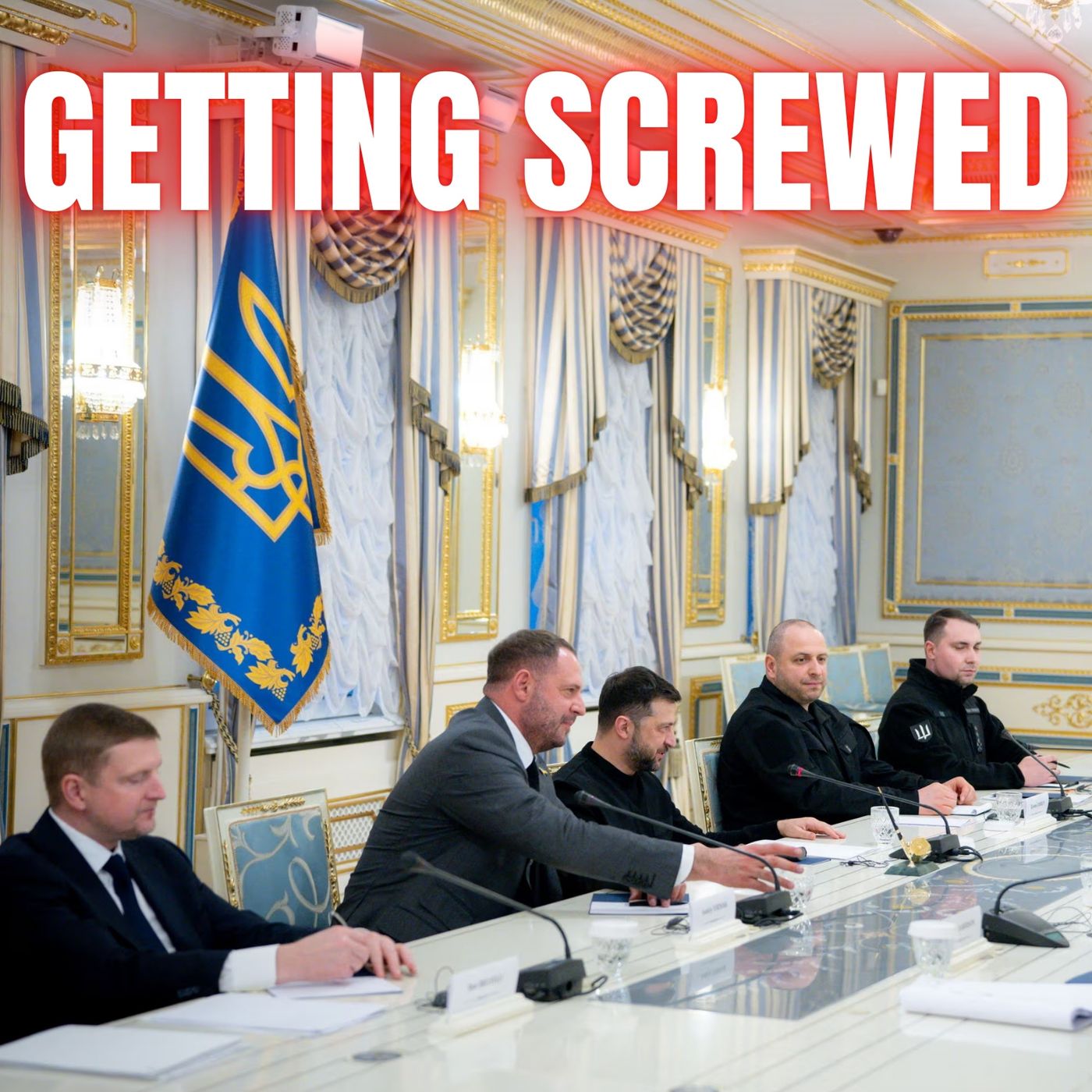
The Team House
The 28 Point Peace Plan for Ukraine is Garbage | EYES ON GEOPOLITICS
00:54:34
In this episode, the hosts discuss the controversial 28-point peace plan for Ukraine and Russia, analyzing its implications for Ukraine, NATO, and global geopolitics. They delve into the battlefield situation in Ukraine, the role of European allies,...
Loading summary
Transcript172 lines
- [00:00]
TurboTax Announcer
Tax season has arrived and doing taxes without the right help can feel overwhelming. Intuit TurboTax is here now to guide you through it with confidence. Match with a TurboTax full service expert who handles everything for you from start to finish. Your dedicated expert checks every single deduction in credit to help you get the best possible outcome so you can feel confident you're getting every dollar you deserve. And the best part? You'll see real time updates on your expert's progress right on your phone while you live your life. Plus, you get unlimited expert help at no extra cost even on nights and weekends during tax season. Visit turbotax.com Only available with TurboTax Full Service Experts Real time updates only on.
- [00:38]
CVS Announcer
Ios mobile app CVS it matters that we're not just in your community, but that we're part of it. It matters that we're here for you when you need us, day or night. And we want everyone to feel welcomed and rewarded. It matters that CVS is here to fill your prescriptions and here to fill your craving for a tasty and, yeah, healthy snack. At cvs, we're proud to serve your community because we believe where you get your medicine matters. So Visit us@cvs.com or just come by our store. We can't wait to meet you. Store hours vary by location and even.
- [01:14]
Mick Mulroy
If, like if you don't buy the US should be leader of the free world, obviously, I think we all do. But even if you don't buy that, then you go to the argument of you do realize that every dime we spent given to Ukraine that depletes Russian military capability increases our relative strength to our most dangerous adversary, right? So even if you take out the morals, the ethics, the fact that we're a democracy and we've always viewed ourselves as leader of the free world, every dime enhances our own national security. And then even if you don't buy that there's $335 billion worth of frozen Russian assets that they could use to support Ukraine. It wouldn't even be our own money. This is one of those times you have to decide what side you're on. It's pretty clear.
- [02:07]
Jason Lines
And.
- [02:10]
Mick Mulroy
You don't get peace by capitulation. You're just going to get more conflict.
- [02:17]
Podcast Host
Everybody. Welcome to another episode of Eyes on Geopolitics. I'm joined today with Mick Mulroy, Jason Lines, maybe Andy Milburn in a little bit. I think he's just finishing up his bicep workout. A lot happening as usual. The big stuff that's Cooking right now, that's taken like, precedent. Precedence in the news Anyway, is the 28 point peace plan for Ukraine and Russia.
- [02:42]
Jason Lines
The.
- [02:42]
Podcast Host
That was supposedly drawn up by the US but we don't really know. There's a bit of back and forth with that. I mean, I read through the 28. The. The whole thing, and it's an absolute. It's kind of a joke. And here's Andy, and he's not even there. That's okay. We keep going. I'll mute him. So. All right, Andy, Andy, we're recording. So get your mind right.
- [03:07]
Andy Milburn
Hey, never mind that. I did. I missed the. The announcement.
- [03:13]
Podcast Host
What was the announcement?
- [03:14]
Andy Milburn
Jason's getting married.
- [03:16]
Podcast Host
Yeah, I see.
- [03:18]
Andy Milburn
Mix already. Yes.
- [03:23]
Mick Mulroy
That's right. I got dressed up for the occasion.
- [03:25]
TurboTax Announcer
I did.
- [03:25]
Mick Mulroy
Yeah.
- [03:26]
Andy Milburn
I put on the commission.
- [03:28]
Mick Mulroy
He did. He did it well. He did it well.
- [03:31]
Andy Milburn
Congrats.
- [03:33]
Mick Mulroy
Congratulations, Jay. Fantastic.
- [03:35]
Jason Lines
Appreciate it.
- [03:36]
Podcast Host
That's awesome. Congrats, Jay. All right, let's start over. I'll leave that in, actually. All right, so we're talking 28 point peace plan that was supposedly written by Witkoff. Secretary Rubio, maybe. There's like so many conflicting reports going on that we don't even know. There is a report saying that it's basically translated from Russian, and it was a Russian report that was handed to Wyckoff. It's chaos. If you read through the 28 points, it's like kind of like, you know, there's some good stuff in there, but it's mostly like, let's be honest. So I'm gonna pass this over to the experts. Tell me what you guys are thinking in terms of what this peace plan means. Also, it was get. We. They gave him a. Gave Ukraine a deadline of Thanksgiving, which is kind of hilarious. You know, the state of your. Here's the future of your country, and you have five, seven days to decide. So let us know as soon as possible. Mitch. I'm editorializing now, guys. Sorry. Alert. Like you should maybe be, you know, play hardball with fucking Russia, you know, the actual aggressor of this war over you guys make you go ahead.
- [04:44]
Mick Mulroy
So we've been talking about this all week as the US Plan on the news, as people know. And now we're hearing that it could have potentially been Russian drafted plan that was then leaked to the press. And quite frankly, if you read the 28 points, it looks like a Russian drafted plan. So I don't know, but there's certainly a lot. Several media reports from very valid sources that Secretary Rubio essentially said that the US did not draft it and imply that Russia did it. So to start with that, don't know if it's true, but that's very consistent with the way Russia does negotiations. It's very much their version of psychological warfare, what they call decision shaping or reflexive control, for those of you who follow the Russian means of statecraft, which is always intertwined with intelligence operations. So it's possible that Russia drafted the plan to look like it was, came from the United States, gave it to a delegate of the United States, let it circulate, and then leaked it to the press to basically cause a lot of consternation with European partners and obviously with Ukraine, that I don't know that that's what happened, but that is what happened as far as, like, the consternation part of it. So. And there was a lot of pushback, not only from Mueller, European partners, but Republicans in Congress, including the chairman of the Senate Armed Services Committee, the Senate Foreign Relations Committee. And that was the part about Secretary Rubio briefing those senators who are very much not in alignment with what it's asking Ukraine to do. So some of the points. And then obviously turn over to the other fellows here. If you concede completely your territory, not just acknowledge that you can't take it back militarily, that is obviously rewarding aggression, and it can't be done just by the leadership of Ukraine. It has to include a referendum that would be entirely against their interest. It then requires that Ukraine cuts its military in half, that it can never join NATO, that European forces who have already volunteered can't go in to secure, you know, that the war does not restart, and then it gives a tenuous security guarantee which doesn't appear to be, you know, essentially a treaty, what they would need to guarantee it. And it's important to point out that Ukraine currently has an agreement by the United States and the UK to protect it from an invasion. And you can see how that's going. So they. And then, you know, there's even some versions that say the. That Ukraine would have to pay for the security guarantee, actually compensate the United States for it. So I'm now hoping that this was a Russian plan that just gets ripped up and thrown in the trash can and that they start over with one that's far more aligned with Ukraine, which is our partner, not Russia, and that the Europeans really step up, because there's a lot going on. I'm sure Andy can get into it, Jake, get into it on the battlefield right now, and it's not really going great. So we need to step up our support, tear up this agreement, start over, step up our support militarily and sanctions and the release of frozen funds, or we're going to see a potential loss long term. It's going to take a while in Europe of a key Democratic House.
- [08:47]
Podcast Host
Milburn.
- [08:49]
Andy Milburn
Yeah, I mean, I don't know whether to laugh or panic at this plan. It's just extraordinary. I mean, for instance, it, the, it prohibits Ukraine from launching a missile at Moscow or St. Petersburg, but nowhere else in Russia. And there's no limit on Russian strikes at all. Russia basically is rewarded for halting its invasion by keeping all the territory it already has, plus some, some more. It gets welcomed into the international community, including the G8. It gets relief from sanctions. What does Ukraine get? It gets a ceasefire, which is likely to be temporary and an American guarantee that Russia will not attack again. I think Mick already summed up very nicely what that guarantee means. This really does favor Putin because aside from limiting Ukrainians military, cutting it in half, and by the way, there's absolutely no limit on the Russian military. So Ukraine is being pushed back. As I said, additional territories being handed to Russia would be handed to Russia under this plan. And what's significant about that, aside from the fact that whole cities full of Ukrainians are being turned over to the Russians, what's significant about that is that the Ukrainians over the last, both sides over the last two to three years have built up a series of fortifications. And so now for Ukraine to pull back, hand those fortifications over to Russia puts Russia in a doubly strong position if and when, and I think we all know when Russia decides to kick off the offense once again, no NATO troops are allowed to be stationed in Ukrainian territory, which puts an end to European plans which were until now supported by the United States to station a, a reassurance force there. And essentially so Putin now, he gets additional territory, it's a win for him and he gets lifting of sanctions, which be hugely popular. He gets to rebuild his army and he gets to continue to threaten, not just Ukraine, but the, you know, the whole flank of NATO, you know, all the way from, from the Arctic to the Black Sea. And you know, if you've been following Putin, that's he is he, he's, he has to keep, he has to keep gnawing away at, at, at what he perceives to be the enemies and, and trying to regain parts of the Soviet empire, if not all of it. And that's what he's going to continue to do. You know, aside from Anything else? We got to look at the strategic messaging of this plan to places like Taiwan and South Korea again. You know, I'm just hoping this isn't going to be painted as a US Plan. I agree with Mick. It looks like it was drawn out by a bunch of Russians after a heavy vodka drinking session and, and, and slipped into the hands maybe of a comatose diplomat who is now trumpeting at this as a, as a U.S. plan.
- [12:13]
Podcast Host
Yeah, that guy's probably Steve Wyckoff. Let's like not get it twisted.
- [12:16]
Andy Milburn
I didn't, Yeah. I didn't mention anything.
- [12:18]
Podcast Host
I'll say it. I mean, and you know, we saw what happened. We heard what happened about a week ago. General Kellogg is out in January. There's some rumors that he was fired or some rumors he's resigning. Understandably so. Right, because he's supposed to be the special envoy to Ukraine and he's been sidelined ever since. Like probably that Oval Office blow up with Zelensky and Trump couple. I mean, I was reading through this plan and it's almost mind boggling that this could like you could dictate trying to dictate to Ukraine. You're going to hold elections within 100 days. You're going to change your constitution, you're gonna, you know, and like you guys mentioned like cap your military. It's like where the, do you get off telling us what to do with our country? And that's the US and Russia. I'm saying that to Russia, definitely. It's just incredible. And there's another point here in terms of like the, the frozen assets, the Russian assets, that 100 billion would be given to Ukraine for the, for the reconstruction. All 300 billion should be given to Ukraine if not for the reconstruction, for weapons to keep smoking Russian soldiers. And the interesting pizza like I was looking at is the US will receive 50% of profits of these projects. It's like not everything is a hotel deal. You know what I'm saying? Like these are real people's lives. Like let's get a ceasefire done. That makes sense for everybody. Not so much they could off the Russians in my opinion, but for Ukraine and then work on a lost long lasting peace plan instead of like just these grubby ass hands trying to get in and loot Ukraine for what it's worth.
- [14:05]
Mick Mulroy
It tells, it tells, it tells NATO what to do too. I read it correctly, it says NATO can't expand.
- [14:11]
Podcast Host
Yeah, yeah, right.
- [14:13]
Mick Mulroy
So now, now we're, we're selling out Ukraine, NATO, all for, but let's, let's be, let's be real. This isn't going to last. As soon as they get to the negotiation table, Ukraine and the European partners, if they're invited, are going to say no. Just no.
- [14:31]
Podcast Host
Well, that messaging has kind of been clear ever since this plan came out. Right. Zelensky had like a big 10 minute address to the nation and he put it pretty bluntly talking about how, you know, we're in a tough spot. We're like either give up our dignity or lose one of our biggest allies in the U.S. yeah.
- [14:49]
Mick Mulroy
And, and it's a big deal. I mean a lot of the weapon system they have rely on US intelligence and if we cut off intelligence, well, there you go. I mean we've cut, I think we've cut a lot of our security assistance down recently. Losing it entirely is. I hope there's, there's some Europeans step up.
- [15:09]
Andy Milburn
Right.
- [15:09]
Mick Mulroy
I hope there's some Churchills out there and a lot less Chamberlains because this is going to require and you know, the battles that are going on right now. Pokritz. Am I saying that right, Andy? The hub of Ukrainian logistics is. Yeah, it's by all analysts I'm talking to. The Ukrainians are outnumbered almost 10 to 1. That's a tenuous hold on that city. It would be one of the biggest to fall and it would really impact Ukrainians ability to resupply themselves. Right. So they're, they're fighting against an overwhelming enemy for mult for multiple years and they have lukewarm support not only by their allies, but their allies that are literally right next to. So this is, this is it always has been, but this is the situation where your neighbor's house is on fire. Are you going to wait till your house is on fire to start putting it out? Are you going to go help your neighbor here?
- [16:14]
Andy Milburn
Right.
- [16:15]
Mick Mulroy
So it really does take a leader to step up, hopefully multiple and put their actions where their mouth is harshly worded Tweets or all huddling around a table to listen to a speakerphone conversations is not going to do it. It's going to take people being very definitive and, and stop caring about what Russia says. They're going to threaten nuclear war every time. We all know it, ignore it, move on or else. You're basically going to go down as cowards in my opinion. And I don't think anybody wants to be going down as a coward in history. But this is the history's been written right now. Hopefully people are going to take heed of that. And I'm not just talking about the US I'm not talking about all of the democracies that claim to be in alliance.
- [17:09]
Andy Milburn
Yeah, I think you're right, Mick. The only way ahead is for Europe to step up to the plate. I mean, we have been in the last year and a half, two years, an increasingly unreliable partner to Ukraine. And even before that, as I've said, and we've drip fed Ukraine weapons, allowing the Russians to adapt, we've given them too little, too late. I know there's a lot of the audience here who are going to disagree with that, but we're either in or we're out. And what we've done is kind of tiptoe around in the shallow water being afraid of Putin and given things here and there, we should have poured on the lethal aid right from the start and then we would be facing a very different situation now. I think all of us understand that, who understand Putin, but we are where we are now. And I would say, you know, the best thing for Zelensky to do is not to fight this plan openly, but to try and negotiate and bring up other terms and counter terms, play Putin's game and watch Putin reject things. And eventually I think this administration will lose patience again, you know, and meanwhile appeal to the Europeans. I mean, Europe's having some severe fiscal problems right now, but they, they need to step up to the plate, as I've said. And, and, and I think, you know, there are European leaders willing to do that. Poland is the Baltic countries. The uk, even under a Labor government, has been more of a staunch supporter of Ukraine than our own government. So I think that, you know, to your point of finding a church, I'm not sure there is a church out there, unless you're looking at a very Gaelic one. Macron. I know there's, that's going to send shit down people's spines, but you may not find individual leaders, but in the Baltics actually, and in Poland, you're going to find a very determined front to whatever the cost to continue to support Ukraine, to fight Russia. And Europe's made great strides in the last two years in manufacturing ammunition, particularly 155 rounds, which there's been the shortfall of. And, and Europe's going all in to include Germany on providing air defense systems, the, you know, long range cruise and ballistic missiles. So, you know, I think, I think that's what we're going to see. It's just, of course, hugely disappointing that our own country is no longer a staunch defender of freedom, or so it appears.
- [19:45]
Jason Lines
And I've said this before, and I think one of you gents mentioned it too. What does this look like to our allies on the other side of the world, to Taiwan, you know, and more important, most importantly to China. If we can't even write our own, if this is true, if we can't even write our own peace plan or peace proposal or we're, you know, or the ones we are writing are one side heavily one sided to the aggressor, what is Taiwan's probably thinking, what the hell are you going to do for us? You know, And China's probably thinking, this is perfect play. This is a perfect playbook, you know, so the, the ramifications on the other side of the globe to me are just as important as what's happening in Ukraine.
- [20:29]
Mick Mulroy
Yeah. And even if, like, if you don't buy the US should be leader of the free world, obviously I think we all do. But even if you don't buy that, then you go to the argument of you do realize that every dime we spent given to Ukraine that depletes Russian military capability increases our relative strength to our most dangerous adversary. Right. So even if you take out the morals, the ethics, the fact that we're a democracy and we've always viewed ourselves as leader of the free world, every dime enhances our own national security. And then even if you don't buy that there's $335 billion worth of frozen Russian assets that they could use to support Ukraine, it wouldn't even be our own money.
- [21:19]
Andy Milburn
Right. So.
- [21:23]
Mick Mulroy
This is one of those times you have to decide what side you're on. It's pretty clear. And you don't get, you know, you don't get peace by capitulation. You're just going to get more conflict.
- [21:39]
Jason Lines
And. I don't know if you. Go ahead, Andy.
- [21:42]
Andy Milburn
No, I was just saying to make to your point about Pokrovsk, actually one of our, one of our listeners is a resident of Pokrovskoe, that's his hometown. Because whenever I refer to it as a, he gets quite upset. But sadly, I mean, it was a hole before. I spent quite a bit of time there, but it's been absolutely flattened and the environment there on the front line. We've talked about this for a while. I mean, we've talked about this before is just incomprehensible. I mean, anything that moves or emits a heat signature is killed. You know, the Russians, there's talks of the Russians or, you know, stories of the Russians attacking now on, you know, carrying thermal blankets, stripping down to almost nothing in, you know, small groups like twos and threes, using sometimes quad bikes or motorcycles no one uses.
- [22:42]
Podcast Host
With the American Express Platinum card, you can access over 3, $500 in annual value with benefits and eligible purchases across travel, entertainment and more. There's nothing like Platinum. Learn more at americanexpress.com explore-platinum enrollment require and other limits in terms of pie.
- [22:56]
Andy Milburn
Get that AMEX Gold Card ready. I'm too tired to cook.
- [22:59]
Apple Books Announcer
We feeling Five Guys or the Cheesecake Factory? Both earn up to $120 a year in statement credits of participating partners. Up to $10 each month when you pay with the AMEX Gold Card. Learn more@americanexpress.com Explore Gold enrollment required terms apply.
- [23:12]
Andy Milburn
PCs or infantry fighting vehicles anymore. RUSI estimates that's the Royal United Service Institute. Reputable. I was going to say Russian reputable. British think tank estimates that in any given attack involving armored vehicles, two out of three are destroyed. I mean, the attrition is just incredible. Manned vehicles are becoming obsolete and that's why the Ukrainians have developed unmanned vehicles that shoot, move and communicate using AI. It's quite incredible. And there is a story in the Economist about their evacuation of medical personnel, of. I'm sorry, of casualties. And they, they're using unmanned ground vehicles to do that. They recovered one guy from, from no Man's Land. You know, I don't this, it's an exaggeration, but it says in the story 30 days. Yeah. And he, he gets, he, he just climbs in the vehicle. It's like a, an egg, wasn't. It closes around him and then the Russians are trying to hit it with drones. It hits a mine and just keeps rolling. Yeah. I mean it's just unbelievable. Yeah.
- [24:32]
Mick Mulroy
We do tackle training out here in Montana and we're, we're adjusting based on all the incoming lessons learned from Ukraine.
- [24:41]
Andy Milburn
Right.
- [24:41]
Mick Mulroy
There's going to be a lot more interest, as Andy just said, in individual low cost vehicles for transport. You know, motorcycles, electric ones, snowmobiles, electric ones. Or at least their version. We're adjusting to all that because it's being, you can see how things are shaping out there. And of course, drone warfare is, I mean they just took a helicopter down, I think an Mi8 with a, with a drone 200 miles beyond enemy lines, if I read it correctly. So all these lessons, that's the other thing the US can get from this. We should be sucking all this. Not only fully supporting Ukraine with support, not fighting, but we could be getting all of these lessons learned because this we're looking at the face of modern warfare right now in Ukraine and it's ugly, but you don't want to lose it. So we need to be gathering all this information and getting ready for it.
- [25:42]
Andy Milburn
Unfortunately, the proliferation of fpv, that's first person view drones, is particularly frightening when you read about these things. These things are like multiple, imagine multiple snipers who don't just have direct line of, line of sight fire that can follow their victims into buildings. You know, once, once one of these drones is locked on to you and I, you know, I forget what the percentage is, but you've got a slim chance of surviving. And these drones are just hovering over, you know, both sides of these drones just hovering over the other's territory looking for targets. I mean it's, it's a terrifying, it's like dystopian movie about the future.
- [26:34]
Mick Mulroy
Yeah, it is. We better be gathering all the info too.
- [26:39]
Andy Milburn
And by the way, just, you know, not everything's going Russia's way. I mean they, they continue. Russia continues to take casualties and Rusi saying at least a thousand a day. You know, on a good day, it's a thousand casualties a day.
- [26:55]
Mick Mulroy
And can you imagine that?
- [26:56]
Andy Milburn
I mean, it's just, just incredible. And Russia now has turned on its own bloggers. You know, there's this whole blogosphere of military kind of YouTuber telegrammers on the Russian side who are commenting on the war. Of course they're pro Russian. They always had been pro Russian because they're Russians, right? But now a bunch of them have turned against the conduct of the war. I mean, they've always been quite critical, but now they come out in force to criticize particularly particular generals and the government itself on how the war has been conducted. And they in turn have been labeled as terrorists, hunted down and in some cases imprisoned. So you know, again, this narrative about Russia, everything's going Russia's way and Ukraine has no hope, is not, it's not true. Russia has been advancing, but Russia's been threatening on the verge of taking Pokrovsk for almost two years now, which just shows good point taking place. And for every yard they take, they're suffering just an incredible number of casualties. A thousand a day. You know, on a good day too. You know, and Rusi was saying during assaults that can be 1500 or more.
- [28:19]
Mick Mulroy
Just imagine if we released the funds, we released any restrictions on advanced weapon systems and we put the sanctioning Russia act into place, how that would shift the situation right now.
- [28:36]
Jason Lines
And not for nothing, but Russia's already has no qualms about fomenting, you know, sabotage in other countries. In the uk, in Poland. What was it last week? The, there was that rail explosion and I guess they're charging two Ukrainians who are allegedly working on behalf of Russia. But it's, I mean, if that doesn't give European leaders the, that they need to get all in on this, then I don't know what is. Because Russia, if they get what they want, you know, based on this 28 point plan, they're, that's not going to stop them there as far as I'm concerned.
- [29:16]
Andy Milburn
Yeah. And, and sadly, although we talked about Russian casualties, there is really, they're not having an effect. Right. I mean, no one, no one in the regime that really cares about casualties. And there isn't. And there's such a firm clampdown on the population as far as the media, as far as speaking against the war or even about the war, that it's not as though, you know, it's not like it was in Afghanistan where a group of mothers got together and protested the war. And that led in the end to Gorbachev pulling people out. This is a totally different situation, different regime. And by the way, Russia has not gone to second round of conscription. I mean, the last round of conscription was over two years ago. And that's because they're getting enough volunteers and they're offering huge amounts of money that the, the real story about how the war is being fought isn't filtering back to the Russian public. I mean, last year, 2024, the Russians recruited 430,000 troops. They're recruiting more. Even if they're losing 1,000 a day, they're still recruiting more than they're losing. And in 2025, I think it's almost at that level. It's like 403,000, an enormous number of volunteers now. And plus of course, they're emptying the jails. The amount of money that these guys are being offered is, you know, a huge amount. It's life changing money. But of course it's sadly for most of them, many of them, actually, probably most of them, it's a, it's a life changing experience. Not in a good way.
- [31:01]
Mick Mulroy
Yeah.
- [31:02]
Jason Lines
And you just talked about emptying the jails and it sparked something I had read. So I just looked it up. Says that Russia, according to Ukrainian intelligence and human rights groups, reports Russia is systematically recruiting and sending men with significant mental and physical disabilities to the front lines like they're being declared unfit for duty. And immediately they're being Told, too bad, sign this. And they're sending them off to the front line, you know, all kinds of mental and physical disabilities. It's just crazy.
- [31:34]
Andy Milburn
Yeah, I'd say it's a weird mix, isn't it? You know, very, very high tech war. And yet the need for infantry is insatiable. The demand for infantry on both sides. And the Ukrainians are having problems, severe problems. That's partly why the line is so porous, that their units are routinely now staffed at 40% or below. And those are frontline units. You know, they're just finding it really hard to, to find the manpower to fill combat units and, and then they've got a huge desertion rate, you know, and you know, frankly, who can blame these guys because there was a very, because they are so low on numbers. That means that for the guys they do have, they're spending an unending time in the trenches. It's not now even if when you read about the First World War, units were rotated. Right. I mean, I'm not saying it was a picnic, but at least units were rotated back from the front after a period of time. And so you'd have a regiment manning a line and battalions would rotate. So you always had a battalion in the rest period. And the Ukrainians just can't do that.
- [32:53]
Podcast Host
Is there any talk in Ukraine about.
- [32:55]
Andy Milburn
Mobilization when you were talking fondly about the First World War? It's a good example.
- [33:02]
Mick Mulroy
Yeah.
- [33:03]
Podcast Host
Is there any talk about mobilization in Ukraine?
- [33:08]
Andy Milburn
There is mobilization, conscription, you know, for some reason, and I think this is a cultural piece, age limit, the bottom of the lower threshold has always been quite high. It was in the early 30s and it went down to 27, I believe, and someone can correct me, I'm sure, if I'm wrong, I believe it's 25. So you still got, you still got a segment of the population, large segment of young men who are not eligible for call up. But you know, in the first year, and I, and I mean, I know this from personal experience, first year of the war, that there was a tremendous surge of volunteers to go to the front. But sadly, you know, I mean, that was three years ago and most of those guys statistically would have been killed or wounded. Ukraine's lost, you know, the best of its youth. Some 600,000 estimated men eligible to fight. And I don't know if that includes the 18 to 25 year olds have left the country illegally. If you are between the age of 60 and 18, you're not allowed, and male, you cannot leave Ukraine. But an estimated 600,000 have left.
- [34:22]
Podcast Host
Yeah, yeah. I mean we'll obviously keep. Keep an eye on what's going on here. Little. I just want to mention like the chief of staff of the Army. What are you doing, bro? He was, I guess he was quoted or something about like, you know, like hard line talking about like how Ukraine has till Thursday and that's it. Which is like why even, why even talking. Isn't there a chief of staff? Isn't there a Joint Chiefs of staff? Isn't there a defense secretary? Like, why are you popping off in the media?
- [34:58]
Andy Milburn
Unless it's Randy George.
- [35:01]
Podcast Host
No. Geez, what's his name, man? Hold on.
- [35:04]
Mick Mulroy
You talking about the civilian, the secretary.
- [35:07]
Podcast Host
Of the arm, the army chief is. Yeah, I think it was the army Chief of staff.
- [35:11]
Mick Mulroy
Like the.
- [35:13]
Jason Lines
George. Randy George, current chief of Staff.
- [35:16]
Podcast Host
It might be him. Yeah, yeah. I think he went on. He popped off on like on the record.
- [35:22]
Mick Mulroy
I don't know why I'd say that.
- [35:23]
Podcast Host
Yeah, yeah, I saw that and I was like, what? I think he's might be actually in Geneva with Rubio right now as well. Anyway, we'll keep an eye on what's going on with the 28 point peace plan. I don't think it's going to be signed and we're going to buy when by some. By Christmas we'll have a parade. More to come obviously with that. I want to touch on what's going. What's going on with Venezuela. A bunch of. What are they called? Notams.
- [35:57]
Jason Lines
Like not.
- [35:58]
Podcast Host
Yeah, yeah, that, you know, airspace is closed and stuff like that in and around the Caribbean and Venezuela. Reports about doing leaf lift drops. We have seen a bit of sabotage going on. Some oil refinery and oils stations going up in flames. You know, who could that be? Obviously the CIA working with Venezuelan people. What are we looking at with that make. You had mentioned a little bit about that on our group chat.
- [36:31]
Mick Mulroy
Yeah, obviously I don't know and be talking but the. It's clear that, that at least plenty of people in the media think that this has started. Right. So the COVID phase, which would come first to kind of shape the battle space, so to speak, with sabotage operations likely fomenting a potential uprising against Maduro, replacing him, trying to get to his inner circle to do that, push him out, maybe give him an off ramp, you know, flight to Cuba. This speculation on my part, if it works, it could, you know, it certainly would be good for the people of Venezuela and it would avoid the need for military action. If it doesn't work, we certainly have the Firepower in place for air and missile strikes, whether it's just focused on drug infrastructure, narcotics infrastructure or also on the capabilities, we'll find out. But the dates that people are talking about is the 24th of November because that's when the foreign terrorist organization designation goes into place. The COVID efforts, which won't stop of course, even if we go over will have time to at least begin and we could see a pretty busy week next week. Of course the questions from are going to be is how limited are these military actions, if there are military actions and what is Congress going to do? Are they going to do nothing? Are they going to, they going to require that they're approved under the War Powers Act? There's a lot of questions but certainly we could see a lot of action coming up right in time for Thanksgiving.
- [38:17]
Andy Milburn
Yeah, I assume that this is all calculated to get Maduro to step down, you know, to, to enhance the opposition within Venezuela and to enhance their position and persuade Maduro to step down, you know, and of course I do hope that we not really planning to go to war against Venezuela. But I mean it would seem, let's hope I don't have to appear to apologize for saying this but it would seem to be far fetched, wouldn't it? I mean especially in light of what we've been hearing from the administration on the side almost of being isolationist and avoiding foreign wars going ahead. Although maybe fighting against Venezuela doesn't count as a foreign war in their books. I don't know.
- [39:14]
Podcast Host
Yeah, like Iran, you know, and everybody else like those seem like foreign not wars but at least escapades.
- [39:25]
Andy Milburn
Well, I mean, I mean if you.
- [39:27]
Podcast Host
Run, if you run on stopping war, I don't think like B2 bombing Iran and then you know, threatening to bomb the out of Venezuela really is a campaign promise achieved.
- [39:42]
Andy Milburn
I mean playing devil's advocate, those two, I think the, those two activities are on different planes. The, no pun intended because sure, you know, the strike against Iran's nuclear facilities could be regarded as the culmination of you know, a decade and a half of planning and negotiation and planning. And, and again I'm playing devil's advocate here. And, and the, you know, the, the strike was, was calculated to preempt a situation that would have led to increased conflict or war in the Middle east or reduced stability in the Middle East. I mean that is, that, that is an argument for the bombing of Iran's nuclear facilities. But I, I cannot think of a comparative argument to use as far as going to war with Venezuela.
- [40:40]
Podcast Host
So is like the first nuclear deal with Iran.
- [40:43]
Andy Milburn
Right.
- [40:43]
Podcast Host
In terms of, like, us wanting them not to enrich uranium.
- [40:48]
Andy Milburn
Yeah.
- [40:48]
Jason Lines
Right.
- [40:49]
Podcast Host
I don't know.
- [40:50]
Mick Mulroy
But at that time, to Andy's point.
- [40:52]
Podcast Host
Go ahead.
- [40:53]
Mick Mulroy
To Andy's point, Israel had already destroyed their, their air missile defense, their air force, if there was any good, if there was ever going to be a good time to, to do that, which the biggest risk, of course, would be to the aircraft. That was it. I mean, as you guys might remember, I supported that. I'm not probably at any risk of winning the Nobel Peace Prize either. But that I think was supported by the, by the situation, to Andy's point. I mean, I would love to stop narcotics coming to the United States. And I do think Maduro has destroyed Venezuela, which caused a lot of instability the Western Hemisphere. I hope that we can do this. If we're going to do it. I hope we can do it without the need to put any servicemen or women in harm's way. So I hope the COVID program that the President's already, you know, announced is successful. We'll see.
- [41:52]
Andy Milburn
Announced openly.
- [41:54]
Mick Mulroy
Yeah. If not, I don't know how many targets. I mean, maybe we have some in our audience that are, that have a better idea. I mean, how long could an air campaign against Venezuela really last? I mean, is it going to look like, you know, we're just going to be hitting dirt, dirt strips, or. I mean, are we actually going to go after infrastructure targets to make the situation even worse at Venezuela?
- [42:17]
Andy Milburn
Right.
- [42:17]
Mick Mulroy
So even more people leave. I don't know. I mean, what, what would be the, the main effort of the air and missile strikes?
- [42:29]
Andy Milburn
Yeah, I, I mean, it's not as though I can't imagine Venezuela has a very sophisticated IADs, but again, I, Yeah, I'm not sure what we would be going after. It's interesting. You know, we talked about the legality of striking these drug boats too, and it, and I think there's these murmurings in the Senate about the same thing that. Yeah, I mean, all of us, I don't think, I don't know. I don't mean to speak for you guys, but I don't think any of us would ethically have problems with killing members of cartel, but that's not necessarily the people who are dying, number one, which is a concern. Right. If we're killing innocent people.
- [43:08]
Podcast Host
And number two, I think a handful of those boats weren't from Venezuela either.
- [43:13]
Andy Milburn
Yeah. Yeah. I mean, even if they were, it's, you know, as we talked about, Venezuela is not even the, the lead Conduit of. Of the drug.
- [43:21]
Podcast Host
They're the minor leagues of drug trafficking, let's call it.
- [43:24]
Mick Mulroy
Surprise they haven't started automating their whole maritime distribution system.
- [43:29]
Andy Milburn
Yeah, yeah.
- [43:30]
Mick Mulroy
Like, it's kind of crazy they're actually putting people on it. Unless they just really don't care about the individuals on it. They're just expendable, by that cartel's view. But if you did this with automated boats, which is coming. We all know it's coming, right? Well, that they could submerge himself and hide and then come back up and then land somewhere surreptitiously in the United States. Yeah, it's.
- [43:54]
Andy Milburn
I bet it's. I'm sure it's already happening.
- [43:57]
Mick Mulroy
I gotta jump, guys. All right, sorry.
- [44:00]
Podcast Host
All right, no.
- [44:00]
Mick Mulroy
No worries.
- [44:01]
Podcast Host
See you later.
- [44:02]
Mick Mulroy
We might be maybe talking to you later this week if this kicks off.
- [44:05]
Jason Lines
Yeah.
- [44:06]
Mick Mulroy
Be a heck of a Thanksgiving special.
- [44:08]
Jason Lines
Yeah.
- [44:10]
Podcast Host
All right, guys, do me a favor, please check out Mick's podcast. The link is in the description. He's got a new one about stoicism. All right, let's wrap this up with each other. We don't. Yeah. I don't buy it. I don't buy that Venezuela is this big, dangerous narcotic state. It is, but it's not like ruining the infrastructure of the American people. If we really are serious about going after drugs, we're gonna have to go after Mexico cartels. We have to go Colombian cartels, and we're gonna have to pee, pee, whack at the minimum. China, who makes the fucking fentanyl? Like, who are we kidding here? So somebody explained to me the fucking point about fucking taking out fucking Maduro.
- [44:51]
Andy Milburn
Yeah. But, you know, I'm going to shift topics here before we sign off and. Because you just. You made me think about something as you normally do. And, you know, we talked a little bit about Taiwan earlier, and we've all expressed concern about kind of the drop in the US's stance about projecting strategic ambiguity. Right. About whether or not we would defend Taiwan. Because US three, and I know Mick feels this way, too, because he has said as much. We may doubt very seriously that the United States will go to war over Taiwan, that America's sons and daughters will be put in harm's way. I think probably that would be politically unacceptable to the American public. But it has always been the stance of administrations on either, you know, either side of the aisle not to tell China that. Right. To say, hey, fuck around and find out, to use that overused expression and certainly to posture ourselves and look at what the Marine Corps is doing with false design 2030, as though we do seriously intend to go to war with China. I mean, China is regarded as being our piercing threat for acquisitions, for training and everything. And even if it is just a colossal demonstration, there is a point to it. Right, but we undermine that point if we turn our backs openly on Taiwan. That is a concern. So having said that though, I read an interesting article the other day that from a. I love the term China watcher, but a China watcher, right. In one of the think tanks in D.C. and I'll remember his name in a moment. Doesn't matter. But you know, his point is this. Look, the, the State Department reached out to the KMT opposition member in Taiwan. The Kuomintang Party and the, the kmt. They're not exactly pro China, but they're less opposed to China. Right. They're more open to conciliation, although obviously not giving up Taiwanese independence. So I'm talking about in Taiwan. The State Department curiously enough, reached out the opposition leader and invited him to visit the United States. That is bizarre. All right, instead of Taiwan's, Taiwan's president, and I forget the name of the party, but who represents a party that is very openly, I won't say belligerent, but anti China and, and is very strident in, in voicing its intention to defend Taiwan to the last man, the last bullet. Right. So US has, has done this to send a message perhaps. Who does it send a message to? Taiwanese opposition who are more conciliatory to China, maybe to China. And at the same time Xi has been mass firing members of his military, the army and the navy primarily. And this is, these are the old guard who spent their whole lives preparing to invade China. So anyway, this, this China watcher postulates, I like that term, that what is happening is that there has been talks between Xi and Trump and the, you know, the kind of, the talks have gone along the lines of hey look, let's, you know, blah, blah, blah, tariffs, but let's also talk Taiwan. Maybe there is some compromise here that doesn't involve a hard out invasion of Taiwan, but also involves more of a partnership between Taiwan and China and China involving the Kuomintang Party going ahead and then, you know, both sides can declare victory and it's going to be better for both sides. And then Xi having committed to that or having decided that that's the best course of action now is faced by the old guard of his military who are like hey boss, what the fuck are you talking About. No, that's all we've been. That's. That's the whole reason for being. Is to invade Taiwan. And so now he's getting hard with them and firing them in mass. I. I mean, it's an interesting hypothesis. I don't think he has any evidence, but it certainly, you know, informed speculation. And it answers the why question. Right. Why would the opposition leader at the Kuomintang Party here.
- [49:41]
Podcast Host
Yeah.
- [49:41]
Andy Milburn
Why would she be firing?
- [49:43]
Podcast Host
Especially because, like, back in the day, that would be like a big, massive news story.
- [49:48]
Andy Milburn
Right.
- [49:48]
Podcast Host
Like, if that was going on.
- [49:51]
Andy Milburn
Exactly.
- [49:51]
Podcast Host
I mean, things are a little different now.
- [49:55]
Andy Milburn
And. And the other thing is Sushi is, is firing these military leaders and normally it's for corruption, but these are not corruption trials. They're just mass firings and without, without any kind of indication of what they could be about. So it does certainly answer that question.
- [50:18]
Podcast Host
Anyway, it's interesting speculation that she is like.
- [50:24]
Andy Milburn
There'S some kind of like, under the table negotiation maybe. Yeah, I mean, that's. That that could be a course of action. Because it would have to be a course of action whereby Xi could say to the Chinese people, hey, look, you know, I basically de facto delivered Taiwan. Right.
- [50:47]
Podcast Host
They're back in the fold. Right.
- [50:48]
Andy Milburn
We didn't have to lose a ton of people doing that. So, you know, I'm not saying it's a solution that the majority of Taiwanese would be ecstatic with. Who knows? Clearly not right now. Because the, the party that is more consideratory, conciliatory to China is in the minority, is on the L. Anyway. Would I bring that up? Yeah, no, that's.
- [51:12]
Podcast Host
That's super interesting.
- [51:14]
Andy Milburn
And before we sign off, though, D. I would like to talk about and see if any of our listeners are interested. Do we have any positive. Do we ever get positive comments? I think we do. Don't we?
- [51:26]
Podcast Host
Always.
- [51:27]
Andy Milburn
Yeah, we've got a. We've got a hard cadre of critics, but they keep.
- [51:34]
Podcast Host
Yeah, but I think, I think the ratio is very.
- [51:40]
Andy Milburn
It's not as many anyway for the, for the serious fans of this show, and there are at least three of those. I think we should ask if they would be interested in like a deep dive on the drone war in Ukraine. I can bring in a guy who's been in Kiev, an American involved in that since the outset of the war. But there's some really fascinating lessons coming out of that that we haven't had a chance to talk about on the show.
- [52:10]
Podcast Host
Yeah. I mean, since this is a dictatorship, the answer is yes. Like we don't need to put it to a vote to our listeners.
- [52:15]
Andy Milburn
Yeah. Okay.
- [52:16]
Podcast Host
I say yes.
- [52:17]
Andy Milburn
Yeah.
- [52:18]
Podcast Host
Yeah. I am xi jingping in this. In this show.
- [52:21]
Andy Milburn
And the other thing is that we want to. We. We want to book a. A hearing on the team house, which is where all the drinking takes place.
- [52:30]
Podcast Host
Yeah.
- [52:32]
Andy Milburn
To talk about this. Gaza people that. That Mick and I have been writing. It was 75 pages long, and then we found out that the limit was 25 pages. So that's why self publishing a book, it's like, what are we going to do with this now?
- [52:52]
Podcast Host
Yeah, no, I mean, I think it'd be great to publish that and let people read that. I'm sure there'll be insights in there that people really didn't think of or know. I know you've been tracking it.
- [53:04]
Andy Milburn
Yeah. We won't make it boring. I mean, we can chat and I mean, we. We won't be as lively as some of your guests. I mean, you know, at least a third of them are in prison right now. Right. Another one just. Just went to the big house over there.
- [53:18]
Podcast Host
Yeah. Former CIA officer.
- [53:23]
Andy Milburn
All types on that show. Spies, traitors, pedophiles. So, I mean, we're pretty run of the mill.
- [53:29]
Podcast Host
Unbelievable.
- [53:30]
Andy Milburn
Yeah. Well, you know.
- [53:32]
Podcast Host
Yeah. Once it's ready to go, we can definitely have you guys on. Like, let's do a team house.
- [53:35]
Andy Milburn
Yeah.
- [53:36]
Podcast Host
Jay, what are you saying?
- [53:36]
Jason Lines
I'm doing some digging. I know I talked about it before to bring somebody on and talk about Sudan, Mozambique now, you know, because while, yes. The things going on in Ukraine and Gaza are absolutely critical, there's things going on in Africa that need to be talked about, too. So I'm doing some digging to try to bring some folks on to talk about it.
- [54:02]
Andy Milburn
Yes.
- [54:03]
Podcast Host
Sounds good to me.
- [54:05]
Andy Milburn
Sudan. It's just. I mean, it's not incredible that Sudan hasn't become more of a story in the media, but the impact of Sudan, global impact of Sunan is. Of Sudan is, you know, already far greater than that of Gaza and. And yet receives very little publicity. Yeah. Hidden away as it is on the continent of Africa.
- [54:31]
Jason Lines
Yeah.
- [54:32]
Podcast Host
Also, I'd love to talk more about, like, the proxy war that's going on between Saudi and.
- [54:37]
Jason Lines
Yeah.
- [54:38]
Podcast Host
Qatar.
- [54:38]
Jason Lines
Yeah.
- [54:39]
Podcast Host
Because it seems like that's pretty hot. Heavy in Sudan.
- [54:42]
Jason Lines
Yeah. It's crazy.
- [54:45]
Podcast Host
Yeah. So those are things to look forward to, guys, on the Eyes on podcast. So do us a favor, like, and subscribe. Tell a friend. That's the best thing. Share it on your social media. Andy Milberk it. Andy Milburn is a prolific author and his book, his autobiography is called when the Tempest Gathers. It's incredible. I want you to check it out. That link is in the description. Jason Lyons his links are in the description. He's still working on the book. We'll keep you posted. Once he knows what's up, we'll, we'll let you guys know. And the best place to support the show is patreon.com theteamhouse you get both eyes on Geopolitics and the team house ad free early and if you have any questions you can shoot us questions. And yeah, as always, this is great guys.
- [55:32]
Jason Lines
Good to see everybody. Take care Len.
- [55:35]
Andy Milburn
All the best fellas.
- [55:36]
Mick Mulroy
Thanks.
- [55:36]
Jason Lines
J.
- [55:41]
Andy Milburn
Sa.
- [56:17]
Carissa Thompson
This is Carissa Thompson from Calm down with Aaron and Karissa. Max softness, Max energy, Max run. Go on a run that never runs out in the New Brooks Glycerin Max 2 dual cell DNA tuned cushion is optimized for soft landings and powerful toe offs while the glide roll rocker helps provide a more fluid step through to help you truly tune out and max the Glycerin Max 2@brooksrunning.com Apple Books is.
- [56:42]
Apple Books Announcer
The best way to read or listen to the books you love without a subscription right on your iPhone and a heads up for listeners. Apple Books is the official audiobook and ebook home for Reese's Book Club so you can discover every exciting pick, plus author curated collections and more all in one place. Open the Apple Books app to explore a world of books and audiobooks. You can set and track your reading goals and get great recommendations for your next read or listen. Again, no subscription required. Visit Apple Co Reese. That's R E E S E Applebooks.
- [57:18]
Andy Milburn
To find out more at cvs it.
- [57:21]
CVS Announcer
Matters that we're not just in your community, but that we're part of it. It matters that we're here for you when you need us, day or night, and we want everyone to feel welcomed and rewarded. It matters that CVS is here to fill your prescriptions and here to fill your craving for a tasty and yeah, healthy snack. At cvs, we're proud to serve your community because we believe where you get your medicine matters. So Visit us@cvs.com or just come by our store. We can't wait to meet you. Store hours vary by location.