← The Team House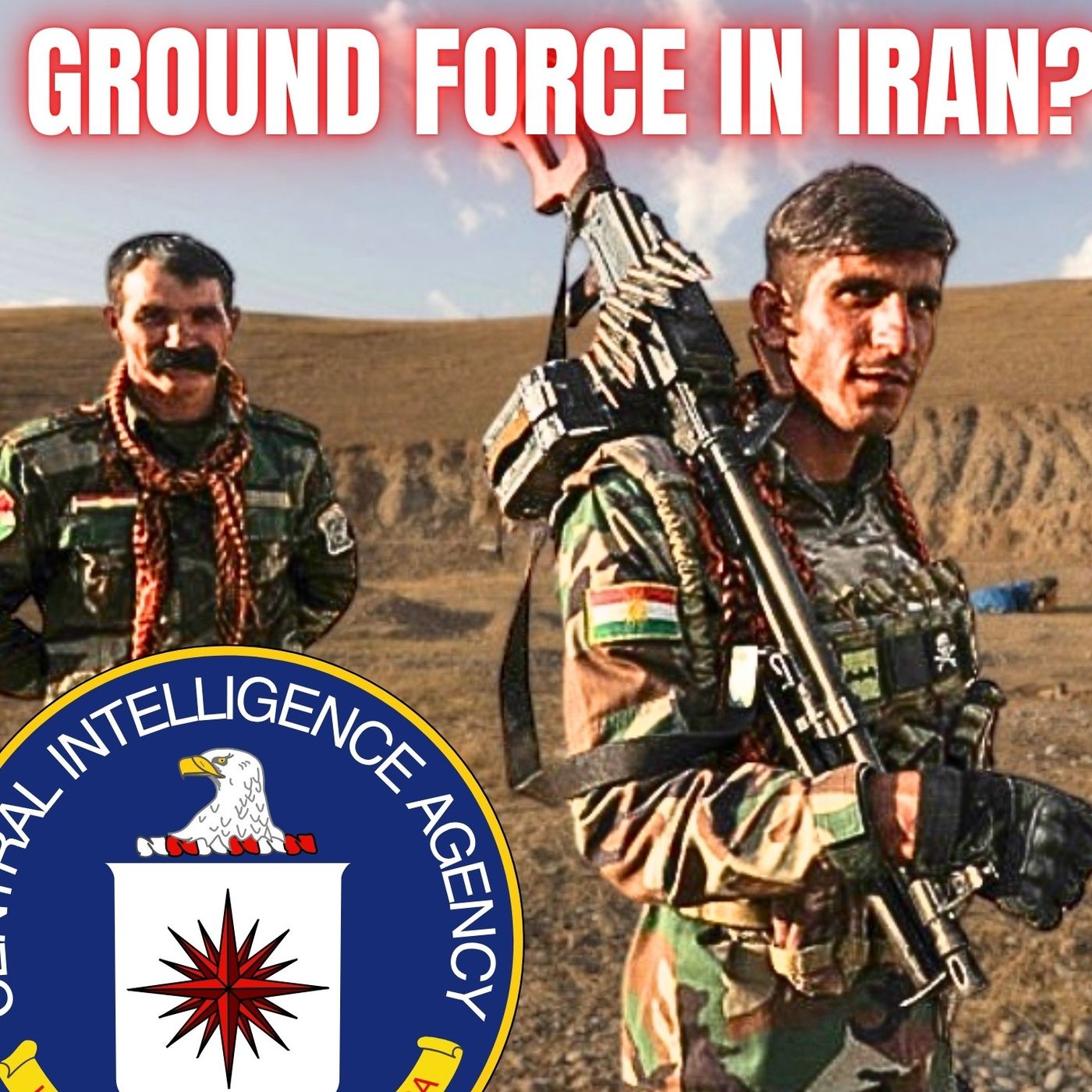
The Team House
The CIA Has Been Arming Kurds in Iran | EYES ON GEOPOLITICS
01:04:53
We break down the escalating conflict between the United States, Israel, and Iran, including recent strikes, Iranian retaliation, and the risk of a wider regional war. Jonathan Hackett, Jack Murphy, and Jason Lyons analyze the military options,...
Loading summary
Transcript276 lines
- [00:00]
Jack Murphy
If you're chasing data down instead of seeing it one place, you need the Intuit erp. Intuit Enterprise suite. All your data in one place with built in AI for real time insights.
- [00:12]
Ad Voice / Commercial Announcer
Learn more@intuit.com ERP on eBay, every find has a story. Like if you're looking for a vintage band tee. Not just a tee, the band tee. You wore it everywhere until your BFF stole it. Now you're on ebay and there it is. Same tea from the same tour. The things you love have a way of finding their way back to you. Especially on ebay. Where else can you find that mint trading card you searched everywhere for? Or your first car, the one you wished you never sold? It has to be ebay. Shop ebay for millions of finds, each with a story. Ebay Things people love.
- [00:55]
Jonathan Hackett
Hey, what's up guys? This is D. Do us a favor and check out our patreon page. It's patreon.com theteamhouse. You get both Teamhouse episodes and Eyes on Geopolitics episodes completely ad free. You get them early too. You can ask us questions. You can also watch the team ass episodes live as we shoot them. So. And you help support the show and support what we're doing here. It's patreon.com theteamhouse those links are in the description or if you're listening, it's in the show notes down below. So you can click it real quick and easy and it helps us keep the lights on. So we appreciate it and we appreciate you guys listening. Thanks a bunch. Hey, everybody. Welcome to another episode of Eyes on Geopolitics. I'm joined today with Jack Murphy, Jason Lines, Jonathan Hackett. I believe the muscles from Brussels is coming. Andy will be here shortly. Yeah, a lot going on. We're doing a double double whammy this week of Izons because, you know, obviously the war continues against Iran. A lot has happened. I don't even know where I'm gonna start. I'm literally haven't even decided yet. But let's start with. Let's start with the fact that they picked a new supreme leader, which is Khomeini's son, his second son, but they don't know if he's. If people are alive because they bombed the council. What is it called? Council of Experts. Assembly of experts. Yeah, they bombed that when that was going on. So it really seems like we really want to negotiate with whoever comes out on top of this. A lot's been happening. There's like so many things I think six service members have died and I think 20 plus have been wounded. On the American side, Iran keeps continuing to hit all the Gulf states around them. Targeting, mostly targeting. They are targeting civilian stuff like infrastructure and stuff like that, but they're targeting a lot of military stuff. Like you see some satellite images of our bases in and around the area. They don't look like they're doing super great. Word is, is like another big wave coming from us, from on our side on Iran, and I'm sure it's been happening all day. Another big part of news was there's an article that came out like literally like maybe an hour ago, two hours ago, talking about that the US has been supplying arms to the Iranian Kurds since last year. And with it, supposedly like a ground thing is supposed to start within the next couple days, they asked Israel and the US if they would provide, you know, fire support. There's no word on whether that we agree to that. So, yeah, a lot's happening and I'm sure I missed that. I mean, you all, I'm sure you guys all saw like Rubio and Pete Hegseth's press conference. I mean, Marco Rubio just basically let the cat out of the bag saying that we knew Israel was going to hit them, so. And we knew that they were going to attack our base, so we just hit them too. It's like, I don't, I'm not a conspiracy theorist, but Israel runs our. Let's be honest. Okay, guys, what do you have?
- [04:08]
Jack Murphy
Well, I'll say that today when they were meeting with Mertz Trump, you know, he fixed that. He mentioned that he had a feeling that Iran would attack the U.S. and that's why. It wasn't because of Israel telling Rubio anything.
- [04:20]
Jonathan Hackett
He had a feeling like what he read like the tea leaves. He went to a psychic. Or is it. If there was, if there was real intelligence about that happening, they would be fucking leaking it from a week before.
- [04:30]
Jason Lines
The.
- [04:30]
John
I mean, the thing is like the lies they're telling us aren't really meant to be believed. And it's just this interesting sort of separation with reality that 20 years ago they had to lie to us about WMDs, about, you know, fighting for freedom, all these sorts of things. And today they don't have to do that anymore. They just have to produce social media content. And enough of Congress and enough of the population of the United States. I mean, even though this has very low approval, there's no real anti war movement in this country. There hasn't been since like maybe the 70s. So, I mean, it's interesting that, like, they don't really have to make the case. And Congress, you know, some of them have said belatedly, you have to make the case. But he doesn't really have to if he doesn't want to. It doesn't seem. So I'm not really sure what we're doing here, but, I mean, it's scary times in that regard. It feels like a lot of the safeguards are off.
- [05:28]
Jack Murphy
I'm concerned about the Americans that are in the Middle east, like civilians, because a lot of this kind of scattershot announcement over social media. The State Department's been doing that too, and they haven't been doing a very good job coordinating evacuations of people. And actually Rubio just pleaded this afternoon with media organizations to help amplify the State Department's messaging about evacuation plans because it seems like the State Department no longer has the ability on its own, like it used to, to communicate to people in country because it must have been dismantled. I assume one of the.
- [06:01]
Jason Lines
I'm sorry, d. Was he. Please posted. One of the embassies put out something that said, hey, don't come here. We can't help you.
- [06:10]
Jonathan Hackett
Yeah, I think no Jerusalem.
- [06:14]
Jason Lines
Yeah. That doesn't invoke much confidence.
- [06:17]
Jonathan Hackett
He said, like, we're not going to help anybody get out. Like, if you want, jump on a bus and head to Egypt. Like, that's what we said to people. Which is insane.
- [06:25]
Jason Lines
Yeah.
- [06:26]
Jack Murphy
Remember in 2008, out in Lebanon, we had the conflict there and we were doing a NEO with civilian boats. Yep.
- [06:33]
Jonathan Hackett
What's neo? Sorry.
- [06:35]
Jack Murphy
Non combatant evacuation.
- [06:37]
Jonathan Hackett
Yeah, I mean, I don't know where you guys want to take this. I mean, the messaging is absolutely, absolutely piss poor. I think Trump came out, or since. Since you sent me this, Jonathan. Right. Where Trump sent something over to, like, Congress in terms of, like, you know, what their. What their. What the aims are. And number one on the list is ballistic missiles, which outside of our bases that are in the area have no threat to the United States. Continental United States and Alaska, they definitely can't hit. And the second, the third, I think the fourth on the list was a nuclear weapon, which by all accounts they were not continuing their progress on building a nuclear weapon. Rumor is that the negotiations were at the point where Iran was offering to give up all their 60% uranium to the United States to bring it to us. Let us, like, refine it back down. And they would only refine up to 1.5. No sunset clauses either. That were in the JCPOA number one, and we still bombed them over the weekend as well. Netanyahu was chirping everywhere on. On Israeli media, saying how the negotiations were essentially a ruse to get our, you know, get the jar, the one aircraft carrier in the Mediterranean and stuff like that and get things in position and move whatever that we had to move. So it's like, were we down for the negotiations? Was it ever a thing for the, like to try and denuclearize Iran? Like. Like they're just playing us. And. And that's a fact.
- [08:09]
Jack Murphy
Like, I'll jump in there on the missiles, actually. So I was talking to somebody about this today. So before the conflict started, there was an estimation of between 1500 to 3000 ballistic missiles of any range whatsoever, including short RA, medium range, long range. And they're firing about a rate of 25 per hour. If you do the math on that. If it's a sustained rate, 25 per hour since Saturday morning, that's five days of missiles in their entire arsenal of every range. Some of those are going to fail. Some of those are not in good condition. Some of those are not operationally ready. They have 80,000 drones. They can produce up to 300 drones per month if we haven't destroyed their drone production facilities, which is kind of a concern more, I think, than the ballistic missiles especially. It's a lot easier to destroy a transporter erector launcher or a missile, a fixed missile site, than it is to destroy, you know, drones that are very tiny, that it can actually penetrate through airspace. But if that's the number one reason that this conflict is going on, that's a very finite military objective that could easily be communicated to the world about, hey, we're going to destroy these facilities, this number of facilities without. And it doesn't really reveal anything. I remember during the Hegseth speech, she was, you know, very cagey about saying anything at all and even shot down. I think it was an NBC reporter that asked him, you know, what's the military objective? And he kind of got upset at her for asking that question. He said that was like a legacy media ploy to ask this type of question to, like, inform the American public about the objectives.
- [09:33]
John
I'm surprised Hegseth didn't say that having strategic goals is gay and woke.
- [09:38]
Jack Murphy
Right? Yeah. Well, he did say that there's no need for rules of engagement anymore.
- [09:42]
Jonathan Hackett
Yeah, yeah. Stupid rules of engagement and politically correct wars.
- [09:46]
Jack Murphy
He also called the last 20 years of conflict dumb wars, which to me, I mean, that kind of offends the nearly 4,000 service members that died fighting in those wars.
- [09:55]
Jonathan Hackett
Wasn't he, didn't he serve in those wars, too?
- [09:58]
John
Yeah, yeah, like, and a lot of this, I mean, part of it, like to put a thumb on the veteran community, you know, those of us who did serve in the war on Terror years. And I know there's a huge diversity of views out there amongst veterans. It's not monolithic, but I do notice a lot of them supporting this campaign as sort of not a pragmatic policy decision, but as a catharsis for what they experienced throughout the war. Part of it is, you know, that the Iranians legitimately were targeting American soldiers during the war that happened. And then part of it, I think, in my opinion, is that the war has failed and there's an attempt to regain some dignity and some honor in the aftermath of two failed conflicts. But I'm not sure that that is enough in of itself to legitimize or justify fighting a new war, because the last one was dumb. I need a little bit more to go on.
- [11:01]
Jack Murphy
I mean, in the alternative, we could do something kind of like Kosovo and Bosnia where we captured and arrested the top level folks. I mean, that's Delta Force did a lot of that capturing in the 90s, bring them to justice internationally, not just for the United States, but internationally because there were a lot of NATO allies and Iraqi partners that were killed and maimed from those explosively formed penetrators. And instead of bringing them to justice, we're just dropping bombs and.
- [11:25]
John
Yeah, on that, too. You know, the whole concept, if you're going to do an assassination, right. If you're going to take out the leadership, we're calling it a decapitation strike. You know, that makes sense if, for instance, you know, the Minister of Foreign affairs, he's number three in line. I don't know that in Iran. I'm just making an example. And you've compromised him. He works for the CIA, he works for Mossad, whatever that it makes total sense to take out number one and number two because you're going to move your guy up into the number one position. But from what our own government has been telling us, they're blowing away the entire succession plan that they had in mind. They're killing all of these people. Okay. I mean, is it killing for the sake of killing? We're on the record saying we're not doing nation building, we're not doing these long wars, we're not doing forever wars. Well, actually, Trump did say we can fight forever.
- [12:19]
Jack Murphy
Today,
- [12:21]
John
but it's ostensibly a break with the past, with the past conflicts. But I just don't see any cohesive plan. And I think that's because there is no cohesive plan, that all of this is just being done off the cuff.
- [12:38]
Jack Murphy
It feels like there's a tension between General Kaine on the military planning side and then the policy side where General Kaine seems to have a very deliberate military, at least at the operational level. Maybe not strategic, but at the operational level it clearly seems to be well formed from, you know, as well formed as it can be, but there's no connection to that and strategic end states. And it seems like there is no desire to have a strategic end state attached to this operational activity and to
- [13:04]
John
get into the ground game, because I do want to get to the Kurds a little bit, since we're on this topic. But again, when you're going to launch some sort of an air campaign like this, and by the way, I don't think we've ever transitioned a country or regime to a democracy with an air campaign alone. I don't think that's happened since the last 80 years, if ever. But when you do something like that, it should work in tandem with an unconventional warfare strategy that you have a shadow government in waiting that you have built up. And at least from the people I've spoken to over the years, we have no shadow government in Iran that doesn't exist. There has been operational preparation of the environment. A lot of that has to do with non assisted recovery routes that hopefully we never have to use. But as far as the ground game, I mean. Yeah, the news that came out today about the Kurds in, in western Iran, it's the Pak. And then there's one other group over there too, one Kurdish group, the last I knew. It's been a while since I've looked at this, so forgive me if I'm a little off.
- [14:10]
Jack Murphy
It's the P. Jack.
- [14:12]
John
Yeah, yeah, thank you. And the Kurds have, I mean, this whole notion of Greater Kurdistan, right? So I was in a gunrunner's office for the PKK about 10 years ago and this dude had a map up on the wall and that map showed how they perceived Kurdistan. And the boundaries of Kurdistan for them went from the Persian Gulf on the Persian side in western Iran, up the side of the Persian Gulf into the area of northern Iraq that is currently Kurdistan, which is currently Kurdish held, into northeast Syria, the area that became called Rojava, and up into Turkey, southern Turkey, connecting to the Mediterranean. Now that is a huge swath of land connecting the Persian Gulf and the Mediterranean that they perceive as their homeland that they would like to turn into a nation, or at least some factions would like to turn that into a cohesive Kurdish country, even though even Abdullah Ocalon has kind of backed away from that in so many ways and looked at other alternative forms of government rather than creating a Kurdish nation state. But, and I don't know what you guys have been heard or may have read about. I do know that the CIA and Mossad have both been playing over there, I mean, all the way back to the 1980s. So it's not really a surprise that these guys have gotten weapons shipments. But how, you know, John or Jason, I mean, how would you assess their fighting capability on the ground? I mean, can they constitute a credible threat to the Iranian regime?
- [15:59]
Jack Murphy
So this goes back to 1946 when Mahabad, which is the provincial area where a lot of these PJOT guys are coming from in Lake Urmia, which is the major water feature there, they had a separatist revolt against the Shah at that time. They survived for two years as an independent state under that conflict in 1946. Very interesting thing to read about. I encourage listeners to read about. It's something that helps you understand the Kurds a lot more. The Kurds that fought that rebellion back then were the Barzani family and one other family. The end of their two year conflict in Iran where they had independence ended when the Brits helped Reza Shah push them west out of the country into northern Iraq. And that's where the, the current Barzani family came from. And that family has been obviously our close contact for many conflicts, as you mentioned. And those are the combat tested Ashmirga that everybody knows. The ones inside Iran never got that combat exposure and they haven't had an opportunity to get real good tactical training that they would need to actually work together in a coordinated way. And the other problem is Pjak, that the section of the Kurds that's in western Iran, a large there's a couple of different Kurdish groups like Kongra Jel, for example, and some others. But this one, Pjak, which would be leading the charge, is an arch enemy of Turkey. And Iran has actually allowed Turkey to do airstrikes inside of Iran back in 201617 to push back PJAK fighters away from Turkey's border. So it would be very hard to imagine that a NATO ally, Turkey, would allow Pjak to have any power in Iran. And I don't know if you've seen the media But Netanyahu has already said that Turkey is a potential enemy of Israel soon. So that might even be another prop, like another movement on the chessboard of, okay, where does the threat move around now that the Kurds are coming into the picture? Turkey's getting upset. What does that mean for Israel pushing north? And they just occupied southern Lebanon. They're probably going to occupy southwest Syria. So I'm looking like bigger picture at the region of what does this mean if Pjak gets these weapons? It sounds so simple that give these Kurds these weapons. But. But there are major ramifications regionally, especially for Turkey, if the Pjak gets these weapons. And I don't think we talked about this in previous episode. I don't think in the National Security Council that there's this level of understanding of which Kurds are which. And, and what happens if you give this group of Kurds something and there's another group of Kurds that has total opposite political view, like in, in Rojava. There's even two different ways of looking at government in Rojava. One of them is a completely decentralized, almost like socialist system, and the other is kind of like a federalized state system, even in Rojava, which is in Syria. And the Pjak are not the leading Kurds are not the only Kurds in western Iran. There are Sunni Kurds, there are Shia Kurds, there are other Kurds or animists. And the religion is very important for them because especially with the way terrain works, when you're isolated in a certain area, your religion and your culture and your language become your identity. And you can't just say that all these guys are Kurds and here's some weapons, because they might. Instead of going against the far enemy in Tehran, there's a closer enemy across the mountain. You know,
- [19:09]
John
how does the relationship between the United States and Turkey hash out in a time where, you know, ostensibly, if we're going to supply weapons and, you know, war material to Pjak, when the United States seems that our policy right now is that we don't really care about NATO anymore.
- [19:26]
Jack Murphy
That's a great point. Actually. Today, Trump said in response to Spain. So Spain doesn't want the US Using Cadiz or Rota. And so Trump said, well, we can just land our aircraft there anyway and nobody can stop us. Which is a very concerning thing to hear from about Spain also threatening to cut off trade with Spain. And the EU quickly shot back and said, spain doesn't own its own trade outside of the EU. The EU determines trade for the EU, etc. So that will be an interesting development. And that's not even a far away NATO partner. That's a very close NATO and EU partner. Right.
- [19:59]
Jonathan Hackett
Yeah. I. Sorry, Jack, go ahead.
- [20:01]
John
I was just going to point out, like in 2003, we had this real big problem with the turks and getting 10 special forces group across the border. They ended up having to go, a lot of them through Romania and a few guys got across the border with like some of their gear with. But I mean, the, the Turks really made it difficult on the SF guys to do that for the same reason that they didn't want us working with the Kurds. They didn't want us supporting the Kurds.
- [20:28]
Jack Murphy
Yeah, that happened in 2016. Part of my team was in northern Syria and they got photographed wearing YPG patches. And that was kind of a little bit after the time we were saying there was no forces in Syria and all that. So not only are they seeing forces in Syria, they're also seeing the YPG patch on the guy's shoulder, which is, you know, Turkey would say it's a peacock.
- [20:47]
John
Yeah, there was really weird stuff that happened back in those days, like when the, the Turks had their talk, you know, in Turkey and you'd have like American Special forces and Turkish Special Forces and like we're working with Turkey to attack ISIS and Syria, but we're also working with the Kurds to attack ISIS in Syria. But we don't want the Turks to know that we're working with the Kurds. And we all kind of have to pretend that we don't know what's going on here. Like war makes for strange bedfellows, as you know. All of you guys know, I have a question.
- [21:15]
Jonathan Hackett
What happens if Israel were to attack Turkey, a NATO country? What happens? What does the United States do? What does NATO do?
- [21:26]
Jack Murphy
Well, Israel is a major non NATO ally, so they're pretty close. They have nuclear weapons. Turkey has our nuclear weapons, but that doesn't mean Turkey can use them. And I think that that would kind of answer your question right there. That's not much Turkey could do.
- [21:42]
Jonathan Hackett
That's good. I mean, you know who this. I feel like this benefits specifically. Like, you see the EU gas prices have gone up pretty straight of Hormuz is essentially de facto shut down. It's like at a crawl, if that. So the Europeans are going to get their gas from somewhere and it's going to be Russia. So that money goes into Putin's pocket. The weapons were used.
- [22:05]
Malcolm Gladwell
Hello.
- [22:05]
Ad Voice / Commercial Announcer
Hello.
- [22:05]
Malcolm Gladwell
I'm Malcolm Gladwell, host of the podcast smart talks with IBM. I recently sat down with IBM's chairman and CEO Arvind Krishna and I asked him, how can companies use AI to its fullest potential to create smarter business?
- [22:21]
IBM Executive / Arvind Krishna
My one advice to them Pick areas you can scale. Don't pick the shiny little toys on the side. For example, if anybody has more than 10% of what they had for customer service 10 years ago, they're already five years behind. If anybody is not using AI to make their developers who write software 30% more productive today with the goal of being 70% more productive.
- [22:52]
Jack Murphy
Yeah.
- [22:53]
IBM Executive / Arvind Krishna
So we are not asking our clients to be the first experiment on it. We say you can leverage what we did. We are happy to bring out all our learnings, including what needs to change in the process. Because the biggest change is not technology, is getting people to accept that there's a different way to do things.
- [23:11]
Malcolm Gladwell
To listen to the full conversation, visit IBM.com smarttalks.
- [23:23]
Jesse Palmer
Hey, I'm Jesse Palmer, host of the Bachelor with some exciting news. After more than 20 years of drama, the Bachelor Mansion is getting is getting My bad a makeover. Your favorite former contestants move back into the mansion to spill their secrets, refresh rooms and win the hearts of the judges. Bachelor Mansion.
- [23:47]
Ad Voice / Commercial Announcer
Bachelor Mansion Takeover. All new Monday at 8 on HGTV.
- [23:52]
Sarah Spain
This is Sarah Spain from Good Game with Sarah Spain, brought to you in part by Vital Farms. Let's talk eggs. Vital Farms pasture raised eggs, to be exact. My favorites. The only kind I've got in my fridge. No joke. And here's why. These aren't your average eggs. The hens live on open pastures with fresh air and sunshine all year long. They forage on local grasses and stretch their wings. They're living their best life. That care really shows in the taste. I love mine scrambled with a little butter or whipped up into a fancy frittata. And here's something most people don't know. You could trace your eggs back to the farm they came from. Seriously. Side of the carton, you'll find the farm name. Type it in@vitalfarms.com farm and you'll get a 360 degree peek at the pasture. Plus, Vital Farms is a certified B corporation, which means they're committed to improving the lives of people, animals and the planet through food. Eggs you could feel good about. So next time you're in the store, look for the black carton in the egg aisle and visit vitalfarms.com to learn more. Vital Farms Good eggs no shortcuts using
- [24:52]
Jonathan Hackett
to bomb Iran currently are not going to be weapons that the EU could buy from us to give to Ukraine to fight Putin. Yeah, I don't know if there's a fucking grown up in that room at all.
- [25:06]
Jack Murphy
And I think winner here is China.
- [25:08]
Jason Lines
I was just going to ask about what your thoughts on China's role in this?
- [25:13]
Jack Murphy
Yeah, I mean, first of all, we've moved carrier strike groups that aren't typically in the region at the same time to that region away from where they could respond to China. And if China's looking at this as a great opportunity to do something in the Straits of Taiwan, because the US's willpower to respond to that is very low already. The US has already signaled very little tolerance for helping Taiwan gain any sort of independence or even pushing back on anything Xi is saying about Taiwan. Xi has messaged that within the next three to six years, he intends to incorporate Taiwan into the mainland, like 100%. And we haven't pushed back on that. From a policy perspective, this would be a fantastic time, if I was a Chinese person, to push into Taiwan.
- [25:54]
John
Do they have the capacity to do that, like actual sea power, to do that yet?
- [25:59]
Jack Murphy
So it's hard to project power, obviously. It's like 100 miles or so.
- [26:01]
IBM Executive / Arvind Krishna
Yeah.
- [26:02]
Jack Murphy
But they could without U.S. interference.
- [26:06]
John
Yeah. Make it to the beach.
- [26:07]
Jack Murphy
The hard part is about the, the ground landing of forces. This is what the big con, the big problem with the taking of Taiwan is the ground forces on the western side of the island because the terrain goes up almost 90 degree angle. But if they're going to use a lot of missiles, especially their hypersonic missiles that they've been claiming that they have, that could be a game changer. They could also, without, without US denial of the sea lanes, they could actually move around the other side of the island and start doing things on that side. Because, you know, Taiwan doesn't have a navy to compare to China. The navy that Taiwan relies on is the U.S. navy. And if the U.S. navy refuses to help.
- [26:41]
John
I had, I mean, this is not totally apropos, but I mean, just reality versus perception. I had a conversation with someone who retired intelligence community guy, smart guy, you know, that I respect. But he told me that, you know, he's like, you know, all of this is really about fighting China, like Venezuela, Iran. It's all playing into this, like 4D chess strategy to cut China's, you know, source of energy off and energy trade. And I'm like, I'm sorry, man, but this feels like it's a coping mechanism for failed policy. I don't know how you can look at it.
- [27:22]
Jack Murphy
Plus China's been developing its own self sustainment for energy for years now and they're going to achieve that eventually where they don't need to rely on the rest of the world for their energy. And that's going to be a real problem for the US because that's what we've been squeezing them with is the sanctions on Iranian oil making it extremely expensive to purchase that oil, which they still purchase, it's just more expensive. But once that's removed they can kind of go off on their own and become first a regional power, which they're already kind of become, especially in the Pacific and all the way down to Australia. And after that they're going to look like the big boy in the room because Russia's doing all kinds of things in Ukraine, the US is doing all kinds of things in the Middle east. And China can say I'm not doing anything anywhere.
- [27:58]
Jason Lines
Right?
- [27:59]
John
Yeah.
- [28:02]
Jonathan Hackett
Also like it doesn't look great too that there's talk about moving Patriot batteries from Korea over back to the bases in the Middle East. Like doesn't really, you know, if I'm Japan, South Korea, Taiwan, the Philippines, I'm not exactly like amped about that.
- [28:21]
John
Do we, I'm sure like the exact numbers are classified, but do we have any inkling of like magazine depth on both sides? America versus Iran, like who's going to run out of ammo first?
- [28:33]
Jack Murphy
So Iran will run out first for sure. And a lot of that has to do with the maritime pre positioning forces that the US has that previously some were in Diego Garcia, others are in other places now because the British, the British government's having a problem with the Chagos Islands, which was part of Mauritius and part of Britain before that. They're not letting us use Diego Garcia for that reason. But there are other places that have these pre positioning forces that can push sustainment up and replenish magazine depth. And also I think the defense industrial base not only in the United States, but if NATO decides to invoke Article 5 because of the strike on Cyprus, that'll dramatically increase the US access to munitions, which perhaps they won't Openly declare Article 5. They may threaten to without declaring it, or they may just begin pushing munitions to the US to help, you know, ostensibly to protect against the eastern Mediterranean, which the British are moving a ship over there right now. France is moving a nuclear vessel there right now. So it's possible that without an actual vocal agreement to the world, they may begin adding magazine depths to the US themselves. Interesting.
- [29:38]
Jonathan Hackett
Also, Cutter did just a bit of news from today. Cutter did send over like three, I think it was three missiles and like 20 drones and hit Iran back. So, yeah, just chaos everywhere. Where do we go from here? So, like, are the Kurds are real? We mentioned it a little bit. Are they a real option in terms of.
- [30:01]
John
Right. Can they destabilize the Iranian regime? Can they open up a front that would, you know, if they can't do it themselves, at least open up that front for political change.
- [30:13]
Jack Murphy
Yeah. Without defection at a, like, specific level from the current government, you're not going to be able to use a single faction in the western part of a 90 million person country.
- [30:25]
John
Yeah, it's, I'm sure the Kurds, you know, they get, they get, you know, antsy in their pantsy whenever this kind of stuff happens. And I, I have to believe the Iranian Kurds see this as like Rajava point 2. Like, this is our big moment to, to carve out a swath of this country for ourselves, you know, and I'm sympathetic to the Kurds in many ways, but I mean, even the, the political project in Rojava, unfortunately is under enormous strain right now.
- [30:53]
Jack Murphy
Well, it's the thing with the Kurds, you know, it's not a monolith just like Iran. I mean, there are many different Kurds, many different. And even their languages, some of them are not even intelligible with each other.
- [31:02]
John
Oh yeah, they speak Sarani and Kumadi and.
- [31:04]
Jack Murphy
Yeah, yeah. And in the western part of the country, you don't just have the Kurds, you also have the Azeris. And the Azeris were the ones that actually had the first uprising in 1945 with Soviet help and declared an independent state and actually kept their independent state until the Russians agreed with the Iranian government to tell the Azeris to stop being independent and join back to the country. So the Azeris have also been itching for an independent state. That doesn't mean an Iranian state led by Azeris. That means a separate country in the northwest of Iran. And I think the Kurds want the same thing. They don't want to rule Iran, they want to rule Kurdistan. And Kurdistan to them is very closely tied to the land that they live on, to their, to the territory they, they hold, which is just the west of Iran.
- [31:48]
Jason Lines
So what Dee was saying about the strikes and Qatar, I was listening to a unnamed YouTube. He's a kind of an influencer and he was saying that anyone who feels like this could become, even have his chance of becoming a regional conflict doesn't know what they're talking about. What are your thoughts on that?
- [32:15]
Jack Murphy
It seems like it is a regional conflict.
- [32:19]
John
Like 12 countries involved.
- [32:21]
Jack Murphy
Yeah. I mean, it's even, perhaps even like a Pre World War I scenario where you have, like this Eastern European problem, this web of alliances that are, you know, everybody thinks that they're very well intact until something squeezes somebody somewhere and they all turn in a different way that you didn't expect. I'm not saying there's World War 3 happening. I'm just saying that the tangled web of alliances absolutely indicates a regional conflict has already begun. It hasn't just already begun, it's been ongoing. I mean, think about when the Saudis and the Emiratis invaded Yemen. Is that not a regional conflict beginning?
- [32:56]
John
I mean, the interesting thing, and I had this conversation with some people when Gaza first happened, that there were fears in the Pentagon that the conflict in Gaza could, in a sense, merge with the conflict in Ukraine. Not like, literally merge like, you know, you're not going to see Israeli tanks rolling across into Kursk. Like, that's obvious. But from a standpoint of alliances. Right, like how we're all choosing sides, that it becomes one large conflict. You think there's a possibility for that to happen here?
- [33:28]
Jack Murphy
Well, even in Ukraine, we had North Korean soldiers fighting in Ukraine. So I mean, that's even right there. I mean, the link between Russia and North Korea right there in Ukraine and even in Armenia and Azerbaijan in 2000, it was 2020, September 2020, and August 2020. And if you remember this, there was the fight in Nagorno Karabakh, and the Russians went in and defended the Muslims, and the Iranians went in and defended the Christians, and the Turks went in and defended the Sunnis. Very interesting conflict because of who was supporting whom. The Russians and the Turks brought in Syrians from Syria, battalions of Syrians from the same operational units, the National Defense Forces, which Iran created, by the way, brought them in to fight against each other in Nagorno Karabakh, you know, so it's just a very interesting way that the region speaks to the world in a way that I think Westerners don't understand.
- [34:17]
John
Yeah,
- [34:20]
Jonathan Hackett
dude, that's so insane. Also, the funny, I don't know if you guys saw any of Lindsey Graham's clips over the last couple days, but he's talking about, like, saving Sunni Muslims and stuff like that from the Shias. It's like, haven't we been fucking smoke smoking Sunnis for, like, since 2001, like,
- [34:39]
Jack Murphy
he keeps talking about the Iran trying to export the revolution, which that was true in, like 1979 through 81. And when Saddam invaded Iran, that ended. And literally it actually ended inside the regime. They actually made a decision to stop doing that. And that's actually why Khamenei became the Ayatollah and not a different person, because the other person, Monteziri, was like a very export the revolution guy. And the previous. The first Ayatollah said, we can't have that. We can't be doing that anymore. So he can't be it. He actually got disqualified for that. One of the. That's a major reason he was disqualified. And Lindsey Graham remembers that. Because, you know, your formative years, you just keep it with you, what you heard back then. And that's what he heard back then. That's what he's continuing to believe. But you want to talk about exporting something, look at jihad. I mean, Sunni Salafi jihadism that has literally been exported around the entire planet. I remember in June 2014, June 10, 2014, when ISIS declared caliphate in Mosul, and the same day there were Indonesians in Bali declaring bayat to Baghdadi. I mean, that is a globalized problem. And I think the concept of exporting the revolution, just like, it's like a fantasy. Now, that was true back then has not been true for years.
- [35:48]
John
It's like the Cubans trying to export the revolution to, you know, West Africa or Central America or something. Angola.
- [35:55]
Jack Murphy
Exactly. Yeah. And the Cubans did fight in Angola. They sent a couple thousand troops to Angola.
- [36:02]
Jonathan Hackett
I don't know. So let's talk about the successor. Um, they picked Khomeini son. I don't remember his first name. Jonathan. Of course you know it. Thank you. Uh, but the 88, you know, the assembly of Experts got bombed. So I don't know if the guy made it out or if there's any word on whether he made it out or not. So what do you think happens now? Have you heard that he. Has he made it out or has there any been any word about it?
- [36:29]
Jack Murphy
I haven't seen if he is alive or not. The. The. The issue is if he is alive. There's another gentleman named Alireza Arafi. And Arafi, you remember on the last episode we were talking about, there's a group of three people that sits down, like, makes the shortlist and then sends the shortlist to the assembly of Experts. So Arafi was the third guy on that because there was Peseschki and the President, then there has to be a cleric, which is Arafi. The third guy got killed in the bombing of Khamenei. Right. So Arafi believes that he should actually be the new supreme leader himself. And there may be a power struggle between Arafi and Mojtaba, especially because Khamenei said he didn't want his son to succeed under him because he didn't want to create a hereditary government. And it could be that Mojtaba was selected because Larijani and Golubov, the two IRGC guys that I've been mentioning that are the core of the regime, wanted Mojtaba because he's an easy choice. And Arafi might feel slighted. And there might be some other dynamics that we're not aware of, obviously, because, I mean, imagine if you're over there right now, people are freaking out and they're making decisions on a very short notice without really thinking things through. I'm curious to see that if they're not dead, what might happen in that power struggle between the clerical class and the irgc? Who actually wants to run the country?
- [37:46]
Jonathan Hackett
I got a question about, like, I guess even just in Tehran, like, just the city, you know, we saw a ton of protesting happen, like, five, six weeks ago. Tens of, like, 10. I don't know how many 30,000 ish people have been. Were killed by the regime. Obviously, they're not going to come out and protest right now because their cities currently get. And their country's currently getting bombed. But in terms. I don't know if you heard anything in terms of chatter or something like that. Is there some kind of effort being built up for when the bombing does slow down in terms of the people getting out there and protesting or doing, you know, something? I kind of want to.
- [38:29]
Jack Murphy
Yeah, they were. They were protesting the day before the strikes happened. Some of them went inside. But then once Khamenei was killed, they were out in the streets dancing. They're literally dancing and celebrating. And they have this little thing that looks like a mouse that they put up on a stick. Because in Iran there's this cultural reference to Khamenei because they. They think he's like the squirrely mousey guy that's always hiding. So they hang this mouse on a stick and they're all out there with a mouse and a stick just cheering that this guy's dead. Like, he's, like, hanging, like, hung with a noose, cheering that he's dead. So. And that's amidst the bombing that they're doing this Because a lot of Iranians have had enough. I mean, if you talk to an Iranian who lives in Iran, everyone you talk to knows somebody that was killed. It is a widespread murder in January, and everybody knows somebody and they're fed up with it. And I've spoken to a few Iranians who say, you know, we've always been concerned about Israel getting involved in Iran and all this, and, like, the US doing things in Iran, like with Mohammad Mosaddegh in 1953, and then other things as well. And they said even that we want Israel and the US to come in and help. Now we need help, and we don't care who it is. We need this guy gone. We need this regime gone. And the concern now, I mean, in January, when Trump said help was on the way and he didn't help, and then people went outside and were executed because they thought the US Was coming, like, they wouldn't all come out as much as they did if the US didn't say that. And now, again, the US Originally said this is about regime change. Even Netanyahu said that. And if that's true, certain conditions need to occur, certain things need to happen to allow those people to feel safe enough to go out and continue with what they're doing. But then Trump has in the past few days said it's not about regime change, it's about fissile material and missiles. And now the people are probably wondering, well, maybe we shouldn't go out and protest anymore, because we already learned the hard way in January not to trust the United States when they say, we're going to help you. And I don't want to lose my entire family because I trust the United States. So I think there's a decision crossroad right now where the people are watching. What is the US Actually doing? Because there's a lot of messaging, obviously, and cross messages that don't make sense with each other. I think that people are trying to see what actually is going to happen, what's actually going on, before they make that risk a second time and risk losing their families completely this time.
- [40:43]
Jason Lines
So in between the, the, the people on the streets and the upper echelons of the IRGC and the councils, is there any sense of what the average military or intelligence or security personnel, what they're thinking is, I know they're just probably trying to keep their heads down, but do you think that there's something that could spur them to turn on their masters?
- [41:11]
Jack Murphy
Yes. There's two classes of people in the IRGC and in the rtesh, there's one class of, like, professional folks that are, you know, that's their job for many years. There's this thing called a sarbazi, which is a conscript. And the IRGC and the Artes both have conscript classes. These are the ones that make up the majority, actually, of the forces. They're basically like privates that get a rifle and get a few weeks of training, and they're part of the military for a year. And these are the ones that probably won't go. Get called up and go. They're probably going to. Many of them will stay home, and many of them are staying home. In fact, there's problems right now where, especially in the provinces outside Tehran, a lot of the Artes, which is the army, conventional forces, Sarbazi conscripts are not showing up where they're being called to go because they're concerned about what's going to happen next. And a lot of them don't believe in the government, but they're forced. I mean, it's a requirement. It's not voluntary. They get called up and forced into this, and they don't want to do it. And that's a big reason. The regime actually brings in Iraqi Shia militia groups, or hashdashaabi groups into Iran to patrol the streets. And actually, in January, when the massacres were going on, there were a lot of Iraqi, Lebanese and Pakistani forces marching up and down the streets, conducting the regime's activities for them, because there are not enough Iranian conscripts that will respond to the call to murder their own people. Yeah, but there are plenty of Pakistani, Lebanese, Afghan, and Syrian and Iraqi groups that the regime has cultivated over a long period of time called liwas. And a liwa is like a battalion of foreign forces. You know, you have Liwa Fatemeyun, which. And Liwa Hadire Yoon, which comes from Pakistan, that are, like, ideologically brainwashed to come in and fight for the regime. And that's who's patrolling the streets with.
- [42:55]
John
That's wild.
- [42:55]
Jack Murphy
I didn't know that. Irgc. Yeah, Yeah.
- [42:58]
Jonathan Hackett
I remember you mentioned this last time you were on when the protests were first popping off. It's incredible, right? I mean, I'm. I'm assuming, but I'm gonna ask, like, is the US or Israel or. And the CIA, our intelligence looking at, like, what? Like, are they bringing in Iraqi Shia militias into, like, Tehran or something? Because if they can't get contact with their conventional forces, they're gonna need somebody to backstop it. Right. Like, especially if the Kurds start shooting stuff up or even just to quell protests.
- [43:29]
Jack Murphy
You remember, we talked about the Mosaic Doctrine, which is the regime's way of decentralizing command and control. They activated the Mosaic Doctrine a few days ago. And that means that you don't need directions from Tehran anymore. You just need directions from Sanandaj, which is the Kurdish area near the border of Iraq. Or you just need Mashad or Khorasan, the provincial headquarters there. And there's basically a colonel or a brigadier general who's in charge of that space. And that's the highest level of command that you need to care about in this. In this Mosaic Doctrine. And so those Iraqi forces that are being activated inside of Iraq and coming into Iran are being activated by the provinces on the border region that lead into Iraq. And this has been a huge problem for Iran and a huge problem for the US but it's actually a primary avenue that Mossad is able to enter Iran without being detected and a reason that the US Is able to push Kurds into Iran, because that border area between Iraq and Iran is very porous. It's not as porous as Afghanistan, Pakistan, which, if you've been there, you know what I'm talking about. There's. You don't know which country you're standing in at any given point sometimes. But in the western part, those mountains are so unforgiving. They actually have these people called Kolbars, which are these kind of like Sherpas that help you navigate through the mountains to get to the other side. And there are no border guards there. There's no border. Right. So there are some down in the south, especially near Basra. But as you get further up north in that border, it is completely wide open. And if those guys get the call to come help, they're going to just move across the border, you know, and unless you're watching them closely with humint, you're going to have a very hard time to notice even the troop strength moving across, if they're moving across at all.
- [45:05]
Jonathan Hackett
Where are we in a week from now? Who wants to take a stab at that? Let's speculate. Mud wrestle. Whoever wants to go first. Jack, you go first. I'm picking now.
- [45:18]
John
Oh, I mean, I don't know. I think probably over the next week, we're gonna probably see more of the same, kind of like volleys and counter volleys of fire going back and forth across the Persian Gulf. And the Iranians, I think it's pretty clear they're trying to drag as many different players into the conflict as they can. So who knows who they're gonna bomb next? I mean, I guess that's part of the deal.
- [45:43]
Jack Murphy
They're going to run out of bombs, that's their problem. They're going to run out of missiles. And then the question is, what do they do after that? Just straight up guerrilla warfare. And I mean, looking back to 1980 through 1988, that did start happening. They started running out of big munitions and started just sending human beings across the field. And they would see guys dying in front of them. They just walk over the bodies and keep going. And these ideologically brainwashed guys I was talking about earlier, those are the ones that will do that. Like they will, they will listen to that call.
- [46:11]
John
You know, there's something else that may or may not become relevant. A numbers station popped up in Iran right after the leadership cell got taken out in the airstrike. And for people who don't know, numbers stations are basically called out over shortwave radio, ham radio, and it's just somebody reciting off a series of numbers. And this is thought that it's how intelligence agencies communicate with recruited assets that are, you know, so called behind enemy lines. So like if the Russians had sleeper cells in America, they could communicate with them this way using a one time pad. It's pretty much uncrackable. You don't, you wouldn't have any idea what they're signaling to the cells. And like something like a dozen different countries around the world operate numbers stations, but the Iranians haven't until just this week. So the question is, what does that mean? Does it mean that the Iranians are just running a psychological operation on us to get our counterintelligence people all spun up and get, and keep them busy, or are they signaling to sleeper cells? Hey, it's time to hit the cachet site locations, pull out the demo and start conducting. You know, they would probably think of it as irregular warfare and we would probably call it terrorism. And I, I don't know, I don't know what the answer to that is, but I think it's going to be interesting to find out. You would think that after we dropped on Soleimani that they would have activated some of these cells if they had them, but nothing happened. And now we are, let's see, the.
- [47:59]
Sarah Spain
We're about
- [48:01]
John
five days into this.
- [48:05]
Jonathan Hackett
Yeah.
- [48:05]
John
So if there are sleeper cells and you do have to contact them clandestinely and then for them to get all of their together and then launch an attack, maybe they have to plan it. If they haven't pre Planned it. Yeah, that could take a couple weeks. But yeah, then again, I mean, it's quite possible that those sleeper cells simply don't exist.
- [48:27]
Jack Murphy
They've been using a lot of psychological warfare actually, especially in social media, sending out a lot of imagery that's been AI enhanced or just completely false or from previous campaigns. Interestingly, if you look on with a vpn, if you go on Iran's news website, Tasnim or irib, which is their broadcasting website, the propaganda that they're putting on there to their own people is fascinating to look at because they're claiming they're killing a thousand Americans a day. And this is like wild claims, Baghdad Bob. But if you have the Internet and you can go on there to see that, you can also see other websites that show you that that is clearly not true. It's just kind of interesting to think about like, how like mentally they're approaching this situation. I have a friend who grew up in Iran their whole life and when we were talking about the conflict in Syria, they were like, oh yeah, Iran won that conflict in Syria. And I was like, no, the US won that conflict. And it was just kind of this interesting, like understanding where they came from as far as what they were told, especially without access to alternative narratives. They believe that's just true, you know.
- [49:30]
John
Yeah, it's like the, the people in Egypt believed for so long that they won the Arab Israeli war because of the propaganda. And like, I think it wasn't until like the 90s until the truth started to come out and people were shocked.
- [49:44]
Jack Murphy
Yeah, information domain is extremely important and in this campaign I hope the US is using it also.
- [49:49]
Jonathan Hackett
What would that look like with the US using it?
- [49:52]
Jack Murphy
Well, I think they need to send broadcast messages inside of Iran using cell towers, sending out like the equivalent of a night letter basically to Iranian cell phones, especially those affiliated with the regime, especially because the Internet right Now it's like 95% off and the 5% that's on are regime connected families. Well, that's perfect. Now you have a perfect target deck that's not going to infect anyone that shouldn't be receiving it. And you can just blast it to them all the time. So in Afghanistan we used to have this thing called a dead baby book when we were doing interrogations until a period of time when Congress told us to stop doing that. But before that we would actually take these books when we got our detainees and I wouldn't even speak to them. I just showed them the pictures of these dead bodies and they're like from all kinds of other conflicts. But to this guy seeing this, that's from there. And we would use it to psychologically scare the shit out of them, basically. And you can be doing that all the time. And if anyone's been to Sears school, you can be exposed to an idea at first and be like, nah, that's not true. But then once it's like put into your brain like a worm, you're like, wait a minute. And then. Then it's like, wait, this is true. You know, so that is a really powerful tool, not just psychological operations, but, like, the persistence of information into the space, and that person has only access to that information, and you can control the way they think about things.
- [51:05]
Jason Lines
Do you think that things like the dismantling of USAID and Voice of America has hampered our ability in the information war? As far as this?
- [51:15]
Jack Murphy
It's pretty clear, yes, for sure. Yeah.
- [51:20]
Jonathan Hackett
Also seems like what you. We said before in terms of, like, how State Department's been really not helping people get out of places, that it was kind of gutted. At least the. The resources were gutted for that man. I don't know if you're an American around there, it cannot be, even if you're in Israel, like, where it's relatively safe.
- [51:47]
Malcolm Gladwell
Hello.
- [51:48]
Ad Voice / Commercial Announcer
Hello.
- [51:48]
Malcolm Gladwell
I'm Malcolm Gladwell, host of the podcast smart talks with IBM. I recently sat down with IBM's chairman and CEO Arvind Krishna, and I asked him, how can companies use AI to its fullest potential to create smarter business?
- [52:04]
IBM Executive / Arvind Krishna
My one advice to them, pick areas you can scale. Don't pick the shiny little toys on the side. For example, if anybody has more than 10% of what they had for customer service 10 years ago, they're already five years behind. If anybody is not using AI to make their developers who write software 30% more productive today with the goal of being 70% more productive.
- [52:35]
Jonathan Hackett
Yeah.
- [52:35]
Jack Murphy
Wow.
- [52:36]
IBM Executive / Arvind Krishna
So we are not asking our clients to be the first experiment on it. We say you can leverage what we did. We are happy to bring out all our learnings, including what needs to change in the process. Because the biggest change is not technology. It's getting people to accept that there's a different way to do things.
- [52:54]
Malcolm Gladwell
To listen to the full conversation, visit IBM.com smart talks.
- [53:05]
Jesse Palmer
Hey, I'm Jesse Palmer, host of the Bachelor with some exciting news. After more than 20 years of drama, the Bachelor mansion is getting. Is getting My bad a makeover. Your favorite former contestants move back into the mansion to spill their secrets, reflect fresh rooms, and win the hearts of the judges, Bachelor Mansion.
- [53:29]
Ad Voice / Commercial Announcer
Bachelor Mansion Takeover. All new Monday at 8 on HGTV.
- [53:35]
Sarah Spain
This is Sarah Spain from Good Game with Sarah Spain, brought to you in part by Vital Farms. Let's talk eggs. Vital Farms pasture raised eggs, to be exact. My favorites. The only kind I've got in my fridge. No joke. And here's why. These aren't your average eggs. The hens live on open pastures with fresh air and sunshine all year long. They forage on local grasses and stretch their. They're living their best life. That care really shows in the taste. I love mine scrambled with a little butter or whipped up into a fancy frittata. And here's something most people don't know. You could trace your eggs back to the farm they came from. Seriously. Side of the carton, you'll find the farm name. Type it in@vitalfarms.com farm and you'll get a 360 degree peek at the pasture. Plus, Vital Farms is a certified B corporation, which means they're committed to improving the lives of people, animals and the planet through food. Eggs you could feel good about. So next time you're in the store, look for the black carton in the egg aisle and visit vitalfarms.com to learn more. Vital Farms, good eggs. No shortcuts.
- [54:34]
Jonathan Hackett
I mean, technically it's not. They're getting pounded too. I mean, they're knocking most of the stuff out, but they're still getting hit pretty hard.
- [54:40]
Jack Murphy
I know a guy that's there, he went down 33 times into his bunker in 24 hours.
- [54:44]
Jonathan Hackett
Wow.
- [54:45]
Jack Murphy
I mean, it's just like super disruptive. The thing is, you don't know when the next one's coming. So, like, you get out of the bunker, you're like, okay, that was it, number 12. Then you, like, try to go to bed. Like, boom. Wakes you up again. You know,
- [54:56]
Jason Lines
we're stuck in Dubai.
- [54:58]
Jonathan Hackett
And you've seen some disruption too, like in terms of like everyday stuff, like F1's, I think, killing their Saudi Arabia race and their Bahrain race, you know, and the cutter one is, I think is down the line. So I think there's still time for that. But like right now, like, they're looking at like, canceling races.
- [55:19]
Jack Murphy
Yeah. Huge economic impact. I mean, not just on the energy, but like you're mentioning the tourism sector and Emirates Airlines and Qatar Airways. I mean, the Dubai airport itself was the busiest airport in the world, I believe. And that's turned off, you know, huge amount of economic value that these countries are losing just by doing. Just by turning these things off. Not even with the damage.
- [55:42]
Jonathan Hackett
There's a ton of like differing reports, right? Like everyone's trying to get their information out there saying that like there was a bunch of like satellite images of like before the strikes and after in terms of like American bases in the region. And there's a lot of American bases that have been pretty, pretty heavily damaged. How do we still operate in terms of like, you know, where are we sending out like our F15s for sorties right in Kuwait? Is it still in that on that base? And we're just like whoever's essential is there and we try and hope like our patriots take stuff down.
- [56:14]
Jack Murphy
I think it's a lot to do with redundancy that you know, we're not going to have one golf ball antenna in Bahrain. That's it. You know the aircraft carriers, the big decks, the LHDs, they all have the same redundancy systems. There are plenty of places to land besides Qatar and Bahrain that are close by. For example, Mofax, Salty, the air base in Jordan and some other places that are. And they're pretty easy to land on if you need to in a last minute situation. Like I was mentioning earlier, the Link 15 NATO communication system that the F15s have, most of the F15s have this, at least all of ours do. And they're able to coordinate what they need to coordinate regardless of which specific piece of equipment's been knocked out. And there's also the low earth orbit satellite communication system that's up there, which is like a mesh network, which is a pretty fascinating concept that even if some of the ground communication systems are gone, it's absolutely redundant to the point where the pilot doesn't even realize that they've switched over to a different air system instead of the ground system.
- [57:09]
Jonathan Hackett
Quick question, because I was talking about it with Jack yesterday. Obviously for like ballistic missiles, we're using PATRI to knock them out, right? For Shahid drones, are they just using CRAM so like they have to get close for us to knock them out or I guess fighters too?
- [57:23]
Jack Murphy
Well, they've got some counter UAS systems on the ground that are able to work with jamming and some other things as well. The other important component that not a lot of people have spoken about, but in the space domain there's a lot of anti satellite things we can do to interfere with the, with the GPS that those drones use. Some of those drones have pre programmed coordinates in it, which makes it unnecessary to use the GPS part of it. But there are also some Technologies we can use to actually take the drones over and use them. The question is, does the US Want to use those technologies? Because if we do, we're going to reveal to them how they work. So there's that threshold of, do we need to do this yet? And I think some of those more advanced cyber and offensive capabilities have not been used yet because they're probably not necessary. You can use a cram for a while, you can use some integrated air defense for a while. Then when things get a little bit hairy, if they even do, you could perhaps use a smaller offensive tool, maybe a larger offensive tool if necessary. The Russians were doing this quite a bit in Syria, where they were actually using satellite jamming to jam a lot of our communication equipment in southeast Syria. They didn't ever talk about it, and we didn't ever talk about it either. But it was pretty effective to the point where we couldn't communicate with troops over the horizon.
- [58:31]
Jonathan Hackett
Also, I liked. I did see where the Lucas, like, the low cost, you know, it's like a Shaheed clone, essentially. It's like, we can't make our own. We have to clone a Shahedron. Like, are they that good? I guess. I mean. I mean, I guess at this point, they're ubiquitous. Like, if you find them everywhere. So, yeah, incredible stuff. Scary stuff, frankly. And if you guys. If the listeners or viewers don't know, I'm completely against it. Anything else, hit me with it. Let's go. Jack, what do you got? I know you're working on something. What's up?
- [59:08]
John
No, I'm not. Not on Iran. No, I don't know that I have much more that people haven't heard already. I just, you know, I guess add that, you know, we are living in different times. We're not in Kansas anymore. The geopolitical arena is changing. The domestic political arena is changing. It's actually changing so fast that I haven't heard anyone, and I'm not holding myself up that I do this. I haven't heard anyone who can articulate or grasp exactly how quickly and how profoundly things have changed, both in the United States and abroad. But you are seeing a sort of recalibration of global order taking place before our eyes. And I think we're at the beginning of that process rather than the end.
- [59:58]
Jack Murphy
And actually, Jack, that's a really good point, because this world order that we know was created by the United States because we won World War II. So we set up this entire system that is perfectly beneficial to just the United States and in the Past year and a half, we've been dismantling it rapidly, brick by brick, on a daily basis, which is crazy because it's like this system is the most ideal system for the United States. Any other alternative is a lose situation for the US Just for the economy. Forget defense and everything else.
- [60:29]
Jonathan Hackett
Or dismantling it ourselves.
- [60:31]
Jack Murphy
Right.
- [60:32]
Jonathan Hackett
Yeah. Tell me how that makes sense. 4D chess being played. Just incredible stuff.
- [60:38]
Jack Murphy
Smartest guys in the room, somebody with a very good brain knows how to fix it.
- [60:43]
Jonathan Hackett
Another interesting thing, just to cap off, like, there's a Chinese ship in the Gulf that's just been there for, like, months, Right. And I guess it's like it's monitoring everything and stuff like that. So I'm sure, like, they're probably, you know, soaking in every type of information, every information they could probably get their hands on. Also, there were some rumors talking about China. There's some rumors that, like, a couple dozen cargo planes from China headed into Iran, and as they were heading into Iran, they turned their transponders off. What could that. Is that like, replenishment of, like, of. Of munitions or. Like, what could that possibly be? If it's true, which probably is.
- [61:24]
Jack Murphy
It could be the HY series missiles that they were promised that Iran purchased from China. Could be.
- [61:30]
Jonathan Hackett
Those are the hypersonic.
- [61:32]
Jack Murphy
They're claimed to be hypersonic.
- [61:34]
Jonathan Hackett
Right.
- [61:34]
Jack Murphy
We have yet to see them actually be hypersonic.
- [61:37]
John
Do you think that at any point, at any juncture in all of this, that you could foresee Russia or China trying to intervene in Iran the way that Russia did in Syria?
- [61:50]
Jack Murphy
I think with the current conditions, no. Yeah, but if there was an economic button, perhaps especially on the China side, if there was a real squeeze on oil, which I don't think there is in the foreseeable month that this is supposed to last, I don't think China would. But if there was that situation where they were out of necessity trying to force something, I think they'd probably try a diplomatic push much more strongly than a physical push.
- [62:12]
Jonathan Hackett
Said it all. Anything else? What's. What do we need to look at over the next few days? Like, that's really going to, like, put your. Make your spider senses go off. John, you go first, and then I want Jay and I want Jack.
- [62:24]
Jack Murphy
I would listen to what Netanyahu is saying, because I think the most realistic understanding of how this conflict is shaping up is Netanyahu's plan. And I think what the US Government is saying is not as reliable. He may not be saying the truth, but I think it's probably closer to what will actually go on than what the west outside of Israel is saying.
- [62:47]
Jonathan Hackett
Jay?
- [62:47]
Jason Lines
Yeah, I was actually going to say that we need to take. I think we here in the US need to take what is said by Netanyahu and just juxtapose that against what our own government is saying. Somewhere in the middle is the truth. And I also believe, you know, believe what your eyes are showing you and not necessarily what you're, you know, what you're hearing, especially if you have that bias because, you know, it's, it's, it's already been proven. Like Jack was saying, you know, they're, they're. We're being lied to or told certain things. When your, your actual brain tells you that's not true, but your heart, you know, because a bias is telling you, well, if they're saying it's got to be true because it's my side. So, you know, believe what your eyes are telling you.
- [63:39]
Jack Murphy
Yeah, I'll say, too, like, if you read Al Jazeera, then you should read Fox News, and if you read Fox News, you should read Al Jazeera and, like, force yourself into the other bucket that you, like, will not ever read. You don't have to believe what you see, but it's helpful to understand, like, the bigger world of what's being said. What's the narrative here?
- [63:55]
Jason Lines
That was what a mentor of mine at the agency said. He said, if you see breaking news on cnn, turn on Fox News and listen to what they're saying about the exact same thing, then go to BBC, then everybody else, and then form your, your opinion from there.
- [64:14]
Jonathan Hackett
Jackalope.
- [64:16]
John
I mean, what I'm watching for, quite frankly, since there hasn't been any sort of defined strategic goal for this operation, there, there isn't any clear achievable end state that we're fighting for. What I'm looking for is, you know, the president gets bored with this conflict. He could pull out of it right now and claim victory because he killed the Ayatollah. He can say, I did all of these great things. Look how great I am, and then pull out before his administration gets dragged into a prolonged quagmire, which is something that they've clearly said they want to avoid. So I'm just kind of waiting for the President to just get bored with this thing and want to go back to building his ballroom.
- [65:00]
Jonathan Hackett
Yeah, but you didn't see that press conference he did the other. No, it wasn't a press. It was a Medal of Honor ceremony.
- [65:05]
Jack Murphy
He said he won't get Bored.
- [65:06]
Jonathan Hackett
He won't get bored. And literally, like, started talking about.
- [65:09]
John
About the drapes.
- [65:10]
Jonathan Hackett
Yeah, yeah. He saw Bumblebee and got distracted.
- [65:14]
John
Yeah, yeah.
- [65:16]
Jonathan Hackett
I hope you're right. Because honestly, he could have done that. Right. Like the way where the negotiations were before the strikes, he could have been like, this is a better plan by a million against the jcpoa. I beat Barack Hussein Obama. You know what I mean? Like, I've done it. I've done it better than he would ever have done it. And he would have been right. Right. If he got that deal. You know, there's just. I. I hope you're right. He gets bored and like, I don't know, invades Cuba or something.
- [65:44]
Jason Lines
I think the problem with that is, though, the. The Iranian people are going to pay for this no matter what. We can say we're bored, we're taking our ball and we're going home. And then whatever government is left is going to come down on the Iranian people because they can't hit us. So they're going to smack the Iranian people.
- [66:04]
Jack Murphy
That's my thing. If you make a promise that you're going to help somebody, you got to help them. Maybe it wasn't good to do the war in the first place, but if you made that promise now, you can't go back on it. You have to continue forward.
- [66:14]
John
That's why I think it's immoral and unethical to launch an air campaign without having a, you know, some sort of unconventional warfare program that's active on the ground to. To actually affect political change.
- [66:31]
Jack Murphy
Yeah, agree.
- [66:32]
Jason Lines
People who are probably going to say in the comments, well, we do have that. We just don't talk about it. We can't talk about it. Well, it doesn't matter. We don't talk about it. If we keep saying publicly we're not going to put troops on the ground. This is not about regime saying because again, the Iranian people are listening and whatever we're doing behind the scenes doesn't mean shit to them if they think we're not going to help, because when we're ready for them to rise up, they're not going to be, and it's going to go to hell.
- [67:02]
Jonathan Hackett
Also, like, question, like, let's say we did try and do what we did in Afghanistan and I guess early 2003 with Iraq, with the Kurds and stuff like that, with CIA and sf, you know, the by, with and through stuff. How do they. How do they fight the irgc, which is a, you know, established fighting force in a relatively modern army? Without our, like, our close air support or, you know, our fire support at all. How they even think to survive that?
- [67:36]
Jack Murphy
Yeah, especially with the. The amount of drones the regime has, they can divert some of those drones to use against those rebellious forces.
- [67:46]
Jonathan Hackett
Yeah, it's gonna be a crazy few weeks. I wish there was something good to report on. Guys, honestly, I'm done with this.
- [67:54]
Jason Lines
You know what I mean?
- [67:55]
Jonathan Hackett
Like, oh, never. We never do it. That's the thing. It's like, I never feel like, oh, you know what? This is actually going in the right direction at the end of a show like this. Jack Murphy, the High side, Incredible Outlet with Sean Naylor, who literally wrote the book on jsoc. Jack's new book is coming out in June, the Most Dangerous Man. That link is in the description. To pre order it, Jason Lines. His links are down in the description. Jonathan Hackett, Iran, Shadow Weapons and the Theory of Irregular War. Both books are down in the description. We were. John, you were supposed to come here. We're supposed to talk about how the IRGC launders money. Right? Like, that's what.
- [68:33]
Jack Murphy
Yeah, the original plan was.
- [68:34]
Jonathan Hackett
Yeah, that was the original plan, but. But then we got.
- [68:36]
Jack Murphy
There was this little war that started.
- [68:37]
Jonathan Hackett
Yeah, we got a decade's worth of news in A. In three days. And you can go to patreon.com the team house, and help support the show. You get both Team House episodes and Eyes on episodes. If you're interested in Jonathan and Jason's story, we have episodes with them on the Team House, so check those out and. Yeah, what else do you get? You get free ad. Free episodes, and you get them early as well, so. And you help support the show. Guys, a pleasure, as always. Anything else? You guys. You guys want to say anything? How great of a host I am? No, you don't want to do that. Okay.
- [69:14]
Jack Murphy
Have a lunch with AOC yet?
- [69:16]
Jonathan Hackett
Wish I wish. She doesn't return my calls. All right, guys. Thank you.
- [69:22]
John
All right, take care, guys. Good talking to you.
- [69:24]
Jason Lines
Take care, gents.
- [69:27]
John
Hey, guys, I want to tell all of you today about a new newsletter that we're launching that encompasses both the Teamhouse podcast, the Eyeson Podcast, and the High side news outlet, which I run with Sean Naylor. The newsletter is going to be once a week, it's going to come into your inbox, and you're going to get the most current podcasts on Eyeson and the Team House and whatever's topical or current. Current on the High side. So it's another way for us to get the information out to you as social media algorithms are pretty iffy and you never really know what you're going to get. So this is a once a week email. It'll slide into your inbox and it will have, you know, the greatest hits of that week.
- [70:07]
Jack Murphy
It's really good, man.
- [70:09]
Jonathan Hackett
Checking it out.
- [70:11]
John
The website for it is teamhousepodcast.kit.com join teamhousepodcast. Go there and you enter into your email list or you enter your email into the little thing on the website and you're good to go. And that'll be it. So we really appreciate your support and hope you'll consider signing up. The link will also be down in the description if you're looking for it there. And that's teamhousepodcast.kit.
- [70:43]
Malcolm Gladwell
hello.
- [70:43]
Jack Murphy
Hello.
- [70:44]
Malcolm Gladwell
I'm Malcolm Gladwell, host of the podcast smart talks with IBM. I recently sat down with IBM's chairman and CEO Arvind Krishna and I asked him, how can companies use AI to its fullest potential to create smarter business?
- [70:59]
IBM Executive / Arvind Krishna
My one advice to them, pick areas you can scale. Don't pick the shiny little toys on the side. For example, if anybody has more than 10% of what they had for customer service 10 years ago, they're already five years behind. If anybody is not using AI to make their developers who write software 30% more productive today with the goal of being 70% more productive.
- [71:30]
Jack Murphy
Yeah. Wow.
- [71:32]
IBM Executive / Arvind Krishna
So we are not asking our clients to be the first experiment on it. We say you can leverage what we did. We're happy to bring out all our learnings, including what needs be, to a change in the process. Because the biggest change is not technology. It's getting people to accept that there's a different way to do things.
- [71:49]
Malcolm Gladwell
To listen to the full conversation, visit IBM.com smart talks.
- [72:01]
Jesse Palmer
Hey, I'm Jesse Palmer, host of the Bachelor with some exciting news. After more than 20 years of drama, the Bachelor Mansion is is getting. Is getting. My bad a makeover. Your favorite former contestants move back into the mansion to spill their secrets, refresh rooms and win the hearts of the judges. Bachelor Mansion.
- [72:25]
Ad Voice / Commercial Announcer
Bachelor Mansion Takeover. All new Monday at 8 on HGTV.
- [72:30]
Sarah Spain
This is Sarah Spain from Good Game with Sarah Spain, brought to you in part by Vital Farms. Let's talk eggs. Vital Farms pasture raised eggs, to be exact. My favorites. The only kind I've got in my fridge. No joke. And here's why. These aren't your average eggs. The hens live on open pastures with fresh air and sunshine all year long. They forage on local grasses and stretch their wings. They're living their best life. That care really shows in the taste. I love mine scrambled with a little butter or whipped up into a fancy frittata. And here's something most people don't know. You could trace your eggs back to the farm they came from. Seriously. Side of the carton, you'll find the farm name. Type it in@vitalfarms.com farm and you'll get a 360 degree peek at the pasture. Plus, Vital Farms is a certified B corporation, which means they're committed to improving the lives of people, animals and the planet through food. Eggs you could feel good about. So next time you're in the store, look for the black carton in the egg aisle and visit vitalfarms.com to learn more. Vital Good Eggs no Shortcuts Kit.
- [73:36]
IBM Executive / Arvind Krishna
Hello.
- [73:36]
Jack Murphy
Hello.
- [73:36]
Malcolm Gladwell
I'm Malcolm Gladwell, host of the podcast smart talks with IBM. I recently sat down with IBM's chairman and CEO Arvind Krishna and I asked him, how can companies use AI to its fullest potential to create smarter business?
- [73:52]
IBM Executive / Arvind Krishna
My one advice to them, Pick areas you can scale. Don't pick the shiny little toys on the side. For example, if anybody has more than 10% of what they had for customer service 10 years ago, they're already five years behind. If anybody is not using AI to make their developers who write software 30% more productive today with the goal of being 70% more productive.
- [74:23]
Jack Murphy
Yeah.
- [74:25]
IBM Executive / Arvind Krishna
So we are not asking our clients to be the first experiment on it. We say you can leverage what we did. We are happy to bring out all our learnings, including what needs to change in the process. Because the biggest change is not technology is getting people to accept that there's a different way to do things.
- [74:42]
Malcolm Gladwell
To listen to the full conversation, visit IBM.com smart talks.
- [74:54]
Jesse Palmer
Hey, I'm Jesse Palmer, host of the Bachelor with some exciting news. After more than 20 years of drama, the Bachelor Mansion is getting is getting My bad a makeover. Your favorite former contestants move back into the mansion to spill their secrets, reflect fresh rooms and win the hearts of the judges. Bachelor Mansion.
- [75:18]
Ad Voice / Commercial Announcer
Bachelor Mansion Takeover. All new Monday at 8 on HGTV.
- [75:23]
Sarah Spain
This is Sarah Spain from Good Game with Sarah Spain, brought to you in part by Vital Farms. Let's talk eggs. Vital Farms pasture raised eggs to be exact. My favorites. The only kind I've got in my fridge. No joke. And here's why. These aren't your average eggs. The hens live on open pastures with fresh air and sunshine all year long. They forage on local grasses and stret. They're living their best life. That care really shows in the taste. I love mine scrambled with a little butter or whipped up into a fancy frittata. And here's something most people don't know. You could trace your eggs back to the farm they came from. Seriously. Side of the carton, you'll find the farm name. Type it in@vitalfarms.com farm and you'll get a 360 degree peek at the pasture. Plus, Vital Farms is a certified B corporation, which means they're committed to improving the lives of people, animals and the planet through food. Eggs you could feel good about. So next time you're in the store, look for the black carton in the egg aisle and visit vitalfarms.com to learn more. Vital Farms Good eggs, no shortcuts.
- [76:29]
IBM Executive / Arvind Krishna
Hello.
- [76:29]
Jason Lines
Hello.
- [76:30]
Malcolm Gladwell
I'm Malcolm Gladwell, host of the podcast Smart Talks with IBM. I recently sat down with IBM's chairman and CEO Arvind Krishna and I asked him, how can companies use AI to its fullest potential to create smarter business?
- [76:45]
IBM Executive / Arvind Krishna
My one advice to them, pick areas you can scale. Don't pick the shiny little toys on the side. For example, if anybody has more than 10% of what they had for customer service 10 years ago, they're already five years behind. If anybody is not using AI to make their developers who write software 30% more productive today with the goal of being 70% more productive. Yeah.
- [77:17]
Jack Murphy
Wow.
- [77:18]
IBM Executive / Arvind Krishna
So we are not asking our clients to be the first experiment on it. We say you can leverage what we did. We are happy to bring out all our learnings, including what needs to change in the process. Because the biggest change is not technology is getting people to accept that there's a different way to do things.
- [77:36]
Malcolm Gladwell
To listen to the full conversation, visit IBM.com smarttalks.
- [77:47]
Jesse Palmer
Hey, I'm Jesse Palmer, host of the Bachelor with some exciting news. After more than 20 years of drama, the Bachelor Mansion is getting is getting My bad a makeover. Your favorite former contestants move back into the mansion to spill their secrets, refresh rooms and win the hearts of the judges. Bachelor Mansion.
- [78:11]
Ad Voice / Commercial Announcer
Bachelor Mansion Takeover. All new Monday at 8 on HGTV.
- [78:16]
Sarah Spain
This is Sarah Spain from Good Game with Sarah Spain, brought to you in part by Vital Farms. Let's talk eggs. Vital Farms pasture raised eggs, to be exact. My favorites. The only kind I've got in my fridge. No joke. And here's why. These aren't your average eggs. The hens live on open pastures with fresh air and sunshine. All year long. They forage on local grasses and stretch their wings they're living their best life. That care really shows in the taste. I love mine scrambled with a little butter or whipped up into a fancy frittata. And here's something most people don't know. You can trace your eggs back to the farm they came from. Seriously. Side of the carton, you'll find the farm name. Type it in@vitalfarms.com farm and you'll get a 360 degree peek at the pasture. Plus, Vital Farms is a certified B corporation, which means they're committed to improving the lives of people, animals and the planet through food. Eggs you could feel good about. So next time you're in the store, look for the black carton in the egg aisle and visit vitalfarms.com to learn more. Vital Farms Good eggs, no shortcuts.
- [79:23]
Malcolm Gladwell
Hello.
- [79:23]
Jack Murphy
Hello.
- [79:23]
Malcolm Gladwell
I'm Malcolm Gladwell, host of the podcast smart talks with IBM. I recently sat down with IBM's chairman and CEO Arvind Krishna, and I asked him, how can companies use AI to its fullest potential to create smarter business?
- [79:39]
IBM Executive / Arvind Krishna
My one advice to them, pick areas you can scale. Don't pick the shiny little toys on the side. For example, if anybody has more than 10% of what they had for customer service 10 years ago, they're already five years behind. If anybody is not using AI to make their developers who write software 30% more productive today with the goal of being 70% more productive.
- [80:10]
Jonathan Hackett
Yeah.
- [80:11]
Jack Murphy
Wow.
- [80:11]
IBM Executive / Arvind Krishna
So we are not asking our clients to be the first experiment on it. We say you can leverage what we did. We are happy to bring out all our learnings, including what needs to change in the process. Because the biggest change is not technology, is getting people to accept that there's a different way to do things.
- [80:29]
Malcolm Gladwell
To listen to the full conversation, visit IBM.com smart talks.
- [80:41]
Jesse Palmer
Hey, I'm Jesse Palmer, host of the Bachelor with some exciting news. After more than 20 years of drama, the Bachelor Mansion is getting is getting My bad a makeover. Your favorite former contestants move back into the mansion to spill their secrets, reflect fresh rooms and win the hearts of the judges. Bachelor Mansion.
- [81:05]
Ad Voice / Commercial Announcer
Bachelor Mansion Takeover. All new Monday at 8 on HGTV.
- [81:10]
Sarah Spain
This is Sarah Spain from Good Game with Sarah Spain, brought to you in part by Vital Farms. Let's talk eggs. Vital Farms pasture raised eggs, to be exact. My favorites. The only kind I've got in my fridge. No joke. And here's why. These aren't your average eggs. The hens live on open pastures with fresh air and sunshine all year long. They forage on local grasses and stret wings. They're living their best life. That care really shows in the taste. I love mine scrambled with a little butter or whipped up into a fancy frittata. And here's something most people don't know. You can trace your eggs back to the farm they came from. Seriously. Side of the carton, you'll find the farm name. Type it in@vitalfarms.com farm and you'll get a 360 degree peek at the pasture. Plus, Vital Farms is a certified B corporation, which means they're committed to improving the lives of people, animals and the planet through food. Eggs you could feel good about. So next time you're in the store, look for the black carton in the egg aisle and visit vitalfarms.com to learn more. Vital Farms Good eggs, no shortcuts.
- [82:16]
Malcolm Gladwell
Hello.
- [82:16]
Jack Murphy
Hello.
- [82:16]
Malcolm Gladwell
I'm Malcolm Gladwell, host of the podcast Smart Talks with IBM. I recently sat down with IBM's chairman and CEO Arvind Krishna and I asked him, how can companies use AI to its fullest potential to create smarter business?
- [82:32]
IBM Executive / Arvind Krishna
My one advice to them, pick areas you can scale. Don't pick the shiny little toys on the side. For example, if anybody has more than 10% of what they had for customer service 10 years ago, they're already five years behind. If anybody is not using AI to make their developers who write software 30% more productive today with the goal of being 70% more productive. Yeah.
- [83:04]
Jack Murphy
Wow.
- [83:04]
IBM Executive / Arvind Krishna
So we are not asking our clients to be the first experiment on it. We say you can leverage what we did. We are happy to bring out all our learnings, including what needs to change in the process. Because. Because the biggest change is not technology is getting people to accept that there's a different way to do things.
- [83:22]
Malcolm Gladwell
To listen to the full conversation, visit IBM.com smarttalks.
- [83:34]
Jesse Palmer
Hey, I'm Jesse Palmer, host of the Bachelor with some exciting news. After more than 20 years of drama, the Bachelor Mansion is getting is getting My bad a makeover. Your favorite former contestants move back into the mansion to spill their secrets, refresh rooms and win the hearts of the judges.
- [83:55]
Ad Voice / Commercial Announcer
Bachelor Mansion Bachelor Mansion Takeover all new Monday at 8 on HGTV.
- [84:03]
Sarah Spain
This is Sarah Spain from Good Game with Sarah Spain, brought to you in part by Vital Farms. Lets talk eggs. Vital Farms pasture raised eggs to be exact. My favorites. The only kind I've got in my fridge. No joke. And here's these aren't your average eggs. The hens live on open pastures with fresh air and sunshine all year long. They forage on local grasses and stretch their wings. They're living their best life. That care really shows in the taste. I love mine scrambled with a little butter or whipped up into a fancy frittata. And here's something most people don't know. You could trace your eggs back to the farm they came from. Seriously. Side of the carton, you'll find the farm name. Type it in@vitalfarms.com farm and you'll get a 360 degree peek at the pasture. Plus, Vital Farms is a certified B corporation, which means they're committed to improving the lives of people, animals and the planet through food. Eggs you could feel good about. So next time you're in the store, look for the black carton in the egg aisle and visit vitalfarms.com to learn more. Vital Farms Good eggs, no shortcuts.
- [85:09]
Malcolm Gladwell
Hello.
- [85:09]
Jason Lines
Hello.
- [85:09]
Malcolm Gladwell
I'm Malcolm Gladwell, host of the podcast smart talks with IBM. I recently sat down with IBM's chairman and CEO Arvind Krishna and I asked him, how can companies use AI to its fullest potential to create smarter business?
- [85:25]
IBM Executive / Arvind Krishna
My one advice to them, pick areas you can scale. Don't pick the shiny little toys on the side. For example, if anybody has more than 10% of what they had for customer service 10 years ago, they're already five years behind. If anybody is not using AI to make their developers who write software 30% more productive today with the the goal of being 70% more productive.
- [85:56]
Jack Murphy
Yeah. Wow.
- [85:57]
IBM Executive / Arvind Krishna
So we are not asking our clients to be the first experiment on it. We say you can leverage what we did. We are happy to bring out all our learnings, including what needs to change in the process. Because the biggest change is not technology is getting people to accept that there's a different way to do things.
- [86:15]
Malcolm Gladwell
To listen to the full conversation, visit IBM.com smart talks.
- [86:27]
Jesse Palmer
Hey, I'm Jesse Palmer, host of the Bachelor with some exciting news. After more than 20 years of drama, the Bachelor Mansion is getting is getting. My bad a makeover. Your favorite former contestants move back into the mansion to spill their secrets, reflect fresh rooms and win the hearts of the judges. Bachelor Mansion.
- [86:51]
Ad Voice / Commercial Announcer
Bachelor Mansion Takeover. All new Monday at 8 on HGTV.
- [86:56]
Sarah Spain
This is Sarah Spain from Good Game with Sarah Spain, brought to you in part by Vital Farms. Let's talk eggs. Vital Farms pasture raised eggs, to be exact. My favorites. The only kind I've got in my fridge. No joke. And here's why. These aren't your average eggs. The hens live on open pastures with fresh air and sunshine all year long. They forage on local grasses and Stret wings. They're living their best life. That care really shows in the taste. I love mine scrambled with a little butter or whipped up into a fancy frittata. And here's something most people don't know. You could trace your eggs back to the farm they came from. Seriously. Side of the carton, you'll find the farm name. Type it in@vitalfarms.com farm and you'll get a 360 degree peek at the pasture. Plus, Vital Farms is a certified B corporation, which means they're committed to improving the lives of people, animals and the planet through food. Eggs you could feel good about. So next time you're in the store, look for the black carton in the egg aisle and visit vitalfarms.com to learn more. Vital Farms Good eggs, no shortcuts.
- [88:01]
Malcolm Gladwell
Hello.
- [88:02]
Jack Murphy
Hello.
- [88:02]
Malcolm Gladwell
I'm Malcolm Gladwell, host of the podcast Smart Talks with IBM. I recently sat down with IBM's chairman and CEO Arvind Krishna, and I asked him, how can companies use AI to its fullest potential to create smarter business?
- [88:17]
IBM Executive / Arvind Krishna
My one advice to them, pick areas you can scale. Don't pick the shiny little toys on the side. For example, if anybody has more than 10% of what they had for customer service 10 years ago, they're already five years behind. If anybody is not using AI to make their developers who write software 30% more productive today with the goal of being 70% more productive.
- [88:49]
Jack Murphy
Yeah.
- [88:50]
IBM Executive / Arvind Krishna
So we are not asking our clients to be the first experiment on it. We say you can leverage what we did. We are happy to bring out all our learnings, including what needs to change in the process. Because the biggest change is not technology, is getting people to accept that there's a different way to do things.
- [89:08]
Malcolm Gladwell
To listen to the full conversation, visit IBM.com smarttalks.
- [89:19]
Jesse Palmer
Hey, I'm Jesse Palmer, host of the Bachelor with some exciting news. After more than 20 years of drama, the Bachelor Mansion is getting into is getting My bad a makeover. Your favorite former contestants move back into the mansion to spill their secrets, refresh rooms and win the hearts of the judges. Bachelor Mansion.
- [89:43]
Ad Voice / Commercial Announcer
Bachelor Mansion Takeover. All new Monday at 8 on HGTV.
- [89:49]
Sarah Spain
This is Sarah Spain from Good Game with Sarah Spain, brought to you in part by Vital Farms. Let's talk eggs. Vital Farms pasture raised eggs, to be exact. My favorites. The only kind I've got in my fridge. No joke. And here's why. These aren't your average eggs. The hens live on open pastures with fresh air and sunshine all year long. They forage on local grasses and stretch their wings. They're living their best life. That care really shows in the taste. I love mine scrambled with a little butter or whipped up into a fancy frittata. And here's something most people don't know. You could trace your eggs back to the farm they came from. Seriously. Side of the carton, you'll find the farm name. Type it in@vitalfarms.com farm and you'll get a 360 degree peek at the pasture. Plus, Vital Farms is a certified B corporation, which means they're committed to improving the lives of people, animals and the planet through food. Eggs you could feel good about. So next time you're in the store, look for the black carton in the egg aisle and visit vitalfarms.com to learn more. Vital Good eggs. No shortcuts.
- [90:54]
Malcolm Gladwell
Hello.
- [90:54]
Jason Lines
Hello.
- [90:54]
Malcolm Gladwell
I'm Malcolm Gladwell, host of the podcast smart talks with IBM. I recently sat down with IBM's chairman and CEO Arvind Krishna and I asked him, how can companies use AI to its fullest potential to create smarter business?
- [91:10]
IBM Executive / Arvind Krishna
My one advice to them, pick areas you can scale. Don't pick the shiny little toys on the side. For example, if anybody has more than 10% of what they had for customer service 10 years ago, they're already five years behind. If anybody is not using AI to make their developers who write software 30% more productive today with the goal of being 70% more productive.
- [91:41]
Jonathan Hackett
Yeah.
- [91:42]
Jack Murphy
Wow.
- [91:43]
IBM Executive / Arvind Krishna
So we are not asking our clients to be the first experiment on it. We say you can leverage what we did. We are happy to bring out all our learnings, including what needs to change in the process. Because the biggest change is not technology. It's getting people to accept that there's a different way to do things.
- [92:00]
Malcolm Gladwell
To listen to the full conversation, visit IBM.com smart talks.
- [92:12]
Jesse Palmer
Hey, I'm Jesse Palmer, host of the Bachelor with some exciting news. After more than 20 years of drama, the Bachelor Mansion is getting. Is getting My bad. A makeover. Your favorite former contestants move back into the mansion to spill their secrets, refresh rooms and win the heart hearts of the judges. Bachelor Mansion.
- [92:36]
Ad Voice / Commercial Announcer
Bachelor Mansion Takeover. All new Monday at 8 on HGTV.
- [92:41]
Sarah Spain
This is Sarah Spain from Good Game with Sarah Spain, brought to you in part by Vital Farms. Let's talk eggs. Vital Farms pasture raised eggs to be exact, my favorites. The only kind I've got in my fridge. No joke. And here's why. These aren't your average eggs. The hens live on open pastures with fresh air and sunshine all year long. They forage on local grasses and stretch their wings. They're living their best life. That care really shows in the taste. I love mine scrambled with a little butter or whipped up into a fancy frittata. And here's something most people don't know. You could trace your eggs back to the farm they came from. Seriously. Side of the carton you'll find the farm name. Type it in@vitalfarms.com farm and you'll get a 360 degree peek at the pasture. Plus, Vital Farms is a Certified B corporation, which means they're committed to improving the lives of people, animals and the planet through food. Eggs you could feel good about. So next time you're in the store, look for the black carton in the egg aisle and visit vitalfarms.com to learn more. Vital Good Eggs no shortcuts Eczema's Unrelenting
- [93:43]
John
Itch and Rash if you know the feeling, you should know the facts. The eczema medication you're taking may not
- [93:49]
Jonathan Hackett
be right for you.
- [93:50]
John
Visit myrawtruth.com and talk to your dermatologist about your symptoms and treatment options.
- [93:55]
Ad Voice / Commercial Announcer
Options hi, this is Danielle Robay, the host of bookmarked by Reese's Book Club, a podcast by hello Sunshine and iHeart Podcasts. I'm partnering with Simple Mills and I've just found my new go to reading snack. Simple Mills Almond Flour Crackers Think of this as a quick book style review because these crackers deserve it. The premise? A snack that feels light, not heavy. Made with almond flour, sunflower seeds and flax seeds. Nutrient dense ingredients your body can use. Not empty carbs and the taste? Crunchy classic flavors that leave you feeling energized. For a good plot twist, try Popums Cheesy, airy, poppable crackers packed with veggies. Final Verdict these are a shelf staple. Find simple meals at your grocery store.
- [94:41]
Sarah Spain
Welcome to your Peloton Pilates era. Built on precision, backed by results and trusted by over 2 million members. Experience instructors with true Pilates expertise, offering classes for every level from foundational to powerfully challenging. Choose from 10 to 45 minute sessions with little to no equipment, anytime, anywhere and with the cross training swivel screen, you can move seamlessly from cardio to mat press.
- [95:05]
IBM Executive / Arvind Krishna
Pilates Small moves, big impact.
- [95:08]
Sarah Spain
Find out more@onepelaton.com Pilates.