← The Team House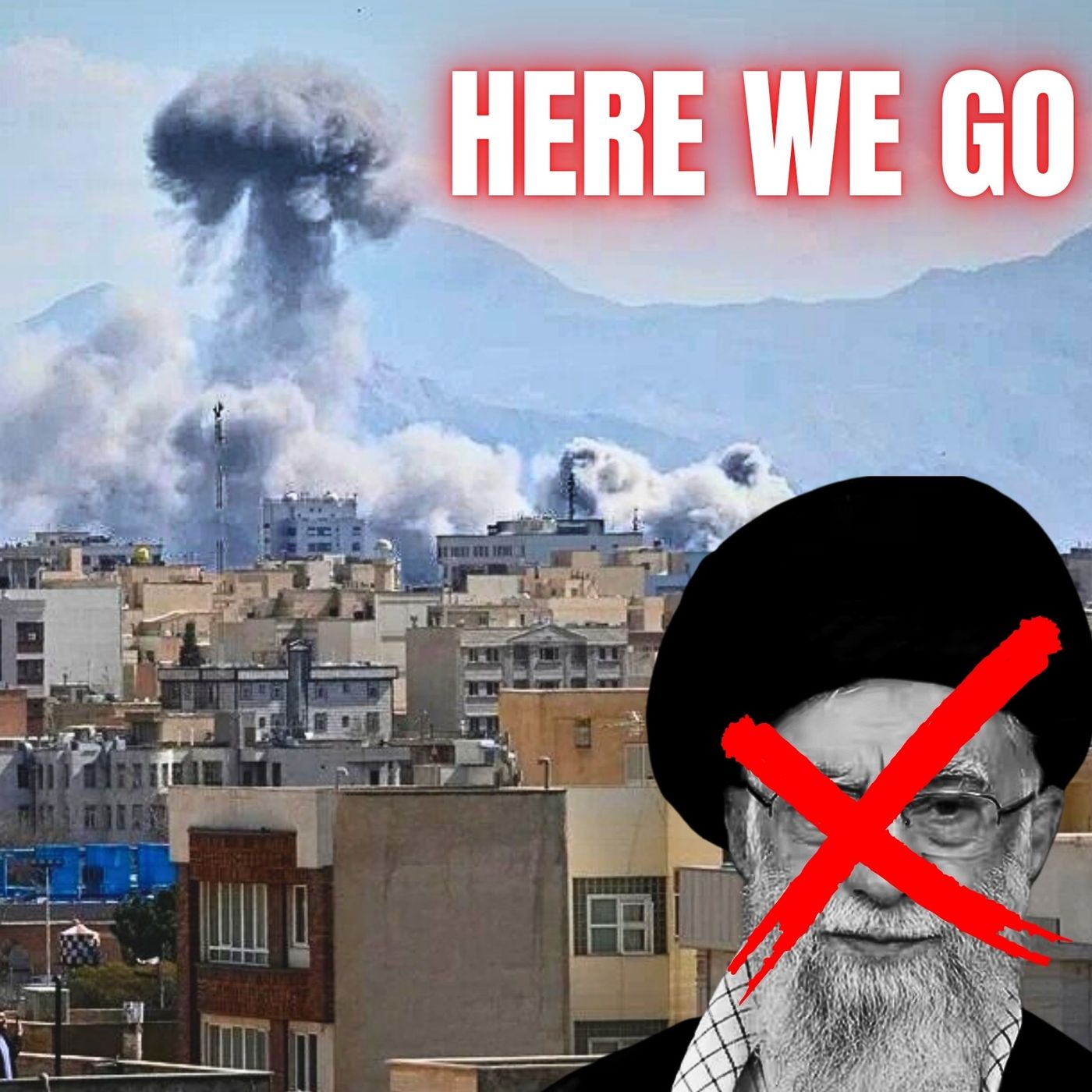
The Team House
WAR: U.S. & Israel Strike Iran, Khamenei Killed | EYES ON GEOPOLITICS
01:13:54
In this episode, we discuss the recent military strikes by the US and Israel on Iran, the implications of Iran's retaliation, and the complexities of Iranian politics. They explore the potential outcomes of US-Iran relations, the succession of Iran's...
Loading summary
Transcript149 lines
- [00:00]
Host
Tax season has arrived and doing taxes without the right help can feel overwhelming.
- [00:05]
Jonathan Hack
Intuit TurboTax is here now to guide
- [00:07]
Host
you through it with confidence.
- [00:09]
Jonathan Hack
Match with a TurboTax full service expert who handles everything for you from start to finish. Your dedicated expert checks every single deduction
- [00:16]
Host
in credit to help you get the
- [00:18]
Jonathan Hack
best possible outcome so you can feel confident you're getting every dollar you deserve.
- [00:22]
Host
And the best part?
- [00:23]
Jonathan Hack
You'll see real time updates on your expert's progress right on your phone while you live your life. Plus, you get unlimited expert help at no extra cost even on nights and weekends during tax season. Visit turbotax.com only available with TurboTax full service experts real time updates only on iOS mobile app busted Appliance this is your sign to upgrade shop at Lowe's
- [00:45]
Mick Mulroy
to get up to 35% off and next day delivery on hundreds of major appliances.
- [00:50]
Jonathan Hack
Lowe's we help you Save valid through 318 while supplies last selection varies by location.
- [00:56]
Mick Mulroy
Order by 4pm Available Monday through Saturday
- [00:58]
Jonathan Hack
subject to availability fees, exclusions and restrictions apply. See lowe's.com appliancedelivery for more details.
- [01:04]
Andy Milburn
Visit your nearby Lowes on Colorado street in Kennewick.
- [01:10]
Mick Mulroy
Hey, what's up guys? This is D. Do us a favor and check out our patreon page. It's patreon.com theteamhouse you get both Teamhouse episodes and Eyes on Geopolitics episodes completely ad free. You get them early too. You can ask us questions. You can also watch the Team Ass episodes live as we shoot them. So and you help support the show and support what we're doing here. It's patreon.com theteamhouse those links are in the description or if you're listening, it's in the show notes down below so you can click it real quick and easy and it helps us keep the lights on. So we appreciate it and we appreciate you guys listening. Thanks a bunch of hey everybody. Welcome to another episode of Eyes on Geopolitics. I'm here with Mick Mulroy, Jonathan Hack and Andy Milburn should be joining us soon. A lot going on. I mean you guys have been glued to your phones and your TVs just as much as we are. I'm sure if you're watching a podcast about, you know, geopolitics, the huge news story was the US And Israel launched a strike on Iran, killing the supreme leader, Ayatollah Khomeini. Iran came back, retaliated and, you know, shot ballistic missiles and drones at basically everybody in the region is. And like, there's like nine countries, I think, at this point, that they've tried. They've hit and try to hit. UAE's been getting smoke, too, which is interesting. I'd love to know why. That's like, UAE has gotten just almost as much as what Israel's gotten in terms of, like, firepower, retaliation back towards them. Yeah, fluid situation, obviously. Israel just launched another bunch of airstrikes again in Tehran right now, like, as we're recording this at like 11:00am Eastern. So. Yeah, well, I don't know, guys. I mean, that's like the Cliff Notes. Real quick version. What do we got, Mick?
- [03:07]
Andy Milburn
So, to start with, I'd say I do support the strikes. I do support the strikes. I am very happy to see that the Supreme Leader is no longer with us. I'm sure people have seen it on social media if they didn't know it already. But the. The laundry list of things that the Iranian regime has been responsible for is extensive, and each one of them, I think, needed to be addressed, whether it's the Beirut bombings, the. The amount of soldiers, sailors, airmen, Marines killed in Iraq. Thanks to Qasem Soleimani, who was obviously being directed from above. I think it was a long time coming. There are issues around it, I would say. We all thought that we were going to see a meeting on Monday, so tomorrow, which would have been, I think, in Vienna, and there was going to be getting down into the technical experts, which meant to most people that the negotiations was going at least in a positive direction. You generally don't get to the technical experts unless you've agreed on the principles or framework of the agreement. So I think there'll be a question about the U.S. and negotiation and whether you can essentially trust that the negotiations are in good faith. Don't know if that was not the case, but I think it'd be fair to say that some people would say, kind of looks like you were negotiating just to prepare for the inevitable in your mind. Again, I supported the strikes, but I think that's going to be a question. The other issue that we saw all of a sudden start being said is this idea that there was an imminent threat to the United States. I don't have access to the intelligence now, but it was kind of like, wait, where did this happen? They have an ICBM that can reach the United States. Never heard that before. I think that had more to do. If you look at the War Powers act, it talks about the President's ability to use military force and imminent threat is part of that. Right. So they basically some lawyer said, just say I'm at threat continuously. Right. And again, I do think I did support strikes. I do think they were going toward a nuclear weapon. There's no reason to enrich uranium to the level they did. You know, 1,000 pounds, about 60%. We didn't even know where it was. So I do think there was real issues being addressed, but I think that part is going to be questioned. It's going to be an investigation, not an investigation, but they're certainly going to look at, well, where's the intel saying that this was an imminent threat? Where's the intel saying that they were getting close to being able to deliver weapons to hit the United States? Because we just never had heard that before. Other things to talk about, obviously the tactical level. I was reading this morning, I had several friends telling me that it was a real combination of intelligence fusion that led to this massive success of taking out Hou Maini, the Minister of Defense, IRGC commander, their equivalent of the National Security Advisor. I mean, go down the list. I think there was up to 40 senior people that were eliminated. And it apparently was a great combination of the Mossad, obviously, which focuses almost exclusively on Iran and the CIA. And the original strikes were substantial. And of course we're trying to diminish the the nuclear program. And one thing about, I'd say a cautionary tale for future politicians who will undoubtedly not heed. My advice is don't exaggerate things because your exaggerations then hurt you in the future. So if you obliterate something, then you can't say there's eminent threat that it's about to be reconstituted because it's that the terms don't actually match. Right. So I know people, the media is making a lot of hay out of that, probably rightly so, but it is a cautionary thing. Just say what actually happened. Don't lie. Yeah, don't exaggerate. Right. So what are we doing now? And okay, so we saw the attacks. They were. It is a war of choice. So there he's going to have the President's gap to explain that to his side of the party that is more isolationist and under the idea that we should stay out of wars. But that's his burden to bear the retaliation. I'll say one more thing about that and then throw it over to you guys. And before we started, I think it'd be great to have Jonathan explain the secession that comes with the Supreme Leader. But the last thing I'll say Before pausing is the Iranian response. There's a couple of things. One, it looks like they were going on orders and then once the decapitation happened, they just did it.
- [07:53]
Mick Mulroy
Right.
- [07:53]
Andy Milburn
And they made a very big strategic blunder. They attacked the civilian populations in almost every country in the region. So these countries who either were pushing diplomacy, were trying to avoid the actual conflict itself, are now firmly on the side of the US and Israel in fighting because I mean we saw the Shahid drones and slamming into hotels in Dubai and skyrise civilian apartment complexes in Bahrain. That was a huge strategic mistake. And so I think that that is something that we're going to have to see. And now we're seeing this non stop rhetoric about some supersonic weapon system that's going to be used probably today or tomorrow by the Iranians that is going to cause all sorts of death and destruction. So we'll have to see where this goes. I would hope that the US takes the opportunity to say, okay, we took out the Supreme Leader, let's stop and let's go to the negotiation. Of course Iranians have to agree to this, but look for an opportunity to off ramp this because if it continues too long, it's going to have major impacts around the world. About 60% I think of the traffic's already down going through the Straits of Hormuz. It is in an oil's going to skyrocket, a lot of bad things are going to happen. And of course if the Iranians really view this as an existential threat to their regime's existence, they're going to use every possible means available. So clandestine attacks, terrorist attacks against not only military and diplomatic facilities and personnel, but civilians. And they do have the ability and they have penetrated inside the United States. So there's a lot of reasons why the US and Israel should take the win, if you want to call it that and see if there's a way out of it. Again, the enemy gets a vote and Iran has promised specifically Lederjani to, to retaliate pretty strongly. So we're going to, we're going to see where this goes.
- [09:56]
Mick Mulroy
Can you blame them? I would, I would go and scorched earth. They just like their 87 year old supreme leader just got smoked, including like another dozen or so top guys. What are they supposed to do? Right, because their goal is regime security, obviously.
- [10:17]
Andy Milburn
Yeah. And the other point to that D is I mean it's a 5000 year old civilization, it's almost important in human history, yet 47 years they freaking destroyed it and 37 of those 47 years, Khomeini was in charge of it. So the only thing they're good at is brutalizing the Iranian people to stay in power. That's it. Right?
- [10:36]
Mick Mulroy
Yeah.
- [10:36]
Andy Milburn
They can't run a country. They run out of water. They have one of the biggest oil and gas supplies in the world. Their economy is, is.
- [10:44]
Mick Mulroy
Well, that's because they were sanctioned, right? I mean, I'm not saying they were
- [10:48]
Andy Milburn
sanctioned because of their actions, the regime.
- [10:51]
Mick Mulroy
I'm not like, crying over Khomeini being smoked. I could care less. What I care about is, like, the blowback. And we are now seeing what's happening now across the region. We have no plan. It's almost like it looks like 2003 was like a masterstroke in Iraq compared to what's going on right now, frankly. You know, there's going to leave an obvious power vacuum and we're going to talk about the secession and what that's going to look like. I don't really know what the point of this was, to be frank. I don't really. I mean, I understand Khomeini being a bad guy and the regime as a whole being horrific, but if we really cared about the protesters of some, whatever it is, 30,000 people that have been killed, why didn't we start doing this a month and a half ago when the protesters were at, the protests were at their height and the regime actually looked like it was really on its back foot, frankly, like as the layman here, and I told this to John before we started, you ask people, like, I've asked friends of mine who are like, you know, they just read headlines, really, and they don't really understand or care about the nuances of foreign policy and geopolitics. They honestly just blame Israel. And frankly, to quote them, it's like the Jews run us. That's what they said to me, like layman people. Right. Obviously, I don't agree with that. I think Israel's a belligerent actor in all this. But I, I can obviously, you know, you could differentiate Israel, idf, Bibi, Netanyahu, the right wing of them, that party. And like, regular Jewish people, like, most people don't want war. But frankly, like, in terms of like the person on the ground who pays the taxes that does this, they don't understand what the fuck's going on. And they think that Israel is our daddy here, for lack of a better term.
- [12:51]
Andy Milburn
I mean, I'm gonna start saying people are anti Irish if they disagree with me because it really, it doesn't I mean, that's a weak argument, man. Like, you could disagree with people and not be anti Semitic or racist or whatever moniker you want to use. And obviously, I mean, most American Jewish folks disagree with the policy of Netanyahu.
- [13:12]
Mick Mulroy
And frankly, there is an argument there to say that Netanyahu is also a war criminal.
- [13:18]
Andy Milburn
But from the Israeli perspective, I mean, let's face it, they have dealt with proxies that have attacked them almost nonstop, to include on October 7, then joined in by the Houthis and Hezbollah. And. And yeah, they're going to want to get the United States to help them degrade, if not destroy their enemy. I would. So I see it from their perspective. I mean, we can go into how they conducted the war in Gaza, and God knows we have the expert right there. Andy, seriously. And I mean that very sincerely, but the idea that Iran is a threat to Israelis is clear. So I would have, if I was in their shoes, I would have loved to try to get my big brother to roll in there and help me take out and do what they did. And I do think the United States had the justification. I mean, nobody ever gives, like, any blame to the Iranians here. They could have actually negotiated and agreed not to have a nuclear weapon and they wouldn't have the sanctions against them that they do, and they wouldn't have to brutalize their own people. You just said they killed 30,000 of their own people. Right. So what about the actual culpability of the Iranian regime? It's almost like it's like Al Qaeda where they get a complete pass. It's just all, all the criticism is, is to the countries reacting to their actions. And I think, I think they need to be held accountable. And they were held accountable.
- [14:44]
Mick Mulroy
Well, Al Qaeda is a terrorist organization, and like it or not, the regime is the leadership of a sovereign country. Right. So I think there's a little bit of difference there as well as culpable
- [14:58]
Andy Milburn
for their own actions.
- [14:59]
Mick Mulroy
I completely agree with you. As are we.
- [15:03]
Andy Milburn
My standard of actions is somehow different than every other human on earth.
- [15:08]
Mick Mulroy
Right.
- [15:09]
Andy Milburn
If you're gonna commit murder and you're going to attack another country, stand by for being attacked back.
- [15:14]
Mick Mulroy
Right.
- [15:15]
Andy Milburn
And you can't use proxies to try to avoid responsibility. That day should be over. And as soon as that happens, then proxies will be less effective.
- [15:24]
Mick Mulroy
Sure. I mean, well, like, I think it's arguable that after October 7th and this, the. The. What Israel's done, not just in Gaza, but in Lebanon and in Syria and Iran back in the 12 day war, that and the US in the red Sea, like that the proxies in Iran are the weakest they've ever been in terms of like being a threat definitely to our homeland. Like, but you know, even in the region, I would say that like Hezbollah got smoked essentially Ashara hates fucking Iran and we and Israel still bombs them. So I would, I would argue that the Iranian proxies are the weakest they've ever been in the last.
- [16:07]
Andy Milburn
Why is that the case? Because Israel did it, right? They attacked Israel, Israel attacked back.
- [16:15]
Mick Mulroy
Yeah, but I don't think this is like, it's not, I mean, it's not
- [16:20]
Andy Milburn
because they ideologically shifted space and decided not to be an enemy of Israel and the United States. It's because they got their ass kicked. That's what happened.
- [16:30]
Mick Mulroy
Right? Yeah, I just don't know. You know, decapitating strike on a, on a sovereign leaders thing, you know, international law, I mean that's been a myth in the last year anyway. It's just things we, we've never really done before. And like now like we're going to a place where like we, you know, were acting more like Israel where it's just like, you know, they can, they assassinate whoever they want whenever they want. But yeah, I don't know. I just don't. And plus again, like I'm going to come back to the planning like in terms of the fallout and what comes back and the blowback. Right. Because Hezbollah supposedly has agents everywhere that, you know, there's a huge diaspora of Lebanese people in America. So I would argue that the homeland is more at risk now with like a rudderless ship and some lunatic, let's say RGC guy taking over in terms of like attacks on the United States of America. Actual like united. I live in New York, you know what I mean? So it's like that's an, you know, compared to what it was with like this, you know, he was a jerk off and I'm not sad he's dead, I don't care one way or the other. But like this sickly 87 year old who like kind of was, you know, with our best case scenario in terms of that regime and you know, that's crazy. You know, it's a little while to say, but some like 50 year old crazy IRGC commander coming to power, I don't know if he's going to be like the, the kind of guy we want to negotiate with, like a real sage person that's like thoughtful and considerate in terms of like Global, you know, global order and the rest of it. But I don't know, I think it just can be messy. And I don't think we've really learned our lessons from Iraq or Afghanistan, frankly. And we're in a worse position in Iran, right, because we don't even have a ground force there and there's 90 million people there. So even if, even if, you know, the Kurds and other groups come up and like be back, like the, like the hardcore regime people, how do we, you know this is going to probably devolve into civil war, right? Most, maybe. I mean, most likely. I can't see this being having a happy ending anyway. John, what do you got that was
- [18:41]
Jonathan Hack
interesting to listen to? Yeah, I'm thinking about you mentioning the geriatric 80 year old ruling the country. Thing is, that guy's been ruthless since day one. And it's easy to look from the outside in and kind of think about how it affects the world and ignore how it affects the inside of the country. And since he became first president and then Ayatollah, he was right there directing every death, every killing. He signed the death warrants of 3,000 people in 1988 when they executed Mujahedini Khalq. Frankly, that's a wild cult, the Mujahideeni Khalq. But they're still people. There was zero trial, no due process. There were basically these little slips of paper that had a person's name on it and a single box where you just check yes, and they get executed. And actually Raisi, who died tragically for himself in a helicopter crash a few years ago, was one of the judges that was signing those slips of paper. And the reason I mentioned the Ayatollah and Raisi, who were later on politicians, all of them started out as these bloodthirsty revolutionaries who wouldn't take no for an answer no matter what. And when the revolution happened in 1979, there were actually eight different groups that were part of the revolution. One of those groups is what the Islamic Republic of Iran came from. The other seven were violently suppressed to become extinguished. The only ones that survived were the Mujahini Khalq in any big number that actually matters. And they were actually pushed out of the country and they went to go to Iraq. And when Saddam invaded Iraq, the Mujahini Khalq that remained in Iran helped Saddam come into Iran. And that long history is very important for thinking about today. We think about the Ayatollah today, that he's this old man, can barely walk, there's a reason his left arm doesn't work and it's because he was almost assassinated in 1981 for the things that he did to other Iranians. So since day one he has been a target of Iranians because Iranians have been a target of him.
- [20:33]
Andy Milburn
Andy, he's ready to go, I can tell.
- [20:38]
Host
No, I, I, I've been, I've been following and learning with great interest. Yeah, I, I mean I, I believe I, we, we need to get occasionally people on who don't know what they're talking about so that we can have vociferous arguments. Right. Maybe, I don't know, Andrew Fox or someone like that because I'm absolutely on board with everything that Megan John has said, but I'm not going to simply rest at that. I'm going to say what's kind of interesting to sum up what everyone has said so far. Look, the death of Khomeini from a legal and ethical standpoint. I mean that's the general argument here within the group, I think, you know, based on all the things that have been said, plus from a kind of a perspective of national interest, it's a debt some consider long overdue for Iran's support of pro Iranian militias within Iraq. Right. Which resulted in substantive US casualties. We all know that from the development of EFPs back in 2005, 2006, all the way up to the fight against ISIS. Right. And beyond when we've been continuously having problems and incurring casualties from Iranian backed militias. So this didn't come out of the blue. I mean there is a ledger that Khomeini has established not just vis a vis his own people in terms of brutality, but in terms of his proven antipathy to the United States which has resulted in US Casualties in the past. So you could just say setting that right. But one thing I would say a question going ahead and I'll be interested to hear both John and Mick on this is how does this fit into we understand what Israeli views are. Israel is always very on point when it comes to pursuing their strategic objectives and they have always portrayed Iran as an existential threat to Israel. Whether you believe in that 100% or not doesn't matter. It's the fact that's Israel's standpoint on this. Israel views Iran's regime, particularly its nuclear missile capabilities, as an existential threat. Of course, you'd have to have a convoluted kind of chain of thought to think of either of those as existential threat to the United States. But certainly a threat to US Interests. Israel justifies targeting the leadership in IGRC infrastructure as a continuation of the war that they've been involved in for several years and is framed as degrading Iran's capacity to protect power in the region. All right, all of that we understand Israel's strategic interest is very clear, but what are ours at this point? So aside from the president reaching out directly to the Iranian people and trying to encourage an uprising coming out of the Pentagon, though, it's very clear that the framing emphasizes preventing Iran from acquiring nuclear weapons, defending American forces and allies from Iranian missiles and proxies in the region. That is how we frame this. But what do we expect to see next? So I would, you know, what we've seen is Iran's iads, the integrated air defense system, totally stripped. Right. And that was the goal, presumably. Apparently by today. We've gone after command and control nodes, we've gone after leadership, and I believe we've also gone after nuclear facilities. But what do you guys think is the end state, number one? Number two, are we only seeing part of this? Do you think there is stuff going on on the ground of a covert nature to encourage a regime change, a takeover? Because we've all talked about on this show the fact that bombing alone, no matter how effective, is not going to guarantee shift of balance of power, domestic balance of power within Iran. So how does this all fit, do you think, into the end game? The end game? The last piece I mentioned, you know, Dee brought up, is there an element of this that is purely punitive? Going after Iranian officials? At vrbo, we understand that even the
- [25:21]
Andy Milburn
best of plans sometimes need a little support. So we plan for the plot twist.
- [25:26]
Host
Every booking is automatically backed by our
- [25:28]
Jonathan Hack
VRBO Care guarantee, giving you confidence from the very start. Whenever you need help, it's ready.
- [25:34]
Andy Milburn
Before your stay, through the moments in
- [25:36]
Host
between, and after your trip. Because a great trip starts with peace of mind and maybe a good playlist, but we've got the peace of mind part covered. You know what they say. Early bird gets the ultimate vacation home. Book early and save over $120 with
- [25:56]
Andy Milburn
VRBO, because early gets you closer to
- [25:58]
Jonathan Hack
the action, whether it's waves lapping at
- [26:01]
Host
the shore or snoozing in a hammock that overlooks, well, whatever you want it to so you can all enjoy the payoff come summer with VRBO's early booking deals.
- [26:11]
Andy Milburn
Rise and shine.
- [26:13]
Host
Average savings $141. Select homes only. At VRBO, we understand that even the
- [26:19]
Andy Milburn
best of plans sometimes need a Little support.
- [26:22]
Host
So we've planned for the plot twists. Every booking is automatically backed by our
- [26:26]
Jonathan Hack
VRBO care guarantee, giving you confidence from the very start. Whenever you need help, it's ready before
- [26:32]
Andy Milburn
your stay, through the moments in between and after your trip.
- [26:36]
Host
Because a great trip starts with peace of mind and maybe a good playlist, but we've got the peace of mind part covered for what they have done to their own people. Or again, is this part of a concerted effort for regime change? What are you guys thoughts based on what you know, what you've seen on the ground?
- [26:57]
Andy Milburn
Yeah. So I think one, I would join the chorus if the President could do himself and the nation a favor by really sitting down and explaining what the plan is here. Generally speaking that's done well in advance. Perhaps there was a little bit of deception and that's why he hasn't. So okay, now there's no deception needed. We're obviously engaged in full on conflict so I think that would be helpful. What he might say is that the US is prepared to do militarily what we can't do diplomatically. We are prepared to degrade. Anytime they try to build up their nuclear facilities, we're ready to hit them. Every time we think they're ballistic missiles reaches a critical mass because obviously quantity is also an issue when it comes to dealing with the threat. They can mask them in other words, and that is what causes all the death and destruction in Israel and now what we can see in other countries. And of course if the regime is going to continue its non stop, not only threats against Israel, the United States and the west, but actions right by supporting proxies that will attack all the above. Let's remember Hezbollah was responsible for more American deaths than any other group until 9 11. So that might be what they say with the end goal hopefully being to get back into the diplomatic sphere and end up with an agreement that we can all live with and that allows the Iranian people to essentially kind of escape the yoke of these maximum pressure campaign and sanctions, but also gives the world assurances that Iran will never get a nuclear weapon and will stop using proxy forces to attack its enemies in the region. So I think it can be explained but of course the enemy gets a vote. So what is Iran going to do? Are they going to accept this? Is President Trump going to look at the Venezuela model as okay, so I'm not really going to support the opposition. I'm just going to deal with somebody for practical reasons that are going to be like Delsey Rodriguez's of the world. Is there somebody like that? Is there any possible way that what's left of the regime would be amenable to that? I think Jonathan should answer that. But there's a lot of questions out there. But I think the first thing we could do, the President could do, the White House could do, is to sit down and explain why we are where we are and where we hope to be headed with this.
- [29:38]
Jonathan Hack
Yeah, I'll piggyback right on there. Yeah, so I'm thinking about there's two possible outcomes of this. One is a change in the system, which is a new government, and the second is status quo, which is remnants of the current government remaining. Like you were mentioning, Mick, with the Venezuela model. The problem here is that Venezuela model can't work in Iran because the regime is so entrenched and it's so monolithic as far as the shields are stuck together just like a phalanx as far as this regime is concerned. And they're all in survival mode. Every single one of them shares very similar views. And those views aren't, perhaps to other people's surprise, they aren't necessarily religious, they're survival minded. There are certainly clerics who are, you know, fanatic religious folks. But there are very wealthy, you know, very powerful individuals in Iran that benefit only from the existence of their regime in any form. And as long as that system stays there, those people will remain corrupt and in power. The central bank will continue printing currency left and right, continue destroying everyday Iranians lives. If you go right now into a grocery store and I saw this last weekend in Iran, you have to use a payment plan to pay for yogurt. It's become so expensive and currency is so devalued, you cannot purchase it with money. But because they're not part of the swift banking system, you can't use a credit card either. So you have to do a payment plan where you promise to pay for your yogurt over the next month, which is insane. I mean, that's just a tiny little speck of how this regime has treated its own people. Because like you said, they have had plenty of opportunities to come to the negotiating table over the last 47 years and say, all right, we're going to change how we're behaving. And they've never done it except once, which was during the JCPOA where they changed one element, just one element of how they conduct foreign policy, but still continued instigating and antagonizing people in the region and the world. Now let's go Back to the two options. So if we have the IRGC remain, like you mentioned, the Venezuelan model, what you're going to have is people like Ali Larajani, Abbas Aragchi, Mohammad Bagargali, Baf, Yahya Sabawi name some of the listeners might have never heard before. But if you watch the regime for a long time, these are people that you don't. Every time you hear these people's names, you shudder because these are the people that have been holding power the entire time. When you see the Ayatollah up there in his elderly state talking on a Friday to the people, that's not who's in power and has not been in power. The people in power are those names I just mentioned. Those would be the people. And by the way, those are the people that are still alive. They were not killed yet. Yet. Those are the ones that if we hand over power and say, oh, they're these pragmatic people. Ali Larajani, he's the speaker of the House, or Golubov is the speaker of Parliament. Larry Johnny's Supreme National Security. Oh, these are pragmatist politicians. Absolutely not. These guys have had the levers of power. We've talked about this in the past about the Sipahis or the guardians. These are the guardians. These are the ones that have been ruling the country. It would be an absolute mistake to hand over the keys in a legitimate fashion, like oh, now we actually recognize that you are the power brokers. The country won't just status quo, it'll get worse because now they've been exposed and that there's nothing to hide behind anymore. They'll say, well, now we're in power and you have to do exactly what we say. There's no more secrets, there's no more hidden black market where The IRGC controls 80% of the black market. Now it will be 100% of the black market because they will be the government legitimately the government in their eyes and in our eyes if we legitimize them. That would be a huge mistake.
- [33:01]
Host
Yeah, I think it's fair.
- [33:04]
Jonathan Hack
Right?
- [33:04]
Host
Chanda, since 1979, the regime has focused on developing built in redundancies through parallel institutions. So you mentioned the IRGC and the real power brokers behind there. They act as a check, of course on the regular conventional armed forces. And then you've got the besieged and the specialized units who backed the regime and then the whole layer of civil security and intelligence bodies. You brought up a really interesting point about the economy. So although the civilian population is clearly suffering heavily from the state of the economy. Isn't it true to say that the regime itself has kind of economic networks built in as buffers? Right. I mean, the ILGC has its own linked enterprises, smuggling networks, and then there are kind of quasi government bodies. Right. That manage social services, economic projects outside state channels and continue to function.
- [34:20]
Jonathan Hack
Yeah. These are called banyads, and they're kind of like private equity firms equivalent to the United States. They're worth over 150 billion, 200 billion, 300 billion. There's one called Khatam Alambia, which is the construction Jihad headquarters. That's what it is in English. That's this giant multinational conglomerate that has offices all over the world. They have these shell companies, holding companies in places like Hamburg, London. They even have bank accounts in the United States. They're completely evaded the sanctions regime that is designed to stop them. And in fact, they've enriched themselves because they're the only actors that have access to the money, which means they control that scarce resource. And inside Iran, there are these groups that are supposed to support poor people or poverty. All that money gets funneled into regime pockets, all of it. And even the Central bank of Iran, back In the early 2000s, there was a big scandal because the director of the central bank fled to Canada with $3.6 billion. How do you flee with $3.6 billion? That's not really a thing you can bring with you in your pocket. That means a bank transfer was facilitated and approved by a Canadian bank. Right. How is that possible if they're not part of the SWIFT system? And it's because they're able to get around all these sanctions with what they're doing. And we can have a whole episode on how they do that, because I've studied that in great detail. But they are able to do it, and the mechanisms exist, and states allow it. For example, Germany is a big facilitator of this regime money that flows in and out of Iran. You've got the children of all these regime leaders, the ones I just mentioned, like Larijani, Kaliboff, even Khamenei. Their kids live in Canada, London, Paris, and they have Instagram accounts. And you can see them. They're all wearing Louis Vuitton bikinis, zero hijab at all. I mean, they don't look Muslim, but you have these guys talking on the TV as if Islam is the end and that's it. And their kids are in Paris at a pool party, posting on Instagram. So what it really comes down to in reality is corruption. You have this small group of highly corrupt individuals who will never change. I mean, you can't come up to a corrupt billionaire and tell them, hey, can I just get your money back, please? They're not going to do that. Right. There's only one way to go and I think these people see it. For example, if you see Larry Johnny, currently speaking to the public, he's right now the number one guy that's kind of leading the existence of the regime in the media. And he's talking about, we'll do everything we can to survive. I mean, he's telling the truth. They will do everything they can to survive. The question is, how much longer can they survive? What's that target list look like that we have? What's that spreadsheet look like? Remember back during the war we had the joint prioritized effects list. I'm sure his name's on there with an objective name. And I'm curious, how long is he going to survive on that spreadsheet?
- [36:57]
Andy Milburn
So these Spaniards, I mean, you obviously just described it. Is it a lack of will for countries, whether it's Germany or Canada, or is it they just, they just are being deceived, it's deceptive and they just don't know what the count. I mean, can you explain that? Maybe we should send this to the Treasury Department. This section right here.
- [37:18]
Jonathan Hack
Yeah. Actually we just in class at Yale Law School had the sanctions and money laundering experts speak to us. It's very interesting to listen to. They were talking about cartel money. But it's a very similar situation where Wachovia bank, for example, there was a big scandal because Wachovia bank got fined several billion dollars for facilitating much of the cartel money between the US and Mexico. And there were two problems. One problem is the self interest of the bank because they collect fees from all this money. So they don't want to scrutinize that. They're making a lot of money. That's one issue. The other issue is on banks like this, like Wachovia or Bank of America, for example, they have trillions of dollars of assets moving through daily, daily. I mean, how can you track every one of those dollars on that spreadsheet every day? You can't. So it's a very tough kind of cat and mouse game. If you care about it, if you want to stop it, it's very hard to do it. Especially when there's one degree of separation between the sender and receiver. Let's say you've got a small Subsidiary bank in Hamburg that's sending money to Paris. Well, if you're the Paris bank, it looks like it's coming from Hamburg. It's hard for you to know who sent that to Hamburg. Now add a second layer in there and the amount of complexity you can introduce by adding two or three layers between sender and receiver, it's hard to even fathom. I'm not making an excuse for the bank, because on the other side, it's really that first reason in the beginning why they didn't scrutinize it to start, and that's because they're making money off of it. They're corporations. It's normal for a corporation to maximize the value of shareholders, and that's what a holding company for a bank does.
- [38:45]
Host
Yeah. All I wish is to say that the Iranian. The whole regime system is just built to withstand shocks. Right. It's built for redundancy and resilience. And that's a significant problem when you're talking about regime change as potentially being a strategic objective of the United States. But as Mick points out, we don't know if it is yet. That was just something that we're pondering because of what the President has addressed to the Iranian people. He hasn't addressed the American people yet, but he's addressed the Iranian people.
- [39:21]
Jonathan Hack
Well, we did the same thing with the authorization of use of military force to kill Qasem Soleimani. If you read that document, it's about Saddam Hussein and Iraq and Iraqi forces in Iraq. And that was the document that was used as legal justification for that assassination. Like, right or wrong about the assassination, the document they used does not connect to the action. Right.
- [39:41]
Mick Mulroy
So how's that legal?
- [39:43]
Jonathan Hack
Well, that's the thing. I mean, if you're the one writing the rules and nobody stops you, everything's legal, right?
- [39:48]
Mick Mulroy
Yeah. And, like, we've seen, like, the messaging from the administration even before the strikes happen. It's yo yoing all over the place. It's the protesters and it's nuclear weapons. Then it's, you know, proxies. There's no real. You could put them all together, sure. But there's no real, like, actual plan in terms of, like, why we're doing this and to what end is there? Because it does sound like they're extremely entrenched, and we don't have half a million troops, you know, driving down Main street in Tehran to, like, start to unravel this. So, um, Andy, I remember you a couple of weeks ago, maybe a week ago, you mentioned about, like, Mowing the grass was like, every time another guy pops up, like, oh, he's the new IRGC guy, he's the new Ayatollah, we'll smoke him too. And like, we'll just do this game forever. And another bit about their nuclear program. Sure, no one believed it was obliterated or whatever they said back last year, but a bunch of nuclear experts had mentioned that, like, their nuclear program had basically stopped. Had basically, like paused indefinitely after that. So to bring up, we had Wyckoff last week as well, talking about there, he's a week away. Some bullshit Israeli talking point. They're a week away from having deliverable shit. Like, there's no clear messaging here. And frankly, like, when you send Steve Wyckoff and Jared Kushner to be the negotiators, I don't. I don't have a ton of confidence in that group going, to be honest. I'm sure they'd be great at negotiating a lease for a hotel person or some bullshit like that. That's good. Great. This is like real deal foreign policy that's extremely nuanced, extremely complicated. So, yeah, I'm not exactly confident in this administration and their plan or lack thereof, on what happens next. And frankly, I think we're more in danger in the homeland right now than we ever will, than we ever were three days ago. Gotta be honest. But I'm an idiot. I don't know who wants to take that up.
- [41:50]
Jonathan Hack
I'll jump in here. So we were talking about the nuclear enrichment stuff. You were talking about that, Mick, about how you don't need 90% enriched uranium for anything except a weapon between 60% to 90%. Small technical step. This was the issue all the way back to 2015. Well, Larry, Johnny, that guy that I mentioned, that's like the behind the scenes puppet master that's still alive. He's the one that said giving up nuclear fuel abandonment or abandoning it, it's like giving up pearl for a candy bar. That's what he said. And he still has said that. So if this is the guy that we want to remain, the nuclear issue is going to continue. It's going to exist. And we killed something like 40 people in the past three days, some of whom were scientists. But it's not like you can extinguish science. There will be more people that learn how to do these things. And once you've produced a method to do it, new people can come in with less knowledge and reproduce the thing that that original, smarter person created. So earlier in the 2000s, when they set up those centrifuges and set up the way to do the cascading enrichment and all this, this kind of little more complex way of enriching uranium to. To mask the way that it's enriched, to hide it from the iaea, that's been done. It's been. It's been created. So that way when someone comes in with less technical knowledge, they can take that plan off the shelf and reproduce it. And that's even what Iran did in the first place. When the AQCON network gave Iran nuclear back in the late 80s, early 90s, you know, that Pakistani weapons broker came in and sold the uranium plans to Iran. Iran didn't have to invent it. And this is the problem that still exists, because that isn't. That knowledge is there. It's kind of like killing an ideology. You can't do it. You also can't kill nuclear knowledge. So a less experienced technician might come in and restart the program because Larry. Johnny wants them to. Now we have a problem where we're going to have nuclear weapons that might be improperly manufactured, which could be even more devastating because of unforeseen effects of these weapons. So the threat of the weapons exists. I just don't know if in the past two months it got worse than it was because the rhetoric, they were, you know, the west was saying it sounded like it was a lot worse and worse. And, you know, we're 10 days away, we're a week away, which you remember Netanyahu standing in the UN a few years ago, holding up the picture of the bomb, saying, we're five days away, and we've been five days away for 20 years. So I don't know how real that threat has been, actually.
- [44:06]
Mick Mulroy
Also, the nuclear threat, we. They had no enriched uranium during the JCPOA, you know.
- [44:12]
Jonathan Hack
Right. They had it down to under 5%, which is an incredible commitment to actually follow the deal. The problem is, though, it didn't include proxies, so it was never an acceptable deal to Israel.
- [44:21]
Mick Mulroy
Yeah, but we're America. Like, we don't give a shit what Israel wants. That's how it should be. I mean, Israel should be safe and secure. Absolutely. But they cannot dictate our foreign policy. No other country should be able to dictate our foreign policy. That's my position as an American citizen anyway. And I'm a Greek too, right. My family's from Greece. Greece shouldn't be able to dictate our fucking foreign policy. Sorry, guys. I mean, we call the shots. There's A reason why we're the big stick, or there should be anyway.
- [44:54]
Andy Milburn
And the issue when we got out
- [44:55]
Host
of the jcp, because for a long time it's been troubled me that the Greek government may be dictating U.S. foreign policy.
- [45:04]
Mick Mulroy
I'm just saying, even if, even if they had sway like that, I wouldn't be like, oh yeah, let's go for it.
- [45:10]
Host
Yeah. I mean, I think that's why it's important. Like both Nick and John have said that the President addresses the American people to explain what the objectives are. You know, we can go back and forth, we can, as we have, and we've talked about the probable possible consequences, what our objectives are, but at the end of the day, only one man can really address that conclusively. And it's probably time to do that, to explain why that is. And there's good legal and ethical reasons for doing that, of course. I mean, we haven't discussed in depth the legal basis for what has happened so far though. I mean, I would venture we're probably on legal solid ground. We can justify what has happened under the President's, you know, the, the President's powers under the War Powers act, although he's, that's tied to a limited timeline.
- [46:12]
Jonathan Hack
Right.
- [46:14]
Host
You could, you can talk about, you can talk about self defense, you can talk in terms of both past actions by the Iranians and potential imminent action, although of course that's kind of thinner ice. But all of these things probably need to be explained to the American people, to Congress, so that everyone understands and what the goals are of these strikes going ahead. And if it is simply to keep Iran within limits when it comes to support for proxies and nuclear, its nuclear capabilities. In other words, if it is a mowing the grass effect, then let's, you know, let's announce it. But I think all of us are concerned about kind of an open ended, unstated goal of regime change without that being fit into any kind of strategic plan without anything else happening beyond the bombing.
- [47:11]
Andy Milburn
Yeah, and you mentioned earlier, Andy, about the idea of whether the US is really promoting the opposition to take control of the country. And as Jonathan said, this change in the actual governing structure. I would be hesitant if I was advising the President to have him ask protesters to get out in the streets. I mean, obviously we'd like to see a regime change. I get that. I would like to see a regime change. But if we're not willing to do much to assist them, we could be sending them to their death. Right, so you already mentioned 30,000 dead. Well, can you imagine how less of the restrictions the regime would have on protesters now? Right. So it could be just an abject slaughter. So again, it's not because I don't want to see a regime change, but when we ask people to do that, and we've done this before, we collectively the U.S. you know, in Iraq after Desert Storm, it can go really poorly for them. And if they felt like we were promoting them getting out there to do something because we were going to step in and assist them, that could be a problem, I would imagine, I don't know, but that the agency's been tasked to help foment it. But those never work unless it's organic. Right. You can't create it out of whole cloth, but you can enhance something that's actually genuine. And I think the. I think the opposition is obviously genuine. But the question is going to be it's easy for us to send them out on the streets, but is it going to. Is it. There's a real chance for it to be successful or is it a real chance that we, instead of 30,000 dead, we're looking at 300,000 dead. And I think we have to consider that before just telling them to get out there and protest.
- [48:56]
Host
So, you know, and that gets to John and actually Mick too. I mean, this is both you bailiwicks. But presumably one hopes that there are a list of kind of ccirs. Right. That would indicate.
- [49:14]
Mick Mulroy
What's that mean?
- [49:16]
Host
Commander's critical information requirements. Right. So in other words, that presumably the intelligence community has been primed to pick up on certain indications that regime change may be a prospect. Right. In which case that might be a trigger to follow on actions. So you simply, as Mix said, simply, where I'm heading on, this is simply calling people out on the streets. As Mix pointed out, it's been disastrous in the past for us. Think back to 1991 with the Shia uprising in Iraq. Right. So maybe before we do that, what the IC has been trying to look for, certain things, I don't know, you know, visible splits among power centers, the clerical establishment being kind of being pitched against the irgc, there being a rift between them, or perhaps IRGC factions going against each other, provinces ignoring Tehran's directives, you know, differences, significant changes in security force behavior. Right. Units refusing orders, standing down, openly switching sides, or a challenged succession process
- [50:34]
Mick Mulroy
or
- [50:35]
Host
maybe sustained protest capacity. The protests just continue to get bigger and bigger. Any one of those or all of those things might be indications that regime change is even a prospect. But you have to key the intelligence community to look for those things and report them. You'd have to have a plan to follow up and reinforce success in those areas. Which is what I mean about having part of a bigger strategy. Part of a bigger strategy isn't simply bombing and then saying, hey, guys, I think it's time to overthrow these shitheads.
- [51:07]
Jonathan Hack
And also, for there to be a threat that's credible to the regime, you need the intent which the people have, but you also need the capability for them to materialize that threat. That means weapons, lethal force, control over communication, control over media outlets, ways to communicate, to disparate widespread groups to actually come together, join together, use that lethal force to then become a threat to the existing system. And the problem is the regime has done a very good job of having no second amendment in Iran. So the regular people cannot own weapons and have not owned weapons since 1979. This is a huge gap between the haves and the have nots. The regime people have weapons, and the 90% of the country that opposes it do not. They even went through and took away hunting rifles up in the mountains and things like that. So there are no weapons except a very small amount in the country. If the US Was going to help, this is a great way to covertly supply them with weapons, providing. You know, we did the same thing in Albania, actually, in World War II when we were supporting the partisans. We dropped huge amounts of weapons and crates, ammunition, medical supplies, all kinds of things to sustain the Albanians, and they succeeded. That was a huge success in Albania. And I think that's actually a very good resistance model for a situation similar to this, where you had a very repressive regime coming in with zero qualms about harming anyone in their path. And the US and Britain both came in and supplied those resistance forces, and those resistance forces were able to become a credible threat.
- [52:34]
Andy Milburn
Jonathan, would you mind explaining the secession plan and how that works for the Supreme Leader that we were talking about before?
- [52:40]
Jonathan Hack
Yeah, sure. So the Constitution, they have actually talks about it pretty in depth. The Constitution is very lengthy. It's not like ours, which is succinct and easy to understand. I'm just kidding. It's sometimes simpler is not better. But yeah, they have right now three people that have come together by the constitution to actually sit in a council similar to how the Pope is selected, where they come down secretly and deliberate and talk about the different candidates. The reality is, though, that the candidates have already been selected by the Ayatollah far in advance. So they're Basically deliberating over a list that's already predetermined. There's a little bit of tension between the people on that list, two of them that stand out. One is the first ayatollah's son, Hassan, and the recently deceased ayatollah's son, Mojtaba. Now, the recently deceased ayatollah said, I don't want my son to take over. I don't want it to be a hereditary regime, et cetera, et cetera. I don't know how true that is, because he was president and then became ayatollah and then never let go. So actions speak louder than words. I'm not sure how that works. The thing with Mojtaba is he's been kind of out of the spotlight, perhaps on purpose to allow him to look like an aloof cleric, because that was a big piece of insecurity that the ayatollah had, was he wasn't actually a grand ayatollah when he became the leader of the country. Somehow that title materialized in 1989, that he was suddenly a grand ayatollah, but he wasn't, and he was very insecure. There's actually interviews of him speaking about that in 1988, before he ascended to what is ostensibly a throne. So what's going to happen now is the three people that are supposed to meet, one of them's dead because he was killed during the initial bombing against Khamenei. That was Hijazi, his chief of staff. So now there's only two. That's Peseschkian, the president, and then the chief of the judiciary, Golem Hussein Ejayi. Now, Gholam Hussein Ajayi's name is on that document. So you have two people deciding who the ayatollah will be, and one of their names is on the list. It is not unlikely that his name ends up being the one brought to the assembly of Experts, which is this group of 88 clerics who then take that list and ratify it. And it's very similar again to the Pope. They release the information to the public, and suddenly everyone accepts it. And I mean, if that's as far from democracy as you can get, that's the way it is. But that's how their constitution is designed. The thing is, these individuals I just named are all top targets for the West. It's not clear if they're going to be alive next week. And we saw this with Hezbollah, actually, in June, where Nasrallah was killed. A successor was named two days later. The successor's dead. Now we have the third string quarterback in charge of the organization who hasn't done anything since then because he's probably scared for his life, if he's even alive. So this is what they're facing right now. This is what they're deciding. While they're deciding that there is the group that I mentioned earlier, the real power brokers, Ali Larijani Golibaf, the Speaker of Parliament, these hardcore IRGC individuals, they're making their own decisions now about what's going on separate from that quote unquote, constitutional clerical secession system. And we might see a thing where these two groups, that religious group and the pragmatic group, are coming to head because perhaps Larry Johnney wants to rule the country as the IRGC person that he is without a clerical backing. It's possible that the clerical component is removed because of an emergency situation that they create or has been created. That would mean that that religious component is sidelined. This is actually what the CIA complained about last year as a warning about regime change in Iran is if this is a runaway regime change without actual outside support to stop it from running off on its own, the IRGC will take over the country. This was in the New York Times last week. I believe that this was part of the CIA's assessment. I think that's a realistic assessment because the clerics don't have guns either. The people with the guns are the irgc. So if the IRGC in this moment of danger decides, you know what guys, we're going to change things a little bit. Larry, Johnny's in charge now. Who's going to stop them? That is to say that's a possible outcome. It's a likely outcome unless the US does something. And what that something is is that other option I mentioned earlier in the show, which is a new system. The most likely new system is Reza Pahlavi, the Crown Prince comes into Iran, perhaps on a white horse. We don't know how he'll come into the country. And he actually has something called the Iran Prosperity Project, which is a 10 point plan. You know, this, this has been ongoing for a very long time talking about, you know, if there is regime change and if outsiders are allowed to come back into the country, this is how it's going to go. Very in depth. It's like a 200 page document that talks about how they're going to reform the economy and governance, et cetera. The bottom line is their plan is a secular government.
- [57:24]
Host
That is at vrbo, we understand that
- [57:26]
Andy Milburn
even the Best of plans sometimes need
- [57:28]
Host
a little support, so we've planned for the plot twists. Every booking is automatically backed by our
- [57:34]
Jonathan Hack
VRBO Care Guarantee, giving you confidence from the very start. Whenever you need help, it's ready before
- [57:40]
Andy Milburn
your stay, through the moments in between and after your trip.
- [57:43]
Host
Because a great trip starts with peace of mind and maybe a good playlist. But we've got the peace of mind part covered.
- [57:53]
Mick Mulroy
From taco night in Tulum to sushi in Tokyo, every bite is rewarding and pulse worthy with MX Gold's four times membership rewards points at restaurants worldwide. Wherever you dine, points are piling up, so bring your friends along for your next course. Because it's not all about the posts, it's about the company and the memories. How can Gold from Amex sweeten your next food moment? Learn more@americanexpress.com Explore Gold terms and Points
- [58:21]
Host
Cap Apply Are you really buying a
- [58:24]
Andy Milburn
car online on autotrader right now?
- [58:26]
Mick Mulroy
Really?
- [58:26]
Host
At a playground?
- [58:27]
Andy Milburn
Yeah, really. Look at these listings from dealers.
- [58:30]
Host
Wow, your search can really get that specific.
- [58:33]
Mick Mulroy
Really?
- [58:33]
Andy Milburn
And you just put in your info and boom. Cars in your budget. Mom needs a second. Honey, you can really have it delivered.
- [58:40]
Mick Mulroy
Really? Or I can pick it up at the dealership.
- [58:42]
Jonathan Hack
One sec, sweetie. Mommy's buying a car. Mommy, look, I think your kid is walking up the slide.
- [58:48]
Mick Mulroy
Kyle.
- [58:48]
Andy Milburn
Again?
- [58:49]
Jonathan Hack
Really? Autotrader?
- [58:50]
Mick Mulroy
Buy your car online. Really?
- [58:53]
Jonathan Hack
Either monarchist or not. And they're going to have a referendum, which is like in the very beginning of this plan, there'll be a referendum where the people choose. Do you want a monarchy similar to the uk, where it's kind of in the background but you have a parliament that's making the decisions? Or do you want a straight democratic system like the United States, where we have separation powers and all that, without any monarchy? Whether that also comes to fruition or not, I don't know. Because there's always a change between what someone says before they have power and then what they say when they do have power, as we saw even during the revolution. So that even is not a certainty of what it will actually look like if that other option comes in.
- [59:29]
Mick Mulroy
How does the Crown Prince come back to Iran without his own guns like the IRGC has?
- [59:36]
Jonathan Hack
So you saw in Trump's eight minute statement, he said if you defect now, you will have immunity. That was very clear in there. He said it the second time in a speech he gave. So clearly this is part of the narrative that, hey, if you're in the Artesh, which is the regular conventional forces, or if you're in the irgc. Even if you put your weapons down now, somehow the US promises that you will not be touched. Now, if I was an Iranian who just lost 11 family members to these people, killing everybody, I don't know if I would listen to that instruction from this guy in another country telling me that these people are suddenly immune from me. Right. So I don't know how enforceable that is, but that is part of the US plan. At least that if these forces, especially the Artesh, the army, the regular conventional army, who's not involved, the way the IRGC is, they put their weapons down, perhaps that will be the new military, perhaps they'll be the new security forces, which is exactly what happened in 79. It's not like the military left the country in 79. The Shah's military put their weapons down, took off their Shah fatigues and put on revolutionary fatigues. Same thing with savak, which was the original intelligence organization that the CIA helped create. SAVAK took off their SAVAK badges and put on Islamic Republic intelligence badges. It was same guys. I mean, Larry, Johnny's father was in Sabak, and a lot of these guys that are currently in the irgc, their parents were all in Sabah. So there's even a precedent for that in the country in recent memory of some people. So it is possible that that could happen. And we just wonder which of the people hang on to the beliefs that they had before and which surrender them.
- [61:12]
Host
Yeah. So I think to your point, the way that John has just laid it out, that gap between identifying a successor and him actually taking power, being able to come in and there being a transition of power, all those things that need to happen, that's the gap that right now, unless we're getting additional information, just seems so improbable. Right. Because John, the way you've painted this, the most likely outcome is going to be short term consolidation, harsher repression, a tightened role by the irgc, even to the point of them taking over from the theocrats, if that's the right word.
- [62:08]
Jonathan Hack
Yeah. In Iran, you have three types of politicians. You've got hardliners, pragmatists and reformists. And we haven't talked about the reformists at all in this episode. Those are the people that have been sidelined. There actually have been some presidential candidates. You remember back in 2009, there was the Green Revolution. That was because Mahmoud Ahmadinejad was elected a second time in a dramatically fraudulent election because the person running against him was a reformist and the government didn't want that reformist because that would loosen their grip on power. So the contest right now is between the hardliners, which are those theocrats, and the pragmatists, which are the Larry Johnny's of the world. Those are the two groups that are currently duking it out. But there still exists a reformist camp in Iran. It's small, but it exists. The question is, is the west willing to accept them as part of a new government or are they too tainted with the memories of the past because they are part of the regime. Right, but they're these reformists who are trying to remove the hijab law. For example, they're trying to allow women to travel alone because there's actually a rule in Iran. People know this. Women are not allowed to travel outside the country by themselves. They have to have a guardian, a mal guardian with them. This is in their legal system. So these reformists are saying we need to stop all that stuff. This is not making sense. It's ruining our view of others view of us in the world and it's not letting us progress and so on. Even those small changes were not. They're too unpalatable for the regime to accept. So we don't know if those reformists will also come up in this transition period and help to bridge that gap between the old regime and the new regime because their voices have been suppressed since 2009.
- [63:43]
Mick Mulroy
Wow.
- [63:44]
Jonathan Hack
Well,
- [63:47]
Mick Mulroy
the. So the gap is pretty, pretty wide, I'd say. Andy and I feel like it would be good for whoever the powers that be, whether it's us, CIA, to involve the reformists into this. Right. I mean, you're probably gonna have to involve IRGC people as well, right? Do you want to make the same mistakes you did in Iraq by like deep de bathification and that stuff? I mean, the similarities are there, I would say. I mean, you have to. These people are the people that live in this country. So you have to have them involved in terms of how the next steps and what it's going to look like. Yeah, it seems like a tall task to be honest, in terms of regime change. Gonna be honest, but I don't know what I'm talking about. I'm just reading the tea leaves
- [64:37]
Host
we talked about.
- [64:41]
Mick Mulroy
All right, Mick, get out of here. I'll see you later. Thanks, man.
- [64:45]
Host
Yeah, probably a good time to, to wrap with. You know, we've, we've wrestled with the topic. Well, you know, it's just, it was. The only thing I was going to say to your point d is that, you know, we Talked about, yes, low prospects for regime change. And in order for it to happen, I think we probably all agreeing that there needs to be substantive action, not just provide weapons or create the conditions by taking out the leadership of the current administration. There needs to be more to enable a viable opposition to gain power. Because of the fact that the IRGC in particular is so embedded into the fabric of Iranian society. That again gets back to, is this part of a coherent strategy that is focused on regime change or is that not one of our goals? And the regime change option is simply not a red herring, but it's something that would benefit us. And if we can bridge that gap by providing encouragement, then we will certainly do so. But we're not prepared to do more than that. That's the real question. Right. Whether that's kind of our stance cheering from the sidelines, or whether we have a plan in place, a covert plan to enable a viable opposition to actually seize power.
- [66:22]
Jonathan Hack
I think that goes to what we've all said about uncertainty. The leader of the country, our country needs to say what our objectives are because that will help people understand why step one, two and three are happening in that order and for what end, you know, purpose, method, end state. Why are we doing this? It's a military operation. We need to know what the end state is as the people. And Congress needs to know that too, so that they can understand what are we approving and disapproving, what are we actually debating about? And perhaps there's a good reason for whatever has happened or there's not, we don't know because we're not receiving the information to make that informed decision.
- [66:55]
Mick Mulroy
Yeah, I would say there's no coherent plan at all and Congress is completely useless. They. Yeah, I don't have any confidence in Congress, just the way they've been acting the last year. Plus when it comes to Venezuela and to this now, I mean, you see Congress, you see senators cheering us on like, like it's a great thing with no actual plan as to what happens next. And it's kind of scary, frankly.
- [67:29]
Jonathan Hack
But you got Lindsey Graham. He's pretty level headed.
- [67:32]
Mick Mulroy
Oh yeah, no, yeah, he's the best. He's the best. So level headed, super pragmatic. I have some fucked up jokes to say, but I'm not.
- [67:42]
Jonathan Hack
He's.
- [67:42]
Mick Mulroy
He's a demon. Let's be honest. You guys don't have to say. I'll say it. He's a demon.
- [67:48]
Jonathan Hack
AOC can have coffee together.
- [67:50]
Mick Mulroy
Yeah, yeah, that'd be a great little coffee date. A couple Things from Zach and we'll wrap up soon. I'm sorry, guys, if you guys have to run. There's one thing I wanted to talk about in terms of what the blowback could look like in the United States. Zach Dorfman, national security journalist, really respect the great. He does great work, he said. I spoke with a former CIA official with extensive Iran Hezbollah experience about this. He argued that once sleeper cuts force and Hezbollah operatives in the US Saw the writing on the wall, they'd opt to lay low instead of committing terror acts. Likened it to the Soviet era deep cover spies at the end of Cold War. What do you guys.
- [68:30]
Jonathan Hack
I pushed on that. There's been a long narrative from certain analysts that there's this huge sleeper population of Hezbollah in the United States. I've seen estimates. The FBI put an estimate out in the late 90s saying there were like 1,200 Hezbollah sleeper agents in the United States. I think this is a similar approach to the approach we have with North Korea where we give them so much credit that part of their threat is derived from the credit that we give them. And what is a sleeper agent from Hezbollah? What does that look like? Is that someone with a gun under their bed that's waiting for the signal to get out like the minutemen that we had in the revolution? Or is that a Lebanese guy who's Shia that maybe you have his phone number? There is zero definition of what this means. And I'm sure there are certainly threats in this country. Whether that threat is so large that we could call it this, like sleeper agent network? That just sounds so sophisticated. I mean, look at how the attacks have been in the past 20 years from Hezbollah. Are those sophisticated or are those typical guerrilla actions? I mean, if their best forces, which are now destroyed, can't even cross the border into Israel to do a raid anymore, how are you going to have a sleeper agent who got trained 15 years ago get activated in 10 years and remember all of this training? I mean, in the Marine Corps, I was trained to use a rifle pretty well. I haven't used my rifle that way in a long time. If you give me that rifle today and say, go do X, Y and Z in this very sophisticated manner, I'm probably going to make some mistakes because I haven't practiced or trained or kept up that capability. So I just have to kind of push back on this thought that there are, there's this huge sleeper network in the country that might lay low and do this sophisticated long term Maskarovka and, you know, illegals operation that the Russians did during the Soviet Union. I just don't think that that's likely.
- [70:08]
Mick Mulroy
Melbourne.
- [70:10]
Host
Yeah, I mean, I would agree. I think, I mean, what we're looking at now is probably,
- [70:19]
Jonathan Hack
if I was
- [70:20]
Host
going to heads at a guess, which I will, right, that the US Will look soon to de escalate. Right. That's been a pattern in the past. Rapid escalation, Rapid de escalation signaling Iran that further retaliation will be bad for them. Right. The risk is still there of a widening regional war with shipping lanes disrupted. I mean, it really depends on how far Iran's prepared to take this. Right. I mean, oil markets convulsing, US Bases under sustained attack. Israel potentially fighting on multiple fronts. I mean, some of that's unlikely because we've seen the state of Iran's proxy forces. But there's certainly an opening for escalation, kind of a cumulative escalation. Right. And that may have been Iran's purpose in targeting Gulf countries, even though it seemed like a strategic loss to lose their support. But yeah, I mean, I think the thing we're really looking for is signaling by the United States on what the end game is, because airstrikes are easy, right? And they garner great publicity and sound bites. But the end game itself, the strategic goals for the United States, that's the tough part. How do we define them and how do we explain what we're doing right now leads us to those goals?
- [71:52]
Mick Mulroy
I have one more question because there's a bunch of some people talking about, let's say, Iran fractures. There's a civil war, and not unlike what happened in Libya. Does Iran have a potential of becoming a terrorist like Haven more than it already is?
- [72:12]
Jonathan Hack
I would say no. And that's the reason is a lot of the terror you see from Libya, Syria, Afghanistan, these are by Sunni Salafi jihadist groups that existed before those conflicts existed. They were empowered by those conflicts because of the chaos and power vacuum and weapons, especially in Libya, just freely floating out into the desert. Iran is not like that. And it's so multicultural, it's such a cosmopolitan state that you don't have the same conditions of this kind of homogenous Salafi jihadist, you know, receptive population that you had in northern Libya or in Tunisia, for example. It's just, it's not a parallel. And it's not just because of the religion, it's because of culture. You know, if you're in western Iran, you're in a Kurdish area, and within the Kurdish area there's different types of Kurds. You know, there are even. There's Christian areas, there's Jewish areas, there's. Baha' is, totally separate from Islam. And not only that, you have lores and you have Balochis and you have akhvazis, which are like historic thousands of years of history amongst themselves that are attached to Persian history, but also with their own separate history. And it's not. It's not a similar place like northern Libya that was colonized by European powers for a very long time, and then suddenly the colonization was ripped out. And now you've got this strongman rising up, and then he's dead, and now the weapons flow out. It's not really a similar situation, I don't think.
- [73:30]
Mick Mulroy
Cool. All right, guys. I mean, that's all I got, pretty much. There was one bit of news that we didn't talk about. It came out, like, probably a few hours before we started that the CIA and, you know, essentially like, gave Israel intel about when this meeting would happen with the Ayatollah and their senior guys and that supposedly they delayed the attack to wait for this meeting to go down to happen. So they were all congregating the same place, so they delayed it. They were supposed to go overnight, and then they did it early in the morning in Iran. I don't know if that's a CIA doing like a curtain call kind of like, you know. Yeah, see, we know we're doing. And stuff like that, but that went into, like, the timing of this attack. I just want to put that out there for the audience.
- [74:17]
Jonathan Hack
I think it makes sense, especially because it's Ramadan and the timing of the attack was right after suhor, which is the last meal during the evening. So usually that's when people gather together. We did the same thing in 2016 in Mosul when we were retaking Mosul from ISIS. A lot of our very heavy strikes were during Ramadan because the high level leaders were all meeting with each other without any civilians because they're at war, right? So they go meet with each other at night and then sleep in the same building. We'd have sometimes buildings with 80 guys, high level commanders in the same building. They just had breakfast, and now they're going to bed, and now we're striking. And we actually did this very similar things back then. We would track their movements. We'd have a funeral that would go on. We track where everyone went from the funeral over a few weeks. And once they all gathered together for that breakfast, two weeks later, you got 20 more funerals.
- [75:03]
Mick Mulroy
Yeah. Yeah. Andy, you have anything left in the tank?
- [75:09]
Jonathan Hack
No.
- [75:11]
Mick Mulroy
All right, guys, listen, as always, a pleasure, I want you guys to do us a favor listening. Check out Andy Milburn's book, When the Tempest Gathers Incredible Memoir. Check out Jonathan's book, Iran Shadow Weapons. Jonathan knows what the fuck's up with Iran. He. He gets it. He screwed in. If you want to learn something, get that book. That link is in the description as well. The Whitefish Security Conference, Security summit is happening early April, April 2nd to the 4th. That link is in the description as well. And any and all links you want to find us. The links are down in the description. Patreon.com the Teamhouse Help support the show. You get both Eyes on Geopolitics and the Team House ad free and early and you help support the show and keep the lights on. So thank you very much, guys. A pleasure as always.
- [75:57]
Jonathan Hack
Yeah, thank you.
- [75:59]
Host
All the best, guys.
- [76:02]
Jonathan Hack
I want to tell all of you today about a new newsletter that we're launching that encompasses both the Team House podcast, the Eyes on podcast and the High side news outlet, which I run with Sean Naylor. The newsletter is going to be once a week, it's going to come into your inbox and you're going to get the most current podcasts on Eyeson and the Team House and whatever's topical or current on the High side. So it's another way for us to get the information out to you as social media algorithms are pretty iffy and you never really know what you're going to get. So this is a once a week email. It'll slide into your inbox and it will have, you know, the greatest hits of that week. It's really good, man.
- [76:44]
Mick Mulroy
Checking it out.
- [76:45]
Jonathan Hack
The website for it is teamhousepodcast.kit.com join teamhousepodcast.kit.com Join go there and you enter into your email list or you enter your email into the little thing on the website and you're good to go and that'll be be it. So we really appreciate your support and hope you'll consider signing up.
- [77:09]
Mick Mulroy
Where's the link?
- [77:10]
Jonathan Hack
The link will also be down in the description if you're looking for it there. And that's teamhousepodcast Kit Kit.