← The Telepathy Tapes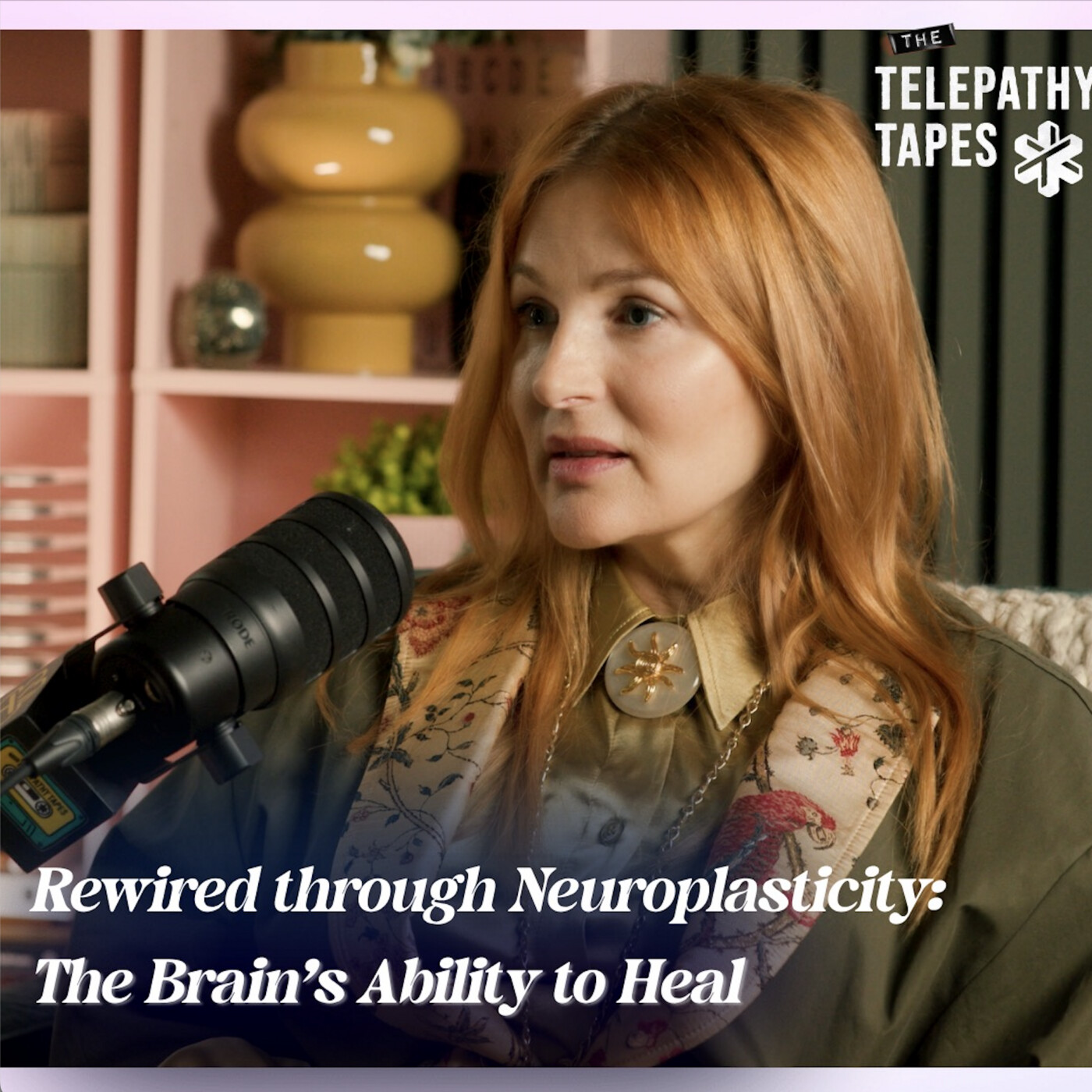
The Telepathy Tapes
S2E26: Rewired through Neuroplasticity: The Brain's Ability to Heal | Talk Tracks 26
00:35:19
Loading summary
Transcript71 lines
- [00:00]
A
Hey everyone, I'm Kai Dickens and welcome back to the Talk Tracks. Today we're having an incredible conversation with Mo Pritzker. After a debilitating journey with Lyme disease which left her bedridden for years and with very little hope, as doctors told her, there's nothing more we can do for you, she found a way to heal herself through neuroplasticity, which is the brain's ability to heal itself by creating new neural pathways. This incredible experience led to her co founding a company called Reorganization, a science backed self directed neuroplasticity brain retraining program that pretty much anyone out there can do from home. It's an incredibly informative episode that will hopefully give a lot of solutions and hope to anyone out there suffering from pain chronically mental or physical. If you want to see our incredible guests in person, we have a video version of this episode on the Telepathy Tapes YouTube page. Hi everyone, I'm Kai Dickens and I'm thrilled to welcome you to the Talk Tracks. In this series, we'll dive deeper into the revelations, challenges and unexpected truths from the Telepathy Tapes. The goal is to explore all the threads that weave together our understanding of reality, science, spirituality, and yes, even unexplained things like psi abilities. If you haven't yet listened to the Telepathy Tapes, I encourage you to start there. It lays the foundation for everything we'll be exploring in this journey. We'll feature conversations with groundbreaking researchers, thinkers, non speakers and experiencers who to illuminate the extraordinary connections that may defy explanation today, but won't for long.
- [01:30]
B
This podcast is sponsored by Talkspace. Last year I went through many different life changes. I needed to take a pause and examine how I was feeling in the inside to better show up for the ones who need me to be my best version of myself. When you're navigating life's changes, Talkspace can help. Talkspace is the number one rated online therapy bringing you professional support from licensed therapists and psychiatry providers that you can access anytime, anywhere. Living a busy life, navigating a long distance relationship, becoming a first stepfather, Talkspace made all of those journeys possible. I could speak with my therapist in the office. I could speak with my therapist in the comfort of my home. I was never alone. Talkspace works with most major insurers and most insured members have a zero dollar copay. No insurance, no problem. Now get $80 off your first with promo code space80 when you go to talkspace.com match with a licensed therapist. Today at talkspace.com save $80 with code space80@talkspace.com so Mo, welcome to the talk tracks.
- [02:33]
A
It's so great to have you here.
- [02:34]
C
Thank you.
- [02:35]
A
I've learned so much from you. I've been so inspired by you as someone who's truly gone through a deep hardship and has changed the world because of it.
- [02:43]
C
Thank you. Well, thank you for having me and thank you for saying that. And I really appreciate being here.
- [02:49]
A
Well, this people are gonna love this episode. They really are. Because we get a lot of questions on healing. It's like the number one thing, really, I think that. Well, it's for most people's life, it's. It's such a pain you live with every day. If you are facing a chronic illness or you are taking care of someone who is. It's like the desperation that so many people feel. Right? It's how do I get better? How do I help someone I love get better? And I think Western medicine, in many ways, it can be great if some of the medicines can be great. But I think it doesn't have all the answers and it certainly doesn't have the bedside manner or the connection with the spirit to the enormity of our healthcare crisis.
- [03:22]
C
Yeah. I mean, 175 million people in the US have at least one chronic condition, and that's half of the US population. So you have to ask what is happening that we've ended up here? Yes, there's environmental factors, there's stressors, there's all of these things. But is there also something happening with humanity that's giving us a wake up call? We need to start paying attention to how we're living, how we're being, how we're treating ourselves, how we're treating others. I think that that is a big wake up call, this crisis. But I do think there's a shift coming and I think people are starting to understand and not wanting to feel that way and not wanting to live that way anymore, it's unnatural.
- [04:04]
A
So why don't you take us back to how your journey started. And for the audience today, we're talking a lot about chronic illness and how to recover from things that can often feel unrecoverable and how consciousness, the brain, spirit, all plays into it.
- [04:17]
C
Yeah. Well, my experience with health has been a long one and probably the most important one of my life. When I really trace where it started, it definitely started in my childhood. And there were definitely signs of my health maybe not being stable over the course of my young life, my teenage years, my 20s, but I always treated the symptom and got better, and it always seemed to be fine. Really, what the final straw was was when I had my son and I just couldn't seem to bounce back. The symptoms kept getting worse and worse, and I was more and more tired to the point that I was bedridden, and I really couldn't function anymore.
- [05:01]
A
But did you have any idea what was going on with you at that point? You just thought you were tired?
- [05:05]
C
I thought I was tired and I thought, well, I just had a baby, and maybe it's because I've taken care of a baby or. But then there were more and more symptoms that started to emerge, and I really didn't know what was going on. And then there was sort of this final, what I like to call a perfect storm, where I was really stressed, I was really unhappy, I had gotten some type of infection. It was just all of these stressors kind of happened at once, and my system collapsed. And that's when I really was bedridden. And I realized, wow, I am in a situation that. That I have never been in, and I need to figure out how to get out of it.
- [05:43]
A
And, like, you really could not get out of bed?
- [05:45]
C
No, I was bedridden for almost two years.
- [05:48]
A
Oh, my gosh.
- [05:49]
C
And, you know, it's funny because when you find yourself in that situation, you have a lot of time to think and you have a lot of time to reflect. And it was a very dark period, but it also was a very important period in my life. And I also went into my uber efficient mode, which is, I'm going to figure this out. And I went on this journey that I now understand I was supposed to be on to figure out what was going on. I was of the mindset, I will do anything, I will go anywhere, I will talk to anybody, because I have to get better. I had a son and a life, and I wanted to get back to that. So I did end up doing a bunch of treatments that did get me better, or so I thought. But it was always kind of tenuous, right? It was always sort of like I was never fully over the hump. I never felt fully like, okay, I'm really well. And as the universe does, it made me realize I hadn't learned what I needed to learn. And I relapsed. And when I relapsed the second time, it was much worse than the first time, much worse. And I said, okay, I'm just gonna go back to all the things that I did, and I did all those things Again, and none of them worked.
- [07:04]
A
What were some of those things?
- [07:06]
C
I did every treatment from blood transfusions. I did hydrogen peroxide therapy, I did UV light therapy, I did energy healing, I did herbs. I did everything you could imagine. And most people that do end up with a chronic condition, they end up spending so much time and money on it, but the condition is just a symptom. And so you can keep trying to treat the symptom, but the condition is still there.
- [07:33]
A
Were you diagnosed with anything at this point yet?
- [07:35]
C
Yeah, I had been diagnosed with multiple things. I was diagnosed with Lyme disease, I was diagnosed with Epstein Barr, I was diagnosed with mast cell activation. And it became this cascade that was really overwhelming for me, even if it's just one of those things like, how do I get out of this when nothing's really working? And I remember it was the last doctor appointment I went to and I explained to the doctor, here's what I've done, here's my history. And he literally looked at me and said, I don't know if there's anything I can do for you. And there happened to be a book on this desk. And he kind of tossed the book at me and he said, you know what? Maybe you need to go home and heal yourself.
- [08:13]
A
Wow. What book was it?
- [08:14]
C
It was a book about neuroplasticity. And even before I picked that book up, I knew innately that that book was the answer. And also when he said, you need to heal yourself, there was something that rang true to me about that. And I thought, this is exactly what I need.
- [08:31]
A
And mo, just take a minute and explain to people what neuroplasticity means. And maybe some of the big headlines in that book that were resonating with you.
- [08:38]
C
Sure. So neuroplasticity is our self directed ability to reorganize the function and the makeup of the neural connections in our brain through specific techniques. And I think the things that ring true to me were the book talked a lot about different conditions and why they weren't solvable through traditional medicine. And really the main thing it talked about was that it was a limbic impairment of the brain. So it was the brain overreacting and staying in an overreacted state for a long period of time, inflaming the body and creating illness because the body's dysregulated and it becomes depleted. And I thought, that makes a lot of sense. Why is no one talking about this? And why is no one talking about the connection between the brain and health? We talk about the Gut. We talk about all these other things, but not really the brain. The funny thing about neuroplasticity is this is not a new concept. Ancient cultures used neuroplasticity. If you look at meditation, if you look at their healing practices, so many things in ancient cultures point to the understanding that the brain is just the gateway to a higher place. And they understood that that was an important connection to the body and the soul. So it really resonated with me because it wasn't about taking a pill or solving one symptom. It was about a holistic idea of the being and the brain and the brain's place in that. So that resonated with me.
- [10:11]
A
Oh, my gosh. Okay. And so I think for some people listening, and I want you to go into more of your journey, but they'll probably be wondering, well, what type of things can you do on your own to change the patterns in your brain?
- [10:23]
C
Well, you know, the cool thing about the brain that I've learned is that it's completely malleable. You can. You know, when you do neuroplasticity, if you look at a brain before and after, it literally changes the form, because what you're doing is you're breaking neural pathways and repaving over them with new neural pathways that are positive. And so really, the big part of neuroplasticity is to understand looping foreign.
- [10:56]
A
I think for many of us, there's times when you just don't feel like yourself. And it's not always just one thing. It might just be not getting a full night's sleep, or you're having a difficult time managing your mood, or you might just have a sense that you're running on empty, but still need to show up for everyone else. But lately, I've been exploring something that's made a big difference for me, and that's batch. What I appreciate is it's not just, like, a trendy wellness brand. It was founded by chemical engineers who actually understand what they're formulating, and they're fully transparent about every ingredient. I've been using their micro mints, which dissolve under the tongue, and I've been using them just for, like, a bit of daily mood management and calm. There's no sedation. There's not a buzz. They just make you feel like yourself again. I also love their CBD nighttime gummies, because it's not just about falling asleep and staying asleep. It's about waking up feeling rested. And none of this is about checking out or escaping. If someone knows me, they know that's not something on my radar. This is just about getting back to baseline, being your best self presence in your life without white knuckling your way through it. Right now, batch is offering three 30% off site wide. And yes, that applies to subscriptions too. So you can lock in that discount on your monthly supply. Go to hellobatch.com tapes and use code tapes at checkout. Like many working parents, I'm trying to fit a ton into my day. And it's quite common that I'm going straight from my workout on Tuesdays and Thursdays into the office and for as long as I've remembered. The sports bra works for the workout, but definitely not for the rest of the day. They're uncomfortable and tight and not the type of thing you want to wear all day. But that really changed for me when I discovered HoneyLove. I started wearing the Cross Flex activity bra. It has the support you want during a workout, but with its comfortable wireless support, you don't have that tight restrictive feel all day long. And it actually gives both shape and separation, which most sports bras do not do. And I personally adore that. Honeylove is an independent female founded brand with products designed by the women who actually wear them. And for me, I guess the biggest difference is I just don't think about it. I can put on one bra in the morning and it works for my workout and and for my work life. Treat yourself to the most advanced bras and shapewear on the market. Use our exclusive link to save 20% off honeylove@honeylove.com tapes. That's honeylove.com tapes. After you check out, they'll ask where you heard about them. Please support our show and tell them we sent you. Experience the new standard in comfort and support with HoneyLove.
- [13:18]
C
Looping is when the brain and the limbic system has taken over and started creating these neuropathways that are telling you things to protect yourself.
- [13:29]
A
Wow.
- [13:29]
C
Ultimately, the limbic system, it holds a lot of different regions. So like the amygdala, hippocampus, hypothalamus, it's your ultimate protector. And its job is to protect you from threats. That and it's constantly behind the scenes. You don't realize it scanning for threats. And what happens with chronic illness, and this could even just be anxiety is that the brain becomes hypervigilant and it starts constantly scanning. And the more threats it sees, the more it tells you that you're in danger. And so things you can do is become aware of these Patterns. So one of the things when I started doing neuroplasticity that I was shocked at was how many times a day my thoughts were looping into negative places, places, thoughts that were over exaggerated compulsions, all of these different things. So the first step of neuroplasticity is to become aware of your thought patterns. You know, are you saying to yourself, I'm not good enough, I'm too fat? Or this person wronged me, and I'm angry at them. And you start compulsively thinking about that, it's becoming aware of your thought patterns and your consciousness. You know, what state of being are you in at that moment? And once I became aware of those things, I could then start stopping them and repaving. And I think later, maybe in the interview, we could do a really quick exercise so you can experience what it's like, because it can also be something that you do very quickly and over time, it changes your brain. So first step is awareness. Second step is breaking the neural pathways. And the third step is repaving over those using specific techniques. But, you know, as I said earlier, and as I've learned, the condition is just the symptom. And that's not just physically, because I've been doing this for a long time now. I find that people who are experiencing these kind of chronic conditions, it's also a crisis of the spirit. And you can't separate that from the brain, because the brain is really the conduit of the spirit and the holder of that soul. And most people that I talk to, they can point to a very specific time in a very specific situation where their being shifted, their soul shifted, and they became ill. In my journey, it was several things over the course of my lifetime, if I track my health, there were moments like, for example, my father died when I was young. About six months later, I started developing different ailments. And so I could track the beginnings of it. And then when I finally collapsed, like I said, it was a perfect storm of events. But that was also a crisis of my spirit because I had disconnected from myself, I had disconnected from others, and I had disconnected from the higher field. And that is what really leads to a lot of these conditions. And that's something that I don't think medicine has caught up with yet. But the good news is I feel like there's a lot of these younger doctors coming in and realizing that there's all these conditions like Lyme disease, chronic fatigue, Epstein Barr, long haul, Covid pots, chronic anxiety and depression, which aren't most of the time effectively treated with medications. What do we do with this? Why is this happening? And I think these younger doctors are looking for new answers. And the good news is that neuroplasticity has been scientifically studied. So this isn't woo woo. There's this layer of the spirit that is in cahoots with the brain and the two really can't be separated.
- [17:03]
A
This is fascinating. And I guess going back to your journey, how long did you start to see improvements in your health and being once you yourself started neuroplasticity? And I think it's also important to let people know too. Like, it's not like you have to go to a doctor and be hooked up to a QEG necessarily. Right. You can just tell yourself, right? You just.
- [17:20]
C
I think that that's the thing that's so incredible about neuroplasticity is it's empowering. You know, I went to doctors who told me I would never get better. I went to doctors who told me I would end up in a wheelchair, that I would never be rid of Lyme disease. And the reality is, is that I am now empowered with my health. I will never be ill again. Because I understand that your body is designed to heal itself. When you get a cut, it scabs over and it heals. Your body is a self healing machine. And that's what I think we've been programmed out of. Understanding at this point, the body wants to return to homeostasis. And if given the right conditions, the body will return to homeostasis. And so usually with our patients, we see results within three months. My personal journey, I saw results within three months. Within six months, I was functioning again, starting to get my life back again. And then within, you know, nine months to a year, I was fully back. But I was fully back in a different way. Because part of the process of neuroplasticity is coming to terms with where you are and coming to terms with those negative loops and those voices. It's like an onion. You peel back and you think you've gotten through a layer and then there's another layer until you get to the core of what your spiritual crisis is. And it's not an easy journey. But when I got better, I was better in a way that I had never been. I could feel joy, I could connect, I could feel love in ways that I hadn't felt since I was a child. So I think that the process isn't like I said, about just the physical healing. I was feeling better physically, but there was something in me that had shifted back to my natural state.
- [19:05]
A
So if someone was wanting to be like, okay, well, what are, like, the basic tenets of things I should start telling myself. Or if they feel themselves getting into a loop, what's something that they can do to try to stop that loop? And then how do you repave? What do you even mean by repaving?
- [19:18]
C
Well, I'll give you an example. Let's just say I have a loop going of I can't do anything right. You catch that loop, you say, okay, oh, I'm doing this again. This is looping. It's not good for me. And you literally say it out loud. And we use hand gestures because hand gestures are also signals to the brain. Pause. That immediately stops that loop. And then you say, release. So you take. You rub your hands together, and you just release it. And then you say out loud. Or if you're in. I've done this before, you know, sometimes you can't say it out loud. You're in public, you go through this in your brain. Okay, Mo and limbic system. You know, thank you for catching that. It's not where I want to go. We're going to repave over that, and I'm good enough, and I can do this. And then you take your hand and you go, thank you, Mo. And that signals, like, a victory. And that signals to your brain of like, you did it. And it's a positive feedback to your limbic system of like, okay, this is the direction we're going. Because what the limbic system would do, it will fight you at the beginning because the limbic system will try to take you back on the route of the loops because it thinks it's protecting you. And you really have to signal to the limbic system, I'm in charge now. I'm safe. And I'm in a place that we can produce the good chemicals like serotonin, dopamine, oxytocin, you know, we're okay. And once your brain finally accepts that message, those chemicals start being produced, and your system will calm down. Every condition, I believe, has a frequency, and that frequency is about coherence in your brain and what your brain is telling your body. And is your brain in coherence? What I realized is, yes, you can treat the symptoms, but if your frequency is high enough, which you can raise through your brain, the disease cannot exist. You know, they told me lyme disease will always be in your system. When they test me now, it is not there because it can't exist in a system that is incoherence it just can't.
- [21:14]
A
Can this help with addiction as well? Like, if you're wanting a drink, can you just say, nope, you don't need that drink?
- [21:19]
C
Yes.
- [21:20]
A
Pause.
- [21:21]
C
Yes.
- [21:21]
A
You love tea. It nourishes you. Instead, like, what would be.
- [21:24]
C
Yes, exactly. You know, I'd prefer to have tea. Something that's going to nourish my body and feel healthy. I want to give my body what it needs because I'm deserving of that. And, yes, we've treated people with addiction. We've treated people with ocd, and we have veterans that we're helping now who have gotten better from ptsd. One of the funny things is a lot of our female members have reported that their menopause symptoms have gone away. We have a lot of different testimonials of all types of conditions that it's worked for. In fact, the two amazing women, Natalie and Cherry, who now run our company, are the CEOs of the company. They were members who were very, very ill, and they got better through Reorigen. In fact, all of our staff are members that got better. We don't ever have to recruit because people get better, and they're like, we want to help other people. We want to share this. So that's how we've grown.
- [22:18]
A
Yeah. Okay. So maybe. And I always love when, you know, a company or an organization blooms and blossoms out of someone's own desperate need for a solution. Right. So now tell me about the origin of Reorgan. Where did this idea come from? How do people contact Reorgan, get involved? What does that look like?
- [22:36]
C
It's interesting. The universe puts you in the right place with the right people, on the right path. And I definitely found that through this journey, because there were, honestly, many times through this journey that I wasn't sure I could make it. And through this, I met my two co founders, Ben and Lindsay. And the funny thing was that we all came to neuroplasticity at the same time, separately. And after we all healed from neuroplasticity, we thought, we need to share this with everyone. So we started working with these neuroscientists from ucla, psychiatrists from Sloan Kettering, and put together this program that we've now been doing for seven years. We've treated thousands of people with a lot of success. And if people do the program and stick to the program, they will heal. It takes time, and it also takes a lot of faith and perseverance, but you can definitely heal. And the thing about it for me with Reorigen is It feels great to give people hope because I think that when you are struggling, even if it's a simple condition like anxiety, it feels like it's never going to get better. And, and the one thing that I know is when I started to get better, I thought, oh, this is what it feels like to feel normal again. This is what it feels like to feel good and want to be engaged. And Lindsay and Ben and I all felt that way and we felt like we had to share this with the world. And the thing that's interesting, everybody's experience is different, but I also think we all separately had shifts in our spirits and shifts in the way that we engaged in the world. And I can tell you that for me, I think a lot about what John Paul said, which is make your life about love. I think that that is such a simple but powerful statement because when I came out of it, that is what I wanted was how can I help people? How can I make my life about love? Because I also think the heart is so powerful in chronic disease, a lot of times people's hearts have shut down because of trauma, because of experiences. And so I think that contributes to it. And I remember, I'll tell you a story. The second time I relapsed, I started on the path of neuroplasticity and it was hard. And I was a single mom and I was trying to get better and run a business and do all of these things. And I remember laying there one night and I said to myself, I don't know if I can do this.
- [25:10]
A
Foreign.
- [25:15]
D
This is Sarah Galley from the podcast Andy's Girls. Grief doesn't keep a calendar. Anxiety doesn't clock out after five. Depression doesn't care. If it's your busy season, support can still fit into your life. With Grow, you can find a therapist who meets you where you are, whether it's your first time in therapy or your 50th. Grow makes it easier to find a therapist who fits you, not the other way around. They connect you with thousands of independent licensed therapists across the US offering both virtual and in person sessions, nights and weekends. You can search by what matters like insurance, specialty, identity or availability and get started in as little as two days. And if something comes up, you can Cancel up to 24 hours in advance at no cost. There are no subscriptions, no long term commitments, you just pay per session. Grow helps you find therapy on your time. The single most important decision that I have made to better my life was starting therapy. It's helped me both better understand and communicate with family members, friends, whatever challenges you're facing. Grow Therapy is here to help. Grow accepts over a hundred insurance plans and sessions average about $21 with insurance and some pay as little as $0 DEP on their plan. Visit GrowTherapy.com Let's Go today to get started. That's GrowTherapy.com LetsGo GrowTherapy.com let's go. Availability and coverage vary by state and insurance plan.
- [26:53]
A
Quince makes beautiful everyday pieces using premium materials like 100% European linen, organic cotton and super soft denim with styles starting around $50. Their spring pieces are lightweight, breathable and effortless. The kind of things you can throw on and instantly look put together. And that same focus on materials carries over into their accessories, like their leather bags, which are made from 100% Italian leather and honestly look way more expensive than they actually are. Quince works directly with ethical factories and cuts out the middlemen. So you're paying for quality, not brand markup. Quince linen tops have become my go to they the fabric feels substantial but still easy to wear, and they definitely do not cost anywhere near what you'd expect for this grade of high quality linen. Refresh your spring wardrobe with quince. Go to quince.com tapes for free shipping and 365 day returns. Now available in Canada too. Go to quince.comtapes for free shipping and 365 day Returns. Quince.com tapes you know what they say. Early bird gets the ultimate vacation home. Book early and save over $120 with VRBO because early gets you closer to the action, whether it's waves lapping at the shore or snoozing in a hammock that overlooks, well, whatever you want it to. So you can all enjoy the payoff come summer with VRBO's early booking deals. Rise and shine. Average savings $141 select homes only.
- [28:29]
C
At this point, I'd been dealing with this health thing for so long, I couldn't believe I was back. And even though I had found neuroplasticity, I was like, oh God, can I do this? And I remember very clearly. I heard you are connected to everyone and everything. And it was almost like somebody was standing next to my bed.
- [28:46]
A
You just heard that?
- [28:46]
C
Heard it. And I literally sat up in bed because I literally thought someone was in my room. And that was when everything shifted for me, I think it was. I felt so alone. And that voice told me, you are never alone. Never, because you are connected to everything around you. And that was when My healing started, and over time, I had different experiences like that, and I continue to, because I feel like something opened in me and I was able to receive, because I think once you put your brain into coherence, you are open to receive. And a lot of people who I talk to have been through this journey. It might not manifest as that. It might just manifest as, oh, wow, everything has fallen into place. For me, I think about this and it shows up. Synchronicities happen. I can't guarantee that, but I can tell you that most of the people I talk to, that is what they experience is not only a shift in their health and physicality, but also a shift in how they relate to the world. Something opens in the brain that allows it to be a conduit to a higher field.
- [29:53]
A
Yeah. And it sounds. Because I think people who truly are happy kind of live within this flow state where they're not trying to manage and control their life, and they find that when they pause and let life take its way, you know, have fun with that. It's a journey, and it's exactly what you should be doing and when you should be doing it, 100%. And it's so hard, I think, for people to.
- [30:13]
C
Well, I think that that's one thing about having a chronic condition. I mean, I've had people say to me, if you could go back and make it so that this never happened, would you? And I said, all the suffering was worth it. It was all worth it. And it was what was supposed to be. And I think that you learn really quickly that you have no control. I think it truly was the universe's way of saying, surrender. And when I did that and when I became connected to not only myself, but other people in community and all of that, you know, all of that, I started really healing in a way that was true healing. It wasn't masking. It wasn't like treating the symptoms. It was a true healing from within in concert with my brain. And the other thing that's interesting that we found, and this is part of what we encourage with Reorgan, is two things. One is community. So we do have a community online that's very robust, and people come into community, we have these kind of group coaching sessions where you go and get motivated and hear from other people. That accelerates healing immensely. Because I also think a lot of times when people are in chronic illness, there's a shame to it, especially these kind of silent conditions that people don't understand. It's very isolating. So when they come back and they start reconnecting. This healing accelerates. The other thing that we do that's really cool is called mirroring. And this is something that's been studied, actually, if you want a really great book, and this is one of the books I read at the beginning of Neuroplasticity, Norman Deutsch, who is sort of the godfather of neuroplasticity, and he has many books, and it talks all about how the brain can help heal the body through specific techniques. For example, if I were doing that technique that you just watched me do, you actually have the physical and chemical experience that I'm having. So a lot of times we encourage our members to partner up or watch somebody else do the techniques, and it will produce the same effect as if they were doing it themselves.
- [32:16]
A
That's fascinating.
- [32:18]
C
So, and it's been studied, and it really does work, and it accelerates the healing a lot. And I know when I was going through my journey, my other co founder, Lindsay, she and I did a lot of mirroring. If there was a day I just like, I can't do this today. I'd watch her and she would do the technique, and I would have the same. I would walk away with the same experience. So it's amazing how in connection and community healing can occur.
- [32:43]
A
You know that story about hearing that voice? It's interesting because this substrate of love that seems to be the basis of everything and I think interwoven with the substrate of consciousness, everyone kind of knows how to tap into it. And whatever it's saying, it's always saying the same thing. And it feels like that's exactly what was there for you that day. In a way, yes.
- [33:01]
C
I mean, definitely that was what was there. And I felt it in a very profound and unconditional way. I think that having love for yourself is the hardest love to have, because you'll say things to yourself that you would never say to somebody you love. And that's part of the looping, is stopping that barrage of things that you say to yourself or you tell yourself. But I also think that I know part of my healing journey has just been the act of producing love for others. So I got into this habit of every night before I go to bed, I think about five people and I send them love. And that has also had just a profound effect on my being and my health, because I don't carry anger or resentment. And I can operate from a place of love, which is what we want to give ourselves. It's what the universe wants to give us. And I Think when you're living in that energy and that frequency, you do find acceptance of what is. You know, I think part of letting go of control for me has been understanding that we are just here to experience. Yeah, that's it. And give what we can give and do what we can for others. Other than that, there's nothing else. And so that experience, when it's about love, that's when you're operating in a place of true health and health that is unshakeable. And so illness can't exist in that realm. And so that has been something that neuroplasticity has helped me come to, that illness has helped me come to, of just this surrender to the experience. And when you're living in the experience, when you're living in the nowness, the consciousness of nowness, that is your natural state. I mean, you think about it when you're a kid, right? You're just living in it. You're experiencing. You're not thinking about your agenda, you're not thinking about expectations, appearances. All you're doing is living and experiencing in that now. And I think that is an important place to get to. It took me time after I healed to get there. I mean, I still feel like I'm on that journey, right? People are just like, oh, you went through that journey? No, I'm on it. I decided to stay on the ship because I was like, I want to see where this goes. So part of what we've learned at Reorigen is that about a year in, people are like, okay, now I'm healed. Now what? Now I'm a different person. I mean, that's the other thing that I've seen happen in healing is the person that you were coming in is a different person than when you are coming out. And so the world kind of shifts around that and things that aren't supposed to be there fall away and things that are keep coming to you.
- [35:58]
A
Yeah, that's exactly right. Wow, this has been so amazing. So if people want to get in touch with Reorgan and really try this, you know, how would they find Reorgan or what other, you know, advice or resources would you offer?
- [36:13]
C
Well, first of all, we have a website. It's re-origin.com. it's a three week online program that they can do. And then we have online community and we also have question and answer sessions that they can sign up for for free. And then we have our group coaching. So that allows you to be in zoom community with others. You know, the good news is, since I started in this arena and to now so many more things are available. It's starting to come into the popular culture now, I think just because I think people are realizing the connection. And I also think with this shift of consciousness that's coming, people are realizing that there is this ability self heal.
- [36:57]
A
Wow. Okay, fantastic. I mean, what a gift. And it truly does feel like all of these little things are gonna just help shift humanity forward. And I'd be remiss if I don't ask you this. You know, when people change their structure, the structure of their brain and become more whole and how they should be. Have you ever heard of, quote unquote, the spiritual gifts that we talk about in our show, turning on more?
- [37:20]
C
Yes, many, many times. I've heard it a lot. And you know, I really do believe if you heal the brain, you heal the soul. And the more people that heal, the more we will move into higher consciousness. It does open something in your brain and it looks different for everybody, but something does shift when you move into that place.
- [37:40]
A
Like precognition, telepathy. Like.
- [37:42]
C
Yeah, precognition, telepathy. A lot of messaging in dreams. A lot of being able to be in a room with somebody and connect with them and know what they're thinking and understand what's happening. I've heard all sorts of things and I know for myself, I have experienced that in a powerful way. And it started during the neuroplasticity. So I know that it has some correlation to me going down that path.
- [38:08]
B
That's so cool.
- [38:09]
C
Yeah.
- [38:09]
A
Because we get this question a lot. How do I open these gifts up for myself or how do I connect more deeply with my non speaking child or, you know, that type of thing. And you know, it's always like meditation. I've heard about gratitude. I mean, just thinking gratitude, gratitude that really raises your vibration. There's all sorts of things you can do, but this is another like concrete way you can become more yourself.
- [38:30]
C
Well, the cool thing about neuroplasticity is there are specific techniques you can do and it really does work. And I think it puts your brain into a higher state. And you know, we're actually just getting ready to study a bunch of this to see what kind of state it actually puts your brain into. But it does put your brain into a different state. Like I said, that's open to receive. And when you're open to receive, then things just come.
- [38:58]
A
Is there anything I haven't touched on that you would like to share that I didn't ask you?
- [39:04]
C
I Don't think so. I just. I guess the biggest thing I want to say to people who are dealing with chronic conditions is there is hope. And part of healing, the first step in healing is believing and having the belief that you can get better. There is a path, and there's a path not only to healing, but to something even bigger. You know, medicine hasn't caught up with what that bigger thing is yet, but I think it's coming, and I think we will know soon what that is.
- [39:31]
A
I think that's great, and I'm just so glad you ended with the hope because, you know, I even think about some of my friends who've really battled breast cancer. And, you know, it's like five years. Okay, maybe it's over 10 years. And then there's always once in a while that, like, case where it's like you thought you were clear and you weren't. And so there's that fear, I think, always lingering. And I feel like that fear can become the story that makes itself a reality.
- [39:51]
C
Yeah, I've seen it over and over, and I think that story you tell yourself is your reality. What you tell your brain, your brain then tells your body, and then your body tells your spirit. And it's just this, you know, circular thing. I never even think about getting sick anymore. It is so in my background. I don't ever worry about being sick again. The first time that I got better, I didn't have that because I was so reliant on outside forces to try to heal me. So I thought, oh, my God, what if I relapse again? Then I have to do this and I have to do that, and da, da, da, da, da. Once I took it back to myself, once I knew I could heal myself, that fear went away. Because I thought, if something ever comes up, I know what to do. My body can heal itself. My body can put itself back into homeostasis. I mean, it's been over a decade now since I was ill, and I don't think I'll ever be ill again. So there is hope for that. And I do think when somebody is in this condition and it keeps happening over and over, there can be a loss of faith and a loss of belief. And that is important to understand.
- [41:01]
A
Absolutely. Well, this has been amazing, Mo.
- [41:04]
C
Thank you. Thank you. Thanks for having me, Kai. And thank you for everything you're doing, because it is so, so important.
- [41:11]
A
Amazing. Thank you for saying that. That's it for this episode of the Talk Tracks, but new episodes will be released every Wednesday, so stay tuned. As we work to unravel all the threads, even the veiled ones, that knit together our reality. And please remember to stay kind, stay curious, and that being a true skeptic requires an open mind. Thank you to my amazing collaborators, producers Kathryn Ellis and Selina Kennedy. Technical directing, audio mix and finishing by Jeremy Cole. Opening and closing music by Elizabeth P. W and original logo and cover art by Ben Condora. Design. I'm Kai Dickens, your executive producer, writer and host.