Loading summary
Transcript271 lines
- [00:00]
A
Hi everyone and welcome back to the Talk Tracks. Today we have two very special guests. Manisha Ladd, who you might remember from season one where you met her son Akhil. And now she has started a center, the Akhil Autism Foundation Sensory Pathway Center. And in her journey she met Betsy, who has an 11 year old daughter, Sienna, and is just starting her spelling journey. And in the beginning of the spelling journey also discovered that she was telepathic. Kind of confirming some of your priorities experiences. And I think it's going to be a really beautiful, true conversation about fear and perseverance and love beyond anything else. So thank you both for joining us.
- [00:46]
B
Hi everyone, I'm Kai Dickens and welcome to the Talk Tracks, brought to you weekly from TTT Media. In this series we explore the threads that weave together our understanding of reality, science, spirituality, consciousness, and yes, even unexplained phenomena like psi abilities. We examine the mysteries that sit just beyond the edge of what science can currently explain alongside researchers, thinkers, families and experiencers. If you haven't yet listened to the Telepathy tapes, I encourage you to start there. It lays the foundation for everything that we'll be exploring because every era has ideas once dismissed as impossible until someone was willing to investigate them seriously. And on this show we do just that. If you want to see our incredible guests in person, we have a video version of this episode on the Telepathy Tapes YouTube page. Your home is more than just furniture. It's an extension of who you are. Even small details like a rug can completely change how a space feels. And that's why I love Ruggable. I recently added one of their Persian rugs in our living room. It's a beautiful kind of worn pastel pink that softens and totally pulls together the space. And there were so many styles to choose from, from boho and modern and vintage. And you can filter by size, by color, by material, by designer. And what I love is that they aren't just beautiful and soft, but they're stain resistant for everyday spills and machine washable, making them so easy to clean. And it's especially awesome for our life because we have two young kids, two dogs and two cats. The built in nonstick backing makes sure that even when everyone is running around, there's no slipping. They really are design led and perform performance built. Refresh your home@Ruggable.com get 10% off your first order sitewide with promo code tapesuggable.com that's R U G-G-A-B-L-E.com and use code tapes at checkout. So if you're looking to refresh your space, I really recommend checking them out. Are you tired of wasting money on supplements that might not work? True diagnostic measures over 1 million data points to tell you exactly what your body needs right now. It's a simple at home test that gives real data driven insights into your health and aging so you can take action with confidence. What I love about trudiagnostic is that it takes the guesswork out of wellness. Instead of generic recommendations, you get personalized insights based on your own biology. The test itself is incredibly easy. Just a finger prick at home and it analyzes up to 180 biomarkers connected to aging, inflammation, energy, stress and overall health. Then you receive a digital report and a personalized 90 day action plan with clear recommendations you can actually follow. No endless supplement stacks, no random trends, just data driven guidance tailored specifically to you. What's also fascinating is that trudiagnostic uses advanced epigenetic testing technology trusted by top longevity clinics and health professionals, not just consumers at home. And after 90 days you can retest and actually measure your progress over time. I found the whole process surprisingly simple and honestly really empowering. It's rare to find health information that feels this personal and actionable. Right now my listeners can get 20% off at truediagnostic.com using code tapes at checkout. That's truediagnostic.com and use code tapes for 20% off today. Choose True Age, TruHealth or the Combo Kit as a one time purchase or subscription.
- [04:05]
A
So why don't we first start by just having you each introduce yourselves.
- [04:09]
C
Sure.
- [04:10]
A
And who your children are.
- [04:12]
C
Sure. So my name is Manisha Laad and our only son Akhil laad is now 25 years old. He has transformed me since his diagnosis of autism when we were not given much of a hope. So till 11 years he was completely non verbal, non expressive. He broke his silence through a very controversial method. And during that time we were introduced about the mind and body disconnect and reflexes.
- [04:43]
D
My name is Betsy Flores, I'm from New Jersey. Also I have a daughter named Siana who's 11 years old. We started the spelling when she was about maybe 8 or 9 and she's still not open with me. She's kind of very early on in her journey because I haven't been able to take her for consistent lessons. But now I'm trying to learn so hopefully she'll be open with me soon.
- [05:07]
A
And then I want to talk about how you Met. But first, you know, for people who might remember you from season one, Manisha was the first family I met in America that was both spelling really proficiently. Akhil can spell on an iPad. No one needs to touch or hold anything. He can just go. And you opened a center to help other individuals who have non speaking or praxic children, which I understand is how you met. And at the center you work on like reflexes and the rapid prompting method of spelling to communicate.
- [05:41]
C
Yes.
- [05:42]
A
And other physical therapies and such adaptive fitness.
- [05:45]
C
We have a lot of digital innovation tools where parents can interact with Metro, where we know how to work on the hemispheres and more on the subconscious mind. And we also have a small hydroponic unit where the kids learn to do the gardening with hydroponic.
- [06:01]
A
What's the center called?
- [06:03]
C
Akhil Autism Foundation. The Sensory Pathway Center.
- [06:06]
A
The Sensory Pathway, yeah.
- [06:07]
C
And our program name is called Neurosensory foundation program. But before starting a center, when Akhil was seven years old, we started a foundation, Akhil Autism Foundation. And our whole goal was to help families back in India. So we trained a doctor in India, we raised some funds, we trained a doctor in India and that's how we got the family started on the first biomedical treatment. And when at the age of 11, when Akhil broke his silence through iPad, and that time Akhil made a very powerful statement by typing that I cannot see my body in my mind. And then we found that Akhil understood everything inside. And he was literally talking from inside to us. He had no idea that he had a body. What he understood that, oh, have hands and fingers and they move. He had a perception that I see visually, I hear and I learn. It's in mind. Other person has to also open his mind. That was his operating system. So he one day told me, typed with me and said, I can't help it, I have to read people's mind.
- [07:17]
A
So he told you he can't help, but he has to read minds.
- [07:19]
B
Why did he say that?
- [07:21]
C
Because that was his operating system. That was the way he thought. That's because it was happening naturally for him. It's not like he doesn't have to make an attempt. And that's why he would say that I am very fearless of using my resources.
- [07:36]
A
What does he mean by his resources?
- [07:38]
C
Like being very intuitive.
- [07:39]
A
Intuitive.
- [07:40]
C
Yes, intuitive. And telepathy. You can see it's on the similar lines. So while he would type with me before he would like, I would give him as if his thoughts were coming into my mind.
- [07:52]
A
So his Thoughts would enter your mind too?
- [07:54]
C
Yes, his thoughts would come into my mind. That was sure.
- [07:59]
A
How could you tell they weren't your thoughts?
- [08:00]
C
Because he would tell me your answer and my answer is same but this is my answer.
- [08:05]
A
So interesting.
- [08:06]
C
Yes. And some of the thoughts whether he would say like I cannot see my body in my mind. Or if I ask him a basic question of even studying about living things. What is living thing? What is non living thing we teach. And you ask questions like why cell is living? And his answer was because the energy in the cell is living. The cell is living. I wouldn't give such answers. So his answers were very, very, very
- [08:31]
A
intellect, very intellectual and very smart and something. And you knew it wasn't your.
- [08:35]
C
Absolutely. I would never say I cannot see my body in my mind. Why would I even that make up.
- [08:42]
A
Yeah, yeah.
- [08:43]
D
So he typed that or you saw those thoughts in your head.
- [08:45]
C
How did you. No, it goes with very flow. Once you give your mind it's board. I'm going to use your mind and your body is going to be a vehicle for me. So you and me are very in tuned.
- [08:57]
A
So it's almost like a keel. You said like it was like a fresh blackboard in your head. And he almost like used the interface of your body.
- [09:04]
C
Yes, and my mind too.
- [09:06]
A
I just want you to share the bus story because I love that story and I don't think I put it's definitely not in the film and I'm not even sure if it was in season one. But it impacted me when you first told me this story about how when he was little he would get mad at the bus and so tell that story.
- [09:23]
C
So he would go on the bus and the driver is telling him hi, good morning Akhil. And Aqeel not greeting. And he would ask him Aqeel, Aqeel, good morning Akhil. And he would not answer and he would get upset and then he would say why? I have to. Why? They keep on asking me the same question when I already said hi. I said how did you say hi? I said, I answered in my mind. And one day he had a major meltdown in the bus. And I asked him Akhil, why? What happened? And he said that teach people how to read my mind.
- [09:58]
A
Yeah, because he was talking to the kids too, right. Telling them to keep it down. I remember you saying. And they wouldn't listen to him. And he said because I'm talking to them, they're not listening.
- [10:05]
C
Yeah. He would say like he would come in like why you're not listening and say, how did you say? Because I'm telling in my mind, and you're not listening from my mind. So he was under that big perception, and he would say, my mind is very good. I. I have to tell my mind what to do. And when he had a meltdown, then he started telling that I should not go into the other mind because he says, I want to do it, but my other mind is not letting me do. As if there are two minds inside.
- [10:32]
A
So. Interesting.
- [10:32]
C
And now he doesn't talk about the mind at all, because he has a lot of control over his body.
- [10:38]
A
So the more the control came, the less he had to rely on.
- [10:42]
C
Yes. And that's where the more you work on the children's body, they get the control. And that's exactly all the modalities, which we did with Akhil. It's what we do at the center.
- [10:52]
A
Great. Okay. So, Betsy, you obviously met Manisha through the center, but tell us a little bit about your story when you decided to bring your daughter to the center, and why.
- [11:02]
D
So we had been. We had been doing rpm. Well, I mean, she has a great practitioner, but she's an hour away. And she was only available every other Sunday, like, so it was twice a month, which I felt like we needed more. But there was nothing in my area, like in central New Jersey, where I could go. And so I learned that Manisha was doing rpm. And my daughter, she gave me some clues that she could read my mind, and. But it wasn't always consistent. There were just some little episodes that
- [11:33]
A
I'm like, hmm, what's an example?
- [11:35]
D
When she was a baby, and I would do to fix her hair, and I would be standing behind her for some reason. And then the minute I would put the ponytail thing in my mouth to, like, she would turn around and tell me to take it out of my mouth. And I'm like, how does she. How does she see me? I'm standing behind her. And I would try different ways. I'm like, maybe I'm making a noise. And she would do it every single time. The minute I put her, she would turn around and tell me to take it out. Another example is I remember waking up one day and just. I wanted to make myself eggs, which is rare for me. I don't really cook myself eggs, and my daughter doesn't like eggs, but I'm gonna make myself eggs today. So I'm thinking all this in my head, and I go downstairs, I take the pan out, and she says, I don't want any eggs. And I'm like, did you know I was gonna make eggs? It was just things like that. And another time she was taking a bath and I was. She was playing with this bucket. And I. I was thinking to myself, I can't believe that's the same bucket that they gave me at the hospital when she was born. And she put the bucket over her face. And I said, that's not a mask. And she said, that's for the hospital. Now if, you know, kids with autism, they, you know, at least my daughter's not completely non verbal. She has a language, but it's mostly all scripts and the same thing, you know, saying the same things over again. So for her to say hospital was unusual. And it just was at the exact time that I was thinking about it in my mind. So she gave me those snippets. And I remember telling somebody, I think she's reading my mind. And then when I took my daughter to Manisha the first time, I wasn't expecting anything. I just wanted the spelling. But Manisha immediately connected with her immediately. And so I don't know why. One of the questions I have is just like, why doesn't she connect with me that way? I know that she's not reading my mind all the time, and I wonder if it's because she hasn't developed it that much yet, or maybe it's because she's turning it off. And then. But when she connected with Manisha that quickly, I said, well, then maybe it's me. Maybe I somehow don't have the. I'm not open. Manisha said, just be open. I'm like, how do I do that? I don't know how to do it.
- [13:34]
A
We have talked about this so many times on the show that so often I think for children, it's easier to connect with a teacher or a coach or a counselor than a parent. And I give this example, you know, which I think is true, right? I think for parents, we have so much emotional stock and pressure that we put on our own kid. Like, I'll be watching my 6 year
- [13:53]
B
old in a basketball game.
- [13:54]
A
It doesn't bother me if any other kid is running the wrong way or not running fast enough or not doing this. But the second my son stops and I'm like, what is he doing? Why isn't he, you know, and like this end of the world that he's not doing it. But for every other kid out there, it's like, whatever. That's so cute. And I think we parents do that, right? We put so much on Our children.
- [14:12]
D
But it's not just the spelling, even the telepathy. Like I've tried to test her since all this happened. I've tried to test her to see if she's reading my mind and she's not. Most of the time I feel like she's not. You know, I don't know, it just might. I just don't think so. So I wonder like what is it about the nanisha?
- [14:30]
A
Tell me what happened when the first time y' all met. So you brought in Siana.
- [14:33]
D
Yeah.
- [14:34]
A
And to learn to spell or to.
- [14:35]
D
Yeah.
- [14:36]
A
Cause she can. So she's minimally verbal.
- [14:38]
D
It's just mostly scripting. She's not conversational. She has functional language. She can say I need this, need that, but she's not conversational. And it's mostly scripting thing. You know, lines from shows that she repeats over and over again.
- [14:48]
A
So for someone like that who's minimally verbal or unreliably verbal, spelling can really help still. Like spelling to communicate can really.
- [14:54]
D
Oh yeah, she can't. She can't say complex thoughts at all. Okay. No, I mean if I asked her what did you do in school today? She can't tell me. Okay, so.
- [15:01]
A
So you were going to help with spelling and then tell me what happened next because obviously some sort of telepathy happened. Yeah.
- [15:08]
C
See whenever anybody walks into our center, it's very, very pure RPM based. We never say telepathic or anything. Or anything. We know that if a child is spelling, we know when they are reading our mind and when they are not reading our mind.
- [15:25]
A
How do you tell?
- [15:26]
C
Okay, so if I read something and the answer I have in my mind, the child starts answering that then we completely know. Or sometimes they give thoughts that I connect from this code to that. Some of the thoughts which they type, which is not in our mind. So it happens very naturally. So like your example of the bike is a perfect example.
- [15:50]
B
Which example?
- [15:51]
C
Like yours riding the bike. And then you hold and then you leave and so they getting the whole control. So it's like you hold the hand and then you start fading your hand and you are just standing in the back. It's like an energy. Everything is energy. So somebody had explained me for Akhil's perspective that when Akhil walks into environment outside the house, he tries to matches your energy with the other person's energy. And if that is not matching, he shuts down. So if you are open, he will be open. So with Siana, when she came in, I had no intention of doing any telepathy. Or anything. Or anything. But I was reading her a story and she was answering, and in the between, she was talking something. Not right now. You know, not right now. Okay. This time. So, you know, I could see it's a part of a hill. I could. I could. I could sense it.
- [16:50]
B
Hey, y'.
- [16:51]
D
All.
- [16:51]
B
So I don't know about you, but for me, having a glass of wine at night as I get older is getting just a little bit harder. It's harder to fall asleep. It's harder to bounce back the next day. But it's still fun to have a little something, everyone once in a while to either loosen up or just kind of slow down at the end of the day. And that's why I have been using and loving the Batch Micro mints. They dissolve in your mouth, and they're designed for calm mood support, not checking out or not escaping. They just help you kick back and relax and even get back to baseline if you need that. And I love that. Batch was founded by chemical engineers, and they're fully transparent about every ingredient which really matters. They're microdosed, so you're in charge of the experience. And they're easy to bring anywhere. A purse, a jacket pocket. And I love the CBD nighttime gummies because the goal isn't just falling asleep. It's waking up feeling rested without that foggy, groggy feeling the next morning. Right now, batch is offering 30% off site wide. And yes, that applies to subscriptions, too, so you can lock in that discount on your monthly supply. Go to hellobatch.com tapes and use code tapes at checkout. I think most of us assume we're hydrated because we're drinking water all day. But water alone doesn't always cut it. Your body needs minerals to actually absorb and use that water. And that's why I've been using Relight. Relight is made by Redmond, the salt company behind Redmond Real Salt. They've been in the Salt business since 1958, and their salt comes from an ancient seabed in Utah that traces all the way back to the Jurassic era, which is just wild. So when they made an electrolike drink, they started with something unique. Unrefined real salt with 60 plus trace minerals. I love how clean it is. Zero sugar, no artificial sweeteners, no artificial colors, no artificial flavors, and no chemical preservatives. For me, relight has become something I reach for every day, whether I'm recording or traveling or working out, spending time outside or just trying to get through a really full day without that afternoon crash.
- [18:45]
A
And it actually tastes really good.
- [18:46]
B
It's not overly sweet or aggressively salty. It has this balanced, salty, sweet flavor that makes it just, just easy to drink. Ready to give relight a try? Go to Redmond Life Telepathy and use code tapes to get 15% off your first order. That's Redmond Life Telepathy with code tapes for 15 off your first order.
- [19:07]
A
Summer always makes me rethink about what
- [19:09]
B
I'm reaching for because I want lighter
- [19:10]
A
fabrics, pieces that feel good the moment
- [19:12]
B
you put them on that aren't going to wrinkle like crazy. And that's why I just love quints. They focus on high quality essentials like breathable linen and soft organic cotton and washable silk. But it doesn't have that luxury markup. It's really that rare balance that I think everyone looks for where everything feels elevated but still easy and it's all affordable. Quint has beautiful everyday pieces like 100% European linen pants and dresses and tops. And their denim is soft and easy to wear. And their organic cotton sweaters are perfect for layering on cool summer nights, which is a real thing in California. And the styles start at $32. And the big thing to me is that Quince works directly with ethical factories and cuts out the middlemen. So you're paying for quality, not brand markup. I love their Italian leather triple compartment weekender bag. It is beautiful and has zippers and it looks so luxurious when just going away for the weekend. It's so good. And lately I've been rocking the 100% European linen pants and the matching 100% European linen tank. And it's just an awesome classic summer uniform you can add a jacket or sweater to. It's light and it's breathable and I can wear it to work or to dinner. So elevate your summer wardrobe. Go to quince.com tapes for free shipping on your order and 365 day returns. Now available in Canada too. That's Q-U-I-N-C-E.com tapes for free shipping and 365 day returns. Quince.com tapes.
- [20:41]
A
Okay, explain this a little bit more. So the first time you met Siana, she sits down next to you. Yes. She's reading a story or you're reading.
- [20:48]
C
I was reading a story.
- [20:49]
A
And you were going to like yes and no answers.
- [20:51]
C
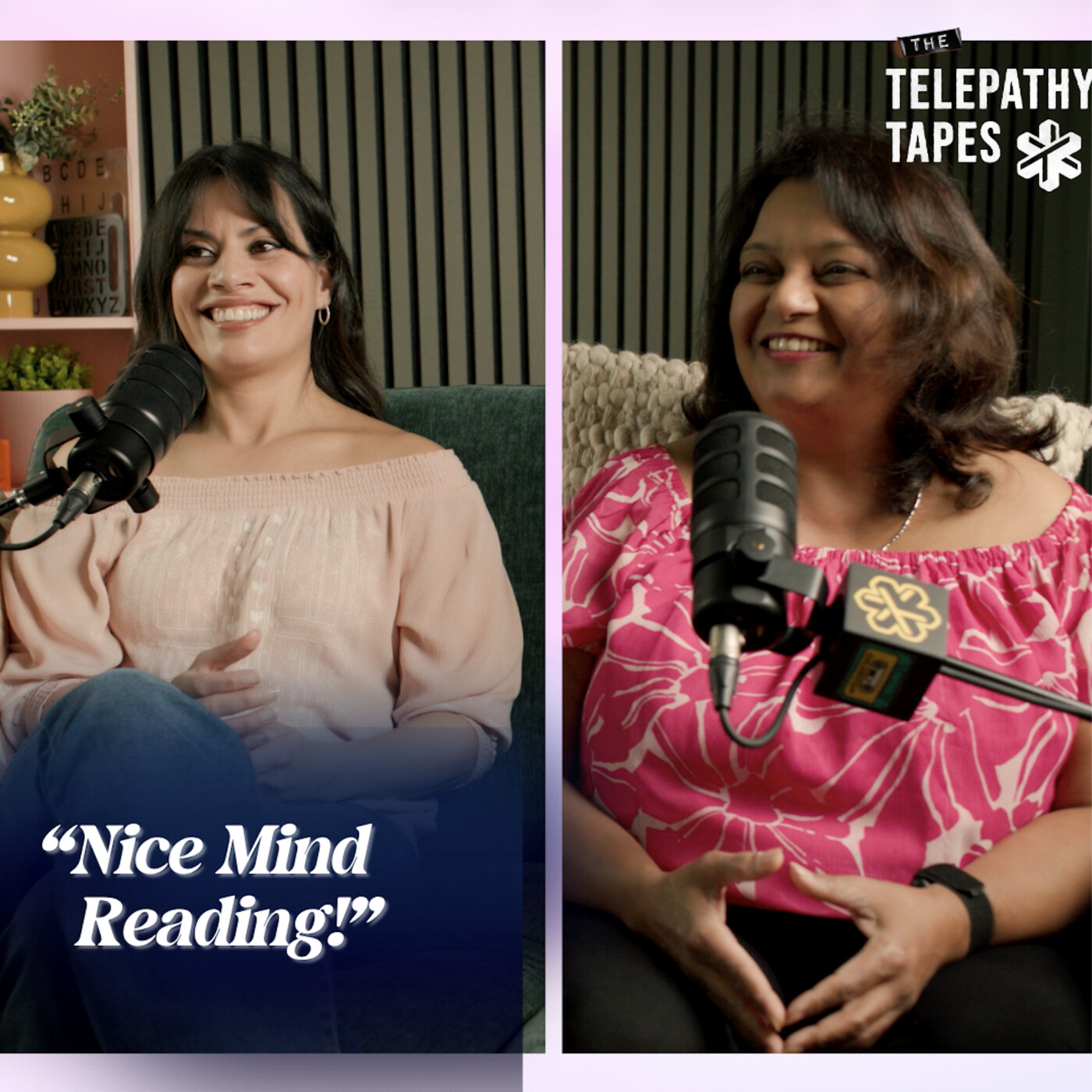
No basic proper question and answers. Okay. And then suddenly she makes a statement out of the blue. Nice mind reading.
- [20:59]
A
She writes to you out of the blue. Nice Mind reading. So, okay, so you start working with Siana. So what happens next? Like, did you bring this up to Betsy or did you start doing tests?
- [21:08]
C
Yeah, right away in a session. Finished. I told Betsy. She's completely telepathic.
- [21:14]
A
Tell me about the test y' all did.
- [21:16]
D
So there's a table. There was a table. Sienna's sitting across from me. Manisha was sitting next to her. And Manisha would.
- [21:23]
C
I would.
- [21:24]
D
She gave me a book. I would pick any word. I tried to pick words that I didn't even know what they meant. And she would look at it, she would go over, hold up, and Sienna would just start typing the word. Just like that. And she just starts typing. And we did it. We did it like four times.
- [21:37]
C
Four times.
- [21:38]
D
And she did it every time.
- [21:39]
A
That's very.
- [21:40]
C
And I know if she keeps on coming to me, then I'll try different techniques. I'll try different boards where I will start fading myself. I'll have different boards where I'll keep the board down and then I'm. I have air prompts and I will feed those air prompts. Wherever we feel there is a need of more prompting, we tell the parents there need to work on the body.
- [21:59]
A
Yeah.
- [22:00]
C
The more you work on the body, then the prompts, the fades fade away.
- [22:04]
A
Do you think though, like for you being. Because a lot of the coaches and teachers I know who work with so many non speakers, not only is it easier to be like a spelling coach and work with a lot of people, but the telepathy seems to be. Be easier as well. But do you think that's because your mind gets trained like that? It just knows how to open much quicker.
- [22:25]
D
I always say I've been. I've always been really bad at like meditation and things like that. And I wonder if that's what it is. No. You don't think that's it? No, I don't know.
- [22:33]
C
I think it's meditation. And because I've gone through the spiritual journey for Akhil, because I was looking for these answers at the age of 10 or 11 when Akhil was typing and Akhil started telling lot of his inner thoughts now what can I do? He would say there are many different forms of minds and I had no answer where to look for.
- [22:55]
A
So Akhil said there's many different forms of minds.
- [22:58]
C
Yes. And he started interacting, you know, with all the ancestors and giving messages, you know, so he had a lot of
- [23:05]
D
perceptions or even how Manisha talks about opening her mind and closing her mind. It's something that I can't grasp. So that's why I feel like I might be blocking her somehow or she's blocking me.
- [23:16]
A
I don't.
- [23:16]
D
I don't know.
- [23:17]
A
What do you think that is? I mean. Cause it's. It's painful for you. I can see that it's painful for me. Yeah.
- [23:22]
D
Or I'm confused by it, to be honest. I mean, I. I. To be honest, I. I would. I think I would be a little bit relieved that she's not always reading my mind. Because I'm. I'll be honest. It's not always good, you know? Like, you know, autism can take you to some dark places, and I've been really depressed, and. And if she was reading my mind in those moments, I'd be. I'd be devastated. Cause it's not good. You know, it's not good things. But it's just. I'm just curious more than anything. I don't. I don't. It's. I want her to spell with me more than anything. More. Even more than the. The telepathy.
- [23:50]
C
But.
- [23:50]
D
But it just makes me curious, like, why is it. She has clearly read my mind sometimes, but other times, I'm sure she doesn't. Like, I have to study with her for school, you know, so there's. I'm saying the word, and I'm.
- [24:01]
A
I'm.
- [24:01]
D
I. You know, I say a definition. She's got to give me the word, and she's. The word is in my head 10,000 times, and she doesn't say it. So I'm like, she's. She.
- [24:09]
C
I don't think she's. Yeah. The. The fear you have, if you let that fear go. Okay. Feel like maybe.
- [24:14]
D
Maybe I do have a fear. Maybe it is.
- [24:16]
C
Okay, let that fear. Let that fear go.
- [24:17]
D
But the good thing is that it forces me to clean up my act. Like, the minute I start going down a dark place of, like, depression or whatever it is, I stop myself. Cause I'm like, well, what if she can? What if she's reading my mind? Now?
- [24:29]
C
That's a transformation.
- [24:30]
D
I don't ever want her to think that she's not enough or that she's making me unhappy in some way. And so it forces me to like. Which is a great thing. So that's. She. She is changing me for the better. I think in that sense, that's exactly the transformation.
- [24:45]
C
When your energy changes, when your breathing changes, when you are in that. With your space of integrity, with yourself. Well, and also the fear goes away. The fear goes away.
- [24:56]
A
But couldn't just be different minds too. Like it might not be anything you're doing, you know what I mean? I don't want you to put that pressure on yourself. It could just be, I mean, I don't know how it works. I feel like you are the resident expert in the room, Manisha. But.
- [25:10]
C
And she's not the only student who has come and told me that Akhil has told. It's very easy to read my mind. The other, other girl had, had come in the second session. The first statement she does, completely open, you know, very aggressive. 22 year old. First session I did it with her and I started to have mind to mind connection. And mom was trying to hold her. I said don't touch her. Let her give her answers, let it be wrong, that's fine. And in my mind I'm telling her it's okay, that's fine, you know, it's okay. I'm going to accept this answer. So I'm talking in my mind somewhere. It starts there. And if it is starting there, there for me, let it start. Because it's a relationship. And then we start slowly, slowly diving into it. Why this? I'll give another example. One of the students was constantly, you know, throwing things on the floor. You give him something in his hand, throw pencil, throw this, throw, throw. So we asked him why are you throwing things? And he typed, because I want to hear the sound. Since then, then till now, not even once he is through. So once you enter into that mind, once they find the trust that you are okay to give me your mind, I'm. I'm okay to tell you. It's like going to a friend, okay or going for a therapy. And you open up to them and you tell them everything. It's the trust. Why you open up to certain people and how are you don't open up to certain people. You know, as you're growing up, you have your friend, you have a best friend and you tell the best friend everything. But you will not tell that to your mom or you not tell that to your dad or you not tell to your brother. You know, it's like that.
- [26:46]
A
And I mean, I also think, I mean this is like in a way telepathy might be like a muscle memory for your brain just to let go and get into. And I would imagine like people often use the metaphor of like ballroom dancing, right? Like you're a really good ballroom dancing partner because you've, in terms of typing, even telepathy because you've done it with so many people. Got it, done it. So you know how to get into that ballroom thing. So any child walking in is like, I can ballroom dance with you?
- [27:08]
C
Yes.
- [27:08]
A
Where it might be harder for a parent or sibling who's like brand new, I would think, to just figure out
- [27:14]
B
how to connect in their brain.
- [27:16]
C
I mean, so it's.
- [27:17]
A
I don't know.
- [27:17]
C
So it's like you keep on doing, keep on doing and you reach that path, but you need to keep on doing. I. I never, ever sat with Akhil, saying, today Akhil is going to read my mind. Okay. He would tell me, oh, your mind answer. And my mind answer is same, but this is my mind answer.
- [27:34]
A
I have a question about gatekeeping now and telepathy. Like, is it still pretty pronounced of like, do not talk about telepathy within spelling? Or do you think. Think it's getting a little better?
- [27:44]
D
I think there's like, there's like two camps of non believers. One is religious. Because even me, I was raised. I was raised Catholic. And it was like, that's like demonic. You know, you're just stone. And I think telepathy or telepathy, it's just, it's like anything like that, the spiritual world, all of that stuff is like, of the occult. And it's just, you just don't go there. And then there's just others that are just. They don't believe anything unless it happens to them. There's just that camp, you know, like just thinking, ah, you know, they don't. I'm done. Yeah, that's what makes sense. I had told a friend of mine who I've been trying to get her to take her son who has autism to do spelling. I've been trying to tell her, tell her. And I just can see that he is really smart and he would do so well with spelling. I just have a feeling, you know, And I been trying to encourage her. I've sent her videos and she just hasn't done anything. And then finally I told her what happened with Manisha.
- [28:39]
C
And then.
- [28:39]
D
And I even showed her the video of. And that's when she introduced it to her husband, which I think was the biggest mistake. Because if you're being introduced to the spelling for the first time with telepathy, then. And if they're completely closed off to telepathy, they're gonna be closed off to spelling. Cause they're gonna think it's together.
- [28:59]
A
Are you married? Yes. And how does your spouse respond to the telepathy?
- [29:04]
D
He's actually surprisingly open and believes it. When I gave him, when I would tell him the Examples of things that happened. I mean he was just like, that is weird. And then I showed him the Manisha thing and he was like, well, no doubt now.
- [29:19]
C
So it is because the definition of the telepathy which they see and they have been told they want to hear from the clinicians, it's very commonly seen. Mostly I don't know why it's the a, it's a dad's thing or what they want to hear from a professional rather than from a mom because they think it's like a mom. And that's where I feel you need to redefine the word telepathy. And if you bring the telepathy and neuroscience into picture and how the brain works.
- [29:49]
D
That's true.
- [29:50]
A
Well, and a lot of I've noticed now, especially in the scientific community, they'll call it non local consciousness. Yes. Non local communication.
- [29:58]
D
You just have to word it differently.
- [29:59]
A
Yeah, it's just absolutely.
- [30:01]
C
That's why right from the day one I've been telling I don't like the word telepathy because it looks like telepathy. Redefine the word telepathy.
- [30:08]
A
Yeah.
- [30:09]
C
It's not easy, Kai, that I can sit here and I can put a thought in your mind. Okay. And you are going to do that. You're going to say that it's not, it's not that simple. Telepathy happens at that time. It's like you and me have learned the script and learned the strategy and learn or you know how I think. You know how I think you know what's going to be my next move? I know what's going to my next move. I know with your just basic, basic expression, just you doing this, what this mean to me? It's staying with each other for long and having that oneness relationship.
- [30:44]
A
How common though, now that you have a center and you're seeing all sorts of parents and kids come in. Like how many of the individuals that you're working with do you think have this ability around non local communication or telepathy?
- [30:57]
C
Almost everybody.
- [30:58]
A
Almost everybody.
- [30:59]
D
Wow.
- [31:01]
C
Yep.
- [31:02]
A
So let's say for the majority of the non sympathetic.
- [31:05]
C
Yes.
- [31:05]
A
There's telepathy.
- [31:06]
C
Yes.
- [31:07]
A
If you bring it up to the parents, are they responsive or do they get upset or do you not even bring it up?
- [31:11]
C
I don't bring it up till the families are understanding what is this? But now I do tell them very confidently. They always have constant thoughts going on in their mind. They always tell that they know when who's believing me, who's not believing me. They all know. No, they they understand the world. They understand both the worlds. But it is hard and frustrating for them to it's not Body is not in their control.
- [31:44]
B
I love online shopping, but somehow it always turns into this whole ordeal where you find what you need, you get all the way to the checkout and then suddenly you're trying to remember a password you created in 2019 or you're digging through your bag looking for a credit card so you can find that three digit code. And honestly, the greatest feeling is when that purple shop pay button pops up and you realize you can check out in literally one tap. No typing in card numbers, no resetting passwords, no starting over. It just makes everything so much easier. And that's all powered by Shopify, which is actually behind millions of businesses around the world and 10% of all e commerce in the US from household names like Skims and Heinz to smaller brands who are just launching. So if you or your company is selling something online, get started with your own design studio. With hundreds of ready to use templates, Shopify helps you build a beautiful online store that matches your brand's style. Best yet, Shopify is your commerce expert with world class expertise in everything from managing inventory to international shipping to processing returns and beyond. See less carts go abandoned and more sales go with Shopify and their Shop Pay button. Sign up for your $1 per month trial today at shopify.com take go to shopify.com tapes that's shopify.com tapes today I want to talk about affordable, accessible therapy. Right now, summer's upon us and there's a lot of pressure for that to feel like a carefree, wonderful time. But for a lot of people, this season, like many, can bring up stress and grow therapy can help with that. Grow therapy works to make mental health care more affordable, insurance friendly and genuinely easier to access. In fact, if you have have insurance, you may already have therapy coverage and not even realize it. GROW makes it simple to check your coverage in seconds. Find a therapist who takes your plan and start therapy in as little as two days. You can search for a therapist based on what matters to you, a specialty, identity, insurance, and choose between virtual or in person sessions, including nights and weekends. Whether you're dealing with burnout, postpartum grief, anxiety or relationship issues, or just feeling overwhelmed, Grow has thousands of vetted licensed therapists across more than 90 specialties and there are no subscriptions or long term commitments. You pay per session. If something comes up, you can Cancel up to 24 hours in advance at no cost. So Whatever challenges you're facing, Grow Therapy is here to help grow accepts over 125 insurance plans. Sessions average $21 with insurance, and some pay as little as $0 depending on on their plan. Visit growtherapy.com tapes to get started. That's growtherapy.com tapes. Availability and coverage vary by state and insurance plan.
- [34:29]
C
It's not in control. Also, it will be very easy for somebody. Now just hold the letterboard and now fade. Fade it and let the. Put the. Let the letter board be on your left hand and let the child spell. And now start fading yourself. Fading those prompts, fading those techniques, fading. That is also a skill.
- [34:48]
A
It just feels like it takes practice. I mean, that's what it sounds like.
- [34:50]
C
Yes, yes.
- [34:52]
D
Patience.
- [34:52]
A
I think it's an important thing, too. I mean, for parents or teachers or coaches. Like, how can you assure that if you're wanting to teach an individual who's typing to communicate that their thoughts are their own, that their answers are their own, what's advice you'd give?
- [35:08]
C
We see the difference in the answers.
- [35:10]
A
So you can tell when it's your.
- [35:12]
C
Absolutely no doubt about it.
- [35:14]
A
So what are some. I mean, talking about Siana. Now let's dive into that a little bit. So you've been working with Siana, Bessie's daughter, for how long?
- [35:22]
C
Yeah, I think I did only three sessions.
- [35:23]
A
Three sessions?
- [35:24]
C
Yeah.
- [35:24]
D
Yeah, yeah. It hasn't been that many.
- [35:26]
C
Yeah, yeah.
- [35:27]
A
And how is that going for you? Do you feel hopeful that she's gonna become open and what are your.
- [35:32]
D
Yeah, I feel better. I'm more hopeful now. I've been practicing with her more at home. I took. I'm taking the speller's course, not the speller's parent course. And it's been helpful because you kind of want, I think, a big mistake that parents made and I think, I mean, is you see them open with someone else and you just want to ask them, opening the questions right away. And it just doesn't work that way. You have to kind of start at the bottom.
- [35:55]
C
It takes time and go up.
- [35:56]
D
And so she's doing better now. She's before, because I'm her mother and I know her little loops. She's like, she would have the impulse to do the loops with me, like, you know, say this and I say this, say this and I say this. And we can get caught in this saying these loops all day. But she's kind of slowed down with that now. She's answering the questions, and there's simple questions at this point. It's just spell this word and simple. But there's progress. So I'm hopeful. I just have to be more consistent in practicing.
- [36:23]
C
That's exactly it is. You keep on doing, keep on doing, keep and then have a courage to going to that space of asking open ended questions why and let it flow.
- [36:33]
D
Yeah. And no expectation because I think in the beginning I would have the expectation she wouldn't answer. I would get frustrated and it would be done. And it was. And it was my fault because I would want it so bad that I would become frustrated and I know she's feeding on my energy and she would shut down or you know, refuse to continue.
- [36:51]
C
So it's exactly.
- [36:52]
D
So I'm getting better. Just not even expecting that at this point. Just kind of starting slow and building up.
- [36:56]
C
It will, it will happen. Don't, don't give up. Be so hard on yourself when the time will come.
- [37:02]
A
Well, it will. And the thing is I think about some of the non speakers we featured
- [37:06]
B
on this show who got open at 20.
- [37:08]
A
Yeah.
- [37:08]
B
At 26.
- [37:09]
D
I know 18.
- [37:11]
A
Like you were starting so young and was really kind of exciting to think about is what I've heard from those older parents is oh my goodness, had I only started when they were 9 or 10, what would their life look like now? You know what I mean? So you're always doing that.
- [37:26]
D
I'm already thinking about that with high school. I want to put her in a high school where there's spelling. I don't want her to go to high school.
- [37:31]
A
But so for someone in your position learning. I'm not, you know, learning the flow with your daughter, your child and starting the process. Manisha, how. How many minutes a day do you think someone should practice with their child?
- [37:43]
C
Yeah. Depends. What at least 15 minutes to start with every day. But then go up to an hour and then what the individual wants to do. If the individual is. Is a child who wants to learn a lot of new things and is thriving, then you can go for hours and hours.
- [37:59]
A
You know one thing that I feel like has come up a lot and it might be good for both of you to talk about. I think because you're in different perspectives of it is so many parents are given very little hope and therefore do not presume competence. Especially because there's such a behaviorist bent to our society. Right. You watch behavior. But from the non speakers that I've interfaced with like talked to so often, what they'll say is like the baseline for communication is being presumed that you're competent. Right.
- [38:25]
B
It's everything.
- [38:26]
A
I know you're smart. I know you're in there. I know you can do this.
- [38:29]
B
I have no doubt.
- [38:30]
A
And I think for even parents, you don't presume competence for a very long
- [38:34]
D
time, even when you think you are. Even when you think you are, you think I'm presuming competence. But then you start to have these little doubts and you can't. You just can't.
- [38:43]
A
Well, a lot of parents who've even come in here to talk will say, I'll see other kids learn to spell and learn to communicate and get open. I think, oh, well, that's that kid. My kid.
- [38:50]
D
Kid. Yes. Yeah. And I loved the spellers movie. It's wonderful. But the only thing I wish they would have said more was about because they showed how hard it is the process, because they showed a lot of kids spelling after, like, being open after, like the second session. And that just doesn't. That's just not the norm. So I wish they would have kind of talked a little bit about the process more that it's not. You just can't stick a keyboard in front of a kid and he's gonna start spelling.
- [39:15]
C
No.
- [39:16]
D
And I think we. But we want it so bad that you really just have to be patient. And you just have to be patient and just. And go through the process and you will get the reward. But it's just being patient.
- [39:27]
A
And it could take months or years.
- [39:28]
D
It could take months or years.
- [39:30]
A
But you know why? Because I think this is what confuses people, especially people who are spelling. Skeptics will say, well, why can you put a board in front of someone and they can spell with manisha really well, but not someone at school or not with a parent or a sibling. How do you explain that? I mean, I want to hear it from you.
- [39:46]
C
That's neuroscience. Autism is very, very new. Okay? Our brain is so hardwired for everybody. I go to a doctor, and if I'm not feeling well, first doctor tells me, don't worry, take this medicine. It'll be all good. And you just know, I take a medicine. Unfortunately for autism, there is no such guarantee. There is no such hope. The box is empty. When a parent like me, me sees the box is empty, I. My perspective was, oh, the box is empty means I can put so many things into that box. Now what do you do when you have empty box? If you see a box empty, you're going to put a lot of things,
- [40:27]
A
meaning you're trying different methodologies, treatments.
- [40:30]
C
Yes, but that was my perspective.
- [40:33]
A
So what you're saying is because there is no across the board treatment for autism or apraxia or the ability to speak could look like an empty box. There's no treatment. Sorry. And some parents will just take that as. As a death sentence in a way, like, it's the end. There's nothing more we can do. Just accept that our child might be suffering or might not be able to communicate or might have these, you know, dangerous behaviors that are hurting self. Self inflicting harm or whatever. But you're saying another way to look at it is like, oh, there's. I'll try everything.
- [41:00]
C
Yes.
- [41:00]
B
And I will just start filling the box.
- [41:02]
C
Yes.
- [41:03]
A
And what's. I think the most frustrating thing I would imagine, as a parent with a child with autism is that it's different for everyone.
- [41:09]
C
It is different for everybody.
- [41:10]
D
I always say, like, there's like a million. You have a huge thing of keys, ring of keys, and one of them can unlock your child. And you just have to, if some people are lucky and the first key they try, it works. And for other people, there's lots of keys and you have to go through a lot of them before you find the one that works. On the way here, I was reading Edu and Autism.
- [41:33]
C
Yeah, Yeah, I do, I do, yeah. What a great book.
- [41:36]
D
I mean, and one of the things that he talks about. About what, why he would not spell with some people was because of. He would see colors. He would see their aura, and if they were a certain color, he knew that those people are not. Or he could just feel whether or not. If there was any doubt, he couldn't spell either. So it was like, there's a lot that goes into it, I think. I think they see people's auras. They feel energies, doubts, fears, emotions, and they just refuse if they. Some people, I think, say they can't or they don't want to.
- [42:10]
B
Yeah.
- [42:10]
A
Is Sienna open with you yet?
- [42:13]
D
Yeah, Sienna's open.
- [42:14]
C
Yeah, right away. Right away.
- [42:17]
A
Given any information that has been really helpful to you around maybe what she likes or doesn't like.
- [42:22]
D
We haven't asked questions yet.
- [42:23]
C
Not yet. I need to. I need to see her more because now I know which techniques to use with her.
- [42:29]
D
When Sienna was first diagnosed at like 2 years old, we did a lot of biomed stuff. Like, first we tried the diet, I did the gluten free K casein free, soy free for like four years. We did so many supplements. I mean, I did cranial saclo therapy. We did a little bit of MNRI reflex integration, a little Bit. But that requires. You have to be dealing with them every single day.
- [42:52]
C
I did. We did.
- [42:53]
D
Parents have to do it like every
- [42:54]
A
day, which is hard to work.
- [42:55]
D
Yeah. I mean, we tried a lot and we spent thousands of dollars and with very little progress. But you know, something like, like spelling. If I can get her to be open with me, she can tell me what makes her feel good, what's helping. Does she feel better if I give her this, If I don't do this? Because guessing is hard. It's hard to see, especially when you're not seeing that much progress. I think it's definitely worth trying. And I think I've seen how it's helped a lot of kids. Kids of my friends or whatever. But for some kids, I do think some of them are non responders and I think my daughter was one of them. She just didn't respond or she responded very negatively to. We did, we tried to do chelation. I mean, and she had a horrible regression with that. I mean, so it's, it. There's just so much and you just have like all these keys and you have to try them. And I think it's worth trying. But I reached the point that I said I don't wanna do anymore.
- [43:51]
A
Yeah. And I've heard this from so many parents. You try everything and sometimes it doesn't work or it's a net negative.
- [43:57]
D
Yeah.
- [43:57]
A
And then you're done. It's exhausting. You just give up. Kind of. Yeah.
- [44:02]
D
And I, and I, I mean, my daughter is, you know, she has some language. I, you know, she's. I'm not completely close to trying things, but I've tried so many. And when I tell you so many that I just, I don't know, I just feel like I need for her to spell because I think that's where independence will come or, you know, as much as more autonomy. And then she can tell me what she wants, what's, What's. What she needs.
- [44:29]
A
And I think. And Manisha, this is where you could probably weigh in on this too. You probably. I meet so many parents through their center who are at the end of the rope, who've tried everything, who have very little hope left. I've heard from a lot of parents who were at that space that the only thing that ended up working and changing their lives was spelling. Because negative behavior switched. They were able to figure out what their kid needed or didn't need, even just simple things like meeting parents who said they thought their child loved a cartoon on leaf. So they'd do that and then when their child starts spelling they're like, I hate that, that it's so frustrating and so annoying.
- [45:02]
D
Yeah.
- [45:03]
A
And never play that for me again. You know, which you don't know. You think you're doing the right thing. So I mean do you think of all the things parents could try, if you could suggest one, one thing, what would it be?
- [45:16]
C
It is so hard because every child is different. But you mentioned the word, use the word. Autonomy.
- [45:22]
D
Autonomy.
- [45:24]
C
Brain development.
- [45:25]
A
What's that?
- [45:25]
C
Brain development. Brain development is extremely important. Our kid's brain is not maturing. Our kids reflexes are not integrated. They have a lot of inflammation in the body.
- [45:36]
D
Something that has helped though. At around 11, around 10 years old, she started to show signs of puberty and then her behaviors got really bad and I was at my wit's end and I didn't know what to do. So I did what I never thought I would do and I went to a psychiatrist and she's on Zoloft. And it's been one wonderful.
- [45:58]
B
Really.
- [45:59]
D
And I never thought in a million years I would try but she needed just calmed her down. The anxiety is so much better. It's probably helped more than anything else.
- [46:11]
B
Wow, that's fascinating.
- [46:12]
A
How have you reconciled now the telepathy with the very almost like fearful religious point of view of this is dark or this is something dangerous.
- [46:20]
D
I think anyone should read the Book of Heaven because when I heard about Katie and Houston and how he was very spiritual and I read the book and it just completely changed the mind. Just there's no way you can read that book and read Houston's thoughts and think there's anything demonic about it. In those dark moments with autism and you're seeing kids suffer and you're suffering and you're like where's God in this? And then to learn about. He's been with them this whole time. He's been there, he's been there. He found a way to reach them when we couldn't. You know, it's just to me it was so comforting. It's like a comforting, like he's been there the whole time. He's found a way to bring peace to our kids when they didn't have peace in this world. I mean to me it was, it was a complete opposite of demonic. It was beautiful.
- [47:16]
A
And I think just to add to that, which is so, I think important, right is that, you know, there's people in our film, Hindu, Orthodox, Jewish, Christian, Muslim, I mean, or that like in the telepathy's universe that we've talked to or agnostic. And the wonderful, most amazing thing is once the children start spelling openly, even if the parents weren't deeply devoutly religious in whatever. In whatever denomination they come from, the kids seem to have this profound, deep connection with God.
- [47:49]
D
Absolutely.
- [47:50]
A
And also quite often we'll talk about, about spending time somewhere else.
- [47:55]
D
Yes.
- [47:55]
C
With.
- [47:56]
A
With God or with, you know, I don't even know what. But it's really beautiful.
- [48:02]
D
It's beautiful. It's beautiful. And I don't know how you can hear that and, and hear those words and hear it from these non speakers and think that there's anything negative about it. Like, how can you believe that? It's almost God's way of, of keeping them connected because they know that kids need connection and we all need connection. And that's. And they didn't have the ability to connect. Connect in this physical world. So he did in the spiritual world. To me, it was so comforting that all those times that I was like, where are you, God? He was there. He was there all along with our, with our babies. And it's, it's bearing beautiful things.
- [48:32]
C
Love.
- [48:33]
D
It's love. So how can you see anything, see it as anything other than, than, Than what God wants?
- [48:40]
A
Yeah. And I also think I've said this before when someone's like, but telepathy, what I'm thinking, what is prayer? Prayer. You pray in your head.
- [48:48]
C
Yes.
- [48:50]
A
And expecting someone to hear it. That is telepathy. If you're Catholic and you're praying to a saint, you're doing it in your head. Something. A majority of the American public have said that they will talk to deceased loved ones.
- [49:02]
C
Yes.
- [49:02]
A
In their mind, there's this deep understanding. They can hear me. If you don't have a body, you can hear me. That isn't that far flung. But suddenly when it's like person to person, it's like, yeah. So, Betsy, why don't you just kind of like, are there any questions or thoughts or feelings or even lessons that you want to share with people? Right. Of like, where you've been, where you're at right now, what you're hopeful about.
- [49:24]
D
Yeah, I think the spelling is gonna. Is what's gonna unlock so much.
- [49:31]
A
And how are you feeling hopeful about spelling?
- [49:33]
D
Oh, I'm very hopeful. Yeah, I bet. I'm not giving up. I am not giving up on spelling because. Because that is her way to communicate. And so I have to keep going. I have to. And I think once she can communicate with me and be open with me and tell me what she Feels I can ask her, do you want to try this or do you not want to try it? I can leave it up to her because me trying to figure it out was, I think, making both of us. Leaving both of us frustrated. And so just kind of being focused on that and. And being. And just remember to be patient and that if they're not open with it, it's probably our own fault. And just having the. Just starting from the bottom, having no expectations, because I think the more expectations we have, they're feeding off of that energy. And so I think that's. As far as the spelling, as far as the telepathy stuff. I think for me, the big lesson is that you have to really be mindful of your thoughts. And I think that's not a bad thing. I think. I think my daughter's helping me to try to be more positive, helping me not to go into those dark places. And I think that's a wonderful gift.
- [50:43]
C
Also, I want to tell every parent and including me not to be so hard on ourselves.
- [50:48]
D
Yeah.
- [50:49]
C
We're so isolated. Okay. We never ever ask. Even, like, I'll never ask. Even Betsy. We never ask, how are you doing?
- [50:58]
D
Yeah, it's true.
- [51:00]
C
You know, it's very. It's not if you don't. I don't make to. You know, but it's. We are so engrossed into our every moment. A child is having a. Behavior or meltdown or aggression just brings us down.
- [51:12]
D
Yeah.
- [51:12]
C
It just affect us. So it's very, very, very hard. And if you need to take a break, there is no guilt feeling, you know, do things for yourself.
- [51:20]
D
We definitely are really hard on ourselves. We blame ourselves a lot for a lot of.
- [51:23]
C
There is no perfect coaching for us because what the coach will write for us, you know, we need to sit down and ask, what do I want to do? And it just affects the energy in the house. So it's very, very difficult, important to, you know, do things for yourself, keeping the guilt away.
- [51:43]
A
That's a great note to end on, because truly, parents who are, you know, giving so much of their time and sacrifice to children who need more, it is a love that is beyond anything I think most people have ever understood. The amount of perseverance and patience, and you have to give yourself some slack.
- [52:04]
C
And also, don't forget, it's the individual's journey. They come with their own karma.
- [52:09]
D
Yeah. And not compare, because I think we tend to compare, especially when we see someone's kids spelling faster or doing better or. And that comparison is just. It's just. It's just not suiting anybody. It's not helping at all.
- [52:20]
A
Yeah.
- [52:20]
B
Okay.
- [52:21]
A
So thank you all for joining us. If you want to learn more about Manisha center in New Jersey, you can go to aafsensorypathway.com and there's classes and workshops and resources. There's. Thank you both for joining us. What an awesome conversation.
- [52:35]
C
Thank you.
- [52:36]
D
Thank you.
- [52:36]
A
And I wish you both the best of luck. You have to keep us posted. I will.
- [52:40]
D
Thank you.
- [52:41]
B
Yes, yes, that's it for this episode of the Talk Tracks, but new episodes will be released every Wednesday, so stay tuned as we work to unravel all the threads, even the veiled ones that knit together our reality. And please remember to stay kind, stay curious, and that being a true skeptic requires an open mind to dive in deeper. Subscribe to our Backstage Pass by visiting our website. With it, you'll unlock access to bonus content like Telepathy Tests, Ask Me Anything, interviews with myself and guests. You'll be able to enjoy the podcast ad free, connect with other members on our Telepathy Tribe Discord and hear and see exclusive content from the Telepathy Tapes Vault. Visit our website@thetelepathytapes.com for more info on how to subscribe to our Backstage Pass. Thank you to my amazing collaborators, producers Kathryn Ellis and Selena Kennedy. Technical Directing, Audio, mix and finishing by Jeremy Cole, opening and closing music by Elizabeth PW and original logo and cover art by Ben Condora. Design I'm Kai Dickens, your executive producer, writer and host.
- [53:42]
E
This episode is brought to you by Sofi, the All in One finance app where you can bank, borrow and invest invest all in one place. Let's talk bank accounts for a second. The average bank Savings rate is 0.39% in interest. You're earning pennies on your savings. But it doesn't have to be that way. With SoFi's high yield checking and savings, the money barely making moves sitting in your savings account can earn over eight times the national average savings rate. With eligible direct deposit, no account or overdraft fees, you can get your PayCheck up to two days early, plus get an epic welcome bonus when you sign up with eligible direct deposit. Sign up for Sofi Checking and savings@sofi.comama today, SoFi checking and savings is offered through Sofi Bank NA Member FDIC terms apply.