Loading summary
Transcript134 lines
- [00:00]
A
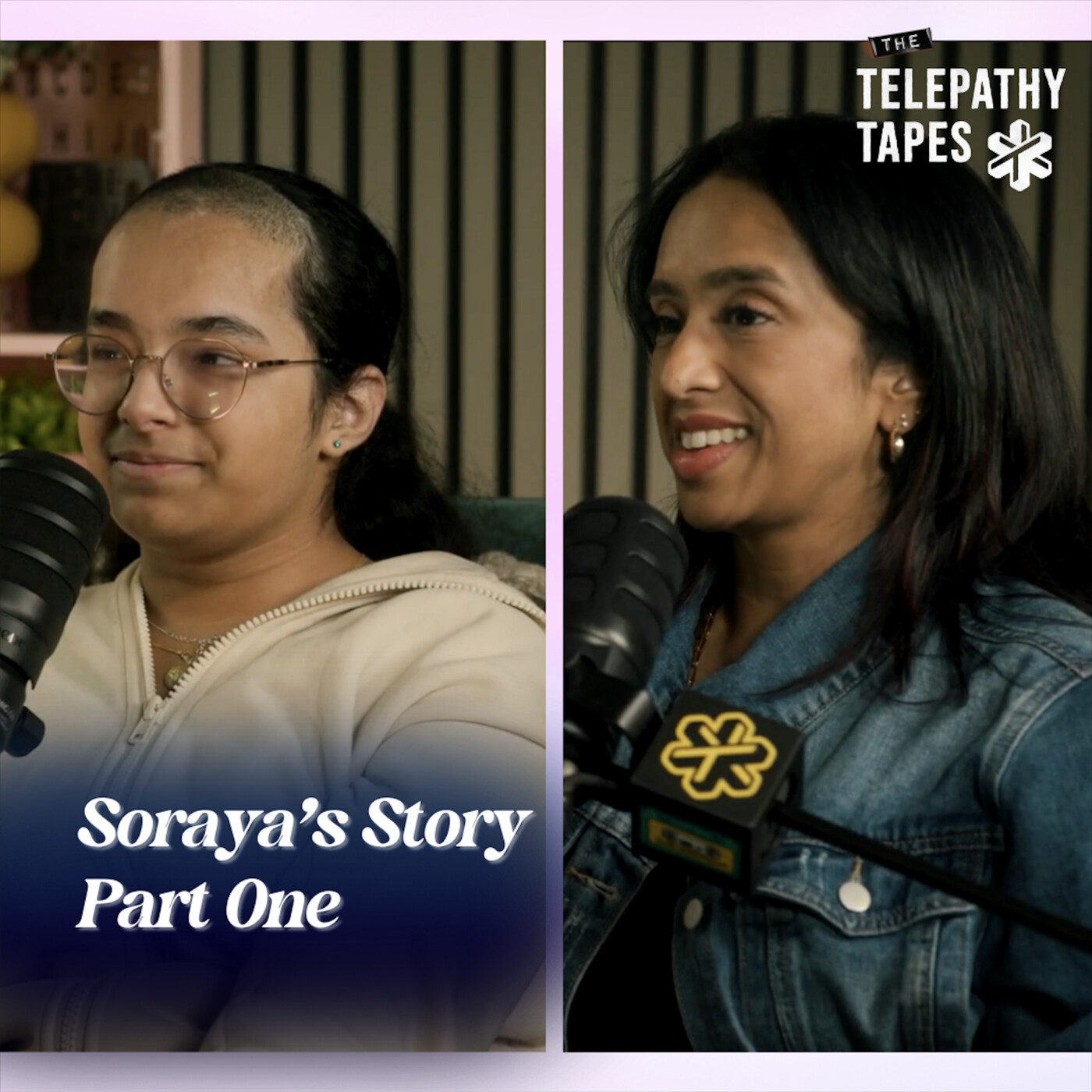
Because you're listening to this podcast. I know you've got a curious mind. And here's a helpful fact you might not know yet. Drivers who switch and save with Progressive save over $900 on average. Pop over to progressive.com, answer some questions and you'll get a quick quote with discounts that are easy to come by. In fact, 99% of their auto customers earn at least one discount. Visit progressive.com and see if you can enjoy a little cash back. Progressive Casualty Insurance Company and affiliates national average 12 month savings of $946 by new customers surveyed who sa Progressive between June of 2024 and May 2025. Potential savings will vary. Your home is more than just furniture. It's an extension of who you are. Even small details like a rug can completely change how a space feels. And that's why I love Ruggable. I recently added one of their Persian rugs in our living room. It's a beautiful kind of warm pastel pink that softens and totally pulls together the space. And there were so many styles to choose from, from boho and modern and vintage to and you can filter by size, by color, by material, by designer. And what I love is that they aren't just beautiful and soft, but they're stain resistant for everyday spills and machine washable, making them so easy to clean. And it's especially awesome for our life because we have two young kids, two dogs and two cats. The built in nonstick backing makes sure that even when everyone is running around, there's no slipping. They really are design led and performance built. Refresh your home@Ruggable.com get 10% off your first order sitewide with promo code tapes@Ruggable.com that's R U G G A B L E dot com and use code tapes at checkout. So if you're looking to refresh your space, I really recommend checking them out. Hi everyone, I'm Kai Dickens and welcome to the Talk Tracks, brought to you weekly by TTT Media. In this series we explore the threads that weave together our understanding of reality, science, spirituality, consciousness, and even unexplained phenomena. Because every era has ideas once dismissed as impossible until someone was willing to investigate them seriously. And on this show we do just that. If you want to see our incredible guests in person, we have a video version of this episode on the Telepathy Tapes YouTube page. Today we have Tasha and Safi and their daughter Sariah. Saria is a proud disability advocate and and for most of her life she's been struggling through an undiagnosed condition. It's been very difficult for their family. And today we're gonna talk about their journey and Soraya's incredible experiences with the other side in the non physical world that has really changed what her family believes is possible. So right now on the couch, we have Tasha and Sariah. And later we'll bring in Safi, Sariah's dad. This is your moment to say whatever you want to the world, so. Oh, no. So why don't we first start by just introducing both of you for you. Like, like what grade you and how old you are, where you live, where you're from, who's in your family. Just a quick intro.
- [02:59]
B
Okay. My name is Saraya and I am 13 years old. And I'm in what grade you're in?
- [03:08]
C
8th grade.
- [03:09]
B
8th grade. Sorry, forget what grade I'm in.
- [03:12]
C
That's okay. And I'm Tasha. I'm Soraya's mom. I'm a mom to three girls. So Saraya is a middle sister. She's got an older sister who's 16, a younger sister who's. I am also a pediatrician and book author.
- [03:28]
A
And your husband's a doctor as well, correct? Yes.
- [03:31]
C
He is an orthopedic hand surgeon.
- [03:33]
A
Yes. Wow. And when you walked in today, let me restate that. When you rolled in today, you had a very cool sign on the back of your wheelchair. Can you tell me what your sign said and why you put it there?
- [03:44]
B
Okay. So since I have like social anxiety and people stare or they say, look, that's a wheelchair. My son's like, if you have any questions about like my disability or my wheelchair, ask me. And like, I've been asked those questions. And so I was like, I just did not want to go out of the car because of social anxiety and staring and kind of stuff that made me couldn't think that. And I was like, literally telling my mom was like, please write it down. I can't not leave this card because I just can't do it. I just can't.
- [04:27]
A
I have social anxiety too. I think a lot of us do. Right? It's hard being in a new place or new people, definitely.
- [04:32]
B
Because, like, I'm quite sometimes and then I talk a lot. It just kind of depends.
- [04:36]
A
Yeah. Awesome. So let's talk a little bit about your history. Like maybe. Tasha, tell us about when Soraya was born.
- [04:44]
C
Yes.
- [04:44]
A
And maybe we can talk a little bit about, like your. Your journey, like growing up, what you wanted to be, you know, what you wanted to do like what your dreams were and then how, how and when the diagnosis came into play and how that affected you and your family.
- [04:57]
B
Yes.
- [04:58]
C
And I can tell some of the history and just for those that are listening, sometimes it takes a lot for Sariah to talk and as.
- [05:05]
B
Yeah, we're going to go back and forth.
- [05:07]
A
Yes.
- [05:07]
C
Yeah. And it's never to cut Soraya off, but her mouth sometimes gets tired just from talking. And so when she was born, we actually were not aware that she was going to have any medical issues or any additional needs. But when she was born, she was born smaller than we expected. And so that was a surprise mostly because I'm a pediatrician and so I felt pretty hyper vigilant about all of the things that I was putting into my body, everything. And so when she was born smaller than her sister, it raised a little bit of a concern for me. It was very much quickly reassured that it was, you know, just in my head just overthinking things. And I also felt like when I breastfed that she got tired really easily. And again, I was kind of quickly reassured. You just graduated. You're overthinking this. She's fine. Fast forward to the two month appointment of her, well, child visit. I could not get her to take a bottle and I had to go back to work full time. And I brought this up to the pediatrician and at that time she's like, you're just so good at breastfeeding. She's not gonna starve herself when you're, you have to take her to daycare. So fast forward four month appointment now. I've been back at work for a month and my 10 hour work days, she's being force fed one ounce by the daycare workers and I'm nursing her throughout the night. We get to the appointment and she is what we call failure to thrive. She is not gaining weight. And I am feeling like many mothers like I'm not doing enough and this is my fault. And so I'm told.
- [06:40]
A
And what, what month CheckUp was this?
- [06:42]
C
Four months.
- [06:42]
A
Four months.
- [06:43]
C
Go ahead and feed her solid food. And as a pediatrician, you know, we say you can give food at four months, but I felt like she wasn't like strong enough and wasn't ready. But at that point I just was like, do what you're told. I surrendered and I'm like, fine, I will do it. And so we gave her solid food. I don't know what about it made me want to record it. It's almost like I knew it Wasn't gonna go well. And I recorded it, and she was sweating, and she started making this noise, like, ugh.
- [07:12]
A
And.
- [07:12]
C
And that noise is actually called stridor. And at that point, it was my, like, stopping point where I recorded it. I sent it to the pediatrician and I said, I want a swallow study ordered. Granted, I had no idea what I was looking for, but I just, like, knew that, like, there was something. I was like, I know there's something going on. And at five months, when she did the swallow study, it was shown that she was aspirating, which just means that it's going down into her lungs versus her stomach. That in itself led to a lot of red flags because now we have a child that's not gaining weight, that is sweating with feeds, feeding difficulties, and aspirating. And it sets off a whole bunch of, what diagnosis is this? So it went from nobody being concerned to we actually think she has some rare condition that could actually shorten her life. And the first thing they thought it was was something called spinal muscular atrophy, which at that time, there was not a cure for. And so they were actually preparing us that she would pass away in the first year of life.
- [08:14]
A
Oh, my gosh.
- [08:14]
C
We were stationed out in Virginia at that time. My husband's former military, and he had just gotten his orders to serve in Afghanistan. And so we were meeting with genetic counselors, meeting with everybody, like, okay, are you going to try to have another child if Soraya passes away? And all these questions like, please. We went from nothing to everything. And we got in for a lot of testing. The SMA testing was negative. Then they looked for other diseases like adrenal leukodystrophy, Rett syndrome, Zellweger's disease, disorders of neurotransmitters. All of these things that I had briefly learned about for my board exams that I knew were all bad and they were all negative, which was great. However, as two physicians trying to navigate life, we wanted to really try to fix this. And it became very evident after a three year journey of looking for every type of testing that was coming back inconclusive, that we were likely not going to have an answer. But even more so than not having a diagnosis, realizing that this wasn't going away, her treatment really was therapies, Speech, ot, physical therapy. We had nine subspecialists at that time because we knew every system of her body was impacted. But she was making enough progress. Progress where we had no signs that her life was gonna be limited, but we also had no signs that this was going away.
- [09:40]
A
How was she eating at that time? Not to cut you off. No.
- [09:42]
C
She ended up getting a G tube at 7 months of age, and she still has one today. So she. This is a part of her that we absolutely love. The G tube in the sense of it's kept her alive.
- [09:55]
B
Like, literally everyone asks me, like, can you eat food? Yes, I can eat food.
- [10:00]
C
Yeah. I think a lot of times it's almost like the wheelchair, where people see you in a wheelchair and they assume that you cannot walk if you have a wheelchair, and they see you with the G tube, that you must not be able to eat at all, where there's a nice mix. So up until age 3, we had gone on this odyssey, and then we actually got to a place of acceptance where, all right, she has something, but she's doing well. It's time to create some new dreams. And we ended up moving to Cincinnati from where we were stationed in Virginia, because they have one of the best children's hospitals. And it's actually where I train for my residency. And so it was that nice comfort of being back in the Midwest.
- [10:38]
A
Midwest is best.
- [10:40]
C
Yes. And we knew that they were used to seeing the zebras. And what I mean by that is the rare. We wanted to be surrounded by people that were interested in cutting edge science, research therapies. And there we landed, and we planned on this life where Soraya may live with us forever, and. Or she may not, or she may work at the mall. We knew that she would do something in customer service. You wanted to do lots of things, I feel.
- [11:10]
B
Yeah. And my doctor did say, like, I might be living for a long time.
- [11:15]
A
Yeah.
- [11:15]
B
We hope that stays that way for the rest of my life. But, yes, you never know if the unexpected's gonna come in.
- [11:22]
A
So, Saria, what do you want to be when you grow up?
- [11:24]
B
Okay. I think it was a. Like, I was kind of more of a figuring out what I want. What. What do I. What's my, like, lifestyle? And I was like, well, let's see. I. This is, like, a lot of jobs. I was thinking. I was like, maybe I should have three jobs.
- [11:47]
A
Maybe that's pretty typical in today's society.
- [11:50]
B
I was like, you know what? Let's just do something. Because I just. I like to be that inhibitous kind of person. And I was like, you know what? Maybe I'll be a hairstylist, and I will be a singer. And then I was, like, kind of figuring out everything. I think the other one is makeup artist. Yeah, I think those were the three ones I wanted to do. And, like, I always talk about my dream lifestyle. Like, we were talking about that in the car. Yeah. About, like, what cars do I want or just something like that.
- [12:26]
A
Yeah.
- [12:26]
C
We learned that she wants a motorcycle or a Jeep.
- [12:31]
A
And how are you doing now?
- [12:33]
B
I think it's definitely a overwhelm and definitely challenging in my physical life because I was not expecting what's going to. What was happening in my health, kind of like, lifestyle, and I did. I. I don't know what it's gonna look like, but hopefully it's good.
- [12:57]
A
How do you feel in your body during the day? Do you feel discomfort?
- [13:01]
B
Okay, so.
- [13:03]
C
And you can be honest.
- [13:04]
B
Yeah. Because it's like, also this year, too. I think sometimes my muscle is physically tight. Sometimes I can feel it, sometimes I don't. I don't. But usually I'm tired, wiped, but definitely talking a lot. And on my screen a lot.
- [13:29]
C
Like, she used to be out and about. She used to be walking and moving a lot. Yeah.
- [13:33]
B
I used to go outside and do kid stuff.
- [13:36]
A
Sometimes when a body starts to feel physically restrained or limited, other things open up for us that are more in the spiritual realm or mental realm. Has any of that happened for you?
- [13:47]
B
I def. I do have spirituality for pretty, like, age, and I think I told my parents, like, hey, I see spirits, or anything like that. I experience it still now, more often, and it's common in our personal family. But, like, sometimes we'll see, like, lights or, like, other things that are so called, like, miracles.
- [14:18]
A
And, Tasha, when was the first time you heard Psorias start talking about this type of thing? And what were the first few?
- [14:25]
B
Because I was not ready to tell them quite yet. But when I was ready, I was like, hey, I have spirituality. And I haven't told you guys that.
- [14:40]
A
What do you mean by I have spirituality?
- [14:42]
B
So I call it spirituality because, like,
- [14:46]
C
I think it's hard for you to name what it is, and I think that people call it different things.
- [14:51]
B
Yeah, people can call it, like, energies. People can just, like, I think every. People who have spirituality experience it way differently. Me is more. I'm more in that unique kind of opponent. And, like, I can, like, I don't see what they're wearing, but I can hear them. I can hear footsteps or air moving back and forth. And that happens a lot with me. And it's part of my life that I personally was not expecting. And I think a lot of, like, I see, like, my family members or I would see, like, my dad's friends or My dad's, my mom's uncle that used to party a lot, and my
- [15:55]
C
mom's like, that's a different story. That's a whole different story. I'll tell you the story behind that.
- [15:59]
B
Yeah, we'll tell the story behind that.
- [16:06]
A
Summer always makes me rethink about what I'm reaching for because I want lighter fabrics, pieces that feel good the moment you put them on that aren't going to wrinkle like crazy. And that's why I just love quints. They focus on high quality essentials like breathable linen and soft organic cotton and washable silk. But it doesn't have that luxury, luxury markup. It's really that rare balance that I think everyone looks for, where everything feels elevated but still easy and it's all affordable. Quince has beautiful everyday pieces like 100% European linen pants and dresses and tops. And their denim is soft and easy to wear. And their organic cotton sweaters are perfect for layering on cool summer nights, which is a real thing in California. And the styles start at $32. And the big thing to me is that Quince works directly with ethical factories and cuts out the middlemen. So you're paying for quality, not brand markup. I love their Italian leather triple compartment weekender bag. It is beautiful and has zippers and it looks so luxurious when just going away for the weekend. It's so good. And lately I've been rocking the 100% European linen pants and the matching 100% European linen tank and it's just an awesome classic summer uniform you can add a jacket or sweater to. It's light and it's breathable and I can wear it to work or to dinner. So elevate your summer wardrobe. Go to quince.com tapes for free shipping on your order and 365 day returns now available in Canada too. That's Q-U-I-N-C-E.com tapes for free shipping and 365 day returns. Quince.com tapes I've talked before about why I love Oneskin. But what keeps standing out is that it doesn't feel like skincare hype. It feels like real science. Oneskin was created by longevity researchers who wanted to target skin aging at the source instead of just trying to cover it up. That research led to OS1.1 Skin's proprietary peptide that targets damaged senescent zombie cells which contribute to visible aging like fine lines, wrinkles and loss of elasticity. For me, I love that it fits so easy into my routine. It's not a complicated 12 step system. It feels clean, simple and intentional. And over time, my skin just feels healthier, smoother and more supported. And for summer, their face SPF gives you mineral sun protection while still delivering the skincare benefits of OS1. Born from over a decade of longevity research, OneSkin's OS1 peptide is proven to target the visible signs of aging, helping you unlock your healthiest skin now. And as you age. For a limited time, try OneSkin with 15% off using code tapes at OneSkin Co tapes. That's 15% off OneSkin Co with code tapes. After you purchase, they'll ask where you heard about them. Please support our show and tell them we sent you. Hey, everyone, it's Kai and this is Rue. And Rue has become obsessed with our Lolo blanket. Not just at home, but also at work. And it's become a little bit of a problem in our house in the best way because you know that moment at the end of the day when you finally sit down and turn on whatever comfort show you're watching and you grab your favorite blanket. Well, the second I pull out my Lola blanket, the dogs are obsessed with it, like immediately. It's not even mine anymore. And honestly, I get it. I mean, it's insanely soft. It has this luxe faux fur that's so cozy. But because pets everywhere are apparently stealing Lola blankets, Lola now is offering a pet collection including the softest pet beds and pads. Their pet beds have that same signature softness with orthopedic foam bases to support their joints. And the COVID is removable and machine washable, which is essential. So get your pets their own cozy little cloud and maybe finally you get your Lola blanket back. For a limited time, Our listeners get 40% off select Lola blanket products with code tapes at checkout. Just head to lolablankets.com and use code tapes to get 40% off your order. After you purchase, they'll ask where you heard about them. Please support our show and let them know we sent you. Wrap yourself in luxury with Lola Blankets. When did, when did you start seeing? Was it just spirits or were it like angels and energy and orbs? Like, what were, what were the, what's the palette of what you would see?
- [20:14]
B
I think I would see a person. Like, I definitely could give example. Like, I was telling my mom this name and we searched it and it was a real person that was giving heart to another woman. But on there they didn't really say how she died, but I think she had a heart condition. And so that was like really unexpected,
- [20:42]
C
I think, like, she was able to give us a name, a first name and a last name of somebody that she had connected with. And then I looked. And then I looked up the name, and there was an article of this teen female who there. She had passed away, and her family had donated her heart to another woman. And so that really impacted us as parents.
- [21:06]
B
Being like, I was not expecting that.
- [21:08]
C
Okay, okay. And that was your new friend for a while. And.
- [21:11]
B
Yeah. And I still say it in my house or anywhere. Or like, anyone who had a person pass away, I would automatically could tell what they're saying, or I would get a number.
- [21:26]
C
Or when she says automatically, she can do it all the time. Like, I can ask her about anybody, and she can take a second to try to connect. Yeah. And there has been times where she's like, no, that person won't. So it's not like. It's not just what Soraya wants to do. And I'm starting to learn more as she shares in the way that Soraya shares. But she from. It sounds like it is just open. So, like, when she's in our house, she says, oh, there's so many that are here. And I always say, if you're overwhelmed, I hear, and I'm trying to learn so I can, like, guide her that you can, like, close that off if it's overstimulated. She's like, nope, I don't mind it. And then.
- [22:11]
B
Yeah, I still do it.
- [22:14]
C
I will say the first time that my husband and I realized that there is some sort of connection with Soraya to the other side was actually when she was a baby. And this was in a moment of my pure, utmost desperation. She was an infant. And when she was an infant, she would not sleep. And we would have to tube feed her every three hours, but she had reflux. So then she would throw up. Then we would have to look at how much she threw up and try again through her G tube and hold her upright for another hour. And so the whole process of feeding her every three hours was about an hour and a half. And I could not get her to calm down. And it was my turn. And I was sobbing as she was sobbing, and I literally was praying and saying, God, I cannot do this anymore. Like, I cannot. I don't have it in me to do this. Like, I. People say, God doesn't give you what you can't handle. And I'm like, I can't do this. And I had texted my husband. I'm like, I know it's not Your turn. Can you tag me out? I just can't. And so he came, and then he had put Sariah down, even though she was crying to check on me. And so she's crying in her room. We've got the baby monitor on, and I'm sobbing, and I'm like, I'm at my wit's end. I'm not strong anymore. I can't do this. And I look at the camera, and there is this white light that is stroking Soraya while she is calming down. And it was there for hours.
- [23:53]
A
Calming her down.
- [23:54]
C
Calming her down.
- [23:54]
B
Yeah.
- [23:55]
C
And we recorded this.
- [23:57]
A
This is making me cry. I've never been like this in my life.
- [24:01]
C
I literally. I am being a little bit more censored of the feelings that I had at that moment of my desperation of, like, really wanting to give up. I will say, really asking for help, but then also really truly believing that there was no help. And so, like, it was that kind of desperation. This wasn't like a bad day. This was like trying to imagine what our life would look like on very little sleep, trying to keep up with our jobs, trying to keep up with this trajectory of life that we thought was going to be our life. And so at that moment, we felt like that moment was so sacred that we recorded it, but only showed her grandparents. And both sides of grandparents are very devout in their faiths. And so they were like, this is a great sign. Like, just take it for what it is. And we also are very protective of how we share this information, which is why we love what you do in the sense of, like, not to exploit this. This is something beautiful that I do think all of us have the ability, or maybe not. Maybe those that are.
- [25:15]
B
It depends.
- [25:17]
C
I guess I should ask Sariah. She has some ideas on this.
- [25:19]
B
Yeah.
- [25:20]
C
But that was the first time when she started talking, she would talk about somebody that was with her. And so we always kind of joked that it was like, her imaginary friend. And when I would say, like, oh, how long has this person been with you? And she's like, oh, they're with me when I sleep. I was like, do they go to school with you? She's like, yeah. And I'm like, well, how long have they been with you? She's like, since I was inside of your belly. And so then it was kind of like, okay, she might be right. Like, I never doubt her. Like, I think that's the other thing is I never challenge. I just keep it open and around that.
- [25:54]
B
I take it as it is.
- [25:54]
C
I take it as it is. And in that same time, you know, her older sister would talk about bright lights that she would see. And then there was a time where her older sister stopped talking about it. And she was like, I don't see him anymore. I wish I could. And so there was always something about what?
- [26:13]
B
She still doesn't talk about it. Yeah.
- [26:15]
C
You know, what is it about being younger, being more fearless, being more unfiltered. And then as she got older, it's not that she would tell us much, but there was a time where we're sitting at the table and. And I have this uncle that Soraya never met. He actually died when I was 12. He is the best. I will start by saying that he was like a father to me. So my. My parents were divorced, and my mom was a single mom, and she moved in with her brother, which is this uncle. So he was like a dad. And he was so kind. And every night he would put me to bed and he would say, all right, while everybody's sleeping, I'm going to come wake you up. You and me are going to go party. We're going to party all night. Or everybody else is sleeping.
- [26:58]
B
Yeah, this is. We're talking.
- [26:59]
C
That's what I was talking about. Also was a chain smoker in the 80s and just smoked nonstop. And so we're sitting at the table one day, and again, Sariah doesn't really know about this uncle or any stories about him other than I hadn't. I had uncles that have passed away. So she's sitting there and she's like, mom. And she starts doing this movement with her hands, which I've never seen her do. She's like, your uncle is smoking. Yes. Right. But I didn't know what she was doing. She's like, your uncle is so kind and funny. And I'm like, which uncle? And then she's like, you know, the one that passed away on your mom's side. And I'm still like, there's more than one. And she's still doing this. She's like the one that smoked all the time. And I was like, oh, my God, I know exactly who you're talking about. And I said, okay, well, what's he saying? And she's like, he's the partier. And that word is our word. And when my husband's. One of his best friends had passed away. This was a Navy colleague. She really gave some speeches from him, but it was like.
- [28:09]
B
And like, visible letters. Yeah.
- [28:11]
C
Like, she. She would talk, like, how he was talking, although it would be her voice, but it's almost like the language that she would use was so much more fluent than what she is capable of with her speech delays. She would say like, hey, brother, I'm really proud of you. Like, you've got a good life with this family. I'm really proud of the surgeon that you've become. And these are things that she doesn't even have context of their relationship. You know, they might be like one liners, but they. They were meaningful. And so that really hit me where then I was like, oh, can you do that?
- [28:54]
A
What did you mean by do that?
- [28:55]
C
Like, can you connect with people? Like, can you?
- [28:58]
A
And she said, yeah, on the other side.
- [29:00]
C
On the other side. And it was just kind of overwhelming.
- [29:06]
A
Hi. Come on in, dad. We can even ask you a few questions, too, before we.
- [29:11]
B
Yeah, it's okay if you're on the camera. Cause, yeah, I don't want to be able to see my YouTube.
- [29:16]
C
So he's the skeptic. Just so you know.
- [29:25]
A
Quick question. Do you actually know if you're getting all the nutrients you need? I used to think eating healthy was enough. But with busy schedules, travel, kids, and just life, it's easy to have small gaps in your nutrition without realizing it. And for families, it's even harder because everyone's needs are so different. That's what led me to First Day. It's the multivitamin brand I feel good about using for the whole family because it simplifies everything. There's no artificial dyes, there's nothing unnecessary, and they're incredibly transparent about their ingredients. They use a blend of 21 organic superfoods and nine key vitamins. And everything is tested for 200 plus toxins and has the clean label purity award. They also make different formulas for toddlers, kids, teens, and adults, so it's tailored to your stage of life. It's just two gummies a day, which makes it easy to stay consistent and takes the guesswork out of covering your bases. For a limited time only, our listeners are getting an insane deal. Use code tapes to get up to 57% off@firstay.com that's up to 57% off and a free gift with code tapes@firstday.com after you purchase, they'll ask where you heard about them. Please support our show and tell them we sent you. Today. I want to talk about affordable, accessible therapy. Right now, summer's upon us and there's a lot of pressure for that to feel like a carefree, wonderful time. But for a lot of people, this season like many can bring up stress and grow Therapy can help with that. Growtherapy works to make mental health care more affordable, insurance friendly and genuinely easier to access. In fact, if you have insurance, you may already have therapy coverage and not even realize it. GROW makes it simple to check your coverage in seconds. Find a therapist who takes your plan and start therapy in as little as two days. You can search for a therapist based on what matters to you, a specialty, identity, insurance, and choose between virtual or in person sessions, including nights and weekends. Whether you're dealing with burnout, postpartum grief, anxiety or relationship issues, or just feeling overwhelmed, GROW has thousands of vetted licensed therapists across more than 90 specialties. And there are no subscriptions or long term commitments. You pay per session. If something comes up, you can Cancel up to 24 hours in advance at no cost. So whatever challenges you're facing, Grow therapy is here to help. Grow accepts over 125 insurance plans. Sessions average $21 with insurance and some pay as little as $0 depending on their plan. Visit GrowTherapy.com tapes to get started. That's GrowTherapy.com tapes. Availability and coverage vary by state and insurance plan. So Safi Saria's dad just joined us for a few answers and questions. So Safi, why don't you introduce yourself and what you do for a living?
- [32:09]
D
Sure. My name is Safi Frukey. I am actually an orthopedic hand surgeon in Cincinnati, Ohio. And more importantly, I'm the father of three beautiful girls, including Soraya. And I'm Tasha's less smart half.
- [32:25]
A
Your wife is the coolest. Yes, she told us a story and I'd love for you to retell it because I thought there's two stories she told that were pretty remarkable. The first one being when she was at wit's end. Sorry, I was having a hard time eating when she was little. Do you remember that story and what happened and did it feel real to you?
- [32:44]
D
Yes. So like one of the things that we really kind of had to struggle with initially is that so Tasha described exactly kind of how the nighttime would go, but that's exactly what we would do. We did that for four and a half, almost five years. So like literally every night one of us was up most of the night and in the daytime we'd go and work. And so in one of those experiences is just Sarai was really struggling and you know, it's so. It was disheartening every time. We would give her her feeds and then she would throw up because that would automatically mean there was going to be a longer time for her to not be sleeping, that she's going to, we'd have to rock her. Like, literally we would rock her for, for almost, I mean, it ended up being days and weeks and months, if you like, added up. So like that particular evening, like when she was crying and both of us were at a point where like, this is almost not sustainable. Like, we're not sleeping, like, neither one of us, we got to work full time and like, I'm operating during the day and then I'm not sleeping at night. And then like getting to rest, which you can, you, you nap when you can. But like, you know, in that moment, like when the monitor kind of got quiet, like it was, you know, I didn't honestly know. Like, I, you know, full, full disclosure, I'm, I'm a super skeptic, like, scientific kind of minded person. And so like I am, I usually try to find things that I can't explain. Usually try to find what is a scientific justification for doing that. Then there's certain things, of course you can't. Like if you are religious in any way, by definition, the definition of faith is belief in the unseen, right? So like, there has to be some level of acceptance of things that are perhaps not able to be explained by science. But I'm still like a science scientist at heart. But like, while we were looking at the monitor, it really did, it looked like a, a white light that was actually traveling back and forth over the area of the crib right where she was. And then she stopped crying. And like, it was like, for me, like, almost disconcerting because I'm like, wow, what, what is happening? Like, is this, like, is this a good thing or a bad thing? That was the first thing I thought. I was like, it's great that she's not crying, but like, what, what exactly is that? Right? And so when we took the video, like, you know, I, you know, my, my, my folks are pretty religious and as are my wife's parents. And I said it really more for like the concept of like, like, can you help me process, like, what am I looking at here? Because what I'm seeing is something that is soothing my daughter. That is. I, I, I mean, I went in there, I mean like, I was the first one. I was like, I'm going to go upstairs and I went in there myself with my own eyes. There's nothing I can see, there's nothing visible that I can physically see in the room. And then, but she's Quiet. She's not crying. And so, like, come back down. And still there. Still there on the monitor.
- [35:42]
A
You can see the monitor but not see the monitor. Right.
- [35:44]
B
But they want to show itself.
- [35:47]
D
I couldn't see it in real life. And so, like, you know, like, my, you know, I had. My dad was like, listen, he's like, you know, there are things that we can't explain, but I don't feel like something that is soothing. Soraya is going to be something that you have to worry about, but it's not something that I would say, like, let's advertise this to everyone in the whole world. Like, this is this me. This is like, just for you guys. This is like, just. This is a. Hopefully a sign that things are. At some point, you know, you're going to be able to manage, like, what feels to be unmanageable, you know. And so I think that it was. It was. It was in my look retrospective. Look, look, look back at it. It was pretty. Pretty incredible, like, because it doesn't. It didn't make a lot of sense to me then, and it doesn't make sense to me now. Like, what exactly that was.
- [36:30]
A
So what faith background did you guys grow up in?
- [36:33]
D
So both we are devout Muslim. And so, like, you know, they're growing up. That's exactly kind of.
- [36:40]
B
I was really from my dad's side, half Indian, and then my mom's side have Bangladesh.
- [36:49]
D
Right, so.
- [36:50]
B
So you're a type of mother.
- [36:52]
D
So my little buggy. Yes. You are half Indian and half Bangladeshi. That is a true statement. Both of my parents of India, both Natasha's parents are from Bangladesh.
- [37:01]
A
So your parents were like, okay, we think it's a safe thing. We're not. Okay.
- [37:05]
B
Yeah, yeah.
- [37:06]
D
And. And that this is something that, like, I think that is. Is. It's not a negative. Right? Like, Like, I think that, you know, sometimes things happen that we can't explain that especially like in. In. In. If left. If there's any bit of a negative connotation, it can be a little bit disconcerting. Right. I mean, like, sorry. Watches a lot of, like, shows about hauntings and things of that nature and, like, haunted houses. Houses. And like, she is not scared by these things. But while I'm doing her meds and we're seeing the Annabelle doll, like, like, it's a little different thing where I'm like, I'm not sure if that could be classified as. That's awesome. That's good. You know, like, there is something a little bit disconcerting about that, but this wasn't that.
- [37:47]
A
So tell me about, like, what you know. Soraya clearly has a deep connection with the other side that's very real. And when did you start to believe that what she was seeing and experiencing wasn't made up like, that she was probably really connecting with people on the other side.
- [38:05]
D
So it took Sarai a long time to learn how to talk. It took Sarai a long time. Like, we were wondering if she was going to be able to communicate. And so even in the early, early stages of her starting to communicate, sometimes she would say things that I cannot. I know for a fact that Tasha and I have not said. And at that point, our other kiddos were. It was just, yes, me. And she was young, she was like five or six. She's not using that language. The people that are coming into the house aren't using that language. And so like, can't explain that. So that was like my first kind of clue. I'm like, okay, I don't. Can't explain that.
- [38:42]
A
And what would be like something that maybe she'd say, even if so, like
- [38:45]
D
the first time, I distinctly remember this, like, there was a device that we got called a stander. And so a stander is when you cannot bear weight, it kind of helps try to build, like not just bone health, but the ability to kind of stand up. It's the first time I got it in our house. Like, it really depressed me because it is actually a. It's a physical representation of something that I know has not a good long term outcome. Like, I'm orthopedic surgeon by trade. Like, we use standards in kids with cerebral palsy and things of that. That can never walk or really struggle walking. And so like, you know, in that moment, like Saria had, like, I want to say she was maybe three, maybe two and a half or three, not saying too many words. And she clear as day, you know, said in no distinct terms because I remember because I was sitting in the kitchen and she was over and she looked at me, she's like, dad, it's okay. This is okay. And I have not heard, at that point, I had not heard those words, like literally coming out of her mouth in that way. It was a very distinct. At that point, it was like one word, barely answers. Not sure if she's understanding. But then I didn't hear anything like that for a while. And so like in that moment, I did need that. There's no doubt, like, but thing is, I wasn't talking about it. It wasn't Like, I was like, walking in the house. I'm like, oh, my God, I can't believe this thing's in the house. And, like, you could infer that what I'm thinking. I was just looking at him. I was sitting in the kitchen. We had an island. Kitchen is like a little wind. You could look down to the family room, and I was just staring at it. That's it.
- [40:25]
A
So interesting.
- [40:26]
D
And so, like, those type of things, like, slowly but surely, I'm like, I don't understand those things, but I cannot find good solutions other than got to take it at face value. Because how else can you possibly explain
- [40:39]
A
it for both of you? Maybe you just give, like, a quick snapshot of what in the Islam faith people believe about the afterlife and the soul.
- [40:47]
B
Yeah, I would. I will say I believe in all beliefs, definitely, and even our history. I love knowing the history.
- [40:59]
D
And I think that, you know, in Islam, we certainly believe that, you know, like, our purpose here on this earth is not just this earth. It's. It's our job here. Our purpose here is to, you know, do as many good deeds as you can. And then at the end, we have a little day of reckoning, and we figure out how we do. And I think that part of that belief and thought process is this concept of the soul. And the soul is like. It is what is essentially breathed into our body, and it's like we have a physical representation of who we are. But then you have the soul representation of actually what God has given you. This is who you are. And like, in many faith traditions, there is some version of. There's angels that are collecting good deeds and bad deeds, and how are you doing. And, like, you know, with the thought process that God gives you free will and the ability to do either good things or bad things. And that's up to you to figure out how you want to do. There's obviously different books of faith that can help you try to navigate that, depending on kind of how you. How you. How you think about those things. And so, like, I think that for me, like, the concept of the soul is very. It's a very, very distinct and real one. You know, I've been in the room, you know, multiple times in my medical career when people pass away, you know, like in the hospital, and. And, you know, we always talk about how it gets cold there. That's a. That's a thing. I don't think everybody's ever. I've never seen a study where people have quantified the temperatures when somebody passes away but, like, there is no doubt, like, I have been in the room myself. I can't deny that. And, like, in multiple times. So, like, I don't know what that is. Okay, so, like, so, you know, is it the skull, soul escaping the body and heading back to God? You know, unless you truly somehow, you know, had a. Got an email from God saying, yep, you're right, this is exactly what it was. You're not going to know. Right. And so, like. But that is, for me, like, absolutely fundamental. Like, I think that the soul is most definitely an important part of who we are.
- [42:58]
A
Yeah. And then. So your friend's name was Chris, right? I'd love to hear the story. Cause I think we kind of touched on that, but I think she was kind of waiting for you to share it. So I'd love to. For you to talk about that. And so what was the first experience? And Sarai, if you want to talk about that too, or remember it, you know, like, you know, experience where you heard Sarai was communicating with Chris after he'd passed.
- [43:21]
D
So I think that even before that, I think that there was a non psorias story that I probably should tell first. So, like, the day that Chris passed away, he's a very young and healthy human, and he passed away of a massive cardiac event. And no rhyme, no reason. I mean, he kind of looks like the Incredible Hulk. Like, literally. And so Chris, the night that he passed, like, I was a mess, as you might imagine.
- [43:49]
B
Yeah, I think.
- [43:50]
D
And so, like, oh, I was crying a lot.
- [43:52]
B
Yeah.
- [43:53]
D
And so, you know, we had, like, a little trio, me, him and my. My buddy Rob. And so, like, Robert called me and said, like, look, like, this is what just happened, like, last night. And, like, you know, it was. It was devastating for me. And so, like, I was sitting in our study and I was trying to talk to Tasha, but I was, like, not in a great place, you know. And like, you know, one of the things that Chris and I, he is, you know, one of the best dads I ever knew. Like, Chris is. Was the model of how we should be as parents. And so, like, the most. In one of the most invested humans. And his oldest daughter was just starting medical school. She passed away the first week of med school. And, like, Chris, she wanted to do what he did. She wanted to be him. And, like. And it was. And, like. Or that does it be him, but, like, do what he did. And so, like, I remember, like, talking with Tasha, and, like, we were like, I was like, I gotta take care of Kelly. I gotta Figure out how we're gonna do this. And I was like, you know, like, maybe she can come and rotate in Cincinnati. So on. This is, like, during the summertime, so clear crystal day. The lights in our study went up. Completely off. Completely on, right? And so, like, I didn't think much of it when it first happened. I was like, all right, dude, electrical surge. Like, I don't know what's happening. But so then I said the words, like, again. I was like, we have to take care of her. And I was like, I'm going to take care of her. Lights on, lights off. And again, I was like, okay. So now I'm actually listening. I'm like, I'm not sure what the second one was, but I refuse to believe that this is a coincidence. There's no storm. There's no way the electrical surges are happening. And so I kind of decided to tempt fate a little, and I just talked about it again, and this time purposefully, lights on, lights off. Like, clearly, like, all studies lights off. All study lights on. So I truly, like, felt. And this is coming from a known skeptic. I was like, chris is here. Or some version of him is here, because, like, this is what he would want me to do. And because I know for a fact if the roles were reversed, Chris would take care of these girls, like, forever. And so, like, you know, that that was the first time I was like, okay. So, like, there is something about Chris. Like, he's around, like, in some capacity. I don't know what that is, but he's around some capacity. So then, like, there was a time where we were at Great Wolf Lodge, and we're. We're. We're going to dinner. I'm sitting next to Sariah, and she's like, hey, your friend is here. And I was like, who's my friend? She Goes, your friend, Dr. Hogan. He's here. And I was like, oh. I was like, fantastic. I'm glad Chris is here. I have no idea what she's saying. But then she's like, no, no, he's here, and he needs to tell you a few things. So on this, me and her, on the drive from our hotel room to dinner, Sariah starts talking to me about all the things that Chris wants me to know. And it's stuff that I have never discussed with Sariah. I have never talked with Sariah. It's like, Navy stuff. And some of it's like. Like, surgery stuff. Some of it's like, hey, hey. You know, you said something along the lines of like, good job of keep trying to do the hard cases. Well, the thing is though, Chris and I, he was like an, almost a mentor to me. And like, we would do some really difficult stuff together in surgery. In surgery? Yeah. Like, medically speaking, like, really complex stuff. And like, I never talked to Saria about that. And so, like, by the time I got to the table at Great Wolf Lodge, I was like, this is. I was like a little like, I don't know what the word is. I was pensive because I couldn't believe what I was hearing because I was like. And I couldn't, in my logical mind's, like, trying to put that together as if, like, okay, so how does she know this? How is it possible for her to know these particulars of what I'm talking about? Because I try my best not to talk shop to the girls unless they ask me about something. Because, like, I am a dad first and I'm a surgeon in a far second or third. So, like, like, it's not something I want that I, I used to give a talk to residents about, like, like life balance, right? And like, it's like, at the end of your life, you're not going to talk about how many surgeries you did or how many patients you saw. You're going to be like, essentially four or five things like, were you a good human? Were you a good son or daughter? Were you a good husband or wife? Were you, were you good to the world? Were you a good father or d. Mom? You know, like, those are the things that we think about right before we pass. We don't do anything else. So I'm like, I try to do that. And the fact that Sarai was able to, like, dead on, tell me things that I'm like, I, I just, I can't. I don't know what that is. Right? But I was like, but again, I, I have to take it full, like full, full bore because it doesn't make any other sense any other way. And so like, I, I, I actually feel blessed by, by hearing it because I feel I miss him less because occasionally I get something like that and it's like, okay, you know? And regardless of, of how I'm trying to frame it, it is still really, like, good to know that, that somebody as good as him is still around in some ways.
- [49:03]
A
Sariah, anything you want to add to any of the stuff your dad just mentioned?
- [49:07]
B
I feel like for me, I think, I don't know what made me say Chris. I think, I think, I think my brain was like, I think something happened to him. I don't know what it is. And Marion's like, I don't know, but I don't know if what happened but he's here.
- [49:30]
D
I feel like to this day I learn from this child and my other two girls every day. Like there is something that some lesson that's taught and I know that other parents have these same lessons from our kids, but like this one's a little bit different in the way that you hopefully can perceive the world. Like we don't have to have it in a very rigid way. There are ways that are beyond us that we should be able to at least be semi open to. To like think about because maybe it makes us better humans.
- [50:01]
A
Wonderful. Sarai, what a great story. I mean you're such an unbelievable gift and inspiration to so many people. We're going to end today's episode here, but next week we'll continue Sarai's story, dive deeper into some truly unexplained experiences, and learn more about her unique gifts. You definitely don't want to miss it. That's it for this episode of the Talk Tracks, but new episodes will be released every Wednesday, so stay tuned as we work to unravel all the threads, even the veiled ones that knit together our reality. And please remember to stay kind, stay curious, and that being a true skeptic requires an open mind to dive in deeper. Subscribe to our Backstage Pass by visiting our website. With it, you'll unlock access to bonus content like Telepathy Task, Ask Me Anything, interviews with myself and guests. You'll be able to enjoy the podcast ad free, connect with other members on our Telepathy Tribe Discord and hear and see exclusive content from the Telepathy Tapes Vault. Visit our website@thetelepathytapes.com for more info on how to subscribe to our Backstage Pass. Thank you to my amazing collaborators, producers Kathryn Ellis and Selena Kennedy. Technical Directing, Audio mix and finishing by Jeremy Cole Opening and closing music by Elizabeth PW and original logo and cover art by Ben Condora. Design I'm Kai Dickens, your executive producer, writer and host.
- [51:22]
D
This episode is brought to you by Progressive Insurance. Do you ever think about switching insurance companies to see if you could save some cash? Progressive makes it easy to see if you could save when you bundle your home and auto policies. Try it@progressive.com Progressive Casualty Insurance Company and affiliates. Potential savings will vary. Not available in all states.
- [51:44]
A
Support for this podcast comes from Progressive, America's number one motorcycle insurer.
- [51:49]
D
Did you know writers who switch and save with Progressive. Save nearly $200 per year. That's a whole new pair of writing gloves.
- [51:57]
C
And more.
- [51:58]
D
Quote Today Progressive Casualty Insurance Company and affiliates national average 12 month savings of $197 by new customer surveyed who saved with Progressive between October 2024 and September 2025. Potential savings will vary.