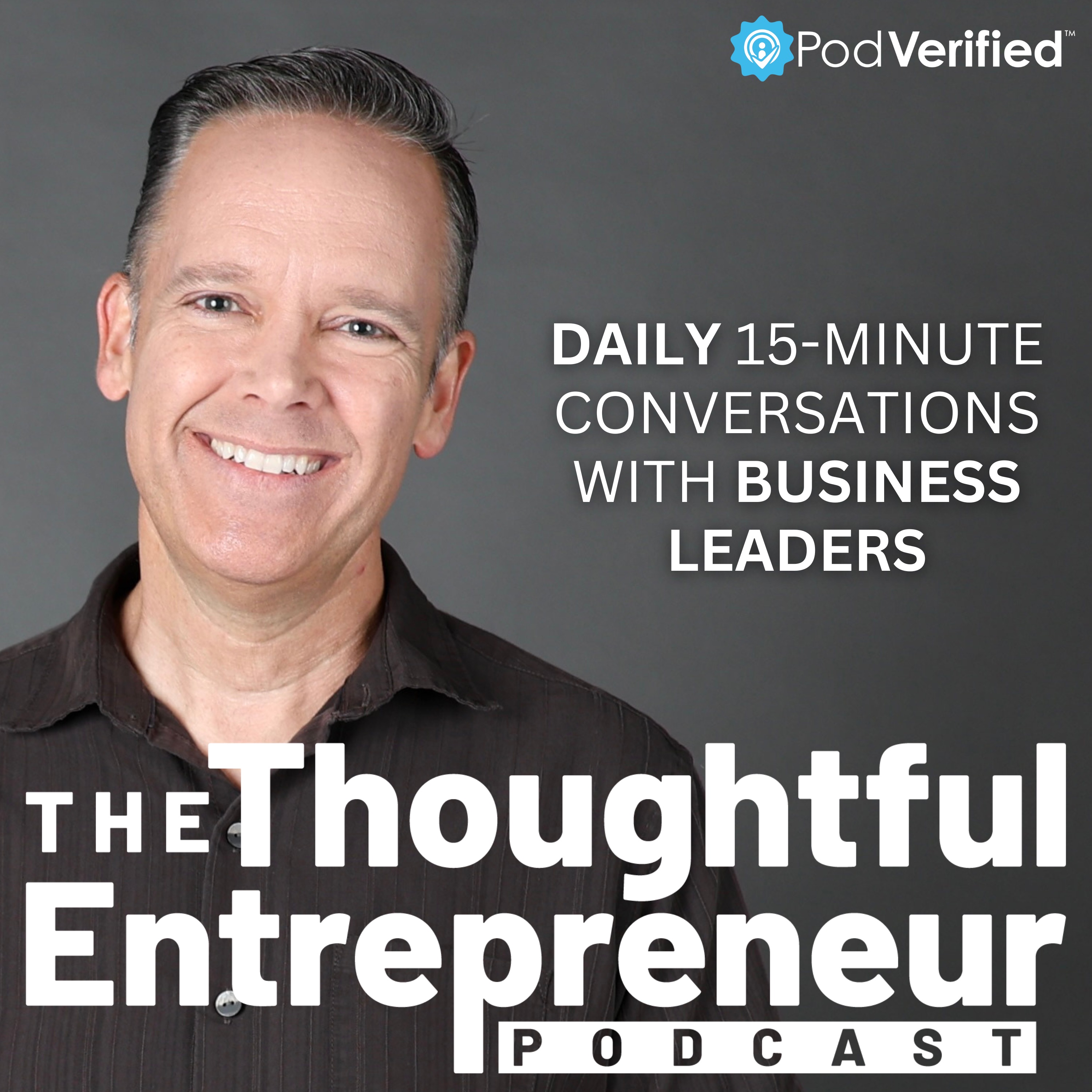
Podcast
The Thoughtful Entrepreneur
Hosted by Josh Elledge · UpMyInfluence.com & PodVerified.com · EN
The Thoughtful Entrepreneur features candid, commercial-free conversations with the founders, CEOs, and B2B leaders building the companies and ideas shaping their industries.
Each episode runs 15-25 minutes, built for busy professionals who want substance without the filler. Guests include agency owners, consultants, coaches, and executives with real stories, hard-won lessons, and specific insight for business leaders focused on growth.
Host Josh Elledge has conducted 3,000+ interviews, helped launch 300+ podcasts, and has been directly involved in generating $40M+ in client results through relationship-driven media. He knows what makes a guest worth featuring and what makes an appearance actually worth the guest's time.
Want to be featured?
Guests are selected through PodVerified, the platform built by podcast hosts to restore trust and quality to podcast guesting. If you're a serious B2B expert with a clear message and a story worth sharing, apply here:
👉 https://PodVerified.com/podcast
112episodes
Episodes
Newest firstAll episodes
2472 - Building a Self-Sustaining Business for Greater Profit and Work-Life Harmony with Lifeonaire's Jason Wojo
1w ago00:21:25Tap to summarizeLife-First Business Architecture: Reclaiming Freedom and Scaling Profitability with Jason WojoIn a recent episode of The Thoughtful Entrepreneur Podcast, host Josh Elledge sat down with Jason Wojo, the CEO of Lifeonaire, to examine the severe personal and operational costs that emerge when founders allow business pursuits to override their quality of life. Jason, a veteran entrepreneur, host of The Lifeonaire Show, and author of Business for Life: Build a Profitable Business That Gives You Your Time, Freedom, and Life Back, details how high-achieving leaders frequently fall into the trap of constant hustle and founder burnout. This conversation delivers an intentional blueprint for business owners looking to establish non-negotiable personal boundaries, map their core business architecture, and systematically eliminate administrative friction to build a business that serves their life rather than consuming it.The Life-First Paradigm: Engineering Autonomous Operations and Eliminating Founder BurnoutThe fundamental error made by many scaling entrepreneurs is subscribing to the dangerous myth that sacrificing health, personal passions, and family relationships in the present will eventually yield freedom in some distant future. Jason Wojo explains that unmanaged business ambition acts as a seductive trap, drawing founders into endless operational firefighting while destroying their health and personal fulfillment. Real enterprise success requires an absolute reversal of this paradigm, starting with a life-first mindset where non-negotiable personal commitments—such as dedicated family time or creative hobbies—are scheduled first and treated with the same weight as high-stakes client meetings. Setting these boundaries forces leadership to construct operational guardrails, preventing work from expanding endlessly to fill available time and protecting the executive cognitive capacity required for high-level strategy.Transitioning a founder-dependent company into an autonomous asset demands a disciplined, three-part operational audit centered around business architecture mapping. Business owners must begin by creating a comprehensive visual map of every recurring task, workflow, and responsibility across the entire organization to uncover hidden bottlenecks and unnecessary founder involvement. Once these operational workflows are documented, leadership must systematically apply the "Eliminate, Automate, Delegate" framework—pruning non-essential tasks, utilizing modern software engines to automate repetitive processes, and transferring ownership to capable team members. Removing the founder from daily execution not only frees up valuable time but also strengthens the business's underlying infrastructure, making the enterprise far more resilient and attractive to future acquirers.Ultimately, designing a profitable business that grants true freedom is an ongoing architectural practice rather than a one-time event. Surrounding oneself with peer mastermind communities that prioritize work-life harmony helps leaders maintain accountability and resist the societal pressure to pursue growth for ego alone. By regularly auditing business architecture and protecting personal non-negotiables, executives model healthy operational boundaries for their teams, reducing labor turnover and fostering a sustainable corporate culture. When clear life-first priorities, streamlined operational mapping, and automated delegation systems are synthesized into a single business framework, founders successfully shed operational debt, reclaim their personal freedom, and predictably increase enterprise valuation.About Jason WojoJason Wojo is the CEO of Lifeonaire, host of The Lifeonaire Show, an international speaker, and an expert in life-first business design. Drawing from years of hands-on experience building, scaling, and restructuring companies following severe personal burnout, Jason specializes in helping entrepreneurs reclaim their time and build sustainable wealth. He is the author of Business for Life: Build a Profitable Business That Gives You Your Time, Freedom, and Life Back, providing business owners with practical playbooks to align their corporate growth with personal fulfillment.About LifeonaireLifeonaire is an elite coaching, events, and business advisory firm engineered to help entrepreneurs, real estate investors, and executives build highly profitable businesses without sacrificing their personal lives. The organization specializes in delivering life-vision coaching, business architecture mapping, mastermind retreats, and founder-freedom workshops. Through practical execution frameworks and community support, Lifeonaire enables business owners to eliminate operational bottlenecks, establish strong personal boundaries, and maximize enterprise equity.Links Mentioned in This EpisodeLifeonaire Official Website: lifeonaire.comJason Wojo on LinkedIn: linkedin.com/in/jasonwojoKey Episode HighlightsThe Siren Song of Unchecked Growth: Recognizing how chasing business growth without boundaries damages health, personal relationships, and long-term fulfillment.The Non-Negotiables Scheduling Rule: Establishing untouchable calendar blocks for family, health, and hobbies before mapping out business obligations.Visual Business Architecture Mapping: Documenting every operational process and daily workflow to pinpoint bottlenecks and unnecessary founder involvement.The Eliminate, Automate, Delegate Blueprint: Systematically removing non-essential tasks, leveraging technology, and empowering team members to handle daily fulfillment.Dismantling the "Grind Now, Enjoy Later" Fallacy: Designing a business that delivers immediate freedom and memory dividends rather than waiting for an uncertain retirement.ConclusionThe conversation with Jason Wojo underscores that building a business that grants true freedom requires an intentional alignment of personal vision and systematic operational design. By standardizing internal corporate governance, establishing firm personal boundaries, and systematically delegating daily execution, business leaders can transform an exhausting job into a highly structured, self-sustaining asset.More from The Thoughtful Entrepreneur🎙️ Want to be featured on The Thoughtful Entrepreneur? Get your voice in front of 50K+ listeners. 👉 Schedule your guest spot here »🤝 Consultant doing 6+ figures? Let’s introduce you to your next big client, partner, or referral source. 👉 See how here »📡 Thinking of launching your own podcast? We’ve built over 250 shows for leaders who land dream guests weekly. 👉 See the system here »🚨 What’s Your PodVerified Score? Find out how you rank as a podcast guest — and get matched with hosts who actually want you. 👉 View the platform »📬 Subscribe to The Thoughtful Entrepreneur New episodes daily to fuel your impact, visibility, and influence. Thanks for listening — now go build something extraordinary! To discover more strategies for scaling your impact and growing your authority, explore the resources available at UpMyInfluence.com. If you are a founder or executive with a story to share, we’d love to hear from you—click here to apply as a guest on The Thoughtful Entrepreneur Podcast!
Transcribe →2471 - Why Every Seller Should Understand Trust-Based Tax Strategies with Capital Gains Tax Solutions' Brett Swarts
1w ago00:22:08Tap to summarizeThe Wealth Preservation Architecture: Deferring Capital Gains Tax and Maximizing Exit Equity with Brett SwartsIn a recent episode of The Thoughtful Entrepreneur Podcast, host Josh Elledge sat down with Brett Swarts, the Founder and CEO of Capital Gains Tax Solutions, to examine the severe tax liabilities that threaten high-net-worth business exits and real estate transactions. Brett, a leading wealth preservation strategist, commercial real estate expert, and author of Building a Capital Gains Tax Exit Plan, details how traditional tax-deferral mechanisms like the 1031 exchange frequently limit investor flexibility and expose assets to market volatility. This conversation provides a comprehensive, data-backed operational guide for founders, real estate investors, and M&A advisors who want to legally defer 33% to 40% in combined capital gains taxes, retain capital compounding power, and construct flexible, long-term estate planning frameworks using the Deferred Sales Trust (DST).The Asset Preservation Paradigm: Unlocking Compound Growth and Flexible Liquidity Through Deferred Sales TrustsThe primary operational oversight committed by founders and real estate investors during an asset liquidity event is delaying tax-deferral architecture until after a transaction closes. In high-tax jurisdictions where combined federal, state, and depreciation recapture taxes routinely consume 33% to 40% of net profits, selling an appreciated asset without an established exit structure results in an immediate, permanent destruction of capital. While many investors default to a traditional 1031 exchange to defer real estate taxes, this rigid framework forces buyers into strict 45-day identification windows and 180-day closing deadlines, often compelling them to overpay for replacement properties in inflated markets. Implementing an installment sale framework via a Deferred Sales Trust before closing removes these rigid timelines entirely, allowing the full proceeds of a business or real estate sale to be reinvested into diversified stocks, bonds, or new entrepreneurial ventures tax-deferred.Executing a Deferred Sales Trust requires a disciplined structural pivot where the seller transfers ownership of the business or real estate asset to an irrevocable third-party trust in exchange for a customized promissory note. The trust subsequently executes the final transaction with the end buyer, receiving cash proceeds while issuing structured, tax-deferred note payments to the original seller over a multi-year horizon. Because capital gains taxes are triggered only on the principal payments actually received by the seller, the remaining capital inside the trust compounds tax-deferred at its full value. This strategic separation of asset ownership from liquidity streams allows high-net-worth founders to secure predictable passive income, diversify their wealth out of concentrated positions, and maintain strategic influence over investment allocations without incurring immediate tax penalties.Furthermore, leveraging specialized trust structures provides enterprise leaders with critical ancillary benefits, including robust asset protection against future litigation and the systematic reduction of estate tax liabilities. As the global market prepares for unprecedented multi-trillion-dollar wealth transfers driven by retiring business owners, financial advisors, brokers, and CPAs who master advanced capital gains tax-deferral strategies gain a massive competitive advantage. By offering clients viable alternatives to strict 1031 exchanges or immediate tax hits, advisors can unlock trapped equity, preserve multi-generational wealth, and build long-term client retention. When early tax planning, rigorous legal compliance, and flexible trust administration are synthesized into a single exit architecture, business owners eliminate transactional drag, shield their capital, and predictably maximize their enterprise equity.About Brett SwartsBrett Swarts is the Founder and CEO of Capital Gains Tax Solutions, a commercial real estate veteran, an international speaker, and an expert in capital gains tax-deferral frameworks. Drawing from years of hands-on experience facilitating complex real estate transactions and business exits, Brett specializes in helping high-net-worth individuals navigate tax traps and preserve wealth. He is the author of Building a Capital Gains Tax Exit Plan (featuring a foreword by Shark Tank's Kevin Harrington) and host of the Capital Gains Tax Solutions Podcast, dedicated to helping business owners and advisors unlock financial freedom through advanced trust structures.About Capital Gains Tax SolutionsCapital Gains Tax Solutions is an elite corporate tax advisory firm and wealth preservation agency engineered to help real estate investors, business founders, and high-net-worth individuals legally defer capital gains taxes. The company specializes in delivering customized Deferred Sales Trust (DST) frameworks, exit strategy coaching, estate tax planning, and advisor partnership programs. Through structured legal compliance, third-party trust administration, and comprehensive wealth strategy blueprints, Capital Gains Tax Solutions enables sellers across complex asset classes to eliminate tax friction and maximize their net-worth compounding potential.Links Mentioned in This EpisodeCapital Gains Tax Solutions Official Website: capitalgainstaxsolutions.comBrett Swarts on LinkedIn: linkedin.com/in/brett-swartsKey Episode HighlightsThe Pre-Close Timing Rule: Why exit planning must be executed prior to closing a transaction to legally defer capital gains liabilities and protect wealth.Overcoming the 1031 Exchange Bottleneck: Utilizing the Deferred Sales Trust to bypass strict 45-day identification windows and reinvest in non-real estate asset classes.The Installment Sale Mechanics: Deferring 33% to 40% in combined federal and state taxes by selling assets to a trust in exchange for a structured promissory note.Multi-Generational Estate Tax Protection: Shielding large transaction proceeds from estate taxes and creditors while setting up seamless inheritance structures for heirs.The $124 Trillion Advisory Opportunity: Equipping financial advisors, M&A brokers, and CPAs with advanced tax-deferral strategies to win high-net-worth B2B clients.ConclusionThe conversation with Brett Swarts underscores that maximizing the value of a business exit or real estate sale is an intentional architectural process rather than a post-transaction accounting exercise. By standardizing internal exit governance, replacing rigid exchange models with flexible trust structures, and acting well before the deal closes, business leaders can transform a massive tax burden into a highly structured, self-sustaining wealth preservation engine.More from The Thoughtful Entrepreneur🎙️ Want to be featured on The Thoughtful Entrepreneur? Get your voice in front of 50K+ listeners. 👉 Schedule your guest spot here »🤝 Consultant doing 6+ figures? Let’s introduce you to your next big client, partner, or referral source. 👉 See how here »📡 Thinking of launching your own podcast? We’ve built over 250 shows for leaders who land dream guests weekly. 👉 See the system here »🚨 What’s Your PodVerified Score? Find out how you rank as a podcast guest — and get matched with hosts who actually want you. 👉 View the platform »📬 Subscribe to The Thoughtful Entrepreneur New episodes daily to fuel your impact, visibility, and influence. Thanks for listening — now go build something extraordinary! To discover more strategies for scaling your impact and growing your authority, explore the resources available at UpMyInfluence.com. If you are a founder or executive with a story to share, we’d love to hear from you—click here to apply as a guest on The Thoughtful Entrepreneur Podcast!
Transcribe →2470 - The Proven Strategy for Contractors to Generate More Qualified Leads with United Foundry's Matt DeLong
1w ago00:18:07Tap to summarizeThe Digital Foundation for High-Ticket Contractors: Driving Lead Velocity and Building Unshakeable Authority with Matt DeLongIn a recent episode of The Thoughtful Entrepreneur Podcast, host Josh Elledge sat down with Matt DeLong, the CEO of United Foundry, to unpack the digital marketing mechanics required for home builders, high-end remodelers, and trade contractors to command premium market positioning. Matt, a seasoned agency architect and digital marketing pioneer specializing in the home services sector, details how construction and remodeling businesses can break free from unpredictable word-of-mouth cycles. This conversation delivers an intentional operational roadmap for contractors looking to leverage local AI data, build high-converting digital storefronts, dominate regional Google search rankings, and establish long-term pipeline velocity.The Architectural Advantage: Converting Digital Proof into High-Ticket Client PipelinesRelying solely on organic referrals and unpredictable word-of-mouth client acquisition routinely exposes high-ticket home service businesses to dangerous feast-or-famine revenue cycles. Matt DeLong explains that when a custom builder or luxury remodeling firm presents an outdated, amateurish online footprint, it instantly erodes prospective buyer trust and stalls conversion timelines. To capture high-net-worth homeowners, contractors must treat their digital properties as high-converting storefronts, complete with high-resolution project galleries, detailed case studies, and clear calls-to-action. Elevating basic operational touchpoints—such as replacing generic email domains with professional company email addresses—creates immediate psychological alignment between the contractor's online branding and the multi-million dollar physical projects they deliver.To build a sustainable client acquisition engine, home service companies must combine targeted pay-per-click advertising with hyper-local search engine optimization and automated social proof systems. Securing top-of-page visibility through Google Local Service Ads and localized PPC campaigns ensures a steady flow of high-intent search traffic, while active review management on platforms like Google and Houzz validates contractor credibility in real time. Search algorithms heavily favor local businesses with frequent, positive client feedback, making post-project review collection a non-negotiable component of local SEO. By featuring authentic video testimonials, recent project awards, and before-and-after galleries directly across digital ad landing pages, contractors eliminate buyer hesitation and dramatically shorten high-ticket sales cycles.Furthermore, integrating advanced AI tools with publicly accessible property data enables forward-thinking contractors to execute hyper-personalized, targeted community outreach. By utilizing artificial intelligence software to filter regional property records, trade leaders can map out specific target neighborhoods, isolate ideal homeowner demographics, and remove non-relevant corporate properties. This data-backed approach allows contractors to craft personalized messaging that transforms cold geographic outreach into warm, relationship-driven business opportunities. When custom builders synthesize professional digital design, automated review collection, hyper-local paid search, and targeted data mining into a unified marketing architecture, they eliminate pipeline friction, protect profit margins, and predictably scale enterprise value.About Matt DeLongMatt DeLong is the CEO of United Foundry, a prominent digital marketing strategist, speaker, and expert in contractor lead generation ecosystems. Drawing from years of hands-on experience helping home builders, remodelers, and trade contractors scale their regional operations, Matt specializes in building custom digital infrastructures that convert online traffic into high-value clients. He is a TEDx speaker, author of "Learning to Dream Again," and a recognized industry thought leader focused on helping contractors build resilient, data-driven revenue systems.About United FoundryUnited Foundry is an elite digital marketing agency and lead generation consultancy engineered specifically to help home service professionals, remodelers, and custom builders scale their market presence. The agency specializes in delivering custom website design, Google Local Service Ads management, localized SEO architecture, and automated client review acquisition playbooks. Through tailored digital strategies and data-driven marketing campaigns, United Foundry enables contractors across the home services industry to remove customer acquisition bottlenecks, capture high-value projects, and maximize enterprise valuation.Links Mentioned in This EpisodeUnited Foundry Official Website: unitedfoundry.comMatt DeLong on LinkedIn: linkedin.com/in/matt-delongKey Episode HighlightsThe Digital Storefront Standard: Aligning your website's visual quality and user experience with the high-ticket physical projects your company builds.Hyper-Local Data Mining with AI: Utilizing artificial intelligence and public property records to filter target neighborhoods and personalize homeowner outreach.The Review Verification Engine: Leveraging Google reviews and video testimonials to boost local SEO rankings and build instant buyer trust.Targeted Paid Media Acquisition: Combining Google Local Service Ads with geo-targeted PPC campaigns to stabilize pipeline velocity and eliminate revenue swings.Professional Touchpoint Governance: Standardizing branded domain emails and prompt client communication to reinforce credibility across every touchpoint.ConclusionThe conversation with Matt DeLong reinforces that scaling a successful contracting business requires an intentional balance of high-end craftsmanship, digital authority, and data-driven marketing systems. By standardizing internal web design, deploying targeted local ad strategies, and actively collecting customer reviews, contractors can transform an unpredictable referral stream into a highly structured, self-sustaining corporate growth engine.More from The Thoughtful Entrepreneur🎙️ Want to be featured on The Thoughtful Entrepreneur? Get your voice in front of 50K+ listeners. 👉 Schedule your guest spot here »🤝 Consultant doing 6+ figures? Let’s introduce you to your next big client, partner, or referral source. 👉 See how here »📡 Thinking of launching your own podcast? We’ve built over 250 shows for leaders who land dream guests weekly. 👉 See the system here »🚨 What’s Your PodVerified Score? Find out how you rank as a podcast guest — and get matched with hosts who actually want you. 👉 View the platform »📬 Subscribe to The Thoughtful Entrepreneur New episodes daily to fuel your impact, visibility, and influence. Thanks for listening — now go build something extraordinary! To discover more strategies for scaling your impact and growing your authority, explore the resources available at UpMyInfluence.com. If you are a founder or executive with a story to share, we’d love to hear from you—click here to apply as a guest on The Thoughtful Entrepreneur Podcast!
Transcribe →2469 - Publishing for Real Authority in the Age of AI with Digital Authors' Wiebke Tasch
1w ago00:20:37Tap to summarizeThe New Author Benchmark: Navigating Market Demand, Ethical AI, and Literary Authority with Wiebke TaschIn a recent episode of The Thoughtful Entrepreneur Podcast, host Josh Elledge sat down with Wiebke Tasch, the Founder and CEO of Digital Authors, to examine the shifting economics of book publishing and personal authority in an AI-dominated digital landscape. Wiebke, a leading publishing strategist and book marketing pioneer, details how the initial deluge of unvetted, automated AI manuscripts is triggering widespread audience fatigue, opening a prime market window for genuine, human-driven non-fiction. This conversation provides a comprehensive, data-driven manual for founders, consultants, and industry experts who want to validate their literary concepts through empirical market research, maintain ethical writing standards, and leverage published authorship to dramatically shorten B2B sales cycles.The Modern Publishing Architecture: Market Analysis, Authentic Voice, and Multi-Channel Authority GenerationThe rapid influx of automated AI book generators has flooded self-publishing platforms with generic, formulaic content, causing savvy modern readers and B2B buyers to actively filter out superficial text in search of authentic human expertise. Wiebke Tasch explains that while AI tools can assist with basic structural editing and grammar optimization, using automated text generators to write a complete manuscript severely damages an author's professional brand and erodes buyer trust. True market differentiation is achieved when a founder conducts rigorous upfront data analysis—evaluating real search volume and audience demand before putting pen to paper—to ensure their book fills a proven market gap. By pairing empirical topic validation with a disciplined morning writing habit, experts can translate their authentic lived experience into a high-impact manuscript that commands immediate authority.Positioning a non-fiction book as a strategic business asset requires an intentional shift away from chasing vanity bestseller metrics toward engineering a long-term client acquisition engine. Rather than viewing publication as a single, isolated product launch, successful executives utilize their book as a premium business card that warms up cold prospects, justifies elevated service fees, and validates their core operational frameworks. When a well-crafted book is integrated into backend lead-generation sequences, it handles the heavy lifting of prospect education, turning distant leads into high-intent inbound inquiries. This literary foundation serves as a permanent media asset that continues to yield high-tier speaking engagements, executive consulting contracts, and media coverage long after its initial release.Furthermore, sustaining long-term market dominance demands that authors combine their published works with proactive, high-trust media distribution strategies like targeted podcast guesting. Participating as a guest on relevant, vetted podcasts allows an author to speak directly to target audiences, shortening the trust building process and introducing their book to pre-sold listeners. Rather than relying on generic, mass-pitching outreach tools, published experts must seek out high-alignment shows that match their specific authority level and professional niche. When rigorous market research, authentic storytelling, ethical AI editing, and strategic podcast guesting are synthesized into a single corporate playbook, an enterprise successfully removes customer acquisition friction, builds absolute market credibility, and predictably multiplies its brand equity.About Wiebke TaschWiebke Tasch is the Founder and CEO of Digital Authors, a prominent publishing strategist, and an expert in non-fiction book marketing and authority positioning. Drawing from an extensive background in digital media, author coaching, and market trend analysis, Wiebke specializes in helping founders, executives, and subject matter experts write, publish, and scale impactful books. She is a recognized thought leader focused on helping authors navigate the evolving publishing landscape, avoid AI content traps, and leverage published books to grow their core enterprises.About Digital AuthorsDigital Authors is an elite publishing consulting agency and author advisory firm engineered to help business leaders, consultants, and experts write and publish high-converting non-fiction books. The company specializes in delivering data-driven market validation audits, manuscript structuring frameworks, ethical AI-editing playbooks, and strategic launch marketing systems. Through tailored 30-to-45-minute market analysis sessions and comprehensive publishing support, Digital Authors enables executives to remove writing bottlenecks, build authentic brand authority, and maximize enterprise valuation.Links Mentioned in This EpisodeDigital Authors Official Website: digital-authors.comWiebke Tasch on LinkedIn: linkedin.com/in/wiebke-taschKey Episode HighlightsThe Post-AI Publishing Shift: Why reader fatigue with automated "AI slop" is creating an unprecedented market opportunity for authentic, expert-driven non-fiction.Empirical Market Idea Validation: Utilizing software data audits and keyword analysis to verify reader demand before writing a single manuscript page.Ethical AI Editing Frameworks: Leveraging tools like Grammarly and Claude strictly for structural polishing while preserving authentic human voice.The Book as a B2B Sales Engine: Utilizing published authorship to shorten sales cycles, justify premium service pricing, and convert cold prospects into warm inbound leads.The Morning Writing Ritual: Implementing simple, intention-driven morning writing sessions to eliminate writer's block and build consistent manuscript momentum.ConclusionThe conversation with Wiebke Tasch underscores that building lasting authority through authorship requires an intentional balance of empirical market research, authentic human perspective, and strategic media distribution. By standardizing internal content workflows, validating literary demand before writing, and leveraging published works to fuel ongoing podcast outreach, business leaders can transform their specialized knowledge into a highly structured, self-sustaining brand asset.More from The Thoughtful Entrepreneur🎙️ Want to be featured on The Thoughtful Entrepreneur? Get your voice in front of 50K+ listeners. 👉 Schedule your guest spot here »🤝 Consultant doing 6+ figures? Let’s introduce you to your next big client, partner, or referral source. 👉 See how here »📡 Thinking of launching your own podcast? We’ve built over 250 shows for leaders who land dream guests weekly. 👉 See the system here »🚨 What’s Your PodVerified Score? Find out how you rank as a podcast guest — and get matched with hosts who actually want you. 👉 View the platform »📬 Subscribe to The Thoughtful Entrepreneur New episodes daily to fuel your impact, visibility, and influence. Thanks for listening — now go build something extraordinary! To discover more strategies for scaling your impact and growing your authority, explore the resources available at UpMyInfluence.com. If you are a founder or executive with a story to share, we’d love to hear from you—click here to apply as a guest on The Thoughtful Entrepreneur Podcast!
Transcribe →2468 - Preparing Your Service Business for Growth and a Higher-Valuation Exit with Exit 3D Studio's Muriel Touati
2w ago00:20:15Tap to summarizeClosing the Valuation Gap: Eliminating Founder Dependency and Engineering Autonomous Revenue Engines with Muriel TouatiIn a recent episode of The Thoughtful Entrepreneur Podcast, host Josh Elledge sat down with Muriel Touati, the Founder and CEO of Exit 3D Studio and author of The Valuation Gap, to examine the systemic operational flaws that trap service-based founders in relentless daily execution. Muriel, an international business growth strategist and enterprise exit advisor, details how B2B agencies and professional service firms routinely cap their own equity and valuation multiples by relying on founder-driven sales, unwritten processes, and word-of-mouth client acquisition. This conversation delivers an essential strategic playbook for business owners looking to build predictable inbound lead pipelines, successfully delegate high-ticket sales closing, and transform an exhausting job into a highly scalable, autonomous corporate asset.The Asset Autonomous Paradigm: Systematizing Sales Delegation and Closing the Service Valuation GapThe fundamental constraint capping the valuation of most service-based companies is "founder dependency"—a condition where revenue generation, client retention, and daily fulfillment rely entirely on the personal network and physical hustle of the owner. When a founder remains the sole sales closer and primary problem-solver, the business operates with severe structural fragility, causing prospective buyers and private equity groups to heavily discount the firm's exit multiple. True enterprise value is unlocked when an owner systematically audits their daily involvement, identifies single points of failure, and implements standardized operating procedures (SOPs) that allow non-founder team members to run critical sales and delivery functions independently.Transitioning away from founder-led sales requires a disciplined, step-by-step framework for recruiting, onboarding, and handholding a dedicated sales closer until they consistently match or exceed the founder's conversion performance. Many business owners make the critical error of completely stepping away from the sales process too early, mistaking delegation for total abandonment without providing proper training. To build a predictable revenue engine, founders must join live sales calls alongside new closers, provide detailed post-call debriefs, and gradually transition deal ownership only after the representative demonstrates complete mastery of the company's sales playbook. Pairing this hands-on sales onboarding with an inbound content strategy that invites prospects into the brand's narrative—rather than relying on cold outreach or unpredictable referrals—ensures a steady stream of pre-sold, warm leads ready for the sales team to convert.Ultimately, preparing a service business for a lucrative exit requires closing "the valuation gap" long before an owner actively seeks a buyer or liquidity event. Because professional service firms lack traditional tangible assets, buyers evaluate the business based entirely on intangible strength: operational process maturity, team autonomy, client concentration metrics, and repeatable customer acquisition systems. Conducting routine "exit drills"—where the founder intentionally steps away for extended periods to test operational resilience—exposes hidden dependencies and allows leadership to refine backend workflows before entering negotiations. When an enterprise synthesizes predictable inbound lead generation, documented SOPs, and an autonomous sales infrastructure into a unified corporate architecture, it eliminates founder friction, maximizes profit margins, and secures premium market valuation.About Muriel TouatiMuriel Touati is the Founder and CEO of Exit 3D Studio, an international growth strategist, and the author of The Valuation Gap. Drawing from an extensive background building and scaling digital marketing enterprises and guiding B2B acquisitions across global markets, Muriel specializes in helping service business owners eliminate founder dependency. She is a dedicated exit strategy advisor focused on helping founders build predictable revenue engines, delegate high-stakes sales closing, and maximize enterprise equity.About Exit 3D StudioExit 3D Studio is an elite business growth and exit-readiness advisory firm engineered to help B2B service companies scale sustainably and increase market valuation. The firm specializes in delivering comprehensive founder-dependency audits, inbound sales pipeline engineering, sales team onboarding playbooks, and strategic SOP documentation frameworks. Through tailored growth blueprints and resources like The Valuation Gap, Exit 3D Studio enables professional service providers to remove operational scaling debt, build autonomous sales infrastructures, and execute high-value exit strategies.Links Mentioned in This EpisodeExit 3D Studio Official Website: exit3dstudio.comMuriel Touati on LinkedIn: linkedin.com/in/murieltouatiKey Episode HighlightsThe Founder Dependency Audit: Testing organizational vulnerability by taking extended breaks to identify which operational and sales functions break down without the owner.The Sales Closer Handholding Protocol: Implementing a step-by-step shadowing and debrief framework to safely delegate sales closing without risking conversion rates.Inbound Relationship Architecture: Transitioning away from cold outreach to publish narrative-driven content that attracts pre-sold, high-intent B2B prospects.Standardizing Intangible Assets: Documenting recurring operational workflows into clear SOPs to build enterprise value in service-based companies.Closing the Valuation Gap: Preparing for a business exit years in advance by diversifying revenue streams, eliminating key-person risk, and proving predictable growth.ConclusionThe conversation with Muriel Touati underscores that building a business capable of running without its founder is an intentional, step-by-step architecture rather than an unreachable ideal. By standardizing internal corporate governance, building a hands-on sales delegation pipeline, and focusing on the intangible assets that drive buyer demand, business leaders can transform an exhausting daily operation into a highly structured, self-sustaining corporate asset.More from The Thoughtful Entrepreneur🎙️ Want to be featured on The Thoughtful Entrepreneur? Get your voice in front of 50K+ listeners. 👉 Schedule your guest spot here »🤝 Consultant doing 6+ figures? Let’s introduce you to your next big client, partner, or referral source. 👉 See how here »📡 Thinking of launching your own podcast? We’ve built over 250 shows for leaders who land dream guests weekly. 👉 See the system here »🚨 What’s Your PodVerified Score? Find out how you rank as a podcast guest — and get matched with hosts who actually want you. 👉 View the platform »📬 Subscribe to The Thoughtful Entrepreneur New episodes daily to fuel your impact, visibility, and influence. Thanks for listening — now go build something extraordinary! To discover more strategies for scaling your impact and growing your authority, explore the resources available at UpMyInfluence.com. If you are a founder or executive with a story to share, we’d love to hear from you—click here to apply as a guest on The Thoughtful Entrepreneur Podcast!
Transcribe →2467 - The New Lead Generation Strategy Built on Personal Branding with Belkins' Vladyslav Podoliako
2w ago00:20:20Tap to summarizeThe Architectural Edge in Modern Outbound: Engineering B2B Revenue Engines with Vladyslav PodoliakoIn a recent episode of The Thoughtful Entrepreneur Podcast, host Josh Elledge sat down with Vladyslav Podoliako, the Founder and CEO of Belkins, to examine the tectonic shifts occurring across the modern outbound sales landscape. Vladyslav, a prominent B2B growth architect and outbound marketing pioneer, details how the proliferation of generic AI text generators and automated email blasts has created unprecedented noise across traditional outbound channels. This conversation delivers an essential strategic playbook for mid-market founders, enterprise sales executives, and B2B marketers who want to break through cold outreach fatigue, build authentic founder-led personal brands, and engineer data-driven multi-channel lead acquisition engines.The Modern Outbound Architecture: Integrating Founder Authority, Community Networks, and Multi-Channel Tech StacksThe primary factor causing traditional cold outreach conversion rates to plummet across modern B2B sectors is a reliance on unvetted, automated email spam that treats prospective clients as static database targets rather than human decision-makers. Vladyslav Podoliako explains that as corporate decision-makers become increasingly immune to generic sales scripts, an enterprise must shift its acquisition strategy toward building an authentic founder-led personal brand. When a CEO or C-suite executive consistently publishes high-value insights, industry lessons, and transparent commentary across platforms like LinkedIn, they establish immediate market authority and generate warm brand familiarity. This individual credibility compounds over time, creating a permanent distribution asset that dramatically increases response rates and lowers customer acquisition costs across every outbound touchpoint.To convert digital attention into predictable pipeline growth, scaling companies must move beyond passive follower counts to build active, highly engaged B2B communities around their core domain expertise. Relying on a single acquisition channel introduces severe operational vulnerability, particularly as inbox algorithms tighten security protocols and social platforms evolve. High-performing revenue engines require a sophisticated, multi-channel tech stack that orchestrates personalized email outreach, cold phone calls, targeted paid media, and localized event marketing into a single unified workflow. By setting rigorous lead-qualification criteria—such as verifying budget, authority, needs, and timing (BANT) before routing prospects to sales representatives—organizations insulate their account executives from administrative noise and ensure high-value discovery calls focus strictly on sales-ready opportunities.Furthermore, sustaining long-term market dominance demands that B2B enterprises leverage advanced software integration while ruthlessly protecting the human element of their brand communication. Deploying custom CRM workflows, automated data enrichment pipelines, and advanced analytics tools allows marketing and sales teams to listen to prospective accounts and identify exact buyer intent. However, technology should serve as an operational force multiplier for research and process execution rather than a replacement for authentic human connection. When an organization synthesizes data-backed audience targeting, personalized multi-channel outreach, and an authoritative executive voice into a unified growth framework, it eliminates lead-generation bottlenecks, protects sales margins, and predictably expands enterprise valuation.About Vladyslav PodoliakoVladyslav Podoliako is the Founder and CEO of Belkins, an international sales technology pioneer, and a prominent B2B lead generation strategist. Drawing from over a decade of hands-on experience helping global companies scale their top-of-funnel pipelines, Vladyslav specializes in building high-performing outbound sales engines. He is a recognized thought leader focused on helping enterprise founders leverage personal branding, community building, and multi-channel marketing automation to achieve sustainable revenue growth.About BelkinsBelkins is an elite global B2B lead generation agency and sales technology consultancy engineered to help mid-market and enterprise organizations accelerate pipeline growth. The company specializes in delivering custom outbound campaign design, cold email infrastructure optimization, CRM data enrichment, appointment setting, and founder-led personal branding playbooks. Through data-backed targeting frameworks and advanced sales enablement technology, Belkins enables companies across complex industries to remove customer acquisition friction and maximize market equity.Links Mentioned in This EpisodeBelkins Official Website: belkins.ioVladyslav Podoliako on LinkedIn: linkedin.com/in/chiefdataKey Episode HighlightsThe Death of Generic Outbound: Why oversaturated communication channels require business leaders to abandon automated email spam in favor of personalized outreach.The Founder Brand Asset: Leveraging executive personal branding on LinkedIn to lower customer acquisition costs and build immediate buyer trust.Community-Led Sales Growth: Transitioning from passive content broadcasting to active community engagement that fuels long-term referral networks.The Multi-Channel Integration Framework: Combining email, phone outreach, targeted ads, and intent data to reach corporate decision-makers where they engage.Rigorous BANT Qualification: Enforcing strict lead-scoring criteria to ensure sales teams focus exclusively on high-probability, qualified B2B prospects.ConclusionThe conversation with Vladyslav Podoliako underscores that succeeding in modern B2B lead generation requires an intentional balance of high-tech outbound infrastructure and authentic human authority. By standardizing internal sales governance, investing in founder-led personal branding, and deploying integrated multi-channel technology, business leaders can transform an underperforming sales process into a highly structured, self-sustaining revenue asset.More from The Thoughtful Entrepreneur🎙️ Want to be featured on The Thoughtful Entrepreneur? Get your voice in front of 50K+ listeners. 👉 Schedule your guest spot here »🤝 Consultant doing 6+ figures? Let’s introduce you to your next big client, partner, or referral source. 👉 See how here »📡 Thinking of launching your own podcast? We’ve built over 250 shows for leaders who land dream guests weekly. 👉 See the system here »🚨 What’s Your PodVerified Score? Find out how you rank as a podcast guest — and get matched with hosts who actually want you. 👉 View the platform »📬 Subscribe to The Thoughtful Entrepreneur New episodes daily to fuel your impact, visibility, and influence. Thanks for listening — now go build something extraordinary! To discover more strategies for scaling your impact and growing your authority, explore the resources available at UpMyInfluence.com. If you are a founder or executive with a story to share, we’d love to hear from you—click here to apply as a guest on The Thoughtful Entrepreneur Podcast!
Transcribe →2466 - Transforming Community Living Through AI Virtual Concierges and Digital Innovation with Unitify's Ilia Sotonin
2w ago00:17:54Tap to summarizeThe Digital Transformation of Real Estate: Modernizing Property Management and Strategic Roll-Ups with Ilia SotoninIn a recent episode of The Thoughtful Entrepreneur Podcast, host Josh Elledge sat down with Ilia Sotonin, the Founder and CEO of Unitify, to examine the operational friction and technological gaps stalling growth within the traditional real estate sector. Ilia, an innovative software builder and real estate technology architect, details how legacy property management firms—often reliant on manual paper workflows and outdated spreadsheets—can eliminate administrative drag and maximize asset valuations. This conversation delivers an essential strategic playbook for property managers, real estate investors, and SaaS founders who want to leverage digital-first resident communication, implement AI-driven concierge automation, and execute high-yield roll-up strategies across fragmented regional markets.The Asset Optimization Architecture: Digitizing Resident Relations and Executing Tech-Enabled Roll-UpsThe primary bottleneck preventing traditional property management companies from scaling their profit margins is an outdated reliance on manual administrative tasks and disjointed communication channels. Ilia Sotonin explains that property management is fundamentally a hospitality business, yet many legacy operators treat resident interactions as purely transactional, resulting in delayed rent collections, high tenant turnover, and diminished asset value. By replacing manual paperwork with comprehensive SaaS platforms and mobile resident applications, property managers can streamline payment collection, boost on-time payment metrics from 80% to 95%, and provide real-time transparency for maintenance requests. Lowering the barrier to entry through accessible software platforms allows mid-market operators to modernize their operations immediately, transforming routine building management into a high-satisfaction resident experience.To capture market share rapidly in a conservative, aging industry where many business owners lack clear succession plans, forward-thinking leaders must combine proprietary software platforms with strategic corporate roll-ups. Acquiring traditional property management companies across high-growth regional markets allows tech-driven firms to acquire existing real estate portfolios and instantly digitize their back-office operations. By replacing inefficient administrative workflows with centralized AI support agents, property management platforms can double operating margins, scaling EBITDA from typical 10–15% benchmarks up to 30%. This systematic modernization protects the underlying real estate asset while creating a highly efficient, scalable infrastructure that appeals to institutional buyers and private equity investors alike.Furthermore, future-proofing real estate portfolios demands that executive teams embrace emerging AI tools and automated building robotics as core components of their long-term operational strategy. Deploying virtual support concierges to handle routine resident inquiries frees up human capital to focus on strategic community development, high-level vendor negotiations, and portfolio acquisition. As automated building systems and smart hardware continue to evolve, centralized digital platforms will coordinate physical maintenance and facility operations seamlessly. When real estate leaders combine resident-centric technology, aggressive acquisition frameworks, and automated operational software into a single unified architecture, they remove growth friction, protect asset yield, and predictably multiply enterprise valuation.About Ilia SotoninIlia Sotonin is the Founder and CEO of Unitify, a prominent real estate technology pioneer, and an expert in digital property management systems. Drawing from a deep background starting in local homeowners association management and expanding into international SaaS platforms, Ilia specializes in solving operational inefficiencies across the real estate landscape. He is an active private pilot, sailor, and visionary founder dedicated to helping property managers and real estate investors modernize legacy operations, deploy AI concierges, and execute high-margin corporate acquisitions.About UnitifyUnitify is an elite property management SaaS platform and real estate technology ecosystem engineered to streamline operations for property managers, community associations, developers, and residents. The platform specializes in providing automated payment collection, digital resident mobile applications, AI-powered virtual concierges, and centralized facility management tools. Through an accessible software model and an active corporate acquisition strategy targeting traditional management firms across the United States, Unitify enables real estate operators to eliminate administrative debt and maximize portfolio profitability.Links Mentioned in This EpisodeUnitify Official Website: unitify.comIlia Sotonin on LinkedIn: linkedin.com/in/iliasotoninKey Episode HighlightsThe Resident-First Hospitality Model: Shifting property management metrics to prioritize resident communication, raising on-time payment rates up to 95%.The Strategic Real Estate Roll-Up: Acquiring traditional, aging property management firms and deploying SaaS architecture to double operating EBITDA.AI-Powered Virtual Concierges: Utilizing artificial intelligence to handle routine resident inquiries, reducing contact center overhead while improving response times.Operational Scale in Fragmented Markets: Leveraging centralized digital platforms to manage smaller real estate portfolios profitably without adding administrative headcount.The Future of Automated Facilities: Preparing real estate operations for centralized software platforms that coordinate smart building hardware and physical automation.ConclusionThe conversation with Ilia Sotonin reinforces that the future of property management belongs to leaders who combine human-centric hospitality with data-driven software architecture. By standardizing internal digital workflows, executing strategic business roll-ups, and deploying AI-driven communication tools, property managers and real estate investors can convert traditional, hands-on operations into highly structured, self-sustaining corporate assets.More from The Thoughtful Entrepreneur🎙️ Want to be featured on The Thoughtful Entrepreneur? Get your voice in front of 50K+ listeners. 👉 Schedule your guest spot here »🤝 Consultant doing 6+ figures? Let’s introduce you to your next big client, partner, or referral source. 👉 See how here »📡 Thinking of launching your own podcast? We’ve built over 250 shows for leaders who land dream guests weekly. 👉 See the system here »🚨 What’s Your PodVerified Score? Find out how you rank as a podcast guest — and get matched with hosts who actually want you. 👉 View the platform »📬 Subscribe to The Thoughtful Entrepreneur New episodes daily to fuel your impact, visibility, and influence. Thanks for listening — now go build something extraordinary! To discover more strategies for scaling your impact and growing your authority, explore the resources available at UpMyInfluence.com. If you are a founder or executive with a story to share, we’d love to hear from you—click here to apply as a guest on The Thoughtful Entrepreneur Podcast!
Transcribe →2465 - Blending Hospitality and Technology to Create Unforgettable Events with Snapbar's Sam Eitzen
2w ago00:17:29Tap to summarizeThe Experiential Technology Paradigm: Scaling AI Event Activations and Corporate Asset Design with Sam EitzenIn a recent episode of The Thoughtful Entrepreneur Podcast, host Josh Elledge sat down with Sam Eitzen, the CEO and Co-Founder of Snapbar, to examine how physical event engagement models have systematically evolved into high-yield, software-driven brand engines. Sam, a visionary tech founder and experiential marketing strategist, details his company's remarkable multi-year pivot—transitioning from a traditional regional photo booth operator into an international corporate tech provider that leverages artificial intelligence to scale enterprise headshots and immersive brand activations. This conversation delivers an essential strategic playbook for mid-market founders, corporate event marketers, and agency executives who want to eliminate the heavy operational overhead of live productions, capture verified B2B lead data, and deploy flexible AI software across global virtual, hybrid, and in-person experiences.The Architecture of Engagement: Harnessing AI Visual Processing and Modular Software for Enterprise ScaleThe primary constraint holding back traditional event marketing from delivering predictable, trackable return on investment is a reliance on localized, labor-intensive setups that fail to extend brand reach past the physical booth floor. Sam Eitzen explains that when companies restrict their activations to standard physical staging, they accrue high administrative costs while missing valuable opportunities to collect compliant lead data. Real-world scalability is achieved when an enterprise replaces static hardware setups with custom, mobile-first visual software that allows attendees to generate and share branded digital media using personal smartphones, tablets, or QR-code portals. By converting physical event interactions into immediate, shareable digital assets, brands transform single attendees into active distribution channels that naturally amplify corporate messaging across organic social networks.Integrating artificial intelligence into visual event software completely alters the economics of corporate photography and enterprise asset management, particularly for distributed workforce operations. Traditional approaches to securing standardized employee headshots require organizing expensive on-site photography shoots across dozens of regional offices, creating severe logistical friction and inconsistent visual outputs. Utilizing advanced AI processing models allows remote personnel to submit casual smartphone photos from anywhere in the world; the software then automatically upscales the image, applies professional retouching, and standardizes the background to deliver cohesive corporate assets at a fraction of the cost. This same algorithmic capability fuels large-scale marketing campaigns, allowing fans at major international sports or trade events to convert their likenesses into custom, branded avatars that drive high engagement and organic lead generation.Furthermore, sustaining long-term enterprise growth requires leadership to embrace an experimental, mixology-inspired mindset that treats business challenges as fluid processes requiring rapid iteration and deep preparation. Navigating major industry disruptions demands that executive teams pivot boldly into adjacent software opportunities, leveraging core competencies in visual processing and user experience to engineer new revenue streams. By combining modular event technology with consultative discovery workflows, service providers can tailor custom digital platforms to fit the exact technical and compliance goals of enterprise clients and agency partners. When scalable AI visual tools, agile software execution, and strategic lead-capture mechanisms are synthesized under a single operational architecture, an organization eliminates event-planning bottlenecks, maximizes human capital output, and predictably expands its enterprise valuation.About Sam EitzenSam Eitzen is the CEO and Co-Founder of Snapbar, a prominent technology entrepreneur, and a leading expert in AI-driven experiential marketing frameworks. Drawing from years of hands-on experience guiding his company through major industry shifts, Sam specializes in building software platforms that transform how mid-market and enterprise organizations engage audiences. He is a passionate advocate for agile product experimentation, creative corporate problem-solving, and leveraging cutting-edge visual technology to solve complex B2B brand activation challenges.About SnapbarSnapbar is an elite experiential marketing technology company and software provider engineered to deliver high-impact photo, video, and AI-driven engagement solutions for global brands. The company specializes in providing automated professional AI headshot platforms, custom web-based event activations, branded avatar generators, and hybrid event technology playbooks. Through flexible, remote-first software design and tailored consultative services, Snapbar enables corporate event planners, marketing agencies, and enterprise HR teams to remove operational scaling friction and maximize brand engagement.Links Mentioned in This EpisodeSnapbar Official Website: snapbar.comSam Eitzen on LinkedIn: linkedin.com/in/sam-eitzenKey Episode HighlightsThe AI Headshot Scalability Model: How automated image upscaling and background standardization eliminate the logistical overhead of corporate photography for distributed teams.The Mixology Framework for Innovation: Applying structured experimentation, careful preparation, and foundational principles to rapidly pivot business models during market shifts.Mobile-First Experiential Activations: Utilizing QR-code portals and web-based camera platforms to turn physical event attendees into active brand ambassadors.Compliant Lead Capture Integrations: Seamlessly embedding data collection touchpoints inside interactive photo and video experiences to drive post-event sales funnels.The Hybrid Flexibility Advantage: Engineering modular software architectures that deliver equal engagement across live trade show floors and virtual attendee environments.ConclusionThe conversation with Sam Eitzen reinforces that modern experiential marketing is fundamentally a discipline of agile software innovation, automated visual scaling, and strategic audience engagement. By standardizing internal corporate tech governance, embracing AI-driven visual assets, and ruthlessly protecting automated lead-capture pipelines, business leaders can transform a static event presence into a highly structured, self-sustaining corporate growth engine.More from The Thoughtful Entrepreneur🎙️ Want to be featured on The Thoughtful Entrepreneur? Get your voice in front of 50K+ listeners. 👉 Schedule your guest spot here »🤝 Consultant doing 6+ figures? Let’s introduce you to your next big client, partner, or referral source. 👉 See how here »📡 Thinking of launching your own podcast? We’ve built over 250 shows for leaders who land dream guests weekly. 👉 See the system here »🚨 What’s Your PodVerified Score? Find out how you rank as a podcast guest — and get matched with hosts who actually want you. 👉 View the platform »📬 Subscribe to The Thoughtful Entrepreneur New episodes daily to fuel your impact, visibility, and influence. Thanks for listening — now go build something extraordinary! To discover more strategies for scaling your impact and growing your authority, explore the resources available at UpMyInfluence.com. If you are a founder or executive with a story to share, we’d love to hear from you—click here to apply as a guest on The Thoughtful Entrepreneur Podcast!
Transcribe →2464 - The Podcast Strategy Behind Successful Fundraising with The Aebli Group's Justin Starbird
2w ago00:15:25Tap to summarizeThe Content Engine Architecture: Driving Capital Campaigns and B2B Authority with Justin StarbirdIn a recent episode of The Thoughtful Entrepreneur Podcast, host Josh Elledge sat down with Justin Starbird, the CEO of The Aebli Group, to examine the evolving operational frameworks required to scale marketing and capital acquisition in highly regulated B2B sectors. Justin, a veteran agency builder and strategic growth advisor, details how enterprises in medtech, life sciences, biotech, and logistics can dismantle traditional marketing inefficiencies by leveraging executive podcasting as a primary content engine. This conversation delivers a comprehensive playbook for founders, marketers, and C-suite leaders looking to streamline high-ticket messaging, execute multi-million dollar capital campaigns, and integrate human-supervised artificial intelligence to command long-term market authority.The Capital Acquisition Engine: Transforming Executive Insights into Multi-Channel Media AssetsFor scaling enterprises operating within complex, heavily regulated markets, traditional venture capital pipelines can be unpredictable and restrictive. Justin Starbird explains that successfully raising capital or accelerating high-ticket B2B sales cycles requires an absolute shift in content production, moving away from low-yield written blogs toward long-form executive podcasting. Busy founders and subject matter experts rarely have the bandwidth to write constant white papers or draft technical marketing copy; however, a single 30-minute recorded interview allows them to articulate deep industry nuances, answer pressing customer FAQs, and address investor compliance concerns efficiently. By capturing raw, authoritative dialogue directly from leadership, an enterprise builds a permanent media library that warms up institutional investors and establishes immediate market trust long before a formal pitch occurs.To scale the return on investment of these recording sessions without creating low-quality "AI slop," modern B2B marketing teams must utilize artificial intelligence as a strict execution tool governed by rigorous human oversight. While automated platforms can rapidly process audio transcripts, map core themes, and generate initial drafts for social media clips, email newsletters, and long-form articles, unvetted AI copy routinely threatens brand credibility in regulated fields. The real operational value of AI is unlocked when a company establishes clear editorial protocols where human strategists refine, fact-check, and align automated outputs with strict compliance standards. This hybrid workflow drastically reduces administrative content creation time, allowing the enterprise to maintain a consistent multi-channel media presence while protecting the brand's authentic voice and technical accuracy.Furthermore, building long-term enterprise valuation and sustaining market dominance demands that leadership combine consistent content distribution with third-party validation and strategic industry recognition. Initiating targeted capital messaging frameworks, hosting educational webinars, and pursuing recognized industry accolades—such as the TAG Awards launched by The Aebli Group—signals undeniable credibility to prospective clients, partners, and retail or institutional investors alike. By positioning a company as the invisible driving force behind sector innovation, executive tiers can shorten complex B2B sales cycles and attract capital even when traditional funding markets tighten. When authentic executive podcasting, disciplined AI integration, and third-party validation are synthesized into a single growth strategy, an organization successfully removes lead-generation bottlenecks and builds a predictable, high-value corporate asset.About Justin StarbirdJustin Starbird is the CEO of The Aebli Group, a premier B2B marketing agency, and a seasoned growth strategist specializing in complex, highly regulated industries. With over a decade of hands-on experience guiding clients across medtech, life sciences, biotech, transportation, and logistics, Justin focuses on turning executive expertise into measurable commercial momentum. He is an expert in engineering multi-channel capital campaigns, leveraging audio content engines, and utilizing strategic brand positioning to help scaling companies raise millions in capital.About The Aebli GroupThe Aebli Group is an elite B2B marketing consultancy and strategic communications agency engineered to help middle-market companies and high-growth startups scale in regulated markets. The firm specializes in delivering comprehensive content repurposing playbooks, capital campaign messaging frameworks, AI-driven media workflows, and targeted PR strategies. Through tailored growth blueprints and initiatives like the TAG Awards, The Aebli Group enables organizations in life sciences, biotech, and logistics to eliminate marketing debt, build authentic industry authority, and maximize their market equity.Links Mentioned in This EpisodeThe Aebli Group Official Website: aebligroup.comJustin Starbird on LinkedIn: linkedin.com/in/justinstarbirdKey Episode HighlightsThe Executive Audio Engine: Leveraging long-form podcasting to capture founder expertise and eliminate the time-consuming administrative debt of manual content creation.Human-in-the-Loop AI Workflows: Utilizing artificial intelligence to repurpose audio assets into multi-channel campaigns while enforcing human editing to avoid generic "AI slop."Navigating Regulated Capital Campaigns: Crafting precise, compliant messaging hierarchies to raise capital and educate investors in medtech, biotech, and logistics.The Power of Third-Party Validation: Utilizing industry awards and recognized media coverage to establish third-party credibility and shorten B2B sales cycles.Building a Thematic Content Library: Structuring podcasts and educational series around recurring customer objections to proactively educate high-value accounts.ConclusionThe conversation with Justin Starbird underscores that thriving in complex B2B markets requires an intentional balance of high-leverage executive media, strict AI quality control, and strategic capital positioning. By converting raw leadership insights into a multi-channel content engine, maintaining human editorial oversight, and aggressively pursuing third-party validation, business leaders can transform a static marketing department into a highly structured, self-sustaining revenue engine.More from The Thoughtful Entrepreneur🎙️ Want to be featured on The Thoughtful Entrepreneur? Get your voice in front of 50K+ listeners. 👉 Schedule your guest spot here »🤝 Consultant doing 6+ figures? Let’s introduce you to your next big client, partner, or referral source. 👉 See how here »📡 Thinking of launching your own podcast? We’ve built over 250 shows for leaders who land dream guests weekly. 👉 See the system here »🚨 What’s Your PodVerified Score? Find out how you rank as a podcast guest — and get matched with hosts who actually want you. 👉 View the platform »📬 Subscribe to The Thoughtful Entrepreneur New episodes daily to fuel your impact, visibility, and influence. Thanks for listening — now go build something extraordinary!To discover more strategies for scaling your impact and growing your authority, explore the resources available at UpMyInfluence.com. If you are a founder or executive with a story to share, we’d love to hear from you—click here to apply as a guest on The Thoughtful Entrepreneur Podcast!
Transcribe →2463 - Blowing New Life into Small Business Growth and Video Content with Upwynn Marketing's Liz Mbwambo
2w ago00:17:57Tap to summarizeThe Human Element Advantage: Driving Authentic Conversion and Algorithmic Visibility with Liz MbwamboIn a recent episode of The Thoughtful Entrepreneur Podcast, host Josh Elledge sat down with Liz Mbwambo, the Founder and CEO of Upwynn Marketing, to examine the shifting operational mechanics required for service-based businesses to maintain market dominance in an AI-saturated ecosystem. Liz, a veteran agency leader and strategic marketer, details how traditional local service providers—from legal practices and home services contractors to regional suppliers—can cut through automated digital noise by pairing human-centric content with advanced data-gathering tech. This conversation delivers an intentional marketing playbook for business owners looking to optimize their conversion funnels, leverage first-party conversational data, shoot authentic founder-led video, and future-proof their brand visibility against changing search engine algorithms.The Search Engine Transformation: Utilizing First-Party Data and Founder Authenticity to Capture Market ShareThe rapid proliferation of generic, low-effort AI content generators has created a noisy digital marketplace where prospective clients actively tune out polished sales pitches and sterile corporate messaging. Liz Mbwambo explains that despite technological advances in ad distribution and generative copy, the fundamental psychology of marketing remains unchanged: consumers purchase services based on trust, personal connection, and perceived authority. To differentiate a company from automated competitors, founders must step in front of the camera to deliver unscripted, conversational video content that directly answers real customer questions. Capturing spontaneous insights—even from a smartphone at a desk or in a vehicle immediately following a client call—builds immediate psychological rapport and establishes an authentic authority profile that polished corporate commercials simply cannot replicate.To maximize the return on marketing spend and streamline backend content production, scaling enterprises must utilize artificial intelligence as a strategic listening tool rather than a generic text generator. By recording and transcribing every inbound sales call, client onboarding session, and internal team review, an agency or business owner can collect rich first-party data that exposes the exact language, objections, and pain points of their target market. Feeding these unstructured transcripts into advanced AI engines allows leadership to analyze recurring customer queries and systematically generate highly targeted FAQ videos, blog articles, and social media clips. This data-driven approach aligns corporate messaging with natural conversational search patterns, ensuring the brand ranks prominently as search algorithms shift toward processing human, long-tail queries.Sustaining long-term local market dominance also requires service businesses to balance their digital inbound strategies with diversified media channels, including strategic podcasting and hyper-localized advertising. Hosting a niche corporate podcast enables a service provider to go beyond transactional product pitches, offering broader educational value that positions the firm as a trusted community pillar and industry authority. This multi-channel approach expands brand reach—such as targeting underserved demographics with tailored, bilingual content—while opening direct networking doors with local business partners and high-value prospective accounts. When an organization combines authentic founder-led video, automated first-party data analysis, and proactive multi-platform media distribution into a single marketing architecture, it removes administrative lead-generation friction, protects client acquisition margins, and predictably expands enterprise valuation.About Liz MbwamboLiz Mbwambo is the Founder and CEO of Upwynn Marketing, a prominent digital agency architect, and a seasoned growth strategist based in Orlando, Florida. Drawing from years of high-level corporate experience and a deep understanding of consumer psychology, Liz specializes in helping local, service-based businesses scale their market presence. She is a dedicated thought leader who focuses on helping plumbing, HVAC, legal, and trade contractors transition away from generic marketing tactics to build authentic, data-driven lead engines.About Upwynn MarketingUpwynn Marketing is an elite full-service digital marketing agency engineered to help small-to-mid-sized service enterprises streamline client acquisition and maximize brand authority. The agency specializes in delivering comprehensive local SEO audits, founder-led video strategy playbooks, first-party data transcription analysis, and omni-channel paid media management. Through tailored growth blueprints, educational resources, and personalized strategy sessions, Upwynn Marketing enables regional service providers to remove lead-generation bottlenecks and predictably command market share.Links Mentioned in This EpisodeUpwynn Marketing Official Website: upwynnmarketing.comLiz Mbwambo on LinkedIn: linkedin.com/in/lizmbwamboKey Episode HighlightsThe Authenticity Imperative: Why raw, founder-led video content recorded on a smartphone outperforms overly polished corporate marketing in an AI-saturated market.First-Party Conversational Mining: Utilizing AI transcription tools to analyze real client sales calls and extract high-converting FAQ content topics.Optimizing for Conversational Search: Structuring written and video content around natural human speech patterns to match evolving algorithmic search queries.Corporate Podcasting as a Growth Engine: Leveraging niche, educational podcasts to build community trust, serve diverse demographics, and open B2B networking channels.Balancing Omni-Channel Local Media: Integrating localized paid ad formats with organic SEO and traditional media to capture dominant regional market share.ConclusionThe conversation with Liz Mbwambo underscores that thriving in the modern marketing landscape requires an intentional balance of high-tech data collection and unscripted human connection. By standardizing internal content production around real customer conversations, embracing founder-led video, and leveraging first-party data, business leaders can transform a noisy, generic marketing footprint into a highly structured, self-sustaining client acquisition asset.More from The Thoughtful Entrepreneur🎙️ Want to be featured on The Thoughtful Entrepreneur? Get your voice in front of 50K+ listeners. 👉 Schedule your guest spot here »🤝 Consultant doing 6+ figures? Let’s introduce you to your next big client, partner, or referral source. 👉 See how here »📡 Thinking of launching your own podcast? We’ve built over 250 shows for leaders who land dream guests weekly. 👉 See the system here »🚨 What’s Your PodVerified Score? Find out how you rank as a podcast guest — and get matched with hosts who actually want you. 👉 View the platform »📬 Subscribe to The Thoughtful Entrepreneur New episodes daily to fuel your impact, visibility, and influence. Thanks for listening — now go build something extraordinary! To discover more strategies for scaling your impact and growing your authority, explore the resources available at UpMyInfluence.com. If you are a founder or executive with a story to share, we’d love to hear from you—click here to apply as a guest on The Thoughtful Entrepreneur Podcast!
Transcribe →