← The Thyroid (and Hormone) Fixer Podcast: Thyropause, Menopause, Metabolism and How to Fix It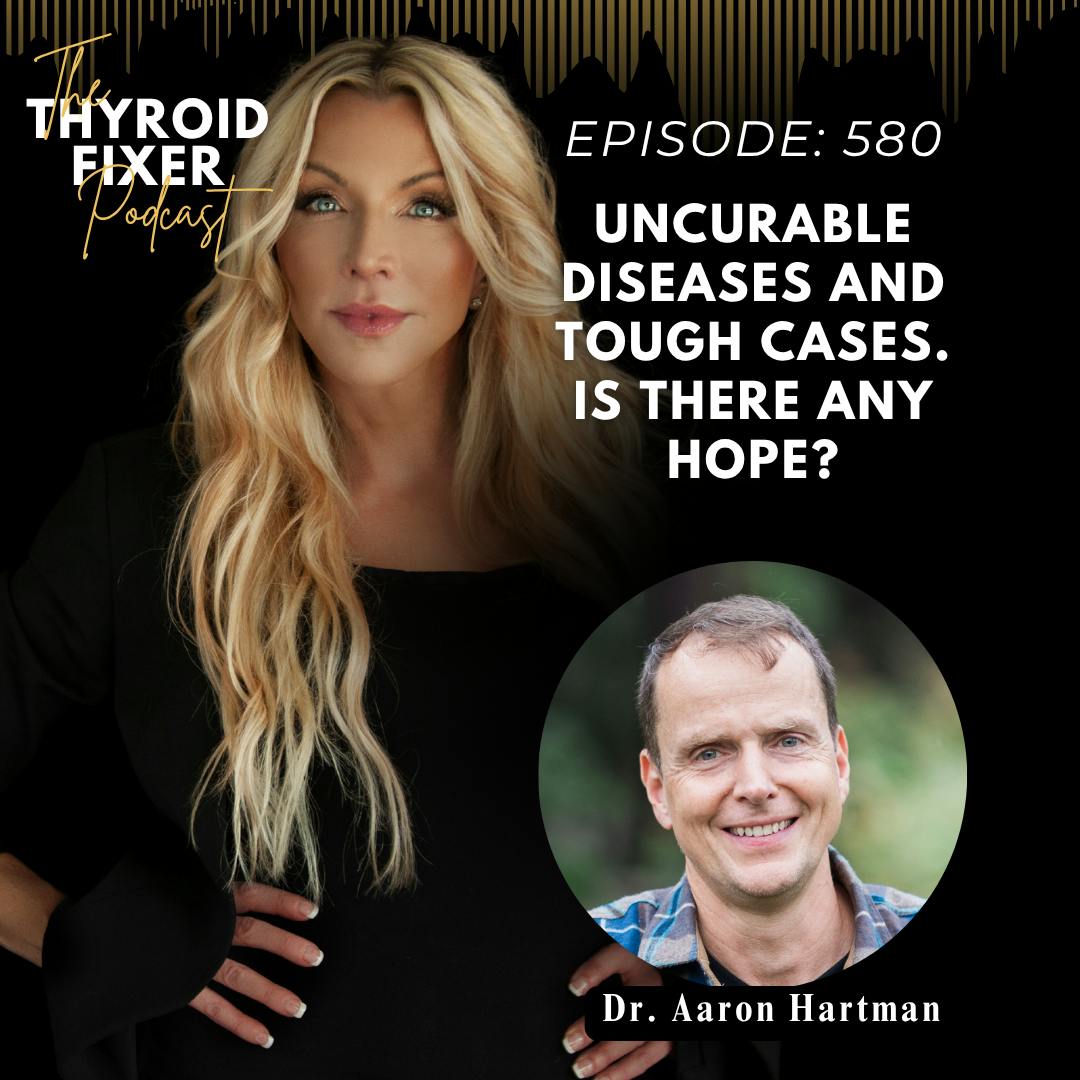
The Thyroid (and Hormone) Fixer Podcast: Thyropause, Menopause, Metabolism and How to Fix It
580. Uncurable diseases and tough cases. Is there ANY hope?
00:46:26
Loading summary
Transcript56 lines
- [00:00]
A
People have a system where they're like, no, there's no hope for me. Like, no, there is hope. Like you were made to self heal and self repair. Your body has the ability to do that. If you just remove the roadblocks, the things that are blocking your body's innate natural abilities and you give it what's lacking, it will do what it was made to do.
- [00:15]
B
Welcome to the Thyroid Fixer podcast where we dive deep into the world of thyroid and hormones. Especially for you ladies navigating perimenopause and menopause. And really for anyone struggling with hypothyroidism. I'm your host, Dr. Amy, thyroid and hormone specialist and CEO of a global telemedicine practice where we prescribe the right thyroid treatment and bioidentical hormones to all safety states and most of Canada, helping you become that badass human that you're meant to be. So if you're battling weight gain and hair loss, you can't lose weight no matter what you do. Your energy levels are plummeting and your libido left town. Then you're in the right place and you have found your tribe. Remember, I want you to embrace every inch of that badass woman that you truly are. So if you're ready to dive in and fit, fix things, let's get started. Let's talk about something that's been part of my daily health routine for a while now. And honestly, I'm not letting it go anytime soon. Kion Aminos. As someone who's consistent with training, I eat clean. I'm always looking for ways to optimize my energy, my recovery, definitely my performance. This is one of the few things that I always keep in my stack. I've been using essential amino acids for a long time now and they're a complete non negotiable in my routine. It's one of the easiest things I do every day to support my muscle, my energy, my long term health. So here's exactly what I do every morning before I hit the gym. Mix a scoop of Kion Aminos into a water bottle. Shake it up, drink it down. That's it. No weird fillers, no sugar, no heavy bloated protein. Shakes before and then I drink it throughout the entire day because I love how it tastes and how it flavors my water. Kion aminos are actually six times more effective than whey protein, which is wild and they're so much easier on your body. I feel more fueled, I recover faster, I can push harder without feeling worn out later. And yes, I Still eat plenty of protein and I still do protein shakes. But this is different. It feeds your body with amino acids all day long. On top of that, Kion just does it right? Their products are third party tested, non GMO vegan. Did I mention the taste? So my obsession, my go to flavor right now is mixed berry. But if you're on the flavored drinks, they also offer it in capsule form. But what I love is that it's just not about a quick fix. It's about giving your body what it needs. Those beautiful amino acids for your muscles, for your hair to just keep going. So if you're already putting in the work, you want to keep showing up at your best. You want to keep working out, you want gorgeous hair, you want beautiful skin. Kion Aminos are 100 worth adding to your routine. You can save 20 with my link. No code needed, just go to getkeon.com forward/thyroid. That's G-E-T-K-I-O-N.com forward/T H Y R O I D and you'll get your discount. They have a 60 day money back guarantee. So you have nothing to lose by trying it. If you care about your hormones, metabolism and longevity, you have to care about your muscle. Muscle is your body's most protective organ. It stabilizes hormones, burns fat and keeps you strong and independent as you age. Here's the problem. We start losing our muscle in our 30s and that loss accelerates during perimenopause, menopause or after injury. That's why I love Suji. It's a complete wearable that helps you strengthen and activate muscles using just 20% of the weight you would normally lift. Get that 20% of the weight that you would normally lift. It uses smart targeted compression to mimic the effects of high intensity training so you can build strength, relieve joint pain and protect your metabolism in minutes a day. Minutes. It is drug free. Obviously it's a wearable. It's not a takeable. Backed by science and trusted by professional athletes and physical therapists. So learn more or try it risk free for 30 days at trysuji.com that's T-R-Y-S-U-J-I.com use my code. Dr. Amy D R A M I E and that will save you money because you want to build lasting strength with less strain. Uncurable. Do you have that belief in your head? Is that something that you've told yourself? Do you believe that the loved ones that you're trying so desperately to help just they just don't, they don't have a chance. This is too far gone. All of the doctors told us there's nothing more that we can do. Well then this is the episode that you really want to listen to today because my guest, Dr. Aaron Hartman, friend, colleague, one I, I, I, I say this with all truth, all truth. One of the most intelligent, functional doctors I have ever met in my life. If I had a condition or a patient that I could not figure out, this is craziness. What is happening, I would go to Aaron now. He has a, you know, I don't even know how long his wait list is that may or may not get in. But, but if I had something that was just boggling my mind, if the words incurable ever came out of my mouth, I would stop right there and I would reach out to Dr. Hartman. Luckily for all of us, he wrote a book. So he's going to unpack this today. You're going to hear some amazing mind blowing stories today. But he also wrote a book, and I love the title of this book, Uncurable hopeless diagnosis to defying all odds. Like if that doesn't just give you pause and send chills up your spine, I don't know what will. But this actually is not bs, this is real. And you're going to hear a boatload of stories today from Dr. Hartman from supposedly uncurable air quote, uncurable cases that really had no hope in the conventional medicine system. So, Dr. Aaron, thank you so much for jumping on here today.
- [06:41]
A
Amy, I'm excited to be here and talk about this. We've already had some conversation beforehand, so, and we've known each other for a while, so I think this is going to be an awesome conversation.
- [06:49]
B
Well, just the conversation we had before we hit record, you were blowing my mind with the stories. It was like, wait, wait, wait, let's, let's do those on air because people need to hear these. So first of all, before we get into the just amazing mind blowing stories you have, talk to me about the start of this book. What was in your heart where you said, you know what? This is the book that needs to get out into the world and people need to know that there is hope.
- [07:18]
A
I mean, basically it comes down to my daughter's story. And the gist is if this little girl who was born blind had a stroke before she was born, whose birth mother did crystal method throughout the entire pregnancy, if she can do it beat every single solitary odd, then you can do it too. And so that's one of the things, when I see people, they have this belief system that, oh, I can never get better, I can never get healed. My case is too difficult. I hear this all the time. I'm too difficult of a case. You know, we have colleagues in the health system and different mastermind groups. I won't name them here because they're probably listening right now, but who are like, no, you don't understand. I'm the most difficult case. And it's like, yeah, no, no, no. And so, so the point is that like, people have the system where they're like, no, there's no hope for me. Like, no, there is hope. Like you were made to self heal and self repair. Your body has the ability to do that. If you just remove the roadblocks, the things that are blocking your body's innate natural abilities, and you give it what's lacking, it will do what it was made to do. And that's the simple reality. And so this, the point of this book was just to show people page after page after page after page to almost, I don't want to say indoctrinate, but you have to convince people of reality sometimes, you know, so this is just my attempt at doing that.
- [08:29]
B
Well, I'm so happy that you did because you are right. And I hear this as well. And I mean, I'm dealing with thyroid and hormones and I hear people coming in going, oh, no, no, nobody's been able to figure me out. I am a tough case. And you're right here in nine times out of ten, that's not true. But it's been almost just brainwashed into them by our conventional medicine system. Because that conventional system can't think outside the box. They're not allowed to think outside the box. The treatment that would work would not be covered by insurance. They basically say, you know, we've exhausted all of our options. But that doesn't mean that they've exhausted all options. They've exhausted what the insurance company will allow them to do. So let's go back to your daughter. Let's get deeper because I've seen some of your kiddos. I met some of your kiddos. I mean, you and your wife are absolute saints. You dealt with a lot. Go deeper into her story for me and kind of tell me what you told me off air and bring us to where she is now and how she's doing.
- [09:34]
A
Okay. My daughter that just, you know, she's born in the hospital. She was in the ICU for the first six weeks of her life. She had a stroke before she was born. And so when she came out, my wife actually was the occupational therapist that started doing home therapy with her. So Becky actually knew her from the time she was, like, 6 weeks old, which was when she got out of the hospital. And she's like, hey, this little girl's losing her foster home. It's closing down. Would you think about bringing into our home to foster her? And so I'm like, sure, let's take it for a spin, see what happens. You know, me being me. I asked my wife, you can give her back, right? My wife was like, sure. And Becky, I know, I know it's. You know, it's funny how life changes you, but she kind of knew that Anna would get me, and she did. She wrapped me around her little finger. And so I just love this little kid. I'm almost gonna do anything for her. And so one of the first things was, she's small for gestational age. She was less than the fifth percentile. And you being a nutritionist, you get this kind of stuff, right? And so the GI doctor was like, well, I know you're doing everything you can do, but the standard of care for these kids, for all these kiddos, is to put a feeding tube. So you cut a hole in the stomach, put a plastic tube in it, and pour formula, which is sugar water, which is toxic. It's full of, you know, we don't go into that, but just not ideal, right? And so Becky and I talked about speech development. Part of speech development is chewing and swallowing. I know she's never supposed to talk, so they didn't have. They had. It's amazing how low the expectations of the system were. I mean, think about that. They were so low. They're like, let's give you no hope whatsoever. So if there's any gains, you'll be excited about anyway. But our dreams and goals were, you know, she's going to talk, et cetera. So we decided not to do that. You know, she's going to walk one day. I know you say she never is, but. And it's kind of hard to crawl, right? And you're doing the little army crawl thing. Like, you can't do that if you got plastic thing coming out of your belly. So we thought it was gonna be no big deal. We'll just keep on feeding your gal, keep on flying food in your mouth. Taking an hour to do that, you know. Well, we got reported to Child Protective Services by our GI doctor for medical neglect because we wanted to give our daughter real food, not formula through A tube. And that was like the first inflection point where I was like, the system does not like it when you say no. And then in special needs world, this is common. Like parents will like drive their kids around the country, go, they'll do anything for their kids. And sometimes they actually lo them because we'll meet providers in the healthcare system think this is munch housing. You're crazy. It's like, no, they have not lost hope, they have not lost faith. So we got investigated and that, that's a whole story in of itself. I don't want to bore you with that, but we got through it because I was a captain, Air Force medical doctor, my wife, you know, but the thing is that they'll do it to us.
- [12:01]
B
Yeah.
- [12:01]
A
Like, how's the average person deal with this? So my wife Becky being Becky, doing research, first inflection point was the system doesn't like it when you say no. The second one was six months later when my wife found a growth chart for kids with cerebral palsy. And it was right in the middle. She was not failure to thrive. She was not small for all this stuff. She was normal for a kid with her condition. And the specialist had no idea. And so that was the second inflection point. Like, oh my gosh, if the experts don't know, who's gonna figure it out? And that was like the fire that lit the fire in my belly for so many years. That put a weight on me. Like, I have to figure it out. I have to get up early in the morning, I have to do this. And that just supercharged me to get up at 4 o' clock in the morning to do research. But that was like our story, the beginning of our unbelievable journey.
- [12:47]
B
Yeah, yeah. So how is Anna today? What has been her progress? Because one of the things, and before you get into that, just kind of piggybacking off of what you said, they set such low expectations that I'm sure the conventional system would say, well, if she moved from, you know, A to C, that's huge. That's great. That's probably all she's going to do. Be happy with that. Aaron and Becky, that's about. That's it. That's it. That's as far as she's going to go. Don't expect more. So how did she progress? How old is she now?
- [13:22]
A
She's 19.
- [13:23]
B
19, okay. So how's her life been? What's she doing now? How'd she progress?
- [13:28]
A
Well, she's done a lot, you know, for example, Kevin Sorcerer walk Talk and crawl. This last year, for the first time, she was able to get in a pool by herself, swim without a life preserver and get out of the pool by herself. Three years ago she just kind of float around in a life preserver thing. Two years ago she was able to walk with a life preserver. Now, I mean someone's there of course, because we don't want her drowning. But the point is like that's progressed. She can now able. She can now do most of her self care on her own to the extent that she's actually going to be at my first kid who moves out of the home next year when she's 19. She'll be actually almost turning 20 actually when she moves out. So five years ago she wasn't able to write. And it's been a process. We started doing some hyperbaric therapy. Now she can write notes and letters. She writes cards to people. We met Barry and you may met Barry through genius and he does all these amazing cards. She fell in love with that guy. Oh my gosh, he's so amazing too. And so she started writing cards, putting like little wax seals all in the stuff. Really cool stuff. She sings. It's really funny. This past year she was watching a opera singer and she's like, dad, I can do that too. I want some, I want some singing lessons. This was a kid who was never supposed to talk, right? And so like it's been a progress to get to that and there's been a lot of gain. And she thinks the thing, she still gets better every year. We've done stem cell stuff with her and she's actually regained function on her left side, which was her worst worst. We saw her right side, which is her worst side. We've done so many things with her built on the foundation of real food, environment, lifestyle stuff. But it's like, yeah, I could go on and on about stories about things. One of the big inflection, one of the big interesting things. This might interest you because I think this will resonate with you. A lot of kids have really bad tone issues or legs are tight. And so one of the surgeries earlier on that was recommended. She had three surgeries recommended. One was to cut her heel cords, other one was to cut her gastro. One was to act wolf four. One was to put a Baclofen pump on her back. Another one was to actually do a thing called selective dorsal rhizotomy, where they cut nerves in your back, all to help tone. Okay. Any one of those would have resulted In a trajectory that would never. You'd never come back from.
- [15:29]
B
Yeah.
- [15:30]
A
A patient during the pandemic, when I was doing the online course community thing, brought to attention a device called Revive, which is a muscular neuromuscular stimulation device. You put your feet on it activates your nerves. I was looking for this device for years. I'm like, oh, my gosh, that is exactly what I'm looking for. And after using that device for six months, almost all the tone in your lower extremities is gone. And so. And that was five, five, six years ago. So it's five years ago. So the thing about it is, like, there's so many things out there that even patients will find that the specialists don't know about. And she's continues to progress, continues to get better year after year. And I'm excited to see what she looks like when she's 25. If she keeps on going this way, it's going to be amazing.
- [16:11]
B
Oh my gosh, that's so amazing. So amazing. Well, that, that's such a powerful story and it hits close to home. Obviously, of course, that would be the inspiration for the book, but you've worked with so many people over the years and you have so many of these stories. So let's get into a couple of those. Tell me another one. I know you were mentioning your. Was it your father in law?
- [16:35]
A
Yes.
- [16:36]
B
Yeah, yeah, father in law. So, yeah, tell me that one.
- [16:39]
A
Well, he has a funny story. He did a chapter in my book, but he has a funny story because he actually was diagnosed 40 some years ago. They didn't know what it was back then. They called it non A, non B liver disease. Later called it primary bilocerosis. The GI doctors now don't know what it was. I think actually it was formaldehyde exposure from putting carpets in. He had a massive toxin hit. But it was interesting because his doctor missed his liver disease. By the time they read his liver, it had shriveled up so much they were actually surprised he was still alive. How that done back in the 80s, and that was back when people didn't survive. You had liver. Pretty much everybody in his cohort passed away. And he did all the right stuff that he was told to do, but it was always like, when's the shoe going to drop? When's the shoe going to drop? And what's happened is he's continued to get better throughout that time. Started, you know, during the pandemic, I think borne illness got some Lyme stuff and it was missed by all his Doctors I ended up diagnosing it, starting to treat that his liver enzymes were doing a little wacky stuff. So I started using Tutka later, your sir dial and butyrate phosphylcholine, other things. And so his liver enzymes, now I think he's 76 now, are the best they've been his entire life since he's been tracking them. At 76, he's killing it. Him and my mother in law go on bike trips all the time. He literally used these words with me in the office when I saw him this past month. He said, Aaron, like I listened to your stuff, like I think I'm thriving. And it's, it's crazy because like he's outlasted his, his gi. All the specialists have retired. Some of them actually died. And it's just crazy to see if you do the right stuff. Even in these situations where things can be pretty hopeless, you can still have amazing, amazing results.
- [18:14]
B
What do you think is the, the biggest issue in our medical system and why so many people are, are really being told that hey, you know, this is as far as we're going to go, this is uncurable, there really is no hope. Like, are there any major pillars that we're just ignoring ignoring? Or does it come back to what I said earlier? They're so locked down by what the insurance companies will let them do that they have to hold back therapies that they know will work.
- [18:44]
A
I think there's probably several things that are causing this. One's the educational system, one's the medical legal system, and one's insurance. The educational system, our system is very, it's actually built on oppression model from the 1800s where you build it, it's very scientific, very technical, and you create brilliant PhDs that can do amazing research, but everything's siloed. I remember when I finished my residency program telling my cousin, I've mastered medicine. I got like a 97% tal on my specialty board certification. I'd read all the textbooks, memorized them. I remember looking at me and going, dude, what are you even talking about? Like there's no way you could have mastered this. But I thought because the system was read the textbook, you master the material. And I read like a ton of stuff in medical school. And you get in the real world and realize, oh my gosh, I've just begun. And so what happens is our system educates people to the point and they think that because you've mastered this one zone of genius, that therefore, you know, all this other stuff and it, it unfortunately carries over after we finish, after we graduate. And because our. All of our information is proctored to us, it's curated to us. You have a journal that was reviewed by editors, so you only continue in your education in areas that boards say it's okay for you to learn stuff. And so what that results in after you finish your training, is that the curiosity you have when you're in college and in medical school? It's weird, just kind of disappears just because, like, in order to keep your board certification, which is like the sum. I'm board certified. Like, it doesn't take a whole lot to keep it. And what I tell people is my board certification is it's the ticket to get into the game. It's like, congratulations, insurance pays for you now, whoop de do. Like, now you can start learning. Right? And that, that not is not the perspective that our healthcare system takes. And so you have to be a lifelong learner. And you think medical professionals would be. But like any field, nutrition, law, construction, you have, it's a few people that are lifetime learners and the rest. The 80 20s rule.
- [20:37]
B
Right.
- [20:37]
A
The Pareto rule. Right. Most people are going to be the status quo. So I think that's the first thing, the educational system. The second thing is medical legal. If you come to see me, Amy, for chronic Lyme disease, I have you sign this ridiculous form where you say, you realize that me giving you antibiotics for three months for Lyme, that's not standard, that's against the fda. That's not according to the idsa, the Infectious Disease Society of America, just to see me in my practice, you sign this big thick thing saying you realize what I'm doing is outside the standard of care because there's a legal risk with me doing things above the standard, you know, and so like, the medical legal system makes people fearful to do other things. And then there's the insurance. Like, you know, when I first started doing this, I was doing this as a labor of love. I was doing this for free. I was just researching on my own for free for years. I spent several hundred thousand dollars on my education. It's not reimbursable by insurance.
- [21:25]
B
Right.
- [21:25]
A
Most people don't have the resources to do that. You know, fortunately I had a successful practice and successful research company that I had the resources to be able to put that much money into my education, even after school. But because it's not reimbursed by insurance, like, why would I do that? And then there's the whole mentality on the patient side well, if insurance doesn't pay for it, the FDA and your government hasn't approved it, then it must not be legit or safe or whatever. And it's like those are the three pillars, I think, that create this massive stagnation in the progress of medicine.
- [21:55]
B
Right. And then that just continuously reinforces the message the patient's getting, that these are your options. And, and if you don't do these options, then there's no hope. And then that's it. Now, I once heard a, a, a quote, this is years ago, couldn't even tell you who said it, but it was a speech given at a graduation ceremony at medical school. And the guy stands up there and goes, 50% of what you've learned here in three years will be obsolete. I mean, would you say that that's the case? That unless these practitioners continue to learn, learn like you say, that they're really practicing outdated medicine? And if that's the case, that 50, it's going to be obsolete in three years, then my God, what about the docs that haven't done any kind of additional education in 10 years? They're basically running off of old data, old information, outdated.
- [22:50]
A
Amy, it's actually worse than that. Oh, okay. Half of all I know, right? That's lovely. Half of the information that you learn in medical school. When I was in medical school, I was taught 50% of information I learned in medical school is wrong. We just didn't know which half. Okay, so that was, I learned that early on. Like in 1996, medical information is doubling every 18 months. So just think about it. Research articles, it's growing so fast. If you're not a voracious learner, you can't keep up. And there's also, there's other thing. Dr. Ioannes and Pls published this years ago and Plos is the largest online medical journal in the world. But he looked at studies and showed that half of all published clinical research findings are later found to be false. So if half of what you learn is wrong, you just know it's half. And half the published stuff, which could be the same number, just said differently. Then all of a sudden, what is your guiding north star that helps you figure out what to do. And that's where evidence based medicine is supposed to be built on three things. It's a three, three legged stool. It's supposed to be patient preference, which is going out the wind, because you know, that's not scientific practitioner experience. The fact that I've had over 100,000 patient encounters seven different countries, four different continents in my 25 year career should mean something. It doesn't anymore. And the last one is up to date clinical research. And so what's happened is we've taken one leg of the stool and just jacked it up to make it as big as possible and ignored clinician experience and patient preference and created this monster. And we saw that during, you know, the pandemic was a great example. We don't probably, I don't know if you want to go into detail about that, but that's a great example of like ignoring patients and providers and focusing on the limited data we had and not doing translational medicine. There's a lot of other coronaviruses, flu viruses. Why can't we use that information while we're learning new things? No, no, no, we can't do that. And so while people were living in fear, I was treating people. And it's kind of crazy the, the how much of a chasm and the thing is like people will talk about COVID mean that this political speech or whatever, but like it's like that every health system, every health situation has that same chasm. It's just that one was like in our face. So, so obviously that no one can deny that that's, that was an issue.
- [25:00]
B
Right, right. No, I, I, I agree with you. And it's funny as you're speaking, I'm still thinking to this day, everyone who has a podcast who talks about COVID or the vaccine, we all kind of tiptoe around it, like, okay, oh, do I say this? Am I going to get shut down? Am I going to get, and that should just speak to your point exactly. That all they wanted to do, whoever they is, government, medical, whoever was in cahoots together, wanted to drive home one message and ignore everything else. Like ignore the fact that there were other coronaviruses that we could have learned from and you know, and went off of that. So I think even on a, on a lesser scale, I mean we know that, that Covid in 2020 had a lot of loss of freedom of speech. We couldn't say anything, we couldn't give our opin line. YouTube channels were being taken down, we were being, being deplatformed and basically cancelled from society if we said anything. But now take that and take it down a couple notches, take it into cerebral policy, take it into liver enzymes, take it into all the different stories you're going to share today. And, and there's part of the problem, like you're saying people aren't even given the information that to, to allow them to make an informed decision. Maybe some of the techniques, maybe some of the protocols are outside of their budget, but you should at least tell them and give them all of the information so that they can decide for themselves or for their family.
- [26:33]
A
Yeah. I mean, every year I have to do a medical legal training for my malpractice. Have to watch this two hour video and listen to stuff. In this past year, it was about patient complaints reporting physicians to the state board in Virginia.
- [26:45]
B
Okay.
- [26:46]
A
And the thing was is people are coming to the Doctors now with AI, like, Hey, I AI'd this. I got these things, you know, would you listen to it? And the physicians are like ignoring them, getting complaints about them going to the state board of medicine, having cases come against them. And the point was, it's like you need to listen to patients enough, but ignore what they say, basically was the gist of it. But the thing is that like, that's the state we're in right now where literally we're learning how to like, it's almost combative. Like when someone comes to see me, they're like the enemy. It's like, no, we work for patients. Like, literally, that's one of our goals. We help our patients, we take care of our team and we take care of our families. And like, that's the way I look at stuff. Because the whole point of my practice is take care of people. But literally my malpractice care is training me to actually know my patients are, you know, they're whatever. Not my, my antagonist, not to be careful about stuff or I might get reported or sued. It's just if you're in that environment, how can you actually apply the most up to date stuff to people? People, if you're scared of how they react to stuff, you might get reported to Board of medicine and all this kind of stuff. It's just, it's a crazy world.
- [27:44]
B
Well. And it locks you down. So it keeps you, you're out there trying to help people to the best of your ability with knowledge. That, and I'm speaking about you specifically, not you, the collective you, Dr. Hartman, that. I mean, like I said in the beginning, your knowledge base is off the charts. I would put you head to head with, with any specialist out there. And yet you kind of have to hold back just a little bit because it's like, oh, well, if I say something or if I recommend this, is the patient going to flip out and report me to the Virginia board? I mean, it's ridiculous that you can't even use the intelligence research and information that you have. I completely and totally hear you and I see you and I understand you and I know exactly where you're at. You're gaining weight. You can't lose. You have all the symptoms that no one's listening to. The fatigue, the hair loss, the brain fog. You can't remember why you walked into a room. You don't want to get dressed and go out because you know if you have that glass of wine with your friend, if you have that dessert with your husband or even order an appetizer, you're going to be five pounds heavier the next day and your clothes are already tight. Every single doctor is telling you that you're normal and everything is fine. You've been to multiple conventional medicine doctors trying to use your insurance, hoping to God that somebody has an answer. Then you've dropped thousands of dollars on functional medicine or integrative medicine because you keep hearing how functional medicine gets to the root cause of the problem. But not every functional medicine practitioner knows the thyroid and knows the hormones and can treat you as a nuanced, personalized individual, a unique person. That is exactly what my team and I do. We specialize in thyroid problems. We specialize in hormones. You can't do one without the other. You cannot just see someone for your thyroid and have them ignore your hormones or have them half ass your hormones. They better be a hormone and thyroid expert. If you are going to spend your time, your energy and your money if you are going to invest in functional medicine, they need to be a thyroid and hormone expert and treat you as an individual. They can't have a cap on how much T3 that they're going to give you. They have to personalize your treatment plan to get you feeling your best, no matter what that looks like. So that every system in your body functions at the very top at the very best. And that is exactly what we do. I made it my mission because I went through this. I was dismissed, I was gaslit, I was misdiagnosed, and I dropped thousands of dollars before I found an answer. That is why I made it my mission to be able to treat people in all 50 states so we can prescribe via telehealth. Thyroid and hormones and peptides. Yeah, the GLPs as well, to all 50 states, most of Canada and now Puerto Rico. That is my mission to be able to help you wherever you are because I want you living your best life. I want you to join me in optimization land where you can go out and love life. And go out with your friends and go out with your partner and not gain weight looking sideways at a brownie. Yes, we do have financing options available. I'm talking like 0% or 12 months. The whole thing, based on your credit score. We got you. And our programs are affordable. They're completely and totally affordable. And they will get you from point A to point B. They will bring you into optimization land. So please don't waste another moment struggling, please. I want you living here with me, a great, happy life in optimization land. So go to my website@dramy.com, click the Become a patient button so we can have a chat. Let's talk it out. Let's hear what you've done, what you haven't done, what's worked, what hasn't worked, and let's get you on the right path to feeling your absolute best. If you can imagine the best life ever that is absolutely possible for you. I'm not BSing you. I am not BSing you. I was in your shoes. Many of my patients have been in your shoes. We will get you there. And that is my promise to you.
- [32:32]
A
Well, I've created a practice that has a membership model that you have to apply, you have to get in, and you have to sign this big thing. And we actually, we find our people who are looking for this, actually. So, yeah, this is not for everybody, but we've. I've actually done a good job of finding people who are looking for someone to listen to them. It's crazy. Like, we, you know, we find people, built a practice for people that want someone to listen to them, that will someone want someone who will collaborate with them and walk along. And they don't expect us to know everything, but they want us to learn along with them. Like, isn't that supposed to be the practice of medicine? People ask me what kind of medicine I do. I practice good medicine. I feel like it's. Yeah, you can call whatever you want functional, integrative, translational, you know, and whatever, holistic. But it's just good medicine. Taking care of people is what's supposed to be about.
- [33:15]
B
I love that. I love that. Okay, back to the book. Incurable. Give me another story of someone who came in and said those words to you. Dr. Hubban, I'm the. I'm the toughest case you're gonna have. I don't know if you can help me or not.
- [33:30]
A
There's a couple stories out of the book. I can tell a book story that's a little different. And there's stories outside the Book that actually two have happened, literally, in the last month. But in the book, there's a story, and this happened. You've probably had these individuals. It was earlier on my career when I just started learning about functional medicine, and I learned about this whole idea of Canada Overgrowth syndrome, whatever that is. Right. Had a female patient come in, had horrible chronic fatigue, horrible fibromyalgia. She was applying for disability. She spoke, she drank Diet Coke, Just was miserable. And she was coming to me for pain medication, basically for the pain. And I'd heard about, you know, this Canada Overgrowth Syndrome thing. It's kind of. Maybe it looks like fibro, and you had recurrent yeast infections and you've had some thrush in your mouth, you know. Now the standard would be Diflucan for, like, a day to clear out. You know, I'm like, let me give. Let me give it to you for, like, a week and see what happens. So two months later, she's like, give me a message. Hey, Dr. Hartman, can I have somewhere, like, diet Fluke? And all my symptoms went away. Can have some more of that good stuff. I'm like, well, you need to change your diet and cut out the. Quit smoking and da, da, da. I'll give you another week, but I'm not gonna give any more until you come back and see me and make some changes. Two months later, she's like, hey, another message. Can I get some more of that stuff? Because all my symptoms went away. I'm like, no. Like, you know, come in and see me. And all of a sudden, the message was, you need to come back and see me so we can talk about stuff. She never came back in. She knew I was gonna ask her to quit smoking and stop drinking Diet Coke and. Right. Change her diet and. But it was fascinating that diflucaine made her. For her, you know, whatever chronic fiber is, we could. That's a whole other conversation. But it made her symptoms go away. Yeah, it was actually after I listened to Dr. Teitelbaum, because he's a big fiber guy, if you're familiar with him, that he's been doing fiber stuff from succulent 80s. And that was where I learned about that whole stuff from. From him. And it was, like, crazy. Like, it went away. Your fiber went away after a week of Diflucan? That's bonkers.
- [35:17]
B
Wow. Yeah. Yeah, exactly. And then that speaks to, you know, we can have the cases that are supposedly incurable, but what makes them move the needle like your daughter? You have to pair up everything you have to pair up the nutrition and the lifestyle and the things that you can control. You have to be doing that. And you and Becky did that with Anna and changed her diet. It wasn't that you just said, okay, well we're going to give her all the drugs and, and you know, try these different therapies, but we'll keep, we'll let her eat the chicken nuggets because, you know, she's a kid and she deserves those chicken nuggets and the goldfish crackers. Like, no, we're not going to put garbage into her body and expect to get progress out. And unfortunately, the patient that you gave the fruit can to thought that she could keep putting garbage in and just throw on a pillow.
- [36:11]
A
My daughter, she's a little foodie. She loves food. Like, it's amazing. But to your point, we literally used food as a drug. There's a thing called membrane medicine or lipid medicine. It's a whole field of looking at how hormones work, how our body's metabolism work, how our nerves work, but focused on the cell membrane because ultimately every transmitter, every receptor sits in a cell membrane. If cell membranes are hard, they're thick, they're not fluid, it affects everything else. And so that's like the whole idea of membrane medicine. And so early on, with her neurological issues, realizing that a lot of the chemicals, you know, related to methyl crystal meth gets stuck in those cell membranes, we started using fats to help heal our brain. So we'd actually take the stuff called balanced body oral, which is a 4 to 1 ratio of omega 6s to omega 3s, make mayonnaise out of it. And she would put it on her eggs, cuz eggs are great with cholesterol and phosphatidylcholine in the yolks. We'd use it on everything. Started making this subcloud called brain mayo. I'm sorry, Brain Brain. The granola, what I called, what I called the granola, I called it something. Anyway, I'd make granola for her, but it was all nuts and seeds. So it was almonds, pistachios, sunflower seeds, chia seeds. I soak them, grind it up, and then make granola out of it. So she's literally getting trace minerals, rare earth minerals, and these nuts and seeds and she would just gobble it down. We've got raw milk, start making homemade kefir and homemade yogurt. Gut health is a big part of brain health. And so we literally used food in a fashion to help heal a brain and My son, I mentioned him, I think I mentioned in the book. Maybe, maybe I don't. But when we got him when he was six months old, he had horrible eczema and horrible asthma. And within six months of getting him, they were gone. And one of the things my wife did was make homemade formula, you know, for him. You can't under emphasize how ridiculously important food is. You know, one statistic I talk about in the book is 80% of heart disease and 70% of most cancer can be prevented by diet and lifestyle alone. So literally, you doing the right thing prevents 80% of the number one killer and 70% of the number two killer. So you cannot underemphasize that part of any healing program.
- [38:10]
B
Well, that was going to be my next question for you. With all of the different cases that you have seen through the years that you talk about in the book, is there a permeating kind of, you know, similarity between all of them? Like everybody needed to detox, everybody was loaded with toxins, everybody had a shitty diet and we needed to change that up. Was there anything that kind of just carried through all the cases?
- [38:32]
A
I think, you know, there's foundational things that everybody needs to perfect. And I've kind of found three. I call it my triangle of health. It's like the three sticking points where when people's healing gets stuck, it's almost always one of these three areas. Gut health, stress and sleep. Now with gut health, that's where you can get good going on the detox pathways because part of your gut is your liver, gallbladder health, you know, clean food, gut microbiome falls down to gut health. There's a whole gastro hormonal system. So ice cold gut, because it's a pretty big thing. But the primary driver of that is food stress. You know, stress can be, you know, poor sleep, it can be trauma, big T trauma, little T trauma. It can be a whole bunch of things. But if your nervous system is jacked up in sympathetic overdrive, that's one of the biggest things I'm dealing with right now with my patients I've been working with for years, where they get to a certain point, they get stuck. It's so many times it's related to trauma or stress. And then sleep, if you're not getting accurate sleep, you know, all these kids with special needs have sleep apnea, they have sleep issues. And if your gut's messed up and you have a brain trauma issue, you won't sleep well. And so, you know, detox is huge. Obviously that Kind of falls in one of the parts of the gut thing. Hormones are huge. They fall in a different section. But those are the three areas that I've found that when people kind of get both stuck in their healing and usually one of those three things.
- [39:50]
B
Okay, so it's not necessarily expensive peptides and 100 different supplements that you have to take in a day. It could be something very base, very core that needs to change, that people are really resistant to 100%.
- [40:05]
A
And your body has, you know, the younger you are. I've had patients with. Actually, one patient I'm working with right now is getting ready to graduate from high school, who came to me with diagnosis of Crohn's disease. And they wanted to stop. He went to Boston Children's Hospital. We're in Richmond, Virginia. They wanted to start him on biologic, started working with him. He had C. Diff that no one. Everybody missed, treated that, changed his diet around. He's in remission. I mean, it was like, literally, like after his first visit, I'm like, I think I'm kind of done with you, kid. Like, this is. This is too fast. You know, he's still with me because his. His mom's concerned about stuff. He has other things going on. It's a professional athlete. You perfect the basics, you perfect that kick. You know, you perfect your diet, you perfect your. Your environment. You. If you're in a moldy home, it's gonna be hard to heal. If you're in a stressful, traumatic relationship, it's gonna be hard to heal. If your parents or your. Your spouse or your significant other are narcissist, that's not a stable environment. You know, I see so many people have relationships with people that are narcissists or have bipolar or other kind of issues that make an unstable environment. Obviously alcoholism, obviously all the big things. But there's a lot of things out there people don't recognize that over time can cause a trauma like response in your brain. And you have to work on these things if you want your body to heal. And these are the things that people miss. For all the shiny things for the, you know, we've done those things with my daughter. We did hyperbaric, We've done peptides, we've done stem cells, we've done cerebralysin, We've done. I mean, we've done like all the cool stuff. I actually go in our book, the book and have a list of a couple pages of things we've done with her just so people know that, like, I'm Legit. I do cool things as well. But that was all built. I know it's, it's like, no, really do cool things too. Not just food and diet, but that's built all on top of real food, clean environment, you know the basics. You have to perfect the basics. And when you do that, peptides are magical. Hyperbaric is magical, Stem cells are magical. Otherwise they're just like, you stop taking the stuff, the weight comes back, you stop your peptides, you lose your muscle, you stop your stem cells, the tear comes back if you're not doing the foundational stuff.
- [41:59]
B
I literally just recorded a podcast today about that very thing. I mainly focused on GLPs because we know so many people are out there buying into the, you know, 400amonth row and hymns and hers and all that just to get their DLPs. Rena Williams is using it and like they're like, oh wait, why aren't I losing weight? I just spent like $4,000 over the last few months on this GLP that works for everybody else. It's like, well, there's garbage inside. Your thyroid's in the toilet, you have no hormone function, you're insulin resistant. Like, did you really think this was going to work? So I'm so happy that you said that because that is the big thing with all of these peptides, with all of the biohacking tools, the, the hbot, the red light, all of it is super cool and you are the master. I picked your brain about peptides left and right, but you can't do the peptides unless you do the core foundation. I've talked to you about my stepson, nonverbal autistic. Now he's 13 years old and yeah, the peptides would be super cool, but if mom and dad aren't going to get the gluten out and give a baseline diet or try some keto to see if we can light up his brain or get him on the good fats. Get. Pull out the, the, the chicken nuggets and not just switch to gluten free chicken nuggets. Like let's pull them out and use some real food. All the supplements and the peptides might as well burn your money instead. It's not going to work.
- [43:28]
A
It comes down to marketing and advertising and it's amazing what people, people are so much want an easy fix. Like working with my daughter for the last 18 years has not been easy. It's been hard. It's been heart wrenching. It's been difficult. It's, it's Been traumatic. It's changed my practice of medicine for the good. It's changed the life of thousands of patients, literally. My daughter, who's a throwaway for the system, I mean, if you look at how she's affected my practice of medicine, she by herself, has affected thousands of people's health. And it's all built on the foundations of the basics. And people look at these, like, flashy things, these go off the path, and it might work for a little bit. You know, there are some things that are amazing. I use hyperbaric. If you have traumatic brain injury, like, the best thing off the bat. If you have stroke, the best thing off the bat is to dive to 1.7 atmospheres, 100% oxygen. That will get blood. No, everywhere else in your body that the blood's not. That's amazing. But if your diet's horrible, if your omega 3 levels in your brain are horrible and you have a lower omega 3 index, you know, you're not gonna get the same results. And you might also have re damaging those areas that get reperfused. And so that's something else people don't talk about. If you start these cool things, you might, oh, I'm getting better. My. My gut's healed up, and I use my BPC157 from my leaky gut with my Thymus and Alpha One. And, you know, I put a little LL37 in there, Motsi, and I'm feeling great. You know, it's like, it's cool, but as soon as you stop it, what's gonna happen? Your gut's gonna break down again. That's what tends to happen.
- [44:47]
B
Yeah, exactly. Exactly. Okay, so we have time for one more story because you have so many of them. I could see her for days and just listen to these inspiring, moving, hope giving stories. But give me one more, and then we'll give everybody all the info on how they can get their hands on incurable. Because it's. Oh, my God, Aaron. It's going to change lives.
- [45:10]
A
I'm.
- [45:10]
B
I'm just blown away. It's going to change.
- [45:12]
A
Thanks. Thanks. Another kid I worked with early in my. My career, Isaiah, and he had this thing called acute demyeling encephalomyelitis. And so it's this thing that you learn about medical school you're never supposed to see because it's super rare, and it's usually triggered by a viral infection of some sort. You get an autoimmune disease, and so what happens is you just basically demyelinate part of your brain. Here's three. And so what happens when you're three and this happens is you lose speech. It's almost like you regress. You go from a talking, playful kid to like, just like a, like a blank stare, non, non engaging. And so mom brought them to me and she, mom was amazing. She was, you know, she one of the best kid, but she didn't have resources. She actually was on Medicaid at the time and just didn't have a whole lot. And so we did some basic testing, organic acid testing on them. We're like, she couldn't afford all the fancy supplements. We're like, what's the one thing I can do for this kid that's going to radically change his gut? And so I read from some of Natasha Canaway Brad's work, the GAPS diet, which you may be familiar with. And so, and she developed it for her, for her. I think she was originally neurosurgeon Russia, actually at mut the uk. I think she's in the US now, but developed the GAPS diet, which is standing for GUT Associated Psychiatric Syndrome. And it's basically this massive diet that just redoes the gut microbiome. So Mike, let's try some basic supplements. Of course his D was low. Of course his Omega 3s were low, Mike. All the standard. Let's get some C trace minerals, probiotics, of course. But then we did organic acid testing, but we did the GAPS diet. About six months in he started becoming more verbal. By a year. He got his speech back. He was playful and his mom was like, I got my, I got my boy back. It was like absolutely amazing. But there's a little twist to the story at the end, at the end of the year it comes with a grandmother and the grandma, her question to me was like, this is great. When can you go back to being normal? Because his diet at that point in time was like clean, no donuts, no pizza, no nothing. Grandma's like, when he can go back to a normal diet. When can you be normal? I was like, I have no like that. You saw your grandchild, that was hopeless. He's now normal and you want to go back to the way he was before. You want to go back to the diet. It's like it just, I didn't at that point in time I didn't have a good response to her because I was just like, what do you mean get back to his normal diet? Like that's huh, excited. I was actually shell shocked by the question. I didn't have a really Good response at that point in time. But that story's like, again, you can just, from diet, some basic stuff, you can have amazing responses. But it's even with people who've seen it close to him, family members, it's still sometimes hard to be like, you can't go back.
- [47:30]
B
Yeah.
- [47:30]
A
Like if you see an amazing result, you, why would you want to go back? And I'm sure you've built that with your, with your clients and stuff where it's like, you know, I want to cheat a little bit. It's like, so you just want a little, little poison, like a little toxins, you know, just a little petroleum based food dyes to destroy your gut microbiome and you know, nurse them, eat your kid, like just a little, you know, it's like if they're doing better, if their eczema is better, their ADHD is better, their autism's improving their behavior, they're sitting in chair at school, their guts better, their diarrhea is gone, like, why would you ever want to go back? But it's so funny because that's, people want to revert back to. That's, that's where education, that's where what you do is huge. Where I do is huge. We have to educate people. They have to hear over and over again that if you want to see outstanding results, if you want to see near miraculous results, you can't do what everybody else has done before you. You have to do something radically different.
- [48:15]
B
Yes. Yes. And you can't do what everyone else is doing around you. I mean, I, you and I grew up, of course, eating well. I don't know how you grew up. Maybe your parents were a little bit better, but we, we had the standard American diet. You know, I had Schwebel's bread and cereal because they didn't know back then. Now we have the knowledge, now we have the power. So the parents of these kids that are suffering, or I'm sorry, even if you're an adult, if you're sitting there thinking, well, wait a minute, I used to eat that way when I was a kid, or I used to eat this way, or Susie, cue my neighbor, she has her wine and her cheese and her crackers every night and she's fine. We are all unique individuals. And if you want to continue doing the thing that got you here or that got your kiddo to the place where they're at, where they're not talking or they're not walking, or they have, you know, behavioral issues in school or whatever it is, sure Keep doing the same thing. Because that's the exact definition of insanity. You're doing the same thing over and over and you're expecting a different result. Like for that grandma, you're gonna go back to what they were eating before they got them there or contribute to getting them there and expect that you're going to get a completely different result from putting poison in. It makes no sense. It makes no sense.
- [49:33]
A
It doesn't. But that's what we're fighting against. And that's where education and good information, like good reliable information, not fads, not flashy things, not shiny objects. And that's, that's one of the, one of the things I like look at is the traditional healing, traditional medicine, traditional healing traditions. And it's interesting, there's a wisdom kind of baked into the system for these things have been around for thousands of years and sometimes that helps. That helps me actually go through medical literature and figure out which articles are false and true. Because it's like, well this didn't work. This thing hasn't worked for thousands of years. Why does this one article change the entirety of human history? Like eh, I need more data, you know?
- [50:08]
B
Right, right, exactly. Well this is what you're doing in your book. So Uncurable Hopeless diagnosis to Defying all odds. I love the title. We're going to put the link in the show notes for everyone to grab. I'm going to encourage all of you to go out and get this book because even if you don't know someone with an uncurable condition or you don't have one yourself, the inspiration, the nuggets of information that Dr. Hartman puts in this book book are priceless. So Dr. Aaron, can you tell people where they can find you specifically if they would like to even look you up? Join your practice, join your membership, follow you on social, give all the information and we'll put that all in the show notes.
- [50:47]
A
I mean the one landing page that, that goes to all the other ones is Aaron hartmanmd.com it's just my name Aaron hartmanmd.com that goes to all those from there. And the book is UncurableBook.com and that's for the book and you can go buy it or you can just go to Amazon or Barnes and Noble or wherever. And the Audible book is coming out in January so whenever this goes out, it'll coming out shortly after that. So I have a lot of stuff, I have a podcast, have YouTube, all that stuff. But the A. MD is the spot, is the site that goes to kind of everything else to go everywhere. Beautiful.
- [51:17]
B
And we'll put that in the show notes. Dr. Aaron, I love you so much. Thank you for doing everything that you do for people and I love that. Anna, I mean I almost cry when you were talking about that because it's so true. True. She's been, she's been a blessing to so many people because what she went through allowed you to help others. And that's the pain to purpose story right there.
- [51:38]
A
Thank you so much for inviting me on and just let me share my story.
- [51:41]
B
Absolutely. Anytime, anytime. So everyone please listening go out and grab that book. It's going to change your life. Until next time. We'll see you on the Thyroid Fixer Podcast Foreign. The information shared on the Thyroid Fixer Podcast is intended solely for informational and educational purposes. It is not a substitute for professional medical advice, diagnosis or treatment. Always consult with your physician or other qualified health care provider with any questions you may have regarding a medical condition, treatment or before making changes to your healthcare regimen, including medications, supplement, supplements or other therapies. Use of the information provided in this podcast does not establish a doctor, patient or client provider relationship between you and the host or between you and any other healthcare professionals featured on the show. Any medical opinions or statements made by guests are their own and do not necessarily reflect those of the host or affiliated parties. Statements regarding dietary supplements or health related products mentioned in this podcast have not been evaluated by the fda. These products are not intended to diagnose, treat, cure or prevent any disease. Some episodes of the Thyroid Fixer Podcast may include sponsorships or affiliate links. The host may receive compensation for discussing or promoting certain products or services. Any such sponsorships or affiliations will be clearly disclosed during the episode. All opinions expressed are those of the hosts or guests and do not necessarily reflect the views of any sponsors. The inclusion of a product or service does not imply endorsement by any healthcare professional featured on this podcast.