
Podcast
The Times of Israel Daily Briefing
Hosted by The Times of Israel · EN
Welcome to The Times of Israel Daily Briefing: Your update on what’s important in Israel, the Middle East and The Jewish World.
81episodes
Episodes
Newest firstAll episodes

Why Israel could object to the potential Iran deal
2d ago00:21:16Tap to summarizeWelcome to The Times of Israel's Daily Briefing, your 20-minute audio update on what's happening in Israel, the Middle East and the Jewish world. Political correspondent Tal Schneider joins host Amanda Borschel-Dan for today's episode. The US and Iran are close to signing a deal involving a 60-day ceasefire extension, during which the Strait of Hormuz would be reopened, Iran would be able to freely sell oil, and negotiations would be held on curbing Iran’s nuclear program — including it giving up its stockpile of enriched uranium, the Axios news site reported on Sunday, citing a US official. Schneider gives insight into Israel's reaction to the potential deal and delves into what could happen on the Lebanon front: Is Hezbollah part of the package? A soldier was killed Friday by a drone near the Lebanese border, the Israel Defense Forces announced Saturday. The slain soldier was named as Staff Sgt. Noam Hamburger, 23, a technology and maintenance soldier in the 401st Brigade, from Atlit in northern Israel. Schneider underlines that this occurred on Israeli soil, where Hezbollah drone attacks are still an everyday occurrence for residents of the north. On Friday night, Yashar! party head Gadi Eisenkot gave his first major interview in recent memory to the Uvda TV news magazine. We hear what was said -- and unsaid. Since the establishment of the State of Israel, young women, from the age of 18, have been obligated to enlist in the IDF. We learn about how the ranks of female fighters have swelled in the past decade -- and the intense backlash from the religious community. Schneider brings us an update from this morning, which illustrates this delicate balance. Check out The Times of Israel's ongoing liveblog for more updates. For further reading: US-Iran deal said to open strait for 60 days, Iran to discuss giving up enriched uranium Trump says deal with Iran ‘largely negotiated, will be announced shortly,’ Hormuz will be opened Liberman slams emerging Iran deal, accuses Netanyahu of failing to win war ‘on any front’ Soldier killed in northern Israel by Hezbollah drone from Lebanon Female troops are under assault, and not just in Bnei Brak Subscribe to The Times of Israel Daily Briefing on Apple Podcasts, Spotify, YouTube, or wherever you get your podcasts. This episode was produced by Ari Schlacht.See omnystudio.com/listener for privacy information.
Transcribe →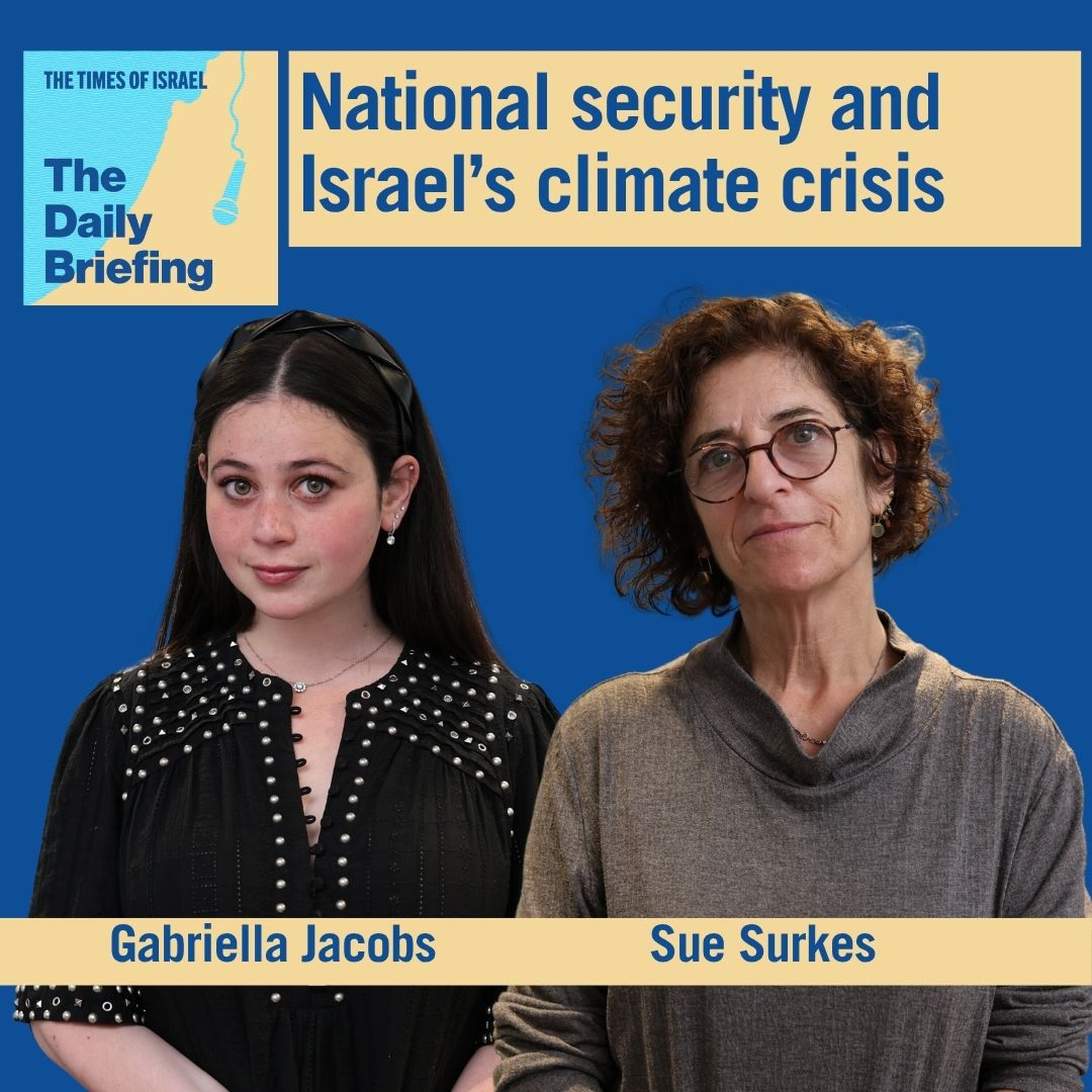
National security and Israel’s climate crisis
4d ago00:21:53Tap to summarizeWelcome to The Times of Israel's Daily Briefing, your 20-minute audio update on what's happening in Israel, the Middle East and the Jewish world. Environmental reporter Sue Surkes joins host Gabriella Jacobs for today's episode. Four years ago, Israel’s National Security Council established a unit focused on climate policy. In what Surkes calls a "shock decision," the NSC’s Climate and National Security Forum and Climate Intelligence Forum had ceased to operate as of April 1. We learn what the potential implications could be. Next, we learn about Elad Blumental, the head of OneDay, which provides one-time social volunteering activities. Recently, the NGO pivoted to training volunteer earthquake rescue teams on the heels of repeated State Comptroller reports and Knesset committee hearings warning that Israel is woefully unprepared for an inevitable earthquake. Finally, we learn about a new initiative earmarked for reservists and soldiers who are living with trauma and post-traumatic stress disorder (PTSD). Metiv — The Israel Psychotrauma Center launched a new campaign on Sunday to encourage restaurants, cafes, bars and other social venues to create spaces that are more aware, sensitive and accessible. Surkes gives details. Check out The Times of Israel's ongoing liveblog for more updates. For further reading: In shock decision, National Security Council stops work on climate change New ‘PTSD-friendly’ scheme aims to adapt Israel’s public spaces Subscribe to The Times of Israel Daily Briefing on Apple Podcasts, Spotify, YouTube, or wherever you get your podcasts. This episode was produced by Ari Schlacht.See omnystudio.com/listener for privacy information.
Transcribe →
Royal Commission: Antisemitism soars across Australia
5d ago00:21:05Tap to summarizeWelcome to The Times of Israel's Daily Briefing, your 20-minute audio update on what's happening in Israel, the Middle East and the Jewish world. Australia correspondent Nomi Kaltmann joins host Gabriella Jacobs for today's episode. A royal commission is Australia’s highest form of public inquiry, with sweeping powers to compel witnesses and documents. Australia’s royal commission into antisemitism was established by Prime Minister Anthony Albanese following the Bondi Beach Hanukkah massacre in Sydney. Kaltmann discusses to what extent its findings can shape Australian law, policy and society. Kaltmann describes how the hearings have become a rare public forum for Australian Jews to describe how antisemitism has reshaped life in the aftermath of the bloody October 7, 2023, Hamas invasion of Israel and the subsequent war against the terror group in Gaza. She describes two weeks of hearings which are now nearing their conclusion, in which Jewish Australians and other witnesses gave evidence before the commission. Kaltmann concludes by explaining the trajectory of the commission going forward and its conclusions thus far. She remains uncertain whether the commission’s recommendations will, in actuality, stem the surge of antisemitism that Australian Jews have been witnessing of late.See omnystudio.com/listener for privacy information.
Transcribe →
Drama at Knesset as coalition plows ahead with legislation
6d ago00:22:16Tap to summarizeWelcome to The Times of Israel's Daily Briefing, your 20-minute audio update on what's happening in Israel, the Middle East and the Jewish world. Political correspondent Ariela Karmel and reporter Amy Spiro join host Jessica Steinberg for today's episode. It's been an intensive week for lawmakers, reports Karmel, as the government begins dissolving the Knesset to trigger earlier elections and accelerates several controversial pieces of legislation. Karmel discusses the attorney general bill, a final effort by the right-leaning coalition to remove what remains of the only checks and balances on executive power in Israel. Another element of the attorney general legislation is intended to allow elected officials to operate with less scrutiny, says Karmel, making it more difficult to open investigations or indictments against a prime minister or cabinet members. After singer Noam Bettan garnered second place in the Eurovision Song Contest on Saturday night, Spiro discusses the surprising result, given the intensive politics behind the competition, with several countries that dropped out of the contest in protest of Israel's participation. If Bettan had won first place, Spiro notes that it would have complicated decisions about having Israel host the Eurovision next year, but notes that the song contest has survived other wars, boycotts and geopolitical dramas. Check out The Times of Israel's ongoing liveblog for more updates. For further reading: MKs vote to advance bills splitting and weakening role of AG, making it harder to indict PM New bill aims to make it harder to indict senior officials, including PM, ministers Smotrich attacks AG, rule of law in dramatic Knesset committee hearing Defying predictions, Eurovision juries gave Israel a boost amid voting reforms Israel’s Noam Bettan finishes second at Eurovision as Bulgaria takes the win Subscribe to The Times of Israel Daily Briefing on Apple Podcasts, Spotify, YouTube, or wherever you get your podcasts. This episode was produced by Yitzchak Ledee. IMAGE: Political correspondent Ariela Karmel joins host Jessica Steinberg for today's Daily Briefing. (ToI)See omnystudio.com/listener for privacy information.
Transcribe →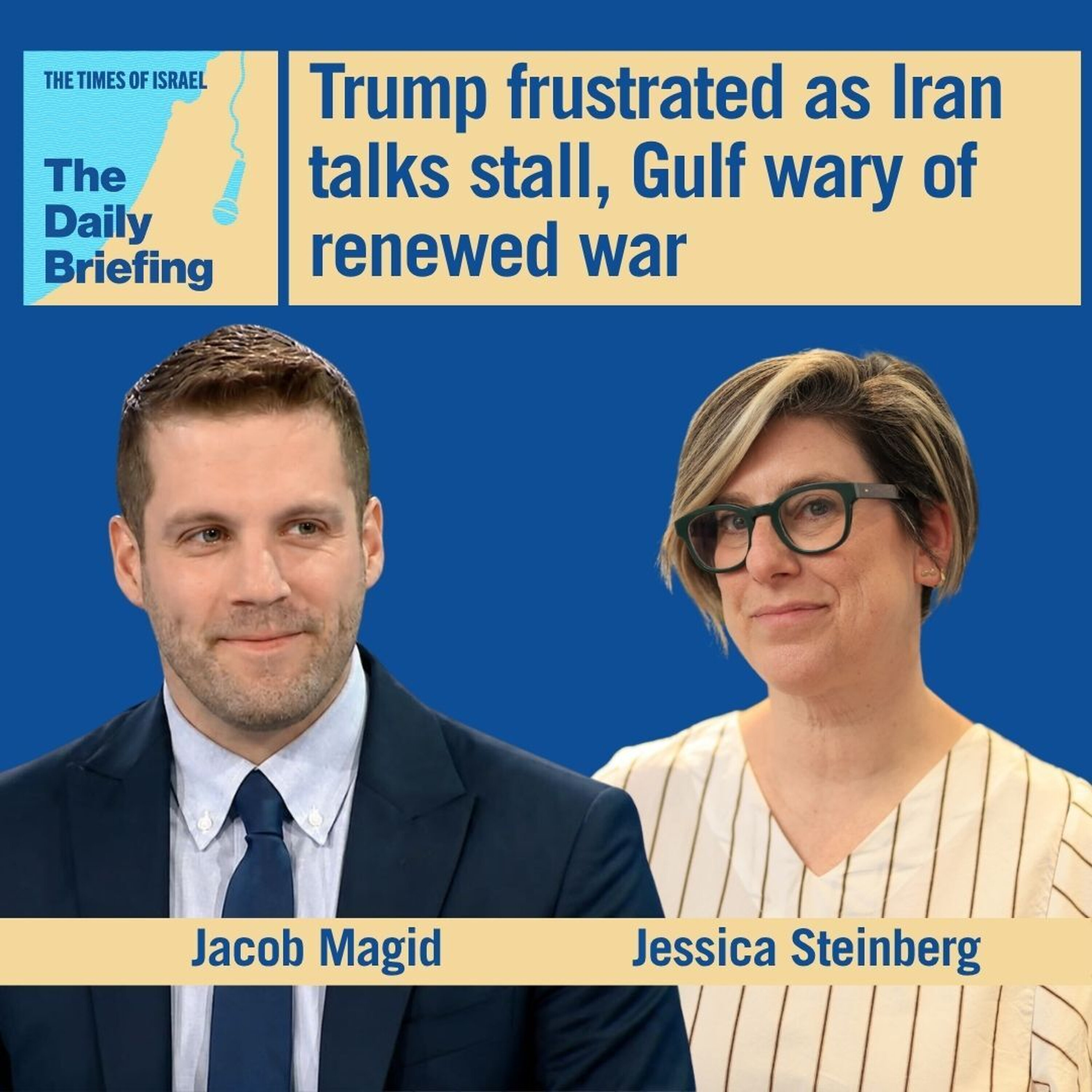
Trump frustrated as Iran talks stall, Gulf wary of renewed war
1w ago00:18:44Tap to summarizeWelcome to The Times of Israel's Daily Briefing, your 20-minute audio update on what's happening in Israel, the Middle East and the Jewish world. US bureau chief Jacob Magid joins host Jessica Steinberg for today's episode. As negotiations falter, again, between Iran and the US, and the Gulf States express wariness about renewing war, Magid discusses the two sides' current positions on terms to permanently end the war. Among other demands, Iran is seeking guarantees that hostilities will not resume and, in return, would reopen the Strait of Hormuz. It also continues to seek deferring negotiations over its rogue nuclear program — a stance President Donald Trump has thus far rejected. In the meantime, Magid reports, the Board of Peace is getting nowhere regarding Hamas's disarmament. The terror group feels emboldened by Iran's ability to withstand US demands, says Magid, and is tightening its grip in the Gaza Strip. Initial results from last weekend's elections for Fatah’s Central Committee show that PA President Mahmoud Abbas was elected to the panel, reports Magid, as well as his son, millionaire Yasser Abbas. Supporters of exiled prominent Palestinian Mohammed Dahlan were not permitted to participate in the elections, throwing the entire process into question. Check out The Times of Israel's ongoing liveblog for more updates. For further reading: Trump says US attack on Iran called off after Gulf assurances that deal now possible US-Iran talks stalled after Tehran tried skirting up-front nuke concessions — officials US thought Iran war would hasten Gaza’s demilitarization. Instead, Hamas is emboldened Board of Peace envoy: Hamas tightening its grip on Gaza, taxing those with nothing left US mulls asking Israel to provide PA tax funds for Trump’s Gaza plan — sources Early results in Fatah leadership vote show Abbas’s son, intelligence chief elected Backers of Abbas rival excluded from Fatah confab, despite Egypt’s push for inclusivity Subscribe to The Times of Israel Daily Briefing on Apple Podcasts, Spotify, YouTube, or wherever you get your podcasts. This episode was produced by Ari Schlacht. IMAGE: US bureau chief Jacob Magid joins host Jessica Steinberg for today's Daily Briefing (ToI)See omnystudio.com/listener for privacy information.
Transcribe →
As personnel crisis looms, IDF needs Knesset legislation
1w ago00:24:26Tap to summarizeWelcome to The Times of Israel's Daily Briefing, your 20-minute audio update on what's happening in Israel, the Middle East and the Jewish world. Military correspondent Emanuel Fabian joins host Jessica Steinberg for today's episode. While Israel’s ceasefire with Lebanon was extended for 45 days, Fabian reports that, on the ground, Hezbollah continues to attack — and Israel to hit back, within US-imposed constraints. The Yellow Line in the Gaza Strip demarcates the 53% of the territory that is under Israel’s control, and Fabian notes that the IDF has taken control of another 7% with a new “Orange Line” placed just below the Yellow Line, enabling the coordination of the movement of humanitarian aid or convoys. The IDF has repeatedly warned of a severe personnel shortage, saying it urgently needs 12,000 more soldiers, and Fabian looks at the crisis in the context of the upcoming elections, with the coalition again seeking to advance a broad Haredi draft-exemption law. This bill, the IDF has made clear, is not the right legislation to address its needs. With tens of thousands of eligible ultra-Orthodox men not conscripted, and an intolerable burden on reservists, the IDF is also seeking to extend mandatory service time. After a soldier was jailed for wearing a “Messiah” patch on his uniform, Fabian reports that IDF Chief of Staff Eyal Zamir came across the enlistee during a routine troop visit and views this transgression as an example of lax IDF discipline. Check out The Times of Israel's ongoing liveblog for more updates. For further reading: 4 IDF troops wounded, one severely, by roadside bomb in south Lebanon ‘Now 60%’: Netanyahu admits Israel taking more territory in Gaza, despite ceasefire IDF warns of severe personnel shortages, last window to solve crisis with legislation Soldier jailed, commanders penalized after IDF chief calls out ‘Messiah’ patch In first remarks on ‘Messiah’ patch incident, IDF chief says ‘path to victory’ goes through a disciplined military Subscribe to The Times of Israel Daily Briefing on Apple Podcasts, Spotify, YouTube, or wherever you get your podcasts. This episode was produced by Ari Schlacht. IMAGE: Military correspondent Emanuel Fabian joins host Jessica Steinberg for today's Daily Briefing (ToI)See omnystudio.com/listener for privacy information.
Transcribe →
Pro-Israel groups protest NYT sexual abuse op-ed, say it foments hatred
1w ago00:31:05Tap to summarizeWelcome to The Times of Israel's Daily Briefing, your 20-minute audio update on what's happening in Israel, the Middle East and the Jewish world. US reporter Luke Tress joins host Jessica Steinberg for today's episode. Following Thursday's demonstration at The New York Times building regarding the Nicholas Kristof column about alleged systematic sexual abuse of Palestinian inmates in Israel, Tress notes that protestors discussed concerns about slanted coverage that can instigate violence against Jews or Israel-related targets. As New York's New School student government tries to defund its local Hillel chapter, accusing it of violent international crimes following recent student trips to Israel, Tress discusses the dispute and the trend toward colleges attempting to exclude chapters of the international Jewish student organization. An anti-Israel protest held in Midwood, a predominantly Jewish neighborhood in Brooklyn, showed the ability to get more personal and ugly than those held at public spaces, reports Tress. The presence of swastika graffiti has become more prevalent around New York City, notes Tress, and comes from both the far left, who want to demonize Israel and from far-right pro-Nazi movements. Check out The Times of Israel's ongoing liveblog for more updates. For further reading: Jews protest at New York Times office against column alleging systematic sexual abuse of Palestinians Accused of ‘blood libel,’ NYT defends column alleging Israeli rape of Palestinian inmates Citing Israel’s ‘international crimes,’ NYC student government trying to defund Hillel Anti-Zionist protesters march through NYC Jewish neighborhood, chanting for intifada On synagogues, playgrounds: In NY, swastika graffiti is increasingly common and rarely prosecuted Subscribe to The Times of Israel Daily Briefing on Apple Podcasts, Spotify, YouTube, or wherever you get your podcasts. This episode was produced by Ari Schlacht. IMAGE: Military correspondent Emanuel Fabian joins host Amanda Borschel-Dan for today's Daily Briefing. (ToI)See omnystudio.com/listener for privacy information.
Transcribe →
'Cast a Giant Shadow': A 1966 ode to Israel’s first general, Mickey Marcus
1w ago00:45:17Tap to summarizeWelcome to The Reel Schmooze with ToI film reviewer Jordan Hoffman and host Amanda Borschel-Dan, where we bring you all the entertainment news and film reviews a Jew can use. We roll out with three Jangles -- news with a Jewish angle. Borschel-Dan gives her favorite actress, 96-year-old June Squib, a shoutout for her recent Tony nomination for "Marjorie Prime." Hoffman discusses his recent discovery of a famous Jewish porn star and also the new reboot of "Lord of the Flies" which hints that one of the boys is Jewish. We then turn to "Cast a Giant Shadow," the 1966 biopic of Colonel Mickey Marcus. David Daniel "Mickey" Marcus was a complicated character who was foundational to the organization of what became the Israel Defense Force. The United States Army colonel, who was later dubbed Israel's first general, was also instrumental at the Nuremberg Trials. Kirk Douglas plays Marcus and the rest of the all-star cast includes Senta Berger, Yul Brynner, John Wayne, Frank Sinatra and Angie Dickinson. The movie maven and our host disagreed about the film, so stick around to see if "Cast a Giant Shadow" gets an "oy," "meh" or "not bad" in this week's The Reel Schmooze. The Reel Schmooze is produced by Ari Schlacht and can be found wherever you get your podcasts.See omnystudio.com/listener for privacy information.
Transcribe →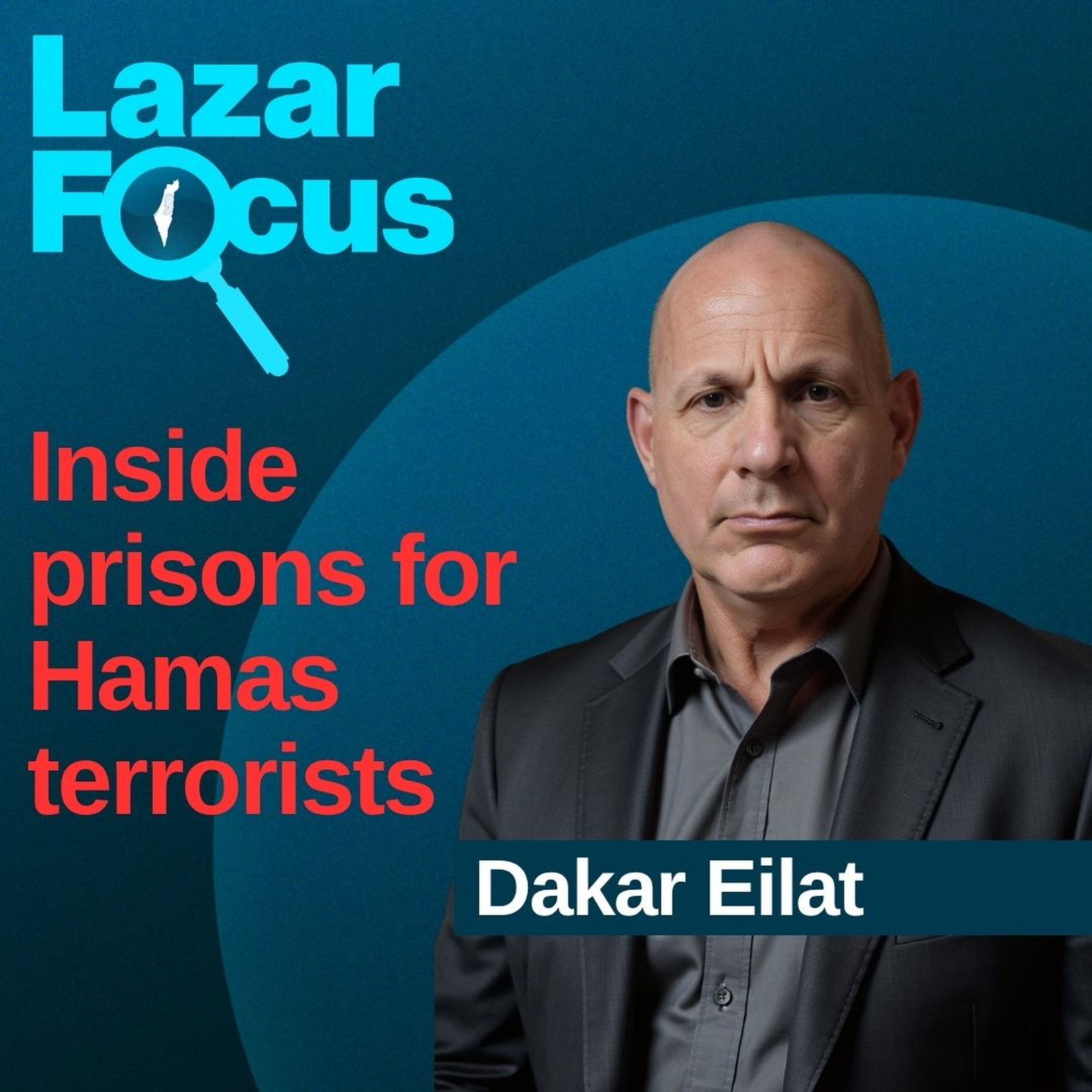
BONUS - Dakar Eilat: Inside prisons for Hamas terrorists
2w ago00:30:19Tap to summarizeWelcome to The Times of Israel's Lazar Focus. Each Friday, join host diplomatic correspondent Lazar Berman for a deep dive into what's behind the news that spins the globe. The New York Times printed a bombshell accusation against Israel this week. An op-ed by columnist Nicholas Kristof alleged widespread sexual abuse and rape against Palestinian prisoners. The column alleged “a pattern of widespread Israeli sexual violence against men, women and even children — by soldiers, settlers, interrogators in the Shin Bet internal security agency and, above all, prison guards.” Palestinians quoted in the piece said they’d even been mounted and raped by specially trained dogs. Israel called the article “one of the most hideous and distorted lies ever published against the State of Israel," and promised to sue the NYT. Some of the more extreme claims seem highly unlikely, to say the least, but could a group of guards -- or a prison commander -- be abusing prisoners in violation of the law? Israel's Prison Service is not a well-understood security organization, as bodies like the IDF, the Shin Bet, Mossad, and police garner far more attention. But IPS holds thousands of hardened terrorists from groups like Hamas and Palestinian Islamic Jihad, and is an important part of the fight against those organizations. To better understand the IPS, its oversight, and how prisoners are treated, we speak to Col. Dakar Eilat, who ran two prisons in Israel. He explains the changes in the prison service's approach to terrorist prisoners that took place two decades ago, removing their ability to order terror attacks from inside prison, and then again after the October 7, 2023, Hamas terrorist attacks. There is no question that after October 7, conditions for terrorists have been reduced to the minimum required by law, he says. But guards can't do whatever they want. Everything that happens in prison is recorded by cameras, says Eilat, with footage then sent to prison service headquarters. Eilat shares some of his personal experiences as a prison commander and the use of force. He says that one of his predecessors had been caught using illegal force on prisoners, and the prison commissioner brought him in to end the phenomenon. That doesn't mean that prisoners were treated lightly. There were strip searches of prisoners, and if they resist with force, "they will be met with force," says Eilat. Still, there are multiple oversight mechanisms, he says. Some 130 organizations -- both Israeli and international -- carry out inspections and oversight of prisons, and during some weeks, he had 5 snap inspections of his prisons. As for the NYT allegations, he calls them "bullsh*t". He says that -- beyond the cameras -- doctors in prisons have an independent chain of command and reporting mechanism, and they would catch signs of abuse. Dog training is overseen by animal rights groups, and official investigations of the prison service are carried out by the Justice Ministry and the police. Covering up systematic abuse like that described in the Kristof piece would take hundreds of conspirators, says Eilat. Lazar Focus can be found on all podcast platforms. This episode was produced by Gabriella Jacobs and video edited by Ari Schlacht.See omnystudio.com/listener for privacy information.
Transcribe →
Art on trial from Venice to Jerusalem
2w ago00:24:35Tap to summarizeWelcome to The Times of Israel's Daily Briefing, your 20-minute audio update on what's happening in Israel, the Middle East and the Jewish world. Arts and culture editor Jessica Steinberg joins host Gabriella Jacobs for today's episode. We begin by discussing a series of vociferous protests against Israel’s inclusion in the 61st Venice Biennale contemporary art exhibition, including the jury’s resignation. Steinberg explains that these protests are only the most recent in a much wider cultural boycott of Israel. We move on to talk about “The Eichmann Trial,” a new play written by Motti Lerner and directed by Ilan Ronen and performed exactly where the senior Nazi party member was prosecuted 65 years ago. Through survivors' eye-witness emotional stories, the play reenacts their chilling accounts about what happened in the war, in concentration camps, in ghettos, and in the forests. Steinberg notes that the content of the play has extra resonance now, in a post-October 7, 2023, landscape. We close by exploring the creations of Yaacov Agam, one of the prominent and influential figures in the international and Israeli world of art. Agam's work "clearly reflects the spirit of Israeli creativity, innovation, breaking barriers, the connection between tradition and modernity, and a broad universal vision,” according to the first paragraph of the Hebrew text on the Israel Prize he recently received. Steinberg delves into how his artwork is inspired by his spiritual view of Judaism and his upbringing as the son of a rabbi. Subscribe to The Times of Israel Daily Briefing on Apple Podcasts, Spotify, YouTube, or wherever you get your podcasts. This episode was produced by Ari Schlacht.See omnystudio.com/listener for privacy information.
Transcribe →