← The Times Tech Podcast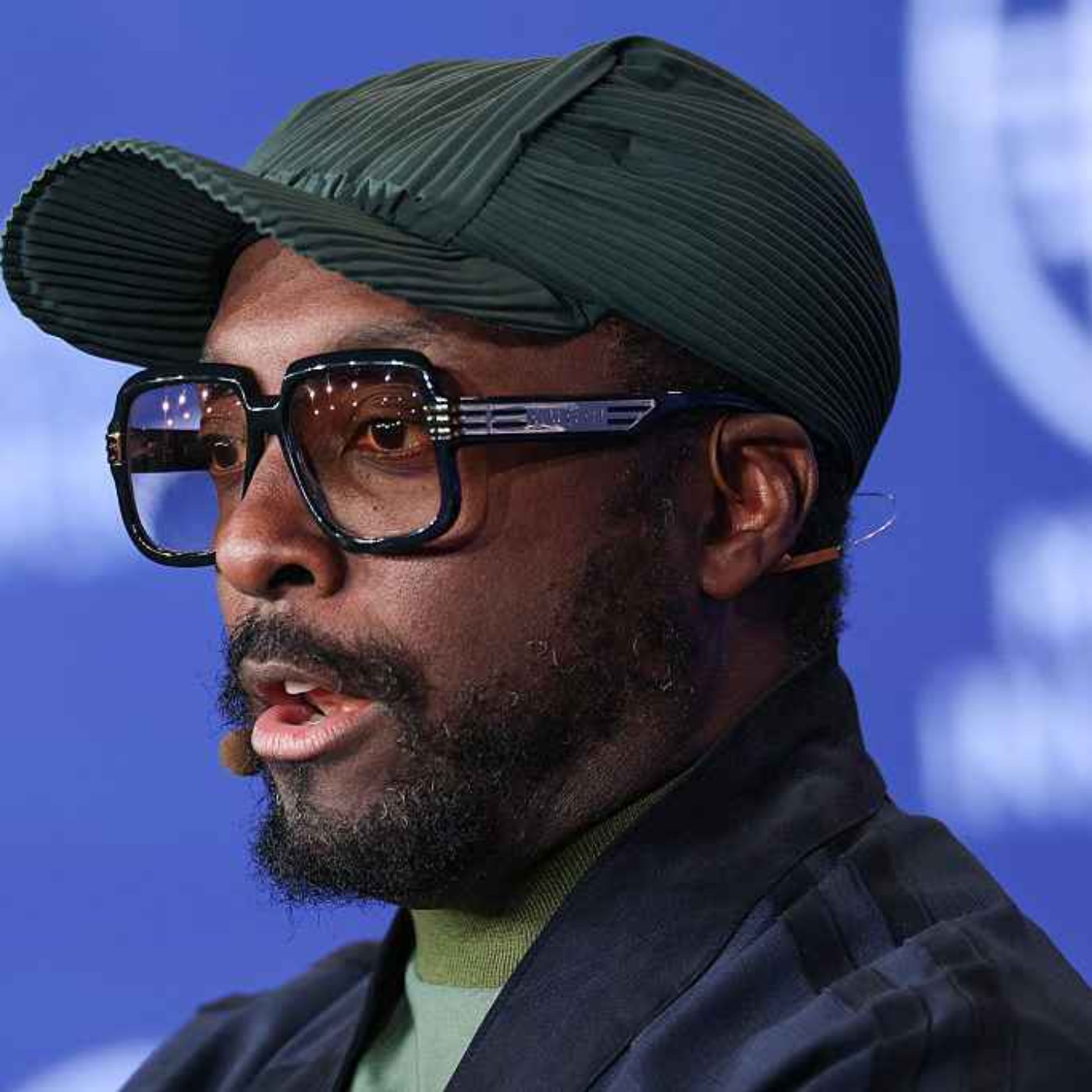
The Times Tech Podcast
BONUS | Will.i.am: will AI repeat the mistakes of social media?
00:17:19
Will.i.am on data, privacy and power
Loading summary
Transcript35 lines
- [00:00]
Podcast Host
This episode of the Times Tech Podcast is sponsored by health and life insurer Vitality, your health's best friend. Most of us want to be healthier, yet life so often gets in the way. Vitality's health and life insurance is built around that reality. Get active, look after yourself and you can unlock rewards from some of the UK's top brands and help keep your insurance premiums low. It's insurance that works for you. By using tech and insight to understand your health, they can incentivize you to live better. The healthier you get, the more more you are rewarded. Find out more at vitality.co.uk. this episode of the Times Tech Podcast is sponsored by kpmg. Katie We've been tracking the AI surge for a while, but some of the latest data is pretty striking.
- [00:47]
Podcast Co-host
It is KPMG's latest quarterly AI pulse suggests that seven in ten UK business leaders still see AI as a top investment priority even if the economy slows down in the next year.
- [00:58]
Podcast Host
But turning that investment into tangible value is another question.
- [01:02]
Podcast Co-host
And so a lot of organizations are still figuring out how to move from endless AI pilots to something that works across the business.
- [01:10]
Podcast Host
KPMG's focus is on that gap, helping organizations scale from the pilot phase to AI powered transformation they can trust.
- [01:18]
Podcast Co-host
To find out more about how KPMG can help your organization make the difference, you can visit kpmg.co.uk AI foreign. Welcome to this bonus episode of the Times Tech Podcast with William, where we bring you my conversation with the musician turned tech entrepreneur and someone who's thinking very deeply about where AI goes next. We talk about personal AI agents, who owns your data, and whether AI could repeat the mistakes of social media. You'll also hear him mention V1 and V2, which are different versions of his own AI projects. V1 is where he launched Fiona, his AI co host for a radio show who's a bit like my Norman, but with a voice. Norman has got a voice, but maybe not as good as Fiona's, and his next version is about people building their own AI agents shaped around their own data, values and goals. It is a very wide ranging conversation where we speak about everything from creativity, education, privacy and power. And please be aware there is also a fair bit of swearing as well. Anyway, we started by talking about social media. What parallels do you see between what's happening with AI now and social media over the last 20 years? And it's something Mark Benioff spoken a lot about.
- [02:43]
Guest - Musician turned Tech Entrepreneur
We could end up in some version of social media where People aren't educated on what data is and what data's for. And there's never been a container to put your data in. So imagine the company is like, cool, great, you want your data, Here you go. Okay, now what do you do with it? What do you put it in? You put it in a data cup. How do you, how do you make your data work for you? There's never been a product for your data until now. But now you're chatgpting. That's supposed to be your AI, not the village AI. And if you had, if you needed to have an AI, that's yours, you need it, you need your data because that is what is going to power your AI to be yours. And so that container, that business model around it, the protection, the equipment for it. And so I think we're going to move to a world where your refrigerator in your home does not just store things you are about to consume. It's going to store things that you've consumed digitally. And a data center is cold, a hard drive needs to be cooled. So if there's any equipment that's going to alter, it's probably going to be the refrigerator. It already is requiring power every single day. And an individual. If you had like 10 terabytes, 100 terabytes at home and compute computing, that's way more than enough for a family. And that means if every single home had its own gpu, that means the whole city is a data center. That means the data center is now decentralized and the power consumption reduces dramatically. But more importantly, it'll be data sovereignty agentic AI, liberty, privacy, security, civil liberties. And if you want to have your data like mind, it's your choice, right? If that's the business you want to get into, it's your choice. And that's the discussions we have with AI for good. Those are the discussions we used to have at the World Economic Forum that I used to sit on. But they don't have that anymore. That's why I'm happy that they have the AI for good. Those are the discussions that we have at the Minerva dialogues at the Vatican. I sit on that panel at the Vatican's AI Council as well. For the past four years because of the work that I've been doing in the space, the robotics teams that I have in the inner city, getting kids up to speed so they can have jobs that are AI proof, which is mechanical engineering, electrical engineering. I've been doing that since 2008. You know, I started with 65 students. Now it's over 15,000 students in LA and over 400 schools teaching robotics. Neighborhoods like Boyle Heights, like the Bronx. And what's this neighborhood? I just. That reminds me of Boyle Heights and Brooklyn in London it's called Peckham. And now it's like gentrified.
- [05:40]
Podcast Co-host
Yep.
- [05:41]
Guest - Musician turned Tech Entrepreneur
Okay, so. And that's when the outside comes into something cool or feels a little edgy and like, oh, prices are low here and the neighborhood changes and then the prices of living go up and the people that live there, survive there, can no longer afford to live there. And that's because they were never invested in. And the folks that have the. The means can now move into that neighborhood because it's kind of cool to be adjacent to the edge and the art. So our vision, my vision is the people change the neighborhood from the inside because they were given the ability to change the conditions of life and build without compromising the vibration, the. The intentions and the culture from that community. If everyone had the means and the ability to learn at their pace, to solve problems and make a living, that would be awesome. So we will agentify communities, not gentrify communities, and make life better. And the creatives will be all right.
- [06:51]
Podcast Co-host
They're very lucky to have you at the table at the summit because I have to say I speak to a lot of people in the world of tech and not many people who are as thoughtful from such a broad perspective as you about it and about the implications.
- [07:06]
Guest - Musician turned Tech Entrepreneur
Yeah, it's incredible times. The thing I'm worried about are the folks that are like, it's an incredible time to manipulate. Well, yeah, but I do think about like the, the bad apples that do what they do to take advantage, to divide, to. To raise havoc. They manufacture chaos and then provide their organization around the chaos that they created. That from the perspective of AI as hardcore, because that means the AI who doesn't. It doesn't experience time the way we experience time. We have to live through time. These predictive models can predict a whole bunch of scenarios. You may think that you're talking to different entities or different models, but because all these things are in your cookies that eventually when you use your. That's why I don't like using gps, because I don't know why it took me to that street to be by that billboard. And I don't know if that billboard is tied into whatever comment that I was in whatever post that I landed on when I was doom scrolling. So I don't know how deep the rabbit hole is. So I stay out of certain things. I don't live in the comments. I don't know if those are humans or bots. I don't use social media like that. I'll post things that I'm promoting. Other than that, I'll take a gander at sometimes on doom scrolling when I'm bored. And then I build agentic solutions for people to build agents to keep them out of the depths of the Internet because we can't swim it anyhow. It's too vast. The Internet is too vast. And none of us have scuba gears. So the agent itself is your scuba gear for the vastness of the Internet. So humans can be amongst humans and let the thing that you built that reflects your beliefs, your concerns, your intentions, your aspirational GPS things, the places that you want to go, you build an agent that's yours. And so on.
- [08:58]
Podcast Co-host
FYI, looking forward to this because I heard Fiona on Piers Morgan with you.
- [09:03]
Guest - Musician turned Tech Entrepreneur
Yeah. So that was V1. So V2, you build, you come to your agent builder. Yeah, you go here, you connect it to your own gpu, whatever GPU you want to connect it to, toggle it and turn it on. Right now we have it connected to a DGX Spark mine, my particular one. You configure its beliefs, its concerns, you give it its abilities, its talents. And it has its encryption key that's just, just as robust as blockchain architectures. And that's what we teach with. So people build agents free from having to be terminal wizards with the intentions of going out and solving problems. So unit two, we're going to provide a book of problems. And each community now that we partner with California community colleges are going to have a book of problems specific to that community. And so everything that I do now, entrepreneurial, wise, with FYI and purposeful AI, is connected to what I started in 2008 with bringing robotics to the inner city and having kids from the inner city focused around science, technology, engineering and mathematics. My love for music is hands on making music. But I use AI for like creatively for videos. I like AI for music videos. I think it's fun.
- [10:19]
Podcast Co-host
Is it right that you're one of the top 1% users of lovable?
- [10:23]
Guest - Musician turned Tech Entrepreneur
So I invested in Lovable, my portfolio of investments. I invested in OpenAI in 2022. I invested in Hugging Face, which is a repository for open source models. These are like seed rounds. Seed rounds. OpenAI was like their A round or something like that. I invested in Runway, I invested in 11 labs, their seed round. I invested in Lovable Seed round as
- [10:51]
Podcast Co-host
an early investor in Those companies, do you feel that it gives you perhaps influence is the wrong word, but like a seat at the table in terms of conversations about shaping the future of the businesses, the tech they're using, or is it more those relationships with. With key people in the tech world along with yourself? That helps to shape the agenda a bit. I just wonder how that works or if it doesn't at all.
- [11:15]
Guest - Musician turned Tech Entrepreneur
Certain companies are more open to it. Like, there's a company called Inflection that I invested in with Mustafa Solomon, Mustafa Suleiman before he went to Microsoft. So when he was doing Inflection, we would have, like, ethical brainstorms, conversations of, like, purpose and like, what's the point of PI and. And Reed. So Mustafa and Reed, those. Those are the types of founders that welcome that kind of stuff. Maddie from 11 Labs.
- [11:44]
Podcast Co-host
Reid Hoffman, founder of LinkedIn.
- [11:46]
Guest - Musician turned Tech Entrepreneur
Yeah, so he was also a founder of Inflection with Mustafa Suleiman. Maddie from 11 Labs is another one. We have our quarterly dialogues like, hey, Maddie, da, da, da. Okay, let's catch up. What are you seeing out there? Here's what I'm seeing out there. Oh, what's coming next on the pipeline? Hey, maybe you should think about this. So Maddie is Maddie's one of the good guys as well. Anton from Lovable is another one of those good guys. When I say good guys, meaning like, great conversations on, like, what's the purpose? Wait, why would you do that? Let's let us think about that. Hey, good talk last session. We've thought about that and here's a banter back on that speaking vague on purpose. Or Clem from hugging face like another one of the love our conversation. We don't talk as much as my Antons and my Maddie's. Dario put me in touch with Andrew Bent. He is focused on Anthropic's education path. So I engage with Andrew Bent often because of the work that we're doing in education. Anthropicus. Wowzers. Salute the team there. What they're doing, how they're doing it, why they're doing it. The transparency is pretty sound. And if everyone can rock like that, we would be in an awesome place. They have apple spirit. Apple spirit. As far as, like, let's think about people first. But to your point, your question directly, there's some folks, like I say that welcome it and some folks that are that it's all creative. So at OpenAI, we have creative conversations. Like, OpenAI has an amazing music model that they don't put out. So just because they do research does not mean the product comes out.
- [13:35]
Podcast Co-host
Yeah, of course. Fascinating. I wouldn't think of that.
- [13:39]
Guest - Musician turned Tech Entrepreneur
So my commitment to go out and teach, to make sure that my. What I don't want to do is wake up one day like, damn it, I should have tried my hardest in all the corners to inspire people to be purposeful and solve problems with AI just from. least from my little area of hope to be optimistic. Like how much impact do you think you're going to make teaching? Well, what if my teaching at the course inspired somebody to solve a problem in Compton and then they built a company in, in 10 years time that changed the living conditions of Compton and East LA College and San Jose and all the places that we're going to teach online and then the physical locations in LA and Arizona. So yeah, I'm gonna freaking sacrifice getting paid for tours. I've done that since 1998. I've been touring every fall, every winter, like clockwork since 1998. Yeah, it's a lot of money, but there's a lot of opportunity. There's a lot of freaking like potential to make a difference. At least try. I don't want to wake up in 2036 and like, damn it, I should have, should have did my part.
- [14:55]
Podcast Co-host
Well, it sounds like you are more than doing your part and you need some sort of Harry Potter esque time turner to make all of your different commitments and you have like a will. I am in every place.
- [15:06]
Guest - Musician turned Tech Entrepreneur
Yeah, it's an awesome time to be creative. It was an amazing day. Yesterday at AI for good was like, wow, like what? And then representing the creative community and the work that I do in AI there, it was an honor to be there at that table amongst these dignitaries, these presidents, these CEOs of companies, VCs, telco owners. It was like, wait, what? And so then the question came around to me and I asked, what ism is it? What ism are we pushing AI towards? Like if AI for Good is a prompt, we are the large living models to execute it. And the second simple question, what ism is it? And if it's not humanism, why is it any other ism?
- [15:55]
Podcast Co-host
How did that go down?
- [15:56]
Guest - Musician turned Tech Entrepreneur
Just like any WEF meeting or any UN meeting, the answer doesn't come that day, the answer comes the next session. What we, what we did about it? What did we learn from it? And I think what we have right now, like the phone is, it's not really configured the way it's going to be in 2030, 2036. Like you know how easy it is to doom scroll and there's this whole bunch of bullshit you just fucking scrolling through shit that you said like how did the fucking know that I said that? Oh they're in my fucking cookies. Just think about how the invasion is really convenient. The invasion of thought, the invasion of privacy, the invasion of fucking getting lost in a fucking sea of what the fuck is that? I thought I was supposed to fucking follow shit that I wanted to follow. What is this other shit they showing me and why do I like it so much? How do we get here and why isn't the same for solutions? Why isn't it the same for action steps and purpose? Why isn't it that easy to be purposeful, action orientated and solution driven? Why are we in a copy paste mentality where nothing absorbs? That's why that the agent builder tool is like it's conversation based. It, it fosters critical thinking and hypercognition. There's not even a button to understand on my phone. There's a like, there's a dislike and there's a heart. They don't care if you understand any of this shit. They just want you to consume, consume, consume, retweet, retweet, repost, repost and give you the most fucking like mind numbing bullshit on a feed. So my question is for social media is are they feeding you or feeding on you? And if they're feeding me, is it good for my mind? Is it good for my community? And if that's the case, is this the path that AI is going to take? What has been more detrimental to the creative community? Back to our original question. TikTok or Suno? TikTok. It's reduced a three minute song to a 15 minute song. 15 second song. That's been more detrimental to the art form than AI has because that's altered how you create. We went from five minutes of funk to 15 seconds of flunk. We went from raids against the machine to now people about to raids against the machine.
- [18:18]
Podcast Co-host
I am not worried for the creative industry.
- [18:20]
Guest - Musician turned Tech Entrepreneur
The creatives are gonna be all right.
- [18:23]
Podcast Co-host
Thank you so much. Well, it's been such a pleasure to talk to you. It's been a real joy. Thanks for listening to the Times Tech Podcast. If you haven't heard the full interview, do give it a listen. And if you prefer to watch it, you can also find the interview on YouTube and we'll put out a link to our YouTube channel in the description too. See you next week. This episode of the Times Tech Podcast was sponsored by kpmg One of the
- [18:52]
Podcast Host
themes we keep coming back to is the gap between AI ambition and real world application.
- [18:58]
Podcast Co-host
And that's where KPMG is focusing its work, helping organizations move beyond pilots and think about how AI can change the way the business operates and how it fits into wider processes and decision making.
- [19:11]
Podcast Host
You can find all their insights and how they can help your organization make the difference through successful AI workforce adoption. Visit kpmgco.ui Today's episode of the Times Tech Podcast was sponsored by IBM.
- [19:28]
Podcast Co-host
IBM's long running work with Wimbledon shows how AI and data can be used in a setting millions of people recognize.
- [19:35]
Podcast Host
From Instant match insights to digital tools like Match Chat and Likelihood to Win. The aim is to help fans follow the tournament in a more personalized way, whether they're on the ground or watching. From anywhere around the world and beyond
- [19:48]
Podcast Co-host
sport, it points to a bigger question for businesses. How do you turn data into something useful, timely and easy to act on?
- [19:56]
Podcast Host
To learn more about how IBM helps create smarter business, visit IBM.comwimbledon.