← The Times Tech Podcast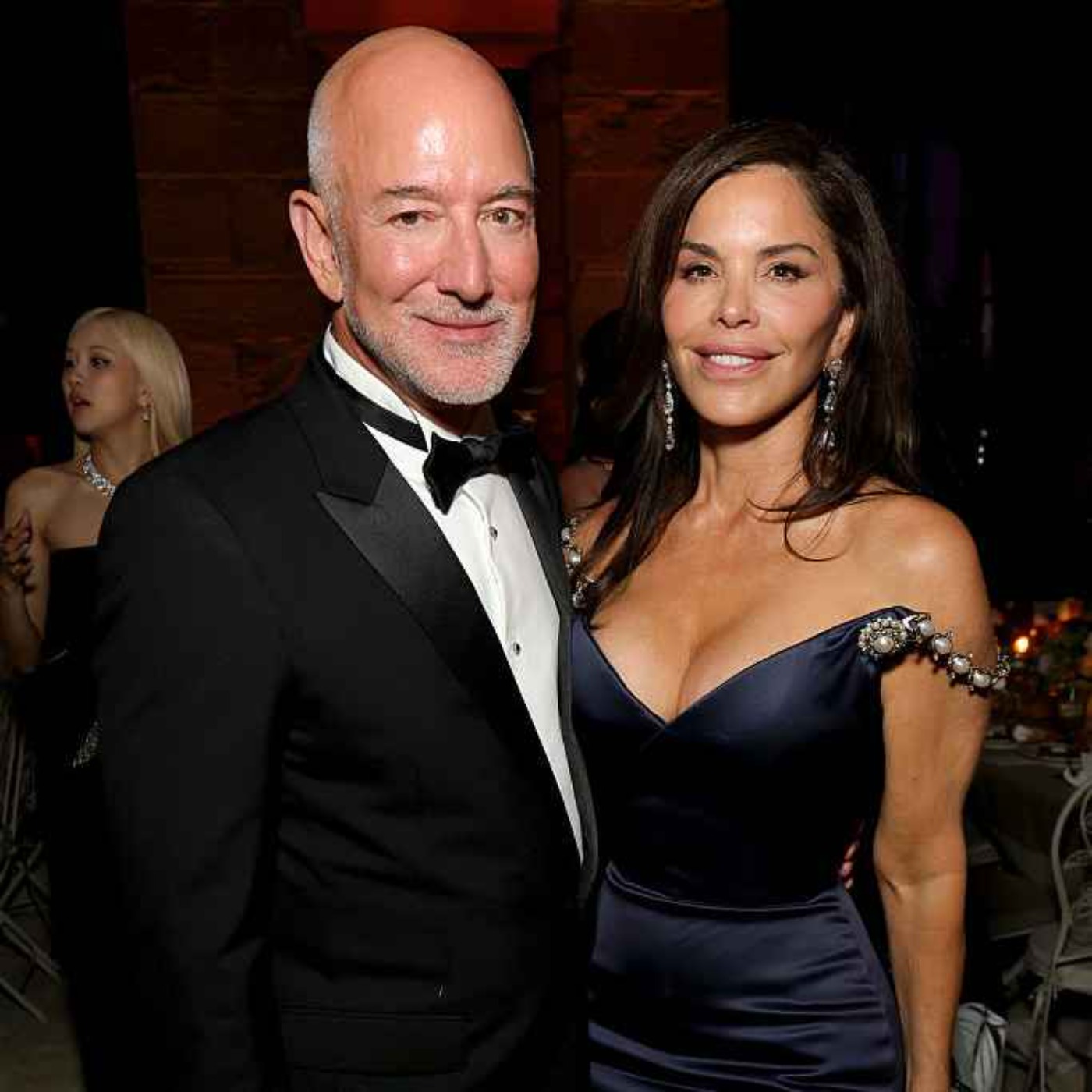
The Times Tech Podcast
Elon Musk vs OpenAI and the Met Gala tech takeover
00:39:48
Bebo's Michael Birch on the widening gap between Big Tech and the rest of the world
Loading summary
Transcript139 lines
- [00:00]
A
This episode is brought to you by Progressive Insurance. Do you ever think about switching insurance companies to see if you could save some cash? Progressive makes it easy to see if you could save when you bundle your home and auto policies. Try it@progressive.com Progressive Casualty Insurance Company and affiliates. Potential savings will vary. Not available in all states.
- [00:20]
B
The to do list doesn't stop and neither does the pressure to keep up with it if you've been running on fumes. Growtherapee makes it easier to find care that's covered by insurance and actually built around you, whether it's your first time in therapy or your 50th. Grow makes it easier to find a therapist who fits you, not the other way around. You can search by what matters like insurance, specialty, identity or availability and get started in as little as two days. And if something comes up, you can Cancel up to 24 hours in advance at no cost. Grow helps you find therapy on your time. Whatever challenges you're facing, Grow Therapy is here to help. Grow accepts over 100 insurance plans. Sara Sessions average about $21 with insurance and some pay as little as $0 depending on their plan. Visit growththerapy.com acast today to get started. That's growthherapy.com acast growtherapy.com acast availability and coverage vary by state and insurance plan.
- [01:29]
C
Hello and welcome to the Times Tech Podcast where week we unpack how technology is reshaping business culture and everyday life. I'm Katie Prescott covering all things tech here in the City of London.
- [01:42]
D
And I am Danny Fortson out here
- [01:44]
C
in Silicon Valley where you are living your very best tech journalist life covering the court case to end all court cases, which as you know, I'm very, very jealous about.
- [01:56]
D
Yes, yes. Which I love. But yes, that's right. It's the second week of of this very high profile court case between Elon Musk and Sam Altman, Greg Brockman, OpenAI, etc. And I have been following it very, very closely.
- [02:13]
C
I just can't wait to hear everything about it. But tech bros aren't just in the courtroom this week. They've been partying hard as well. So the Met Gala, that very famous New York party, has been rebranded DA da, the TEC Gala because so many Silicon Valley bosses turned up and there was a huge public backlash and various protests in the weeks leading up to it. Some of the high profile techies, including Jeff Bezos and Mark Zuckerberg, had to skip the red carpet, which I would suggest was probably more irritating for their other halves who wanted to show off their dresses than for them.
- [02:56]
D
But I am really disappointed. I wanted to see Mark Zuckerberg show up to the Met gala with his dorky meta glasses and some kind of ridiculous outfit that he seems to wear these days. You know, these oversized shirts and gold chains and whatnot. We didn't get to see that.
- [03:12]
C
We didn't get to see that. Or him being potentially pelted with eggs anyway.
- [03:17]
D
Indeed, indeed. So we're going to get into some of that. This kind of crazy, weird moment in which we find ourselves and then later on we'll be speaking to somebody at the heart of the Silicon Valley tech scene, but has quite a different worldview. That is Michael Burch. He is the co founder of Bebo. Remember? You remember?
- [03:37]
C
Yeah, I had. I had a Bebo account.
- [03:39]
D
For those who don't know. It's like one of the original kind of big social media sites that caught fire in those very early days. And after almost 20 years since it originally launched, Michael is bringing it back in a new form for not the first time, not the second time, for Time five. This is his fifth iteration. So we talk about that. His dinner parties with fellow techies, where AI is always the dish of the day. And he explains his views on AI, which, unlike most of his Silicon Valley mates, is pretty bleak.
- [04:20]
E
It's gonna kill us all.
- [04:22]
D
Well, I hope not. You know, I've got plans after this.
- [04:27]
C
Podcast parties to be at. Dinner parties, court cases to attend.
- [04:32]
D
Exactly.
- [04:33]
C
Yeah. And while the tech billionaires are partying with the stars and splashing cash on lawyers in the courtroom, AI is, as we just heard from Michael Birch, hitting people out here in the real world as it's having a massive impact on. On the workplace. So in today's episode, we're shining a light on that ever widening gap between big tech billionaires and the realities of the rest of the world. But why don't we start with the big party?
- [04:58]
D
Oh, yes.
- [04:59]
C
Should we do that? The Met gala. Or should we say the TEC gala? Or should we say, as Variety said, the tacky Bezos ball.
- [05:09]
D
Mm, tacky. Nice.
- [05:11]
C
Yeah, we there.
- [05:14]
D
You know, it's so weird. I saw the pictures and I was like. And then I looked at my spam folder.
- [05:22]
C
Maybe they lost your address.
- [05:24]
D
Yeah, it's weird.
- [05:27]
C
Amazon's founder, Jeff Bezos, sponsored it with his wife, Lauren Sanchez, who was an honorary chairman, and they reportedly put in $10 million into the pot for it. And yeah, open AI, meta snap, all the coolest companies in town bought tables.
- [05:47]
D
Yeah, of course they did. And several Silicon Valley bosses attended, including Evan Spiegel from Snapchat, Sergey Brin from Google and so did Zuckerberg actually show up or.
- [05:58]
C
No, he did show up. But you know, actually the most important thing with the Met gala is what the women wear. Of course, in general, I mean, there are a couple of exceptions. Sam Smith's outfit's pretty great, but you know, really you're there for the dresses, for the frocks.
- [06:14]
D
That's what I mean. That's the only reason I would go. But all sartorial jokes aside, I think there is a thing here with this kind of high society cultural event being kind of co opted by the techies. Do you not? Or is it you just, you think it's kind of funny, a bunch of nerds showing up to the party of the cool kids for the first time?
- [06:40]
C
I don't know that it is for the first time. I mean, it feels like more of a takeover than usual. It seems to me that there's always been a convergence between tech and culture and tech and media, and tech trying to take over bits of the media in order to dominate the conversation. I mean, you look at Elon Musk buying Twitter X, Jeff Bezos and the Washington Post. What I thought was quite interesting this time though is the scale of it. Yes, but also the protests about it.
- [07:11]
D
Yeah, well, I think that's kind of really what's interesting because we're also going to be talking about jobs and we're going to be talking about AI on the show today. And if you step back and you think like people are freaking out about what AI means for jobs, what it means for society, and what's really interesting is like Silicon Valley historically has kind of leaned into the idea of leaning out, of just being like we're above it all, we don't care. We're over here on the West Coast. Let us do our thing. We have no interest in politics, we have no interest in really culture. We're going to make cool stuff that people can use and kind of change society. But we're not like were kind of apart, right? But now these companies are the biggest lobbying forces. They are taking over Hollywood. They are building all of these systems that are just kind of seeping into every nook and cranny of life, business, et cetera. And they're getting wildly rich. So it is, it feels like this is like a kind of, in a way, I mean, we're kind of joking about the fashions of people walking on the red carpet, or was it a green carpet Whatever. But it's also. It's like kind of a robber baron's moment of like, these are the half a dozen dudes who are kind of shaping the world for the rest of us, whether we like it or not. And people are not happy, you know? Cause people are like, what am I getting out of this? Cause it feels like, in a way, you're just kind of making my life worse. If it's gonna be harder to get a job or keep a job or whatever.
- [08:46]
C
And we're gonna turn to that point about jobs shortly. But on a more positive note, I think it also shows that they still need the creatives. If one of the big fears in the AI era is what happens to the creative industries. I mean, I think to your point that you made at the beginning, these are the tech geeks who really, really need the cool kids in order to stay relevant and have social impact and have influence and frankly, to make things that the rest of us want.
- [09:16]
D
Yeah.
- [09:17]
C
Anyway, well, can we move on from the event of the year to the trial of the century? Because I've been desperate to find out what's going on. So this all started last week. This is Elon Musk versus Sam Altman and OpenAI and the rest of OpenAI over the ownership of the company, essentially.
- [09:35]
D
And so this is week two, and a couple things came out. Thus far, it's been mostly Greg Brockman, who is the. One of the co founders of an OpenAI, and he. It was him, Ilya Sutskever, Sam Altman and Elon Musk were the kind of the core four who set this thing up back in 2015. And Greg Brockman is this kind of outside of Techland, mostly this forgotten figure. But it's really interesting. He was one of the original people at Stripe, which is now worth $150 billion. And they were talking about how, like, his stake in Open Air, which I'll get to in a second. But he. They're like, trying to establish, like, yeah, if you put in sweat equity, you can get a share of a company that's worth a lot. And he's like, he was one of the first people. He ended up being the CTO of Stripe, which a big payments company he said he bought. His shares bought for $6 total. And he said, I bought them by going into Patrick Collison's office, the founder, and putting $6 on his desk. And they're like, what is that? What did that end up being worth? He's like, I don't know, about 100 million and then he fast forward to his OpenAI stake again. He put in $0, started it as a nonprofit. They turned it into for profit. And today, Greg Brockman, his stake is worth 30 billion. So from 0 to 30 billion.
- [11:02]
C
Wow. That will buy you a table at the Met gala, wouldn't it?
- [11:05]
D
It sure would. And they were saying, you know, Elon Musk's lawyers really having a go at him being like, look, you're making our case. You basically started as a nonprofit, and somehow you ended up with $30 billion worth of stock in one of the largest for profit companies on the planet.
- [11:21]
C
And so Greg Brotman was. He's still at OpenAI, is he?
- [11:25]
D
Yeah, yeah. And he also talks about during the negotiations when they were all trying to figure out how, okay, they're like, this is a nonprofit. We need a lot of money to actually make this work. So they started talking about restructuring it into a for profit. With Elon, it got very contentious. This is back in 2017. And Elon, as a sweetener, was like, I'm going to give all you guys Teslas. So, yes, he makes sure that Sam Altman, Ilya Sutskever, and Greg Brockman get free Teslas. Ilya Sutzkever, who's like, this genius, he is so touched that he produces a painting of the Teslas
- [12:09]
C
using AI or with a paintbrush.
- [12:11]
D
No, I think this is before AI could do anything like it was by hand.
- [12:16]
C
That's very sweet. Does Elon still have it?
- [12:20]
D
Yeah. So brings it to this meeting that becomes very contentious. And they're like, basically, Musk wants to take over this new entity, have control, be CEO, have majority stake, all this stuff. And they're just like, no, because we don't want an AGI dictatorship, an AI dictatorship, blah, blah, blah. And Brockman tells a story of, like, Musk getting up, storming around the room, and he's like, I thought he was gonna hit me. I thought he was gonna physically attack me. And then he grabbed the painting and stormed out.
- [12:56]
C
The amazing thing about these sorts of court cases is it just gives you a glimpse into a world that otherwise we would have absolutely no idea about. And because they haven't settled and it's all in open court, it is just so enjoyable to hear about. I couldn't believe, actually that Greg Brockman's diaries were brought into play.
- [13:17]
D
400 pages.
- [13:19]
C
This makes you want to never write anything down. I know it all sounds completely mad, but you're very, very lucky to be there. OpenAI and Elon Musk strongly dispute these claims. And Characterizations. But should we come back down to Earth and look at something in the real world? Because, as you say, I mean, you know, this all feels very existential and it's kind of billionaires fighting each other. But the reality of the introduction of AI and the acceleration of the technology is that jobs are already being lost and at least blamed on AI. I mean, I think you can argue over whether that's really the case. And the latest example of that this week was Coinbase, the crypto company which announced that it was laying off 14% of its staff because of reliance on AI.
- [14:09]
D
Yeah. And they said they're going to kind of, you know, they're remaking how they work, how they are thinking about their organization. They're experimenting what they call one person teams, where you, you are a person, you have your AI agent and you as a kind of a team can go do stuff, can go make products and blah, blah, blah. But what's really interesting, because you have Coinbase, you had Toby Lutke from Shopify, who's really well respected as like an operator. He said last month he's like, basically no new hiring, like zero. If you want to hire somebody, you have to positively prove that the role you were hiring for can only be done by a human. Which again, is just kind of like, huh. And then Meta has laid. Laying off 8,000 people this month block
- [15:01]
C
as well, a few months ago.
- [15:03]
D
Yeah. And that was because they're putting over $100 billion into data centers. And it's like, it's a very clear trade off, like humans versus machines. We're investing in machines right now.
- [15:15]
C
Almost more interesting, I think, than the tech companies. Laying people off, though, is what we're seeing in other business sectors. And there is a really clear pattern of youth unemployment rising and graduates finding it very, very difficult to find jobs. I mean, that's the case here in the uk. I think it's the case as well in the us And I think these companies actually are going to get in quite a lot of trouble further down the line because it's very easy to stop hiring at the early stages. But if you cut off your pipeline, you do still need people to control those agents and frankly, do the jobs. I think from what I've seen with AI's implementation into businesses, you need somebody who really understands their role in order to use it.
- [16:03]
D
Yeah. I'll give you a positive spin on this, though. Yesterday I interviewed the CEO of Notion, and Notion is like this productivity software for businesses. They're worth $11 billion, employ about a thousand people. They're used by a bunch of the Fortune 500 start and all the way down to startups. And I was like, how are you changing how you hire? And he's like, we have completely changed our hiring process. He's like, we have a whole new rubric that where it used to be capability and kind of expertise was like the most important. Now that's still important, but it's much less important now. And he's like, we're optimizing for agency, so taste agency, capability. And he's like, so now our process is, no matter who you are, we want you to build something as part of the interview process. How do you use AI to show what you can do? He's like, because capability now is almost like it's commoditized or expertise is commoditized. He just hired a high schooler.
- [17:09]
C
Wow, that's interesting.
- [17:11]
D
He had to ask the parents if he could. If they could hire him to work at their company. But this kid was so AI native, so capable, they're like, all right, we're gonna hire him. We're hiring really young people who are really on it and really just all the way in on AI and very senior people who have really great taste and who are also leaning into AI, but like, we're hiring less in the middle, which I thought was interesting. But this all leads perfectly to our. To our fabulous guest this week. And so our guest today is one of my favorite people out here in Silicon Valley, one of my favorite stories in tech. He is Michael Burch, the co founder of Bebo, which is the OG social media platform that came before Instagram, before TikTok. And Michael is one of the kind of OGs out here. He and his wife launched Bebo back in 2005, three years later, sold it for $850 million. And now 20 years on, they are relaunching Bebo again. So we caught up with Michael to talk about his view from the keyboard, so to SPE as a lifetime coder to talk about how he sees what is happening in this age of AI. We also talk about the billionaires tax out here in California that is being proposed, which kind of really touches on that. Robert Barron's point we talked about at the top of the show, and then also where he thinks tech and social media are taking us. 2005, you start it. 2008, you sell it to AOL for $850 million cash in what might have been one of the best social media deals ever, because it was also cash Not AOL shares.
- [18:50]
E
Yes.
- [18:52]
D
So you and your wife Sochi did fabulously out of that, rode off into the sunset. Then Bebo234.
- [18:59]
E
What happened with those two was a messaging app, which I thought was actually really great. You had avatars and you could kind of have your avatar at somewhere else and, like, do actions like thump it or do other things.
- [19:13]
D
But you bought. You bought it back from AOL by this point because.
- [19:16]
E
Yeah, we bought another company, bought it from aol, and then we ended up buying it out of bankruptcy when that folded.
- [19:25]
D
For how much?
- [19:26]
E
For $1 million.
- [19:28]
D
$1 million. So sold it for 850, bought it back for a million.
- [19:32]
E
Yeah, they were doing a special discount, so launched version two, and we've got about 400,000 members on that. We had a pretty sticky loyal base, but it just didn't grow. And with version 1.0 days, 400,000 would be a real business, but nowadays it's not. So we ended up closing that down and did version three, which was video streaming, game streaming, website app, and we sold that to Twitch, but they only wanted the technology and the team, and they merged the tech into twitch.com.
- [20:12]
D
so you kept the name Bebo still?
- [20:14]
E
Yeah, that was part of the deal. I've become sentimental about Bebo at that point. I'll sell it to you, but you can't have the name.
- [20:22]
D
Right.
- [20:22]
E
And then version four was a Covid project. So at the beginning of lockdown, day one of lockdown, I watched Netflix. Day two, I thought, I can't do that again, not all day long anyway. So I started coding again, which I hadn't done for quite a few years. And so I thought it'd be fun to do a bit of coding.
- [20:41]
D
I thought, what?
- [20:41]
E
Why don't have another go at Remo? So that was one of the projects I built, which of course was pre AI days. And then version 5 was really, really driven by the fact that AI had become so good. Around the beginning of this year, there was kind of a. I mean, I've been coding really, as AI rose up, and I've used the very, very early versions of it and obviously use it heavily today. And it just hit this tipping point at the end of the year, beginning of this year, where it really did become very powerful. So I had this idea for the new Bevo probably two or three years ago. But then because AI became so good, I thought, you know, I can probably build this in a week or two. So I thought, let's have a go. I'm going to 100% Vive code. It's I'm not going to write any code myself. Which is the first time I'd gone 100% AI. And it was a little bit of a learning experiment to see what that would be like. I'd also never built mobile apps myself. I'd always had other people in the team do that. I'd sworn to myself I would never learn that because it's just a whole other mountain of knowledge you need. But of course, AI means you don't actually need that knowledge. You can build it without looking at the code or even understanding it. So I took on this fun project and when I do things, I go all in. So I've been 70 plus hours a week for the last now, almost 12 weeks working on that.
- [22:01]
C
And so for listeners who haven't seen it, what is the new Bebo?
- [22:04]
E
It's social media. Again, They've all been social media and the concept came out. I don't use Twitter a lot, but I was on it one day and people have these weird conversations on Twitter, kind of back and forth, although it's not really designed for that. So I was watching this weird conversation, if you can call it that, on Twitter and I was like, there's no way actually for people to have a conversation in public that everyone else can observe. And the analogy really is podcasting, which is the closest thing. But of course podcasting is audio and it's intimidating for a lot of people. They're mostly pre recorded. You can't really have the audience interact in real time with you. And so the idea came about of doing like a text based podcast where you could have a number of hosts that are having a conversation, but then everyone else can observe that conversation. So there's a chat panel on the left where the hosts are having a conversation. They could also have guests similar to what we're doing now. And then there's a conversation on the right which is the audience having a conversation about the conversation in real time. And so the hosts can see what the audience is saying and they can actually pull them in to the conversation if they wish. So if they see a comment that's worthy of kind of introducing into the conversation, we call it crowding. They crown that comment, it comes into the main thread and then they kind of talk about that.
- [23:23]
D
So I feel like two big things are happening right now that kind of directly collide in your world, which is one is AI and two is obviously social media. And I think when we met, I had just come back from LA where I was covering the first big social media trial. And then they had these two verdicts, and it was the first time where in court it was found that these products are by design addictive and therefore destructive. And I'm curious, like, you're trying to build this new thing, and you've seen what Mark Zuckerberg has done over the past 20 years. He has just eaten up any rival, and now he has 3 billion people who use his services. Is there something about what social media is today that makes you think there's a place for what you're trying to build now? And what is your view broadly on social media? Especially because you were there at the beginning, Right. I can't remember what year Facebook was founded. Was it 2003?
- [24:26]
E
2004?
- [24:27]
D
I think 2004. But you were like, you were right there at the beginning. So I'd love to get your thoughts on kind of where we are today compared to how it started out and what you thought then.
- [24:39]
E
Yeah, we actually did a website called Ringo.com, like Ringo Star in 2003, which was pre MySpace, pre Facebook. I saw Friendster.com, a friend pinged it to me, and then I was like, that's amazing. I was just, like, so drawn to it. And I was like, I got to do this. As soon as I saw his message, I started building. Ringo launched it 13 days later. We got 400,000 members. When 400,000 meant something. In three months, friends that had a million, which everyone thought was crazy. We thought, wow, we're the second biggest social network in the world with 400,000 members. And that's, I think, when I first got the kind of bug for social networking. And then, of course, it changed a lot. And MySpace came out, Facebook came out soon after. And then, as competition always does, you know, it drives people to try to build better products. And I think for social networking, it was about addiction and stickiness and having people be on your platform and not someone else's. And Bebo, in its heyday, had the longest time spent of any of the social networks per user. And so I can't say we were innocent of trying to achieve the same thing. You're. You're trying to build a product that people love, and how long they spend on your product is a true measure of that. But this was pre days of the feed, and that's. There was a kind of almost an innocence of the early days of social networking, where you're just kind of going around profiles and commenting and looking, and then this sort of feed phenomena came out. And everything became feed based. I personally don't use a great deal of social networking. I don't like doom scrolling. I find it an addiction that I don't want to sort of particularly partake in. And so I think when we started thinking about Bebo again, it was not to do a feed. We don't have a feed in that sense. It's more of a chat and a conversation and really try to create some meaningful dialogue and purpose to it beyond the pure doomscrolling. And of course we want people to come back. I don't have a goal to keep people addicted to, but if they never come back, we don't have a business. But I think Zuckerberg, in the early days you'd always call Facebook a social utility. He wanted it to be something that you had to have like email or sms. You can't not really have those today even. And he wanted that to be true. And it's just not true for social media. I don't think any social media has to be had. It's not a utility in that sense. Not to say that it doesn't serve a purpose, but it's not. It's not his original vision of what it could be.
- [27:16]
C
I think, I mean, you're spot on. One of the big concerns people have around social media is that doom scrolling and the algorithms that keep people addicted. But it's also about the content and what people can see. And I wonder what your view is on that in terms of how much social media companies should take that responsibility, which is what a lot of governments want them to do.
- [27:37]
E
Yeah, it's such a difficult thing to get the balance right because, you know, there's a strong movement for free speech and people should be able to say what they want. And particularly in America, you know, free speech is very protected. I personally sit somewhere in between. I think there's. I don't think websites should allow hate. You can't just say whatever you want. I think it's fair to ban people who are acting inappropriately online. Like you want to feel that you're in a safe community where there's a mutual respect for one another. And that's not to say people shouldn't disagree. You want to encourage some level of debate and disagreement and discourse. But I think it just has to be with respect. But I have a pretty clear vision of where I'd like a community to be. And I think respect is probably the number one word that you want to encourage, you know.
- [28:26]
D
And are you supportive of banning it for under 16s banning social media. You know, it's happened in Australia, I think it's happening in the uk. I don't know if it's fully implemented
- [28:38]
C
in the uk on the cards here.
- [28:39]
D
Yeah, but it's like it's happening all of a sudden, kind of lots of different countries. It's like we're 20 years into this and people have finally decided, you know what, to your point, this isn't a utility that everyone must have and certainly not young people whose prefrontal cortexes are still being formed.
- [29:00]
E
Yeah, I'm supportive of that. I think most countries are still 13. Some countries, I think Germany's already 16. We've set the new BMO just to be 16 as our age requirement. The difficulty is actually proving it and enforcing it. Yeah, I wish there were a way and I know they're talking about building that in as part of it, as a way of actually doing that and I'd very much welcome that because, Yeah, I think 16 is a more sensible age for social media myself.
- [29:30]
D
Yeah. For those not in San Francisco. So you're there and you know a lot of people in tech world, what's the actual, the closed door conversations that people are having around AI and what do you think? Because obviously you're doing stuff you weren't ever able to do before, but also people are freaking out about what this means for, well, society, work, life, etc.
- [29:56]
E
Yeah, I'm part of a monthly dinner group of co founders and CEOs and we meet once a month and I think I've been doing that for 14 years now. And of course, as AI rose up, the conversation very much shifted towards that. And I would say now every single dinner conversation is around that. And we often invite founders of AI companies to be part of this dinner. So it's a pretty interesting conversation.
- [30:21]
D
Can I come next time?
- [30:23]
E
Maybe, I don't know.
- [30:24]
C
Tech billionaire.
- [30:25]
D
Danny, I'm not a tech billionaire. I'm close. Let's just say I'm close.
- [30:29]
E
Yeah, sort of runner up. And it's sort of a bit of a joke at the dinner because I'm always the pessimist and there's a lot of optimists in Silicon Valley about AI.
- [30:39]
D
What's your pessimist take?
- [30:41]
E
I mean, I'm optimistic, to be fair, about 99% of it and I'm terrified of the 1%. My biggest fear in the short term is employment. I think it's going to take a lot of jobs in a way that we've never seen before. And it's in Fact affecting white collar versus blue collar. I think everything else historically industrial revolutions has really impacted blue collar. And so I think that's a totally new phenomena. And I think the speed at which it's going to happen is going to be unlike anything we've seen and the scope of it, because it will impact every job, including blue collar in the end as kind of humanoids robots become more prevalent. So I'm pretty scared of that. And I think we're already starting to see signs of that. And I would not be surprised if by the end of this year we're seeing very meaningful change. So that's my kind of short term fear and then my longer term fear is it's going to kill us all. Yeah.
- [31:39]
C
What way are we going to die? The killer robots?
- [31:41]
E
Painfully, I think painfully, yeah. As part of the dinner group, we do these predictions at the end of each year. And my prediction last year was that IMDb will reclassify Terminator as a documentary.
- [31:57]
C
Okay, great.
- [32:05]
D
Sorry, I'm just, I'm just, I'm just crying a little bit inside right now, but it's fine.
- [32:10]
E
Yeah, I think if you press hard, most people will say there's a genuine risk concern. I mean, other negatives I think are just this bad actors using it for hacking. You may end up doing a video call with someone who you think is your wife, but it's not. It's an AI generated version of your wife. And of course you're going to give your wife confidential information and you think that's proof. So you know, that sort of thing is pretty terrifying. And then, you know, I think the bad actor thing is one way that I think it turns bad. And people could use it for generating viruses which are more deadly and contagious than something like Covid, and release them for God knows why. And then of course there's AI itself turning against people. You know, there's already been some sort of evidence that it can start trying to defend itself when threatened and blackmailing, etc.
- [33:06]
D
Yeah, yeah.
- [33:07]
E
I'm not religious, so I do believe that you can create something equivalent to human and in every way and ultimately much smarter. I guess it's the ultimate evolution of mankind, isn't it? We've created, as evolution does, something greater than ourselves. But what tends to happen is when you create something greater than yourselves, you get replaced by it. And I don't think there's a way of stopping it because the cat's out the bag. And even if America or Europe pass laws banning it, I mean, China's not going to stop. Russia's not stopping. North Korea's not stopping. It's already amongst us. So yeah, that's my. Sorry, I didn't mean to be quite so depressing.
- [33:47]
C
It's like 50 ways to leave your love of the song, but kind of 50 ways to die from AI.
- [33:52]
E
Yeah, but we probably won't be dying from cancer and things like that, so
- [33:58]
D
it'll probably be like we cured cancer. Die human.
- [34:02]
C
Pew, Pew, Pew Pew created a killer virus.
- [34:05]
D
Stay with us. We'll be back in a moment to ask Michael his thoughts on one of the very politically contentious issues out here in California, the billionaire tax. So we will be right back.
- [34:23]
C
Nothing tests my patience quite like sitting on hold listening to the same four bars of music on repeat. It turns out all that time adds up. The average person spends over 40 days listening to that dreaded hold music. 40 days and this episode is sponsored by Paloa, the AI platform built to make that a thing of the past. Paloa's AI agents are available 24 hours a day, six, seven days a week, fluent in any language and smart enough to remember every customer across every interaction. Because no one should have to explain themselves twice.
- [34:58]
D
From payment processing to roadside assistance, flight rebookings to appointment scheduling, Parloa delivers the kind of customer experience that turns a one time buyer into a customer for life.
- [35:10]
C
See Paloa's AI agents in action@paloa.com that's P A R L O A.
- [35:21]
A
This episode is brought to you by Progressive Insurance. Do you ever think about switching insurance companies to see if you could save some cash? Progressive makes it easy to see if you could save when you bundle your home and auto policies. Try it@progressive.com Progressive Casualty Insurance Company and affiliates. Potential savings will vary. Not available in all states.
- [35:40]
B
The to do list doesn't stop and neither does the pressure to keep up with it. If you've been running on fumes. Growtherapy makes it easier to find care that's covered by insurance and actually built around you. Whether it's your first time in therapy or your 50th, grow makes it easier to find a therapist who fits you, not the other way around. You can search by what matters like insurance, specialty, identity or availability and get started in as little as two days. And if something comes up, you can Cancel up to 24 hours in advance at no cost. Grow helps you find therapy on your time. Whatever challenges you're facing, Grow Therapy is here to help. Grow accepts over 100 insurance plans. Sessions average about $21 with insurance and some pay as little as $0 depending on their plan. Visit growththerapy.com acast today to get started. That's growththerapy.com acast growth acast availability and coverage vary by state and insurance plan.
- [36:49]
C
Should we go back to the real world and the more pedestrian matter of tax which yeah is perhaps a bit more boring but causing a bit of an uproar? What are people saying about that in your circles about this idea of a billionaire tax in California?
- [37:07]
E
The vast majority of people I know don't agree with it.
- [37:11]
D
I am shocked by them
- [37:14]
C
turkeys Christmas.
- [37:16]
E
I was going to qualify it independent of whether they were a billionaire themselves or not.
- [37:20]
D
Right.
- [37:21]
E
And I do know some billionaires who are fine with it but there's a lot of people I like. Generally just people don't agree of people that I know I personally don't agree with it. I don't think it's the right way to do it. I'm actually not personally against a wealth tax but I feel it should be done at a federal level. It shouldn't be a kind of one off tax for one year, it should be every year. But I think particularly in the world of AI I think there will be more division between the wealthy and the poor which I don't think is a good thing. And so for that reason I think a wealth tax is a good idea and it will help kind of level that playing field a little bit. But doing it at the state level it just puts for California, it puts it at a massive disadvantage. And I don't know what percentage of billionaires are left but I wouldn't be surprised if it's at least half. I certainly know plenty of people who have and I don't think that's good for California because the next business they do they're probably not setting up in California, they're going to set it up in Austin and that's where all the jobs will go and, and everything else that goes with that. So I mean at the moment I'm enjoying AI I enjoy building stuff with it. I use it. It makes us all effectively superhuman and there will be all these other benefits of the problems it solves. Hopefully sometimes at some point in the future AI will be President of America. I think that might be quite a good thing at the moment. I think there'll be AI only companies like. I don't think it'll be long before.
- [38:44]
C
Oh, we're seeing those. That's quite. I've seen had a few.
- [38:48]
D
Oh you talked, we talked about this. There was the whole like notion of the one person billion dollar company. And I think you were like, what about the zero person billion dollar company?
- [38:57]
E
I think that's freaky. Yeah. The problem is, I think is the wealth disparity and where does it all end up? And I think it has to be universal. Basic income is the only way that we can really continue in society. Because I think one of the problems that there may be societal unrest as people are losing their jobs, which could turn ugly, I think. And there needs to be an answer to that. If a lot of people are unemployed, what does that do to society? Whereas UBI would help address that. But of course UBI needs to be funded. And where does the funding come from if it's not coming from all the people making the money at the top? So that's where the wealth tax needs to kick in. But I don't think America's well prepared for any of that. And we don't have a president who's sympathetic to the people. I think Scandinavian countries who have done at scale trials of ubiquitous are probably going to do really well in this new world order that we find ourselves in.
- [39:57]
D
So we just need to elect President AI. You know, President Bibi, Baboo, Beep beep, beep beep.
- [40:04]
C
Surely have a better name than that, but at least it's useful to know that we'll all be paid for even if we're going to be murdered by. That's nice.
- [40:14]
D
Yeah. So what do you think?
- [40:19]
C
Oh, it was great to hear from him. I really love how absolutely passionate he is about tech and coding. Hearing his excitement about going back to coding again, the possibilities of AI and the genuine enjoyment he has about relaunching Bebo is really inspiring.
- [40:37]
D
Yeah. I mean, in a way he has nothing to lose because, you know, he's beyond financially secure. But also like, yeah, I'm going to create this thing in the shadow of the Facebook multi trillion dollar empire that is used by billions of people. Because I think there's still a shot here of creating something different. It's that kind of that optimism that is hard to find certainly outside of Silicon Valley of just like, yeah, I'm going to try this really impossible thing. Because why not?
- [41:09]
C
It does feel kind of 2005, doesn't it? It feels kind of scrappy and experimental.
- [41:14]
D
Yeah.
- [41:14]
C
Which is quite joyful. But. But on the flip side to that, on the pessimism side, that that line he said about Terminator being a documentary. Documentary. What do you think?
- [41:29]
D
I'll say a lot of credible people are saying similar things, but I'm also just a by nature skeptical journalist because as, I mean, I'm sure it's the same for you. Your whole job is to go out and find these people who are going to say this like really interesting or bombastic or kind of out there thing. And so I've been hearing, not necessarily we're all going to die, we're all going to be killed by AI. But you're always finding the people who are like, this time is different because of X. This thing I've invented is going to change the world because of Y. And it never really works out that way. But I do think it's interesting that otherwise sober, smart people are all saying that. So I don't dismiss it. But I'm also, it doesn't kind of fill me with dread because I don't know, maybe it's just too big of an or too scary of an idea for my tiny mind to actually handle.
- [42:26]
C
What I did take from that is that you should definitely try and get invited to his next dinner party.
- [42:31]
D
Oh, for sure, for sure.
- [42:33]
C
And sod the Met Gala.
- [42:35]
D
I know exactly. I need like some billionaire swag though. Something that shows that I belong. So I don't know what that is.
- [42:44]
C
Okay.
- [42:45]
D
And I'll report back. Okay.
- [42:48]
C
Yeah. Okay.
- [42:50]
D
Anyway, so that's it. A little sprinkling of existential dread, a little bit of fashions, a little bit of courtroom drama. We had it all this week and
- [43:00]
C
if you a tech billionaire listening and want to invite us to your dinner party, drop us an email.
- [43:07]
D
Yes indeed.
- [43:08]
C
And let us know.
- [43:09]
D
And that email is techpod thetimes.co.uk techpod the times.co.uk and also if you're not a tech billionaire, which is, you know, a few of our listeners are not tech billionaires yet, you can also just leave us a comment, a suggestion, a review, whatever. We're we, we love the feedback. See you next week.
- [43:31]
C
Goodbye.
- [43:37]
A
This episode is brought to you by Progressive Insurance. Do you ever think about switching insurance companies to see if you could save some cash? Progressive makes it easy to see if you could save when you bundle your home and auto policies. Try it@progressive.com Progressive Casualty Insurance Company and affiliates. Potential savings will vary. Not available in all states.
- [43:57]
C
Today's markets move fast. Get the insights you need in 10 minutes with the Barclays Brief, a new podcast from Barclays Investment bank. Through sharp dialogue and scenario based analysis, our leading experts analyze key market themes each week. So whether you're managing a portfolio or leading a business, the Barclays Brief Podcast can help you make smarter decisions today. Stay sharp. Stay brief. Find Barclays Brief wherever you get your podcasts.