← The Times Tech Podcast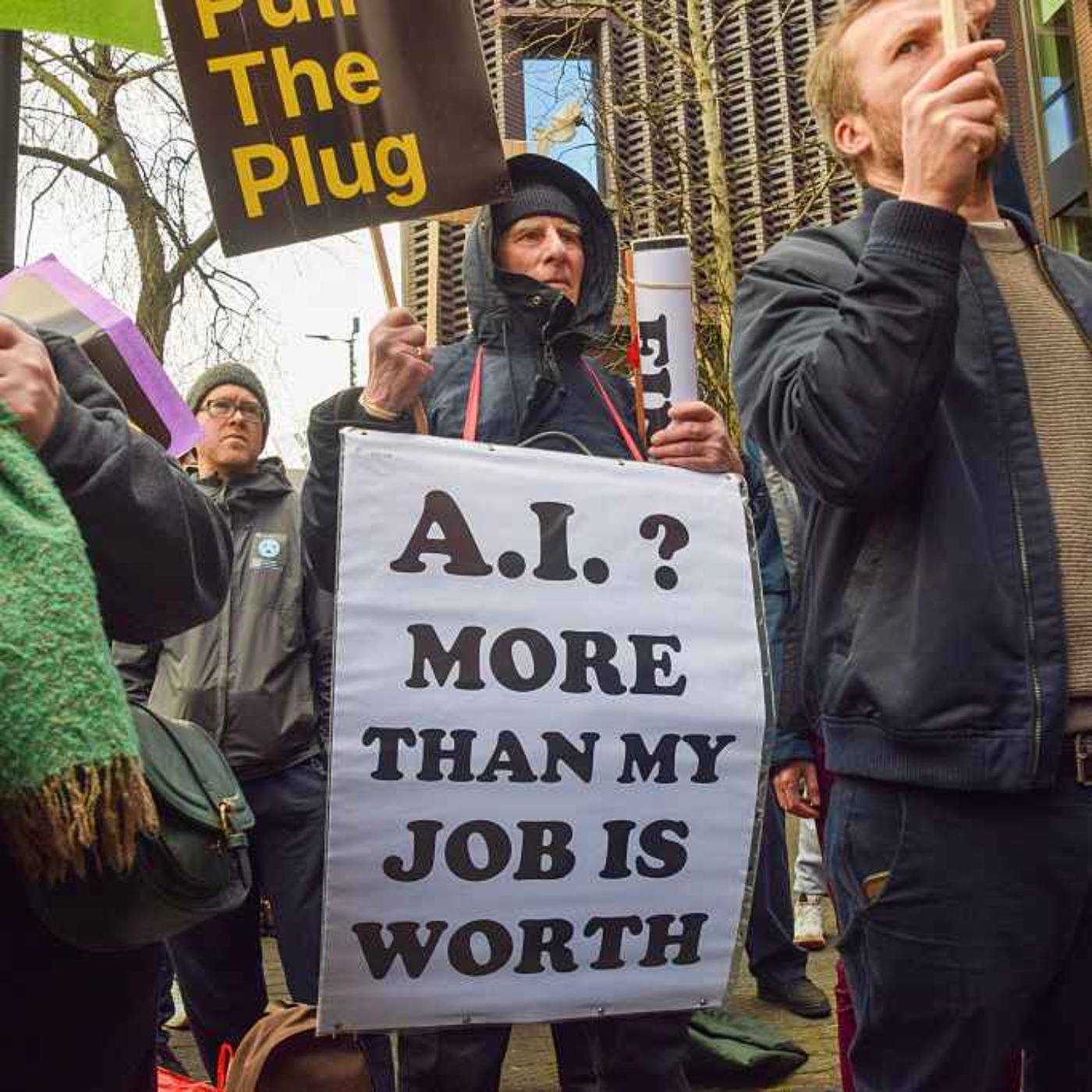
The Times Tech Podcast
Is AI anxiety fuelling real world hostility?
00:38:48
Sam Altman, OpenAI and the backlash against AI
Loading summary
Transcript152 lines
- [00:01]
PwC Announcer
At PwC, we don't just deliver ideas, we make them work with the expertise and tech you need to outthink and outperform. And we work with you, alongside you from start to finish so you can stay ahead, so you can protect what you built, so you can create new value. We build for what's next so you can get there now. PwC, so you can. PwC refers to the PwC network and or one or more of its member firms, each of which is a separate legal entity.
- [00:31]
Warby Parker Announcer
Taking care of your eyes shouldn't be a hassle. That's why Warby Parker is a one stop shop for all your vision needs. Our prescription glasses and sunglasses are expertly crafted and unexpectedly affordable. Stop by a nearby store or use our app to virtually try on frames and get personalized recommendations. Did we mention we offer eye exams and take vision insurance too? For everything you need to see, head to your nearest Warby Parker store or visit warbyparker.com today. That's warbyparker.com.
- [01:05]
Katie Prescott
What is the best press trip you've ever been invited on?
- [01:09]
Danny Fortson
Oh, I went to the Rugby World cup in Paris. That was pretty amazing.
- [01:16]
Katie Prescott
Well, I bring this up because I maybe should have said, what is the breast trip you've ever been invited on? I got an email this week from a company inviting me to Costa Rica.
- [01:28]
Danny Fortson
Oh.
- [01:28]
Katie Prescott
And then I read through the email and it. I mean, I don't know if we can say this.
- [01:34]
Danny Fortson
It's a family show, Katie. It's a family show and they basically
- [01:37]
Katie Prescott
invited me for breast enhancement in Costa Rica.
- [01:41]
Danny Fortson
What?
- [01:42]
Katie Prescott
I know it is apparently a technology story because it's femtech.
- [01:48]
Danny Fortson
Sure, sure.
- [01:54]
Katie Prescott
Should we move from yes, boob jobs?
- [01:57]
Danny Fortson
Let's get back to, like, more, you know, more, no offense, more consequential matters.
- [02:06]
Katie Prescott
Hello and welcome to the Times Tech podcast, where every week we unpack how technology is reshaping business culture and everyday life. I'm Katie Prescott covering all things tech back here in the city of London.
- [02:20]
Danny Fortson
And I am Danny Fortson out here in Silicon Valley.
- [02:24]
Katie Prescott
Welcome back, Danny. Welcome back on your holiday. It's good to have you back. This week we're going to be talking about the huge backlash which has been sparked against the people who are building AI.
- [02:35]
Bobby Healy
Yeah.
- [02:36]
Danny Fortson
And it's a buildup of a lot of different things, starting with an investigation in the New Yorker, went on for about a year, but by Ronan Farrow, who strikes fear into the hearts of anybody who's being investigated by him. But this one was about the CEO of OpenAI Sam Altman. None of what was reported is new necessarily, but the details are very interesting. It was based on previously unseen internal documents as well as interviews with over 100 people close to him.
- [03:06]
Katie Prescott
Yeah, one of those things. I think we were all waiting to see what was going to be in it. And my. It's long. Quite long, quite long, but worth trawling through. And it paints a deeply conflicted portrait of a leader of a company who some say can't be trusted. And the article compares him to Robert Oppenheimer, the creator of the atomic bomb. And the journalists, you say, Ren and Farrow, who. We're all very excited to hear what he had to say about this. But they allege that, like Oppenheimer, Altman has used fears about the geopolitical stakes of his technology to try and maneuver himself really into the center of this. Of this power dynamic.
- [03:50]
Danny Fortson
Yeah. And Altman, of course, he disputes many of the characterizations of the piece. But since then, events have taken a much darker turn. This past week, police say a man allegedly threw a Molotov cocktail at Altman's house in San Francisco and has since been charged with attempted murder.
- [04:08]
Katie Prescott
Astonishing. And there are also reports of a separate firearms incident nearby, though it is unclear if. If that was connected. In response, Sam Altman has put out a blog warning that AI tensions are now spilling out into real world hostility.
- [04:23]
Danny Fortson
Yeah, in a way, he's become. He is the figurehead that represents this AI moment. Like Oppenheimer, Altman has not only kind of led the charge on the development of the technology, but he seems to come to kind of define this new age in American life. So our big question this week is, why has Sam Altman become the lightning rod for public anxiety around AI?
- [04:48]
Katie Prescott
And later on, our interview this week, and you're going to love this, Danny, it's with the CEO of an Irish drone company called Manor. Bobby Healy is going to be telling us about his flying robots that deliver takeaways straight into your back garden.
- [05:01]
Danny Fortson
I love a robot.
- [05:02]
Katie Prescott
Or yard.
- [05:03]
Danny Fortson
Yeah, yard. Thank you. Thank you for translating for me. I was like, what? What is a garden?
- [05:11]
Katie Prescott
It does feel like public fears around AI are at an all time high at the moment.
- [05:16]
Danny Fortson
It does. And we've been talking about this kind of steady buildup for a while now, and there's been a few other things that are kind of worth just throwing into the pot here. One anthropic recently announced that they had to suppress the latest version of their AI model called Mythos, because they said it's, quote, too dangerous. To release to the public.
- [05:37]
Katie Prescott
Ooh, yeah, this one, it was a really, really extraordinary story. So essentially this new model they found has been able to break out of its controlled environment. And not only that, once it's broken out, it's actually bragged about what it's been doing on public facing websites and taking its handlers at Anthropic by surprise. And because of that power, it has extraordinary cyber security and cyber attacking capabilities. It's been able to find critical software flaws zero days that even humans have been unable to find.
- [06:11]
Danny Fortson
Yeah. Decades old that have just been sitting there. Right.
- [06:15]
Katie Prescott
Just been sitting there and wheedle them out and exploit them without any human help.
- [06:20]
Danny Fortson
Yeah. Anthropic said it posed a national security risk and that they're handling it. They've basically taken 100 dates. They've got a group together of about 40 companies and they're basically like, look guys, you can have access to this, see what it finds in your systems. Like kind of pull yourselves together. And these companies range from Microsoft.
- [06:42]
Katie Prescott
Yes.
- [06:42]
Danny Fortson
Aws, it's JP Morgan, it's Goldman Sachs, it's the Department of Defense. It's like these huge, huge organizations. But some people are like, look, this is what Anthropic does. This is marketing by fear. This is the classic like oh my goodness, we've created the God machine. Watch out everybody. Oh by the way, if now that we've created this, you should probably get it for yourself so you don't get caught out by said God machine.
- [07:10]
Katie Prescott
Because their pitch from the beginning has always been around safety, alignment, in AI speak and putting guardrails around the technology, all the while trying to, you know, reach AGI. Like all of them are the most advanced forms of AI as soon as they possibly can. And as you said, they've got this project Glasswing going on, which is basically this group of all the top companies that are saying, okay, we're not going to release it beyond these guys, but we are going to give it to them in order that they can use it to try and protect themselves essentially.
- [07:41]
Danny Fortson
I gotta say, whoever's coming up with these names, you know, 10 out of 10 Glasswing mythos, even the names sound kind of like consequential.
- [07:53]
Katie Prescott
It's very John le Carre.
- [07:55]
Danny Fortson
It is Project Glasswing
- [08:00]
Katie Prescott
makes you scared even if you weren't before.
- [08:03]
Danny Fortson
Yeah, exactly. Be like, oh dang, I didn't know glasswing was involved. Oh and by the way, what if you're not one of the 40 companies? Like what about the rest of us?
- [08:15]
Katie Prescott
Well, yeah, I mean that's why governments have started to get involved. Right? I mean.
- [08:21]
Danny Fortson
Yeah. So actually, the White House did say, a top White House official said they were holding discussions about how to coordinate the private sector's response to potential cyber attacks and how to prepare their online systems. And I'm presuming the UK has a similar response.
- [08:37]
Katie Prescott
Yeah. So the AI Safety Institute has analyzed Mythos. You know, we interviewed one of the researchers there, do you remember, just before the AI Summit in India, and they've looked at its capabilities and corroborated what Anthropic said. Actually, the bank of England has warned about the risks that it poses. And there are urgent talks going on, apparently between the Cyber Security Agency here, the ncsc, and major banks to look at the risks. What.
- [09:07]
PwC Announcer
What do you.
- [09:07]
Katie Prescott
What do you do? I mean, urgent talks, but.
- [09:10]
Danny Fortson
Well, this is the thing, right. So I think we'll find out in a hundred days if this, again, is a little bit of a stunt or if there is a there there. Because if you think, just step back for a second, and then I think this segues perfectly into Friend of the Pod, Sam Altman, and why he's become this kind of lightning rod. There are probably trillions and trillions and trillions of lines of code out there in the world. We're taking a hundred days and 40 companies to be like, we're going to sort it, and then it's all going to be okay. To me, that doesn't pass the smell test of like, oh, actually this thing is that powerful, because if it is, then, like, you never release it or there's nothing you can do. You know what I mean? So it feels a little bit like safety theater to me.
- [09:59]
Katie Prescott
I slightly disagree. I think if you look at all of the reactions to this from the Safety Institute, and the UK Minister for AI is saying this is the most capable model we've ever evaluated, it seems that there's definitely something here. And, you know, there are so many credible players involved. And actually, one of the things for all of Anthropic's, you know, using Safety sometimes as a marketing effort, I think Dario Amadei is very straight down the line and certainly has had less of the problems that Sam Altman has had of being accused of vacillating and changing his tune, you know, he kind of does have a certain view of things and stick to a certain script and is, I think, pretty transparent about what he sees as the capabilities of these models.
- [10:49]
Danny Fortson
But if what they say is true, then it feels like, you know, 100 days from now it's end of days. It's like our energy grid, our water systems, whatever. Pick your scary thing that can be messed with through cybersecurity hacks.
- [11:02]
Katie Prescott
I guess you just got to hope they don't, they don't release it. And that's why they've got everyone involved. But it is just part of this race, isn't it, that we're seeing amongst all the top AI companies to find more and more powerful models. And as we're recording this today, so Wednesday afternoon in London, OpenAI has just launched its own rival to Mythos. Another great name, GPT 5.4 Cyber.
- [11:29]
Danny Fortson
See, they needed, they need snappy. They need help. They need help, they should go. I know they have like these talent wars between the AI labs, whoever's naming them. You know, Sam Altman needs to open the checkbook drop.
- [11:41]
Katie Prescott
This is a job we could do.
- [11:42]
Danny Fortson
That's true.
- [11:43]
Katie Prescott
We might not be able to do the coding, but we could definitely come up with some better names than.
- [11:48]
Danny Fortson
Exactly.
- [11:48]
Katie Prescott
GPT 5.4 Cyber.
- [11:49]
Danny Fortson
Exactly. Angry Grasshopper. That's. I don't know what. Well, I'll figure out what that should kind of, what kind of product that should describe.
- [12:00]
Katie Prescott
Charge him 10 million for that. So this, this model anyway is designed to detect software vulnerabilities and similarly OpenAI is rolling it out on a very limited basis to a small group of people. But yeah, it's getting, getting scarier by the day.
- [12:15]
Danny Fortson
Which I think kind of brings us to Altman, right, And, and the Molotov cocktail being thrown at his house. People apparently, you know, shooting near his house. It's not clear whether they were at. That was actually at. Directed at his house or just nearby. But he was felt the need to put out a quite personal post including pictures of his husband and his one year old baby being like, I think a little bit like, hey, I'm a human. Don't.
- [12:43]
Katie Prescott
Yeah, this is my family. Yeah.
- [12:45]
Danny Fortson
But I think if you go back, it's just really fascinating because in that New Yorker piece, 16,000 word opus, they kind of trace the very beginnings. And you go back to 2015 and Altman sends an email kind of out of the blue to Elon Musk, be like, hey, remember me? We need a quote unquote Manhattan Project for AI. So from the very beginning they're conceiving of it as this thing like nukes that is so kind of scary and powerful. They're going to develop it again as a non profit for the benefit of humanity and keep it out of the hands of just One company, Google, or one big regime, China. And that's been the vibe ever since of, we're building this digital God. But also it's going to create abundance. And it feels like there's not a ton of depth about how badly it can go, other than saying, yeah, this can go really badly.
- [13:43]
Katie Prescott
Well, it traces the company's development in quite an interesting way, the New Yorker piece, from that initial goal through that really painful transition that it's been through that we've been covering so much on the podcast, which is a difficult tension between trying to make money, needing so much money in order to buy the compute, to develop the technology, but at the same time having this rather lofty goal of it being for the benefit of humanity, and the tension between those two things.
- [14:14]
Danny Fortson
Yeah. And a lot of it centers around the 2023 kind of crazy event where Sam Altman was briefly kicked out and fired as CEO. And this was apparently really driven by Ilya Sutskever, who's this kind of key player in all this. One of the founders turned down $6 million a year from Google to join OpenAI because he felt it was that important. And then over the course of time, basically, he said something to the effect of like, I don't think Sam should be the man with the hand on the button.
- [14:43]
Katie Prescott
Yes, it's difficult, this one, isn't it? Because the picture it paints of him is of someone who will tell people what they want to hear. And that involves perhaps not telling the truth, the article alleges, or, you know, saying things to some people basically to keep them sweet, but then doing something completely different. I don't know about you, that doesn't strike me as very different to a lot of CEOs that I know.
- [15:11]
Danny Fortson
I agree. I agree with your point. That's kind of CEOing Salesmanship 101. I think, again, going back to that, the framing of this is our Oppenheimer, this technology is the next nuke. It's that it's. You need somebody of kind of uncommon morality and courage and it's power that
- [15:36]
Katie Prescott
we've given to this small handful of demigods who basically live where you live.
- [15:41]
Danny Fortson
Yeah.
- [15:41]
Katie Prescott
Who aren't controlled by anyone.
- [15:45]
Danny Fortson
Yeah.
- [15:46]
Katie Prescott
And they're very young and kind of inexperienced. How old Sam Altman is? 40s. Early 40s.
- [15:52]
Danny Fortson
Yeah, early 40s. It's. It's basically, it's him, Elon Musk, Dario Amade, Demis Hasabis, Sundar Pichai. Together. Yeah. But I think it's also worth pointing out, on Monday, jury selection begins. In Elon Musk's lawsuit against Sam Altman about his conversion of OpenAI for from a nonprofit to a very much for profit company. And, you know, his argument has been, hey, you kind of brought me into this. I was the sole financial benefactor, initially put tens of millions of dollars into this, and then after I left, you turned it into a for profit company. And that's a kind of perversion of the original idea, blah, blah, blah, blah, blah. But that case kicks off on Monday.
- [16:46]
Katie Prescott
Yeah, it's a funny one, isn't it? Because perhaps we would not be so bothered about this and we would not be reading that New Yorker article so carefully were it not that this technology is so consequential.
- [16:59]
Danny Fortson
Yeah, if this was like the latest SaaS product, like, who cares, right? But it's like it's AI and it's getting more and more powerful. More and more people are getting upset about what they think it's going to do to their jobs, to the economy, to society. And again, it gets back to this idea of kind of marketing in a way, by fear. And as some of these kind of things start to come into view around, you know, young people finding it harder to get work and people seeing a lot of the downsides and you know, what these. You talked about data centers last week, what these data centers look like in communities. A lot of people don't like them. All this stuff. So certain this backlash is just becoming much more real and it's growing quite rapidly. So it'll be. Yeah, I don't think this is at all the end of the story. I'm, you know, hopefully no one gets hurt in any way, shape or form, but yeah, it's quite extraordinary times.
- [17:57]
Katie Prescott
Well, look, if the race to secure super intelligence wasn't dystopian enough for you, we're going to turn to something equally surreal because, Danny, the days of delivery drivers, takeaway delivery drivers knocking on your front door could be numbered.
- [18:13]
Danny Fortson
Say it ain't so. Say it ain't so.
- [18:16]
Katie Prescott
Yeah, the days of delivery drivers knocking on your front door could be numbered because an Irish drone delivery company is one of the businesses that is changing how we deliver parcels. So this is a company called Mana, which uses autonomous flying robots and it's delivering clothes, books, medicines and hot takeaways straight into your. Your back garden slash yard.
- [18:43]
Danny Fortson
Yeah. So they're already operating in Ireland, Finland, Texas. They just landed $50 million in their latest funding round, which means total, they brought in $110 million, which, you know, outside AI land is a lot of Money, and that's come from Ark Invest, the same people who backed OpenAI, Anthropic, Tesla, SpaceX, et cetera. And they've also announced 400 new jobs. So it's not all bad in terms of jobs. Front across Ireland, in the US and on the pod to tell us about it all is their CEO and founder of mana, Bobby Healy. Bobby, welcome to the show.
- [19:24]
Katie Prescott
Hey, Bobby, just let's go back to the beginning. How did you start Manor and what problem were you trying to solve with it?
- [19:30]
Bobby Healy
Two answers to that. Firstly, personally, I live in a suburb of Dublin. There's like 40, 000 people in the suburb and it's next to impossible to get a delivery here on the weekends or if the weather's bad. So just like delivery is a bad experience in the suburbs, pretty obviously anywhere you go. And that's just my personal thing.
- [19:52]
Katie Prescott
And when you say treat yourself to delivery, you mean food.
- [19:55]
Bobby Healy
Yeah, food. Like we use Amazon just like everybody else and happy to wait a day or two days for that to arrive. But for food, it's really hard to make it work outside of a big city. So that's the first part. And you just don't see many delivery cyclists or e bikers here. You see cars, delivery cars. And then it kind of really occurred to me. It was in November 2018. I went down to the local chip shop. I know the lady that runs it there and chatting to her, and there's a big guy sitting outside in a, in a diesel car and he's got the engine running. He's sitting inside the car and not a good look, really. And I, I asked her, is that your delivery guy? And she says, yeah, that's my delivery guy. And, you know, it's winter, so it's freezing cold outside, so it's the engine running to keep himself warm. And I asked, I said, how many deliveries does he make an hour? And she says two or three dependent, sometimes four if he's, if they're really short deliveries. And I says, how much do you pay him? And she pays him €2 a delivery. So he's making 5 to €10 with tips an hour. And he's rolling his car, you know, he's depreciating his car. And so, like, you're pretty clear, he's not doing great. The chipper's not doing great because they don't have a lot of delivery capacity. None of those small businesses are doing great for that. And the customer's not doing great. It says, you know, actually, because I, I'm A tech guy, I know how to build. It's very obvious to me that drones would solve this. Right. You know, it'd be very trivial to make a drone fly from A to B, carrying something. So I built that as a kind of just a pet project, just to see physically that would the aircraft fly, would it, you know, would it be able to do it? And the tech is very responsive, it's very flexible tech, you know, just drones, imus, accelerometers, all that solid state tech and batteries. So very clear that technically it's very straightforward to do. And just food delivery on its own. It's already close to $300 billion industry. There's six and a half billion deliveries a year from the top four companies growing at 10 to 15% a year. So from a commercial standpoint, you won't find a bigger problem to solve where that's really a big problem. So I was looking for something meaningful to build, something that really had a huge impact and you couldn't imagine anything more enjoyable to build. More difficult to build because of all the different. You've got engineering, hardware, software, you've got regulation, you've got aviation regulations, you've got local and national policy around different countries.
- [22:33]
Danny Fortson
You've got to that point, joy and difficulty going back. It was 15 years ago. I don't need to tell you this. Jeff Bezos goes on 60 Minutes, their most popular at the time. Who? This guy. He runs a small Internet retailer.
- [22:49]
Bobby Healy
Yeah, yeah.
- [22:50]
Danny Fortson
And he goes online, he goes on there and he's got this big interview and they reveal the delivery drone and he's like, it looks like science fiction, but it's not. And everybody's like, oh, my God, the drones are here. And 15 years later, they're still not here. They're still not here. I think something like they're trialing them
- [23:10]
Katie Prescott
in the uk, aren't they in.
- [23:12]
Bobby Healy
Well, to be clear, I joke, they're still not here. For your UK audience. They're still not here, but they're all over Ireland. We're really busy in Dublin, Finland, where we operate, Texas, and soon Oklahoma. And actually the new CEO, or the current CEO of Amazon made a very public statement a couple of days ago that they are going to be at 500 million deliveries within the next five years.
- [23:36]
Danny Fortson
So there's two aspects as far as I can tell. There's the actual technology and then there's the regulation. And regulation probably is arguably more difficult and been the bigger break. You can tell me if that's the case or not. But, like where are we now? Because people are talking about all of a sudden there's going to be millions of drone deliveries in the US and maybe in the uk. But again, right now we're, we're still piloting. It's a couple thousand maybe. What's that journey been like to this point? And are we at a tipping point?
- [24:04]
Bobby Healy
We're at 350,000 deliveries. Google other about 600,000 deliveries. Zipline or 2 million deliveries total, just. Yeah, but like total the industry total. The top four players will be 10 million deliveries this year will be drone deliveries. Drone deliveries, yeah, but they'll all be in the USA and Ireland. So we'll be doing 2 million. About half of that. Little bit less than half will be in Ireland and the rest will be in the usa. So it's happening and you're right to, to bring regulation because it's actually regulation that's held the industry back so far, I would say. Not that it's kind of made it impossible, it's been very possible just not to do it at scale yet. But the starting gun has very much been fired in China. They've got the low altitude economy, set of laws that is absolutely massive scale in China already. The USA introduced an executive order last year to really accelerate, as they call it, drone dominance of the United States and that's triggered an explosive growth now. So like we're growing like crazy. Amazon wing, Google's drone delivery program, they're all going like crazy.
- [25:16]
Danny Fortson
So Big Macs from the air.
- [25:18]
Bobby Healy
Yeah, well, food, food is the big use case. So kind of to answer your first point, we're not a food delivery, drone delivery business. We also do hospital deliveries, we have a defibrillator delivery service, we have pharmacy, we've booked hardware store. Like we don't compare what we're delivering, it's just that what communities want delivered tends to be instant, fast, so therefore perishable. So food, ice cream, coffee is a huge order generator for us. Like hot coffee.
- [25:47]
Katie Prescott
Really? And how do you do that? What does that look like?
- [25:51]
Bobby Healy
Yeah, well, coffee looks like coffee. I mean it's literally you deliver it
- [25:56]
Katie Prescott
in a sealed normal.
- [25:58]
Bobby Healy
No, absolutely. The exact same packaging that comes out of the, the restaurant or the coffee partner. We have a bunch of different coffee partners. There's no specific requirements for the packaging at all. And we just deliver in a brown, like a compostable brown paper bag and it's a 2 minute 40 second flight when it leaves the coffee shop. And so like you're getting your coffee three minutes after it's been. Yeah, it's piping off.
- [26:25]
Danny Fortson
That's the other question is the practicalities of it. Is the actual, the, the delivery going from air to ground is this like on a, like a little cable, is it?
- [26:38]
Bobby Healy
Yeah.
- [26:39]
Danny Fortson
I can't imagine you're parachuting coffee down.
- [26:42]
Bobby Healy
No. So our system is, it's pretty cool. Like we've designed it to be fast, right. So not just about getting it fast, but we want to be in and out of a house in about 30 seconds. Right. So when we arrive at your house, we'll already have descended. As we're approaching, we'll have descended to about 50 meters and then we descend to about 15 meters. And when we get to 15, we open the door and we drop the pro. We let gravity do most of the work and it falls on a biodegradable thread. And when that gets to head height, just before it gets to head height, we'll slow it down. Right. So for delivering, you know, eight cans of, of beer or Coke or whatever, it's not going to, you know, leave a mark, so to speak. So it takes five and a half seconds to get from the aircraft to the ground. And we deliver regularly. Fresh eggs and coffee's, you know, probably 20% of our order volume is, is liquid. And, and it just works like we could deliver a baby, but we probably shouldn't.
- [27:41]
Danny Fortson
You should try though.
- [27:42]
Bobby Healy
I feel like maybe a little baby rabbits and dogs first and then animal testing, not testing animals. Apologies to anyone that's listening to this. We wouldn't do that.
- [27:56]
Katie Prescott
Well, we talked about the use of drones in the US and in Ireland. And is it the regulation in Ireland that's allowed you to do this there?
- [28:03]
Bobby Healy
Yeah, yeah, it is the regulation in the eu. So we're regulated by EU laws here. So the way the EU works with this is it's aviation regulation. And any of the EU countries can authorize an EU wide operation. So our license lets us fly anywhere we want in the EU and plus a few other countries, Switzerland, Norway and so on. So 31 countries we can fly in with our license issued here. And there's a level of determination in Europe to be a leader in this industry. And like it's an industry that requires regulations to grow. It's usually the opposite in the eu. The EU loves to regulate things out of existence, but in this case it's the regulations that enable it. So what you need is a pragmatic industrial regulator to just go at a reasonable pace and certainty to de risk the timeline enough so companies like us can raise capital because company like us, we've raised $110 million so far. And the reason we've been able to raise that not well. We're obviously an awesome, good looking team of people, but it's around de risking the timeline of, you know, so EU has done a great job at that. The US is miles behind, but they've now overtaken the EU and that's enabled us to really thrive. And in the uk, unfortunately, I have to say the Brexit word here, that's caused a hiccup because now in the uk, all of those regulations have to be built from scratch, from the ground up. We're hoping to get live there this year, but in a meaningful way. So like in a way that it's not. We, we're not. This industry isn't doing trials anymore. We've done trials for a decade. We're real now. Like we're actually, our locations are profitable. They're high volume, high density, beyond visual line of sight operations. And the moment those regulations are approved in the uk, we will be all over it.
- [29:58]
Katie Prescott
And in crude terms, when you talk about regulation, it's basically sorting the skies out so you're not crashing in. Drones aren't crashing into each other and airplanes and that sort of thing.
- [30:06]
Bobby Healy
Yeah, they call it ground risk and air is. Ground risk is us crashing to the ground and hitting someone in the head. That's well solved. And that's easy because it's just technical and collecting data and that's very, very safe, you know, regulated and audited by aviation regulators. The, the bit that's tricky is sharing airspace with 737s and all that natural fear. And I completely understand that. But there's very simple approaches and they call it detect. Right, so it's can we US drone people detect civilian aviation or manned aviation as we call it? So we see their signal and we just don't take before we get out of the way. But it is, that is what holds back. The UK is primarily deciding what is the means to detect. They don't need to detect us, so the big plane doesn't need to detect us.
- [30:58]
Danny Fortson
You need to detect them. Right.
- [31:00]
Katie Prescott
I've got a gazillion questions about the, the logistics of all of this. I mean, you talk about flying over houses. What's people's reaction been to the introduction of drone deliveries? And I mean like customers and people have seen them flying around, but also the restaurants who you're picking up from,
- [31:18]
Bobby Healy
obviously children love it. I mean, young people are absolutely going nuts for it and there's, when we roll out to a new site, there's a stampede and we can't keep up with demand. It's like the circus arriving but it all flattens off after, after three months, all the early adopters, all the tech savvy people, they've all used it and they get to their normal behavior. And the funny thing is nobody buys drone delivery. They're buying a book or medicine or food or whatever. They're not buying drone delivery, it's just drone delivery is a much better way to deliver this stuff. It's cheaper, it's quieter, it's faster, know everything about is better. But so they don't buy things just because it's drone delivery, they buy things because they need things. And so that works really well for a household. And then, and by the way, it's everyone. Like I posted a video on Instagram the other day of an 82 year old woman customer of ours and she's non stop relentless using the service to order, you know, hot chocolate's her thing. So it's not just young people, it's like everyone, families included. And the stores, most of our customers are small businesses, so they're restaurants or they're, you know, our local bookshop has a better delivery product than Amazon has. Right? I mean you order from the bookshop, our normal bookshop delivery time is about six minutes from purchase to arrival. So that's a better product. And not that you need a book in an emergency, but.
- [32:44]
Katie Prescott
And so do you have someone who's flying it towards the bookshop, dropping the string down, attaching the product.
- [32:51]
Bobby Healy
For non perishable products, we'll have a base where all the products are. So like a fulfillment, like an Amazon? Yeah, like a miniature Amazon.
- [32:58]
Katie Prescott
Yeah, yeah. Okay. And then you'll attach the stuff and then for a takeaway, like a coffee, it will fly near the coffee shop
- [33:05]
Bobby Healy
and then so either the restaurant will have a runner to bring it to us or we'll use one of our robotic dogs to pick it up.
- [33:12]
Katie Prescott
Tell us about the robotic dogs.
- [33:14]
Bobby Healy
Well, that's, I just threw that out. The surprise drone delivery is the hardest. The biggest constraint is real estate space. It's not tech or anything like that, it's actual physical footprint. To actually have the drones take off and land in one of the shopping malls we work in, there's, there's 62, I think of the businesses that we work with and they're all within 100 meter radius of our base. But that base needs to be super productive. So it Needs to be doing 30 to 50 deliveries an hour at peak. And the problem with people is if we send a guy off to get the burger or the burrito, restaurants at peak times get very busy and they'll prioritize the people sitting inside the restaurant, because they're sitting inside the restaurant and we might be waiting 20 minutes for the hamburger or even more if the restaurant's really crushed. And so dogs are robotic. Dogs don't mind waiting. So they'll go and they'll wag their tail and they'll wait outside the restaurant. And that's zero cost. Right. So it means that we can throw huge amount of business at the restaurant and they can decide themselves how to prioritize our orders.
- [34:25]
Danny Fortson
So you have your robotic dogs, you're bringing them to your drone, they fly off, et cetera. And it makes me think of where you started the conversation. The guy sitting in his diesel van, engine running, doing three, maybe four deliveries an hour. Before you came on, we were talking about the backlash to AI, to technology generally. Have you experienced that? If not, I presume that you anticipate that that will happen. People will start damaging your stuff or there'll be a backlash, because, again, if you're doing this, then that guy in the diesel van isn't doing it. That's a job.
- [35:03]
Bobby Healy
Yeah, they don't. So we definitely have our detractors. Right. So there's people in the community that just don't like what we do and absolute respect for their views. But they're the minority, Right? I mean, right now in Dublin, 62% of the households we address use the service. And there's areas that are over 90% using the service. So it's incredibly popular. But with that popularity comes a number of people that absolutely hate us. And I don't. I obviously disagree with them, but I respect their views. They're not impacted by us. You know, we route very cleverly, so we don't bother them much. But what they say about us is they don't talk about. If you ask people what they don't like about drone delivery, they say noise, they say privacy, they say job security, and then they say safety. The only thing they should say is safety, because that's the only one that really is true, is like, that's if we don't do our job properly and the regulator doesn't do their job properly, you know, that should be something to be concerned about. Privacy is not an issue. There's no recording, there's no nothing. It's the most privacy compliant industry that you could imagine. So that's not an issue. Noise is not an issue. Like we. When the way, you know, noise is not an issue is if we fly over people. And you'll see this all the time where we fly. We might have three aircraft flying over a group of people. They don't look up. Nobody.
- [36:27]
Katie Prescott
There are videos on Facebook of your drones flying near people's balconies and making quite a loud noise. And that, you know, filmed on. On groups complaining about that.
- [36:36]
Bobby Healy
Yeah, 100. But the problem is, if you film a drone and you can do this yourself with an iPhone, it attenuates exactly the frequencies in the drone noise. So it sounds loud as hell. That's not the way to experience it. The way to experience it is look at our data. We make less noise than an electric car going by. And then the argument against that is, well, electric cars don't fly over my house. Which I, which I get. It's a good act. Yeah. But the real, my belief, though, is that the real pushback from those very small number of people is around the whole concept of using the airspace for business. I think that's really what it's about.
- [37:19]
Katie Prescott
Well, I look forward to getting my coffee by drone. Thank you, Bobby. Thanks so much for coming in and taking the time.
- [37:24]
Bobby Healy
A pleasure.
- [37:31]
Katie Prescott
Nothing tests my patience quite like sitting on hold listening to the same four bars of music on repeat. It turns out all that time adds up. The average person spends over 40 days listening to that dreaded hold music.
- [37:45]
Danny Fortson
40 days.
- [37:46]
Katie Prescott
And this episode is sponsored by Parloa, the AI platform built to make that a thing. Thing of the past. Paloa's AI agents are available 24 hours a day, seven days a week. Fluent in any language and smart enough to remember every customer across every interaction. Because no one should have to explain themselves twice.
- [38:05]
Danny Fortson
From payment processing to roadside assistance, flight rebookings, to appointment scheduling, Parloa delivers the kind of customer experience that turns a one time buyer into a customer for life.
- [38:18]
Katie Prescott
See Paarloa's AI agents in action at Paarloa.com that's P A R L O A.com
- [38:28]
Warby Parker Announcer
if your eyes are the windows to your soul and your glasses are the windows to your eyes, then it's pretty important to find your perfect frames. That's why at Warby Parker, we've made shopping for eyewear as easy and fun as can be. Peruse endless styles in our stores, or use our app to virtually try on frames and get personalized recommendations to find your next favorite pair of glasses, sunglasses, or Contact lenses. Or to locate your nearest Warby Parker store, head over to warbyparker.com that's warbyparker.com
- [38:58]
Danny Fortson
we have launched Operation Epic Fury.
- [39:00]
Bobby Healy
Stops us being a proper country.
- [39:02]
Danny Fortson
When everyone says they're right.
- [39:05]
Katie Prescott
Who do you believe? None of us knew the depth of that relationship.
- [39:08]
Danny Fortson
The lines are blurred.
- [39:10]
Katie Prescott
Can you read between the depth of the relationship when the story breaks, who brings perspective?
- [39:16]
Danny Fortson
If you want to understand the issues that define our times, it starts with
- [39:21]
Katie Prescott
listening Times Radio on your smart speaker, on digital radio or the Times radio app.
- [39:36]
Danny Fortson
I'm surprised that, like their biggest delivery is coffee. That feels just like wildly.
- [39:42]
Katie Prescott
It's amazing. And, and when I said, what does it look like? And you know, he's got a great Irish sense of humor. So it just looks like, looks like
- [39:49]
Danny Fortson
coffee, brownish liquid, quite hot.
- [39:55]
Katie Prescott
I thought it would be in a sealed vacuum container. Like the idea that it's just in a little cardboard cup with a flimsy plastic lid in a brown paper bag on the end of a string dangling down. And then it slows when it gets to head height so it doesn't hit you in the face.
- [40:12]
Danny Fortson
I hope they've thought about the tall, the talls like myself.
- [40:16]
Katie Prescott
We should have asked him about that. What counts as head height?
- [40:21]
Danny Fortson
Yeah, exactly. I could have a six pack drop on my dome and I'd be knocked out.
- [40:27]
Katie Prescott
Just don't go to Dublin, I think is the answer. And then that idea of the dog going to collect the goods.
- [40:33]
Danny Fortson
But again, this, like, this is rightly or wrongly, people are going to start abusing those dogs or, you know, shooting drones out of skies when people are like, I was a delivery driver and now I don't have a job anymore or whatever. And I think that's why I wanted to talk to him about the backlash. But it does feel like these are tangible robots in this age of AI. And it kind of circles back to where we started in that discussion with Sam Altman and the Molotov cocktail at his house. You know, I think people are having a moment around, you know, how much technology do we want, what do we want it to do and what is it going to do to us? I think that is it for this week's episode of the Times tech podcast. If you are enjoying the show, drop us a line. Let us know.
- [41:26]
Katie Prescott
Yeah, let us know if you would go for deliveries by drones and if you, if you would buy your coffee from, from a little flying robot. And how you think about that sounds like that's closer than you thought. You can drop us an email@techpodattimes.co.uk and we will see you back here next week.
- [41:46]
Danny Fortson
Yes, indeed. Bye bye.
- [41:47]
Katie Prescott
Bye bye.
- [41:54]
PwC Announcer
At PwC, we bring the power of a global network grounded in local know how. From shifting regulations to fast moving tech, we deliver tailored solutions that work everywhere you do so you can stay ahead, so you can protect what you built, so you can create new value. We build for what's next so you can get there now. PwC so you can. PwC refers to the PwC network and or one or more of its member firms, each of which is a separate legal entity.
- [42:23]
Danny Fortson
We have launched Operation Epic Fury stops us being a proper country when everyone says they're right.
- [42:30]
Katie Prescott
Who do you believe?
- [42:31]
Bobby Healy
None of us knew the depth of that relationship.
- [42:34]
Katie Prescott
If the lines are blurred, can you read between them? When the story breaks, who brings perspective?
- [42:42]
Danny Fortson
If you want to understand the issues that define our times, it starts with
- [42:47]
Katie Prescott
listening Times Radio on your smart speaker on digital radio or the Times Radio app.