← The Times Tech Podcast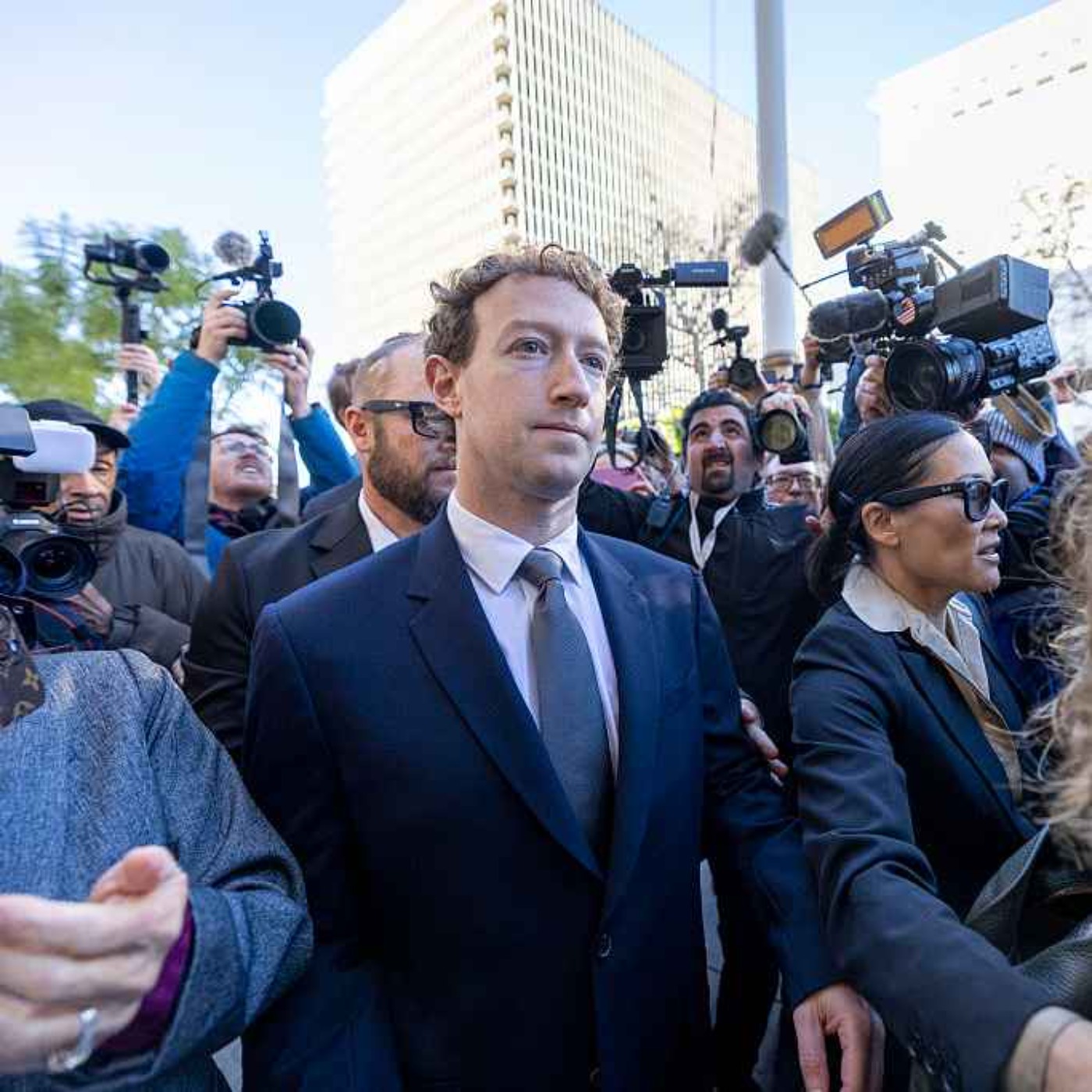
The Times Tech Podcast
Social media ban for children and Big Tech’s Big Tobacco moment
00:41:32
Online safety campaigner Baroness Kidron on the Meta and YouTube rulings
Loading summary
Transcript82 lines
- [00:00]
A
You're listening to this podcast, so I know you've got a curious mind. Here's a helpful fact you might not know. Drivers who switch and save with Progressive save over $900 on average. Pop over to progressive.com, answer some questions and you'll get a quick quote with discounts that are easy to come by. In fact, 99% of their auto customers earn at least one discount. Visit progressive.com and see if you can enjoy a little cash back. Progressive Casualty Insurance Company and affiliates national average 12 month savings by $946 by new customers surveyed who saved with progr between June 2024 and May 2025. Potential savings will vary.
- [00:38]
B
This episode of the Times Tech Podcast is sponsored by ServiceNow.
- [00:42]
C
Danny One thing we keep hearing from business leaders right now is AI sounds great, but how do you actually make it work inside a company?
- [00:51]
B
Exactly. Because most organizations aren't neat, shiny systems. They're layers of software, legacy tech and teams, all doing things slightly differently.
- [00:59]
C
ServiceNow sits across all that, acting as a control tower for making work move seamlessly through the organization, connecting people, systems,
- [01:07]
B
data and increasingly AI agents so that things don't happen in silos.
- [01:12]
C
Learn how ServiceNow puts AI to work for people@servicenow.com.
- [01:23]
B
Hello and welcome to the Times Tech Podcast, where every week we unpack how technology is reshaping business culture and everyday life. I'm Dan. I'm Danny Fortson covering all things tech out here in Silicon Valley.
- [01:35]
C
And I'm Katie Prescott looking at tech from the City of London. And this week we're going to talk about what could be the end of an era of what sometimes feels like complete invincibility for tech companies.
- [01:48]
B
That's right. So two landmark court rulings have found that Meta and YouTube deliberately designed addictive products. They're apps. And that sent shockwaves through Silicon Valley and sparked some hope among families and child safety campaigners that change may finally be coming. So our big question this week is, is this big tech's big tobacco moment? Could these verdicts lead to a master settlement similar to the one all the way back in 1998 when companies were forced to pay billions of dollars to cover damages caused by smoking?
- [02:26]
C
Well, to help us answer that question, who better than the woman who's been leading the charge to rein in big tech here in Britain, Baroness Kidron. She's a long, long standing digital activist and a crossbench peer in the House of Lords.
- [02:40]
B
And she'll be here in just a moment. But first, let's get into some of the developments around this, you know, this kind of growing global rebellion against tech and social media in particular.
- [02:51]
C
Yeah, I mean, and those developments really have come from the US in the past week or so. Just remind us what has happened in those really seminal court cases and what were the verdicts?
- [03:03]
B
Yeah. So last week marked a landmark moment in the history of tech. Two juries in California, New Mexico found social media companies guilty of creating products that harmed their users. So in LA, a jury awarded $6 million to a 20 year old woman who claimed her addiction to YouTube and Meta's Instagram caused depression and self harm. She said she started posting videos on YouTube when she was six and that by the time she was an adult she was addicted to apps including Instagram, Snapchat, TikTok and YouTube. Now it's important to note TikTok and Snap agreed to a last minute out of court settlements, but right before the trial began, so.
- [03:43]
C
And we don't know what those were, right? We don't. So that means we should know.
- [03:45]
B
We don't. We don't. But after a five week trial and nearly nine days of deliberation, the jury found the company is guilty on seven counts, including the core question of whether the apps were addictive by design and if the companies acted with, quote, malice, oppression or fraud. I think it was on Tuesday or Wednesday, the day before a jury in New Mexico found Meta guilty in a separate case, this one around enabling child predators. The state whose attorney general had brought the case was awarded $375 million in damages. Now both Meta and Google, which owns YouTube, have stated that they, quote, unquote, respectfully disagreed with the verdicts and they plan to appeal.
- [04:30]
C
But it's still making people think that this is some sort of big tobacco moment, because these verdicts could resonate not only around, around America, but around the world. And I think I'm right in saying that that case in the US was a test case. Right.
- [04:47]
B
So now that's right.
- [04:49]
C
The claim is successful, that can open the door to others.
- [04:53]
B
Yeah. And it's just worth giving a little bit of the broader context. There's something like 2,600 cases that have been filed in state and federal courts against mostly the big four social media companies, Meta, Alphabet, YouTube, Snapchat and TikTok. And so basically those 2,600 have been put into two buckets, federal courts, state courts, and they have been kind of funneled each into one court. And so the LA case was the first of roughly 12, 1300 state cases and they've chosen, the judge has chosen about eight others, so nine in total. And so there's going to be a succession of these cases. The goal is basically to establish a new legal theory, which is social media apps are designed to be addictive products, that they are harmful, that they are effectively faulty products, like, you know, I don't know, a car without a seatbelt or whatever, or cigarettes. Exactly. And the companies have known this, they've decided to ignore that and they've harmed their users and now they gotta pay. And so there's that, there's those state court, state cases in la, and then in June a separate kind of process begins in Oakland in a federal court, which again another 12, 1300 cases from federal courts. The judge has chosen 12 and there's going to be 12 cases that go in succession there. So the idea is 20 cases to prove or disprove this core notion that these are purposely built to be addictive and harmful.
- [06:39]
C
And it does feel like a snowball. I mean, there've been so many whistleblowers coming out of social media companies across the board. And then of course all of the various cases from people like the woman you just spoke about who claim that social media have ruined their lives. I mean, I just think, you know, particularly here in the UK of course, of the case of Molly Russell, the 14 year old girl who took her own life in 2017. And a coroner later rules that she died from an act of self harm while suffering from depression from, and I'm quoting, the negative effects of online content. And the, what she's seeing online just shouldn't, again, a quote, shouldn't have been available for a child to see. And over here, her father, Ian Russell, has really tirelessly campaigned for restrictions on social media companies. And I'm afraid he's not the only parent to, to do so. And partly as a result of that, it's something I'm noticing a lot with my kids. There's this grassroots campaign here that sprung out of that called the Smartphone Free Childhood campaign. And so you can imagine all of the WhatsApp groups from the local schools are part of it. And it used to be accepted that you sort of give your kid a smartphone when they were 11 and they went to secondary school. And now I've really noticed that that's starting to change and people are really, really worried about, about the effect on their kids.
- [08:05]
B
Yeah. And I think this backlash is growing. Right, because you know, you've had, we talked about it on the pod before Australia became the first kind of Western country to ban social media for under 16s. They're talking about it in the UK. And I think really importantly what's really interesting in, in the case of, is that they delineated between the design of the apps and the content because the industry since, you know, for 25 years or 20 plus years has leaned on section 230, which is this law that basically means, you know, we are platforms, we can't be held liable for what people post. You know, that's not our responsibility. And it's been this immunity shield that has been the key to social media
- [08:52]
C
and we're not publishers, people are just putting, putting things up and we can't.
- [08:55]
B
Exactly, exactly. And so what's really interesting is like in the case even, you know, throughout, there's lots of objections and like, oh, this were protected from section 230 here, etc. Etc. But like the actual theory being tested is not. They're like, basically you can almost not talk about the content, you can only talk about the design of the apps, like Infinite scroll, all the little nudges, like all the reward systems, the dopamine hits, all of that stuff that is designed to keep you scrolling. So it's really interesting that both of these cases appear to have won on the design around the design of these apps, not what's being shown to people. Kind of a, a secondary thing that is protected by law as currently written. But these two cases were the first to where two juries and two cases in two days said no, the way these things are designed is the problem. And that's why this is a big deal.
- [10:00]
C
And that's quite different to what is happening here with the online safety bill where social media companies have to basically age check the people who are using them in order to filter that content to try and protect kids of certain ages or even up to 18 for seeing certain things. And that's been really interesting to watch roll out because it's been quite hard to monitor, quite hard to control. Ofcom, which is the media regulator that's got to, I mean, I think got far too big a job frankly having to monitor media, but also look after social media and the tech companies, not to mention AI and Generative AI has issued fines to a number of companies on this that as yet haven't been paid. It's a really, really hard thing to
- [10:50]
B
wrap your arms around and that's why this analogy to big tobacco keeps getting made because I think it's really interesting because in the tobacco case they had internal research which has since been published as part of that settlement that showed very clearly what their scientists were like. These are addictive products. Let's design them to make them more addictive. Let's up the nicotine, let's do all of this stuff, let's target young people to bring it, because then you have a customer for life, all of this stuff. Yet publicly they denied it for decades until you had this kind of avalanche of lawsuits that forced discovery that pulled on whistleblowers and finally kind of turned the tide and led to this $200 billion settlement and also force the companies to stop marketing to kids. Joe Camel, he was very famous out here. They got rid of Joe Camel, who was like this, you know, this logo that kids found interesting and kind of alluring. All of this stuff. That was the thing that changed. It was not regulation, it was the courts. And I think that's, you know, if you look at what's happening to social media, you know, Facebook was founded 2004. We're now in 2026. There's effectively been no regulation, at least in the home market of the us and now you're starting to see this shift, both publicly and also critically in these court cases, which again, these two parallel tracks in the state and federal courts. If you can kind of establish a legal precedent that gets proven and proven and proven again, at a certain point they might be forced to come to the table and be like, okay, we're gonna do things differently. But I mean, that's the hope.
- [12:38]
C
It's just tragic that so many young people's lives have been affected by this. And I'm not making any judgments on the, you know, claims on either side, but I think that's indisputable.
- [12:49]
B
No, absolutely. And I will say the other thing. You know, I've spoken to several parents who lost children due to viral challenges or through self harm, whatever it may be. And when that trial started in la, at least a dozen of them were standing on the court steps with holding up pictures of their children. Quite a powerful kind of show of just this is what this is about. And the industry says there's no kind of clinical proof that they're addictive and all of that stuff. But I think, again, I think it's just a harder, I think talking to people on both sides. I don't see how social media, the industry wins. So it'll be interesting to see how
- [13:37]
C
it all plays out and also where everybody ends up. I mean, you mentioned the UK considering a ban. A trial's underway into that ban at the moment. They're doing a six week test with 300 young people and they're basically creating four different groups and four ways of doing this ban. One, for example, controlled by parents. And they'll see what happens on the other side. Yeah. So lead to some sort of change here, but it's a really, really difficult one to know where you end up on that. And actually, I know Baroness Kidron, who we're about to speak to, is quite against a ban.
- [14:13]
B
So while the UK and countries around the world are thinking about a social media ban, and at what age, now is a good time to bring on our guest today who is leading the charge when it comes to conversations and regulations around online child safety.
- [14:31]
C
And Baroness Kidron has been leading the charge here for more than a decade and a long time before a lot of people started to worry about this. She is One of the UK's key voices on the dangers of big tech as a crossbench peer in the House of Lords and for the, for the past 13 years, she's been warning about the unregulated power of tech companies and she's led a campaign to force them to try and change their products to protect children through her organization, the Five Rights foundation, as well as doing many other things, such as pushing through the age appropriate design code back in 2020, which was really the first proper effort to change the way that social media apps are designed, especially when it comes to kids.
- [15:13]
B
And of course, Katie, most importantly, the Baroness is an OG friend of the pod. So if you go back into the catalog, back into the Wayback Machine, to Danny in the Valley, 2017, I believe, November 2017. The Baroness first on.
- [15:30]
C
Wow.
- [15:31]
B
Yes. And it was then for an episode titled Kids Are More Than Clickbait, which was just a, a very pithy quote from the Baroness. So as you can tell, she has been sounding the alarm for a long, long time. Welcome back, Baroness Kidron. We're so happy to have you. Because, you know, we're in a moment right now. So we've had these two juries in two separate states, California, New Mexico, that found social media companies guilty of creating addictive products. And I would just love to, you know, given that you've been working on this since 2012, what did you think when you heard?
- [16:08]
D
So I would say, first of all, hurrah. Absolutely a significant moment. And I think the thing is, you know, everybody's been walking around going, you know, tech's having its tobacco moment. But I think that is literally so, you know, there was a moment in the decades of arguments about Tobacco, where it changed from personal choice to what were they doing, how did they know? Where were they when they chose to ignore the evidence, et cetera, et cetera. And it suddenly becomes about liability, about responsibility, about corporate behavior. And I think you can see the parallels absolutely in this moment. And I think it's fantastic. I'm sure they'll go to court again and we'll be back here in a year or so having this conversation again. But I think it has given permission to governments to also look at it from this point of view. And as you will remember from our conversation in 2017, that's what we were saying then. Stop looking at the content. Look at the design. It's the machine, not the content.
- [17:23]
B
Well, I'd love to just understand a little bit about, you know, because you've been working on this for so long, has the kind of stance of the industry changed or evolved? Because again, and I made this point before you came on around exactly, that it's the design, not the content. The content is delivered through this design, and they're just like, nope, not addictive, Nope. No evidence, et cetera. But I'm just wondering, you know, you've been doing this for so long, has that changed? And what has been the kind of the stance of the industry as this thing has moved on?
- [17:57]
D
So I think it's an interesting question, and it kind of breaks into a few things. First of all, there was a moment, and I put it at around 2018, where for the first time, actually, you couldn't just talk about tech industry. Different companies were beginning to differentiate themselves. So I think they've been on that journey and you've seen that sort of exaggerate and exaggerate and get more distant. And so not everybody is exactly the same. So we see Pinterest CEO coming out and saying, no social features. We're safe for kids. We're fine with age assurance. We gotta have a new world. And, you know, if you take it at face value, he's not saying very much different things to what I'm saying. So there's that on the one extreme, there is on the other extreme, people who are literally going, and I can't say which company, but one of the major companies, one of their government affairs people said to me the other day, I went away for six months, we were all talking about the Online Safety Act. I come back, we're all talking about banning what happened? What happened? And I turned around and I said to them, what happened was you weren't listening hard enough. You did too Much lobbying and not enough changing. And people in kitchens across the world are going, not my kid, not now. No, patience, can't wait any longer. Forget it. Yeah. So on the one hand you have people who are sort of still trying to plow that old furrow, you know, and on the other hand you have people who are kind of like trying to go, oh, is there a commercial advantage here? But what I'd say right down the center of those two positions is those people who have really been long in the fight. We know one thing, which is if governments had really taken privacy seriously, if they had taken the age appropriate design code, if they take a GDPR to the nth of what it was suggesting, we wouldn't be in this mess. So there's something about all of it that rests with the fact that we just let them take our stuff. And as soon as they have our stuff, whether it's the creative copyright, whether it's the kids, it just creates certain incentives. And I think that's why this moment is so important. If people are sitting there just going, wow, I didn't understand. It is addictive. And the court says it's addictive. It's official, it's not my kid's fault, it's their fault and they've got to change their behavior rather than my kid changing their own behavior. And I think that's the difference we're seeing here. And that's why this week is actually really important.
- [20:44]
C
It's interesting you brought up the kitchen point. I feel like Danny and I are both parents in kitchens making those noises. We've both got kids that are, that are pre smartphone age, although My eldest daughter's 11, so, you know, kind of on the cusp of secondary school.
- [21:00]
B
I had that exact moment. And I may have shared this on the pod before, but I have a nine and seven year old. My nine year old, he loves to draw. He loves drawing videos on YouTube. And oftentimes I will be like, all right, you can have my phone, find some drawing videos. But like, I don't want you like going to watch some like some random person play video games. But it has become a point of conflict. And at one point I had given him my phone and he was like deeply ensconced in whatever he's looking at. I go over there and he hasn't drawn anything and he's just watching videos that had been given to him from the feed. And I was kind of annoyed and he just started crying. He's like, I know, but it's just so hard and it's like they put it right there. And I felt so bad because I'm like, oh. Like, they're just like, we're going to put this piece of candy right in front of you and be like, don't eat it, child. And it's just. And it was just like a moment that has stuck with me of him trying to be, like, trying not to, because he knows he shouldn't and just, you know, he's 9 years old, but
- [22:07]
C
we're talking about having kids in 2026, so we're aware of all these dangers. I just wonder what brought you to this so early in 2012. What was the light bulb moment for you that made you think, this is. There's something not right here.
- [22:23]
D
I'm so going to answer your question. But before that, I've just got to respond to the idea that your child is 11, she's going to secondary school, it's time for a phone. It's not.
- [22:33]
C
No, no, don't worry. Yeah, we've said she's got to be 36. Is the.
- [22:38]
D
Yeah, 36. Excellent, excellent. But, you know, I do think parents are more alive to the fact that a, there's brick phones and this and that and the other. But actually, a lot of parents are going no phones for a lot longer. And I think it's your point, plus Danny's point there, which is, why are you putting the drug in front of the kid and saying, whatever you do, don't sniff? That's not okay. That's not great parenting. That's not great design of product. And that is. It's all about the intentionality, that good use, as you say, is the drawing and doing things and making videos and how creative and fabulous is that. So intentional use is fine, but it's not designed for intentional use. It's designed for distracted use. And so that's the balance. That's what we're saying to the companies is like, if you want to access our kids, you have to access them in a way that is respectful, and that includes not trying to grab their attention for things that they are not intentionally trying to access. Anyway, back to your question. I'm so sorry. So, actually, what happened? I used to be a filmmaker. For the first 30 years of my life, I was a filmmaker here in the UK and Hollywood and back, and I had a fantastic time.
- [23:58]
B
The world has. Thank you for Bridget Jones Diary.
- [24:01]
C
Bridget Jones too.
- [24:02]
D
Not Diary. Edge of Reason.
- [24:04]
B
Edge of Reason. My bad. Sorry.
- [24:06]
D
Yeah. But, you know, when I was making films, I always used to do Documentaries in between my movie, movies. And I think it was just a way of staying in touch with real life. I've always been interest in social issues. And in 2012 when I walked into my kitchen and five 15 year olds were all looking at a screen and not talking. And it was just 2012 was the moment where a smartphone became cheap enough to give one to a kid, or we were all on our second generation, so they got the old one, whatever it was, that was the moment. And I looked at these five kids and they weren't talking, they were sort of of like tapping. And I just thought, I wonder what it means to grow up here and wherever there is. And it was one of those moments where you have a phrase in your head and you kind of go, wow, that's interesting. And before you knew it, I was making a film. So for the following year, I spent hundreds of hours with kids in their bedrooms, kitchens, out and about, and whatever they were doing, I was filming. And I stress the fact that I had parental permission, but I did watch them as they were gaming, as they were watching pornography, as they were falling in love, you know, whatever they were doing, good, bad and ugly, I was there. And that led me to going on a journey, thinking, actually, everybody's talking as if this was sort of in the ether, this is hardwired. And so I went on a very physical journey, following the cables under the ground, under the sea, up in New York into Oregon. I went and filmed in the biggest data center of that era, which was Meta's data center in Oregon. And I ended up in Silicon Valley and being kicked off a lot of the headquarters with my camera because they're very keen on their own privacy. But that whole journey and talking to experts along the way, somewhere in the middle of it, I just realized something. And what I realized was this technology, even in its most utopian and positive and optimistic version, treats all users as if they're equal. And if you treat all users as if they're equal, you treat a child as if they're adult. And that is messing them up. And I never made another film. I mean, I tried to tell people, people would not listen. I'd just been putting the lords for other reasons. And I just thought, I've got a seat in Parliament, I'm here with this knowledge, nobody wants to know. It's my job to fix it. And as ridiculous as it is, you know, my husband sat me down six months later and he goes, really? One middle aged woman against Silicon Valley? Are you kidding? And I kind of Went, look, pain of consciousness. What do you do when you've seen a wrong, a generational injustice? What do you do? You walk on by or you try and fix it. And here I am all these years later and I think at the time, everyone thought I was a nutter, right? Now, everybody agrees. So the only disagreements are how far, how hard, how fast and who does it. There's no disagreement that this has been a problem for kids and you've worked
- [27:38]
C
incredibly hard to climb this mountain. Do you feel like you're at the peak now that this is. I mean, you said this is the big tobacco moment. Is this the point where things just tip?
- [27:47]
D
Sadly, I don't feel that. I mean, listen, I'm really pleased. I'm not, I'm not. I'm neither smug nor celebratory or any of those horrible things. I'm really pleased that people are taking it seriously. But my journey has been somewhat different and my own journey is that my inbox is now a landscape of misery. Parents whose children have died, people who've got really big problems in relation to tech, people whose identity has been taken, women who've been stripped naked. I mean, you name it, it's in my inbox because I'm associated with fighting the fight. But also, we've got AI now, haven't we? We've got, you know, five years ago, I had the same moment about AI. I go, oh, that's the next big problem. It's going to exacerbate all of this. And in the meantime, we've seen a concentration of power and we've seen that tech is actually in every part of public and private life. And here in the uk we've seen the government just really roll over in the last couple of years and just say, come and get it. Whether that is creative copyright or whether it's NHS data or so on. So now I think we have an economic issue that goes way beyond the exploitation of kids. So I'm back in the shallow waters again. But I'm just really hoping that people take a lift out of this and go, actually, we don't have 15 years to start taking this seriously. We have hours, days and weeks to take this seriously. Don't let the same thing happen again. But I think people are smarter and more aware of the issue.
- [29:28]
B
Well, I want to circle back to AI, but also I think it's worth talking of a bit because one of the big things you did was the age appropriate design code that was passed in 2020. And I remember speaking with you, I Think on the pod at that time and was wondering if you could just talk about what that was, what it did and what it didn't do. Because you talk about like, you can pass the law, but then you have to enforce it. And these are very powerful organizations. So just again, as we think about this new moment of accountability, this is not your first rodeo on that front either.
- [30:06]
D
So the age appropriate design code is a code that offers a higher bar of privacy for children. And importantly, it's all children under the age of 18 and it's on all services likely to be accessed by children, and it's also by design and default. It was a really revolutionary idea at the time because at the time they used to think about legislation for services directed at children. And I remember having the fight with the minister and going, you know, excuse me, we don't need CBeebies to be better. We need to deal with Instagram, you know, so, you know, so it changed language and it changed attention and it also removed this idea of more tools. More tools, more tools. We don't need more parent tools and we don't need more kid tools. What we need is services that by design and default are private for children. And that is actually proven. And I work with a group at the LSC called the Digital Futures for Children center, and we've done reports that actually show tools don't work, defaults do, period. So age appropriate design code really said, you can't take children's data unless it's in their best interest. And then both the regulator and then the companies sort of had a go at interpreting what that meant, codifying it. And it is codified. It's codified in standards, it's codified in law. And masses of changes took place at the time, in about 21, 22, all the way through the implementation period. And it was fantastic. You know, YouTube took off autoplay and then TikTok created a bedtime where you wouldn't get alerts through the night. If you were 17, it was at 10, if you were 15, it was at 9. Direct messaging went out on Instagram. Loads and loads of things. Hundreds of changes all around the world that really were palpable. And we saw a corresponding investment in children's content because they suddenly realized they took all the rubbish out and there was nothing there. And so they actually spent some money putting stuff for kids. There's one great news and one bad news. The bad news is that we had a change of personnel at the regulator, the ico, and they didn't take it as seriously as the previous incumbent. We had change of governments and change of, of leadership in America and there was a sort of, oh, don't upset the Americans, don't upset the tech companies. And so there was not so much. So it is there and it's a hugely powerful tool. Were someone to pick it up and really, really use it robustly. And many people say to me when I go around the world is all we needed to do that we didn't need the online safety bill, we just needed to really relentlessly pursue the age appropriate design code. Now on the upside, and this is really also very timely, is that a number of countries around the world also copied it and brought in their own, I think Indonesia, Brazil, Ireland, I can't remember everywhere, but lots and lots of places, including the state of California. And the governor actually signed it into law. I think it was in 2024. I may have got that wrong.
- [33:33]
B
Sorry, might be 2324. Yeah.
- [33:35]
D
And then immediately the text companies took it to court. And I won't go through all of that because that's sort of internees in detail for campaigners. But what is interesting is that about two weeks ago the higher court overturned the tech companies injunction over it and we are now seeing the possibility of it going ahead in California. Wow. And some elements of it are just now being rolled out and in this time where people are really interested in the design of service, these two things coming together. So either they'll go again and it'll go to the Supreme Court or they'll actually accept where we are.
- [34:15]
C
You mentioned the online safety bill. We've also got social media ban in Australia and the trial here. You've been quite outspoken about your thoughts on that. Just explain what they are and what you think about the trial, particularly in the UK that's going on.
- [34:30]
D
The key thing just about how we talk about the ban, really key thing is we mustn't think about banning children from social media. Yeah. We must think about banning companies that do not treat children respectfully, age appropriately and safely from accessing our children. And actually I've been having a lot, a lot of conversations. I think I've had four today with different stakeholders in this current debate and everybody from all sides agrees with that, that nobody wants kids not to be engaging in tech. I mean here it is, tech is the future, AI is the future, da da da. But you're not invited. That's not a good message to kids. But secondarily, why would you knowingly put some absolutely poorly designed, dangerous, addictive thing in a child's hand, deliberately ridiculous. So I think the first thing is, headlines apart, what we're trying to do is make access to children conditional. That's what the age appropriate design code did. That's what the Online Safety act did. That's what all the different things that we've tried to do over the years is to say, treat our kids like kids, period. Now, I think that as it's currently framed and particularly in Australia for my taste, it's too narrow around social media. We've got a gaming issue, we've got a chatbot issue, we've got any number of things. And I think I would prefer to see it broader and more conditional rather than absolute about a category. Yeah, that's my particular thing. But I think there's something bigger than my view or anybody else's view, which is when I started, everybody laughed in my face and said, you can't, it's too late, we're all affected. And every single year since they have said the same thing. And, and I just want to say to anyone who's listening, it's not too late. It's never too late. These things are engineered products and actually we must not stop until those products are actually categorized as products and they're liable for the harm that they actually cause to all of us, women, children, citizens, democracies. They have to be brought into the fold and be responsible. And so they. The fact that we're talking about a different treatment for children is its own victory. And now we've got to deliver a different treatment for children.
- [37:04]
C
Coming up, what lessons can we learn from social media mistakes when it comes to AI? We'll be right back.
- [37:15]
B
Today's episode of the Times Tech Podcast is sponsored by ServiceNow.
- [37:19]
C
ServiceNow describes itself as an AI control tower for business reinvention, connecting people, systems, data and AI so workflows more smoothly across an organization.
- [37:30]
B
The platform integrates with different clouds, models and data sources, bringing them together in one place to help your team.
- [37:37]
C
To learn More about how ServiceNow puts AI to work for people, visit ServiceNow.com
- [37:45]
A
you're listening to this podcast, so I know you've got a curious mind. Here's a helpful fact you might not know yet. Drivers who switch and save with Progressive save over $900 on average. Pop over to progressive.com, answer some questions, and you'll get a quick quote with discounts that are easy to come by. In fact, 99% of their auto customers earn at least one discount. Visit progressive.com and see if you can enjoy a little cash back. Progressive Casualty Insurance Company and affiliates national average 12 month savings by $946 by new customers surveyed who saved with Progressive between June 2024 and May 2025. Potential savings will vary.
- [38:22]
C
Today's markets move fast. Get the insights you need in 10 minutes with the Barclays Brief, a new podcast from Barclays Investment Bank. Through Sharp dialogue and scenario based analysis, our leading experts analyze key market themes each week. So whether you're managing a portfolio or leading a business, the Barclays Brief podcast can help you make smarter decisions today. Stay sharp, Stay brief. Find Barclays Brief wherever you get your podcasts. Let's talk about AI then. I mean you said earlier it's never too late. ChatGPT launched three years ago and already, I mean ofcom put out some stats this week which are really striking, showing one in five 25 to 34 year olds are using it for what they've called conversational purposes. But we know that people are using it almost like a therapist to get relationship advice and worse perhaps. How do you think we deal with that when it comes to kids? I think it is something that the regulator is also sort of mulling over. And how much more difficult do you think it makes your campaign?
- [39:37]
D
I'm sorry for laughing because I actually do think it's very serious. But when you say the regulator's mulling over, I can't be exactly right. They are mulling over.
- [39:47]
C
Meanwhile, always mocks us for by the
- [39:49]
B
way, yeah, I need a white paper and then a green paper and then a yellow paper and then another type of paper.
- [39:55]
D
I just have to put on record that this government had a three line whip against bringing chatbots into the Online Safety Act. I put forward a proposal to bring it in. I won. You know, and they are going to overturn it in the comments when we come back from recess. So you know why they'll say? Because they're consulting. Because they need the white paper, the green paper, the yellow paper and then permission from Silicon Valley. I don't know why. I do think that there is something interesting here which is it's really interesting about language right across, you know, the digital sector. People talk about MVPs, you know, minimum viable product. You build it, you put it out there, you see how it goes and you iterate. And there are so many stories of the companies that we engage with every day that started for one reason and ended up being something quite different. And I keep on saying to government regulator, what about minimum viable policy? Yeah, if they can roll it out yeah, just like that. I don't understand why we can't say, hang on a minute, this is what we'd like you to do. If that doesn't work, we'll do something a bit different. We'll do something a bit different and we will work together to something that is a minimum viable product, I. E. It doesn't hurt people. Yeah. That is not a big ask. And that is how mulling over has to stop. And we have to get a little bit more on the front foot with all this stuff. And I think that's why I go back to the beginning of our conversation saying what's important about what happened in the court cases last week is that is that they are looking at the culpability of the corporate entity, not at the behavior of the child. And we've seen this and, you know, it is frustrating. I mean, Molly Russell, that was the first time. Then there was another one. Now there's two in a week. And, you know, and this is what we're seeing. And I think that the more people have their moment and go, that's not right, you know, the better place we'd be. And for my own purposes, you know, I guess I'm not going to rest until an app, a service, etc. Is called a product. Product liability, consumer rights, safety rules, that's it. It's like, it's so ordinary, it's so normal. And what we did was we let something that was going to be an open community piece of technology be privatized, but not have any of the responsibilities of that privatization and commercialization. And that's what went wrong.
- [42:53]
C
Well, it was really amazing to hear from her and what an interesting discussion. I can't think of anyone who's been looking at this subject for as long as her and sounding the alarm bell.
- [43:04]
B
It does feel like this is a moment. Again, the big tobacco kind of analogy. Where does it go from here? It's hard to say, but it does feel between what's happening in Australia, countries like Malaysia, the uk, US Courts, it does feel like the tide is beginning to turn in a new direction and it's all to play for. But what's really critical is, like, again, this is hundreds of millions of young people on here and like, how do you design these things so they're just less bad. It feels like, you know.
- [43:40]
C
Yeah. And people who did seem, and we talked about the era of invincibility at the start, who did seem invincible, like Mark Zuckerberg, are being challenged and held to account on these issues in in a way that feels like, you know, could really move the dial.
- [43:59]
B
Indeed, Indeed.
- [44:00]
C
Well, we'd love to know your thoughts on today's discussion. Is this Big Tech's big Tobacco moment? Would you support a social media ban for teenagers? What what is the rule for kids in your house when it comes to social media?
- [44:11]
B
Tell us by emailing us at techpod the times.co.uk that is techpod the times.co.uk and we will see you back back here next week. Thank you for listening. Bye bye.
- [44:24]
C
Goodbye. This episode of the Times Tech Podcast is sponsored by ServiceNow.
- [44:33]
B
There's a lot of excitement around AI right now, but the problem is what happens after the demo when you have
- [44:38]
C
to plug that technology into a real company.
- [44:41]
B
Different clouds, different data, different systems that were never designed to talk to each other.
- [44:46]
C
ServiceNow's platform is designed to help people by connecting these pieces, enabling organizations to coordinate work across departments, tools and increasingly, AI agents.
- [44:57]
B
In fact, the company says more than 80 billion workflows run on its platform
- [45:01]
C
every year, which gives you a sense of the scale of operations it's designed to handle.
- [45:06]
B
Learn how ServiceNow puts AI to work for people@servicenow.com
- [45:13]
A
you're listening to this podcast, so I know you've got a curious mind. Here's a helpful fact you might not know yet. Drivers who switch and save with Progressive save over $900 on average. Pop over to progressive.com, answer some questions and you'll get a quick quote with discounts that are easy to come by. In fact, 99% of their auto customers earn at least one discount. Visit progressive.com and see if you can enjoy a little cash back. Progressive Casualty Insurance Company and Affiliates national averaged 12 month savings by $946 by new customers surveyed who saved with Progressive between June 2024 and May 2025. Potential savings will vary.