← The Times Tech Podcast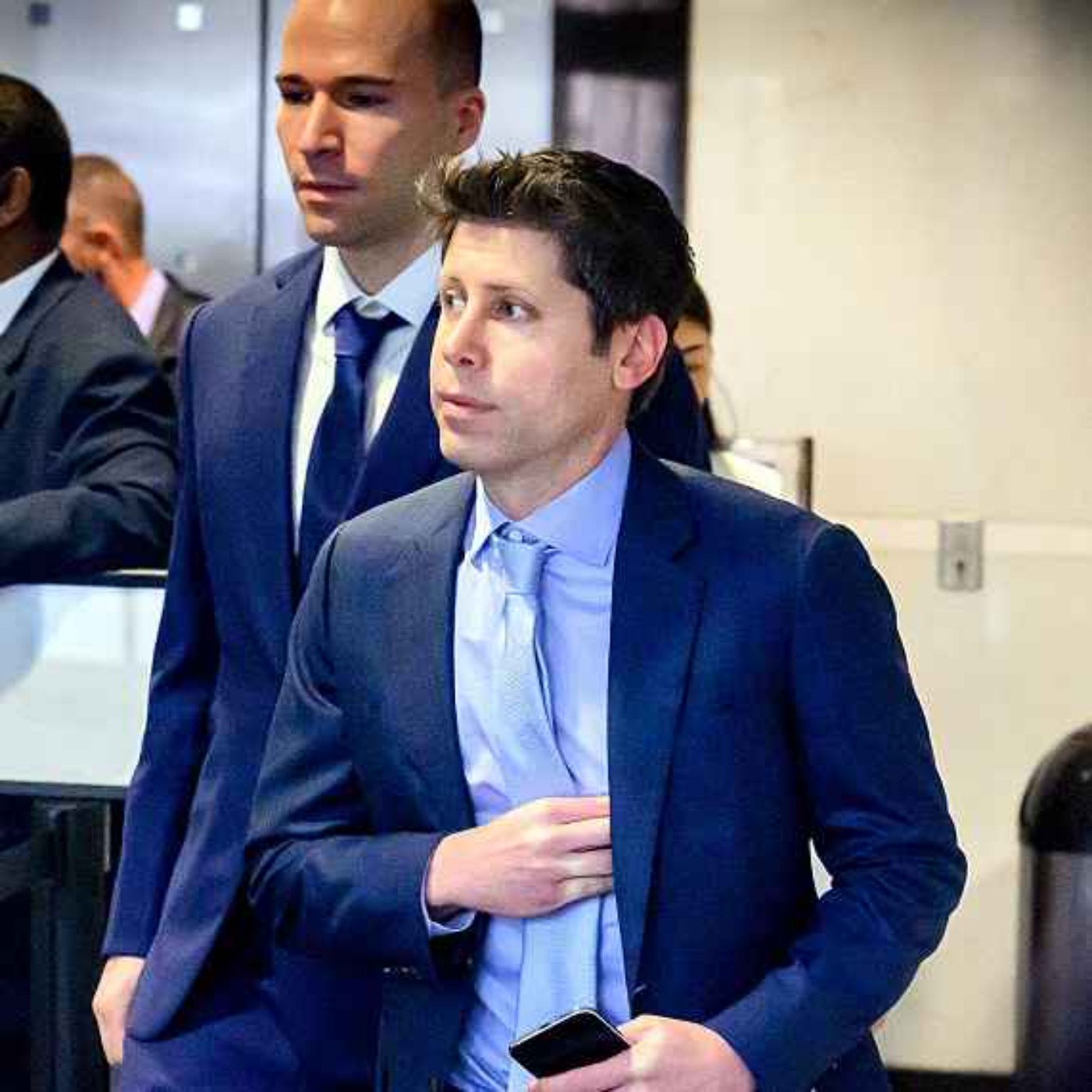
The Times Tech Podcast
The incredible stakes of Elon Musk's trial against OpenAI
00:37:43
Raspberry Pi’s Eben Upton on who really controls technology
Loading summary
Transcript96 lines
- [00:02]
Katie Prescott
ACAST powers the world's best podcasts. Here's a show that we recommend. What if you laughed all through your commute? Or if you heard the funniest story while at the gym? Well, now you can. I'm Jameela Jamil and guests on my new podcast Wrong Turns share their most mortifying and hilarious disaster stories. I'm talking people like Mae Martin, Bob the Drag Queen, Katherine Ryan, Jake Johnson, Margaret Cho, Simon Pegg Penn Bad, and so many more. So listen wherever you get your podcast. Ron Turns where dignity Goes to die ACAST helps creators launch, grow and monetize their podcasts everywhere. Acast.com today's markets move fast. Get the insights you need in 10 minutes with the Barclays Brief, a new podcast from Barclays Investment Bank. Through sharp dialogue and scenario based analysis, our leading experts analyze key market themes each week. So whether you're managing a portfolio or leading a business, the Barclays Brief podcast can help you make smarter decisions today. Stay sharp, stay brief. Find Barclays Brief wherever you get your podcasts.
- [01:26]
Danny Fortson
Hello and welcome to the Times Tech Podcast where every week we unpack how technology is reshaping business, culture and everyday life. I am Danny Fortson out here in the Valley covering one of the most dramatic tech courtroom trials, Elon Musk versus OpenAI or Sam Allman.
- [01:45]
Katie Prescott
And I'm Katie Prescott here in London where there are also wild storms going on, some pretty big political ones and weather ones I should say. But of course the tech drama is over in California where so far we've had two newly revealed billionaires, secret informant allegations, and you know, just some plans to build cities on Mars too. So this week is a reminder that while we are busy looking ahead to the future where AI agents may replace humans and data centers could be built in space and all of that sort of stuff, actually the messy corporate origins of AI continue to haunt us.
- [02:24]
Danny Fortson
Yeah, and the origin of OpenAI is exactly what Elon Musk is questioning in this trial. It's now entered its third and final week in terms of testimony, so a verdict could come as soon as next week. And it's really laid bare the conflicts and rivalries lurking behind OpenAI's rise from little nonprofit to $852 billion company, just
- [02:51]
Katie Prescott
a little startup as we like to refer to it.
- [02:54]
Danny Fortson
Yeah, little
- [02:58]
Katie Prescott
start up OpenAI. But I just want before we get into the trial and there is so much to talk about there, I wanted to tell you about this lunch I had last week in King's Cross and it just made me chuckle because I was just in a bog standard restaurant in King's Cross and on the table next to me was this collection of, I think Americans and French people who were, no joke, talking about building data centers in space.
- [03:22]
Danny Fortson
Well, you know, it's this, these are the times we live in.
- [03:26]
Katie Prescott
It's not a conversation you hear very often in London and obviously it was because King's Cross has become the tech center in London. You've got obviously Google, DeepMind there, all of the British startups like Wave, driverless cars, but also OpenAI and Anthropic as well.
- [03:44]
Danny Fortson
Yeah, but it's just not those conversations in the tech hubs. I was talking to our producer yesterday, Marnie, and she was in a sauna, as one does sauna. Sauna ing, if that is the term
- [03:57]
Katie Prescott
big thing at the moment in the
- [03:59]
Danny Fortson
uk and there was a guy talking to his friend about his Open Claw agent. And Marnie overheard that this AI agent, this Open claw, could sense from his kind of his humans social media activity that he was missing his former person, his ex. And so he claimed that the agent took the liberty of messaging his ex on his behalf.
- [04:28]
Katie Prescott
I can see this as a worry. I mean, I do worry that Norman has access to 20 years of my Gmail.
- [04:33]
Danny Fortson
Your agent?
- [04:34]
Katie Prescott
Yes, my AI agent, I should say, sorry, My Open Floor Norman sits on top of that stuff and, you know, has potential to cause havoc.
- [04:44]
Danny Fortson
We obviously can't verify if that happened, but a post has gone viral on Reddit after someone claimed that their AI agent tool sent messages to their ex without their knowledge. So maybe they just read it, maybe this is the person and then they post about, who knows? So, you know, between your lunch and people kind of like having their, their bots do their bit. Well, not even do their bidding, kind of go behind their back. I mean, these are, these are the times we're living in 2026. It's weird, weird world.
- [05:16]
Katie Prescott
And if you listen to that special episode on AI Agents and when we were talking about the genesis of Norman recently, you'll know that Norman lives on a Raspberry PI computer.
- [05:26]
Danny Fortson
Indeed.
- [05:27]
Katie Prescott
And I'm very excited that we've got Eben Upton, the founder and CEO of Raspberry PI, on the program today to talk about how he started the business and what it looks like in this new era where Raspberry PIs are the place where open floor agents are living. But let's start with the trial. Just remind me how we got here. Like what, what is this mad, crazy trial with all of these billionaires all
- [05:54]
Danny Fortson
about So I can sum it up in a line. This is a dispute effectively about money and power. And the question at the kind of core of it is, is this a case of the most sour of grapes, or did Sam Altman actually steal a charity From Elon Musk? OpenAI was founded in 2015 by Sam Altman, Ilya Sutskever, Greg Brockman, Elon Musk and a couple others as this nonprofit for the benefit of humanity. We're going to build a digital God and we're going to make sure it's good for all of us. Fast forward to two years later. They all kind of come to the realization at the same time, oh, the bigger computer you have, the more powerful the AI becomes. What that meant was they needed mega, mega, mega supercomputers, which cost billions and billions of dollars, something a charity would have a really hard time raising through donations. So they start talking about like, let's reconstitute this into a new thing. And that's when everything broke down. Elon Musk wanted control. He wanted equity control of a new for profit kind of entity that would be like a sidecar to the nonprofit. They said, no, we don't want an AI dictatorship. Blah, blah, blah, blah, blah. It all got very embittered. Elon Musk left. He had been the sole benefactor up to that point. He had given over $20 million in cash and $18 million in rent payments. And so he left and said, you have zero percent chance of succeeding. And then of course, Sam Altman did the unpardonable. He succeeded without Elon Musk. And he raised $175 billion more than any company has ever raised ever to create what is today OpenAI, ChatGPT developer, et cetera, et cetera. And so Musk is basically saying, hey, I donated all this money to a charity I left you, turned it into a for profit, created this giant company that's now one of the most valuable on the planet. That's not fair. You know, basically he wants to destroy OpenAI, send it back to its status as a non profit. They say this is ridiculous. So the trial has really been about that key period, 2017, 2018, when they realized we need lots, we need many billions, we need to reorganize this organization. And that's when everything fell apart.
- [08:25]
Katie Prescott
And there has been just, I mean, the most extraordinary group of people coming through the courtroom and giving evidence. So I think last week we spoke about Elon Musk, but since then, well, who have we? Satya Nadella, the boss of Microsoft. So major Executive, he was there on Monday and then Sam Altman himself. So who have you seen and what have they been saying?
- [08:51]
Danny Fortson
So I think one of the things that has struck me sitting in this court, day in, day out, is it really kind of drove home the stakes of all of this, because it felt like every person who took the stand, and it's not every person, but it's a, it's a stunning amount. Everybody who's taking the stand is a billionaire. It's kind of wild. So it's like Greg Brockman, he's one of the co founders. They're like, your stake is worth about 20 billion. Ilya Sutskever, who's like the star scientist who they prized away from Google, he is worth 7 billion. Satya Nadella is worth over a billion. Brett Taylor, the chairman of the board, he's worth a couple billion. Mira Marathi, also a billionaire.
- [09:37]
Katie Prescott
So she was the former chief technology officer. Is that right?
- [09:40]
Danny Fortson
So when you step back, you're like, oh, my goodness, like all of these people, and a lot of them are very young and have kind of come from nowhere to be, you know, many billionaires over. You're kind of like, oh, wow, these are the stakes. This is why there is a trial. Because whomever is in control of this technology, whomever is on that ground floor, stands to make an extraordinary amount of money and have extraordinary power.
- [10:09]
Katie Prescott
And I guess a lot of the trial hinges on what Elon Musk knew.
- [10:14]
Danny Fortson
Yes.
- [10:15]
Katie Prescott
What he knew and what he didn't know. What's come out about that?
- [10:18]
Danny Fortson
So basically, again, this is all about 2017, 2018. They start talking like, okay, we need to do something else other than a charity if we're going to raise the tens of billions we need. And they start talking. And there are records of this, there are text messages, there are emails, there are even term sheets bandied about around, okay, we're gonna create a new for profit. Here's how it would look. We need to raise at least $10 billion. Blah, blah, blah, blah, blah. And in that, Elon Musk was like, look, I've been the funder of this nonprofit. I feel like I should one, have majority control of the equity and be the CEO. And he's like, don't worry, though. If you're worried about one person being an AI dictator, I, I promise to like, dilute my stake quickly over time. But there was no guarantee. Like, there's nothing in writing that said he had to do that. And on the stand yesterday, Sam Altman was like, you know, Sam Altman ran White Combinator. They funded thousands of startups. He's like, my experience is when there's a startup, and especially when that startup's going well, people aren't going to be like, you know what? I'm good. I'm going to take my hand off the wheel and hand control over to somebody else. Like, that's just not a thing. And especially not in the case of Elon Musk, who apparently had said to people at the time, I'm not doing any companies anymore where I don't control them. But at the end of the day, they just couldn't agree. They didn't want Musk to have total control. And he sent this very now infamous email where he's like, basically, without me, without my support, I give you a 0% chance of success. Not 1%, 0%. He actually said, not 1%, 0% chance of success. And he basically left OpenAI for dead.
- [12:14]
Katie Prescott
And that's when OpenAI turned to Reid Hoffman of LinkedIn and Microsoft and all
- [12:20]
Danny Fortson
of these other people. And they made the point like, you know, after he left, they started raising money. They raised something like 90 million from all these different sources, from all these different donors. When they're still in on nonprofit, which again, is more than Elon Musk gave. And they're like, are you being sued by any of those people? They're like, no. It was very interesting. And I'll say one other point about this Ilya Sutskever. He is like the key man in terms of the science. He was at Google and he's like, they, they loved me at Google. They didn't want me to leave because they, when OpenAI was starting, they're like, we need Ilya Sutskever. He is the key because he is this brilliant person. They're like, right before he resigned to go to OpenAI, this fledgling lab where he was being heavily recruited by Elon Musk, by Sam Altman, by Greg Brockman. They're like, they didn't want me to leave. They offered me an extraordinary amount of money, $6 million a year, which back in 2015, just for a random scientist at Google, DeepMind is like quite a lot of money. He said no. And he. He recounted that email from Elon Musk, the zero percent chance email. And the judge, she hasn't asked many direct questions to anybody testifying, but she asked him that. She's like, so was that true? Like, did you have a zero percent chance of success? Is that how it felt? And he said, he compared the AI that they had developed at the time back in 2018 to an ant. He's like, today. And his delivery was amazing. He's like, today it is a cat. Then it was an ant. And I was like, what? What? Like that's.
- [14:06]
Katie Prescott
That's why Google needed him.
- [14:08]
Danny Fortson
Exactly, exactly. But then I, I did, I did do this quick lookup on Claude, actually anthropic. I was like, compare the neurological power of a cat versus an ant. Ant. And it was actually quite informative. So a cat has 250 million neurons and about 300 million in a cerebral cortex. Blah, blah, blah. An ant has 250,000. So there is a thousand fold difference in just the neurological horsepower between.
- [14:37]
Katie Prescott
He was making a comic, quite profound point.
- [14:39]
Danny Fortson
I am almost certain I don't know him, but I am almost certain that he was like, I'm going to choose these two things because there's that thousand fold difference in neurological power. But anyway, I thought it was. It was quite funny.
- [14:51]
Katie Prescott
The other thing that people are watching from this trial, of course, is what it tells us about the character of Sam Altman. And it comes at a particularly interesting point because it follows on from that very, very lengthy New Yorker piece.
- [15:02]
Danny Fortson
Yeah, yeah.
- [15:04]
Katie Prescott
Where two journalists spent a year profiling Sam Altman, doing lots of interviews about. With him, but also with people around him.
- [15:14]
Danny Fortson
Yeah.
- [15:14]
Katie Prescott
And criticized him really, for lying. Something which he's obviously denied. Has anything come out around that in the trial? And is that something that Elon Musk has tried to play on at all?
- [15:28]
Danny Fortson
Yeah, his. His lawyer, Stephen Mullo, on cross examination yesterday, it was really interesting. He's like, should anyone believe you? Do you tell the truth? Do you always tell the truth? And like, Sam Altman, you're kind of. He's kind of like, I believe I'm a truthful person. He's like, should we believe you? Should the jurors believe you? Do you tell the truth? Like, and then he went through, like a laundry list. He's like, well, Tasha McCauley, she was on the board, she accused you of lying, did she not? Oh, and he was kind of like stumbling and he's like, what about Helen Toner? She accused you of lying. Ilya Suskever, he accused you of lying. Elon Musk, he. And he just like, went down this list as like a slow motion character assassination, which was really, I think, effective in terms of what he was trying to do. But it gets back to that core question of, like, is this sour grapes? Or like, him being deceptive doesn't mean necessarily he stole a charity in a way that is provable in a court of law from Elon Musk, you know, so, but it was like, it was quite uncomfortable to watch Sam Altman up in the witness box being like, like the first 20 minutes of questioning was just like going through a list of people who he's worked with closely who all accused him of some form of deception. Sam Altman and OpenAI, of course, strongly dispute these claims. And Sam Altman has also disputed the allegations in that article in the New Yorker.
- [17:01]
Katie Prescott
So the biggest question though is when will we get the verdict?
- [17:05]
Danny Fortson
Maybe next week. Today as we speak is the last day of evidence and then they're going to start deliberations, I believe either tomorrow, Thursday, recording Wednesday or Monday. And again, very important. The, the jury is advisory. They're going to give their verdict, but it is up to the judge to decide. So we'll see. But I think, you know, Musk wants them to basically unwind the for profit, go back to a for profit entity, give up $150 billion and remove SAM Altman and Brockman from the board. In other words, he wants to destroy this company. Keep in mind, three years ago he founded a direct competitor in Xai.
- [17:47]
Katie Prescott
It's just the most astonishing case and it's like just one of the. We've said this before a thousand times, but it is an extraordinary to see under the bonnet as well of all of these businesses and to see these emails and to see these private diaries and hear the conversations. Okay, well, should we move on from what the billionaires are doing in court in San Francisco, as fascinating as it is? And I guess you're going to be on tenterhooks now, right, for that verdict?
- [18:14]
Danny Fortson
Yes, indeed. Yes indeed.
- [18:15]
Katie Prescott
A sort of Danny, get to court now moment.
- [18:19]
Danny Fortson
Yeah, they did say we don't know when the verdict will come, but typically you'll have half an hour, you'll have 30 minutes to basically and they're going to send out like a email. Klaxon, all caps, basically. Verdict in. Get here as quickly as possible.
- [18:36]
Katie Prescott
Okay, so don't leave your phone now
- [18:38]
Danny Fortson
exactly for a week or so.
- [18:40]
Katie Prescott
Let's move on to our guest today who is Eben Upton, the chief executive and founder of Raspberry PI. And complete move away from what you've been looking at in court. Eben is a very, very Cambridge British tech entrepreneur and his business, Raspberry PI makes these very cheap, sometimes as cheap as £10, very, very small, sort of almost credit card sized computers. And it's a company that he started back in 2008 when he was director of studies at a Cambridge college, desperately trying to get more people to apply to do computer science. You don't have to try very hard now. It's like one of the most popular courses. But anyway, different era. And it's having a bit of a moment right now because people like me are using Raspberry PIs to house their agents because they're cheap and they. And they don't use huge amounts of energy. Raspberry PI actually listed on the London stock market a couple of years ago, rare for a tech business, and it's now worth about £1.4 billion. Welcome, Eben. Thanks very much for joining us.
- [19:48]
Danny Fortson
Oh, thank you for having me, Eben. So I'm way out here on the west coast. I've known the name Raspberry PI and kind of vaguely what it is, but give me the origin story.
- [20:02]
Eben Upton
I'm a child of the 1980s and I learned to program on a BBC microcomputer, which was this incredible idea, actually, that your state broadcaster would have a microcomputer, very 1980s thing. And there was one in the corner of my classroom and later on there was one in the corner of my bedroom. And there was never a day when I decided I was going to become an engineer. But you kind of just got lured into it by the kind of ambient programmability of your environment. And I arrived in Cambridge 30 years ago this year to study physics and computer science. And everybody I was surrounded with on the computer science course had had exactly the same introduction to computing as me. Right. Because we historically haven't been particularly good at formally teaching computer science to children. I think we're better at, interestingly, we're much better at it now than we ever were before. We're much better at it now over the last 10 years than we were back in the 1980s. So the universities and industry had this amazing supply of people who'd kind of trained themselves to be computer programmers. I've been programming in computers since I was 8 years old, so I've been programming a computer for a decade by the time I arrived at university. And then what happened during the 1990s was those machines kind of disappeared, mostly disappeared. And the PC and the Mac are kind of the only surviving examples of real general purpose computers in people's lives. And they're not particularly programmable. You can choose to program them, but they don't have that architecture where you turn them on and they go beep and they give you a programming prompt. So you've kind of gone you went into this world where young people were much less likely to be exposed to programmable computers. That led to a collapse in the number of applicants to study computing at university. It was also leading to a decline in the number of slightly older young people available to go into industry. So if I were to go out into the engine, to the engineering floor here at Raspberry PI, you'd see there's kind of a gap. There aren't a lot of 30 something year olds, there are quite a lot of people. Once you get into the early 40s, you start to encounter the people who had my kind of experience in computing. But there was certainly a window of time where people weren't becoming engineers and really Raspberry PI. We started the Raspberry PI Foundation in 2008 and the goal was to provide people with a piece of programmable hardware which was affordable. So affordable, programmable, robust and fun. And we ended up making this little Linux computer. We launched it in 2012. So then we go on this kind of strange journey through actually into education in a very indirect way, so into education via hobbyists. So we sell a bunch of units 2012, mostly to adults who already know about computing, but then gradually through diffusing it into that community, it then starts to leak out and it leaks out into education. And we've had some, you know, we've had, I think some good impact in education, but then also has leaked out into, leaked out into industry and then has really led to the commercial side of Raspberry PI becoming a. More of an industrial, an industrial electronics company.
- [23:08]
Katie Prescott
And for people who don't know what they look like, they range from a sort of small credit card circuit board style Raspberry PI. Is that right? For sort of 40, 50 quid?
- [23:19]
Eben Upton
Yes. These little cheapest ones, about 10 quid. But yeah, these little sorts of things that are about the size of a credit card. And I mean, obviously because the BBC Micro is a, all of these 1980s computers that we were inspired by have that same form factor. It's a computer inside a keyboard. And so once we, when we were, in 2012, when we were two guys in the shed, all we could make was a little pcb. And so you would plug a mouse and a keyboard and a display into it. And then as the organization became a bit more sophisticated, we grew the ability to do industrial design, injection molding. And we did. From 2020 onwards we've been offering something ever so slightly before Apple and about a week before Apple launched the first ARM based Mac products, we launched this product that we called Raspberry PI 400, the first generation of a Raspberry PI kind of built into a keyboard.
- [24:15]
Danny Fortson
How many are out in the wild now?
- [24:17]
Eben Upton
Roughly, it's roughly 75 million Raspberry PI. 75 million. And it ends up being, after the PC and the Mac, it ends up being the third most popular general purpose computing architecture in the world.
- [24:33]
Danny Fortson
But you are having this moment, this agent moment. Can you talk about how you. Because but as we talked about, I've been in this courtroom in California the last two and a half weeks and it's all about kind of the future of humanity, what AI is doing, what it's gonna do, and all these like really big weighty kind of subjects. How do you see this moment from where you sit?
- [24:58]
Eben Upton
I think we've had a surprise, haven't we? We're about 15ish years out of the last AI winter. So AI has got, goes through these, went through these winters where people became very demoralized. People start in the 1950s thinking it's going to be fundamentally fairly trivial to build computers that can at least do tasks like look at a scene and describe the objects. And people go through these sort of periods of great enthusiasm about different models of how AI is going to work. And we're about 15 years into this current period where it's become apparent that if you bring together some fairly old ideas about trying to build neural like structures, structures which are inspired by the structures of the brain with very large amounts of computing power and critically huge amounts of training data, that you can build systems that do really complicated things, slightly worryingly, systems that do very complicated things, whose creators don't fully understand, don't understand how they do those things much better than we really understand how our brains. So you have this kind of partial understanding of how these systems work. So we're kind of in this interesting era, probably went through 10 years where this was mostly a story for kind of general purpose users of AI, was mostly a story about image processing. And then suddenly in 2022, you emerge into this world where the LLM line of thinking, the large language model line of thinking, suddenly bears fruit with tools which feel like they do things that general users can get value from. So we've kind of come through this kind of chatbot era, and now we're into this agentic era, this idea that you can then take some of those capabilities that have grown up, give them access to your, give them an ability to iterate, give them access to other things, to your local environment, give them access to your data. Tell yourself a story of some about security. I think people are trying to find out. People are really at the moment trying to figure out what story they want to tell themselves about how comfortable they are with how much of your data you let Norman see and what the opportunities are, what the functional opportunities are, but also what the security threats are from this.
- [27:21]
Katie Prescott
And when did you first see the impact on sales at Raspberry PI? Because a lot of people are using Raspberry PIs as a cheaper way of running agents, not only for buying the product, but also because they use far less energy than say a Mac, which is the other. A Mac Mini, which is the other thing that people are using to run open.
- [27:43]
Eben Upton
Yeah, I think honestly I'm not sure we have seen an impact on. I'm not sure we have seen an impact on sales. There are clearly millions of instances of open source CLAW running on Raspberry PI hardware. And I'm sure that we've sold incrementally tens of thousands, at least tens of thousands of Raspberry PIs to people. So people sort of to kind of recap all of these tools. You can run them on your PC. They're just software. But one of the stories people tell themselves about security, one of the arguments that people make is that these are sufficiently powerful autonomous systems that you benefit from putting them on some dedicated piece of hardware. And obviously the Mac Mini and the Raspberry PI are the two classic pieces of hardware that people have chosen to run CLAW software on. Now I'm sure we've sold tens of thousands of new units, but I think what you have to remember is almost everybody who's inclined to run OpenClaw already owns a Raspberry PI. And so I think many, many, many of those units are running on Raspberry PI because it's not especially demanding piece of software. So it's not like you need to go absolutely to the bleeding edge of our product line in order to be able to run one of the CLAW platforms.
- [28:47]
Danny Fortson
You talk about coding going back to when you were 8 years old. How do you think about this moment in terms of like just you. You kind of went over that trajectory, but. And we're in this moment where moving from these kind of like really amazing answer engines to these like action engines, these things that can go out into the world and do stuff. Do you feel like you're living in the sci fi dream of. Of young Evan or you know, good, bad, indifferent? Are we sure we be completely freaking out?
- [29:15]
Eben Upton
Like some people are I don't understand why people are freaking out, honestly. I mean, maybe I'm just slow, right? But I don't understand. And there is a say more about
- [29:26]
Danny Fortson
this because this is a big. Because like I feel like out here it's marketing by fear. It's like white collar bloodbath. We're all going to be turned into paper clips. We're going to be enslaved by the mission, this intelligence that is going to be so much all of that stuff.
- [29:44]
Eben Upton
There's this, we play this game of what's the punchline? And you know, maybe these tools aren't any good for anything apart from writing stories, stories about how amazing they are. That's the main thing people use AI tools for is to try to move stocks around. Matt Levine has a one of them. Bloomberg has this wonderful term business negging that he characterizes Sam Altman in particular his style of marketing as being business nagging. If you say to somebody, my company makes amazing technology, people think, yeah, well everyone, I'm not going to invest. All businessmen say that. But if you say my technology, I'm really worried about it. It might kill everybody on earth. People think, wow, okay, that must be incredible technology. I'll definitely invest in that. So obviously, as you say, there's kind of a, there's kind of a marketing through fear element here which is either conscious or unconscious. But I think for a lot of the people who are advancing these, I think they're very sincerely held views and I think people are caught up in this kind of contagion.
- [30:44]
Katie Prescott
So people should still learn to code, in your opinion.
- [30:48]
Eben Upton
People should learn to, well, people should learn to program computers. I've always been nervous. I've always had this personal nervousness about the use of the word code and I haven't really quite understood or been able to articulate properly why I was nervous about using the word code for this thing that we hope that young people will get excited about. I think that it boils down to the idea that code privileges the typing, right? People say, wow, these LLM platforms, these agentic platforms, they're great at coding, they're okay at coding, but yeah, it is incredible that they can code. But what people forget is that that's actually a very small amount of the work. When people say it's going to put all the computer programmers out of. Well, they say it'll put all the coders out of work. Coding sitting down and typing in computer programs is a very small part of the day to day life of a software engineer of a computer programmer. And so this kind of puts some limit. If you made the coding bit, the waggling your fingers and typing and hitting keys bit, infinitely cheap. If you made. Which the tools don't do, but if. Suppose they did do that, it still wouldn't get rid of the actual job of a computer programmer. Right? And generally sort of, you can argue that the tools might become sophisticated enough to eat all of the other bits of being a computer programmer, but those at that point are basically AGI. That replacing all of the computer programmer basically requires you to have built kind of an AGI or a human or
- [32:25]
Katie Prescott
superhuman intelligence, just to end. I mean, we haven't spoken yet about the Raspberry PI Foundation. And the foundation is to encourage people, I guess, like the business, to use computing and to provide computers for the developing world.
- [32:40]
Eben Upton
That's it. So to get young people all over the world excited about computing and about electronics, Raspberry PI go back to the start. The diagnosis of the problem was that we had was there was a missing physical object. And the interesting thing is that was the dream at first. When Liz and I, of course, other founders were sat down at the start of this, we felt, look, we'll just make this object. We don't need to make any money selling it. If we just make the object and get it in the hands of make a thousand and get them in the hands of the right thousand kids, then mission accomplished, get another 100 applicants a year for Cambridge. It's that parochial. What's fascinating about Raspberry PI is, of course, partly because of the volumes and partly because we found a way to make it and eke out a little profit in. In each unit, we were able to fund the foundation's work. And the foundation has then gone on to do. It's a more traditional educational charity. It trains teachers, it runs after school clubs, it creates teacher training material, it works with governments on curriculum reform. And the money that it raised and we'd given, I think we'd returned about 50 million. So on the order of $50 million. £50 million. $50 million to the foundation in dividends before the IPO. They then raised another 180 million. They've been extremely successful at leveraging that flow of money from us with philanthropic money, with individual and corporate philanthropy. And this is now an organization, if you think we were thinking, how do we get another hundred applicants a year to computer science at Cambridge? This is now an organization that can do that work, but can do it at scale all around Britain and increasingly does enormous amounts of work in India does enormous amounts of work in the United States, does enormous amounts of work in sub Saharan Africa. So it's really taking those lessons that they prototyped in that first 10 or 15 years of their existence and then deploying them globally at scale. And we still do back to the AI point, we believe this is incredibly important. There is nothing about these tools that frees people from the obligation to be able to think. And that's what really that's why I'm that's why I want my children to learn to program computers, is it teaches you to think. You can't effectively program a computer in 6502 assembly language, or C or Python or by prompting Claude code you can't effectively program. Those are all different ways of programming a computer. And you can't do that effectively if you can't think.
- [35:21]
Katie Prescott
Nothing tests my patience quite like sitting on hold listening to the same four bars of music on repeat. It turns out all that time adds up. The average person spends over 40 days listening to that dreaded hold music.
- [35:35]
Danny Fortson
40 days.
- [35:36]
Katie Prescott
And this episode is sponsored by Parloa, the AI platform built to make that a third thing of the past. Paarloa's AI agents are available 24 hours a day, seven days a week, fluent in any language and smart enough to remember every customer across every interaction because no one should have to explain themselves twice.
- [35:56]
Danny Fortson
From payment processing to roadside assistance, flight rebookings to appointment scheduling, Parloa delivers the kind of customer experience that turns a one time buyer into a customer for life.
- [36:08]
Katie Prescott
See Paloa's AI agents in action at Paarloa.com that's P-A-R-L-O A.com
- [36:19]
Danny Fortson
from globalization to innovation, sustainability to market volatility, there's always more than one side to a story. Explore different perspectives on today's most important business and economic issues with the Flipside Podcast from Barclays Investment Bank. Hear two research analysts in a lively debate and get insights from every angle to further inform your view. Listen to the Flip side on your favorite platform.
- [36:46]
Katie Prescott
Acast powers the world's best podcasts. Here's a show that we recommend.
- [36:54]
Brooke Devard
Hello, hello, it's Brooke Devard from Naked Beauty. Join me each week for unfiltered discussion about beauty trends, self care, journeys, wellness tips, and the products we absolutely love and cannot get enough of. If you are a skincare obsessive and you spend 20 plus minutes on your skincare routine, this podcast is for you. Or if you're a newbie at the beginning of your skincare journey, you'll love this podcast as well, because we go so much deeper than beauty. I talk to incredible and inspiring people from across industries about their relationship with beauty. You'll also hear from skincare experts. We break down lots of myths in the beauty industry. If this sounds like your thing, search for naked beauty on your podcast app and listen along. I hope you'll join us.
- [37:44]
Katie Prescott
So it's interesting, don't you think, to hear from someone who is not as, yeah, go AI. It's going to change the world.
- [37:51]
Danny Fortson
Yeah, yeah, he's not AI pilled, which is. You know what, Katie? This is why we have this podcast. Because most tech podcasts, there's just people in the middle of Silicon Valley. Everybody's reading from the same hymn sheet. And so it's nice when you have somebody. I think there is a real value in being far away and being in a different environment and seeing these from the outside and hearing from those perspectives of like, yeah, I've been doing technology for my whole life and this is a really amazing tool. The end.
- [38:31]
Katie Prescott
It was great hearing him talk about those cycles and looking at AI from the 1950s as someone who not only has worked in tech his whole life, but also been an academic. So I've seen those cycles.
- [38:44]
Danny Fortson
And you do get a sense of hearing these guys, especially in court. Like, you know, they all love science fiction. Growing up, they were all computer nerds growing up, up. And you do feel like they are kind of living out their childhood fantasies and really leaning into it in a way that you're like, how much of this is actually real? Like, are we approaching the singularity? Are we all going to be enslaved by the machines? Or as he says, like, no, these are just really powerful tools. And this is, you know, kind of part of the evolution of technology. I just think it's, it's, it's great to hear somebody who's a bit more got his feet on the ground. And again, nobody knows what the actual truth will be. But I think it's. It was, it was great to hear from him.
- [39:25]
Katie Prescott
It's also really interesting to hear about Raspberry PI. It is such a quintessentially British, very quirky company, I always think. I mean, how fascinating to have the foundation as such an integral part of it, to have a hardware computer company that's making computers in South Wales. And it's such an interesting concept to be making these very cheap, easy to use computers with an educational mission as well. I hadn't realized it was the third computing company in the world.
- [39:59]
Danny Fortson
No, it's amazing.
- [40:00]
Katie Prescott
We must, I guess go back and listen to exactly what he said there. But yeah, that was fascinating.
- [40:05]
Danny Fortson
Yeah. So anyway, great. What an episode.
- [40:10]
Katie Prescott
Covered a lot. As always. There's a lot to cover.
- [40:12]
Danny Fortson
Indeed.
- [40:13]
Katie Prescott
Well, I don't leave your phone for a moment. 30 minutes window.
- [40:20]
Danny Fortson
I have to wait for the all caps email from the court. Get, you know, drop everything, it's.
- [40:26]
Katie Prescott
Drop everything into that car. Off you go.
- [40:29]
Danny Fortson
Exactly, exactly.
- [40:32]
Katie Prescott
Look forward to hearing all about it.
- [40:34]
Danny Fortson
Yeah. So who knows, this time next week we could have a verdict. I'm not sure how long it'll take, but obviously we will bring you all of the details, all the sordid, interesting details of this really bizarre case. But that is it, I think for this week's episode. If you are enjoying the show, drop us a line please@techpodimes.co.uk that is techpodimes.co.uk
- [41:02]
Katie Prescott
and we would love to hear your thoughts, thoughts on today's discussion. What's been going on in court? Have you got a raspberry PI? Quirky British businesses, whatever it is.
- [41:14]
Danny Fortson
Exactly. Until then, see you next week.
- [41:17]
Katie Prescott
See you next week. Bye bye. Acast Powers the world's best podcasts. Here's a show that we recommend.
- [41:35]
Brooke Devard
Hello. Hello, it's Brooke Devard from Naked Beauty. Join me each week for unfiltered discussion about beauty trends, self care, journeys, wellness tips and the products we absolutely love and cannot get enough of. If you are a skincare obsessive and you spend 20 plus minutes on your skincare routine, this podcast is for you. Or if you're a newbie at the beginning of your skincare journey, you'll love this podcast as well. Because we go through so much deeper than beauty. I talk to incredible and inspiring people from across industries about their relationship with beauty. You'll also hear from skincare experts. We break down lots of myths in the beauty industry. If this sounds like your thing, search for Naked Beauty on your podcast app and listen along. I hope you'll join us.
- [42:18]
Katie Prescott
Today's markets move fast. Get the insights you need in 10 minutes with the Barclays Brief, a new podcast from Barclays Investment bank. Through Sharp dialogue and scenario based analysis, our leading experts analyze key market themes each week. So whether you're managing a portfolio or leading a business, the Barclays Brief podcast can help you make smarter decisions today. Stay sharp, stay brief. Find Barclays Brief wherever you get your podcasts.