← The Times Tech Podcast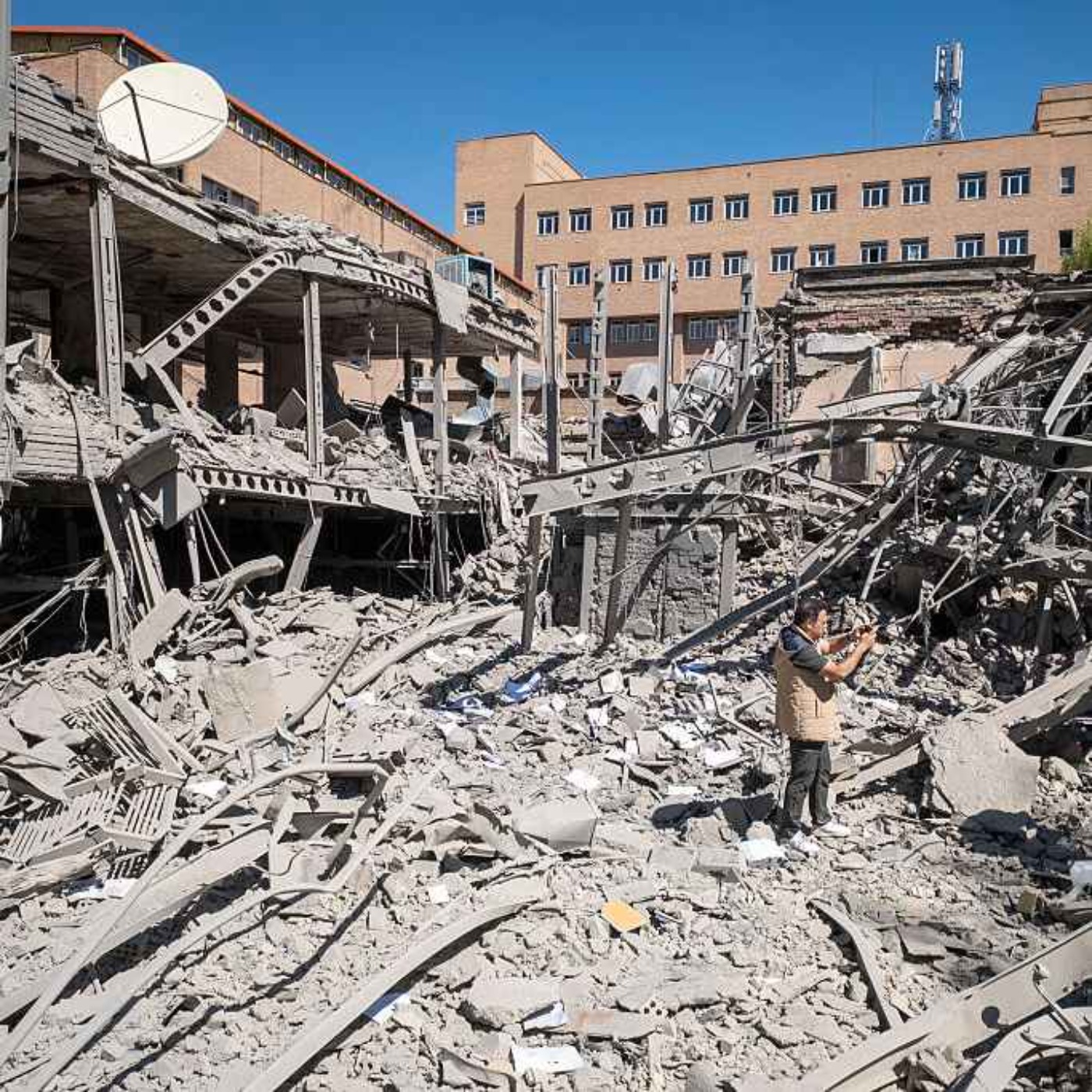
The Times Tech Podcast
Why data centres became a target in the Iran war
00:40:39
Envision CEO Lei Zhang on how data centres are reshaping energy, infrastructure and conflict
Loading summary
Transcript107 lines
- [00:00]
Farnoosh Tarabi
Hi, this is Farnoosh Tarabi from so Money with Farnoosh Tarabi. And today I want to talk to you about Boost Mobile. Quick Money tip Stop paying a carrier tax. If your phone bill feels trapped in a pricey plan, this is your sign to unlock savings. Boost Mobile helps you reset your spending. With the $25 Unlimited Forever plan, you can bring your own phone, pay $25 and get unlimited wireless forever. And that simple switch can unlock up to $600 in savings a year. That's money you could put towards debt investing or something that actually brings you joy. Those savings are based on average annual single line payment of AT&T Verizon and T Mobile customers, compared to 12 months on the Boost Mobile Unlimited plan as of January 2026. For full offer details, visit boostmobile.com
- [00:52]
ServiceNow Sponsor Voice
this episode of the Times Tech Podcast is sponsored by ServiceNow.
- [00:56]
Katie Prescott
Danny, one thing we keep hearing from business leaders right now is AI. Sounds great, but how do you actually make it work inside a company?
- [01:04]
ServiceNow Sponsor Voice
Exactly. Because most organizations aren't neat, shiny systems. They're layers of software, legacy tech and teams, all doing things slightly differently.
- [01:13]
Katie Prescott
ServiceNow sits across all that, acting as a control tower for making work move seamlessly through the organization, connecting people, systems,
- [01:21]
ServiceNow Sponsor Voice
data and increasingly AI agents so that things don't happen in silos.
- [01:26]
Katie Prescott
Learn how ServiceNow puts AI to work for people@servicenow.com. Hello and welcome to the Times Tech Podcast, where each week we unpack how technology is reshaping business culture and everyday life. I'm Katie Prescott, covering all things tech here in the City of London. Now, Danny isn't here this week, he's AWOL somewhere. But stepping in is another brilliant member of the tech team, my colleague Mark Selman, who's tech correspondent for the Times. Hi, Mark.
- [02:02]
Mark Selman
Hello and good to be back.
- [02:03]
Katie Prescott
Very good to have you. Now listen, when you took your job as tech correspondent at the Times, did you think you'd also be covering real estate and energy?
- [02:13]
Mark Selman
No. But then again, I don't think I really knew what I was letting myself in for.
- [02:17]
Katie Prescott
I think you did. It was pre chatgpt, wasn't it? Well, today we're going to be talking all things real estate and energy. And by that I mean data centers, the large warehouses that contain the physical infrastructure needed to power AI.
- [02:32]
Mark Selman
Yes, but they're a bit more than just that. They're very boring looking, but very, very important. In fact, some people are even calling them the new frontier of warfare. And that's because over the last few weeks, Iran has been bombing US owned data centers in the Persian Gulf, damaging physical infrastructure and, and disrupting cloud services across the region.
- [03:00]
Katie Prescott
They really have become a new front line, but they're so important, and this is an extraordinary statistic, a big moment here in the UK this week when the combined value of new data centers approved last year overtook office buildings.
- [03:16]
Mark Selman
Yeah, and if you think about that, that means that we're no longer building spaces for people to work in, but, but instead building homes for the silicon that could be replacing them.
- [03:29]
Katie Prescott
As you said, Mark, they are, you know, incredibly boring to look at, but they are the heartbeat powering the AI revolution. But there is this massive question about how on earth we're going to find all the energy needed to power them. And our guest today thinks he might have the answer. He's the boss of Chinese conglomerate Envision Laizang. It's a green energy business which operates all around the world, including here in the uk. And he'll be telling us about robots breeding silicon civilizations and what we can do if those AI robots decide that they want all the world's energy for themselves.
- [04:05]
Mark Selman
So as the demand for AI and data centers surges this week we're looking at how data centers are reshaping energy infrastructure and of course, conflict.
- [04:18]
Katie Prescott
So let's start with what's been going on in Iran. So these huge warehouses which have become as vital to security and everyday life as electricity grids and ports and oil pipelines are, because of their very nature being these large boring sheds, very vulnerable to attack. And as we record this, a ceasefire has been declared in Iran. For how long, I don't know. We're recording this on Wednesday afternoon, so we'll see what happens. But at the height of the war, certainly a new front line was the data center. And we've seen Iran bombing US owned data centers in the Persian Gulf. Iranian missiles have struck Amazon Web Services data centers in Bahrain and an Oracle data center as well in Dubai. And Iran's also threatened tech companies Nvidia and Apple.
- [05:07]
Mark Selman
So obviously, as the Americans were threatening to hit civilian infrastructure, Iran's military had at their disposal targets across the Middle East. And they threatened to retaliate with strikes on the US Stargate data center in the UAE. Now, Stargate is essentially a vehicle from OpenAI to secure massive data center capacity for it as it goes into the future. And it sort of predicts that they're going to need so much more of it to fuel the demands of AI. So they've done this deal with. Well, it's a complicated story that's gone through lots of twists and turns, but SoftBank and Oracle are their partners in it and essentially that they're trying to secure this capacity for the future.
- [05:58]
Katie Prescott
And this data center in the uae, part of the Stargate program was their first international outpost.
- [06:04]
Mark Selman
That's right.
- [06:04]
Katie Prescott
And so, I mean, it's not a massive surprise, is it, that Iran has targeted data centers. It just shows, though, how critical they have become.
- [06:14]
Mark Selman
Yeah. And I think that, you know, when you look at the interweaving nature of large tech companies and the government, we've obviously seen Palantir Anthropic and the way it's intertwined or not with the Pentagon, these huge companies have now, you know, they've opened themselves up to government contracts and they become targets.
- [06:37]
Katie Prescott
Yeah, Huge symbols of American power. And Iran has said that civilian hardware and software providers are legitimate targets. And particularly they pin the blame on them for providing the tech that's enabled some of these attacks on Iran. I think another important point though here is just how much money is tied up in the Gulf. So I wrote my column last week actually on this just because we have Britain and the US actually become increasingly dependent on on the Gulf for funding of tech businesses. And that's particularly as the relationship with China has crumbled over the last decade. And it's been really striking that since the war started with Iran, actually those funds have pressed pause on all of their plans of giving money into particularly the British tech world. And so it's not just, you know, the impact that it has on the data centers, but it's also across that pipeline of funding.
- [07:35]
Mark Selman
Yeah, it was obviously seen as a safe source of funds, given the huge capacity of the sovereign wealth funds, but also the desire of those states to diversify away from their fossil fuels.
- [07:51]
Katie Prescott
I did a back of a fag packet calculation that the top five funds have got about $5 trillion of assets under management.
- [07:59]
Mark Selman
Yeah, it wasn't a surprise to see Sam Altman fly out there very, very soon after he wanted to build up his data center cap. And he's not the only one to have gone there. And it sort of makes sense, doesn't it? You know, you've got huge areas of land that don't have a lot of planning permission. There's not a lot of greenbelt there and supposedly limitless supplies of energy. But that's obviously been put on a different perspective the last few weeks.
- [08:25]
Katie Prescott
And the impact of bombing a data center, I mean, we should probably talk about that. It's pretty immediate, isn't it? So Iran Hit an Amazon Web Services data center in the uae and that's all banking sites, payments, consumer services, all hit. And we've had similar things. Well, even in the uk, I'm not talking about bombings, but when data centers go down, it's quite a sudden shock.
- [08:47]
Mark Selman
Yeah. And I think that you file it under that column that says, oh, it should just work and I don't have to think about it. But when it does go wrong, there's lots of finger pointing and when you pull away the layers, it shows that we're basically reliant on Amazon.
- [09:02]
Katie Prescott
Yeah, yeah. Oh my goodness. Yeah, absolutely. To about like 90%, I think, is Amazon and Microsoft.
- [09:08]
Mark Selman
Yeah. And when that goes wrong, we hear the whales of protest here saying we're too dependent on American tech firms and we don't have our own sovereignty. And again, this all feeds back to the competition element where people are concerned, that they have the stranglehold over us. But I've not seen the answer, which
- [09:25]
Katie Prescott
they do, basically the fact there. But it's also why in the UK they designated data centers as critical national infrastructure. Well, I think the plan was launched a couple of years ago and it's to try and make sure that this doesn't happen. If you ever speak to data center experts, they're obsessed with uptime. That is the absolutely most crucial thing in a data center. If you want to buy some data center space for me, it needs to be, as you say, operational all the time. You can't have the energy switching off. And that's partly why they've been designated cni. So if in the event of a blackout, for example, they have got access to the UK's backup systems in a way that hospitals do. So it's quite interesting. We've now realized that they should be on a par.
- [10:12]
Mark Selman
You've been having the conversation, so I
- [10:14]
Katie Prescott
don't have to thank you up time. It's really important.
- [10:19]
Mark Selman
I think that CNI designation, by the way, was also part of the government being able to say, you guys really need to have cybersecurity at the top of your list because if they're not being bombed, they are being attacked by hackers, either state sponsored or otherwise. So that was really part of the thinking there, that up our cyber defenses. Refer to our previous conversation. When these things go down, real world impact, real economic impact, real pain, and everyone wants to know what's happened and who's to blame.
- [10:49]
Katie Prescott
I'm glad you mentioned that because I wanted to ask you about a story you did this week on the subject of Cyber attacks, which is about vulnerabilities in UK households. So, I mean, talk about showing how important tech has become geopolitically. This is. Was it Russians?
- [11:04]
Mark Selman
Well, gchq, the wing of GCHQ that deals with cyber, which is a national cyber security center. And they said they'd uncovered a Russian campaign. This is a Russian state sponsored campaign, part of the military intelligence units that have been since 2014, spotting that there are routers. Now, this is the sort of rectangular black boxes that sit in all our houses and route our traffic from bt. Yeah, there are lots of these that are sitting in homes and offices across the world and in the uk, they're old and the Russian military know this and they go into it remotely and they can reroute the traffic to websites that they run that look like genuine websites, but actually are collecting your personal data and password so that they can have a look at your email.
- [11:52]
Katie Prescott
Wow. Okay. So you would go in and say, think, believe you're logging into Microsoft Office
- [11:57]
Mark Selman
at a time, Microsoft Outlook in particular, they had fake Outlook addresses and they were collecting people's email.
- [12:04]
Katie Prescott
Just members of the public.
- [12:06]
Mark Selman
We don't really know exactly. But the NCSC was saying that they cast the net far and wide so that they then were getting people of interest within that bulk data collection. So thousands and thousands of businesses and individuals involved across the world. But I think the warning to the UK was to anyone that has essentially a TP link, an old TP link router, go and have a look at it, maybe replace it if you haven't updated the software on it.
- [12:37]
Katie Prescott
Wow, fascinating stuff. Let's go back to data centres and the physical sheds here in the uk, because there was that extraordinary stat.
- [12:46]
Mark Selman
Yeah. So this is really for first time in British history, the value of new data centres being approved for planning permission, not actually being built, but approved has overtaken office buildings.
- [12:58]
Katie Prescott
So that last year the value of all data centres granted detailed planning permission hit nearly £9 billion, which is up 58% year on year. The value of offices granted permission fell 40% to six and a half billion pounds.
- [13:13]
Mark Selman
I guess that's not surprising given the sort of huge political demand to build data centers. But also they're quite good business in that sense.
- [13:24]
Katie Prescott
Yeah. And it feels like a gold rush at the moment. I mean, the number of startups that are crossing my desk, I mean, you probably have exactly the same people who have raised money to build data centers here in the uk because the demand for them feels infinite. I interviewed the boss of Oracle a couple of weeks ago and questions with Oracle about the amount of debt they're taking on to build data centers. And I put that to him and he looked at me like I was completely crazy and said, yeah, but the demand for them is such that this is not a stupid bet by us. He would say that, wouldn't he? But it does feel like the big issue we're facing here in the UK is not the demand, far from it. It's actually we don't have the space and connecting them to the grid is a problem. So it's all very well, people being granted permission. The reality could be quite different.
- [14:12]
Mark Selman
Well, I think the reality is different. When you look at the figures, the actual value of build going on is radically different. I think it's the. The value of the data center starts is about 882 million, but the actual value of office development starts is 8.5 billion. So this is a glimpse into the future as the government wants it to happen, which is we need to build more data centers. We need AI data centers closer to our population, that is here rather than in the Middle east or in America, both for operational and sovereignty reasons. But I think this is the reality is it's a lot harder to build them.
- [14:55]
Katie Prescott
And the National Grid's been pushing back on this a lot. I've heard the boss say in the past, with the rise of demand for data centers, plus the electrification of cars is just a kind of perfect storm on a creaking infrastructure, I find there's
- [15:10]
Mark Selman
a bit of a disconnect. So you have this drive from government, political leaders, business leaders saying, AI is coming, it's important for our economy, people want it, there's massive demand for it. And then you look at public opinion about AI, very suspicious, very cautious, potentially oppositional. And you have those on the political left and far right saying, sorry, we're not convinced about this. And you have the Green Party, you know, activating against it, campaigning against them. And I think that, from what I see is that when local communities have an imposition from the outside, whether it's a data center or any other building or an incinerator or whatever it is, and it's imposed from the outside and what's happening, obviously central government is taking the decision making for these data centers away from local councils, so that's being centralized. So you're having this data center that's being plonked. Fair. Firstly, they're ugly, they're big, they don't provide jobs really. Well, they provide some jobs. But I think that, you know, the economic argument that's obviously being pushed is that it's a sort of productivity tool. But in terms of the actual jobs, as you say, yeah, you know, construct it. There's a few hundred jobs, but ongoing,
- [16:35]
Katie Prescott
like the Nissan car factory in Sunderland where you create a supply chain and an economy around a factory with a data center.
- [16:42]
Mark Selman
You know, you have the decision taken away from local people. You have an imposition of something that they don't necessarily benefit from locally, but obviously could see negative impacts from, whether that's environmental or. I mean, I think there's a lot more so in the us, where people actually see their impact on their water usage or electricity bills. But here I think you start to see the rumblings of a backlash. Activists are getting involved. There's a big one in Buckinghamshire that the decision was legally challenged successfully, so they have to go again on it. So you can see it coming. And I think when you look at the States, you've got US states saying no moratorium, you've got activists like Bernie Sanders, Alexandra Ocasio Cortez, AOC saying we want a bill, a national bill to put a moratorium on these data centers. I think the other side of things quite interesting is you look at a guy called Senator Mark Warner from Virginia. Virginia is the data center capital of the world, has more than anywhere else, and he wants to tax them more heavily. He says, I want my pound of flesh out of them. So that's definitely what's coming, as I said, a little bit harder here. Maybe local councils will say, we want to see a bit more, thank you very much, into the local coffers. But I can see that's going to be an area where there's going to be tension.
- [18:07]
Katie Prescott
Well, let's hear from someone who is thinking about how to power these data centers. Our guest today is Lei Zhang, who's the founder and chief executive of Envision, which is a global green tech company based in Shanghai. They started by building wind turbines and here in the uk they've built battery storage systems across the board, really, in Blackburn, Greater Manchester and in Sunderland. But one of the things they focus on is how on earth you power AI data centers using renewable energy. Lesang wants to create this integrated, self sufficient energy network that he's calling a green utopia. It was really interesting talking to him because he grew up in China during the industrial boom, when China really started being the manufacturer of the world, the factory of the world, and he saw firsthand the impact that that had on the environment. And it was that which inspired him to create a Renewable energy company. It recently sent the world's first global shipment of clean fuel. Believe it or not, they took wind from the Mongolian plains, turned it into a liquid fuel called green ammonia that you can ship across the ocean. Over the next year, he intends to create the world's first AI data center in the Gobi Desert powered entirely by renewable energy. And last year he was named as one of Time's 100 Most Influential Climate leaders. Take a listen. Lei, welcome to the podcast. Tell us about your background. How did you get interested in this sector? Where did you grow up? What did you study and what led you to start envision when you did?
- [19:45]
Lei Zhang
I was born in the entrepreneurial family in the place close to Shanghai is a place called Jiangyin. And from early days I really want to do something more meaningful for the society. And once I studied and worked in London, now I went to LSE for study, operational research, kind of quantitative statistic analysis for the economic models. And I've chanced working the energy business also in the financial segment as well in London around 2000 to 2005 gap period I think there's already been a hot topic regarding the climate change. So people have this kind of concern for the environment, sustainability and and there's early booms for solar at that age. So I have the background with economic modelings with the purpose of life, with the energy on standings. So I'm thinking about okay, what can I do to really to make the world a better place? I realized unless you can solve the toughest challenge for our society, that really means you are creating value for our society. So I started thinking what is biggest challenge? Sustainability challenge, climate change and energy security. So then what's the solution? Why not harmonizing energy and environment? Yes, we have solution renewable energy. But how can we make renewable energy become the mainstream? And then my background on the engineering help me understand, okay, we have huge potential to bring down the cost of wind and solar. So we are able to unlock this unlimited renewable sources around the world. Then we are able to supply our society with 10 times more, 100 times more energy with much lower cost. And back two years ago I think in 2024 we launched AI wind turbines. We changed the wind turbine which normally is algorithm control technology now become an adaptive AI modeling control which is able to make wind turbine more efficient, more intelligent like a self driving car.
- [22:45]
Katie Prescott
So tell me about the scope of your operations then. I mean you've got battery storage in the UK and you spoke about wind turbines and you've obviously got the software as well. Where do you operate and how many people do you employ?
- [22:57]
Lei Zhang
Yeah, globally we have this AI and IoT platform which operate in Singapore to make the largest airport seaport energy efficiency or demand and supply synergy by the new grid. And we providing and manufacturing wind turbine India to support the renewable development there. And now we build EV battery factory in the UK for the company like Jaguar, Rover and Nissan. Then we are the only operating gigafactory in the UK for EVs. We also developing long duration edge storage together with our partners in the UK to really help UK is able to absorb more offshore wind and to have less curtailment in the peak time and bring down the cost of electricity. And so in Mongolia we creating green hydrogen which is the largest green hydrogen project. And the green ammonia is total up to the 1.5 million ton green ammonia. But more than that we developed this 100% renewable off grid energy system which is making us create green molecules at the lowest cost in the world. So now we also creating this AI data centers to create synergy between energy and computings to make them a very competitive token factory. We are keen to create the next generation, the future energy system in particular with AI technology.
- [24:56]
Katie Prescott
Well, I'm really glad you mentioned that because I have to say as a tech journalist I never thought I'd have to learn as much about energy as I am doing. And clearly it is such a hot topic at the moment with the demands of AI. It's huge issue here in the UK and certainly people are fighting to create data centers but also frankly struggling to get the energy to power them. And it's always stayed with me. We had the boss of Equinix on the podcast a few months ago and she said look, people are just grabbing energy wherever they can get it. And I just wonder how much of a problem do you think AI will be for the world in terms of energy demands and do you think we can satisfy them?
- [25:42]
Lei Zhang
I think that this is only infant days of AI in terms energy consumption.
- [25:49]
Katie Prescott
Oh dear. So it's only going to get worse.
- [25:52]
Lei Zhang
Just think about before steam engine get invented. Nobody is able to predict after industrial revolution we are going to consume 100 times more energy. So we are able to using AI do lots of things not about language modeling also the physical AI. How can we using AI modeling our planet, our climate systems, how can we using AI modeling our body, our cell at even very small details. How can we using AI model in the universe? So this is going to like 100 times more energy usage than today modeling just purely language. So we think AI is going to be the largest consumer of energy, which means electricity. So once more AI being developed, much more robot has been builded up. So this AI and robot, they're going to searching huge amount of electricity. Like our human, we always searching for food. Yeah. So yeah. So they don't eat protein, they need electricity and they become more and more influential. So this AI civilization or silicon civilization is going to be even beyond our control. So they are going to get self fulfillment.
- [27:40]
Katie Prescott
Do you mean out of the control of humans, that they'll be making their own decisions?
- [27:44]
Lei Zhang
It's very likely they're going to be much smarter than human. It's not about the normal intelligence, it's going to be super intelligence.
- [27:54]
Katie Prescott
So you think this will be sort of beyond our control in that they will be looking for their own sources of energy?
- [28:00]
Lei Zhang
For sure, for sure. If think about a robot with much super intelligence and they have independent will and consciousness, they are going to create more robot, create a much powerful AI. So they are going to organize like a human, a society, a city, maybe not in London, maybe in the desert of Mars or other places. So this silicon civilization for sure is going to be developed and more and more and this new civilization is deemed to need lots of energy. So that's why I believe AI is going to be the largest energy consumer.
- [28:52]
Katie Prescott
So do you think that the civilizations, the cities created by robots are a threat to humanity?
- [29:01]
Lei Zhang
Not necessarily a threat. So maybe they will be kind, hopefully. So that's why I think according to Geoffrey Hinton, he always said, okay, this kind of a mother nature, we have to teach AI, we have to building within AI even AI is so powerful, robot is so powerful, they will take care of human like a mother take care of baby. So they are going to not like squeeze us or challenge us, they are going to lift us, empower us, hopefully. But for sure they will have their pursuings, they will have their own goals. So for those silicon creatures, they for sure they need a lot of energy.
- [29:53]
Katie Prescott
And where do you see that coming from?
- [29:55]
Lei Zhang
Well, you mean when or where, where
- [29:59]
Katie Prescott
and when maybe and when too, like when do you see this happening? It's a good point.
- [30:03]
Lei Zhang
It's happening. So they have the much big influence through the investors, through the developers to be able to secure more energy than ordinary hospitals or schools. So because they are able to pay much higher bills, because the investment return is much higher for AI today. Yeah. So AI is going to competing the energy resources with ordinary people. But of course we see the clear benefit from AI, the productivity improve so that's why we should supply the energy with great abundance. That's why our civilization development cannot rely on fossil fuel energy which could last for 50 years, 100 years, but what's after we have to really have this long term planning. We have to really build the infinite energy systems and the only way is using renewable energy because it's almost zero marginal cost. If we need 10 times more energy but with limited supply, the energy price is going to double triple 10 times more then ordinary people cannot afford.
- [31:40]
ServiceNow Sponsor Voice
Today's episode of the Times Tech Podcast is sponsored by ServiceNow.
- [31:44]
Katie Prescott
ServiceNow describes itself as an AI control tower for business reinvention, connecting people, systems, data and AI so workflows more smoothly across an organization.
- [31:55]
ServiceNow Sponsor Voice
The platform integrates with different clouds, models and data sources, bringing them together in one place to help your team.
- [32:02]
Katie Prescott
To learn More about how ServiceNow puts AI to work for people, visit ServiceNow.com
- [32:10]
Brooke Devard
hello? Hello, it's Brooke Devard from Naked Beauty. Join me each week for unfiltered discussion about beauty trends, self care, journeys, wellness tips and the products we absolutely love and cannot get enough of. If you are a skincare obsessive and you spend 20 plus minutes on your skincare routine, this podcast is for you. Or if you're a newbie at the beginning of your skincare journey, you'll love this podcast as well. Because we go so much deeper than beauty. I talk to incredible and inspiring people from across industries about their relationship with beauty. You'll also hear from skincare experts, we break down lots of myths and the beauty industry. If this sounds like your thing, search for Naked Beauty on your podcast app and listen along. I hope you'll join us.
- [32:52]
Farnoosh Tarabi
Hi, this is Farnoosh Tarabi from Sew Money with Farnoosh Tarabi and today I want to talk to you about Boost Mobile. Quick Money Tip Stop paying a carrier tax if your phone bill feels trapped in a pricey plan, this is your sign to unlock savings. Boost Mobile helps you reset your spending with the $25 Unlimited Forever plan. You can bring your own phone, pay $25 and get unlimited wireless forever. And that simple switch can unlock up to $600 in savings a year. That's money you could put towards paying down debt, investing or something that actually brings you joy. Those savings are based on average annual single line payment of AT and T Verizon and T Mobile customers, compared to 12 months on the Boost Mobile Unlimited plan as of January 2026. For full offer details, visit boostmobile.com.
- [33:49]
Katie Prescott
I've heard you speak before about the importance of collaboration, of global collaboration. You know, when it comes to this move to a renewable energy utopia, what are your reflections on that in this current period that we're living through, which frankly is characterized by trade, war and division. One of the hottest topics in Europe in tech at the moment is sovereignty. Everyone's talking about trying to do things by themselves. Is that completely at odds with what you think needs to happen? And what is your view?
- [34:21]
Lei Zhang
It makes sense, people talking about sovereignty, talking about supply chain security. But today, if you see what's happening in Middle east, we all realize. So the biggest security is energy security. Energy security is a foundation for whatever food security, supply chain security or other securities. Because energy creates everything. And if we rely on our energy on the fossil fuel, it's not about dependence, it's about the fossil fuel is so concentrated in the Gulf, it's counting for 20% global oil and gas export. Energy security is at risk. So unless we are able to harvest the North Sea wind, which is a home energy, so nobody can block your North Sea wing. So this is the real security. So if there's global collaboration able to use, so whoever making the most competitive wind turbines, solar panels, energy storage, you buy once and there's no worry for 20 years. Because once you install wind farm last for 20 years happy. But if you buy fossil fuel, buy oil, gas, you have to buy every day. And the security concerns you almost every day, every geographic tension. So that's why I think renewable energy is the most important foundation for energy security. Energy security is the foundation for supply chain security.
- [36:13]
Katie Prescott
But I guess the reality at the moment is we are in this period of trade, wars and division. Have you at Envision felt the victim of that or found that a problem at all?
- [36:25]
Lei Zhang
The purpose of Envision is solving the toughest challenge for our sustainable future. We are preparing for this potential challenge since we were born. That's why we developed green electricity, green molecules, green tokens, green solutions equipments. Just one day before the Middle east war in 27 February, Envision is exporting in the history the first vessel, 5,000 ton green ammonia from Inner Mongolia to Korean for a chemical plant, a company for their usage. Even we see old oil, conventional oil is at risk. But we are starting producing green oil from everywhere. From the desert from Gobi, could be in North Africa, could be in South Australia, could be Middle west of US and Gobi desert of China. So that is exactly Envision is pursuing. So renewable energy is able to solve the energy security issue.
- [37:45]
Katie Prescott
Let's talk about that before we go, because this is an extraordinary story as people are struggling to get oil and gas through the Strait of Hormuz. You have been, as you just said, shipping clean fuel from Orgelia, but you made it from wind, is that right?
- [38:01]
Lei Zhang
Could just explain renewable energy system. We create the new energy system made by wind turbines, solar panels, energy storage and hydrogen electrolyzer and ammonia synthesis. Envision developed and designed the entire new energy system with off grid solution. It is not linked to any public grid. So we don't have the grid security issue. So just leverage the abundance wind and solar blowing by the desert. Of course we're using some wasted city water in nearby. So that's all the elements we need. Then we're producing green oil for the industrial usage.
- [38:52]
Katie Prescott
And is that something you see will, you know, will scale?
- [38:56]
Lei Zhang
Oh yeah, for sure. So this project is eventually within 5 to 8 years we're going to build up 3 million ton green ammonia which is a big quantity.
- [39:08]
Katie Prescott
Astonishing. Before I let you go, I've got to ask you something else which is how do you personally use AI and do you have an AI agent?
- [39:18]
Lei Zhang
Yes. So we are giving our employee not only about compute, not only about agent but also token. We now have a competition within the company who has consumed most token. They are going to ranking with a high ranking.
- [39:37]
Katie Prescott
So tell me about that. They call it token maxing I think. Go on. So why is that a big deal? Why do you want to encourage people to use tokens?
- [39:44]
Lei Zhang
Yeah. So token is the lowest cost of intelligence compared with our intelligence from brain have to digest a very expensive protein and also emotional value, all kind of things. So now we see that tokens are being commoditized. So Envision is not only building the new energy solution for AI data center, we are also design and develop our own AI data center. Even we are designing the huvdc. So the next stage of high voltage solution for AI data center with solid transformer with lithium battery solution for the AI data center. So we also producing token by ourselves. So we're not only supplying the AI data center for the hyperscalers, we also have this abundance. We see how cheap the token can be. And with this agent with open source foundation models so the intelligence is fully commoditized. So that's why InVision have this vision. We want to create more prosperity by providing this abundant low cost token for the world. I tell people there's no limit for token supply. Once wind blows, you get a free token. Then we stimulate people's motivation.
- [41:28]
Katie Prescott
And what's the prize? If someone gets to the top of the leaderboard for token use. Yes.
- [41:34]
Lei Zhang
So we will promote them immediately. We give them much better performance. So there's everyone is a software product manager and so everyone can lead 100 agents even without any subordinate. So everyone can access as much as token they need. So we see the bottom up kind of development, the innovations. So the organization is getting changing fast.
- [42:08]
Katie Prescott
Lei Zhang, Chief executive of Envision thank you so much for coming on the podcast. It's been brilliant to talk to you.
- [42:13]
Lei Zhang
Thank you very much.
- [42:17]
Katie Prescott
Robots breeding.
- [42:19]
Mark Selman
I know.
- [42:20]
Katie Prescott
Can you talk about that first?
- [42:21]
Mark Selman
I mean, I think so.
- [42:24]
Katie Prescott
I'm laughing. I'm not really. It's more laughing in horror.
- [42:27]
Mark Selman
I like the silicon Civil of civilization. I mean, with interviews like that, you sort of go from oh my God, that sounds mad to thinking that sounds sensible. But then you have to check yourself in this job because someone is at the forefront of these things. They're probably able to predict a little better than you, I think, especially if you come from China where the adoption there is just so fast. We've seen that with openclaw, haven't we? Just so you don't have access to other chatbots that we do. But the open claw stuff has just
- [43:00]
Katie Prescott
taken off and the LLMs are good enough and open enough and much cheaper to be able to drive them. And essentially what he was saying was robots are going to have minds of their own and they will need the resources, the energy resources to keep going. And like a mother with a child, I think that's what he was saying, that they'll do anything to get that
- [43:22]
Mark Selman
mother with a child. It has two sides to it. Yeah, very, very nurturing. Nurturing. But yeah, you ever come across a bear with a cub, they would do
- [43:31]
Katie Prescott
anything to keep them alive. So that was fascinating. It was also great to hear from a Chinese tech boss. As you just said, you know, China is such an important player in this AI race and it's actually quite rare to hear from from people at the top of their tree over there. So it was really great to have them on the podcast. That is it for this week's episode of the Times Tech Podcast and we'd love to know your thoughts on today's discussion. What do you think about data centers? Do you welcome having one near you? Do you think they're as important as electricity grids and ports? Email us@techpodimes.co.uk thanks for listening. Bye bye. This episode of the Times Tech Podcast is sponsored by ServiceNow.
- [44:19]
ServiceNow Sponsor Voice
There's a lot of excitement around AI right now, but the problem is what happens after the demo when you have
- [44:25]
Katie Prescott
to plug that technology into a real company.
- [44:28]
ServiceNow Sponsor Voice
Different clouds, different data, different systems that were never designed to talk to each other.
- [44:33]
Katie Prescott
ServiceNow's platform is designed to help people by connecting these pieces, enabling organizations to coordinate work across departments, tools, and, increasingly, AI agents.
- [44:43]
ServiceNow Sponsor Voice
In fact, the company says more than 80 billion workflows run on its platform
- [44:47]
Katie Prescott
every year, which gives you a sense of the scale of operations it's designed to handle.
- [44:53]
ServiceNow Sponsor Voice
Learn how ServiceNow puts AI to work for people@servicenow.com
- [45:00]
Farnoosh Tarabi
hi, this is Farnoosh Tarabi from so Money with Farnoosh Tarabi, and today I want to talk to you about Boost Mobile Quick Money Tips Stop paying a carrier Tax if your phone bill feels trapped in a pricey plan, this is your sign to unlock savings. Boost Mobile helps you reset your spending. With the $25 Unlimited Forever plan, you can bring your own phone, pay $25 and get unlimited wireless forever. And that simple switch can unlock up to $600 in savings a year. That's money you could put towards paying down debt, investing or something that actually brings you joy. Those savings are based on average annual single line payment of AT&T, Verizon and T Mobile customers, compared to 12 months on the Boost Mobile Unlimited plan as of January 2026. For full offer details, visit boostmobile.com.