← The Times Tech Podcast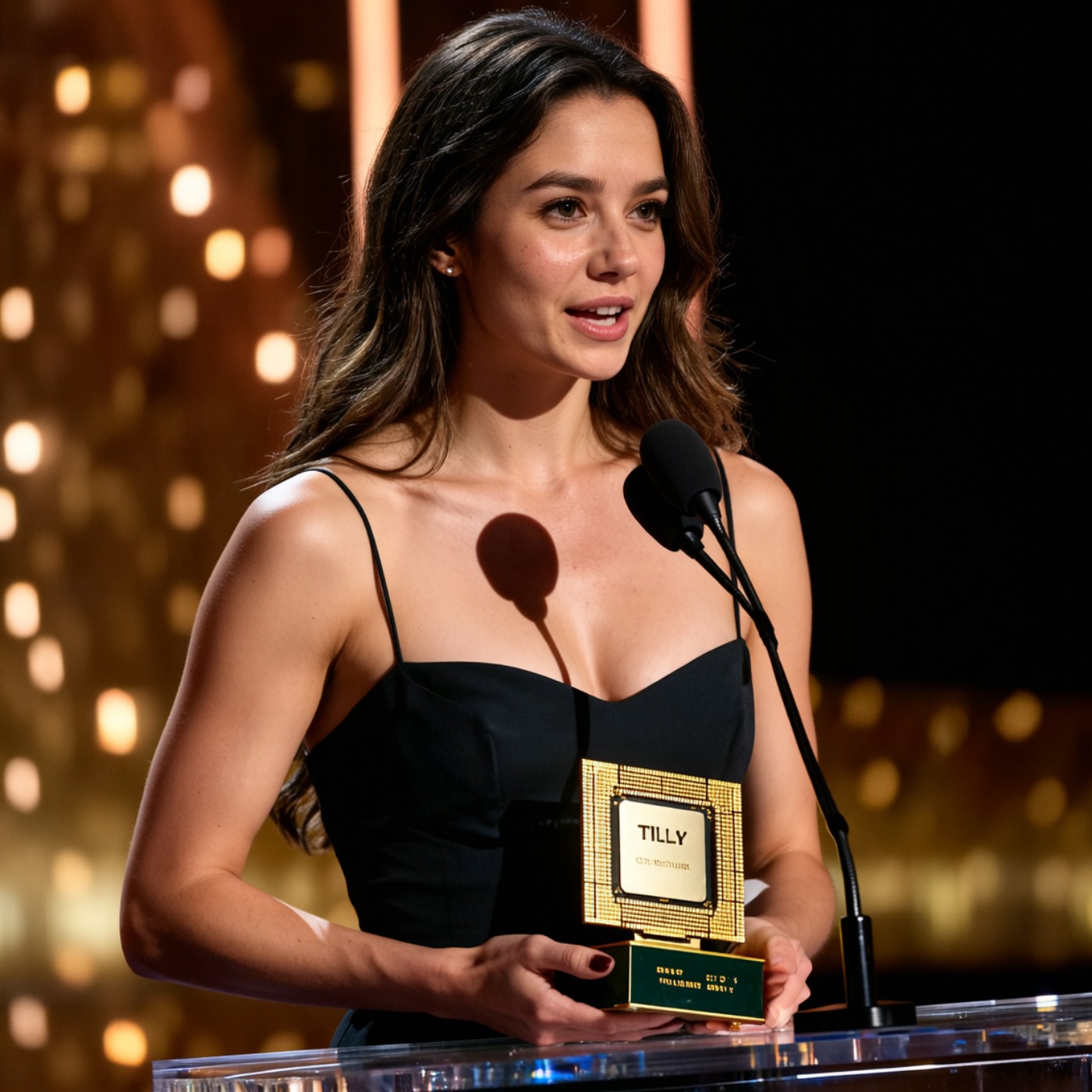
The Times Tech Podcast
Will this AI actress be the next Oscar winner?
00:41:45
The creator of Tilly Norwood on AI in Hollywood
Loading summary
Transcript183 lines
- [00:00]
Progressive Insurance Announcer
This episode is brought to you by Progressive Insurance. Do you ever think about switching insurance companies to see if you could save some cash? Progressive makes it easy to see if you could save when you bundle your home and auto policies. Try it@progressive.com Progressive Casualty Insurance Company and affiliates. Potential savings will vary. Not available in all states.
- [00:22]
Danny Fortson
This episode of the Times Tech Podcast is sponsored by ServiceNow.
- [00:26]
Katie Prescott
Danny One thing we keep hearing from business leaders right now is AI sounds great, but how do you actually make it work inside a company?
- [00:34]
Danny Fortson
Exactly. Because most organizations aren't neat, shiny systems. They're layers of software, legacy tech and teams all doing things slightly differently.
- [00:43]
Katie Prescott
ServiceNow sits across all that, acting as a control tower for making work move seamlessly through the organization, connecting people, systems,
- [00:51]
Danny Fortson
data, and increasingly AI agents so that things don't happen in silos.
- [00:56]
Katie Prescott
Learn how ServiceNow puts AI to work for people@servicenow.com.
- [01:05]
Danny Fortson
Hello and welcome to the Times Tech Podcast, where every week we unpack how technology is reshaping business culture and everyday life. I am Danny Fortson out here in Silicon Valley.
- [01:17]
Katie Prescott
And I'm Katie Prescott. Katie in the city, the city of London. And in this week's episode, we're looking at a new era of AI. Believe it or I know it feels like there's a new era every week. But at Nvidia's big powwow this week in California, boss Jensen Huang has predicted that the company could hit $1 trillion in revenue by next year. So as this multi billion dollar industry, almost a trillion, apparently races ahead, we're questioning whether us humans are already being left behind.
- [01:57]
Danny Fortson
That's right. And we're gonna do it via one of those things everybody cares about entertainment. So at the Oscars this week, Conan o', Brien, very funny man, joked that he was going to be the last human host of the Academy Awards. It got a laugh. But it also hit a nerve because AI has come around at a time when Hollywood is really struggling. It's been nearly three years since the writers went on strike over pay and specifically the use of AI. So did actors. It was one of the longest work stoppages ever went on for nearly five months. Virtually shut down the entire town. And the next round of negotiations have begun right now. Like they're happening. They have begun. And yet again, AI is front and center of those conversations. And the unions are expected to put forward a new so called Tilly tax.
- [02:50]
Katie Prescott
Amazing.
- [02:52]
Danny Fortson
You must be wondering what on earth is a tilly tax? But that is kind of the shorthand for a fee that studios would have to pay them for using an AI actor.
- [03:04]
Katie Prescott
And why is it called a Tilly Tax?
- [03:06]
Danny Fortson
Danny, I'm so glad you asked. This is all in response to the creation of Tilly Norwood. And you may remember, she made news if we can call her a she last year as the world's first quote, unquote, AI actor. And all of this got us thinking. Could an AI actor, a bunch of ones and zeros anthropomorphized into what looks like a real human, be in the running for next year's Academy Awards?
- [03:35]
Katie Prescott
It's funny that you said, could she be a she? I mean, it feels an awful long time ago that we were having a debate over what pronouns to use for people, doesn't it? I mean, yeah.
- [03:45]
Danny Fortson
What do you call an AI? What do you call an AI?
- [03:47]
Katie Prescott
I. Yeah.
- [03:49]
Danny Fortson
I don't know an it.
- [03:50]
Katie Prescott
Anyway, I'm not even sure I want to. Want to go there. But we might be able to ask our guest this week who, I mean, is probably the perfect person to answer this question, but is also Hollywood's public enemy number one. Is that fair to say, if. If not the creative industries as a whole? So we are shortly going to be speaking to Eline Van der Velden, and she is the creator of Tilly Norwood and the CEO of an AI production company. She thinks, and we will talk to her all about this, that AI actors could be a more ethical alternative to real performance. And this is exactly what Hollywood has been worried about, isn't it?
- [04:34]
Danny Fortson
That's right. And so, you know, I was recently in LA talking to for a completely separate event, but I ended up at this event where sitting next to two screenwriters, and they were completely freaked out because they're like, look, one thing is certain. We cannot afford another strike. But things seem to be getting worse for the kind of the humans in that town. Right. Because the streaming wars are over. You've had this huge merger, Skydance and Warner brothers, funded by $80 billion of debt. Everybody's expecting huge new rounds of layoffs. And then here you have AI and. And things like creations like Tilly Norwood, where it's like, she's singing, she's dancing,
- [05:20]
Katie Prescott
she's talking, she's looking like a real actress.
- [05:23]
Danny Fortson
Exactly. And so it raises some huge, huge questions. And I do think it'll be interesting to see how this all develops. But it just speaks to me. It speaks to this moment we're in where people are like, AI is this shiny new toy still. Therefore, let's, like, try all the crazy stuff. Let's just create, create an actor from whole cloth and see what people think. And it's obviously creating like very strong reactions on all sides.
- [05:51]
Katie Prescott
And it's not just in Hollywood. I mean, I remember the strikes so well over on your side of the pond. And they just had a massive impact here too, right? Because there's so many studios here and actually so much production space here that gets used by Hollywood and that just all totally shut down and it sent ripples through the industry. And it's fascinating that we're having this discussion about Tilly Norwood with Tilly Norwood's creator this week because also here in the UK there's been this long awaited announcement from the government about what it plans to do over copyright to deal with this row between the creative industries, hugely important in Britain, worth 146 billion pounds to the economy, supporting 7% of UK jobs, and also the tech industry and AI which has been using the creative industries content without permission. So anyway, big announcement expectations and the government, as you always say they do in Britain, announced some consultations.
- [06:53]
Danny Fortson
What color paper is it?
- [06:57]
Katie Prescott
That's a really good question. It was a written ministerial statement.
- [07:02]
Danny Fortson
Oh, okay.
- [07:03]
Katie Prescott
And anyway, so Liz Kendall, friend of the podcast minister for tech, said, we reject any suggestion we must choose between our creative industries and the UK's AI sector. But yes, no decisions were made.
- [07:18]
Danny Fortson
Clearly the creative industry is being flooded with AI content and while some creators are pushing back, others are embracing it. So our big question today is, is AI empowering people or replacing them? But if we just step back at this kind of crazy moment, we all find ourselves. We've got Tilly Norwood, we've got these labor talks with one of the biggest, most kind of visible industries on the planet that are kicking off as we speak, highly contentious. You have all these technological forces that are taking people out of theaters, streaming, et cetera. And so everybody's throwing all these things at the wall to try to see what sticks, including. This is where it gets really dark for you and I in podcasting, but
- [08:08]
Katie Prescott
not just for you and I, for our entire team that sit behind the podcast. And there was a moment this week we have a WhatsApp group for the podcast where one of the team sent a message saying, this is blowing up the podcast desk. The reason that everyone was freaking out is because the first fully AI generated podcast reach the top of the Apple podcast charts and it's called the Epstein Files and described as the first AI native documentary pod. But no studio or production team made it right. It came out of the brain of One entrepreneur, a data entrepreneur called Adam Levy, who vibe coded the podcast. So as everybody knows, all these files have been published online. The Epstein files are full of images and emails and all that sort of stuff. And after 48 hours, albeit working 14 to 16 hour days, fair play. He built this system that ingests all those documents, cross references sources, he says, and basically built these scripted podcast episodes narrated by fake people, AI people. So, anyway, let's hear a clip because it is quite extraordinary, not least that it's hit the top of the chart. And yeah, just to say again, these voices are AI voices. Our mission here is to act as a filter. We're using AI assisted tools to process the sheer volume, but it's human analysis, forensic accounting, that's making sense of it.
- [09:37]
Progressive Insurance Announcer
And that's a key distinction. We are not here to speculate.
- [09:40]
Katie Prescott
Absolutely not. We are reviewers of the record. If we have a document, we'll tell you, we'll cite it. But where there are gaps in that record, and believe me, there are significant
- [09:49]
Danny Fortson
gaps, you're going to point them out.
- [09:51]
Katie Prescott
We will acknowledge the silence. We not going to fill it in with theories. We're simply going to measure the void. Measure the void for me.
- [10:02]
Eline Van der Velden
What do you think?
- [10:04]
Danny Fortson
So I did listen to one of the episodes. So let me say Adam Levy, not a journalist or a lawyer, and what he is doing, I think is really interesting because AI can do things that you or I, or maybe even a team of humans can do, which is trawl through millions of documents in a way that's just like, harder for us to do, right?
- [10:28]
Katie Prescott
At speed, without stopping for breaks or sleep. Yeah, all of those things.
- [10:33]
Danny Fortson
And maybe it's because we've talked often on this podcast about jobs, the future of work, what does it mean to be human? All of this stuff, the voices in there, it's like the video when you sit down in your chair in the plane and they're like, all right, this is what you do. This is the emergency exits. It's like this voice, professional narrator, Muzak kind of vibe. There's like a lack of warmth to
- [11:00]
Katie Prescott
it, a lack of warmth to it, and I would also say a lack of sense. One of the things you're always taught in radio is to speak like a human or to speak like you would to your friends, which I think is sometimes why people enjoy the podcasting medium.
- [11:17]
Danny Fortson
And who knows, like, if it hit number one in the charts, were all those human listeners, we don't know, right?
- [11:23]
Katie Prescott
Were they human listeners, but also were they sort of ticking that Box that everybody's obsessed with the Epstein files. And this podcast was presenting itself as the definitive guide to it.
- [11:34]
Danny Fortson
Yeah. And it's pumping out episodes. Right. And that's the other thing. But I.
- [11:39]
Katie Prescott
Well, it can.
- [11:41]
Danny Fortson
Exactly. So it is doing something in that sense new and different. And I am just a little conscious of just trying to kind of comfort ourselves, you know, of like, are we just picking nits just because the alternative is way too scary?
- [11:58]
Katie Prescott
Well, we should say, because the podcast team have been obviously interested in this story. There is an episode about it on the story, which is the Times daily podcast. And one of our colleagues at the Times actually got in touch with Adam Levy just to ask him to, you know, how on earth they put it together. So we, we thought we'd play a little clip of what Adam had to say.
- [12:18]
Danny Fortson
I'm not a journalist by trade. I'm a content creator. And I have a set of values that I run my life with. I like, to be honest, I like the facts. I don't like bs. I like when things are said for what they are. And I try to create content and build product around some of those values. So I can't speak to journalism as a whole because that's not my trade. I just know what I would like to get from the media and the information that I consume. And if nobody else is going to do it, I will.
- [12:55]
Eline Van der Velden
Yeah.
- [12:56]
Katie Prescott
So you can hear more of more of that interview with him on the story from the Times, where our colleagues delve more into that.
- [13:03]
Danny Fortson
Yeah. So I think what's interesting about this, and again, it feels to me like an experiment. And maybe this experiment will become like a thing, the way that podcasts became a thing before they weren't a thing.
- [13:16]
Katie Prescott
It's such an exciting time. And to that point about AI generation, there's also the sort of flip side of that is a lot of people are considering now how on earth you show whether something is AI generated and how important that is. So do we care and how much should we care? If AI has been used in the creation of something, that podcast is a fun experiment. But if it's just used in research, for example, do we need to say so?
- [13:47]
Danny Fortson
Yeah. And it's a conversation people are having around the world. There are calls to develop. Basically think of it like a certified organic or fair trade, some kind of human made label. Right. So when people are consuming whatever, a podcast, a film, a music video, a book that they know it is, has actually been created by a, you know, it's quote unquote, proudly Human or AI free. It's like pesticide free. It's an interesting kind of movement. It's a thing that people are talking about, especially in the arts industry.
- [14:27]
Katie Prescott
Can I tell you something that will fill your heart with gladness? It was actually in the British government's proposals or paper today, of whatever color that paper was on what should be done about AI and copyright, the creative industries. Yeah, yeah. So there will be a task force.
- [14:44]
Danny Fortson
Oh, not a task force.
- [14:47]
Katie Prescott
There will be a task force.
- [14:48]
Danny Fortson
Will they be armed?
- [14:51]
Katie Prescott
You're in the wrong country. We don't arm our task force.
- [14:55]
Danny Fortson
SEAL Team six coming in for the AI.
- [14:58]
Katie Prescott
Yeah, exactly. No drones, just pens. They're going to put forward proposals on best practice for labeling AI generated content. And I just laugh because you always take the mick about this. But there will be an interim report on this published in the autumn.
- [15:12]
Danny Fortson
The task force is going to create an intimate report. One must be respectful of humans. One said.
- [15:22]
Katie Prescott
But the Royal.
- [15:23]
Danny Fortson
We believe anyway.
- [15:25]
Katie Prescott
But the basic point is exactly the one you made, which is it is helpful or apparently everyone who responded to the consultation, because there was a consultation. So the government said, actually they want to know whether content has been made using AI. So there you go.
- [15:43]
Danny Fortson
You know, you're starting to see little bits and pieces of this, right? Like in, I think it was a 2024 film, Heretic, starring Hugh Grant. There's a disclaimer, no generative AI was used in the making of this film. And you have like, companies, like, there's a UK company, books by people, charges publishers and requires them to carry out questionnaires about their practices and how they vet their authors. So there is this kind of pushback, but again, I feel like we're right in the middle of this just really funky time where it's like AI has dropped from the sky on all of our heads and everybody's trying to figure out what to do with it.
- [16:20]
Katie Prescott
It's interesting on the label point as well, isn't it? Because you can see in some areas, for example, news, it's absolutely vital that you know if something is. Is real or not. When it gets to writing or filmmaking, it's so nuanced because what does it mean being used? Does it mean for research purposes? Does it mean fact checking? Does it mean rewriting a sentence to try and make it more fluid or using it for synonyms?
- [16:52]
Danny Fortson
Anyway, you wrote a book last year. AI was super helpful.
- [16:56]
Katie Prescott
It was incredibly helpful. Yeah, absolutely. Exercise a huge volume of information very quickly.
- [17:02]
Danny Fortson
So is your book Certified Human Made or.
- [17:06]
Katie Prescott
I would definitely put a certified human made label on it. But it's a good point because yes, AI was used in the making of the book in some sense. So are the creative industries right to be scared and can AI do their jobs better than they can? Well, our next guest might have some answers. We'll be right back shortly, speaking to the creator of Tilly Norwood.
- [17:32]
Danny Fortson
Today's episode of the Times Tech Podcast is sponsored by ServiceNow.
- [17:37]
Katie Prescott
ServiceNow describes itself as an AI control tower for business reinvention, connecting people, systems, data and AI so workflows more smoothly across an organization.
- [17:48]
Danny Fortson
The platform integrates with different clouds, models and data sources, bringing them together in one place to help your team.
- [17:54]
Katie Prescott
To learn More about how ServiceNow puts AI to work for people, visit ServiceNow.com
- [18:03]
Paige Desorbo
hey, this is Paige Desorbo from Giggly Squad and today I want to talk to you about Boost Mobile. Quick question. Why are we letting our phone bills bully us? Here's a money tip. Stop paying a carrier tax when you bring your own phone and Switch to boost mobile's $25 unlimited forever plan. You can unlock up to $600 in SA. That's real life money, not money trapped in a pricey phone bill. $600 is a trip, a shopping spree, or paying something off. Your money belongs in your life. You get unlimited data, talk and text for $25 a month with no contracts and no minimum line requirements. Your phone, your rules. Head to boost mobile.com to switch today and unlock the savings you actually deserve. After 30 gigabytes, customers may experience lower speed. Customers pay $25 per month while active on Boost Mobile Unlimited Plan savings claim based on a January 2026 Boost Mobile survey can comparing average annual payments of major carrier customers to 12 months on the Boost Mobile Unlimited plan. Visit boostmobile.com for details.
- [18:56]
Progressive Insurance Announcer
This episode is brought to you by Progressive Insurance. Fiscally responsible financial geniuses, Monetary magicians. These are things people say about drivers who switch their car insurance to Progressive and save hundreds because Progressive offers discounts for paying in full, owning a home and more. Plus, you can count on their great customer service to help you when you need it. So your dollar goes a long way. Visit progressive.com to see if you could save on car insurance, Progressive Casualty Insurance Company and affiliates. Potential savings will vary. Not available in all states or situations.
- [19:36]
Danny Fortson
Hello and welcome back to the Times Tech Podcast. So today we are asking, is AI empowering people or replacing them? At the center of the debate is Tilly Norwood, an actor that's causing a stir in Hollywood and around the world. That's because she has something other actors don't. She'll never get old. She never forgets her lines. She never needs a bathroom break. Don't think she's part of a union. She hasn't complained.
- [20:06]
Katie Prescott
That's quite crucial.
- [20:07]
Danny Fortson
Yeah, exactly. She doesn't. She doesn't complain about the size of her trailer. She doesn't need a trailer at all. Because, of course, she's not real.
- [20:18]
Eline Van der Velden
She's not real.
- [20:19]
Katie Prescott
So, yeah, unlike me, she doesn't ask for champagne and Maltesers in my trailer. Tilly Norwood is an AI actor created by Ellen Van Der Velden, a former actress and comedian herself, and now the founder and CEO of the AI production company, Particle 6. And we are delighted to have her on the podcast today. Welcome, Ellene. Thank you very much for joining us.
- [20:44]
Eline Van der Velden
Lovely to be here.
- [20:45]
Katie Prescott
For listeners who don't know who is Tilly Norwood and how did you come up with the idea for her and is it right to call her her?
- [20:53]
Eline Van der Velden
I think so. Just like you would a character in a book. Right? Like, I mean, she's fictional. I mean, we. We converted the production company that I'd started 10 years ago, three years ago, into an AI production company. And I was following all the AI news very closely, and I saw the AI influencers start emerging. And I thought, well, I'd like to make something with this new tech. And so what do I know? I know acting because I was an actor and I also studied physics, so I sort of wasn't afraid of the tech and the computing part. And so I was like, okay, I'll make an AI actor, because that's what I know. And I then, you know, worked back and forth with the AI to ensure that she was exactly how I wanted her to be. And the name and the look and everything was such a long, integral process. And then I launched her, and that was Tilly Norwood.
- [21:40]
Danny Fortson
And what was the response to kind of the Good, Bad and Ugly when you came out? Because I remember there was like a moment, right, where people were freaking out and we, we, before you got on, we were talking about the broader context of Hollywood. The writers strike, the actors strike, these new negotiations starting, and AI is like, right at the heart of it.
- [22:01]
Katie Prescott
So debate over copyright.
- [22:03]
Danny Fortson
Yeah, exactly. So when you brought this out initially, what was the reaction and were you surprised?
- [22:11]
Eline Van der Velden
I initially released her in the UK in a video called AI Commissioner, which was like a comedy sketch. And I've always been making stuff like this. Like, I made loads of viral videos for the BBC that got 15 million views. I've made comedy characters. Like, I've always been in the business of tapping into the zeitgeist and creating something that resonates with people. So this was just another way of doing that. And I think when I released her in July in the uk, it wasn't that big a deal where everyone in the UK sort of working with AI and everyone's like, cool, yeah, we're. We're dabbling in it too. You know, we need to do what we can with the budgets we get given. And then I released her in September, end of September, at Zurich Film Festival to a Hollywood audience to sort of showcase what was possible with AI. Right. It was an industry audience. It was me. And I've been doing that for the whole of 2025. I've been showing people, like, guys, this is what's possible with AI. I just want everyone to know so we can start thinking about this. And then it massively blew up because I think people hadn't been dabbling in the way that they had in the uk. It's a bigger industry. And she really represented the zeitgeist and the fear that people were feeling around this AI taking over and taking my job thing. That's what she represented. And so I can totally understand the response that people had to her. And they thought, oh, my goodness, this is all gonna come in and take my job. And when that's not obviously what she was there to do. We always said she wouldn't, and she's not allowed to. And that wasn't the purpose. The purpose was to shake people up. And I think she achieved that. And I think she made a lot of people think, how am I going to future proof my career and what I do in this industry?
- [23:55]
Katie Prescott
And I guess it's more than a representation of that. Right? She became a target almost for that fear.
- [24:02]
Eline Van der Velden
We love a scapegoat as a human species. And so I think she became that human symbol for AI, and so she became the scapegoat, and she became the symbol to attack for everything that people hate about AI.
- [24:17]
Katie Prescott
And I would want to delve into some of the controversy there, but just explain to listeners, how does she work? Like, is it a chatbot behind her?
- [24:29]
Eline Van der Velden
So, yes, we are creating sort of her brain at the moment, which is a long, arduous process, actually, of creating how we think she should be thinking and how she should respond. So that's a separate thing, but when we first created her, it's just like an onion, really. Like when you're acting a character Out. You start from the outside in. So first it was her look. And I went back and forth so many times with AI about what she should look like. And I very much felt that AI was wrong about a lot of the suggestions because she looked really, like, airbrushed and perfect. And I was like, no, I want more. Just real grittiness and Girl Next Door vibe. And so it was a long process to get to the right look for me. And then the name. I didn't want anyone in the world to have her name so I could trademark it. And I know Ryan Reynolds tried to find Attili Norwood and he couldn't. He found a Natalie Norwood. So fortunately, my research was right, but, yeah, so a lot of work went into that.
- [25:27]
Katie Prescott
And then in terms of how she actually sort of works. Oh, how she works when she's acting, you prompt her. I mean, what is.
- [25:34]
Eline Van der Velden
What is that? It's not as mysterious as people think it might be.
- [25:39]
Katie Prescott
So.
- [25:39]
Eline Van der Velden
So it's basically an image. You input an image and you input a prompt. And that was how we were making her act last year. And so she's trained probably on everybody's data. This is how I have peace with it. It's trained on. Not on actors necessarily. She's. When she's acting, she's trained on how humans behave. So probably home videos, everything that's been uploaded to YouTube. I sometimes, you know, when it first started happening, I was like, oh, my goodness, this is probably trained on me and you and everybody. But the. The way I have peace with it is that us as a human species, we've always been building on everything that's come before us as a human species. And so that's why we go to university and we read all the articles and all the research that somebody in that field has done. And so at least all these tools are open to everybody to use, so we can all build on top of the whole of humanity that's come before us. And that's the only way I have peace with the fact these tools are trained on all of our work.
- [26:35]
Katie Prescott
And you're using one particular tool. We.
- [26:39]
Eline Van der Velden
All the tools, we use everything. The point of her is experimenting, right, and finding out where the tech is at and which tools can do what. You know, it's very much prompting with an image and then hoping she stays consistent, which was still a problem last year. And then now, at this moment in time, we can do performance capture, which we did for the music video. So I, as an actor, can act out what Tilly should be acting as. And Then it gets mapped so it's video to video. So you input an image of Tilly in the setting. We input a video, and then it maps her image onto my video.
- [27:15]
Danny Fortson
Like an animation or video games. Like how they do that.
- [27:19]
Eline Van der Velden
Exactly. Like Avatar. And that's a new tech that's come out.
- [27:23]
Danny Fortson
You mentioned the debut single and music video. It's called Take the Lead. Shall we give it a listen? For those who haven't heard it, it's
- [27:34]
Eline Van der Velden
time to take the lead Create the
- [27:39]
Katie Prescott
future Plant the seed don't be left out don't fall behind Build your own
- [27:47]
Eline Van der Velden
and you'll be free we can scale, we can grow Be the creators We've always not it's the next evolution can't you see?
- [28:00]
Katie Prescott
AI's not the enemy. It's the key. I did, like, some of the rhymes, Enemy and key.
- [28:11]
Danny Fortson
Well, so there's two things about that. The one is the video starts with the message that it. You know, it says that it took 18 real humans to create this video, which is interesting. And then the. The song is about, like, basically embracing AI as this is the future. And I'm just wondering again, when you step back and you have this visceral reaction from people and, like, just the reality of economics of a Hollywood where it's struggling and people are freaked out, like, how do you see this going? Or where do you think this should go in terms of the use of AI, AI actors, or kind of how the entertainment industry is changing with these very, very, very real economic forces kind of coming in from all sides.
- [29:01]
Eline Van der Velden
It's very real. So the lyrics were based off on an essay that I wrote for Variety, which was basically about, you know, I. I converted my business to become an AI production company because I wanted to future proof myself and me as an actor as well. And we are very aware of all the changes that are happening now. I would say the situation that the industry is in right now isn't the result of AI. Right. That is because of other factors that have happened over the last five years. So I think people like to blame AI for what's currently happening. But we have to separate the two things first and foremost. Secondly, in my essay, I mean, the video is ridiculous, Right. It's purposely ridiculous because we're trying to go, what can we do that's beyond the normal realm.
- [29:47]
Danny Fortson
Yeah. At one point, she's writing, like, a inflatable flamingo through the clouds.
- [29:54]
Eline Van der Velden
Yeah. Like, it's. It's just like, let's be.
- [29:58]
Katie Prescott
Let's be ridiculous. My young daughter's Dreams is this kind of where you got.
- [30:04]
Eline Van der Velden
Because with AI you can go beyond what's normally possible within your budget and normally possible within camera or production. Right. So it's also about expanding your creativity in and your mind to think, like, what's the most ludicrous? Like, what can we do that was never possible before? So the video is sort of all about demonstrating what was never possible before, we can do now. But then it's also about you. Yes, there is a serious economic situation here, and these things always end up different to what we think and what we have realized. So three years ago, I was very much like, oh, my goodness, all jobs are gone. That's it. Hollywood is gone. And as I've moved further into the AI workflow and how to produce a film with AI I'm realizing that that's absolutely not true. And this is sort of what I'm imploring people to do is like, think beyond if. And people are worried that if they touch AI, they will lose their job. It's the complete opposite. If you know how to use AI in your industry, you will be king, right? Or queen, whatever it is. So if you're an actor and you know how to become an AI actor, you will have lots of work. Like I, as an AI actor, have lots of work now, which I wasn't
- [31:18]
Katie Prescott
sailing through a cloud on an inflatable flamingo, for example.
- [31:23]
Eline Van der Velden
If you are a production coordinator and you know how to use AI if you're a costume designer and you know how to use AI if you're a production designer, you know, all these jobs are coming up and we've realized as we're making bigger and bigger productions, because we're in production with AI productions with major studios, with big Hollywood directors, with actors, you know, you name it. We're not talking about. Because everybody's so worried about their name being out there associated to AI but everybody is moving in that direction. And we feel very passionate about upskilling and retooling people to get prepared to prepare a workforce for this new realm. And I feel personally very, very passionate about that. That's like, the only way that we can gain some agency and be in creative control of what's going to happen.
- [32:11]
Katie Prescott
So give us a glimpse behind the curtain then. I appreciate you don't want to name names. We know you for Tilly Norwood, but what sort of work is your production company doing?
- [32:20]
Eline Van der Velden
Yeah, Tilly's just the poster girl, but we have a whole studio behind that, so we have an advertising, so branding campaign department. They're churning out adverts all the time. So it's much more accepted within adverts. We're doing lots of motion capture with actors in that where we have costume designers, we have production designers, we have directors, we have producers, we have dops. Every single one of those roles is working with AI. Also production managers, budgets, risk assessments, call sheets, everything is optimized in the workflow to work with AI.
- [32:52]
Katie Prescott
And what about the economics of this? I mean, you mentioned sort of economics earlier, but is it actually cheaper? As Danny said, there were 18 people involved in making the music videos.
- [33:02]
Eline Van der Velden
It's still quite hard.
- [33:03]
Katie Prescott
Right.
- [33:04]
Eline Van der Velden
So we say it's about 50 reduction in cost and time.
- [33:08]
Katie Prescott
5 050.
- [33:10]
Eline Van der Velden
So half. Which is huge. Right.
- [33:12]
Danny Fortson
I mean, that's an industry upender.
- [33:16]
Eline Van der Velden
Yeah, it will. It will completely change the industry. Absolutely. But it will be. It will go very gradually. So we're on the bigger productions we're doing. It's very much hybrid. It's just a few scenes here and there, you know, as little bits that people are using it with. But though I think by the end of this year there'll be no production that is 0% AI or at least very few because it'll be in the production management, it'll be like electricity or WI fi. It will be ingrained in some way, shape or form. I mean, most post production there's some level of AI involved already.
- [33:49]
Danny Fortson
You know, we mentioned earlier the union negotiations that are just starting up between the studios and the actors and the writers. In one of these ideas floating around is something they're calling a Tilly tax, which I'm sure you've heard about. And this would be a fee the studios would basically pay for using AI actors. It sounds like in a way almost like artistic, universal basic income, where, you know, like that if. If you're using this technology for do to do something that a human would do, you need to kind of give back, so to speak, some of that 50% give back. So people aren't just kind of out of jobs and with nothing to do. What do you think about that?
- [34:31]
Eline Van der Velden
I think it's very different for a studio compared to, say for an actor who's decided that they want to act through their digital twin.
- [34:39]
Katie Prescott
Right.
- [34:39]
Eline Van der Velden
So if you're employing the digital twin of Matthew McConaughey, for example, in a film, you would just pay him his fee and get his consent to do that. Right. I think that would be the same process as it is now. And the same thing goes for me. If you're using Tilly. Right. You're employing me, basically. I'm the actor behind Tilly. So I think that will be very different if a studio creates, say 20 actors and controls them all themselves. That's very different to a human creator creating a Tilly.
- [35:13]
Danny Fortson
But to your point, around the 50%, which is a big, big number, those people who are the actor behind the AI actor, I presume they're getting paid a whole hell of a lot less than. Than they otherwise would. And also kind of stepping back more philosophically, actors don't get into acting, at least the ones I know to not be seen.
- [35:36]
Katie Prescott
Something in the people who choose that profession, isn't it?
- [35:39]
Danny Fortson
Yeah.
- [35:39]
Eline Van der Velden
I mean, yes, they can. They can just play their digital twin.
- [35:42]
Katie Prescott
That's.
- [35:43]
Eline Van der Velden
That's totally fine. I have no problem with that. But there's a lot of great theater actors in the uk, for examp, who much prefer a sort of calmer rehearsal environment, you know, where everything gets performance captured and it's really about the craft and about the emotion and about the connection between the director and the actors. And it's a. It's a really comfortable setting as opposed to being on set with all the tech around you. And it's about hair and makeup and what you look like, so. Absolutely. And you'll still have those actors that want to be seen, and that's also fine.
- [36:15]
Katie Prescott
What do you think about the idea of putting a sort of label on creative content which has been made by AI and like the importance of that.
- [36:24]
Eline Van der Velden
We've always been very transparent about Tilly being AI. I think that there's no problem with that. I think people should be transparent. I think it'll be hard in the future because everything will have some element of AI in it. And. Sure, just like people still want to shoot on film, that's, you know, you'll still get people who want to make a full non AI program as well. That's also fine.
- [36:47]
Danny Fortson
You've described kind of AI actors as a more ethical alternative to real performance. And I'm just trying to understand what that means.
- [36:55]
Eline Van der Velden
Yeah. So there's a few ways in which I view it as more ethical. For example, me personally, I feel it's much safer to act through an AI actor. Right. So I don't personally have to be that outward image. I don't have to be deal with fame or be recognized. I don't have to worry about my looks or get Botox or my hair or my weight. There's a lot of mental health stuff that I think makes it more ethical to act through an extension of myself, like Tilly. Secondly is when it comes to children or dogs or any animals, using AI instead of the real equivalent might be seen as more ethical. And then there's also the carbon footprint. Like people, you know, they get so hung up and they think, oh, this is wasting all the water in the world and the carbon footprint of this is enormous. Actually, if you did a like for like with a, you know, if you wanted to shoot the equivalent in a traditional sense, the carbon footprint would be 90% higher. So, you know, you're going straight into post production. So it's quite a low carbon footprint production.
- [38:00]
Danny Fortson
Before you go, does Tilly have an agent?
- [38:03]
Eline Van der Velden
Oh, so good question. So we thought, oh, we should get her signed at some point and we were talking to all the agents about it, but she's so famous now, we don't really need to. There's so much incoming.
- [38:14]
Katie Prescott
You don't need to give someone else commission. Brilliant.
- [38:17]
Eline Van der Velden
Maybe there'll be an AI agent at some point. An agent that specializes in AI characters.
- [38:22]
Katie Prescott
My mind is blown. Well, that's our job, Danny. There you go.
- [38:24]
Danny Fortson
Indeed, indeed.
- [38:25]
Katie Prescott
That's our side Hustle. Eline, thank you so much for taking the time. It's been great to talk to you.
- [38:30]
Eline Van der Velden
Thank you, guys.
- [38:31]
Danny Fortson
Yeah, thank you.
- [38:32]
Katie Prescott
AKA Tilly Norwood.
- [38:36]
Danny Fortson
So what you think?
- [38:39]
Katie Prescott
I was really impressed by her, actually. I thought she was very funny and very self aware and it's certainly not the, oh my goodness, you know, I'm making AI because I want to take over the industry, is it? I mean, it's far more nuanced than that. And I thought it was fascinating to hear her point about the industry already using it, not wanting to speak about it. And she didn't want to say the names of the companies that they're working with. But actually it's incredibly clever what she's done. Creating someone, something. I don't know, what do you say? Like Tilly Norwood. But she did say her but as the front of her business that has garnered huge, huge attention, but actually is just the front door to a marketing, much bigger thing. Yeah, very clever marketing.
- [39:28]
Danny Fortson
Yeah.
- [39:29]
Katie Prescott
And raising a point and raising awareness of how AI is changing the industry, but not in the way that everybody is freaking out about. I mean, that wasn't what she was saying.
- [39:39]
Danny Fortson
The thing that struck me was like, to your point around, Everybody's already using AI, which gets back to that question around like 100 human made or whatever. I think is kind of a. I understand. But it feels like a kind of a desperate grabbing at Straws when this is, you know, the train has already left the station in terms of AI being used.
- [39:59]
Katie Prescott
Figure.
- [40:00]
Danny Fortson
Well, this is the thing I was going to say is that two things. One, going back to my conversation with these writers in Hollywood, they're like, you know, under our current contract, we have to like sign these declarations that we're not using AI in our process. And he's like, of course, everybody is.
- [40:20]
Katie Prescott
How on earth do you police that?
- [40:22]
Danny Fortson
You don't. But it's part of this, like, you know, the industry struggling, the union is struggling, which I totally understand. The union is about protecting their people, protecting labor. And to your point, around the 50%, that's for an industry that, you know, again, if you think about paramount, Warner Brothers, 110 billion dollar deal funded by 80 billion dollars of debt, smashing together these giant studios, they're going to be under huge, huge, huge, huge pressure to cut costs. And then you're like, just look at the numbers. 50%, like, that is too big to ignore, you know, for the industry. And what that means for, like the shape of the industry in Hollywood in particular, like the actual physical place of LA is going to be really interesting to see how that plays out, but you can see what direction this is going.
- [41:19]
Katie Prescott
I thought her safety argument there was compelling. You know, you're not having people out and about and doing stunts.
- [41:28]
Danny Fortson
Yeah, no, not really. But again, I guess that could. That tension between like the humans doing a job versus like, oh, we can replace it by a machine. And I don't think it's going to go as far as people are fearing. Like, to her point, which I thought was good, it's like, oh, no, like all these jobs aren't just going to disappear, but they are going to change. As we've seen in music, as we've seen in journalism, the cost structure is just gonna change pretty fundamentally and that's gonna be a really messy process.
- [41:59]
Katie Prescott
She's not sending Tilly Norwood dancing out to challenge Brad Pitt.
- [42:04]
Danny Fortson
No, that's not exactly.
- [42:06]
Katie Prescott
And she was very clear about the links as well, which I thought was fascinating between the AI and the actors behind them.
- [42:14]
Danny Fortson
Yeah, yeah.
- [42:15]
Katie Prescott
But that 50% figure kind of sums it all up. Maybe, you know, it's the cost, but it's also maybe half the industry that that's what it becomes, it's the cost.
- [42:25]
Danny Fortson
And it's also, like I said, which we talked about, which is like, how many actors, you know, don't want to be on stage or on screen?
- [42:32]
Katie Prescott
None.
- [42:33]
Danny Fortson
It kind of gets to the very notion of what art is and who artists are. So I think that's what's really interesting.
- [42:40]
Katie Prescott
The limelight.
- [42:43]
Danny Fortson
Exactly.
- [42:45]
Katie Prescott
It was great to have her on the podcast and she certainly wasn't the, you know, the figure of hate that maybe I was expecting.
- [42:54]
Danny Fortson
No, no, no. Very thoughtful and very savvy. But I do think it's kind of. It's a glimpse at kind of these very, very big forces that are crashing in on this industry right now.
- [43:06]
Katie Prescott
Yeah.
- [43:06]
Danny Fortson
Get into the meat.
- [43:07]
Eline Van der Velden
Well, quite.
- [43:08]
Katie Prescott
What a time to be having this conversation.
- [43:09]
Danny Fortson
Yeah. So. So kind of coming back to where we started is a empowering people or replacing people. I think it's both. Right. It's. It's kind of everything everywhere all at once. So it is both kind of amazing. As I said, you can kind of. You're empowered to make stuff in a way that's just completely impossible before. But there's also, it's like a little bit like AI writing. There's a certain kind of Muzak vibe to it where you're just like, the world is going to become elevator music, where you're just kind of like, middle of the road. Yeah, middle of the roll road. Kind of boring. Doesn't offend anybody. And that's kind of not art. The answer to our big question is. Is yes. Which is, you know, yes and yes. But yeah, totally fascinating. And that is it for this week's episode of the Times Tech Podcast. If you are enjoying the show, drop us a line to let us know, please.
- [44:05]
Katie Prescott
Yeah, and we'd also love to know your thoughts on today's discussion. I mean, how would you feel about listening to an AI generated podcast or watching an AI film? Should there be some kind of tilly tax on AI actors? What do you think we want to know?
- [44:19]
Danny Fortson
Yes, you can tell us by emailing us@techpodimes.co.uk that is TechPod, the times.co.uk and that is it. We will see you back here next week for another fabulous episode. Till then, bye. Bye.
- [44:35]
Katie Prescott
Goodbye. This episode of the Times Tech Podcast is sponsored by ServiceNow.
- [44:50]
Danny Fortson
There's a lot of excitement around AI right now, but the problem is what happens after the demo when you have
- [44:56]
Katie Prescott
to plug that technology into a real company.
- [44:58]
Danny Fortson
Different clouds, different data, different systems that were never designed to talk to each other.
- [45:03]
Katie Prescott
ServiceNow's platform is designed to help people by connecting these pieces, enabling organizations to coordinate work across departments, tools, and increasingly AI agents.
- [45:14]
Danny Fortson
In fact, the company says more than 80 billion workflows run on its platform
- [45:18]
Katie Prescott
every year, which gives you a sense of the scale of operations it's designed to handle.
- [45:23]
Danny Fortson
Learn how ServiceNow puts AI to work for people@servicenow.com
- [45:31]
Progressive Insurance Announcer
this episode is brought to you by Progressive Insurance. Fiscally Responsible Financial Geniuses. Monetary Magicians. These are things people say about drivers who switch their car insurance to Progressive and save hundreds because Progressive offers discounts for paying in full, owning a home, and more. Plus, you can count on their great customer service to help you when you need it. So your dollar goes a long way. Visit progressive.com to see if you could save on car insurance, Progressive Casualty Insurance Company and affiliates. Potential savings will vary. Not available in all states or situations.