← The Times Tech Podcast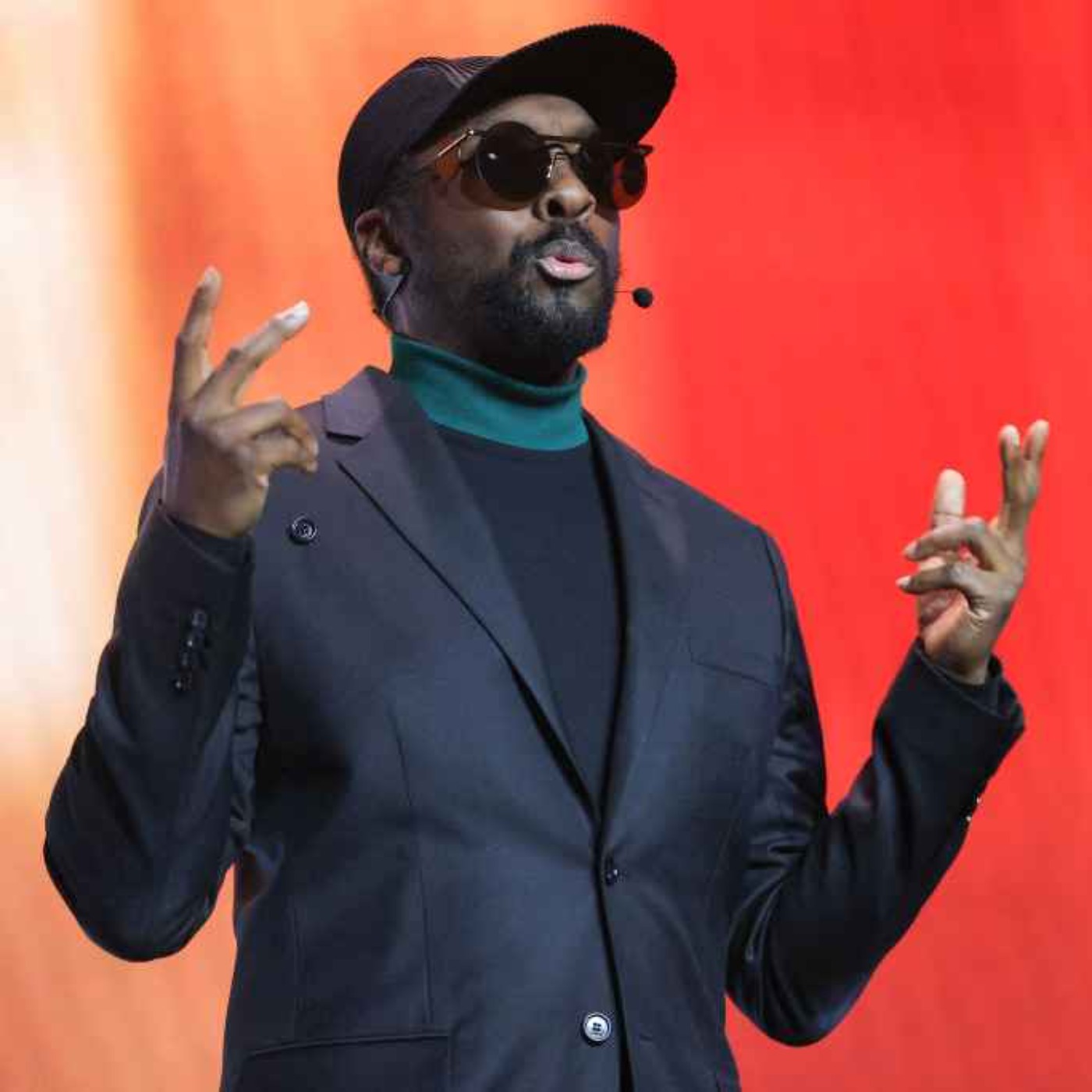
The Times Tech Podcast
Will.i.am: musicians will survive AI
00:38:09
Plus Anthropic's new ad and Google DeepMind's Demis Hassabis calls for AI watchdog
Loading summary
Transcript167 lines
- [00:00]
Danny Fortson
This episode of the Times Tech Podcast is sponsored by IBM.
- [00:04]
Katie Prescott
Wimbledon is one of those rare events that feels steeped in tradition, but behind the scenes, it's also a huge data operation.
- [00:12]
Danny Fortson
Millions of fans follow the tournament across time zones, devices and platforms, and increasingly they want highlights, stats and personalized updates in real time.
- [00:20]
Katie Prescott
IBM has worked with Wimbledon for more than 30 years, using data and AI to help create digital experiences for fans, including match chat, which can answer questions during play, and likely which uses live match data to offer near real time predictions.
- [00:37]
Danny Fortson
It's a useful example of AI being applied in a way people can actually see and understand.
- [00:42]
Katie Prescott
To learn more about how IBM helps create smarter business, visit IBM.comwimbledon this episode
- [00:50]
Danny Fortson
of the Times Tech Podcast is sponsored by kpmg. Katie We've been tracking the AI surge for a while, but some of the latest data is pretty striking.
- [00:59]
Katie Prescott
It is. KPMG's latest quarterly AI pulse suggests that seven in ten UK business leaders still see AI as a top investment priority, even if the economy slows down in the next year.
- [01:11]
Danny Fortson
But turning that investment into tangible value is another question.
- [01:15]
Katie Prescott
And so a lot of organizations are still figuring out how to move from endless AI pilots to something that works across the business.
- [01:23]
Danny Fortson
KPMG's focus is on that gap, helping organizations scale from the pilot phase to AI powered transformation they can trust.
- [01:31]
Katie Prescott
To find out more about how KPMG can help your organization make the difference, you can visit kpmg.co.uk AI hip hop
- [01:42]
Will.i.am
is some version of artificial intelligence, because artificial intelligence sampled and gobbled up everything.
- [01:49]
Katie Prescott
It's really very rare to meet someone who sits in the center of the Venn diagram in the way you do.
- [01:55]
Will.i.am
So it's okay for humans to burn, but people that make machines, that borrow that are creative too, like, where's the protection? These creatives that you're talking about, the true creatives, will be okay. The ones that I'm concerned about are the assistants, the sales clerks, the lawyers, the accountants.
- [02:16]
Katie Prescott
Hello, and welcome to the Times Tech Podcast, where we unpack how technology is reshaping business culture and everyday life. I'm Katie Prescott, covering all things tech here in the city of London. And this I have a Silicon Valley tech titan in the studio with me, Danny Fortson. Hello.
- [02:38]
Danny Fortson
Hello. In real life, we're here.
- [02:40]
Katie Prescott
You exist.
- [02:41]
Danny Fortson
Yeah, I do. I do.
- [02:42]
Katie Prescott
Welcome to London.
- [02:43]
Danny Fortson
Real carbon based life. 1.
- [02:45]
Katie Prescott
Welcome to London.
- [02:45]
Danny Fortson
Well, thank you.
- [02:46]
Katie Prescott
What are you doing?
- [02:47]
Danny Fortson
I'm here for a bunch of stuff, partially to just check in with hq, let them know that I'm actually just not an email address. I'm actually a real person.
- [02:57]
Katie Prescott
Yeah.
- [02:57]
Danny Fortson
Catching up with friends, running around. Although I'm not running anywhere, actually. I broke my toe.
- [03:02]
Katie Prescott
How did you do that?
- [03:04]
Danny Fortson
Packing my bag.
- [03:06]
Katie Prescott
That's not a very cool story.
- [03:09]
Danny Fortson
No. Yeah, I was coming up, I was like, could I do have like a Jean Claude Van Damme type story where I was like just on walking down the street and all of a sudden had to drop kick somebody. But actually I was just. I stubbed my toe in a very dramatic fashion and broke it.
- [03:25]
Katie Prescott
Ouch.
- [03:26]
Danny Fortson
So I'm actually hobbling around the city of London, but I'm here.
- [03:31]
Katie Prescott
And next time we can think of a better story involving a robot.
- [03:34]
Danny Fortson
Exactly. I'll do my best. I'll do my best.
- [03:36]
Katie Prescott
Well, it's great to have you here.
- [03:37]
Danny Fortson
It's great to be here. And we should remind people actually that we are on YouTube.
- [03:43]
Katie Prescott
We are now on YouTube.
- [03:44]
Danny Fortson
The YouTube.com go to the Times business page to actually see this, see us doing this instead of just listening as well as you. Yeah.
- [03:54]
Katie Prescott
The special celebrity guest. We've also got another celebrity on the program today who many of you may have heard of and know from the Black Eyed Peas, Will. I am very cool. Very, very, very cool. Because over the last decade or so he has become far more than just an artist and he's a big figure in the world of tech. An investor in some companies you may have heard of. You know, anthropic, OpenAI hugging face, lovable. I was pretty surprised actually by the roll call of investments that he's made at quite early stages. And he's also really passionate about using AI to help the next generation and the global south and also deprived parts of America too. And he has a lot of very, very interesting things to say about AI and creativity. I was surprised, actually. He's not against the use of AI in music, unlike a lot of creatives that we hear from. It's almost as if he wants AI to better spin put on it.
- [04:54]
Danny Fortson
Well, that is a theme this week. So a couple things have happened, but ultimately there's one big kind of macro story that leads into the chat with Will I am, which is lots of people from the tech world, some not. There is a kind of a growing sense from people inside the industry, outside the industry, that this whole idea of very powerful AI is not just marketing spin, that it's going to hit us between the eyes much faster than we think and that we need to be thinking about it, we need to be acting, we need to be doing stuff so there's a whole bunch of stories around that theme that have kind of popped up this week.
- [05:36]
Katie Prescott
Yeah, absolutely. We're going to be talking about all of that. The fact that AI does need better pr, but it also needs some stronger rules around it too.
- [05:46]
Danny Fortson
Exactly.
- [05:47]
Katie Prescott
I mean, on the subject of PR, this extraordinary advert that you shared on our WhatsApp group earlier this week by Anthropic.
- [05:55]
Danny Fortson
Yeah, so Anthropic Release is like 90 second video and it's entitled There's Hope and the Hard Questions. You know, it almost sounds like the beginning of Star wars or something, but it's kind of a call to arms, warning about the potential harms of AI and how they can be stopped. And the ad starts with a video of a burning house. Very uplifting.
- [06:18]
Katie Prescott
Right? Just what you think of when you think of AIs.
- [06:20]
Danny Fortson
And then it kind of scrolls through this whole kind of roll of dystopian images. A military graveyard, a homeless man sleeping on the street, a crowd of people being kind of surveilled by facial recognition. All of this stuff. And you're kind of like, what is this? Right. And voicing over it is questions like, can AI be trusted? Who's going to hit the brakes if we need, et cetera, et cetera. But then it shifts in tone, questioning whether it could be a different outcome if everyone had a role in shaping how AI is handled. And by the end it moves to a more hopeful message. And the voiceover asks questions like, could AI help people feel less misunderstood?
- [06:59]
Katie Prescott
It's a classic narrative move from the really rubbish stuff into correct. This is what we can offer you.
- [07:06]
Danny Fortson
Exactly. So shall we watch just a. Just a little bit of it, just to give you a flavor.
- [07:11]
Katie Prescott
Can AI be trusted?
- [07:15]
Will.i.am
Who's going to hit the brakes if we need to? How do we really ensure that what we're aiming to achieve really does benefit
- [07:22]
Danny Fortson
the majority of people
- [07:25]
Will.i.am
if it ends up taking.
- [07:27]
Katie Prescott
I don't think those dystopian images did very much to dispel any doubts or fears that people have about AI. I mean, all of the things they showed, all of those images are very, very genuine, very real, very fact based fears and I think play into our next story, which was yet another call for regulation of AI from the very credible quarters of Google, DeepMind, and no less than Demis Hassabis himself.
- [07:57]
Danny Fortson
Friend of the Pod.
- [07:58]
Katie Prescott
Friend of the Pod, I should say.
- [08:01]
Danny Fortson
Exactly. He posted an essay on X calling for the US to establish a new kind of AI watchdog with the power to screen the world's most advanced models and hit the brakes if the systems get too powerful. And what he's calling for is effectively think of like, I don't know, the FAA for aviation or the FDA for drugs or whatever, some kind of standards body that comes together quite quickly. He's talking months, not years, to basically step in as almost like a gatekeeper as these models develop. Because he's like, look, AI is going to be 10 times more impactful than the industrial industrial Revolution and at ten times the speed, which if that is true, I mean, you're kind of. It's almost like climate change. You're like, what do I do with this giant thing?
- [08:49]
Katie Prescott
And the essay is almost like a rerun of the anthropic advert because he talks about all of the potential dangers which we see in the anthropic ad use in the military use in cyber warfare, but also the advantages. He said, yes, it's going to have an incredible impact on health care. It's going to, you say be like the Industrial Revolution in terms of changing our society and it's going to happen really quickly by the end of 2030.
- [09:14]
Will.i.am
Yeah.
- [09:15]
Katie Prescott
I think what really struck me about the advert and about that essay is this is not the first time we've heard this. There have been so many talking shops around AGI and how we handle it. Right back to the Bletchley Park Summit in 2023, hosted by the British government, which kicked off all of those AI safety summits. And we've interviewed so many of these people who've been involved in these things. So we've that going on the related AI safety institute that the UK has to look at models and then the various safety institutes around the world. We've got the AI for good summit that will. I am was at that the UN hosted in Geneva. I mean, there are just innumerable examples of these talking shops. And then the Trump administration saying, actually we want to start looking inside these models before they go out publicly. No one has actually managed to create something like Demis Hasabas is talking about.
- [10:09]
Danny Fortson
No.
- [10:10]
Katie Prescott
So there are all of these political heads together, all of these business leaders, but there's still that leap needs to be made and meanwhile it's developing at pace. And actually I thought the Trump administration's move to want to look inside models just shows how on the back foot we are with all of these things. Something really powerful comes out like anthropics fable and suddenly that, oh, we want to, we want to have a look at this. I did think Demis The Sabbas intervention was very constructive, though. It was pretty short and easy to read, very clear, with a strong message, which is, this is coming, guys, let's do something about it.
- [10:50]
Danny Fortson
Yeah.
- [10:51]
Katie Prescott
So he was calling on the US to lead on it, which makes sense
- [10:55]
Danny Fortson
because that's where all the, the kind of the big labs are, the big tech companies are.
- [10:58]
Katie Prescott
But it's like, who is actually going to convene this? And maybe it does need to start
- [11:05]
Danny Fortson
with the labs or maybe outside the labs. Maybe a musician or somebody who's deeply ensconced in this world. Because we should say this is a perfect segue, of course, to this week's guest. And I think it's worth pointing out that. And you mentioned it earlier, Will, I am. There's a lot of entertainers who become like, hey, I'm a brand ambassador for this new thing. But he is not that.
- [11:28]
Katie Prescott
No.
- [11:29]
Danny Fortson
Yeah, he's much deeper, more deeply involved. So I'm really looking forward to hearing from him on all of this.
- [11:34]
Katie Prescott
Yeah, he's got a really long history with tech, both as a musician, using tech in his music and beyond. I mean, he worked within Intel. He's an investor. An investor in OpenAI. Anthropic, lovable. He started his own tech companies and it was really, really cool to get to speak to him. I mean, as you know, we hear a lot from the creative industries about how annoyed they are about the advent of AI and it's shaking up business models. And actually I was very surprised about what he had to say about that, about creativity, how he thinks about making music, where ideas come from. He was very philosophical and I don't think we get to interact with.
- [12:14]
Danny Fortson
And I think it's really easy. And something we always have to keep in check is like, you can just have a parade of nerds on this show or any tech show who are
- [12:24]
Katie Prescott
just don't say that we want to put the parade off, but you know what I mean, of people who are
- [12:30]
Danny Fortson
like inside making it and have fully drunk the Kool Aid. And then so it's nice to have people who are kind of using this stuff or on the cutting edge, but just coming from a completely different perspective,
- [12:43]
Katie Prescott
complete different perspective, and very thoughtful about it and getting to take that step back and thinking, hang on, how does that affect me, the creative community, other communities. And he is very thoughtful on all of those things. I mean, he's very concerned about the benefits of AI not being shared widely. And we spoke while he was in Geneva, having been in Milton Keynes for a black Eyed Peas tour. He was combining the two.
- [13:10]
Danny Fortson
Black Eyed Peas are still touring.
- [13:11]
Katie Prescott
Yes.
- [13:12]
Danny Fortson
I do not know that. Well, shall we hear from the man himself?
- [13:15]
Katie Prescott
We should. Let's have a listen. Just to let you know, there is some swearing again. I don't think I've ever said that on this forecast before. Why, do you know?
- [13:24]
Danny Fortson
No, I'm sorry.
- [13:26]
Katie Prescott
Swearing. Danny Force.
- [13:27]
Danny Fortson
No, I was anyway. I was being facetious. Let's see. Let's see what he has to say.
- [13:34]
Will.i.am
This is my first time here physically. I've been going to Davos World economic forum since 2015, so 11 years. We talk about AI at WEF, but it's not like the focus because there's not that much time. So what AI for good is, is to really just focus on AI and robotics and address the concerns and then use the time to imagine a path and get commitments from folks that are the builders to have an ethical path to market. I said a sentence at a panel yesterday. They're like, what is AI for good? I was like, imagine the Earth was a computer and human beings are the large living model. Then AI for good is the prompt that the folks that are building follow that prompt. If you don't follow that prompt, then you didn't get the assignment and you have a bad model, bad path to market. Like, why wouldn't you have AI for good?
- [14:34]
Katie Prescott
So the idea is to create that prompt and push people execute the prompt?
- [14:39]
Will.i.am
No, no, not create the prompt. The prompt is created. It's called AI for good. Now, folks that are building it need to execute it, and those that don't execute it, well, then what did you do it for? What were you making AI for if it's not for good?
- [14:53]
Katie Prescott
When I was talking to people about this interview, their first reaction was, oh, wow, that is so cool. And then their second reaction was, what's will? I am's involvement in tech, and I just wonder what drew you as a creative into this industry, which to many people feels like completely the opposite of that.
- [15:18]
Will.i.am
So I don't play the piano like a pro. I'm not a pianist, I'm not a guitarist, I'm not a flautist, a saxophonist. I'm not a drummer. I could play the piano enough to write a progression and then I could play the drums enough to get some basic rhythm down. But for that to sound decent, I have to come to my computer and edit it. So what type of musician am I? Well, I'm not really a musician from that perspective. I am an arranger and an editor and a songwriter. I Can't sing other people's songs. I can sing my songs. Sing a Whitney Houston song. Nah, definitely not. Sing a Michael Jackson song. No, but I could write a song for Michael Jackson. I could sing that, and I could edit it to what? My interpretation of perfection. So if that's the case, what is my instrument? Well, the laptop is my instrument. The computer is my instrument. And most every person that comes from hip hop entered music from a sampler, which is a computer. You can't record without the tech. A microphone, rca. Our first Steve Jobs is Edison and Tesla. Radio and microphone and gramophone. So our founders of this tech are technologists, and then they put music on it. And then some of us were fiddlers of technology that manipulated the technology. So in a way, hip hop is some version of artificial intelligence, because artificial intelligence sampled and gobbled up everything. Artificial intelligence is a repository of a lot of stuff, if not everything.
- [16:55]
Katie Prescott
But not every artist has sort of gone into the world of tech in the way you have. Right, Because I completely hear what you're saying about the influence of tech on music. But you're sitting now, you know, with the bosses of some of the biggest AI companies, with governments, and talking about, you know, the policy and the philosophy behind the tech. How did that come about?
- [17:15]
Will.i.am
I'm curious and hypercognitive, critical thinker and mega create mind. I'm always like, oh, no, but if I did this and if you did that, that mentality of pattern matching, it's how my mind works. And so if you're making any type of product, whatever it is, people that make the product want to be around that type of mind. It's a tilt. Do you see it this way? Can you see what I see? Like, it's. You're always searching for the things that people can't see. Do you see that? So to your question, how did I get into a room with these folks? Well, at first, at one point in time, we launched ipod and itunes. And I had the chance of meeting Johnny Ives and Tony Fadell, the makers of the ipod. And I met Jim Bacilli from BlackBerry and Paul Jacobs from Qualcomm. And I was fascinated by these folks that make products. And I would ask them questions like, how much did it cost to make this prototype before you even made it? What was the prototype? How much did that cost? What did it take? How long did it take? What was the seed? What was the first seed? Because I'm curious about that. How did the dominoes fall for the ipod? How did the dominoes fall for the iPhone. How did the domino's fall for the the MacBook? How did the dominoes fall for Tesla? What was the first seed and then what was the journey to manifestation? So that, that took me to then like wanting to know about more about the makers, the builders. And I learned about a car company out of San Jose and I took 80 grand of my own money from, from tour, flew up to San Jose, drove to their office and asked him if I could invest the $80,000. And this car company that hadn't come out yet, hey, come on man. I help you promote it, let me invest 80,000. Car's not even out yet, so I can't buy it. So I could invest and then I'll buy the one that comes out. And so they, they let me invest these two founders. That car company is Tesla now. So I invested in Tesla early.
- [19:27]
Katie Prescott
Was that Pre Elon Musk?
- [19:29]
Will.i.am
Yeah, Pre Elon Musk. Just wanting to meet more of these brains and because it is a touchy subject, the question that you're asking me, why do I love tech so much and some people in the community concerned about it?
- [19:44]
Katie Prescott
On the copyright thing, how do you feel about your songs and your work being ingested and used, perhaps without recompense? Like when you talk about the business model, how do you think, I mean, are you okay with it and do you think it should work in a different way?
- [20:00]
Will.i.am
There's eight notes. You don't have an infinite amount of notes. The combination of notes. You don't have an infinite amount of combination of notes. Beats. You don't have an infinite amount of that type of beat. It's just math. And so there's a part of me that feels like, is there, is there original idea anymore? Nope, there's not. Do I want my ideas to be protected? Yes, I do. The ideas that I have, can people borrow from them? Yes, they should. Do you mind that you influence people? No, I don't. Do you want to be compensated for your, your influence and being an inspiration? Yes, I think I should. Were you influenced by people? Yes, I was. So the, it's the business model that you're asking, not the tech. Tech is the tech. The business model is what the question is. It's like how long is the copyright? How long is ip? So for me to like just be a hyper creative and just always be in a position to, to receive and release. Receive, release. Rinse out, sponge up. Rinse out, sponge up, rinse out. I don't want to think about that. I have a lawyer that thinks about That I have people in my world that think about that and that, yes, I have a belief. Yes. Protect me unprotected. Cool. Great. Now let's. Let's stay creative.
- [21:19]
Katie Prescott
Yeah. But a lot of artists are worried about this and upset that they feel that their content's being used. And as you say, it comes down to the business. Right. That they haven't been paid or.
- [21:29]
Will.i.am
That's why I'm like, it's the business model, not the tech.
- [21:32]
Katie Prescott
Yes, exactly. Yeah.
- [21:33]
Will.i.am
Do I want to be compensated for influence and inspiration and people borrowing my works? Yes, I do. Does everybody? Yes, they should. But it's the business model, not the tech.
- [21:42]
Katie Prescott
What I was trying to say is there. As. As I'm sure you know, there are various lawsuits going on. People are worried about not being recompensed, and that may be down to the business model, but we don't seem to have sorted out the business model yet.
- [21:54]
Will.i.am
Yeah, we're six years into it. This is six years old. Back to my. My thing. You hear this bass line, this drum. That's drum. This drum loop. That's universal. Who owns that freaking pattern? Does anybody own that pattern? No. No one owns that. No one can own that pattern. Now, in the baseline, We know this pattern. We know that, that. That rhythm. But who owns that? That song is called Billie Jean. Then there's another guy named Billy Ocean who had the same pattern and same bass line, Different intro. But if I get to the bulk of it. Different key, though. Same pattern, same. But then it gets even more funky. Caribbean Queen the vow is een Billie
- [23:21]
Katie Prescott
Jean
- [23:25]
Will.i.am
who's just the girl who claims I am the one the landing is one no more love on the run the landing for Billy Ocean is one. From the vowels to the. The pattern, it's the same math. So in this case, did AI do that, or is that human influence? So if you're a musicologist, if you're. If you're a pattern matcher, you're like, hey, wait a second here. That pattern, the same pattern there. That rhyme scheme is the same rhyme scheme. That vowel scheme is the same vowel scheme in the same song. So it's okay for humans to borrow, but people that make machines that borrow that are creative too, like, where's the protection?
- [24:11]
Katie Prescott
It's really, really great to hear from you on this, I have to say, because I speak to lots of people in the creative industries who have kind of quite a set view on it, and it's really very rare to meet someone who sits in the center of the Venn diagram. In the way you do and thinks about the tech, as you say, like from the creative side, which is.
- [24:28]
Will.i.am
It's really interesting only because I think people use this word creativity very loosely.
- [24:32]
Katie Prescott
Yes, I'm sure.
- [24:33]
Will.i.am
You say creativity and you're thinking of musicians. I think creativity. I think of mathematicians, I think of scientists, I think of engineers. You see honey, I see bees, you see paper, I see trees. You're saying AI and creativity. You're looking at musicians. I'm thinking of the mathematicians, I'm thinking of the engineers. I'm thinking about the freaking like refiners that refine the rare minerals to make the tech. It's. The creativity is beyond. The musicians will be all right. These creatives that you're talking about, the true creatives, will be okay. The ones that I'm concerned about are the assistants, the sales clerks, the lawyers, the accountants. Because that is all memory, that's not expression. If we're talking about protection, let's talk about the disciplines, the domains that actually need protection. Journalists. In 2040, there will be something that has talked to everyone. Not everyone.
- [25:28]
Katie Prescott
Yeah, I mean, it depends on them wanting to talk, doesn't it?
- [25:31]
Will.i.am
No, no, no. You are really good journalist and you studied it and you've done lots of interviews and your way of guiding people through questions has given you your career and your output of how you like, edit the conversation. AI would have pattern matched every conversation that's ever had, everything ever put on Reddit, everything ever searched on Google, because all that data is purchasable.
- [26:01]
Katie Prescott
Historic data, though.
- [26:03]
Will.i.am
No, no real time data. You don't know what people are buying right now. You don't know the traffic conditions on the street right now, the weather conditions, the hospital, all that information. The world is just like this is putting out so much data. For example, if I told you in 1986, hey, in 2026, this is the experience that we're going to be living in, you'd be like, out of here. What are you talking about? That sounds like some, some hocus pocus. Like. No, no, that's. That's what the world's going to be like. If I told you in 1996, if I told you in 2009, 16 years ago, that you're gonna go to a computer and you're gonna type in lyrics and then the computer is gonna sing it, produce it, dude, you'll be like, wait, what? It's 2000. Sorry, 2009. Check this out. You know, I always come with that. Next. What is that?
- [27:05]
Danny Fortson
What is that?
- [27:06]
Will.i.am
This right here. Is the future. I input my voice. High notes, my low notes, then the whole English vocabulary. What you're able to do with that because of this artificial intelligence. Like when it's time to make a new song, I just type in the lyrics and then this thing sings it says it raps, it talks it. This is it. Wait, wait, that means I don't gotta, like, rap anymore or something? I mean, you're still rapping, but like, I mean, me physically, like in a vocal booth? No.
- [27:44]
Katie Prescott
Okay, so you're saying machine can do anything that an artist or a group can do?
- [27:48]
Will.i.am
Yes. This is what's going to take the P's into 3008. This is the future right here.
- [27:55]
Katie Prescott
We're just gonna not go to the studio and not sing anything. I mean, it takes the soul out of it.
- [27:59]
Will.i.am
You can still go to the studio. It could go to studio and check out what the machine does.
- [28:03]
Katie Prescott
Yeah, but it's not real, Will.
- [28:05]
Will.i.am
It is real. We're not robots. Nobody signed robots. All I'm saying, you gotta take this totally back. So this conversation that we're having. Look at the. Look at the date on there. Look at the date.
- [28:16]
Katie Prescott
No, I've seen it. I've seen it before as well.
- [28:19]
Will.i.am
My point, My point of what I'm trying to get at.
- [28:21]
Katie Prescott
So that's my job gone.
- [28:24]
Will.i.am
No, your job's not gone. Your job's gonna change. So what's coming? Similar to how I saw Text to Music and Suno in 2007 for us to make this video in 2009. So when we said, I'm so 3008, you're so 2000 and late. What do we mean by that? What were we talking about? If you watch that video, in this video, it's about Black Eyed Peas. We're going around looking at the world and we're seeing it all technological. On the second half of the video, we get this, this blaster, this frequency blaster to get people out of a loop, to help them see past the loop, which is a rhythm, which is an algorithm, to free them from being in the algorithm state. That's what I'm gonna be rocking that body is about. Boom, boom pow is us trapped in a machine, right? So we've always been in this like sci fi, sci fi, plausible tech perspective. But you do that by understanding where things are going and where things are more importantly. And I'm always trying to push, like, how can I create? How can I design in where it's going? How can I follow the puck? So what I'm seeing What's coming next is because everyone is gpting and clotting and cloud coding. There is no more data. Humans aren't making any more differentiated data from last year. The steps are the steps, the conversation or the talk. That's why they could predict really well. And because the data is similar to past data, the predictive models are that much more effective. So we're now in synthetic data, where the machine is making its own data based on its predictions of us. And that one, that one is the conversation that we should all be having, not the musicians, every human being on earth. IBM said think compute, Apple said think different. We need to think critically and we need to be unpredictable in a world where you could be predicted. So this conversation is a predicted conversation. We're going to talk about AI I bet you she's going to ask me, what do I think about music and protecting the artist. Why? Because of course you're going to ask me that. I'm a musician. And you would think the predictive question is like, what do you think about music and artists? Well, it's not the tech. As a matter of fact, the tech has gobbled up everything.
- [31:01]
Katie Prescott
What do you want to be asked? What do you not get asked that you'd like to be asked?
- [31:07]
Will.i.am
What are your hopes for the technology
- [31:09]
Katie Prescott
and what are they? I mean, you talked about, you know, so 3008, like, what's the excitement?
- [31:15]
Will.i.am
Imagine you lived in the South Bronx in the 80s, and all your funding for education and city development was taken, stripped away. And I say that because South Bronx, that's the birthplace of hip hop, and life was tough there. Life was tough. But imagine you lived in favelas in Mangueira in Brazil, or the slums of India. Imagine you lived in the Congo. AI Responsible for how people lived are still living in those conditions. AI did that. Are those people concerned about AI? Are they concerned about h I human intentions or greed, manipulation, extraction, ignorance, you know, division? Well, how can people live like that? Who's responsible for that? What does the world look like? If the folks that are living in those conditions, AI is not their worry. The world has already fell apart. The calvary never came. And now, once and for all, they have this abundance of information. Now they can ask, they can be critical thinkers, and they could solve their problems themselves. Now their living conditions can improve because now they have access to knowledge, not because they're like some, like terminal wizard or some coder. They just have access to results and outcomes by taking what they. They're passionate about, what they're concerned about and render out a solution. So my hopes are that folks from these communities get their hands on this technology and come up with solutions to their problems. They come up with new industries because industries will topple. There will be new journalistic practices. There'll be new industries that come. I ask this question to myself all the time. What industry is AI? Is AI just to, like, redo the music and television industry, or is it supposed to create a new industry? It's supposed to create a new industry. People are just not using their imagination on what to do with it. So the first thing they put on radio was theater. The height of radio is not theater, but the first thing they put on it was theater. The first thing they put on TV was radio. But then the soap operas came. People don't know what they. What to do when they. When the technology first comes. So they. They do what they used to do on the new. And then the dreamers come, the imagineers. The folks are like, nah, nah, nah, nah, nah. I see something different. Check it out, check it out. And that day is right around the corner. What to do with AI, the industry? And in the second question, the most important question is, what ism is it? What ism Is AI around? Is it capitalism, socialism, communism, racism? Which ism is it? What do we as a community, as a society, as a whole? What ism do we push AI towards? I say we push AI towards humanism, solving human problems, talking about music. The creatives will be okay. Imagine if AI was a great stretcher, did awesome Pilates, like, yo, man, you see this AI, bro? It's stretching. Really awesome. Look at all these poses. I don't give a fuck. I gotta fucking stretch. So when you ask me, what do I think about music? I don't give a fuck how awesome it is. I make music. It's therapy for me. I have to rinse out my pain myself. I don't care how awesome it is. Prince was awesome. Did it daunt me from making music? Prince played every music song wrote and composed better than I ever would. But did it stop me from making music? No, it inspired me. And if you were to ask Prince, who are your inspirations? He would say, James Brown, Jimi Hendrix. Sly and Family Stone. Sly Stone. If you were to ask AI, who are your influences? I'm sorry, what were you trained on? If you would ask Prince, what were you trained on? Prince was trained. His neural network was trained on something. And then Prince was Prince. The AI does not have the personification to show you what it likes out of everything it ever has gobbled up yet. But it is a brain and there is a creator that created it and they're artists as well. But what ism is it as a society? Which ism are we pushing it towards? And that's why I say there are other people there that that need to be protected because the creatives will be okay.
- [35:59]
Danny Fortson
This episode of the Times Tech Podcast is sponsored by kpmg.
- [36:04]
Katie Prescott
We often talk about the shiny object problem with AI, where things look impressive in isolation but are much harder to roll out across a large organization. Issues like governance, workforce readiness and trust tend to become more important as things scale.
- [36:20]
Danny Fortson
KPMG's approach is to look beyond AI as just another technology rollout and instead how it could redesign work across the organization and fit into wider processes and and decision making.
- [36:31]
Katie Prescott
So it's less about individual use cases and more about how organizations can transform and deliver outcomes powered by AI.
- [36:40]
Danny Fortson
To find out more about how it can help your organization make the difference, you can visit kpmg co.ui Today's episode
- [36:50]
Katie Prescott
of the Times Tech Podcast is sponsored by IBM.
- [36:53]
Danny Fortson
Wimbledon may look timeless. Grass courts, white kids, strawberries and cream. But the way people follow sport has changed.
- [37:00]
Katie Prescott
Fans now expect fast updates, highlights and useful stats wherever they are.
- [37:05]
Danny Fortson
IBM works with Wimbledon to help turn live match data into digital experiences, including match chat and the likelihood to win.
- [37:13]
Katie Prescott
It's AI in action in a setting everyone understands.
- [37:16]
Danny Fortson
To find out more, visit IBM.com wimbledon
- [37:21]
Katie Prescott
this episode of the Times Tech Podcast is sponsored by health and life insurer Vitality, your health's best friend. Vitality works differently. Get active, build healthy habits and you can unlock rewards from some of the UK's top brands while helping to keep your premiums low. It's award winning health and life insurance that helps you live healthier. Find out more at vitality.co.uk. I mean, fascinating interview and brilliant to to get to hear from him as you said, to hear from from a very, very different voice.
- [37:58]
Danny Fortson
Yes.
- [37:59]
Katie Prescott
And a very thoughtful individual on this subject. It did give me a business idea when he talked about, you know, the demise of journalists. It's really interesting to hear how early he was to the tech and that the conversation he was having with the Black Eyed Peas about what the future of music is going to look like. And when we were talking about the future of journalism, I pushed back and said no, I think journalists do need to talk to people. You need to be in certain rooms, you need to have certain relations. I still think that's true, but I wonder if you would be able to create some sort of journalistic engine that sources could communicate with in confidence that we would be at the other end of. And then you could pattern match all these sources if you were working on a certain story. But that was the sort of creative thinking that he sparked in me because I'm very quick to say, no, no, this can't possibly happen. And actually hearing how he saw music and was completely right about that.
- [39:00]
Danny Fortson
The thing that I've done, and this isn't necessarily like an AI thing, but his Billie Jean comparison to Billy Ocean, I love that.
- [39:08]
Katie Prescott
Isn't it great?
- [39:09]
Danny Fortson
Because you're like, there's however many notes, there's however many beats, there's nothing new under the sun. We're all just sampling from each other, et cetera, et cetera. Which is really interesting because it gets that point around copyright, creativity, who owns what, et cetera. And it was like, that's where the rubber meets the road. Is like, what's the business model? When you think about what Napster did in music, it took two decades to get back to what it was the day before Napster was invented. That's how long it took back to just get back to the level of income for that entire industry because it just decimated it before they figured out the business model. I feel like that's the point where we are right now.
- [39:49]
Katie Prescott
It's very good to hear him phrase it like that as well. Because so many other artists that we've heard from who've written to our newspaper, for example, don't take that view at all.
- [40:01]
Danny Fortson
Yeah.
- [40:02]
Katie Prescott
And are furious and clearly like, we've
- [40:04]
Danny Fortson
had Getty on the pod and they're like, obviously they don't take that view.
- [40:07]
Katie Prescott
No.
- [40:08]
Danny Fortson
You know, they're suing these AI companies. You know, the New York Times is suing OpenAI, et cetera. So this is. But this is the game on the field now is like, how do we figure out a model?
- [40:19]
Katie Prescott
If you enjoyed that, there is an extra episode where we go wishes we don't normally do.
- [40:25]
Danny Fortson
No, we don't.
- [40:25]
Katie Prescott
I thought I had half an hour with him and it was such a pleasure. And we just got to keep talking. So that's Will. I am and I think maybe the biggest celeb we've had on the pod so far.
- [40:34]
Danny Fortson
I mean, it depends if, you know, speaking of the parade of nerds, we've had some, like, really big nerds here. Like, like the hall of Fame nerds.
- [40:44]
Katie Prescott
Maybe the coolest celebrity. Maybe that's a better way.
- [40:46]
Danny Fortson
Yeah. The coolest for sure. For sure. But like, if you're in, if you're in techland, we've had all the biggies, you know, so yeah, just depends on your perspective.
- [40:56]
Katie Prescott
But, but we like the nerds.
- [40:57]
Danny Fortson
We do. We love the nerds. More nerds. More nerds. But that is it for this week's episode of the Times Tech Podcast. If you're enjoying the show, drop us a line to let us know and we'd love to know your thoughts on today's discussion.
- [41:10]
Katie Prescott
Yeah, get in touch. Email us at techpod the times.co.uk and if there's anyone else you want to hear from in the parade of nerds that maybe we haven't had on the show or any other ideas, let us know.
- [41:20]
Danny Fortson
Yes, indeed. And I'm gonna now hobble, hobble myself back to Heathrow shortly and go back to America.
- [41:27]
Katie Prescott
I'll see you on the, on the big screen next week.
- [41:30]
Danny Fortson
Yes, indeed. Or a little screen. See you there. Bye bye, bye.
- [41:36]
Katie Prescott
This episode of the Times Tech Podcast was sponsored by kpmg.
- [41:41]
Danny Fortson
One of the themes we keep coming back to is the gap between AI ambition and real world application.
- [41:47]
Katie Prescott
And that's where KPMG is focusing its work, helping organizations move beyond pilots and think about how AI can change the way the business operates and how it fits into wider processes and decision making.
- [42:00]
Danny Fortson
You can find all their insights and how they can help your organization make the difference through successful AI workforce adoption. Visit kpmg.co.uk AI Today's episode of the Times Tech Podcast was sponsored by IBM.
- [42:17]
Katie Prescott
IBM's long running work with Wimbledon shows how AI and data can be used in a setting millions of people recognize.
- [42:24]
Danny Fortson
From instant match insights to digital tools like Match Chat and Likelihood to Win, the aim is to help fans follow the tournament in a more personalized way, whether they're on the grounds or watching. From anywhere around the world and beyond
- [42:37]
Katie Prescott
sport, it points to a bigger question for businesses. How do you turn data into something useful, timely and easy to act on?
- [42:45]
Danny Fortson
To learn more about how IBM helps create smarter business, visit IBM. Com. Wimbledon.