← The Tony Robbins Channel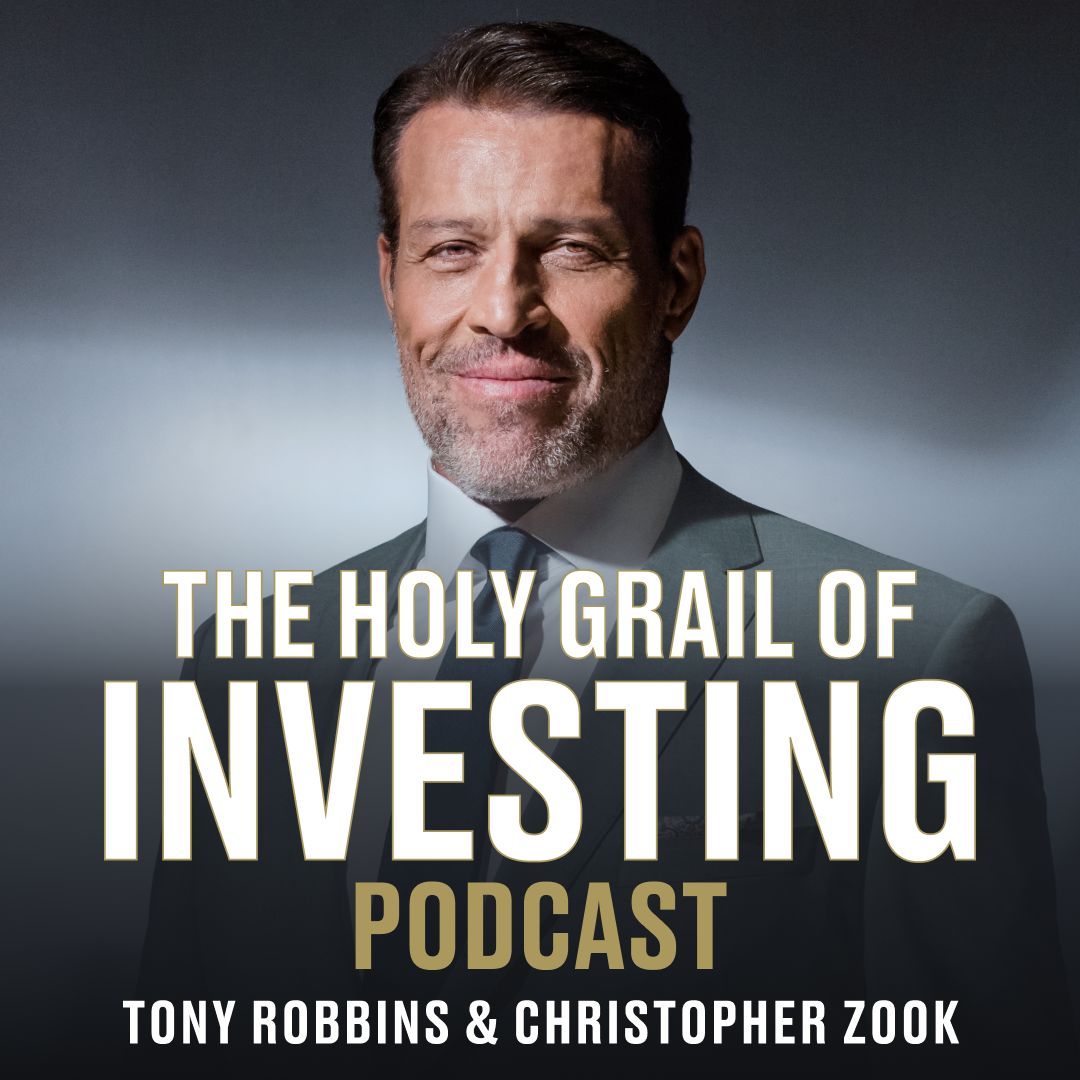
The Tony Robbins Channel
The AI Race: Why the Future of Power Is at Stake with U.S. Energy Secretary, Chris Wright
00:57:42
Loading summary
Transcript123 lines
- [00:00]
Tony Robbins
Hi, everyone. I'm Tony Robbins. Welcome to the Holy Grail of Investing podcast.
- [00:04]
Chris Wright
I love the world where America is the preeminent power. And to keep that in place, we need to be the leader in AI.
- [00:13]
Christopher Zook
But we can't have the power if we don't have the electricity.
- [00:16]
Chris Wright
The electricity sector is very heavy. Government regulation, very difficult to get a permit. Imagine a world where China is the preeminent military power. And I don't want to know what that world is like.
- [00:28]
Christopher Zook
I don't want to know at all.
- [00:29]
Tony Robbins
What are you seeing that no one else is seeing that makes you confident that we can win this war?
- [00:32]
Chris Wright
The world has a massive amount of energy. We just need to get regulations and bureaucrats out of the way.
- [00:37]
Tony Robbins
This is the power of an entrepreneur working with entrepreneurs.
- [00:40]
Christopher Zook
Exactly right.
- [00:41]
Chris Wright
We're going to make cancers that are death sentences today. Manageable conditions. We're going to have quantum computing. We're going to harness fusion energy because AI is just giving us that extra horsepower.
- [00:51]
Christopher Zook
Fusion. Will it be available in electricity in the United States in our lifetime?
- [00:56]
Chris Wright
Absolutely. Wow.
- [00:57]
Tony Robbins
What are some of the best opportunities for them? They want to make a difference in America. They want to make a nice return.
- [01:02]
Chris Wright
Our dream is in this administration, which means in the next three and a quarter years, we're going to have.
- [01:12]
Tony Robbins
Hi, everyone. I'm Tony Robbins. Welcome to the Holy Grail of Investing podcast. This is my partner, Christopher Zook.
- [01:18]
Christopher Zook
Thank you for joining us.
- [01:19]
Tony Robbins
We're going to have an amazing day today. We're here in Washington, D.C. at the nation's capital. We're here because energy is the topic. You know, everyone talks about energy. We know it affects everything, the quality of our lives. But today, energy means intelligence. The AI race is the most important race in the world today. We need to be China. If we're going to be the superpower we've been and continue to dominate, we need to make sure we win that race. There's a lot of fear of scarcity, of energy, concerns about energy. We thought maybe the best thing to do is bring you to meet one of our dear friends who happens to be the Secretary of Energy, Chris Wright. Chris, great to be with you again. Thanks for making the time. We really appreciate it. Tell me something. You've been given a pretty giant task. You're supposed to give us energy dominance, or as the President talks, the golden age of energy dominance for America again. And some pretty big challenges ahead of us. We're a little bit behind China and so forth, but we can talk about the challenges. I'd like to first find out from you what, in your unique position as Secretary of Energy, what do you see are the greatest opportunities right now in energy that people may not be aware of?
- [02:17]
Chris Wright
We hit a couple. You know, one is just bringing realism back to energy. You know, energy, as you and I know, energy matters so much. And there's so much politics and superstition and myth around it that just got us in the wrong direction. The last administration was about energy subtraction. We've got to get rid of the big energy sources and then grow the little energy sources. Well, the math just doesn't work on that. And I think, as I say, common sense is contagious. I think we're getting around the horn people to realize the real goal is more energy. Massively more energy in the United States, around the world. More affordable, reliable, secure energy is just the road to a better lifestyle. And so we'll come back to that. The second thing I'm super excited about, Tony, is in the Department of energy is our 17 national labs. These are just incredible institutions. They're gems of our country. They're the biggest physical sciences, Nobel prize factories on the planet. So we have these incredible scientific institutions and we're on the cusp of massive breakthroughs in science. So we got four big efforts or three. Three huge efforts. Artificial intelligence, right, Hitting critical mass. Now that's a partnership with the private sector. Quantum computing we have at small scale today. But if we can scale quantum computing, that's also game changing everything. Fusion energy. I went to college over 40 years ago to work on fusion energy, what powers the sun and the stars. And that is making massive progress now because of artificial intelligence, advances in material science. And so I think we're going to see pathways to commercial fusion energy in the next few years. Wow. And think of breakthroughs in semiconductors and materials in general. So it's an age of scientific discovery right now. So to have a science geek turned tech nerd like me in this position, it is a kid in a candy shop.
- [04:11]
Tony Robbins
Well, you aren't the typical energy secretary. Last time we met, we were talking about a project we're working on, breakthrough in hydrogen. And you were describing yourself as a nerdy guy, not a buttoned up energy secretary. And you really aren't. But first of all, you were approved bipartisan. You had seven Democrats, one independent. And most people look at someone in your position as a bureaucrat, but you're an incredible entrepreneur. You've built some most successful companies in the energy sector. I'd love if you'd share that with us. But also I know one of those companies was involved with fracking. And I heard from a mutual friend that at one point on camera, you drank some fracking fluid just to show people it wasn't dangerous. So give us a little sense about your, your origin story. How did you come to be here?
- [04:48]
Chris Wright
That's, that's true. So I grew up in Denver, Colorado, you know, suburban area, you know, loved sports, loved outdoors, loved all the things young kids like. But the different thing, my brother and I really love science. Like, so we read science fiction, we wanted to learn about science. My biggest fascination was the stars. You know, I wonder how far away they are. And when you find out these stars are quadrillions of miles away and you can see them with your naked eye, you know, that's immediately like, that is a badass candle. What's powering that? And so that got me, you know, into just getting books and learning what fus, you know, like a 14 year old at 14, maybe, something like that. So it's like, that's just an incredible energy source and you know, how long do they last? And what solar system, what's gravity? So I really got interested in physics and science at a young age. And then in high school, a professor from CU Boulder came down and spoke to our class about a coming catastrophe. I didn't realize it was a common thing in college campuses, but at the time, and it was that we were gonna run out of energy around the year 2000, could be 1990, might not be till 2005, but we know in that timeframe we're gonna run out of energy. And therefore industrial civilization was gonna start to decline, mass starvation was gonna arrive and like, things were pretty, it's a pretty grim outlook for an optimistic kid. You know, I'm like 15, so this is, you know, maybe 1980. And so that made me realize, oh my God, I wanna work on that problem. If we're running out of energy, I wanna work on energy. And I loved the stars and fusion energy. So like as a 15, 16 year old kid, I'm like, I'm gonna go to college and work on fusion energy.
- [06:27]
Tony Robbins
Wow, that's awesome.
- [06:28]
Christopher Zook
That is amazing. And I mean, you've held roles in science, engineering, business, and now public service, but you know, along the way you obviously were sparked by a badass candle. So, you know, to learn more about energy, but you've, you've got to have had people in your life that have really been influential and helped guided you on that path to where you are today. Talk about that.
- [06:50]
Chris Wright
Oh, so, so many, so many. You know, I get emotional if I talk too much about my mom, but mom was certainly the original inspiration. You know, like always.
- [07:00]
Christopher Zook
I remember meeting her.
- [07:01]
Chris Wright
You did meet her.
- [07:01]
Christopher Zook
I did meet her, absolutely.
- [07:02]
Chris Wright
On the golf course.
- [07:03]
Christopher Zook
That's right.
- [07:04]
Chris Wright
And so, you know, mom is this inspiration to aim high and go do it. Why not? You only live once. Go do it. And then. I loved history, Chris. I loved history. So George Washington was another great inspiration to me. Think of the most important political leader of all time. He was incredibly humble, right? He didn't do it for him, he did it for the mission. Washington wanted to create a better place, a better setting for human freedom and all that. He becomes the leader, unanimously elected twice, and then decides, that's good. I'm going to go back to my farm. The country is what matters, not George Washington. That leadership lesson to me, his courage and his humbleness and his focus on the mission and not himself. I would say Warren Buffett, you know, his as well. Same thing, Focus on the mission. Plain spoken style. Just be honest. Milton Friedman was a huge inspiration on how freedom and markets work and what drives human behavior. And I gotta call it Tony. Tony's articulateness, his passion, his optimism, his lean in, believe it and you can do it attitude, also inspiring.
- [08:11]
Tony Robbins
Very good. Thank you. I want to come back to one thing, and you really were successful as an entrepreneur after having that drive. First of all, I want to really acknowledge you that your mother's impact on you even today is very, very touching. And I find anyone who has the kind of passion you do, there's some piece inside of them that drives them. So thank you for the vulnerability in sharing that. That's very beautiful. But tell us a little bit about your entrepreneurial background before we get into more of energy policy. You built two companies. One of them, I think is the second largest fracking company ever. Like 2.6 billion. Tell us about that journey. And then how did that lead to being in the position you're in now?
- [08:46]
Chris Wright
So go to MIT to work on fusion energy. Right. I'm a young kid, excited to be away in independence, still jazzed about fusion energy, but realized quickly I didn't have the patience for big science. It's awesomely important. We need to do it. I love it, but I'm just not a patient guy. I like people, I like interactions. I like seeing things happen.
- [09:07]
Tony Robbins
Making it happen too.
- [09:08]
Chris Wright
Making it happen. So 18 years old. The following summer I worked at a bigger company. My first job I ever worked indoors. They Treated me super well. It was neat, but it was bigger and bigger. It was comfortable, but it wasn't exciting. And I worked that summer and I realized now I know what I want to do. I want to be an entrepreneur. Because I was on a team that developed a new device. There was nine of us on this team, so it was a little bit exciting. But two guys delivered most of what was in the final product. So that was my business model. If I only had people like Mike and Doug, oh my God, you had a team of nine of those, imagine what you could do. I worked at that same business a little bit the following summer, 19. That's the last time I really had a boss. And then I have been an entrepreneur my whole career. First in tiny little companies with partners where I just learned some basic things. To me, it was just like I dove in the water and slowly figured out how to swim. But I had been an entrepreneur, you know, first in technology and then the technology's biggest application was in energy and an early shale gas company, an early shale oil production company, Liberty Energy that you mentioned. Yeah, that fracks about 20% of all the wells drilled in the US and Canada.
- [10:19]
Tony Robbins
That's amazing.
- [10:20]
Chris Wright
And the pinnacle maybe was maybe the most important one. Except for Liberty Energy I would say in that very much blind squirrel finds nut. We developed some technologies to see the motion of flu fluid underground. We had developed models before that. So of course I was so proud of our models. I went around and told how our models were so much better than everyone else's models and we could model how fractures grow underground. Then it had the mistake of developing technologies to see how fractures grow. And I had to go around a second time and say yeah, everything I said before was wrong. We thought fractures did this but real data hit us in the head and in fact even our correction for people thought fractures did 10. And we said they really were three. Well, the real answer was 25. We were even in the wrong direction for with a direction that misunderstanding about fractures. But that and so it's super lucky. This insight about different growth of fractures led to a couple ideas I had and another guy I met who's still at Liberty Energy been a partner of mine for 30 years that just a couple ideas. Mitchell Energy said well we'll try it three times and just by crazy and they deserve the most credit for sure. George Mitchell and Nick Steinsberger at Mitchell Energy tried it three times. But this third frac delivered commercial gas production from a shale and we had no idea at that time. I thought this would be a big deal for Fort Worth or maybe for the Dallas area. Did not know it would change the world energy situation, but, you know, sometimes you get lucky. And then following that shale revolution along in an entrepreneurial path was fun. First with these technologies and then seeing the success it could be. Of course, I had ideas. I thought it should be a little differently. So I started a few years later a shale gas production company called Stroud Energy. In the Barnett Shale. Yeah. And then after a sabbatical where I did some bike racing and coached all my kids, little teams, you know, then we went. We brought the shale revolution to oil in North Dakota in the Bakken shale, and then that spread around. And so why did you trade all.
- [12:23]
Tony Robbins
That for a government job and a boss? Pretty awesome boss.
- [12:27]
Chris Wright
Well, I'll tell you, it was not a plan. It was not a plan. Like most things in my life, they just happen, right? So I get. I. I was actually suing the federal government in Liberty Energy for their climate disclosure rule, which is just a way to make it harder to produce oil and gas. And as I shared with the Biden administration, it doesn't change the demand for it, just makes it harder to produce, so the risk is greater, so the price has to go high. So I was like, thank you. My company and most of my customers are at record profitability ever. But the other 99% of Americans that don't produce oil and gas, they just have higher prices out of this. Like, this doesn't make any sense. And so I was up here testifying, and I got invited to a dinner at Mar a Lago to talk energy. Count me in. You know, I go down to have dinner. I first met President Trump 18 months ago at a dinner dialogue, 15, 16 energy executives around the table, shocking his style. In private, you know, we were there 2 hours and 15 minutes. He spoke for 15 minutes. He asked questions and listened intently to everybody.
- [13:31]
Tony Robbins
People don't know about him in private. He's so different in private.
- [13:33]
Chris Wright
He just kept following up, well, how does that work? And what does that mean? Or what would that imply? So he was. So usually when I meet with politicians, it's a ceremonial event. There's some fake words. He just asked very serious questions and listened for two hours. And halfway through that, I'm not shy as you. You're not shy. Neither one of you guys are shy either. And about halfway through, he says, you should be energy secretary. I'm like, what? And he says, who thinks he should be energy secretary? And then at the end of the dinner he came around and said, would you do it? I said, of course. You're asked to serve your country.
- [14:08]
Tony Robbins
That's right.
- [14:08]
Chris Wright
You don't need to think about that or evaluate the trade offs. Right? Of course, yeah. Like a lot of people do say to me, I can't believe you agreed to do that. Well, how could I look at myself in the mirror the next morning and say I'm this passionate energy guy. I get this chance to be the energy person for the United States and I say, no, it's going to crimp my lifestyle, it's going to hurt my income, I'm going to have to move. All those are true. I mean, I had to move away from my mom and my grandchild and my kids and all that. So. But it's a true honor, an absolute honor. And I'm humbled and proud and thrilled to be here.
- [14:41]
Tony Robbins
I'm so glad people get the insight of who you really are. I tried to tell people even on our brief meetings in the past and people just, they think of government, they think of it a certain way. Let me switch now to understanding where we are today. We're in a situation, we're in a race with China for AI. As you well know, right now they're talking about 11,300 terawatt hours. We're at like 4,200, almost a third. As you look at things right now and you look at your perspective on this field of energy, what are you seeing that no one else is seeing that makes you confident that we can win this war?
- [15:13]
Chris Wright
Great question.
- [15:14]
Tony Robbins
And part of it is maybe touch on some of the regulations I think you've already gotten rid of like 43 regulations I think I read, or something of that nature as well and more.
- [15:20]
Chris Wright
To be done to make it happen. So as you know, look, entrepreneurials, entrepreneurs, science, a free society, capital markets, these are magical things. So let me talk about bigger picture energy production. Then come back to electricity, which is what you're talking about, which is what's key for AI. Yes, but if you rewind the clock, 20 years ago we were the largest importer of natural gas in the world. And we were by far and away the world's largest oil importer as well. At that time, China produced roughly the same amount of energy as it consumed. It was roughly balanced. The Daqing oil field, one of the world's great oil fields, floated the communist revolution and kept China well energized. And of course it's a massive coal producer. We were this energy vulnerable nation. Shale revolution comes along and here we are today, 20 years later. We're not the world's largest importer of natural gas. We're the world's largest exporter of natural gas by far. We have 115 rigs drilling for natural gas instead of 1200 rigs. 90% decline in rig count, doubling of production, halving of natural gas prices. That is just game changing innovation driven by private capital, entrepreneurs, businesses, oil where the world's largest importer of oil 20 years ago. Today we're just by far, by a factor of 50%, the world's largest producer of oil of any country in the world. So our energy situation overall has done phenomenally well. And Kaz has been an investor in that space and knows that space well. That's capitalism, that's dynamism, that's markets. That's mostly done on private lands and state, state lands. Right. The federal government has been very obstructive to energy, but most of our oil and gas isn't produced on federal lands. We got great opportunity there. We want to see more there. The electricity sector is different. Very heavy government regulation, very difficult to get a permit, very slow and very bureaucratic. So not surprisingly, we've had skyrocketing American energy production, but not skyrocketing American electricity production. In fact, if an industry took a lot of electricity, it went overseas, it went somewhere else. We just made it hard to build big things in our country, particularly to build electricity generating assets. And we have to transform that. And look, President Trump is nothing but transformative. He came in with, we're going to get rid of the nonsense. We're going to bring back common sense. We're going to let American business and entrepreneurs that drove a revolution in natural gas production and oil production. We need the same revolution in electricity production. But to do that, you got to have regulatory reform.
- [18:02]
Tony Robbins
I saw you sent a letter last Thursday, October 23rd, to FERC. We have a new head of FERC now just approved how, what are you, what are you saying in that letter? And what does that mean for people that want to produce electricity or hook up to the grid so people have an understanding how big a change it'll be, assuming it gets implemented.
- [18:19]
Chris Wright
So before you've got to file, you want to build a data center, right? You've got to file a thing to say, hey, I'm a large load and I need this amount of load and here's where I want it. And there is a long, complicated process to figure out if there's a way to get a resource plan that can deliver Your load separately. If you want to file, if you want to bring your own electricity production to power your data center, you've got to file that as a source in the electricity grid. There's a long process for that and they're two separate processes.
- [18:46]
Tony Robbins
And there were years. It took years, right? Years.
- [18:48]
Chris Wright
And it just, look, it was just a system designed for a different time. And so when President Trump came in and said, let's just get rid of that nonsense, simplify it now. Simplifying it's difficult because a lot of rules and a lot of laws have to change. And we changing, of course, commissioners at FERC are happening as well. We got some great commissioners there. I'm very optimistic about what's going to happen. But this is a law that basically says, look, you can file one time. I've got this large load, I'm going to bring large generation. Let's look at them together, let's do it quickly. And that's just one example. That good for you to notice that last Thursday not a lot of people are following these detailed filings at ferm. But as you mentioned, across our department, across EPA and Interior Department, we're trying to work as one team in this government to make it easier to develop energy resources and critically to make it easier to build large energy consuming assets in this country, like data centers, like semiconductor manufacturing, like steel manufacturing, like auto.
- [19:48]
Tony Robbins
Manufacturing, and soon robotics. What will robotics do to the demand?
- [19:52]
Chris Wright
Absolutely. And Tony, I know you've been early on this. We all talk about AI and data centers, which are awesome and transformative, but they are also going to enable a parallel advancement in robotics where we're going to make things in our country cheaper and more efficiently, but in an energy intensive way. But look, the world has a massive amount of energy. It has a virtually unlimited supply of energy. We just need to get regulations and bureaucrats out of the way, unleash capitalists and entrepreneurs to deliver that energy. What higher use of energy can you put in energy and get out intelligence and make all of us smarter and more productive and then automate repeatable processes that humans can do. But humans can do more creative things and better things. You think of AI and robotics, we're just going to lift everyone's boat up.
- [20:42]
Christopher Zook
Well, the amazing thing about that is there's so many different ways that we can go. And you're obviously making decisions that affect the entire country and many parts of the world as well. So how do you stay focused on what the key priorities are and making sure that you don't chase Too many shiny objects. But you're able to keep everybody focused on the main goal that you're trying to achieve.
- [21:02]
Chris Wright
So, great question. So people come in all the time and they say, hey, look, we're aligned with this administration. We just want to know, what do you want us to build? What do you want us to build? And I'm sure in the last administration, they came in and they told them what they wanted to build. I'm a capitalist. I say, I'm not going to tell you what you should build. You tell me what you want to build. What is your investors and your customers, what do they want? Let me know how I can help you build it. And amazingly, they look at me like I'm weird. But that's what the government should do, right? We're to produce rule of law, a secure playing field and enable capitalists and businesses and investors to build things in this country. Of course, President Trump is very frustrated that so many industries, they just made it too hard to build here and they build it overshore. How do we bring them back? So what I've got to say is, hey, I want you to, you've got three factories overseas. What would it take? How can we help you build here in the United States? And the biggest thing is just permitting just some certainty that you can get stuff built. And then they'll say, yeah, but then the governor's gonna trip us up. So it takes the federal government, it takes the state governments, but I think we have a more welcoming, come build your large project here in the US Environment. States are competing for that too. So I'm quite optimistic. After the last 20 years, the big energy intensive industries were sort of. And China's entry into the World Trade Organization and China's uncommercial subsidizing of industries to try to get strategic chokeholds. I mean, there was some pull as well, but just too many industries left our country. We've just got to have a very welcoming environment that brings those industries back, brings those investments back into our country. Because what does it also bring? It brings blue collar jobs for people in rural areas or people grown up in tougher circumstances. That's what America is all about. We need to have awesome job opportunities for everyone, regardless of your background and your circumstances. For the three of us here, look, we've had dreamy lives, we've had opportunities. We were lucky. You know, that might not have been the case. We want those same job opportunities and futures for all Americans.
- [23:12]
Christopher Zook
It sounds like a big part of your role is to remove obstacles and allow people to flourish in whatever way they're going to do that. And removing obstacles is hard to do when it comes to government and regulation. You're doing a great job with it. So keep after it, that's for sure.
- [23:27]
Chris Wright
That's a good summary. Yeah. I'm not here to tell businesses what to do. I'm here to remove obstacles and let businesses thrive. And of course, that's what capitalists want to do. They want to build things, they want to make things happen.
- [23:39]
Christopher Zook
My name is Christopher Zork, founder of CAS Investments. In order to provide you with a little bit more information about the topic we're discussing today, we've created a white paper that you can download. So to download that white paper, you can go to yenergynow.com that address again, yenergynow.com and you'll get more information about some of the reasons behind our conviction in this area. So with that, back to the program.
- [24:05]
Tony Robbins
Well, speaking of capitalists, can you, I know you're going to leave this meeting right here in D.C. you're going to a press announcement, I understand, for Nvidia and Dell, we've got a partnership that is being called the Next Manhattan Project. Tell us, what's that project about and what's the hope and the promise that can come from it?
- [24:20]
Chris Wright
So when I was in college, you know, 40 plus years ago, there was talk of artificial intelligence. Computers are going to be like humans. I think they called it cyber. What was Norbert Wiener's term for it? Cybernet. Net. Any case, this is a great idea. It's always been a great idea. And computers have been efficiency enabling tools for humans for a long time. But they just couldn't process the breadth of data and make judgmental decisions very well until recently. And Jensen Huang, who I'll be with in an hour, just an incredible entrepreneur. You know, the world was built around Central processing units, CPUs for a long time. My God, we've gone a long way with them. He said there's a different way to look at computing, a different way to structure it that'll have different advantages. First it was video games, right? Graphical processing units. But he was relentless in pursuing GPUs and GPU technology. And he had a GPU vision that he never gave up on. He built a very successful business in the niche market he was serving, but he knew it would be bigger. And boy, was he right.
- [25:26]
Christopher Zook
Yes, he was.
- [25:27]
Chris Wright
And so, you know, these are really this one of the transformations in computing that have enabled AI to be the game changer. It is today. And I think again it will just. We're going to make cancers that are death sentences today. Manageable conditions in the next several years, not in decades. In the next several years we're going to harness fusion energy, that power of the sun. Because we have artificial intelligence. We're going to have different materials. We're going to find ways to make our air cleaner, our lakes better, everything work more efficiently. This is a lift all human boats up. But AI is not just for efficiency. And I mentioned and scientific advancement. I'm super excited about that. It's also massive for national security and national defense. So back to your opening thing about China's electricity grid. Here's my concern going back to the Manhattan Project. I think the greatest group scientific endeavor ever, ever. And maybe the first one right in 28 months. We bought together the greatest scientists, engineers, chemists from around the world, finished this understanding of basic fission of nuclear process and created an atomic bomb just so fast and under critical conditions. It brought a premature end to World War II. Saved at least tens of thousands, I would say arguably hundreds of thousands of lives by bringing that war to an early end and ultimately ushered in a safer world. These weapons are so terrifying that nobody wants to use them. Your risk of violent death during all of our lifetimes is lower than it's ever been. That's because of nuclear weapons. That's because of American preeminence economically, geopolitically, militarily. But during the Manhattan Project During World War II, Nazi Germany had an atomic weapons program. The atom was first split and understand as split in Berlin. In Germany they had top scientists. Imagine the world today if Nazi Germany won that race and they got atomic weapons before we did. I don't know what our world would be like. But it wouldn't be this. It would not be this. If China, with their very rapid growth in their electricity production, if they continue that trend, and they will, and we continued our trend of making it hard to generate new electricity production, we could not lead in AI of course we should lead an eye. We have the scientists, we have the dynamism in our society. But without a massive growth in our electricity production, we cannot lead in AI. So imagine a world where China is the preeminent military power, preeminent power of new technology and what's coming. I don't know what that world is either. And I don't want to know what that world is like.
- [28:09]
Christopher Zook
I don't want to know at all.
- [28:10]
Chris Wright
I love the world where America is the preeminent power economically, militarily culturally, business, innovation. We're not perfect, but we've been a pretty awesome world power that has enabled the thriving of the whole planet. We need to keep that in place. And to keep that in place, we need to be the leader in AI and the leader by a fair margin. That means we got to change the way we do things.
- [28:36]
Tony Robbins
And what you guys are doing at Berkeley Lab there, with this new partnership, what's the outcome of it? What are you guys. What's the projected outcome? Is that something you can share? Is it more efficiency? Is it being able to do things, you know, faster or less chips? Is it energy? More energy efficiency? Is it something larger?
- [28:52]
Chris Wright
So the last conference, press conference I had. Guess you're plugged in, Tony. Last press conference I had with Jensen Wong was at Lawrence Berkeley Labs, and we announced a new machine, the Doudna supercomputer, named after Jennifer Doudna, who won the Nobel Prize for crispr, right, for editing genes. So speeding medical discovery, speeding our understanding of dark matter and the basic workings of the Cosmo is a focus of that Doudna supercomputer that was in the works for a couple years. Now we're in the AI race. The Trump administration is in. I sent out a thing and said, we gotta do things differently. I mean, I love that supercomputer and we're gonna keep doing things like that. But what we said now is the capital and the speed of innovation. That's mostly in the private sector. Let's work together. We at the national Labs, we have 17 labs with massive amounts of land you can build on. We can permit you quickly. We have the world's greatest scientists. We can build energy infrastructure or enable you to build energy infrastructure. I said, come to us. Bring us Creative Ideas. 500 responses, two of them. I announced one yesterday with AMD and HPE, Hewlett Packard Enterprises.
- [30:04]
Tony Robbins
Yes.
- [30:04]
Chris Wright
I put out a thing like, we need artificial intelligence. We need compute power. We will have it in six months at Oak Ridge. National labor. Three times the computing power of the top computer we have at Oak Ridge in six months. That's not a procurement process. That's not a normal thing. That's saying, let's do a partnership. Which means they said, we'll go up. We're going to build a supercomputer starting tomorrow, and we're going to use part of the compute. We're going to share part of the compute for you and your enterprises. You and Nate, you run the machine because you've already got the people there. You help us get Power and like game on. And the discussion with Jensen this afternoon is the same thing. Of course he said game on. We're gonna build huge data centers with partners. This is with Oracle and Nvidia at our Oregon National Lab. This is not live, so I can say that it'll be announced in an hour. Some awesome computer systems again just at light speed. Building now. And we don't. It's not a procurement process, it's you build it, you use it for your processes and give us some chunk. And it's a meaningful chunk of that compute power that'll speed the advancement of science in the United States, that'll speed our national security complex to stay ahead of China for AI, for national defense. But we can't come up with a plan slowly and then bid people out. We're just letting the huge developers build on our lands and share the assets with us and win together.
- [31:29]
Tony Robbins
The most exciting thing I've heard, and this is the power of an entrepreneur working with entrepreneurs.
- [31:32]
Christopher Zook
That's exactly right.
- [31:33]
Tony Robbins
Never seen that before.
- [31:34]
Christopher Zook
Removing obstacles so that they can thrive is, is the theme again. But going back to what you said earlier is we can't have the AI, you know, power if we don't have the power, which is the electricity. So nuclear is becoming more and more talked about, it's gaining momentum. Obviously that's a big part of what's happening in China. So it seems like we've turned the corner and between small modular and other methodologies, we're getting closer. What do you think about nuclear and how close are we to be able to really ramp it up and tell.
- [32:02]
Tony Robbins
Us a little bit how it's changed so that people can alight some of their fears?
- [32:07]
Chris Wright
Super exciting. So, yeah, you know, we first built commercial nuclear power just past the mid-1950s. And in 20 years we had 100 reactors, many of them done, the rest under construction. And in 20 years, almost 20% of U.S. electricity. That's like new technology hitting the ground running. Then Three Mile island happens. The rise of fear in politics grows even larger and nuclear just gets smothered and doesn't grow for decades. This is, this is crushing. You know, this is an energy dense. It works whether the sun is shining or the wind is blowing. You can take a small amount of land and a small amount of fuel and generate enormous amount of energy. So what we want to do is get nuclear moving at full speed again. Now, cash, you also mentioned innovation is required here for old generation reactors. You had to actively cool them, you know, so Three Mile island was scary. No radiation was released, but active cooling systems struggled. And at Fukushima, you saw flooding of the generators that were the backup cooling. You know, we had a meltdown. Again, no meaningful radiation was reduced. So even these first second generation nuclear reactors, safest way to produce energy on the planet, right out of the box. These next generation reactors, you have to actively keep them on. If everything goes wrong, they just automatically turn off. You have to actively keep them on so they're just inherently safe and they're going to be smaller. So we think we're going to be able to be built faster. We'll ultimately get manufacturing scale, cost advantages to drive down the cost. Yeah, nuclear I think is going to be a huge energy source as you look out into the future. But it's been stagnant for a few decades. It's going to take some time, but we are all in to get that ball rolling.
- [33:47]
Christopher Zook
Is this five years, 10 years, 15 years? I mean, when do we think we actually will get some real benefits from what we're doing in nuclear in the United States?
- [33:55]
Chris Wright
So electrons in the grid is in that five to ten year range. I wish it was one to two year range. I'll tell you, because of President Trump, we will have one of these next generation reactors critical within 12 months. So we're going to have test reactors at our Idaho national lab under DOE authority. Bring your kit, build it. We're going to have safe setting there and regulatory environment. The NRC will be there to see it. All the commercial players are seeing we should have 10 or more in the next 18 to 24 months of these next generation reactors going critical. They won't be producing electricity and selling onto the grid yet, but we'll be confirming these designs. We will have shovels in the ground with reactors being built in the next 12 months. But you know, it takes, these first generation ones are going to take longer, but they're going to be very important for electricity and electrons on our grid, say five, seven years and for as far as the eye can see after that in the short term, right. It's natural gas. It's by far our largest source of electricity today. Cost, it's crushingly the cheapest way to provide dispatchable, reliable electricity. So unfortunately we have so much shale gas we can massively ramp up electricity in the relatively short term through natural gas even faster than new natural gas plants is getting more out of the grid that we already have. We can upgrade power plants, a lot of power plants, small investments, you can get 10% more times a lot of capacity that's a big addition. We've got backup natural gas or diesel generators by a lot of data centers and facilities. They only turn on when that facility loses power. Well, let's just turn them on when the electricity market's getting tight. Prevent blackouts and increase our capacity at peak demand time. That's how you get more capacity for manufacturing and data centers. It isn't more electric. Politicians always tell me we just want more electrons on the grid. Like it doesn't work that way. We don't have a swimming pool holding all those electrons in the grid. When the wind blows at night in Iowa, that actually doesn't help us at all. Right. It means we get more wind power. It means an existing natural gas plant that's running has to burn a little less gas to you displace those electrons. The only thing that helps is increasing the amount of electricity you can supply at peak demand.
- [36:09]
Tony Robbins
Right.
- [36:09]
Chris Wright
That's what limits the grid's ability to have more most all the time. We have slots of spare electrons. But the electricity grid can't work some of the time. It has to work all the time. When your kid's in the incubator, it can't turn off because demand went up. So electricity grid is different than filling your gas tank or your orange storage pool.
- [36:28]
Christopher Zook
Well, that's why it's all about energy addition and all of the above strategy. Because it's going to take each and every one of these pieces to be able to meet that massive amount of demand.
- [36:38]
Chris Wright
How much of the more energy is.
- [36:39]
Tony Robbins
Better to take away from the system? I read it was like 70 gigawatts. Is that true over that time period? And how much it was scheduled to go away in these next few years? Because I understand that we need about 50 gigawatts just the next 36 months just to keep up with demand between commercial and homes. Is that accurate?
- [36:56]
Chris Wright
Tony, you remember everything, man. I can't tell him any secrets when I'm drunk because he's going to remember them for sure. So, yeah, when we arrived, the plan at FERC and the resource plans across the thing was to show shut down 100 gigawatts of firm generating capacity before its end of life. But they were offsetting it, Tony, by building 22 gigawatts. So a net great math. A net subtraction of 78 gigawatts of.
- [37:25]
Tony Robbins
Dispatchable reliable while the demand electricity is going geometric.
- [37:29]
Chris Wright
Exactly. And so you threw out the number 50 gigawatts, which I think is a reasonable estimate for data centers in the next Five years. But we're reshoring manufacturing and all that. We think we need 100 gigawatts of additional capacity in the next five years. And their plan was minus 78. So we have to, we have to have a u turn of 178 gigawatts. Part of that is stop closing existing plants that have plenty of useful life left on them. That's just crazy. So we're going to stop closing those plants, but of course we have to add a lot of new capacity, which some is going to be getting new, new capacity out of existing assets, some is going to be accelerating new plants coming online. Some is just going to be smarter about transmission. So there's a lot of common sense things we can do to supercharge our electricity grid. But then we need to cut loose entrepreneurs. So if you look at over the next 20 years, we just massively grow our electricity generation capacity in the US but we can do it. This is America.
- [38:28]
Tony Robbins
That's interesting.
- [38:29]
Chris Wright
I know.
- [38:29]
Tony Robbins
You know, we have a power plant that we purchased 1.3 gigawatts in West Virginia. It's about 8% of the supply for the state. And it's just amazing the regulations that have gotten in the way and the push to close it. Now we're converting to hydrogen as I think you know. But the question I have for you is where does coal fit in this right now? Because I heard the President talking about reopening a series of coal power plants in order to meet this kind of demand. 100 plus more gigawatts in 36 months or 5 years. Gonna take all kinds of approaches. Does that include coal? Still?
- [38:55]
Chris Wright
Coal's critical.
- [38:56]
Tony Robbins
Coal.
- [38:57]
Chris Wright
We only have good data for global electricity back to 1900. So for 125 years, coal is 125 and oh, as the largest source of electricity every year we've had an electricity grid and it will be globally for decades to come. No wishes of environmentalists, no laws, no reg. Nothing is going to change that. It is the largest supply of global electricity. Gas is number two globally in the US and in rich countries in general, natural gas is displacing coal because if you have pipeline infrastructure, gas can be economically competitive with coal and with pipelines. And because of the nature of their plants and personnel, it actually is meaningfully cheaper than coal. So new plants that are built that are thermal, that are hydrocarbon plants are going to be almost all natural gas. But we have coal's like 16% of our total generating capacity today. And it's available whether the sun is shining, the wind is blowing. It's like equal to wind and solar combined in the total output. But it's important output. It's there at peak demand where wind and solar they might be, they might not be. And so coal is very important. So we need to keep that coal capacity going. We also want to enable our coal miners in the United States to export more coal the rest of the world coal demand was a record high last year. It'll break that record high this year. It's been setting record highs year after year. That's. That's what power. It's one of the three things that powers the world. So we've got a lot of coal in America. Let's export it to all our allies that are growing their coal production capacity. Let's keep our existing coal plants open because we need those electrons, we need that electricity. It's also a different technology, so it's affected by different things. Security also comes from diversity. And a lot of coal plants, yours is maybe higher tech, but people are taking coal plants and converting them to electricity or upgrading, I mean, converting them to natural gas or upgrading them with coal. We're for all of the above. We need more electricity, we need more innovation. You're keeping a coal plant open and innovating while you do it. Awesome. That's what we need in America.
- [41:01]
Tony Robbins
Well, with hydrogen, you take that coal and you convert it where you really know CO2 at the technology we have, as you know, it's pretty exciting to see. See, but tell me, we got involved in this because we wanted to see as much energy as possible, as clean energy as possible. Tell me what, what do you see are the. For somebody who cares about America and is an investor, that's our audience. What are some of the best opportunities for them? They want to make a difference in America. They want to make a nice return. Where do you see the greatest opportunities for investors when it comes to energy today? So many. But where would you highlight the highest levels?
- [41:29]
Chris Wright
So look, there's. There's two sides here. There's. There's energy production, which is what I've spent my career in. There's also energy consumption. Both of those have a very favorable outlook. The United States electricity grid, again dominated by natural gas. And the price of pipeline delivered natural gas in the United States is just very cheap and we have huge resources. So we have an enormous energy cost advantage. Over China. Over China. They have a labor cost advantage, they have a regulatory advantage. We have the energy cost advantage. China is the world's biggest importer of oil, the world's biggest importer of natural gas. Today, China's got common sense and of course they've got less concerns about the environment, less concerns about their people's rights. So I don't endorse the Chinese policies, but they have some commercial advantages over us. We have some commercial advantages over them. A more dynamic society, a more innovative society and frankly, better energy resources right in our country, ready to roll. So when people think about reshoring energy, energy, intense manufacturing in the. They're all. Before that was hard to permit. Yeah, you can't build that here. No, you can build that here. I mean data center developers are the classic examples of that. But semiconductor manufacturing is going to come. That's very energy intensive. Manufacturing is going to come back to our country. Steel manufacturing, aluminum manufacturing are going to come back to our country because of our energy cost advantages. But on the energy side, yeah, I truly believe we are at the start of a nuclear renaissance like this industry is going to hit critical mass and is going to grow hugely again. There's a lot of private capital in there, a lot of innovation going there. Super excited about that. Certainly building natural gas power, which has been our fastest growing and likely will be the fastest growing electricity source in the United States certainly for the foreseeable future. Huge opportunities in there. Different technologies for plants, different thermal efficiencies. A lot of room, I think, to win in that space. Oil is still the world's largest primary source of energy by a fair margin globally and will be for the rest of our lives. Oil's much more expensive than gas, but it's just incredibly flexible. You can transport in a truck, on a ship and a pipeline, you can make plastics, you can make roads, you can make data, you can make anything out of it.
- [43:45]
Tony Robbins
It's been a depressed asset because of the past administration's view of it as well.
- [43:50]
Chris Wright
Exactly. So you know, in a world of economic growth, it's going to continue to grow. If you look at the last 50 years, demand for oil grew about 1% compound annual growth rate. Coal grew 2%, natural gas grew 3%. Oil is the most expensive, but it's the most flexible. So if you can displace it into something else, you know, people are going to. Innovators are going to do that. Long haul trucks, right? They run on diesel. What are they going to run in the long run? They're going to run on natural gas. It's cheaper. It's much cheaper than diesel, burns cleaner, lower pollutants and lower greenhouse gas. I view those as separate but natural gas displacing diesel. There's going to be lots of business opportunities in that. The last company I ran, that Liberty Energy, you know these frac trucks, they were diesel powered giant machines. They're all moving to natural gas. Those, those engines last longer, the fuel's cheaper, it burns cleaner. So there's going to be a lot of that sort of next generation energy technology going on. There's all sorts of cool stuff and energy storage innovation that's coming along. Solar technology continues to get better. It's still plagued by the intermittency problem. So it's sort of joined at the hip with energy storage. If you can lower the cost of energy storage, a lot of that opens up a little more running room for solar. But, well, as you guys have spent your lives and maybe me as well, there's so much room for innovation in the United States and there's great business opportunities in that. But like everything in business, some are going to be winners, some are going to be losers. So you got to be wise in how you do it. But I think we have tremendous opportunities today for investors.
- [45:22]
Christopher Zook
It's amazing to listen to you talk about natural gas and I think about conversations we had with Teaban Pickens when he was talking about the Pickens plan and how much natural gas was going to be so much cleaner, so much cheaper, and obviously was able to make some traction in that before he passed away. But I'm sure he would be very pleased to hear you say everything you're saying about where we're going with natural gas because we are the dominant player in the world.
- [45:44]
Chris Wright
He was right, but he was early.
- [45:46]
Christopher Zook
Exactly.
- [45:46]
Chris Wright
He also thought natural gas was more limited then. Right. So he wanted wind for electricity, to save that gas and use that gas for the highest, higher value purpose of displacing oil. In that, he was totally right. India and China shipping around the world, a lot of big machines are moving from diesel to natural gas. T. Boone was right on about that. And we have even higher value uses of natural gas today, for example, to generate electricity, to generate intelligence like that. The new killer app for energy is AI, and as you said, it's going to be robotics and it's going to be traveling around the solar system.
- [46:24]
Christopher Zook
I mean, and AI has the ability to help solve for how to use the energy more efficiently and better and to come up with new innovation. It's virtuous. It's absolutely a virtuous cycle.
- [46:34]
Chris Wright
It is. I spoke at an AI fusion seminar recently and I'm like, fusion is a tricky problem. We've been working on it for 50 plus years, but I think we're going to get there now. Why? Because AI is just giving us that extra horsepower, that extra ability to control a burning plasma that's going to enable fusion to work. And burning fusion is going to give us a whole new way to produce a massive amount of electricity that's going to allow AI to grow, as you just said, this virtuous cycle.
- [47:03]
Christopher Zook
Here's the question for you, Fusion, Will it be available in electricity in the United States in our lifetime?
- [47:11]
Chris Wright
Absolutely.
- [47:12]
Christopher Zook
Wow.
- [47:14]
Chris Wright
Absolutely. Absolutely.
- [47:15]
Christopher Zook
That's amazing because everyone talked about it for 50 plus years. And to think about that being a reality and how much of a game changer that is for electricity production in the United States, that's very exciting.
- [47:27]
Chris Wright
It is exciting. And just the rate of progress is so fast now. It was three years ago in one of our DOE's national labs, the National NISIC facility, National Ignition Facility at Lawrence Livermore, that we first got more energy out than energy in fusion combustion in a pellet. So that's inertial confinement fusion with lasers. We have magnetic confinement fusion with, you know, mostly with tokamaks, but all. Also there's other geometries there as well. And there's electromagnetic fusion where it's inertial, but it's not from lasers. It's actually from electromagnetism.
- [48:02]
Christopher Zook
Okay, everybody's gonna have to.
- [48:03]
Chris Wright
That's a little too nerdy.
- [48:04]
Christopher Zook
You're gonna, you're gonna have to go back to that because I think I understood one word out of that sentence that was. That was awesome.
- [48:12]
Tony Robbins
Very happy to know who is your energy center?
- [48:14]
Christopher Zook
That's exactly right.
- [48:15]
Chris Wright
In any way, multiple pathways to fusion. But the other thing that people mistake about energy, like everyone says, well, you know, wind and solar, they're ultimately going to be cheapest because the fuel is free. The fuel is just one component in a natural gas power plant. The price of natural gas, it's only like a third of the cost of the electricity. Really the more important cost is the cost of the machine that harnesses the energy and then the grid and the facilities to deliver the energy. The problem of wind and solar has been the machines are huge. They're 10 times more steel and concrete and expensive materials than a natural gas power plant. To harness the same amount of energy and way more land and then additional transmission facilities because they take a lot of land to build these in. And then you got to build them away from the cities and then you got to transport the energy to where people want it. So with fusion, we're absolutely going to get practical ways to get more energy out, and the fuel will be relatively cheap. The question is, how good is the engineering to make the machine that harnesses fusion energy cheap? And how is that going to compete with the machines we're building to harness fission energy? But this virtuous competition between all of them ultimately will drive down the price of energy from fusion and fission. And generations from now, it's probably the runaway winner in low cost. And what are we going to do with that? Right, we're going to power our world with that. But a lot of that energy is going to be used to do what? To produce hydrocarbons. You cannot have a modern world without hydrocarbons for the materials, for clothes, for plastics, for energy storage mechanisms to deploy. But heck, you know, we have an enormous amount of buried hydrocarbons today. We can create them. If you have energy, you can build them.
- [49:59]
Christopher Zook
I can't wait to see. Someday somebody's going to come in our office and make a presentation to us about small modular fusion centers to be able to put next to big data centers and things of that nature. If you've got that idea, I want to hear about it. But we're a long way from that, obviously. But we are there with small modular reactors for nuclear. We're getting there. Obviously it's still going to be a decade or so before they come online, but it's very, very interesting and fascinating to see how many different ways we have to win. The key is to remove obstacles and to allow entrepreneurs to go out and be successful.
- [50:33]
Tony Robbins
Speaking of that, I was talking to the head of AI. He's a good friend of mine in uae, in Dubai, and he was Omar, and he was telling me I was asking about quantum computing. I'd love to hear your view of quantum computing. He told me the chokehold on it. Tony says the amount of energy necessary to really have true quantum computing is so enormous. He said that he believes is the chokehold today. Now we're talking about all of them. We've got to fusion. It's a whole different game. What's your view of where. How far out are we in quantum computing? AI is one thing, but quantum computing and AI together is a whole different universe.
- [51:03]
Chris Wright
Exactly. Yeah. As I say, our three biggest science initiatives, AI, quantum computing and fusion. But yeah, AI and quantum computing together. And they're already married together today at a small level. But the quantum piece is small and yet to do the. There's different ways to get to get quantum effects and use them in computing. But the most common today involves cooling things down to very close to absolute zero. That's the energy intensity you were hearing about to do that to build these devices. So a lot of cooling. But there's different ways to harness quantum behavior. And I don't know which one's going to win, but I think it does matter massively. Nature at its fundamental basic nature is quantum. So if you want to simulate physical phenomenon, the best way to simulate them is with physical phenomenon, which is harnessing the power of quantum computing. The guy who is I hired to be our under secretary for science is Dario Gill. He was the head of IBM Research until he came and joined. And his specialty is quantum computing.
- [52:05]
Tony Robbins
How far out does it look like to you at this point? I know it's hard to estimate, but you're in the midst of all this. Can you give us some sense?
- [52:11]
Chris Wright
I think in the next several years our dream is in this administration, which means in the next three and a quarter years, we're going to have quantum computing at a meaningful scale. Quantum computing is part of our computing system. Even today it's just at a smaller scale. You know, we have 100 qubits or something. If we can get to thousands or tens of thousands of qubits, which are quantum bits, yes, it is very meaningful in our ability to calculate or simulate certain things. There's different things classical computer is better at, and there's different things quantum computing is better at. But I think it's also going to be relatively soon. And AI is part of the answer there too. It's going to help us see the most efficient way to get longer lasting qubits and to solve this error correction problem. Because when you disturb the quantum behavior, it generates errors and you got to correct that. But there is great teams in universities, in our national labs and businesses working on quantum computing today. I mean, all the big players, Google, Microsoft, IBM have meaningful quantum efforts. We have in a bunch of our labs. So tricky problem, but I think when we talk together three or four years from now, we're going to point to that kind of calculations, that kind of machine is enabled by AI plus Quantum. It's not that far away.
- [53:34]
Tony Robbins
This has been such an incredibly stimulating conversation. I don't think we've sat down with anyone to talk about energy. And to see the man who's running energy for the United States have the depth and breadth of understanding and passion that you have, I think anybody watching has got to feel incredible at the future. Tell me this. The End of your term here. What does success look like for you? How do you define this role that you took on? You sacrificed a lot for your family, for this country. I'm sure everyone watching is grateful for now they understand who you really are and what you're getting done. But what does that job look like? How do you know you've achieved what you're after? What does the success look like for you?
- [54:10]
Chris Wright
Let me give a few specifics and then I'll end with a general thing. Success means the US has a huge lead in AI when I walk out of here and is transforming our society. Drug discovery is sped up, energy production's more efficient. Everyone's productivity is up. Our economic growth rate is increased from what it was before fusion energy. We're down to engineering, figuring out how to build these machines for these different approaches to that. Quantum computing has become part of our ecosystem. And there's a broad based belief that energy is the ultimate enabler of human lives. And everything humans want to do, and we've got a vast majority of the population is energy additional, not energy subtraction. We're sober about climate change, like it's a real thing, but just not even close to the world's biggest problem. And that people appreciate that and that the world's biggest problem is that 2 billion people today don't have clean cooking fuels. We're losing millions of lives from indoor air pollution because they don't have basic energy systems we take for granted. We gotta fix that problem. We gotta all be in energy addition mode. We've gotta understand when you think about energy, you really just have to think about two things. It's about human lives. What kind of energy is best going to improve human lives. And math. What energy source or technology or system has the best math, meaning the most affordable to lift up human lives. But I'll tell you, my experience so far is common sense is contagious. I have incredible dialogues with Democratic governors and senators and House members that now that are, that are very open to. Yeah, we want to win an AI. Yeah, we need more energy. All right, what's the, the right way to. Okay. You know, people are starting to talk about energy for what it is. It's the infrastructure for human society. It's not some political bogeyman. And so, and so we want to leave lasting change. You know, President Trump is a lean in. He's going to make a crazy amount of stuff happen. But I don't want this to be able to snap back to energy subtraction. Energy fear, mongering you know, three and a half years from now. So we need to leave some hopefully bipartisan permitting reform, some legislative changes, but maybe even bigger is just a mindset change. The future of America, the future of our world is intimately tied to massively more energy, more affordable, reliable, secure energy.
- [56:32]
Tony Robbins
Yeah, this has been beyond a pleasure. We've spent time with you before, but this is extraordinary. I think anyone watching will have a whole different view of what's possible moving forward. And all of us so grateful for you. Thank you for the privilege of spending some time together again.
- [56:45]
Chris Wright
It's great being with you two guys, both of you entrepreneurs, hard driving innovators in your own right. So happy to be among kindred spirits.
- [56:54]
Christopher Zook
Really appreciate the time. This has been fantastic. Thank you so much.
- [56:58]
Chris Wright
Appreciate you guys. Thank you.
- [57:00]
Christopher Zook
Thank you for joining us today. And to learn more, you can head over to Tony's YouTube page where you can download previous episodes and see everything we've covered in this series. You can go to holygirlofinvesting.com as well to learn more about the book that Tony and I wrote together and learn a lot more about other sectors and things that you can expect to hear in future episodes of the Holy Grail of Investing. And don't forget, you can also go to Apple Podcasts and Spotify to download as well. We look forward to seeing you next time.
- [57:28]
Tony Robbins
Thanks for spending time with us.