← The Transaction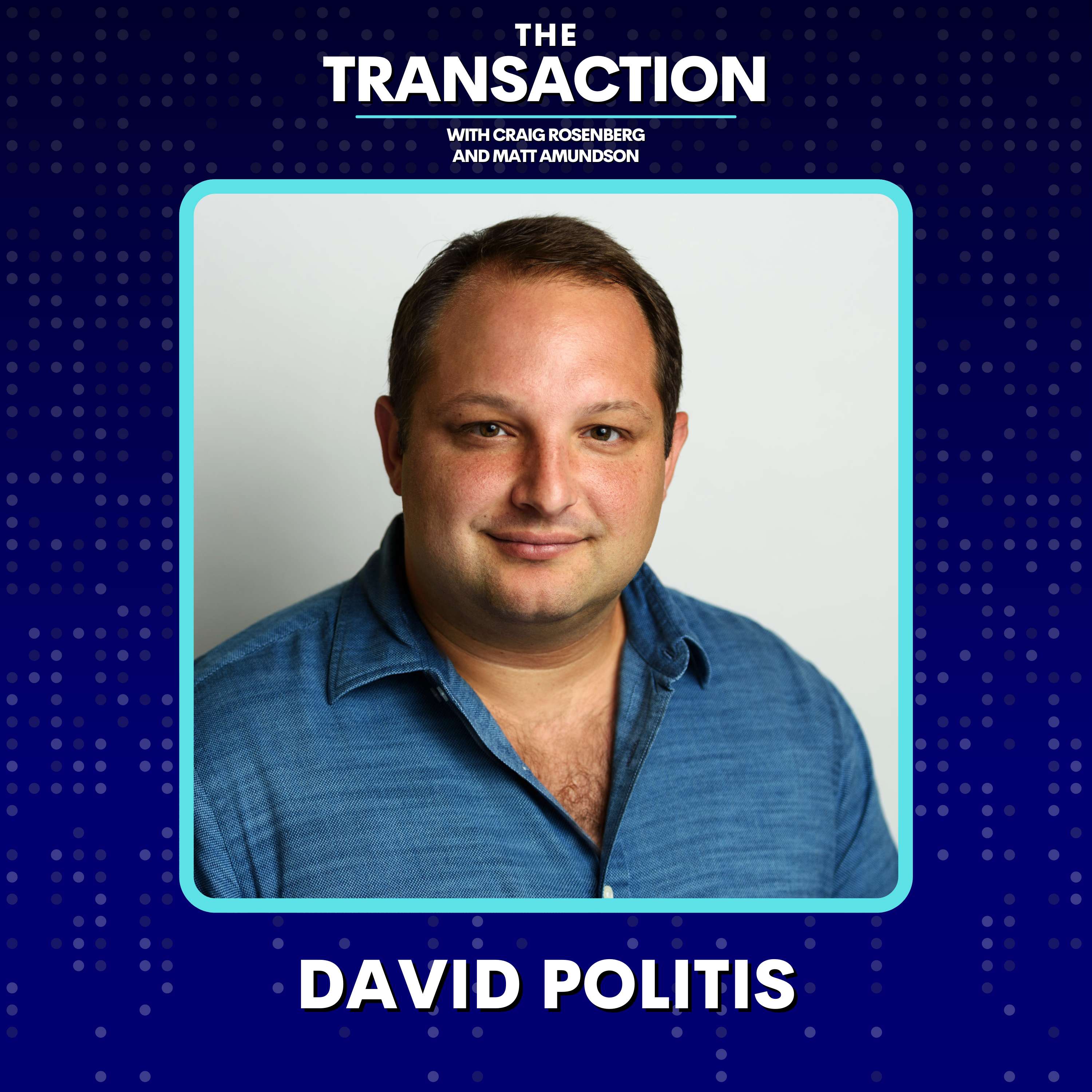
Loading summary
Transcript87 lines
- [00:00]
Craig Rosenberg
By the way, Matt, I met David when he was like, how. Honestly, I know I called you the 23 year old wonder kid, but like, how old were you when we first started working together?
- [00:08]
David Politis
I think it was 23 or 24.
- [00:11]
Craig Rosenberg
Yeah. So like we were. Yeah, I know it was Tippet. And we, we somehow managed across David's company, which is Vocalocity down in Atlanta. Get the deal. I go down there and I'm like, dude, this guy is amazing. And he's 23 years old now, as David will tell you through the next 20 years. I kept calling him 23 years old. I still do when I introduce him, and he's not anymore, but it, it was pretty cool. But here, fun facts about him. So he's down in the atl. He used to take me out. We went to the US Rashad Evans knocked out Chuck Liddell in the Georgia Dome with me.
- [00:51]
Matt Amundsen
Oh, nice.
- [00:52]
Craig Rosenberg
Yeah, there, that's one. Number two is he ordered. He used to order H and H bagels before, like Goldie and. Or whatever. What's the, the food delivery, Gold belly, all this stuff. Like he was, he was getting his H. H fix, which I can truly appreciate, truly appreciate down there. And then number three, he used to just do. He used to drag me out with. You know he's 23 in Atlanta, right? Yeah, the company. So I'd be like the old guy just sort of hanging out with these guys. I was, I. David, I don't know if you told you I was the worst conversationalist. Like we'd go opera or whatever and like people be talking to me and I'd just be like, I'm literally not a great guy to talk to. It was unbelievable. And so anyway, but I had some of the best times with this guy.
- [01:44]
David Politis
He and everyone loved when Craig came to town. Everyone, we would talk about Craig's coming, everyone get excited for that week, you know, but that UFC fight was one of the mean. That was before the UFC is what it is today. That was a, that was a scare. We, we almost didn't make it out of that place alive. We, we.
- [02:06]
Craig Rosenberg
We were there and he was with a 36 year old man and David was a guy through. Spilled his beer all over him. And I'm just going. I actually, truthfully, I had no idea. Oh my God, I thought we were gonna get. And I'm like, what? I had no ide. David, you haven't met Matt. He's like my boy forever. Also, he can relate because I still bring up the fact that he's 15 years younger than me.
- [02:37]
Matt Amundsen
10. 10. It's 10.
- [02:40]
Craig Rosenberg
And I watched him while he was on the UCLA football team. The back of his jersey and remembering.
- [02:46]
Matt Amundsen
Out there, from ABM to plg, from medic to med pick, the world of business is constantly evolving. We'll cover the who, what, where, when, why, and most importantly, how you get the transaction. I'm Matt Amundsen and he's Craig Rosenberg. Let's get started.
- [03:08]
Craig Rosenberg
You know, I'm just happy that you guys are connected because Matt, David, it's been like amazing for me. You know, he was my customer for a long time and sort of, sort of viewed me as a guy that was helping him. But I used to learn everything from him. And so, you know, I tell stories about the 23 year old all the time. Even when he wasn't 23 anymore, these decisions that he was making and the way that he worked was incredible. And then so, you know, he had Vocalocity at a young age. Bought by Vonage. He did this company called Better Cloud, which he was the CEO founder of. They had an outcome with Vista, I believe, Right. A couple years ago. This guy is a winner. He's New York through and through, by the way. So you guys can talk about whatever you want, but he's one of the most amazing executives that I've known and I've been able to watch him from Emory all the way. You know, he was practically still in college when he started vocal at Vocalocity all the way through. So now he's got a podcast which everyone can follow. And, um, just great clips coming out from that, by the way. David, really great.
- [04:21]
David Politis
Thank you.
- [04:22]
Craig Rosenberg
You're probably learning more. So it's just. Everyone, this is David Politis, one of the my favorite guys of all time. And he's a repeat guest, which is, you know, for us, like, well, forever for the audience. It's an honor in our opinion.
- [04:39]
Matt Amundsen
Yeah, it's an exclusive club.
- [04:43]
Craig Rosenberg
There's a membership fee, which we'll come back to later. But anyway, it's David Politis. So David, thanks for coming on budd.
- [04:50]
David Politis
Thank you very much. Thank you. I'm really excited about this. I enjoyed our last conversation and I tell everyone that will listen that. And I'm not exaggerating when it comes to marketing, B2B, marketing demand, ABM, all of that. I. I really have. My entire foundation is built on what Craig taught me literally 20 years ago. And it's amazing how much of that is still relevant today, actually.
- [05:15]
Craig Rosenberg
Thank you, buddy. Appreciate that. I need that actually on the marketing side, because, you know, at the end of Topo, I had to buff up the sales stuff and somehow I became a sales expert. And I'm like, dude, I used to write about marketing automation in 2000. What, seven? That or something?
- [05:29]
Matt Amundsen
Sure, yeah, in junior high.
- [05:31]
Craig Rosenberg
So the. It looks so much younger than me too. It's unreal. Anyway, all right, let's start the show. Here's what we're gonna. You know, we've had you on the show, so this might be interesting in terms of if anything's changed since the last time we had you on. But, you know, as, you know, the, the way we like to start things is what's something that the market thinks they're doing right? It could be an approach, best practice, methodology, anything. And they're actually wrong and they should be thinking about doing a different way. What is it? And, and what should they do about it?
- [06:06]
David Politis
So the first thing I would say is I, I think it's the same thing that I said last time we, we did this seven months ago, which is people. I, I think a lot of companies, in an effort to have as large of a TAM or a sellable address market, a SAM as possible, they. They are going after multiple Personas, multiple customer profiles. And it actually is, it's, it's debilitating in my opinion, in many ways. And, and it slows the growth versus speeds up the growth, which is what people expect. And so I've been spending time with, literally at this point, I think, dozens of SaaS, businesses of all stages. And what I see in so many of them, I'd say in more than 80% of them, is that they are trying to expand versus get more narrow on both the ideal customer profile and the ideal buyer Persona. So, for example, and I, I'll actually use my own examples from my career because I've been sharing these with people as I've been having these conversations. At Vocalocity, we were selling a Cloud PBX, a phone system to micro SMBs, sub 10 employees. That was our target market. And there was a day, I'll never forget it, we got a big customer, big prospect, 100 employees that for us was 10x the size of our normal customer. And they bought from us. They bought, which was, I mean, it made the whole quarter in like basically one deal. And then from that point on, every conversation was, what features do we need to have? Let's keep going after those customers. And it derailed really what we were, what we were doing as a business and the machinery we had built because we were, we had this one big account and maybe one or two other prospects that never closed. And so that was going up market. And then at Better Cloud, there was a period of time where we said, oh, our buyers, we were selling to the director of it. That was our target market, that was our Persona. And then all of a sudden we said, oh, you know what, the ciso, we got a CISO who got super excited about what we're doing. They bought for $200,000. The CISO, that's the other Persona. But when you do those things, all of a sudden the messaging, you need two, three different playbooks for messaging. Your website needs to talk to all of those groups. If you want to build community, that's basically impossible because those Personas don't want to live in the same community. That is, that's the number one thing that I think people and, and it's hard in times like this in the market when, when things are tough and growth has slowed, it's hard to actually stay focused. But, but in my experience, getting more focused results in literally better metrics across the board. It's, it's, it's almost counterintuitive. The less, the smaller the target market, the higher all the metrics are going to be, the better. But that's, that's what I've seen in every single company that does that. So that's the first thing.
- [09:15]
Matt Amundsen
Yes, yes, yes, yes, yes. I see it all the time. So, you know, in addition to being, you know, a founder and having a bunch of successful exits, at this stage in your career you do a lot of advisory, you do a lot of investing, so you're lending your expertise and sub your subject matter expertise to lots and lots of different people. Now very easy to get overly excited about that big customer that comes in and not just comes in, but actually closes. And that can drive your product team to want, to your point, start adding new features, adding enterprise grade features to your product and it causes confusion in marketing, in sales and in product. How do you avoid that? Or what are the steps that actually signal to you that like, hey, this isn't just a one off, there might be a real. There, there.
- [10:08]
David Politis
Interesting. So I, I think it depends on the stage that you're at. If you're in an early stage business, there's a lot more trial and error. But my advice to people is to do that trial and error sequentially, not all at the same time. Because when you're doing the trial and error all at the same time, how do you know if Anything's going to work. You're telling your team called 100 Person Company, the 5 Person Company and the thousand person company. It's impossible. So that's trial and error on a quick, in quick succession against those different target markets. And that's based on conversations you've had or whatever the case may be. We get into the detail there. If you're a little later stage, I'll walk you through actually something that Warburg, Warburg was one of, Warburg Pincus was one of our investors. They invested in 2020 and better cloud. And when they invested they said to me very quickly after the investment they said, Dave, when we go through your customer base, when we do all the analysis, we can see that there is gold here. There is a segment or two segments that are gold. The retention is through the roof. The sales cycle is short, the ASP is high, the CSAT is high. Like they, they could see that. And they said what we're going to do is segment your entire customer base, which was thousands of customers at the time with you. We went through, segmented all of it with all the attributes, location, you know, size, industry, every attribute you can imagine. And we cut up the customer base into hundreds of mini segments and then we, you can, when you look at the attributes, it becomes glaringly clear which segment is the one that you're actually being successful in. When it's all blended together, you may have a net retention of 110%. When you start ripping it apart, you may have a couple segments that are at 131 40best in class. It's telling you right there in the data. It's so simple actually that when we went through the process, when we got the results, I was like, this is, it's, it's almost too simple. The data tells you the answer, but we want to believe, oh, this segment, it's just recently that segment hasn't been, you know, I'm going to. So I think in the early stage it's about trial and error. In the later stage it's about using the data to, to tell you where to go.
- [12:26]
Matt Amundsen
Yeah, yeah. And the one thing that I always recommend to people is if you know who your core buyer is, continue to market to that person. You know, the, the big ones, they may come in and it's okay to be opportunistic about that. What it's not okay is to go out and diverse your marketing investments, your enablement investments and start saying, hey, you know what the reality is? The reality is we serve four or five different ICPs and two to three different Personas within each one of them. Stick with your core. Invest your marketing dollars there, invest your messaging dollars there and invest your sales enablement dollars there. Because big people, bigger companies or, or just companies that, that are outside your core, they'll come in and if you want to close them, close them. You don't have to turn them away, but you don't want to be diverting a lot of your go to market investment into that space if it's unproven.
- [13:15]
David Politis
I, that is, I love that because actually that's exactly. When we went to our sales team after we did this process with Warburg, we said to them, hey, we're taking our Salesforce database that has, I think it was 8,000 contacts or companies that we were targeting and we're going to take that down to 4,500. And people said, wow, that's, you're going to remove out of my territory that many accounts. So yep, these are the accounts that are going to clothes these. So we did that. But to your point, it was a very important point that, that Warburg told us that I told the team is, hey, that doesn't mean that if someone outside of that group calls us and says I really want your product and I'm going to buy your product, that doesn't mean we shouldn't sell it to them, but we should be super explicit that we're selling them the product that we have, not the product that they may want, not the product that the other competitor has that services that target market. But I think what you just said is super important, which is it's about the marketing, the outbound, the messaging. But if they come in and they want it, that's always going to happen. And you don't want to turn those customers away.
- [14:24]
Craig Rosenberg
Yeah, yeah, that helps alleviate the fear. I think that I have a couple points. One is, I think what David said about the targeting is really important, which is it solves real strategic business metrics.
- [14:42]
Matt Amundsen
Yes.
- [14:43]
Craig Rosenberg
I think, I think people, you know, when you, the people that try to do it without sort of the reason why, you know, like they fail because it's marketing going well, we're going to be abm and I just ran this through Zoom Info and here's the target account list. It's like, you know, even when you're early, you know, you, you want to have. This is a strategic decision on who you're going to sell to. So I'll give just a couple examples and thoughts. So one was we had Chris Degnan From Snowflake at our Go to Market Summit, David. And he got up there and he's like, the first thing I did is I said, we're not selling the enterprise. And the way he said it was so interesting, right, Matt? He was just like, I don't care.
- [15:25]
Matt Amundsen
Yeah, yeah.
- [15:25]
Craig Rosenberg
I mean, they could come in and beg me. And I'm saying no because of what you said, David. Which is like. He's like, I'm not going through all these processes that you're going to make me go through. He's like, we're going to sell. This was early when he's like, I want fast. So he's, this is a strategic decision. I want to sell what's on the truck. I want to sell it fast. Right. And to do that, I cannot sell to Citibank.
- [15:51]
Matt Amundsen
Yep.
- [15:51]
David Politis
Now, interesting.
- [15:53]
Craig Rosenberg
By the way, even when they were picking up steam, and I'm not sure today, because I can't give that up today. I have no idea. But, like, he was maniacal about that. And those decisions were strategic decisions. The other example I love was like, I remember early days Gainsight and Meta's Nick Meadow was just like, you know what? Our churn rate changes if we throw out the SMB. They just threw it out and they get. He's like. And we give them to our competitors. He's like, it's, you know, we. That and that if you take the strategic metric of churn, you know, the first thing they do is they fire the CS leader, they bring in all these people, they make these moves, which, you know, you might have to do. But also you could look at the data even at early, that was like three and a half, four years in, and just say, I mean, look, this set of customer stays, this set of customer doesn't. And, like, that's a strategic decision. And you're also with. You know, what both of you guys are saying is you're making that decision. It's not just the targeting decision. This is like how our resources are deployed. This is how we market. So, like, that, to me, has always been big. I remember at Topo, we were just hot with AVM and someone come in, say, I want to do abm. I'd say, why? Like, well, you're the ABM guy. I said, I know I am. But like, you gotta be solving a real problem here, otherwise it's not gonna work. And you don't believe that you're solving a real problem. And there was a bunch that did. And they did great, right? And then there was a bunch that didn't we. I remember we went in and did one and the cmo, we looked at the data with them, and their sales team literally had all this stuff in the their forecast. And if you looked at it, these certain. It was a vertical decision because these verticals didn't close. There wasn't enough pain in urgency and we didn't know how to sell to them. And so I said, hey, guys, like, we can't keep targeting these guys. And the CMO who brought us in is like, whoa, what. I mean, what do you want the sales guys to do? I said, wait, are you serious? You want them to just work deals so they have deals? Like, that's not gonna look at the data. These aren't gonna close. And like, just didn't believe you have. This is a strategy. This is a big decision. And so I love that David brought this up first. The other thing is on the Persona, I for both, you know, both you guys, like, I wonder. I'm gonna throw this to you both. I just wonder one thing. Sometimes with these companies, if you're not like a widespread plg, like a notion where anybody would earn airtable or we have a new one motion, it's like a lot of people could. Could go do it. But let's just take those aside for a minute. And we had the rest of the world of software, enterprise software, when they're purpose built for a person or a department like that, that is actually, you know what I'm saying, Like, we're talking about going back and going, well, let's only focus on this Persona. It's like it works better if the founders built something for someone.
- [19:04]
Matt Amundsen
Yeah.
- [19:04]
Craig Rosenberg
So, like, you know, we have one that's they sell to the chief accounting officer. You know, I'm like, dude, don't expand. You built it for them. Everything's built for them. The marketing's for them. There's two stakeholders. Let's not get crazy here. Let's beat this buyer, this ideal buyer Persona until the end. So I'll throw this to you guys though. What comes first here? Like, is the product built for someone or some group, or are we throwing this out into the wild and then coming back and saying, these are ideal buyer Personas or, you know, I don't know. I. I just feel like as the more I look at it, it's like, who is this built for? Is kind of the key question when identifying the ideal buyer Persona. Your thoughts?
- [19:50]
David Politis
I. I personally think that you're building for a particular Persona, and I think that you're really, you know, in the, again, early stage, you may have three, four Personas, but they probably are all in the same job function area. Right. It's like I'm building for it. Is it the IT sysadmin, the director of it, the VP of it? I'm not exactly sure, but it is in the IT realm and then you can kind of zero in and there's some, I don't know, elasticity, if you will, to that. To that Persona. But, but in my experience, when you build for that Persona, to your point, Craig, it's not, It's.
- [20:32]
Craig Rosenberg
It's.
- [20:32]
David Politis
It's also about like, I really believe in community in such a big way. And if you think about it, when you're building for that Persona, they start to feel a connection to the company and to the community, and they're surrounded only by the other people that are like them. There's like a building momentum there. That, that I think is really important.
- [20:54]
Matt Amundsen
Yeah, I agree. I think, I think you build it for a person and then you have to understand that person's not just their workflows and the technology that they're using and the way they're measured, but also you have to understand like the. What does this product mean to them? Right. Like, understanding what a product means to a person is really important. I think that's the one thing that a lot of companies miss is they think about our product is this, and it does this, but. But they don't really think about what does that mean for the person who ends up buying it. When I think back to my days working in the marketing automation space, marketing automation had a really good understanding. The vendors had a really good understanding of what the products meant to their buyers, which was, hey, this gets you a seat at the revenue table. This is going to make your work easier. This is going to enable you to deploy more programs. Like, this is what it means. It means that you, it's. You multiplied by 10. That's something that I think most companies miss, is they're just like, oh, well, you know, if you're, you know, designing a product and you want to get a quicker feedback loop on, you know how people are logging in, this helps you do that. And that's just what it does. That's just what the product is. It doesn't tell that buyer what it means for them. And so when you go deep on a Persona, you start to understand their motivations and you start to understand how they get promoted. You start to understand how they make more money. And if you can weave that stor that portion of the story into your narrative, that's when it becomes powerful. And that's when things like what David is talking about, communities start to emerge organically. It's not like, hey, we started a Slack channel. Can you guys drop a couple comments in here? It's people start to start, they, they begin talking to one another and they're like, you know, I bought this product and then I was able to do, you know, my projects at half the speed and so that I was, you know, twice as effective. And then I got promoted. Right. Like, I bought this and it helped me in my career. And that's something that most products miss.
- [22:59]
David Politis
I love that. I agree with that.
- [23:02]
Craig Rosenberg
Yeah. By the way, he's loved two of your comments, Matt.
- [23:05]
David Politis
I, I, I have, I have. We haven't met each other, but I feel like, you know, you just. Same, same wavelength.
- [23:13]
Matt Amundsen
More podcasts at 8:30am Craig. That's the answer.
- [23:16]
Craig Rosenberg
Oh, man, you priority run 18 miles. By the way, I did want to. On your point, though, Matt, I will add something you will love about David. Yeah, basically, as the CEO went to the company and said, I want to talk to what, 100 customers?
- [23:31]
Matt Amundsen
Oh, yeah, I listen to that podcast. That's my favorite podcast from the original show, dude.
- [23:38]
Craig Rosenberg
And like, if, but this actually, I'm tying it actually differently to Matt's point, which is like, talk about deep understanding of the customer from the down. I mean, and, and by the way, fun fact on that. So a bunch of people really liked it on LinkedIn on your little snippet there. And then one person wrote that seems like a lot. I'm like, bro, like, let me look at your career and just talk about not understanding founder mode. So, but, but, but yeah, as David, like, you did that later, though. But like, well, I did that.
- [24:18]
David Politis
I think I did that throughout. I just didn't do it in a concerted effort of 100 customers in 100 days. But the reason I went to the 100 customers in 100 days, because I had lost touch with that Persona that I, and it was because of COVID Honestly for me, because I had been spending so much time on the road pre Covid, you know, 2019, I think I did 150 flights in a year basically, to events, to customers, to this. And then I, and then it obviously went to zero. And I felt so disconnected that in 22 was when I did that, because I felt like I needed to kind of re. Reconnect with that, with that Persona, because I used to do it in person. You know, so. But to your point. Yeah, that was. But I recommend that type of thing for every founder. I think it's really empowering actually because when you go through that process, especially in a concerted way like that, you come out with, with findings that makes it very clear to the company, to the customers, to the market that you are the expert because no one else went and did that, you know, and so I, I stand by that, that that still is one of the best, best initiatives I've probably ever done in my career in 20 years.
- [25:30]
Craig Rosenberg
But if you were going to. So let's say I'll take Paige out of Matt's first question, which is like, so take that idea of like I, by the way, I don't know that it's obvious to everyone that you need to be talking to customers. I mean, 150, you know, trips to, to go meet with customers is amazing. But like I'm, I'm starting out, I'm. Well actually, who care? You could be starting out or whatever. You're a CEO, founder. Like what should I be doing? Just trying to meet with customers each week, day? Like what, I mean, what, what you.
- [26:05]
David Politis
Should be meeting with customer. I think in the early stages, I mean in every stage you should be meeting with them a lot. But in the early stage, I think every customer conversation, every customer conversation is gold because those conversations that tells you the stories that you can use to then go and sell the next customer, those are the stories that give you the credibility with your team. When you talk about building a feature, those are the conversations that give you the ability to go raise money from investors and say, I'm the domain expert. I may not be in that job, but I'm the domain expert because I've talked to thousands of these customers. So I think those conversations should be happening as often as possible. Going to meetups, hosting the meetups. You know, when you talk to one customer, ask them if they have another customer they can introduce. I mean another person, that same job they can introduce you to. So that's my opinion. I really, I think about my fundraising efforts and I can always think about, I would give quotes. Oh, I spoke to the head of IT of this hundred year old car insurance company in the middle of nowhere and they're making the move to SaaS. And if they are, then everyone is. They weren't a customer of ours at the time, but I could use that when I went to have those conversations. And you can't do that unless you have firsthand experience. You can't read that you can't hear it thirdhand. Like, that's not. It doesn't give you that credibility, or at least the. Yeah, I think the credibility on that front.
- [27:41]
Craig Rosenberg
And then Matt's a cmo. Matt, how often do you talk to customers?
- [27:46]
Matt Amundsen
Well, when I start at a new company, I try to talk to customers as much as I possibly can. So usually, like, I'll set the goal with the customer success team is that I want to meet with five customers a week for the first month that I'm there. So I try to get 25 conversations in the first, you know, quote, unquote, 30 days. But then we're know, the thing that I do is I always do customer dinners. Always. Not prospect dinners, customer dinners. Because, you know, the good thing about being here in the Bay Area is generally if you're selling SaaS, you're, you know, you've got. The majority of your customers are here, so you should be spending your time getting coffee, having dinner with these folks. There's really no, there's. There's nothing that you can do that's as valuable as meeting customers. I think once you're. Once you're an executive, there's nothing that you can do that's more valuable. The reason for that is, you know, at best, what you can do is research, right? You can read Gartner reports, you can read. You used to be able to read topo reports, and you can come to your own conclusions about things. But there's that at the very best, you're coming up with a really good hypothesis. When you talk to customers, you get truth. And the thing that's always interesting to me as a marketer is, you know, you have 10 conversations with customers, you're going to really figure out the way they talk about your product as opposed to the way that you want the market to think about your product. And so you cut to the truth. It's much easier to create messaging when it's coming from your customer's voice because you'll hear the consistency. Why did you buy? What do you like about the product? What problems is it solving for you? They'll tell you, you. You have in your own mind what you think it is, but they'll tell you the truth. And whether or not you go verbatim with their words or you sort of know, as all marketers do, at a level of hyperbole to it, the messaging is always so much stronger when it's driven by conversations with customers, as opposed to, you know, a think tank of sales and marketing people all In a room, you know, with sticky notes, figuring out what the right thing is. So that's the thing that I say. There's, There's. There's nothing that you can do that's more valuable because it's going to help you with your messaging. It's going to help you sell to your next customer. To David's point, it's going to help you raise. Because everything that's specific that you can get from a customer, hey, this customer said, this makes everything feel so much more honest and so much more real than, you know, we built this with this in mind, right? Like, that's fine, but it's not as good as. Hey, I had this conversation with the CISO of, you know, XYZ company and they told me exactly this.
- [30:20]
Craig Rosenberg
I didn't love that one, Matt. Sorry.
- [30:23]
Matt Amundsen
No, But I got some head nods.
- [30:27]
David Politis
You want me to. I can say it at the end of every comment because I.
- [30:30]
Matt Amundsen
No, it's okay.
- [30:31]
Craig Rosenberg
I thought that was a. Okay nod you got. So I think. All right, well, let's move on because we just were sort of.
- [30:40]
David Politis
I want to. Can I go back to. I want to go back to that first question that you asked me just because I. At the very beginning of. Just what am I seeing? Because I, I think the other thing that I, That I see, which kind of comes off of defining the ideal customer profile, ideal buyer Persona, is really about how we interact with our prospects and our customers, how companies interact with their prospects and their customers. And what I've seen is, and we all have seen this, this proliferation of tools that exist now, especially AI automation tools in both customers, in sales and in customer success. There it is just. I mean, when we started working together, Craig, 20 years ago, it was hard to get contact information for buyers. That, that in itself was a hard thing to do. And you had to do work to get that. Today you can get that from a lot of sources for basically free. When we were started working together 20 years ago, if we wanted to send emails, I mean, that was the early days of Marketo, the very early days of Marketo. Right? You had introduced me, I think, to Phil and John in those early days. And it was like those early days of Marketo and there, I mean, you had to actually send the emails and you had to write the emails and send the emails. Now there's tools to send emails, then LinkedIn messages, then call you, then do this. And then now with you layer AI on top of all that, and it's writing the emails and saying the things on the call and doing all that for you. And my opinion is that actually we're going to enter yet a new generation essentially of customer engagement, prospect engagement, outbounding, that is more human, less automated, more authentic, highly researched curated. So for me, I'll give you just a couple of examples. Like on the new customer front, one of the things that we did at BetterCloud and I've been advising a couple companies and they've now done so I've seen that it's worked multiple times as an example is actually sending STRs, real people with a bag, a swag bag, to a prospect's office, physical office, getting past security, up the elevator and hand delivering that bag with the swag and a handwritten note to that prospect in their office. Not easy to do. You don't want to do this if you don't have a defined ICP and ideal buyer Persona because that's too many people to go after. But the conversion rate is like nearly 100% from when the bag gets delivered to that person taking a meeting. It's. They have, they have to. Even if it's just out of respect for how much work you did to get them that bag, they have to do that, right? That, that to me is an example, another example, actually. This is interesting. On the customer side, this is a little bit different. But on the customer side, something that I've been doing with some companies is you have a customer post something on LinkedIn, a customer you have a relationship with, they post something interesting on LinkedIn, you like it. But not only do you like it, you go into your internal slack, share the LinkedIn post and tell your team, hey, there's one of my customers. This is a pretty cool post. Can you guys amplify this? And what you see with a lot of customers, most people's customers, is that they post on LinkedIn, they get 20, 30, 50 likes, and then all of a sudden you come in and they've got 150 or 100 or whatever, because you really drove that. They recognize that that builds a relationship with them in a way that. So I'm just trying to give a couple of these examples. I have a long list, but I feel like that is what is needed in today's world to stand out, because there's just. I launched the podcast I put on my LinkedIn and I swear to you, I get pitches right now for cyber security products for my podcast company of one person. It's like, would you need to secure your infrastructure? Our product, you know, secures all the. I'M like it's not even a company and I'm getting pitches for literally CRMs this for my one person podcast. Like that's how automated it is.
- [34:53]
Matt Amundsen
Yeah.
- [34:53]
David Politis
You know, and so anyway, that's, that's my, that, that I feel like that's a. At least in my opinion that that seems like a trend that we're gonna see. It doesn't mean that there's no space for automation or the AI tools or anything like that. But I think to stand out with the key prospects, the account based marketing, the account based everything. That's what I think it's going to take.
- [35:16]
Craig Rosenberg
Matt.
- [35:18]
Matt Amundsen
I love that.
- [35:22]
David Politis
Yes, I got one, I got one.
- [35:26]
Matt Amundsen
No, I, Yeah, before you go, I'll.
- [35:29]
Craig Rosenberg
Just add this to you then I'm gonna hand you the mic. You're not allowed to say you love this though, because this, I mean, honestly, I need one at some point is so, you know, as you're saying. So this kid wrote me on LinkedIn, said, you know, love the podcast by the way, he has like a. Not it. Call it a SMB, ish. Not like parakeet shops, but like tech companies type of target market. And they've been doing hand delivered.
- [36:02]
Matt Amundsen
You.
- [36:02]
Craig Rosenberg
Know it's not direct mail. Right. It's like swag, gifts, whatever. 50% conversion rate to close, no SDRs. That's obscene.
- [36:15]
David Politis
Yeah, I believe that, I believe that number.
- [36:18]
Craig Rosenberg
I mean he comes from a real brand anyway. Okay, Matt, to you, no saying I love this except for what I just said.
- [36:25]
Matt Amundsen
Yeah, okay. Yeah, well, I love what you just said.
- [36:29]
Craig Rosenberg
God damn.
- [36:30]
Matt Amundsen
No, it, it. I remember in 2015, which was the last time I really closely managed an SDR team, stressing to them, hey, we have to impress upon our prospects as much as humanly possible that we are a person who's trying to get a hold of them and that they are not in some kind of automated sequence or marketing automation drip campaign or whatever. You have to demonstrate to people that you're a real person. And back in those days there wasn't as much LinkedIn automation. So a lot of that came from just, you know, getting into their LinkedIn, following them, making comments on their posts and whatnot. But the real flex back in those days from my BDR team was like, look how personalized this message is. Or I sent this person, I know that they're a huge fan of the University of Michigan and I sent them a University of Michigan tiny helmet with a handwritten note. And that was the flex. And that's how we got meetings. That's how we got meetings today. The flex is, hey, I hacked my way through Outreach or Sales Loft or, you know, Apollo and some LinkedIn tool, and I was able to send 15,000 emails today. And I'm just like, oh, and the conversion. We used to be like, oh, man, conversion rate on this stuff is so bad. It's 1% now. It's like 01%. Right? And it's always. It always reminds me of a conversation that I used to have with the founders separately. But both the founders of Outreach and Sales Loft, which was, you know, it's not just about, hey, I sent a lot of emails today and I was able to get a 1% conversion rate. Actually, the amount of people that you turn off with your bad emails is so high. And, like, the one thing that I think about often is, you know, they talk about this, like, when marriages fall apart. It's not that you're acrimonious, it's that you're apathetic. Right? And so when people are just like, if I see something come from this brand, I just don't even give a shit. That's when you know that you're dead. And sending these mass emails and sending these mass linkedins to the point where you just like, oh, I see this person pop up, I'm not even going to click it to unsubscribe. That's how little I care about it. That is the state that we're getting into. So we have to have some sort of return to, hey, let's make this as human as possible. Let's show personalization, let's show that we did research. And I think in today's day and age, the only thing that you really can do is what you described, David, which is you physically have to go there. Because almost everything is built to resemble a human being, human being's behavior. And it's so hard to demonstrate that you're not a robot, you're not AI and they're not in some automated sequence.
- [39:15]
David Politis
The bet the best outreach I've ever had personally, to me, someone found an article. I was interviewed in the corner office of the New York Times, and someone found the article. The physical paper cut out the article, framed it, wrote a handwritten note about why they liked what I said and then sent it to me. And so it arrived in the office. I had to take the meeting. I mean, yeah, you can't not take that meeting. You know, like, that's. Yeah, that to me is. I was talking to one of my former heads of sales and he said, to me, what he would do is he would take golf cards, like, instead of basketball cards or basic golf cards who no one collects, and he would take a random golfer and send the card with a handwritten note as to why the person he's sending it to reminds him of that golfer. He doesn't know the prospect. And he would send it to them. He's like, it's just something that clearly someone had to sit there, do this, get the card put in the thing, and. And the conversion rates, to your point before Craig, on these things are all high. Every one of the. These kinds of initiatives, they're significantly higher, you know, than anything you can do in an automated fashion. They take a lot more work. But I also think, Matt, to your point, I think it also, like, starts the relationship off on the right level, because it's like the reason I'm responding is because you really cared about who I was. You did research. However, this information, I appreciate that that's going to start the entire sales process versus, like, please, please talk to me, please. No, don't hang up, please. You know, that's a very different way to start a relationship with the customer.
- [40:45]
Matt Amundsen
I totally agree. And you cannot be deterred. If you get that meeting, the person says, yes, and then they say, hey, it's not the right time, because the impression that your brand and that you as a person just made on that person means that the second it is, they will literally pick up their phone and call you. They will literally pick up their phone and call you.
- [41:05]
Craig Rosenberg
So, but I will go back to something, and then I want to make sure that as we talk about David's point, we expand the purview. So one is, you got to know you have to be locked in on your ICP and your ideal buyer Personas in order to do this. I know you've said this, but this is really important, right? Because all the things you guys are talking about, the research in the context of knowing what these people are going through, these are the things that make you superpowered. And by the way, even if you use AI so to get your first draft together, whatever your knowledge of the person, the market, the type of company would allow you to put the proper edits in to make it interesting. But let's move from that to what you wrote. Like, prospect events. When we think about, like, extreme value, you know, we talked. I remember Matt when we had Megan Eisenberg on, she's like the greatest imagine.
- [42:06]
David Politis
Yeah.
- [42:07]
Craig Rosenberg
And she's like, live events, dinners, live events, setting up meetings and shows and like, and so I just want to take that further, which is like, even for me, you know, I'm trying to do a CRO event. I'm talking, I got, you know, Ryan Azus from Zoom is working with me and he's like, dude, with CROs, you got to do something like so spectacular that they can't say no. And, and then you'll get them here and it's like the same, you know, it's. It is, you know, because we understand the Persona, we know that they're busy, they're going to cancel on you to go take a sales call, whatever. It's like, what's that thing that they can't say no to? And I think, you know, if you know your ideal customer profile, you can go big or go home. Like he was telling me, the one thing he went to was like, the Giants will allow you to have batting practice, right? It's an event. It's like you invite him to a box. I mean, we all like in this, we get box invites every, what, you know, month. But you invite him to batting practice on the field, he's like, couldn't say no to that. And he's like, I went there and by the way, we were in line trying to get up there to hit. And so. But those 55 folks that they got to that event all are you know, not, you know, that is a way to get to these guys that stands out above the rest, that there's no possible way you could have emailed your way into them. Right. And I know that you've talked, you know, I don't know your guys reaction as we think about things like how do we, you know, we need to. This is a joint marketing SDR sales effort. It's about the personalized plays, it's about unique plays to get above the just insane amount of communications that we get.
- [43:59]
David Politis
What I think what you just said, Craig. Sorry to interrupt, Matt, but I think what you just said, Craig, is if you know your ideal buyer Persona and you know the ICP and you have all the data that we talked about in terms of retention rates and growth and sales cycle, you can really put. For most SaaS products, you can put quite a bit of capital behind acquiring a new customer. Not if you're going to blast everyone, but if you know this is the exact customer that's going to have 140% net retention close in 60 days, you know, be at 80K ASP, that type of customer, you can put a lot of money behind getting that customer and curating the kind of event you're talking about. Right. And that's why one of the things that I said, you know, when we were talking before is like, I worked with a company. We literally found the top restaurant in the country and said, we're going to host an event at the top restaurant in the country. And you would think that's going to be crazy expensive, but in reality, they have a private room where they host these events. It's a separate kitchen. And, you know, you pay 500 per person, all in food, drink, tactic, food. $500 is actually not that crazy. But you can't get a reservation at that restaurant ever. So now you're going to get invited. Who turns down. It's the same as the batting practice. No one turns down that reservation, that invite. And I think that that's the opportunity. But it takes back to the point of thoughtfulness, back to what Matt was saying about the Persona. Like, you have to understand your Persona. And what do they like to do and what's going to get them interested? What's going to get them excited? We did something at Better Cloud, where at one of the big conferences that we went to, you know, we actually got a suite, the largest suite at the hotel that we were staying at. We got the smallest booth, but the largest suite. In reality, it's actually much cheaper. And what we did is we said, we made little cards for special invites, and essentially we had eight of them. And when people came to the booth and we knew that they were one of the target customers, we gave them this special invite that was only for eight people to come to the suite. And we had a bar, and we had a whiskey tasting of the best whiskey you can buy. Again, when you put it all together, it's actually cheaper than the bigger booth with thousands of people that are not really your target market. But it's. I think it's being creative and it's. You need to have the right DNA in marketing and in sales because they. To your point, if they don't work together on this, if marketing does it, no one's going to actually come up with the coolest idea. No one will show up. And if sales does it, they probably won't come up with the best idea or execute it the best way, you know, and. And so you. You kind of need them to work together. So I. That's the. I. I think that that's what stands out, you know, in. In the market. It's back to this. It's creativity, it's differentiation. It's. It's really hyper targeted. And by the way, I think all the people who went there and did the, the batting practice, they're also with a bunch of other people that they want to be around and that they can learn. Yeah. And I think that's the same thing.
- [47:01]
Craig Rosenberg
Get that the community thing that you guys are talking to is like, man, that's so important, as Matt said that, you know, the, the community develops organically, but we put them in position to go do that, you know, and so like, and, and just going back to the company that targets accounting that I was talking about earlier, their series B, they get 300 people to their events because they know their Persona, they know what they want to talk about, and they know that they are craving for community. I mean, these elements, you can't. It's invaluable. Right? It's just it, you know, as you guys keep going back to community, I don't want to lose that, you know? Yeah, we bottle that from this conversation. All right, so that worked. David. Thank you, man. Matt, I did not record. Record your compliments on his artwork in the background. Please do. So you get one more. Love this out.
- [47:59]
Matt Amundsen
It's a well curated art collection in your background, David.
- [48:03]
David Politis
Thank you. Oh, man.
- [48:06]
Craig Rosenberg
All right, so, well, I'm glad you guys got a chance to meet me too. Yeah. And you can tell David is incredible, which I only fall. I follow your podcast via video on LinkedIn, but if someone wants to listen to you. What. What's the name of your.
- [48:22]
David Politis
Yeah, the podcast is not another CEO podcast. That's what it's called.
- [48:27]
Matt Amundsen
So good.
- [48:28]
David Politis
And so far, I'm on episode 11 now, so still, still early. But I'm having to be honest, it's much harder than I thought it was going to be to ask the questions versus being asked the questions. But I'm, I'm. I'm loving it. And to your point, you said earlier, Craig, I am learning a lot from these interviews that I'm doing a lot. And it's some pretty inspiring stories that I'm hearing from people's backgrounds and how they got to where they are. And so I'm really loving it. And to be honest, Craig knows this. I mean, it was actually doing the podcast with you that inspired me to start. To start this. And so thank you for that inspiration. And hopefully I can keep it going. Feels like in the podcast world, it's. The challenge is keeping it going. And I hope that I can, I can keep it going the way you guys have, because I think it's. You can see how it builds on itself, you know, over time. So, anyway, thank you for, for having me here. I really, I always love these conversations.
- [49:35]
Craig Rosenberg
All right, that's the Transaction. Let's go.
- [49:38]
Matt Amundsen
Yep. Craig, did you hear? You're an inspiration.
- [49:42]
Craig Rosenberg
I'm going to keep recording.
- [49:46]
Matt Amundsen
Thanks for joining us for another episode of the Transaction, Craig. And I really appreciate the fact that you've listened all the way to the end. What are you actually doing here? For show notes and other episodes, please visit us@the transactionpod.com like and subscribe on Spotify, Apple Podcasts, or any other place you get your podcast from. Either you have walked away from your podcast device or this is playing somewhere in the background. Someone in your house would really like for you to shut this off now.