Loading summary
Transcript134 lines
- [00:03]
A
The crime desk.
- [00:08]
B
This episode is brought to you by Progressive Insurance. Fiscally responsible financial geniuses, Monetary magicians. These are things people say about drivers who switch their car insurance to Progressive and save hundreds. Visit progressive.com to see if you could save Progressive Casualty Insurance Company and affiliates. Potential savings will vary. Not available in all states or situations.
- [00:30]
C
Amazon One Medical Presents Painful Thoughts I've.
- [00:35]
A
Been on hold to make a doctor's appointment for 23 minutes now. The automated voice has told me 47 times that my call is very important to them. I'm starting to think that they don't think my call is important at all.
- [00:50]
C
With Amazon One Medical 24. 7 Virtual Care, you'll get help fast without having to remain on the line to make an appointment. Amazon One Medical Healthcare just got less painful.
- [01:01]
D
Well, the holidays have come and gone once again, but if you've forgotten to get that special someone in your life a gift, well, Mint Mobile is extending their holiday offer of half off unlimited wireless. So here's the idea. You get it now. You call it an early present for next year.
- [01:16]
E
What do you have to lose?
- [01:17]
D
Give it a try@mintmobile.com Switch limited time.
- [01:21]
A
50% off regular price for new customers. Upfront payment required $45 for three months, $90 for six month or $180 for 12 month plan taxes and fees. Extra speeds may slow after 50 gigabytes per month when network is busy.
- [01:30]
E
See Terms.
- [01:36]
C
If you go to look for find a woman who's committed suicide, you won't find somebody who stabbed herself.
- [01:42]
A
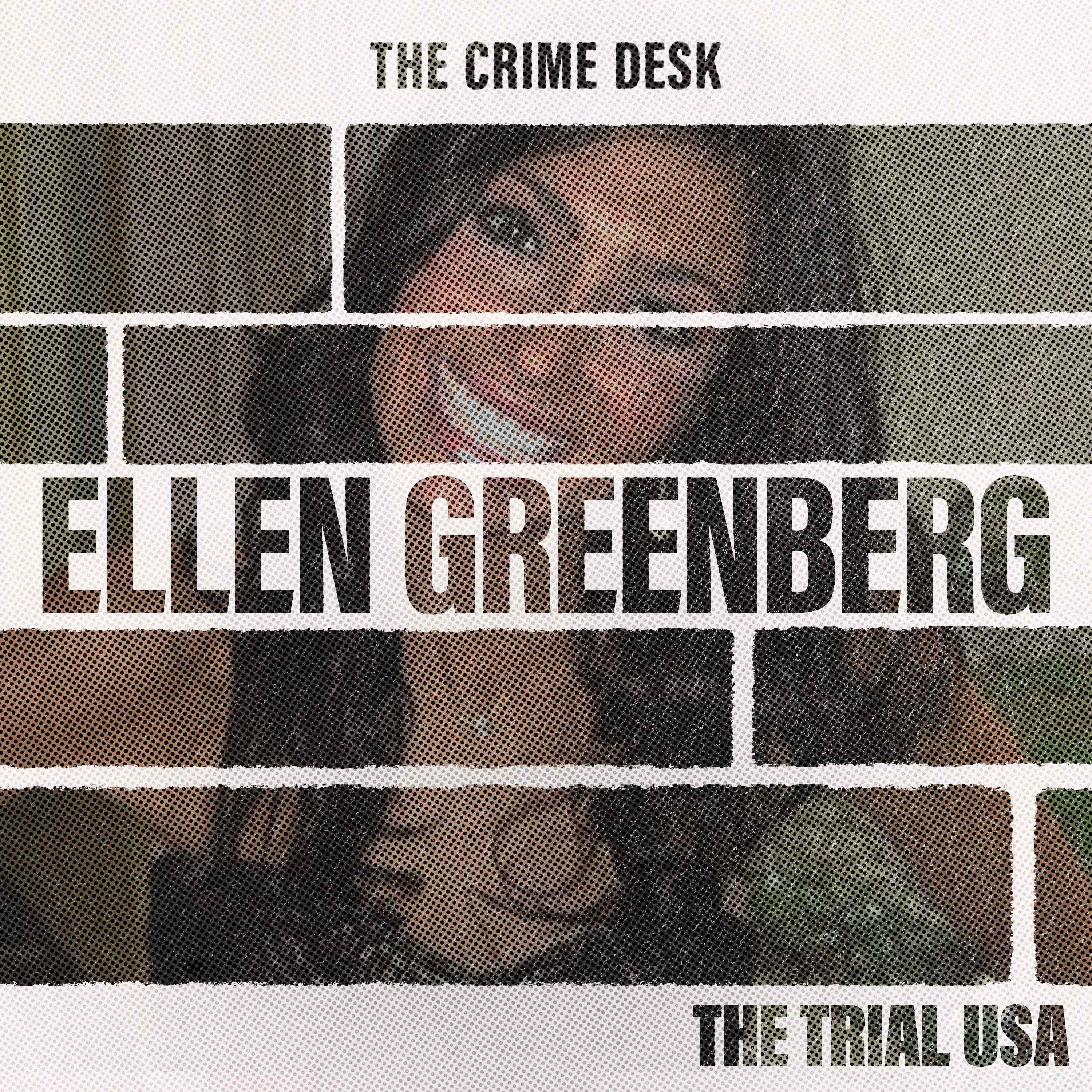
Today's episode is an important one. We're bringing you a deep dive into one of the most disputed death investigations in recent history, the case of Ellen Greenberg and an exclusive interview with her parents. Ellen was a 27 year old teacher from Philadelphia. She was found dead in her apartment In January of 2011, having suffered 20 stab wounds, many to the back of her head. Despite the circumstances, her death was ruled a suicide. That ruling has been questioned for years. How could this happen? And why has this case continued to provoke such intense scrutiny more than a decade later? I'm Kayla Brantley and this is the Trial usa. We'll be back in just a moment. Ellen's death has inspired countless podcasts, a book by Nancy Grace, and has become a defining case within the true crime world, one that has fundamentally shaped public conversations about how law enforcement handles suspicious deaths. Now 15 years nearly to the date, the case has reached a new moment with renewed scrutiny focused on the conduct of the police investigation in Philadelphia and wider Pennsylvania to help us understand how we got here. We're joined by Laura Collins, features editor of the Daily Mail and former senior investigative reporter who has been covering Ellen's case for nearly 15 years. Laura sat down with Ellen's parents, Dr. Joshua Greenberg and Sandy Greenberg, to talk about their daughter, who Ellen was, the questions they have that have never been answered and the impact of the suicide ruling and what this latest chapter means for them. The interview dives deep on how Ellen's parents are feeling 15 years on, now that they may finally be getting some answers when it comes to the police investigation into her death. So before we break down the case and the controversy surrounding it, here's Laura's conversation with Ellen Greenberg's parents.
- [03:56]
E
Okay, well, thank you both so much for joining us and for taking the time to talk about your daughter and your fight for justice for her. Let's start by backtracking to the weeks and months before Ellen died. What was going on in her life? Personally, emotionally, professionally?
- [04:17]
F
She seemed stressed out about her workload at school. But the end of December, we had gone on a family vacation to St. Kitts, and, you know, we spent like 10 days together, and she seemed like herself. I didn't really. I wasn't aware really of anything. But as it got closer to January 26th, we.
- [04:50]
C
Josh had made it an arrangement that was that Sandy's. The way she saw it. I saw it differently. I couldn't understand why my daughter wanted to come home to Harrisburg. She was engaged. She had sent out announcements to be married. So something was wrong.
- [05:10]
E
So she shared with you she wanted to come home?
- [05:12]
C
No, she just kept saying she wanted to come home. She never shared anything about school or any anxiety at school, anxiety at home, any anxiety in the world? Nothing. She didn't share what was going on in her mind with us. I made a deal with Ellen because I couldn't help her. I was a periodontist. I know gums and implants. But psychology and psychiatry was not my field. I had two goals. Goal one was to help my daughter. Goal two was to prevent her from losing her job, because I felt if she left the job in the middle of the year, that would not be a good thing. And I think that's a pretty normal thing for a parent to think of. We weren't living with her, and she wasn't living with us. She was about two hours away in Philadelphia, and we were in Harrisburg. I made a deal. If she went to the psychiatrist of our choosing and she said, Ellen, she could come home. I just could not. I didn't have enough knowledge to help her. But I knew something was wrong.
- [06:15]
E
From my understanding, as much as she had anxieties and work pressures and whatever was going on, there was no question that Ellen was suicidal.
- [06:25]
F
No.
- [06:25]
C
No. Even if you were to have the ability to get the information from her psychiatrist, a physician means she has an MD degree. She had written in her notes, which we did obtain later on. Ellen was not suicidal. She was suffering from anxiety. Most of the time. Nothing's always. If you have anxiety, you don't commit suicide. And then we. I'm gonna go a little further if you don't mind. We had. We knew something was wrong. We contacted a fellow by the name of Cyril Wecht. Dr. Wecht, or. I think. I don't know if it was doctor or what it is legal. Dr. Wecht, he was a fellow who specialized in reviewing homicides and things like that and coming to a conclusion, especially since we. We were looking for why this all happened. And Cyril Wecht. I'm gonna. Was. Was one of the. One of the people to handle this type of thing. He was equivalent to. I don't know who, but he had done some of the work on the JFK murder, the assassination, and that's how big he was. Okay. He was no small fry. He came back, was suspicious of homicide. And also he came back with two other things. Women no longer use force, things that are painful to commit suicide. Ellen would have done it with drugs or something like that. And number two. Well, number one, it's 1A. If you go to look to find a woman who's committed suicide, you won't find somebody who stabbed herself on the day itself.
- [08:05]
E
On January 26th, which we're so close to that anniversary, you now believe there were signs that perhaps Ellen was getting ready to leave. Can you talk me through that? What leads you to think that?
- [08:20]
F
Well, from some of the pictures from the crime scene, like, we never really looked at her, but her things looked kind of like they were packed. Her cosmetics, that's a biggie. Those things were all in an organized. Like it looked like perhaps she was getting ready to leave. Now, we didn't figure this out until years and years later, but it did. It was that. But I just want to. I was making a list of all the forensic experts in the world. Dr. Cyril Wecht, Dr. Lee Joseph Scott Morgan, Wayne Ross, Michelle Dupre. They all have concluded that this was not a suicide. It was a homicide. There's no gray area here. These people are widely respected all across the universe.
- [09:26]
C
She left her engagement ring on her night table, which I think was significant. And it was not picked up by anybody we knew at that time. Meaning there's going to come a time when some people will come into the apartment, take Ellen's Internet things, IT things her computer, etc. But they never touched her engagement ring, which I don't understand.
- [09:50]
E
Let's go to why, I suppose why we're even having this conversation in the first place, which is the finding of suicide. Tell me about how the police dealt with this scene.
- [10:01]
F
Well, you have to understand, It's. This was 15 years ago. We were two hours away. There was a nor', easter, which made it almost impossible for us to travel to Philadelphia. And putting all the little pieces together, like I just sent you, that little snippet that was on social media about the EMT person that was first to arrive on the scene. He goes up, he comes down and tells the people in the building, you have a homicide upstairs. Then the Philadelphia Police Department don't even contact him for a report or verification or anything. Which is highly suspicious, in my opinion.
- [10:54]
C
Let's go back again. The weather was like it was two days ago in New York. It was a big snowstorm. School was closed. Everything was closed. Okay? That's the way it was. So the idea that we could get there, that's not important. Even the police never did a thorough examination with luminol, with anything they didn't check. They had to come back and get a search warrant three days later, after the scene had been scrubbed by. I forget the name of the company. Crime scene cleaner Cleaners or something. But the police came back three days later to do their investigation. You're right. There were no yellow retainer strips around. Don't go here. Don't go there. It was open. Somebody. Sam and his family. I hate to use a specific name, but he can't. He sent his uncle to come in and get him clothes for the funeral. He also took Ellen's computers and some personal handbags. Personal items.
- [12:05]
F
Car keys.
- [12:06]
C
Yeah, personal items. Okay.
- [12:07]
F
That he did not have permission from us to touch or take. It wasn't his property.
- [12:14]
C
Which. Which we. We always felt was weird because the fellow is a lawyer and you don't take things out of a crime scene. So they were not handling.
- [12:23]
F
He was in Harrisburg to attend the funeral and he didn't arrive with any of the things that he removed.
- [12:30]
C
You don't. A lawyer knows enough professional. A lawyer knows enough not to take things from a crime scene. Whether there are vital things or unvital things. You don't touch anything. The police never blocked it off and treated it as a real investigation. Ever.
- [12:47]
E
Yeah, I was going to say, isn't the problem. They never really treated it like a crime scene. And then, of course, when the medical examiner initially made his ruling, he said, this is a homicide. By which time you have no preserved crime scene. You have no ability to go back and put it back together. And then why do you think the medical examiner changed his finding and ruled suicide, which has been so devastating to you?
- [13:12]
C
Why? I have no clue.
- [13:16]
E
At what point did you think you or did you realize you were going to have to do your own investigation?
- [13:23]
C
Never really thought about it. Just did it.
- [13:25]
F
It just evolved over time. And it was. We were trying to get some kind of closure and some kind of understanding as to what exactly happened to our daughter. We couldn't. We can't imagine how many doors were slammed in our faces. And why wouldn't they want to just tell us the truth?
- [13:48]
C
Beats me. Closure is not what I thought about justice for Ellen. Truth is what I thought about. You want to put a label on it, your closure? Fine. I don't know if we'll ever have closure, by the way, even if we knew what happened, but we don't really know what happened.
- [14:07]
E
Let's talk about what's happening now. You know, you're speaking about closure. You're not sure if you'll ever get it. So what's happened now is that the federal government is going to look into how the case was handled. Philadelphia. Tell me what's happening then.
- [14:23]
C
They're going to do an investigation on corruption. If it slides into the ability for us to do an investigation, we'd love it. And they may use some of Ellen's stuff as evidence or questioning. All I know is our attorneys met for four hours yesterday. What's wrong with that? With the USA district attorneys. So we're going to have a meeting and find out what happened. We are disappointed. I am disappointed. I'll say not we, that they have these subpoenas and no one knows about them. Apparently, subpoenas are not really public knowledge, but the press and people can say, you know, they'll say, you have a subpoena. That's all they'll really know. And the authorities come back with no comment. We'll have an investigation, which, if that's the way it works, that's the way it works. But if we. I don't know. Well, I don't think closure will necessarily come because we know what happens. It's something that we evolve into. Or as we get older or time passes, really.
- [15:27]
E
And do you think if this investigation finds that there has been corruption, which you have always maintained, that it's more than just incompetence, there's cover up, there's, you know, concealing the truth rather than just missing it. If they find that, does that open a door for you to push again to have the manner of death changed?
- [15:49]
C
Hopefully, that's what we're hoping. That's why. That's why you're here. And we're here because we all hope that's what's going to happen. There is the people. The only people that think this was a suicide are people in Philadelphia's criminal justice system. 175,000 people went on the Internet and asked us to get that we should have a new investigation. And that's without doing anything but put a place to sign.
- [16:21]
E
I mean, you really have dedicated your lives to this campaign. How much, if at all, does it help? How much the public has embraced it and the support that you have and the belief that people have that your fight is a just one.
- [16:36]
C
We appreciate everything the media has done, like the, you know, the podcasts. We've gone, like your type of thing. We'd be nowhere. We'd be sitting in the corner over there, you know, scrunched up maybe, or watching tv. We don't look at this as a burden. I'm Ellen's father. This is her mother. We go from there and we're together still.
- [17:00]
E
I was going to ask you what this has taken from you personally and emotionally.
- [17:06]
C
Well, we do disagree on certain things, but it has.
- [17:11]
F
It is very taxing. But in another breath, the fact that the federal government is now involved in taking a look at this is very encouraging and may lead to something. I don't. I can't predict the future, but I am optimistic more than ever.
- [17:33]
C
I don't know what they're doing. I'm guessing they may be looking at Ellen's case, looking for issues there to use for corruption.
- [17:43]
E
It does feel very much like you have had door after door after door closed on you, and yet still another one open somehow. I mean, this, this feels like an exhausting process for you, but do you feel, do you feel that this is getting somewhere now?
- [18:02]
C
We'll see. We'll see. We hope. I hope so. Look, they have the power. We don't have the power. And if it wasn't for you and the media, we wouldn't be here. That's the way I look at it.
- [18:12]
F
Well, also, we've had A great team. We have a great team. We have Tom Brennan, who has done many, many, many cases and is familiar with the workings of Philadelphia. We have, you know, all these medical examiners. We have a great legal team, and it's teamwork.
- [18:38]
C
We are asking him and his family to help us solve some questions we have that we don't know what these things meant or how they were done.
- [18:47]
F
I'd like to know exactly what happened that day. Why wasn't she wearing her engagement ring? Was she, in fact planning on leaving, or is that just. I want to know why it was necessary for Jim Schwartzman and his son came in, Hank and Schwartzman, to be there in a blizzard. Sam's parents were there, but they didn't really communicate much with us. I want to know. I want to know all the details.
- [19:23]
C
Why didn't Sam go in right away when he reached the sixth floor? Who was he talking to? What was he talking about?
- [19:29]
F
Why did he tell the 911 dispatcher he was. She was flat on her back, or she asked him, was she flat on her back and was he willing to do cpr?
- [19:42]
C
And why did he take so much time to get into the apartment?
- [19:45]
F
Yeah, he didn't break in immediately.
- [19:48]
E
It was an hour, wasn't it? Something like that.
- [19:50]
C
It was walking around outside for at least 45 minutes to an hour.
- [19:53]
E
What was the last conversation? I know you've shared this with me before, but what was the last conversation you had with Sam? And did he ever express any doubt or interest in exploring what happened to Ellen?
- [20:08]
A
I don't.
- [20:09]
F
I don't remember a whole lot, but I do know after she passed, he would check in with me and we'd have a conversation. And I would say. I don't even know how the words rolled off my tongue, but I would say to him, and, you know, Sam, we know this was not a suicide. And there would be an awkward silence. And I know I said that to him many times. I guess I never really directly asked him any questions, which now, you know, now we have. Might have been a good, good thing.
- [20:49]
C
We have questions now. Yeah, that we've done. You know, we've done a lot of investigative work. We. Mr. Brennan's done a lot of work. Our lawyers have done a lot of work. People have looked at the photos here. It's hardly like we tried to be as thorough. As thorough as we could be. And we're not jumping on any tables and hollering and screaming like an idiot. We've tried to be as professional, courteous and respectful as we can.
- [21:18]
E
And you have questions. I think that's understandable. Let's turn to focus on why this all matters. And that is the person who Ellen was. And I know we've said it before, that often when awful things happen to people, they sort of get lost in the retelling. The focus is all on the awful thing. And what happened to Ellen was appalling. But tell me a little bit more and give the listeners a sense of who Ellen was when we see these pictures and her wonderful smile, which is just radiant. Tell us who Ellen was to you.
- [21:51]
F
Well, she was our daughter and we were extremely proud of her and the fact that she was an only child. We wanted her to be able to stand on her two feet and advocate for herself and be a leader, be able to walk into a room and not be intimidated. And we were raising her to be the best possible version of herself. And we, I will say it again, we were very, very proud of her.
- [22:25]
E
Do you think she would be proud of you guys for your fight?
- [22:29]
C
We hope so.
- [22:29]
F
I hope so.
- [22:30]
C
But that's not important. Seriously, it's not about us. It's about her.
- [22:37]
E
Is there anything that you would like to share or just sort of really point up to the listeners that we haven't touched on?
- [22:47]
C
I want to thank everybody in the media who supported us and helped us and given us a voice, so to speak, and helped our voice be louder than it would normally be. The Philadelphia criminal justice system has the power. We don't have the power.
- [23:05]
A
We're taking a quick break after this.
- [23:18]
E
Tired of your car insurance rate going up? Even with a clean driving record, you're not alone.
- [23:23]
A
That's why there's Jerry, your proactive insurance assistant.
- [23:26]
E
Jerry compares rates side by side from.
- [23:29]
A
Over 50 top insurers and helps you switch with ease.
- [23:32]
E
Jerry even tracks market rates and alerts.
- [23:34]
A
You when it's best to shop.
- [23:35]
E
No spam calls, no hidden fees.
- [23:37]
A
Drivers who save with Jerry could save over $1,300 a year. Switch with confidence. Download the Jerry app or visit Jerry AI Acast today.
- [23:48]
D
Well, the holidays have come and gone once again. But if you've forgotten to get that special someone in your life a gift, well, Mint Mobile is extending their holiday offer of half off unlimited wireless. So here's the idea. You get it now. You call it an early present for next year.
- [24:02]
E
What do you have to lose?
- [24:04]
D
Give it a try@mintmobile.com Switch limited time.
- [24:08]
A
50% off regular price for new customers. Upfront payment required. $45 for three months. $90 for six months or $180 for 12 month plan taxes and fees. Extra speeds may slow after 50 gigabytes per month when network is busy.
- [24:16]
E
See terms.
- [24:22]
A
So we just heard your interview. Laura Collins, features editor at the Daily Mail, former chief investigative reporter, you've been covering this story basically since it happened 15 years ago, but you really came on the case about six years ago. So you've developed this relationship with Sandy and Josh Greenberg. How has that relationship evolved from the time you first met them to now conducting this interview with them?
- [24:49]
E
Well, I think, I mean, I suppose in simple terms it's just deepened because I have been in contact with them all these years and Sandy in particular, I'm on, you know, pretty regular contact with her. I mean, she sends any little updates, any coverage, any movement that seems to happen in the case. And of course, over the years there have been moments where it looked like they were going to get what they were looking for and maybe get the manner of death changed. And it's never happened. So she's basically reached out to me in all of those moments and sometimes, frankly, she just wants to talk, you know, about her daughter, about what they're.
- [25:21]
A
Going through and how. Have you seen maybe their demeanor change or maybe their feelings of hope that they'll get some answers?
- [25:27]
E
In this case, honestly, they have remained pretty consistent. I think their resilience is remarkable. They given that so far, every time a door has seemed to open, it's been closed in their faces. They just keep going. There is this sort of unquestioning determination that this is just what they have to do. They're not going to give up, they're not going to get, you know, knocked down. And if they are, they get back up again and they keep going. I mean, I think the last time I actually sat down with them in their home in Florida, Josh surprised me because he said that there was part of him that actually didn't believe they would be successful, but they still have to keep going. Sandy, however, very much believes that they will be successful one day, that they will get that manner of death changed and that there will be an investigation into her daughter's death properly.
- [26:11]
A
In your interview, Josh said that it's not even about closure at this point. It's about justice and about truth. I think you kind of spoke to that in the sense that does he still feel like he may not get any answers, but he's still trying?
- [26:29]
E
I think there is no closure when there's such a violent death of a child. And I think that's the bottom line. I mean, perhaps Sandy feels slightly differently. And I have to be careful. I don't want to speak too much for them in terms of what they feel. But from what I've observed, I think Sandy really does believe that one day somebody will be held accountable for her child's death. I'm not sure that Josh truly believes that, but he does very much believe that he has to keep up that fight. He's Ellen's father. So closure, it's a difficult concept in this sort of scenario.
- [27:02]
A
Yeah, it's hard to see what that would look like when, at the end of the day, your child isn't here anymore.
- [27:06]
E
Exactly.
- [27:07]
A
So we all just listened to your interview. What are some of your key takeaways from that?
- [27:13]
E
Well, I think Sandy and Josh are both feeling very positive that there has been some movement again on this case. They're very clear that it is not their daughter's death that has been. The investigation has not been reopened into that, but there is now an investigation into how the case was handled and possible corruption. They've always maintained that this investigation was botched from the start, and then those mistakes were covered up and that there's been corruption in whatever respect that has stopped them from getting the truth. So I think they're quietly optimistic. Maybe this will lead to their daughter's manner of death being reviewed, depending on how this investigation goes. I think also it's striking and perhaps not surprising that they still have so many unanswered questions. And one of the key things that Sandy addressed, which slightly surprised me actually, is the questions that she wants to ask Sam, Ellen's fiance. They have so many questions. They've never really had a proper conversation with him. Sam gave a brief statement to the police directly after, but he never spoke to them again. He wasn't compelled to. There was no case to be answered because it was ruled suicide. And I think the Greenbergs just feel that there's details, there's information that they want him to share. And all these years on, they've never had a proper conversation.
- [28:32]
A
There was a moment in the interview where Sandy did say that they had spoken to him and that she would kind of say, you know, this wasn't a suicide to him.
- [28:42]
E
So basically, for about two years after Ellen's death, he kept in sort of loose contact with them. And every time they had any sort of communication, they didn't discuss the details of what happened. He always avoided that. But before hanging up or before ending the conversation, Sandy would always say, you know, Sam, we know this wasn't a suicide. And the last conversation she had with him ended in that way. She said, you know, Sam, this. We know this wasn't a suicide. And there was just an awkward silence. He never responded. Anytime she said that, he just never responded. And the last time he called was to let them know that he was engaged and he was getting married and essentially moving on with his life.
- [29:21]
A
Do they think Sam is responsible?
- [29:25]
E
They are very careful to never allege guilt of anyone. I think for legal reasons, frankly, they have never accused Sam of anything. But they certainly have a lot of questions they want to ask him.
- [29:40]
A
Sandy and Josh spoke about Ellen's behavior right before her death. Can you describe a little bit of what her parents were feeling and if they feel like they would have done anything different?
- [29:54]
E
Sure. Ellen was, according to both Sandy and Josh, she was stressed, she was anxious. They thought there were issues maybe with work. She seemed very stressed. She had exams to grade. But I mean, she was an elementary teacher. You know, I think Josh said at one point, you know, how hard could it be in a way. But they were concerned about her. And to the extent that Josh made a deal with her saying, look, if you go to a therapist of our choosing, then, you know, get some help and then let's talk again. Because she'd essentially said, dad, I want to come home. And he was worried that if she did that, she would lose her job. I think at the time, it never occurred to them, as it does now, that perhaps there was stuff going on in her relationship that was really the issue as far as, you know, the face that Ellen presented to the world. Everything was fine with her and Sam. But now Sandy and Josh do question that, and other friends have questioned it, especially since there were findings in her autopsy of bruises all over her body at different, different stages of recovery. So it raises questions about what was going on in that relationship. There's also a suggestion they think she may have been planning to leave the day that she died. They're quite sort of focused on the fact that her engagement ring was on her nightstand. Her makeup and cosmetics seemed to be organized in a way that suggested she was maybe packing up. So they do wonder. They do question that, but they know that she was upset. But they're very, very clear she was not suicidal. She did go to see that therapist. She was on anti anxiety medic, I think antidepressants. But her therapist was very clear. Her psychiatrist actually was very clear she was not suicidal.
- [31:30]
A
And aside from these clues, you know, the ring on the nightstand or it Looking like she was about to leave. Have we ever gotten any insight into their relationship?
- [31:39]
E
Not really. I mean, friends that I spoke to, gosh, way back when we first covered this said that she had started. They sort of noticed that she perhaps wasn't as bubbly as she had been, that she would always check with Sam before doing things. And there was a suggestion that perhaps there was an element of control going on there. But other friends, frankly said that she seemed very happy and she thought Sam was, you know, the greatest thing in the world. So it's perhaps as is classic with most relationships, nobody really knows what was going on behind closed doors.
- [32:10]
A
And it doesn't appear that she confided in anyone who has come forward, at least.
- [32:14]
E
No, not at all. And in fact, she just sent out the save the date for her wedding.
- [32:17]
A
Sandy and Josh Greenberg launched their own investigation into the manner of their daughter's death, Especially after the police investigation came up so short. What are some of the findings there that really propelled this forward?
- [32:30]
E
I think the key finding probably is they had experts look at the wounds that had been inflicted upon Ellen, and the simple fact is she was stabbed 20 times, mostly in the back of the neck and head, and a knife was left sort of sticking out of her chest. Some of the wounds that were sustained, they believe had to have been post mortem. So she could not possibly have continued the attack on herself. When I think it was her spinal column had been severed and she would have lost all ability to do that. So they spent. I remember Sandy saying that initially when they had sort of, you know, very little to go on, she would sit up at night with like a ruler trying to measure wounds and get a sense of things. And they realized we need experts on board. So the police had never pursued an investigation because very quickly the original finding of homicide was changed to suicide. And that's the end of the case. You know, there's no crime scene, there's no investigation, it's case closed. So the fact that we know all the sort of shocking things that we now do know about what happened to her and the things that don't make sense. The door that doesn't really seem to have been busted down, perhaps, as Sam suggested it had been. All of these details are the result of Sandy and Josh's investigation and their experts.
- [33:48]
A
Yeah, I'm so intrigued as this new case goes forward into the investigation of the investigation, how so many of these details could be overlooked.
- [33:58]
E
No, I mean, yesterday when we spoke to the Green Bridge, just yesterday, Sandy shared a message from the Original EMT responder. And he was in absolutely no doubt. He went downstairs and he told the security guards, you have a homicide here. It seems that anyone who saw it was immediately. Immediately thought, this is clearly a homicide. And yet for some reason, the police seemed to buy wholesale Sam's account, which was he'd come in, he had found her like this, and it was the end of the story.
- [34:29]
A
Can you speak to the 911 call?
- [34:32]
E
Sure. I think one of the. One of the things that people have remarked upon, and it's hard to know how anyone is meant to react in these moments, is that Sam does seem very calm. He doesn't seem. He sort of goes from moments of being apparently distraught to them being very calm. And when the 911 dispatcher asked him to see if he could do CPR, he essentially said, do I have to? And also that seemed to be the first moment that he realized there was a knife sticking out of Ellen's chest. So there's various things. He also claimed that Ellen was. Was lying on the floor, yet when she was found, she was propped up against the kitchen cabinets. So she'd been moved because there was blood that was sort of running horizontally on her face. So clearly she had been on the floor and then had been propped up. So why was she moved? Who knows? But it was just all very strange.
- [35:24]
A
And I know Sam hasn't been an official suspect, but have there ever been any other theories of any other suspects who could have done this?
- [35:34]
E
Well, there's never been any suspects or persons of interest because there's never been a murder inquiry. So, you know, as soon as it's ruled suicide, that's it. There. There isn't. There's no question of anyone being a suspect. And as things stand, it is still ruled a suicide.
- [35:49]
A
And what is the biggest. Because it feels like for them, there's just this one big wall in the way of getting any of these answers. What is that wall?
- [35:58]
E
The wall is the finding of the manner of death. As soon as that was switched from homicide to suicide, it shut down every other avenue for them. And their fight for the longest time has been to get that manner of death changed, at least to undetermined. And then an investigation could be opened.
- [36:17]
A
And is there a certain person? Is it a judge? Is it what is in the way?
- [36:23]
E
So the medical examiner who originally made that finding actually has conceded. I think it was back in January 2025, he conceded that. That he would not rule suicide today. That then seemed to open up a very promising avenue where things were going to be reviewed. And indeed everything was reviewed again by the current medical examiner who confirmed the finding of suicide in, I believe it was last September. September. October. So that was a very, very disappointing blow for them. It seemed just at the point where they were actually going to get some significant move. They reaffirmed the suicide finding. And that, frankly, is completely baffling.
- [37:03]
A
So you've had two medical examiners, one who initially ruled a homicide, changed it to suicide and then a second examiner who confirmed suicide.
- [37:12]
E
Yeah. Who recently affirmed it. Yeah. Reviewed everything and affirmed it.
- [37:15]
A
Do we know why the original ruling of manner of death was changed?
- [37:19]
E
We don't. That is part of, I suppose that's really going to be key to the investigation.
- [37:25]
A
And what are the next steps in the Ellen Greenberg case?
- [37:29]
E
There have been subpoenas issued. They don't know to who. They're not kept in the loop on exactly what's happening with this latest investigation. Their lawyers have met with the feds, had quite a lengthy conversation. They revealed when we spoke to them the next steps are we find out what happens with this investigation. I mean, how that leads to any possible change of the manner of death. You know, the simple answer is it might not. But there may be some sort of resolution or there might be some satisfaction if people are held accountable for failures, I suppose.
- [38:03]
A
Well, thank you, Laura. And to read more of her conversation with the Greenbergs, please read more@dailyailymail.com this is the trial USA. I'm Kayla Brantley. Thank you for listening. We'll be back next week bringing you an update on all the crime cases dominating the headline. See you then.
- [38:36]
B
This episode is brought to you by Progressive Insurance. Do you ever find yourself playing the budgeting game, shifting a little money here, a little there and hoping it all works out well? With the name your price tool from Progressive, you can be a better budgeter and potentially lower your insurance bill, too. You tell Progressive what you want to pay for car insurance and they'll help you find options within your budget. Try it today@progressive.com, progressive Casualty Insurance Company and affiliates. Price and coverage match limited by state law. Not available in all states.
- [39:09]
E
Try angel stuff for your tushy. It's made by Angels Soft and strong. Budget friendly.
- [39:18]
C
The choice is simple, a role that.
- [39:21]
E
Feels like paradise and always at a heavenly prize.
- [39:25]
F
Angel Soft.
- [39:26]
A
Angel Soft Soft Simple.
- [39:30]
E
Pick up a pack today. Angel Soft.
- [39:35]
C
Podcast advertising works. And with Acast Ads Academy, you'll learn exactly how our free on demand courses are built. From more than a decade of podcasting experience, giving you practical tools to create.
- [39:47]
B
Campaigns that drive results.
- [39:48]
C
Complete the course and you'll earn a certification that proves your skills in one of the fastest growing channels in media. Get started today@go.acast.com academy.