Loading summary
Transcript88 lines
- [00:03]
Kayla Brantley
The Crime Desk Arresting podcasts It's a
- [00:07]
Interviewer
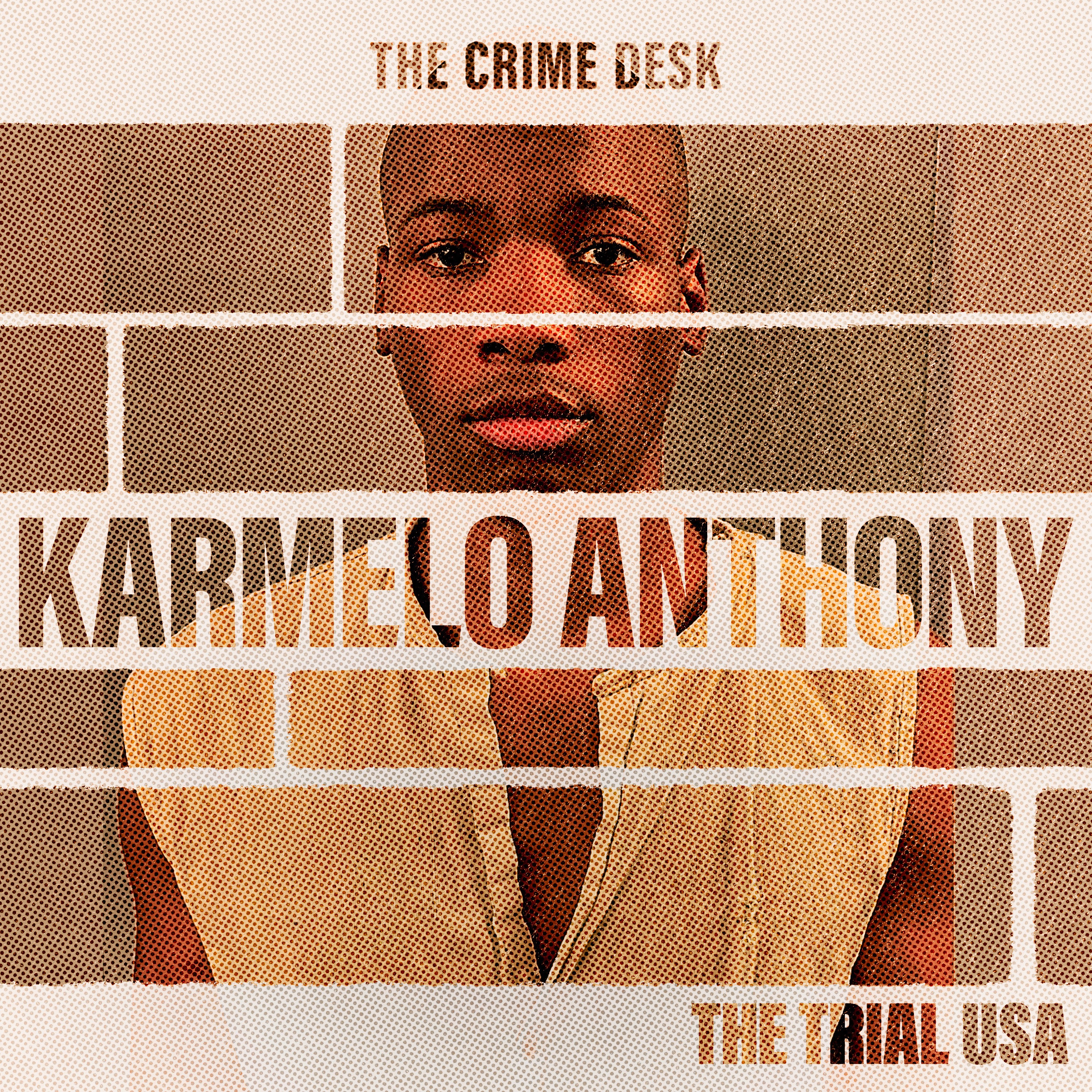
case that everyone seems to be talking about Two Texas teens, a fatal stabbing and a continuing public controversy that has ignited racial tensions. Carmelo Anthony was convicted last week of murdering Austin metcalfe at an April 2025 track meet where various high schools from an affluent Dallas suburban area were competing. Anthony was sentenced to 35 years in prison and will be eligible for parole about halfway through that term. He was 17 at the time of the crime, the same age as the victim. Anthony will be eligible for parole in his 30s. Jurors saw evidence that showed Anthony plunged a folding knife into Metcalf's chest, cutting through his sternum and piercing his heart. It was the result of a dispute gone wildly wrong. Anthony was visiting the tent of a rival high school during a rain delay. Metcalf, a team leader from Memorial High School, asked him to leave repeatedly. Anthony was verbally aggressive and refused to leave the rival school space, according to trial testimony. Metcalf, who is white, pushed Anthony. Anthony, who is black, stabbed him in response. There has been a flood of support for Anthony and a pretrial fundraising effort yielded over $600,000 in donations. While race did not factor into the trial, there's a continuous public outcry of racism based on the theory that Anthony was under threat, one that settled several celebrities amplified on social media in the days after the verdict. That theory was not supported in court. The jury did not find his self defense claim credible. We're joined today by Marianne Martinez, our Texas bureau chief who covered the case and who was personally subjected to threats as a result of her work. She's here to clarify misconceptions and take us into the truth of what the trial was like. I'm Kayla Brantley and this is the Trial usa. We'll be back in a moment.
- [01:58]
Boost Mobile Advertiser
You're locked into a lot of things you can't change. Weather, traffic.
- [02:02]
Kayla Brantley
Hey, stay in your lane.
- [02:03]
Boost Mobile Advertiser
Your wireless carrier's latest price hike. But you can unlock a better way. Unlock the savings at Boost Mobile and save up to $600 a year. Switch to the $25 a month unlimited wireless plan. No contracts, no price hikes and you keep your phone. Stop being locked into their games. Unlock the savings@boostmobile.com unlock on average annual single line of payment of AT&T Verizon and T Mobile customers compared to 12 months on the Boost Mobile unlimited wireless plan as of January 2026. For full offer details, visit boostmobile.com if
- [02:29]
Weight Loss by Hers Advertiser
you've felt stuck trying to lose weight, you're not alone. Enter Weight Loss by Hers. It's designed to support you in reaching your goals and HERS now offers access to an affordable range of FDA approved GLP1 medications, including the Wegovy Pill and the Wegovy Pen. Even better, with a range of affordable GLP1 options, hers makes it simple to find an approach that fits your needs and your budget. If eligible, you'll get treatment plan personalized to you and unlimited dosage changes as needed. It's weight loss designed to work with your life. Ready to reach your goals? Visit forhers.com eligible to get personalized affordable care that gets you that's F O R h e r s.com Eligible for hers.com Eligible weight loss by hers is not available in all 50 states. WeGovy is the registered trademark of Novo Nordisk as to get started and learn more, including important safety information, WeGovy clinical study information and restrictions, visit forhers.com the
- [03:28]
Grow Therapy Advertiser
pressure to have a summer worth posting about is real. So is financial stress, social exhaustion, and the anxiety that sneaks in right when things are supposed to feel good. Grow Therapy can help with that. Whether it's your first time in therapy or your 50th, grow makes it easier to find a therapist who fits you, not the other way around. They connect you with thousands of independent, licensed therapists across the US Offering both virtual and in person sessions, nights and weekends. Whatever challenges you're facing, Grow Therapy is here to help. Grow accepts over 100 insurance plans. Sessions average about $21 with insurance, and some pay as little as $0 depending on their plan. Visit growththerapy.com acast today to get started, that's growtherapy.com ac acast growtherapy.com acast availability and coverage vary by state and insurance plan.
- [04:30]
Interviewer
I'm joined now by Marianne Martinez, the Daily Mail's Texas bureau chief. There's been no shortage of news from Texas recently, and we're so glad to have you here, Marianne, because there's a lot of assumptions spreading about this case and we want to help our listeners tune into the facts as much as possible. Maryanne, can you take us through what the end of the trial was like? Who was in the courtroom and what did you observe about them?
- [04:55]
Kayla Brantley
Well, they really tried very much throughout the trial to control who was in the courtroom. So mind you, There were only 72 people allowed in the courtroom, not including the judge, the defendant, his defense team, the lawyers and the jury. So 72, for lack of a better term, audience members. Fifteen of those were slated for Carmelo Anthony's family, friends and relatives, and 15 were reserved for Austin Metcalfe's family, friends and relatives. There were nine members of the media who were credentialed to be inside, including Daily Mail, and the rest were seats that were open to the public. So there were probably about 30 seats that were left for the public. And a lot of members of the public were either bloggers, podcasters, people who have, you know, had interest in this case. And there were a couple of locals, people who live in the community in Collin county, where this happened. Collin County's just north of Dallas, people who just wanted to see it for themselves since this trial was not televised. And they felt like they wanted, you know, to see it raw and direct and get a sense of it. The trial was supposed to last two weeks, and it sort of ended abruptly, which we were all surprised about, because we were all kind of hunkered down for, you know, the two weeks that we had been told that the trial would last. It ended abruptly. So the state rested on a Saturday. We had trial on a Saturday. And the defense started, and we thought, you know, we might hear multiple, you know, from multiple different witnesses from the defense. You know, they had made the case that Carmelo Anthony had acted in self defense. And we were all ready to hear what that was, what had happened, what was his state of mind? We heard 21 witnesses from the state all pretty much giving the same version of events. Some first responders, a lot of kids who were in the stands from different high schools. So from Memorial High School, which is where Austin Metcalfe attended, from Centennial High School, which is where Carmel Anthony attended, and from other schools that were participating in this track meet. So we heard from a parade, again, 21 witnesses from this state. They ended abruptly on a Saturday. And then the defense got its turn, and then they put up three witnesses, and then that was it. And then they rested their case. And everyone was like, what's happening? There was a lot of speculation that possibly Carmelo Anthony would take the stand in self defense, which he's not required to by Texas law. And actually the. The jury had been admonished that they, you know, they could not hold that against him. But obviously, in his self defense case, so much depends on the person's state of mind. Why did they think that violence was necessary? Why? So in this case, why did he feel, if he got shoved, that the only way that he could react was by stabbing somebody in the chest? So we all thought for sure that we were going to hear from him. There was a Lot of speculation on Saturday, Monday, that Carmelo Anthony might take the stand. Ultimately, he did not. And I would say I think there's been, for people who listened to a lot of the evidence, a lot of questions about could his defense team have done more, why didn't they put up more witnesses? Even if it wasn't Carmelo Anthony, we didn't really hear hardly anything to substantiate his claims of self defense.
- [08:18]
Interviewer
Well, Marianne, what did witnesses say about whether Carmelo Anthony was in danger? What did they testify to as far as this self defense defense?
- [08:27]
Kayla Brantley
Most of the witnesses who, who were there. So you know, what we would I guess call eyewitnesses. These were students. So mind you, some of these people were very young. Some of them, you know, all the ranges of high school, you know, so like 15 to 19, kind of, you know, was the spectrum of witnesses that we heard from. And also this happened a year ago, right? So some of these kids were 15 when it happened and now they're 16 or you know, 16 when it happened, now they're 17. That kind of a thing. They all pretty much said the same thing. They said that, you know, so let's go back to April 2, 2025, which is the day of the track meet when this all went down. It's a district wide track meet in Frisco, Texas, which again is just north of Dallas. All these high schools are participating. Carmelo Anthony was scheduled to participate that day in several events for Centennial High School, where he attended Austin. Metcalf was also there for his high school, Memorial High School. His high school, Austin's high school, was sort of hosting the event. So his coaches were very busy and they had actually tapped Austin Metcalfe to take a leadership role and sort of fill in some of the duties that coaches normally do. So what was explained in court is that these tents that are set up in the stadium are basically like locker rooms, you know what I mean? Like you don't go under somebody else's tent. You certainly don't go into another high school's tent. So everyone's personal items are there, you know, your backpacks, your phones, your wallets. While you're racing or competing in these events, you obviously cannot have your phone with you, your wallet with you. So everyone's stuff is sort of considered secure under the tent. So Austin had been told by his coach, you know, he had received a text that morning saying, I need you to step and be a leader. Those were the words his coach used. So there was a rain delay at the time that these kids were all just kind of sitting around. Around 10 in the morning. A lot of the Memorial kids were sitting under the tent when Carmelo Anthony recognized somebody that he knew under the memorial tent and he came over to say hi to that kid and sat in the tent. When he does this, according to multiple witnesses, several of the kids are like, oh, you can't be here. This is only for Memorial High School. Who are you? He was very non responsive Carmelo Anthony. And when he did respond, it was things like, I'm not going anywhere. If you want me to leave, you're gonna have to make me move. Cursing things like, f you, you all are a bunch of peas. You know, you're not gonna do anything to me. So he, according to the kids, was very aggressive from, um, obviously did not react in a way that most people would consider normal. I mean, most people. If you get asked to leave, most people leave. Well, you know, whatever it is that you're being asked to leave. So Austin sort of took the role of being the enforcer of, hey, you know, you've been asked to leave, please leave. You've been asked multiple times. So that's when things got sort of heated between him and Carmelo Anthony. Austin stood up. So mind you, this is a tent that's placed on top of stadium bleachers. Austin Metcalfe stands up to approach Carmelo, who's still sitting in the bleachers when he reached in to push him. And there were some variations of whether it was with two hands or one hand, but the consensus was that it was a push. It wasn't like there was a kid who was actually sitting next to Carmelo Anthony who testified that the push was not even severe enough, that Carmela Anthony, you know, ran into him or anything. And they were sitting right next to each other when Austin Metcalf pushed him. Carmel Anthony had a knife that was in his backpack ready. So in the same movement that Austin Metcalf moved in, Carmelo Anthony stabbed him in the chest with what we have since learned was a folding knife with a three inch blade. It's a regular folding knife. It sold for $13 at Walmart. It was so sort of non dramatic, the whole thing of it, that in the video that was shown, there was surveillance video of this. You just see kids sitting around and then you do see one person approach another person. There was no gang up. This is a lot of the misinformation that's going around that kids, multiple kids ganged up on Carmelo Anthony. That was not what the Video showed you see one person approach another person, and then there's like, you know, you see the other person go like that, and then you just see kids disperse, like, they start running. So what these kids testified is that people didn't even realize that a stabbing had happened until Austin Metcalf lifted up his shirt and, you know, there's like blood gushing. And he says, I've been stabbed. And that's when kids kind of went, oh, my God, like this. Whoa, you know, what happened here? So that was the consensus of the testimony that we heard. And mind you, I think we heard from about 15 different kids from different high schools, different races. We heard from white kids, Hispanic kids, black kids, that this is what happened, that Carmelo Anthony was the aggressor, that Austin said to him multiple times, things like, dude, I'm not gonna fight you at attrack meet. That sort of exchange happened. So that's really what. What the jury heard. You know, they. They really never heard that Carmelo Anthony was ganged up on that from the defense's side, too.
- [14:12]
Interviewer
None of the witnesses that they put on the stand, did they say that he seemed to be in fear for his life, or did they support the argument that this was self defense?
- [14:21]
Kayla Brantley
The witnesses the defense called, they called four kids. They might as well have been witnesses from. For the state. They called one kid who had given an initial statement to police saying that he saw Carmelo Anthony surrounded. So I think they probably got. The defense, probably got their hands on those police reports and thought, oh, he's our kid, because he's gonna, you know, he's gonna back up our story of self defense. They put that kid on the stand and he said, what I meant by surrounded was that there were kids sitting around him. I never meant it to be like he was being ganged up on him. So that quickly fell apart. Another kid had been subpoenaed. He didn't even want to be there. And none of them, none of them ever said he was ganged up on or, you know, the only way to resolve that. You know, he was in fear of his life. Nobody said that. Nobody, nobody. That we saw zero evidence that there had been a gang up, that Carmelo Anthony feared for his life. And who knows, maybe if he had testified, maybe. Maybe people would have felt differently. But in terms of, was there evidence presented that his life was in danger, that he had been ganged up on? There was zero.
- [15:31]
Interviewer
And you were one of the few reporters who got to watch that video of the incident, and it was from A security camera taken, you know, from a little bit far away. Did that also support all of the witness testimony that you heard?
- [15:47]
Grow Therapy Advertiser
It did.
- [15:47]
Kayla Brantley
And that video wasn't great in the sense that it was so, mind you, this is a football field. That camera is as far away from the incident. It's on, like, one of those fixed cameras. It's, you know, like at football stadiums. It's fixed on a wall or a pole or something like that. It's as far away from the incident as it could be. They zoomed in in court and showed a sort of an enhanced version. And even that enhanced version was so bad that you can't see faces, you know, so you can't see that it's Austin Metcalfe pushing Carmelo Anthony, who. We do know that that's what happened, obviously based on witness testimony, but just based on the video alone. The video's not great quality, but, yes, the video is important in the sense that it matches what all the kids were saying. You also see in that video Carmelo Anthony fleeing after the incident. He runs down the bleachers to try to get away. And mind you, there's all these kids fleeing. At one point, he slows down to try to kind of blend in with the other kids who are exiting the stadium. And then you see where they, you know, they kind of identify him as the stabber and bring him back. You see, you know, the ambulance arrived. So it is important in the sense that it matches the testimony of the witnesses. But it's not great video in the sense that, you know, there's so much detail, as much detail as I know so many people would. Would want there to be a case like this.
- [17:14]
Interviewer
And, Marianne, you brought up that the kids who testified were of all different races. There were some white kids, black kids, Latino kids. This story has taken on a life of its own culturally and on social media. When did race really start to play a role in the public narrative about this case?
- [17:31]
Kayla Brantley
Almost immediately. I will tell you. I live not far from where this stabbing took place, so I'm very familiar with this community. One thing that people may or may not know about where this happened. So Frisco is a fairly white part of Dallas. Obviously, Dallas is a very diverse city, and depending on what part of the city you're in, the demographics can be very different. Collin county is not like that. Collin county is a very Republican white city. Had been about until 15 years ago. The demographics have started to change. But even then, the main demographic that's moving in are Indians or people of you know, South Asian descent, but it's still a largely, I would say 60 to 70% white population, followed by South Asian or Asian. There's only about 10% blacks in all of Collin county, which is where Frisco is located. And it did very quickly become a racial thing. I mean, we wrote, we've. We've been covering the story since it first happened. I will tell you, you know, I live in Texas. I'm the Texas bureau chief. I have covered the border my entire life, basically. And obviously the border immigration is something that people do get very heated about and have very strong opinions. I have never received the type of hate mail that I have received on any story. I've been a reporter for 20 years.
- [18:56]
Interviewer
And what did the hate mail say?
- [18:58]
Kayla Brantley
That I'm racist.
- [19:01]
Interviewer
That you're racist toward Carmelo Anthony.
- [19:03]
Kayla Brantley
Carmelo, right. So one of the big stories that we did early on in this case. So Carmelo Anthony gets arrested, obviously that day of the track meet. He is charged with murder, which is, you know, a felony, very serious crime in Texas. And he's charged as an adult. So Carmelo Anthony was 17. In Texas, at 17, you can be charged as an adult. So he is charged as an adult at the time of his. Of the arrest. He gets put in jail and his family starts trying to bond him out of jail. They go before a magistrate judge, who in Texas is. Who decides things like bonds, and they say, we don't have the means to pay the million dollar bond that was set on Carmelo Anthony. We're poor, we can't afford that. Can you please lower the bond? And they had to make a case that for financial reasons, they could not afford the million dollar bond. The judge, who was also black, agreed to lower the bond to 250k, which the family only had to pay a portion of that. They only had to pay 10% of that in order to get him out of jail, which they did. And he was released from jail maybe about 10 days after the murder. That was very controversial here locally. People were very upset that this had happened. We went to his house shortly after he was. The day after he was released. He lived in a $900,000 house in a gated community with a guard. I mean, this is the kind of neighborhood that most Americans could not afford to live in. Very nice homes, you know, hovering around a million dollars. Like I said, gated community with a guard, beautiful homes. And that's sort of what Frisco is known for, those. Those types of homes. But obviously there's a disconnect between going in front of a judge and saying, we're proud poor, we can't afford this, and then you live in a $900,000 house. So we broke that story last year in April. And that was a story that I got so much hate mail for, mostly from black Americans saying that I was racist. I myself am a person of color.
- [21:13]
Interviewer
But you were racist because what was the explanation?
- [21:17]
Kayla Brantley
There was no explanation. It was just, you're racist. And then directing racism towards me, saying, how dare you write that story. You're Mexican, you should be cleaning somebody's toilet, things like that. And it's. Yes, it's shocking. I think a lot of the journalists who have covered this, who've covered this case, who covered this trial, have had, you know, we talked about it. We've all had sort of similar experiences where you're like, you know, we would have covered the story the same way, regardless of the race of the suspect, regardless of the race of the victim. But, yes, people do feel very differently about this case and as you said, has taken on a life of its own.
- [21:57]
Interviewer
And why. What is, what is it about this case specifically that has people so riled up? What do you think?
- [22:02]
Kayla Brantley
I think social media has really, unfortunately been a driving factor. I think people are reading nuggets of information as opposed to, like, even reading articles. You know, people don't click on the article. They see a headline and they get very emotional. There's also a lot of these bloggers, the ones I told you, you know, who went, who you know, were attending this trial. There were bloggers who sat there and watched the exact same video that I just described to you and then went outside and shot videos saying, the video clearly shows that he's ganged up on by four people.
- [22:37]
Interviewer
Yeah, one thing that came out of this trial was a lot of misinformation. You know, there were allegations about the judge being involved with the Metcalf family, like you said, reporting differently about the video. We're taking a quick break after this.
- [23:02]
Weight Loss by Hers Advertiser
If you felt stuck trying to lose weight, you're not alone. Enter Weight loss by Hers. It's designed to support you in reaching your goals. And hers now offers access to an affordable range of FDA approved GLP1 medications, including the Wegovy pill and the Wegovy pen. Even better. With a range of affordable GLP1 options, hers makes it simple to find an approach that fits your needs and your budget. If eligible, you'll get a treatment plan personalized to you and unlimited dosage changes as needed. It's weight loss designed to work with your life. Ready to reach your goals? Visit fourhers.com eligible to get personalized affordable care that gets you that's F O R H E-R-S.com eligible forhers.com eligible weight loss by hers is not available in all 50 states. WeGovy is the registered trademark of Novo Nordisk as To get started and learn more, including important safety information, WeGovy clinical study information and restrictions and visit forhers.com
- [24:01]
Grow Therapy Advertiser
the pressure to have a summer worth posting about is real. So is financial stress, social exhaustion, and the anxiety that sneaks in right when things are supposed to feel good. Grow Therapy can help with that. Whether it's your first time in therapy or your 50th. Grow makes it easier to find a therapist who fits you, not the other way around. They connect you with thousands of independent licensed therapists across the US offering both virtual and in person sessions, nights and weekends. Whatever challenges you're facing, Grow Therapy is here to help. Grow accepts over 100 insurance plans. Sessions average about $21 with insurance and some pay as little as $0 depending on their plan. Visit growththerapy.com acast today to get started. That's growththerapy.com acast growththerapy.com acast availability and coverage vary by state and insurance plan.
- [25:04]
Interviewer
You reported on Carmelo Anthony's family living in a Beautiful gated community, $900,000 house. What do we know about his family? And did Carmelo Anthony have any previous, you know, disciplinary issues? Why was there even a knife in his book bag?
- [25:22]
Kayla Brantley
You know, I would love to know the answer to that question. Unfortunately, the Anthony's have never accepted our request to interview them. So I would love to ask the family that question. I would love to ask Carmelo Anthony that question. I think it's a question that is such an obvious question that no one seems to have asked them. Why did he have a knife in his book bag since he was at a school event? I mean he could have gotten suspended for that, obviously, maybe even arrested. God only knows, right? Like obviously that's not allowed at a school event. What we know about his family is that they're not from Texas, they are from Baton Rouge, Louisiana. I'm only saying this because I've heard from people from Baton Rouge, Louisiana who say culturally it's a very different type of place, you know, than Frisco, Texas. They moved here during Carmelo Anthony's freshman year of high school, looking for a better life. His mom was a registered nurse. That's what she, you know, is trained in. She is not working as a nurse right now because Carmel Anthony is one of the four children. He's the oldest. I think at some point the Anthony's made the decision that it, you know, as many families do, that one parent should stay home and care for the children. Carmela Anthony has fairly young siblings. I mean, like, you know, elementary school aged siblings. So, you know, she's caring for the siblings. His father works as a finance manager for a car dealership. And they had moved to Frisco to seek a better life for their family and had arrived just a couple years ago. I will say one thing that was really poignant to me in the testimony that we heard from the different kids about the back and forth between Austin Metcalfe and Carmelo Anthony the day of the stabbing. So there's an escalation. You know, he gets asked to leave, he says no, asked to leave, you know, and it's escalating. In this escalation, Carmel Anthony gets his backpack and puts his hand in his backpack, like signaling like, I have something. And he was saying things like, touch me and find out to Austin. And when these kids from Frisco see him put his hands in his backpack, they actually laughed at him and called his bluff and said, this is Frisco, you don't have anything in there. And it made me kind of sad for them because I do think that kids who live in Frisco, which is an incredibly safe community, I mean, so safe. I just don't think that they had the malice to think that anybody would take a weapon to a school track meet. And, you know, obviously they didn't know Carmelo Anthony. They didn't know where he was born or where he, you know, that he'd only arrived in Frisco a couple years before that kind of a thing. But it's almost like they didn't take him seriously. Because their innocence about what they know about the world and the way that they have been raised is that there are no weapons at school. I don't think they would fathom that. And they didn't, obviously, because I think obviously if Austin had known that he did in fact had a knife, he wouldn't have ever laid hands on him. You know what I mean? That's a million dollar question that, I guess unless Carmel Anthony ever says, this is why I took the knife. And they often called it, I will say his defense team often called it a tool. They went out of his way to do things like.
- [28:42]
Interviewer
As opposed to calling it a weapon.
- [28:44]
Kayla Brantley
Correct. They often Called it a tool. And then when the cops, the cops who responded to the incident when they were sitting on the stand, they would often ask them things like you have one of these right in your tool belt. And the cops would say, yes. You know, we often use it for things like cutting people out of seat belts, you know, if there's an accident and people need to be, you know, release from the seatbelt. But yes, they did their best to describe it and phrase it as a tool, you know, as something that, you know, your every man might have in his bag. But obviously the jury did not see it that way because they convicted him in just under three hours.
- [29:20]
Interviewer
Yeah. Did they try to explain away the tool like he uses it for xyz?
- [29:26]
Kayla Brantley
No, you know, we didn't. And I will say we've seen some criticism of the defense and I think, I think it's warranted because, you know, I think as journalists, you know, we heard the opening statements and we were told, you're going to hear how this was self defense. And you know, as a journalist, I'm like, great, what are we going to hear? You know, we never heard that. We never heard why he had the knife. We never heard what his state of mind was. We never heard, we never even really heard, which was really shocking any kind of, you know, as a juror, you know, as an audience member. Let me introduce you to Carmelo Anthony. He's one of four kids. He's the doting big brother. He's such a hard worker. He has a part time job doing this, you know, his dreams and goals. We never heard any of that.
- [30:16]
Interviewer
None of it tried to characterize him. Did they say anything about his history? You know, was he bullied? Did he have any history of bad behavior that we know of?
- [30:27]
Kayla Brantley
If there was, we never heard about it. We had actually sought documents but because he, because of school laws and privacy laws, so much of that was. And you know, that would have happened, a lot of that would have happened if he was a minor. So those things are really hard to access. And we had thought if there was a there there, we might hear about it in court. We never heard about it in court. So we don't know if he had previous, you know, violent tendencies that we never heard about or maybe he didn't. We just don't know.
- [30:59]
Interviewer
Yeah, that is really interesting that his defense appeared to, you know, not really help him in any way.
- [31:06]
Kayla Brantley
Yes. And like I said, and they talked, they sort of talked a big game, you know, during, during the opening arguments. We thought we Would we were going to hear a lot more than we did. And then when they sort of very abruptly ended their case, there was on Monday. So a week ago, there was this whole back and forth where they mysteriously asked for a break. So everyone was released on break. And then so we went on what we thought was a bathroom break, which was like a 15 minute break. We came back from the bathroom break and the judge said, actually, we're going to take lunch. Everybody go to lunch. And it was like, it was kind of early. It was in the 11 o' clock hour. And rumors started to spread that Carmelo Anthony was going to testify that day. So we're all on pins and needles that day thinking, oh my gosh, we're going to hear from him. This is great. We're going to finally hear from Carmelo Anthony. That lunch break was delayed. So we were told, be back in about an hour. That lunch break went about two and a half hours, no explanation why. And we never were told what was happening during that break was, we believe, very strongly from sources we spoke to that there was a back and forth from the defense team about whether they would put Carmelo Anthony on the stand. And they ultimately decided not to put him on the stand. But there was this very long break. And then when we finally did get back in court on Monday, the defense said, we're resting our case. And everybody was like, you're resting your case? You only put six people on the stand. And most of them were terrible. I mean, they didn't help you in any way. And then that was it. That was it.
- [32:44]
Interviewer
And I feel like the typical idea is, you know, you never really put someone to testify in their own defense. But in this case, it seems like it really could have helped. Especially when the defense team isn't characterizing their client in any way.
- [32:58]
Kayla Brantley
Yeah, correct. And you know, we have seen in some of the post trial statements made by Carmela Anthony's parents that they have some regret about hiring these attorneys. They said they were told that these attorneys were sort of the best of the best. And I don't think that the family, the Anthony family, is ultimately very happy with, you know, what they saw in court from these attorneys.
- [33:24]
Interviewer
And as far as those who are supporting Anthony, supporting his family, are they locals, the people who have come to the trial to really support him? What do we know about these people? Are, are they, you know, activists? Are they Black Lives Matter protesters? Who are these people?
- [33:42]
Kayla Brantley
Some people are regular people. Like I said, we met a son, mother, duo who were locals and were Black. And they wanted to be in court to listen to all the testimony themselves. And they were very much supporters of the Anthony's and wanted to hear the testimony. And they thought all along that he was innocent. And they said they never heard anything in court that made them feel differently. But I would say that was a minority. I would say most of the members of the public who were in, in the courtroom were people who have social media channels and sort of have an agenda to push whatever that agenda might be. I would also say, you know, a lot of these people were, they consider themselves journalists. But, you know, as someone who went to journalism school, you know, I think a lot of people now think that because you have a cell phone and a Twitter account that you're a journalist. But, you know, I think as most of us who've gone to school, you know, there's a lot more. There's legalities, there's ethics, there's responsibility. You don't repeat a claim without verifying if it's true because, you know, for. For lots of reasons that are obvious, but, you know, obviously you don't want to cause damage to people's lives that, you know, you can't. Once you put that genie out, you can't really put it back in the bottle. Those were a lot of the people. And I think that is one of the reasons why this got so, so sort of heated. But I will tell you, it was a zoo on the Friday of. So maybe about a week in, we had proud boys show up to the, to the courthouse. And then in the final days of the trial, we had Black Panthers outside. And it was just, it was just a zoo. It was so much chaos, so much security, so many different people showing up. I mean, it was not like a regular trial in many, many respects.
- [35:32]
Interviewer
And a lot of the criticism was on the makeup of the jury. There were no black jurors. What can you tell us a bit about the jury?
- [35:39]
Kayla Brantley
I'm glad you brought this up because I don't think that a lot of people who are upset have context. And I think, you know, you've even seen things like MLK's daughter putting out comments, and I think they're irresponsible because I'm not telling people how to feel. I think you can feel however you want. I just want people to know and have context, and then they can feel however they want to feel. So I will tell you that they called 600 people as potential jurors, and that is a huge amount of people. So in a typical Collin county murder case, they call about 80 people. So do the math. I mean, think of the, you know, they called at least seven times the number of potential jurors. So one thing that people have repeatedly said, which is not true, and I'm not saying it shouldn't be this way, I'm just saying this is not what the law says. One thing that people say a lot is, well, he's black, so he should have black jurors. But that's not what the law says. The law says that if you are a person of color or considered a minority, that the potential jury pool should be reflective of the demographics of the place that you live in. And that's what the law considers to be fair. Because it's very hard to dictate that if you're, for instance, if I was on trial, so I'm a Hispanic woman, so what? I need to have 12 Hispanic women, you know, on a jury. Otherwise it's not fair. No, it's way. That's, you know, how could the law possibly guarantee that?
- [37:21]
Interviewer
Right. And what you said is that the makeup of Frisco is majority white, about 10% black, and then there's an influx of Indian community.
- [37:31]
Kayla Brantley
Correct, Correct.
- [37:32]
Interviewer
And is that what the jury reflected?
- [37:35]
Kayla Brantley
So we don't know that. Because when jury selection happened and we did, we were part, you know, we were covering. We were there for the whole thing, including jury selection. For jury selection because of juror like privacy laws around jurors. We were watching from a separate room, the media was, so we could hear what was being said, but we were not in the same room and we could not see the faces of the jurors. So we didn't know their names. So I can't tell you if they were black, white, Hispanic, Asian, Indian. I couldn't tell you. We know that they called 600 people and they started to whittle. You know, they gave people questionnaires, and I think they did a lot of the narrowing down based on the questionnaires. And then so we did get to watch, you know, some of the Q and A between the lawyers and the jurors. And there were a lot of what, you know, if you watch Law and Order or any kind of crime show, what you would expect, you know, they were asking about, do you have biases? Let's talk about what's a bias. You know, there was a lot of, you know, sort of an education process about what legal terms are, what is a bias, things like that. But also, it's okay to have biases, but what we're asking you is, can you set biases aside and just make a decision based on facts? We had a gentleman stand up. We don't know the race of this gentleman, but he said, and this is a quote from him, that he could not put a brother in jail. And so he was one of the.
- [39:06]
Interviewer
Of course he's not going to get selected. That's correct. Right.
- [39:08]
Kayla Brantley
He got dismissed. So we're all presuming that he was possibly, you know, black, but we don't know that for a fact. So he was dismissed. And so at the time when he stood up and said that, of course the lawyer said, if there's anyone else who feels similarly, please, you know, raise your hand, let us know, and let's talk about it. So all those people who expressed a bias, whether it was in favor or against Carmelo Anthony, there was another man who identified himself as having had law enforcement experience, and he said that in his mind, Carmelo Anthony was guilty, and he could not set that aside and be fair. He said he had made up his mind, and he got dismissed as well. So anyone who was found to have a bias, either against Carmelo Anthony or in favor of him, for whatever reason, was dismissed. So we are assuming, based on conversations that we heard the lawyers having with some of these potential jurors, that some of these people who were dismissed for having a bias in favor of Carmelo Anthony, and by the way, some of it was not racial. Carmelo Anthony looks incredibly young. He's 19, but he presents like he's 16, 17. Some people said, he looks like a baby. He looks like a child. I can't send him to jail. So it wasn't just for racial reasons. Some people said, you know, they looked at him. He looks like he has his whole life ahead of him. And they could just not live with themselves of sending a man, you know, such a young person to jail for the rest of their life. All of those people were dismissed from the jury pool and sent home.
- [40:44]
Interviewer
Is it true that several black jurors were dismissed for being educators?
- [40:49]
Kayla Brantley
That is true.
- [40:50]
Interviewer
And why? Why is that?
- [40:52]
Kayla Brantley
It is true. So lawyers on both sides get strikes for different reasons. So it could be like we asked a question and they didn't answer it in a way that we thought was favorable to our case. It could be something like that, or it could be this person we think is too closely associated where we think there could be a bias. So if you're a teacher, you might have a bias, because if you spend your whole life teaching high school kids, maybe you're just of a point of view that you think that these kids are just not fully developed. The brain is still developing, and how could they possibly know what they were doing right from wrong? Maybe it could be a bias, as simple as that. So, yes, those people were dismissed. The state made the case that they thought that they were just too closely associated with the facts of the case and that they felt that they couldn't be impartial. So when they strike, if there's an objection from either side, then the judge ultimately gets, you know, to rule on that. And the judge agreed that he thought that those strikes were okay. Yes, there were three black educators who were dismissed on strikes from the state.
- [41:56]
Interviewer
Okay. Obviously, this is a devastating case for, you know, we have two young men whose lives are over. One is no longer with us. One is going to prison for 35 years. Maybe he'll get out on parole in half that time. Can you just speak a little bit about Austin Metcalfe? Who was he? His memory?
- [42:20]
Kayla Brantley
Austin Metcalf was a beautiful boy, as I'm, you know, as I'm sure everyone has seen in the photos of him. So good looking and a twin. That's the other really notable thing. His twin brother was there the day of the incident. And Austin Metcalf is described by all of his classmates, I mean, as such a popular kid. He was on the football team as well, you know, physically, a really tall kid, six 1, 213 pounds. So, you know, built like a football player. And, you know, a kid who took often a position of leadership, you know, who the teachers and coaches relied on because, you know, he had characteristics that they saw as, you know, leadership roles. So many of those kids just loved him. I mean, we heard testimony about two different kids, one Hispanic kid, one black kid, who witnessed what had happened and were so angry at Carmelo Anthony, a black kid who said, you killed my brother. So they had that kind of love. And, you know, obviously I never met Austin Metcalfe. This is all just based on things that were said about him. His mom spoke beautifully about him during the victim impact statements about what kind of a kid he was and, you know, his hopes and dreams. And I think they had hoped that maybe he would play college football is what it sounded like. But he really, you know, he was 17. He really was just starting to live. And, you know, they were planning, you know, for him to go on to college and for him to have a future. And that's what we know about Austin Metcalfe. We had also thought that maybe we Would hear from Hunter, from his twin brother, who was there and witnessed, you know, this tragedy himself. We did not hear from him during the trial. He did speak during the victim impact statement. So once, you know, the verdict and the sentence came down, he spoke. He asked Carmelo Anthony to look at him in the eye, which Carmelo Anthony did not. And another thing I should note, that was so poignant about this case. I've covered a lot of cases, you know, really bad guys, including, you know, Tanner Horner, who we spoke about recently, Carmelo Anthony, when the sentence came down. So they found him guilty. Sobbing, I mean, audibly, in the courtroom to the point where they had to stop the proceedings. He cried so much. And I mean, to the point where they had to stop. He couldn't pull it together. And it's very rare that you see that kind of emotion from a lot of defendants. I mean, sometimes you see them, you know, with their head down, and maybe they're avoiding eye contact, but he just could not get it together. There was just so much. It almost seemed like disbelief, like he could not believe that he'd actually been convicted. Like, I don't know, you know, if his defense team or parents had spoken to him about, what if this doesn't go our way. But it was like, just utter shock and disbelief that he was going to prison, and he just couldn't get it together. And he was just so, so emotional. Sobbing, shaking, visibly trembling. The lawyers holding him where it looked like he might fall over if somebody wasn't there to physically support him. I think a lot of people read Carmelo Anthony not looking at Hunter in the eyes as a sign of disrespect. I did not read it that way. I think he was so emotional that I don't think he could. Both Austin's twin and his dad asked him to look him in the eye so they could speak to him, and he didn't. But I never read it as a sign of disrespect. I just thought he was so emotional. I just don't think that he could, you know, I don't think that he had it in him to sort of face Austin's family.
- [46:33]
Interviewer
Can you just explain how sentencing works in Texas? In many states, a judge has sentencing discretion, and in Texas, it's a jury. What did the jury have to consider here?
- [46:43]
Kayla Brantley
Yeah, that's really one of the unique things about Texas. And they talked about this. They told the jurors this during jury selection. They were saying that, you know, as you just said that in so many states, Judges decide sentencing, but not in Texas. In Texas, it truly is a, you know, a jury of your peers. It's your, you know, the community, essentially, who is deciding your fate. They talked about how even in custody cases, this is the case, you know, so really, it is a jury system. The other thing that makes Texas unique is that they're basically two trials. So there was the first phase of the trial where the jury's considering, are you guilty or not guilty. And then with Carmel Anthony's case, and we also see this in capital murder cases here in Texas, if they find you guilty, there's a second sort of mini trial where they determine your punishment. So there's sort of two phases of one trial for guilt, innocence, and then for punishment. So that's what we saw for Carmela Anthony. There was the first phase where they were determining if he was guilty of murder. Sort of at the last minute, they did add in the option of manslaughter, which was a lesser charge. So for murder, they have to show intent. They have to show that the person took actions that you knew would result in the death of a person. That's what murder is. And it's a much larger prison sentence, five to 99 years. Last minute. They did add in manslaughter. And manslaughter is when you act recklessly, but you didn't have the intent to go out and take somebody's life. The jury rejected that. The jury said, no, this was not manslaughter. This was murder. If they had chosen manslaughter, it would have been a lesser prison sentence. So it was only two to 20 years in prison for Carmelo Anthony. So they rejected that. They said no. They believed that there was intent there, that he should have known that his actions were. Were going to result in Austin Metcalfe's death. So that's what they had to consider in terms of that. So because they chose murder in the punishment phase, they had to decide between 5 to 99 years. They also gave them a sort of lesser option of sudden passion with the sentencing, where sudden passion would be. And this was an example that was used to explain to the jury during jury selection what sudden passion means in Texas. So sudden passion would be like if a father walks into a room and sees a person molesting their child, and your parental instincts take over, and your instinct is to defend your child, and you attack the molester and you kill him. So that would be considered sudden passion, where you acted in a way that was going to result in death. But it was. There was Some sort of justification for it where a reasonable person would say, I can see why they would do that. The jurors also rejected that. They said, no, this was not sudden passion. This wasn't something where a reasonable person would have reacted in the way that Carmel Anthony reacted. So again, the spread was five to 99 years. And they went with 35 years and he will be eligible for parole after serving half that 35 year sentence.
- [50:28]
Interviewer
Did Carmelo have his own tent that he could have gone to?
- [50:30]
Kayla Brantley
No. You want the explanation?
- [50:33]
Interviewer
Yeah.
- [50:33]
Kayla Brantley
Okay. Okay. So in terms of one, you know, one of the questions many people have had is, did Carmel Anthony have his own tent that he could have gone to? So usually, yes, every team has their tent. Carmelo Anthony was participating in very early events of the day. Well, he would have been if there hadn't been a rain delay. So there were a couple, there was like a handful of kids that one of the coaches took early because they had early events, and Carmelo Anthony was among those kids. So there was sort of a second wave of kids who were arriving from Centennial High School later in the day who were bringing the tent. I guess it takes several kids to put this tent up. And because these kids were going to be participating, the first wave of kids were going to be participating in events, they thought, we'll just send the tent with the second wave of kids. So at the time that the stabbing happened, there was no tent for Centennial High School set up. But according to many of the witnesses who were there, usually when this happens, kids just hide under the bleachers. There's those. There's also tunnels. Remember, this is a football stadium. So there's other places where people can sort of hang out to get out from under the rain. So that's sort of the explanation on where was Centennial High School's tent.
- [51:51]
Interviewer
And as you said before, he was sitting there because he knew somebody. He was talking to a friend.
- [51:56]
Kayla Brantley
Yes. So the kid who was the common thread, Carmela Anthony, had a girlfriend named Valeria. Her name was, you know, given in court. This girlfriend, her family is very good friends with this kid from Memorial High School. So because Carmel Anthony's girlfriend and this kid were very good friends, he knew this kid and had hung out with him outside of school at Quinceanera's other sort of events like that. So that was sort of the reason why Carmelo Anthony happened to go over to the Memorial High School.
- [52:30]
Interviewer
Did that kid testify?
- [52:32]
Kayla Brantley
He did.
- [52:33]
Interviewer
In the defense.
- [52:35]
Kayla Brantley
For the defense or for the defense, but he did not want to. So he was actually subpoenaed, you know, which means, like the court says, you have to show up. He was there. I couldn't get a read if he was purposely downplaying his association with Carmelo Anthony or if it was just like he had done something this kid perceives to be a really bad thing and he didn't want to be associated, you know, which I think is a natural reaction in people. But the defense did show that they had hung out several times. They had been like. Like Carmelo Anthony had been to this kid's home. They had hung out. I think they had played basketball together. They had hung out at Valeria's house a couple times. And by a couple times, I mean five or six times they had hung out. So they knew each other for sure. They knew each other. I mean, I guess it depends on how much you like someone, whether after five or six times you call yourself a friend or you say, that's just an acquaintance. There was some of that in court, but he very much corroborated the same story that we heard from all the other kids about Carmelo Anthony being, you know, the aggressor, the one who took it to a level that it didn't need to be, that he could have very much just, you know, that nobody was trying to beat him up, that type of thing. He was actually sitting next to Carmelo Anthony, and he was the kid who testified that when Austin pushed Carmelo Anthony, it wasn't even strong enough where, like, Carmelo somehow bumped into him or anything. So, yes, he testified. And like I said, I don't think the defense got what they wanted from him. The only witness that they had that appeared to be very willing and sympathetic witness was Carmelo Anthony's coach from Centennial High School, one of the track coaches. He testified, obviously, he was there the day of the event, and he testified that it wasn't true that there were these unspoken rules about being in each other's tent, that that wasn't true at Centennial, but it really went against 50 other coaches saying, no, that's how it is. And it's really. You don't do that. Even parents testifying that if they were at a track meet and their kid was participating, even the parents were not allowed under the tents. Like, you would text your kid, hey, I brought your food. Come meet me. You know, wherever, at the bottom of the bleachers or whatever. What that coach testified really went against what we had seen from every other witness. And obviously, so many other people follow this case online. I had so Many people from across the country messaging me during that testimony about, you know, the tents being like locker rooms saying, yes, I ran track in Nebraska.
- [55:20]
Interviewer
That's what it was.
- [55:21]
Kayla Brantley
That's true in Wayne. I mean, pretty much anyone who's ever run track said, yes, that's true.
- [55:26]
Interviewer
You can't go into other people's tents.
- [55:28]
Kayla Brantley
Exactly.
- [55:28]
Interviewer
Is it your sense that the racial tensions connected to this case are an extension of historical feelings and that means Black Lives Matter, George Floyd, and other racism in the South?
- [55:40]
Kayla Brantley
My sense is that a lot of these cases, people don't learn about them before they make an opinion. And it goes against social media culture to wait to become educated about something before you form an opinion. But I'll tell you, just to give you an example of how I think people just didn't want to facts to matter. People who were against Carmelo Anthony from the beginning had said publicly. In fact, people had reached out to me and said, you need to investigate this. Why haven't you reported this? They were saying that Carmelo Anthony had skipped school that day and wasn't even supposed to be at the track meet. This is not true, though. During, during the trial, we heard from the Centennial High School coach that he was in fact scheduled to participate at that event, that he even rode the school bus to the event and that he was scheduled to participate in multiple events and he named the events. So I tweet this and I, you know, that was, that was notable to me because we had often in the lead up to the trial, we had heard that he was expelled, that Carmelo Anthony was not. Was not even in good standing, that he wasn't even supposed to be there, that he had ditched school to be at this track meet and then had done some terrible thing at the track meet. So I tweet this and I said, oh, unlike what we had heard leading up to the trial, we've just heard testimony from a coach that he was in fact supposed to be there. He wrote the school bus, he was supposed to be an XYZ event. People continue to say, no, he ditched school, he wasn't supposed to be there. First of all, I don't even know how that's relevant to Austin Metcalfe being stabbed. I mean, it doesn't change the fact that he was stabbed, but people just didn't want to believe it. People just have pre existing narratives in their minds about what happened that support, I guess, whatever their point of view is, politically, racially, whatever the case may be. And I think if you look at the Facts. This case is a fairly simple case. It's not really a complicated case. You know, especially what the jurors had to work with. You know, they're very much bound by what the law is. They can't consider tweets or other things they are told. You can only make your decision based on what you've heard in this courtroom. And maybe Carmelo Anthony had terrible lawyers. I don't know. You know what I mean? But we never heard any evidence that he acted in self defense. The jurors never did. So they have to make their decision based on the evidence, based on, not on pre existing narratives that people wanna believe and people just didn't care about the facts.
- [58:22]
Interviewer
Yeah. And that kind of leads me to my other point. Of those that are supporting Carmelo Anthony, were most of them just activists, Black Lives Matter activists, or have there been a growing surge of protests of these cultural protests, these Black Lives Matter Protestants protests since the George Floyd era? Is that the sense in the community that a lot of these protests are maybe because of George Floyd or, you know, Black Lives Matter protests?
- [58:55]
Kayla Brantley
Yeah, I do. I think. I think it feels to a lot of people, like it's sort of outsiders who are upset. I think that a lot of people in Frisco, you know, were in the community where this happened and the trial happened in McKinney, which might, by the way, all the. These are all small towns. We're outside of Dallas, which is, you know, a metroplex. But these cities are, you know, it's like you cross the street and you're in McKinney. This trial happened in McKinney. And there's a couple of these cities in Collin County. But they're very similar communities. I think anybody who is from this area, most anybody, I think they feel very similarly about the case. And as we saw from the witnesses, you know, we saw black kids testifying, Hispanic kids. I don't think they saw this as a racial thing. I think they thought, oh my God, my friend got stabbed for no reason. I think that's how they saw it. I think people outside of the community and also outside of the facts have added other layers of maybe experiences they've had or politics or race to it. But I don't think that people on the ground are seeing it that way, way as much.
- [60:07]
Interviewer
Okay. All right. Well, thank you, Marianne. Appreciate it.
- [60:10]
Kayla Brantley
Thank you. Thank you for having me.
- [60:12]
Interviewer
So that's it for today. We'll be back with a new episode next Wednesday. The Trial USA is part of the Crime Desk. Subscribers can listen ad free. Get early access to new shows, full access to the Archive and the member only podcast the Trial Plus. Visit thecrimedesk.com to find out more. A link is in the show. Notes follow us on TikTok at the Crime Desk and on Instagram hetrialpod. Leave a comment on Apple Podcasts or Spotify or send us a voice note on WhatsApp 447-7966-57512. Start your message with the word.
- [60:59]
Podcast Advertiser
This episode is brought to you by Progressive Insurance. Do you ever think about switching insurance companies to see if you could save some cash? Progressive makes it easy to see if you could save when you bundle your home and auto policies. Try it@progressive.com Progressive Casualty Insurance Company and affiliates. Potential savings will vary. Not available in all states. A diagnosed psychopath recently sat across from me and revealed the exact thing they do to exploit you. I can't cover that in the next 15 seconds. I'm Andrew Gold. I left the mainstream behind to expose the hidden psychopaths running our world. I challenged the herd mentality with guests like Richard Dawkins, Douglas Murray and even Robbie Williams. And sit down with political heavyweights, alt historians and ex Scientologists to find out if someone is using that psychopath tactic against you right now. Search the Andrew Gold show on Spotify or Apple Podcasts. That's the Andrew Gold Show. Subscribe Today.
- [61:53]
Kayla Brantley
Acast powers the world's best podcast. Here's a show that we recommend.
- [62:02]
Podcast Advertiser
I'm Eden Share and I'm Brock Ciarlelli.
- [62:04]
Interviewer
We played best friends on the Middle
- [62:06]
Podcast Advertiser
and became best friends in real life.
- [62:07]
Interviewer
We're here to rewatch the Middle with all of you.
- [62:10]
Podcast Advertiser
Each week we'll recap an episode with behind the scenes stories, guest interviews and what we think.
- [62:14]
Kayla Brantley
Now, many years later, there's a lot to dive into. So let's get to Middle. ACAST helps creators launch, grow and monetize their podcasts everywhere. Acast.com.