← The Tucker Carlson Show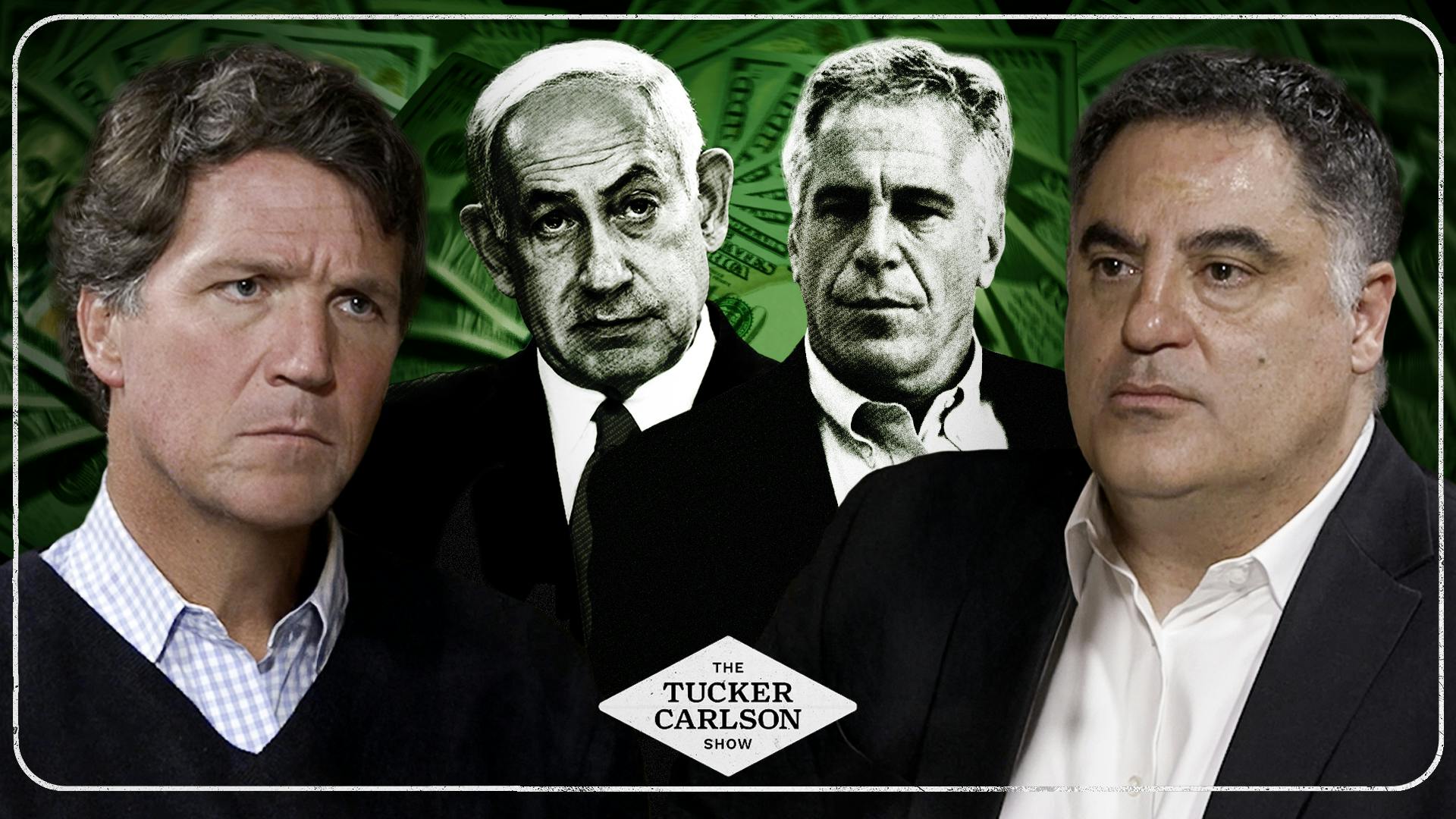
The Tucker Carlson Show
Cenk Uygur: Epstein, JFK, 9-11, Israel’s Terrorism and the Consequences of Opposing It
02:28:11
Loading summary
Transcript663 lines
- [00:00]
A
Foreign.
- [00:04]
B
Good to see you, Cenk.
- [00:06]
A
Good to see you, Tucker.
- [00:07]
B
I haven't seen you since we had a debate years ago, I think, at Politicon. Totally different world. But I was thinking this morning as I was driving in, I'm like, of all the things you could do to infuriate your audience, this is probably at the top of the list. Like, you don't need to do this. Why are you doing this?
- [00:22]
A
Yeah. So there's a couple of reasons why. Number one, I want to take yes for an answer. You're anti war. We've been anti War for 20 years.
- [00:31]
B
I have not been. So bless you for that.
- [00:32]
A
Thank you, brother, and welcome. Thank you. Glad to be here. And so that's amazing. That's important. And I also want to break down the barriers of Republicans versus Democrats, right wing versus left wing. I think that it's kind of used to divide us and I think that the powerful already have an incredible elite team. They're very, very organized. And they do it through don the, to the politicians, et cetera. But the American people are not organized. We have built two teams. But those two teams, the Republicans and the Democrats, have been trained to fight each other instead of fighting up. Right, exactly. And so when you split the population that way, you take away all of their energy because you have them use their energy against one another rather than against you. It's actually brilliant.
- [01:23]
B
It's how the British ruled India.
- [01:25]
A
Exactly. Right.
- [01:26]
B
Yes.
- [01:27]
A
And it's done on a meta level in every way. Also, by the way, on a global level, Christians versus Muslims, 2 billion here, 2 billion there. Make sure you guys are fighting one another. And hey, look at that. We've used up all your energy fighting one another and not looking up.
- [01:42]
B
I've noticed. Yeah.
- [01:43]
A
Okay. And then of course, the third issue is Israel. And so that's what I want to talk to you a lot about today, I hope. And I think that that's an animating issue for a number of reasons. Not because it's the end all be all, but because it is deeply symbolic. And so whether it's Big Pharma or Big Oil or aipac, they are buying our politicians. And so you're a rare person saying that. I'm a person saying that. And mainstream media works against us and they try to shut us up and say, don't tell anybody about money and politics. Yes. No, no. These politicians are honest and honorable people having debates. They're not having any debates. They're cashing checks. And so I want all of America to know that. And at the end of the day, Tucker, if we don't unite as Americans, the powerful are going to rule us forever.
- [02:33]
B
I think that's exactly. That is absolutely true. So let's just start with motive. I hate going to motive because it's like we don't even know our own motives a lot of the time. Right. Motive is very hard to determine. But when this topic comes up, people go immediately to motive. You're taking money from somebody, a foreign power, okay. You're a secret. You've got some secret religious affiliation. You're filled with hate. It's all about why you have these views rather than addressing the views themselves. I've just noticed this, having lived it. And so I just want to ask you about Israel specifically. How did you come to this, and what are your motives?
- [03:11]
A
Yeah, so it's a difficult for me one for me, because I have. I grew up in a town that was about 50% Jewish. So I have tons of Jewish friends. I have Jewish family. I have a nephew and niece who are Jewish. Yeah. And so I don't want to make people uncomfortable. And. And I don't want this to be about the Jews. That's crazy. And what I tell people all the time is, hey, listen, I like my friend Dave, my friend Jack Mossad never called him and asked permission. Right. Netanyahu was never like, hey, should we take 53% of Gaza? What do you think, Dave?
- [03:44]
B
Right.
- [03:45]
A
So that's not how it works. So if you're. So I. Anyone who's got that intent, I'm not interested in. Okay? You're not going to have me as an ally. It's not going to work out. I have Jewish family, I have Jewish friends. I'll never sell them out. Okay? So. And the other thing about Jewish Americans is they're Americans, and we're, I believe, in a united America. Okay. So you're for America. I love you and I protect you. I'll give you one last example. Although I can give you thousands. Right. But Dave Smith. Dave Smith is an amazing ally of ours.
- [04:17]
B
Wonderful man.
- [04:17]
A
Yeah, I agree. So if you come for Dave, you come for all of us. He's one of us. Okay. We protect our own Americans.
- [04:24]
B
Right.
- [04:25]
A
Okay. So now why do I have an issue with Israel then? Even though I would actually naturally want to ally with Israel. Yes. All the Jewish friends and family that I have. Right. And I didn't know a lot of Palestinians growing up. I only knew one Palestinian. We had one in our high school, and we had hundreds of Jewish folks who loved Israel. Et cetera. Right. The problem with Israel isn't just the genocide that they just committed, but that would be enough. That is a horrific injustice in Gaza. In Gaza, I mean, you've got well over 70,000 dead. You've got God knows how many thousands buried in the rubble, and they're adding to the count every day. You've got 10% of the entire population that was either killed or injured, which is a stunning number. That's why almost all. Every genocide scholar says it's obviously a genocide.
- [05:12]
B
Right. 10% of the entire population.
- [05:14]
A
Yes. Either killed or injured. Okay.
- [05:16]
B
To be over 200,000.
- [05:18]
A
Yes, that's right. Because the amount injured are well over 130,000. Okay.
- [05:24]
B
But just to be clear on that, like, that's a number that we should know, I think, since we paid for it. And I think it's so important to know what death tolls and the injury count is because you did this. And you have to know what the consequences are. I think it's totally fair. We don't know in the Russia, Ukraine war. We have no idea. And we have no idea in Gaza. So I just want to say that there are estimates that it's over half a million. I don't know if that's true or not. But that's the point. We should know that.
- [05:49]
A
Yeah, absolutely.
- [05:50]
B
We have a right to know that.
- [05:52]
A
So, Tucker, that's going to go to points two and three, which, sorry, I.
- [05:55]
B
Could just erupted with enemy.
- [05:57]
A
Started erupting. No, no, not at all. Not at all. But I want to come back to that because 2 and 3 are super important. It's symbolic of the power that all the donor class has. Not just Israel, but also with Israel you have gaslighting. That is extreme. Where you don't have that in any other area.
- [06:13]
B
Can you explain what that is?
- [06:15]
A
So you'll say, hey, I don't think we should give Israel another $30 billion or another 100 billion. I want to get into all these numbers in a second. Right? And they'll say anti Semite now. So wait a minute, that doesn't make any sense. We could mad Lib this, right? You take any Israeli talking point and put in a different country and it sounds absurd, right? Yeah. Like you owe Thailand $300 billion. People would be like, well, no, we don't. Anti Thai racist, right? You're like, what? I don't even know any Thai people. What are you talking about? You're an anti Thai ist, right? No, I'm not. Right.
- [06:52]
B
Why do you hate Thailand?
- [06:53]
A
Exactly. But that's See?
- [06:55]
B
But you're obsessed with Thailand. That's my favorite. You're obsessed with Thailand.
- [07:00]
A
Okay, well, by the way, I would be obsessed with Thailand if Thailand took $300 billion off of us. Right. And if Thailand was like, you have to attack everyone else in Southeast Asia. You know, we have a Thai Christian heritage. Yeah. And imagine if India did that and they're like, we have a Hindu Christian heritage. And that's why you need to attack Pakistan. Yeah.
- [07:21]
B
And by the way, if you're not for attacking Pakistan, then you're clearly being paid by Bhutan.
- [07:25]
A
Yeah, yeah, of course.
- [07:26]
B
People who are getting. Who are working for a foreign government accusing you, who just want to stay out of it, of working for a foreign government. Is that what gaslighting is?
- [07:34]
A
Yeah. Gaslighting is when the media says, take something very reasonable, you're saying, and makes it sound like it's crazy. Like, so we say we gave them $21.7 billion in the middle of a genocide. Okay. So that's, on top of the 300 billion. Right. And that's, by the way, 10 to 12 billion we spent bombing Iran, Yemen, and almost all their enemies in the same period of time. We just gave them another 8.6 billion and another 3.3 billion. That happened in the last two weeks. So when you say, let's just take one sliver of that, hey, I didn't want to pay for a genocide. I didn't want to do that. Right. Whether it was the Thai, the Bulgarians, the Israelis. I just. I don't want to kill 20,000 children. I don't want you to spend my money killing 20,000 children. I don't care what race or religion they are.
- [08:20]
B
Why are you so hateful?
- [08:21]
A
Exactly. And that's literally what they say.
- [08:24]
B
No, I'm against killing kids. They didn't do anything, actually.
- [08:27]
A
Yeah. And they say, so you hate Jews. That's gaslighting. Right, Right. That's so. Wait.
- [08:33]
B
Oh, I live in that country. Yeah, I know what that is.
- [08:35]
A
Yeah. So I'm the one trying to stop the killing. I'm for nonviolence. In fact, I'm religiously for nonviolence. If I have any religion at all, it's nonviolence. My heroes, Martin Luther King and Gandhi and Mandela. And so I say, do not do any violence to anyone. It would be. In fact, if someone is doing violence, they're against us. Right. And I say and don't. And you just heard me say it. I say it a thousand times. I love Jewish. This is not about the Jews. So, but this country wants us to pay for a genocide. Just don't want to pay for a genocide. They listen to all that and they go, now everybody understand that Jake Hebrew is an anti Semite who hates Jews and is like an immoral person. And if you're not pro genocide, you're anti Jewish. No, no, no, don't say that. Don't say that because you're actually going to get my Jewish friends hurt. When you say you're anti genocide means you're anti Jewish. That equates Judaism with genocide. Don't. I don't know anything that drives up anti Semitism more than that. But, but back to the original injustice and then we'll get back to more and more gaslighting. Because the gaslighting is another perfect symbol of what mainstream media does and establishment media does, right? Yes, they gaslight on almost every issue. So real quick, one, more like Big Pharma, we can't negotiate drug prices. They're like, that's pro free markets.
- [09:51]
B
No negotiation. Wait, that's capitalism.
- [09:54]
A
Not being able to negotiate prices is the exact opposite of the free markets. Everything on television is a lie. It's all an illusion.
- [10:01]
B
That's very funny. I've never really thought about it like that, but that is so true.
- [10:05]
A
I mean, why are we not rebelling against the biggest socialist or communist program in American history that we're not allowed to negotiate drug prices? What kind of absurdity is that? And we're the only country on earth that that applies to. So it just, they're like magicians. Establishment media, cnn, msnbc, fox, New York Times, Washington Post, they're like, look here, look here. Meanwhile, the action's going on here.
- [10:28]
B
So the new year is here, but that does not mean you've gotta overhaul your whole life. Despite claims to the contrary, you don't have to take drastic measures. Make a few changes here and there and you'll be a lot better off. And you can start with the snacks in your pantry. Now, products from standard American chip brands are, let's be honest, pretty repulsive. Filled with chemicals that make you feel heavy and bloated. They don't even taste that good. They're not good for you. We recommend an upgrade with Masa chips. Masa is the easiest way to eat clean without feeling like you're on a diet. The chips contain three ingredients. That's it. Organic corn, sea salt, 100% grass fed beef, tallow, and that is it. No seed oils, no mystery chemicals, just food, actual food. And they're amazing. And you feel Great. After you don't feel weighed down. We particularly enjoyed the cobanero flavor lately, but they're all great. You want to give them a try? Visit masachips.com M A S A chips.com Tucker use the code Tucker for 25% off your first order. Or you can click the link in the video description or you can scan the QR code to claim this outstanding offer. And if you don't feel like ordering online, you can buy them nationwide at your local sprout supermarket. Stop by and pick up a couple of bags before somebody else does. We're excited to tell you about a new project from Amazon, MGM called Melania. For years, the people in charge have tried to tell you who she is, but they didn't show you who she is. Now you can see for yourself every protocol, every precaution, every single move. Meticulously coordinated, this new film takes you inside the 20 days leading up to the 2025 presidential inauguration. And it does it through the eyes of the of the First Lady, Melania Trump. The briefings, the plannings, the private conversations. Witness what it takes to get there, to become first lady of the United States. Mark your calendars. Melania premieres in theaters January 30th. So most people don't wake up in the morning and decide to feel horrible, exhausted, foggy, disconnected from themselves. But it does happen, and it happens slowly. You're working hard, you're showing up and your energy disappears by midday. Your focus is dull, your weight won't move. A lot of people are told that's just getting old, that's what it is. But that's not actually true for many men and women. These are not personal affairs. They are signals tied to your metabolism, your hormones and nutrient imbalances that go undetected for years. You don't even know you're deficient. And that's why we're happy to partner with Joy and Blokes, a company that was built for people who are done guessing and ready to figure out what exactly exactly is going on. And that starts with comprehensive lab work and a one on one consultation with a licensed clinician. An actual human being explains what's happening inside you and builds a personalized plan which includes hormone optimization, peptide therapy, targeted supplements. So don't settle. Go to joyandblokes.com Tucker use the code Tucker for 50% off your lab work and 20% off all supplements. That's joy and blokes.com Tucker use the code TUCKER. 50% off labs, 20% off supplements. Join blokes get your edge back. Well, the original argument, as I remember, I was never involved in this, but I was in libertarian adjacent world a lot of my life. And so I remember hearing that argument and I remember thinking, yeah, what is that? And they were like, no, no, no. If you are allowed to negotiate drug prices, you will kill pharma innovation in the United States. And we lead the world in innovation. I'm like, okay, I guess I didn't realize that a lot of pharma is just poison anyway. This is before the Sacklers, you know, killed a lot of people in Appalachia. And I was like, okay. But then you watch pharma offshore, like they offshore, like New Jersey. You grew up in New Jersey was a pharma stronghold. You know, Basking Ridge, that whole area was filled with pharma companies are making the drugs there they are not anymore. We don't make antibiotics, we don't make vitamin C. We don't make all these drugs because they offshore them. So we protected them from fair competition by eliminating negotiation and they left anyway. So like what, what's the upside here?
- [14:29]
A
I can give you a thousand examples. We gave the semiconductor industry 50 some odd billion under Biden. That was the Chips Act. And all the Democrats are like, he's FDR 2.0. I'm like, guys, that's a $50 billion corporate subsidy, okay? And did we put any guardrails in? So did we say, hey, intel, here's at least 8 of the 50 billion going straight to you? I think it might have been 12 in that ballpark. So now as condition to that, you're supposed to build here in America. So you can't fire any Americans. If you fire any Americans, then obviously we're not going to give you the money because the ostensible reason for us giving you the money is to build a semiconductor industry here in America. Exactly right. Intel fired 8,000 people right after the bill passed because there's no guardrails. Because why until roads are Americans? 8,000Americans. Of course, immediately they fired him immediately. It's a joke. The whole thing's a joke. None of the politicians mean it. And the people that allow them to get away with all of this. So all that is the robbery, right? Mainstream media is the getaway car. Okay? So they come in and they make excuses. Oh, FDR 2.0. It's brilliant to give away your money to the semiconductor industry. It's brilliant to give it away to big pharma and to Israel. And if anybody objects, their conspiracy theorists and anti Semites, et cetera. Their job is not to cover the news, it's to cover up the news. So, I mean, again, look at that.
- [15:49]
B
Is literally true.
- [15:50]
A
Yeah. So Obama ran a campaign called a campaign ad called Billy back in 2008, and it was about the deal to not negotiate drug prices. It was outrageous. Everyone hated it. A Democrat named Billy Tausin had negotiated it in Congress. That's why the ad was called Billy. And Obama was saying, I'm not going to be like those Democrats. Right?
- [16:10]
B
Yeah.
- [16:10]
A
He got in, said, we're not negotiating drug prices. Trump said, we're going to negotiate drug prices. Not going to negotiate drug prices.
- [16:16]
B
I knew Billy Tauzan really well. Wonderful guy from Shack Bay, Louisiana. Just a really charming guy. Used to hunt with him a lot. And I always loved him. Still do. But he went from Congress to do, you know, his next job was lobbyist.
- [16:30]
A
Head of Big Pharma.
- [16:32]
B
Exactly. He was the head pharma lobbyist.
- [16:34]
A
And that's my point, Tucker.
- [16:35]
B
Not attacking him, but that. That happened. I was there. Yeah.
- [16:38]
A
Like what? So mainstream media looks at that and goes, no, I don't see it. I don't see it. Big Pharma gives more like four times more than the Israeli lobby does. And they're like, no, I don't see it. I'm like, isn't the adage follow the money? Like, so here is an industry giving billions of dollars to politicians. That's a lot of money. Oh, yeah, 5,000 at a time. Right? And then the super PACs, et cetera. They seem like they're bribing almost all of Congress. Nope, nope. Conspiracy theory. I had a.
- [17:08]
B
Because they're bribing all the media, too, with drug addicts, of course.
- [17:11]
A
That's their number one advertisers are drug companies. Number two advertisers, by the way, are politicians. Why do they always say that politicians are honest and they're having real debates? Because politicians are actually their top clients. So when you spend $17 billion in money in politics, where does it go? It goes almost all to establishment media to buy ads. So the Republican Party and the Democratic Party are the best clients that cnn, New York Times have. So they are always talking about how great the Republican and Democratic parties are, how terrible primaries are. Primaries use up that money. We didn't get all those bribes to send it, spend it in a primary. We got it to have a fake fight in the general election where you have. You paid the lesser of two evils. Ha ha. We got you. So that's. You can. That's the Rosetta Stone money in politics. Once you see that, you see how politics works and you also see how media works, which then leads us back to Israel. So we say, guys, it. They have contributed. Guardian did a piece on this. The Israeli lobby has contributed to 94% of Congress. Okay, first, do you think they did that for their health, for the general welfare, or do you think that every group they have is named after Israel because the whole point is to support Israel, right? That's not a complicated question. It's the American Israeli Political action Committee. One of the groups is called Democratic Majority for Israel. They ran $4 million worth of ads against Nina Turner, which is one of Bernie Sanders campaign chairs, to make sure that she was defeated by Chantal Brown. Chantel Brown was one of 11 people running against Nina Turner had almost no ratings at all. Nina had a 35 point lead. She was running against the Laputians. Chantel Brown puts a, a statement on her website saying how much she loves Israel. Boom, $4 million appears. All in favor of Chantel Brown, all against Nina Turner. That's her raising her hand saying, I will work for Israel.
- [19:07]
B
And what happened in the end?
- [19:09]
A
They erased a 35 point lead. They bought every ad in Cleveland and most importantly, they got mainstream media to say, now remember, Nina Turner hates Joe Biden, so she loves Donald Trump. Now that's Cleveland voters, they don't want that right now. Is that true? No. She has said a statement that voting for Biden is like eating a half bowl of shit. But okay, but she said, but voting for Trump is like eating a full bowl of shit. So what am I going to do? I'll eat the half. Right? She, they never ever put the second half of the statement in. They just said in every news story, whether it's on TV or in the newspapers, they, Nina Turner says voting for Biden is eating a half bowl of shit. She's so Trump favorite. But how could she be pro Trump? The rest of the sentence says he's twice as bad. So people in mainstream media are giant liars. They've lied about me all the time. They lie about Republicans, Democrats, but mainly they lie to protect the donor class. So then again, back to Israel. And because it's such a perfect symbol, 94% of Congress, it's not 34%. You add 34%, you can say, yeah, they have a lot of control. That's a lot of money that they're giving to a third of our Congress. That's 64%. You'd say, come on, they have Enormous power, if not control. And 94%, it's clearly control. Further, part of that Guardian story is 82% of Congress votes basically with Israel every single time. That 82%, on average gets 100 just in that last election cycle, let alone all the other ones. $125,000 per member of Congress. Now, establishment media says that's not a bribe. They're just talking to one another, oh, hey, how you doing? Here's $125,000. So you'll vote for Israel, but it's not so you'll vote for Israel. It's that you can have a better debate or whatever. And they're like, of course that's not a bribe. And they don't control those members. Well, how come they vote with Israel every single time? Why don't you follow the money? I thought the old adage of journalism was follow the money. And every time we ask you to follow the money, you call us an anti Semite. That's really, really weird. That's a super weird thing to do. Again, madlib. Fill in any other country, imagine that Bulgaria was giving to 94% of Congress.
- [21:31]
B
Or Great Britain or Sweden, or any kind. Doesn't matter.
- [21:33]
A
It doesn't matter. And you said, well, it seems like The Bulgarians have 94% of our Congress locked up. How dare you. Anti Bulgarian racist. You Bulgarist. Right. It would be absurd. It would be absurd. So, of course you have to point this out. And what have they gotten in return for the hundreds of millions that AIPAC and other Israeli lobby organizations have put into Congress at this point, they've probably put in over a billion dollars collectively over all those years. So. Well, what they've gotten back is over $300 billion in funding through the lifetime of Israel, adjusted for inflation. That's before October 7th. October 7th, we add that 21.7. You could argue 10 or 12 billion more for the wars we're fighting for them. Those are not free. Every time we drop a bomb on Iran or Yemen or Nigeria, it costs us money.
- [22:26]
B
Or Iraq.
- [22:27]
A
Or Iraq.
- [22:27]
B
We did that.
- [22:28]
A
Yeah, but look, if you get into that, the global war on terror, which is, if we're being honest, the global war against Israel's enemies cost us $8 trillion.
- [22:39]
B
Right.
- [22:39]
A
So Israel's lucky if we don't count that. A trillion.
- [22:41]
B
It's why we're bankrupt.
- [22:42]
A
Yeah.
- [22:43]
B
Yeah.
- [22:43]
A
I mean, here we are at 38 trillion and Tucker. That's the other amazing part. So now in the last two weeks, they give in. Trump gave another 8.6 billion totally unaccounted. Where's that 8.6 billion coming from? Did anybody ever vote for that? 8.6 billion. And then unabated, he gave another 3.3 billion. Where is this money coming from? Is anybody voting on this? What is going on?
- [23:06]
B
Well, it's, it's. These are IOUs to countries that are buying our Treasuries.
- [23:11]
A
Exactly. So that's the next layer of it. So you're telling us we have to borrow money from China and Japan so we can give money for free to Israel and then we pay the interest for the rest of our lives. And. And they don't pay any interest. Well, why don't they borrow it from China and Japan?
- [23:29]
B
Exactly.
- [23:30]
A
Why are we borrowing it and give it to them?
- [23:32]
B
We're excited to tell you about a new project from Amazon, mgm, called Melania. For years, the people in charge have tried to tell you who she is, but they didn't show you who she is. Now you can see for yourself every protocol, every precaution, every single move, meticulously coordinated. This new film takes you inside the 20 days leading up to the 2025 pre presidential inauguration. And it does it through the eyes of the First Lady, Melania Trump. The briefings, the plannings, the private conversations. Witness what it takes to get there, to become first lady of the United States. Mark your calendars. Melania premieres in theaters January 30th. And can I ask you a question that really bothers me? Why don't people who support Israel or any foreign cause pay for the cause themselves? There are a lot of very rich people. I know some I like, some who are profoundly pro Israel and really think about it a lot, care about it a lot, have friends and family. They're great. Why don't they? And some of these people are worth billions and billions and billions. Why don't they? Why do taxpayers have to pay for this? Why don't they just donate the money to Israel? I'd never have understood that. And no one will answer that question.
- [24:41]
A
Because of leverage and economies of scale. So let's take Larry Ellison as an example. So to be fair to Larry Ellison, the founder of Oracle, he actually did the thing that you say. He gave $16 million to the IDF in the middle of the genocide as a donation charity.
- [24:56]
B
5 billion. I mean, that's $16 million for. It's not much, actually.
- [24:59]
A
Yeah. So I'm going to get back. Yeah. So he's like, hey, genocide, well done. Keep genociding. Here's 16 million more. It's a really. It's an outrageous thing to do. But, okay, you love Israel. You love that they're committing a genocide against Palestinians. You despise Palestinians, you're de racist, and you're a bigot against Muslims. That's your business. Larry Ellison. Okay, but now he thinks, wait a minute. What if I give to American politicians and then instead of me giving the 5 billion or the 50 billion, we get to sucker American taxpayers that give it? Right. So now how can I do that? It's actually simple.
- [25:33]
B
It's so dishonorable that I can't really even fit that in my head. I don't force other people to pay for charities I support. I mean, I support them because I support them. I mean, that's what integrity is. I can't imagine sticking a gun in someone's face and say, you have to donate to my charity.
- [25:50]
A
Yeah. So. And in this case, it's not a charity. It said no, but a cause that.
- [25:54]
B
You believe in, you know?
- [25:55]
A
Okay, so then Dropsite News has done some terrific reporting and they found emails of Ahud Barak, the former Prime Minister of Israel, and others.
- [26:04]
B
Can I say, Dropsite News has done some amazing reporting.
- [26:07]
A
Yeah, fantastic.
- [26:08]
B
It's unbelievable.
- [26:09]
A
And in fact, the way that establishment media is not covering their stories shows you what a joke it is.
- [26:13]
B
Dropsite News breaks more story. I didn't really. Was. Wasn't really sure what it was until recently. They're breaking more stories than the New York Times, Washington Post put together by far.
- [26:22]
A
Yeah. It's not an accident. That's because they're trying to break stories and they are. Is trying to do the opposite. And Epstein stories are amazing. And we should get back.
- [26:32]
B
They're unbelievable. I'm sorry to interrupt. Yeah, I just wanted to say that.
- [26:34]
A
No, no, absolutely. So Dropsite News found emails of Larry Ellison talking to the Israeli ambassador. And he says, this is back in 2016, 2015. 2016, that campaign. And he says, I'm going to go vet Marco Rubio for Israel. Now, remember, Larry Ellison's ostensibly an American. Okay. But he doesn't. He's talking to the Israeli ambassador and says, I'm going to make sure Marco Rubio is on Israel's side. Then he goes and talks to him at a party. He comes back and then reports back to the Israeli ambassador. Don't worry, he's on our side. I'm giving him 5 million for his super PAC, by the way, at that time, that's against Donald Trump. Okay, so that's Larry Ellison saying, I'm basically Buying Marco Rubio on behalf of Israel. So that doesn't even go to Marco Rubio's aipac tracker, on an APAC tracker. He's over a million dollars from the Israeli lobby, but they've got all this secret money and their super PACs and the. All the other things that they have. And in that case, he's caught because we have his emails. So don't tell me he's not working for the Israelis when we have emails showing he works for the Israelis. And then what is the consequence of that? Hey, look at that. Marco Rubio, Secretary of State. And now we're going to war against Iran, maybe Venezuela. We're doing everything that Israel wants. And so that's a nice break they caught. What a coincidence. And by the way, this is not a partisan issue. You had Obama's former speechwriter go out the other day and say, we probably over taught the Holocaust to our kids. Okay, this woman, I think Sarah Hurwitz, but if I've got the name wrong, that's right. Yeah. So that's off top of my head of who she is. But Obama, speechwriter, and she says, we taught them the Nazis were strong and oppressed the weak, but now Israel is strong and targeting the weak, so we shouldn't teach that anymore. I'm like, do you hear yourself? Do you hear what you're saying? And then at Free Press, somebody wrote an article about, oh, our kids, they, they're against genocide. Now, what did we do wrong? You didn't do anything wrong. You told them a wonderful thing. You told them. You taught him Jewish culture. Never again stick up for the underdog. Question authority.
- [28:42]
B
Can't murder innocents. I mean, that is, that's like a baseline. You can't murder people who didn't do anything wrong because it is murder. There's no justification for killing innocent people ever.
- [28:52]
A
So if you think about it, let's just take the Marco Rubio example. And I'm not putting it all on Rubio. It's a giant institution and infrastructure, and like I said, It's 94% of Congress. Right? But you put in 5 million of Marco Rubio, a decade later he's Secretary of State, and in the middle of your genocide, you got $21.7 billion. Now, if you're Larry Ellison, do you want to put in the 21 billion yourself, or do you want to put in 5 million to a politician and then you get the 21 billion for free?
- [29:20]
B
The problem is that it treats the people who are giving the money against their will. There's never been a vote on this. If there was a national referendum on should we be sending tens of billions of dollars to a country not our own, of course it would fail immediately, but it treats those people very badly as kind of subhuman, like, who cares what they think? We're just going to take their money, indebted their children unto the generations. And it's just the contempt that that displays for Americans is unsettling to me.
- [29:50]
A
So I have a proposal on that, Tucker. So why don't we do a poll and I challenge cnn, New York Times, Gallup, anyone to do this poll? And if none of them accept the challenge, then we'll do the poll, we'll commission the poll, and then we'll see, and then they could verify it if they like. And the poll is, does America owe Israel any more money? Because every pundit on television say, we owe Israel, we owe Israel. They never explain why. Right. You really say that all the time. They say, okay, what do you mean 300 billion you owed Israel? Of course you should pay him 300 billion. Why do, why do I pay them 21 or 31 billion in the middle of a genocide? You owe Israel. Why do I owe Israel? No one ever explains. No one ever explains.
- [30:32]
B
They actually, I've never heard that. They actually say that out loud. We owe them, of course.
- [30:35]
A
Of course.
- [30:36]
B
For what? Where's the debt from?
- [30:38]
A
Yeah. And so, and when I press, I press on every one of these talking points, that's part of why they despise me, right? And I say, okay, help me understand that. Why would we owe Israel? Well, they suffered a holocaust. The Jewish people. Well, first of all, the Jewish people did, not Israel. Right. That's different. Okay, but wait, we rescued them from.
- [30:58]
B
The Holocaust and all those Americans died, a lot of them, hundreds of thousands of Americans died fighting out war.
- [31:05]
A
If we rescue them from the Holocaust, why do we owe them money? It's like none of these talking points make any sense if you, all you do is just prick the bubble and people instantly go, oh, wait a minute, lift the curtain. So here we rescued.
- [31:18]
B
Did they actually say that?
- [31:20]
A
Yeah. So the Bosnians, right, For example.
- [31:22]
B
Right.
- [31:23]
A
We rescued them from a genocide, from the Serbs. Right. And I'm proud of that. I think we did, you know, we saved tons and tons of lives. And you can say, maybe we shouldn't have interfered. Maybe we should be more isolationist. It's a good debate, but at least we did something demonstrably good there. Okay, did the Bosnians, after we rescued them from the genocide come and say to us, you owe us. No, they said, thank you. By the way, you won't find anyone on this planet who loves Americas more than Bosnias. Okay? And so they love America. They appreciate America. Poland lost 5 million people in the Holocaust. 1.8 million non Jews, 3 million Jews. So after the Holocaust, Poland could have said, you owe us. No, we saved Poland. Russia saved Poland. We saved Jews. Russia saved Jews. By the way, did Russia ever get a thank you after losing, what, 20 million or so people in the war? Right. Instead, now Israel's constantly attacking Russia. I got no love for Russia. I think Putin is wrong. I don't think he should have invaded Ukraine. But wait a minute. Why does anybody owe Israel for anything? It doesn't make any sense at all.
- [32:28]
B
No, it doesn't.
- [32:29]
A
Okay. So now they want a new memorandum of understanding. They were going to try to make it 20 years, and partly because of you and us and all the people that are going. Wait, why that? A memorandum of understanding is a president saying, we owe you for the next 10 years, 20 years, etc.
- [32:46]
B
And that's a. That's an agreement between the United States and Israel.
- [32:50]
A
Yes. So, for example, Obama signed a 10 year memorandum of understanding saying we owe Israel 3.8 billion every year for 10 years.
- [32:59]
B
So no votes on it during that period.
- [33:01]
A
The only votes you get is it gets put automatically into the budget every year. And once it gets put in, you have to actively take it out. But if you go to take it out, they'll call you an anti Semite and try to ruin your career. I have amazing stories about that. Marie Newman, a US Congresswoman, voted against one of the appropriations that Israel got. Four Democratic colleagues come on the floor of the House and say, how dare you? How dare you vote against Israel. We're gonna take away all your money. Actually, yes. You could ask Marina Obiwan about it. She said it on the Young Turks. This happened just a couple years ago. Okay. She was in Congress from Illinois. They said, we're take away all your money and we're going to spend a ton of money against you.
- [33:45]
B
Her own party?
- [33:45]
A
Yeah, her own party. And that's what happened. They spent about 4 million against her. Eliminated.
- [33:51]
B
No way.
- [33:52]
A
Andy Levin, Jewish American congressman from Michigan. Kind of a legendary Jewish family in Michigan. Carl Levin was a senator.
- [33:59]
B
Yeah. Sander Levin.
- [34:00]
A
Yeah. Yeah. Andy Levin says two state solution. He says, I love Israel, I'm a Zionist. Okay? But obviously we should have a free and independent Israel and a free and independent Palestine. 4 million against. Andy Levin eliminated.
- [34:12]
B
No way.
- [34:13]
A
Eliminated. Jamal Bowman. You think it was about the fire alarm? You might be upset about the fire alarm or whatever else Jamaal Bowman did. They spent. The Israeli lobby spent 19 million eliminating Jamal Bowman, Cori Bush, eliminated. Okay. Anyone who opposes Israel is eliminated.
- [34:32]
B
This year marks the 250th anniversary of our country. And it's a great time to think about what makes America strong. Companies that make their products here play a major role in our national strength. America. American workers working with American steel, that is the source of pride. And Liberty Safe is one of those companies doing it. Liberty has been building gun and home safes in the US for decades. No imports and no shortcuts. Just authentic American craftsmanship designed to protect families, their firearms, their valuables for generations. Plus proven fire protection and a lifetime warranty. We have one proudly, a big one. Not to brag. And protects what matters most. That's part of your responsibility. Supporting American workers is part of patriotism. Liberty checks both boxes built for the long haul. Built in this country, built in America. Check out libertysafe.com today as it celebrates and honors this anniversary with special safes and offers throughout the year. Can I ask you a question? I mean, this is shocking and I'll confess I don't follow the details of democratic politics closely enough to have heard of any of this. I knew about Jamaal Buman, but the rest I didn't. So I wonder about that strategy which they're now employing on the right and trying to slandering people as Nazis or trying to get them killed, which they're doing. But I wonder, as a strategy, obviously it's immoral, but does it actually work? Isn't it better to say, as you would in any negotiation, here are the things I actually care about. Let's see if we can come to terms like allow a little bit of flexibility. There's no flexibility allowed.
- [36:10]
A
Well, Tucker, congrats. You have forced Israel into some flexibility almost single handedly.
- [36:16]
B
I don't feel that at all. I feel that because I've never been against Israel and I'm not against Israel now. I'm not against any person actually. And I'm certainly as a Christian, totally opposed to hating a group based on its blood that would include whites, blacks, Hispanics, Turks and Jews. And I mean that. So whatever. I've really tried to be like, whoa, whoa, whoa, let's settle this down. It doesn't work. And I just wonder. That doesn't seem like a good strategy. I guess that's what I'm Saying, like, just as a negotiating position, it's like you have to have some willingness to move. You can't be that rigid or you're not going to win in the end.
- [36:51]
A
Yeah. So the reason I said that is because, look, first, let's distinguish. There's. Mainstream media purposely blends all these things together, partly because Israel wants to use Jewish Americans as human shields. They want to say, if you attack us, you're attacking Jewish Americans. And so you're not allowed to. You're not allowed to. Right. But in reality, there's Jews as people slash Jewish Americans. Then there's how you feel about Israel. Then there's how you feel about the Israeli government. Right. We are talking about the current Israeli government and they say, no, you're talking about Jews. Because they want to hide behind that. Right. When we keep saying, no, not the Jews, and they're like, no, the Jews, the Jews. We're like, stop saying the Jews. It's not the Jews.
- [37:35]
B
Moreover, I get to define what I think and what I'm talking about. And let me repeat myself, I think anti Semitism is immoral and I won't engage in it ever. Period. So I get to decide, because I'm a sovereign man, what I think. And I can try to express it as well as I can. No one has a right to tell you what you think.
- [37:53]
A
Yeah, it's really obnoxious to the.
- [37:55]
B
What's Orwellian? It's like, are you in charge of my soul? I don't think you are.
- [37:59]
A
So, for example, I'm an atheist. So what does that mean? That means I think all humans are pretty much the same genetically. Right. I'm stone cold. So if you told me a Jewish, a Muslim, a Christian, a Hindu is different, I'm philosophically opposed to that. I'm ideologically opposed to that. I'm scientifically opposed to that. I just think it's wrong. It's incorrect, Factually incorrect. So that is a distraction. And they've now weaponized the term anti Semitism, which also does a lot of damage. Because when real antisemitism comes, people will think, oh, those are the heroes fighting against the genocide. Right, that's what I was told.
- [38:35]
B
But it also scares people. I mean, I've experienced this a lot in my personal life where people I know and love have been convinced that I'm Nazi or Nazi adjacent or hate Jews or whatever, and that I'm trying to hurt people, which is literally the opposite of what I would ever do, want to do. I don't agree with that at all. And I say that constantly, but they've whipped people into a frenzy, preying upon their deepest fears. And there are many victims of that kind of evil. But one of the victims is the people who are being terrified. People are terrified.
- [39:11]
A
I think actually the number one target of Israeli propaganda is Jewish Americans.
- [39:17]
B
Oh, of course.
- [39:18]
A
They say, oh, if it's not for Israel, the whole world hates you and you're all going to die. You're all going to die. Everyone hates you and it's an obligation.
- [39:26]
B
Your only pretention is Israel. It's a hate that can't be even reasoned with or discussed. You don't have to know anything about why people disagree. It's hate. It's fundamentally irrational and it will never end. And until they kill you or you kill them, it's like, whoa, that is a very heavy thing. First of all, it's untrue. Second, you're inspiring violence by talking like that. I mean, the only endpoint of that kind of thinking is violence. It can only be solved by violence. Kill or be killed. That's what they're saying.
- [39:57]
A
Yeah. And so again, mad libbit say, okay, let's say that you oppose something the Turkish government did, which I hope you do because they've done plenty of bad things. I oppose a bunch of things that the Turkish government has done. If after you, I just don't like.
- [40:09]
B
Turks, that's my problem.
- [40:12]
A
But I mean, that's the point, right? If you said, hey, you know, I don't think the Turks should have gone into northern Syria and I say anti Turkish racist, you'd be like, what? What kind of lunatic are you? Right? That's not a thing. That doesn't. Just because you disagree with the actions of a government at this time doesn't mean that you hate Turks in perpetuity, forever and ever. You hated them before, you hate them after. No, I just don't agree. Look, I didn't agree with the Iraq war. Does that mean I hate Americans? No, it means I don't agree with that government action taken at that time. And all of that is very logical until you get to Israel and then they flip it on its head.
- [40:49]
B
But can you see how irrational and fear based the conversation is becoming and the cost to American society not even having anything to do with Israel? But just that way of thinking is a scary way of thinking. First of all, it's identity politics in its purest form. This group versus that group. This group has special rights. This group has fewer rights. I mean, this is everything that I hate and I disagree with, as a Christian, but can you see the cost to the whole society because of this? That's enormous cost. So, you know, making people hate each other.
- [41:21]
A
Yeah. Look, I'll go back to the stats on how awful the genocide was and all of that, but to me, at least as bad is the control over this country. Okay. And I came here to be free, and I came here for American sovereignty.
- [41:36]
B
How old were you when you came?
- [41:37]
A
Eight years old. My family came here because my dad is an enormous believer in America. Like, you won't find a family who loves America more than we do. Right. Yes. And by the way, he had that belief in faith, and it was met we came here and that faith was true, that hope was delivered. And we have lived amazing lives in this country because of the opportunity and the hope that this country provided. And by the way, our answer to that is thank you.
- [42:05]
B
Amen. I feel that way. I feel grateful.
- [42:07]
A
Yeah. I'm enormously grateful to America. And by the way, when America helps you, the correct answer is thank you, not you owe me. Okay, give me more. That's not the correct answer.
- [42:17]
B
Right.
- [42:17]
A
And it's not taken as a correct answer from any other country. But when it comes to Israel and they say, no, give me more. Right. We were supposed to say, oh, thank you, sir. No, I don't want to say thank you.
- [42:27]
B
Have children. How would you respond to your children if they said that to you?
- [42:30]
A
Oh, that would be a mistake for them. Yes.
- [42:34]
B
Oh, you can't.
- [42:34]
A
And there would be consequences.
- [42:36]
B
Yeah. You can't put up with that. Not for one second. You degrade yourself. You hurt the person you're dealing with because you inspire more of that behavior, which is totally bad behavior. Yeah. It's so unhealthy. I mean, how could we get. How do we get into this?
- [42:51]
A
Yeah. Let me give you two examples about how they are taking our freedom away. Okay, so a friend of mine runs a company in la. He gets an email from what looks like probably a bot, but it could be an Israeli troll, whatever it is. But some buddy writing in saying, we found out that one of your American workers is an anti Semite and you should fire her. He's like, really? Oh, I didn't know that. What did she do? Did she attack someone? Did she say something outrageous? And he finds out that she had put up a Palestinian flag during the genocide in support of like, hey, I'm against the genocide. These poor people on her Facebook account. That's it. Nothing against this.
- [43:30]
B
You're allowed to have that view. You can support the Palestinians, you can support Hamas, you can support whatever you want as an American.
- [43:34]
A
But she's not supporting Hamas. She's not.
- [43:36]
B
I get it. Like, let's just remind ourselves that we have a full range of intellectual freedom because of the First Amendment and because God gave us those rights, not any administration. So, like, you cannot allow infringement on those rights.
- [43:50]
A
She doesn't even say anything against Israel, let alone Jews. She just says, you know, just has the Palestinian flag. They're like, that's just an average American. It's not Tucker Carlson. It's not Jane Hugo. She doesn't have a show. She's a random American. Now all of a sudden, the Israelis are emailing your boss and saying, if they dare even support the Palestinians, treat them as humans, they're anti Semites and they should be fired. No, no, that's oppression. That's oppression and it's against the average American. I can't stand it. Okay, so you and I get a certainty is oppression. Yeah, stop. But I get it. We're in the media, we're in wars, right? These information wars, these media wars, et cetera. But leave average Americans out of it. And they will. And they won't tolerate it. They won't tolerate any dissent. Any dissent at all.
- [44:34]
B
What is that?
- [44:36]
A
Because. So you know why, Tucker? It's worked for them. So now that gets. Leads to the second example, Bari Weiss.
- [44:42]
B
Right?
- [44:42]
A
So Bari Weiss claims she's like, remember when she was at the New York Times, she's fighting against cancel culture. Our college campus have been taken over by cancel culture.
- [44:51]
B
She promoted cancel culture when she was on the campus of her college, Columbia, when she was pushed for anyone who was against Israel to be silenced. I mean, she's always been for cancel culture.
- [45:03]
A
Exactly. So she actually started her career as a student who went around saying, I'm proudly Zionist and I'm going to try to take out Arab, Arab and Muslim professors who don't toe the line for Israel. So she got famous doing cancel culture on college campus.
- [45:22]
B
Oh, I remember very well.
- [45:23]
A
Then she pretends in the middle of her career that she's against cancel culture, specifically on college campuses. I mean, the lie is so brazen, right? And then she goes to free press and then starts cancel culture again on college campuses. They spoke out against Israel. They should be fired. They should be arrested. Oh, yeah, it's. Wait, wait, wait, wait.
- [45:43]
B
I'm a dangerous Nazi.
- [45:44]
A
Yeah, you're talking about arresting Americans for disagreeing with another government, with another country. I mean, if you're not bothered by that. Then you have a servant mindset, right?
- [46:00]
B
Yes.
- [46:00]
A
These folks obviously have 94% of Congress. They obviously pro Israel factions, have almost all of established media. We can come back to why. Okay. And I'm okay with it. I will serve them well. I'm not okay with it. I don't want to bow. I love that America's free. We came for that freedom and that freedom is delivered for us. But I don't want to give it away. I don't want to give it away to anyone. If I wanted to give away my freedom, I would have stayed in the Middle East.
- [46:26]
B
Yeah.
- [46:27]
A
Okay. I came here for the promise of America. Our family did so. And you know, among, among Muslim Americans, there is no group. I was born Muslim. I'm atheist now. Okay. So I, at 22, I went through the religions. It wasn't for me. Okay. But am I going to defend my family and my background? Sure, I am. Of course. Right. But ideologically, I'm atheist. So I had. This country had room for me and this country didn't ask, are you Muslim, Are you atheist, Are you this, are you that? It just gave me the same rights as anyone else. And I love that. And I'm pretty sure, I mean, Erdogan's taking away democracy in Turkey, in my opinion. Yes. And he's done some good foreign policy, but his domestic policy, I'm against. Okay. If I stayed in Turkey, I would almost certainly be in prison at this point. Right. And here I'm not in prison.
- [47:19]
B
No.
- [47:19]
A
And if you turn America into an occupied nation, that's not what we came for. That's not what I mean. That is against the core of what America is. And if they're paying 94% of Congress, we're occupied. Yes, we are. And it's not just Israel. We're occupied by big pharma and big oil and defense contractors. But all those politicians represent those people and not us. I would love. My driving goal is regain American sovereignty. And when I go to talk to Muslim groups, a they say, look, now all of a sudden they're very open to the right wing. Why are they open to the right wing? Because you, Candace, Megan and others are saying, hey, maybe we got fed a lot of propaganda to hate Muslims because they happen to be Israel's enemies.
- [48:05]
B
Well, of course.
- [48:07]
A
And so maybe all that media about how they're all, they're terrorists. Terrorists. And you look at it and go, and we were taught by books that Robert Maxwell bought that Israel was attacked in 1948. Israel was attacked in 1967. Israel's always the victim, victim, victim. And then you look, you go, wait a minute, in 1967, Israel attacked. I was lied to. No. Israel attacked all of its neighbors and destroyed their military, their air forces, before they even got up off the ground. Right. And they called that a preemptive strike. So that became the new self defense is offense. And what did we do in Iraq? Preemptive strike. We went into Iraq and they could have weapons of mass destruction. By the way, where did we get that false intelligence? Israel at the time Ariel Sharon was saying Iraq is Israel's number one enemy. Iraq the time, by the way, hated Al Qaeda. Al Qaeda attacked us.
- [49:04]
B
Of course, it was a Ba' Athist government. It was secular. They had tons of Christians in the government.
- [49:08]
A
Yeah. Not only that, Al Qaeda constantly attacked the local rulers. So if Saddam ever caught Al Qaeda, he executed him on the spot. Right. So in a sense he's an ally of sorts in that case against Al.
- [49:22]
B
Qaeda and a counterbalance to Iran, which had held our hostages for over a year in 1979. So it's like that was in no sense consistent with her interests. Iraq had nothing to do with 911 at all, despite the many, many lies. I knew people who told those lies. Really?
- [49:40]
A
Really.
- [49:40]
B
Steve Hayes wrote a whole book about it was a lie. No one's ever apologized. But those lies all served one imperative, which is fight Israel's enemies. I was there, so I know that that's true. And everyone knows that that's true. And you're now required to lie about it. It was just a mistake. It was not a mistake at all. It was totally intentional.
- [49:58]
A
Yeah. And so when I give speeches to those Muslim groups and I talk about American sovereignty, that's when I get the biggest applause because who's the victim of another government meddling in the American government? The most Muslim Americans are because I mean, there's no equivalent, I mean, for any money that the Gulf countries or anything else puts into America, it doesn't get any power at all.
- [50:23]
B
Okay, so. But the Turks, this is interesting because you were born in Turkey, you came here at 8. Your co host on your show or someone on your show show, Anna Kasparian is just a wonderful person, I think, but is Armenian. So one of the most famous feuds in history, one of the most famous genocides was the Armenian genocide right after the. During the first World War. And here you are, good friends and work together every day. And that to me is a huge part of the promise of America. You can leave your tribal wars in the countries of origin and come here and interact as equals under the American flag, as citizens. That is truly the vision I think everyone had. You know, we imported tons of Irish in the 1840s into an Anglo country. They didn't need each other. Those countries had been hated each other for centuries. But they all came here and pretty much got along, sort of watching the Israelis import, which they are doing. And there are many proxies in the US Importing their ancient tribal conflicts into my country, telling me there's an Anglo, multisensory American, my family, that I have to hate Muslims, or it's like, first of all, I'll decide who I hate, not you. It's not up to you who I hate. You're not in charge of me. And second, that's your battle. Why don't you keep it in the Levant? I don't want anything to do with that. Right, but now it completely dominates you. I hate Muslims. It's like, first of all, I believe in Jesus. I'm not a Muslim, but I like a lot of Muslims. And I'm never going to say I don't.
- [51:50]
A
And isn't that funny that they're like, if you don't agree to everything the Israeli government does, then you hate Jews. But if you don't.
- [51:57]
B
I don't hate Jews and I don't hate Muslims, and I don't want any part of their fight. I mean, why would I?
- [52:02]
A
But wait, Tucker, then they go on to the second part of the sentence. So, like, if you disagree with Israel, you're a bigot. Then they say you have to hate Muslims. But wait a minute, I thought you were against bigotry. So you're not against bigotry.
- [52:14]
B
So how is hate all Muslims any different from hate all Jews? Well, it's not.
- [52:19]
A
It's not.
- [52:19]
B
It's not right. It's the same. And. But these, you know, you have people who don't believe in universal principles, and that's kind of the core problem. It's like, only certain types of hate are bad. Only certain kinds of bigotry bad.
- [52:30]
A
No, no, no.
- [52:31]
B
If bigotry is bad, it's always bad. Because all people are created by God and they're inherently equal. They may have different abilities. They do have different abilities, but they have equal value. And if you don't believe that, which Barry Weiss doesn't, then you can, with a straight face, say, anti Semitism is wrong. I agree with you, Barry Weiss. Hating Muslims is right. No, I mean, I don't Agree with you. I'm sorry.
- [52:53]
A
Yeah.
- [52:53]
B
And Laura, by the way, don't bring that into my country. Go away.
- [52:56]
A
Yes. Laura Loomer, Mark Levin, say all the time, you should hate Muslims. Muslims are the problem. Well, then you've lost your moral high ground.
- [53:06]
B
Well, they don't believe in a universal principle. It's just identity politics. It's no better than any other form of identity politics. And it's all disgusting and immoral.
- [53:14]
A
Exactly. So whereas to your point, Anna and I do a show together, and that's an Armenian and a Turk doing a show together, literally.
- [53:21]
B
And a show called the Young Turks. I was like. I first thought it was this years ago. I was like, holy smokes. People may not know what the Young Turks were, but whatever.
- [53:30]
A
Isn't that beautiful? Isn't that a beautiful sentiment?
- [53:33]
B
The promise of America. Leave your tribal, Your ancient tribal conflicts and your countries of origin and come here and exist as equal citizens under the law. That is, to me, that's the most American sentiment I can imagine.
- [53:44]
A
Yeah. And so. And by the way, when you do that, that doesn't mean that you leave your entire culture behind. Don't bring your food, don't bring your language, don't bring this, don't bring.
- [53:52]
B
I agree.
- [53:52]
A
No, no, we've had. The Italians brought pizza, the Jews brought bagel and lox and pastrami, and the Chinese brought. It's great and wonderful. Love it, love it, love it. But you have to agree that America is your top identity.
- [54:09]
B
Of course. Or else you're going to have Hutus and Tutsis murdering each other in your cities. Yeah, like, no. How about no?
- [54:15]
A
You have to be an American. It means something to be an American. It means you put ancient tribal hatred aside. I mean, so when you look at the Young Turks, our audiences, Armenians, Greeks, Jews, Muslims, Christians, everyone. Everyone. And in the Old World, that wouldn't have happened. That's why we came here, because we don't want the Old world. We want this world, this world of freedom and equality.
- [54:37]
B
Amen. Amen.
- [54:39]
A
Right.
- [54:39]
B
I just could not agree with what you said more strongly. I just really feel it.
- [54:43]
A
Yeah. So back to the Memorandum of Understanding. Why?
- [54:46]
B
Sorry, I'm a digressor, Cenk.
- [54:48]
A
I'm doing the same thing. So they say 20 year. The new one we want is a 20 year memorandum of. So we have to give you a 20 year contract. And they say the 4 billion that we're giving them currently per year on top of everything else is not enough. And they started talking about 5 billion. So wait a minute. Now, 5 billion, 20 years, we're talking about another hundred billion. We're going to borrow from China to give to Israel and then pay interest the rest of our lives.
- [55:14]
B
And this is exclusive of. This does not include military obligations. So if there's another war, of course we'll backstop it with missile defense or whatever carriers in the region.
- [55:24]
A
Right.
- [55:25]
B
So it doesn't even include that.
- [55:26]
A
Yeah, so. But because they got so much pushback, this is the first time I've ever seen the Israelis give an inch. All of a sudden Netanyahu comes and goes. Maybe 10 years, maybe we taper it off. Right. It's total bullshit.
- [55:40]
B
Maybe go away and never come back.
- [55:42]
A
Yeah, how about that? So look, I started a site, Not Another dollar. Com, ok? Not Another dollar.
- [55:50]
B
Is that a hate site?
- [55:52]
A
They will call it that. So what we're saying is, look, two things. One is, number one, if you, if a congressperson takes money from Israel, vote against them. Okay? Now why? Because we want our representatives to be our representatives. It's not an outrageous ask, it's a bare minimum ask. Right. And happy to apply to any country. Okay. But right now, Israel is the one giving to 94% of Congress. So there has to be some consequences.
- [56:20]
B
I agree.
- [56:21]
A
So since we're peaceful and nonviolent, and by the way, again, violence destroys any movement. That is why a lot of times counterinsurgencies start the violence.
- [56:31]
B
Of course.
- [56:31]
A
Right? Always they could. So if anyone.
- [56:34]
B
Nothing more real than false flags.
- [56:36]
A
Yes.
- [56:36]
B
That's just a fact. It's been a feature of warfare hot and cold from the beginning of history.
- [56:41]
A
So do. If anyone proposes violence, they're on the other side. Okay? Reject them, turn them in, turn them into the authorities. Okay? Zero violence. So they cannot destroy the movement. Okay. And because it's the right thing to do and it seems it's the moral position. Right. So what we're saying is I also have Operation Consequences Dot Com. It goes to the same thing. So what are the consequences? Not violent, not hatred, not anything. Just if you vote with Israel to give them another dollar, we're going to vote against you. And you know what? You don't have to cross party lines. That's what primaries are for.
- [57:15]
B
Yeah.
- [57:15]
A
So if you're a Republican, you never have to vote for a Democrat. If you're a Democrat, you never have to vote for a Republican. Go into the primaries and we're going to make two lists. One is, are you taking money from Israel? Okay. And that list already exists. You know, you have AIPAC tracker et CETERA we'll put it up on the site so you can see, oh, these guys are taking money and these guys aren't. So when you see Tom Massie and he takes no money from AIPAC or any of the Israeli lobbies, you go, I might agree or disagree with Tom Massie, but at least I know he's honest and he represents us and not a different government. Okay, the second thing we're saying is, did you give money to Israel, did you take money from Israel and did you give money to Israel? So if forget the past because they all gave money in the past, okay, we're fair, clean slate. But going forward, you vote one more time for another dollar to Israel and you're never going to get our vote ever. It's a solemn pledge. Okay? Now you could sign the pledges on not another.com or operation consequence.com, but it doesn't matter. Create your own website, create your own pledge, create your own movement or join the movement, say, hey, you know what, I don't want to go to those sites. I want to do it on my show. Love it. Right. I want to do it in a right wing way. Great. I love it. Left wing way. Great. I love it. Okay, but you've got to get the representatives some consequences.
- [58:30]
B
It sounds like democracy.
- [58:31]
A
Exactly. That's all it is. That's all it is.
- [58:34]
B
So just inject the views of the people who own the government into the conversation about what the government should do.
- [58:39]
A
Yeah. So if you, for example, radical, if you do that poll, does America owe Israel any more money? My guess is an overwhelming majority are going to say no.
- [58:51]
B
How would you get that poll? I mean, do you think you could get CNN to take that poll?
- [58:57]
A
Well, if they say that no, we're not going to ask Americans that, then they obviously have an agenda. They claim to be objective. Right.
- [59:04]
B
CNN claims to objective.
- [59:06]
A
They still pretend.
- [59:07]
B
I worked there for many years. Not objective.
- [59:09]
A
Right. New York Times very much pretends to be objective. All right, then ask the question, do the do, Does America owe Israel any more money? Okay, now if you say maybe we're wrong, Tucker, Right. Maybe the Americans come in and go, 80% of Americans say, yes, we owe Israel more money, then we'll stand corrected and we'll go, our bad Americans can't wait to give more money to Israel no matter what the circumstances are. But wait, if it turns out 68%, 82%, some significant majority of Americans say, no, we don't owe them any more money. Now does the voice of the American people matter or does it not matter. And you know what the answer is. And that's why they won't do the poll, and that's why we'll do it for them. That's okay. Right? Look, right now, 92% of Democrats say that what Israel did in Gaza was wrong. And that was before the election. And both Joe Biden and Kamala Harris said, I don't care about my voters. I don't care about 92. 2% of my voters. They couldn't have been any clearer. I'm going to serve Israel Instead. Now, number one donor lifetime to Joe Biden is AIPAC. AIPAC gave Kamala. True. Yes. Over $11 million throughout his career. The Israeli lobby totally financed.
- [60:28]
B
Now, 11 million to. Just to Joe Biden.
- [60:30]
A
Just to Joe Biden. Okay.
- [60:32]
B
And that again, I would have thought it was Citibank or the credit card companies.
- [60:36]
A
So he was known as the senator from mbna, which is credit card company in Delaware. So he was literally known for corruption. Now, did you hear that in mainstream media from Objective? Yeah.
- [60:47]
B
He gave his son a house. Right. I mean, it was pretty open.
- [60:49]
A
Yeah, Yeah. I mean, Joe Biden's trademark thing in Washington was do whatever the donors tell you. That's why the one promise he kept was to the donors. Remember, he said to them, nothing will fundamentally change because if you're at the top, you don't want anything to change, because then you might slip from the top. If you're at the top, you love the status quo. So you want a politician coming in telling you nothing will fundamentally.
- [61:16]
B
So here's one question that I have that I don't have the answer to. So I understand that that's all consistent with the darker parts of human nature. I'm winning. I don't want anything to change. I get it. I don't even judge it. But the rest of the country is withering and dying, and that's measurable in life expectancy, for example. There's no way to argue that this is helping normal people and they're not staying the same. They're going down by every measure, down to their personal health. Why? The people who run the country are ruling class. It's not enough that they profit. It does feel like they're trying to hurt the people they rule. I've reached that conclusion. What is that?
- [61:57]
A
So I'm most angry at our politicians, and I'm going to give you an analogy about that in a second. So, like, so Israel pharma, they're going to logically try to rob us.
- [62:08]
B
Of course, I get It.
- [62:09]
A
Right.
- [62:10]
B
The king takes most for himself, but he also wants to make his people not die earlier. But they do want us to die earlier. What is that?
- [62:19]
A
But it's. Yeah. So it's largely our representatives fault. So I talked about Biden. Kamala took 5 million from AIPAC, talked about that. Let's talk about Trump. So Trump in the first election in 2016 takes 100 million from Sheldon Adelson. Okay. So does Sheldon get something in return? Of course he does. Right. So he got a great number of things. A corruption charge and went largely went away with a small fine. The estate tax was dropped right in the nick of time before he passed away. Saved them billions of dollars. You know where the Adelson make most of their money gambling in China. Yep. Okay. Mickey and Macau. So they're mainly a Chinese company. And, and they had to bring their money back from China to America. So they got a tax holiday. We don't get tax holidays, but they get tax holidays. And so they're. The repatriation tax was brought down to about 8%. So instead of paying 35%, they paid 8% which saved them billions of dollars. So then they take that money from China, bring it back to America. They give 100 to, to Trump, he runs again, they give another hundred, he runs again. This time it's Miriam Adelson. Sheldon's passed away. His wife Miriam gives 137 to Trump. So now collectively they've given $337 million to Donald Trump's reelection campus. So now one of the things they wanted was taxes and other interests and defeat the unions and their casinos and all the things, their wish list. But the main thing they wanted was for Israel. And Trump says it all the time. He doesn't hide it at all.
- [63:48]
B
He says, he said in the Knesset.
- [63:50]
A
Yeah, he said, look, you guys give me money and you said Sheldon wanted me to, to move our embassy from, you know, Tel Aviv to Jerusalem. So I moved it for him. Like you're not supposed to say that. Okay.
- [64:01]
B
But I love about Trump, I love it when he just says it.
- [64:05]
A
Yeah. So he's like. And then. So they wanted this and I gave him the Golan Heights. I said, go ahead, take it. Right. And whatever. Israel asked. And she said, Sheldon came in here in my first term more than any other person. And he said to be fair, he gave the most. Right. So if you give that much money, you get access and you get American policy. So now Miriam's up there going, maybe you should run for a third term. And I'll give him $250 million. She said that on air next to Trump. So that is them rubbing it in our face saying so.
- [64:36]
B
That's the part I don't understand. Like, every country has a ruling class that derives the most benefit from whatever system is they're running, but it's the pretty undisguised hatred for Americans. Why the humiliation rituals? Why say that in public? Why basically give the entire country the finger. You have no control. If you step out of line, we'll send the police to your door. You don't need to behave that way.
- [65:00]
A
Yeah. This is relatively new.
- [65:01]
B
There's hatred in there. That's how you behave toward people you really want to hurt.
- [65:06]
A
Before I. They were more subtle about it. Yeah.
- [65:10]
B
That's why I never said anything. I wasn't fully aware of it, but also, it's like, it's working. It's whatever. I don't get involved in this, but all of a sudden it's like, you're not allowed to live in the country that you were born in because you disagree with a foreign country. It's like, you don't need. Why are you talking to me like that? Who do you think you are? What are you doing?
- [65:30]
A
So since they're starting to lose control now, back to the American people. Overall, 6. This was about six months ago. The numbers are probably starker now, but 60% of Americans said, we don't want to support what Israel is doing with financing anymore. 60, 60 for Gaza. Okay? They said, we. We are not backing what Israel's doing. And only 32% said yes. So 2 to 1, very, very, very clear. The American people, 2 to 1, don't give Israel any more money to kill more people in Gaza. Don't do it. And all of our politicians, Democrats and Republicans, are like, no, we're going to give them more money. We don't care. Shut up, American people. So why are they switching to this new, harsher tactic? Because I think they're going for intimidation. They've already lost the people. They've lost the propaganda wars. So they're just going for bullying.
- [66:19]
B
Well, they don't intimidate me. And I'm totally happy to pay any price not to go along with this. Not because I hate Jews, I certainly don't hate Jews, but because I love my country and we have the right to act in our own interest and to say what we truly believe. And I will never bow to any other system voluntarily. And I feel like a lot of Americans. Clearly you feel that way.
- [66:40]
A
100% America was not made for bowing. Okay?
- [66:45]
B
That's the things that hurt my family. I'm happy to bow before God. I'm not too arrogant to bow, but I'm not going to bow to something that hurts my children. I'm not going to do that.
- [66:54]
A
And did they? No, they're not going to take our freedom away. So back to your point about the humiliation rituals, then.
- [67:01]
B
Why do that?
- [67:03]
A
It gets way worse. In case you don't know this, for the folks at home, the Adelsons then lobbied Trump to get Jonathan Pollard back to Israel. Okay, so Jonathan Pollard's a traitor. I mean, as big a traitor as we have ever had in this country.
- [67:19]
B
And a true hater of America says it out loud all the time.
- [67:21]
A
Yeah, and he goes further. He endangers Jewish people by saying, if you're a Jew in America, you should work for Israel like I did and betray America. He says that. Okay, so now this is as despicable anti American character as you will find on planet Earth. So not only do they lobby to get him back to Israel, first of all, he should never been let out of jail, ever. Ever.
- [67:42]
B
What did the Israelis do with the national suit, with the Navy secrets that he gave them? Do you know? They gave them to the Soviet Union. They gave them to the Soviet Union in exchange for refuseniks. I remember this. I know people were involved in it. And yeah, our top ally gave our national security secrets. This is the middle of the Cold War. It's not a joke. These countries have nuclear weapons pointed at each other, and Israel gave those secrets to the Soviets. So that's just a fact. Oh, you're lying. I'm not lying.
- [68:16]
A
Yeah. And in this case, yeah, in this case, not only. So they've been lobbying Democrats and Republicans get Jonathan Pollard out of jail because he delivered for Israel. And so they got Obama to pardon him and not pardon him, but, like, say, okay, he can get out of jail. Then they got Trump to say he can leave the country. Okay, so this is all already disastrous. But just to rub it in a little bit more, he was flown back to Israel on a private jet owned by Sheldon Adelson. That's the Adelson saying, f you, we work for Israel, not for America. We're going to take the worst traitor you've ever had and celebrate him. We're going to give him a hero's welcome.
- [69:00]
B
I don't understand that. That is not in my personal range of, like, emotions. That's like, you won. Got it. Okay, great. You're getting what you want. Okay, but that's like if you're playing tennis with someone and you crush them in tennis rather than going up and shaking hands, you know, Good, good game. That's what I was forced to do as a child. You leap across set and like, beat him to death with a racket. I don't like. What is that impulse? I think it's the scariest thing I've ever seen.
- [69:25]
A
They're going for full intimidation.
- [69:28]
B
Right, but why?
- [69:30]
A
Because they lost the American people. We're gone. So look, I mean, look, Tucker, you're arguably the. The biggest show in, in the right wing. Right. And you certainly were on Fox and you have the numbers to back it up now. Right. We're arguably the biggest show on the left. This is the. You know, you could argue that it's the heads of the families getting together.
- [69:51]
B
Yeah.
- [69:51]
A
On behalf of the American people, saying the right and the left. And then by the way, we can bring in any independents, you could bring in Tim Dillon, anyone else, and they will say the same thing. Enough, enough. We have no hatred in our hearts. Okay.
- [70:03]
B
I don't.
- [70:04]
A
But enough. So not another dollar and we're done with you guys. And hey, good luck. Good luck with Iran. Right, But I don't have to spend a trillion dollars fighting your war for you in Iran. I don't. And what if. Look, and you know what they're doing, Guys, pull back.
- [70:18]
B
Like, this is so unhealthy, this relationship. Pull back, we both regain our sovereignty. Israel doesn't have sovereignty exactly. Either. I mean, I don't know, you could debate what sovereignty means, but they're totally dependent on the United States. That's not good. How's that good for Israel? And so let's just become normal countries again and then be friends. That seems like a good outcome to me.
- [70:37]
A
Yeah. By the way, it's a terrific outcome for Israel. Right. So now when you total it all together, probably around 350 billion that they've taken from us and they've we. And 8 trillion in wars we did for them. Take the win and go. Like it's time to take the winnings off the table. Right. So if you say, no, I want another 300 billion, I want another 100 billion, I want you to pay for another war, and I'm going to take more.
- [70:59]
B
And you can't have the First Amendment anymore because you're not allowed. Allowed to criticize me.
- [71:02]
A
Yeah.
- [71:03]
B
Okay. That's when I say I'm not participating in this. Totally happy to go to jail for it. I don't Care. I'm never going to participate in any effort by a foreign power or our own government to limit my birthright.
- [71:16]
A
So, Tucker, let's talk about that. Because there's so many things that Israel does that I'm not sure people are aware of. And why are they not aware of it? Because establishment media not only doesn't report on it, but actively covers it up. Right. And if you dare report on it, they'll call you names and try to ruin your career. Okay, so what have they done? First of all, the First Amendment is sacrosanct. So no, there is no exception to the First Amendment for Israel. And by the way, if you say there should be, you're trying to destroy our Constitution. Okay? So, no, we're not going to let you destroy our Constitution. So, no, nobody should be arrested on a college campus for writing an op ed against Israel, an editorial saying that they should be sanctioned. That's all. That's what that Turkish PhD student wrote. And they're like, that's it. Arrest her. What do you mean, arrest her for her speech. What does that mean? And now, as I said, they're targeting American workers, trying to get them fired. The lady who put both of us on a list for, oh, anti Semite of the year, whatever, she went and gave a speech about. And by the way, everyone could look up every fact I'm saying they can go find the videos for themselves and they should. And they should spread it all over the Internet. And she's on there going, we're gonna find any American that opposes us and we're gonna try to ruin their lives. She said it, she's like, we're gonna make sure they never get a job, they never get a wife, a husband. We're gonna go after their families. I'm like, you're saying it out loud. You're saying it out loud, right?
- [72:42]
B
You don't believe in blood guilt in this country, period. I mean, that's why your family was able to move from Turkey and you wound up close friends with an Armenian because you're not responsible for what your ancestors did. That is a core American value.
- [72:56]
A
Exactly. So then there's 31 states, I believe, again, look it up. Maybe it's 30, maybe it's 29. God bless. But about that area that have passed laws saying you're not allowed to boycott or divest or sanction Israel. And if you're an American company that does that, we're going to take away your contracts from the state government. Governments. You will be punished severely, financially. Your family your business, etc. If you dare to disagree with Israel, what the fuck kind of law is that? And by the way, that's a lot of Democratic governors and a lot of Republican governors. If your governor is saying we, you must serve Israel, and if you dare to defy Israel, I'm going to take away your living and I'm going to take away American government contracts from you. You should be livid about that.
- [73:43]
B
Is there any law in the United States that you've heard of that says if you criticize the U.S. government, our Constitution desecrated flag? I don't think there's any penalty ever for attacking the United States. And I'm not saying there should be, of course, but then how can there be penalties for disagreeing with a foreign country? You can say whatever you want about America, whatever you want, and people do. And I'm glad you can. But the second you're critical of Benjamin Netanyahu, you get punished by the US government.
- [74:12]
A
That's insane.
- [74:14]
B
But that's the state of play. I don't think it's an exaggeration, is it?
- [74:16]
A
Yeah. No, it's not. Again, mad libid. Put in any other country, but even.
- [74:21]
B
Your own country, it's totally fine.
- [74:23]
A
Yeah. You can criticize America all the time.
- [74:25]
B
Oh my gosh, yes.
- [74:25]
A
You can call for sanctions of America, you can call for boycotting America. You can call for you want to go after the Portuguese. Ok, Imagine if they said you're allowed to criticize every country on earth, including your own, except Portugal.
- [74:40]
B
Why?
- [74:41]
A
Why accept Portugal? Right. But if you say why accept Israel? Anti Semite. Yeah. And why do they say anti Semite? It's to eliminate every voice of opposition to Israel in American conversation.
- [74:54]
B
Are you ready for the consequences of this, though? I mean, you're a business owner, you're a father. I'm not being melodramatic. I never talk about this stuff. I'm not going to now. But I'm just, you know, let's be real. Like the reason people don't say obvious non hateful things like you shouldn't be prevented from criticizing a foreign country in your own country. The reason they don't even say that is because they know what the consequences. Real consequence, not a joke, consequences. These are not people who are kidding.
- [75:22]
A
Yeah.
- [75:23]
B
Are you comfortable with that? Why'd you decide to do this? You don't need to do this.
- [75:27]
A
Yeah. So we've already dealt with a lot of consequences. Right. And so first of all, you know, they tell folks, don't do business with the Young turks, you know, or you know that. Yeah, I definitely know that. I know that for a fact. Yeah. And our network is called TYT, you know, we got a 24 hour channel and all these places everywhere but cable and, and they don't do, don't do sales, don't do investments, don't do anything because they're anti semiconductors. Okay. So, you know, take away their money and make sure that they don't survive. And then they do propaganda to the audience that's less effective. But, but for a while it was effective, you know. Oh, they're hateful people. They say they're on the left, but they, they, you know, they're bigots and they're this and they're that and then every kind of attack against me. But the establishment media always hated me.
- [76:27]
B
Why?
- [76:28]
A
Because I'm populist left and they despise populism, so.
- [76:32]
B
They certainly do.
- [76:33]
A
Yeah.
- [76:33]
B
Why do they despise populism, do you think?
- [76:35]
A
Because it's against the status quo. It's for change.
- [76:38]
B
Yeah.
- [76:38]
A
And if you're at the top, you don't want anything to change. They don't want to rock the boat because it's their boat.
- [76:44]
B
That's why they murdered Huey Long. Populism has a pretty, pretty long and very violent history in the United States reaction to it. Yeah, you just get killed.
- [76:54]
A
So do we get death threats all the time? Right? Do we get threats of different sorts all the time. And if you like, if, let's say that the Iranian government was threatening to kill me or their supporters were threatening to kill me or my family and they were doing all these attacks against our business, people would be, I think, outraged. Right. And Jake, I would be, and Jake Tapper would love to talk about the Iranians interfering with an American company and threatening America's. We should do something about Iran. On. Right. Israel does it. Shut up, you anti Semite.
- [77:27]
B
Oh, Jake Tapper hasn't defended you.
- [77:31]
A
Jake Tapper is going to write a book one day. It turns out we were the problem. No one could have seen it coming. No, we see it now, Jake. You're the problem. Okay. And so this whole defense of Israel over the top defense of Israel is absurd. It's insane. While pretending to be objective and they actively covering up the news here. Let's do more.
- [77:51]
B
But why get involved?
- [77:53]
A
Because I can't help it. I, I'm, I can't help but be free. And that's why I love this country. That's why it just kind of made for me uniquely Wonderful country for me and my personality. And I can't bow. I just can't do it.
- [78:09]
B
I was on an airplane probably 20, 25 years ago with James Carville, who was my co host at cnn, and, and a great guy in some ways, a great guy, very smart. And I said something about Israel, some humiliation they were shooting into the Church of the Nativity, murdering a bell ringer. I was like, oh, I don't want to fight about Israel. I never have wanted to. But I said, that is just too much. I mean, whatever it was at the moment. And he goes, I'll never forget this. He goes, you watch kids get into college. I was like, I guess I had little kids, a lot of them. And he goes, then you'll shut up. I was like, you think that would affect my kids ability to get into college? I'd never even thought of that before. Of course, then you'll shut up. Quote, that's a verbatim quote. You want your kids to get into college and you'll shut up. And to my shame, I guess I did kind of shut up for like 20 years. It's like, I don't want to deal.
- [79:02]
A
With this at all.
- [79:03]
B
I've got all kinds of things I'm interested in. I'm not that interested in Israel, Love Jerusalem, but like, I don't want to get involved. So the. I'm not trying to be melodramatic, but that's real. And did you ever have a moment where you're like, you know, maybe, maybe I don't. Maybe I just ignore it, let it slide?
- [79:20]
A
Yeah. No. And so, Tucker, it happened to me. So there's a school, private school in la. It actually happened to Anna too, in two different ways. So. And we applied for my son to get into that private school and one of my nephews happens to work as a volunteer in that school. And someone in admission told him that my son's application was going to be hurt because of his dad's positions on Israel. Actually, they actually said that out loud.
- [79:57]
B
That's why the Israelis have been happy to murder tens of thousands of children in Gaza, because they believe in blood guilt. That's just, that's just a, that's the truth. They say it out loud. Amalek. We believe in blood guilt, like the children are responsible for the sins of their parents. So we're going to kill them or not let them into the school or. And we face this a lot in my family. So yeah, yeah.
- [80:14]
A
So that's ramification for us personally. And as you know, Anna's husband is a coach at another private school and they try to get him fired and they demanded like some sort of Maoist apology where he denounces his own wife and calls her an anti Semite publicly. And he's like, no, I'm not going to do it.
- [80:33]
B
His own wife?
- [80:34]
A
Yeah. They're like, you must denounce your own wife, otherwise we don't feel safe. Okay, what is that? What is that?
- [80:42]
B
And so we don't feel safe. You're threatening to wreck my family. But you're the one who doesn't feel safe.
- [80:46]
A
Because it's always projection. They're always the victims. So, like, why do I say Jake Tapper? Like, for the. Jake is just representative of the mainstream media overall. Israel keeps taking more and more land. You could see it on a map. They just took 53% of Gaza. And Jake and the rest go self defense. But wait a minute, brother, I can see the map. Israel is growing. They say they want Greater Israel. They're doing Greater Israel. They're the ones that killed the Palestinians and then took their land. And Jake goes, no, no, don't believe your lying eyes. Don't believe your lying ears. Israel is the victim. They're always the victim. They're going to fire.
- [81:24]
B
You work for, like, why would you. That's absurd. Why would you say something like that? Who, like, where? What is your mission?
- [81:32]
A
Okay. And I challenge Jake. I challenge all of cable news anchors. So why don't you talk about, for example, one of hundreds of things that we've mentioned here, but another one is nine Americans killed in Israel over the last three years. Nine Americans killed not accidentally, but by Israeli settlers or the IDF murder.
- [81:52]
B
Actually.
- [81:53]
A
Actually, you know how much I didn't know that. Yeah.
- [81:56]
B
So sorry.
- [81:57]
A
Do you know how many consequences there's been? Zero. Our government does not ask for them to be arrested. What do you mean an American citizen is killed?
- [82:06]
B
What about Mike Huckabee? He's the American ambassador who just met.
- [82:10]
A
With Jonathan Pollard, the traitor in the US Embassy without telling the CIA or Donald Trump. Mike Huckabee is not our ambassador. He's their ambassador. I know, okay.
- [82:19]
B
It's sad to see a man so degraded.
- [82:22]
A
Yeah. So where's our justice for the nine Americans killed? Are we going to even ask for justice? Or is Israel literally above the law? They can kill Americans and totally get away with it. Our government won't even ask for redress.
- [82:38]
B
Right, Well, I think we know that's true already.
- [82:40]
A
But that's a fact. It's indisputable and then you got Tom Alexandrovich. So he's the guy who was an Israeli cybersecurity official, goes to Vegas and looks to rape a American girl. Right. So he's like, oh, this is a great opportunity for basically pedophile tourism. I'll go to America. And I know as an Israeli, I won't. I won't be held accountable. So he gets caught in a sting operation. Got him. Okay, good. Gets caught with eight other Americans who were also involved in that operation. The eight Americans are in jail right now in Nevada. Alexander Rich back to Israel. Free ride.
- [83:17]
B
How?
- [83:18]
A
But wait, you can't say that the Americans who did something terrible should be in prison. Great. Wonderful. Totally agree. But the Israeli is allowed to do it. And he can rape any American girl he wants here. And he gets a free ride back to Israel. No. No. So right now he's technically under arrest, but our government isn't doing anything to try to get him back. No, we want him extradited.
- [83:39]
B
But what about Mike Huckabee? Is he going? Is he brokering an extradition because he tried to rape an American?
- [83:45]
A
Say that's a fact. No, Mike Huckabee is not doing anything. So the Americans killed. No consequences. Americans.
- [83:55]
B
Did Mike Huckabee complain about the 9am you said nine Americans have been killed?
- [83:59]
A
Yes.
- [83:59]
B
Did Huckabee say anything about it?
- [84:01]
A
Not to my knowledge. If he said anything, it's been incredibly quiet. Okay. And hey, Mike Huckabee, if you want to prove me wrong, get out there and fight for it. So. God damn it. They killed nine Americans in a fight? Like hell. Forget tomorrow. Forget yesterday. Do focus on tomorrow. Go get him. Ambassador Huckabee, let's see what you got. Demand that they extradite Alexander Rich back to Nevada where he faces consequences like the other people who were caught. Where are you? Where are you? I mean, this happens over and over again through the. Since Israel has been formed. Robert Maxwell stole our nuclear secrets. The worst possible thing you could do. We didn't even arrest them. Why did. And when I looked into why didn't we arrest Robert Maxwell? It. Because it would have. It caused an international incident that embarrassed Israel. Well, they should be embarrassed. They stole our nuclear secrets when they were pretending to be our allies. They should be deeply, deeply embarrassed. No, no, no, no, no, no, no, no, no, no. Not only was Robert Maxwell not arrested, he was allowed to buy textbooks in America for that, go into our kids schools. We're letting a traitor like that, a guy he wasn't American, but he was a British citizen. He was a, you know, and he lived here, he lived there and we're letting him buy the textbooks that go into our kids schools after, after he stole our nuclear secrets and eventually got a state funeral. Again, heroes welcome in Israel. Congratulations. Are we ever going to stand up for this country? So how about the spies we caught after 9 11? Okay, put aside whether they knew, didn't know what their activity was, but we rounded up dozens and dozens of Israeli spies. Okay, great, great job. FBI, CIA, whoever did it, fantastic, really proud of you. And then we let them go back to Israel. Is that a thing we do? If we catch a Russian spy or an Iranian spy or a Dutch spy, do we go? Oh you're free to go. Aren't we supposed to arrest them and keep them in prison? But when it comes to Israel, there are no laws, there are no rules. They're allowed to do anything you want. And if you object, Jake Tapper comes out and calls you an anti Semite.
- [86:08]
B
So a year ago this week, the new president, right after the inauguration issued an executive order declaring that all files related to the Kennedy assassination, MLK and Bobby Kennedy's assassination had to be released. And they haven't all been, unfortunately. But in tranches of documents that have been released in the last 12 months, we've seen again and again references to Israel have been. And there are a lot of references to Israel in the files around the Kennedy assassination, interestingly have all been redacted. All been redacted for 62 years, 63 years. It's like, what I don't understand. Why would that be? Why are there two monuments to Jim Angleton in Israel? The number two at CIA. I think it's all very odd. And you hear people complain about conspiracy theories and I'm definitely against conspiratorial thinking because it drives you crazy. On the other hand, in the absence of transparency, that stuff grows like algae. I mean, what do you think? If you don't tell people the truth, what are they supposed to think? They're going to come up with all kinds of theories. Why would you redact references to Israel in the Kennedy files for six decades? Like what is that?
- [87:18]
A
That's almost an admission. So like I didn't know.
- [87:22]
B
It's very odd, I'll say that.
- [87:24]
A
So I didn't know that until recently. And again, establishment media never talks about these things. And again, it's not just about Israel. So for example, on 911 we're redacting references to the Saudis.
- [87:34]
B
Oh I know why?
- [87:35]
A
Why? So they say, well, there are allies. Well, if there are allies, then maybe they shouldn't have had a hand in 9 11. Right, they didn't have a hand in 9 11. Okay, great, then show me the redacted part. No, I won't show you the redacted part. Okay, now this is weird. Now this is our government working for other governments. And what happened after 9 11? We rounded up all the Bin Ladens. Yes, there were Bin Laden's in America. And we rounded up all the Israeli spies. And yes, there was tons and tons of Israeli spies in America following the.
- [88:03]
B
19 hijackers around the country.
- [88:05]
A
Yeah.
- [88:05]
B
Yep.
- [88:06]
A
And what do we do? We round them up. Oh great. We got them. And we released them back to Saudi Arabia and Israel. Yeah, no, that's our we invade Iraq.
- [88:13]
B
Yeah, it had nothing to do with that. And increased domestic police powers to the point where the country's not recognizable from what it was on September 10, 2001.
- [88:23]
A
That's our government working for other governments. And I can't stand it. So which leads us to Epstein. Epstein. Okay, so here's another one. Dropsite News has proven definitively that in my opinion. And we'll talk about the evidence that Epstein worked for an intelligence agency. And almost certainly Mossad. Okay. And almost certainly the CIA knew it.
- [88:44]
B
Of course.
- [88:45]
A
Okay, so now what's the evidence? It's overwhelming. First of all, in all the emails, he is looking to help one country. No, it's not Finland. And no, it's not America, it's Israel. So how do we get cyber weapons to Israel? How do we get America to bomb Syria? How do we get America to bomb Iran? Okay. Hey, Ehud Barak, former Prime Minister of Israel. I can set up a meeting with you with Putin. Wait, Epstein is so powerful, he can set up meetings that the former Prime Minister of Israel can. He can call Putin anytime and get someone a meeting. Then we find out that he was in the middle of the Iran Contra affair. He was the one switching the planes out. How many civilians were involved in the Iran Contra affair? Easy answer. Zero. There are no civilians involved in Iran Contra. Everyone was intelligence. Okay, so this guy switching out planes in the middle of Iran Contra is obviously intelligence. And that's Jeffrey Epstein. Okay, so Jeffrey Epstein was much more powerful than we realized. He could set up a meeting with almost any world leader. He could get almost anyone into the White House. Again, Ehud Barack has trouble getting into the White House. FC makes a call. Boom, he's in the White House. Israeli spy stays over at Epstein's house. There's just no question about it. He is definitely intelligence. And in every turn, he's looking to help one country and it's Israel. American media says shut up. No. Jeffrey Epstein, New York Times has a story about how he's like a Forrest Gump. He just tripped over the money and, oh, God, golly gee, he just happened to be an savvy investor. And nothing to see here now. Job site news already showed it. Why wouldn't you try to build on that? Why wouldn't you cover that? Is that not an interesting story?
- [90:31]
B
I think it qualifies. I don't understand. I'm not pretending to understand it, but it's certainly interesting.
- [90:37]
A
It's certainly interesting.
- [90:38]
B
Yeah.
- [90:38]
A
I mean. And by the way.
- [90:40]
B
And it seems significant, too.
- [90:41]
A
Yeah. If you're the New York Times or you're JTapper, you're Senate, disprove it. I don't want to believe something that's wrong. So show me. Oh, no. Drop site news got it wrong. Those emails are wrong. It turns out he was working for Sweden. Okay. Or no one. Fine. But they don't do that. They don't disprove it. They don't prove it. They don't report on it. They never, ever talk about it. That is super weird. Super weird.
- [91:07]
B
Well, speaking of an admission of guilt.
- [91:09]
A
Yeah, yeah. Because that is the most interesting story in a long, long time. Obviously, American people are captivated by it. Yes. Is the New York Times and CNN claiming that they're not captivated by it? No. They obviously are. Right. And they report about it as it affects Trump all the time. Trump, Trump, Trump. Trump, Trump, Trump, Trump. Right. I'm not saying that Trump didn't know Epstein. He did. I'm not saying they weren't great friends.
- [91:32]
B
They were.
- [91:33]
A
Right.
- [91:34]
B
But it's a bigger story. I think we.
- [91:36]
A
It's a bigger story than just Trump.
- [91:38]
B
Yes, I think it is. Right.
- [91:39]
A
But whenever it comes to Trump, they're like, yes, it was Trump. It was Trump. Why? Magic. You don't want to have people look here. This is where the real action is. So get them to look here. Get them to look here.
- [91:49]
B
Yeah, It's Three Card Monty.
- [91:50]
A
Yes. It's all an illusion. So it's unconscionable not to talk about Epstein's connections to intelligence, including Mossad and including the CIA, for sure.
- [92:01]
B
And British intelligence and French and. And what was this? I mean, you get the sense that it reveals the superstructure beneath it, gives you a glimpse into how power is exercised globally because it is global Right. And there's so much that I know a lot about the Epstein story, and I'm still totally ignorant about what that was. I really don't understand it, but it's obvious. It's a third rail for a reason.
- [92:28]
A
Yeah. Yeah. So that's why right now there's a bit of a revolution going on.
- [92:35]
B
Do you think there is?
- [92:36]
A
There is, yeah. And so, again, another reason why they hate you so much, because the left wing was already gone, you know, 92% disapproving of the actions of Israel in Gaza. And our politicians already gave us the middle finger and said, no, we'll lose this election rather than defy Israel. We'll lose Michigan, we'll lose swing states. We don't care. We serve Israel loyally. Okay, now there's a bunch of Democrats that are against that, Ro Khanna being the leading guy saying, no, I want to see the Epstein files. No, I think Palestine should exist. I don't know why everybody talks about Israel should be allowed to exist. Good news, they do, right? And they have nukes and they have Iron Dome that nobody has. They're about as safe a country as you could find on planet Earth. No one else has Iron Dome. Only a handful of countries have nukes. They have a better military than the rest of the Middle east combined. They're perfectly safe. Then you say, okay, you're good. You exist. We're all in favor of that now. Palestine should exist. They're like, how dare you, you anti Semite. No, no, no, no, no, no, no, no. You're the bigot. You're the bigot. Saying that another people should not have freedom. They should. You should. They've kept those people enslaved, five and a half million Palestinians for 58 years. And then they brag, oh, Israel's the best democracy and the only democracy in the Middle East. Well, it's a democracy within Israel. It's the dictatorship within the occupied territories. What is happening in the occupied territories?
- [93:56]
B
There's a bit of a dictatorship now in mainland Israel for. For Israeli Jews, too. I mean, you're not welcome to. Well, first of all, they try to keep people from leaving the country of restricted freedom of movement. And there. I mean, you get the cops at your door for saying certain things in that country. It's in many countries. That's. That's true, but it's also true there. So, like, come on now. Yeah, Stop lying to me.
- [94:17]
A
Yeah. And so the media, they're an enormous part of the problem. So you see, our politicians, both under Democratic and Republican presidents, and administrations say, no, we're not going to release the Epstein files. No, we're going to give Epstein a sweetheart deal back in 2008. And then we're going to take Alex Acosta and make him the Labor Secretary under Trump.
- [94:39]
B
That was the funniest thing that's ever happened. Didn't work for very well.
- [94:42]
A
Yeah. And by the way. Oh, Ghislaine Maxwell, that sounds familiar. Oh, she's the daughter of Robert Maxwell, legendary Israeli spy who stole our nuclear secrets, by the way. I don't know that that's ever been mentioned on cable news, ever. Isn't that a super interesting fact that the main co conspirator of Jeffrey Epstein, that her dad was the biggest spy Israel's ever had. Now you could say, hey, the sins of the father are not passed on to the daughter. So that doesn't prove anything. But it's at least an interesting fact.
- [95:14]
B
And it's not even the most interesting in my opinion. The most interesting fact is Attorney General Barr covered up Epstein's murder because he was murdered. And he covered it up as the Attorney General of the United States and said, we have to let people know this was a suicide. Number one rule is don't let them think it was a murder. He said that before they'd done an investigation into it. So that's a cover up by definition. You don't even know the facts. But you're reaching a conclusion and commanding everyone else reach the same conclusion. You're covering it up. And then it turns out his father, Donald Barr, got Jeff Epstein his first job teaching math at the Dalton School. He didn't even have a college degree. Okay. And then got him a job at Bear Stearns. The Attorney General's father is the one who started Jeffrey Epstein's career and set him up with his friends in finance. And then his son becomes Attorney General and covers up his murder. I mean, and what are the chances, Cenk? Like, what are the odds on that, do you think?
- [96:10]
A
Then you combine that with the odds on the Maxwells, then you combine that with the odds of Israeli spies and prime ministers staying at his house. And then you combine that with all the emails he's saying, I can't wait to get America to do what Israel wants.
- [96:23]
B
Unlikely things happen. But we've all seen crazy things happen. It's like, oh, happenstance. And like, you know, sometimes it, you know, rolls up and you get the jackpot. I get it. That is part of life. But if it keeps happening and you keep yelling at me for noticing, I think you think I'm dumb, right?
- [96:39]
A
Yeah. And so, Tucker, what I think happened is.
- [96:43]
B
Come on now.
- [96:44]
A
Yeah, they, they're insulting our intelligence.
- [96:47]
B
You think?
- [96:47]
A
Yeah, 100%. And so what? But there's something great happening at the same time. Okay, so, so politicians, terrible. But now we got a little bit of rebellion on the Democratic side with Akana and a couple of guys. Little bit of rebellion on the Republican side with Tom Massey, a little bit of anti war with Rand Paul. Marjorie Taylor Greene was great. I wanted her to stay, by the way, the one person. We had Marjorie Taylor Greene on the show. A couple of times, people start yelling at me, how dare you? What are you doing? She's the enemy and stuff. And I'm like, guys, they want you to think that the other side is the enemy. They want you to.
- [97:19]
B
You had Marjorie on your show?
- [97:20]
A
Yeah.
- [97:20]
B
Oh, bless you. Good.
- [97:22]
A
So they want you to attack, use all of your energy and all of your fight against other Americans. Of course. And so Marjorie Taylor Greene comes on and I said, well, I had her on because she's agreeing with us. She's. Now she's, she's anti war, we're anti war. Like I'm taking yes for an answer. Right.
- [97:43]
B
Amen, they said.
- [97:44]
A
But she. Did she ever do anything substantive to stand up to Israel? Yeah, actually she did. She almost single handedly killed a boycott, divestment and sanction bill in the House. Yeah. She said, no, this is taking away Americans freedom of speech. I'm against it. And when she made a big deal out of embarrassed other Republicans because. Yeah, it's against our freedom of speech.
- [98:05]
B
Exactly.
- [98:06]
A
Right. And so she did do something great. Right.
- [98:09]
B
More than almost anyone.
- [98:11]
A
Yeah. And so I, I still disagree with Marjorie and you on other issues. Right.
- [98:15]
B
But why would people get. That's so interesting that the people be mad at you for having her on when she's one of the only members of Congress, literally the only members who's doing the things that you have said that you believed in for a long, long time.
- [98:31]
A
100%. It's so strange because it's because we've been taught. By who? By the media. To hate each other and to have a tribal brain, partisan brain.
- [98:42]
B
That's totally true.
- [98:42]
A
Right. Because if the left and the right, the Republicans and Democrats, realize that the people rigging the rules are the ones with all the wealth and power up top, that is the only force that is mighty enough to take on the ruling class, the donor class. So that is why they have to get us fighting at all times. You must hate Each other. Don't look up. Whatever you do, don't look up. Hate each other. Use all your energy this way. So, unfortunately, our side got taught this too. So, Marjorie Taylor Greene, Tucker Carlson. That's it. You can't ever talk to them. They're the bad guys, right? I'm like, are they still the bad guys if they agree with.
- [99:23]
B
Let's, let's get back. Let's define bad guy for a second.
- [99:27]
A
And, and do. Wait, do I have to change my position? If Tucker agrees with me, do I have to become pro war?
- [99:39]
B
All right, let's bomb Iran now. This is too much. I can't deal with it. Some podcaster agrees. Me, I'm changing my mind.
- [99:45]
A
Yeah. So now Roe did something really smart. And this gets back to Marjorie in a sec. Roe took a executive order that Trump had about lowering drug prices. Most favored nation status. Right. If France, Germany, Japan are paying this much, we should pay that much. Why are we financing the whole world? And that's what's happening. We're paying so much more. Not than Ethiopia, but than other developed nations like Germany, of course.
- [100:12]
B
To subsidize drugs that aren't even made in this country.
- [100:16]
A
Yeah. It's so bonkers, by the way. We subsidize them in a hundred different ways. We also, we pay for their research that goes to the universities. Right, of course. And then we give them the patent. What? No, no, no. That patent is worth billions, maybe trillions of dollars. And the American taxpayer paid for that research. Should we not get equity? That is how capitalism works. When we bailed out the banks, should we have not gotten equity? If a private company bailed out the banks, they would have owned the banks. Okay? That's how capitalism works.
- [100:48]
B
If you don't pay your mortgage, they own your house.
- [100:51]
A
Exactly.
- [100:51]
B
Right. It's called collateral.
- [100:54]
A
Yes, but for the donor class, in that case, the pharmaceutical companies. Nope, nope. Just have it for free.
- [100:59]
B
Right. You outsource the risk, you privatize the reward. It's the oldest system there is. And also the most immoral.
- [101:05]
A
Yeah. And so the reason why the tappers of the world hate left wing populists is because we've been pointing this out for 20 years. So when Roe does this and he goes, okay, look, the executive order, it'll get knocked down by the courts, but good news, if we turn it into a bill, it can't get knocked down by the courts. So he took the executive order verbatim, didn't change a word. Okay. And said, now let's pass it as a Bill. And he got two or three Republican co sponsors. I went to the Democrats, the couple of Democrats that I know in Congress, and I was like, guys, this is beautiful. It's a layup. This is core Democratic policy. We got super lucky. Trump did an executive order doing our policies. So let's jump on Rose Bill. Nope. The only person I could convince suits join Rose Bill was Marjorie Taylor Greene. No way. Yes.
- [101:57]
B
And what did Jake Tapper weigh in on this?
- [102:01]
A
So no, here's my beef. Old school beef with Jake. So other than his non stop defense of Israel. So. And I'm sure he'll object to that. I've slightly tweaked them from time to time. What do you mean? Okay, I'm slight. I'm like 12, 7% against the genocide. Okay. But it's not a genocide. You anti Semite. Okay. So I feel like Jake Tapper is looking down his nose at us every time he talks on tv. He's like. And I will tell you this. Israel had nothing new. None of the donors had anything to do with anything.
- [102:32]
B
Right. I feel like he, I don't, I don't why. I know Jake well, but I feel like he's the one who's suffering. I feel like it hasn't worked. It's the prizes that he wanted, he weren't worth having. And he doesn't seem happy at all to me, but maybe I'm just so.
- [102:48]
A
God bless his heart, I wish him nothing but happy. Yeah. So how did it come about? So when I ran for Congress, the media lied about me in hilarious ways. Okay. And Jake joined in on that. So they would take out of context clips and then Jake would retweet it and without even checking what I thought you were a journalist. So they, the New York Times said that I had a history of being anti Muslim and never mentioned that I was born Muslim and my family's Muslim and my background's Muslim. Never mentioned it. The New York Times described me in such a vicious way that if I was a voter in my, in that district that I was running in, I would have voted against me. Right. Because I don't want to vote for an anti Muslim, anti Semite, anti everything. They painted me as like some like vicious racist right winger when I was the biggest supporter of Bernie Sanders in the primaries. Right. In 2016, 2020, et cetera. So. And then they said, oh, he had an interview with David Duke where I lit into David Duke because David Duke was saying outwardly anti Semitic things.
- [103:49]
B
Yeah.
- [103:49]
A
And I called him an anti Semite. A bigot, all these things. He's, you know, me, I.
- [103:53]
B
And also a federal informant just to be. Just to add to the list.
- [103:56]
A
Yeah. And so. And an idiot, et cetera. So I said all those things in the interview. I hold no holds bar to young turks. Right. New York Times said that I agreed with David Duke that he was not a racist. And other outlets said that I brought David Duke on to share his anti Semitic views.
- [104:14]
B
No way.
- [104:15]
A
Yeah. And so other journalists watched the interview. Well, they want to see how terribly anti semitic and racist Cenk was pretending to be a left winger and all this. And they're like, holy shit, you guys are totally lying. The exact opposite happened in the interview. So New York Times had to do a rare correction on that one. They're like, okay, fine.
- [104:35]
B
All right.
- [104:35]
A
He was being sarcastic. Fine. Okay. But we, by the way, I had a PR person, because it was a congressional run. They. And they're really well connected to all these folks. They called the New York Times, they called the editor and the editor. This is amazing. The editor told him. And I don't know why they say these things. I'm stunned that they say them out loud. But the editor told them, look, you're right. I watched the David Duke interview. We got it retracted. And you're right about the Muslims thing. You're right about the bestiality thing, which we'll get back to, which is hilarious. That's my favorite. Hold on. So he says, but I went around and I asked, and everyone here hates Cenk, and they don't want to do a correction. The best I could do was get a correction on the David Duke one, because that one's so over the top. Everyone here hates Cenk. That's amazing. That's amazing. I don't know how many people he asked. I don't know if he asked Three people. Thirteen people. It was probably a small group that was working on that group. But the fact that he would say that to our PR guy is unbelievable. Right? So now the bestiality one. Okay? So I do a segment on the Young Turks, like, over a decade ago, and I say, we had this guy Rodell that was having sex with horses in Tennessee, and we thought, what a bizarre, crazy story. He gave the horse an std.
- [105:54]
B
Okay.
- [105:55]
A
We're like, rodell, what are you doing? What are you doing? We're making fun of this guy. Then I really dryly, I go, you know what if the horse is receiving it? You know, I don't know that the horse is objecting. Right. They cut the tape. And he goes, that's it. Jinx for beastiality. Okay, now, if you keep rolling the tape, what I say next is, is the horse going to object?
- [106:17]
B
Nay.
- [106:18]
A
And then everybody in the studio.
- [106:19]
B
That's pretty funny, actually.
- [106:20]
A
Yeah. And everybody laughs. But they cut that part out. Right. So New York Times made it seem like it was part of my legislative agenda.
- [106:30]
B
Or sex.
- [106:31]
A
Yes. I mean, isn't that like an old Lyndon Johnson quote?
- [106:35]
B
It's on it. It's very much like a very famous. I can't say it's too vulgar, but yes. And the idea was to accuse your opponent of, well, bestiality. Not because it's true, because then he'll have to deny it and repeat it.
- [106:47]
A
Yeah. And here I am denying and repeating it.
- [106:49]
B
When the conversation is about bestiality, you're not winning. It doesn't matter.
- [106:53]
A
So that's why they do tricks like that. And Tapper's like, retweet. Love it. Who cares? Oh, I wonder what he said next. Is not a thought he had in his mind, apparently. Right.
- [107:03]
B
That's amazing.
- [107:04]
A
So that's how they do character assassinations.
- [107:07]
B
Okay, but you said so. But you said at the outset that they're losing. And I think. I do think that's, like, the real lesson here. So, like, I was at CNN with Jake, you know, 25 years ago, and that was like a big. To us, it was a, you know, in your 20s, it's like a big thing. We're at CNN. Oh, it's so great. And he stayed and. And you get to 20, 26, it's like, who would want a job at CNN? Like, I don't think, again, the prize is worth winning. Like, you don't actually want that. Not just because that's liberal or whatever. Dishonest. Because, like, nobody cares about.
- [107:40]
A
Yeah.
- [107:40]
B
Like, it doesn't mean anything anymore. Or maybe I'm just too out of it. And I think that. Do you think it still means something?
- [107:46]
A
No, it means very little. But in their world, that's still high status for them.
- [107:50]
B
Really?
- [107:50]
A
Yeah. Oh, of course. So look, Tucker, look at our careers and how much things have changed in the last 10, 15 years.
- [108:01]
B
Right.
- [108:01]
A
And so when I was a host on MSNBC at 6 o' clock back in 2011, that was highly celebrated. I mean. Oh, yeah, I instantly started winning awards and getting speeches, paid speeches and all these amazing things that I never got online. We're the. We're the first YouTube partner channel ever. I'm. I'm the original YouTuber. And. Really? Yeah. I'VE gotten the Young Turks. Young Turks.
- [108:30]
B
I didn't know that.
- [108:30]
A
Yeah.
- [108:31]
B
What year did you start it?
- [108:32]
A
So we started the show back in 2002. So we've been around 23 years. We were the original talk show for Sirius Satellite Radio. So we're the first show there. Then we went to Air America that you remember the liberal radio very well. Yeah. And we were there Morning Drive and then we went. So as part of that, we were all over radio markets throughout the country on xm and we did great. Our ratings were terrific in different places. Then we started online video in 2005, and we're the oldest running show in Internet history. We're the longest running show there is online.
- [109:07]
B
That's. I did not know that. That's amazing.
- [109:10]
A
So that's pretty neat. We feel good about it now, but.
- [109:13]
B
There wasn't a ton of prestige attached to that for the first 10 years. Right.
- [109:17]
A
Oh, my God. I. I was mocked.
- [109:19]
B
You're on the Internet.
- [109:20]
A
Yeah.
- [109:20]
B
I mean, I was on television, so I know that. I looked out on the Internet. Some Internet show.
- [109:24]
A
Yeah, Internet people. People told us. They told us, like, why would you leave Sirius Satellite Radio to go do YouTube? Like, what are you on there with the cats playing piano?
- [109:36]
B
100% fat kid falls off bike. Yeah, yeah, yeah, yeah.
- [109:40]
A
And so. And it's. I keep turning down money. It's serious. They offered us a quarter of a million to. To not do online video. And I was like, no, no, online video is the future. I'm going to do online video by hook or by crook. I believe in a thousand percent. I wrote my friends an email in 1998 saying online video was going to be TV, that it was only a matter of time. Okay. So that's why we're the first YouTube partner. Because I was positive not only that online video was going to win, but YouTube was going to win. And so the entire time, mainstream media is mocking us, et cetera. But then in 2011, I did a campaign to get on MSNBC. And our audience is amazing. Best audience in the world. They sent thousands of emails to MSNBC until I finally got a meeting. My agent originally fired me. I declared my candidacy for the open position at msnbc. And the guy who worked for us at CIA at the time was like, this is embarrassing. You're not going to get the job. And so don't do that. Is. It'll be very public. And I was like, brother, I got news for you. I wasn't going to get the job anyway.
- [110:42]
B
Okay, fair, fair.
- [110:43]
A
Right. And so And I'm a risk taker and I'm a natural born rebel, so I'm going to go for it. And I, and I believe in my audience. And they did. They got me the job there. Great news.
- [110:52]
B
That's wild.
- [110:53]
A
It was amazing. And then they kept watching and watching were like doubling the ratings of the regular host. It's unseen, unheard of. Like, if a guest host fills in and gets about 75% of the audience, that's, that's a pretty good job.
- [111:06]
B
Definitely.
- [111:07]
A
Yeah, that's a nice job. I'm getting 125, 150 on some super rare occasions, got 200%. So doubling the audience, but, but 125, 150% of the regular hosts on a consistent basis to the point where a supervising producer came in, closed the door on a day we had great ratings. And Cenk, you gotta bring it down. I said, why bring it down?
- [111:27]
B
Stop rating so high.
- [111:29]
A
He said, because the other hosts won't want you to fill in for them.
- [111:33]
B
Well, that is a real thing.
- [111:34]
A
That's a real thing.
- [111:35]
B
Oh, I know.
- [111:36]
A
And so I never felt that way.
- [111:38]
B
I'm not competitive. But there were a lot of people would not have you sit in as a, I mean, that actually happened to me. A very famous host stopped having me because I did, I did decent numbers. They don't want that. I get it, you know, but, but.
- [111:49]
A
Good news, they got, I, the ratings were so good, I got the job anyway. I'm on there for six months and then at the, but in the middle, I kept criticizing the Democrats and I, I kept criticizing Obama from the left. Not from the right, but from the left. They're like, remember who the home team is. Yeah, remember who the home team is.
- [112:08]
B
That's right.
- [112:08]
A
Right. And I'm like, yeah, the home team's the audience. That's why I have higher ratings than you've ever had at 6:00'.
- [112:13]
B
Clock.
- [112:14]
A
Yeah. And, and they made me an offer that they thought I couldn't refuse, which was, you know what? We're going to move you down to the weekends even though you have the best ratings we've had. And by the way, I beat fox in 18 to 34. I was the only MSNBC show to beat Fox in any demographic. Okay. And they're like, we're moving you down on the weekends. Why? They won't say it, but Phil did say it earlier on. He had pulled me into his office.
- [112:39]
B
This is Phil Griffin, the president.
- [112:41]
A
Yeah. Of msnbc. And he said I was, I was in Washington. And they're not happy with your tone.
- [112:48]
B
Oh, Washington's not happy.
- [112:51]
A
Yeah.
- [112:52]
B
What? It's like a movie.
- [112:53]
A
It is. It's like. But it's a B rate movie. And it's.
- [112:56]
B
I'm like, the reason I believe you. I work for Phil Griffin, so I know who I will always like, but he's not a genius at all. And so he says true things out loud because he doesn't sort of know. I mean, I can literally picture him saying, janka, Washington's not happy.
- [113:13]
A
Yeah, he. No, he went further. He said outsiders are cool and they wear leather jackets and ride motorcycles. Okay, but we're NBC. We're not outsiders. We're insiders. I'm like, phil, this is a dumb speech. Like, I'm thinking this is a dumb speech, and I'm the very last guy on earth you should be giving this speech to.
- [113:30]
B
To.
- [113:30]
A
Right. So that's why he offered to double my salary when he said move to the weekends. Because the only way you stay on cable news is if you play ball.
- [113:39]
B
Of course.
- [113:40]
A
Right. And at some point, apparently you were. They were not happy with you.
- [113:45]
B
Apparently. And that was the message I received. Yes.
- [113:48]
A
Yeah. Yeah.
- [113:49]
B
No one ever explained it, but I don't. I didn't care.
- [113:51]
A
Now when I said no to MSNBC and when you came off of Fox, in their minds, we were gone. We were dead. We didn't exist anymore. But yet here we are.
- [114:03]
B
No, I think that I'm thankful to God all the time for that. But no, I totally agree. And part of it's the technology. And I just wasn't farsighted or broad minded enough to see it early at all. I mean, I was busy scrambling up the greasy pole of television and I just didn't. I don't know, I didn't see it. I made fun of Rogan. I've told Rogan this. I made fun of Rogan. Oh, a podcast. I'm sure a lot of people listen to that. Or the Internet. I was like, the Internet, please. So you saw it? I wish I had seen it. I didn't. But I also think it's not just technology. It's a way of thinking and it's super obvious. I wrote a part of a book on this once that your opening line is the truest thing. Some of this is real. A lot of it is fake. Go fight amongst yourselves while we loot the place. That is true.
- [114:52]
A
Yeah. So what they do is they eventually remove anyone who objects to the system.
- [114:59]
B
Exactly.
- [114:59]
A
Right. So another good example is Dylan Ratigan. So Dylan Ratigan was always admired.
- [115:04]
B
Dylan Ratigan?
- [115:05]
A
Yep. He was at cnbc. Started their two most successful shows. Biggest. Most successful anchor they've ever had. But after 2008, crash, he said it was the banks because it was the banks.
- [115:17]
B
How is that controversial?
- [115:19]
A
And CNBC had to take him off the air.
- [115:21]
B
Well, who else was it?
- [115:22]
A
It? Who else was it?
- [115:23]
B
The borrowers. It's the borrower's fault. Who wrote the loans of the banks?
- [115:29]
A
So that's how the ecosystem works. Those banks pay the politicians. By the way, number one donor to Hope and Change Obama in 2008 were the banks. Okay. So then they get a giant bailout and their bonuses are paid. And with some of those winnings, they funnel the money back to the politicians. And then how do they control media? Well, banks are also huge advertisers.
- [115:54]
B
Wait, but are you. Is that true?
- [115:55]
A
I mean.
- [115:56]
B
Okay, so 08 happens. The global financial crisis totally changed the world forever. And there's not a single human being, honest person who could say it wasn't the banks. I mean, what else would it be if it wasn't the banks? It was only the banks. It was the banks by definition. And he actually got taken off the air for saying that. Because if you can't say that, then you can't acknowledge daylight or gravity. Yeah, because that's true. That's really what happened.
- [116:22]
A
That's definitely what happened. Yes.
- [116:23]
B
And it's pretty wild.
- [116:25]
A
They said it was the borrowers. They did.
- [116:28]
B
The borrowers.
- [116:28]
A
Yes. It was their fault. They were being irresponsible. They shouldn't.
- [116:32]
B
Borrowers.
- [116:33]
A
They shouldn't have borrowed.
- [116:34]
B
So they wrote their own loans. Is that what they. Is that the allegation? I mean, why some housekeeper in Clark County, Nevada, was writing bad loans to.
- [116:42]
A
Herself and golly g, we couldn't tell because we didn't do any due diligence on that loan. Well, why didn't you do any due diligence on that loan? Exactly right.
- [116:50]
B
Because they didn't care.
- [116:51]
A
And because they were using it for collateralized debt obligations.
- [116:53]
B
Exactly.
- [116:54]
A
And leveraging it up 100 to 1 and gambling with our money.
- [116:57]
B
They weren't actually mortgages. They were financial instruments. And we thought we were taking bank loans. They were loaning that money out at interest and then we're getting the equity of the house or whatever. That was not what it was.
- [117:09]
A
And Dylan talks about how in the beginning we used to do wealth creation.
- [117:13]
B
Right.
- [117:14]
A
Now mainly it's wealth extraction.
- [117:16]
B
Yeah, I've noticed.
- [117:17]
A
And so those donors having bought Congress and the Media are sitting there and extracting as much from us as humanly possible. The oil companies are very successful. Some of the top companies in the world, very, very profitable. We give them $35 billion in subsidies every year. Why?
- [117:36]
B
I don't know.
- [117:37]
A
Why is the average person working their ass off in Kansas, barely making the rent or the mortgage, have to give money to these incredibly profitable companies to incentivize oil drilling? We hear, do they need further incentive? I thought capitalism was the incentive. I thought profit was the incentive. Why do I have to further incentivize oil companies to do their jobs?
- [118:00]
B
That's a good point. Since it's determined by the market price of oil, the per barrel price of oil, which is set in international markets, no individual controls that. And so when it's profitable to drill for oil or gas, they do, and when it's not, they don't. That's called the market, right?
- [118:14]
A
Yeah. And here's another thing that's never corrected on cable news, even though it would be against Trump. So they have every reason to publicize this. So when we invade Venezuela or we attack Venezuela, and now we're getting their oil. Right. But wait, who's we? The American people don't get the oil of Venezuela. It has nothing to do with the American people. No. ExxonMobil gets a contract, Chevron gets a contract with Venezuela. They get the oil, they get the profits. They sell it on the world market, not just American market, at all. They have no obligation. If they want, they don't have to sell Americans a single ounce of that oil because it is their oil, not our oil. And why does that even matter? Because ExxonMobil otherwise would have had to pay a higher price to get Venezuelan oil. It's not like they couldn't. They could just make a deal with Venezuela, but they chose not to because they thought it would be too expensive. So instead, we have to start a war. We have to pay for that war, and then we pay oil subsidies on top for the oil companies, and they get the oil, they settle on the world markets. It doesn't lower our prices at all. And so what did we get out of this?
- [119:23]
B
Well, so the plan on this, and who knows how it'll work out? I don't know. But the plan is for the administration to negotiate the oil contracts and for the money to go to the administration and then to be doled out to the treasury and then the companies. That's the stated plan. I happened to be there the other day when they were talking about it.
- [119:45]
A
So is the plan to take a percentage of the Venezuelan oil and just give it to America. Yes, that is unprecedented.
- [119:53]
B
That's the stated plan. I'm not an expert, I'm not an energy person. I'm interested, but I'm not an expert. I don't speak Spanish. There's alive a lot of ignorance and of course I can't see the future. But yes, that's the state of plan. That's what Trump said to. I was having lunch with Trump and he's like, oh, come to the oil meeting. And like, I don't, you know, it's not my world. So I was like, okay. So I go up there and all these heads of the big oil companies, including Exxon, they didn't seem too enthusiastic about it, but we'll see. And I just happened to be sitting in the room totally by accident, I mean, literally by accident, because he's asked me to come and, and he's telling him, he's like, no, no, no, this is for our country and you'll get a cut that I will decide. I can just tell you what I saw.
- [120:38]
A
So that's a, that's not how it should work. Right. Because when you say to a different country, we're going to come and we're take your natural resources and we're just going to take a certain amount for us, period. Sad day for you. What will happen is an insurgency. People will be mad about that.
- [120:56]
B
Well, that's the concern. I mean, and the other point that he made, again, I don't know where this is going. I am literally praying for stability in Venezuela and around the world. I hate the chaos. I hate the chaos. And Israel unleashes so much. We unleash so much. It's just the worst thing that we do. But the idea is that they have cash, big time cash shortages. You have to pay the military, you have to pay the government workers, you have to make sure inflation doesn't get out of control, the currency doesn't collapse, et cetera, et cetera, and that oil profits will go to Venezuela. This is the stated aim, to keep the country from falling apart and to prevent insurgencies, which they're afraid of, because then how is that a win?
- [121:35]
A
Yeah. So to say that I'm enormously skeptical of this.
- [121:39]
B
I get it, I get it.
- [121:40]
A
And so, you know, in Iraq, we didn't get any of the oil. The oil companies got it and it didn't help us at all.
- [121:45]
B
Trump's been mad about it ever since.
- [121:47]
A
We called a lot of the Latin American Countries, banana republics. Why we didn't did coups on behalf of banana companies. It's not their fault. It's our fault. Our bananas. Did we get the bananas? No, Dole got the bananas.
- [121:58]
B
Exactly.
- [121:58]
A
They sold them at the same exact price. They just had a higher profit margin. We literally attack countries for Halliburton's profit, for Dole, the company's profits. So who is we? Who is the American people? Right. And when do we ever get represented?
- [122:15]
B
I could not. I vehemently agree. And the space between intent and reality is often very wide. So you don't know what's going to happen. But the only thing that I learned, and I didn't go to Washington to talk about Venezuela, but I just happened to see this. The main thing that I learned is what's being described is a brand new system. Now, whether that'll happen, a lot of powerful forces don't want it to happen. But that's what is being described is a totally new arrangement. And we'll see.
- [122:49]
A
Yeah. So look, my sense of it is when you go and you attack other countries, our military is amazing. Best in the world. Best that's ever been created. Right. So that was an amazing mission that they did in Venezuela and an amazing one they did in Iran. But you do three or four of those and you're going to get burned because it's just a matter of chances.
- [123:08]
B
I think that's right. And yeah, it's just rolling nice. No, I agree with everything that you said. And just in general, it's good to know your limits. I think humility is important. I think you can really get hurt. I've gotten hurt in my life because I imagined I had powers I didn't have. Like, I think it's a very male thing. I could do that.
- [123:27]
A
Yeah. And so, guys, I just want the audience to know, once we lose some men, right, Like, I don't know where it's going to happen. I don't know if it's in Venezuela, Iran or somewhere else, but somebody's going to get shot down. We're going to lose 12, 13 guys. Whatever's going to happen, right? Let's, you know, so don't panic. Don't let them sheep herd you into saying, well, that means we gotta put more troops in.
- [123:51]
B
I agree with that.
- [123:52]
A
Right now we gotta get revenge. So then, oh my, now we lost 100 guys. Now we gotta dig in even more and more and more so that, you know, whether it's ExxonMobil or Israel or whoever's profiting off of it, I could.
- [124:04]
B
Not agree more because you open yourself up to manipulation and false flags. And we've seen many, many false flags. I would say there are a bunch of things about the Reagan record I would not defend. I don't think anyone should defend. But In October of 83, we had this horrible barracks bombing. The Marine barracks killed over 200 men. Marines, horrible, truly horrible bombing. And Reagan did not invade Lebanon, you know, happened in Beirut. He did not invade. I mean that. And people were really on him, like, you can't. You're gonna let those murders go unavenged. And he said, I don't think it's wise. He wasn't always wise, but in this case, I think he was wise. He didn't invade Beirut. We could have.
- [124:44]
A
You know, I voted the last. I used to be Republican growing up, and the last Republican I voted for was George H.W. bush. And so why did I vote for him? Because I thought he did something very principled. He said, look, Iraq invaded Kui.
- [125:01]
B
Yeah.
- [125:02]
A
And we can't have that. They're an ally and they're a sovereign country. And if sovereign countries attack one another, there'll be no end to it.
- [125:09]
B
Right.
- [125:09]
A
Okay. So then they said, okay. And I like that. I like the first Persian Gulf War. I. In fact, at college, I did a pro war rally. Okay.
- [125:18]
B
Actually.
- [125:18]
A
Actually at Penn. Yes. I was on. I got on Fox for it. And it debated a anti war guy in Philadelphia. Okay.
- [125:28]
B
So is that tape available?
- [125:31]
A
Yeah, It's. It's my first TV appearance.
- [125:33]
B
What year was that?
- [125:34]
A
That must have been 91, 92. Yeah. And that.
- [125:37]
B
Amazing.
- [125:38]
A
Yeah. And so look, I. I don't think I'd do a pro war rally today.
- [125:42]
B
Probably not. Right.
- [125:43]
A
And. And people change. And that's what.
- [125:45]
B
We've also had an awful lot of war.
- [125:47]
A
Right.
- [125:47]
B
We've had an awful lot of war from 1991 or two to present. I don't know how many wars in 35 years. We've had a lot of wars.
- [125:53]
A
Yeah.
- [125:53]
B
And at that point, we didn't. We left Vietnam in 1975 and, you know, we went Grenada. But we didn't really have a lot of wars between Vietnam and. Right. So is it. People had a different memory.
- [126:05]
A
Yeah. And so, first of all, you know, one of the things that we emphasize on young Turks is open hearts, open minds.
- [126:12]
B
Amen.
- [126:12]
A
And so. And one of the things I tell the audience is if I didn't believe in open minds, I would have stayed a Republican. So. Right. So you gotta have. You gotta be thinking, you gotta Be looking at new evidence data. So in that case, it was actually not bad war. I mean, wars are always terrible, but Persian Gulf War, we go in, it's very limited. We free Kuwait and we get the hell out. And the decision I like the most was he did not go into Iraq. At the time, Israel and others are going. Go into Iraq. Go into Iraq. They were mad that we didn't go. Yeah. And the guy who held the line was Dick Cheney, of all people. He was the Secretary of Defense. And he said, no, it makes no strategic sense for America to go into Iraq. What are we going to do with it? It. Right. And that was really prescient and. Right. And it's amazing what happens to people. And I don't know what happened to Dick Cheney, but he then turns around just some small amount of time later, working for George W. Bush, and he says, we got to go into Iraq. We got to go into Iraq. And then, of course, Halliburton makes a tremendous profit. Israel is super happy. All the defense contractors are super happy. We think that Iraq was a waste. We lost trillions of dollars. We lost thousands of men. Americans that died on foreign soil or.
- [127:25]
B
Were destroyed, you know, for the rest of their lives.
- [127:27]
A
Yeah.
- [127:28]
B
I mean, you must know some.
- [127:30]
A
Absolutely. Yeah. But it wasn't a loss for the donor class. For the donor class, they won. They won spectacularly. Defense contractors, oil companies, the speculators on Wall street, they all literally made a killing. Right. And at the time, Israel was saying, that's our number one enemy. Me. You have to attack Iraq. So it's the whole puzzle. It's not just one thing. It's.
- [127:51]
B
And there's another piece to it, which is there's no power like the power to end human life. There's a thrill that people derive in being able to extinguish another person's life because it. It's a godlike power, you know, And I've certainly seen it a lot. You know, people just like. Not because they're evil or because they hate, but they're just like, oh, my gosh, I'm so powerful. It's unbelievable. Believable. I can literally kill someone, and it's allowed. Boy, that is addictive. And the more you do it, the more you like it.
- [128:22]
A
Yeah, I'm worried about it. And so look back to hope. So back then, the media was terrible, and 69% of Americans thought that Saddam Hussein had personally attacked us on 9 11.
- [128:35]
B
Man.
- [128:35]
A
Now, if I thought Saddam attacked us on 9 11. Yeah, yeah. If I thought that, I would be for attacking Iraq. I mean, attacking us on 911 was terrible. Right. We need to make sure that that never happens again. There needs to be consequences.
- [128:49]
B
Is that true? 69% of Americans thought that.
- [128:51]
A
Yes, at the time of the invasion. 7 out of 10. Why? Because mainstream media systematically lied to them. They implicitly lied. They would have Dick Cheney come on and say, Iraq is from the same general region as Al Qaeda. Now, wait a minute. If you were a journalist, you would say, but, sir, Iraq is opposed to Al Qaeda. They execute Al Qaeda on the spot. Right, but they didn't say that. Meet the Press. Tim Russer didn't say it when Dick Cheney said that.
- [129:22]
B
No, I interviewed Cheney during that period, too. I'm embarrassed to say. He probably said it to me. I don't even remember. But that's so bad.
- [129:28]
A
Well, two main things. They kept saying, Tucker and Young Turks is so old. We were on the air at the time. Time online. Okay. In that case, the radio. Okay. And so we're only two shows against the Iraq war, Young Turks and Democracy Now. Okay. And so we're. That we're national and we're going, no, they didn't attack us. And everybody in media is like, shut up. Shut up.
- [129:49]
B
Unpatriotic. Yeah.
- [129:50]
A
On. On Patriots Support the troops. I'm like, yeah, I support the troops. I don't want them to die. And for no reason when they didn't attack us. The second thing was weapons of mass destruction. And where do we get the fake intelligence on weapons of mass destruction? Israel.
- [130:04]
B
Yep. As laundered through the New York Times.
- [130:06]
A
As laundered through the New York Times. So now, wait, where's the hope now? Look at the media now. CNN, MSNBC. We just had a conversation 10 minutes ago about how they're becoming irrelevant.
- [130:16]
B
Yeah, who cares?
- [130:16]
A
Right? They went from the gods of the universe. Right. Getting to set the narrative. And you want an Iraq war, We're going to give you an Iraq war. Right. You want subsidies, we're giving you subsidies. You want to end negotiating prices, we're going to end negotiat appreciation of prices. And we're not going to say any. No one's allowed to say that's anti capitalist, anti free market. No one's allowed to say anything outside of these tight rules. How do you know that? Well, I said things outside of those tight rules. And they said, you got to go. Right. And they do that. They did it to Dylan Ratigan. They did it to you. They do it to everyone. But now the podcasts have swarmed them yeah. Now we're larger than them. So now that we're larger than them, the dynamic has changed. So. So the left and the right didn't abandon Israel for good cause. Excellent cause. They didn't abandon them for no reason. They abandoned them because mainstream media does not dominate anymore. If there were no online media, nobody would have heard about any of the terrible things they did.
- [131:13]
B
None of it. None of it.
- [131:14]
A
So here, I'll give you one fact that's startling. You know, we can talk about the incredible amount of deaths and the children who died, and they killed more journalists than the rest of the conflicts in the world combined.
- [131:24]
B
Killed hundreds of journalists.
- [131:25]
A
Over 250 journalists. Okay. Some of that. Them assassinated. Including an American journalist.
- [131:31]
B
Oh, I know.
- [131:31]
A
This was pre. October 7th. Bashreen Abu Akle is an American journalist.
- [131:37]
B
Oh. Shot with scoped rifles at a distance wearing a press. I don't even like journalists that much, but that's like, that's such an atrocity. I can't believe it happened.
- [131:45]
A
Yeah, they. We know. Even the New York Times and CNN was like, yeah, that's an assassination. Shot from hundreds of yards away. Sniper, make sure to get him in the neck. Neck doesn't hit the vest. It doesn't hit the helmet and kills him. Okay, so Jamal Khashoggi, when he was killed by the Saudis, that became an enormous story. Good, good. I don't want anybody chopped up. That's a Washington Post columnist. That was crazy. And they got condemned and they should. Israel assassinates an American journalist. They're like, who cares? Wait, did the person get arrested? Who shot her? Who gave the order? Have we asked for extradition of that person? Nothing.
- [132:25]
B
Zero. And supposedly American commentators celebrate Rachel Corey with some lefty girl gets run over by a bulldozer. I don't know that I agree with Rachel Corey on much, but she's an American, I think, from Pennsylvania. She's a girl and she gets killed. And Ben Shapiro's like, well, don't stand in front of bulldozers. I don't know. That's your fellow American. Don't you care that a foreign country murdered an American? No, it's her fault.
- [132:50]
A
One of the guys who was delivering food got killed. Jacob Flickinger, if I'm not mistaken. Again, look up his name. But no consequences. No one arrested, no one goes to jail. But you murdered him. You murdered an American. You murdered nine Americans. Shouldn't there be consequences? But these days, now, the ultimate fact I was going to get to is, so how do you tell if a group is a Terrorist organization. They target civilians. How do you know they target civilians? Because they have a very high civilian kill ratio. So, for example, Hamas, on October 7, they killed civilians and military, they killed hundreds of military guys, but they killed more civilians. 67% of the people they killed were civilians. So terrorist group, clear, obvious.
- [133:37]
B
That's terrorism.
- [133:37]
A
That's terrorism. Okay? In Gaza, Israel's civilian kill ratio is 83%. It is worse than Hamas. In fact, it is worse than any terrorist organization in the world. 83%. And at scale, tens of thousands, potentially hundreds of thousands of people killed. 83% civilians. They say no, you have to apply that label unevenly and unfairly. You only apply it to our enemies. But if we do worse than them, you are not to ever say it. And that figure, by the way, comes from the Israeli press. The Israeli press is way better than.
- [134:17]
B
The American press, I've noticed.
- [134:18]
A
Yeah. You know why? Because they can't call them anti Semites.
- [134:21]
B
Right. That's totally right.
- [134:22]
A
Right. So they can't end the career of anyone who criticizes Israel because they're all Israelis. Right. But here in America, if you report the same thing, you're going to be called an anti Semite and they're going to try to get you fired, shut you up and ruin your life.
- [134:37]
B
Yeah.
- [134:37]
A
So that is why I'm not playing along.
- [134:39]
B
Sorry.
- [134:40]
A
Exactly. But that's my point about hope. No one on TV has ever said what the Israeli press has reported that Israel has an 83% civilian kill ratio. In IDF is basically a terrorist organization. And they have killed 70 times the number of people Hamas has killed. And they've killed more civilians as a percentage. But we're forced to fund that terrorist organization. But no one on TV will ever tell you that, because if they do, they know that they are risking getting fired. And so I talked to Ryan Grimm from Job Site News about this just a couple of days ago. On our show, we do Young Turks from 6 to 8pm Eastern every day on YouTube. Then at 8pm, we're doing a show called Revolution, okay? Peaceful, nonviolent, political revolution. So you must take power away from them. If you don't take power away from the lobbies, then you're forever going to be their servants, right? Now, you could do that in dumb ways like violence, but that's not going to work and it's immoral. Or you could do that through the way that our founding fathers designed, through democracy. Right? Take their power away at the voting booth. Primaries are golden. Go do primaries. And that's why mainstream Media hates it, so. But Ryan's on. And I go, hey, Ryan, you guys have done these brilliant stories connecting Epstein to intelligence. There's no question about it. Has anyone followed up from mainstream media, New York Times, etc. He's like, no, no, not at all. And he said, look, we're going through a cache of emails that are actually public. They can actually beat us to the scoop. And I tell our competitors beat us to the scoop and they won't do it. They won't do it. So then we got into a conversation, why won't they do it? He said, look, there's no. I totally agree with him. There's no grand conspiracy. There's no memos written. But Every reporter in D.C. knows that if you do a story on Israel, Even if it's 100% factual, you're risking your career.
- [136:36]
B
You want your kids to get into college, as James Carville said, that's exactly right. Well, you found out you want your kids get into high school. No, can't get into high school. Now. That happened to you. I've seen very similar things. And so, yeah, that's intolerable. I have a pretty high tolerance for a corrupt ruling class. I think every ruling class is corrupt to some extent, but I have zero tolerance for humiliation, unnecessary humiliation, and for cruelty to people's families. Zero tolerance. Just never accept that. And that's what's happening now. And cruelty to the families is really. And you shouldn't be surprised, look what they're. They're murdering all these kids in Gaza. You think they, you know, they have different attitudes, Not American attitudes at all.
- [137:20]
A
So the naivete is something we were also taught by mainstream media. Right. Oh, the. What the government says is true. And if. If you disagree with what the government says, you're a conspiracy theorist. Wait a. That presupposes that the government never lies. Not just the US government, no government ever lies. Israel never lies. Turkey never lies. Nobody ever lies. That has not been my experience. No. Okay.
- [137:48]
B
Nor mine.
- [137:48]
A
Right. Number two, they say if you say the government is lying, you're a wacko, you're crazy, you're immoral, and you should be banned from media. You should be canceled. Right. So that way there's no voices to oppose the government inside of media and.
- [138:09]
B
Press and journalists, but as they oppress the population. So, like you go, I've been a million monarchies in my life, and some of them are well run and others are not. But in the well run ones, you can say, well, there's no freedom. You cannot Let it criticize the king. Okay, but which I'm opposed to. I'm American. I have a totally different frame. However, if the country is well run and the people are prosperous and happy and they're think that their children have better lives than they do, at least you could say, well, they're doing a good job for the people here. But if you run a government that systematically oppresses the people so thoroughly that their life expectancy drops, and then you say, you're not allowed to say a word about my leadership, that can't stand, that doesn't have a long lifespan, that's too much. Nobody can handle that. Right.
- [138:52]
A
And that's where we are.
- [138:53]
B
Oh, I know.
- [138:54]
A
And so that's why now, when the podcast. And it's not just you and me, right, you got Tim Dillon and Theo Vaughn, and everyone is now speaking up and saying, no, enough, no mas. No mas. And so I noticed the Americans, they killed. I noticed the 20,000 kids they killed. I noticed all the civilians they killed. And I noticed the Congress that they bought, and I noticed that the media is in their pockets. You know, the Congress is obvious. They literally get paid to support Israel, let alone whatever other interesting material they might have from Epstein or whoever else. Right? And now I see the media. So now I see this is an awesome development, Tucker. Not just saying, hey, I'm done with Israel, or I'm done with money in politics. And that's my number one issue. Israel is just a symbol. Money in politics is the cancer. That's why we lost our democracy. That's why we lost control of our government, because they're just working for the people, bribing them.
- [139:54]
B
It's super obvious Israel is a symptom. It's not the cause of all this stuff exactly.
- [140:00]
A
But layered on top of all that, the thing that gives me the greatest hope is that people are beginning to see the illusion. Oh, they're getting us to fight one another. Okay, what are the culture wars? What is identity politics? So as a lot of the left was doing identity politics, we're a lone voice to the Young Turks, very much in favor of Bernie. Very as left as it gets in the biggest show on the left for a long, long time. Right. But we're saying, don't do identity politics. Okay, why? Because identity politics splits us apart.
- [140:30]
B
Exactly.
- [140:31]
A
Okay, so now you've. You've got to get past that. And people are beginning to get.
- [140:36]
B
And it creates conflicts that can't be resolved. Like, you and I are mad at each other. Our kids are mad at Each other. Our grandkids are mad at each other. Like, these are not fixable problems. If you have. Have tribal conflict, it can endure for centuries or longer. Can I say one thing I think is super important, is that you can't allow people to force you to lie ever. And you will lie inevitably, and you will say things that are wrong unintentionally. I've done both. But allowing somebody to force you to say something you know is not true destroys you as a person. And I look at. I mean, I could name many people, but Mike Huckabee I've known for over 30 years, almost 35 years, because I worked in Arkansas at the newspaper. And he's a completely different person. Completely. That's a broken man. And I say that with heartfelt compassion. That's a guy who's allowed other people to steal his integrity and force him to lie. And you become a husk. And no man can live like that. It's a 1984 Winston Smith thing. Once you say two plus two equals five, you're broken inside. Don't allow people to force you to lie and just need to say that.
- [141:43]
A
Yeah, Gaslighting is almost industrial version of torture. It is.
- [141:49]
B
It totally is torture. Dignity from you.
- [141:52]
A
Yeah. So on the left, you got Fetterman and Richie Torres that are like that. On the right, you got Huckabee and Lindsey Graham and Ted Cruz. And notice, huh, they told us to fight each other, but they seem to agree an awful lot.
- [142:04]
B
Well, these are not happy people either. They paid a huge cost, like, so they all think they're getting something out of this. And whatever they think they're getting, I can't even imagine. Or they're afraid of threats or whatever. But in the end, they lose. When you allow other people to treat you like a slave and to repeat their lies, you are destroyed. And you have to live with that for the rest of your life. Don't ever take that deal, Tucker.
- [142:25]
A
Let me give you one more analogy that clarifies that.
- [142:27]
B
Yes.
- [142:28]
A
So it's like a movie where they tell you, hey, you know what? Your wife came in with this baby that she found, and it's a victim, and you guys are going to adopt it. And she's so golden hearted, and she brought the kid home, and you go, okay, great, let me see the kid. And a guy walks in and goes, here, first I got to give you some glasses, okay? And he gives you glasses and you put them on and you go, oh, my God, what a cute kid.
- [142:53]
B
I have no idea where this Analogy is going. But I love it.
- [142:55]
A
Okay. Yeah.
- [142:56]
B
I'm totally wrapped up in it.
- [142:57]
A
Okay. Yeah. So. And you're. And your wife is nursing the kid and feeding it, et cetera. And then one day you go, I wonder what things look like without the glasses. And the guy who gave you the glasses goes, no, no, no, no, don't take the glasses off. Don't take the glasses off. Now you're like, wait a minute, I really want to take the glasses.
- [143:15]
B
Yeah, right.
- [143:16]
A
And you take the glasses off and you find out the glasses were the illusion. It's not a baby. It's a grown man. And he's been inside your house the whole time, chewing on your wife, cuddling with your wife. Oh, no. Taking your money. He's got like a. Almost a half shirt on, big belly, you know, hairy guy. He's sitting on your couch with your wife, suckling. Suckling. It turns out the glasses were the thing that made you see it wrong and made it seem like it was an innocent victim. A little baby you were taking care of. Now you find out you got a grown man inside your house, pawn on.
- [143:55]
B
Your wife and draining your checking account.
- [143:57]
A
Now the question is, who are you most mad at? Okay. I'm the least mad at the guy first, though. The first action I'm going to take, even though I'm least mad at him, is you got to leave. You got to leave the house right now, otherwise something terrible is going to happen.
- [144:11]
B
The man child.
- [144:12]
A
Yes.
- [144:12]
B
Who's sucking on your wife.
- [144:13]
A
Okay.
- [144:13]
B
Yeah, I totally agree with that.
- [144:15]
A
Okay. First step is get the fuck out of my house. Okay. Second guy I'm mad at. That is the guy who gave me the glasses. Yeah. What the. You made it seem like it was an innocent victim and I was being a good guy by helping this entity. Okay. And now I find out, no, it was just someone taking advantage of me.
- [144:36]
B
Yes.
- [144:37]
A
And taking the person who was supposed to be closest to me, that was supposed to have trust with me.
- [144:42]
B
Yes.
- [144:43]
A
And taking all my money. And you played me for a fool. I fucking hate the guy with the glasses. Right. But the person I'm most upset is the betrayer. Is the betrayer the wife? In that case, it's an uncomfortable analogy. You could switch it the husband and wife. That's not the point. The point is. Yes. If you don't get it by now, whether it's Israel or any really lobby, any donor class, that's the baby. The guy with the glasses is the media saying, oh, no, these poor little oil companies, they need your money. Look at it. It's a victim. Otherwise, they can't drill for oil. These drug companies, they've only made trillions. You can't let them negotiate prices. Or it's Israel. Oh, it's an innocent victim of all the nasty Muslims and terrorists around them. And then you look at the map. Wait a minute. Israel has gained all this territory, and they've done it by taking 300 billion from us. But most importantly, the wife is the politicians.
- [145:43]
B
Yes.
- [145:44]
A
And they're supposed to represent us. And they have betrayed us. Okay? And I can't stand it. I can't stand it.
- [145:52]
B
It's time for a divorce.
- [145:53]
A
It's time for a divorce. So everyone's got to get out of the house. First the hairy guy. You got to go, okay? Otherwise we're going to have trouble. Then the guy with the glasses, and then finally the wife. Everybody's got to go. We're going to get a fresh new start. Operation consequences Dot Com. Wow. Okay.
- [146:11]
B
I literally could do this interview for ten hours and never improve on that analogy. So I want to end with that. That was amazing. That was. I'll wake up thinking about that in a cold sweat. Cenk, thank you. That was amazing.
- [146:26]
A
Thank you, Tucker. I appreciate you.