← The Tucker Carlson Show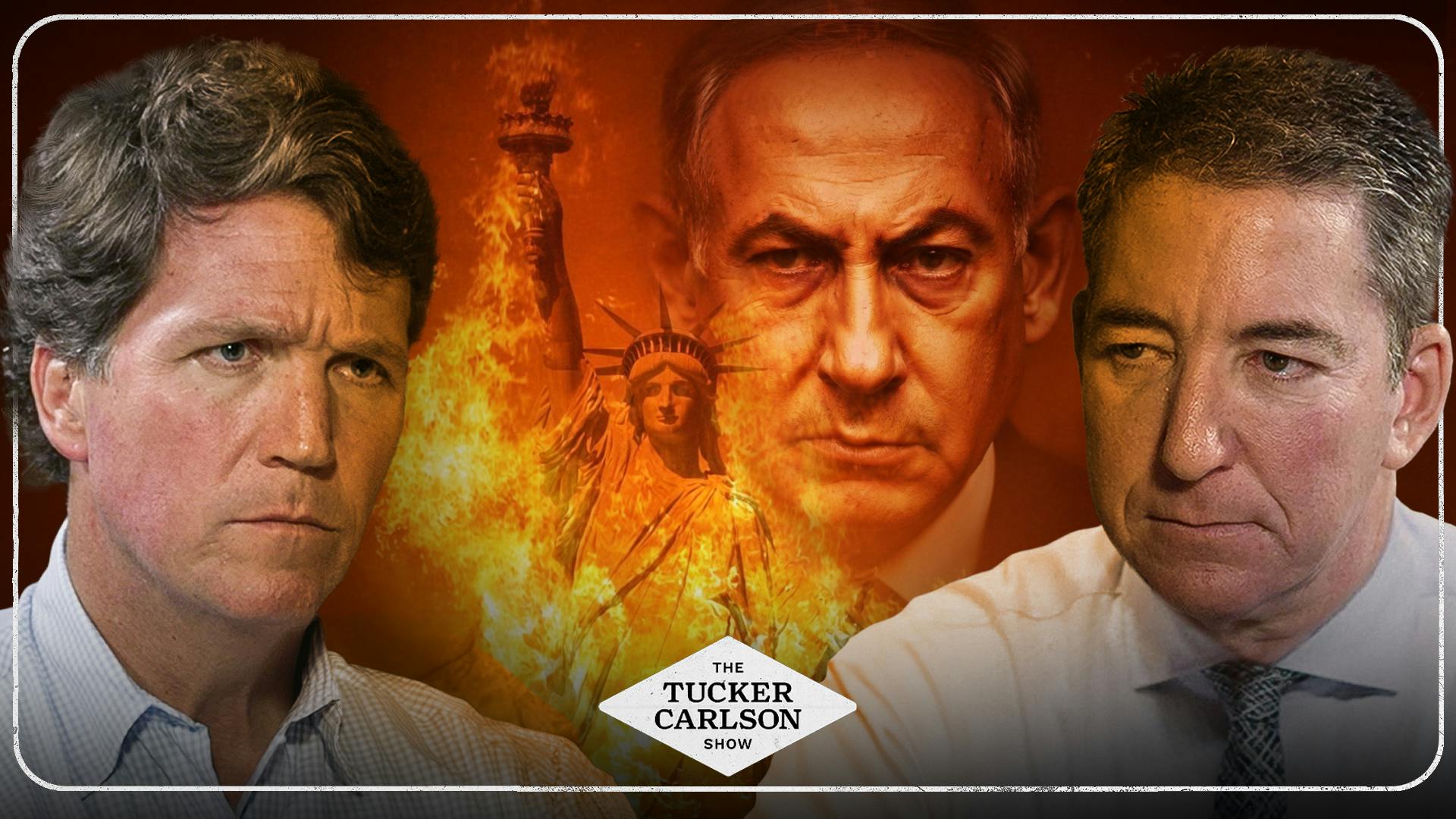
The Tucker Carlson Show
Glenn Greenwald: Iran War Updates, False Flags, and Netanyahu’s Plot to Imprison Americans
01:10:47
Loading summary
Transcript79 lines
- [00:05]
A
So for the last two weeks, you've probably been watching very carefully what's happening in the conflict with Iran. The United States and Israel are engaged in a joint war against Iran, and all of us are trying to figure out what's happening there. But as our attention is diverted outside of our borders, it's also worth paying attention to what's happening here and in the rest of the west that is not directly connected to this conflict, but still affected by it. And one of the things you notice is that our country, and certainly Europe and Australia, New Zealand and Canada have all clamped down on their own populations in very unusual, unprecedented ways over the past year. But particularly since this war started two weeks ago, and that's a familiar phenomenon, countries at war tend to become more authoritarian. It always happens, but we should be on guard against it. And one of the ways it is happening in the United States is that free speech is being curtailed. Your inherent God given right to say what you believe in public, that's the basis of the United States. It's the very core of our Bill of Rights, of our founding documents. It's the reason that we are exceptional in the world. It's that one thing, our ability to say what we think, because that right comes from God, not the government. That's what our documents say. And so of all rights that we should be resistant to losing, that would be at the very top of the list. And yet there is a concerted effort, as our next guest is about to explain, to strip that right from Americans using both the pretext of war and the COVID of war. And again, we should be on guard against it. Glenn Greenwald has spent his entire professional life advocating for the freedom of speech, has been punished for it. He has been analyzing carefully what's going on right now. He joins us now. Glenn, thanks a lot for doing this. How would you assess the state of free speech in the west right now?
- [02:02]
B
It is seriously in peril. It's often in peril, but it's more in peril than ever before. And there are a couple of different reasons. Obviously, there's been a attempt on the part of the EU to undermine the ability for people on this populist right to express certain views. And there's been a lot of attention paid to that. But the far more significant threat to free speech, and you and I have been talking about this, Tucker, since all the way back in 2023, after, after October 7th, is the very concerted effort on the part of the Israeli government. And in each of these democratic countries, they have pro Israel lobbying groups, not as strong as the United States, but still very strong, that have overtly said that there's too much permissive language under the laws of these countries for what you can say about Israel. And Netanyahu himself just a couple of months ago said that we're warning Western states, you better do more to protect the Jews in your country and you better heed that warning. And ever since, and even, you know, there's been a spate of these kinds of things before that, but ever since there's been a lot of draconian changes to just obliterating free speech in the name of protecting this foreign country. The most brazen of which was, I don't know if you saw, but the Australians, after Bondi beach, at the insistence of the Israelis, passed a law banning a whole bunch of common political slogans that offend Israel like to, from the river to the sea and things of that nature. And a bunch of Australian citizens were angry that they're not allowed to express this political view any longer or else they'll be arrested. And they went as kind of civil disobedience, wearing a T shirt that said from the river to the sea. And each and every one of them was arrested and processed through the court system. So when you see these sorts of things, these kinds of new speech codes that have been promulgated, including the United States, a whole bunch of legislative frameworks that really have no purpose other than to expand the definition of antisemitism that's existed for decades to include a wide range of common criticism of Israel or even of Jewish individuals. That is an extremely serious attack on free speech, not in the name of marginalized groups in our own country, but in the name of shielding this foreign country.
- [04:16]
A
The Australia story is so shocking that I didn't think it was real at first. I talked to a friend in Australia who confirmed that it was. But it leaves so many questions, the first of which is how does a foreign prime minister have the power to. To tell citizens many thousands of miles away that they're not allowed to criticize him?
- [04:37]
B
I think, you know, if you had asked me this three years ago, I would have had to have been delicate because the answer is something a lot of people were unaware of or even taught was taboo. But I think a lot of people understand now that these countries have very strong organizations, activist groups, well funded lobbies that are not loyal to the interests of ordinary Australians or British people or Canadians or Americans, but instead are coordinating what these laws need to, to be in the west in order to most effectively and aggressively shield Israel. And Bondi beach was, you know, in fairness, a pretty horrific attack. There was, you know, two gunmen and. And they, you know, Hanukkah celebration and gunned down people. But since when in the west do we believe that the solution to massacres or to mass shootings, which happen all the time, is to immediately curb free speech? And not only curb it, but make it illegal to express a whole wide range of views? And it's not just Australia, Tucker. It's happening. And I can go through every single example, of which there are many over the past two years, and especially recently, where very similar things are happening in Canada, in South America, all throughout Europe, and even increasingly in the United States. If I can just give one example. One of the most disturbing things, I think, and it got very little attention, was that when President Trump got into office, he made combating anti Semitism a major priority across all agencies of his administration. They even have a anti Semitism czar who's very, very aggressive. And a bunch of regulations got passed saying that if you criticize Israel, you're not eligible for these kinds of programs. And what Israel did about 10 years ago was promulgated this very new, radically expanded hate speech code called the I ihra, which is the International Holocaust Remembrance Act. And it takes very benign and common views about Israel or about Jews, such as Israel is a racist society, or you can compare Israel to the Nazis or the Jews played a role in killing Jesus, a whole bunch of other kind of criticism of either Israelis or Jews or Israel. And. And they banned it as hate speech, which is, I thought what the American right was, was so angry about for so long. And when Trump negotiated, when he withdrew funding from a bunch of colleges on the grounds that they were allowing too much anti Semitism, every one of the negotiations required them to. To implement this aggressively expanded definition of anti Semitism, so that even professors of genocide and Holocaust studies who have been teaching for decades decided that they had to change their reading list because it was now prohibited in the name of Israel. This is America where the First Amendment is still in place, and yet this is all over our academic institutions.
- [07:37]
A
And this all happened under the COVID of combating wokeness, combating the left wing death grip on American higher education, which is real. I mean, it's the most real thing of all. But rather than break that grip, it hasn't been broken. It's still in place completely. This was used as, like, an opportunity to restrict the inherent free speech rights of Americans. And very few people Noticed this. I didn't understand it was happening,
- [08:06]
B
because the problem here is that it's happening in our most elite institutions of higher learning, our universities, our colleges, which going back to the Enlightenment, everybody agreed was the one place where you needed completely unfettered speech and debate, including offensive ideas, to test things that had been declared taboo, to even dissect the most sacred orthodoxies. The fact that these speech restrictions are happening on college campuses, I think is, is extra disturbing and, and, and destructive to free speech. And there's also, you know, it's not, it's very hard to pinpoint because there's been so many, you know, you mentioned dei. The Trump administration came in promising to dismantle dei. They did dismantle a lot of so called DEI programs for black people for months, recognizing this group or that group. But in many of these agreements, Tucker, with some of the biggest universities, they included classic DEI requirements, but not for black people, not for women, not for trans or gay people, but for Jews. And there's a lot of these programs that say once a year you have to have an event recognizing the importance of Jewish life on campus. You have to go recruit at Jewish day schools to try and get people who are Jewish to go to the school. You have to create a whole office where people feel offended. And it's a series of rights and agencies available only for Jews. It is classic dei. So they dismantled DEI for some of the unfavored groups, but created new DEI programs for the ones that are most favored.
- [09:43]
A
Well, and that actually happened. Why did no one on the right say anything about it? Well, I didn't say anything about it. Again, I wasn't aware and I should have been aware. It's my fault. But I didn't know it was happening. I mean, why did no one mention it?
- [09:58]
B
I've been mentioning it a lot. And there's some university associations very worried about free speech and scholarship that have been active on it. But one of the things that happened is at the beginning of the Trump administration, there was a zillion different initiatives. They really came in prepared to their credit, and it was just one after the next. And I always felt like one of the most dangerous ones was that they cut off university funding for all of our most important institutions. And these, this government funding doesn't go to like trans people in armenia in the 17th century. The reason our universities get government funding is because that's where the most important advances in technology and in science are developed. That's where the Internet came from, was government funding of the Internet research at universities. And they cut it all off and they said, you're not getting it back unless you agree to all of our conditions. And one of the main conditions was the installation of these heightened speech codes. Hate speech codes that ban the airing and expression not just by students, but by faculty of all sorts of ideas. Had nothing to do with the protests. They also forced the firing of Middle east professors and chairs of departments who they deemed to be too friendly to criticism of Israel. It was a remarkable assault on academic freedom at our highest and most well regarded educational institutions. And it was kind of done, as you said, with very little attention because there was this flurry of other stuff going on at the beginning of the Trump administration. But if you go back and look at what those agreements were or what the DEI clauses were are, or what that IHRA hate speech code is, you will be shocked at the kinds of ideas that are no longer permitted to be expressed in classes, by faculty, in reading, in student debates. Upon pain of being expelled or suspended or fired, a lot of people hesitate
- [11:49]
A
before getting traditional therapies for cholesterol health. They don't want to wind up stuck on capsules for the rest of their lives. Pills. They'd rather feel like they have some say in how they take care of their own bodies. And that's why more Americans are turning to more gentle alternatives with ingredients they recognize. Ingredients like ginger and pomegranate. One of those alternatives is a Dose for cholesterol. Dose for Cholesterol is a clinically backed cholesterol support supplement that targets triglycerides, ldl, hdl, and total cholesterol levels. We know a bunch of people use it, and the results have been overwhelming. They no longer fear having blood work done because at last the results are good and they're not on some kind of weird chemical cocktail. It actually works. We wouldn't partner with them if it didn't work. Dose is easy to use. It's a daily 2 ounce liquid shot that tastes like mango.
- [12:35]
B
Ooh.
- [12:36]
A
No capsules, no powders. It's seamless to use. Visit dose daily. Co Tucker Use code tucker for 35% off. That's dosedaily. Co tucker code tucker for 35% off. It's worth it. It's shocking to me that that happened. And again, I just want to apologize for not understanding what was happening as it was. But I have to ask about the pretext for it. I hate seeing anybody hassled for his religion or ethnicity. Jews, Christians, Hindus. I just don't like it. Okay. And I Hate what a lot of agents of neocon politics are now doing with Muslims. Hate all the Muslims. I don't like that any more than I hate all the Jews. But I wonder, was there massive harassment of Jewish students in the Ivy League? Are Jewish students underrepresented at Ivy League schools? Was there evidence that they were systematically discriminated against?
- [13:38]
B
The ADL about a year ago issued this statement complaining that Hollywood had adopted all these diversity rules for how many actors you have to have and directors and whatever. And they complained that Jewish people were not among the minority groups that were part of the diversity count. And they basically argued, not just implicitly but explicitly, that Hollywood has long been known for discriminating against or creating barriers for the participation of Jews in various power sectors in Hollywood, which I think would come as a gigantic surprise to anybody who has ever had any remote familiarity with. With Hollywood. And the same is true at educational institutions. Go and look who the last seven of eight Harvard professors were. They were all Jewish. John Mearsheimer talked about this. You know, he's been in. In academia for 50 years. And he said, I keep hearing that there's this, like, problem with not enough Jews or Jews being attacked. I've been in academia for 50 years. The idea that Jews are underrepresented is so insultingly false. But the attempt to turn these educational institutions into somehow bastions of anti Semitism, even though they're filled with Jews at every crucial level, including donors and administrators and professors and students, you know, you always need a reason to censor. You always have to cite some sort of crisis. But I think the key thing here, Tucker, is that even if you believe those protests were anti Semitic and harassing Jews, and it was wildly exaggerated for so many reasons, we don't need to get into that. But these speech codes I'm talking about, that Trump forced the administrative. The universities to adopt are IHRA hate speech codes. They have nothing to do with protests. They're not about conduct. They're solely about ideas. I mean, I can just give you a couple. You're not allowed to say that the existence of the state of Israel is a racist endeavor. You're allowed to say the United States is a racist endeavor. You can say that about China or Japan or Iran, Norway, Indonesia, any other country on the planet in our schools. You're not allowed to say it's a racist endeavor. You're not allowed to claim that Jews participated in the killing of Jesus. You can't draw comparisons between Israeli policy today and that of the Nazis. You can compare American wars to Nazis, any other country. It's all special protections of the kinds that we told we were going to be done by. And there are so many more of these that are amazing, that are just so obviously protected speech, but no longer safely expressed in the college or university setting.
- [16:11]
A
But it leaves America, just like this war, it leaves America unprotected. So, I mean, not that these are protections, and I would never, of course, support a law banning criticism of the country that I own. You know, America, we all own this country as citizens, so I would never support those. But it's just interesting that there's no criticism of the United States, our country, that is banned or even discouraged, only of a foreign country. Is that correct?
- [16:45]
B
There are no bans on your ability to criticize the American government, American wars, the American founding. And that's what's remarkable. I was obviously vehemently opposed to the kind of tsunami of left wing censorship that happened in our elite university. I was on your show many times to talk about why that was so dangerous, and I don't want to in any way justify it. But what I will say is, at the very least the ostensible pretextual argument for why we needed censorship, anti black speech or anti trans speech, whatever, is because we were protecting marginalized American citizens who belong to groups that were endangered. Totally false, totally dangerous, but at least they were trying to ostensibly protect American citizens in the United States. What's so remarkable about these new codes is they're only to protect Israel. Imagine you go in and you're a citizen of Australia and you wear a shirt criticizing or advocating for something with Israel and you get arrested in your own democratic country of Australia. It is bizarre, Tucker. There's no other laws that would be applicable to any other countries. It's only for this one country over and over and over.
- [18:01]
A
And it also sends a very unsettling message because censorship is always levied on behalf of the people in charge. Of course, the people to power are the only ones who ever pass laws telling you you can't criticize them. I mean, of course. And so what does this tell you? I mean, what does this. It's spooky. I've never been the guy who runs around saying Israel runs the United States. It's overstatement, but I certainly don't want to think that. But if you can't criticize a foreign country, then that country's in charge, right? I mean, what other conclusion should I draw?
- [18:35]
B
I can't really provide you with the cogent one. I will say I think, and it doesn't in any way justify it or change anything you said. But I nonetheless think it's important to note that I think one of the reasons this is happening and Mearsheimer and Walt, who wrote that, the Israel Abbey book back in 2007, the pioneering, first ever real book about the influence of the Israel Lobby, they've recently talked about how, especially Mearsheimer, how back, you know, over the last several decades, it was very important for the Israel Lobby to act kind of in the shadows. I don't mean that nefarious. I mean, they just didn't want it obvious that there was this, you know, force that, I mean, like most lobbyist groups operate in the sewers and, and, and, you know, shadows of the capital. But over the last three years, the pro Israel Lobby has had to come out into the open so much more than ever before and really just be so explicit in calling everyone anti Semitism and advocating for speech restrictions. And the reason is, is because there has been a very radical and from an Israeli perspective, an extremely alarming collapse in support for Israel among Americans in basically every demographic group other than conservatives over 50. So basically like decades long Fox watchers, but Even conservatives under 50 have all basically now have majority opinions that are disfavorable to Israel. And you see some of what they've been trying to do in response. Larry Ellison tried to buy TikTok, which was one of the perceived sources where so many people were hearing about anti Israel criticism. So they pried it out of the hands of the owners and put it into Larry Ellison's hand. You see the Ellison family buying CBS and News and putting Barry Weiss there, an IDF soldier, at TikTok. So these are all desperate moves. And I think the same is true with this very brazen attempt that they wouldn't have done before. So, so out in the open, try and censor American speech for Israel. But it's because they, they, they feel panic. They're in panic. It's kind of a desperation. That spiral of support for Israel among Americans, which had been utterly unthreatened for decades, is very rapid. And I don't think it's ever going back. And I think a lot of these efforts as kind of, you know, just obvious and, and with such a high potential for backlash, are being pursued anyway because they're just desperate about trying to find some way to reverse that, that public opinion trend in the United States.
- [20:57]
A
Inflation makes credit card statements particularly scary. You work 40, 50 hours a week just to buy groceries and gas, things you used to be able to afford without thinking that much about it, then the banks charge you 20% interest. If the system is designed to keep you underwater, it's working. But there's another option. Our friends at American Financing are doing something the big banks despise. They are helping people. Mortgage rates in the fives, supporting the American dream of homeownership. And they're showing homeowners how to take their hard earned equity to wipe out high interest debt. Now, we're against debt in general, but in this economy, most people have no choice at all. So don't go bankrupt enslaving yourself to a lender. Average Savings are about 800 bucks a month and it takes only 10 minutes to talk to a salary based mortgage consultant. No upfront fees or obligation. To see how much you can save, give American financing a call, 800-685-5696. That's 1-800-685-5696 or visit American financing.net Tucker America's Home for Home Loans Either I'm misreading the goal or this is the dumbest campaign ever waged. Because if the goal is to make people like Israel, this is having the opposite effect, of course. So maybe, and it's, I mean, really having the opposite effect. It's changing people's minds against Israel. Israel is doing that. And so you have to wonder like maybe that is the goal.
- [22:29]
B
We saw the exact same thing many times, but most recently with the left. And you know, in the wake of George, Floyd and me too, they just started kind of frantically accusing everybody of being a racist and a white supremacist and a misogynist. And people got really tired. You know, that was peak woke and people got really tired of it. And so many people were being accused that at some point it just lost its meaning and people got angry about it. Nobody appreciates those who are trying to stifle debate. And there was a huge backlash in terms of people no longer caring about being called racist because they drained it of all its meaning. Exactly the same thing is so clearly happening here. And of course there's going to be a lot of resentment the more people see how much of a speech crackdown in the west generally, in the United States in particular, there is in defense of this foreign country. But again, I would just go back to the fact that it was really the obliteration of Gaza, all the inhumane atrocities that we saw that accompanied it, that we saw literally every day that we realized the United States was paying for under Joe Biden and arming and funding. It really radically transformed how people think of their own government and how they think of Israel. And I just think that this was all. This is all an effort to put the cat in the bag, because there's always been a perception that Israel's existence depends on widespread support of the United States and, and that is crumbling.
- [23:54]
A
I hesitate even to say this because it pains me so, so much, but we've been doing shows together for a long 10 years, and the basis of most of them has been free speech. It's the most American idea there is, and it's the one worth dying for. And we both have always agreed on that. And you're a lifelong figure on the left, I'm a lifelong figure on the right. And we both agreed that the left was the real threat to free speech, because it was. Over the last year, the right seems every bit as the right, whatever that means, like the Republican Party, I guess, seems every bit as threatening to free speech, maybe even more so, maybe more effective in this attack on free speech than the left. I really don't want to think that. It pains me to admit it, but I want to be honest, and I'm starting to believe that,
- [24:43]
B
yeah, I wouldn't say it's because the left suddenly had an awakening about the importance and virtues of free speech and the need to protect it. It's sure they're out of power and, and the right is in power. And that, of course, is something very common when people claim to believe in certain liberties and certain civil. Civil rights and they get into office and suddenly they find reasons to unravel it. But this has been going on for a while, I think. You know, you mentioned how the, the hate speech codes at universities didn't get a lot of attention. Another thing that never got a lot of attention. And it drives me very crazy to this day because it's so preposterous. And what it really predates October 7th. I would say it's now up to 35 or 36 states in the United States, the vast majority of which are red states, but not all that have enacted laws that make it a requirement if you want a government contract that you certify that you do not support a boycott of Israel. And a lot of people who had contracts before this law was passed ended up getting fired because they refused. There have been hurricane relief aid that cities have conditioned on signing a form that says you don't support a boycott of Israel. There have been all kinds of firings in universities for people who criticize Israel. So it's been developing for quite a while. It's not like it just started.
- [26:05]
A
Hurricane relief was predicated on a signed statement that you don't support a boycott for Israel. In other words, you don't even have to be actively boycotting Israel, but if you conceptually support it, you can't get hurricane relief, emergency disaster aid.
- [26:23]
B
Is that true? First of all, this is the kind of thing that I know people don't believe unless it's so shocking. I know if I didn't see it myself, I also wouldn't believe it. I think if I heard that, I'd be like, that's a conspiracy theorist saying crazy stuff. No, that actually is something that was instituted in many places. Different kinds of language, but mostly it requires that you certify that you don't participate in a boycott of Israel in order to get, you know, a state contract or in order to get hurricane relief. There were HF HS regulations once RFK took over that were forced on by the administration that said certain grants you can't get unless you certify that you're not supporting a boycott of Israel. Talking about grants for research that would help Americans health that would then got conditioned on this sort of thing. So this has been something that has been going on for a while. Let me just say one other thing, Tucker. One of the people who supported that, that ban on people getting state contracts unless they certify they won't support a boycott of Israel was Andrew Cuomo when he was governor of New York. When he was governor of New York, Andrew Cuomo ordered the state to boycott the state of North Carolina and the state of Indiana over anger. Judith. Because of their, their bathroom bills, their trans bathroom.
- [27:43]
A
I remember that.
- [27:43]
B
So Cuomo ordered a boycott of American states. Once these laws started proliferating, Andrew Cuomo embraced this and said, if you boycott Israel, New York state will boycott you. Meaning we won't do business with you. This is someone who said it's totally fine to boycott your fellow countrymen, your states in the, in the United States. That's not only is it fine, I'm ordering those boycotts. The one thing, you can boycott any other country on the planet as well, any other state, any other city. You just can't boycott Israel. So many American laws in place that impose draconian deprivations in the event that you're not able to certify that truthfully,
- [28:29]
A
it's beyond belief that there not only states that did this, the majority of states, by your telling, but that there's been no protest against it because of course, there's no ban on boycotting the United States. I mean, our country doesn't play a role in any of this. It's like a foreign country of 9 million people. Their interests determine whether you get hurricane relief for a federal contract. Why has no one protested this?
- [28:56]
B
It's just it, you know, for a long time before October 7th especially, there was just kind of a. For Israel was sort of on the back burner. But also there, you know this very well, there was really a taboo. There was a high career and reputational cost. If you were going to talk about Israel and anything other than the reverent, you know, bipartisan script that we always have to finance and arm and support Israel and go to war for Israel, if you deviated at all, a lot of people, you know, paid a big price for that. So I think there was just always, you know, I've been writing about Israel and this sort of stuff and its influence, United States for 20 years. And I. There are many times when I saw things that I just couldn't believe were real. And they were real. And as you say, they. They got very little attention because there was a climate that convinced people, implicitly or otherwise, you're better off just not talking about Israel. There's a million other things you can go talk about. Leave the Israel topic alone. And a lot of people did it. And after October 7, it just became unsustainable.
- [29:56]
A
I mean, and I think after this war, it will become unsustainable. Unsustainable. I don't think that any of this can remain unchallenged, and some of it will be overturned. And actually, let me just take a quick side detour here and ask you, this war is not popular. I just want to say, on the record, I'm hoping for the best resolution for the United States because this is my country. But it's not popular, and it hasn't been from the very first day. In fact, the majority of Americans are against it, but there have been no protests, no meaningful protests against it. What is that?
- [30:37]
B
One of the problems is that there's a constitutional framework that was created by the founders that everyone go read the Constitution. Article 1 says that Congress has the exclusive right to declare war. And not just to declare war, but other aspects of how those wars are conducted. And there was a reason for it. If you go read the Federalist Papers, if you go read a bunch of other stuff that was written about it at the time, the reason is, is because wars are the singular most potentially dangerous thing, the worst thing the most destructive thing that a country can embark upon. And the people who end up having their lives risked for it are the citizens of the country fighting the war. At least that used to be true. That's no longer true, but it was true back then. And the theory was if you're going to start a war, you have to have the consent of the people who are going to actually be fighting in the war or paying for the war or otherwise burdening themselves. And the way to do that is you have the people. The, the, the, the, the branch that's closest to the American people is the Congress, because they're elected. They're elected every two years. And that was why it was so important to approve those wars. We've completely gotten away from that. Presidents believe in both parties, they can start wars, and they frequently do without any kind of attempt to gain congressional approval. Obama started the war in Libya with no congressional approval. A couple days later, the House actually voted on whether to authorize it. The House voted no, we're not authorizing it. And Obama just went ahead and did it anyway. So we've lost this idea that we're supposed to have a debate, that it's in the hands of anybody other than the President. I think beyond that, though, traditionally people have gotten really angry about wars, have started protesting wars when there's a lot of Americans well deployed in Vietnam and by a draft, but even, you know, in Iraq when there's a lot of troops coming home in body bags or dying. And I think the idea is if we're just air bombing, you know, just air bombing, if, if that's all we're doing, it just doesn't provide the impetus for, for Americans to go out and protest. And also the big difference between the Iraq of war and the Iran war. For all the ballot criticisms of Bush and Cheney and Condoleezza Rice and that whole crew, at least they had a nationwide campaign for more than a year to convince Americans that they should support the war and laying out the case. It was filled with lies and falsehoods and all kinds of wrong and ignorant predictions, but at least they did it. This war was just like, here it is. And there was no public debate, meaningful debate about whether we should have a second war. It wasn't part of the 2024 campaign. So I think it just happened so quickly. There was never really any consistent rationale or motive as to what we were doing or what the goals were. And I just don't think that gave Americans the fuel to protest. I think you will see that if this gets further out of control.
- [33:34]
A
The gold industry bankrolls a lot of conservative media. Much of the gold IRA business is not actually about selling gold at all. It's about selling, selling massively marked up coins to people who trust the voices delivering the pitch.
- [33:49]
B
Why is gold a hedge? I've decided to partner with the top
- [33:52]
A
rated precious metals company.
- [33:53]
B
The companies have the exclusive control. They can manipulate the price of the coins at any time.
- [33:59]
A
That's the dark side of it. What he said was you don't get as much of a loss and they
- [34:04]
B
tend to really accelerate when the market
- [34:06]
A
goes up, which obviously sounds too good to be true. We know this is happening because we talk to people who work inside these companies.
- [34:13]
B
The reality is there is no regulation.
- [34:15]
A
And then we talk to people who lost their savings.
- [34:17]
B
They were pumping this company and I trusted them.
- [34:20]
A
Even as the price of gold rises, it's so crushing. The great gold scam. Watch it now@tuckercarlson.com people are getting robbed. We're sounding the alarm and we hope you will join us. In the modern age, though, protests are organized and they're organized over social media or by text message, and they're organized by groups with a stake in politically whatever the outcome of the debate is. So the Iraq war protests were organized by groups and the George Floyd protests were organized by groups so we could identify and paid for by companies whose names we know. It wasn't just random Americans showing up on the National Mall to express their opinions. They were bussed in which, and I'm not criticizing that at all, but that's not happening now. So it's not just that Americans aren't engaged like they're opposed to it, but there's no group on the left that seems interested in making a big deal out of this. I just find that so weird.
- [35:25]
B
Well, I think the other problem with it is that although there are a lot of Democrats posturing as being opposed when they go on MSNBC or whatever, there's no real effort on the part of the Democrats in Congress to take any steps that would actually impede the war. I mean, there was a vote about whether they needed authorization and they lost that vote. But the reality is that the Democratic leadership, Chuck Schumer, Hakeem Jeffries, they support this war, especially Chuck Schumer. They have no interest in doing anything, having votes on funding because they don't think it's politically wise. And when you have no leadership from the Democratic Party, which is supposed to be the opposition party, I think that also contributes to a reason why there's, there's not a lot of nationwide protests. You need leaders to, to, to do it. But, but again, I think the big issue was it just came out of nowhere. You know, it wasn't like the Iraq war or other words where you had time to protest. You just woke up one day and there was a true social post from Trump in the middle of the night announcing the war. And then there was the war.
- [36:29]
A
Yeah, no, that's, that's a really good point. And so, like, so many of these changes, it was unheralded. It just happened. So. And so, just back to the speech question. I know there, there was a not famous enough moment where the governor of Florida, Ron DeSantis, who's I think, been a pretty good governor in some ways, but traveled to Israel to sign what looked like hate speech laws that are applicable in Florida. Is that a mischaracterization? Some of his supporters denied that it actually happened. Did it actually happen? And what does it mean it did actually happen?
- [37:06]
B
He actually went to Israel twice to sign laws in Israel that applied to people in Florida. The first one was kind of benign and had some connection to Israel. The second one, though, which was in, I believe, 2022 when he was gearing up to run for the Republican primary nomination. A big part of what the strategy was, was they were, they were going to get, and they did get most of the hardcore fanatical Zionist groups and pro Israel activist types and pundit types. They, they, they lined up not behind Trump, up behind Ron DeSantis. And that was very much a part of his strategy, was currying favor with this crowd, which, okay, that's, you know, what people do in politics to go to. And I don't want to completely mischaracterize the law because there is some, you don't want, you can overstate it, but it absolutely was a law that took certain speech and prescribed it not for the people in Israel, but for the people in Florida. And it was about funding hate speech programs and again, only about anti Semitism in Israel. And he went to Israel in order to sign it. That was just true. I can't, I don't understand that either, you know, that, that, that was not something that provoked a lot of outrage. Why is he signing bills for the people in Florida, in Israel, when it actually can have the effect of confining or restricting the speech of the people in Florida in relation to Israel? It seems like he was siding with this foreign country over the citizens of the state that elected him.
- [38:43]
A
If nothing else, it's so humiliating. It's so obviously humiliating. I mean, I'm going to a foreign country to sign a law, any law that affects you in my state. I mean, I'm just trying to understand the psychology here. I mean, again, like a lot of things you've just mentioned, I didn't really believe that could actually have happened. So I wasn't as focused on it when it did happen. I should have been. My mistake. But I'm wondering, the thinking of like, these really government officials who pushed this. There were some. How did they think that helped them? Didn't they think that would engender resentment? How could it not engender resentment?
- [39:24]
B
I mean, did it though? Because, you know, again, I think that there wasn't that much attention paid. How many people really know that Ron DeSantis did it? Every time I mention it, people who don't know are. Are shocked and angry for. For obvious reasons. But if this were something that were done in isolation, you could create some kind of rationale, you know, again, yeah, for sure. Ron DeSantis was trying to be a pro Israel. You know, candidate going there kind of does that. There's a lot of money there. You know, you have Miriam Adelson. It's. It can be a campaign strategy. But the problem is, is that I can point you to every institution, laws and hate speech codes. Do you know how many people got fired after October 7th for expressing criticism of Israel or dissenting from the narrative about Israel? Bill Ackman assembled blacklists for students who signed a petition blaming Israel for the conflict in general. This was a huge crackdown on speech. After October 7, people in media and journalism and art and everywhere got fired, including in, again in academia for the crime of expressing views about Israel that were deemed off limits. And it is pervading our country. You can see it in every sector all the time. I mean, I chronicle it all the time. So it's like most of them aren't available off the top of my head because there's so many.
- [40:46]
A
Where does this go? Because this is totally incompatible with our founding documents, with the history of the United States and with American culture itself. It's too much. And so it either becomes much, much worse or it goes away. I don't think we can stay where we are. That's my instinct. What's yours?
- [41:05]
B
Well, I'm Jewish, so when people talk about anti Semitism and the crisis of anti Semitism, that is something that I don't dismiss lightly. Like antisemitism is real. It's been dangerous in history, you know, like anti black racism, lots of other things. And for a long time, there was this kind of victimhood mentality after October 7th that Jews were uniquely endangered in the United States that I found very unpersuasive, to put it generously. But I do now think that when you have, you know, all these people who are loyal to Israel buying up our media and putting IDF soldiers in charge of TikTok censorship, and Barry Weiss here at CBS News to kind of control the, the moderation. And on top of that, you know, you have this war now that that was for Israel, or at least in large part, Israel played a very big role. I mean, even government officials mentioned that obviously it was Israel's main adversary. There's no denying that. That's when I really start to think that the more they try and spew this anti Semitism accusation at everybody, the more they get more desperate, as we were talking about before, and interfere in our American politics and to try and, you know, have lockdowns and crackdowns on our speech, the more Ted Cruz and Lindsey Graham and all these politicians constantly are talking about how often they're in Israel and saying that their main, you know, issue when they ran for Congress was defending Israel. I do think that has a very high potential of producing anti Semitism because, yeah, at some point people are going to be asking, what. What is going on here? Why is there so much external influence on behalf of this foreign country and who's doing it? That is something that worries me.
- [42:50]
A
Well, I think you have every. I think all of us have every reason to be worried. And it's absolutely producing actual anti Semitism. I see it every single day when I go on the Internet, which try not to do too much, but you can't avoid it. And it's real, too. It's not just like, I don't like what Israel's doing. AIPAC is bad, which I vehemently agree with. It's like Jews are bad. And it's not clear to me exactly where all of it's coming from. I think some of it's inorganic. Clearly, these are basically ideological false flags. But I do think some of it is organic. I think some of it is absolutely real. And I hate to agree with the adl, but on the specific point, is anti Semitism rising in the United States? Oh, no doubt. And it's bad. It's totally bad. So that kind of gets to my deeper concern, which is not about Jews specifically, it's about all Americans. I feel like ethnic conflict is being encouraged in this country?
- [43:50]
B
Yes. I mean we have had ethnic conflict before. And part of what I hated so much about the left wing ideology and the way to express itself over the last decade was the fact that it just seems so maliciously designed to divide people based on these very primal, crude demographic groups and to separate them and tell them to all go into their corners and to blame the others, which is incredibly volatile. Volatile and dangerous to do. And I think that, you know, if you turn on, I don't know how often you do this, but you know, there's this whole like, as you get older, there's like these different sectors of media and entertainment that you know nothing about because it's not for you. But I try and make an effort to pay attention to them. You know, there's all these like huge celebrities, but because you're over 30, you have no idea who it is. Oh yes, I'm from, they're super famous. And you're like, who's that? But I try hard, especially when it comes to political stuff, to pay attention to like big streamers and that whole culture where Gen Z does politics and you will be shocked if you go and listen to it or watch it for any amount of time. How common, how, how overwhelming anti Israel sentiment is in a very aggressive way and how often it does kind of morph into, you know, sometimes ironically, sometimes transgressively. But it's very linked to how people feel about Jews. And let me just say one quick thing on this, Tucker, because this is such an important point that is hard to express like on social media, whatever. One of the, in that I HRA hate speech definition that Israel promulgated, it ended up in the criminal law and the eu. It's now in Australia, it's on our, on our campuses. One of the things that bans is conflating Jews in Israel, meaning if Israel does something bad, you're not allowed to say, oh, this was done by Jews. Because that is a conflation that is considered anti Semitic because you're blaming a bunch of Jews who had nothing to do with Israel for what you're criticizing.
- [45:52]
A
Right.
- [45:52]
B
Yet look how often the people who are on the other side of that debate, who love Israel, who constantly say they worry about anti Semitism, they conflate Israel and Jews all the time. And I think this is the problem. So if you say, you know, Israel killed, you know, 10,000 children, they'll immediately say, oh look, blood libel. He's accusing Jews of killing, you know, 10,000 people or having, you know, raped soldiers and no, you didn't accuse Jews, you accused Israel. But when they conflate it in order to place criticism of Israel off limits, to make it seem like you're attacking Jews even though you're not, that too is a very dangerous conflation that they themselves are promoting. So that when people now think about Israel in their minds, because they're constantly hearing it, that means Jews. So if they're angry at Israel, if they think Israel did something disgusting, if they don't want the US funding Israel or Israel interfering, that quickly becomes Jews and it's their fault. The fault of the people who are Israel supporters in managing this discourse.
- [46:50]
A
I couldn't agree more. I think that's, that's the original sin here, I think is very shortsighted and dangerous. If there were a self identified Christian nation that was just for Christians, there isn't one. But if there was, I'd be like, yeah, go Christian country, I'm Christian. And then if that country started behaving in ways that were brutal and outrageous and deceptive and started killing people because of their bloodline, really behaving in ways that were impossible to defend, and they started filling my airwaves with propaganda about how every Christian has to be loyal to this country, doing things that are nauseating to me. I would feel, first of all, I'd be outraged by that. Don't do that in my name would be, number one. And number two, I would feel threatened, I would feel physically endangered by that. Why are you tying me to this? I've got nothing to do with this. I mean, I would, I think.
- [47:42]
B
Well, and that was very much what happened, you know, after September 11th, was there was this huge danger that because some Islamic groups or Islamic countries had participated in this horrific attack, that all Muslims were going to be blamed. And so many Muslims have all sorts of different views. You know, you're talking about hundreds of millions of them or a billion. And one of the things George W. Bush did to his credit was work very hard from the start to say, no, we're not at war with Islam. This isn't Islam that did this. This is this distorted version of Islam. And that I think is exactly what we're seeing now is it's such an important rhetorical tool to say Israel is the state of the Jews. Oh, well, Tucker Carlson said this horrible thing, even though you said it about Israel, about the Jews. And this constant conflation for the reasons you just said is exactly what if you're in that group being tied up to this nation state, you should Fear more than anything, and combat as. As passionately as you can.
- [48:36]
A
I mean, you must feel that. Well, I guess you're maybe in a separate category because you are Jewish, but you have. You had the same views for your entire professional life, and you've been very vocal about it. But, I mean, this must be a real concern for a lot of people who aren't against Israel, but are not on board with the Netanyahu government, and they're somehow tied to this against their will. Like, ugh,
- [49:03]
B
yeah. I mean, you know, if you're going to have this foreign country, and this is what I was getting at before, exerting massive amounts of influence inside another country, you better make sure that you're doing it in a way that's very subtle, that's barely visible. And they were always doing that. And that's why they were so angry at Edmir Scheimer and Walt's book. You go back and if you don't remember, look at the. Just the absolute attacks on them. People lost their minds about that book because it dragged into the light something that was always supposed to be secret. The problem now is it's not secret. The desperation and panic have made them have to come out into the light and be very open about what they're doing, and people see it. And if you're going to just sit there and be very visible and vocal and all over the place about how we have to change our laws or restrict speech and everything else, fire people to defend this foreign country or protect this foreign country, the outcome is going to be very predictable, and I think you're seeing a lot of that.
- [50:04]
A
So just back to the previous question, because you don't just cover principles and ideas, but politics and have for a long time. Where do you think this goes politically? What does the country look like? We've got midterms this fall. Two years from then, we have a presidential election. Clearly, there's going to be a realignment. The neocons have intentionally blown up the Trump coalition. They hated it from day one because it was America first, which obviously precludes putting Israel first. So they wanted to destroy the coalition they have. Where do things land? Given those facts,
- [50:39]
B
you're already seeing this major transformation actually well on its way, if not coming soon, to its conclusion in the Democratic Party, where it's becoming almost untenable for candidates in the Democratic Party, including incumbents, to run, especially in primaries, if they're too supportive of Israel, if they accept APAC money. This transformation is close to complete. That is not going to be reversed. And what made the Israel lobby so powerful for so long was that it was more than anything else, bipartisan, unfailingly bipartisan. It wasn't one party or the other. Netanyahu kind of destroyed that. But there was still a lot of pro Israel supporting Democratic Party. That's gone. And I think if I were Israel, and I were, you know, Israel firster in the United States, primarily concerned with the standing of that country in the United States, the thing that would alarm me the most is that this is now happening on the right. I can't imagine a 2028 primary campaign in the Republican Party that does not prominently feature this question. And I also can't imagine that there's not going to be somebody like a major candidate who's not purposely occupying that lane of saying, we were told that we weren't going to have any more foreign wars or foreign attachments. One of the major problems is Israel. We don't hate Israel. You know, we don't have anything against it. We just need to stop being responsible for funding it and fighting wars for it. And I think that's going to have a lot of appeal. So it's always going to take the D.C. establishment very long. I don't know if Susan Collins is, like, walking around, she promised she was going to only serve two terms. I think she's getting, like, seeking her seventh. And somebody went up to her and said, what about all these dead people in Gaza that you paid for? And she kind of like just stumbled into her car very dazed because of her age. And she just like uttered this cliche, I'm pro Israel. And so you have this, like, older establishment generation that's never gonna change. It's programmed in their brain. But you see the trend so clearly, not just in the Democratic Party, but in the Republican Party, where this issue is transforming, and not slowly, but rapidly.
- [52:45]
A
Well, this is why the neocons so hated Charlie Kirk, because he saw this happening. And I remember you and I did an interview at my house this summer, and you explained a lot of your views on this topic on Israel and were immediately, you know, they leaked a tape to try to embarrass you. And one of the very first people to defend you in a heartfelt way was Charlie Kirk. And I was actually maybe emotional watching it because it was just so principled and it was so not what you expect. And he did it at actual personal cost to do this, but he really meant it because he could see that you and he, while you have differences, were basically seeing the same picture of the future of America, which is like, let's help the country. And they hated that. I never forget that as long as I live. Yeah.
- [53:34]
B
I mean, Charlie and I have had a lot. Charlie was a super interesting, yes. Independent, subtle thinker. And I know everybody on the left, if you say anything good about Charlie Kirk, they're immediately going to get enraged. I don't really care at all. I think we are missing, like, not just emotionally, but very substantively and in a very compelling way the presence of Charlie Kirk when it comes to this war and related issues. And, you know, we. I mean, he was very supportive of the Snowden reporting and free speech. We had a lot of that in common. But also this question. And I talked to him as he was evolving. And, you know, one of the most disgusting things I've ever seen, Tucker, was, you know, for a long time, Charlie Kirk was. Was very pro Israel. And he obviously started questioning that in all sorts of ways, to the point that he was refusing to deplatform you, even if it meant the loss of donors that. That in the millions of dollars who didn't want anybody questioning Israel or criticizing Israel on the stage. And he went out in interviews, including on his own show and a big one with Megyn Kelly, where they both said, you know, what is going on here? Like, we need to start questioning this. But they try and make it so that you can't because you'll have your reputation destroyed because they will call you anti, anti Semites. And one of the things Megan said that. That I really think was observant and perceptive was that Charlie represented younger conservatives, you know, 18 to 32 or whatever the age group was. And overwhelmingly, they are turned against Israel. And he couldn't just be this hardcore fanatical pro Israel champion. He had to acknowledge that the debate was opening and had to open that debate. And when he did, he himself started not abandoning Israel, not becoming anti Israel at all, but clearly being skeptical of US Support for it. And I will never forget that within seconds or minutes after he. He died, Benjamin Netanyahu was all over American media for, you know, that day, for hours and then for days after on every network he could find, talking about how Charlie was the most stalwart, devoted Israel loyalists that the United States has ever produced. And that was a very strange development, but it was also a very propagandistic one to try and prevent people from remembering that even Charlie Kirk was having serious second thoughts about the whole Israel issue.
- [55:55]
A
Well, he defended you, really, at a moment where he did not need to say a word about that. You're traditionally a very famous man of the left, so it's not like he was not pandering to his own audience. Obviously, he was enraging his donors. They were already enraged with him. But there was just no reason for him to do that other than heartfelt conviction.
- [56:16]
B
Principle, principle, principle.
- [56:18]
A
I felt that was one of the bravest things I have ever seen in American politics. It was basically ignored. But I just want to say that out loud because that revealed who he was. Like, in a moment, you can just stay silent and just not say anything. He stopped and said, I just want to say, Glenn Greenwald, while we disagree on some things, we have different orientations. He is a good man. And this is a political hit on him. And that was about Israel. I mean, you had just. I mean, I think that's why that hit happens, because of Israel. But whatever the cause, he did that. And that tells you everything about what he was thinking at the time and why he was so hated by the neocons. And to see them get up and be like, oh, here's my best friend. Okay, not true.
- [56:57]
B
Yeah. You know, this topic, for so long, Tucker has relied on a climate of intimidation and bullying and coercion. And it's not just that you get criticized. I can show you hundreds of cases of people being fired before October 7th in the United States for stepping out of line in Israel or losing funding or all sorts of other ramifications. And most people, if they're being, I guess, self interested or pragmatic, may be well advised to avoid it, you know, because they just figure, oh, I have a lot of other issues and problems. I don't need this one. And the fact that Charlie not only was doing it with Israel before that happened with me, but on the day that it happened, stood up and so emphatically defended me and implied some of the problems or the causes that probably led to it. Yeah, I remember seeing that, and I was really moved as well.
- [57:52]
A
Oh, it made me emotional. I'm not even connected to it. Just was friends with both of you. So do you think that. I mean, we're guessing now, but we're also extrapolating forward based on what we're seeing right now. Do you think that, what's this conflict with Iran, which has revealed so much, and we pray it goes well, but if it continues on its current course, does it kind of reorient the two parties? Does it shake up the system? People keep saying, no matter who you vote for, you get President Netanyahu and there's some truth in that. I mean, let's stop lying. There's some truth in that the big decisions are influenced, if not made by a foreign leader. Does that end after this? And if so, how?
- [58:36]
B
There have been presidential debates in the past 30 years, most recently probably, or vice president's ones as well, where the two party candidates, when it came to Israel, started arguing about who was more pro Israel. That's typically the limits of the debate that we've, that we've been permitted to have. One of the things that I'm so amazed by, maybe I'm being naive here, but it's very frustrating and shocking at the same time. The Iraq war was one of the worst debacles, probably the worst American debacle in our lifetime. You had the 2008 financial crisis and all the other things, but that was what led to this whole unraveling of trust and faith in the integrity and reliability of American institutions that has caused so many things after that. But also just the, the, what it did to that region itself. All the lies that, the credibility of the United States, those lies, everything that we were told would happen, none of it happened. It gave rise to isis. It was, you know, everybody acknowledges it was one of the worst actions in American history. And yet here we are 20 years later. And the thing that has really amazed me was to the extent there was any kind of attempt to have a debate about the Iran war to justify was based on exactly, exactly the same tactics, the same script, the same rhetoric, the same jargon, the same twisted rationale, and often the same people who sold the war in Iraq back in 2002 and 2003. I saw a Fox News clip. They excavated Condoleezza Rice from some, like, underground lair or bunker or whatever in which she works these days. And they put her on. Bret Baer did. And she gave like this five minute speech about how we have to go to war in Iran to, you know, make sure they don't have weapons of mass destruction and nuclear weapons and they fund terrorist states and will bring freedom and democracy. Exactly verbatim what she was saying. And the debate has almost been identical. So I want to say, yeah, this war goes really bad, it'll create this gigantic realignment and maybe it will as part of, you know, these developments that these events that led up into the Iran war, including the Israel stuff we're talking about, could create a realignment. But I don't know. I thought that we would never live through, you know, a very similar, if not identical new war to the Iraq war. And yet here we are doing exactly that in ways that aren't even pretextually different. Like they're not even changing the script or the cast of characters, literally.
- [61:08]
A
And I guess one of the lessons I learned from the Iraq war is that the groundwork is always laid for big changes, and you sort of see it being built, but you don't really believe it's going to happen. I remember being at the White House right before the start in February of 2003, and someone told me, yeah, we're about to invade Iraq. And of course, I'd been advocating for it, shamefully, but I didn't really believe it was going to happen. Even though I was on the side of it. I thought, that's too crazy. That can't. Actually. They had nothing to do with 9 11, so why are we doing this? And this person said, well, of course we're doing. What do you think this is? And so with that lesson in mind, when the ship started steaming toward the Persian Gulf, I was like, oh, it looks like we're going to have a war. To take that same principle and apply it to the Ihra effort, you know, the effort to constrain free speech and to ban and to make illegal certain expressions of conscience and opinion. Like, do you feel like we're getting to a place where people are gonna be arrested in the United States for their opinions?
- [62:20]
B
The one thing we have is the First Amendment, which we should be very grateful for, because if it were time to create a constitution now, we would not have that. And one of the ways I know that is that, you know, I'm very familiar with a lot of other countries, including one I. I live in, where that doesn't exist. The UK doesn't have it, obviously, all throughout Europe doesn't have it, but it is already happening in. In other countries. You know, there was a. There were two bands in. In the UK that did a concert, and. And one of them said, death, death to the idf. Not death to Jews, not even death to Israel. Death, death to the idf. The. The military of the. Of Israel that was fighting a war. And another one sang a song about Hezbollah and Hamas. They were criminally charged with terrorism. The courts ultimately just in the last week threw it out. We just saw the. The woman being arrested in. In Australia. This is absolutely the trend in the west over the past. I think the.
- [63:22]
A
The.
- [63:22]
B
The galvanizing event was the dual traumas of Brexit and then Trump's victory in 2016 over Hillary that made Western elites think we cannot tolerate any longer free exchange of ideas on the Internet, in dissemination of, of news, and it's just too unpredictable and, and it causes too many dangerous outcomes that are out of our control. But for sure, this is the trend in, in so many ways. And yeah, the west is abandoning very aggressively their belief in free speech, not as some absolutist concept in the way that I might affirm it, but just the basic notion that you can't be punished by the state for the expression of political views.
- [64:09]
A
I mean, that is the rule everywhere in the world, I think. I don't know that there is a country in which free speech exists except the United States and I. And it's as we've been talking about for an hour. It's definitely under attack. But do you. Despite the fact we have a First Amendment, we have all kinds. We have a Fourth Amendment too, and it's routinely ignored. I've been the subject of, you know, its violation and you have too. So, like amendments to the Constitution, the Bill of Rights is ignored routinely. Do you think it's possible that the First Amendment will be overridden by the state to punish people for having opinions the state doesn't like?
- [64:48]
B
Again, this is going to sound probably naive, but this is actually what my, my immediate reaction to it is. If you go to law school, which of course, every judge in, in the federal judiciary does and has done, and you study, you know, the history of jurisprudence or whatever, the idea that the First Amendment is the kind of, you know, crown jewel of American rights and constitutional liberties is so indoctrinated into your brain, and it is before that as well. Like, one of the things we were taught is that the reason America is exceptional, the reason America is different, is because we have the right to say things without being punished and other countries don't. This is something that's, you know, inculcated in our culture for so long. So I'm sure there will come a day when judges will start to retreat from that. But for the moment, and you've seen some actually good cases where judges draw a line pretty rigorously, no, the state can't do this. The problem is that so much of the censorship now is through big tech companies, is through online, and there are ways to circumvent it increasingly. And I do also think that if these western liberal democracies start embracing a true aggressive form of a framework of censorship, you have political changes in the United States, and I could easily see them starting to find ways to circumvent it too. None of these things are Permanent. None of them are guaranteed. You have rights that you think are guaranteed on the parchment. And I've seen it many times. So as everybody who studies history, it's gone the next month or the next year, even though none of the processes to get rid of it were invoked.
- [66:26]
A
Right? That's right. And you see this also in a lot of countries where the husk of the old system remains in place. The Roman Senate is still, you know, gathering, but it's not a legislative body anymore. It's a symbolic body or whatever. Its existence is designed to bolster authoritarian power. It's not a counterbalance against authoritarian power. Like, you see that. I mean, judges in Zimbabwe still wear wigs.
- [66:55]
B
Yeah. And in the UK too. Let me just add one thing is that even though I came, kind of gave a rosy eyed, optimistic answer, but I wanted an advance, it might have been naive. When it comes time to war for war, all bets are off. And we've seen that in a lot of wars. In the middle of the war on terror, Newt Gingrich wrote this article saying it's time to repeal and limit the First Amendment. There have been all kinds of measures designed to accept it by courts. I mean, you can go find it, it's online. It's like 2006. We're fighting for the American way of life and our rights and liberties. And he's like, repeal the First Amendment. But war is when things get really scary. Because people, you know, all of war propaganda is so effective. If you look at it rationally, you can deconstruct it transparently, but you don't really react to war propaganda rationally. It's designed to trigger, like most primal influence instincts of tribalism and, you know, patriotism and getting bad guys and feeling noble. And when that happens, people do start to think that if you're criticizing the war a little bit too excessively, if you're questioning the real reasons for the war, that this is somehow not just a irresponsible or destructive opinion, but it starts to ease into sedition or treason. We've seen this a lot in many different American wars. And I do think there's kind of a sense of seeing that now, I mean, not so much that I can point to somebody convicted or charged with, with sedition, but there's a lot of sentiment going around, not just from random accounts, but in mainstream ones, that this needs to happen.
- [68:34]
A
Well, as you said earlier, when, when things change is the moment at which, like, lots of Americans die. And that's why 911 was the most profound thing to happen in our lifetimes because 3,000Americans died on camera. And it was just like the worst thing anyone. Still the worst thing I've ever seen. And I think every American felt that way. And so at that point, it gives the people in charge license to do things they would not be allowed to do, like create TSA or whatever, invade Iraq. And so are you concerned that, you know, there could be attacks here in the United States? And like, what then?
- [69:13]
B
I feel like there was already an attack in the United States that at Austin shooting. We haven't heard much about it, but it seemed pretty clearly linked.
- [69:23]
A
Yeah.
- [69:23]
B
To the Iran war. And if it goes on, I would be very, very surprised if there aren't others. Which, again, I think means that not only are we fighting a war for the benefit of citizens in another country, we're doing it by endangering the citizens of our own country for so many different reasons. And I do think if it gets to the point where, you know, this really gets out of hand and you start to see mass casualty attacks in the United States, you know, the history of the United States and other countries leaves no doubt that emergency measures will be instantly imposed. And those emergency measures don't go anywhere when there are emergencies. That was the history of the Patriot Act. The Patriot act was this radical, extremist UN American law that we needed, supposedly, in the wake of 9, 11. They assured us, oh, don't worry, it's going to be temporary. Here we are, 20, 26. It's part of our woodwork and nobody ever talks about it anymore. That's how quickly these things can get normalized.
- [70:26]
A
Man, it's. Well, I hope you never go off the air because I hope this isn't our last conversation. Glenn Greenwald, thank you for all your time and your wisdom.
- [70:38]
B
Keep up the great work. Tucker, always great to see you.
- [70:41]
A
Thanks, Glenn. See you.