← The Tucker Carlson Show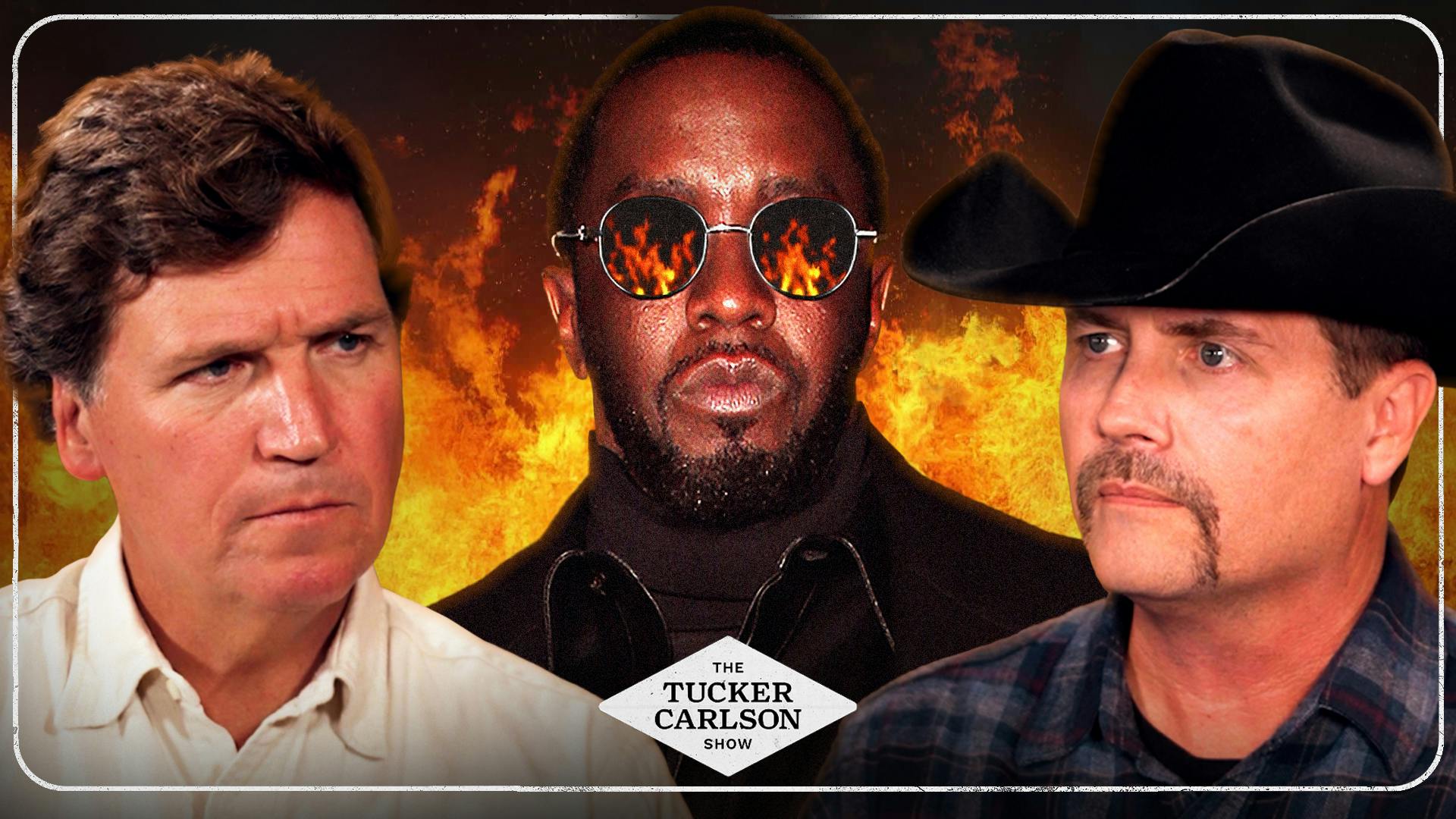
The Tucker Carlson Show
John Rich on Diddy, Demons, the Antichrist, How to Hear God, and His War on Child Predators
01:35:44
Loading summary
Transcript251 lines
- [00:01]
Tucker Carlson
So John, you seem to be evolving as a man, this is my outside observation. But as a man and an artist, you want, you grew up. And you've said in our last interview you wanted to be a country music star, you wanted to write a lot of songs, you wanted to chart, sell a lot of records, did all that. But you seem to be, I don't know, on some kind of new mission. Am I imagining that? And if I'm not, what is it?
- [00:24]
John Rich
No, you're not imagining it. A few years ago I started to contemplate the difference between success and significance. And they are different. Sometimes they intersect where something significant or something successful, they, they interact. But I spent three decades of my adult life in self service, competing in the music industry to be successful. And so to me, success in the music industry, I had really high bars I had set. Like I want to be songwriter of the year, for instance, in Nashville. That's something I, that's like the coveted award because there's thousands of songwriters in Nashville and I was songwriter of the year for three years in a row. Wanted to sell millions of records. Well, all told, you know, we sell close to 15 million records. Wanted to write hit songs for other people too. And I've had, I don't know how many. I don't, I don't even know the number of how many top 10 songs I've written. It's a lot.
- [01:32]
Tucker Carlson
So can I say how are those victories? Were they as great as you thought.
- [01:36]
John Rich
They'D be at the time? Yeah, because you know, it was my, that's my American dream. That's what I wanted to do. You know, I didn't go to college. I had a four year ride to a school called Belmont University in Nashville on a vocal scholarship. And my plan was to go there and go to college and I'm in Nashville and I'll try to get a record deal, you know, and go to college if I don't get a record deal. Well, I got, went to college and I got a degree. Maybe I go do something, I don't know. But instead of going to college, I went out on the road with some guys that literally barely knew from Texas who were older than me. I was 18 going on 19. And instead of going to college, I went out and played about 200 nights a year in a van pulling a trailer all over the u. S playing holiday in lounges and county rodeos and off brand casinos and basically anybody that would hire us because I wanted to be on the radio, I wanted to play the grand ole Opry. And I wanted to write number one songs, and I couldn't understand how college was going to make that happen. Fair. It can't. Yeah, I mean, just can't. So I said, I'm going to just go do it. And so that band became a band called Lone Star, which we got a record deal a couple of years after we started. Sold 4 or 5 million records with them, wrote my first number ones with them. So in those moments where you, you, you gambled to that level and then you win and then everybody loves is just a constant high five. I mean, it's just a constant celebration because that is so hard to do. Yes. It's like an Olympian winning a gold medal. That. That's what it's like to write a number one song or to step out on a stage and there's 30,000 people that know the words to your music, and you've never met any of them. And it's that way all over the U.S. you can imagine that feeling, especially in your 20s.
- [03:24]
Tucker Carlson
Yeah.
- [03:25]
John Rich
I mean, it. There's no, no better physical feeling I don't think you can have than just. It's just massive adrenaline. And so throughout the course of the next year, here comes Big and Rich, which is, you know, my singing partner, Big Kenny. And we sold millions of records, and we have 20, 30,000 people a night, and here's a whole nother rack of hit songs coming. And now I'm finding people, you know, bartenders who I, who I hear sing one night. And I talked to this girl and I go, you're one of the best singers I've ever heard. We got to get you in the studio. We got to write some songs. She goes, all right. And so we do. She gets a record deal. Her name's Gretchen Wilson, and Gretchen Wilson sold about 13 million records. Damn. You following this? Yeah. So, I mean, just homerun after Home run, Grand Slam. Grand Slam, which puts a lot of plaques on your wall. Make a lot of money doing that, get a lot of praise, a lot of applause. And that success, that is success. And that world. That's it. That is success. But is it significant? Meaning what did it do other than make me feel great and accomplish things that were on my personal list? Nothing. And then I thought about, well, when I die and I go stand in front of the boss, is he going to pat me on the back and say, good job on all those hit songs, man, you were great. Good job. You played 4, 000 concerts, man. We're. We're all so happy for you. You think he really cares about that?
- [05:01]
Tucker Carlson
Probably not.
- [05:02]
John Rich
He doesn't. The answer is he does not.
- [05:05]
Tucker Carlson
How'd that come to you?
- [05:10]
John Rich
Seeing the things that go on in our country. See the. Seeing things that go on in our culture, seeing things that happen to people who cannot defend themselves, whether it be kids, whether it be, you know, poor people, whoever. That just gets steamrolled every single day, taken advantage of. Targeted, used, abused. And I thought, I'm wasting my heartbeats right now because I am capable of taking a simple idea, simple line, and turning it into a piece of music that can penetrate tens of millions of people. And I can make them. I can make them cry. I can make them jump up and down and scream and holler and. And party. I can make them think. I can make them not think. I can do all kinds of. I mean, music is. Is. It's the ultimate X factor. Like, you can't touch. Music seeps in between the cracks and crevices of a person's body, mind, and soul. Like, everybody's got defenses up. Everybody. You do? I do. Music goes right through it. It just gets through it.
- [06:23]
Tucker Carlson
How?
- [06:23]
John Rich
I don't know. Music is. It's like magic. I mean, psalms, the entire book of psalms is. Means songs, basically, that David wrote, and David was king. David was a musician and a songwriter, so he. There was melodies to all the song psalms. Someday I can't wait to hear him sing what. I wonder what melody he put to that. Like, I've had that thought before, but he probably put it to music because he knew what I know, which is you can give a speech or you can make a statement to somebody and you can say the exact same thing with a melody wrapped around it and have two completely different outcomes. One thing music does is once it goes into you, it stays there.
- [07:05]
Tucker Carlson
Yes.
- [07:06]
John Rich
You'll forget a speech. You'll forget this podcast down the road. You'll forget about it.
- [07:10]
Tucker Carlson
Like an Eddie Rabbit tune from 1978. Never goes away.
- [07:13]
John Rich
That's exactly right. Exactly right. The. The earworm factor, you know, it goes deep down into your subconscious. I don't know where it goes. I have thousands of them in my head, but it goes deep down in there. And I just decided that I was. I was disappointing the man, disappointing the Lord that he gave me this ability and then gave me a massive platform of people. I mean, tens of millions of people know my music. So I already have their attention. So what am I gonna. What am I gonna feed them next? What. How am I gonna. What am I gonna give them? Am I Gonna give them another party song. Might give them another love song. To what end? Like, what does that accomplish? Nothing. It might, it might give me another plaque on the wall. And I need another plaque on the wall like I need a hole in the head. I walk past those plaques and go, eh, like today I do. Or I'll see pictures of me back in the day winning an award or whatever and I'll remember how I felt back then. It seems so insignificant to me now. Like shallow insignificant. Like, what does that even mean? It doesn't mean anything to me now. So success versus significance. How do I be significant with my music and with my talent? It's writing songs. Revelation was a great example. You were the first guy to put a spotlight on that song. I flew up and saw you. We did a podcast on that song. It resulted in millions and tens of millions actually of views and consumption on that song. And when I go to a big and rich concert now, they don't generally walk up and say, man, I'm a big fan of your music. If they have enough guts to walk up to me and say something, which I'm always glad when they do, they say that song Revelation, he said, pulled the Bible off the shelf for the first time in 20 years. After I heard that song, made the hair on my arm stand up. I had three sorority girls down in Fort Worth, Texas. We had a concert down there. Like 19, 20 year old girls come walking up to me and I'm like, first of all, I'm glad to still have people 19 and 20 that like my music. Yay, good for me. But they came up and they said, Mr. Rich, we heard your song Revelation and our sorority started a Bible study on second Thessalonians, Mark TW, Matthew 24, Revelation and Daniel. All the things that you mentioned in your Tucker interview. And we've done a month long deep dive on that. And they said everything you said in that interview is correct. Like that's what it says. But we didn't hear that in church. But that you were right. That's what it said. I said, that's unbelievable. I said, well, congratulations, keep going. You know, so it makes me think, I wonder how many times that has happened and I'll never know about it because that song was significant. It wasn't about success. It was. I don't even have a record deal. I really can't make money on my songs anymore. There's no money to really be made on music. Everybody streams everything. There's, there's, it's not about any money. And because I'm not a part of the industry, nobody's going to call me up and say, congratulations, here's a big number one.
- [10:35]
Tucker Carlson
What do you mean you're not part of the industry?
- [10:37]
John Rich
I mean, I don't have a contract with anybody in the industry. I regularly attack the industry. I call them out for, for how they treat artists. And we're not friends.
- [10:49]
Tucker Carlson
We're excited to announce a new partner of our show, Poncho Outdoors. Poncho specializes in men's shirts designed for the great outdoors. Their flannels are excellent. They're not bulky or stiff. And they are durable. They're built for comfort. These medium weight, stretchy, shockingly soft shirts are the go to when temperatures drop. Poncho shirts are perfect for everything you do outside in the fall. Fishing, hunting, golfing, enjoying the weather. Poncho is the way to go. Producers, I'm looking at one wearing one right now. Each shirt is comfortable, durable, versatile for whatever happens. Slim, regular, tall, fits. Because people come in all shapes and sizes, gear up for fall with Poncho, every piece is built for comfort. Ponchooutdoors.com Tucker Enter your email for 10 bucks off your first order. That's Poncho P o N C H O outdoors.com/tucker for 10 bucks off and free shipping. When they ask how'd you hear about Poncho, let him know the Tucker Carlson show sent you with maximum enthusiasm. Does it matter?
- [11:51]
John Rich
Not to me, it doesn't. I don't want them to think well of me.
- [11:55]
Tucker Carlson
What does your agent say?
- [11:57]
John Rich
What can they say? Yeah, what does your agent say, Tucker?
- [12:02]
Tucker Carlson
I don't have one. I'm sure you'd be appalled.
- [12:04]
John Rich
Exactly, exactly. So it's no, they look at it and go, at this point, they just go, keep swinging the bat. I mean, because it turns up opportunities that I never thought possible. Like I'll get a call and they'll say, hey, we want you to come speak for an hour and yeah, bring your guitar. And we want you to play Revelation and Earth to God. Those are the two songs we want to hear you play. Okay. Not the, not the big country hits. And I'll walk into these massive places and be able to say things to these crowds that they're not going to hear in church. They're not going to read it on social media. And then there's the music factor also, that comes in, which is what I love to do. And that, that did not exist before I started focusing more on being significant instead of successful.
- [12:52]
Tucker Carlson
Did you play gospel in public before this turn.
- [12:56]
John Rich
No.
- [12:57]
Tucker Carlson
You grew up with it.
- [12:58]
John Rich
I grew up with it. My dad's a preacher, sang and played in church. But no, I mean, gospel music's never been a part of my set because when Big and Rich hit the stage, it's come into your city and save a horse, ride a cowboy and it's all these crazy songs, you know, and that's what they come to hear and that's what we give them. But on my own, outside of Big and Rich, I have. I have my own trajectory, my own homework assignment from him. And when he lays something on me to say in my music, I'm going to say it. I'm going to write it at the top of my ability, I'm going to sing it at the top of my ability, produce a video as well as I can possibly do. And I'm just going to stick it out there. And if it's significant, it will grow its legs and it will run faster than anything I could ever do in the music industry. Revelation is the perfect example.
- [13:49]
Tucker Carlson
Yeah, I mean, that, that was not the kind of song your manager would tell you to write. Now, how do you communicate with God?
- [14:01]
John Rich
We're told in the Bible to pray without ceasing. Mean continually pray. It doesn't mean continually be down on your knees praying, but it means that your headspace. And we're human, so we're not very good at this. But you're supposed to attempt to stay in a headspace where it's an open channel. So you're an old school guy like me. You know the old CB radios very well in your truck.
- [14:27]
Tucker Carlson
Yeah.
- [14:29]
John Rich
And if you just put it on channel 19 and turn the volume all the way up and just start driving and you're not talking to anybody, you're just driving. Every now and then you'll hear a trucker or a conversation start happening coming through that CB and you're listening to it. It's like. It's like entertainment, you know? I wonder, wonder where they are. I wonder what they're talking about. I view praying without ceasing. Like your mind is like a CB radio that you just turn it all the way on and just leave it there. That way, if he wants to tell you something, the channel is open and the volumes all the way up and you can't miss it. Like he'll tell you something, make you feel something, make put a thought in your head and you don't miss it. Because that's tough to do in life because we're running a million miles an hour. And everybody's coming at us from every direction all the time.
- [15:14]
Tucker Carlson
Yeah, there's a lot of distraction.
- [15:15]
John Rich
It's just pop, pop. It's like wasps. It's like, it's like, it's like hornets in your face.
- [15:20]
Tucker Carlson
Yeah.
- [15:20]
John Rich
And that's not going to change because that's the way things are. But if you can manage to discipline yourself, to keep that channel open, you will hear things, you will learn things. He'll direct you to do things, make you. He'll. He'll put it in your mind to call a particular person or you'll meet somebody that you would not have met had you not gone to that place, that for some weird reason just felt compelled to go to this event or this little meeting or whatever. And you wind up meeting somebody that can really, really change your life in a dramatic way. And you can't believe you didn't know him your whole life. I'm sure that's happened to you.
- [15:57]
Tucker Carlson
It has.
- [15:58]
John Rich
So leaving that channel open, praying without ceasing is a. Is a huge thing.
- [16:02]
Tucker Carlson
So listen, obey. But it begins with prayer. How do you pray?
- [16:08]
John Rich
So most Christians think that because they are a Christian, that all of God's guarantees and blessings and promises are delivered to them by default. Now it is their inheritance by default. Because they are a child of God. They have, they have claim to the inheritance of what he's promised us. However, there's only. There's only one way you actually get what it is you want. Number one, you have to belong to him for real. You can't be a cultural Christian. You can't say, well, I go to church every Sunday, I'm a Christian. That does not count. It doesn't mean it's bad to go to church. It means you have to be. You have to look at yourself as a piece of property. It tells us in the New Testament and Paul wrote which. I know you love Paul. We're supposed to be bond. Servants to Christ. Bond slaves, like a mule or a, or a cow or a tractor or whatever. Like, we don't have our own will. We don't have our own ambition. We don't have anything. We are worthless. But we devote it. We turn ourselves over to him and he makes you valuable. And then now he can do things with you because your entire ego and everything has been sacrificed, put, put to the side and he can do something with you at that point. So that's. Number one, you got to be an actual real Christian. Number two, you have to pray for what you want, specifically for that so let's say you want discernment. You can't make sense of what's going on. You don't know if that's a good guy or a bad guy. Can't make up your mind. He's too, I don't know what I'm looking at. And you want discernment. God is not just going to look down and go, john needs discernment right now. He can't figure out what's going on. Boom, John's got discernment. That's not how it works. I have to ask him to give me discernment. I have to say, you promised me that you will give me discernment. I'm asking you to now give it to me. That's step two. And then step three is he will give you what you're asking for if you, if it serves his will. That's totally up to him. So for instance, let's say, let's say I'm in a really bad state of mind and I need peace. Like I don't have peace. I'm, I'm unsettled and I belong to Jesus. I ask him to give me peace. Now he's got to give me peace if it serves his will. Well, if he doesn't give me peace, which has happened, I go, why are you not giving me that? Because I don't, I don't feel peaceful sometimes. He wants you to be in this mode. He wants you to be in that mode because he's got something that's going to require that element of you to accomplish whatever it is he's trying to get that mode. That's fight mode. That's offense. That's offense mode. That is. There's the target, hit the target. That's what that is. It could be a subject, it could be a situation that's going on. Whatever it is, it's offense. Christians in large part remain on defense, defense, defense, defense all the time. They don't want to engage. And I guess they forget about the story of Jesus walking into the temple that was completely overrun by hypocrites and people doing business and changing money and I mean, just turn it into a, a bank. Basically. Jesus walked in there and sees this going on. And if Jesus was a modern day cultural Christian, you know what he would have done? Turned around and walked out because he just said, well, that place has gone straight to hell. Right? Okay, I don't want to, I don't want to deal with that. That's what he would have done. But that's not what he did, he walked on in there. It says he took. He fashioned a whip with rope. He braided a whip together, called them sons of vipers, which I would guess in Hebrew was probably cuss words back in the day. Sounds like Jesus probably ripped a few cuss words on these guys and then flipped the tables over and started whipping them and ran them out of the temple. That's pretty serious offense, don't you think?
- [20:37]
Tucker Carlson
Yeah, I'd say.
- [20:38]
John Rich
And he's the son of God and he's the example that we are supposed to live up to. That doesn't mean you stay in that mode all the time. But there is. There are situations that arise where Christians have got to put their dukes up. And you don't hunt us. We're coming for you now. No, you run. We're not running. You run. That's what's missing in America.
- [21:04]
Tucker Carlson
Why, though? There's been a lot of noise in the news recently, but it doesn't matter if you can't hear it. There's no shame in that. It happens to a lot of people every year, millions. You get deaf as you get older, especially if you shot without earplugs as a kid. But our friends at Audient can help you. Hearing loss is more widespread than most people realize. Over 460 million people worldwide live with disabling hearing loss. 80% of them don't wear hearing aids. And the reason is simple. They're super expensive. Thousands of dollars, prescriptions, medical visits. And so most people don't want to deal with it or they can't afford it. Audien offers FDA compliant hearing aids for as low as 98 bucks. No prescription needed. No doctor visit needed. Available to over 10,000 retailers nationwide, including Walmart, Walgreens. Over 1.5 million Americans already use the product from Audien. It has changed their lives. No more squinting, struggling to hear as you hear stories from people you love in a crowded room. You can't hear anything. Hard to eat at restaurants. This helps you reconnect. Visit heartucker.com h e a r tucker.com or you have to speak louder. Or you can call 1-8004-5329-1680-0453-2916 to learn more about how Audien can help you or someone you love hear better. Audien is actually launching their biggest sale of the year starting today. So it's perfect, perfect timing. Essential health care, the ability to hear accessible. This is what we should have had already. Visit hear tucker.com to learn more.
- [22:39]
John Rich
I mean, why Is it missing?
- [22:41]
Tucker Carlson
Yes. Like, how did we get. That wasn't always true.
- [22:45]
John Rich
Probably because Christians in, in America especially have not experienced actual persecution ever. Not actual persecution. Not like what they go through in North Korea, Syria, China, Uganda, all these other places where they literally get cut into bits in the streets and they kill their families and burn their houses down. And we all know what happens. They're Christians too, right? Yeah. Right. Well, we haven't gone through anything like that in America. And I think Christians have been. I think. I think the Joel Osteens of the world have created in their ministries this lukewarm pablum baby food that they serve up to their congregations weekend and week out. They grow up in eating baby food. They have no muscle. They have no backbone. They have no. They have no constitution. They have no fight in them whatsoever. None. Because they don't understand the Bible well enough and have. And have digested it and given themselves over to it. Because their preacher never talks about it. He won't bring it up. And why not? Because it's uncomfortable to hear those things. Christians don't want to hear that. They will be persecuted at some point if they do it correctly. Jesus said, basically, if they hate you, just remember they hated me first. I mean, they crucified me. What are they going to do to you? Get ready. If you're the real McCoy, get ready. And Christians don't want to hear that. That doesn't keep the church full. That doesn't keep the. The offering plates full. That doesn't keep the donations and the estate plans that go to these churches. That doesn't keep that going. They want the easy message because it allows them in their mind, a way to not have to engage the devil and his people and his armies. And so what you have is a whole rack of. Of weak Christians that are constantly being attacked by a totally dedicated force of wickedness. Totally dedicated.
- [24:49]
Tucker Carlson
What you mean dedicated?
- [24:50]
John Rich
I mean, they pray to their. They pray to their daddy for real. I mean, they are dedicated. They dedicate their lives to him and they do what he says and they look, look.
- [25:01]
Tucker Carlson
What signs do you see of that?
- [25:03]
John Rich
Well, watch what's going on in the world. Does it seem like sane people.
- [25:07]
Tucker Carlson
No.
- [25:07]
John Rich
Would do a lot of the stuff that we see going on these days? No. Right. So they are being controlled and carrying out the will of their Father, the Father of lies. And we're supposed to carry out the will of our Father, who created their Father. And that's not even a fair fight. So the Christians are standing on the side of an insurmountable, undefeatable God, the Lord, who could wipe out the universe with a blink. That's who we serve. Yet we stand out here and run and hide and go, please don't come to my house. Please don't attack me, Mr. Bad Guy. Mr. Wicked Man. Mr. Mister, you belong to the devil. Oh, no, no, I don't want. I don't want to hear it. I don't want to see it. And because of that attitude, our country is completely compromised at this point because of weak Christians.
- [26:01]
Tucker Carlson
What are the signs that someone is dedicated to dark forces? Not just mistaken, misguided, like who is. Who is actually an agent of evil? How do you know that.
- [26:14]
John Rich
That their. That their every thought and action is completely counter to what God created them to be? Completely counter that they are.
- [26:27]
Tucker Carlson
So they're at war with God's creation, with nature.
- [26:28]
John Rich
That's correct. Why do you think they come after kids? I mean, in the New Testament it says that children have angels that, that report back to God on behalf of the kids. Like they have their own protection. And probably the most hardcore thing Jesus ever said was, you'd be better off to have a millstone tied around your neck and cast into the sea than to ever cause one of these little ones to stumble. Not to rape them, not to murder them, not to traffic them, not to slap them around, to cause them to stumble, meaning to mess with them at all, to mess with their innocence in any way, shape or form. You'd be better off dead than for that to happen. The Son of God said that. The guy who we follow.
- [27:22]
Tucker Carlson
Yes.
- [27:23]
John Rich
We're supposed to emulate and try to live up to his example. Yeah, that was part of what he said. A lot of Christians are also under. Under this. Just total fabrication. God loves everybody. I've heard that so many times. Well, God loves everybody. It does not say that anywhere in the Bible that God loves everybody. Matter of fact, when you go to Proverbs 6, it says these things, doth the Lord all caps. Hate. Use the word hate. And the first thing it lists is those whose feet are swift to shed innocent blood. Blood. He hates them. And then you've got the. The issue of, well, but the Bible says we're supposed to pray for our enemies. And it does say that. Oh yeah, it says pray for your enemies, not pray for God's enemies. Two different enemies. Don't pray for pedophiles, for instance. Those are God's enemies.
- [28:25]
Tucker Carlson
Their.
- [28:25]
John Rich
Their feet are swift to shed innocent blood. He's who they were talking, who we Talked about in the New Testament. You don't pray for those people. You go to war against those people. You come straight at them. You do what Jesus would do to him. You see the difference? This is not preached in churches. Maybe there's a few that preachers actually talk like this, but Americans want a Jesus made in their image, not actually who he actually was. Because who he actually was and is and what he told us to do are very difficult things that put you in compromised positions. And every single day, if you do what he actually told you to do, and most people are not willing to.
- [29:10]
Tucker Carlson
Do that because it's just counter to what the world demands.
- [29:13]
John Rich
Just. Yeah, I mean, they're going to get attacked, they're going to get persecuted, they're going to all kinds of things. It's going to happen.
- [29:20]
Tucker Carlson
Why the. You said people who destroy innocence, people whose feet.
- [29:26]
John Rich
People whose feet are swift to shed innocent blood. Do the Lord hate?
- [29:33]
Tucker Carlson
Why the impulse to shed innocent blood. Like, what is that?
- [29:38]
John Rich
I. I think that the wicked people of this earth believe that they can inflict the most pain on the Father and the son by hurting the thing that they love the most, which is the innocent child.
- [29:57]
Tucker Carlson
Yes.
- [29:58]
John Rich
And so in their minds, that's how we hurt him the most. That's how we get the most tears out of his face. That's how we get him to weep. That's how we torture him and bring anguish to God is by hurting the kids. Because we know that's who he loves the most. Because we know what he said about it. He said we'd be better off dead than to do that. That's how we felt about it. So that's who we're going to go after. How, I mean, how, How demented is that? How, how purposefully wicked is that tactic? Think about that.
- [30:41]
Tucker Carlson
Yeah, I mean, the explanation that we get is that it's like some kind of clinical disorder. Most people are not, you know, have no desire to do that. The average person has no desire to hurt a child, be sexual in any way.
- [30:52]
John Rich
Demons do.
- [30:54]
Tucker Carlson
Well, that's it. But then we're told. Well, the, the, the psychological explanation. Well, it really isn't one, but they're like disordered. But you're saying it's a kind of ritual.
- [31:02]
John Rich
I'm saying that they're possessed by. They're possessed by spirits that want that or have waged war against God since day one. And that the way that they can cause him the most pain is by inhabiting human beings and turning and twisting them into such a knot. That, that they are there, that much of a degenerate now, that much of a reprobate now, that they will carry out that mission. That's what I'm saying. Just like on the other side, when you see a real Christian come straight at you with something like Charlie Kirk for instance, okay, that's not normal either. That's outside the capacity of a human being to do what he was doing. That. Nobody's built for that. That requires being possessed. Christians are possessed by the Holy Spirit. We are possessed by that. And so if you're possessed by that, it's no longer Tucker making a move or John Rich making a move or whatever. When you really walk in on something and you claim the Holy Spirit and you claim, you claim what you're promised. The armor of God, for instance, which there's only one offensive weapon in the armor of God. Everything is defensive. Oh, by the way, nothing guards your back. There's nothing, there's nothing in the armor of God that goes on the back. It's all in the front. It's the helmet, it's the, it's the shield, it's the, it's the girding of the legs, it's the, it's the shoes, it's all that. But their offensive weapon is the sword. And it says that the sword is the word of God. That's the word, that's the scripture. And that it's sharper than any two edged sword, dividing even between the spirit and the soul and the joints and the bones, and that it divides. And that's another misconception that a lot of Christians have, is that Jesus wants everybody to get along. He did not say that. Jesus said, I came to, not to bring peace, but to bring a sword to divide Mother against father, father against son, brother against brother. Because when the truth really drops, there is no middle anymore. It's a clean cut. And it's this and that and that is it. That is it. This is all in there. But Christians just can't seem to get their head wrapped around it to a large degree. And I believe that stems from the churches in general just refuse to go there. And so if you're a Christian watching this interview and you're starting to get keyed up about what I'm saying. Good, I'm glad you're getting keyed up. Why don't you pick up the Bible and read exactly what it says without your preacher, without your Bible group, without anybody, and just read what it says, says.
- [33:43]
Tucker Carlson
That's good advice right there.
- [33:45]
John Rich
Read it.
- [33:45]
Tucker Carlson
It's good advice.
- [33:46]
John Rich
Yes.
- [33:46]
Tucker Carlson
Have it. Have it speak to you directly and just see what it says.
- [33:49]
John Rich
Read what it says and go. Wow. Okay. Read the examples that are laid out by the people God thought the most of. Go read about Stephen who was stoned to death in the New Testament as as Paul who was then Saul is holding the coats of the men who were stoning Stephen to get to death. And not long after that Paul had his Road to Damascus event and then he went on and all these churches popped up and he wrote half the new testame. Nobody wants to get stoned to death. Nobody wants to get shot in the throat with a 30 odd six, do they? No, we do not want that as human beings. We do not want that. But it tells us to go forward, not backward, forward. We don't retreat from the devil. He is so weak and his people are so weak in the face of who God really is and who God's real people are. He has no chance at all to succeed. The only way he succeeds is that those people won't engage. It's a one way fight and I'm just not going to be a part of that.
- [34:54]
Tucker Carlson
Christmas season is here and although it's a bit of a cliche, it really is important to keep Christ in Christmas. Should we focus on cookies and presents or on the reason we're doing this, which is Jesus? Obviously the point is Jesus. That's the whole point. That's the only point. And all the decency and good cheer of this holiday comes from Jesus. The Hallow Apps Pray 25 challenge reminds us of that. It features Chris Pratt, Gwen Stefani, our friend Jonathan Roumie and many others. This 25 day challenge guides you through Advent and helps you keep your focus on the true reason for the season. Jesus. Experience the Nativity story where Jesus brought peace and grace calm to a world in chaos. That's exactly what we need right now is peace and calm and still. And Jesus is the only one who brings it. Period. Hallow is thousands of prayers and meditations and music to help you connect with God all through Christmas and after including several Christmas original songs and albums. There's a whole world on Hallow. It's like unbelievable. It's changed our family's life. Check it out. You will not regret it. Get three months for free@hallow.com Tucker Experience Greater Peace and stillness this Christmas in the New Testament. I think all the disciples are certainly the majority or the ones whose fates. We know none of them wound up on Corfu in retirement.
- [36:13]
John Rich
No, they all got killed. They all got killed or exiled or imprisoned for life or. Yeah, yeah.
- [36:19]
Tucker Carlson
So what does that tell us? I mean, you just said that God always wins, but it sounds like his. His, you know, arms and legs, the people who are representing him.
- [36:29]
John Rich
Well, what God considers a win and what we consider a win might be two different things, right?
- [36:36]
Tucker Carlson
Yeah.
- [36:37]
John Rich
What God considers a win is that people convert and repent and give their lives to him. That's a win. That's the real win. That's the win. That's the biggest win. It says the Lord. The Lord wishes that no one go to hell. No one. He doesn't want anybody to be separated from him. It's his creation. He wishes that no one has that fate, but he gives you free will. You're not a robot. You can. You can pick whichever side you want to go. You can follow the route you're going to follow, and you're going to wind up in eternity with whoever it is you followed. It's as simple as that. You're going to live in your daddy's house, whoever that is.
- [37:19]
Tucker Carlson
Where do you think the country's going?
- [37:24]
John Rich
Well, there are some positive signs. For instance, my two sons, they're 14 and almost 16, and there is a resurgence of interest and true passion about learning who God is. What does God want me to do with my life? Reading their Bibles, having their own Bible studies. I mean, teenagers having their own Bible studies. That's happening all over the US Right now. I mean, that's a big deal. That's a big deal. And they are. They are very wise for their age because they have been through so many lies and seen the lies debunked and realized, oh, they're not telling me the truth on television.
- [38:13]
Tucker Carlson
No, they're not.
- [38:13]
John Rich
Oh, that politician, that. That was not true. Oh, they. They took two years away from us in school and made us all wear masks and told us, told our parents if they didn't get vaccines, that they would lose their. And so my parents took the vaccine, and now one of them's got myocarditis and the other one can't breathe. Or my parents didn't take the vaccine and they both lost their jobs. Like, they watched the US Government brutalize their families and them. They watched it, they lived through it, and it imprinted on them in a major way. And so now they're coming out of that and they're starting to get older and they're going to be moving out of the house. This generation I'm talking about, and they want to Know what the real truth is. They know they've been lied to for pretty much their whole lives and they're sick of it. And they want to know what the truth is. And thank goodness they're realizing the only infallible truth is in the pages of the Bible. That's it. Not what the preacher says, not what I say or you say, or the President says, ah, what's in this book? That is my life plan. This is my blueprint. They really do feel that way about it. And that's, that's a very encouraging thing to me.
- [39:20]
Tucker Carlson
I think a lot of people have a gut level sense that trouble's coming.
- [39:25]
John Rich
100 it's gonna have to. Trouble has to come.
- [39:31]
Tucker Carlson
Why?
- [39:32]
John Rich
Because if you, if you look back over the history of the written word of, of God, let's, let's call it, what's, what's the Lord's mo? What's his modus operandi? How has he done it in the past? That's really important to know because he says, I am the same yesterday, today and forever. My word does not change. He does not change. We change. Culture changes. He does not. So if you look at for instance, this stat. So I started working with DHS with their cyber predator sting units. Okay. Because I saw a little presentation was done with my wife and my older son with like 30, 30 boys. And a DHS agent came in and he's telling these boys how these predators can get them on their phones, like how they can track them, how they talk to them, how they present themselves as a, I'm a, I'm a 15 year old girl, I'm a cheerleader, I go to school right down the road from you. And there's a picture of this pretty girl here. I'll send you a picture of me in a bikini, you send me a picture, blah, blah, blah. And they start this whole thing and then once they've got them, then they say, yeah, I'm not a 14 year old girl, I'm a 55 year old man in Cleveland, Ohio. And here's, here's your dad's name, your mom's name, here's all your siblings names, here's your home address, here's where you go to school, and if you don't do xyz, I'm going to show up there tomorrow and kill everybody in your family.
- [41:06]
Tucker Carlson
Or show them the pictures. Yeah.
- [41:09]
John Rich
Yes. And then the kid is in this position of what do I do, what do I do? And then sometimes they'll go and they're told to Meet this guy at a park or meet him at a store, at a gas station or whatever and you never see him again. So my wife and son saw this one hour little seminar from this guy and came home and my son pulls his phone out and starts changing the settings on his phone, deleting apps. Certain apps that he had gone, that one's gone, that one's gone. Because this guy's telling him, get this stuff off your phones. So I'm like, what in the world did this guy say? And so my wife starts telling me what all he said. And I said, my God, that needs to be heard by every parent in America. I said, what was the agent's name? And she actually had a business card on this guy. And so I emailed him and I said, hey, agent so and so, this is John Rich. You just had this seminar with my wife and son and that message needs to be heard by every parent in America. How can we make that happen? And he goes, hey John, nice to meet you. That's above my pay grade. I said, well, send me up to somebody that it ain't above their pay grade. So he goes, okay. So he sends me to their regional director, a guy named Dennis Fetting, Agent Fetting. And I told him, I said, you guys are doing a horrible job marketing this message. I'm glad that you go to the school, I'm glad that you'll go to the church, I'm glad that you'll go to the, to the youth group. That is admirable and great, but you're throwing a snowball at a brick wall. I said, why don't you work with me and let's put you on live stream, live on X and promote it for two or three weeks and do the exact same thing you just did there, but let's do it in front of millions of people.
- [42:49]
Tucker Carlson
Great idea.
- [42:50]
John Rich
That's what he said. He goes, we never thought of that. Well, of course not. They're not marketers, right? I mean what I do. So we shook hands. Civilian and federal government shook hands, Got all the way up to secretary Noem and she said, do it. Great green light. So we did that, sit down and to date it's somewhere around 9 million views, has been seen now for parents. And I get it all the time. Parents hitting me up going, we changed everything on our kids phones after we saw that. We made their accounts private, we got rid of these apps, we got rid of blah, blah, blah. Because you would literally do anything as a parent to keep a bad guy, a predator from Coming into your house at night and stealing your kid.
- [43:34]
Tucker Carlson
Oh, gosh.
- [43:34]
John Rich
Out of their bedroom. Wouldn't you, Tucker? Yes, I would rip their throat out with your bare teeth if that's all.
- [43:39]
Tucker Carlson
You had sleep for eight hours.
- [43:40]
John Rich
They would die. Yep, they would die. They just would. But they're getting to your kids as you're sitting there watching the news or football, and your kids back there on their iPhone, on some app, talking to somebody they think is one person, but it's somebody else else, and they're getting them right there inside your house, and you don't even know it. You're derelict on your duty as the parent because you're just ignorant of the fact that this is what's going on. So that started me down a road of significance in that. In that sector of educating parents and blowing the whistle on what the bad guys do. The DHS told me that last year there were 36 million reports that came into them on kids that had been targeted online. 36 million in one year. So averaging 3 million a month in the United States. In the United States, that's like every child. Three million a month. And they said, we don't. There's. There's no way we can combat that. We go get as many of them as we can. But, I mean, it's literally, that's how big the problem is. So back to your question. Why. Why does trouble have to come to this country? Because God is not going to put up with that. And he doesn't bring trouble on a country because the devil's people are being devilish. He brings trouble on a country because his people refuse to engage. Second Chronicles says, if my people who are called by my name will humble themselves and turn from their wicked ways, I will come and heal their land. He didn't say if the devil's people.
- [45:35]
Tucker Carlson
Right.
- [45:35]
John Rich
He said, if my people.
- [45:38]
Tucker Carlson
There's not a lot of emphasis on that. There's a lot of emphasis on what other people are doing wrong, emphasis on the bad people, on the existence of evil. I've certainly spent a lot of time thinking and talking about that, but very little conversation about how we're part of the problem.
- [45:55]
John Rich
Christians don't want to hear that. You think they'd come back to church next Sunday if you. If you impugn the entire congregation, including yourself?
- [46:03]
Tucker Carlson
I.
- [46:04]
John Rich
Do you think they'd come back?
- [46:05]
Tucker Carlson
Yeah. I mean, that was. That.
- [46:06]
John Rich
That's. I would come back.
- [46:07]
Tucker Carlson
That's the biblical message, right? Isn't that what John the Baptist said as he wandered around the desert repent and Jesus to repent.
- [46:15]
John Rich
Yes.
- [46:16]
Tucker Carlson
And it worked.
- [46:18]
John Rich
Maybe the churches will turn back to that, but if they don't, he is. He is going to. If we won't humble ourselves, then he is going to humble us. He will do it for our own good. How does that work go? Ask Moses how it worked out for him when he got humbled. I mean, ask David how it worked out when he got humbled. King David went out there and, yeah, he killed Goliath. Man, that was awesome. He was doing good. And then he becomes king, and he sees this gorgeous woman taking a bath on her rooftop. And he goes, wow, who's that? They go, oh, that's. That's Bathsheba. He goes, who's she married to? She's married to one of your. One of your main generals in the army, Uriah. He goes, she's married to Uriah. Yeah. He goes, tell you what, when we take the Philistines on here in the next couple of weeks, they had a battle coming up, put Uriah on the front line so he'll die and then.
- [47:19]
Tucker Carlson
Withdraw support from him. So he's alone.
- [47:21]
John Rich
He got killed.
- [47:23]
Tucker Carlson
Yeah.
- [47:23]
John Rich
And then David took his wife. David took his wife after he had him basically murdered. And Bathsheba got pregnant. Then a prophet came to David and he said, God knows what you've done. He knows what you've done. And he sent me to tell you that that child will not be born alive. He's taking your child from you. That's your punishment. And that. And David just went into an absolute tailspin. I mean, it said, covered himself in sackcloth and ashes, ripped his beard out. I mean, he was just writhing around in the street as the king of Israel at that point because he realized the. The immense nature of sin, that he had committed his sin. Yes, yes. And God loved him. David is the only man in the Bible that God says is a man after my own heart. I mean, the greatest compliment you could get from God. Yes, but David still did that. And God brought him low. He humbled him in a major way. And so if we look at the history of God and what his M.O. has always been, when his people refuse to do what he's telling them to do, and they stand back and let the devil just run right over them over and over and by. And by doing so allow tens of millions of kids to be harmed or worse because Christians, God, God's people, refuse to engage the situation. And you damn right he's going to humble us. And I can't wait.
- [48:57]
Tucker Carlson
You can't wait for the country to be humbled.
- [48:59]
John Rich
Bring it. Because I don't want to live in a country that allows that kind of thing to happen. I don't want to live in a place like that. That. That is the most abhorrent thing you can possibly imagine.
- [49:10]
Tucker Carlson
But there's a lot of suffering on the way from here to humility.
- [49:14]
John Rich
100% pain. Pain is the greatest teacher. Pain. Pain is. I mean, he made the Israelites wander around out in the wilderness for 40 years. Moses didn't even get to go into the promised land because he sinned, and that was his punishment. You can go down the list. All of them did something. I mean, they're just humans. But he gives you.
- [49:34]
Tucker Carlson
He.
- [49:34]
John Rich
I've said this before. If God really loves you, he'll only slap your teeth out instead of your brains if he really cares about you. And you're a dad. I'm a dad. If our kids, when they're little, they're playing out in the road, going to baseball around or whatever, and you go out there and they're like, boys, you can't be playing in the street. Come on, back in the yard. Okay, dad. And the very next day, they're back out in the street throwing the baseball again. Are you going to have the same demeanor at this time? No, no. You're going to intensify and you're going to go, boys, I told you. And you're going to grab one of them by the shirt and you're going to march them back into the yard. And then the next week, they're out in the street throwing a baseball around again. And cars are zipping by now. What are you going to do? Now we're going to enter the phase of pain, the spanking zone. Something's going to happen that they're not going to want it to happen again. And why are you doing that? You're doing that so they don't get hit by a car and die. You're doing it to protect them from themselves because they're not listening and they're not doing what it is you're telling them to do. And it's not an ego trip that you're punishing them. It's for their own good. You can tell the kid his whole life, don't put your hand on that stove, son, or it will burn your hand. He will not believe you until one day he lays his hand on that stove and takes the skin off his head. That is correct. And he'll never touch it again, will he? Or like a go Kart. You know the exhaust on a go kart sitting out there.
- [51:05]
Tucker Carlson
Yeah, yeah.
- [51:06]
John Rich
And you tell your kids, don't touch. Don't touch that. That thing is blaz. And you could fry egg on that. My son, he was about 9, laid his hand down on that and I had to go to the hospital and scrape all the skin. It was horrible. He never did that again. Right. So that's what Christians, I believe, can expect in the future.
- [51:27]
Tucker Carlson
Have you experienced, have you been humbled?
- [51:29]
John Rich
Oh, good grief, yes, tremendously. Many times. Because I'm a very stiff necked. I would say it's a battle for me to sacrifice my self confidence and arrogance and my alpha male attitude. That, that is my biggest thing is I've got to kill it every single day. Every day. I got to just tie that up in a knot, throw it over my shoulder.
- [51:58]
Tucker Carlson
How do you do that?
- [52:00]
John Rich
By realizing who's watching you, knowing he's looking at you, going, you're going, sorry, sorry, I shouldn't have said that. Shouldn't have had that thought. Shouldn't have got that mad. Shouldn't have done. Whatever. You go, I'm sorry, and then stop doing that. He'll go, thank you. He's your dad. He treats us like kids because we are. The same way you would discipline your kids and care about your kids and I do is the same way he feels about us, except he's just perfect at it, whereas we're totally imperfect with it. But the same emotion and the same point of it is there, whether it's Tucker Carlson talking to your kids or God's talking to Tucker. It's the same relationship. Isn't that an interesting thing to think?
- [52:53]
Tucker Carlson
It is interesting. And one of the things I. I mean, aside from the fact the unhappiest people in the world I've ever met hate their dads. There's something about that dynamic that doesn't work at all for people. But I noticed that most people in positions of leadership, temporal leadership, will never admit fault, ever. That's the one thing that sets them apart. Whether they're competent or incompetent, they all fail at some point. And leaders tend to deny it.
- [53:22]
John Rich
Yep, they fail to yield to him, number one. But they. They even fail to yield to their fellow citizens to say, I am sorry, that was a huge mistake. And why, why do they fail to do that? Because they feel like if I admit that I really made that horrible mistake, they won't reelect me or I'll lose my job at the big company or whatever it Is. So that is more important to them than. Than owning up to whatever they did that was wrong. It's more important to keep myself intact. Well, what is that? That's. That's back to success and significance. They're only concerned about success, their success. That's it. And I'm telling you right now, man, he does not care about your personal success. He may give you a lot of success, but that's not the point. And I really think that he gives. He gives guys like me success and you success and other people success. So that some point back to your original question. It seems like, John, you've changed gears here. Yes, I have changed gears here because the fuse is burning down on whatever this situation is going to wind up being. And I want to be on record that I said true things that. That are backed up by the word. I want to write music that backs it up. I want to do podcasts that. That people can watch and think about it and go pick it up and read it for themselves. That is significant to me. That is significant, but it's also unpredictable.
- [55:03]
Tucker Carlson
You don't know where that goes. Are you worried?
- [55:06]
John Rich
I have concern about it. I've had death threats in the past two weeks. That's not fun.
- [55:12]
Tucker Carlson
What's your attitude toward that?
- [55:16]
John Rich
Pray for protection. So we talked about earlier, when you pray for things, you have to be specific about what it is you're asking for. And then he has to give it to you if it serves his will. Well, I would hope protecting me serves his will. I hope he hope he wants me around a long time. There's. There's one verse in Zechariah in the Old Testament, and this prophet, he was being hunted, basically, and like all of them were. And he asked God for protection, and God responded to him. The Lord responded to him and said, I will be a wall of fire around you. I personally will not. I'm going to send down the angels. I, the Creator will be a wall of fire around you, and they will not be able to get to you. Granted, Job is another example. Job had a hedge built around him and his family that God built around him because God loved him and protected him. And the devil went to God and said, take that hedge off from around Job and I bet I can get him to curse you. Like, this is the devil up there, this Lucifer up there talking to, talking to God. God goes, no, he won't. He goes, well, you'll never know because I can't get to him because you built this hedge around him. I can't get to him. But if you take it down, he'll curse you. He will. He'll turn his back on you. And he goes, no, he won't. He goes, all right, fine. And so God took the hedge away from Job, and it says, a storm blew through, killed his entire family, took all of his crops, all of his land, his animals, everything. And then Job got struck with a disease, and he went from being a wealthy, successful guy with a nice family and all that, and to sitting outside the walls of the city covered in sores, scraping himself with pieces of broken pottery, begging for people to give him food. And his f. His family and friends are walking past him, going, job, just curse God and die. Just curse God and die. Job, this is horrible.
- [57:18]
Tucker Carlson
And his friends show up and blame it all on him.
- [57:20]
John Rich
We can't stand seeing what's happening to you. God is abandoned. You just curse him and die and get this over with. And Job's response is this. Though he slay me, yet will I trust him? Though he slay me, yet, will I still trust him? And when he made that statement, God. God replenished him with everything he had lost times seven, and put the hedge back around him and told the devil, said, I told you so. I told you he wouldn't curse me. Get the hell out of my face. Go read that story. Right.
- [57:57]
Tucker Carlson
Yes. So you're changing your orientation away from just amusing people in bars and stadiums to trying to use the authority that you have. You've been given, you've earned, to teach and to shine light on evil and.
- [58:18]
John Rich
To help the weak, the defenseless.
- [58:21]
Tucker Carlson
The defenseless. I think I'm summarizing broadly what you just said. You've written a new song, which I think it's fair to say is not a top 40 hit. Is this fair?
- [58:31]
John Rich
It just came out, and it will not be on the radio.
- [58:36]
Tucker Carlson
Why won't it be on the radio?
- [58:37]
John Rich
If a radio station plays this song, I will go there personally and buy a mistake dinner. It would take a lot for them to put this on the air. About a year ago, I saw a clip of Sean Combs, and he was standing on a stage at an award show.
- [58:55]
Tucker Carlson
That'd be Puff Daddy.
- [58:56]
John Rich
Yeah, that's right. I. I won't call him that, but whatever that guy and Sean Combs standing up there, and he's looking into the cameras, and he says, I own your kids. I own their souls. I determine what they wear. I determine what they listen to. He's looking right in the camera saying this, meaning he's looking at me. And I'm thinking, oh, is that right? Sean Combs, you own my sons. You own the souls of my sons. Really? And I thought, the. This guy has no fear whatsoever of a mom or a dad and what they would do to him if he came and tried to take one of their kids. No understanding whatsoever. And basically what you're seeing there is a, is a demon possessed man. And don't forget this, Tucker. The devil and his minions are the most arrogant creatures in the universe. They are so arrogant, I've noticed with their wickedness, they don't care what you think about it. I mean, they're just going to say it right, right to your face. And so I saw him say that and I went, this guy. Music for, for Sean Combs is like a weapon. He uses his music to indoctrinate to. We talked about music earlier, how it can go in between all the defenses you have. It can get through your soul and your spirit and all the way down into you and get stuck in your head for the rest of your life. And he knows that too. He uses it for wicked purposes. So it's a weapon for him. It's. It's something that's his main go to. And I, and I was thinking about that and I said, yeah, me too. Music is my weapon of choice. And is anybody going to rebut this devil and what he just said about our kids? Nobody did. Nobody said boo about it. Well, there's Sean Combs up there just declaring that he owns the souls of our children in America. I said, yeah, I don't think so. And I got really intense with that thought process. And I thought, there needs to be a song that talks about what a, what a mom or a dad would be willing to do to keep a Sean Combs style person. And there's millions of them in our country, as we discussed earlier. There's literally nothing they wouldn't do to protect their kids. And I really don't think that the people on the other side of the table, the predator class out there, don't really have an understanding of that. It's almost as if they have no fear of the American parent of the dad, the regular guy, the guy that keeps to himself, works hard every day, just leave me alone, guy. I think they don't really understand what that person would turn into if you put your hands on one of their kids, because they would rip you limb from limb. They would become the most primal beast you've ever met in your life. They would lose all inhibition. You lose. They Win. All they would care about is that they live long enough to kill you. That would be the dad's only concern. Just let me live long enough to take him out. He hurt my kid. That's how a parent really feels, right?
- [62:26]
Tucker Carlson
Without question.
- [62:27]
John Rich
Okay. A lot of parents watching this podcast right now are going, yep. So I wrote this song called the Righteous Hunter because predators hunt. They hunt. They hunt our kids. So they're the wicked hunters, right? Well, as. As everything is in nature, if you've got darkness, you've also got light. There's a flip side to everything. And I thought, who are the righteous hunters? How about we hunt them? How about we put them on the run? How about. How about the predators out there who are so arrogant that they'll stand on television and tell us what they're going to do to our kids? How about we put a little fear of God into them for a minute? How about we remind them who it is that they're really dealing with? And so I wrote this song, the Righteous Hunter. It just came out. The video to this song, which I would urge people to go watch, is disturbing. It is a. It is a recreation. And we actually used adults who had been trafficked and who now go out and sting traffickers. One lady in particular named Brooke, who you'll see in the video, she made sure that we shot this accurately. So basically, you see these two bad guys making a deal on buying some kids and where they're going to meet, and then you see them meeting there, and then you see the kids walk out that are for sale. And meanwhile, I'm singing in this little girl's bedroom, and she's not there because she's been taken. And. And her dad is played by Sean Ryan.
- [64:12]
Tucker Carlson
What a good man.
- [64:13]
John Rich
In the video. And you talk about a righteous hunter. That's him. Because I promise you, he's a hunter on many levels. But as a dad, that is the last human being you would want to see coming for you. The last human being. And so I asked Sean, I said, I know this is way outside man of what you normally do or have ever done, but would you play the dad in this video, the Righteous Hunter? And I sang the Righteous Hunter on his podcast about two months ago. And he looked at me and he said, that's going to be the biggest song you have ever put out. I'm going to make a prediction. That is going to be the biggest song you've ever put out. Tears in his eyes, the whole thing. So I brought my guitar up here because we're not going to show the video on the podcast, but you can get the song. You can go watch it. Just look up John Rich, the righteous hunter, and you'll find it. But I brought the old Martin there. That's actually my son's name, Colt. My younger son, and his birthday, September 29, 2011. And I memorialize my kids on my guitars. I love my kids more than life, more than anything. And there's literally nothing I would not do to protect one of my kids. Literally nothing. Literally. I don't care if 20 of them are coming, we'll pile them up out by the fence. If you come from my kids, as a windbreak. If you come from my kids, all bets are off. You lose, I win. We don't run. We do not run. And we're going to have to stop running in this country. We should not have the posture of, oh, I just hope they don't come get my kid. That's not the posture, man. The posture is you come on and try it one time, big boy. Come on into my yard and try it one time and see how you wind up, you freak. Sitting behind your computer, acting like you're a kid and trapping these kids, stealing these kids, pimping them, prostituting them, harvesting their organs. All the horrible demonic stuff you're doing to our kids. Why don't you step in my yard one time and try it and see what happens to you, you degenerate demoniac. Call them what they are. So that's what this song does.
- [66:29]
Tucker Carlson
Can I hear it?
- [66:30]
John Rich
Absolutely. I know I always bring songs to you that you go, I can't believe you could write a song about that.
- [66:36]
Tucker Carlson
No, I love it.
- [66:49]
John Rich (singing)
Evil runs around this town undercover Looking for a soul to take. But they better stay away from the righteous hunter? Or hell is all they'll pay. Cause I can see around the corner and I know you're coming. If you had any and he sent you'd run. But you ain't got a clue what a daddy will do. Better give your soul to Jesus while I get my gun? You better give your soul to Jesus while I get my gun. They try to steal away our son and daughters Shrouded in the shadow of night. But we fight with protection of the heavenly Father? And we ain't scared to die? And I can see around the corner and I know you're coming. If you had any sense you'd run? But you ain't got a clue what a daddy will do. Better give your soul to Jesus while I get my gun. Yeah, you better Give your soul to Jesus while I get my gun. Recall the words that Jesus said Better off with millstones around their necks and we pray. Not our will but thine be done Bringing in to the reign of the wicked Oneness we claim in your name and I can see you around the corner and I know you're coming if you had any sense you'd run.
- [68:59]
Tucker Carlson
But.
- [68:59]
John Rich (singing)
You ain't got a clue what a daddy will do Better give your soul to Jesus while I get my gun yeah, you better give your soul to Jesus while I get my gun. Evil runs around this town under cover.
- [69:28]
John Rich
Looking for a soul to take but.
- [69:32]
John Rich (singing)
They better stay away from the righteous honor for hell is all they'll pay.
- [69:45]
Tucker Carlson
Amazing. I love it.
- [69:48]
John Rich
Thanks for letting me play it.
- [69:50]
Tucker Carlson
You say in there, I'm not afraid to die. Are you not afraid to die?
- [69:52]
John Rich
Not for my kids, yeah. It'd be an honor to die for my kids.
- [69:58]
Tucker Carlson
I agree with that. Why are you the first person to articulate this in the way that you did?
- [70:06]
John Rich
Because it is the most grotesque, uncomfortable, wicked thing that exists in my mind. And it is so bad that really good people, with really good intentions, strong people, just want to go like that.
- [70:27]
Tucker Carlson
Yep, that's where I am. That's exactly where I am.
- [70:29]
John Rich
Cannot look at that. I cannot bring myself to come to grips with what is going on.
- [70:34]
Tucker Carlson
It's too evil. You can't. I can't deal with it.
- [70:36]
John Rich
It's so evil. It is so against the DNA of a unpossessed person that they can't even fathom it. And that's very wise. You don't want it in your mind.
- [70:48]
Tucker Carlson
That's right. In fact, I've always wondered. I'm so grateful that there are people in trapping job molesters on the Internet. I'm grateful for that. But I always wonder, what does it do to them to marinate it? It's like watching ISIS videos all day. You don't want to. I don't want to see that.
- [71:05]
John Rich
They have pts like you can on a map.
- [71:08]
Tucker Carlson
Is that true?
- [71:08]
John Rich
Oh, Lord have mercy. I mean, the jobs these people do, the stuff they have to see is it never leaves them. And they have all kinds of problems that they have to deal with. And a lot of them can only do those jobs for a period of time and they got to get out. They just cannot deal with it. And that goes to the point of how unbelievably horrible it really is. And the fact that 36 million reports got called in last year to DHS about kids being targeted 36 million unique reports. That's how big it is in our country. America is the number one consumer of child exploitation. Number one is America, you know, the country that's founded on God, that country, the country that says founded by our creator.
- [72:05]
Tucker Carlson
It's just a little weird because if you go online, even in your private conversations, which are not private at all, they're all monitored, as I know you know it's a fact, and start talking about overthrowing the government or killing your leaders or whatever, boy, they. They come to your house. That happens a lot. A lot. So how are people consuming child exportation pornography? How are they engaging this digitally? And the government just kind of isn't picking up on it or something? What is that?
- [72:36]
John Rich
It could be. That could be part of it. But the sheer volume, Tucker, how you deal with 36 million reports, how do you do that?
- [72:48]
Tucker Carlson
I don't know.
- [72:49]
John Rich
So the only way I have thought of, of how to start knocking these numbers back, which, by the way, less than 1% of kids that are trafficked and taken are ever returned to their parents. Less than 1%. The only way I have determined. And at the end of the video, and I really hope people go look this video up. The righteous hunter. At the end of the video, my friend Tim Tebow saw the video. Tim's organization, they hire former police detectives, former military intelligence people, and they go out and they find these guys and they rescue kids. That's what they do. We need. I asked the lady that was at the video shoot, she's overseen 14, 000 kids rescued in 21 years.
- [73:44]
Tucker Carlson
Wow.
- [73:44]
John Rich
And she was trafficked as a kid. So she dedicated her whole life to it. And. And I asked Brooke, I said, so how many people would we need in America working full time, doing the job that you do or that Tim Tebow does and others to get this number from 1% are returned to 50% are returned. She said, probably 20,000 somewhere in that range. And I said, what would that cost? She said, about a billion dollars a year.
- [74:20]
Tucker Carlson
Yeah.
- [74:20]
John Rich
And I said, less than we give to Harvard. That's all. What would happen if he had $2 billion? She goes, we would there. They would be running. They would burn their computers. They would get off the dark web. They would be hiding under the rocks and in the caves. They would be hiding because there would be an army of people tracking them, hunting them. The predator becomes hunted. She said, it would take that. So I wonder why I can't go to Congress and lay these, lay these facts and figures out while we have this current administration, and say, I want $2 billion peeled off of some project you guys are working on, and I want 20,000, 40,000 soldiers on the ground, American citizens with expertise to go drain this situation and incarcerate as many of them as you can and save the American child. That is what I want to see.
- [75:17]
Tucker Carlson
Get out of the foreign aid budget. I'm for that.
- [75:19]
John Rich
Let's go.
- [75:20]
Tucker Carlson
Let's go.
- [75:21]
John Rich
Now, if we pull something like that off, God may decide to hold off on turning the table upside down on this country. He might. If you do that.
- [75:31]
Tucker Carlson
I mean, we don't treat children well at all. No, at all.
- [75:35]
John Rich
We don't let a lot of them even be born to begin with.
- [75:38]
Tucker Carlson
63 million since 1973.
- [75:40]
John Rich
That's right. And I often think if some.
- [75:43]
Tucker Carlson
If you were buying a new house and the realtor said it was a great house and you wanted the house, a beautiful house, and you got to the master bedroom and the realtor says to you, by the way, you should just know that a child was dismembered in this bedroom. Would you buy the house? Maybe. Probably not. Because there's something spooky about that. There's something. I'm not a theologian. I don't know much about theology, but there's something so dark about that act taking place in a place you don't want anything to do with it. I used to call them haunted houses. So if you have 63 million dismemberments of children in your country, it changes the nature of the country. It's leaving aside, you know, the effects on the women, obviously the children were killed, the effects on the abortionists who did it. It's bad for everybody. But it's also bad for your nation itself. Like that's happened inside our borders.
- [76:32]
John Rich
Yes. How long do you think God's gonna let us get away with that?
- [76:35]
Tucker Carlson
I don't know.
- [76:35]
John Rich
But I'm surprised he has for this long.
- [76:39]
Tucker Carlson
He.
- [76:40]
John Rich
He. He brought low many other empires for way less.
- [76:45]
Tucker Carlson
Yeah.
- [76:45]
John Rich
Yes.
- [76:46]
Tucker Carlson
I mean, I.
- [76:49]
John Rich
That's why I say I refuse to.
- [76:50]
Tucker Carlson
Believe that doesn't have consequences. That has consequences.
- [76:52]
John Rich
I hope for it.
- [76:54]
Tucker Carlson
If soul is real, and I think that it is. I think most people understand that it is because they feel that it is. You can't eliminate 63,000 people, can't kill them for whatever reason. Everyone always has a good reason to kill somebody. They always justify it to themselves. But the fact is that many number of children were killed. And that has got to have a consequence. How could it not?
- [77:15]
John Rich
Right. Right. So this Little song I just played you is. It's out there. And the point of it is, is to, is to grab parents by the shoulders and shake them. Hard enough.
- [77:30]
Tucker Carlson
Yes.
- [77:30]
John Rich
Because these images in this video, my man will rattle you when you see them. It was hard to shoot, uncomfortable to shoot, but we shot it accurately. We had, we had real people that really do this for a living.
- [77:44]
Tucker Carlson
Wow.
- [77:45]
John Rich
And, and made it look like what it looks like. I mean, that the people in the room were bawling their eyes out. And these are some tough people because the situation looked like what they go into a lot of the times. And you see those kids come walking in that room for sale. Yeah, it's. It's you. You will, you will become extremely sad and violently angry all at the same time. You will go, if I could find those people right now, I'd go get them. That's how it'll make you feel. But they're everywhere. They're in every zip code in the U.S. there are people that you might shake hands with every day. There are people that work in your schools. There are people that work in government. There are people that coach teams. There are all kinds of people you would never expect that are involved in this stuff. That's why it's so big. It's like a 220 billion dollar a year industry and America's the number one customer. That's horrifying. So not. Not to drag us all the way down. No, no, no.
- [78:48]
Tucker Carlson
I mean, I think it's. If, you know, you have to care.
- [78:50]
John Rich
About that, you got to write. Writing a song like that and putting it out is, I believe, a significant thing to do. That's not something you do for success. That's something you do for significance. Back to the beginning of our conversation. Because once I put it out there, it's out there forever. Music is permanent and it sticks. They don't forget about it. And, and I'm hoping that it yields results on many levels. I hope that it wakes parents up. I hope that parents go on and look at that video we did with DHS and they go to their kids phones and go, we're changing all that. They can't even get to you now. That needs to happen. And then I hope extreme funding starts rolling in that this song will start a dialogue that big. That's why I made it so jarring. And that's why I made that lyric the way it is. The lyric is accurate. Give your soul to Jesus while I get my gun because I know you're coming for my kid. And you're not going to survive this. But I still hope you don't go to hell. Like, that's what the good guy says. Give your soul to Jesus on your way over, because this is the last stop for you. You know what I mean?
- [79:58]
Tucker Carlson
I do.
- [79:59]
John Rich
And I think that's how most Americans, especially Christian Americans, they don't want to ever have to be in a position like that. No, but it's in them. It's just God made us that way.
- [80:09]
Tucker Carlson
You threaten your children. Yeah, that's a different thing.
- [80:12]
John Rich
God built us.
- [80:13]
Tucker Carlson
So I think this will reverberate. And the reason I think that is bec. I mean, you're the only singer I've ever interviewed twice about something other than singing is because the last interview that we did really had a lasting effect on me. You. When we did the interview, it was about your song Revelation, which I thought was great, but I didn't understand. I still don't fully understand a lot of the theology around it. It's not the world that I come from, to put it mildly. But you made a point about something called dispensational.
- [80:42]
John Rich
Dispensationalism.
- [80:44]
Tucker Carlson
Yeah, the theology of dispensation. And you criticize it. You said you don't think it's biblical. And I wasn't exactly sure what you were talking about when we had the conversation, but it set off a chain reaction in me. I learned a lot, much, much more about it, and it really did change my views. But in that conversation, you said there are a lot of preachers who will hate this. And I've never met any preacher, you know, who even knows what that is. So it's like it's, again, not my world. Right. My question is, what was the effect, the aftermath of that interview?
- [81:14]
John Rich
A lot of preachers hated what I had to say.
- [81:16]
Tucker Carlson
They did, did they?
- [81:17]
John Rich
Yeah.
- [81:18]
Tucker Carlson
Did you hear about it?
- [81:19]
John Rich
Oh, I went on YouTube and I couldn't watch them all. There were so many of them. I mean, some of them were 10 minutes long, some of them were two hours long. Some of them responding to your views. Oh, yeah. Some of them were sermons where they would bring it up. I know you probably sing this song revelation, and let's. I just want to go into that. Anybody that says that what John Rich is saying is a heretic. Actually, that's a bad word. That's a really bad word. A heretic. Yeah. And it's false teaching and it's false doctrine and it's blah, blah. But he's a false, false, false, false. Also A terrible word. I'm anything but false. I have my faults. False is not one of them.
- [81:54]
Tucker Carlson
I've noticed. Yeah.
- [81:56]
John Rich
And so I went, well, we hit the mark with that because their congregations are now going, I'm gonna go read Matthew 24. John said, Go read it. I don't really know what it says, so I'm gonna go read it. Right. And I'm telling you, man, I have had thousands of people on, online, on social media hit me up and say, I just read Matthew 24: twice like you said. And it absolutely says that. That is just what it says. I can't believe I ever thought it was different than that. Like the whole point of it for people that don't know what that is, dispensationalism is basically saying that before the tribulation hits, before things get really, really bad for Christians on the earth, that they will be raptured out of here. They'll be pulled out before the really bad stuff happens. And it doesn't say that. And actually Jesus lists off all these things that are going to happen prior to his return. And the wrath that, that Christians will be living under during the tribulation is the devil's wrath. We're not spared from the devil's wrath, we're spared from God's wrath. And God's wrath is final. That's when whoever's left at that point gets pulled out. And then God pours his wrath out and the whole thing gets wiped out and then he rebuilds it. And there's a, that's a whole other story. But American Christians and American preachers don't want to have to think about the fact that they're going to have to go through something difficult. Well, I'm sorry, why don't you take a little trip around the globe and go meet with some Christians who are literally meeting in caves and under and in basements of houses. And if they're caught, they're murdered or imprisoned for the rest of their life or chopped up into pieces like what's going on in Syria right now. But they just hack them up or go down to Africa where there's Christians in, in mainly Muslim dominated countries and they're actually practicing Christians. You know what happens to them? They steal all their kids, they hack up all the men and women and they move on. And that village is just gone. And you're telling me that fat, lazy American Christians have more of a right to be spared pain than those people? Those people are worshiping Jesus Christ knowing it could absolutely cost them their life. And they're doing it anyway. That's a. They are elite to us. They are. They are giants of Christians in these other places.
- [84:24]
Tucker Carlson
Yes, I agree with that.
- [84:25]
John Rich
Yes, they are elite. They are God's elite Christians. We are not. We're in America. We have a constitution that protects us from things like that happening to us. Right. You can't do that to Christians in the United States. Now. They can come after you and call you bad names, blah, blah. That's not real persecution. And so I take real issue with Christians that say God would never make us go through that. I'm like, what Bible are you reading? The 12 disciples were pretty tight with Jesus. Were they spared? No. I would say the 12 disciples were probably tighter with Jesus than any 12 men that ever lived. More than likely. Right. He was tight with some other ones, too, Paul and Daniel and, you know, King David and all that. But the twelve disciples all wound up either being hung, beheaded in prison for the rest of their lives, whatever.
- [85:19]
Tucker Carlson
Impaled.
- [85:20]
John Rich
Impaled. Really bad things. Crucified.
- [85:22]
Tucker Carlson
Yeah.
- [85:23]
John Rich
I mean, they crucified the Son of God. I mean, if anybody was going to be spared from pain, don't you think it would be the actual Son of God? Don't you think he would have been spared?
- [85:35]
Tucker Carlson
You'd think he'd get a pass on that.
- [85:36]
John Rich
Do American Christians outrank Jesus Christ? What an arrogant attitude that is.
- [85:44]
Tucker Carlson
There's also a kind of fragile response to all that, like to, you know, so you make these points and then they call you a heretic for saying that.
- [85:53]
John Rich
That's fine. Call me that. The Pharisees and Sadducees called Jesus all kinds of names. They can't stand it when you call them out, it really hits them the wrong way, which is great. It should hit them the wrong way because they are wrong and they know that they are. And they bought. They bought into centuries of that spin on that particular subject. And it's just most Christians don't think that there's anything wrong with it because they've always been taught that they don't know that that's not right. So it's just. It's just ignorance on their part. They just don't know. But the real simple trick is, my man, pick up the Bible and read what it says. Just read it. Just read it down and then read it slower. And then read it a third time and sit there and think about it. Go. It says all these things are going to happen before he shows back up. And if I'm alive when those things are happening, I'm going to live through that. And the real problem is telling people that they're going to be raptured out of here before any. Before for instance, the Antichrist shows up or before the mark of the beast is implemented. They think they'll be gone before those things happen. Well, that's not true. They won't be gone before it happens. So what danger does that put them in? That means if they're alive on the earth when the mark of the beast is implemented and when the Antichrist shows up and makes himself known and they're still here, they're not going to think that's the Antichrist and they're not going to think that's the mark of the beast. And I believe that's part of the great deception that is talked about in the New Testament. He says be. Be as wise as serpents be. As Jesus said that like the deception is going to be so convincing that even some of the elect, meaning the, the, the elite Christians, the ones that really know even they, it's could be possible to even deceive them. That's how close the counterfeit move will be made. It is going to be something else. And if you have been believing wrong information and believing a spin narrative that that's put on the end times, you were in harm's way at that point.
- [88:08]
Tucker Carlson
Ah, that's interesting. Why do you think, what was the purpose of this deception? Like this fault, what you call false theology?
- [88:16]
John Rich
Well, what it did was is they, they figured out that if they would, if they would preach in a way that didn't make people uncomfortable and told it actually was twofold, make them not feel uncomfortable about it, they would come back to church the following week.
- [88:30]
Tucker Carlson
Yeah. And the church will get bigger marketing scheme.
- [88:33]
John Rich
Yeah. And the other side of it, which actually I think had a positive effect was they would say the rapture could happen before this church service is over, so you better give your life to Jesus right now because this time tomorrow it could happen. Well, that created a sense of immediacy for people like, well, I don't want to get left behind. I don't want to get left behind. And they would go down and they would get saved. They'd give their life to Jesus. That's great. Right. So that, that was a positive result of it. But that you're talking about hundreds of years now. We're in 2025, we've got AI about to show up. You know, you wonder how my dad, who's been preaching since he was 19 years old, said we never could understand how in the book of Revelation, how they could monitor every human being on the Earth, because that's what they would have to do to implement the mark of the beast. You can't buy or sell unless you have the mark, right? When he goes, we couldn't understand how that even be. How would you implement that? And then he goes, well, of course now, I mean, everybody's monitored all the time. And that's not even a question. So all the technology, and the technology that is yet to come and that yet to be deployed anyway. It's already here, but yet to be deployed. That's all gonna, that's all gonna be used in the tribulation, that will be used.
- [89:52]
Tucker Carlson
So it sounds like from your perspective, we're getting pretty close.
- [89:57]
John Rich
Everything that needs to exist for it to happen exists now. But it's up to God. He could hold it off for a thousand years, but it sure don't look like it.
- [90:06]
Tucker Carlson
There are American Christians, including in Texas, where you're from, working very hard, raising a lot of money to build a third temple in Jerusalem, on the Temple Mount. What do you think of that?
- [90:22]
John Rich
When, when it's very important in the Bible to go back and look up the original language of what was said, because it may say something a little different than what the English version of it says. I think that human beings that try to instigate on their own accord, instigate, but bringing on what Revelation talks about and what Daniel talked about, they go out purposefully to instigate. It. Really hits me in a wrong way.
- [91:04]
Tucker Carlson
Because they're not God. They don't get to decide.
- [91:06]
John Rich
They're not God. They don't get to decide what happens. They just don't. We, we don't, that's, that's up to him, how he wants to see that roll out. And so I, I find it strange that human beings think that they can usurp God's planning and his authority and his timeline. That's how it appears to me anyway.
- [91:26]
Tucker Carlson
So when people say we're going to bring about the end of history, the end of time by doing this, and.
- [91:32]
John Rich
Force Jesus to come back when we want him to come back, you're not.
- [91:35]
Tucker Carlson
On board with that?
- [91:37]
John Rich
No, I'm not. No. You don't force Jesus Christ to do anything.
- [91:44]
Tucker Carlson
If you had to guess my last question, if you had to guess where your life goes in the next five or 10 years, what would your guess be? I've rarely met a more intense, self driven person.
- [92:01]
John Rich
I would hope that I continue to do what I am told, no matter how difficult it is. If he wants me to do it and shows me, I want you to go do that, that I will have the fortitude, which he also has to give. You have to ask for that, too. You don't have your own fortitude. You don't have anything, Tucker. You have literally nothing. You have nothing. You have to ask him for all of it, that he would grant me the fortitude to follow through on what it is he wants me to do. And my. My real. Just what I feel like my role is right now is to have conversations like this in front of millions of people, because they're not going to hear it generally in their church. They're not going to hear it anywhere. They're just not going to hear it. And I have no agenda with this. You know what I mean? I don't have a church. I'm not a preacher. I'm not running for politics. I'm not doing any of those things. I'm a guy with no record deal, no publishing deal. I'm a dad. I have a guitar. I know how to write songs. I can perform them. I can. I can take things that need to be said and put it into the form of music and put it out there and hopefully have serious, serious impact in two directions. One, for the good people, the righteous people out there, to make them think, to flick light bulbs on in their head, go, wait, what did he just say? What did that song do? And open them up to receive the real truth of what's going on. And second, fold on that is to put the most fear humanly and spiritually possible into the hearts of the devil's people, of his army. I want them to be. I want them to be able to not sleep at night. I want them to run and cower in fear because they know who's who they're up against. And we have to announce ourselves. We have to tell them who we are, and we have to call them what they are. They're not somebody with a mental problem. They are a servant of their father. They are carrying out their father's business, and that's what they are. And guess what? They all have a chance to repent. As long as they got one breath left. They can repent and they can turn, and I pray that they do. But if they're not going to, and they're going to stay on the route that they're on and they're going to come for our kids, then they're going to have to deal with us. It's just who is us Us have to make ourselves clear. The song is meant to clarify to them to the Sean Combs's of the world who you're talking to because I don't think you really understand it fully and I like that thought.
- [94:59]
Tucker Carlson
John Rich thank you.
- [95:00]
John Rich
Thanks for having me man. Always a good time.
- [95:06]
Tucker Carlson
Christmas is back and so is our merchandise shop@tcn. Visit tuckercarlson.com to see what we have to offer. And it's awesome. Everyone has a long list of people they need to shop for this Christmas. Our new line can help you bring brighten the day with gifts they will actually love. Not the kind they're gonna throw away or thank you for but not mean it actually good stuff that's great for everybody. Ornaments, wrapping paper, Christmas sweaters.
- [95:31]
John Rich
For real.
- [95:32]
Tucker Carlson
The TCN shop has everything you need. Dozens of new styles and designs perfect for the gift giving and spreading the Christmas spirit. That's Tucker Carlson.com we hope you have the very best Christmas.