Loading summary
Transcript37 lines
- [00:00]
A
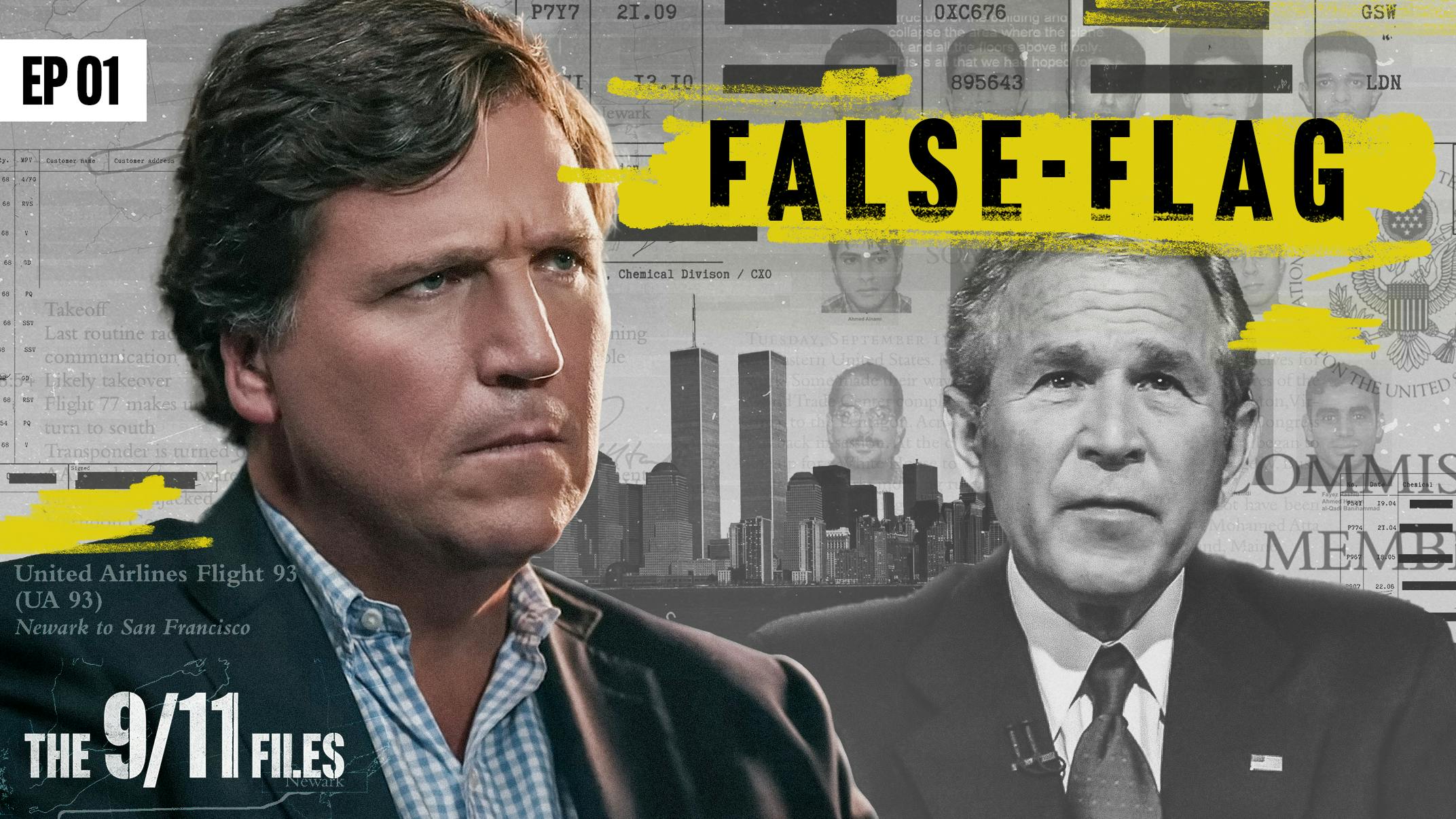
For 24 years now, politicians, the media, intel agencies in this country and abroad have all demanded that you believe the official story about 9 11. And here's what it is. They tell you. A group of Al Qaeda affiliated terrorists, many of whom were known to US intel services, somehow managed to evade capture for years as they planned the most significant and elaborate terror attack in human history. We're told that despite repeated encounters with the FBI, the CIA, local law enforcement, airport security, foreign intel organizations, the right information somehow never made it to the right people. The government failed because it just didn't have the intelligence it needed. That's the story. That story is a lie. Nearly 25 years later, the families of 3,000 civilians are still mourning the murder of their loved ones. Anyone who doubts the official narrative is cast as a kook, a criminal, a fringe conspiracy theorist, and punished. They've been blacklisted and censored and banned even as the leaders who failed to protect our country on 911 use these attacks as a pretense to expand their own powers and permanently transform the United States. None of this is speculation. All of it is true. Over the course of this series you will hear accounts from people who lived it. CIA officers and analysts who were there, FBI agents from the bin Laden unit, family members of the victims. None of these people are kooks. All of them have firsthand information. What they'll tell you is that what you have been told about September 11th is not true. Why are we doing this? Our purpose is in part to make the strongest possible case for a real investigation into 9 11. 25 years later, a new 911 Commission, one that is honest, one that is not guided by partisan political interests, one that is not serving foreign powers. To do this investigation, we spent many months looking into what actually happened and speaking to people who saw it. We poured over thousands of pages of documents, mostly primary sources, but also contemporaneous news reports and declassified government documents. Over the course of this investigation, we made numerous findings that shocked us, not least of which the apparent role that former CIA director John Brennan played in helping bring the 911 hijackers to the United States. And the remarkable lengths the CIA went to to protect the 911 hijackers from the FBI and from domestic law enforcement. Telling the full story requires, starting before the attacks, going back to something called Alec Station that was the CIA's bin Laden unit in 1999.
- [02:50]
B
My name is Mark Rossini. I'm a former FBI agent. So from January 1999 to May of 2003, I was the FBI New York, Joint Terrorism Task Force representative to alex station at CIA headquarters. Before 9 11, there were no sources in Al Qaeda. None. There was a group of Pashtun caretakers, okay? They called them the Trod Pints. Trod Pints were these Pashtun people that were bin Laden's tea boys and tea gals, right? And they were the great source of the Pakistani intel service that was feeding information from the trod pints to the isi, to the CIA, about what was going on in Al Qaeda. They had all the electronic communication, satellite shit in the world, imagery. I remember looking at images of bin Laden, you know, in his courtyard. All that, fine. But what's in his head? What's he saying? What's he doing? These people are 10,000 miles away. They don't give a shit about American law. They don't care about going to jail. They want to die. How are you going to get a source inside there?
- [04:00]
A
Before September 11th, U.S. intel services got most of their intelligence on bin Laden from what was called the Hada Home Switchboard in Sana, Yemen. That was a communications hub that bin Laden and his associates used to communicate with each other. They were at the time living in Yemen. The FBI gained access to this after the 1998 embassy bombings in East Africa.
- [04:22]
B
How did we officially get the Hada home in Sanaa, Yemen? On the books, on the radar, if you will. Okay. Nairobi, 1998. August 7th. John Anticef. Special Agent John Antacef, greatest FBI agent ever in the FBI. Even better than me. John flies over to Afghan, to Nairobi, and one of the survivors, one of the perpetrators who chickened out and ran and lived. Dawd Rashid Alawali, Saudi. He gets captured by the Kenyan police. John flies over from New York, and already there have been two FBI agents interviewing Dawoud. They were getting someplace, but they really weren't getting that far, right? John walks in and first thing he does, you need some water? You want a drink? Did you, did you eat today? Did you pray? Are you okay? Yeah, I'm fine. I'm fine, I'm fine. He said, just, just relax. Just, just, just. Let's have a chat. He didn't beat him with a phone book. He didn't fucking water border him. He didn't pull his fingernails out. He wasn't Mr. Tough Guy like all these fucking assholes like Dick Cheney want to believe, right? They're all pieces of shit. He talked to him like a human being. Take me through the day. Talk to me. So I went to the hotel and I got my Stuff Ready? And did you, did you call anybody? Yeah, yeah, yeah, I called this number and he wrote it down and he gave John the number of the Hadah home in San Yemen, which was the Al Qaeda switchboard that we in the FBI had no fucking clue existed up until that point. CIA and NSA did because remember, they had been listening to the Nairobi cell and their activity since 1996. We and the FBI didn't know about that number.
- [06:20]
A
The Hada home wasn't just a communications hub for Al Qaeda. It was the physical home of the father in law of Khalid Al Medhar, one of the future 911 hijackers.
- [06:30]
B
At the end of 1999. Listening to that phone is when the CIA learns and the NSA learns that Khalila Medhar is going to be traveling from there to Dubai and then from Dubai onward to Kuala Lumpur, Malaysia to meet the summit.
- [06:52]
A
The summit was a meeting of an operational cadre of Al Qaeda affiliated terrorists from around the world.
- [06:58]
B
He was scheduled to travel on or about January 5, 2000. The NSA has the ability, did and probably still has to get any plane, airplane reservation at once in the world and know about it.
- [07:11]
A
Right?
- [07:11]
B
We knew his passport number, had the phone, we have everything. So we knew his travel information, we knew what flights he was taking, whose seat he was going to sit in. The CIA arranges for when he gets to Dubai to be secondary. Okay, not fully questioned, but you know, talk to him a little bit. And then he goes to his hotel room and they arrange to search his room and go in. And when they go in, his passport is there and they take pictures of it or photocopy it and they send back the imagery. And lo and behold, in his passport is a visa to go to United States of America issued out of the American consulate in Jeddah, Saudi Arabia.
- [07:54]
A
According to one recently released court filings, quote, the visas were issued to facilitate an operation run by the Saudis and the CIA spying operation. The station chief in Riyadh at the time was future CIA director John Brennan. The CIA continued tracking Al Mihar to Kuala Lumpur where he met up with other Al Qaeda associates, including Nawaf Al Hazmi, a second future 911 hijacker.
- [08:20]
B
He lands in Kuala Lumpur. They entrust the Malaysia Special Branch police to surveil this terror summit in this park in Kuala Lumpur and so much so to tail them and to surveil them, et cetera. And that information ends up in a communication from Kuala Lumpur station, CIA to CIA headquarters through Alex station to the computer screen of me and Special Agent Doug Miller of Washington Field Office, FBI. You have this cable that lays out the meeting, Kuala Lumpur, the photocopying of his passport in Dubai, and the learning of the visa to go to the United States of America. Doug Miller gets up from his cubicle of power, comes over to my cubicle of power, and says, hey, we got to tell the FBI about this. I said, doug, you're damn right. He goes, I'll write up the circumstances. What is a cir? A CIR is what is a Central Intelligence Report. Doug writes it, he sends it to me. I approve it. And it goes to the desk of Michael Ann Casey, CIA officer, analyst. And it sits in her queue, her electronic queue. And it doesn't move for like a day or two. It should move in a fucking few hours. And there she is, like it was yesterday. Never forget. I standing over her, I said, hey, Doug, Cir.
- [09:53]
A
She's got to go to the FBI.
- [09:55]
B
He said, no, it's not. I said, well, why not? She said, because it's not FBI. Not an FBI matter. It's an FBI matter. It's a CIA matter. And when and if we want the FBI to know, we will tell them, and you are not to say anything. I said, but, yeah, but they got a visa to come to the U.S. like, they said, no, we're handling it. And when we want to tell the FBI, we will. And I looked at her, and you remember, she got up, but she put her hands on her hip, pointing a finger at me. Now, in my naivete, I believed her. And I have to leave. Lived with that every day of my life. But I believed her.
- [10:44]
A
As the CIA was blocking the FBI detail from informing the Bureau the hijackers were moving. On January 8, 2000, CIA surveillance teams reported that Al Mihdhar had boarded a flight to Bangkok, Thailand. He was accompanied by a man they identified as Al Hazmi. According to the official account, this is where the trail went cold. The CIA placed their names on a watch list and asked that Thai authorities track their movements. Three months later, the Thai government reported back Al Hazmi had boarded a United Airlines flight to Los Angeles. Al Mihdhar was with him. The two hijackers had arrived in the United States.
- [11:24]
B
But here's my problem with this whole fucking thing and the whole subsequent investigation of 9 11. You have the CIA then following one man and then two men all over the planet, and then eventually even to America, right? Landing in Los Angeles, California, and you don't tell the FBI.
- [11:48]
A
But why would the CIA want to hide the highly relevant and Potentially dangerous fact that two known Al Qaeda terrorists had just landed in California. According to a recently released court filing, former White House counterterrorism czar Richard Clark told government investigators that the, quote, CIA was running a false flag operation to recruit the hijackers.
- [12:10]
B
When Kofer Black became the head of the counterterrorism center at CIA, he was aghast that they had no sources in Al Qaeda. So he told me, I'm going to try to get sources in Al Qaeda. I can understand them possibly saying we need to develop sources inside Al Qaeda. When we do that, we can't tell anybody about it.
- [12:36]
A
After Clark made that claim publicly, he received an angry call from former director of the CIA George Tenet, who did not deny the allegations made by Mr. Clark, end quote. But when he reached out to Tennant, his, his spokesperson denied that the CIA was recruiting hijackers, calling it false rumors and saying, quote, that's categorically not true. He also recalled that the executive Director of the 911 Commission, Philip Zelikow, blocked the commission's investigation into the matter at the behest of Condoleezza Rice.
- [13:08]
B
CIA had this delusional grand plan. So the CIA, with their information that they had from listening to the Hotter House and their own psychological analysis of everybody in that team, they figured the best way is maybe to recruit somebody who came over from Malaysia. Tale ah Mirhar Alawafa Hazmi we kept the FBI at bay because we told Marcusini and Doug Miller to shut the fuck up. So let's just try to get inside there. And that's what went wrong. That was the grand lie, the grand risk, the grand delusion. You had a duty to protect Americans and you failed because of your fucking fantastical delusion you could recruit somebody inside the cell.
- [14:01]
A
The official 911 report does not address the CIA's plan to recruit the hijackers. It's not even mentioned. It's possible this is because The CIA blocked 911 Commission investigators from talking to the agents who participated in the plot. Amazingly, the CIA's Director of Operations kept the CIA operative attempting to recruit the hijackers, referred to as VVV in the documents, away from the Commission's investigators. The consequence of this, the commission's explanation for this story is that the CIA made an honest mistake. The actual language in the report says the CIA played quote zone defense and the FBI had a man to man approach to counterterrorism. The difference in strategies is why the CIA didn't tell the FBI that terrorists had arrived on American soil. Incredibly, the Commission Investigators didn't ask the CIA director at the time, George Tennant, about the summit in Kuala Lumpur or why the CIA had blocked the FBI from being warned. It wasn't the story they wanted.
- [15:09]
B
And that is the crux of the matter. And that is the truth. And no one has ever answered those questions. No one has the balls to because they're afraid, because the house would come tumbling down.
- [15:21]
A
So how exactly did the CIA try to recruit the 911 hijackers? Well, one amazing thing about their arrival was is that they didn't try to hide. The hijackers used their real names. While in the United States, they operated in plain daylight. Al Hazmi and Al Mihdhar lived in San Diego for more than a year before the attacks. They lived openly. In fact, they were so open that Hosmi's name, address and a home phone number were listed in the San Diego phone book. When they arrived, the hijackers encountered a Saudi Indian intel operative called Omar Al Bayoumi. They met at a restaurant outside of Los Angeles.
- [15:59]
B
The CIA utilized the Saudis in the form of Omar Al Bayoumi to spy for them and to gather intelligence.
- [16:11]
A
Before 9 11, the CIA was forbidden from engaging in domestic spying. They used the Saudi intelligence as a workaround.
- [16:18]
B
We'll rely upon the Saudi Jeans General Intelligence Directorate, their version of the CIA via Prince Bandar, via their man Omar Abayoumi, to keep us informed as to the activity of these terrorists.
- [16:34]
A
Bayoumi's notebook, which was uncovered when British law enforcement raided his home in the uk, contained a drawing of an airplane and mathematical calculations related to flying it. The 911 Commission investigators never saw this. At the time, Al Bayoumi had a no show job at a Saudi aviation contractor called Avco. The company's employees say he was one of roughly 50 ghost employees working there at the time. Taking the paycheck but never coming to work. According to declassified government documents, an investigator from the 911 Commission said Al Bayoumi was receiving substantial sums of money from the Saudi Embassy in Washington prior to the 911 attacks, that the money was being funneled from accounts at Riggs bank in Georgetown belonging to Haifa Bin Faisal, the wife of the Saudi Ambassador to the United States. By using the Saudis as a proxy to recruit the 911 hijackers, the CIA gave itself cover. If things went wrong, they could push a narrative that blamed the Saudi government for the attacks, which is what they did.
- [17:36]
B
For all intents and purposes. Omar Abayomi was an employee of the Saudi Arabian Embassy in Washington D.C. in their consulate in Los Angeles, California.
- [17:45]
A
Al Bayoumi convinced the hijackers to move to San Diego. He helped them find an apartment. He served as a co signer on the lease to that apartment. He paid their first month's rent and deposit. He got them bank accounts, he got them driver's license. He introduced them to many other radical Muslims in the area, including the cleric Anwar Al Awlaki. Eventually, Al Midhar went home to Yemen.
- [18:07]
B
Khalil Al Mihdhar leaves America for his daughter's birth right and in that time he loses his passport. He claims he went to Afghanistan. He goes back to Jeddah and gets another passport. And by this time, even prior as I understand it now now the Saudis had identified the terrorists, the hijackers as potential threats to the kingdom and had put chips in their passports identifying them as a threat. Alidar comes back to the United States I believe it was on July 4th, 2001. He's allowed back in. I stopped not questions. So here's a guy that the CIA knew came to America, had been at his terror summit meeting in Malaysia in January 2000. He's allowed to leave and come back.
- [19:11]
A
Minhar was able to exit and enter the country at will because he was issued a multi visit US visa. According to a summary of an interview with an FBI agent from Alex station quote I'll Alhamsi and Al Bahdhar obtained their visas to enter the United States at the American consulate in Jeddah, Saudi Arabia. All told, the vast majority of the nineteen nine, eleven hijackers had their visas issued at that consulate in Jeddah, Saudi Arabia at the time. John Brennan was running the CIA station there just a few days before Al Mihar reentered the country. At JFK airport in New York, the FBI and the CIA held a joint meeting in New York City to discuss the bombing of the USS Cole which Al Mihdhar was involved in.
- [19:55]
B
Killed 17 soldiers on the USS Cole.
- [19:58]
A
An FBI agent was shown a photograph of Al Mihdhar taken at the summit in Kuala Lumpur. The agent asked the CIA who this man was, but the CIA once again refused to tell them. It wasn't until August of 2001 that the CIA finally alerted the FBI. And of course by then it was too late. It's not just Mark Rossini who testifies to this. Another anonymous FBI agent told investigators that quote he she believed the CIA's operation may have spun out of control and that they the CIA came to the FBI with limited information in an attempt to locate the hijackers without revealing that the true nature or extent of their operation against Al Qaeda. End quote.
- [20:43]
B
This is the failure of the 911 Commission and every other fucking commission that ever existed after that.
- [20:50]
A
But if the CIA was grooming the hijackers as sources, the FBI failed too. When Al Hazmi and Al Mihar were in California, they lived for a period in the home of an FBI informant called Abdu Sattar. And yet somehow the FBI never learned about this. Then, less than a month before the terror attacks, the FBI began an investigation into a French Moroccan national called Zacharias Moussaoui. He had just moved to Minneapolis from Oklahoma, where he resumed aviation training. After raising suspicions during training, he was arrested on August 16 and charged with immigration violations. But agents were denied permission to search his laptop and the room where he was staying. His exact connection to the hijacking remains unclear even now, but he did receive wire transfers from Ramzi bin Alshib, who was also sending money to the hijackers. In July 2001, an FBI agent stationed in the Phoenix field office sent a memo to headquarters theorizing that there could be, quote, a coordinated effort by Osama bin Laden to send individuals to the United States to receive aviation training. For some reason, this memo was never received by headquarters, not until after 9 11. Why? Possibly because as late as 2003, the FBI didn't have a functioning internal email system. Most case files were not digitized, they weren't searchable, and employees did not have access to the Internet. That's true. By September 2001, the Bureau's computers were so out of date, it took 12 commands simply to save a document. And in the aftermath of the attack, the FBI distributed photographs of the suspected hijackers via Express Mail. They didn't have scanners. The Bush administration worked hard for us not to know any of this. They hid it. Many of these details were discovered during the congressional joint inquiry into 9 11. But when Congress released its report, the 28 pages dealing with the hijackers time in Southern California were hidden. They were redacted when a man called Philip Zelikow took over as the commission's executive director. He reached a secret agreement with the White House to block his investigators from accessing records related to the hijackers until the White House had already screened them. Government documents show that the the commission investigator assigned to this topic complained that, quote, Zelikow limited the number of witnesses that commission investigators could interview. And just days before the report was released, Dieter Snell, senior counsel to the commission, attempted to remove most of the details of the Saudi collaboration with the hijackers. Some of the findings were included in the end, but they were buried in the footnotes. The truth is the official 911 Commission report, sold to the American public and the world for decades, decades as the definitive account of what happened that day is a lie.
- [23:49]
B
911 Commission is a cover up.
- [23:55]
A
But how did the Bush administration manage to hijack what was sold as an independent commission? And what exactly were they trying to hide? We'll reveal what we found in the next episode.