← The Tucker Carlson Show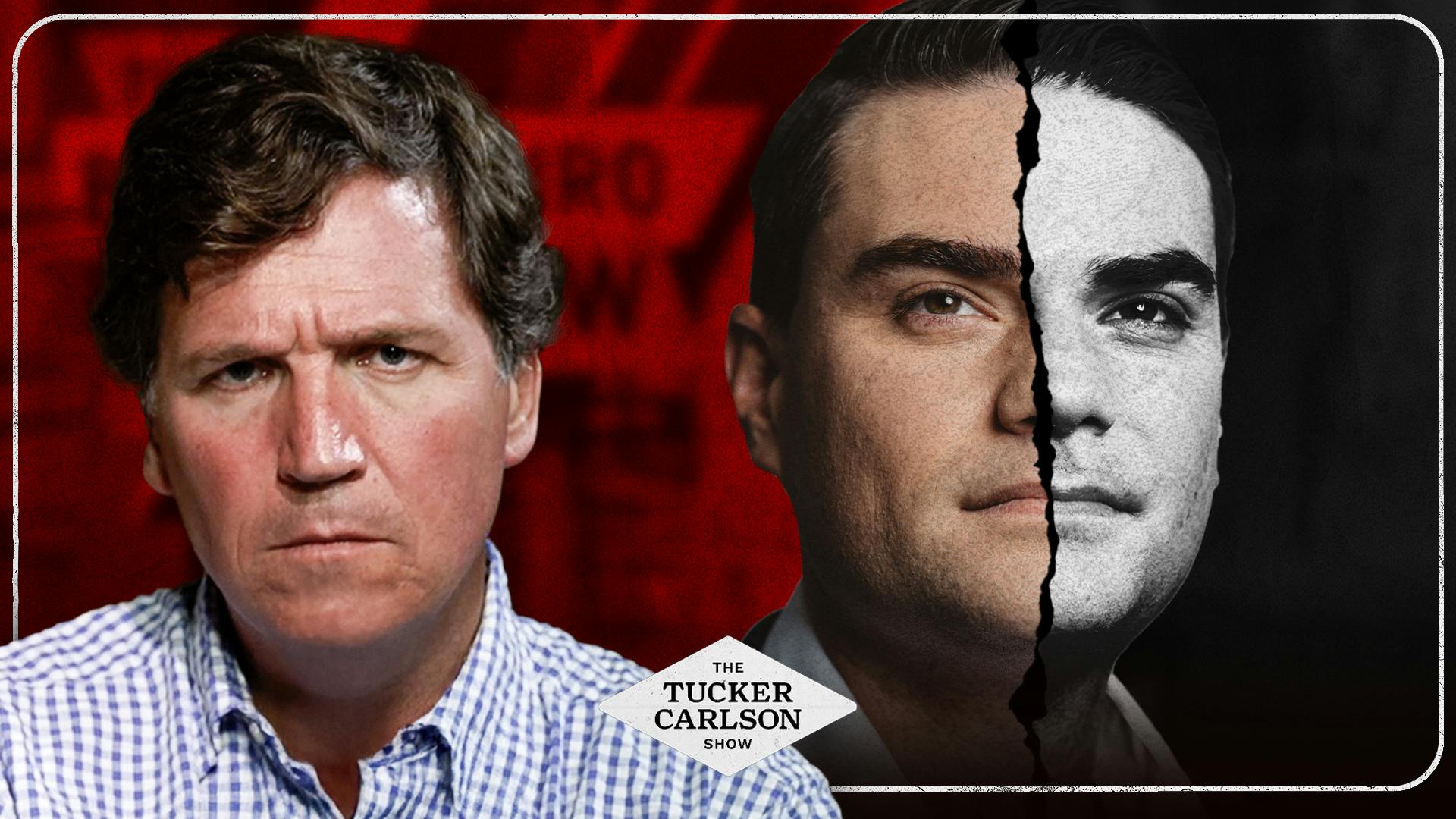
The Tucker Carlson Show
Tucker Carlson on the Israel First Meltdown and the Future of the America First Movement
01:47:32
Loading summary
Transcript97 lines
- [00:02]
Anna Kasparian
This episode is brought to you by Netflix from the creator of Homeland. Claire Danes and Matthew Rhys star in the new Netflix series the Beast in Me as ruthless rivals whose shared darkness will set them on a collision course with fatal consequences. The Beast in Me is a riveting psychological cat and mouse story about guilt, justice and doubt. You will not want to miss this. The Beast in Me launches November 13th only on Netflix.
- [00:28]
Russell Brand
Pretty much every morning you wake up and open your phone and think to yourself, I wonder if this roiling fight on the right is still ongoing. The fight over who's a Nazi and who's Nazi adjacent and who should be platformed and who should be de platformed. That fight, the one that has mesmerized X users across the world. What is that fight actually about and how long will it continue? Well, the first thing to know about it is that it didn't start three weeks ago with Nick Fuentes appearance on a podcast. No, this has been a fight taking place mostly behind the scenes since January, and that tells you a lot about what it's actually about. So here's how it began. Donald Trump inaugurated January 22nd of this year almost immediately after he is visited at the White House by the first head of state to come to Washington, the Prime Minister of Israel, Benjamin Netanyahu. And the visit is not simply a congratulatory visit. They're not actually allies in any sense. Remember that Benjamin Netanyahu was one of the very first to congratulate Joe Biden after the 2020 election. So there's probably not a lot of warmth there. Just guessing. No, there was a purpose to the visit and the subsequent visits by the prime minister of Israel to Washington, and that was to get American support for regime change, war in Iran, to overthrow and replace the government of Iran, which the nation of Israel sees as its primary regional threat. Iran has all kinds of very dangerous conventional weapons. The United States spends a lot protecting Israel from those missiles. And Israel is also concerned that at some point Iran will either make or buy a nuclear weapon, leaving Israel no longer the only nuclear armed nation in the region. So that's what it's actually about. And to be honest, you can see from Israel's point of view, if you're trying to identify long term serious threats to you, Iran would be at or near the top of the list, especially since Israel has taken out almost all the other threats. So really, it's just Iran. The question is, is it in America's interest to participate in that war? And make no mistake, Israel wouldn't last three days in a war by itself against Iran. In fact, probably not even 24 hours, Israel's population centers would be taken out by Iran's conventional weapons. And at that point the Israeli government could either nuke Iran, starting a chain reaction that, you know, you can't really predict once it begins, or allow hundreds of thousands of its own citizens, certainly tens of thousands, to be killed. So Israel could not do it alone. And no honest person suggests or would suggest that it could. It needs the United States. So the question from the American perspective is is it good for America to get involved in yet another Israel inspired regime change war in the Middle East? There have been quite a few, most notably Iraq. Is that a good idea? And so that debate began, and it mostly began behind the scenes. It didn't sort of peek out into public view very often, but when it did, the people who wanted the regime change war against Iran, almost, with almost zero exceptions, almost never admitted what they actually wanted. And they certainly never acknowledged what the debate was actually about. It was about one nation's interest versus another nation's interest. Do those interests convene? Are they the same thing or are they at odds with each other? I can see what be a good idea for Israel to want. This is a good idea for us. That's the debate that never took place. And it didn't take place because almost from the beginning, the people who wanted regime change war with Iran made the debate instead about why do you hate the Jews, you're a Nazi. And of course that was never with. The debate was about because Israel, the nation of Israel, the one with the parliament, the Knesset and the military, the IDF and lots of people and tech firms, and is not by the way, exclusively Jewish. And it isn't actually the same as all Jews in the world at all. And in fact there are a lot of Jews around the world who have mixed feelings about Israel or certainly don't want a regime change war in Iran. But the people who do want that in the United States, Israel's proxies in the United States, its defenders, its professional defenders in the US immediately made the debate about the Jews. It wasn't the anti Semites who did that, actually, it was the defenders of Israel in the United States, not all of whom are Jewish. To be clear, they're the ones who made the debate from the first day, why do you hate the Jews? And so for those who were hesitant to get into another regime change war, it's intimidating because you're happy to have a debate any time of day about what's in the interest of the United States. When should we project military force? What can we learn for the last 25 years, et cetera, et cetera. And you probably win that debate because there's no evidence that any regime change war we've engaged in in the past couple of generations has helped us. Zero evidence. And everyone kind of knows that, including the President, United States. But if you make it a debate about why do you hate the Jews, then most people are going to opt out because they don't want to deal with it. Most of them don't hate the Jews, you hope. No evidence that they do. But nobody wants to be tarred as a bigot. And so very few people pushed back. Very few. In fact, as far as I know, only two people, me and Charlie Kirk actually went and spoke directly to the President to make the case that, no, you shouldn't get involved in this war because its aim is not actually to deny Iran a nuclear weapon. That may be a virtuous goal, but. But that's not really what this is about. What this is about is luring the United States into yet another regime change war. And if you do that, it's bad for everybody, including you. That's the case that we made. Charlie went to the White House to make that case. And God bless him for doing that. And he was hated for, hated for doing that, hated for doing that, but he did it. Very few other people did. In fact, as far as I know, none. So of course, in June, the debate ended and the United States did commit military force to Iran. It bombed Iran and spent billions to protect Israel once again from the inevitable, the predictable conventional response from Iran, et cetera, et cetera. And in the end, thank God, we did not get lured into a regime change war. But the bitterness lingered and the total unwillingness of the people pushing for that war to state their aims, to be honest about what they wanted and to defend what they wanted remained. They understood from the very first day that they could not win that debate. They didn't want that debate. They wanted another debate where they felt they could win or at least cow their opponents into total silence. And that debate was about, quote, the Jews, anti Semitism. And again, this is a country that hasn't had a lot of anti Semitism. Decent people are not anti Semitic. Christians understand that anti Semitic behavior or thoughts, attitudes are unchristian because Christians are universalist in their thinking. And every person has the capacity to come to God through Jesus. Every person, no matter how they were born. And so of course, no sincere Christian could be an anti Semite. And no sincere Christian would ever defend anti Semitism. In fact, he would call it out as he would racism or any form of discrimination on the basis of blood. He would call it out immediately. So this was never about anti Semitism, despite the fact there, of course, are anti Semites and all kinds of other people in this country. There are 350 million of them. But this debate was not about the Jews or antisemitism. It was about when to use military force and to what extent should you follow the lead of a much smaller nation as you think about your own nation? And for a lot of people, this was enormously frustrating since Donald Trump was elected for the second time last November on a platform that explicitly promised, and this is why he was elected, to help the United States, which is in tough shape and getting worse, and everybody knows that. And all of a sudden, this foreign prime minister shows up and starts hijacking the attention and the money of our country to his ends. And that could be any prime minister, by the way. It happens to have been Benjamin Netanyahu. But conceptually, that's outrageous. And people were justly upset about it. Absolutely, they were upset about it. So where will this go? Well, of course, the people who think the US Government should act always and everywhere on behalf of its own citizens, the America first people, those people are going to win the debate. In fact, there's never actually been a real debate. But when people's mind fog clears and they can think about what just happened, they'll understand that this was never about the Jews or anti Semitism, much less Hitler, who's been dead for 80 years as of April. No, it was about should the United States act in its own interests or should it subvert its own interests on behalf of a foreign power with a very effective lobby in Washington. That's exactly what the debate is. And the answer, of course, no. So the America first people are the people who just think the government should serve its own citizens, which, let me remind you, is the only legitimate rationale for representative government. In other words, if the government is not representing its own citizens, if it doesn't care about its own citizens, it's not only off track, it's illegitimate. It has no basis to govern because it's a representative democracy. So you are morally bound, you're legally bound to represent your own people. That's the only purpose of having a government in our country, is to represent our people. And if you're not doing that, you're not legitimate. So they will win and in a year or two, we're gonna look back on what we've been watching for the last month or last eight months, and we're gonna realize this is exactly like BLM or MeToo. You know, at the core, there may have been a point, but basically, it's buffoonery. It is an effort to divert your attention from the real crisis. And we're going to wonder, wait a second. Since when did the institutional right, conservatives, people who run the think tanks and the dumb little magazines nobody reads, and the people of Bloviet on Fox News, since when did those people become completely committed to identity politics and censorship? Because they are committed to identity politics. That's what this is. It's identity politics. Of course, it's group over nation. Of course, it's another country above our country, a tiny country, an irrelevant country over our country. And people are going to look at that and say, wait a second. We thought, in fact, we voted for you because we thought that the two things we could be assured you believed were you were against identity politics. You lectured us about woke for, like, 10 years. You're against woke because you're against identity politics. You're against tribalism, and here you are not only embracing it, but using it as a cudgel to hit people in the face. And maybe even more shocking, we knew for a fact you were against censorship. I mean, isn't that the whole point of the Trump election? We're against censorship. You can't censor people in a free society. You can't have censorship in a democracy. How will you have the information required to vote? Censorship is totally incompatible with Democratic government, period. And it's also, by the way, illegal under the First Amendment to the Bill of Rights. And Republicans just won an election on that platform. And all of a sudden we learn there's really nobody in the world more excited about censorship than a neocon podcaster or a National Review staffer. They just love it. People aren't going to forget that. And in a year or two or five years or whatever, we're going to look back as we do on Covid and the BLM riots and the MeToo movement, and we're going to ask ourselves, how do we fall for another moral panic, another social media driven moral panic? How did everyone go insane all at once, denouncing each other and denouncing old friends, but clowning themselves because they're caught up in this moment and they can't see that they're betraying the very principles they claimed, like, six months ago, they would give their lives for. And those people are going to feel shame and many of us will feel contempt for them more than we already do. So that's going to happen. They can't win this debate. It's not actually a debate, it's them name calling. So that's going to happen, rest assured. But in the meantime, the rest of us have to listen to an awful lot of a man who a year ago was unknown to most Americans, kind of a third tier podcaster, TV host or radio host or whatever. A guy was a weekend show on a cable channel, a guy called Mark Levin. And for the last month we've been watching Mark Levin say things that no one in my lifetime has ever said from the right, like this. Watch.
- [13:04]
Mark Levin
I don't know where there's Jew hatred from the Marxists, the Islamists, the neo Nazis, the Grifters. I don't know where they're pulling us and pushing us. What do they want to do with American Jews? What do they want to do? Where are they taking this country? They're destroying it. Carlson, Owens, Kelly Bannon. It is a time for choosing. You pick the good guys or the bad guys. You pit America or you pit the Third Reich. They're not maga, they're not conservative. In fact, they're more Marxist, Islamists, America hating, Jew hating thugs than anything else. Let me educate them briefly. The Babylonians couldn't kill the Jews. The Persians could not kill the Jews. The Romans could not kill the Jews. Hitler could not kill the Jews. And by this I mean eliminate them. You think your puny little asses are going to be able to do it?
- [14:36]
Russell Brand
Kill the Jews? Your first thought is wait a second, how do we get to that? No, just don't want a regime change war against run by the way, a war in which Jews would die presumably both in the US military and the idf. Like no, don't want to kill anybody. Actually, that's kind of the point. You want to kill the Jews. So the first thing you notice is like the total inversion of what the argument actually is. It's an argument about to what extent should US military power be used on behalf of another country, not the United States. That's it. That's the debate. And all of a sudden it becomes the Babylonians, the Nazis trying to kill the Jews. So again, it's an inversion. He's accusing his opponents of really what he wants, as always. Well, this Christmas give the gift of sleep with eight sleep. Everybody needs good rest for most of their days, but few know how to actually get it? Eight Sleep's Pod 5 is the answer to that. Pod 5 is a smart mattress that automatically regulates your body temperature throughout the night. It's proven to deliver up to an extra hour of good sound sleep every single night that will change your life if you get it. Plenty of people on our staff use the pod 5 and they are very psyched. That's why they're so focused and well rested. I can see them humming around right now. The full body feeling of comfort. That's what keeps you in the sack and fully crashed out. We Recommend it strongly. 8 Sleep they're running their biggest sale of the year this month from November 10th until December 1st. That is.8sleep.com Tucker the code is Tucker 700 bucks off. There's a reason it has won the Men's Health Sleep award. It's the best8sleep.com Tucker Hate to brag, but we're pretty confident this show is the most vehemently pro dog podcast you're ever gonna. We can take or leave some people, but dogs are non negotiable. They are the best. They really are our best friends. And so for that reason we're thrilled to have a new partner called Dutch Pet. It's the fastest growing pet telehealth service. Dutch.com is on a mission to create what you need, what you actually need. Affordable quality veterinary care anytime, no matter where you are. They will get your dog or cat what you need immediately. Immediately. It's offering an exclusive discount. Dutch is for our listeners. You get 50 bucks off your vet care per year. Visit dutch.comtucker to learn more. Use the code Tucker for $50 off. That is an unlimited vet visit. 82 a year. 82 bucks a year. We actually use this. Dutch has vets who can handle any pet under any circumstance in a 10 minute call. It's pretty amazing actually. You never have to leave your house. You don't have to throw the dog in the truck. No wasted time waiting for appointments, no wasted money on clinics or visit fees. Unlimited visits and follow ups for no extra cost plus free shipping on all products for up to five pets. It sounds amazing. Like it couldn't be real, but it actually is real. Visit dutch.comtucker to learn more. Use the code TUCKER for 50 bucks off your veterinary care per year. Your dogs, your cats and your wallet will thank you. You may have noticed this is a great country with bad food. Our food supply is rotten. It didn't used to be this way. Take chips for example. You may recall a time when crushing a bag of chips didn't make you feel hungover, like you couldn't get out of bed the next day. And the change of course is chemicals. There's all kinds of crap they're putting in this food that should not be in your body. Seed oils, for example. Now even one serving of your standard American chip brand can make you feel bloated, fat, totally passive and out of it. But there is a better way. It's called masa chips. They're delicious. Got a whole garage full of them. They're healthy, they taste great. And they have three simple ingredients. Corn, salt and 100% grass fed beef tallow. No garbage, no seed oils. What a relief. And you feel the difference when you eat them, as we often do. Snacking on masa chips is not like eating the garbage that you buy at convenience stores. You feel satisfied, light, energetic, not sluggish. Tens of thousands of happy people eat masa chips. It's endorsed by people who understand health. It's well worth a try. Go to Masa M A S A chips.comtucker. use the code tucker for 25% off your first order. That's Masa Chips Tucker. Code tucker for 25% off your 1st order. Highly recommended. The second thing you notice is how totally personal this is. You're members of the Third Reich, you're Nazis, you're evil, you're an Islamist, you hate Jews, you're an anti Semit, you hate America. Okay, none of, I mean, that's ad hominem. There's no even attempt to address the argument that anyone Mark Levin doesn't agree with is making. Instead, it's just attacking them as people. And the third thing you notice is what animates this, which is hate. Mark Levin is filled with hate, obviously. And hate is one of those words that is thrown around a lot as a weapon. You're filled with hate. That's hate. It's hate speech. Therefore you can't say it, et cetera. But that doesn't mean, just because the word itself is used cynically, that the term doesn't describe anything or that hate isn't real. Hate is absolutely real. Hate is absolutely real. And if you listen to enough Mark Levin, you yourself can become hateful. Reacting against it can turn you into what he claims you are. And that's just a fact of human nature. You stick your face right up against this. After a while you will become hateful. All of us, even people who are committed to not being. It happened to me last week, last week, a week ago. Tonight I'm sitting On stage with Megyn Kelly at an event she was doing in New York. And I think Dick Cheney had died that day. And I knew Dick Cheney, obviously, and he had died. And I disagree with Dick Cheney, but I'm not going to criticize a man on the day he dies. Just not going to do that because I have reverence for death. But I had a lot of emotion on the topic. And so I said a few nice words about Dick Cheney. He was a great fly caster or whatever. And then I started thinking about his daughter, Liz Cheney, who I also know and have disliked for intensely for quite some time because she slandered me and because I think she is a violence espouser. And I disagree with that and I have contempt for it. But rather than say that, I just attacked in a vicious way Liz Cheney. And I said something awful about Liz Cheney. Actually didn't explain why I was mad at Liz Cheney. I just slandered Liz Cheney, basically. And I said that her father would be ashamed of her. And if I had a daughter like that, I'd probably kill myself. Which is an awful thing to say. It's kind of hard to believe I said that. But in my mind, I was thinking of all the people I dislike, Liz Cheney would probably be at the top of the list. And so therefore, because I dislike her personally, because I know her personally, and because I so disagree with everything about her political views, I'm the opposite of Liz Cheney. If you were to graph it out, it would be, I'd be on one side, Liz Cheney, or the other. Because we disagree so profoundly. I told myself, clearly, I must have told myself that you could say anything you want about Liz Cheney. She's not really human. You can say anything you want, including something really awful and nasty, like if I was her dad, I would kill myself. Who thinks like that? Who talks like that? Well, I did. And so I just want to say I'm sorry to Liz Cheney. And I mean that too. I mean that I shouldn't have said that. I'm sorry I said that. I'll. I will not stop disagreeing with Liz Cheney until she changes her views. I hope that she does. But there is never an excuse to talk about people like that. And that kind of is the trap here. Mark levin is almost 70 years old. You know, I mean, no one's going to eat the dog food here, okay? That is not a message anyone's going to buy. So the fear is not that Mark Levin will take over American politics. That's not going to happen. The fear is that we become Mark Levin. By staring at Mark Levin too much, we become him. Another way of putting it is the fight is not against Mark Levin and the many Mark Levin's out there, the screamers, the slanderers, the impugners of character, the liars. The real fight is within ourselves. The real fight is against our own nature, our own natural inclination to in the face of Mark Levin, become Mark Levin. And the cost is to us. You hurt yourself, don't become evil, because what's the point? What is the point? And the only way to prevent yourself from becoming that person is by admitting that you've acted like that person and apologizing for it sincerely, not in a fake way. Well, I'm sorry if you didn't like it. No, I'm sorry because that's wrong. And it's exactly what I don't like about someone else. And I don't like it about myself when I do it. And I'm gonna try not to do it again. And of course I will do it. Probably by the end of the show, I'll do it again because I'm prone to that, because I get mad. But we need to say every single time we do that, no, I'm sorry I did that and I'll try my best not to do it again. So really, just to keep in mind, as things heat up, don't become the people you despise. Or else what's the point? We wind up. I mean, the Second World War is that story. We're fighting for freedom, but we're arming Joseph Stalin to do it. Really? We sent more money and airplanes and tanks and jeeps and boots and food to Joseph Stalin, the greatest mass murderer in history, in order to bring what freedom to the world? It's not a defense of Hitler, of course, but that's shameful. The Roosevelt administration did that with a full support of his party. It's like, don't become the thing that you hate. That's it. And if you don't do that, if you allow yourself to get carried away so mad that you start mimicking the hate that's coming at you, what happens? Well, of course it flowers into violence. Like that's inevitable. We're very close to that now. In fact, we're there in some ways. It's happened. We just. We're still talking about a political assassination, a friend's political assassination. On September 10, Charlie Kirk was murdered because of this. So it can happen and it will happen unless all of us prevent ourselves from becoming that by the way, you can't control other people. All you can do is control your own behavior. So if you act like that, apologize for it. I'm going to really try and do that. But we are absolutely moving toward violence, and it should be really clear. That's the other thing, is you don't want to espouse violence, because where does it go? It always begets more violence 100% of the time. September 11th led to millions of deaths in the Middle East. Yeah, October 7th led to Gaza. Like this all. Once the violence begins, you can't predict its course, but you can be fairly certain it will accelerate. And when that happens, all calculations change and people change and the feud becomes irresolvable and more people die. And that could happen in our country. So the only way to stop it is by controlling your own behavior so you yourself don't become evil. So Mark Levin is already there. And we know that because Mark Levin has repeatedly, and he's not the only one, but he's the most blunt, has repeatedly called for just murdering civilians and children in Gaza because they're Amalek or whatever. They're stained by blood guilt. Prime Minister of Israel said exactly the same thing. They are guilty by virtue of how they were born. So that by definition includes women and children. So Mark Levin is not clever enough to keep the implications of these views to himself, and he said them repeatedly on television. Just to give you a sense about how Mark Levin feels about human life and the human soul, watch this.
- [26:49]
Mark Levin
And I'm supposed to what? Shed crocodile tears for what's going to happen to these people? I'm not. Maybe I'm the only one who will voice it, but I'm not. Israel has every right to throw every damn thing it has at barbarians. And if there are innocent people, quote, unquote, civilians who are killed, then maybe they ought to organize to take out the government they elected. Tapper and the others are saying there's 2 million Palestinians in Gaza. They're not all terrorists. They don't all believe in Hamas. They really have no choice. Let me ask you a question. Is that how we treated the German people when we were fighting the Third Reich? Well, they're not all Nazis. I mean, you gotta fight to win and survive. You can't sit there and figure all that stuff out. Oh, but don't hurt the civilians. Look, we have to defend ourselves. The Israelis have to defend ourselves. The free world has to defend itself. And if there's collateral damage, well, that's too bad.
- [28:08]
Russell Brand
25 years ago, in this country, People didn't talk that way. They didn't. It was a different landscape, different expectations. The idea of blood guilt, because that's what he's describing there. You should be killed by virtue of who your parents are, who your grandparents were. By virtue of how you were born, you should be killed. You don't have a right to live. You're guilty because you were born. Which, of course, leads to collective punishment and genocide. That's the basis of genocide right there. That attitude that was considered totally unchristian and un American, because it is. And if someone said something like that on television, I mean, he'd be probably pulled off the air for that. You should kill kids because you don't like their parents. That is their attitude. That's the Israeli government's attitude. Well documented attitude. We're paying for that. And you could say, well, you know, you don't have to hate Israel, but that behavior is not better than Hamas at all. In fact, it's kind of the same, right? Killed civilians. They came in and killed people at a music festival. Bibi, turns out, let them in. We found out today in the Knesset. But whatever you think of what happened on October 7, you know, Israeli civilians were killed. That's terrible. We're against that. We have to be against that. And we're no better than the people we're fighting. Of course. What is the difference between us and them? We're in different groups. That's not a meaningful difference. The difference is we're committed to a set of Western principles, and those principles begin with, we reject blood guilt. And because we do, we reject collective punishment and genocide. A lot of us thought that was a consensus after World War II. That was the lesson of the Nazi regime. Should have been the lesson of the Soviet regime, which, of course practiced collective punishment and committed genocide against Christians. Most people don't even know that it did more efficiently than Nazis did. But all of it is terrible. All of it is awful. And a lot of us thought that was the main lesson that we were supposed to take away from the war. And by the way, that's a great lesson. That's an excellent lesson. We should take that lesson from the Second World War. And then you wake up and there's Mark Levin. Not just Mark Levin, but our policymakers, our members of Congress. Most of them are not Jewish, by the way. This, like, infected everybody. That's okay. It's not okay. It'll never be okay. It's a shame. It's shameful behavior. It's a stain on this country. You can't fight people unless you think you're morally superior to them. You shouldn't be. And how can you say you're morally superior if you're operating from the same assumption, which is that everyone on the other side should be killed because of how they were born. But that is absolutely Mark Levin's assumption and he said it out loud. Look at this Twitter exchange. Watch this. She's basically saying, I don't understand, like why we're getting involved in all this stuff. And Mark Levin is saying, well, you're a Nazi. And someone writes in and says, mark, I'm not even, you know, I may be on your side or not, but what you're saying is actually creating anti Semitism. And he's saying, and I'm quoting, anti Semitism is quote in your family's DNA. Who thinks that? Who would say something like that? Streaming November 16th on Paramount. Plus it is the return of Landman, a product of the co creator of Yellowstone. This shows television's biggest phenomenon and for good reason. Academy Award winner Billy Bob Thornton is back as Tommy Norris and managing higher stakes than ever before. Featuring a loaded cast including Academy Award nominees Demi Moore, Andy Garcia, Sam Elliott, Landman is pretty exciting for a TV show, honestly. In the wake of his former boss's passing, tensions come to a head as Tommy and Debbie Moore's Cammie Miller struggle to maintain control of Emtex Oil, the company at the center of the drama. And with his father coming back into his life, Tommy must juggle both his role as an oil man and a family man. As worlds collide, a familiar story but never better told than in this hit series. A lot of people are watching this and for good reason. Landman new season streaming November 16th only on Paramount.
- [32:22]
Anna Kasparian
Kay Jeweler's early Black Friday sale is happening now. Get up to 50% off Black Friday deals and up to 40% off everything else. Don't miss this sale. Start your season with savings only at K. Exclusions apply. See k.com exclusions for details. If you used Babbel, you would Babbel's conversation based techniques teaches you useful words and phrases to get you speaking quickly about the things you actually talk about in the real world. With lessons handcrafted by over 200 language experts and voiced by real native speakers. Babel is Bible is like having a private tutor in your pocket. Start speaking with Babbel today. Get up to 55% off your Babbel subscription right now at babbel.com Spotify spelled B A B B E L.com Spotify rules and restrictions may apply.
- [33:08]
Russell Brand
Guilt or virtue are not in your DNA. We don't believe in a chosen people, and we don't believe in a damned people, period. We don't believe that in the West. We don't believe that some peoples are inherently better or worse than other peoples. We believe in individuals, in the capacity of every person to make individual choices and change for the better or the worse. And on that basis they are judged, but not on how they were born. And if we don't believe that, if we think that some people are just, like, inherently bad because their DNA, as Mark has said and a lot of other people like Mark have said, then what's the point of all, you know, what's the point of all of this? At that point, it's just like, well, my group has more guns than your group and we're in charge. That attitude gets people killed and it rots your soul. That's why we say anti Semitism is bad in the first place, isn't it? You can't judge a whole group of people by how they were born, by their genetics, by their DNA. But there's Mark Levin doing it. So it shouldn't surprise you that, of course, if you have those attitudes and you think there are Americans, and he clearly does, whose DNA makes them less than human, unsalvageable, inherently evil. Well, it shouldn't surprise you that he'd be calling for violence against them. And he is. And this isn't like your kind of classic like, oh, everyone's out to kill me. I'm so important. I despise that. But it's a fact. And we know that from what he says. So here's Mark Levin about two weeks, in fact, I think exactly two weeks after Charlie Kirk was assassinated and he was trying to explain how this happened. How did Charlie get killed? Here's what he said.
- [34:53]
Mark Levin
The call to violence. That's what it is. You're calling people Hitler. It's a mass murder. You're treating ICE like it's the Gestapo or the ss. Then you're free to shoot them.
- [35:09]
Russell Brand
There you go. You call people Hitler. They get killed, right? You torque up the rhetoric to, we've all decided Hitler's is the worst. Okay, great. Hitler's bad for sure. So once you call people that, you liken them to the person we collectively agree is the worst person ever. Person we collectively agree. If you had a chance to kill baby Hitler, you would. Then why wouldn't you kill the people who are Hitler? In your own society, you probably wouldn't. You'd feel justified in doing it. And that was the point. He was making a fair point. You know, you hope it's not used to censor people. You're allowed to have ugly thoughts, by the way. They're constitutionally protected. But you should be discouraged from it, for sure. And as Mark Levin just said, they lead to violence. Calling people Hitler leads to violence. Wow. Well, since that's his description, in his terms, consider this clip.
- [35:59]
Mark Levin
About a month later, I would ask some of these people who say, look, I'm gonna stand by Tucker. You know, he's just inquisitive. He likes to have these people on and ask them questions. Really? But I'm not going to platform them.
- [36:14]
Russell Brand
No.
- [36:17]
Mark Levin
So Tucker is a racist. Is that okay? First of all, how many of you have friends who are racists? Isn't that a fair question, Mr. Producer? How many of you have friends who are racists and are proud of it and talk about it on a national platform? This is what I get. Now will you debate him? Will you debate Tucker Carlson? I don't debate the Klan. I don't debate Nazis.
- [36:42]
Russell Brand
I don't debate Nazis. He texted me that Pure Talk customers are proud of their wireless company. Think about that. You never hear anyone with Verizon or AT&T say, I'm really proud to use Verizon or AT&T. No. They're a little embarrassed. They might be satisfied with the service, but feeling proud? No, probably not. And there's a reason Americans with PureTalk feel proud to use PureTalk. It's not some soulless global corporation with call centers in Pakistan or Bangladesh. It's an actual American company built by Americans on American values. And they work to support veterans. This month, PureTalk is using a portion of its sales to support K9s for warriors. It's an organization that rescues and trains dogs, then pairs them with veterans. And there are many who are struggling with ptsd. It's a great mission. As a veteran led company, Pure Talk is happy to partner with them and many others like them. So choose a wireless company that shares your values with plenty of Talk, text and 5D G data for 25 bucks a month. Actually, 25 bucks a month. So you can save a lot too and feel good about doing it. Visit puretalk.comtucker to make the switch. Today it's puretalk.comtucker and switch to America's wi. So you probably got Verizon at and T T Mobile. That means you are definitely way overpaying for wireless service. And we're not just saying that. It happens for a reason. When you join a massive cell phone company, you get charges to support everything that their operation is doing. And that's a lot. Big corporate programs, huge HR departments, thousands of retail stores you're never going to visit. You think your money is going toward getting better cell service, 5G services service, but it's not. So the wireless company we use, PureTalk, is very different. They use exact same cell network as the companies we just mentioned, but they don't do any of the other garbage. And for you, that means $25 a month for your phone's data plans. Actually $25 a month. You'll be amazed. Switch to PureTalk. It's super easy. Visit PureTalk.com Tucker and you save an additional 50% off your first month. PureTalk.com Tucker it literally takes minutes. It's America's wireless company. Where do you keep your most valuable possessions? Not your necktie or a pair of socks, but things you wouldn't want to replace or maybe couldn't. Heirlooms from your parents, your birth certificate, your firearms, your grandfather's shotgun. Where do you store those? Under the bed? In the back of a closet? That's unwise and maybe unsafe. Liberty Safe is the place to store them. I would know. I have a colonial safe from Liberty Safe. It's in my garage. It's the best. I keep everything in there. It's a Proflex system. Allows you to design the inside of your safe in a way that works for you. It's not a fixed setup. Someone else puts the shelves in. You have to deal with it. You make it the way you want it. Have a stock of rifles. You can make room. Need more shelves for handguns, for documents, for valuables, for gold. You can do whatever you want. You can refigure your safe in minutes. Maximum flexibility, maximum convenience. Liberty Safe is America's number one safe company made in the United States. Great people. I know them. Visit libertysafe.com use the code TUCKER10 at checkout for 10% off Franklin and Colonial safes featuring the Proflex interior that you customize. You're going to dig it. We definitely plus are good looking. I will say careless company. Pure talk. Almost didn't want to address this because you never want to make anything about yourself. It's another way in which you can very easily become Mark Levin. Start talking about yourself all the time. Your family, your people. No, if you're interested in improving the country, you should be talking about all people in the country. It's not just about you or your people, whoever they are. It should be about everybody. That's the universalist spirit without which this country can't continue. Just to be clear. It'll break apart, of course, into warring groups. But the basis of racism and antisemitism and all forms of bias that we abhor, forms of bias that treat people as members of groups rather than individuals, all emanate from the same idea, which is you're born a certain way and you can't be fixed. You have blood guilt. And that's why it's bad to call people Nazis. And here is Mark Levin calling people Nazis. Well, in this case, me. So what is that? Well, that's of course a call to violence. And it's not just me. We compiled a list of all of some of the people on Twitter Mark Levin has referred to. This is. These are all recent. Nazi, Nazi. Nazi. Bastard. F off. Nazi. Nazi. Nazi. Nazi. Finally, somebody, somebody writes in on Twitter and says, and we're quoting, this is Mark Levin's 12th post today that's related to Israel or its critics. I know he's Jewish and sympathy for Israel is understandable, but this now borders on obsession. To which Mark Levin responds. Nazi.
- [41:38]
Anna Kasparian
Nazi.
- [41:41]
Russell Brand
You should pause before you call people names like that. And I should just say, because righteousness is a goal, self righteousness is a sin. I don't want to be self righteous. I've certainly called people things they didn't deserve. I've leveled ad hominem attacks on people. I did against Liz Cheney. I apologize for it. I meant it. But we shouldn't let ourselves go in this area. We should force ourselves to treat other people like human beings with sincere disagreements or insincere disagreements, but still agreements that we can debate. Because once you start calling people Nazis, we really have no choice but to start shooting them to be Dietrich Bonhoeffer and sort of reach the end of reason or even Christianity. Bonhoeffer decided we Christianity is not even. He was a Lutheran pastor. Christianity is not enough. We have to kill the guy. Not judging Bonhoeffer, who was a great man in some ways. But that's inevitable once we decide that people are Nazis. So you kind of have to wonder why they're doing this. And of course it's because when you call someone a Nazi, and maybe Mark Levin's case, he believes it, you immediately freeze them in the headlights of your slur. Nazi, Nazi. You deter people from arguing with you because no one wants to be called a Nazi. But you also, for the bystanders who aren't even directly part of the debate. You draw their attention away from what the debate is actually about. In other words, for every moment that we're arguing about who is and who is not a Nazi, answer. Really? Nobody. The Nazis have been gone for 80 years. Sorry. But for every moment where they're having that debate, we're not debating the things we ought to be debating in this case. Should we use military force on behalf of a small country and totally irrelevant country? That's a fair debate. We're not having that debate. We're screaming about who is a Nazi, who's not a Nazi. So I guess the thing that we can learn from Mark Levin in this case is if you have a position, argue that position. Levin doesn't want to argue his position. It's very hard to defend. So he won't defend it. He'll just attack. But the rest of us who have a sincere position about America's relationship with Israel and the damage it has done to the Trump coalition, which it's like we're watching it be destroyed very unfortunately, those people should argue what they believe and not get caught in this trap of identity politics. Who's a Nazi? Was a right to speak. Buzz off. No. AIPAC is a foreign lobby. It should register as one. Our country should come first in the thinking of every person represents our country. Those are the debates that we ought to be having. So the next lesson that we should learn from this contretemps is that you can't allow other people to define your priorities. You are an adult. You are an American. You have the right to decide what matters to you. If you're having trouble paying your health insurance, or if you think divorce laws are unfair in this country, or if you think chemtrails are a problem, if you don't like fluoride in the water, if you think there should be a cap on credit card interest, whatever the issue that matters to you, first and foremost, you have a right to feel that way. No one should be allowed to talk you into adopting their enemies as your own. There are a ton of people in Washington who think the single most dangerous person in the world, most evil person who's ever lived, is Vladimir Putin. Some of them really think that. A lot of them are getting rich by saying it, but a lot of them do believe it, because I know them, I know they feel that way. It's sincere. But as a percentage of the country, what percentage of the country actually puts killing Putin at the top of its priority list, like, less than 1%. It's just not a problem for most Americans who runs Russia, but it's a huge problem in Washington. So Washington, for a couple of years there, succeeded in convincing the rest of us to either adopt their priority. Putin is the most important thing. We have to stop Putin, or shut up about it. Because if you don't, you're an agent of Putin basically bullied the country into accepting their list of priorities. And the election of Trump was really a refutation of that. It was tens of millions of voters saying, no, actually, we. Our problems need a hearing. Someone needs to care about our problems. It's not just about you and your little parochial squabble. They're telling us now that Iran is the biggest problem we've ever had. And if you question that, like, how many Americans have been killed on American soil by Iran as compared to the number of, I don't know, killed by Mexico, which brings all our fentanyl in, not Venezuela, Mexico. You get attacked as an agent of the mullahs, and the way to think about this is, who cares? Your priorities are every bit as important as Mark Levin's because you are a co. Equal with Mark Levin, because you're also an American citizen. He gets one vote. You get one vote. That's our system. So Mark Levin could scream at you all he wants until you must really care about affecting regime change in Iran. It is absolutely okay. In fact, it's your duty to say to Mark Levin, I don't really care. I can't afford my health insurance. Our leaders should solve that problem. And you'll be joined in that by, like, 150 million other Americans who agree with you, who can't find Iran on a map. They're not pro Iran. They're not Shiite Muslims, but they have real problems, and they want a hearing for those problems. They want someone else to care about those problems. That's okay. And it's interesting because people like Levin and Ben Shapiro, who at one point had this, like, media empire propped up by Facebook, the Daily Wire with some good people on it, you know, it's fine. It's fine. But Ben Shapiro spent, I don't know, a decade posing as someone who actually cared about your concerns as an American. He did it imperfectly. There were flashes that he didn't really care, but he's like, no, no, I'm a conservative. I'm a conservative. I'm not just interested in the fortunes of one tiny country in the Middle east with a population of 9 million. No, I have a lot of interests. I really care about this country, and I'm against the trans movement or whatever. But increasingly, as everyone's gotten more hysterical and prone to sort of blurting out the truth, that veil has dropped. And you can see what Ben Shapiro really, really cares about. So this is a very revealing exchange that took place six days ago, last Thursday, on stage with Megyn Kelly. Ben Shapiro was just sitting there being interviewed by Megyn Kelly and said something. He said something like, well, Tucker Carlson's, you know, for Maduro. Maduro, the communist leader of Venezuela who I guess were on the way to killing or something, forcing out, regime changing him. And he defended Maduro. Didn't actually. And Megyn Kelly says, well, Tucker said in his show that Maduro. Most people didn't know this. Whatever his many faults, I wouldn't hire him as an economist, okay? But whatever his many faults, has the most socially conservative country probably in the hemisphere. So Venezuela is just a fact. I mean, I didn't make this up. I'm not in charge of Venezuela. Just noticing that Venezuela has banned pornography, banned abortion, ban gay marriage, banned sex changes, and banned usury. You don't have credit cards with 40% interest in Venezuela. Okay. Ben Shapiro responded this way.
- [49:25]
Anna Kasparian
Tucker's made the point. I'm not here to be Tucker's defender, but he's made the point that Maduro is culturally conservative.
- [49:31]
Ben Shapiro
Who gives a shit? The guy's a communist dictator. Everyone in his country is eating dog.
- [49:37]
Russell Brand
He's shipping fentanyl to the States. United.
- [49:39]
Ben Shapiro
United States to kill Americans. Why don't we give a shit whether he's. Whether he's anti LGBTQ rights?
- [49:47]
Russell Brand
Who gives a shit? I do. I do. I'm not moving to Venezuela. Not pro Maduro, but I care about that. Why wouldn't I care about that? I've got kids. Like, first of all, I'm against abortion. I. Sorry, unpopular. I feel that way. I think it's really sad. I would personally become poorer to end abortion voluntarily become poorer to end abortion in the United States. That's not a choice. Don't want to become poor, but I would because I care about it. Maybe you don't. Maybe you're offended that I do, but I care about it. Lots of people care about it. I don't think pornography is good. That really hurts people. You know, I don't think pretending that the sexes are the same is good. And you claim that you didn't think it was good, but it turns out, quote, I don't give a shit. Maduro's against Israel. Oh, okay. I don't Give a shit. Well, you spent like a decade pretending you did give a shit that you were on the side of like normal Americans who have a mix of concerns. They definitely care about economics and they care about social issues too, because they have children and they see where this is going. It's not good that your economic condition is not the only measure of health. Your spiritual condition matters too. It's just a fact. It does. If you're totally degraded, doesn't matter how much money you have, it's not worth it. It's not worth getting the whole world and losing your soul. Sorry. And most people feel the way, but not. Not Ben Shapiro. He doesn't give a shit. So why the hostility? Well, maybe because if you keep talking about the so called social issues, which are not limited to abortion and pornography and gay marriage, the trans issue, they get pretty quickly to economics, to usury, to lending money and interest. And most people, including me, are not against lending money and interest conceptually, but it depends on what interest rate it's being loaned at. So there are payday loans in this country that are 600% annually, 600% interest annually. And who's taking payday loans in this group of poor people are. And they're never getting out of it. They're car loans, they're credit card loans. There's private credit, used to call it loan sharking at exorbitant rates, rates so high that people will never get out from under them. They're enslaved by it. It's called debt slavery. It's 100% real. It's not an ideological point, it's just an obvious observation. And it was one of the observations that Charlie Kirk was making on a daily basis before he was assassinated, which is interesting. And it's that kids are buying food on credit. Buy now, pay later. That's credit. You're paying interest on that. Whether they call it that or not. Late fees. People are loaning you money at a much higher interest rate than say rich people are borrowing money. And that's bad because it's really hard to get out of it. And if you're wondering why the average American home buyer, American board homebuyer, is almost 40 years old, when the year I graduated from college, it was 28. How did that happen? People are in too much debt. This is the probably if it isolated in a world with a lot of issues, a lot of pressing issues, debt for young people is probably the number one issue, which is to say it's the number one thing that is destroying them and making it Impossible for them to get married and have children, which Ben Shapiro told us he cared about. And that's the conversation that they absolutely don't want to have. So if you say, well, Maduro, whatever his many faults, probably stole the election. Looks that way to me. I don't know, but it looks that way. People say he's bad. I'm okay, I believe you. He's bad. But he doesn't have that. And that's a good thing. And Ben Shapiro's like, I don't give a shit. Shut up. He's a communist. It makes you wonder how we're defining Communist here. Because, of course, in the United States, Communist no longer means someone who believes Marx and Engels. There's nothing to do with academic theory. That's all gone. Communist in the United States is a synonym for someone who seeks to rot a society from within and destroy it. And I guess I would argue that if you don't give a shit about pornography or 63 million abortions in the United States and the since ROV wait, or whatever, and if you don't care about 600% annual interest rates on payday loans being given to the poor, who's the communist? Exactly? Who's trying to rot this country from the inside? Who doesn't care about the destruction of human beings in our country? It's not me. You're a communist. So I thought a lot about this. I didn't want. You know, you never want to extrapolate too much from a single clip. You don't want to be cruel to people. You don't want to be unfair. Having been unfair many times, it weighs on me. Don't want to do that. So kind of looked around. Is this consistent with Ben Shapiro's worldview? Does he think gdp, the aggregate economic activity in a country, the bottom line number, really doesn't tell you that much. But for simple people like Ben, who aren't sophisticated in their understanding of economics, that's important. Gdp, gdp, gdp. Never hinting at the things that it doesn't measure, never hinting at what a distorted number that is. Just like the inflation rate or the employment rate. I mean, these are not really real numbers. But is he really a guy who cares about GDP or economic activity or some people getting rich more than he cares about the lives of his fellow Americans? Boy, that's a pretty heavy charge. You'd hate to level that against anyone. You'd hate to claim that about anyone. Could this be a guy who really only cares about a foreign country? So we went looking. So first and famously don't even put on the screen, because I'm sure you've seen this. There was Ben Shapiro saying, you know, I'd be willing to vote for Bibi Netanyahu for President United States, if only it were constitutionally allowed. Huh? You want some foreigner to run our country who even thinks like that? He said that maybe it was just he was getting carried away. He just loves Bibi so much, loves the guy who is killing tens of thousands of children in Gaza so much that he wants him to run our country. Okay, but then we found a couple of other clips which are recent that give a window, not just. And I hate to be mean to poor Ben Shapiro, who's clearly going away as a media force. I hate to be mean to him. But this does reflect the worldview of an awful lot of people in Washington and a lot of people in Ben Shapiro's world. And that worldview is the people of this country don't really matter. They can be replaced. By the way, if you complain about the fact they're being replaced, which they are at high speed, it's measurable, then you're a Nazi and you must shut up and be punished. But those people don't really matter. They should do what they're told. And ultimately they should just serve the people for profiting from all of this. Does he really think that? Well, here are a couple of clips that you can watch carefully and answer the question for yourself. Here's Ben Shapiro.
- [56:55]
Ben Shapiro
We have trained an entire generation of people to believe that if their lives are not what they want them to be, it's the fault of systems as opposed to decisions that are in their own control. And politicians absolutely have a stake in selling that. A lot of people in our industry have a stake in selling that. It makes people feel good about themselves and bad about the world. And the reality is, if you want a better life, you should feel better about the world and worse about yourself. If you're a young person and you can't afford to live here, then maybe you should not live here. I mean, that is a real thing. I know that we've now grown up in a society that says that you deserve to live where you grew up, but the reality is that the history of America is almost literally the opposite of that.
- [57:31]
Russell Brand
It's hard to know where to start with that clip. I think that's been on the Internet and people are experiencing gut level revulsion when they see it, and they really should. There's so many ways to approach that. There's so Many things wrong with those statements. So childish, those statements. So lacking an understanding of people or any connection really to the country at all. But really what you see underneath all of that is contempt for the people who live here. You have no right to live in the town where you were born just because your parents are buried there. Your ancestors built the town. Who do you think you are? Imagine feeling that way about someone in your own country. Imagine having that level of contempt for a fellow American. You don't even know anything about the person. It's young people. They're not entitled to live where they want. They'll live where blackrock tells them they can live. It's like, whoa, if you had a thought like that, I've had some ugly thoughts. I just admitted having some ugly thoughts. Boy, I would try and push it back and not express it. Ben says it without any embarrassment because he means it. That's exactly right, because he means it. I don't think that you can win a popular debate with that attitude because irrespective of the content of your sentence, people can feel the loathing that the speaker has for them. Ben Shapiro just does not care about you at all, is not even pretending to care about you. So again, it really doesn't matter what he's selling. That guy is not going to make the sale if people are free to buy whatever they want. It's like, I don't know what that guy's selling, but he doesn't like me. I can feel it right away. He doesn't care at all about me at all. And he thinks so little of me. He's not even going to, like, put on the dog. He's not even going to try to pretend to care about me. And a guy like that, he really needs censorship and bullying to succeed because the free market does not reward a man like that at all, ever. Because people don't like it. Why would they like it? Here's another clip that makes basically the same point that is in some ways even more disgusting, maybe less well known. Here's Ben Shapiro telling you that if you ever want to retire, stop working to pay off your 50 freaking year mortgage. You own the house, really? For 50 years? Okay? No, I'm renting it. I'll be 90 by the time I pay it off, which of course I won't because I got all kinds of other loans too. So if you complain about that, if you had these dreams of, like, working really hard and retiring. How dare you? How dare you? Here's Ben Shapiro.
- [60:13]
Ben Shapiro
No one in the United States should be retiring at 65 years old. Frankly, I think retirement itself is a stupid idea. Unless you have some sort of health problem. It's totally insane that you believe that you should be able to work from the time that you are essentially 20 to the time that you are 65, which is a 45 year period pay in, and then you will receive Social Security benefits sufficient to support you and your family, you and your wife or whatever, for like another 20 years.
- [60:40]
Russell Brand
That's crazy talk. Yeah, it's crazy talk. Like, how dare you? How dare you. Now, the conventional response to this, I've heard people say it is, well, Ben Shapiro can say that cuz he's a podcaster. He's not climbing ladders for a living. And if you climb ladders for a living, you know, or do any kind of physical labor, even light physical labor, your body breaks down. Just a fact. And if you around people who've done it, you know, by the time they get to 50, they're limping and they're in pain. That's why they're, you know, you go to these little towns around the country and most businesses are gone. There are no furniture stores or no toy stores. Like they're all gone. They're all at Walmart. They're a husk. But what you do find next to the drug rehab places are chiropractors, or a lot of chiropractors throughout the country. It's because poor people, working class people, blue collar people, are aching. They have trouble walking, their backs hurt. So retirement for a man who climbs ladders is a little bit different from a man who hosts a podcast. But that's not even the point that I would make. That's true, of course. It's pure contempt for people who work with their bodies and he should be judged for that. But I think it's deeper than that. It's like, how dare you tell me when I should retire. Who are you exactly? Who gave you the moral authority to judge? When I retire? That's insane. You're like a child who's got some deal with Facebook to, I mean, or whatever. Whoever you are, you are not God. You have no right to talk to me like that. But you do. Because you have no respect for me. You have no love for me at all. And it does kind of point to the core problem. Not with Ben Shapiro, who will not be a factor in America in five years, I can promise you that. Or Mark Levin. Let's hope he gets better. No, it points to the problem with their leaders. They don't like the people they lead. That's it right there. They have no love for the people they lead. And all leadership is based on the patriarchal model. The father is a good father because he loves his children. He may make mistakes, but ultimately he comes back to true north because he loves them. That's what keeps him honest, his sincere love for his children. That is the model for all leadership. That's the model for leadership of the military in a company. That's the model for rhetorical leadership. You want people to follow you. You want to sell your ideas to them. You want to convince them of what you're saying is true. Show some love for them. Demonstrate that you love, that you care about them. Why are we doing this? Because we think it's better for you, Shapiro. And all of these guys, they don't make an effort to do that because they don't feel that way at all. Shut up, cattle. You're a Nazi. Give us the money for our preferred little country or else we're going to denounce you, man. Those attitudes are incompatible with leadership and, in fact, with democracy itself. You can't have a country of 350 million people governed by boutique goals and concerns. I really care so much about this thing. And you better care about it, too, Russ. I'm going to attack you and deplatform you. It doesn't work. It's illegitimate, actually. And if you keep it up, you're flirting with, you know, real backlash, like a real one. Not Nick Fuentes, like a real one. So cool it. Listen to other people. Don't treat them like cattle. Treat them like human beings. And finally, the last lesson to learn from all of this is that there is no Amalek. Amalek, Deuteronomy describes a tribe that is beyond redemption and must be killed, period, because they have blood guilt. Their DNA, as Mark Levin explained on Twitter, makes them evil. And they must be destroyed. Every one of them. Not just the fighting age men, but their wives and their kids and their parents all must be killed. Because we're not just killing a foreign army. We're killing a strain of genetics. Because that's where the sin comes from, their genetics. We do not acknowledge that. We cannot allow that attitude that will wind up like Rwanda right away, like quickly in our lifetimes, we will see mass killing if we don't get that attitude under control. It's the attitude that animated the Nazis. It's the attitude that really is behind all mass slaughter in history, and we can't have it in the West. Period. So once you accept that, then you also have to acknowledge that there are no permanent enemies, that we disagree with people. We may violently disagree, passionately disagree. I hate what you're saying, but we owe. And this is a Christian imperative as well. But also it's like a prerequisite for continuing to exist. You have to acknowledge and say out loud that if people change or if you change, because we all do change, and when we're under pressure, we change much more quickly. All of us are changing right now. It's imperceptible to us, usually, but keep a daily diary and look at it five years from now, you're a different person. You change, and so do all the people around you. And because that is true, some people will change for the worse, some people change for the better. We cannot have permanent enemies, period. It's immoral to imagine that someone must always be your enemy. These in Amalekite or whatever, that is immoral. And it's also, by the way, cutting yourself off from one of life's greatest joys, which is finding common humanity with another person and deciding, wait a second, I really dislike this person. But all of a sudden, I'm seeing this person as a person whose concerns are not exactly the same as mine, but close enough. And actually, this person is saying something really interesting, and I'm learning and I'm changing, and I'm becoming much more aware of who this person is, and I really like it. In other words, there's no greater joy than the joy of reconciliation. That's the story of the prodigal son. Yeah. He did all kinds of indefensible stuff. Yeah. He wasted Dad's money.
- [67:04]
Anna Kasparian
Yeah.
- [67:04]
Russell Brand
He acts like a total asshole. Okay. But he's back, and we're gonna celebrate it. That's the greatest, most profound joy that there is, being reunited to another person discovering that, actually, I really like you. I thought I didn't, but now I do. Because there are no permanent enemies. We have to have that attitude. And it's with that in mind that I announce with sincere pleasure that I really like and respect Anna Kasparian. And not because both of us have total contempt for the lunatic running Israel right now, Bibi Netanyahu, but because I sincerely think that Anna Kasparian, while she disagrees with me, I'm sure on a million issues, is motivated by a desire to figure out what is best for the country that we live in. It's not about Israel at all. Sorry, Mark Levan. It's about us. And I think Anna Kasparian really cares about the United States. And so with that in mind, I'm just very happy to introduce her now. Anna, thanks so much for coming on.
- [68:06]
Anna Kasparian
Thank you for having me, Tucker. I appreciate it.
- [68:09]
Russell Brand
I'm worried about where this is going. I'm worried about the Nazi talk, not just because it's directed at me and you, but because once you start talking like that, it's kind of hard to walk it back. And it's kind of hard to disapprove of violence when the people you're calling Hitler get killed. Like, how could you be sad when Hitler dies? So how do we. Where are we going? And how do we stop the introduction of, like, Nazi, Hitler, fascist into our conversation? We need to pull back on that, I think.
- [68:41]
Anna Kasparian
Well, I. Obviously, you're right about that. There's no question. And I think what you're also correct about is the fact that these words are specifically being used in a way to intimidate people and persuade them to avoid speaking out against what they find to be a huge problem in our country's priorities right now.
- [69:02]
Russell Brand
And.
- [69:03]
Anna Kasparian
And what I would like to say to anyone who's been smeared as an anti Semite when they don't have any hatred in their hearts at all for the Jewish people is don't let them win when they do that to you, because you know in your heart you're not an anti Semite. You know in your heart that you're not a Nazi. The people closest to you in your life know that. And so you, as an American, have every right in the world to be critical of the fact that regardless of which presidential administration we're talking about, our priorities are messed up. And there isn't enough focus on all the various aspects of American society that are completely falling apart right now as we speak. You know, there's been political violence in this country. I'm going to put my cards on the table and say, you know, I've been guilty of using inflammatory rhetoric, certainly. But I think what you're saying here is important. Important, especially as it pertains to how Americans communicate with one another about these incredibly controversial issues. I get that people get passionate, but you have to understand the motivations of the person who's trying to smear you, number one. Number two, if you are met with this type of rhetoric from a fellow American, you're so right. Do not become what you claim to hate. Don't become hateful yourself. I allowed that to happen to me to some extent during Trump's first term. I have a lot of remorse about that, because I think there are a lot of really great people in this country. They voted for Trump. Turns out, I don't care. It doesn't matter who they voted for. It doesn't say anything about who they are as people. And more importantly, they're my fellow Americans who have participated in what makes this country great, which is our ability to voice our support and cast our ballot for who we feel is best to represent us. So I just think there's something kind of interesting happening in the country right now that gives me a little bit of optimism, gives me a little bit of hope. People are starting to see beyond partisanship and instead kind of understand, okay, wait a minute, we're all Americans. It feels like a lot of the framing around partisan divides is completely manufactured and, in fact, is utilized by members of the media to divide us and to distract us from the fact that our government is not focused on taking care of us. And so I just really want to drive that point home. Don't fall for the gross rhetoric, don't partake in it, and try to see the humanity in everyone before you allow yourself to devolve into the very thing that you hate. Now, I will say it's really hard for me to practice that when it comes to members of the IDF and Netanyahu in particular, but I think your message is the correct message.
- [71:56]
Russell Brand
So I saw this. I've been brooding about this for the last couple of days because I am worried that the violence will accelerate. And I've been in countries where this happens. It gets to a certain point and your cousin gets killed, and at that point, you can't think clearly, and you just, you know, you get swept up in it. That is a very familiar cycle to anyone who's seen it. So the only way to stop that is by controlling our own behavior and by being honest about it. And as I was thinking about this, I saw that you apologized to someone publicly for something that you had said about him. And I just, oh, it was weird that we were having the same thoughts at the same time. But can you explain that?
- [72:32]
Anna Kasparian
Sure. So about five years ago, Aaron Mate, who is a journalist and is actually doing a lot of really great work, especially in his coverage of what's happening in Gaza, had reported some things that I disagreed with in regard to what was happening in Syria. Right. So he didn't deny that Bashar al Assad had, in some instances, used chemical weapons. But there was one particular instance that he was denying, and I disagreed with him on that. Who's right? Who's wrong? That doesn't even matter at this point. I don't even know why I allowed that one minor disagreement to basically whip me up into this crazy frenzy.
- [73:12]
Russell Brand
And this been there baby.
- [73:16]
Anna Kasparian
All of a sudden I'm like, no, no, no, Aaron Mate, definitely he's getting funded by the Russians and so on. Tyt one day Cenk and I were discussing Syria and I just blamed. Blurted that out and I was in a different head space at that time. I'd like to think that I've matured a little bit since then and I just kept doubling down. I wouldn't apologize, there were some circumstantial things that I would point to, but really nothing solid to prove that Aaron Mate is funded by the Russians. And so over the last year in particular, I just kept seeing his, his posts on X. I actually was on a panel with him on Piers Morgan show and he and I were very much on the same page in regard to the topic we were discussing. And every single time he would come up in my mind, I've just felt really bad about myself because I smeared him and I never apologized and that's not okay. And so I came across another one of his posts today that I liked on X and I was like, you know what? Now is the time. It's been five years. It's embarrassing that it's been five years. Now is the time for me to practice what I preach, to lead by example and apologize to him unequivocally. And I was met with grace. He was very, very kind and he accepted my apology and I'm very grateful for that. But there's another point I wanna just quickly make about this. If you are in the media, understand like we are all flawed. And you're right, Tucker, we all do change. Some for the better, some for the worse. It is okay to admit when you're wrong. It is okay to apologize. It doesn't make you, I don't know, a less credible person if you admit you were wrong. And so just something to keep in mind, if you happen to be in the media and you've made a mistake or you've accidentally smeared someone, or you intentionally smeared someone and then realized it was wrong, just apologize and move on.
- [75:14]
Russell Brand
I just think it's such a, that's such a beautiful story that you just told and really at the heart of everything I care about and I'm wondering, why do you think you're conscious? Because we talk for a living. You've talked for a living for 20 years. Something like that. That's every day, always talking on camera. But this followed you for five years. I just think it's so interesting that it kept coming back to you. Why do you think that is? And how did you feel after you said that in public today?
- [75:43]
Anna Kasparian
At first I felt scared after I said that in public, because sometimes you're met with people who, even though they're not the ones who got smeared, they're not the ones receiving the apology, they won't accept it and they just keep doubling down on how you're a terrible person. And that's fine, that's fair. But to my surprise, a lot of people were really happy to see that because it's so rare these days, especially on social media. And look, especially over the last, I would say three, three and a half years, I've just personally realized something which was, okay, what is my identity? Like, am I just Armenian? Right. And look, I love my Armenian heritage, absolutely love it. But I was born and raised in America and I love this country. And if you do love this country, engaging in divisive garbage that just tears this country apart from that makes Americans turn on one another is really not the way to go. And so I just made a decision at some point that I'm not going to engage in that. And the only time that I will allow myself a little more freedom in my rhetoric is when I'm referring to a foreign country that is harming us. Okay?
- [77:02]
Russell Brand
Yes.
- [77:02]
Anna Kasparian
So in the case of the United States, in the case of my fellow Americans, in the case of people I disagree with politically. Let's have that conversation. It's okay if it gets fiery. I'm known to get very passionate. But I hope that the message I'm sending is that again I see the humanity in the person I'm disagreeing with first and foremost and that once the debate is over, there's no engaging in the dehumanizing, disgusting rhetoric that Mark Levin honestly has been spewing for many, many years. And now it's being directed toward you because you had the audacity to criticize the foreign country that he seems to care far more about than our own. That's the way I see it. And I knew this was gonna happen, Tucker. They were waiting for something to pin on you outside of your evidence based critique of what's happening in this US Israel alliance. And in fact, I had a conversation about this with someone close to me. So someone told me, look, everything that you've been saying about what's happening in Gaza and what Israel's been Up to is backed up by evidence. Right. So they can't really come after you for that, but what they will do is find you in a moment of weakness where you make a mistake and they'll destroy you. So be careful because they're watching.
- [78:25]
Russell Brand
Correct.
- [78:26]
Anna Kasparian
Well, that. That moment never happened or hasn't happened yet. But what I have noticed is they can just take you out of context, which has happened. Yeah. And as a result, I was met with violence in my own neighborhood by someone who is absolutely convinced that I'm a Jew hater, which of course, I'm not. So that's the kind of situation we're dealing with right now. And it's scary, but the only thing you can do is really control your own behavior. You can't control the behavior of others. And I'm hoping that if we lead by example, we can get this country to a better place.
- [78:58]
Russell Brand
So what? Let me just say I've been denounced as America's most dangerous anti Semite. No one ever provides a single that's crazy example of me being anti Semitic, because I'm not. And if I was, I guess I'd probably just say so. I just say my views as plainly as I can. And I abhor antisemitism. I've always thought that. I've always said that. So there's no. I mean, that's a lie. But I'm interested. I'm not afraid at all. However, I understand that this is an incitement to violence. It clearly is. It's intentional. They approve of violence. They love what's happening in Gaza. I don't need more evidence. They love violence. They don't consider their opponents fully human. So tell me what happened. You said that these slanders provoked violence against you.
- [79:43]
Anna Kasparian
Yes. Yes. So there are these weird, dark, shadowy organizations. We don't know how they're funded. Some of them, we don't even know who are. Who's behind them. But, you know, one of them is Canary Mission. There's another group called Stop Anti Semitism. I think there's more information about who's behind that group. And then there's another group called Jews in School. And so these groups realized that they can't get me fired from my job. Right. Cenk Uygur is not going to fire me because of my critique of Israel. So they instead decided to start attacking my husband. And they're trying to get him fired from his job even though he's. I mean, this is like the most apolitical guy. When I met him, I'm like, oh, are you into news and politics? He's like, no, like, what are you into Sports? That was it. I'm like, you're perfect for me.
- [80:37]
Russell Brand
Good husband. I agree.
- [80:39]
Anna Kasparian
It's good, right? And I mean, they've been relentless in taking me out of context. And sure enough, one morning, as I was walking my dog, a woman who I've actually seen in the neighborhood before, we had never spoken to each other, but, you know, we've passed by one another without incident. She's standing in the middle of the sidewalk just kind of blocking it, and her dog is going nuts. And she's looking at me with this weird, menacing look on her face. And. And, you know, I'm just. I'm really not thinking much of it. I'm thinking, oh, that face is probably because of the fact that her dog is losing its mind. She's probably trying to train the dog. No big deal. I literally try to get around her because she's blocking the sidewalk. And I walk into the street, and as I'm doing that, she starts approaching me with her dog, like, basically sicking her dog at me. And my dog, which is like a little 20 pound dog, mine is. And at that point, I take my headphones out, I'm listening to music, and I'm like, what are you doing? And she's like, you're a Jew hater. I'm like, oh, my gosh, she's actually trying to hurt me with her dog. And at that point, I try to reason with her. At first, I'm like, no, no, there's a misunderstanding. And she's like screaming at the top of her lungs. And to be honest with you, at that point I was just like, okay, I'm critical of a foreign country that is currently killing tens of thousands of children. So let me ask you, how many children need to be slaughtered for you to be satisfied? And at that point, like, her dog's still going nuts. And I realize, okay, it's stupid for me to keep standing here. I'm gonna get my dog to safety. And as I'm walking away from her, she utters, good luck to your husband dealing with you. And I was like, my husband loves me. And her response to that is, that's why we're trying to get him fired. Which told me that she's basically part of an organized group that's trying to destroy my life because I'm critical of Israel.
- [82:38]
Russell Brand
Yeah.
- [82:39]
Anna Kasparian
And so I am smart enough to understand that it is stupid to conflate people like this with the entire Jewish population. I will never let these people win and turn me into an anti Semite, ever, ever, ever.
- [82:55]
Russell Brand
Amen.
- [82:56]
Anna Kasparian
My absolute best friend from high school. She's my sister. I love her. She's Jewish. I go to Passover Seder with her. It's just. It's ridiculous to just go around smearing people. But here's what I will say. This type of behavior is exactly what leads to anti Semitism. Because if people feel like they're being targeted like this, if people feel like there's a group of people that's trying to destroy their lives, their livelihoods, make sure that they end up out on the streets with nothing, I mean, what do you think that inspires in people's hearts? Anger. Rage. Hatred. You know, Bari Weiss just interviewed Senator John Fetterman and asked like, oh, what? You know, why do you think there's this rise in antisemitism? It's the social media platforms, you know, it's the algorithms. How could they do this? No, Barry, we keep seeing children slaughtered. And guess what? Americans don't like that. How about stop slaughtering the children. And this issue that you're fired up about might actually calm down a little bit, but they just don't get it because they think that Israel is entitled to doing what it's doing. And I disagree.
- [84:05]
Russell Brand
Yeah. And I don't think that I should be required to pay for it or denounced as a Nazi. But it's interesting and very distressing to me since I spent my whole life on the right, whatever that is. I'm beginning to ask what. What is that exactly? But I thought that one of the pillars of non liberal thought, one of the main reasons Trump got elected last November was because we on the right are opposed to censorship. And I sincerely am, on the deepest level, I would never submit to that under any circumstances, because I think it's the thing that separates the free from the enslaved. If you're free, you can't tell me what to think or say, period. And of course, it's the most American of all values. So I thought that that was a sacrosanct principle and that it would never be violated by anyone. And we can disagree, but, like, you could never try to prevent me from saying it. And I wake up and maybe I just missed this. I didn't know this. All of a sudden, everybody I know, Barry Weiss and that creepy guy from the Babylon Bee, and, you know, all these people, it turns out like they spend all day thinking about how to prevent other people from talking and working to prevent other people from Talking. Barry Weiss is at the top of that list. Here's a media executive, the head of CBS News, whose real interest is imposing censorship on the country on behalf of another country. I just, I don't know, does that shock you? Or maybe I'm just too naive. I did not see that coming at all.
- [85:35]
Anna Kasparian
Yeah, you're a little bit naive. So I didn't see it coming.
- [85:38]
Russell Brand
I think I am.
- [85:40]
Anna Kasparian
Because the truth is, you know, there are very few people who are sincere in wanting to protect free speech, because as soon as there is speech that offends their sensibilities, all of a sudden they're not in favor of protecting free speech. So protecting speech matters the most when you are hearing speech you dislike, because you have to think about how wanting to censor people who are engaged in rhetoric you don't like is definitely going to come back around to you. And you know, as someone who has been on the left for most of my adult life. Right. I remember thinking to myself, for all the people on the left who are like hell bent on engaging in censorship, do you guys understand history? Do you know how this is going to work out for you if you keep engaging like this? And so I just, I just think that what's particularly gross about what's happening in this current moment is that the censorship has to do with speech that is critical of a foreign country.
- [86:48]
Russell Brand
That's right.
- [86:50]
Anna Kasparian
And that's unacceptable. Okay. It's unacceptable. We are able to be as critical as we want of our own government, which should also be protected, obviously. But the idea that the other thing I want to just quickly say, I know this is a little bit of a tangent, but I have to get this out. Ahmed Shara playing basketball with members of our military in the United States white house on U.S. soil. Okay. A so called former Al Qaeda terrorist visiting New York City for the UN General assembly is such an insult to the American people. Unacceptable. So while you have the Mark Levins and people like him constantly defaming people as jihadists, Islamists, terrorists. Hey, you got any word about Alshara cozying up to the Trump administration? Are we okay with that? Oh, he doesn't like Hezbollah. Okay, so I guess he's our ally because he doesn't like Hezbollah. It's, it's just disgusting how much our government, again, regardless of which administration we're talking about, I mean, the, the Biden administration probably would have done the same thing, to be honest with you. Right. And, and it's just sick to me that all of a sudden actual terrorism, the terrorism that took out thousands of our own people and ended up dragging us into lengthy wars in the Middle east that killed more of our soldiers and tons of innocent civilians, by the way. That's okay. We're just going to forget about that. We're going to wipe the slate clean because this Al Qaeda terrorist doesn't like Hezbollah and is good for Israel. It's insane. It's absolutely insane.
- [88:32]
Russell Brand
Well, in the irony.
- [88:33]
Anna Kasparian
I really want to get that out.
- [88:34]
Russell Brand
The irony. No, and I'm so glad you said that. I mean, it raises a lot of questions about 9 11, by the way. I was told that AL Qaeda did 911 and killed 3,000Americans. And I spent 20 years adjusting my life accordingly and covering all this nonsense around the world and really believing that. So if that's true, how do we have an Al Qaeda leader playing basketball with American servicemen? A B. I was also told that the Arab countries are the problem. Right. So I happen to be in an Arab country with, you know, well connected people in that country. People run that country. The day that Assad landed in Moscow and this character took over Syria and I just happened to be there, so I, I asked like, who is this guy? And they were, I mean, their instinct was, this is bad. This guy's like a jihadi. He's a radical. They hate the jihadis, by the way, the leaders of prosperous Arab countries, probably of all Arab countries, because they're a threat to them. So they really don't like Islamism. Sorry, Mark Leviticus in who I don't think has ever traveled outside our borders, but that's just a fact. And they were very wary of this guy, extremely wary of him and bothered by the whole thing. And they understood that it was Turkey and Israel that did this, of course, and for their own ends. But they didn't like this guy. They thought he was too dirty. And then. So to see him now celebrated at the White House, it's like, okay, so let's talk about 911 again. You know, like, what was, what was that? Did, did that evoke those questions in your mind?
- [90:05]
Anna Kasparian
I mean, absolutely. I'm. But you know, Tucker, I'm the bad guy because I acknowledged FBI files that detailed the so called dancing Israelis. Okay, I'm the bad guy. But having.
- [90:20]
Russell Brand
Wait, why is that bad? Why is that bad to have. If you have, if you arrest foreigners on your soil for celebrating the biggest terror attack in your history. Why, why are you the criminal for just pointing that out?
- [90:32]
Anna Kasparian
Well, well, because they were Israelis, of course.
- [90:35]
Russell Brand
Oh, okay.
- [90:36]
Anna Kasparian
It's that simple. It's that simple. If they were. I mean, let's. Let's just be honest here. If the individuals who were arrested that day weren't Israeli and were instead, let's say, say Lebanese or Syrian or anything else, it wouldn't be controversial to talk about that. In fact, you would be encouraged to talk about that. And so it's just. It's just the whole thing is sick because I was in high school when 911 happened. So I remember what America was like prior to 9 11. 911 crushed this country.
- [91:14]
Russell Brand
Yes.
- [91:14]
Anna Kasparian
911 convinced Americans to give some of their civil liberties away to our foreign, to our federal government in the name of national security. 911 encouraged the United States to go to the Middle east and engage in wars that we should not have engaged in, especially Iraq. And it hasn't ended since then. I mean, 911 is what persuaded the American people that it was a good idea to go into debt in order to fight these wars. We had an economic surplus in the beginning of the Bush administration. We are now drowning in federal debt. $38 trillion. It's getting worse every single year. And just to go back to what you said about Ben Shapiro, he and I were debating on a CNN panel where the topic of Social Security came up again. And he just kept talking about how Social Security is bankrupting this country when I challenged him by mentioning the trillions of dollars the United States has spent on, yes, supporting Israel through, you know, military aid, but also other things like bribing Egypt to play nice with Israel and the trillions of dollars that we have fought in wars on behalf of Israel. You don't think that that's crushing our economy a little bit? You don't think that's contributed to our debt, but far more than our Social Security system, which I will admit, yeah, there is a funding issue there, but Americans have paid into that system. Americans are entitled to that system.
- [92:49]
Russell Brand
Right?
- [92:49]
Anna Kasparian
Okay. They weren't handed that money. That money is the result of their hard work and their contributions to that program. What has Israel contributed to the United States and why are they entitled to us literally taking out loans, like going into debt just to hand them more money? It's insane. $30 billion since October 7th has been funneled from the United States to Israel for them to carry out what I believe are atrocities in Gaza, in the west bank, in Lebanon, in Syria, in Yemen. I mean, the list goes on and on and on. A name a country they haven't bombed. So I just think that it's important to have these conversations, and I understand that people like Mark Levin will get very irritated by it, will get very offended by it because, well, he can't respond to it effectively or substantively. You can't defend the indefensible. The only thing you can try to do is shut people up. But some people can't be silenced. I'm one of them, you're another one of them. And they can go ahead and smear us all they want. But you know, when it comes to the marketplace of ideas, I think Americans have spoken in regard to who they agree with the most on this matter. And it's because they have felt the economic ramifications of the US alliance with Israel.
- [94:13]
Russell Brand
I don't see how this particular set of beliefs wins any election. So if you only care about serving a foreign power, an irrelevant foreign power, you're not getting anything in return for it. And you don't care at all about the condition of your own country. I just don't see a market for that. I mean, I disagree with it, of course, I'm repulsed by it, of course. But as a sort of matter of democratic principle, I don't say, hey, you get to 51% in an election with that. I just don't think that has a future at all. I think most people look at that and like, no. So why wouldn't there be some convergence emergence from either side, all sides? Why wouldn't you have like a true, let's just argue about what to do to help America party? Like, isn't that inevitable?
- [95:04]
Anna Kasparian
I feel like that's in some regard forming already. You know, the two party system I don't think bodes well for the American populace. Like, I think what actually makes a lot more sense is maybe don't fully disregard labels if that's something that you're into. You want to think about labels, but consider that there are areas of agreement, actually vast areas of agreement between the two sides, especially as it pertains to foreign policy, especially at this current moment. So the idea that I wouldn't be willing to align myself with someone on the right who, who I might have a ton of other disagreements with, but we have the agreement on, hey, we need to find a way to organize and get our federal government to prioritize us. I'm going to work with people who agree with me on that. I don't care where they land on.
- [95:58]
Russell Brand
The political spectrum and if they're willing to admit fault in public in a sincere way. Anyone who will do that is an ally of mine. Whether they regard me as an ally of is Another question. But I regard anyone willing to do that as an ally. Both for moral reasons, it's my religion, but also for practical reasons. The only reason that we bombed, ineffectively bombed the nuclear sites in Iran is because no one ever acknowledged that Iraq was a mistake. Libya was a mistake. Afghanistan, the 20 year occupation was a mistake, having nothing to do with how we withdrew. We shouldn't have been there for 20 years. It was all a mistake and nobody ever admitted it, much less took responsibility, much less accepted punishment or sanction for it. And if you don't do that, it doesn't get better, it just gets worse.
- [96:46]
Anna Kasparian
Well, what's amazing is how quickly people not only forget about all the lies that were told to the American people to manufacture consent to get us into that war, that preemptive war in Iraq. Even people who remember, for some reason allow themselves to be propagandized into believing that Iran is a real threat to America.
- [97:10]
Russell Brand
Right.
- [97:11]
Anna Kasparian
And if Iran was really a threat to America, I don't think they would hit the US government up and let us know. Hey, just to save face with our population, since you attacked us and our nuclear sites, we're going to drop a few missiles in this area near a U.S. air base. But we want you to evacuate all your soldiers because we don't want anyone to get killed. Yeah, real threat to the United States. Okay. In reality, Iran is a threat. Iran is a threat to Israel, there's no question about that.
- [97:43]
Mark Levin
Yes.
- [97:43]
Anna Kasparian
Because Iran is now the only country left that isn't willing to sit by and allow Israel to engage in an expansionist project that involves slaughter, land theft and really much of what we've been seeing over the last two years.
- [98:04]
Russell Brand
You said a few minutes ago that you're proud to be Armenian, but that fundamentally you're American. And that suggests to me that the idea of my group versus your group, zero sum identity politics, you're rejecting that in favor of some more universalist connection to other people. We're all kind of in this together.
- [98:28]
Anna Kasparian
Yeah. In favor of America and Americans. Absolutely. Because if you, you know, my brother actually confronted me about this and I think he made a really good point, it made me start thinking differently. You know, he kind of referred to America devolving into like a commuter country.
- [98:46]
Russell Brand
Right.
- [98:46]
Anna Kasparian
Where people come here and they, they don't see themselves as Americans, they're born here, they don't see themselves as Americans. They kind of see this as like the land of opportunity, but they think my identity is not an American. My identity is, I'm white, I'M black, I'm Latino, I'm Armenian, whatever. And you kind of like, segregate yourself into these, like, high school, like, cliques where everyone else is your enemy. Right? And it's.
- [99:17]
Russell Brand
Yeah.
- [99:17]
Anna Kasparian
You can't be thinking about Americans that way. There has to be something that bonds us together, an identity that brings us together. And that identity is that we are Americans. We should want to see this country thrive. And I think a lot of people who do immigrate to this country want to see this country thrive. They love this country and they hate what has happened to their country. Right. The freedoms that they were not afforded in their country of origin. But make no mistake about it, if you are here and you think, well, I'm just here to reap the benefits of what this country offers, but I don't really care about the army, the American identity or experience. I just. Then you don't get it. You just don't get it. I mean, I don't know what else to say.
- [100:03]
Russell Brand
One of the things that I disagree with Ben Shapiro most strongly on, and I just want to be clear, I don't hate Ben Shapiro at all. And we disagree obviously on the use of force on Israel strongly. But that doesn't make me emotional. Ben is looking at the world from a completely different perspective, which I reject, but I'm not mad about it. What makes me mad is the way that he describes the United States as like this economic zone, totally divorced from the actual people who live there and their customs and their history and their instincts and their connections to each other and to regions, to physical reality. He has no regard for that at all, in the way that big companies have no regard for that at all. Like, shut up and freeze your eggs and get back to work. And I feel like that's dehumanizing. Doesn't quite describe that attitude. It's an attitude that doesn't see people as human and in the service of what, making money? I mean, it's. Everything about that I dislike. I feel like that's never challenged on the right. Increasingly, it's not challenged on the left either. It used to be big time, less and less, but certainly on the right people. Anyone who challenges it is derided as a socialist. I'm not quite sure what that means. I don't think I'm a socialist, never have been. But I don't think that we should tell people that they have no right to live in the town where they were born. Like, okay, so who are we serving here? What is the point of this exercise? To Maximize profits to you? Like what? I don't know. Like what is that?
- [101:31]
Anna Kasparian
Well, the first thing I thought of as I listened to Ben Shapiro make that argument was oh, so I shouldn't have the ability to stay close to my family? Like think about, yeah, think about what ties you to the community you live in. Right? The community you grew up in. It's your family, it's your friends, it's your job. A lot of people aren't able to work remotely. And part of the reason why it's so expensive to live in, you know, some of these cities or the most expensive parts of this country is because whether we like it or not, a lot of the jobs are concentrated there. So I would love nothing more than to live in a part of the country that isn't as overcrowded as LA is, to be honest with you. Like I want to be in nature, I want a little more of a rural experience but, but I don't have that luxury because I do have to work and my job is located here in Los Angeles and any other media job I want, unless I work for myself, is going to be in a big city like New York. So it's just this really interesting idea. Like I don't think most Americans are walking around feeling entitled. Like most Americans aren't thinking to themselves, hey, you know what, I'm a bum and I sit on the couch all day and I don't make any money, but I deserve to. To live in a multimillion dollar mansion paid for by the United States government. No. There are countless Americans in this country who work more than 40 hours a week and still can't make ends meet. Something is broken in this system and putting the onus on Americans and making them out to be lazy bums is what offends me the most, to be honest.
- [103:09]
Russell Brand
Well, sure, when Ben Shapiro says blaming the system rather than blaming yourself, your own lack of creativity, initiative, intelligence, whatever your problem problem is is immoral. And that is a kind of long time refrain on the so called right. And there are things about it that I agree with. I do think you should blame yourself first. I'm trying to force myself to be in the habit of that I did something wrong. I'm going to admit it. I think that's really important for the sake of preserving your soul. And also, by the way, you get credibility when you're honest about yourself. It's easy to be honest about other people. You're fat, but it's hard to say I'm fat, right? So like I agree with it on one level, but it's also just not true. Like, we are subject to forces that we can't control. Just a fact. I didn't write the tax code, for example. I don't have any control over the hiring standards at various companies or the admissions standards at various schools. Those are systemic problems. It's just a fact. They are systems. Those are rules written by other people over which I have no control. Control. So for Ben Shapiro to say it's outrageous, it's a conspiracy theory, to blame the system does make me suspect maybe you're a beneficiary of a system that you can't actually defend and so you're attacking me for asking questions about that system. That's just my reaction to what he said.
- [104:26]
Anna Kasparian
I mean, it comes across that way for sure. Obviously, I don't know what the motivations of Ben Shapiro really happened to be. What I do know is that when it comes to government handouts, he never really seems to have a problem with the government handouts that get sent abroad to other countries. You get what I'm saying? So there's that. But, you know, the, the other thing is, even if you're doing well, even if you're affluent, do you really want to live in a country where as soon as you walk outside your door, there's a massive homeless encampment?
- [105:01]
Russell Brand
Oh, I agree.
- [105:03]
Anna Kasparian
You know, do you really want to live in a country like that? Because I don't. Do you want to live in a country where close to 100,000 of your fellow Americans are dying of drug overdoses and our government seems to not really care much and in fact exploits that as a talking point to justify a potential war with Venezuela, which has nothing to do with fentanyl.
- [105:24]
Russell Brand
I know. So, yeah, actually, last question on this, but I just want to clear it up. So we played that tape of Ben, you know, attacking me because I really like Venezuela's anti usury laws. Sorry, I do don't think you should charge 600% interest annually on a payday loan. I don't think that should be allowed, period. So I guess I'm a socialist, but I think it's predatory and cruel and it's slavery. So. No, but in that litany he said, you know, Maduro's bad. Okay, I'm sure, you know, he's a dictatorial. Seems to be. And he's importing fentanyl into the United States. Not meaningfully true. Probably true in some, you know, but. But he's not. Venezuela is not the main source of fentanyl in the United States. It's not even close. That's Mexico so established. Like, that's not true, what he said. So what is the motive in regime changing Maduro and, you know, toppling the government of Venezuela? What is, what is the motive there? Do you know?
- [106:27]
Anna Kasparian
You know, it's. I think there are multiple different motives, including the fact that former Senator Marco Rubio, current Secretary of State, is a Cuban American, has had an ax to grind with Venezuela because of the fact that Venezuela is aligned with Cuba. And look, your sick little personal pet project shouldn't be something that the United States is dragged into and is forced to fund. But the other thing, I think, you know, it's funny, when the Venezuela story started developing, I'm like, oh, yes, finally, like a foreign policy story where we don't have to talk about Israel. But apparently, according to Senator Lindsey Graham, there's some weird connection with Hezbollah, which I don't. I. Is that true? I have no idea. But I don't care. I don't care. Are we going to go to war with every country that allegedly supports a militia or a group of people that are critical of or not in favor of or even at war with Israel? Like, that's crazy.
- [107:34]
Russell Brand
That does seem to be the criterion. I heard Lindsey Graham say that, and I was reminded that I just, you know, I'm against the 1983 barracks bombing in Beirut. Of course, it killed all those Marines. Apparently, that was Hezbollah. I think it's a little more complicated than that, is my very informed impression. However, I'm against that they did it. I'm mad. But as a practical matter, that was 42 years ago. Hezbollah does not play a meaningful role. And the decline of the United States, that I have noticed. So if you're really obsessed with Hamas, Hezbollah, and to the exclusion of the issues that actually affect our country, that tells me right there that you're not serving our country. Right?
- [108:16]
Anna Kasparian
Yeah. I mean, yes. And also, listen, if you're worried about terrorist groups that could potentially harm Israel or have harmed Israel, take it up with Netanyahu, who propped up Hamas and facilitated Hamas's funding. I mean, I think that's something that should be considered and that's never talked about, that's never discussed. So currently, Israel, with the help of the United States, is funding these terrorist militias within Gaza, one of which, Abu Shabaab, by the way, is the leader of one of them. I think it's called the Popular Front. He has ties to other terrorist groups like isis. So why. Why are we cool with Israel providing arms to that group, that seems like basically setting things up for the future terrorist group that the United States will be goaded into helping Israel fight. It's. It's so obvious if you're paying attention. So, look, to answer your question, if it's not harming US national security, I don't think we should be involved unless there might be some rare instances where it does make sense to get involved. Right. Maybe there's some sort of alliance that we're part of and we wanna protect our ally. But, I mean, bounds of reason, obviously, with Israel, there are no bounds of reason. There are no limits. And Americans are just expected to shut up and take it. And some of us have decided, no, we're not gonna shut up and take it. This is wrong. Our people are suffering and our priorities should be here at home. That was the winning message that Trump campaigned on.
- [109:59]
Russell Brand
I know.
- [110:00]
Anna Kasparian
So put your money where your mouth is, please.
- [110:03]
Russell Brand
Makes me sad to think about it. Anna Kasparian, clear thinker, a good person, as you proved today, I think, and I really appreciate your spending all this time. Thank you very much.
- [110:12]
Anna Kasparian
Thank you, Tucker.
- [110:15]
Russell Brand
Thanks so much for joining us. We'll be back next Wednesday.