← The Twenty Minute VC (20VC): Venture Capital | Startup Funding | The Pitch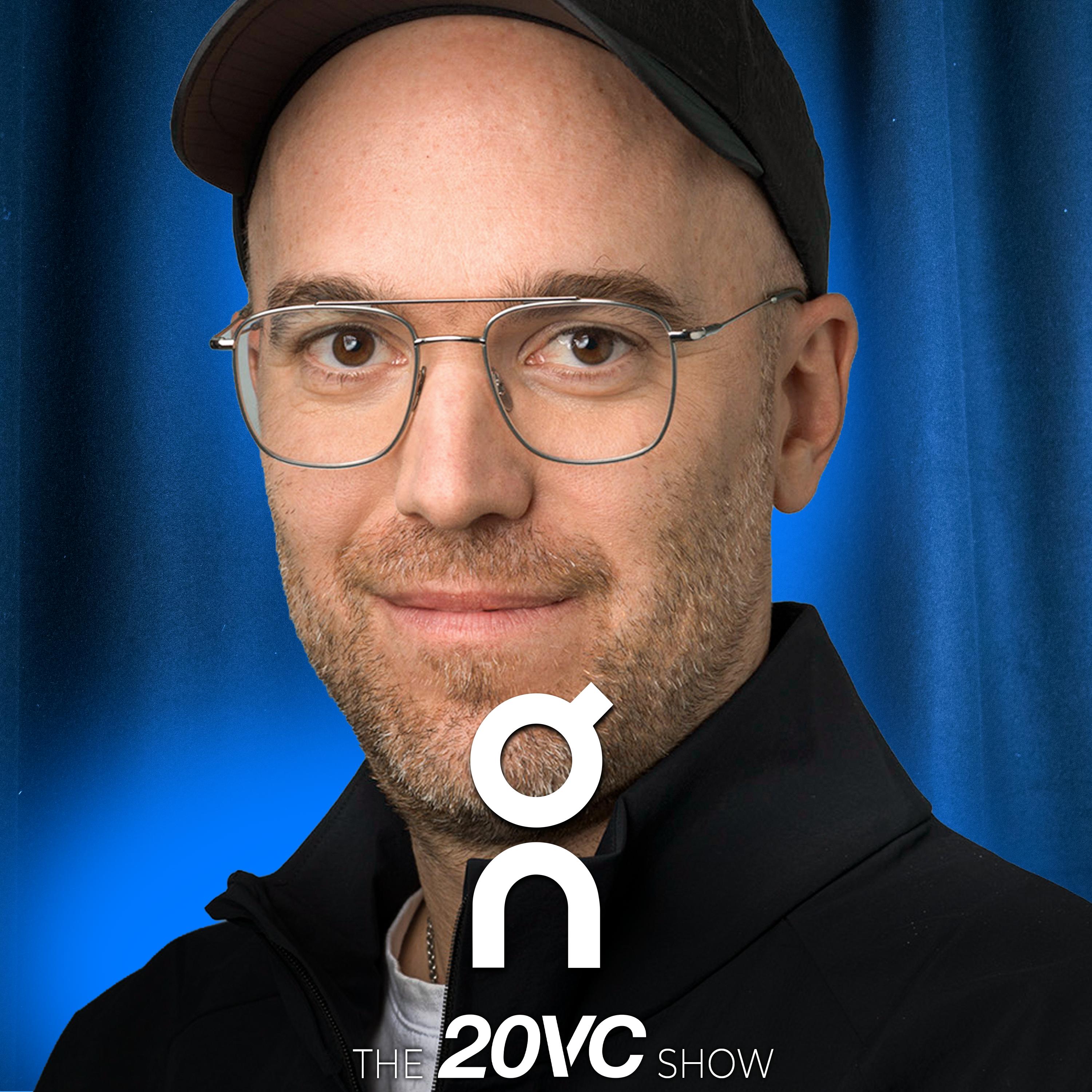
The Twenty Minute VC (20VC): Venture Capital | Startup Funding | The Pitch
20Product: On Running's CPO on How to Create Emotion Through Product | Why 99% of Products Fail and How to Create Cults Around Products | The Biggest Product Mistakes On Have Made & Lessons Learned with Gérald Marolf
00:56:00
Loading summary
Transcript190 lines
- [00:00]
A
This is 20 Product with me, Harry Stebbings.
- [00:02]
B
Now.
- [00:02]
A
20 Product is the monthly show where we sit down with the best CPOs in the world to uncover what it takes to build incredible products and product teams. Now sometimes I use the show to satiate my own loves and passions and I love ON Running and so I jumped at the chance to have Gerald Marulf CPO at ON Running. On the Show. Gerald oversees the full range of on's shoes, apparel and accessories to make sure they deliver performance, comfort and style so incredible athletes like me can play at.
- [00:35]
B
Our top top level.
- [00:37]
A
Before On Gerald spent over a decade building consumer brands with collaborators like Microsoft and Ferrari. This was a phenomenal off the cuff discussion.
- [00:46]
B
I always want it to be the.
- [00:47]
A
Best show for you, so let me.
- [00:49]
B
Know what I can do to make it better.
- [00:50]
A
Harry0vc.com but before we dive into the show today, Secure Frame empowers businesses to build trust with customers by simplifying information security and complian through AI and automation. Thousands of fast growing businesses including Nasdaq, AngelList, Doodle and Coda Trust SecureFrame to expedite their compliance journey for global security and privacy standards such as SOC2 and ISO 27001, CMMC, NIST standards and more. Backed by top tier investors and corporations like Google and Kleiner Perkins, the company is among Forbes list Of the top 100 startup employers for 2024 G2's best software awards for Higher Satisfaction products and a recipient of the 20 Cybersecurity Excellence Awards, something I definitely never got in school myself. Learn more today@secureframe.com Once Secure Frame locked it all down, HMC they hand you the keys to scale it up. Harvard Management Company is constantly seeking out the next generation of great investors and entrepreneurs. HMC has managed Harvard University's endowment for nearly 50 years and was one of the first institutional investors in venture capital. Their experience and long term investment horizon makes them ideal partners to get world changing ideas on a path to viability and success. They work as a true partner providing insightful perspectives to help managers succeed. I personally have had the pleasure of working with the HMC team and can say that they are truly exceptional partners and savvy investors. So whether you're launching your first fund or your fifth, HMC welcomes the opportunity to partner with both developing and established managers. Have an idea you want to share with the team? Just send it over to VentureMC Harvard EDU on this show we care about Velocity. Most teams lose it in code review, not in writing. Cod coderabbit fixes that the second a PR opens, it leaves clear line by line comments, calls out what the change might touch and offers one click fixes. You can teach your organizational standards using your own custom instructions such as cursor or CLAUDE rules, and enforce them on every PR code Rabbit has so far reviewed more than 13 million PRs and installed on 2 million repositories used by over 100,000 OSS projects. If you want to cut code review and bugs in half, try a free month at Coderabbit AI with the code 20VC.
- [03:16]
C
You have now arrived at your destination.
- [03:19]
B
Gerald, I am such a fan of On. I think the product suite that you.
- [03:24]
A
Have today is one of my favorites.
- [03:26]
B
I was so keen to make this happen. So thank you so much for joining me today.
- [03:29]
C
Thank you for having me, Harry. It's a pleasure to be here.
- [03:32]
A
It's a bit of a weird start, but like, when did you realize you.
- [03:35]
B
First loved the craft of product and what does like product and good product mean to you?
- [03:42]
C
I think the idea of good product, at least for me, started with something slightly weird, which is perfume. Perfume for me was the unlock in terms of that. Why do you sell something that is just a smell and create a bottle and something around it that people actually crave for it?
- [04:01]
B
What was it about that that you found captivating, specifically?
- [04:04]
C
Well, why do you buy a smell? Right? It activates a lot in the human brain and it becomes part of you. But you leave a lot to the consumer when. When you do fragrances and you probably leave too much to the consumer because how much they use it, how often, and then you lose the smell of it. But first things first. I think you mostly fall in love with the product, packaging, the bottle, whatever it is. And that was already there, 80s, 90s, before everyone started to create all the beauty and everything behind that. I think the fragrance industry was pioneering, basically that.
- [04:43]
B
Is perfume any different to other physical product in the way that it's. The way that it makes you feel when it's on? Would you not say it's the same for running shoes, for example, the way it makes you feel when you're wearing them?
- [04:57]
C
Yes. And I think that is. That is the probably the idea or the red threat even behind it. What is nicer about perfume is that it even costs less to make than the actual packaging, which for us is slightly different. But every great product you should probably trigger somewhat of that slight discomfort of challenging yourself of is it the right thing for me? And not all footwear does that, but when it does that, you're already one step ahead in actually falling in love with the product itself.
- [05:29]
B
When you think about falling in love with the product, is that what you mean when you talk about the relationship value with the consumer that you think product should create?
- [05:37]
C
Yeah, because it's impossible to engineer because we're all different. How do you stimulate curiosity? Why do you create a button on a gaming console that makes a sound? There's no rationale for that, but it triggers something that you can own and that stimulates you in a positive or negative way, but it creates some kind of emotion. And I think the more you go into commodity product and footwear, I think to some extent is that because we all need to wear shoes every day, the harder it gets, but also the more exciting it is because that's then the true challenge to engineer something where you touch it, you step into it, and you're like, huh, okay, there's even a bit more than what I expected. It's not just the color I choose, but there's something more behind it. That's what we're trying to engineer.
- [06:27]
B
For what irrational product decisions do you think you've made that have engineered the most emotion from consumers? And what did you learn?
- [06:37]
C
That's a big question. For my time in tech, that was much easier because a user experience that is nonlinear or a digital product that is slightly disturbing creates a lot of energy immediately, but you take way less risk.
- [06:54]
B
You take less risk. How do you take less risk with a disturbing ux?
- [06:57]
C
Because you can iterate very, very rapidly. I think the moment I switched from non physical to physical product, I had to completely relearn that. Once it's in your hands, I cannot change it, I cannot touch it, I cannot just send you another pair of laces in the morning. Why do you choose the pair of shoes you choose? Is it just because you're too lazy to actually tie them up? Or because the leather you would need to polish or whatever? I cannot change it, I cannot influence it anymore. You let it go way earlier. Whereas if you do a, I don't know, a homepage on Bing.com, you might want to hide something. And then some people find out and then you can actually emphasize and you have an echo chamber you can work with where when you do physical product, once it's gone, it's gone. But your question is, it's interesting because it's often at the very start of a brief. And the hardest part is to not lose the thought because you start with the consumer and you start with, well, here's Something where you will step into and you probably would think that it's slightly too soft, slightly too comfy for what I want to do, or it's not enough of that, or oh, wow, why did they do a 3D logo on a shoe that will fall off tomorrow? And so it's the smaller parts that have a bigger impact than the hours and days and weeks we spent with a sports science team engineering a foam so that you can do your 5k and not have your back hurting in the evening.
- [08:32]
B
Is simple always better in product?
- [08:35]
C
No, I don't think so.
- [08:37]
B
Why?
- [08:38]
C
Because simple will result in more storytelling needs and less word of mouth. I think simple is great if you have a trackpad or AirPods, but I'm not sure that simple these days will break through in many cases. Consumer electronics might be different. I don't know, I'm not up to speed there. But for us, I think simple gives you less opportunity to be an expert yourself. It gives you less opportunity to tweak, to learn, to explore and to also give it its own life.
- [09:11]
B
How do you think about the challenge that you have, which is, and this is actually ironic, it's the same for physical and digital products. A lot of people who wear on running shoes are not running. In actual fact, I hate to say it, they're not moving very much at all. Go to a Knightsbridge cafe and you'll see a lot of on but not much running. There's people who are not power users and there are people who are supreme power users who run a lot and who really stress test them. How do you think about that product balance of set selling to both without alienating either.
- [09:42]
C
I personally love that bipolarity. You probably also have a MacBook Pro in front of you and you have absolutely no clue of the power the machine actually has and could be used for. And aspiration is one. But then it's also, it's good to have great product even though you don't use it at its full extent. I don't see any negative to that. Anyone should go and get the greatest cashmere out there. If they fancy cashmere, they probably don't need it to stay warm. We really strive for the factors that are not just always straightforward, which is not just style and esthetics, but it is also to some extent a view on how product ages, what durability means, how colors play with each other's and how it gives you an opportunity to also differentiate yourselves in your everyday lives. So running and coming from running and having run culture as a base is just a great starting point because we simply can't fuck up. You cannot give people a product that they cannot do their half marathon in. And then, yes, we have the Reddits where we'll have long debates because I mean, this year we launched a four hour marathon shoe. If I would ever run a marathon in below four hours, I would probably be dead. So there is an audience who needs different kinds of shoes, but the hardcore audience thinks that everything needs to be obviously as tailored to the fastest and most performant. But we're also trying to work even within running, towards different audiences. And then that triggers, outside of running, also different communities.
- [11:24]
B
You said about style and aesthetics there. It made me think of consumer preferences and it made me think of the Henry Ford. If I listen to my customers, I build a faster horse.
- [11:33]
A
To what extent do you listen to.
- [11:35]
B
Customers versus show them the way in terms of right product and good product?
- [11:40]
C
We listen a lot. We don't always use everything, but we do listen a lot because the company's also been growing at a scale where you also need to find the right kind of balance. And we also need to become much more concise in terms of how we show up, where we show up as you, as you do this more polar opposite sort of consumers. And there's an interesting aspect. We just don't have an archive. So that means every other footwear brand will go back in history. Right now, early 2000s are coming. You see all the A6 that have been there now slowly phasing out again. Salomon has been having a bit of a harder time because the outdoor trend is not there. So now the 2000s, the tech graves, all whatever, whatever it's going to be, they're going to pull out, back out and put on the table. If you just go sneaker and if you don't have that, you can listen. But it's hard because you cannot pull it out of somewhere. So you need to create and then once you're already on that, you might just don't want to create within that comfort zone and push it a bit.
- [12:45]
B
When did you listen to customers when you shouldn't have done? And on reflection, what did you learn?
- [12:52]
C
We probably listened to customers when it comes to the space that exists between sports and lifestyle too much. So a lot of customers have a strong belief that there is a world in whatever we want to call it hybrids, where you can use them for sports, you can also use them for lifestyle. And there's this Persona, probably that is a 2010 Persona that lives in New York goes to the gym and then goes and gets their latte and wears the same outfit. Not sure that really still exists or has ever existed in the way that that's been described and that it makes sense to have a product that does function and style equally well. I think you have a customer that will go for the most performing running product because of style. I think you will have people who just purely will go for style and not really care about the performance. But that I want something that really works and yet still looks good somehow. Still works or still looks good. That middle ground, I think that was not the smartest place to operate in.
- [14:07]
B
Does that not contradict the athleisure trend that we have seen be so pervasively successful in the last few years?
- [14:14]
C
Yeah, it probably does. Yeah. But what brand do you want to be as well? I love having our craziest innovation, Marathon Shoes, in Dover Street Market. I think that is much more of a place to be even with your craziest running shoes than being in that in between space where you make compromises on the product and at the same time you sort of. It's not very clear what you want to do with the product. I think product intent should be much clearer and at leisure always sort of schmoozes a bit with both.
- [14:52]
B
What do you mean product intent should be much clearer?
- [14:55]
C
If I look at what you're doing, you don't go in and fish for a reason to do something. And even if it's a 200 bucks pair of shoes, I don't think we should do that neither. Even if you just wear it for lifestyle, you probably want the best running shoe out there or then you want the true fashion statement. But you're not going to wear your running shoes and then wear them again for a night out and back and forth. It might happen, but I don't think we should brief that in as a product.
- [15:30]
B
On the flip side of that though, where did you not listen, where you should have listened and what did you learn?
- [15:36]
C
I think the way we're building new sports, tennis for example, I think we could have been closer to the consumer earlier in understanding how much appetite there is to upgrade 100 bucks. White tennis Sneaker and other brands have done that in a more precise way. We have now Second Wave, Third Wave, done a much better job and I think we're getting there, but not everywhere you need to go full just your own way. And I think the Roger is now a fantastic range of products. But it was a very complicated process for us mostly internally to really debate through what is a next generation, next level white tennis sneaker?
- [16:23]
B
How would being closer to customers have changed the product strategy in tennis?
- [16:28]
C
We probably would have explored different materials earlier. Whereas I think we took a very conscious decision to make that a vegan product for all the sustainability reasons behind it. Where then durability is sort of the other side of the equation and we probably didn't go all the way in that process to look at. Okay, if you wear something for two years and it is leather, is it still better than something that is a vegan leather alternative but might just not have the same kind of repairability or durability? We're pretty stubborn there to make a very good vegan white tennis sneaker that is super lightweight.
- [17:12]
B
To what extent do you think consumers care about the sustainability over price?
- [17:17]
C
I wish they would care more. I haven't seen any research where that has been the case.
- [17:23]
A
I do have to ask you, you.
- [17:24]
B
Said there about kind of being a little bit quicker maybe how important is being first? When you think about being first with a, a vegan leather tennis shoe, does it matter if you're third? And how important is being first in product?
- [17:39]
C
I think it's closely connected to brand awareness. Where we're at right now. It's probably less important to be first, but the ambition to be first helps to attract great talent, it helps to bring in engineers, it helps to bring in innovators and it gives you clarity in your roadmap to what you're doing. We very much want to be first in most of the stuff that we do. There might not always be a consumer need for that, but for the type of culture you're building, it's extremely valuable being direct.
- [18:11]
B
I don't get the tennis strategy and I know David Alleman pretty well at this stage, so I should ask him this as well. But I don't get the tennis strategy. If I think about like market size and the size of on today being the multibillion dollar public company as say if you crush tennis, it's just not a needle mover for the business. I don't think from a pure market size perspective. How does market size impact product direction?
- [18:37]
C
It definitely does. I also think we need to look at tennis more holistically in terms of Roger as an entrepreneur, him having a badge, being in with the product teams every two weeks and what we build as an overall company and how you grow from sort of an international now towards a global company and who you also want to be and who you want to have close with tennis or with Roger specifically. I think it's also friends of friends. I think that has an incredible power and that has created an athlete mindset for us that strives for excellence. And tennis might not be the last thing we do, but it's been an incredibly important territory to move a brand beyond running, rooted in something that is sports and at the same time have clarity on we can be more than just a running brand.
- [19:34]
B
Would you do tennis if you didn't have Roger?
- [19:37]
C
I don't know.
- [19:38]
B
That's an interesting one, isn't it? From a product perspective and a market need perspective, your distribution is driving product strategy.
- [19:47]
C
No, I think your brand DNA is driving product strategy.
- [19:51]
B
You think? I'm curious. Roger's your brand DNA.
- [19:55]
C
I think Roger is part of our DNA. Roger is part of our understanding and confidence that we have in how we built the brand.
- [20:05]
B
Help me understand that. I'm sorry.
- [20:07]
C
Yeah, of course.
- [20:08]
A
By the way, I wish he was.
- [20:09]
B
Part of my DNA. The elegance and charm of this man.
- [20:12]
C
But like Roger's bigger than tennis. First things first. But the way an athlete like him operates in sort of a global environment and strives for everything is possible and gives you also a view on unlocking things that are more true discipline and tenacity than to pure strategy, so to speak, created, I think, a white space for us to think beyond running, running lifestyle and really enable us to open new territories overall. And that is now sort of anchored in the DNA of a sportswear brand that strives to be the most premium sportswear brand on the planet. And the word premium is in there. And he's certainly part of the reasoning why we look at it that way.
- [21:05]
B
Do you worry about longevity of the Roger brand?
- [21:08]
C
Yeah, yeah. I mean, I. I worry probably about longevity of all of it, in a sense of how do you create beyond an athlete's career, cultural relevance and how do you make that happen? And then with. With the Roger brand per se, there is him, there is other things that he will be doing, but there is also a product in the silhouette. Now, does whoever is still alive from Nirvana worry about that they're a T shirt brand or a band is a bit the same thing, right? Do people know Stan Smith? I don't know, but I think there is a lot of work that needs to be done.
- [21:48]
B
If I think about Nike, I know it's different because there's an ownership difference in terms of Roger being part of the brand, being part of. But like a Michael Jordan. And then suddenly this realization of the need for a diversification away from Identity of one. I'm just intrigued. Like, are we worried about the concentration of need on Roger and the need to diversify as Roger doesn't play anymore?
- [22:11]
C
Yeah, but I think diversification doesn't just purely come from need. It's more appetite. And I think Jordan is interesting because it is at this point pure nostalgia. And we all have loved what the NBA was in the 90s, and there is a streetwear relevance to it. If you do PSG or whatever in terms of football now, but you also engineer that towards a target audience and you hope it trickles over to more mass for us. I think we're at a very different point where we still have a lot of appetite to even build businesses that we feel that don't exist yet. And with Jordan, I think they have successfully done that and now it's looking at how a brand ages while the target consumer gets younger and younger.
- [23:02]
B
Can I ask you, you mentioned that the marathon shoot that you've done, which is awesome. I love this product. I don't run marathons anymore because my knees are aged and breaking. Gerald. But my question is, when you look at that, do you think you were too slow to marathon running as an entry point? When you look at Hoka as a brand that really tackled the long distance market, do you think you were too slow to it?
- [23:25]
C
Too slow and maybe a little bit too complicated is probably the most honest answer. I think we tried really hard to be probably overly precise in the product that we do, and that means that engineering is slightly slower and you should leave a bit more to the consumer or the runner in that case, to make up their minds. We're striving for perfection. Yes. But at some point, stuff needs to go out and be beyond the pavement. So, yes, to some extent, you said.
- [23:55]
B
They'Re about kind of precise and at some point it just needs to go out. When you get that, I'm sure you go through so many versions and so many versions and you pick it up and you pick it up and when do you go ship? Do you just know? Like, what is that moment?
- [24:09]
C
Well, it's, it's becoming slightly more formal, but in often cases it's a shortcut or a trip to a factory and then you just, you spend two days and you finish it off or there's a signal and a couple of individuals who test it and you're like, hell yeah, let's go. But a lot of it is also, I think it's a group of individuals, right, that. That think through things and then have somewhat of an opportunity to agree or disagree and then you build a feeling quite rapidly that it now should go and doesn't always happen, but. But when it happens, you're usually onto something really good.
- [24:45]
B
What was the most controversial product that you've released in the last few years and how do you reflect on that?
- [24:53]
C
Well, this year I definitely would say it's that slow marathon running product that rightfully so probably the community didn't get. Because if you have that ambition, why would you want to wear a shoe for the slower runner? Even if you are that there's a lot of health reasons and you just talked about your knees. But that was not thoroughly thought through from a consumer mindset. If you go into that marathon buildup. Other than that, I think Lightspray is just our latest innovation. It's just a very interesting piece of an innovation platform that we're building out. It can be seen as controversial because you make a shoe in three minutes and you don't need any humans. But I think the Runway of that is going to be very interesting to watch.
- [25:39]
B
What would you have done differently or what are your biggest lessons on product messaging for new products when you reflect on say like the marathon shoe, which maybe wasn't communicated as it could have been.
- [25:50]
C
I'm not great at marketing, but I just love to have the story being told by others, even if it's unfiltered. That not always what you might want to hear, but we can learn a lot from fashion there. I think you put a runaway show out and the jury's out. Right? It's not. You're not going to send out a press release look for is the best look that we've ever made. You just don't. You let all the critics basically decide. And I think we could, we could do more of that and just, just let it out in the wild. The other part I think is. Is on apparel and accessories. We. We released a fantastic line of soft backs, backpacks and, and other things and we sourced with like one of the last Swiss rope makers. Some, some real Swiss rope and all that kind of stuff. Products really there. But I don't know. We're a footwear company still in many cases. So we had a hard time really telling that story.
- [26:45]
B
Well, you mentioned that we're a footwear company. Do you think every company needs to have a hero product? It's often something stated that you need to have a hero product. Do you agree with that?
- [26:57]
C
We're not a footwear company anymore. We very much are. I mean apparel is growing at a Speed that I think we unlocked something there that is going to be very interesting. But answering your question, probably, no, not anymore. I think that used to be the case. But if I think about how people shop these days, who they listen to, and also where their share of wallet goes, I'm not sure. I think just a lot of things are changing. If you look at beauty as well, we probably had three choices for. How do you call a lip balm? And where did you buy that? Probably at a pharmacy or whatever. Now there's probably 600 with all different flavors. Even smoking has diversified to a level where I'm like, okay, is there a hero Marlboro product these days? I don't even know.
- [27:50]
B
Do you think consumers on that thread are more or less loyal today?
- [27:54]
A
And I think about this one a.
- [27:55]
B
Lot because I think with the decline of religion, you see people coalesce around brands more than ever, whether it's Taylor Swift or whether it's on running. But then you also see people have so many options that they are more promiscuous with their brand selection than ever. And I'm not sure which side of the table I'm on.
- [28:11]
C
Me neither. I just love the concept of brand personality. And it's an old concept, but if you give a brand the right characteristics, and for us, a lot of that goes through product, I think that can go a long way in your relationship with the customer. Even these days, even the very young ones, I think there is something to building a brand who has a bit of shape and form, where consumers understand who. Who you are as a personality. Does that create loyalty always? Probably not. But it goes beyond just trying to be everything to everyone.
- [28:46]
B
Which competitor's brand personality do you most.
- [28:50]
C
Respect in the sportswear space? Yeah, I have a lot of love for brands that have created clarity sort of in consumer mindsets. If you think about Alo Yoga, for example, it is obviously now with growth, it's becoming tough. And all the supplements and all of that, I think that is really, really good. And I don't know if that's working commercially, but they're doing their thing. And not all product is great. That's fine. But they have a mission. And they even left yoga in their name, which I find quite bold.
- [29:24]
B
Do you think that's the right decision?
- [29:26]
C
I am happy for them that they're still independent and can do probably whatever they want. And yes, they probably should get rid of it then. There are. There are brands that are fascinating to watch because not everything makes sense, but the product is. Is really good. Asics as a simple example.
- [29:46]
B
What do you mean the brand doesn't make sense?
- [29:49]
C
Well, name me an Asics sneaker in its full length of the product name. Just one.
- [29:55]
B
I know they've got. They've got Nimbus something.
- [29:58]
C
Is there gel in there? Is there something else? Is there kinetic? Does it have some numbers as well? What version? It's an Air Force One, right. Or it's an Air Max 95. I think Asics is talking much more true product itself than many other brands that we have in our space. And as we've been talking, I do kind of like product and I like to also try things and I do feel that they have delivered really well on a lot of their products with a very honest, honest way of doing things.
- [30:31]
B
I agree. And we're going to come back to like that quality product and how we think about kind of brand associated. I think on the flip side was like the confused brand personality. I think like, you know, respectfully. Allbirds so confused. It's like the running shoes that they bring out with the work shoes that they bring. And I'm like, is this an Athleisure brand? Is this a training brand? I can't get it. I don't think you're going to be an athletic brand for running like I want you to be. Am I really going to put you on instead of on or Nike with all the product testing that you guys have over like all buds. No, I'm not saying offense. It's just confused brand.
- [31:01]
C
Yeah. I think there's a couple of other brands that will be heading there maybe and I shouldn't probably say their names because they're still on the up. But. But I have some brands where I have a hard time understanding where. Where. Where they're heading and why.
- [31:17]
B
Totally get that. Go on, give me one. I'm fascinated.
- [31:20]
C
Worry.
- [31:21]
B
But they're in the athleisure market like straight up. They're like premium Athleisure. We are for your like I don't Upper east side mom who does yoga. Who wants to look hot and spend a shit ton on a jumper.
- [31:34]
C
I'm just not convinced.
- [31:35]
B
Totally get that.
- [31:37]
C
Very personal.
- [31:38]
B
No, no, I get that guys. Fascinating.
- [31:41]
A
We said about Asics being like great.
- [31:43]
B
Product but maybe slightly confused brand in certain respects. Do you agree? Build great product and they will come the kind of often said moniker.
- [31:52]
C
I wish. I also wish we would be a good example for that. But we have a fantastic brand and marketing department who does an incredible job also of bringing Elmo on board to Say that we launch an extremely soft shoe and it's probably super hard. I mean there's stuff that I simply just love. Teenage Engineering is one of those brands. I don't know if you know them, they're like Swedish consumer electronics things quite small, they spectacular but you have to be really deep into it and then buy their Bluetooth speaker and you're just going to be blown away. But then they have great marketing, they have great brand, have great product, but sometimes it just doesn't. I don't know, maybe it's the category or something else that doesn't scale or maybe you also don't want to because SoundCloud was also a good product. But we are on Spotify, right?
- [32:42]
B
Which was the best product that you've made that didn't do as well as you thought?
- [32:48]
C
I think we have created our very first collaboration with Loewe, the Spanish luxury house. We have created a, I would probably say dog walking trail runner. So we changed our core trail running show at the time which was called Cloudventure. And together with Jonathan Anderson, the person I mentioned in the very beginning, he came back from Japan and brought some samples of some Shibary towels. Right. The denim fade stuff and the factories really didn't get it. But we replicated that on a canvas and then created I think an incredibly beautiful product that I truly love. Obviously very early to do very expensive running sneakers at that point because that was pre whatever New Balance Mu Mu and all of that. It did. Okay, but I think if I look at that product now, it's one of those those things, you know, where Pursuit of Elegance sort of my. It's an old book but it's that it's 90% perfect and then you leave the rest to the consumer.
- [33:55]
B
Okay, but if we take that as an example, that is a confused brand to me alongside a four hour marathon shoe and performance. What the fuck are you doing doing a partnership with Loewe?
- [34:08]
C
The easiest answer is probably total addressable market or capitalism even.
- [34:14]
B
Which I agree and as a venture capitalist I get. But that's why I'm like don't do tennis and don't do like, you know, marathon running in four hours. Do Athleisure, almost do Vuori.
- [34:26]
C
But isn't the opportunity to disrupt and create as a brand who doesn't exist in certain spaces opening up somewhat of a butterfly effect towards who you can be? I mean Nike was a running brand when they started. Would you say they are a running brand to you today?
- [34:46]
B
No, I'd say they're a sports brand. Wouldn't say they're a fashion brand. You know, I think Nike's product or marketing brilliance is the aspirational brand that they create. Everyone's an athlete, even if you're not an athlete. All I'm saying is I. When you hear performance and your focus on performance and the products that come from that, Totally get it. We're a performance brand. Love it. Great. That's why we slightly regret the Athleisure move. Cool. But then we do the Loewe.
- [35:15]
C
But Loewe is aspirational and as crafty premium as it gets. And at the stage of where they disrupt sort of the LVMH universe, I think we partner up.
- [35:29]
B
No, I would. I would do a Bang and Olufsen partnership if I'm you.
- [35:32]
C
We did, but it didn't work.
- [35:34]
A
Well, it's a hard life. Okay, Gerald, no one, no one said.
- [35:38]
B
That it was easy. But like, Nick, why do I say Bang and Olufsen? Because it's like premium performance led.
- [35:44]
C
Yeah, but we did some headphones. But it's also. Who cares? It's the same people who probably buy the running shoe.
- [35:51]
B
Okay, but I get it. So it is a market expansion. I completely get.
- [35:55]
C
Because it is. It is sportswear.
- [35:58]
A
So when we get it not doing that well, what's the takeaway? How do we.
- [36:02]
B
How do we think about that and learn from it?
- [36:04]
C
We sharpen down to understanding much better how the consumer unboxes it and creates their own definition. And that's why this. I love to talk about the Sopranos ending. And I don't know if you. If you watch that show. I mean, just the way it ends, probably some people who listen in will get it. It's up to you to make it up. After watching six seasons and engineering that is really, really hard. We probably didn't leave enough on the table. Like, the story was complete, the product was perfect. We should have thrown in a second pair of laces. Maybe that would have been enough. But we should have left a bit more on the table for the consumer.
- [36:47]
B
Do you know when a product is going to hit pretty quickly? In other words, are you ever surprised if something hits six months later or within two weeks? Do you get the feeling this isn't resonating?
- [37:01]
C
No. I'm often surprised about late or early. And I'm also often overwhelmed by the why. Simplicity of pure comfort and easy step in. For example, for footwear. If you think about big footwear brands these days, and they come in all shapes and forms, Birkenstock Crocs, vans, whatever have you. A lot of it is you don't need to tie the shoes. And I had years to accept that fact. I'm Tod's Caminos or Zegna Triple Sticks. Yeah, yeah, yeah.
- [37:42]
B
Dude, this shoe is fantastic.
- [37:45]
C
But why do you put it on in the morning? Just the looks or why or also because it's just easy.
- [37:51]
B
I think it looks smart, but it's also super comfortable. And so I can walk across London in it. And it also looks smart enough that I can be in a nice restaurant and walk in High Park.
- [38:03]
C
Do you identify with also with Zegna in terms of the personality that the brand has?
- [38:10]
B
Not in a bad way, but like, no. Craft, sure.
- [38:16]
A
But honestly, no.
- [38:18]
B
I'd be lying in this case. I like the product. It's comfy and it does the job.
- [38:23]
C
Great brief for a good Roger to do work on. We'll call it the Roger Harry something. We'll let you know.
- [38:32]
B
Listen, I'm here anytime, happy to help. But I do think it's an interesting one.
- [38:38]
A
One of my great friends, this guy.
- [38:39]
B
Hugo Bauer, who created Product Xiaomi for many years and he taught me that when it comes to physical product, you're either a price king, either like the cheapest or you're a feature king. The best, the most features, the most built out. Do you agree with that binary view of how to win in product, physical product, or do you think it's different?
- [39:02]
C
I would agree with. With a slightly older audience, I would not agree with when a kid walks into a JD and wants the features and the price or doesn't care about neither and believes in the bubble they're in. So the community or actually separating from that. On apparel, I don't believe in it at all. But in footwear, I think there's a lot of truth in that. But there is a very interesting consumer I think that shops with a very different filter on.
- [39:36]
B
Why do you not believe in it at all with a pal? I mean, your apparel is. Is respectfully interesting. It is. It is expensive for sports clothing, but I would argue that it's feature king because you can feel the premium, the quality of your product is exceptional. And it's beautiful product. Really, like amazing.
- [39:54]
C
It's. It. It's feature king, but it's also. And I think materials make all the difference. And for me, the amount of times just spending time on sourcing the right materials that are different, that are more premium. And that's why all the Xenias exist. Right? They get that right. So I don't think that is functionality, but that is very much distinction towards. If you want to call that feature, then yeah, we probably agree. But I just think the material itself, it's not that it's waterproof or that you have a zipper garage or whatever, but that the product as a whole, it just feels somehow better than what you touch from the other brand. So maybe I have to take back that. I don't agree at all with your definition, but I think in apparel it's just. It's about the holistic product. Feature needs to be complemented with materials, with shape, with fit, with many different things. Even that Care label inside, Right. That is important. I mean, whatever T shirt you're wearing, you're probably having a beautiful label stitched in from whatever James Pierce or Bodhi or what it is. But it is important.
- [41:09]
B
I'm a Sunspell man, but there you go.
- [41:12]
C
You could now say that's feature, but that's what they care about most is materials.
- [41:17]
B
Do you want to say something interesting? I would say if I was speaking to the Sunspell product team, your labels suck. Every time I go and rip it out because it's this annoying, itchy actual T shirt. It's not good enough for 120 quid.
- [41:31]
C
T shirt till Sander does it better.
- [41:34]
B
Yeah, I completely agree and get that. I have to say Xenia's T shirts are really freaking nice too. But you're dropping 300 quid on a T shirt at that point. And I have a lot of T shirts. Imitation often said to be the greatest form of flattery people imitate on products. Is imitation the greatest form of flattery or does it actually reduce sales, hurt the brand?
- [41:58]
C
I wish I could give you a great answer on that. I think it's both. It's imitation sucks on innovation. Imitation is great flattery if it's purely sort of mocking and aesthetic or whatever. What Skechers is doing, to some extent, it's like it's not great. But then also. But when it comes to innovation, I think it really sucks.
- [42:23]
B
Why does it really suck on innovation?
- [42:25]
C
Sorry. Because the promise that you want to deliver with your technology needs to hold true. If they can make it as good, then I would probably even say, well, yeah, okay, great for the consumer. But in most cases it is just looks and it's not the actual thing and then it sucks.
- [42:43]
B
So if we look at Laura Piana, the amount of Summer Walk fakes there are.
- [42:48]
C
Yes.
- [42:48]
B
Is incredible. I mean, the variety of brands that have copied them, is that good or bad?
- [42:54]
C
For Laura Piana, I think it's bad because it takes piece of aspiration away from the brand and it will make them do stuff on the product that is not necessarily nice. And you see that with LV or with other brands as well. Right. Where you distinct a bit more just to be a bit more special. Where actually the simplicity or that it's super plain or super normal or whatever quiet luxury you want to call it is the power of the product and through the imitation, you take a lot of gravitas away.
- [43:32]
B
Do you ever worry about being synonymous with a customer segment? Too much. And what I mean by that is, if you look at say, a Laura Piana, candidly, if you walk around Knightsbridge in London today, it is largely Saudi men in their 40s and 50s who have Laura Pianas and it dispels or discourages me from buying them because I don't want to just be synonymous with Saudi billionaires. Do you worry about we don't want to just be synonymous with marathon runners who are super keen and that categorization.
- [44:04]
C
Not with runners. I'm not worried the moment someone moves. So I think as people use the product for sports, I'm not worried. But there are definitely other places. I mean, you said the airport too, right. I think that's complex to solve because it's a compliment. You make a great comfortable product, but it's also challenging because the product can do more. And so, yeah, it's not easy to navigate.
- [44:30]
B
You mentioned earlier New Balance, it's an interesting brand because I mean, New Balance was the most uncool, unpopular brand years ago. Respectfully, they were peaks and troughs and now they've had an amazing resurgence. How do you think about and analyze that?
- [44:45]
C
I think they anticipated really well and they went to a playbook that was unexpected. I mean, when the 550 came, no one thought that anyone needs another basketball shoe and it was just Air Force ones. They were able to create that with a bit of an outsider mentality and people wore it for a while. What they did with Teddy's brand. Amy Leon Dore. Right. Same thing. And now it's tough because how do you replicate without just doing more and more and more? But what they, I think, did incredibly well is that they understood better than others that in that space it's not necessarily a global market anymore. They were much more hyper local, even though it was big, but it felt very local to the right communities at the right time. They did that exceptionally well.
- [45:39]
B
Is there anything you learned from that?
- [45:41]
C
Yeah, we're not Using it the same way. But the way I think I've spent a lot of time in South Korea this year. The way you look at where there's more speed in subculture and how things develop and more appetite again to taking a product and repurposing it through your own lens, I think that is, that is something there's a lot to learn for us. But there are cities, Seoul, Taipei, in Asia that where that is almost becoming normal. And we have some of that also in some, I would say less major cities in Europe. And it's super interesting to watch and we need to learn from those communities, those kids, the whys, the hows. And I think it helps us to create great products with them for them, sort of in between.
- [46:32]
B
You mentioned Loewe earlier. What collaboration have you not done that you would most like to do and why?
- [46:39]
C
Very, very personally I do think that Prada Sport deserves a non Prada collab and the people at Loewe will kill me. But pradasport has done a very iconic thing in their journey with sailing and with sort of that uniform that they've built. 2000s again. Also the materials, the nylons, all of that. The product is just fabulous. Through the premiumization and the luxury playbook, they have re edited that. But that is something where I would. I think that deserves a bigger consumer community approach. Just making that more expensive and more niche. I get it, you know why they're doing it. But you look at Stone island since they've been acquired by Montclair and the product they're doing is also fabulous. But Prada Sport essentially is that blueprint. Not that we're ever going to collaborate with them, but I think a of part the product, just the product itself. We could have done an incredible line of products with them couple of years ago if we would have thought about it even.
- [47:47]
B
I'm always fascinated by one and this may show that I spend too much time there for my mother, but Chanel trainers, I cannot get my fricking head around. They're like £1,000.
- [47:57]
C
Yeah.
- [47:57]
B
For the most basic. Is that brand confusion? Is that market expansion? Is that product genius?
- [48:05]
C
Well, Hermes did tights, right for 1200 leggings. 1200, 1400. I think it's just capitalism. I mean, I don't think Mathieu will work on the Chanel sneakers. Maybe he does, but I don't know. I think this is just business. That's how I look at it.
- [48:25]
B
I think that's a really interesting point you said I don't think Matthew, obviously designer will Work on that. And that almost implies like a disregard for it, but an awareness that it's good for business. What product for you as CPO do you personally disregard? But it's good for business.
- [48:41]
C
I'm not deep enough into the socks business as a footwear brand. I think we have a tremendous opportunity, or we would have a tremendous opportunity to create that product through more of an innovation lens. We have now, we have through also what we do with Lightspray. We have created for the first time really socks from scratch, which, which is next level. But that's only been the focus since maybe a year and a half and. And that's late. If I think about how much we invested in everything else. We should have spent more time on accessories earlier.
- [49:16]
B
What accessories you wish you'd done?
- [49:18]
C
I don't know if we should have done other stuff because a lot of it is just more stuff on the planet that no one needs. So I don't. I don't know if we should have done more. I just think we should have executed with the same level of madness, to use that word, as we have on apparel or on footwear.
- [49:37]
B
Dude, I would love to dive into a quick fire with you. So I give you a set of short specific questions and you give me your immediate thoughts. About 60 seconds per one. Does that sound good?
- [49:47]
C
Yeah.
- [49:48]
B
What product principle have you most changed your mind on?
- [49:52]
C
Product integrity and how a pyramid of sort of the esthetics, functionality and sustainability needs to be in sync.
- [50:02]
B
Which competitive brand do you think is most underappreciated?
- [50:08]
C
Mirel. No, la Sportiva.
- [50:11]
B
Why? Quality product.
- [50:14]
C
Quality product. I would say outstanding. Not too much fucks given. Great looking shoes.
- [50:22]
B
Which competitive brand do you think is most overrated?
- [50:26]
C
Adidas.
- [50:27]
B
Huh?
- [50:28]
C
Why? They're going too fast.
- [50:30]
B
What do you mean?
- [50:31]
C
I feel that they're doing a great job in running and I massively appreciate what like Patrick Bjorn and the team have built. I would just love that. They would, with all the heritage they have in their backpacks and all the cultural relevances and even in basketball, if they would just go slightly slower and just not try to recreate samba waves, but look at stuff and just. Also they do an amazing job in so many places, but they're already always on to the next. And if just newness is the driver to the business, I don't know their balance sheet, but I think they could win more consumer back to brand personality. I think they could win more consumers minds if they would just take it a tick slower.
- [51:20]
B
Which sports talent or sporting or athlete talent? Do you wish you had a collaboration with that? You don't yet.
- [51:28]
C
Simone Biles, she's with Athleta and she's just the most fascinating athlete. It's not even a mass sport or whatever, but I would love to meet her. I think there's so much there to unpack and just the way she trains, I find that extremely fascinating.
- [51:47]
B
What's been the biggest product mistake you've made it on and how do you reflect on it?
- [51:51]
C
I think a personal one where I am way too involved with some of the experts who know it way better. And so it's not a one product, but I think it's holding back teams sometimes even though they've all figured it out. And that's something I'm on a learning path that is a complex learning path.
- [52:18]
B
But I'm on that one final one. What do most people not see about the future of performance athletics, sports products that they should see or talk about?
- [52:31]
C
They probably don't see that there is still a wide space when it comes to how you capture a consumer in their everyday habits and that it's not purely about doing one thing with one brand. It's very cryptic as an answer.
- [52:54]
B
Incredibly cryptic.
- [52:57]
C
I don't think consumers see that sports is somewhat the last life moment and that sportswear per se is probably only at 20, 30% of what it can do in terms of the uniform that we're gonna wear.
- [53:15]
B
Gerald, I apologize for peppering you with such direct questions consistently throughout. I so appreciate you putting up with me and you've been fantastic.
- [53:24]
C
Thanks, Harry. I hope there's a couple of things that actually have helped you with all the incredible people you talk to and maybe you've learned or at least listened to one thing that surprised you.
- [53:37]
A
But before we leave you today, Secure Frame empowers businesses to build trust with customers by simplifying information security and compliance through AI and automation. Thousands of fast growing businesses including Nasdaq, AngelList, Doodle and Coda, trust Secureframe to expedite their compliance journey for global security and privacy standards such as SOC2 and ISO 27001, CMMC, NIST standards and more. Backed by top tier investors and corporations like Google and Kleiner Perk, the company is among Forbes list Of the top 100 startup employers for 2024 G2's best software awards for highest satisfaction products and a recipient of the 2024 Cybersecurity Excellence Awards, something I definitely never got in school myself. Learn more today@secureframe.com once secureframe locked it all down HMC they hand you the keys to scale it up. Harvard Management Company is constantly seeking out the next generation of great investors and entrepreneurs. HMC has managed Harvard University's endowment for nearly 50 years and was one of the first institutional investors in venture capital. Their experience and long term investment horizon makes them ideal partners to get world changing ideas on a path to viability and success. They work as a true partner providing insightful perspectives to help managers succeed. I personally have had the pleasure of working with the HMC team and can say that they are truly exceptional partners and savvy investors. So whether you're launching your first fund or your fifth, HMC1 welcomes the opportunity to partner with both developing and established managers. Have an idea you want to share with the team? Just send it over to VentureMC Harvard. Edu on this show we care about Velocity. Most teams lose it in code review, not in writing code. Now coderabbit fixes that the second a PR opens, it leaves clear line by line comments, calls out what the change might touch, and offers one click fixes. You can teach your organizational standards using your own custom instructions such as cursor or CLAUDE rules and enforce them on every PR. Coderabbit has so far reviewed more than 13 million PRs and installed on 2 million repositories used by over 100,000 OSS projects. If you want to cut code review time and bugs in half, try a free month at Coderabbit AI with the code 20VC.