← The Twenty Minute VC (20VC): Venture Capital | Startup Funding | The Pitch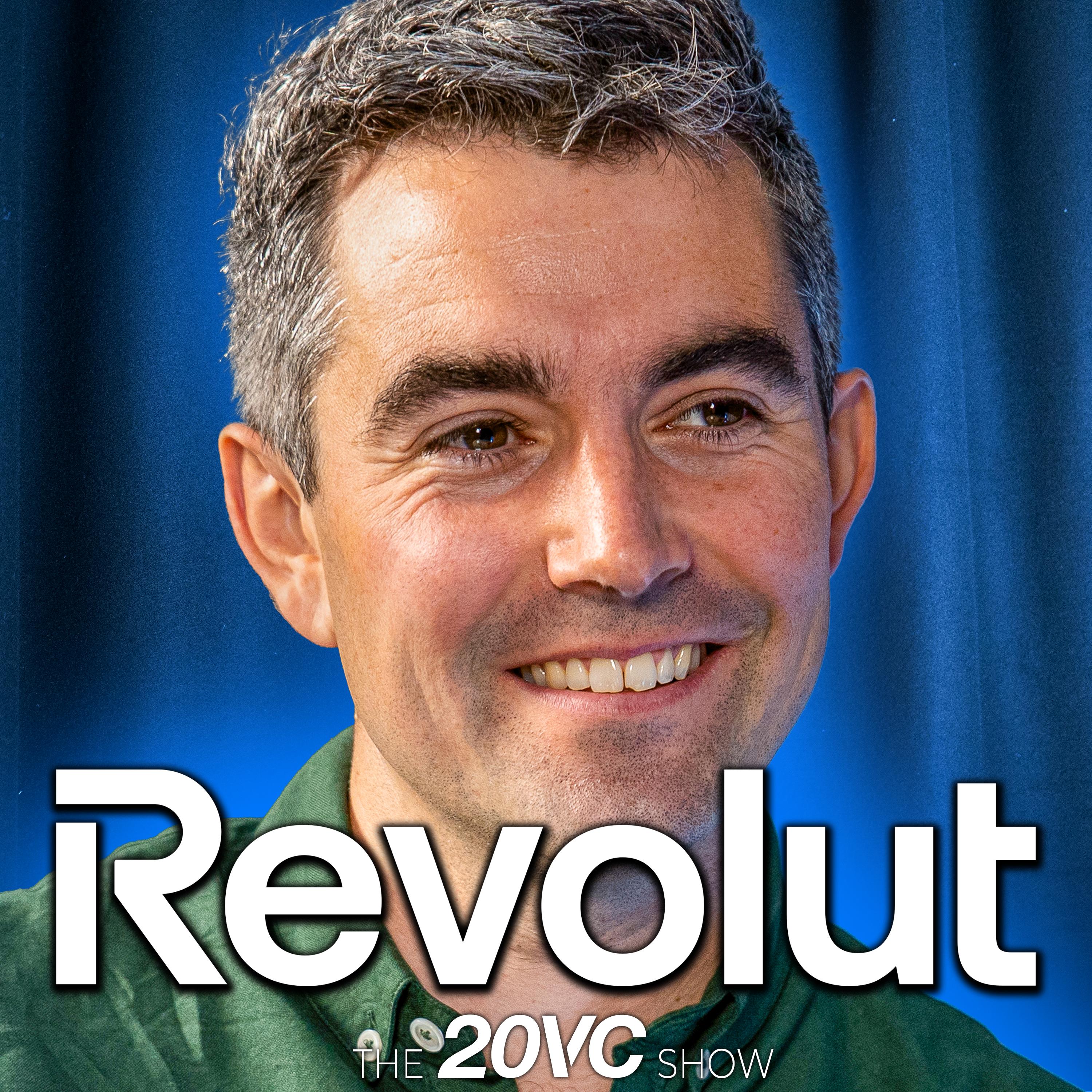
The Twenty Minute VC (20VC): Venture Capital | Startup Funding | The Pitch
20Product: Revolut Business $1BN Revenue: Five of the Biggest Product Lessons | How Revolut Structures Product and Design Teams | How Revolut Experiments and Invests in New Product Bets | How Revolut Ships Product So Fast with James Gibson
00:54:15
James Gibson is Head of Revolut Business. Under his leadership, Revolut Business now processes over $33 billion in monthly transaction volume and generates more than $1BN in annualised revenue. AGENDA: 04:10 Is Consulting the Worst...
Loading summary
Transcript221 lines
- [00:00]
A
This is 20 product with me, Harry Stebbings. Now 20 product is the monthly show where we sit down with the best product leaders to delve into how they build the best products and product teams. Now joining us today is a company that I'm probably more excited about than almost any other private company, Revolut. And joining us is James Gibson, head of Revolut Business. Now, under his leadership, Revolut Business now processes over 33 billion in monthly transaction volumes and generates more than a billion dollars in annualized re. It is one of the fastest growing business banking products on the planet. What an incredible journey and today we delve into their biggest product lessons. But before we dive into the show today, are you struggling to beat model benchmarks or implement Gen AI in your product? If so, you need Turing. Turing is an AGI infrastructure company backed by incredible investors like Foundation Capital and Westbridge Capital. And they do two things. Number one, they help leading companies in AI labs like Salesforce, Anthropic and 1Meta enhance their LLMs with advanced reasoning, coding, multilinguality, multimodality and more. Two they combine human and artificial intelligence expertise to deploy cutting edge AI systems for awesome companies like Rivian and Reddit. Right now Turing offers a free 5 minute self assessment to help you pinpoint your place in the Gen AI journey, get tailored next steps to optimize your model strategy and then finally learn how Turing can refine and implement your models for better performance. Take the guesswork out of Gen AI. Visit turing.com 20vc to start your free assessment today. With hiring solved by Turing, Framer brings the product to life still using a copy paste website. Break the template trap with Framer I've been rebuilding our show site and honestly it felt like redesigning in Figma but this time it went live. What surprised me was how smooth it was to add bold animations and even localize the entire site with one click and you yeah, our whole team jumped in and edited the same page together. No mess, no back and forth. Framer is the design first. No code website builder that just lets anyone ship a production ready site in minutes. So if you're ready to build a site that looks hand coded without hiring a developer, launch your site for free@framer.com and use the code sales to get your first month of pro on the house. That's framer.com promo code sales framer.com promo code sales rules and machines restrictions may apply after Framer nails the design warp.dev helps your team ship faster. AI coding is everywhere but Most of it, honestly, it's pretty chaotic code that is almost right, but you don't really understand. Well, that's why Warp exists. With Warp, the old lines between terminal and IDE disappear. It's a seamless environment for coding with agents where you can prompt, plan review and ship production, ready code, edit files in app review diffs as you go and deploy straight to production without switching tools. Warp tops the benchmarks literally. Number one on terminal bench, top five on software engineering bench verified and is trusted by over 600,000 developers and used by 56% of the Fortune 500 engineering teams, making it one of the fastest growing AI companies with revenue growing 30x this year. With Warp, you don't just get speed, you get code you can trust. The average developer saves five hours a week with Warp, almost half a day. Try Warp for free@warp.dev 20VC. And to get pro for only $5 for your first month, use the code 20VC. That's 20VC.
- [03:57]
B
You have now arrived at your destination.
- [04:00]
A
James, I am so excited for this. Dude, I am like that.
- [04:03]
B
We're users of Revolut business here.
- [04:05]
A
I am such a fan of the product. I've been so looking forward to this.
- [04:08]
B
So thank you for joining me.
- [04:09]
C
Thank you for having me on. It's great to be here.
- [04:10]
A
Now you started life as a consultant. I want to start there.
- [04:14]
B
Do you recommend this as an entry into the world of product?
- [04:17]
C
For me, starting as a consultant was fantastic. Two years and you learn a lot of hard skills in the role. You get exposed to a lot of people, you learn to present. And I think for most careers, if you start like that and then go into something where you're a little bit more hands on, it's a really good way to start. So, yeah, for me it was great. Now we hire people into product roles from a lot of other backgrounds. We've just taken in a big cohort of grads directly. We also hire from engineering and data as well. So there is a variety of different ways people can get into product, but for me, having those couple of years at the start of the career was a great start.
- [04:53]
B
When you then enter product for the first time after consulting, you have this very unique opportunity where you can go back to that younger James and say, James, you should know this about the next eight years. What would you say that you should know if you could tell yourself anything?
- [05:09]
C
What should I know back then that I wish I knew now? To be honest, when I was a consultant, I didn't even really know that product was A career. Certainly when I left university, I didn't. And when I joined Revolut, it became apparent to me that the real power, the thing that created all the value, was this product team and the people working within it. And so actually learning that there was even this thing called product management, product ownership, and moving into that, for me was a complete game changer. And that's what then I focused on for the next six, seven years.
- [05:39]
B
When you see the grads coming into Revolut's day that you have, as you just mentioned, that large cohort, it's a very tumultuous world. AI is changing everything. What advice do you have for them in terms of excelling at Revolut on the day one?
- [05:54]
C
That's a great question. I gave the presentation the senior leadership welcome to the grads yesterday, and I answered exactly the same question. So I'll tell you word for word what I told them. I said to them, firstly, ensure that you ask lots of stupid questions. Now's the time in your career when you can do that. You need to understand what's going on. Secondly, you need to focus on a small number of things and do them incredibly well. No one remembers if you've done 15 different things in your first three months, they'll remember the quality of what you did. So make sure that you focus on a small number of things and do them really well. And the final thing I would say is early in your career, you want to learn what good looks like. That's what will set you up well for the rest of your career. You want to surround yourselves with the best people. Fortunately, at Revolut, we have a lot of good people, but choosing who you're going to spend time with and what functions of engineering or data that you're going to spend time with to really learn and absorb from them and learn what good looks like that will set you up so well for the next five, ten years of your career in.
- [06:51]
B
Terms of focusing on a small number of things and doing them very well. The most interesting thing actually for me about Revolut is your culture of radical execution. When you look at your product velocity, it's pretty insane. There's teams behind that. And so I do want to start on the teams themselves who build those products and hiring and building that team. How do you at Revolut approach the hiring process?
- [07:13]
C
So the first thing to think about is we obviously want to go and find the absolute best people. So you need to go and look for them. So you need teams going out there and speaking to the best people, often the best people aren't looking for roles, so you need to be the ones going to approach them. So we have amazing teams of recruiters who are spending a lot of time doing that, explaining to people the roles that we have and trying to get them in at the kind of top of the funnel.
- [07:34]
B
Do you believe that educational institutions signifies quality? Nick places quite a lot of emphasis on like, oh, Oxford or Cambridge.
- [07:42]
C
I think, well, as someone who went to Oxford, I have to say yes, but no. I think it can be a useful signal. It by no means definitely means that person is going to be fantastic.
- [07:52]
B
Okay, so we have these recruiters, they go out, they find high quality people, they then bring them in. What does the screening process look like from there?
- [08:00]
C
So we then have CV screening process and some initial evaluation. After that we have a very structured interview process where there are maybe four or five steps. Each of the steps focuses on a different element of what we're looking for. So some might be on skills like just raw problem solving, some might be on product skills, so solving is kind of problem solving in a product context. And then some will be on cultural alignment as well. And then finally on a team fit. Each of these interviews will be done and we'll have a very structured evaluation of what we're looking for in each of them. The people that we get to do these interviews we spend a lot of time thinking about as well. So even within Revolut, we have people who obviously have different strengths and we are constantly evaluating your performance as an interviewer to understand whether or not you should continue to be an interviewer.
- [08:50]
B
Wow, that's so interesting. So how do you evaluate the performance of interviewers given the feedback cycle being potentially nine months if they hire a shit patch of people?
- [08:58]
C
So firstly, we only get people doing the interviews to start with who have been in the company for a while and we trust to do it. And then once they start doing it, we gather these data points for the people that they do hire. So we know the performance reviews that those people go on to get. And then we can basically backtest the interviewer and give them scores. And you see the distribution of outcomes of the people that they've hired and using that, you can give them a score and then quite quickly you can start comparing their capability if you think.
- [09:23]
B
About doing a few things very well and then the breadth of skills that one is looking for in an interview process. I have never really had a job, James, and I'm probably world class at like one or two things and just suck at 99%. So I would never get a job at Revolut because when you look at like the skill requirements, I wouldn't have them. Is there a paradox between wanting people who are very good at one or two things and focusing and then actually the requirements that are required in an interview process, do they combine?
- [09:57]
C
Firstly, it's not like we're just looking for people who went to Oxford and Cambridge. To use the example you gave earlier, we're looking at a lot of different data points. So one of them is people who've started their own company, for example. They might have no other experience whatsoever. Maybe they even did it at university alongside their studies.
- [10:13]
B
Why is that a high indicator of success for you?
- [10:16]
C
Because it shows someone who has drive and hunger, someone who is willing to sacrifice in order to try and create something, and then someone who will have actually learned how to do something through the process of that.
- [10:28]
B
Do they have a higher retention rate versus other employees?
- [10:33]
C
Oh, that's a great question. I don't know. Off the top of my head, I've seen both succeed at Revolut.
- [10:37]
B
So we have these different types and then we're going through the interview process. When you look today specifically for you in product, you're interviewing me. What are the skills you want to see me have if I'm going to come into your product team today?
- [10:50]
C
I personally believe a lot more in raw skills than I do in people who've learned frameworks. There's a lot of things out there that you can learn about, and to be honest, I don't know a lot of them. And I don't think a lot of people who've done well and built great products know about all of these frameworks. What I think you really want is people with great raw skillset. And so that means people who are able to ask the right questions, who are able to structure problems, who are able to balance multiple solutions in their head and trade them off. These are just core problem solving skills. And I don't think you have to have come from any particular background to have them. You also need to have a hunger, particularly if you're going to come and work in a company like Revolut. There is no point coming if you kind of want to chill. And I think that you can see those things relatively quickly when you interview people.
- [11:38]
B
When you're interviewing them, what questions do you find most revealing of those skills?
- [11:43]
C
I like to ask people what their biggest mistakes were in their career. And people who I think are good tend to have a lot of mistakes. And they can identify at various stages all sorts of things that they would have done differently. And that's because you want people who are self critical. Another one is, what do people find weird about you? Good people tend to have some slight idiosyncrasies. People who are good tend to be aware of them. And I think it's again, an interesting thing to talk about.
- [12:11]
B
Should we play a game? What would you say your biggest mistake is? I'll tell you mine. I lost $25 million in a day in Pakistan. Wow.
- [12:22]
C
How did you do that?
- [12:24]
B
It's not a shit story, is it? You're like, okay, I'll buy. I invested in the zap for Pakistan and the combination of regulatory changes and weather patterns meant that it went bust very, very quickly.
- [12:38]
C
Wow, weather passes.
- [12:39]
B
We spent $25 million of my money in nine months. It's not a shit one, is it? You're like, if I came to your job interview, you'd be like, okay.
- [12:50]
C
Someone once told me who came to our team that he tried to put on a music festival. He'd spent hundreds of thousands of his own money. I don't know why he thought this was necessarily thing he wanted to do, but he did. And that had just crashed and burned, lost all this money. And I remember thinking like, wow, that's cool. I don't have anything I haven't done.
- [13:06]
B
I just fucking trumped his music festival.
- [13:08]
C
Yeah, you did, you did, you won.
- [13:10]
B
And what would yours be?
- [13:11]
C
Well, actually I think I would have probably tried to get into product a bit quicker as not a massive mistake, but now knowing what I know, a couple of years in consulting was great, but I'd love to have gone in a little bit earlier and then really put foot on the pedal a bit earlier in my career. Other ones are revolut is we hired. This is the classic one, right? You hired the wrong people early on. The people with lots of experience who make you feel like you don't know anything because you don't have all the background in these again, these frameworks, et cetera. And then you realize after probably slightly too long that actually that's not that relevant. All those frameworks are. And you've been wasting your time for a year trying to understand it where actually you should sort of trust your gut.
- [13:49]
B
What do you want to hear in the. What makes someone weird?
- [13:53]
C
I love it when people understand that they have a certain intensity about themselves or a hunger about themselves which they think sets them apart. A lot of great people that I've worked with have something which is driving them. And that can be lots of different things which gives them a hunger which has allowed them to push harder than other people.
- [14:14]
B
What was giving you your hunger, James? You seem like a very level, calm Englishman.
- [14:20]
C
Growing up, my dad said to me when I said, oh, I'd love to, my dad's an architect and to be honest, I would love to have been an architect. And he said to me, you've got to go do something that makes money. You can't be an architect and you can make money as an architecture. I'm now married to an architect so I get to live vicariously through her. But there was certainly a drive to go and try and make some money that was instilled in me from a relatively early age.
- [14:42]
B
Do you mind if people in an interview process are clearly financially driven like they're after the money?
- [14:48]
C
No, not at all. That's absolutely fine. I mean, and if you want to work in a really hard job and you get paid well, then yeah, I totally agree.
- [14:55]
B
I think it's a very British thing that we demonise this kind of money chasing which doesn't always mean it's bad or wrong.
- [15:00]
C
Completely agree. And the idea that you can't talk about it properly and openly during the interview process or towards the end of the interview process, at least to me, doesn't make any sense at all.
- [15:08]
B
Part of an interview process is also take home assignments or tests, so to speak, where there is some tangible materiality to. Are you good at product? What does that look like?
- [15:17]
C
For Revolut we do some simple ones to just test basic problem solving. But very high performing people tend to not want to dedicate two days of their life to solving a problem. And so you have to make sure it's something reasonable. So we do use them, but I would say in a limited way.
- [15:32]
B
What sort of thing do you do? Like here's a UI for.
- [15:34]
C
Yeah, here's a data set. Can you tell me what's going on with the data set? Keep it very open ended and then let them kind of try and understand it and come back to you with some thoughts on it.
- [15:42]
B
Okay, so then they progress and it looks great. We're going to give them an offer. Any big lessons for you in that offer negotiation Negotiation process of how good versus bad people handle it, how good.
- [15:54]
C
People tend to handle it. They have a good idea from the outset what they want and what criteria need to be met and they make kind of decisions quite quickly. They're also willing on some level to deal with ambiguity when you join A company, there is no way you can know exactly who you're going to be working with, exactly what project you're going to be working on. You have to be able to deal with that. And normally that's a good indication of when they join, if they're going to be able to roll with the punches that obviously come with with joining a fast growing company.
- [16:21]
B
When you reflect on your biggest hiring mistakes, what did you not see? With the benefit of hindsight you think you should have seen?
- [16:29]
C
You need to on some level trust your gut that some of the ways you've been doing product up till then make sense and not try and bring in people who are going to say everything that's happened up till now has been ridiculous. We're going to completely change how you do this. And that's happened a few times. Nick's pretty probably spoken to you about this a bit as well. And what you end up finding kind of six months, 12 months later is actually the way you were doing it before that got you all that growth before was a great way to do it. And you should probably just sort of double down on that and put more weight behind that rather than starting something completely new.
- [17:01]
B
What I like about Nick is also his mental plasticity though. I remember talking to him about brand marketing and he was always very against brand marketing in the earlier days, which I'm sure he was probably right to be in the earlier days, but his willingness to come around to it now I think has been really interesting.
- [17:15]
C
Yeah, Nick's able to form opinions on stuff and really sensible opinions, but then from everything that I've seen is able to change when new information comes to light.
- [17:22]
B
When we think about knowing whether it was the right decision to do it in the early days there, like you said, hey, throw out all things from the window or actually keep them. You need to have goals to understand what works and what doesn't. What is a good goal versus a bad goal.
- [17:36]
C
At Revolut, we try and keep goals relatively simple to start with. So you need to be able to understand what it is actually. Probably most critically, the goal has to be aligned with whatever the company goal is. So there's no point just having random goals for teams if it doesn't all sum up to something.
- [17:51]
B
How do you think about that? When there's Revolut core company, amazing bank for everyone and then there's also Revolut business, the goals may not quite align.
- [18:00]
C
No, they do. So we set at the company level about five macro goals that we're looking to achieve. And some of them are kind of financial goals, some of them are customer experience goals and the like. And then we cascade those down to the relevant products and departments to support them. I mean, to use a basic one, let's say one of our goals as a company was gross profit. We could cascade that down to business so we know what the KPI the goal for the business side would be.
- [18:25]
B
Got it. So you will have a like, overarching set of goals and all of them will be horizontally applicable to every business line.
- [18:32]
C
Maybe not every single business line. It obviously depends at what stage it's out of launch, et cetera. But yeah, that's the rough idea. You can cascade it all down. So it all sums up to the overarching goals.
- [18:41]
B
How many goals do you think you can have at one time?
- [18:43]
C
I don't think you should have any more than five goals at once. I think if you do, it starts to become too confusing. You're trying to optimize in too many different directions. So we try and keep it three to five per team.
- [18:54]
B
Should your goals be super achievable? How do you think about the Google style? Oh, you should only achieve 70 to 80%.
- [19:00]
C
Yeah, I think it's natural, Right. When you set goals, if you're always hitting 100% of your goal, then you're probably not setting the right goals. If you're only ever hitting 5% of your goals, you either got a terrible team or you're not saying the right goals. So rule of thumb, 70, 80% on average should be a good outcome.
- [19:16]
B
What's the hardest goal that Nick has set for you?
- [19:19]
C
Nick has set for me and for us to continue the level of growth that we've had over the last eight years. I've been there. We're trying to continue to grow at the same rate despite being at a much larger scale and with all the complexities that comes with that. And that's tough. It's fun, but it's tough.
- [19:36]
B
Yeah, it's incredibly tough. Given the scale. How do you structure product teams at Revolut Business?
- [19:42]
C
The way we structure product teams at Revolut Business and across all of Revolut is we have product owners who report in to me. And note, we have product owners, not product managers. So the key difference is that product owner really owns the team and owns the outcome of the team. They're not trying to influence people around the company. They are a team owner and they stay working on that team for months and years at a time. I mean, take me, for example. I'm kind of the ultimate product owner of Revolut business. And I've been working on it now for seven and a half years. And those teams then are cross functional teams of engineers, designers, operations, and they all report into that product owner. So the product owner really kind of is the control for the control of the team.
- [20:23]
B
How many cross functional employees is in a team on a given basis? Is this like 10, 40?
- [20:29]
C
Yeah, no, no, no. We're talking about 10 to 12 per team. Don't want it too big. Keeping it small and lean is definitely the way to do it in my opinion.
- [20:36]
B
Okay, so we've got 10 in product design and you name it and they report up to the product owner who's like the kind of CEO, I guess, of that product and then they report up to you. How many product owners report to you?
- [20:48]
C
We have about 15 reporting to me. Something like that.
- [20:51]
B
15 reporting to you?
- [20:52]
C
Yeah. So one of the key characteristics of Revolut you'll have probably spoken to Nick about is that we have a very flat hierarchy. And because we try and hire very, very good people, we shouldn't need as managers to be spending hours and hours a week telling them exactly what to do. We want people who can be relatively autonomous.
- [21:08]
B
What does the reporting look like for you? Is this one on ones every week? Every fortnight?
- [21:13]
C
Yeah. The way we structure our kind of workflow is, I think different some other companies. So we tend to have weekly one on ones. That's for personal stuff or you need to align quickly on some top.
- [21:24]
B
You and the product owner.
- [21:25]
C
Yes, that's right. And then we have weekly product reviews. And that's where we have product engineering or senior engineering design for that particular team or potentially a couple of teams together. And we look at metrics, we look at roadmap and we look at designs and that can be a fairly intense meeting. I mean, we want to make it to some extent creative, but we expect people to come with a pretty solid update on a pretty solid idea of what they're going to then be doing. By having this cadence every week, it means we don't waste a lot of time preparing for the meeting we're really doing most of the time. And then you get a good glimpse once a week of what's happening.
- [22:00]
B
How do you do one on ones, having done them for seven and a half years? I don't do one on ones.
- [22:05]
C
I'm actually reducing them at the moment where we're pushing more into product reviews so we have more of a. Okay, the right people are in the team. Let's make some decisions.
- [22:13]
B
Why are you making that decision to move away from one on ones a little bit and do more product reviews?
- [22:18]
C
Because I find that a lot of the decisions that you end up making, one on one ones are actually ones that impact more than just one person and it's useful to have a few other people in the room to discuss it. So if you could keep one meeting, it's that product review is the. Is the meeting I would keep.
- [22:32]
B
How do you do great product review sessions? Who's invited? We said it's weekly. How is the agenda set? What does that good look like?
- [22:41]
C
So the way I do it, and this is true across a lot of revolut, is we will have the product owner along with the designer, the ops manager who are involved in certain projects and then some of the engineering team. And then we'll potentially have a kind of a head of design who's more of a horizontal role, who oversees some of the design aspects. Same on product. Then it will be a review of metrics. So the goals that we talked about, how are we doing? They're going the right way or not? Review of the roadmap. Are we on track to deliver what we said we'd deliver at the start of the quarter? And then what we spend most of the time doing is looking at designs. So the designer will literally present Figma and say, okay, we've got a new problem we're looking to solve. This is how we're going to solve it. And we go through screen by screen. We do that on a kind of team level once a week and then once we're really confident in them, they get bubbled up to. We do a overall business one once a week, which is this is the final output, this is going to be built and that's the one then that Nick or Vlad occasionally join and they'll then have their views at that point.
- [23:41]
B
In a world today of AI and vibe coding, people are suggesting that we're going to move away from this kind of design phase first in figma and move straight to prototyping. Do you think we will skip that phase and move straight to the kind of Vibe coding instantiation?
- [23:56]
C
We were talking about this this week and trying it out in some areas. I haven't seen it done yet. I will be really interested. I think in principle it could work. I mean I could see how it could be quite cool, but I'd be interested to see it. So I haven't formed a firm opinion.
- [24:10]
B
But so far it hasn't internally, so.
- [24:12]
C
Far we have not. No.
- [24:14]
B
How long do you give a project when the numbers aren't going to up and to the right as planned?
- [24:20]
C
It depends on the size of the project. But if one of our kind of new bets is not hitting its goals that we set, we give those a good year or potentially even longer. But these are big new product areas, and sometimes we need to pivot. You know, once we built it, we don't want to just stop it instantly. For some of the smaller stuff, it might be a little bit quicker, but I think we tend to give stuff a good amount of time to run.
- [24:40]
B
What new project started off with poor numbers and has turned into a monster?
- [24:47]
C
So a product which has started off slowly and is gaining really good traction is RevPay for us. So RevPay is our merchants who use Revolut business are able to offer on their checkout pay. With Revolut, there's a button you push and you put in your phone number as a retail customer, and then it get pushed to your retail app. As we grow more and more on the retail side and get more penetration there as that product improves, as we get better known on the business side, that's just growing and growing. And now we're signing up big airlines, like we've just gone live with whaling, for example, who are starting to put this on their checkout pages because we're so synonymous with travel now that having a pay with Revolut is a very natural extension for them.
- [25:25]
B
What's your lesson with that? Sometimes that just adoption is slow and you need to be persistent that the messaging was wrong?
- [25:33]
C
Yeah. I think in that particular case, sometimes adoption takes time. We need to perfect the product first. We need to be able to prove that this is something that they should have on their checkout. We need numbers to do that. So I think it's just a bit of a game to get there.
- [25:45]
B
What new project had banging numbers and actually then fizzled out?
- [25:50]
C
We did payroll to start with. We got a few of our customers on board with you that really liked it. We did it well as a product. But trying to scale that, trying to build a growth engine for a payroll product when the going price is about pound five per seat in the UK and trying to do that scale, we found it very hard. We didn't manage to make it work.
- [26:07]
B
Interesting. Nick said the same one to me. Payroll's one that really sticks on the mind, huh? Payroll. Fucking payroll.
- [26:16]
C
It seems like it should work because we also have the overlap on the retail side. So, you know, the customer experience could be really great. You get your payslip in your retail app. There's a lot of like nice synergies that are there, but we so far haven't been able to make it work. But we'll never say never.
- [26:31]
B
Oh no. There's always a second chance. So we're going back to the product review. Product review is also a great place for new ideas. How do you think about new ideas to adopt and run with versus It's a distraction. One of our calls that we said at the beginning is do few things very well. How do you balance that prioritization?
- [26:51]
C
One thing that people do when they join a company is sometimes they try and rely too much on. I'm going to bring completely new ideas rather than executing on what the team really need them to get done. I would say a lot of our time goes into we just need to execute on what we already know will work. It might not always be the most exciting thing, but that's what our customers want and that's what we need to do. That is our number one priority. And then we encourage people to come with ideas around, particularly the longer term vision. And then when we have gaps of how we can add in additional stuff. So it's a bit of a mixture. We also have a new bets process which is allowing people to come with new ideas for completely new products.
- [27:28]
B
Talk to me about that.
- [27:30]
C
We as a company over the years have tried out various different things. Some had worked, some hadn't, but there was never a very structured way of evaluating should we do this? And then once we've said we'll do it, should we keep doing it? The new bets process, there's a standardized pitch, relatively standardized model which then results in some targets and then you get evaluated in a framework. There's a kind of single dashboard, a single way of seeing has the product performed as we expected to. And that gives you a much more objective decision making framework and how people feel about stuff across the company. Because we're doing quite a lot at once. It allows you to standardize things and compare different business lines that you're launching rather than everything kind of being super siloed.
- [28:12]
B
When I spoke to Nick, he said there were 26 new bets running at a time.
- [28:16]
C
That sounds about right.
- [28:16]
B
How do you equip them? What does the resource allocation look like for those bets?
- [28:20]
C
So part of the pitch process is that those people ask for resources and so we typically, you know, maybe one team, maybe two teams based on the business case. And then you get your first funding, then you can Hire a team. We typically bring people from existing teams and put them into these teams, then maybe with one or two new people and then that's the team that runs with it for maybe a year, maybe two years, and we see how it does.
- [28:42]
B
What new bat are you most excited by today?
- [28:46]
C
The one that I think Nick spoken about before is our private bank that we're looking at at the moment.
- [28:51]
B
He spoke about it with me.
- [28:52]
C
Yeah, yeah, exactly. It's something which there's a huge amount of potential for and we can learn so much from what we've done on the retail side, the business side, and kind of bring it together with it and we'll have a full proposition on business. We've never done any credit products. We're just a debit product today. As you can imagine, there's a lot of potential in the long term to move into credit. So that's another exciting area for us.
- [29:11]
B
When we think about private banking, it actually makes me just think of this core product challenge that is universal, which is how do you build for super users and also how do you build for everyone? How do you think about the challenge of building for super users, normally very high value customers, but also not wanting to alienate everyone else by building for them?
- [29:32]
C
Well, firstly we start with the goals that we're trying to impact, the ones I talked about earlier on, and then we try and denominate the different ideas in terms of the impact they can have on those goals. So let's say gross profit is your ultimate goal. You should be able to do some pretty basic calculations on should you build your new, let's say localized tax feature in Spain or should you build this hyper specialized feature for enterprises and you can start to trade those two things off by bringing them back into a common metric. I would also say that in most cases what customers want, there tends to be consensus across a lot of customers. It tends to feel, particularly on B2B, relatively straightforward to know what to do. That's how we approach it.
- [30:13]
B
Kaz, what's this metric for you that determines, okay, we have a successful revolut business customer.
- [30:20]
C
I'll give you a few of the things that we look at. So one is the money that we make from customers. Another is we know retention figures for our customers and we think about this a lot. So of all the customers who start at the top of your funnel, how many made it to every single step in your funnel? And the funnel doesn't just stop when you've onboarded them, it never stops. You have retention after two Months of using the product. After six months and looking at those kind of numbers, you can really start to see where the product that they got is not what the product they wanted.
- [30:47]
B
What would you rate your funnel today from like first contact to business account created?
- [30:53]
C
I would give it six or seven out of ten.
- [30:55]
B
Wow, okay. I appreciate the honesty. Where could it be better?
- [30:59]
C
We could always be so much better. And I think everything we do in Europe, for example, we can have capital deposit products where you actually incorporate the business for them. So you could count that as your first step in the process. In the kind of core funnel, we have obligations and we need to understand how businesses run, how they match against central registries, what the nature of business is, who they transact. With all these kind of things, we have to understand there's a lot of room for us to improve in that. That's one place where AI I think can come in a lot trying to understand these businesses better at inception. So I'm sure we could do better there. And then the bit when they land in the product, do they see the product that they want most? Comparisons, by the way, we would have pretty good metrics on a lot of these things. I just, when I look at it, I see so much that we could do further. But you know, we know that in certain countries we don't have the products that they need to do xyz, maybe pay a certain type of tax or particular integrations with accounting software. And so once we solve these things, I think we'll be up to 8 or a 9.
- [31:55]
B
Was PMF product market fit for revolut business just always there.
- [32:00]
C
The core of revolut business is payments and cards, and that was available from day one and a lot of people loved it from day one as well. That said, over the last seven years, we built around that a lot of additional stuff that a business needs to run. If you look at our kind of retention metrics, if you look at the activity metrics, like the number of businesses using the account every day divided by those who use it every month, everything's just getting better every single month. So what that tells me is yes, we had a great product market fit initially. You know, we got a lot of growth. But if you look at what we've done over the last six years, we've really honed that and turned it into a product that meets all the customers needs rather than just when.
- [32:38]
B
Did product market fit feel most off for revolut business? I always think product market fit is really like chapters and you never achieve it. And it's done. There's one mountain and then a plateau and then another mountain and a plateau. When did it feel most off?
- [32:52]
C
I think about five years ago. There'd been a rush to launch a lot of the initial product and we had what I would describe as a bit of a messy product that probably needs to be tightened up, brought into a kind of the Revolut design system a bit more closely. Use a few more of the patterns from the kind of core Revolut experience. We did a big one of our first big redesigns of the app, and immediately after that, you start to see all the product metrics improve. And that's when you think, ah, we could have been a lot better beforehand, really. So there was that, and then we did another big redesign of the app last year, and again after that, you suddenly see, you know, all your core metrics jump up and you think, we're leaving a bit on the table before that reads them.
- [33:29]
B
Your takeaway from that is simple.
- [33:32]
C
Always better in product as a general principle. Yeah, I think so. I don't think anyone ever says, I wish this product looked, or at least the UI was more complex. I think generally simplifying is better. Yeah.
- [33:42]
B
How do you think about when you look at the last seven and a half years? What did you not do from a product perspective that you wish you'd done?
- [33:50]
C
Sometimes, you know, you have problems in your product and you don't address them because you have other priorities that you want to focus on first, because addressing them might seem like quite hard, maybe. And so you end up focusing on other things. And then when you do finally focus on them, you sort of realize that actually you could have done that a lot sooner.
- [34:08]
B
What did you not address that you wish you had done?
- [34:11]
C
So we have quite a flat hierarchy and we at various points, have allowed our teams to kind of develop autonomously to some extent. And what that means is that people can end up going in slightly different directions. And I think one of the key roles of a senior product leadership team is to know when to pull, force alignment, basically, and pull teams back together. So that might mean we need to revert to using more common patterns so that a customer who's using this part of the app and another part of the app, it feels the same, because what happens when you have different teams working on them? It can feel like you're using two different products sometimes, and so you need to know when to pull those back together.
- [34:48]
B
Do you have a horizontal design team then, with design templates that spread across.
- [34:51]
C
The different Divisions, we have a central within Revolut, a central design system team. And then within business we have a head of design as well who's acting as that kind of glue to say, hang on a second, we've got divergence here, we need to pull this together.
- [35:04]
B
Is it ever good to be different? And what I mean by that is, if you think about private banking, say the design system may be more premium, may be more a certain way. Is it ever good to have non uniform design?
- [35:17]
C
Absolutely. So four years ago we had the business app, looks a lot like the retail app, very, very similar. Even on web, you can imagine. And one of the big things we did over the last two years is we said, hang on a second, a business needs to have much bigger tables. I mean, sounds obvious. But rather than saying, oh, we're going to have something completely different on web and something completely different on mobile and you wouldn't really recognize them, we've built a design system that scales from a mobile device to an iPad up to a web device. And so what you can literally do is scale the screen and you'll see how it works across all those different dimensions. And so to answer your question, yes, there definitely are different needs, but that doesn't mean you need to have a sort of fundamentally different approach to each one or a different team. An elegant solution will solve for the different use cases, but in a unified way.
- [36:02]
B
So when we look at the structure going back to that, you have these 15 product owners that then report into you what happens then you then report to the senior team alongside you and Discuss what the 15 product owners have got in terms of decision making. Should we change this screen to this? Should we completely redo this?
- [36:21]
C
Yeah. Once a year we set a three year strategy which has kind of what we want to focus on and why, but very quickly gets down to concrete product deliveries that we want to make. One thing Revolut does well is it turns strategy into something concrete very quickly. I mean, Nick and Vlad are big fans of. Right. What does that actually mean?
- [36:40]
B
How do they do that?
- [36:42]
C
By setting example from day one. So, okay, great, you've got a lovely strategy. What are you actually building? Show me the designs, make it real. Show me literally what you're talking about. And that forces people to be very literal, I would say, about what they're building.
- [36:55]
B
When I think about why Revolut has been so successful, I always say it's because of the product velocity that the team has been able to achieve in rolling out new products in a way that just no one Else has matched. How are you able to drive such efficiency and product velocity in a way that no one else has done?
- [37:13]
C
I think a lot of the topics we discussed are what contribute to this. So if I was to sum it up, I would say you need great people. You cannot have people that you are having to tell every step of the way what to do. You need great people who just get it. Then you need a good set of goals that make sense and which can cascade down. Then you need a roadmap which talks to those goals and a team structure which allows teams to act relatively autonomously. Can't have huge interdependencies, it makes it very difficult. And then finally you need a kind of a week to week governance structure that allows you to deliver at that velocity. And that's the product review process where that becomes your governance for product, basically.
- [37:51]
B
So we have that driving the velocity. When was there a lack of velocity in the system, do you think? And why was that?
- [37:58]
C
Probably around the times where we've hired the most people at once and we have teams where suddenly 50% of the people in the team are new. And by new I mean maybe they've been there for less three or six months. You cannot keep velocity going with a lot of new because people need time to learn. Right. It's very natural. Also if you hire too many people, can happen that you then lower your bar. Now we're pretty strict about how quickly we let stuff grow. We make sure that all new teams have a good mix of existing people and new people and that's allowing us to go much quicker.
- [38:29]
B
When we think about going quicker and growing. You yourself as a product leader are always evolving. When you think about what you need to improve to be the next best product leader in the next iteration of your career, what do you think you need to do?
- [38:42]
C
I think I'm naturally a relatively conservative person in terms of I can see the risks in stuff rather than always the opportunity. And one thing that we need to be doing over the next couple of years is seeing the opportunity in new areas that we can build the product into. I think that's going to be key on the business side. The kind of core product now is in a really good shape. We need to make sure that we're building out these additional areas of the product.
- [39:05]
B
Where are you not being aggressive enough, do you think?
- [39:08]
C
One area we've been deliberately not aggressive is in credit, because you want to be really careful in credit. We need to make sure that we approach it in a sensible way. We've Had a lot of growth on the debit side. Without credits, we haven't needed to today. Now as we start to turn our attention more and more to credit, we have to be very careful about what we do there. So that's one example.
- [39:26]
B
Kanas, when you think about the future of product, where you have built and honed your craft, how does that change in the world of AI? Most significantly, I think first and foremost.
- [39:36]
C
It will be bringing AI into the products that we're building. And I don't know about you, but I haven't seen tons of examples of that across the industry yet. I think we're really just at the start, so I think that will be first question is, okay, we have this very powerful technology. How is it actually going to be used to better our customers experience?
- [39:54]
B
How will AI be used to make customer experience in Revolut better?
- [39:58]
C
We could use it in analytics so you can understand your money better, for example, or in businesses when you have many employees using the cards. You might want to be alerted when people are spending money on weird stuff. And suddenly having machines that are reading all these transactions and able to give you kind of qualitative insights on them is going to be very cool. Already is cool, but there's going to be a lot it can do there. Also taking some of the more mechanical tasks that finance teams do today and automating them, categorizing expenses being being a good one. We already do this, but you can, you can start to just speed up that process significantly by having AI do it.
- [40:36]
B
I got asked this one the other day and I thought it was really good. What would you do if you weren't scared?
- [40:41]
C
Interesting. For me, I think it would be amazing to start my own company. I think a lot of people would love to do this. I've seen firsthand how difficult that is. Nick and Vlad have done a phenomenal job. Obviously with Revolut. There's a bit of their experience which would make me scared about doing that just because it clearly is very, very difficult and takes a lot.
- [40:59]
B
What do you think makes Nick so special?
- [41:02]
C
I think he has a very high bar in general. For him, anything less than excellent is not acceptable. He is very good at pushing teams to deliver by using some of the mechanisms that we've talked about and the process we talked about to get people to deliver quickly through how he kind of interacts with people. I think also to get them to deliver quickly.
- [41:27]
B
Does the excellent requirement go in contrast to the product velocity?
- [41:33]
C
Does excellent mean that you can't move quickly? I Don't think that's true. If you look at some of the best products in the world, they're excellent and they also move quickly. I would classify Revolut as one of them as well. Our product is very good and we move very quickly. We haven't talked so much about quality and how you can use processes to ensure there's high quality there as well. But I think some of the same approaches work there as well.
- [41:55]
B
Has Nick changed as a leader over the last eight years?
- [41:59]
C
No, I don't think so. Not fundamentally, no. I mean, obviously the company is a lot bigger now. There's a lot more things going on than there were eight years ago. But the fundamental of how Nick approaches things is still the same.
- [42:12]
B
When you look forward, you've got the us. You've also got Latin America as an opportunity. Which one excites you more on the business side?
- [42:20]
C
We're seeing really great traction in the US and we're already live there. So that for me is quite exciting and starting to see how customers are using the product and growing there. Latin America in general just looks amazing and we get a lot of people starting to say, when's Revolut business coming?
- [42:34]
B
Specifically, the US is super interesting because the US is also just as an investor, just super competitive between your ramps and your braxes and your Wallixes and you name it. How do you think about just the sheer competitive nature of the U.S. field?
- [42:48]
C
Yeah, there's some great products over in the U.S. we have some competitive advantages, some big competitive advantages, not least our products. Great. But we also have a retail base which gives us basically a way of introducing people to the Revolut family of products which then would allow them to adopt business later. We also have the international element to our products. We're live in Europe, uk, us, Singapore, Australia. And so what we're seeing more and more is businesses who were founded in the UK but are now starting to opening a subsidiary in the US or in Australia. And. And we're the natural partner for them. So that kind of cross pollination between markets is, I think, going to be a big driver of our growth.
- [43:26]
B
If I gave you unlimited resources, what would you do differently?
- [43:30]
C
We would do a lot differently.
- [43:32]
B
I mean, we maybe like sponsor an F1 team.
- [43:36]
C
Oh wait, that would be, you know, it's going to be great on the business side, if you can imagine, for the opportunities that that presents.
- [43:44]
B
Do you think that will be a big needle mover?
- [43:46]
C
Yes, I'm very supportive of it. I think it's going to be great.
- [43:48]
B
Just in terms of brand recognition validity.
- [43:51]
C
It'S one of the biggest you can get. It fits nicely with our brand. I think it'll be great.
- [43:56]
B
Is there any brand marketing that you would most like to do for Revolut business that you haven't done? Like get on Rory McIlroy's cap?
- [44:04]
C
I mean, we're already on the business side, so we haven't really done much brand marketing ever. In fact, we didn't really invest much in growth for the first four years I was working on Revolut Business, and in the last three, four years, we basically taken a lot of the retail playbook and starting to apply it to business. We've also grown a big sales team and what that means is now we're starting to do our first campaigns. Earlier this year, we did a big campaign in the uk. Some people who are based here may have seen it and it had a really big. And we can measure the whole thing and we could see what the impact it had. And in that, we were sponsoring some of the golf, sponsoring some of the in the ad breaks, in the F1, and we can see the impact that each of those individual events have and.
- [44:42]
B
They have meaningful uplift.
- [44:43]
C
Yeah. Yeah. And the whole campaign did. So we're actually rolling that out across Europe over the next couple of months. Very, very similar, just tailored to the specific market. We also partnered with some podcasts in the UK and the combined effect was really positive on growth.
- [44:56]
B
Dude, I want to do a quick fire round, so I'm going to say a short statement. You give me your immediate thoughts.
- [45:01]
C
Okay, great.
- [45:02]
B
Yeah. What's the best product decision you made at Revolut Business?
- [45:06]
C
Redesigning the app on web last year.
- [45:09]
B
It made a big difference.
- [45:10]
C
Yeah. All our core metrics improved as a result. And when you multiply that through to the amount of GP impact, it's really, really material.
- [45:17]
B
What's the worst product decision?
- [45:19]
C
Not doing it sooner.
- [45:20]
B
Why did you not?
- [45:21]
C
We were focused on other stuff and probably ignored some of the signs that we should do it a little bit sooner.
- [45:27]
B
Tell me about a time when you most vociferously disagreed with Nick.
- [45:33]
C
Back in the early days, my first thing that I was given on Revolut Business was we need to improve our onboarding funnel. And I spent my first two years working on Revolut Business, purely focused on onboarding at the time. And I remember some investors talking to me as well, saying, why is Nick so bear in mind, we only had three product teams at the time working on the whole of Revolut Business. And one was dedicated purely to onboarding. Why is Nick so obsessed with onboarding? And I sort of gently say, Nick, are you sure we're pretty good? You know, we're probably then about a 5 out of 10 we're in a good place. And he said no, look, until we've got a really good funnel that is obviously meets all the requirements that we have to meet, there's no point spending money on everything that comes after it. You need to have that top of funnel. You're just leaving money on the table. He was right, I was wrong.
- [46:17]
B
What do most people think is crazy today that we will do unwaveringly in the future?
- [46:22]
C
I like to think flying cars. I can't wait for it personally.
- [46:26]
B
What have you changed your mind on in the last 12 months?
- [46:30]
C
I underestimated the impact of localizing our product business banking. A bit like on the retail side, you need to have a product that properly works in a given country. Maybe that sounds obvious but we kind of assumed that you could continue to scale just having these global features that work everywhere and actually not having tax in Spain or a local IBAN in France. These kind of things are really going to hold you back. And so changing my mind on the impact of localization I would say has been, has been one.
- [46:59]
B
Which competitor do you most respect and why them?
- [47:03]
C
The competitor I think that I respect the most is probably Stripe. They've obviously been going for longer than us, but they've built an amazing product that people love using with a great go to market. It's very slick. Yeah, I think they're a really impressive company.
- [47:17]
B
In what way does London have advantages over New York?
- [47:21]
C
I lived for a few years in New York in the last couple of years. I'm now back in London. I would say London has incredible people. I mean New York has amazing people, but London really has some incredible people that I've worked with. I would say the lifestyle in London is better, to be frank. I mean in terms of what you want. Having some green space, being able to walk around outside for me is great. And New York doesn't really offer you much of that.
- [47:44]
B
Do you agree with the statement that we don't work as hard in Europe?
- [47:48]
C
From the people that I work with, we certainly work very hard in Europe. So no, I think there is the drive and there is the desire there to work just as hard as are Americans.
- [47:59]
B
Do many come to revolut being like, oh yeah, I know it's a hard work culture and then start and they're like oh, I didn't realize it was like this hard work.
- [48:09]
C
I tell people in interviews what the hours I work.
- [48:13]
B
What are the hours that you work?
- [48:14]
C
Try and work about maybe like 11, 12 hours a day with a bit of exercise in the middle. That sort of thing I found. I mean, that's eight years in. That's my kind of marathon pace, I would say. And then when we need to work harder, we can.
- [48:27]
B
So you'll do like 9am to 9pm with an hour for gym session in.
- [48:30]
C
The lunch, something like that. And then some work at the weekend.
- [48:32]
B
Do people align with that? Are you the hardest working?
- [48:36]
C
No, I have colleagues who are working alongside me. No, it's fine. I feel like I'm in a team where we're all driving. Yeah, no, I mean, look, that's why we've been able to build a successful business. Also on Nick, I mean, he leads from the top, right? He's working very hard. Vlad's working very hard. It's the expectation of the company. And so when we hire people, I want to tell them that so they know what they're getting themselves into. There's no point telling people that they're going to be working nine till five and then they'll get the shock of their lives.
- [49:01]
B
What's the most under discussed but amazing element of Revolut?
- [49:06]
C
I think one of the most amazing things about Revolut is that we have a senior team who have been in the company now for quite a long time and it's been relatively stable. And I've worked now with a bunch of people, my peers, and I've worked with them for, well, in some cases eight years, but in many cases five, six, seven years. I'm not sure in many tech companies you get that kind of stability at the kind of exco level of the company. Having high quality people working together for a long time who embody the culture has allowed us to keep our momentum going.
- [49:35]
B
I think you can snap your fingers and add one feature to Revolut business tomorrow. What would it be?
- [49:41]
C
Credit at scale for big companies.
- [49:44]
B
And you don't just because you have to be tentative.
- [49:46]
C
Yeah, we have to learn as we're doing it. It's the type of thing if you screw it up, it can go really badly wrong. So yeah, we have to go slowly.
- [49:53]
B
When you think about, for you, one recent company product strategy that you've been most in awe of or respect, what would it be? It could be anything.
- [50:04]
C
I am very impressed with what the team at Vinted have been able to do. It's a Bit of a weird one, but the level of engagement I see from people who use the app is absolutely unreal. And people, it's like an addiction. I mean, they're using it more than they would use Instagram. And that's despite it being an area that was already owned by, you know, ebay and the like. So it's a bit off topic, but I've been very impressed there. I think Strava is starting to finally come into its own. It is like I've used it for years. I really love it as a product. I love the idea of it.
- [50:32]
B
And they've got a root generator now, which is really impressive. Yes.
- [50:36]
C
I used it the other day and I was like, this is actually good. And I think they're one of the companies that I can see who seem to be using AI in a positive, positive way. So yeah, I would say them.
- [50:45]
B
James, this has been fantastic. Thank you so much for doing this with me and I've so enjoyed it.
- [50:49]
C
Yeah, thank you very much, Harry.
- [50:52]
A
But before we leave you today, are you struggling to beat model benchmarks or implement Gen AI in your product? If so, you need Turing. Turing is an AGI infrastructure company backed by incredible, incredible investors like Foundation Capital and Westbridge Capital. And they do two things. Number one, they help leading companies in AI labs like Salesforce, Anthropic and Meta enhance their LLMs with advanced reasoning, coding, multilinguality, multimodality and more. Number two, they combine human and artificial intelligence expertise to deploy cutting edge AI systems for awesome companies like Rivian and Reddit. Right now, Turing offers a free 5 minute self assessment to help you pinpoint your place in the Gen AI journey, get tailored next steps to optimize your model strategy and then finally learn how Turing can refine and implement your models for better performance. Take the guesswork out of Gen AI. Visit turing.com 20vc to start your free assessment today with hiring solved by Turing. Framer brings the product to life still using a copy paste website. Break the template trap with Framer. I've been rebuilding our show site and honestly it. It felt like redesigning in Figma, but this time it went live. What surprised me was how smooth it was to add bold animations and even localize the entire site with one click. And yeah, our whole team jumped in and edited the same page together. No mess, no back and forth. Framer is the design first, no code website builder that just lets anyone ship a production ready site in minutes. So if you're ready to build a site that looks hand coded without hiring a developer Launch your site for free@framer.com and use the code sales to get your first month of pro on the house. That's framer.com promo code sales framer.com promo code sales rules and restrictions may apply After Framer nails the design warp.dev helps your team ship faster AI coding is everywhere but most of it. Honestly, it's pretty chaotic code that is almost right, but you really understand well, that's why Warp exists. With Warp, the old lines between terminal and IDE disappear. It's a seamless environment for coding with agents where you can prompt, plan review and ship production ready code, edit files in app review diffs as you go and deploy straight to production without switching tools. Warp tops the benchmarks literally. Number one on terminal bench, top five on software engineering bench verified and is trusted by over 600,000 developers and used by 56% of the Fortune 500 engineering teams, making it one of the fastest growing AI companies with revenue growing 30x this year. With Warp, you don't just get speed, you get code you can trust. The Average developer saves five hours a week with Warp. That's almost half a day. Try Warp for free@Warp.dev 20VC and to get pro for only $5 for your first month, use the code 20VC. That's 20VC. As always, I so appreciate all your support and stay tuned for an incredible episode coming on Monday with Jonathan Ross, founder at Grok.