← The Twenty Minute VC (20VC): Venture Capital | Startup Funding | The Pitch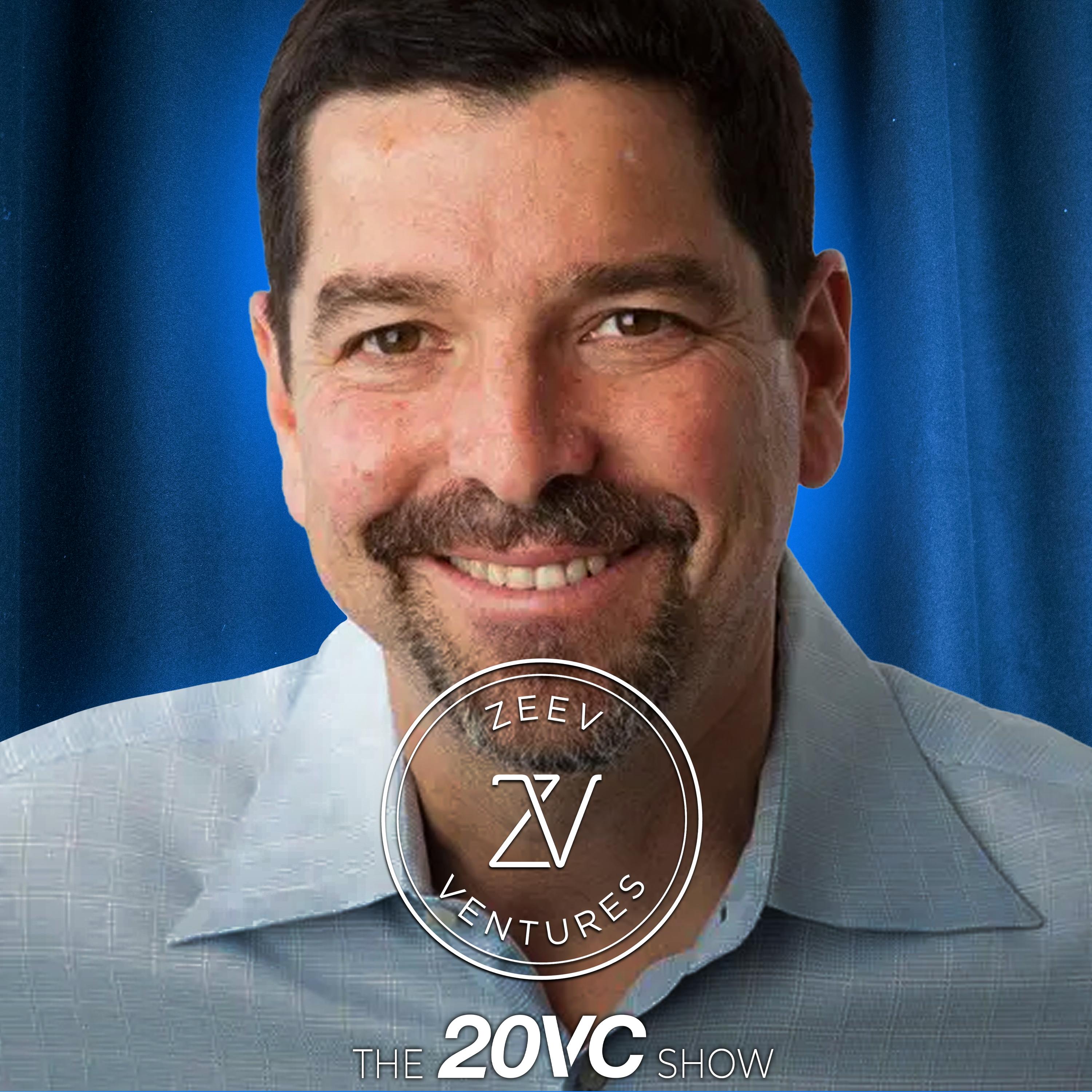
The Twenty Minute VC (20VC): Venture Capital | Startup Funding | The Pitch
20VC: 50% of Funds Will Go Out of Business | Why Growth Expectations Today are BS and Will Not Last | Why Oren Zeev Takes $0 Management Fees But 30% Carry | Why GPs Should Not Tell LPs Their Strategy
01:08:22
Loading summary
Transcript137 lines
- [00:00]
A
I think this notion that only growth matters is still a very dangerous one. And I've seen this movie many, many times. We humans are not truth seekers. We are self validation machines. In every one of my funds, I'm the biggest LP, every single one. By the way. I pay myself zero. So I tell LPs I only have one rule, and that rule is that I have no rules. AI is the biggest change ever in the history of humanity.
- [00:24]
B
This is 20 VC with me, Harry Stebbings.
- [00:26]
C
And today we have one of the most prominent solo capitalists in venture, Oren Zeve, who now manages over a billion dollars in aum. My favorite thing about Oren, there's no show, there's no facade. He is so authentic. He has no rules when it comes to investing. He tells LPs exactly what he thinks. He has zero management fees, he takes 30% carry. He's just wonderfully authentic. And he's done incredible deals like Navan Audible Houzz and is a brilliant player in this ecosystem. He's a dear friend and this show.
- [01:00]
B
Was so much fun to do.
- [01:02]
C
But before we dive into the show today, as an investor, I'm always on the lookout for tools that really transform how I work. Tools that don't just save time, but fundamentally change how I uncover insights. That's exactly what AlphaSense does. With the acquisition of Tagus, AlphaSense is now the ultimate research platform built for professionals who need insights they can trust fast. I've used Teagus before for company deep dives right here on the podcast. It's been an incredible resource for expert insights. But now with AlphaSense leading the way, it combines those insights with premium content, top broker research, and cutting edge generative AI. The result? A platform that works like a supercharged junior analyst, delivering trusted insights and analysis on demand. AlphaSense has completely reimagined fundamental research, helping you uncover opportunities from perspectives you didn't even know how they existed. It's faster, it's smarter, and it's built to give you the edge in every decision you make. To any VC listeners, don't miss your chance to try AlphaSense for free. Visit AlphaSense Alphaense.com 20 to unlock your trial. That's AlphaSense.com 20. While AlphaSense helps you find the signals that move markets, Airwallex helps you move money globally just as fast. Founders, let's get real about the growth tax. You've raised VC funding and you're scaling globally and it's no longer about shipping product, it's about Orchestrating operations across continents. But suddenly your payments and finance stack is choking your growth. You're logging into lots of different banking portals, waiting days for transfers and reporting across ent. It's operational drag and it's at your scale, it's costing millions. That's why I'm so excited to partner with Airwallex. Airwallex are more than just a banking alternative to HHSBC or Citi. Airwallets brings you an intelligent financial operating system that powers how global businesses operate and grow, allowing you to manage and automate banking, treasury payments and spend. The most exciting part for me, they're heavily investing in agentic finance. If you're scaling globally, you need a banking and finance platform that's borderless, real time and intelligent. Check out airwallets today and see how they're helping thousands of businesses like Canva, McLaren and deal scale@airwallets.com 20 VC terms and conditions apply. Your monies are safeguarded, not FSCS protected. See airwallets.com for more details. While Airwallets makes global payments feel seamless, Vanta makes the security and compliance behind them seamless too. Security and compliance done wrong is a giant headache. Security and compliance done right though, well, that's Vanta. Vanta helps you earn trust and speed up growth. No spread spreadsheets required. For startups low on time and resources, Vanta becomes your first security hire, using AI and automation to get you compliant fast and unblock really big deals. And if you're big enterprises, Vanta is your AI powered hub for compliance and risk, bringing together data from across your business and automating workflows so you can prove trust at any moment. Vanta scales with you at every stage. That's why top companies from startups like Cursor to enterprises like Snowflake choose Vanta do security and compliance right. My listeners can get $1,000 off Vanta by going to Vanta.com 20VC. That's Vanta.com 20VC for $1,000 off Vanta.
- [04:21]
B
You have now arrived at your destination. Oren, it is so good to have you back on the show. Dude, it's been several years since we last did this, so thank you so much for joining me, man.
- [04:31]
A
No, it's my pleasure. As you know, I was skeptical that I would be able to bring anything new to this conversation. You insisted, but I insisted because last.
- [04:40]
B
Time we actually did a show. I don't think I was a very good interviewer and call it a lack of humility, but I hope that I've improved As an interviewer and I think now is quite a hard time to be investing again. I'm going to use the next hour as an advice session for me as an investor because I think I have a lot to learn from you. Now is a weird time because a lot is uncertain.
- [04:58]
C
And so when we look at picking.
- [05:00]
B
Investments, that is our job, that's what we're paid to do in a lot of ways. Why does so many of the best outcomes look wrong or weird at the time where we, when we invest look.
- [05:11]
A
I think if they're long, if they, if they look weird and they look wrong, then probably they're going to be 15 or 20 or 100 other startups doing it. So you're probably going to have two or three years without real competition and you have a chance of really building something. No, a real moat. Now if you're wrong, it's not going to help you, but if you happen to be right, then these are some of the greatest outcomes. And again, this is really some level of contrarian plus being right. That's the ingredients typically of great outcomes.
- [05:44]
B
The challenge that we have today is the level of competition has changed so much. When we first met 10 years ago, there was always one or two competitors. Now for every company I meet, there's legitimately eight to 10 at a minimum. What do we do when the level of competition has increased to the extent that it is?
- [06:02]
A
I try to avoid it. To be honest, I'm in the Peter Thiel camp. I guess I don't like to go where everyone else goes and have 10, 20 competitors from the get go because I think the chances of building a market, I really want every investment to become a market leader and the more competition there is early on, the smaller the chance. So I try to avoid it. Every now and then I find myself in such a situation, okay, but I don't like it. So I try to avoid it and I try to do things. To me, if everyone is doing something, it's a reason not to do it, not a reason to do it.
- [06:36]
B
Has what you look for changed in the last 24 months? In the dawn, the wave of AI that we're looking at today, not so.
- [06:45]
A
Much surprisingly, because I think the fundamentals are the same. Fundamentals? Yeah. We have of course, a tsunami wave that changes everything, which I think creates a lot of opportunities because basically every single industry, business is going through change and whenever there's change, there's opportunity and there's a lot of value being created and there's a lot of value being Destroyed and there's a lot of value being shifted. The one thing maybe you could argue that changed, I don't know if it's 24 months or 36 months. Is that every investment. I have to ask myself, is this company a likely beneficiary of AI or not? The answer is that they're a victim of AI. Obviously, it's an easy answer, but even if the answer is neutral, still the answer is probably no. So I just have to ask this question, which is a question I wouldn't ask four years ago. Right. Four years ago, I would look at an opportunity. I wouldn't ask myself, is this a beneficiary of AI? But in the past three years, absolutely. I have to ask this question.
- [07:39]
B
If we were to reflect that back on one of your best investments and one of your most concentrated positions, which obviously went public in the van, would you say that Navan is a beneficiary of AI?
- [07:50]
A
100%. I am not sure that the market, the public market, yet sees it that way. Based on the valuation, this is my theory, the market feels or believes that some or many of the software companies, the incumbents, are going to get disrupted by AI. And I think the market is right about that. I think that the market is not yet at the point where they discern between the ones who are going to be negatively impacted and the one that are going to be positively impacted. So I think that most software companies are getting somewhat of a discount because of that justified fear. As you know, SaaS multiples, for example, are lower than they've been in the past 10, 12 years. But I think over time, what's going to happen is that for some companies, this suspicion is going to materialize. And in fact, even with a discount, they're going to, in hindsight, look very expensive today. And for others, they're going to be beneficiaries. Now, specifically with Navan, which a company I know well, I'm 100% convinced that there is zero chance that we get disrupted by AI. And there is 100% chance that we're huge beneficiaries of AI. I can go into details, but I feel. I just feel very, very, very, very strongly about it.
- [09:07]
B
Can you. I'd love to answer that.
- [09:08]
A
I can't get into details in terms of numbers, obviously, but, but just. But from a cogit perspective, I'll give two examples. One example is gross margins. You know, three years ago, before AI, our gross margins were around 50%. It was all the cost of support. In the past three years, we've invested a lot and, you know, and we're doing more and more with AI, so. And ultimately I believe that almost all the support is going to be done by AI already. I think that it's dramatically better already. I mean, this is public information. I just don't have it in front of me. And it continues to improve. So this is the easy part. The second part, which is even more exciting, is think what you can do with AI in terms of the customer experience. And again, I'm not sure what I'm supposed to say and what I'm not supposed to say. So I want to leave it to the company because I don't want to trip on some SEC rule or something. But. But the even more exciting thing is how it dramatically improves the customer experience on multiple levels. And back to the first thing, why am I not worried about being disrupted? Because if you have a piece of software that's fairly simple, then, yeah, someone can write it quickly and maybe price it lower and maybe even have better functionality and have much faster velocity. And those companies are at risk. But the more operationally complex a business is. Now, I'm not talking about Navan, I'm talking generally, but I think Navan falls within this framework. The more operationally complex a business is, the more it's about distribution, the more it's about integration with source and with other pieces of software or content in the case of Navan, or part of the ecosystem. The more it's in a regulated. This is not about Navan. But the more it's in a regulated environment where there's a lot of licenses and stuff, the harder it's going to be because, you know, the technology, okay, so someone can develop the technology, but technology is 5% of it. You know, you have the, you have all so many other things. Data, Data is so important, especially in the age of AI. And who has the most data? The incumbents. So the bottom line is, I think this notion that all the incumbents are going to die, you know, this notion that is being promoted by some people who, who I think whose main motivation is to make provocative statements and get attention as thought leaders, I don't buy it. I think that, yes, of course, there's the change of technology and some companies that are not going to be able to adapt for both objective reasons, like the one that I mentioned, and also, and also execution reasons. I mean, some CEOs are just going to be faster and more crisp in adapting the companies. Of course, if you continue to do nothing different, you're going to die. But that's always been true. I have specifically when Nevada has zero concern. And I think that in general many companies are not easy to disrupt. And as long as they don't fall asleep on the wheel and as long as they adapt, they're going to be huge beneficiaries of AI.
- [12:07]
B
So I have so many things to unpack there. The first I just want to unpack is you mentioned Navan have invested obviously in support, blah blah, blah. Support is a space where everyone is like duh, AI is going to replace a huge amount of labor. It's the most perfect solution for AI that would be a consensus company slash market to invest in with huge amounts of competition.
- [12:30]
C
Does that mean you don't like it?
- [12:32]
B
Because that's the opposite of what you said you like.
- [12:35]
A
Yeah, a new company that they're solving the support problem. One of them is going to be successful. But there's. There is two, but there's a thousands that are not. So I'm not at the very early stages. I don't trust my intuition enough to know which one of the thousand is going to be successful.
- [12:51]
B
You know, something I'm really struggling with, which is like growth rates. And what I mean by that is I'm meeting companies today and I'm looking at them and they're going from 1 to 5 million in revenue. And before or when we met that.
- [13:04]
C
Was great, that was impressive.
- [13:06]
B
Now it's just not enough to get the great big funds interested at the B or the C. And I know that actually I'm not going to get a good next round on the back of that growth. How do you think about the changing expectations on company growth rates and does that impact your investing?
- [13:21]
A
Yeah. So to be honest, I don't buy that either. Call me old school, but I don't buy that because the math doesn't change. If you have a company that can double every year for the next five years, it's going to be 32x what it is today. Because 2 to the power of 5 was 32 before AI and after AI that has not changed. So the real question is, is it sustainable growth and is it healthy growth? So maybe a company grew from 1 to 5 but you know, it's not necessarily healthy growth. You know, the economics are not very impressive and you know, I think that next year they, they're not going to be growing much. So yeah, so in that case it's not going to be enough to grow from 1 to 5. But if the company grew from 1 to 5 and they look like Next year is going to be 20 or 15. And the economics are healthy. Absolutely. It's a great company that I want to be, you know, invested in. So. And I think there is danger in dismissing companies actually have right now a company that's raising and really. And the company is growing at 100%. It's at 20 million today, growing to ARR. Growing to 40 million with very healthy economics. And I think they should also double the following year. And one investors said, oh, you know, we're going to have a challenge with the growth rate of 100%. Right. And I, you know, and I have a lot of respect for this investor personally, I'm not going to mention him. I have a lot of respect for him. I think he's dead wrong on this one. And I think.
- [14:38]
C
Why do you think he's wrong?
- [14:39]
B
Because I think he's right.
- [14:41]
A
I think he's wrong because I think this company, again, it's not as if, look, if this company had competitors at the same level growing at 3x and they're growing 2x, yes, then it would be right. But they have the market to themselves. They're leading the market. They're growing 2x. They're growing very. I prefer a company that's growing 2x with very healthy economics than a company that's going 3x with unhealthy economics. You know, as long as I believe that the market is large enough to continue to sustain this kind of growth for the next few years, I'd back this company all day long. So yeah, I don't think that AI changes mathematics, you know, and compounding. Compounding is the same compounding before AI and after AI.
- [15:17]
B
When you look at the opportunity costs that large great funds have today, when they're investing large amounts of money into the follow on rounds of our companies, they can be in a cursor that goes to a billion faster than ever. They can be in a Harvey that hits 200 million within two years. And I'm in businesses like you are, dude. So we're on the same side here. But I'm looking at going, I get it. Opportunity cost adjusted. They want to be in Harvey and Cursor, not us.
- [15:45]
A
I don't think so. I will tell you, even this day and age, there aren't many $20 million companies that are doubling with, you know, with very healthy economics, you know, just not so many of them. The other thing, I think this notion that only growth matters is a very dangerous one. And I've seen this movie many, many times, you know, because when you only look at growth. It drives companies to do things that are unsustainable and unhealthy. For example, these circular deals, you know, I'll buy your product for a million dollars and you buy my product for a million dollars. It's a win win. Right, because we both now have another million dollars of revenues. Yes, we also have another million dollars of cost, but that doesn't matter because nobody looks at it. So you realize that no value was created in this theoretical transaction, but a perceived value was created. So you're starting seeing this, and this is not even before I get to fraud. This is really still like within gray area. And you see other manifestations of that. You see things that are clearly not sustainable. Now, in some cases, the companies will be able to somehow succeed, but in others, you know it's going to implode at some point. So.
- [16:56]
B
So are you telling companies that you're on the board of don't listen to the hype. Don't believe the bullshit on podcasts about growth rates needing to be crazy. Build healthy businesses today.
- [17:06]
A
Look, I think growth is super important, but yes, in general, yes, grow healthy. Now, there are some rare situations where you have no choice because if you have competitors that are also growing very fast, you don't have the luxury of, no, no, I'm going to grow healthy. You know, you just have to play the game. And best you know, I don't know, Uber versus Lyft would be a good example. 10 years ago or 50, whatever, 15 years ago, you know, you didn't have the choice of oh, let's build it slow and make it healthy. You have to go as crazy as possible, whatever the margins are, and ultimately in the case of Uber, come out on top. But again, I look for businesses where this is not the dynamic. And when you have the choice between growing fast in a sustainable manner versus just going crazy and just optimize just for top line, ignore everything else. Yeah, I think that the latter is disaster waiting to happen.
- [17:59]
B
Do you worry ever that having a focus on margin and good economics too early hinders the upside opportunity for the companies that you're in? If you look at a doordash shit margins for years, if you look at an open air and anthropic actually shit early margins, do you worry that actually you focus too early on margin optimization?
- [18:20]
A
As I said, in some spaces in the area, yes, it's more important to win the market share. It's more important to win the market and you don't have the luxury of focus on margin too early and you have to make the assumption that you'll take care of margins once you, once you win. But most businesses are not like that necessarily. Certainly not all businesses are like that. And in the business when you have the option then again don't focus on too early. I still think that the growth is more important. So I agree with you that focusing too early, absolutely. But at some point you do want to focus on it again if you can afford it. And that point really depends on the business and the competitive. In the competitive environment. It's not. I don't think there's one solution for or one answer for.
- [18:59]
B
My biggest mistakes have always been when I think that I'm smarter than the market. I turned down deal at the seed round because I was like Payroll, really? Paychecks, adp. Come on, this is ridiculous. With this kid Alex, he's now a friend, he won't mind that. Do you give a shit about market? Given the stage where we invest, how do you think about that?
- [19:19]
A
I also made mistakes, think I'm smarter than the market but. But also my biggest wins were when I thought it was smaller than the market. And it's much more about the winners than about the losers. So no, I actually this social proof and what other people think I tried to actually suppress this signal, if not ignore it altogether and really invest based on my own conviction. And you know, sometimes I'm going to be right and sometimes I'm going to be wrong. It's more important to be right about these things because if 50% of the time I'm right and 50% I'm wrong, that's actually a great result because a winner is so much more important than a loser. Because you know, as you know if we lose something, we only lose 1x our money. If we win, it could be 100x our money.
- [19:57]
B
It's absolutely true. What you don't want to do is continuously put money into a loser and you want to reduce that cost. When you have done what did you get wrong or what did you not see?
- [20:09]
A
So first of all, I don't often get these double downs that I do. I don't often get them wrong because I really, I believe have enough intellectual honesty to look at things, not be biased because I'm already in and not, you know, not and I true maybe because I'm originally an engineer or whatever. Even when I was in my previous life as a NVC with I saw compared to the other partners, you know, I had a partner who never saw following he never, he didn't like, you know, he always found a reason to justify his previous decisions. And I think one of the strengths of being a good decision maker is actually change your mind when there's new information and not get, you know, there's a quote I like from Annie Duke's book. It goes something like I'm going to butcher it, but it says, you know, we humans are not truth seekers, we are self validation machines. Meaning that, you know, people, most people, when they have an opinion, whatever information now arrives in their mind, it's a proof that they were right. Right. And I don't, I don't think this is a good mindset, you know, for a good venture investor. So I think that you want to have enough intellectual honesty to change your mind based on the, based on the new information. But I will give you an example because I, you know, I'm not foolproof and of course I make, just like I make mistakes in new investments, I also make mistakes in, in full on. So I'll give you an example. A company that was in the proptech space and seemed to be on fire. You know, it went from 2 million run rate to 30 million the year after invested and the projection was to go from 30 to 100. Everything looked great. You know, I doubled down and I thought I probably got a discount to what the founder would have got from the market. But the timing was just before the big rise in interest rates in late 20, 21 or 22. I forget exactly what it was. So what did they get wrong? So first of all, I understood that the business is dependent on interest rates to some degree and I even stress tested it and I actually did assume that interest rates will go up fast. And I had the worst case scenario and I concluded, and I ran the model and I concluded that the business is going to be resilient enough and was going to survive it. In hindsight, I overestimated the resilience of the business and I underestimated the speed. What I called the worst case scenario, what I modeled as the worst case scenario was actually not as bad as the real scenario that happened. The rise interest rate was too fast and the company just did not survive it. And I lost. And by the way, there's an example. It happens. We're still in the risk business.
- [22:49]
B
What do you take away from that as a lesson?
- [22:51]
A
I actually don't. Not much. I'll tell you why, because I think some of the bets are not going to work. I think it's a mistake to judge a decision by the outcome because when you play Poker, you can make the right decision and the odds are in favor, but the cards that came out, you lost the pot. Doesn't mean that your decisions were wrong. And over time, you make the right decisions. Over time, you're going to win. But in any individual case, luck has a huge role to play, so you can also learn the wrong lesson. So, yeah, I took a bet. In this case, it was wrong. In hindsight, I wasn't aggressive enough in my, you know, in my stress testing. But does that mean that I should be overly conservative next time? Not necessarily, because I could have been right. In other cases, I was right. So I just have to be comfortable with losing money, including big pots every now and then.
- [23:42]
B
I'd be blunt, Oren.
- [23:44]
C
You have massive balls.
- [23:47]
B
I don't know. When you look at your concentration into Navan, okay, which now a public company, and it's been incredible to see all.
- [23:55]
C
That they've built, but at times it looked hairy. Covid, for example, when travel stopped.
- [24:01]
B
As a travel company, do you feel the pressure in those moments?
- [24:05]
A
Actually, in the case of Nevan, I never felt pressure. I, you know, I. Covid was a big one, by the way. Even before COVID 2018 or 19, we had an existential crisis when Delta Airlines decided that they hated us. And you cannot really succeed as a. As a travel company when one of the three major airlines in the US Is not willing to work with you and is swinging and all that. And it wasn't. It was not obvious that would be able to solve it. And luckily we did. And then Covid happened. But, you know, with COVID I had complete trust in the leadership of Ariel. Some people were saying, oh, after Covid, people are gonna just stop traveling for business and just do everything over Zoom never believed it. So I had no doubt that at some point Covid will be behind us. And Ariel was such a CEO that as an investor, I could sleep well at night knowing that he's doing. And the leadership is doing everything. And they did a lot, actually. Not just on the cost, you know, everything. They reacted so fast, and they adjusted the cost. They were the first company to let people go, and they got so much shit for it because they fired people over Zoom, as if there was any other way they could have. And they still got a lot of shit from the press, but who cares, you know, and changing product priorities, for example, changing pricing models, pricing, messaging, prioritizing features that are more relevant in an environment like Covid. So they did so many things, very quick, bold actions. But in the end of the day, I think relative to other people, it's easy for me to also let go, I find. So if I have a company where maybe the founders are not doing the right things and they're not reacting to a crisis in the way that I think they should, I don't get too worked up about it. And I, you know, at the end of the day I just am letting go emotionally. I mean, I'm still going to show up to board meetings and be, you know, try to be helpful and positive, but. But emotionally I'm letting go. I'm going to at least try not to manifest frustration and angst.
- [26:02]
B
LP is often like capital concentration limits for those obviously who don't know, that's like a set amount of capital percentage wise of a fund that can be in one company. What capital concentration limit do you find uncomfortable?
- [26:14]
A
I'd say 20% is my limit of a fund in one company. I think the industry standard is probably 10%. I'm at 20% by the way. From the LP perspective, diversification at the level of the GP makes no sense because they have multiple GPS. So the diversification gives nothing to LPs. Maybe, maybe the GP feels better, maybe. But of course I think it's a mistake. I'd rather be concentrated than the best deals I can find because then when you have a winner, it really makes a difference.
- [26:43]
B
LPs have said to me before, raee, forgive me for this dude, he deploys too fast.
- [26:48]
C
We love him, he's smart, he's great. Too fast, like 12 months sometimes.
- [26:53]
A
Yeah, I know, I know.
- [26:54]
B
Temporal diversification is important. You need to bake different vintages in. Are they wrong or do you just respectfully not give a shit because you don't need to?
- [27:04]
A
It's probably the latter. I'm going to do my thing and if it works for them, fine. If not, they can opt themselves out. And some of them have and it's fine. Good people opted out and it's fine. I'm not going to do things differently. And then, by the way, I'm not investing fast because I want to invest fast. I'm just seeing opportunities I want to do. And then by the way, sometimes looking back, you know, if I look at 2021, I would say I did, I invested too fast. You know, I wish I didn't. Okay. But to answer your question, yeah, it makes their life a little bit more difficult because it's hard for them. The thing is, it's not just the speed, it's also the fact that I'm not consistent. So I make it harder for them to plan, you know, because they're not sure when they put the money if it's going to be good for one year or two years or nine months. So I, you know, so it makes their sizing decision more difficult. So, you know, I get it, I get it. But this is something that, you know, if you ask me, of all the things that I do that LPs might like less, I would say this is it. But honestly, I don't want to, I don't want to not invest in the company when I, you know, when I think it's compelling just because I just made another investment, you know.
- [28:10]
B
So what makes you say that in 2021 you invested too fast? And what are your lessons from that?
- [28:16]
A
Well, I think in general, in 2021, pretty much every deal that I did, most actually I should have because these are quality companies. But every single deal I probably paid 3 or 4x what I should have because that was the market. And because of that, I'm now in Fund 11. But there's one fund that's going to be okay, by the way. It's not going to lose money, but it's not going to be great. The one that really invested the peak of the market, because honestly, there was no other way to invest. Now, luckily I invested in good companies for the most part and some of them, despite overpaying, they're still going to be great winners. But if every single deal you pay three or four times what you should, then even if you have great winners, even if a fund otherwise would have been, I don't know, a 5x, it's going to be 1 1/2x right, or whatever. So, yeah, I too like everyone else, by the way, I too got carried away because this is the market and I really. The thing is, I don't believe in my ability or anyone else's, to be honest, to time the market. In any given market, you want to do the best deals that you can and some vintages are going to be better than others. Now, I don't think that for LPs it should matter because again, the idea is not that they invest in one fund and that's it. The idea is that the LPs are for the long run. I'm not interested in LPs who just wanted to come into one fund. So they're going to get that vintage diversification, just not specifically in within one fund, but across the funds.
- [29:39]
B
You're saying because you do such quick successive funds, they're going to get vintage diversification by.
- [29:43]
A
Yeah, you know. Yeah, yeah. So maybe, maybe one fund did not have vintage diversification and everything was invested from that fund at the peak of the market. Okay. So probably that fund's not going to be great. But my typical LP would have been in three or four funds before that and three and four funds after that. So they'll have a series of six, seven funds and one of them is going to be okay, you know, and not great. Okay. Not the end of the world. The other thing is not just to invest as fast, you know, I think that as, you know, I. Each fund was larger than the previous one and I think at some point I overdid it, I think. And again, I reacted to the market. There were a lot of rounds, they were frequent, they were big. And I think that I have two bubble sized funds. One of them is going to be okay, the other one is actually going to be good despite that. But I have two funds that were over 500 million from 2021 and 2022. But my 2024 fund already cut it by about a half, which I think is better size, more conducive to great returns. Yeah.
- [30:43]
B
So we're like 250.
- [30:45]
A
Say I have a fund that's 250 and I have a fund that's in the midst of. So I had the first close. So I don't know yet what's going to be. So fund 10 is about 250 and fund 11, I don't know. But I actually, I want it to be less than 250.
- [30:57]
B
So when we look at that decision, I think managers are faced with the decision today. You either need to be really fricking big a la Andreessen, General Catalyst, Lightspeed, a wall of money, or you need to be a real craftsman and boutique. Do you agree that you have to be one or the other? And that is the future of venture. And the messy middle will be painfully suffering.
- [31:19]
A
I do agree with it, 90% agree with it. I think you have to have something special. Being middle of the road, you want to be differentiated. So I think that naturally there is a bifurcation. So either you are, you know, one of these platforms like Andreessen, like Sequoia, like maybe Lightspeed, who are bringing a lot to the table, can do things that smaller VCs cannot, including myself, or you're going in the opposite direction of Solo gps, for example, that you have other advantages. Or I have other advantages. I'm not trying to be better than Andreessen. In Andreessen's game. If it's going to be Andreessen's game, they're going to win. You know, beat me every time. No, I offer something different. You know, I'm faster than anyone else, for example. You know, the other things, there's the personal connection, there's a lot of other things that founders find extremely compelling with solo gp. And I, and I go for companies or founders that this is what they want and that's differentiation or you have something else that differentiates you. But generally speaking, if you are traditional 5, 6 person partnership without anything very, very, very unique and special in the friendship that you bring to the table, then yes, I think you are in trouble because it's almost like on one hand you're not as agile, you're not. It's not the personal connection, it still feels as a corporate to the, to the founder. And on the other hand, you're not Sequoia, you're not going to get the very best deals. So yes, I think, yeah, you don't want to be caught in the middle. And I think, and again, unless you position or say like an amazing brand or, or you're just like an amazing expert in some area.
- [32:57]
B
Do you think a lot of funds will go out of business in the next few years, be unable to raise and slowly die?
- [33:03]
A
Yeah, we're seeing it already. I think it's much harder to raise in the last couple of years. I think first of all there's less money going to venture, but not only that, a larger percentage of it is going to the platform. So if you're not a platform, then it's much harder for you to raise. And I would say that at least 50% of the funds today, and maybe more either cannot raise or at least are not sure that they can raise, or they're trying to stall and not test the market. And I think many of them are not going to be able to raise.
- [33:31]
B
Do you think LPs have an uncomfortable awakening coming with 90% of unicorns that they have marked as unicorns in their book, not being unicorns. That is quite a difference.
- [33:42]
A
First of all, it depends on how the GP reports things because there's huge latitude in how we can report things.
- [33:48]
B
How do you report things?
- [33:49]
A
You know, I try to report things in the conservative what they're actually worth and not to me, what I always tell LPs, whether or not you can believe numbers from a VC is less dependent on the methodology that they use because with any methodology you can inflate or whatever, it's more A function of the personality or in over the character, but even more so the motivation. By that what I mean, if you're a fund that's, let's, let's say Sequoia for example, they know that they can raise any time, right? So they have zero motivation to inflate numbers. They have all the motivation in the world to show things as conservatively as possible, right? Because they get no benefit from inflating numbers. However, if you are a fund that is more middle of the road and you're not sure how easy it's going to be raised or not, you're going to find any excuse to keep the prices up, up to look good on paper. So I think just ask yourself as an lp, the more secure the, the GP that you speak with is, the less likely they are to inflate, to inflate numbers. And, and it's easy to inflate numbers. And now the, the accountants are not good railguards from that perspective because even if they challenge valuations, they always challenge the wrong things and they always, it's complete lack of understanding what you know, because why would they know what companies can be. It's not in the numbers necessarily what companies are worth. So I think there's a huge latitude, which means that there's a huge challenge for LPs to tell whether the paper values are real or not. And there are only two ways. One is impractical, which is to really study every single underlying position. It's impractical. And the other one is just rely on who do they believe, who they don't. And here it's based on their experience, it's based on the personality and it's also based on the motivation of the how motivated they should ask themselves, how motivated is the GP to inflate numbers versus be conservative?
- [35:46]
B
You mentioned the first close in fundraising is the attitude mindset, what LPs want different today than what it was in prior years.
- [35:56]
A
Yes. First of all, in general they've had little liquidity. By the way, that might change in 2026 in a big way because there are a host of huge unprecedented size IPOs in the works now. You know, companies like SpaceX and Stripe and Databricks and, you know, and others. So there could be, there could be tsunami of liquidity in 2026, 2027 and that would, would reshuffle the cards again and who knows how it will affect. But right now there's been a drought of liquidity for most LPs for a long time. Four or five years add to that, the fact that what I just said, that the tvpi, you cannot accept it at face value. You have to ask yourself because. So it's challenging to judge based on that. And because of that I think there is too much focus even. But understandably on DPI, where, you know, people hardly talked about it three years ago and now some LPs, oh, it's. It's just DPI. Just DPI. We don't believe anything. So that's it. Again, that's also an approach. When you see something that's difficult to understand, one approach can be okay, I just discount it. I don't know. And I treat everyone the same. I just don't believe anyone. That's an approach. I don't think it's. It's the right approach, but it could be an approach. So. Yes. So from that perspective, I do see a change of number one, they have less liquidity and they're very focused on dpi more than more than two, three years ago. But by the way, Harry, I do think it's a cycle, so I do think it will change again. But right now there's this focus here.
- [37:22]
B
The lack of liquidity in large part is down to the extension of private markets. The platforms that are able to have the supply side of cash to fund them for longer. That means that we either have to hold them for longer or we can sell secondaries. How do you think about proactively selling secondaries and managing the book pre going public?
- [37:40]
A
I understand why others do it. I don't. Again, the reason is motivation. So first of all, in any given moment, anything that I want to sell, I won't be able to, and everything that I can sell, I don't want to sell. Okay. The things that I cancel are the best positions and I want to keep. If it were, if it makes sense, you know, the assumption that I'm going to sell something, you cannot assume that the buyers are stupid. So they're only going to buy things that they think they can double or triple within the next two or three years. Now, you know, if it can double or triple in the next two or three years, I'd rather keep it. Right. So almost by definition, to sell anything, it's possible to sell it, but you have to give a significant discount to the buyer, otherwise they're not going to do it. They're not stupid either. So why do people do it? I think people do it again if they need it for the fundraising.
- [38:28]
B
Bit of. Sorry for interrupting you. We saw we sold something earlier this year and Said we knew it would be double or triple in a couple of years for sure. Yeah, but dude, there was inherent risk baked into that. There was a lot of execution risk that was dependent on that. Then there'd be a lockup on the IPO. If I'm thinking about IRR for our investor, fuck it. They'd rather have a 3x back now than a 4 1/2x back in 2 to 3 years time dependent on a successful IPO and then a good.
- [38:57]
A
Okay, but let me go with the numbers because I do still remember my second grade math. You said 3x versus 4 1/2x. That means that you only believed 1 1/2x over the next three years with a lot of risk. Yeah. So this is what you believe you should have sold? Absolutely. But in general, of course there are some positions that I can justify. Yeah, that I can justify a sale. But in general, if I know that I need to raise and if I know that in order to raise I need to show more dpi, then I can understand why a manager would be willing to to give up upside in order to show DPI today and help them raise the money. You know, I never felt that I needed to do it and I. First of all, I'm the biggest LP in every, in every one of my funds, I'm the biggest lp, every single one.
- [39:43]
B
Can I be blunt? How much of a fund generally are you? 10%.
- [39:47]
A
About 13. About 13, 13, 14% and I don't have any LPs more than 10% in any given fund. So I'm always every single fund, I'm the biggest LP and on top of it I have 30% carry. So really I'm 40 something percent of the economics. So of course I think as LP and I'm trying to maximize the long term value and I don't want to shortchange myself as an lp. So I believe, by the way, in radical alignment with LPs and this is why I set up by the way, I pay myself zero. I don't see anything which is very unusual. I don't know any VC in the world as far as I know that has zero income from the management fees. Zero.
- [40:23]
B
So you don't take a management fee at all?
- [40:25]
A
First of all, I take a low management fees but I reinvest 10% of it in the fund. So I don't have any expenses because you know, I don't have enough. I don't have people, I don't have any expenses and I don't pay myself anything. So I Have I see zero before the investors see the money back? I don't see anything from LPs before they got hundred percent of the money back. By the way, even the way the management fee wave reinvestment works, is that the way it works technically is that I don't actually, despite being an LP, I don't actually get paid until the LPs got 100% of the money back. That's how it's set up. So this is radical alignment. I don't see it. A shekel, a dollar before they see the money back. And because of that, I'm really, really clearly incentivized to optimize for the LPs. Remember what I said at the beginning of the call, substance versus appearance. So I'm 100% substance, 0% appearance.
- [41:19]
B
What do you think are the biggest misalignments between GP and LP today in vanture?
- [41:24]
A
Look, especially in the larger funds, the compensation that the GP gets from the management fee, especially if you account for time value of money, is typically greater than the upside. So let's say you have 10 billion and you charge 2%. The minute you close the fund, you already made $2 billion. Because it's, you know, 2% over 10 years, that's 20%. You already made $2 billion. That are, by the way, are you going to see them over the next 10 years? But starting today, now, the carry, you'll start seeing maybe in seven, eight years, maybe, you know, because it takes time to return these funds. So if you double the fund, you, you get another, let's say it's 20%, you get another 2 billion. Okay, but you're only seeing this 2 billion in eight years. So if you did, you know, you take into account with, you know, the applied discount rate, you're seeing more from the manager fees. So I think that for many funds, they really want to do well enough to be able to raise the next fund. And the whole thinking is what do we need to do to raise the next fund? And if it means selling something early to show dpi, then yeah, of course they'll do it, you know, and again, in some cases it can lead to other things. So this is one set of maybe misalignment. The other set of misalignment is actually not between the, the GP as an entity and the LPs, but within the individual GPs. Because the larger the partnership is the investors, not even the gps, by the way. Also the younger partners, they're first and foremost managing their career. So you know, if there's a Conflict between what is good for the individual manager and the long term, maybe value of the fund. Guess what, I'll give an example. You know, if, if a partner in a partnership, especially large partnership with some with politics and all that, they're much more interested in their investment succeeding than anything else because that's their career. If their fund is great, but they didn't get the credit, you know, remember the partner that I mentioned that never saw full on daily didn't like, that's part of it. Because they have zero incentive to admit failure. You know, they have all the incentive the world to convince their partners to put more money into this company, roll the dice again and who knows, maybe, maybe it's going to succeed. And even if not bought some time personally, you know, so I think the larger the partnership is, the more there is not 100% alignment with between the individual partners. And just like in a company, the guy in sales can have different motivation than the guy in product or the guy in marketing. And you know, and in my case it's just me. So there's 100%, there's no difference. And I'm the biggest LP, so the LPs and just there's zero conflict in my mind.
- [44:00]
B
One area that's very challenging as we look at the market today is also by pricing. I look at Series A's today, dude, and I think it's the worst place to be investing. And so I'd love your thoughts on this. We have 200 xeros, 150 xeros. There's very little company progression from the seed round, but there's a very steep price increase. It's at very competitive stage. How do you advise me others to navigate this seemingly very bad insertion point today?
- [44:30]
A
Okay, so first of all I agree, but with a few comments. First of all, scratch the wood today. It's always been the case, even 30 years ago that you have a seed round, basically founders and idea it's priced low. And then a year and a half later, basically they have now 20 people, they have an office, maybe they have a few small customers. They really haven't proven anything. But the perception is, oh, now it's a company and we made so much progress. Now we have a product, now we have this. You really didn't prove anything and all of a sudden they jump in valuation. There's nothing new under the sun. This has been the case always. Okay, so this is something to be worried about, always as an investor. That's the first comment. Observe it. The second comment is I agree with you Just watch it. Not to be confused by the name of the round, because calling it A, that's just a name. You can call it anything. You can call seed one, you can call it A, you know, it's just a name. And I think people, when they talk, it's kind of a shortcut. You say A and it's. Oh, I know what you mean. You know, actually, no, you know, because we can, we can both call something round in. It would be very, very, very different things. So I wouldn't be caught up. I don't care if it's called A or B or C or whatever. Generally speaking, when I look at the second round, after the first round, I want to make sure that the progress that I'm seeing is really substantial in terms of. In terms of risk reduction, as opposed to the looks of it, the optics of it. So if the progress is, oh, yeah, now we have product and as I said before, and we have a few, few logos, but really they didn't really make a commitment, really, they haven't renewed yet. The tough question is, for an investor, whether it's me or you, are the indications that I'm seeing, is it a real signal of product market fit or is it just noise? Because if it's not real signals of product market fit yet, then nothing has really changed since the seed. If anything may be the opposite. The very fact that after a year or two they don't have signs of product market fit, maybe it means that it should be worth less than what it was worth at the seed, because at the seed you had the option value of maybe within a year you will have it. So I think that's the thing. It's not about whether you call it A or not. It's about really exercising judgment if this really represents product market fit or not.
- [46:42]
B
What do you think of the rise of very proactive preemptive rounds where you have a company raise and then a month later iconic or any of the big platforms come in and shove another 50 million bucks in and very little has changed again, it's still on 3 million of ARR. Do preemptive rounds work more often or less often in your experience?
- [47:03]
A
I think my advice to founders, and it's advice that's hard to follow, actually, because I cannot fault a founder for taking 50 million to high valuation if they're being offered that. But I often tell them, and they, you know, it's hard, but some of them, the more mature ones, are able, I believe. My advice is take the money, but continue to behave as if you didn't, don't spend money just because you have it. You know, companies can be overfunded and it can lead to loss of focus. So if the founder is mature enough and strong enough to take the money, put it in the bank, but spend it based on the signals that they get from the market as opposed to the pressure that they're getting in the boardroom. I think they should take the money because it would be stupid not to.
- [47:49]
B
But Jason Lamkin is a dear friend of mine, very famous SaaS ambassador on Twitter a lot, and he says, founders today, they don't want to hear your thoughts, they don't want to hear your opinions. They at best will say thank you and ignore you, and at worst will say, God, what a dick and say bad things about you for giving the advice. Do you agree with that perspective that founder sentiment has changed towards investor advice?
- [48:12]
A
I'm not feeling it personally. I feel that founders that I back, the only reason they speak to me and ask my advice is because they want to hear my advice. Because. And I'll tell you why. Because I never forced my advice. So they, for them, I'm a safe environment. You know, it's like going to a sec, you know, to a psychotherapist, because they don't. And the other thing is, they don't need to convince me because I'm going to support them, even if I think they're wrong. So when you feel that as a founder that you need to convince someone that, then you're not so much in a receptive mode. You're, you know, trying to think, okay, what. How do I overcome this objection? And that objection when, When I have a conversation with the founder about something and the founders know before we even start the conversations that no matter what I think I'm going to support what they want to do, it disarms them. And then they're much more receptive, more than. Because otherwise, why even talk to me unless they really want to hear what I say now? So I'm not personally feeling it. I think it also depends on the way you deliver the advice. And there's a famous book about raising children, and I think the title is how to Talk to Children so that they Listen and How to Listen so that they Talk. And I think it's very. I love the name of the title because if. When you listen, you keep telling whether it's your children or fathers, you're being judgmental, you're being. You're accusing, you are. You're not patient, you know, you think you know better, then of course I'm going to be less receptive to listening to your advice. So I think it also, by the way, I don't know Lamkin at all. So it's not, you know, I don't want to sound like I'm badmouthing him and I've only heard good things. So it's not, it's not personal. Right. But in general, I do think that you want to be, as an investor, you want to be mindful of how you give the advice. And if you come from a point of know it all, then I think that most founders would not react well to it. I wouldn't react well to an LP who would start telling me, even if they're right. By the way, I remember by the way, an LP of mine who two years ago was very critical of the size of my fund and really pushed me to take a smaller. To do a much smaller fund. And I didn't like the way they delivered it. And basically. And I wasn't willing to listen to them, even though in hindsight I think they were right. But at the time, I wasn't willing to listen to it. In fact, I told him, listen, there's a very easy way you can help me making it a smaller fund by just not being the next fund. And to my surprise, I was sure that I lost that lp. To my surprise, they stayed with me today. We have a great relationship, but, you know, even I was not listening to advice, which in hindsight was the correct advice. So I think it's also the delivery is also important.
- [50:53]
B
How have your thoughts on ownership changed over time? The reason I ask this is because, like, we could have invested in 11 labs at the seed round, we would have got 1%. We could have invested in granola. At the seed round, we would have got 1%. But we do what we tell LPs Oren, which is we lead rounds and we take double digits ownership, and we are your concentrated investor. How have your thoughts around ownership changed and where do they sit today?
- [51:17]
A
So, first of all, they haven't changed. And that's exactly why I don't tell LPs anything in terms of what I'm going to do. Because I feel that if I tell ILP is something, I would feel too committed to that specific strategy, which I may have thought was the right strategy. But then there's a situation that requires being flexible. So I tell LPs I only have one rule, and that rule is that I have no rules. I think it all depends on the circumstances. And in some circumstances I would. In some cases I would do things that maybe an hour before the meeting, I didn't think I would do. I'll give an example and by the way, which it's still an ongoing company. I don't know how, where it's going to end. But, you know, there's this AI company called Descartes. Have you heard of it?
- [51:58]
B
Yeah.
- [51:59]
A
So I met them a little bit over two years ago. I met them over Zoom, and when we met, they said they're going to start. It was just the two founders. They didn't really have an idea, but they were exceptional. And they told me, yeah, we already have $3 million committed. We're going to close on it in the next 24 hours from a bunch of really good angels. I asked them if I wanted to invest, what can you do? And they said, what we can do is we can cut them back 50% and give you 1.5 million. Of the 3 million, by the way, it was going to be an uncapped safe. I normally don't do safes at all, but in this case, I said, you know what, I'll do it, but I need it to be capped. And we capped it luckily, because otherwise, at least for the investors, it was lucky because the next round was at a very high valuation already. So I ended up with, you know, 5%, which is way less my normal ownership of one, one and a half million. I assumed that I'd be able to increase it later. It never happened. The reason it never happened is because they became profitable very, very, very quickly. So they didn't need more money. They only took Sequoia money because they wanted Sequoia, and they later took Benchmark money again because they wanted Benchmark. And so I was able to maintain my ownership, but I was never able to increase it. So I deviated from my rules again. I don't have rules. You know, I don't have minimum ownership. I don't have rules. At that point, it made sense to want to do it, and I'm glad I did. And it helps not telling LPs, I'm going to do this, I'm going to do that, because then you don't have to later explain why you didn't do what you told them.
- [53:29]
B
Does having Sequoia on your cap table move the needle for a company, do you find?
- [53:33]
A
I think it depends on the situation, the partner. But they're a great firm and they have great. You know, I've partnered with Alfred in one deal, and in the case Of Descartes, it's Sean McGuire and I think they're great and I think there is a chance that it will make a difference.
- [53:48]
B
Can I ask a weird one like Hunter and Satya at Homebrew have been incredibly successful, as have you, and decided not to raise more money from LPs manage their own money. And they can be way more collaborative because they don't manage other people's money and they just invest their own. You could do the same.
- [54:05]
A
I have done the same before between Apex and doing what I do now. I've done what they are doing now for eight years with my own money. Yeah, yeah, I have done the same.
- [54:15]
B
Why do you not go back to it? You could be more collaborative. You don't have to have LP management, you have to fundraise. Why do what you do now?
- [54:23]
A
Why would they want to be more collaborative?
- [54:25]
B
Because you can get into more deals.
- [54:26]
A
I don't want to get, you know, I want to be the main player. I don't want to get into more deals necessarily. I want to. The ones that I do, I want to make. I want them to matter. And I want, you know, to be as meaningful as possible. To be the player, the main back or one of. At least that.
- [54:39]
B
So how many companies do you want in a fund?
- [54:42]
A
In the early funds it was less, but now it's more like 15. But there is a lot of crossover between the funds. So I'm now in Fund 11 and I only have 40 companies. So if it was exclusively with four companies per fund. But it's not because you know the same. You see the same names in different funds.
- [54:59]
B
Can we do a quick firearm? I'm going to give you a series of scary.
- [55:02]
A
That's scary, okay?
- [55:03]
B
No, no, it's not scary at all. What do people not know or see about having money that they should know and see?
- [55:11]
A
I find that there is an increasing level of hating the successful, hating the rich. I see it on Twitter. I think in Europe it's even worse. But it's come to America, unfortunately. I think many people, unfortunately, generally believe that rich people are evil or that you cannot become rich without taking advantage of other people, et cetera. And the reality is that rich people are as evil and as good as anyone else. And most rich people that I know actually are looking for ways how they can use leverage their success to make the world a better place. But you have politicians who are trying to come up with all sorts of suggestions how to, you know, basically hurt successful people for being successful. Of course they're not going to get cooperation from and because they feel that they. It will make them more popular among people who, you know, assume that if someone is rich, it's because they did something bad. So I think this is. I don't know. This is. This is more about politics than about business. But I think one of the strengths of America, they always, always believed in merit and successful. And let's say that I'm not a fan of the movement or the woke movement that is dragging or trying to drag America in the other direction. I didn't mean to be political, actually.
- [56:33]
B
Are you concerned by the labor displacement theories of AI? I'm excited because I'm going to make a lot of money, but I'm also nervous because I don't know what's going to happen. Are you?
- [56:43]
A
I feel exactly the same as you. Look, I think it's the most powerful transition or force maybe in history. And just like any powerful force, there are very good reasons to be excited and they're very good reasons to be worried. And I'm pretty sure that we're going to be proven right on both sides. We're going to. Our words are going to be proven right and our excitement is going to be proven right.
- [57:04]
B
Also. Do you think a lot of people, respectfully, and I mean this so respectfully with your wisdom and years of experience, say, oh, Harry, it always looks like this. It always takes longer than you think it always takes. And part of me goes, I get that. And I respect your experience and wisdom. And part of me goes, this feels a bit different.
- [57:23]
A
Yeah.
- [57:23]
B
Which side are you on?
- [57:25]
A
Yours.
- [57:26]
B
Good.
- [57:27]
A
Yours. But I hope I'm right. I very much hope to be proven wrong on the concern side, which is.
- [57:33]
B
The most memorable first founder meeting that you've had.
- [57:37]
A
Okay. You don't. Okay, I'll give you one. A relatively recent investment from a year and a half ago called Scentsy, which I think is on fire, is going to do great. I love the founder. She's. She's a force of nature. And so I'm cheating a little bit because it's not first meeting, it's second meeting. So I met her a year earlier and it was the same company. Was already had revenues even then. I found it interesting, but not interesting enough. I had a lot of concerns in a year later. I almost didn't take the meeting, but I. She told me she's in town and can we have coffee and. And I meet there. And within five minutes I realized that, number one, all my concerns from a year ago were addressed in flying colors. And number two, she's a different person. Like, she felt so confident. She felt so confident because I met her a year earlier and she didn't convey this confidence. I knew it was real. It wasn't like bullshit confidence. It was real because I also saw her less confident. So within five minutes, the whole conversation changed. And you know, within 24 hours, by the way, Sholdy had a. A couple of term sheets from big brand names and I took the deal.
- [58:42]
B
What's your biggest miss and how do you reflect on that? I mentioned deal for me.
- [58:46]
A
Yeah, you know, I don't have too many, which means that I'm not seeing a lot of the great. To be honest, it's not a good thing. I'm not proud of it because I didn't see that. By the way, I love Alex this time. Alex from Deal Now. Now I do have misses from the apex days where I saw something that I wanted to do, but I knew that there was no way I could. Could get it approved, including Facebook, by the way, in the very early days, you know, I saw it, I could have done it, brought it to the partnership. It was dead on arrival. The one that I know I could have done is I try to convince the partnership to buy. I made the investment in Audible was my first big home run. And then it went public and it was a great. We sold not all the shares, but enough to make it the home run. And then the stock price dipped and it was obvious to me that it's temporary and I wanted to. To basically take it private. And I couldn't, you know, and I could have, because the founder was totally on board because he didn't like being public and I couldn't get it approved. But this is less of a mess of mine because I tried. And then because the founder already decided they don't want to be public anymore, we ended up selling it to Amazon. And now it's a huge, humongous company and it would have been an amazing deal if we took it private, but that's less of a. In terms of.
- [59:58]
B
I'm sure.
- [59:58]
A
By the way, I'm sure I did. I do have things that I miss, but not one of the really great names. Not an OpenAI or Anthropic or anyone's wizard's. An interesting story because when I heard that, I didn't know Asaf, but when I heard that he was leaving Microsoft, I didn't even know he was starting a company. I asked someone to make an introduction. I guess he checked with him and he connected Us, but he used the wrong. But he used the Microsoft email address, which Assaf was not checking. So I tried two, three times, didn't get an answer, and I moved on. Now, two years later, when I met him for the first time, I asked him, why didn't you respond to me? And then we worked it out back and it turned out that he was. On one hand, he still had this email, otherwise it would have bounced. And on the other hand, he wasn't checking it. But to be honest with myself, I don't think I would have got the deal anyway because I think he was. You know, he had an amazing cyber investor from his previous company who also led. I think you know him, Gilly, and you know, it was his deal. I wouldn't. I wouldn't. You know, and he's not much of a. Just like me, he's not much of a collaborator either. So I don't think he would have done me any. You know, I don't think I would have got into the deal anyways. Just because. And by the way, this is one thing that is consistent fallacy within VCs, that they think that just because they saw a deal, they necessarily would have been able to do it. No. You know, with all due respect to Anti Portfolio, it doesn't make sense that the same deal appears in 20 different anti portfolio because it's not as if the 20 could have done it, you know, so.
- [61:28]
B
No, mine I could have done. Actually, I've got three $10 billion companies now where I legitimately could have done.
- [61:35]
A
By the way. By the way, it's easier when you write a small check because. And you have the value that you have, then why would people not let you in? Right? It's harder when you have to be the winner and exclude everyone else. So, yes, I agree. You could have done, by the way, Riverside 2. Riverside 2, which is the. It's not 10 billion yet, but it will be, I believe.
- [61:53]
B
And dude, you sent it to me.
- [61:55]
C
Do you remember this?
- [61:56]
A
That's what I'm saying. Yeah.
- [61:57]
B
And I was like, dude, you're an idiot. Zoom is gonna continue. Like I really. What are we on now? Oh, Riverside.
- [62:04]
A
Exactly.
- [62:06]
B
Just keep sending things or next time I won't ask.
- [62:09]
C
Okay.
- [62:12]
B
You mentioned Mickey earlier and we mentioned Mickey earlier. Which investor do you most respect and admire and why them?
- [62:18]
A
Mickey is definitely very, you know, I don't want to say the only one, but he's one that I super respect, not just as an investor, but also as a human, as a. As a person.
- [62:27]
B
What do you take from your relationship with him. Like, for me, he taught me, you've never won or lost. You're only ever ahead or behind. I always remember that.
- [62:36]
A
Okay, I have to think about it. No, look, I, I've been in this business longer than he has and actually when he started became, you know, also consult with me. And so it's not, it's less of some mentorship. But what I so respect about him is that he just, he's so authentic and he speaks, his mind is. And he has his, you know, his own way of doing things. I have mine different. But actually, I think it's harder the way he does it because, you know, it's one thing to do things your, your own way when you're one person, it's another to be a leader of a group, which he is. So it's a much better leader than I ever will be or aspire even to be. And no, I think it's just a great, just a great person.
- [63:17]
B
Tell me, final one, what are you most optimistic about? I always like to end on a theme of positivity. We mentioned, like being concerned about labor displacement. What are you most excited for, happy about?
- [63:28]
A
Listen, AI is the biggest change ever in the history of humanity. I believe so in the history of technology. And it changes everything. And whenever there's change, there's opportunity to make things better and to build huge amount of value. And we're, you know, and we happen to be placed at the very, very, very, you know, it's the best time in history to be an investor. It's the best. I'm in the Bay Area, you know, with the best ability to make these investments and be part of these things. I'm super bullish about. I've never, never had so many companies that are crushing it and building markets, market leaders, you know, in my portfolio that I'm super excited about almost every vertical, right, there's an opportunity to reinvent with, with AI. So I'm super bullish now. The fact that I'm bullish about personally about my investments or about the potential investments or even about the VC industry in general doesn't mean that I'm not worried about the political side of things. With the political unrest because of people get disenfranchised and things like that. I think it's very, very, very risky to humanity. So it's, and as I said, it goes together. If something is powerful, then it's going to be very exciting and scary at the same time. And something is weak and not powerful. It's not going to be scary and it's not going to be exciting. So it goes hand in hand or.
- [64:44]
B
You've been a friend to me for many years. I so appreciate I said it at the beginning. It's so funny and I don't know why. Ten years ago I was 19 and I really had nothing and you were so kind to me then. You've been so kind to me since. I really appreciate the friendship. So thank you for being so amazing. Dude.
- [65:00]
A
Thank you.
- [65:03]
C
But before we leave you today, as an investor, I'm always on the lookout for tools that really transform how I work. Tools that don't just save time, but fundamentally change how I uncover insights. That's exactly what AlphaSense does. With the acquisition of Tagus, AlphaSense is now the ultimate research platform built for professionals who need insights they can trust fast. I've used Teagus before for company deep dives right here on the podcast. It's been an incredible resource for expert insights. But now, with AlphaSense leading the way, it combines those insights with premium content, top broker research and cutting edge generative AI. The result? A platform that works like a supercharged junior analyst, delivering trusted insights and analysis on demand. Alphasens has completely reimagined fundamental research, helping you uncover opportunities from perspectives you didn't even know how they existed. It's faster, it's smarter, and it's built to give you the edge in every decision you make to any VC listeners. Don't miss your chance to try AlphaSense for free. Visit AlphaSense.com 20 to unlock your trial. That's AlphaSense.com 20. While AlphaSense helps you find the signals that move markets, airwallex helps you move money globally just as fast as fast founders. Let's get real about the growth tax. You've raised VC funding and you're scaling globally and it's no longer about shipping product, it's about orchestrating operations across continents. But suddenly your payments and finance stack is choking your growth. You're logging into lots of different banking portals, waiting days for transfers and reporting across entities. It's operational drag and it's at your scale. It's costing millions. That's why I'm so excited to partner with Airwallet. Airwallets are more than just a banking alternative to HHSBC or Citi. Airwallets brings you an intelligent financial operating system that powers how global businesses operate and grow, allowing you to manage and automate banking, treasury payments and spend. The most exciting part for me, they're heavily investing in agentic finance. If you're scaling globally, you need a banking and finance platform that's borderless, real time and intelligent. Check out airwallets today and see how they're helping thousands of businesses like Canva, McLaren and Deal Scale@AirWallets.com 20 VC terms and conditions apply. Your monies are safeguarded, not fscs protected. See airwallets.com for more details. While AirWallets makes global payments feel seamless, Vanta makes the security and compliance behind them seamless too. Security and compliance done wrong is a giant headache. Security and compliance done right though, well, that's Vanta. Vanta helps you earn trust and speed up growth. No spreadsheets required. For startups low on time and resources, Vanta becomes your first security hire, using AI and automation to get you compliant fast and unblock really big deals. And if you're big enterprises, Vanta is your AI powered hub for compliance and risk, bringing together data from across your business and automating workflows so you can prove trust at any moment. Vanta scales with you at every stage. That's why top companies from startups like Cursor to enterprises like Snowflake choose Vanta do security and compliance right. My listeners can get $1,000 off Vanta by going to vanta.com 20vc that's vanta.com 20vc for $1,000 off Vanta.