← The Twenty Minute VC (20VC): Venture Capital | Startup Funding | The Pitch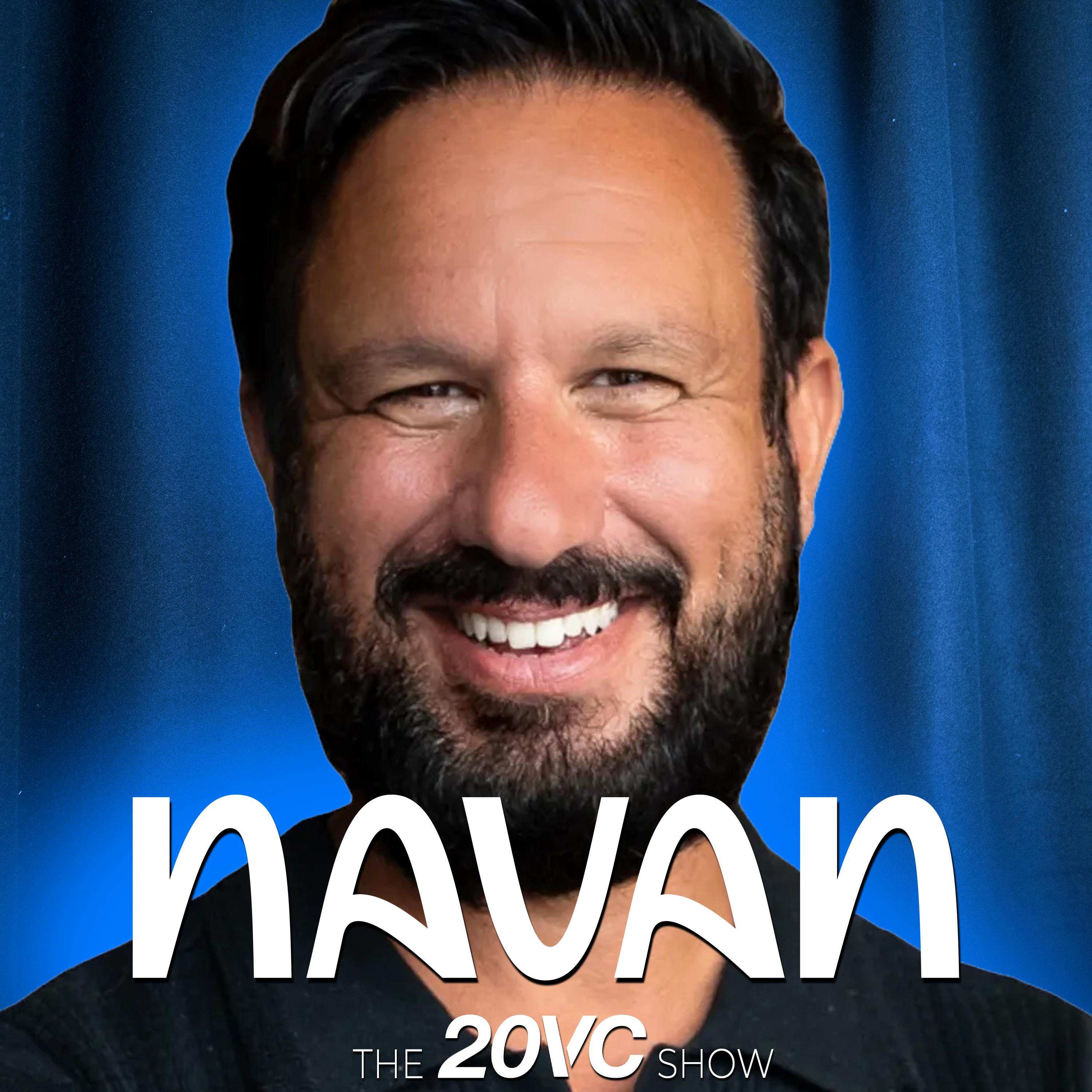
The Twenty Minute VC (20VC): Venture Capital | Startup Funding | The Pitch
20VC: From $6.2BN Market Cap to $2.8BN: What Is Not Translating About Navan's Public Story | Are Any Public Company CEOs Actually Happy? | Why Navan Built It's Own Customer Service AI and What it Could Mean For Customer Service AI with Ariel Cohen
00:53:50
Loading summary
Transcript118 lines
- [00:00]
A
This is 20 VC with me, Harry Stebbings and what a show we have in store for you today. So last month Navan went public. They went public with an IPO price or a market cap of over $6.2 billion. Today the market cap is $2.8 billion. It has been a rough ride, but Ariel, the founder, is one of the.
- [00:19]
B
Greatest founders of the last decade.
- [00:21]
A
The company is an incredible business. So today we discuss why go public when he did? Is he happy that they did? Are a review of the process itself and how AI impacts the company and its prospects moving forwards. This was such fun to do and Ariel's been a friend for many, many years now, close to a decade and is one of the great CEOs of our time. But before we dive into the show today, this episode is brought to you by Perc, the Intelligent Platform for Travel and Spend Every successful founder remembers their breakthroughs, those moments in the journey that change their trajectory. Whether it was going from burning cash to building leverage or from headcount growth to oper scale, breakthroughs don't come from spending hours buried in spreadsheets, booking and rebooking travel, or chasing their teams for last quarter's coffee receipts. That's shadow work and that's what PERC was built for. One recent study found. Shadow work costs companies over 1.7 trillion every year as employees waste hour after hour on manual time consuming work instead of the jobs they were hired to do. PERC's AI is purpose built to automate shadow work so teams can focus on real work with real impact. Don't let anything get in the way of your next breakthrough. Leave the travel and spend to PERC. Visit perc.com 20vc today. PERC Powering Real Work While PERC helps you launch and manage perks, that keeps teams happy. Airwallex helps you pay and move money globally. Founders, let's get real about the growth tax. You've raised VC funding and you're scaling globally and it's no longer about shipping product, it's about orchestrating operations across continents. But suddenly your payments and finance stack is choking your growth. You're logging into lots of different banking portals, waiting days for transfers and reporting across entities. It's operational drag and it's at your scale, it's costing millions. That's why I'm so excited to partner with Airwallex. Airwallex are more than just a banking alternative to HSBC or Citi. Airwallex brings you an intelligent financial operating system that powers how global businesses operate and grow, allowing you to manage and automate banking, treasury payments and spend. The most exciting part for me, they're heavily investing in agentic finance. If you're scaling globally, you need a banking and finance platform that's bordering real time and intelligent. Check out airwallets today and see how they're helping thousands of businesses like Canva, McLaren and Deal Scale. @AirWallets.com 20VC terms and conditions apply. Your monies are safeguarded, not fscs protected. See airwallets.com for more details. While Airwallets simplifies global payments and Treasury, Navan simplifies global travel and spend. This one's for the finance pros who want to drive real business impact with travel and expense rather than waste time chasing receipts or force people onto outdated tools that only add to month end chaos. Enter Navan, an AI powered travel and expense platform that helps save your company money through real time visibility, policy control and high employee adoption. It's easy to use. You can book a trip in seven minutes compared to and this is mind boggling the industry average of a whopping 45 minutes. And smart AI approves in policy bookings and blocks everything else automatically. And you can track travel spend in real time. See exactly how you're SA up to 15% on your travel budget. That's why the world's smartest companies like Anthropic, Figma, Stripe, Canva use Navan. Go to navan.com 20vc today to see for yourself and to find out how you could win two business class flights anywhere in the continental US because we all deserve a vacation, right? No purchase necessary rules apply.
- [04:02]
B
Good luck.
- [04:03]
C
You have now arrived at your destination.
- [04:06]
A
Ariel Dude, I cannot believe we were shouting before.
- [04:09]
B
I can't believe that Both Navan and 20 VC are like 11 years old. It is so good to have you back my friend.
- [04:17]
C
Dude, it makes us really old. That's what it actually that's the problem with this statement. 11 years in this journey and probably at least for me another 20 years to go.
- [04:27]
B
You created a $4 billion or $5 billion company in that time. I still am doing a podcast. Admittedly there's more listeners but still I.
- [04:36]
A
Would feel better if I was you. But I want to start the big.
- [04:40]
B
Thing that's changed since we last chatted is you've gone public before we discuss.
- [04:44]
A
Like the post going public.
- [04:45]
B
How was the pre going public process?
- [04:48]
A
Is it what you thought?
- [04:49]
B
Did you enjoy it?
- [04:51]
C
It's a good question. I'll tell you what I've enjoyed and what I didn't I definitely enjoyed. There is something fun on bringing your story and what we've built and almost like summarizing it. You know, when you go to do an ipo, you're bringing this story to completely different new people, right? People that we've never met before. A new set of investors, analysts, bankers, a lot of people that actually were not familiar with the story. So it's almost like you need to summarize 10 years in the making into, I don't know, 10 to 15 slides plus a document, you know, the S1. And obviously there are a lot of lawyers involved in this and bankers and so on. But you do get to tell your story to a bigger audience and that's the fun part. It also opens you up to a different type of customers because of it. So that's the fun part. There's a lot of, I would say process related things, things that you need to do. It changes the way that you speak and talk with your employees that you talk with, even with your board. That's a part that I like less because I do like to be very open and not to think a lot about what I'm saying. So that's kind of, I think, the fun part, but also the, the heavy lifting kind of part.
- [06:00]
B
The one thing that we've seen is the extended windows of private markets and people not going public respectfully.
- [06:08]
A
In a world where your stripes and.
- [06:10]
B
Your databricks and everyone push it out as much as possible. I don't know how to say this without being rude.
- [06:16]
A
Were you forced to because of the.
- [06:17]
B
Debt component go out at this time and how did you reflect on the right timing?
- [06:21]
C
Yeah, there were a lot of reasons there, by the way. I think the first thing is that I am someone that I'm going on a certain trajectory. I'm following through. So the decision of taking a company public, that had a lot of reasons, you've called out one, which is basically our capital structure and the way that the balance sheet work post Covid. But there are other reasons. For example, in the payments business, I think there is huge, huge advantage to be a public company in the way that you are actually raising capital for that part of the business compared to being a private company. I think if you kind of go too long in the payments business on being private, you may end up not where you want to be. So that kind of was definitely a driver. But it's also, you know, we have been starting to take share in the enterprise segment, signing more and more and more customers and for them, for that type of Segment it is actually important that you're going to be public. They want the transparency, they want to understand your financials, they want to know that you will be around. So there is a list of things to be public. Timing, you know, you start, you are on the road, right? And the amount of times that the market has changed while we are going public, we are actually starting non deal roadshows in April on the same day that the tariffs were announced and the market corrected by. I don't even know why. That's when we started and then it kind of went to the other side. So I think to try to time a market and say I will only go public when the market is having these ideas, I think it's really, really hard. So I think we kind of decided to go for it. We followed through and timing. I think eventually we are running a really good business so everything will get sorted out.
- [08:10]
B
Can I ask you when you think about pricing and ipo, kind of almost forgetting the van. I'm always intrigued on where you sit on this one. Do you agree with Bill Gurley that you should kind of price it to perfection so there's no pop and you and your employees achieve the kind of fair market price? Or do you think there should be a baked in pop to make everyone feel good on day one, to make it an incentive to buy.
- [08:33]
C
My thinking about Navan is much less about some price engineering in a, in a certain day, even if the IPO day is very important. It's more of like can you take a long term view of Navan? Do you believe that Navan, we'll take the market, right? And the market in the way that we define it. We define the market very, very differently than everybody else. Like everybody think about it, maybe we are kind of disrupting concurrent Amex. That's not the way that we define it. We want to service every frequent traveler that is out there. There is the managed side, you know, Amex and Concare. There is the non managed. Everybody that are doing whatever they want to. It's actually a bigger market and we think that we have an opportunity and the right to win in both markets. And that's what matters. Now that by definition makes the point of view that I have a very long point of view. And it starts in two, three years from now because you know, you have so much mechanics. You have lockups and you have VCs distribution and you have this quarter and that quarter and bit and raise and a lot of mechanics. At the end of the day I think what matter is and that's what I hope that the investors that invested in Avana and the IPO have. It's a long term view that Navan will take the entire market of frequent travelers.
- [09:48]
B
When you think about that entire market, I always think, kind of often the danger is the danger that you don't see. And I'm totally with you on the Amex or the concur that's in the traditional mindset of who the competitor is. But then you have random competitors like Ramp coming out of the blue and.
- [10:05]
A
It'S like I would be more worried.
- [10:07]
B
About Ramp than I would concur in Amex.
- [10:10]
A
My question to you there is, does.
- [10:12]
B
Someone like Ramp not have an inherent advantage over you by being private because it can spend on growth, on super.
- [10:18]
A
Bowl ads, on crazy shit and be.
- [10:21]
B
Margin negative while you are really scrutinized for every dollar you spend for being public and you don't have that elasticity on customer acquisition.
- [10:31]
C
The first thing is I actually reflected with one of our execs here, our president, Michael, Michael Sindisich, about something really interesting. He was our 10th employee. So you've seen everything right? With me, almost like a co founder in the company. We talked about the ones that came and go during the years. Like when we started Navan, there was this company, Upside Travel. We raised $4 million, they raised 200 same year. Okay, talking about the same Navan, like we're going to disrupt corporate travel. The founder was the founder of Priceline. So if you think about like somebody that needs to win against us, that's them. Way more finance, the right people, the right connections. I don't even know what a GDS is at that point, right. And they are not around. And then there are so many companies along the years, including in the fintech industry. And you saw the Brex announcement last year and I love the Brex guys. We are partners, we know the founders really well. But I don't think that you want to end your journey in Capital One, right? So I'm basically saying people came and go throughout the years. I think our culture is what matters and that's what will keep us around and that's what will keep us a winner and probably the winner. And these mechanics of maybe it's better to be in the private market because nobody will look at how I'm defining revenue or what's gross margins or what contribution margin. I think it doesn't create a good business. We've talked about this things even three, four years ago. So we've been managing to build A good business pretty, pretty early. So I don't think it's matter. I think what matters is the culture. Do you have what it takes to see it through? And I think we do totally get you.
- [12:18]
B
Does that mean you don't worry about say a ramp?
- [12:20]
C
I never wake up in the morning being worried about a non competitor. I tell you what is the only competitor that I'm worried about, the one that I don't know about, the one that sits like the ones like Navan 10, 11 years ago that are ignorant enough about the problem but are really, really, really good, that will create something, a different point of view of what we are doing that will be very disruptive to us as we are very disruptive to everybody else in this market. And that's something that my paranoia level on that is really high. I'll tell you a story of what made Navan an AI story, right? And we were not an AI story at the beginning, but it's actually interesting. We always use the machine learning to prioritize our search results, to optimize saving for companies. This was from like 2016 and I think four years ago, three and a half years ago, I was in this conference in Napa and Sam Altman actually presented ChatGPT before it was released. And I remember I got back to our offices and I called Elon, my co founder and two other execs, Nina and Michael, and I was telling them if we will not build our own platform right now, like right now we are so dead. And this was after seeing one demo four years ago and I was really hysterical about it and I was like, we are dead. I cannot see anybody using like, you know, I think I even talked with you about this notion of software is dead. I actually, I think last time that we've talked I was calling this out that software is dead. And this was years ago. So I was worried exactly about that. The thing that you don't know now, luckily we had enough paranoia to build our own AI platform that is really powering everything Navan today. But back then, you know, we didn't know about this thing coming. And I think some kids right now that are building the next Navan, these are the ones that are always there. I'm always worried about them. I'm not worried about the ones that you are mentioning.
- [14:25]
B
So what does the public market not see? Because they're not pricing in an AI story.
- [14:31]
C
100% not. Yeah. I think that the market has, I would say two observations about us that are incorrect. The first one, it is very Hard to compare it in a van business to find a comparable to compare it to anything because on one side it is a tech company and the value that we are creating is for travelers and their employers. So it makes it look like a SaaS company. On the other side, our business model is very much consumption. You come to the platform, we only make money when you use us. And the way that our business work, we sign agreements today, we pay commission today. So all of the go to market cost is going today and in the next years to come you are going to make a lot of money in a very, very, very healthy way. So what investors see in our P and L is a huge investment in go to market and they don't see the immediate return. Well, I can tell you without getting to the details because we are not sharing these numbers that we have an extremely efficient go to market and we have an extremely efficient churn profile. It's actually rare that companies are leaving the van. So one side is like we don't fully understand their growth algorithm or their go to market and I think we need to do a better job explaining it. So that's one side. But I think that just over time and over the quarter as people will see our delivery on the other side. To your question about AI, I think there is this broad kind of feeling right now that everything software is dead and therefore it doesn't really matter. And I think that right now there is not a lot of patience to listen to see the differences between the companies. I was calling out in your show that companies that are doing some workflow in a form are not relevant. They are not relevant not just because of AI. They are not relevant because that's not how people want to consume stuff. So they are not relevant. Anyway, I think I called out Salesforce back then as I cannot imagine people using something like this in the next 10 years. I think AI accelerates this in November.
- [16:41]
B
Can I push back on that and just say I disagree entirely. When you look at Salesforce, I think they're an incredible buy because I think the only thing that matters is distribution. And when you have an AI sales rep that works. Hey, sales reps powered by AI that make you money while you sleep. Everyone will sign up.
- [16:59]
A
Yes, please. And all that matters is you have.
- [17:01]
B
Distribution from Chattanooga to Chad in Africa. And that is what Salesforce have. And so why would Salesforce not be a screaming buy?
- [17:11]
C
Yeah, you know, I think the distribution matters. I think that the most important question to ask is the user that is using me happy to use Me. And if that user is not. And I've never met a salesperson that told me that they like to use Salesforce. And if they. If they user is not, you will get disrupted. To your point, there are a lot of modes there that are related to integration into the enterprise, that are related to distribution. But, you know, I worked for hp, for HP Software, and it was the same story. Distribution was everything. I was always kind of amazed. I actually learned a lot from it. I was calling it. It's like Walmart to send some to sell servers and stuff for data centers. But over time, the disruption will happen if the people that are using you just don't like using it. And I think that the new type of software that you see out there is software that people like to use. I was always calling it out regarding Navon. It is extremely hard to replace Navan. That's why we rarely have Churn. I'll give you one stat in the history of Navan. In the history of Navan, we lost six enterprise customers. Five of them are back. Okay? So if the user loves you, if the employees love you, that's the biggest mode that you can have. I think distribution matters, but you can build it. And that's kind of the ball that we have here in a van.
- [18:39]
B
Do you think it is your fault on messaging or the market's fault on negative perception for the negativity today?
- [18:46]
C
I actually don't think it matters. I'll tell you why. There was this weekend in New York, right? I was actually in New York in the weekend. Airports were shut down. New York and JFK were completely shut down. So it's not like flight got canceled. The airport was shut down from, I think, Saturday evening all the way through Monday at noon. Right? That's in the entire eastern part of the US We've managed to support all of our customers in timely manner. How did we do that? Ava, our AI chatbot, okay, managed to. At that time, you're talking about the hardest thing ever to support. This is my flight got canceled and the airport was shut down. I need to sleep somewhere. I need a new flight. I'm in panic. 55% of the chats were run through Eva, okay? Our call center. In the worst time during this event, the wait time was 16 minutes. 1 6. You'll think that 16 minutes is something horrible, but try to call any other provider in the space during that time that airports are shutting down. So this is the power of Navan. This comes from AI. This comes because we are having our own AI destiny. With our own platform that actually understands how to support you. Not on resetting your password, but how to change a very, very complex trip. And you're going to see us. We are very soon going to release Navan Edge. It's a completely new product. I think it's the biggest or most important release that we've ever released. And you will see how much value a user a company can get by using Navan Edge and eventually the market will figure out and we'll actually see who has the lead in AI for travel, AI for frequent travelers.
- [20:32]
B
Talk to me about Ava, your own AI. Why did you decide to do a build versus buy and work with a Brat Taylor at Sierra or a Jesse at Dakagon? What was the thought process behind the internal build vs buy external?
- [20:46]
C
There is nothing even remotely closed to what is needed when you go to a complex vertical out there. Okay. And it's definitely not in the kind of Sierra level. But even if you take it to the level of the APIs, if I'm kind of taking anthropic and OpenAI, it is not even remotely closed to what you need. You cannot have any type of hallucination. When I'm changing your flight. I cannot tell you go from gate B32 to C whatever because you have a new flight there and you'll get there and it was hallucination. You cannot do that. You're going to first of all lose the customer, but you're going to also get a lawsuit. You cannot support some free upgrades on something that does not exist. And I can go on and on and on. We are using all of the models that I've mentioned, but we are also using our own data. We are using open source models. We've built our entire agentic platform to know where to go to the right API in the Navan platform to change your flight and to give you credits. The complexity level of travel is so high. It's all of the cute demos that you sometimes see by LLMs, like you can book your trip, whatever or you can, it's really nice Q demos. Trust me, it's not even remotely close to being there.
- [22:09]
B
So if I'm looking at investing in these companies, how do I make that an attractive picture if every company is in its own vertical? If you're a fintech business, you're going to need verticalized fintech support. If you're a travel business, you're going to need verticalized travel support.
- [22:24]
C
Is it just for real at the beginning of a huge revolution that will have its up and Downs. We kind of joked about our age, right. Been around when the browser start to get introduced generally, but then into the enterprise. Right. And people moved from a client server app to browser apps. Right. I'm really old. And then came obviously SAS cloud and then came mobile. This one is not even. It's so much bigger, so much faster, but it will have the same cycles. Do we see crazy valuations that only God knows how you know how you will justify them? Yes. But are people estimating the size of this change correctly? I think they're probably underestimating it. So it's a huge, huge, huge, huge change. And I think there are companies that will benefit from this change and companies that will actually die in the process.
- [23:23]
B
What are we underestimating most, do you think? You said we're underestimating the opportunity size. Are we underestimating?
- [23:31]
C
It's very, very hard. If you sat in 2000 and try to understand E commerce and looked at Amazon and ask yourself is that some one off with a bookstore or is that going to change the way that we buy stuff? I don't think a lot of people, I think maybe Bezos knew, maybe some employees in Amazon knew, but I don't think that a lot of people sat there and knew, hey, people will buy stuff including servers in a data center AWS completely differently than the way that they are doing it today. So people are trying to estimate which jobs are going to get redundant and which jobs are going to be created. It's just impossible to know these things. I think you will need to think through. There will be the ups and downs and eventually again I'm looking at this more from a consumption perspective. Is the experience for all of us going to be better? Is our work life going to be better? I think yes, because I'm an optimistic. Some people think things differently. I think the opportunity is huge. I think if we'll move from the LLM infrastructure discussion, which I think people are obsessed there, which I actually don't think it's an important discussion. It's also a very commoditized kind of thing and you'll go up to the what people are getting to. Are people getting benefits? I think people will start to get a lot of benefits. I see it with Navan. I think in the corporate world we are probably one of the few that are generating real value to companies and users using AI. The opportunity is huge.
- [24:58]
B
Dave, why is it not an important discussion on the infrastructure level? When I've interviewed the founders of Harvey and Ligor in the last week and Both of them said they both went From Die Hard OpenAI to Die Hard Anthropic. And the difference in quality today with Opus 4.5 is very real. That suggests the opposite of commoditization.
- [25:19]
C
No, I'll tell you why. I'm actually happy that I'm not an investor, that I'm a founder. I actually don't have a clue if you are an investor how you even choose between all of these LLMs until you are just spreading around and investing in all of them. But it's kind of hard.
- [25:35]
B
How have you seen usage change for Navan topic?
- [25:40]
C
It's interesting. We've seen seen our agentic platform cognition plays between models based on who will give you the best answer and actually we saw movement much more to Google recently. A lot of the transactions with Edge which we didn't release yet but you know we have it internally are actually with Google. It's kind of our own model plus Google coming together giving you the right answer but it changes a lot all the time. Anthropic are an amazing, amazing player and I also think that what they are doing on the development infrastructure, that's actually a massive, massive change that make me by the way completely rethinking how our engineering even operates and so on. I think that all of these companies are super smart, super aggressive, but you can see them going from the very low end kind of commoditized infrastructure. Do I need to create a development platform here which is kind of in a way similar to what Microsoft did in the 90s. So I think right now you kind of see the lead coming from anthropic, but God knows everybody have a lot of ambitions and are kind of pretty good companies.
- [26:52]
B
You mentioned open models earlier and the willingness to use them. I'm intrigued to hear how you think about open model usage versus closed and what drives that.
- [27:01]
C
I think the way that we look at this, we have these concepts of models and supervising other models and it's for different tasks and for different tasks you need different things. And our point of view, you know, when you think about pii, when you think about security, we have an extremely, extremely strong CISO person in the company and he is on one side very good on telling us what not to do and what are the risks and on the other side finding the right solutions and it's important. That's why I've said it's actually hard to create software generally in the enterprise, but with new technology to lead into the enterprise, there are so many things that you need to take into Consideration, but regulation is one of them. Travel and fintech is regulated and it's very much license driven all over the world. So all of these things, we are really good on taking them into consideration and kind of completely changing the way that people are thinking about travel. But that's why I think we're going to win. The reason that I think that we're going to win, we are almost in the middle between I would say companies that already like the way that they perceive risk and we cannot do anything is very much there. We are also not a startup. We are in the middle and we're going to do the right thing for our customers. That's kind of what drives us.
- [28:22]
B
You mentioned the way that developers code and create is changing. How are you seeing that change internally?
- [28:29]
C
An area that I actually think it's almost impossible to disrupt us is the travel side to create the infrastructure that we've created to bring the content into the platform, the plumbing there. I don't think that people fully understand the plumbing that you need to create and how deep it is to buy an airline ticket in a location to then change the ticket to then apply unused credits. It is extremely fragmented space. You need to be licensed everywhere in the world, which means that you need to be incorporated in the world. So you are running this online platform, but on the other side you are connected to an infrastructure that we created in the last 10 years and we are still creating it to connect to everything, to have the ability to change everything. So that's really a huge, huge moat. Right? So when it comes to travel, I'm more seeing the opportunity to sell better, to service our customers better, to give them stuff through EVA and through cognition. You're going to very soon see in our platform book with AI, which will be a completely kind of different experience. But I gave the team a challenge and actually Elon, my co founder, obviously took it first and did it over the weekend to vibe code our expense product and it took him six hours to do that. So Elon over the weekend completely wiped code, our expense product. There is nothing there. Like there is a big fintech component very similar to travel. You know, how do you swipe a credit card and everything is magical. How do you report on the transaction and so on. But the actual app, super easy to wipe code. And you think about like we kind of briefly talked about the ERP earlier. You think that all of these integrations are very, very hard to some netsuite or whatever, how to create. They are not. They are not. You can vibe code Your way to a lot of things these days. And this is dramatically impact the way that we are thinking about where are we investing in engineering and how.
- [30:29]
B
What platform was he using?
- [30:31]
C
I actually don't even know to be honest. No, I think Elon, when it's probably actually our own platform. I'm not certain about it. I can actually ask him.
- [30:40]
B
You have your own vibe coding platform?
- [30:42]
C
Yeah. Cognition is our own platform, but I think that recently they are kind of combining platforms there. So I'm actually not the right person to tell you which platform I used.
- [30:53]
B
Do you think you skip the design process in a world of vibe coding? Instead of going through mock ups and designs and design reviews, do you skip all that and say elan, it's a good question.
- [31:04]
C
I'm coming from a product background, right. And I keep asking myself, is the product person becoming really the most important person? Because actually knowing the user case is super, super, super important. Probably more important than any time. And suddenly the product manager gets a tool to come and say, you know, like there is always this tension between a product and engineers. The product people will want to do something. The engineers will tell them that you cannot do that. I wonder if this tension is going away by the product guy. Just saying I'm going to do this by myself and prove you wrong. I don't think that we are there yet, but I think we are increasingly getting there. Which again, talking about modes, I think the knowledge mode is going to be very, very high. Like knowing and very important knowing what exactly the nuances, right. What exactly the users want, what customers want and so on. So I think the power dynamics are changing kind of in engineering, you know, between product design. But cycles will get shorter, I'm certain about that.
- [32:06]
B
How are you seeing developer productivity change?
- [32:09]
C
The first thing. And this is actually really good for me as a CEO. You can create way more pressure of move faster because you get to say but why can't you do it faster by vibe coding it? Right. And I think it's also not just.
- [32:26]
B
Like there's vibe coding and then there's also obviously like Claude code and cursor which it's not really vibe coding.
- [32:32]
C
I'm not referring to Claude to be honest. So I'm mainly referring to Claude. But. But that's kind of where it is going and there are still things there that you need to configure, right. So you need to connect to your servers, you need to connect to your backend and so on. But who says that that will be the reality in six months or 12 months from now, I will tell you that Cognition, interestingly enough, Navon Cognition is doing the configuration for the developer, so we actually removed that part.
- [32:56]
B
How much more productive are your developers today versus a year ago, give or take?
- [33:02]
C
I don't know. To give you this answer, Elon will give you a really big number here, which we decided not to share yet. But you can see, like if you'd ask me where most of the engineering investment is going to, it's mainly to AI related projects and that's a huge change.
- [33:21]
B
Totally get you. So it's like tokens to power Cognition.
- [33:26]
C
Not to have, but also to develop new stuff. Because like Van Edge, which I'm kind of really waiting to release, is a completely different way to buy stuff. Basically, you know, we are focusing on the travel vertical, but you will look at this and you'll say, wow, that's actually an interesting way to think about what do I want, right as a traveler in this case. But generally what do I want, how do I want it, how my needs are being met.
- [33:55]
B
Do you see margin degradation with the quality of that increasing? Because you need context windows to expand, you need memory to increase. That costs money. Today. Inference is expensive. Unless you get more juice out of the end consumer, and this is my worry, unless the end consumer pays more, all of this just hurts margin.
- [34:15]
C
I kind of think about it the other way around and we always thought about it like that. If you create value, you're going to get paid. I'll give you an example. We were the first ones, and we are the leaders by far on this, of connecting directly to airlines instead of going through some aggregators connecting directly to the airlines. The model in travel says that if you go through an aggregator, you're going to make more money. But we knew that that's the right thing for our customers. When you connect directly to an airline, you get more information for them. So you can tell them this flight is likely to get delayed. You can tell them this is how the Delta One seat look like compared to the Polaris seat look like on this airplane, on, on this flight. These are things that people value. When we connected directly to airlines at the beginning, we did take a hit on the revenue and now we are no longer taking a hit of the revenue because we have in the platform this win, win, win between the airline or any type of partner, the customer and the user and the employee. And that win, win, win you eventually get paid for. So it also creates a win for us. But, but you need to have to take the first leap I get you.
- [35:26]
B
On the create value and you get paid for it down the line. As a public company, they don't love down the line. That's the luxury you get as a private company. Do you not think that the pressing nature of public market demands means they don't love the. Don't worry, it'll come.
- [35:43]
C
Remember what I told you earlier? It's almost like I have two lenses that I'm managing in a van. Is the business doing great? Okay. The business is doing amazingly. Okay. So are we gaining share? Like you could see our Q3 earnings and you can see that we are taking a lot of shares, right? We've announced us getting into the enterprise market and taking companies as customers like Visa, huge healthcare companies, enterprises all over the world. Like companies that are really in the main space street of like doing stuff that are very, very far from, you know, we are all in the tech world, very far from tech and kind of becoming customers. The business is doing great and I think as long as we will service our customers and our users, the business will continue to gain share. We're going to take the entire market. I really believe in it and the market, the, you know, the investors will figure it out. I think that eventually this will catch to where it needs to be. And I think again we need to make the right decisions for our users, for our customers and the investors will benefit a lot from it over time.
- [36:51]
B
Jason Lemkin said on a show the other day to me, I'm sure you know Jason from sassa. He said I don't know one happy public company, CEO. I don't know one. Not one. It's my brilliant American artisan. Are you happy?
- [37:04]
C
I think I told you I'm happy that we are out there and telling our story. Is that fun? You have this mechanism that makes people obsessed on, I don't know, refreshing their screen and check what our share price is. It creates a burden to explain to people, your employees. Basically everything I'm telling you about Nevan, at the end of the day it dependent on the employees here being part of this journey. We talked about it in the context of COVID right? How do you convince an employee to stay in a travel company during a pandemic? You can apply the same thing here. Everybody are saying everything is disrupted, everything will be different. No software company that was created in the last 10 years will be alive and an employee will need to decide, right? Is the business that you see inside is really good compared to this grade that you take every millisecond in the Share price. So that's the part that I don't like. Just because it creates behaviors that are not even relevant. I don't think that people can actually know why they're. I don't know why the share price goes up in this morning and goes down in that morning and so on. You kind of know when you report, you know when you're delivering some announcement to the market. So that doesn't make me excited about that part of being public. So maybe that's kind of the reference. Can you find the happy CEOs? But I do like the other parts that comes with it.
- [38:30]
B
Does your mood not correlate to price? I interviewed Vlad. He won't mind me saying this. I interview Vlad and when they were wherever, they were down 15 billion. I mean, honestly, Ariel, he was a dead man walking. And then I interviewed him when they were at 100 billion and the dude.
- [38:45]
A
Was walking on water.
- [38:47]
B
I mean, he looked younger, he had better energy.
- [38:50]
C
I'll tell you, it's kind of interesting that you bring up Robinhood. I was kind of investor in Robinhood through VCs, but then also through, like in the IPO. I kind of jumped on it and I went through the suffering, right? So they popped and then completely crashed. And in a very long time they were down. And he did so amazingly, you know, he was like, you know, they are growing the company amazingly. They have really good cost structure that he did when they were going down. He penetrated to new products, new things. So I don't know why he was, you know, I don't know him. So I don't know why he was depressed when the share price was. I think this is where they actually define the company and build the company and actually create the company.
- [39:34]
B
They do. Because every day you're staring at your stock price going, I'm doing everything I can. Everything. Right.
- [39:41]
C
Remember that we talked during COVID and everybody were telling me that nobody will ever travel again and what are we doing with Navan? And I told you, I don't know. I'm looking at it. I'm certain that people will travel when, you know, obviously when the pandemic will end. And I see all of the stuff that we are doing in Navan, all of the stuff that we are building, and I'm just waiting for people to come back to travel and. And to see the new Navan and life would be great. I was like, this is an opportunity to think about how to build a better business. It's exactly the way that I'm looking at this. Today, maybe that's a different type. I talk to you about our culture. I see the opportunity. I see a huge opportunity for Navan, right? So I don't know, I'm like, I'm not waking up in the morning, I'm checking the share price twice a day. I'm checking it when I'm kind of waking up and when the market ends. Just to know, right? People are asking you and you need to know. But I don't know. In any case, I'm not selling or I cannot sell, my employees cannot sell. So I don't think it's a matter. I think you need to build value which eventually the shareholders and investors in Navan will actually benefit from it. But again, start with the customer, start with the user. If they will be happy, the shareholders of Navan will be super happy.
- [40:53]
B
Do you not think then that share price correlates to morale within a company?
- [40:57]
C
100%. That's what I told you that I think that the tough part that it adds to is that what I've told you is me like, am I getting depressed or like in some mania when you know, it's like when the share price is up, I'm not. But am I naive about it? Do I think that a lot of the Navan employees are refreshing their app all day long and checking where it is they are and it is my role to actually bring them along to the journey and keep pointing to what, what I know about the company, what the employees here know about the company. And you know, we kind of talked about it in Q3. Think about like we are going like crazy in the PLG market and we are going like crazy by signing new deals in the enterprise market. And we pointed to examples in Q3. The employees have all of the information to make their decision. And yeah, then there is the share price and I'm sure that it impacts them and it's my role to kind of tell them to look at this in a 2 years time frame, 3 year time frame and probably 10 years time frame and think about like where we could be. You know, there is this famous kind of letter that kind of Bezos sent his investors right when their share price was, I don't even remember what was the number, but very, very low. And he was pointing to the business and to the business that is doing great. And guess what happened later? The share price more than caught up in that case.
- [42:18]
B
How brutal is the talent war today? It seems kind of you're either hot and sexy like anthropic or OpenAI or Cursor or any of these companies, and then all the talent concentrates there or you're not. How brutal is the talent war if you're not an AI first model company or one of the darlings?
- [42:39]
C
I think that they're really good employees, and I told you, I have experience with this during COVID They're really good employees are not built like that. I think they are very resilient. They want to win and they want to see through things that they've built. Okay, this is what I saw during COVID This is what I see now. So people that tend to go to the next shiny thing are not necessarily, to begin with, are that aligned to our culture. Now, again, it's my role to explain the choice to them, to show them the vision, to show them the roadmap. But we had, you know, during COVID kind of May, June, July timeframe, a lot of employees leaving to Zoom when they were at their peak. Like, and I remember even then I was talking with them and I was telling them, hey, this is at the peak. Like, where do you think it will go? Like, do you think that more people than the people that live on this planet will use Zoom? What exactly do you think is going to happen? And they did. They made their choices and it's okay. But I want to have people in this company that believe in our mission, that believe in our vision, and check if we are going towards that and if we are, they are usually staying.
- [43:54]
B
You have the last laugh now.
- [43:57]
C
On that one. Yes, but it's not about that. It's about people, by the way, can do their own journeys. Like, do you know how many career mistakes I made in my life? People can have their own journeys. And by the way, some of them came back. So people can have their own journeys and bet on their own bets, but I actually think values and what. What kind of story you want to be part of is more important than. Let's jump to the next shiny thing.
- [44:20]
B
Final one, before we do a quick fire, what career mistake do you reflect on most? I'm too interested. Like, I passed on deal at the seed round at a $10 million valuation to put in a large check. I think about that every single day because that's a billion dollar gain. What would your career mistake that you reflect on most be?
- [44:39]
C
Wow. I think that if I knew everything that I know today, I will probably skip a startup and actually start Navan way earlier. But I didn't know. But definitely Elon and I reflected on the Navan idea, the trip actions idea back then way before we jumped to do it, we had another startup in the middle probably would have been really beneficial. Probably Navan would be significantly bigger and more impactful today if we would have done it earlier. So that's a pretty big do you.
- [45:10]
B
Think so or do you think you needed to have that experience to build the company that you've built today?
- [45:15]
C
I think both of us worked in enterprise businesses. I've mentioned HP earlier but others to have the needed experience to build something significant in the enterprise. But you know for us travel we didn't know anything about it and concur back then looked so scary that probably we've delayed that this journey by 2 to 3 years.
- [45:39]
B
Totally get you dude. I'm going to do a quick fight with you. So I give you a short statement, you give me your immediate thoughts. Does that sound okay?
- [45:45]
C
Let's do it.
- [45:46]
B
What's been your biggest mindset shift in the last 12 months?
- [45:51]
C
Think about the long term, stop in a way obsessing about some short term issues and really, really think about the long term and make sure that everybody are with you on this journey.
- [46:01]
B
How did making money change your mindset towards life?
- [46:05]
C
It makes stuff easier in the way that you can focus more on things that you care about. You can get much more help around you to then actually creating a nice balance between building something great but also having your own life. So I think money definitely helps there. But you know when I'm waking up in the morning it's about like really building this thing. It's not like I'm checking the share price times my holdings. This is my money. I'm not doing that. It's not how I think. So I think it's about convenience. It's about you actually get more time back.
- [46:42]
B
What do you spend on that has made the biggest change to your life?
- [46:47]
C
I think first of all getting help like having people around you that can do stuff that you don't want to do. I don't know, fixing stuff in the house, doing stuff that also I'm not good at doing. Getting help free up a lot of time. Something that definitely to your point about I live in both New York and here in Palo Alto. That's recent and I love it. I can enjoy some of the things here. My kids by the way live there. But I can also enjoy New York and I love big cities. So that's kind of similar to what you said. We kind of have this really like apartment in a neighborhood that we love and that's fun.
- [47:26]
B
How worth it Is a jet.
- [47:29]
C
You know, I think I'm not there yet. Sometimes flying jets, sometimes I'm flying commercial. I don't know. I think it saves time. I think that it just saves time. That's what it does. I think people flying is hard. You know, like time zones is still a thing. Jet lag is still a thing in a way. That's what, you know, I think my wife keeps making fun of me that the entire Navan was created because of my anxiety in an airport. And it's so, so true. And so I think it's still, no matter what. Even with jets, I'm still having the same anxiety.
- [48:05]
B
Dude, I'm going to speak to you in a year and you're going to have a Gulf stream. Okay.
- [48:11]
C
I'm not sure.
- [48:11]
B
By the way, I'm certain you said about kids, tell me, what's your biggest parenting advice? What do you know now that you think is most important to being a good parent?
- [48:22]
C
I think. And that's kind of what I told you, that with money you gain more time, invest the time in your kids. Five, six years ago. I didn't. In the last three years, I have. And there is nothing, you know, we talked a lot about Navan, mission and vision and private jets and all of these things. There is nothing more rewarding than that. Like, I have twins that are 18. My relationship with them is so good, so deep. And I have also a 12 years old. Again, same thing. Invest the time. Invest the time. Don't pay that price. I did pay that price earlier and I definitely regret it. And I'm not doing it anymore. I'm really, really spending the time with them.
- [49:05]
B
You regret it. But would it have been possible to do what you did without doing that regret and without doing that?
- [49:11]
C
It wouldn't. That's the price. That's the price.
- [49:14]
B
So do you regret it?
- [49:17]
C
This is very, you know, very kind of loopy. Yeah, it's a good question. It's a really, really good question. I don't know. It's probably something to figure out with my therapist, but I can tell you that nothing is more rewarding than that.
- [49:33]
B
Dude, I want to finish on. What are you most excited for?
- [49:36]
A
I like positivity, too.
- [49:37]
B
You said you're an optimist. What are you most excited for when you look forward to the next decade?
- [49:42]
C
I think almost like the opposite of AI. I think that people will get way more towards fun spirituality experiences. I think you and I talked in the past about my kind of walkabout trips once a year by myself. To scuba dive somewhere. I think people will have more time, more ability to also focus on that. Like talking about the price that I've just talked about and I'm excited to see what will happen there. It's kind of the opposite of tech, the opposite of AI, but it's kind of I think where society will be able to go to with way more efficient kind of life and workplace that we will have.
- [50:23]
B
Dude, you are the best. I so appreciate you man.
- [50:25]
C
I had a lot of fun. It was so much fun talking with you.
- [50:30]
A
But before we leave you today, this episode is brought to you by Perc, the Intelligent Platform for Travel and Spend Every successful founder remembers their breakthrough breakthroughs, those moments in the journey that changed their trajectory. Whether it was going from burning cash to building leverage, or from headcount growth to operational scale, breakthroughs don't come from spending hours buried in spreadsheets, booking and rebooking travel, or chasing their teams for last quarter's coffee receipts. That's shadow work and that's what PERC was built for. One recent study found shadow work cost companies over 1.7 trillion every year as employees waste hour after hour on on manual time consuming work instead of the jobs they were hired to do. Perkz AI is purpose built to automate shadow work so teams can focus on real work with real impact. Don't let anything get in the way of your next breakthrough. Leave the travel and spend to PERC. Visit perc.com 20vc today. PERC Powering Real Work While PERC helps you launch and manage perks, that keeps teams happy. Airwallex helps you pay and move money globally. Founders, let's get real about the growth tax. You've raised VC funding and you're scaling globally and it's no longer about shipping product, it's about orchestrating operations across continents. But suddenly your payments and finance stack is choking your growth. You're logging into lots of different banking portals, waiting days for transfers and reporting across entities. It's operational drag and it's at your scale. It's costing millions. That's why I'm so excited to partner with Airwallets. Airwallets are more than just a bank banking alternative to HSBC or Citi. Airwallex brings you an intelligent financial operating system that powers how global businesses operate and grow, allowing you to manage and automate banking, treasury payments and spend. The most exciting part for me, they're heavily investing in agentic finance. If you're scaling globally, you need a banking and finance platform that's borderless. Real time and intelligent. Check out airwallets today and see how they're helping thousands of businesses like Canva, McLaren and Deal Scale@AirWallets.com 20 VC terms and conditions apply. Your monies are safeguarded, not fscs protected. See airwallets.com for more details. While Airwallets simplifies global payments and Treasury, Navan simplifies global travel and spend. This one's for the finance pros who want to drive real business impact with travel and expense. Rather than waste time chasing receipts or force people onto outdated tools that only add to month end chaos. Enter Navan, an AI powered travel and expense platform that helps save your company money through real time visibility, policy control and high employee adoption. It's easy to use. You can book a trip in seven minutes compared to and this is mind boggling the industry average of a whopping 45 minutes. And smart AI approves in policy bookings and blocks everything else automatically. And you can track travel spend in real time. See exactly how you're saving up to 15% on your travel budget. That's why the world's smartest companies like Anthropic, Figma, Stripe, Canva use Navan. Go to navan.com 20vc today to see for yourself and to find out how you could win two business class flights anywhere in the continental US because we all deserve a vacation, right? No purchase necessary rules apply.
- [53:49]
B
Good luck.