← The Twenty Minute VC (20VC): Venture Capital | Startup Funding | The Pitch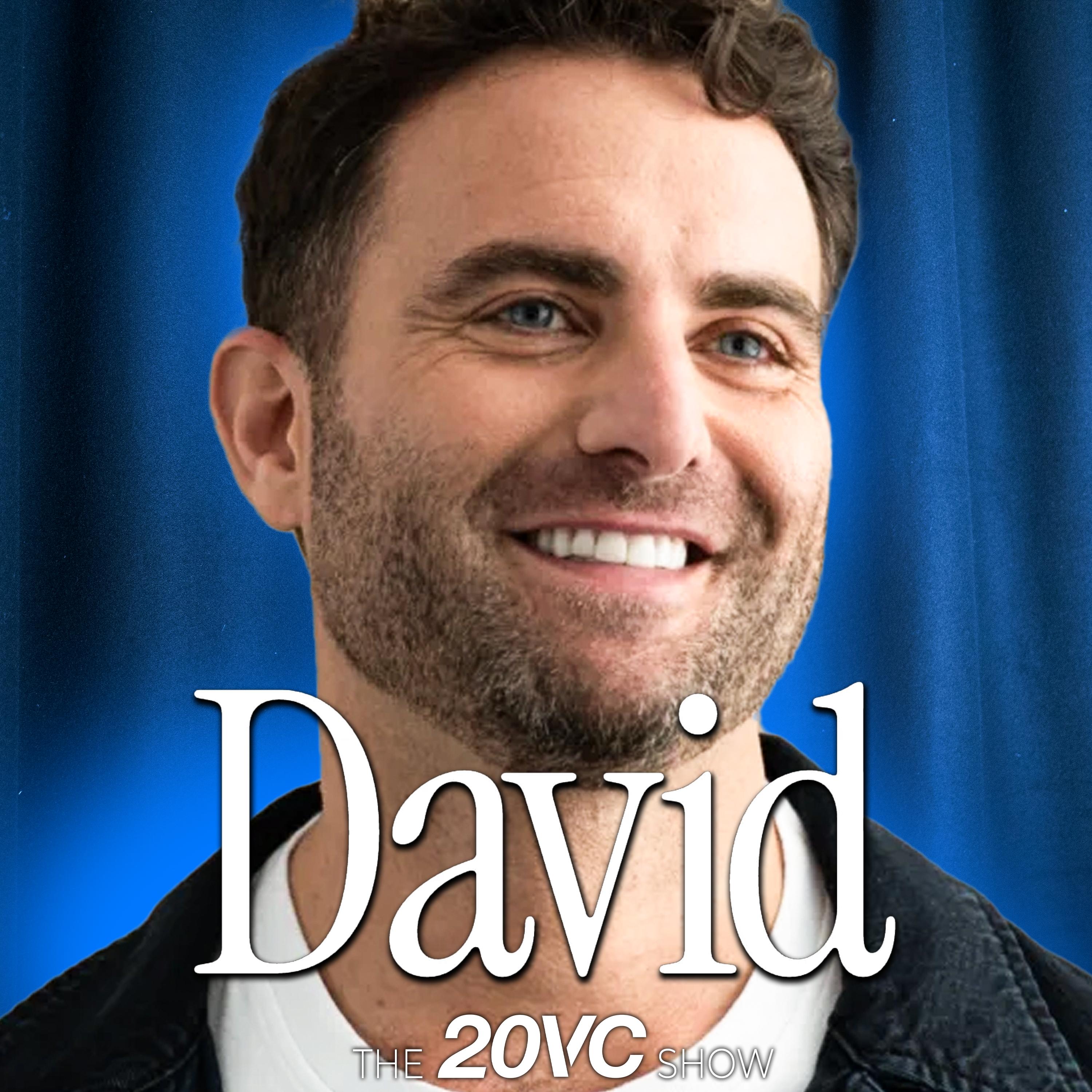
The Twenty Minute VC (20VC): Venture Capital | Startup Funding | The Pitch
20VC: The $BN Greenoaks Backed Protein Bar | Hitting $100M Revenues in David's First Year: Lessons & Mistakes | $0 to $600M: The Untold RXBAR Story | Product-Market-Fit, Pricing, Branding: What Every Founder Gets Wrong Today with Peter Rahal
01:06:15
Peter Rahal is the Co‑Founder & CEO of David Protein, the highest protein‑to‑calorie ratio for any protein bar on the market. Peter has raised over $85M from Greenoaks, Dr. Peter Attia and Dr. Andrew Huberman with the latest round valuing...
Loading summary
Transcript317 lines
- [00:00]
Harry Stebbings
This is 20 VC with me, Harry Stebbings. Now there is a fun fact that very few people know about me. I am probably the biggest nerd when it comes to protein bars and I saw David protein bars. Now these are the highest protein to calorie ratioed protein bars on the market and so I looked into it and then I saw that my good friend Neil Mater and Green Oaks were invested and then I saw that but it was founded by Peter Rahal. Peter is an incredible entrepreneur. He founded Rxbar before taking it from his mum's basement with a 10k start growing it into a household brand and then selling it to Kellogg for $600 million. And then with David he's raised $85 million from Green Oaks, Peter Attia, Andrew Huberman and in their first year alone they're going to do $100 million in revenue. This was an incredible discussion and I'm.
- [00:53]
Peter Rahal
So excited to bring it to you.
- [00:55]
Harry Stebbings
But before we dive into the show today, Secure Frame makes that simple and seamless Secure Frame empowers businesses to build trust with customers by simplifying information security and compliance through AI and automation. Thousands of fast growing businesses including Nasdaq, AngelList, Doodle and Coda, trust SecureFrame to expedite their compliance journey for global security and privacy standards such as SOC2 and ISO 27001, CMMC, NIST standards and more. Backed by top tier investors and corporations like Google and Kleiner Perk, the company is among Forbes list Of the top 100 startup employers for 2024 G2's best software awards for Highest satisfaction Products and a recipient of the 2024 Cybersecurity Excellence Awards, something I definitely never got in school myself. Learn More today@secureframe.com is your finance team a cost center tied up in enforcing policies, bogged down by cumbersome processes and drowning in operational busy work? Well, what if you could unlock seamless strategic finance that actually fuels your this is why leading global growth companies use payhawk, the finance orchestration platform that unifies global spend management with conversational AI to deliver best user experience for everybody dealing with company spending. Finance teams using payhawk report a major shift from operational to strategic work. New AI agents for each finance role handle the busy work, acting with the same governance as your finance team. Like having a small team of expert assistants that work 24. 7, but also providing an exceptional user experience to your employees. Payhawk is built for growth and enterprise businesses that operate globally. No six month implementations, no consultant dependencies, just immediate finance transformation that scales with Your business leading growth companies like Vinted, Wallbox and Hundreds more across 32 countries use Payhawk to move finance forward, not just keep up ready to turn your finance processes into a competitive advantage. Payhawk is offering a staggering 30% discount to everybody switching from qualifying expense management or company card provider. Who mentioned the 20 VC podcast? Visit payhawk.comSwitch to learn more and make the intelligent switch today. And speaking of incredible companies, let's talk about Brex. Now that your team is up and running worldwide, make sure your finances work just as hard with Brex. The ultimate financial stack for startups. So when Brex was founded, it wasn't just about creating another financial product. It was about solving the really gritty challenges that founders face daily. Let's be honest, building something from the ground up is hard enough enough without dealing with clunky, outdated banks that pile on fees and leave your cash idle. Brex is different. It's the financial stack that scales with you no matter where you are in your journey. From corporate cards to maximizing your Runway to earning yield on your cash. Brex was designed with founders in mind to make every dollar go further so you can focus on building. And here's what really stands out to me. Brex combines the best of checking treasury and FDIC insurance in one powerhouse account. You can send and receive money globally at lightning speed, earn yield from deb1 and still access your funds whenever you need. Plus with 20x the standard protection through program banks, your cash is not just working harder, it's working safer too. It's no surprise that 1 in 3 venture backed startups in the US with companies like Anthropic, Coinbase and Robinhood. My God these companies are incredible. Trust Brex to help them grow. If you want to join the smartest startups on the planet, head over to brex.com startups and see what they can do for you.
- [04:37]
Peter Rahal
Peter Dude, I am so excited for this.
- [04:40]
Harry Stebbings
As you know I cold emailed you.
- [04:42]
Peter Rahal
Because I was such a fan of the product. I've been really looking forward to making this one happen. So thank you so much for joining me today.
- [04:48]
Neil Mater
Thank you. It's a pleasure to be here. Big fan of yours as well.
- [04:50]
Peter Rahal
That is super kind. Now I wanted to break the show into kind of two separate halves. One is obviously kind of lessons from the past and then the other half is kind of looking to the future. If we start on the RX journey. I've been stalking the shit out of you. As you know, I listen to all of your prior interviews and I really like to focus on like moments which cause big changes.
- [05:09]
Harry Stebbings
Your father said shut the fuck up and sell a thousand bars.
- [05:12]
Peter Rahal
Early on, very early on.
- [05:14]
Harry Stebbings
Can you tell me the story of.
- [05:16]
Peter Rahal
That and how that changed your go forward mindset?
- [05:19]
Neil Mater
This was 2012, a little bit of context. I was in Chicago, this startup scene was emerging and it was sort of like default was like, you have an idea, you have to go raise money. And so my dad's more of an old school guy. He's like real business fundamentals. And I remember putting together a deck, had this idea and I remember asking him like, do you know any, you know, rich people that would be interested in investing? And he said to me, you know Peter, you really need to like shut the fuck up and just try to sell a thousand bars. And left it at that. It's obviously call it bull or director vulgar or whatever, but in that messaging was like really just make the product focus on what's important. And it was a message of prioritization. And so instead of spending my time having lunches or whatever with high status people, really and using that time to do that, I should have been formulating, making the product. We just totally stopped doing investor work and went straight to just actually designing and making the product. And so instead of raising money, I went to PowerPoint which at the time that's all I knew to like design the labels, printed them, went to my parents house in their kitchen and started formulating.
- [06:35]
Peter Rahal
How many formulations did you had to go through before you found the right one for the right first sale?
- [06:40]
Neil Mater
Probably took about at the time, three months. Versioning is pretty dynamic. There's like tons of versionings, but I would say probably 32. We started selling but then it just doesn't really end. You always keep incrementally improving.
- [06:53]
Peter Rahal
Can I ask. Take me to the first sale. Take me to the first person that bought one.
- [06:58]
Neil Mater
I actually have a photo of the first transaction. So it was actually my partner Jared, he brought some product to his office and was selling it to his colleagues. That was the first B2B or B2C sale. And then the first transaction was a CrossFit gym in Chicago called River North. And I remember selling one carton of each SKU. Two SKUs at the time and yeah, put it on shelf at a CrossFit gym. So that's the first B2B sale.
- [07:23]
Peter Rahal
So I heard that when it came to customer feedback, you took Tupperware containers as you said that, to CrossFit gyms to get feedback.
- [07:31]
Harry Stebbings
Can I ask what are your Big.
- [07:32]
Peter Rahal
Lessons on getting early customer feedback and how to do it most effectively.
- [07:37]
Neil Mater
Yeah, it's tricky because it can be a lot of noise and especially in the consumer food and beverage, like you want to be getting it to the right group. So I went to a CrossFit gym. So those were our clearly defined early adopters where they would appreciate a, you know, a paleo protein bar. So their feedback to me, I weighted the most. Whereas, like, if I went to some of my other social circles that really didn't appreciate egg whites for protein, et cetera, I would like just discount their opinion, actually. So a lot of it is very observational, but you have to filter out what's important and not. And have that discretion because if you just. If you just react to everything, you're just going to be confused.
- [08:13]
Peter Rahal
Are the best brands born in niches? When you think about that, sure.
- [08:17]
Harry Stebbings
CrossFit people who care about egg whites.
- [08:20]
Peter Rahal
The truth is D food now, most people who buy RX bars don't give a shit about egg whites. They just like the packaging, the design, the taste, whatever. Are the best brands born in niches?
- [08:30]
Neil Mater
To start in a niche that's uncompetitive, you have to have a very clear positioning. Having a very clear position is super important and it kind of relates like the best brands are semi polarizing. Having that niche origin probably helps reinforce that.
- [08:46]
Peter Rahal
Do you think that RXBar was opinionated enough in the early days?
- [08:51]
Neil Mater
No, I think we're probably a little safe. We did have no BS on our package. As risk taking as I am, I was probably not willing to take as much brand risk because I just wanted people to like the product. The risk reward wasn't there, especially in context to David. I think David has a much stronger point of view.
- [09:07]
Peter Rahal
Do you think you have a much stronger point of view because you're much more confident now having sold Rx and been successful.
- [09:13]
Neil Mater
Yeah. More competent on nutrition.
- [09:15]
Peter Rahal
Going back to the CrossFit side, sorry, I do want to. Did you have immediate product market fit? You're selling those skis.
- [09:22]
Harry Stebbings
Was it very obvious?
- [09:23]
Neil Mater
Yeah. So in the market defined by CrossFit gyms or like, that was like the first market we started, we had product market fit right away. I remember dropping off two cartons again and I was like, all right, that's 24 bars. See how long it takes? They sold out in like two hours. And so then, then you can just extrapolate that, like, so why would a CrossFit gym in Wisconsin, Indianapolis be any different? So we knew right away it was Going to work.
- [09:48]
Peter Rahal
What were the margins like on those early skis?
- [09:51]
Neil Mater
It cost us a dollar, we sold it for $2.
- [09:54]
Peter Rahal
Find that 50%. But how do you think about doing retail then? Because in retail obviously you need like they need the 50% for themselves to make money. And so how did you think about that?
- [10:04]
Neil Mater
We did everything direct. So we did direct B2B, CrossFit, gyms, other gyms and then direct to consumer through Shopify or Shopify store and then eventually Amazon. But in the beginning, the first 24 months, like we didn't do any retail. It wasn't in our cost structure. And we also couldn't manufacture enough. Like Jared and I were making the product with our hands.
- [10:24]
Peter Rahal
How long were you making the product.
- [10:26]
Neil Mater
For like 18 months.
- [10:28]
Peter Rahal
How many bars is that?
- [10:30]
Neil Mater
Our capacity was like 10,000 bars a day.
- [10:33]
Harry Stebbings
Wow.
- [10:34]
Neil Mater
But it was, it was terribly inefficient, very laborious. That's why we could bootstrap it because we just could control our inventory. So we didn't have much finished product, sort of made an order.
- [10:44]
Harry Stebbings
Wow.
- [10:45]
Peter Rahal
What did you do in the first year revenue wise?
- [10:47]
Neil Mater
2 million.
- [10:48]
Peter Rahal
It's pretty good. How do you do quality assurance? And it's you making it in a kitchen 18 months and doing 10,000 a day.
- [10:57]
Neil Mater
Yeah. So it was a kitchen and then we moved to a 2,000 square foot commercial space. Had the inspector come. There's GMP practices. So good manufacturing practices. You got to wash your hands, wear a hair net, wear lab coat, clean everything.
- [11:11]
Peter Rahal
Why did you fire your mama?
- [11:13]
Neil Mater
She was a volunteer, she was free labor. We're, you know, we're making product that are that to start. We're making it at my parents basement. Right. And like late in the night the weekends and my mom wanted to help, you know, seeing her little son, your youngest son, making product. And so one of the most painful tasks we had to do was putting labels on the front and back of pre made packages. So it was super like just really repetitive. Label off, label on, had you want it to be accurate, you know, because at this stage we're like faking to our till we make it. So we like wanted to make it look very like commercially made even though it's homemade. And my mom, bless her heart, she could not keep a label on straight. You know, she would just keep making mistakes. So then I had to had a quick meeting and let her go. But she's a Vol. She was a volunteer, bless her heart. But it's, it is true.
- [12:04]
Peter Rahal
Has she forgiven you?
- [12:05]
Neil Mater
Yes, she has.
- [12:07]
Peter Rahal
I know, thank God. Chanel does a lot to help that one, doesn't it?
- [12:11]
Neil Mater
Yeah. Spoiling your parents is probably the best thing you can do.
- [12:15]
Peter Rahal
Okay, so you do 2 million in the first year. Dude, every investor is going to be going, hey, I want to give you money. Take my money, take my money. Why are you not raising money at this stage?
- [12:25]
Neil Mater
So this is 2013, 14, and we kind of tried again. This is Chicago, so there's not like a robust investor sitting. It's like a bit of old money. We were a CPG product. We weren't tech. And whenever we tried, they wanted 2 times revenue, 1 times revenue. And we were profitable from inception, more or less. So we got decent terms. We probably would have, but then we just could never get alignment and we just kept growing and then at some point we just really never needed to.
- [12:56]
Peter Rahal
I think that's really interesting that had you been able to raise, what would you have done differently? And do you think you were actually better positioned by not being able to?
- [13:06]
Neil Mater
Honestly, if we would have raised, we would have just paid ourselves. I think we would have been less miserable. But if we had like $2 million of growth capital on the balance sheet, I don't know what we would have done differently. The marketing tactics were just around trial sampling, like really fundamental stuff. You know, we didn't play the ad game because we had such strong product market fit and we always had inventory issues. It was matching sales and demand or demand and supply the whole time. If we would have raised money and had grow like a balance sheet, I think we would have done stupid shit for sure.
- [13:38]
Peter Rahal
It's so funny. I've. I've interviewed so many great founders who have not been able to raise in the early days, and every one of them have said, I would not have been successful had I have been able to raise.
- [13:48]
Neil Mater
Yeah, it was a very, very, very good constraint. We had to be very disciplined on dollars going out, how we marketed. You have to. You're forced to stick to what works. There's no point of experimenting.
- [13:58]
Peter Rahal
You believe if you have true product market fit, you don't need to do big marketing for sure. So does every big brand have it wrong?
- [14:06]
Neil Mater
Well, you'd say big brand until you get to some scale. I think when you get to scale, product market fit is a little different, then it shifts to brand marketing, which is really about relevance, novelty. But when you're in the growth getting to scale, I think product market fit, if you have it, it doesn't take much to accelerate it or agitate it more.
- [14:24]
Peter Rahal
What do you believe about brand that most people would disagree with you on.
- [14:28]
Neil Mater
It's really analogous to a human being. If you look at a human being, they have parents, they have DNA, they have a personality, they have traits, they have the dark side of their personality, they have the bright side of their personality, they have social, they have friends. So who are they friends with? They have a point of view, they have clothes that they wear in a certain style. And so when you look at what makes a human's identity and defining that, that's the best way to define a brand holistically. That's how I think about branding. It's like it's a human being. You have to define it. Don't make it abstract. It's from its religion, its point of view, its friends, who its enemies, et cetera. The question is, what do I think is true about brand that people disagree with? Most people will, ironically, as a brand person, I would say product's more important than brand right now. Product's all that matters actually. Brand secondary.
- [15:20]
Peter Rahal
Why do you say that?
- [15:22]
Neil Mater
If you look at the history where brand really mattered, it was difficult to get awareness and distribution. It was like all about brand. And today it's really easy to get awareness. And you can't just do a big out of home campaign and get it in store and sell. That's not enough. It's basically gotten so competitive. The merit of the product has to be really new brand, powerful and strong. Whereas back in the day like the brand could kind of like do all the work and distribution is what mattered.
- [15:47]
Peter Rahal
I push back on you and pose a different one. I think brand's more important than ever compared to product because I think discoverability is the biggest problem that you face. And in a world of challenge, discoverability, you resort to known brands because they're trusted. There's so many different painkillers, Neurofun or so many waters fucking aviation.
- [16:07]
Neil Mater
Yeah, but, but I would say it's actually no, no easier time than ever to get awareness. I can just open up a social media, get some clicks, get some like. And so I can get the first try of the product and maybe attract someone through the brand and messaging and positioning. But to get the repeat, you have to have really strong product and consumer surplus in the product. I'm looking for something to disagree with. So.
- [16:30]
Peter Rahal
But I think most brands are.
- [16:32]
Neil Mater
Oh, I totally agree. I think most brands there's like, that's why like the personality analogies, like most don't even define it. Like they'. Nothing, they're just like middle of the Fairway. If they're at a party, you wouldn't know they were there. You wouldn't want to talk to them. You have no clue what their point of view is. That's most brands.
- [16:47]
Peter Rahal
Yeah, you should be for or against them. I do not ever think you want to be. So which brand do you then most respect and admire? And why?
- [16:55]
Neil Mater
Red Bull. And the reason why, I think they've just been so disciplined with it. They associate themselves only with sports and activities, with where death is a real possibility. And I think that discipline is really cool. That's all they do things, sports and activities where you can die. They're there. And another one is Four Loko. You know, this is. It's in America. It's a really great case study. It was started Ohio State University, and it mixed caffeine with malt liquor and went viral, like one of the first viral products. And basically. And then, like, the FDA came after him and, like, banned mixing caffeine with alcohol. And then it, like, got total setbacks, and then it stayed alive. But its positioning is so clear and its customers are so clear. So, like, if you see somebody drinking a Four Loko in America, you know, they're going after it like it's going for a wild night. So there's just such a clear position. Everything they do is, like, ludicrous. Like, it's really absurd, outrageous. And it's one of those things where it's like college kids, their demographics so clear. So perhaps it might not grow to be ubiquitous outside of its core market. But it is such a clear, clear position.
- [18:07]
Peter Rahal
Do you think David has a good brand today?
- [18:09]
Neil Mater
Yes, I think we have a clear position and identity.
- [18:13]
Peter Rahal
What do you think that position and identity is?
- [18:16]
Neil Mater
So our namesake is the sculpture of David, Michelangelo's masterpiece, the biblical hero. And one of the symbols we use is the chisel. We use it very subtly. The chisel, when applied, it's obviously the artist's tool. But when it's applied, it creates beauty. And if you double click on the meaning of a chisel, it's actually discipline and education. So when you think about, like, the rigor of a sculptor, you have to know exactly where to hit. You have to repeatedly hit it. That takes a lot of discipline. But then you have to be very smart about it. You can't just be unorganized. You have to have a holistic picture. So the brand's values are defined by those components, and so they're around discipline, intelligence, and beauty. That's how we want to show up in the world. When you consume the product and you consume the brand, we want to always reinforce those three values or traits.
- [19:03]
Peter Rahal
Do you think that's a little bit too intellectually wanky? I mean it in the nicest way. And I love the product. I'm just like, if you're a normal person picking it up, you're not like, ah, the chisel from David and Michelangelo. I get it.
- [19:18]
Harry Stebbings
Yes.
- [19:18]
Neil Mater
Well, so you bring a good point. So it's not obvious and good things aren't obvious. And so as you engage, so maybe you just see the product, the gold gets you, you try it, the protein gets you.
- [19:30]
Peter Rahal
Why gold? Just to get attention.
- [19:32]
Neil Mater
Well, one gold. What is the meaning of gold? Well, like, what is the brand equity in gold? It's luxurious, it's powerful, it's decadent, it's actually quite feminine. And so there's a lot of equity in gold meaning. And so we are borrowing, basically renting, borrowing that. Using the gold. And color is really powerful in communicating emotion. So that's the choice for gold. And then in general, we wanted a primary brand color. So we have a gold brand block when we're in store. So when you go to a store, you see like all gold, typically in the bar set, it's merchandise by color or flavor primarily. So you'll see a brand, its main color is its flavor communication, and then the brand color is secondary. So they're just communicating flavor, not brand. And so we wanted to communicate brand, not flavor. So that's the logic for gold. But back to the sort of layers of branding. So we don't expect you to understand those components. We want to get you with the product, the merits of the products, some consumer surplus, hopefully. And then as you engage and you see us, we want those riddles and layers, we'll call them Easter eggs to be discovered. So, for example, like, I don't expect you to know about the chisel, but when we launch our apparel line, I want you to connect that dot. And then when you see the content. So like, it's all in the whole ecosystem of your engagement with the brand, but not just in day one, in your whole life as you engage with us. So, so, so there should be friction in understanding brand. You want small hurdles. So when you understand it and see it and connect the dots, it actually lives in your head.
- [21:03]
Peter Rahal
It's funny.
- [21:04]
Harry Stebbings
Do you think people are more attached.
- [21:06]
Peter Rahal
To brands today than ever before? When you look at like a Taylor Swift of the world and the fanaticism that comes with brands, I think it's because of the Decline of religion.
- [21:14]
Neil Mater
Yeah.
- [21:16]
Peter Rahal
We see community in brand 100%.
- [21:19]
Neil Mater
So in the absence of God, you need affiliation, you need belonging, and you need signals of status. And brands are filling that void.
- [21:28]
Peter Rahal
Do you think David is a symbol of status?
- [21:30]
Neil Mater
You know, if you see, if you're eating a David bar, you're signaling to people that, you know, it's premium. I'm having a little bit of a luxury. I can afford it. I care about my health. I'm smart because I care about my health. Health is the next status thing, really.
- [21:43]
Peter Rahal
I completely agree with health being the next status thing. I do just want to go back to Rx because I can jump around so much. But so we're scaling up and things are working really well. What's like the motherfucking. Oh, shit, it broke. Oh, my God. At scale, I didn't expect this. It can't have just been up and to the right.
- [22:01]
Neil Mater
We executed really well and got lucky. So the hardest thing is material planning and supply, like growing supply with demand and matching that. Manufacturing is just always a pain in the ass. Mixers break, things are down, and then there's food safety stuff. You're dependent on these suppliers, and if they ship you a lot, that's out of spec. You have to pivot and figure out things. So everything. The most difficult thing is just scaling the supply chain and quality. That's the hardest thing.
- [22:32]
Peter Rahal
What did you learn about pricing from RX bars?
- [22:35]
Neil Mater
In American market, at least in the bar category, there's a real threshold. Getting to a 99 cent or $1.49 price point really unlocks the mass market. So, like, a lot of Americans are not willing to pay anywhere north of $1.99 for a bar. The real, real massive market is in the 99 cent and below. You think Nature Valley, like the big, big, big brands all have an offering that's pretty low. And another interesting thing about price is with, like, kids products. So in the survey data, if you asked a mom just pricing questions, it would show up as like, yeah, I'm willing to pay for my kid, but in the actual data, they are not. And I thought that was really interesting because no one wants to admit that they're. They don't want to spend too much money on their kids. Right? But in the, in the actual behavior, they absolutely do not want to spend A$50 for a bar for their kid. They want to spend 49 cents. So that's one thing. But, like, partially, I don't like survey data because you can get bad data.
- [23:32]
Peter Rahal
My favorite Thing is, I looked at a pet insurance company the other day and it's like 99% of people say they wouldn't spend on their pet. And on the flip side, when it comes to it, they absolutely would. And so it's the opposite of that.
- [23:44]
Neil Mater
Yeah.
- [23:44]
Peter Rahal
Did you decide then, fuck it. I don't want to have a 99 cent offering. Like we are a premium brand.
- [23:50]
Neil Mater
No, I, I wanted to figure out a way to get there.
- [23:53]
Peter Rahal
Can you be a premium brand and have a low end product?
- [23:57]
Neil Mater
I don't call it low end. It's more just affordable. Like I think so. I think it's about sizing offering and figuring out clever ways to just get cost out. Like at David, we want to do that. We want to have like our gold bars are premium and then we want to like have different offerings to address different demographics and occasions.
- [24:14]
Peter Rahal
I would push back on you. I think it's like trying to be everything to everyone. You know, I think Chanel is the best brand in the world actually. And it's because it is an aspirational brand that grandmothers in China, mothers in Paris and teenagers in New York you want to have. But they do not have any form of democratized product. The premium is, is what makes it special.
- [24:35]
Neil Mater
Yeah, they're in, they're in a different business. So two strategies that are so important in branding that luxury does better than anyone. And luxury is where the best brands are, hands down, is around scarcity and exclusivity. So those are the ways you actually create really good brands. In the food business, you can't do that because you need to be everywhere and you need to be available. You need to be in stock, in full. One of my strategies is actually like, how do we build the brand outside of our core product through different things? Because you can. In the food business, you have to be available and you have to pay the right price.
- [25:09]
Peter Rahal
Why do you need to be so available? I was going on international health retailers to buy David at crazy fucking prices almost. The friction made it almost attractive in some respects.
- [25:22]
Neil Mater
And that's for our premium product. That's in our current life cycle where we're at where, you know, we're nine months old. And I'm thinking about longer term. As we proliferate and expand in our sort of different phases of our life cycle, you're going to want a full portfolio that addresses a larger population. Now you can't be everything to everyone, so your positioning has to be consistent. But in the food business, different than luxury like Chanel, we can't offer exclusivity and scarcity. And so we have to find other ways to do that. That will be a key part of our strategy moving forward.
- [25:55]
Peter Rahal
But if I was a co founder of yours, which you would never let me be, quite wisely, I would say, like when the housekeeper in Atherton opens up the fridge in 10 years time, I just want to see David everything. David cod, David chocolate. David ice cream. And it is expensive. This is the shit you buy in L1. But by the way, when people open up the fridge when they have a dinner party, you kind of get who I am. From me being so David filled. Yeah, that's what I want to be. I don't want to have one David Barr in every kitchen in America.
- [26:27]
Neil Mater
I think we'll have different things positioned different ways for different people.
- [26:31]
Peter Rahal
Why did you. Sorry, I'm so jump here. I'm just so. I'm so love this. Why did you do. You can also tell it's like a real passion of mine and I love the product. Why did you do cod? That felt, no offense, like untied together.
- [26:43]
Neil Mater
There's a lot of layers to it. So I'll give you the background. Starts with why we made the product. So with the qu. And for the questions like, why do people eat protein bars and what do they. What do they really want? People eat protein bars for protein. And so what they want is the most amount of protein with the least amount of calories, like just a protein delivery system. And so one way to measure that was be through this objective measurement, which was calories coming from protein. So what percentage of your calories are coming from protein? That should really define objectively a good product or not in the protein bar space. And in general for processed foods, broadly, the value of a processed food should be measured by calories coming from protein. And so we created this metric, it's on our package called CFP. Calories from protein. And we're at 75%. And so then we were with our chief science officer, Peter Atia, and he was like, well, we can't just compare ourselves to just other bars because it's like. And showing that your number one isn't cool. So he's like, we gotta find something that's better than us. And the thing we found, the. The food that has the best protein to calorie ratio is boiled cod. And it's funny because it's unappetizing. So on our comparison chart, we put boiled cod. And this was from when we launched. That's what we were comparing ourselves With. And so it was a little tongue. Tongue in cheek. So I created a paleo protein bar, which was, like, minimal processed food. And it was part of, like, that movement. And so when I. When we launched David, we got a lot of criticism from sort of people that were maybe fans of RXBAR or expected RXBAR 2.0. And so sort of a tongue in cheek way to address them is like, we listen to the market. You don't want processed food, which is a whole other conversation, because everything's processed. And so we launched boiled cod to address them. And it's very inconvenient, doesn't taste great, and is extremely expensive. And so it's a way to communicate this concept of protein to calorie ratio. And it's a way to emphasize the importance of, like, affordability and actually how difficult it is to get the calories from protein. We got.
- [28:38]
Peter Rahal
Do you think it was the right decision?
- [28:40]
Neil Mater
This is my second time doing this, and I just have to. I can't just be selling protein bars.
- [28:46]
Peter Rahal
Yeah, I get you. But, like, again, if I was there, I'd be like, ice cream. You like protein bars for your snack after lunch? We do protein ice cream after dinner.
- [28:55]
Neil Mater
So, no, no one's saying we're not doing protein ice cream. I don't think we have product market fit with boiled cod, so I don't think we're going to be carrying it forever.
- [29:02]
Peter Rahal
It's because no one likes boiled cod.
- [29:04]
Neil Mater
I know.
- [29:04]
Peter Rahal
It's like, cake or death. There's an Eddie Izzard sketch, cake or death. And it's like, cake, please. And he's like, okay. And then there's one. Cake, please. It's like, o wants death, yet no one likes cod. Like, sorry.
- [29:18]
Neil Mater
And no one does. Do you think we've sold? How much do you think we've sold?
- [29:21]
Peter Rahal
How long have you been selling for?
- [29:22]
Neil Mater
Since Monday. It's Friday now.
- [29:24]
Peter Rahal
I think you've probably sold a thousand.
- [29:27]
Neil Mater
We've sold less so far.
- [29:28]
Peter Rahal
Less?
- [29:29]
Neil Mater
Yeah.
- [29:29]
Peter Rahal
How many did you plan to sell?
- [29:31]
Neil Mater
Oh, we have no idea. I mean, this is just a giant experiment. We were taking bets in the office. I was the most bearish on it. I didn't think we'd sell a lot. That was not the objective. I was expecting maybe, you know, $500,000 worth over the next three weeks. I'll report back to you in the actual numbers. But. But the objective was not that. I mean, this was. The objective was to have a clever way, to have some riddles and get people questioning and to get Brand awareness.
- [29:58]
Peter Rahal
You will leave this interview and think, what an arrogant dick. But like, what a missed trick as well. Dude. I would have told a story about building the code product, why you chose it, going and finding it, doing taste tests, do tick tock shorts with the team being like, oh, that's on. This is terrible how much we're gonna get. It's a content factory.
- [30:21]
Neil Mater
I know we're not good at making content.
- [30:23]
Peter Rahal
That would be so fun. I would build real brand affiliation with seeing the team doing taste tests of Cobb being like, Peter, this sucks.
- [30:31]
Neil Mater
Yeah, you're right.
- [30:32]
Peter Rahal
Yeah, no, no, it's great because it's such a good opportunity.
- [30:36]
Neil Mater
I know we're all bunch of.
- [30:37]
Peter Rahal
But if I was also like on your team, I'd be like, I get it. Like, oh, it's like minimal cost, whatever. Every second is so important. We've just wasted time. I know, it's like interesting and intellectually cool. CFP cool. Like, no, no, we could be doing more, moving faster if we just hadn't wasted this time.
- [30:55]
Neil Mater
Time on what a cod. Oh, well, there's one constraint we have. We don't have much supply of a really key ingredient of ours, but also independent of selling product, like, we'd want it. We just want to do bold things and have fun. And we thought it was fun and it's not. And it to be clear, it didn't take away the development of actual commercial products. So like we still have our, our calendar out. Like it's this. This didn't interfere.
- [31:19]
Peter Rahal
When I was eating these bars at home, my other half threw a shit fit with me because she opened up the backside and she was like, oh my fucking God, Harry. Like, this is outrageous. Look at all this in here. Sorry. You said like all foods processed. Talk to me about why she's wrong. Give me some ammo. Come on, boys club.
- [31:38]
Neil Mater
Yeah. Yeah. So our societies are generally really confused around nutrition and nutrition science. And you know like Peter Thiel, how he talks about, like, if you put science at the end of something, it's not real science. And it's a little bit of that with nutrition science. And so people in the confusion want to have like very science, simple, simple sort of correlations to help them understand it. And in general, the conversation on nutrition is very emotional. It's not really intellectual. Some of those simple correlations would be like, I don't understand food. I'm just going to attach myself to something like processed food is bad and non processed is good. So that's like a very simple thing. And there's much more nuance to that. Another one would be like, oh, that has a lot of ingredients, therefore it's bad. Or less ingredients is good.
- [32:25]
Peter Rahal
Do you not agree? If you don't understand what the ingredient is, it's bad. Monotriglosteride or like salt.
- [32:33]
Neil Mater
Okay, so sodium chloride people probably when you go on the streets be like a sodium chloride. Good people would be like, no, I don't know that it is, but it's just salt. Like it's idea. Like chemicals are bad. No, chemicals are good. It's like everything's technically a chemical. So on the processed food argument, most things are pasteurized. All things have to be pasteurized for food safety. So like that's a process. Things are packaged as a process. Like brushing your teeth is a process. So it's not a really sophisticated way of saying oh, all processed things are bad. Now this is where like calories coming from protein. So if you're looking at processed food, like an Rx or a David protein would be processed and then a potato bag of potato chips are processed. Those are the same category. They're wildly different. And it's like a net positive thing to get protein unequivocally. So to lump them together because they're processed is not really that sophisticated. And my point is like an objective way to review processed food would be to measure its value through calories coming from protein.
- [33:31]
Peter Rahal
Do you not think that's a little bit of a simplistic view when you look at different qualities of protein, synthetic versus non synthetic protein?
- [33:38]
Neil Mater
What do you mean synthetic?
- [33:40]
Peter Rahal
Well, if you have like eggs and egg whites, it is a higher quality of protein than protein powder or protein bars.
- [33:47]
Neil Mater
Is it though like whey protein isolate is food derived, it's actually just filtered to have higher percentage of protein.
- [33:55]
Peter Rahal
Listen, you are the one with the protein company so I'm now asking you questions. I thought maybe, maybe misleading marketing that it was digested at different rates and the absorption level was different within synthetic or like you know, a whole grain protein, whatever natural protein sources versus non natural.
- [34:12]
Neil Mater
No, I mean the digestibility would be measured through PETA cas. So it's amino acid composition, you know, isolate just for further filtration to get more of what you want, a higher concentration of protein. So like milk protein isolates are. And whey protein isolate is 93% protein. So what you do is you remove the lactose, which is sugar and you just get what you want. So it's actually a better process. And on top of that a lot of those processes Filter out unwanted things.
- [34:40]
Peter Rahal
Would you say that now, David, bars are better than RX bars.
- [34:44]
Neil Mater
Yeah.
- [34:44]
Peter Rahal
Because of the calories from protein ratio.
- [34:47]
Neil Mater
Yes. It's efficiency. And there's another, like, here's another thing. So did you see on Twitter the plastic list.org?
- [34:55]
Peter Rahal
Yeah.
- [34:56]
Neil Mater
Okay. Rx bars were like really bad on plasticizers. So microplastics. And RXBar is predominantly an agricultural product. It's dates, almonds, eggs. David's scores is super clean. It doesn't have any plasticizers, heavy metals, and that's because of its processing. So that's an example of by that definition of clean. So I think of clean as without unwanted heavy metals, pesticides, microplastics. That to me is clean. David beat RXBar, ironically. And then if you were to survey people, they would think RXBar is organic, but yet it has these things in it. So again, there's much. It's not simple, there's nuance.
- [35:38]
Peter Rahal
Do you have constraints from what you can say about rxbar because of the sale?
- [35:41]
Neil Mater
I don't think so, no. I mean that was like six years.
- [35:44]
Peter Rahal
Ago on the sale itself. I'm just.
- [35:47]
Harry Stebbings
It was such.
- [35:48]
Peter Rahal
It's an incredible journey. Amazingly well done from your. The team when you had the chance to sell. How did that come through? Peter?
- [35:56]
Neil Mater
I really decouple myself as an employee and myself as a shareholder. I was the CEO of our Xbar, but then I was also a shareholder. So the sale, like as a CEO I was still had a job. I really decoupled that and I was in CEO mode. You know, it was just another day. It was good achievement. We sold the business to a larger company to scale it.
- [36:17]
Peter Rahal
But like, were there 10 people that reached out to you? How did they reach out? Like, just take me through the process.
- [36:23]
Neil Mater
I was pretty private, so we didn't do any media stuff. Like, I didn't want to be like a public facing CEO or anything like that. So, you know, we went from this like quiet stealth, sort of like Chicago startup to $600 million. Like no one knew our revenue. We were quietly big.
- [36:39]
Peter Rahal
What revenues were you doing when you sold?
- [36:41]
Neil Mater
We did 161 million in sales.
- [36:44]
Peter Rahal
Wow. What was your growth rate?
- [36:46]
Neil Mater
Like 300 year for like 5 years, 4 years?
- [36:50]
Peter Rahal
Why sell?
- [36:51]
Neil Mater
Candidly, like opportunity for financial freedom was one big factor at this stage.
- [36:56]
Peter Rahal
Sorry, I'm so sorry to interrupt. Are you not like making a lot of money yourself? At 161 million, we just weren't paying.
- [37:02]
Neil Mater
Like not that type of money. Yeah, we were doing good Started doing some bonuses and stuff, but not like that type of money. But the big reasons to sell was financial freedom. And then second, rxbar did belong in a broader portfolio. A single brand company really belongs in a portfolio of things. And then the thing that the big food companies are really, really good at, that can't be understated, is mega scale. I view it as my job as a CEO, is get this thing to scale, build a good brand and good product, good supply chain, and then hand it over to someone to take it to the next chapter. But I do think great companies don't sell. It's true, like Peter Thiel says, that my position with David's a little different.
- [37:41]
Peter Rahal
Do you regret selling?
- [37:42]
Neil Mater
No, not at all.
- [37:44]
Peter Rahal
Do you think secondaries are great? Because I'm looking at this now going, fuck, 160 million, going, 300%. This is an amazing business. I mean, I was about 12 years old when this was happening, so I sadly couldn't have done it. But I would give you $20 million in secondaries tomorrow for that.
- [38:00]
Neil Mater
I also, like, knew we were close to our ceiling.
- [38:02]
Peter Rahal
What made you say that? Sorry. It's interesting because I see it everywhere now.
- [38:06]
Neil Mater
The TAM in food and beverage is pretty clearly defined. 161. I was like, we can probably get to 300 or 250 million in sales, but I didn't see a very clear path to, like, 500 million. The product portfolio that we could do was defined by quantifiable whole food ingredients. So our design, that famous design of RXBar, really was a constraint on where we could innovate, because you had to formulate stuff that could be communicated on the front of packages that, to me, lowered the tam. So as a CEO, I'm responsible for the vision. I didn't see a path to, like, 500 million or a billion in revenue. So therefore, it sort of made sense to get it to the big guys.
- [38:45]
Peter Rahal
Were you right in that respect, or have they gone on to. They haven't gone on to 500 million.
- [38:50]
Neil Mater
Completely right? Oh, I mean, completely right. But then two devastating things happened in RXBar's future is one is fasting and keto. Fasting's all about skipping breakfast, basically. And then keto's all about, like, no sugar, no carbs. We were a breakfast, predominantly a breakfast occasion product. And then on top of it, we're full of dates. So that was a headwind. And then second, the big black swan headwind was like the COVID And Covid just destroyed the bar occasion. You're at home, you're not on the go. The category got crushed by, like, 50%.
- [39:22]
Peter Rahal
You're not in gyms?
- [39:24]
Neil Mater
No. Like, the purpose of a bar is completely gone. So that was devastating.
- [39:28]
Peter Rahal
So when did you sell?
- [39:29]
Neil Mater
October 6, 2017.
- [39:31]
Peter Rahal
Do you think the Kellogg's suppliers have that as a bad buy?
- [39:35]
Neil Mater
It sort of bounced back.
- [39:37]
Peter Rahal
What do you think their revenues are at today?
- [39:40]
Neil Mater
I think probably like 200, but profitable right now for. And especially in Mars portfolio. Like, they need stuff to get to a billion in revenue. And I think that its position is hard to innovate. You can't go down in price because if you're using whole real food, like, egg whites are super expensive. I think they made their money, but I don't think it's like, an extraordinary buy.
- [39:59]
Peter Rahal
That's so interesting how that business changes. Like, 160 million going 300%. I'm like, I'm in 200. Profitable, low growth. I'm like, you're lucky to get back 600 on that.
- [40:10]
Neil Mater
You need to understand kind of culture, anthropology, where nutrition is going, and then you need to understand the market, like, the tam that you're in.
- [40:18]
Peter Rahal
Okay. So you sell the company, and you guys own, like, 100%, so you make a lot of money overnight. Great. Fantastic. Is making money what you always thought it would be? I don't come from any money.
- [40:28]
Neil Mater
I think when I was younger, I thought, like, oh, I don't have to work. But then you're just like, I just love to, like. It's all about the process. Money's an outcome. But I didn't really prioritize money necessarily. I just, like, wanted to make useful stuff.
- [40:41]
Peter Rahal
Do you remember the moment when you got the money in the account?
- [40:43]
Neil Mater
Yeah, yeah, of course.
- [40:44]
Peter Rahal
Can you take me to that?
- [40:45]
Neil Mater
It was just like, all right. I went from. I basically went from making like, 150,000, maybe even less, to, like, whatever, getting a big check.
- [40:52]
Peter Rahal
I'm so sorry to be crass. Did they literally just wire you, like, 100 million in one?
- [40:55]
Neil Mater
Yeah, yeah, you just wire it.
- [40:57]
Peter Rahal
Wow.
- [40:57]
Neil Mater
Yeah.
- [40:58]
Peter Rahal
I didn't know if it came through, like, 10 different accounts and, like, feeder entities of different.
- [41:02]
Neil Mater
No, yeah. It's weird. And then you just see it. You're like, all right. Then you realize, like, nothing really changes. I think someone told me this once, like, the things that actually change is, like, where you lay your head down at night and then how you travel. That's kind of like all that changes. Money is great for freedom. That's about it.
- [41:19]
Peter Rahal
What do you do now? With money that you didn't do before.
- [41:22]
Neil Mater
My process is, I think a lot of people go through this. When you get money, you start to like. So why don't you spend it a little bit? Like you indulge. Maybe you increase material consumption because you're like, oh, I always wanted that. Like a car or something, a house. And then you. You spend the next, you know, some period of time accumulating stuff. And then I think people figure this out at different times. And then I think you spend equal amounts of time selling all that stuff and simplifying things. So for me, like, I spent like a year, like, sort of accumulating things. And then I realized it doesn't do anything for me. There's no utility in it. And then I just started selling everything.
- [41:57]
Peter Rahal
What stupid shit did you buy that you sold?
- [42:00]
Neil Mater
The stupidest thing I started buying was cars.
- [42:03]
Peter Rahal
What did you buy?
- [42:04]
Neil Mater
I bought a Ferrari, a Porsche Singer, which is a beautiful piece of art.
- [42:09]
Peter Rahal
And that didn't make you happy?
- [42:10]
Neil Mater
No, no, it just became. It became a to do list thing. So then it. There became a cost to it, and then it didn't make me happy or like. I think you discover your relationship with material things this way, and hopefully you do it sooner and then. But for me, it was quickly. I was like, why am I doing this? I think as a kid, I had fantasized about like, a car collection or something because my. My uncle was a race car driver, so he was like a huge role model for me. He won the Indy 550. And so I grew up with cars, and it's a combination of art and science, and it's beautiful and exhilarating. I think I fulfilled that childhood thing to want a car collection. And then I quickly realized, like, it just wasn't doing it for me. And on top of it, I'm like, I like to work and build stuff and so that, you know, I accumulated some stuff and then I just sold it all. And now I just have a Tesla, like a Model Y. And it does the job beautifully.
- [42:58]
Peter Rahal
Do you fly private? I find that's one thing that's worth it.
- [43:01]
Neil Mater
Yeah, I bought a plane. And that really puts cars into, like, context. Like, cars make no sense. You know what I mean? Like planes, probably the best thing. But then I, you know, it's just like lighting money on fire. So then eventually sold it. But that's for sure the best luxury and freedom thing. It shrinks the world. But I don't. I don't have a plane anymore, and I fly commercial.
- [43:22]
Peter Rahal
Did it change the relationships around you again? Like, I find that, like, it's sad almost for me now, my family don't argue with me because I just pay for things.
- [43:31]
Neil Mater
Yeah, it changes the politics. Both with people you're friends with. It changes the politics. Your relationship with people prior to some event or accumulating wealth and power, those relationships become more precious.
- [43:46]
Peter Rahal
When you say it changes the politics, what do you mean by that?
- [43:49]
Neil Mater
So in my nuclear family, I'm the youngest, I was bullied, the pick of the little one. And then all of a sudden, I'm the provider. And then I can provide things for my family that others can't. And so turns out it's harder to criticize the one who's giving you, who's providing. So it does change relationships in the sense that you can do things for people that others can't.
- [44:09]
Peter Rahal
Does it make them better or worse? I was walking with my mother the other day, and she said, harry, what gets worse with money? I love Mum. She's very materialistic. Love Chanel. And I said one thing, I think.
- [44:21]
Neil Mater
Family, it's just this concept of power. So power comes with great responsibility, and I think it's sort of a magnifying glass of your values or personality or power just magnifies it. So it makes the good traits better, makes the bad traits worse, but it comes with great responsibility. So that's the one thing I've learned.
- [44:41]
Peter Rahal
You said something before that kind of really resonated with me. You may never be satisfied, and I'm not either. That's why I see so many therapists. I'm sure that and many other reasons. My question to you is, do you think that's a blessing or a curse to have this inability to be satisfied?
- [44:57]
Neil Mater
I think it's a blessing. It's more positive than negative. You obviously have to check it. I haven't done much work on it. It's like this obsession thing. It's like an itch. You just got to keep itching it. I don't understand it, but you'll have this irrational sense of urgency with stuff.
- [45:13]
Peter Rahal
I got a lot of pushback the other day because I tweeted that Silicon Valley has dialed up the intensity on company building. And if you want to build a $10 billion business today, you simply have to be willing or really to work seven days a week, like it or not. $10 billion business. That is big business.
- [45:30]
Neil Mater
Yeah.
- [45:30]
Peter Rahal
I got so much pushback. Do you think I was wrong?
- [45:33]
Neil Mater
Oh, I think as the world gets more competitive, yeah, it's true. Ordinary things don't get ordinary outcomes. So I think it's totally true. Like, look, any really successful person I can, like any real outlier, I'm sure there's a huge cost to it. Their personal life's probably.
- [45:50]
Peter Rahal
Can I ask you what's the biggest cost to your success? I say mine's probably my health. I have very bad psoriasis, I'm an alcoholic and I have terrible knees because I ran so much to escape the.
- [46:00]
Neil Mater
Shit it used to be. My health and relationships probably were the biggest one. Yeah. Like when work is the priority, so your health's kind of the first thing to go. And then relationships, like there's just trade offs with your time.
- [46:14]
Peter Rahal
How did you help me out here? I'm struggling with this in real time. Constantly failing at something and I always choose to fail at being a bad boyfriend because it's the easiest to fail at, to be honest. How did you manage that?
- [46:26]
Neil Mater
I don't think I'm good right now. I think one way is I try to set a boundary which would be like I'm home by like 7 for dinner and then spend that time with my son and my wife. And then, you know, I asked for permission if I can stay late in the office. Like I give her power.
- [46:42]
Peter Rahal
Does that not make you worse? I'm so sorry to say that, but like if I just said, hey, you're a 26 year old single guy, you can crush it in the office every night and you don't need to ask for anything, you can stay till 10, you can go to the gym. When you. Are you not better in that world?
- [46:56]
Neil Mater
The more time you dedicate. Yeah, the better. Yeah. It's sort of abstract but there is a benefit of like pulling away and changing environment and disconnecting I found especially from the creative process. Like if it's an execution mode, yeah, more time, better. But there are times where pulling away changing environments does help connect the dots, I found. But in general, yeah, more time, more output.
- [47:19]
Peter Rahal
What do you not value that other people do value?
- [47:23]
Neil Mater
Two things. I don't value the opinions of others. God bless me with this, I just don't, I just really don't care if people don't like me in a way.
- [47:32]
Peter Rahal
Have you always been that way or is that a luxury of money?
- [47:35]
Neil Mater
No, I think I've always been that way. Like I, you know this concept like affiliation, like I don't need to be affiliated with anything. Like I don't care where I come from, I don't care about what university I went to. I don't care. Like I'm like a lone wolf in that regard. I think a lot of people, whether they recognize it or not, really care about like affiliation or opinions of others. And I'm like truly free from that. And that's been a huge blessing, especially in entrepreneurship. And then another thing is like, like I'm just discovering this. I'm kind of happy if people are upset with me, unpack that.
- [48:06]
Peter Rahal
Like why not?
- [48:07]
Neil Mater
Not necessarily loved ones, but like I, I don't know, I, I found like myself like when people are upset with me, I'm kind of happy and I haven't unpacked. The psychology behind it.
- [48:17]
Peter Rahal
Do you think it's tied to brand and resonating which is like if they're unhappy with you, they give a enough about you to be unhappy?
- [48:25]
Neil Mater
Partially, partially. I think it's tied to my upbringing and relationship with authority or social norms through my like education in school. So like growing up dyslexic to protect myself and my self esteem I had to disagree with and devalue the institution that was grading me.
- [48:49]
Peter Rahal
And you think you continue to devalue institutions as a result of being ingrained, that they maybe value things wrongly?
- [48:56]
Neil Mater
Yeah, something there. That's where I'm leading. That's my current hypothesis is that like so for me to have self esteem, I had to say school was wrong and they don't know what they're talking about.
- [49:05]
Peter Rahal
Would you encourage your child to go to university?
- [49:08]
Neil Mater
Yeah, it depends on his personality or his or her sort of temperament. There's a lot of variables. I think university is good for maturity. It would depend. I don't think it's necessary, but I do think the structure can be helpful. But it sort of depends on their themselves. But I'm not, I'm not like dogmatic about it.
- [49:26]
Peter Rahal
Can I ask you just on, on marriage, given the intensity and the commitment, what's your biggest advice on how to make a marriage very successful and also be a super committed CEO?
- [49:36]
Neil Mater
Hard charging every day, setting expectations, communicating are clear and just empathy on both sides. I think just little hacks like just spending time and like setting boundaries on time and then just being fully present. Like my, my thing is like I' from being like boss mode, like really intense maybe and then I'll come home and like bring that with me and I catch myself doing that and you just have to really like decouple and change your state in certain environments.
- [50:05]
Peter Rahal
Did you find it hard selling RX.
- [50:07]
Harry Stebbings
Because it's such a big part of.
- [50:09]
Peter Rahal
Your identity for Many years and then it's gone.
- [50:11]
Neil Mater
No, I had no problem. And it goes back to that idea of, like, decoupling. I was an employee, and as a shareholder, founder, I don't think means anything.
- [50:19]
Peter Rahal
Why do you think it means anything to be a founder? Like, you see Paul Graham's founder mode.
- [50:23]
Neil Mater
I think it's a helpful thing for founders to accept it because it's sort of like this. It's like a status thing, but you're really an employee. I don't think the founder should be treated that differently. They shouldn't have privilege to. Your question about RX being easy to sell or not? Like, humility is a real value of mine and it's freedom from pride and pride to sin. And so decoupling emotionally from what you've created is, I found really, really important to be super objective.
- [50:49]
Peter Rahal
Why is pride a sin?
- [50:51]
Neil Mater
When it consumes you, it distorts your judgment and it blinds you from seeing truth in excess.
- [50:58]
Peter Rahal
Yeah, but everything in excess is bad.
- [51:00]
Neil Mater
Yeah, probably like being.
- [51:01]
Peter Rahal
Being proud of your country is a.
- [51:03]
Neil Mater
Good thing, but to the point where it blinds you from bad foreign policy or something.
- [51:07]
Peter Rahal
Totally. But that's like saying chocolate is bad. Well, no, chocolate is fine, but in excess is everything.
- [51:15]
Neil Mater
Sure. But in general, I think being free from pride is a very powerful thing.
- [51:19]
Peter Rahal
Can I ask you just final one before we do a quick five. So enjoyed this. You have an amazing cap table with David. And I'm just intrigued. There's big names on there like your Hubermans. How did you think about strategic distribution through the cap table when building out that fundraise?
- [51:36]
Neil Mater
So Huberman and Atia, I would call it, where our brand muses. You know, muse is the term in fashion as like the sort of focal point to design around. And so I wanted something for their approval, like they're our sort of design target. Peter Attia, I think of him as like the voice of America. He's sort of America's doctor, and I think he'll have a voice as America's doctor for a long time. And then Huberman's sort of America's researcher. He synthesizes research and information. And so having those as a resource to make sure we're making the best products possible was really a dream.
- [52:10]
Peter Rahal
Do you give them equity? What is that? I have Will on the show from Whoop, and he was talking in the early days about, you know, not giving anyone equity. You had to invest. Did you take the same approach or did you give them equity? How did you think about that?
- [52:23]
Neil Mater
Yeah, it was Investing through skin. In the game, I think it's important.
- [52:27]
Peter Rahal
Who do you not have that you would most like to have?
- [52:29]
Neil Mater
You.
- [52:31]
Peter Rahal
Well, after I've like battered you on like identity and content and building a content machine. Dude, I would love to fucking be a marketing intern in David. I would have a great time.
- [52:42]
Neil Mater
We definitely need help. Well, I mean, I wanted to bring a lot of people in. It was just hard because there's just more demand than there was available. It's like, it's sort of like a wedding invite. And I was like, you have to draw the line somewhere. I just had to keep it small.
- [52:54]
Peter Rahal
What was the price on the 75 million?
- [52:56]
Neil Mater
A 650 pre.
- [52:58]
Peter Rahal
650 pre. Okay, so you're doing 725 post. What are they underwriting that to you, do you think?
- [53:03]
Neil Mater
Underwriting it. So the conservative underwriting would be like, all right, who's its closest competitor? It's Quest Bar. What's Quest Bar's sort of tam, where is it going? And that's like the base. Worst case scenario, if they just do bars and get to market and full acv, what does the business look like? And then you add sort of market multiples to that.
- [53:24]
Peter Rahal
What is Quest Bar doing?
- [53:25]
Neil Mater
I think like 350 on bars, more with their whole portfolio, but just bars.
- [53:30]
Peter Rahal
So then your base, you're saying is like a 4x revenue multiple. You're doing like 1.2, 1.4.
- [53:34]
Neil Mater
Yeah. So that would be like the underwriting for like worst case scenario. Sort of like if they don't really do what they say they're going to do. This would be a minimum billion. Five, something like that.
- [53:45]
Peter Rahal
And then you have COD, which makes it.
- [53:47]
Neil Mater
Yeah, that's a real multiplier.
- [53:49]
Peter Rahal
60.
- [53:50]
Neil Mater
Yeah, yeah.
- [53:50]
Peter Rahal
And now, now you're like, do you have a pathway to 10?
- [53:55]
Neil Mater
Yeah, yeah.
- [53:56]
Peter Rahal
What's the pathway to 10?
- [53:58]
Neil Mater
10 what?
- [54:00]
Peter Rahal
Billion.
- [54:01]
Neil Mater
So everyone eats food is the enormous tam. The way you have to do that, address the tam, is through different brands in different positions with different offerings. So David's TAM, I think was 1 point, like 1 to 1.5 billion. And then with these brands as assets, what's really, really important is you let the assets be the assets. You don't force them in places they don't belong. And so for growth, you're either growing or you're not. You have to plant the seeds for new brands. And so we will be planting those seeds and having a portfolio of brands that offer a different value to different parts of the population and different Occasions. So the way to get to 10 is to have a diversified portfolio that addresses large groups of people that, that don't really conflict.
- [55:13]
Peter Rahal
Is that what Mars have done?
- [55:15]
Neil Mater
Yeah. The difference, Mars has done it through M and A. We'll do it through creation.
- [55:23]
Peter Rahal
Are you allowed to sell weed in America?
- [55:25]
Neil Mater
I think yeah, some states you are.
- [55:27]
Peter Rahal
I really want to do a direct consumer weed brand called Icarus. It would pay homage to your kind of David, you know Icarus, the guy who got so high he went too close to the sun.
- [55:36]
Neil Mater
Yes.
- [55:36]
Peter Rahal
I just think you could have some magical marketing calling it Icarus.
- [55:40]
Neil Mater
It's great. Yeah, you could, we could work on.
- [55:43]
Peter Rahal
It together as the next company. Dude, I'm, I'm here if you want a new co founder.
- [55:47]
Neil Mater
All right. We can, we can, we can spin it up.
- [55:50]
Peter Rahal
Dude, I want to do a quick fire round. So I say a short statement, you give me your immediate thoughts. What's the biggest mistake at our expo that you won't repeat with David?
- [56:06]
Neil Mater
A culture of bureaucracy.
- [56:10]
Peter Rahal
Unpack that a little bit.
- [56:11]
Neil Mater
So making sure individuals in the company have high agency and decision making is happening closest to the problem, not causing people dependent on other things for decision making. So like making sure it's decentralized and there's not sort of this bureaucratic, sort of like central procurement data and analytics going to one group like avoiding bureaucracy and making sure we have a very fast, fast org.
- [56:42]
Peter Rahal
What do you think is the single biggest problem with the US diet today?
- [56:48]
Neil Mater
I think it's the biggest single problem is overconsumption of calories. It's hyper potable, hyper palatable foods that are cheap, that have not a lot of value. So I think concept of energy toxicity over consumption of energy calories and then secondary would be like just too many people have fucking microphones and there's just utter confusion.
- [57:19]
Peter Rahal
Who do you follow for nutrition advice other than Peter Otier?
- [57:23]
Neil Mater
Dr. Allison Lane Norton. Those are, those are the main ones.
- [57:31]
Peter Rahal
What does your exercise routine look like currently?
- [57:35]
Neil Mater
I, I do a bit of CrossFit maybe one or three times a week and then I just do strength training. Big compound movements like ego lifting, a little bit of that.
- [57:50]
Peter Rahal
What do you do that's bad for you that you knowingly continue to do despite knowing it's bad for you?
- [57:58]
Neil Mater
This is a bit strange. I actually like to smoke cigarettes.
- [58:04]
Peter Rahal
Dude, I love smoking cigarettes.
- [58:06]
Neil Mater
I know I don't do it regularly but I do think it's one of life's pleasures.
- [58:12]
Peter Rahal
I agree. Does your wife mind?
- [58:14]
Neil Mater
No, no. But if I was a Regular smoker? Yes. She would be like, you need to stop. But if I have an opportunity to indulge, I will.
- [58:24]
Peter Rahal
How often is that?
- [58:26]
Neil Mater
I mean right now I'm. We're just like in, in work mode. So I'm not around people that smoke, but on social occasions, which is rare, I guess, but. So right now it's been a while, but when I do, I do.
- [58:40]
Peter Rahal
Is now a good time to start a consumer brand, do you think?
- [58:46]
Neil Mater
Yeah, I think so. I mean it's always a good thing about consumer is there's always a need for novelty, so there's always an opportunity. People want new. So yes.
- [59:00]
Peter Rahal
Final one, my friend. What do you think about often that you do not think the world is talking about enough?
- [59:07]
Neil Mater
Honestly, Religion, God.
- [59:13]
Peter Rahal
Unpack that a little bit.
- [59:17]
Neil Mater
You know, I'm 39, so I'm like, I think starting my spiritual journey a bit. But I, I'm a big fan of history too. And I think, I think, I think people aren't talking enough about the decline of religiosity and the failure of religion to adapt and innovate to, to modern times and the consequences of that. The secondary effects, I don't think people are talking enough about it.
- [59:49]
Peter Rahal
What do you think the most significant effects are?
- [59:55]
Neil Mater
I think of lack of purpose, grounding, clarity on sort of values and conduct.
- [60:08]
Peter Rahal
Let's put a hard one out there, really hard matter one, religion has done more harm than good for humanity in history. Agree or disagree?
- [60:16]
Neil Mater
I would say, I would disagree.
- [60:20]
Peter Rahal
Every war has been about religion, but.
- [60:23]
Neil Mater
I think there would be more tribalism and more micro wars if it didn't exist. And so the thing it's like with religion is like humans, it's like a human construct to gain alignment, perhaps that's one definition. It's going to. It's like culture or politics, it's going to exist no matter what. But I think it needs to exist and I think the issue might. So my one, I think economics have caused no talent to go to religion. So like the really talented leaders don't go to religion because you can't make any money. So there hasn't been any innovation in it. That's my capitalist view on it. It's like it turns out you can't make any money being a priest, so therefore you just don't do it. And, and so all the, the talents going to other places to create companies that are sort of quasi religious anyway.
- [61:27]
Peter Rahal
I might get like squirreled into the woods for this in la, but you know, Ron Hubbard, the founder of Scientology in 1949 was told that if you want to get rich, start a religion and in 1953 he started Scientology. So you're right. It's been a while since someone innovated on religion for capitalist sakes. If any Scientologist is listening, do not hide me in the mountains. I don't believe that I'm not. You know, Peter, the joys of my job is is meeting incredible people and having unintended conversations. Thank you so much for being so open, for being so brilliant. And I really, really have loved doing this.
- [62:05]
Neil Mater
Thank you Harry. I appreciate it. It's a fun conversation.
- [62:10]
Harry Stebbings
I just love shows like that where it's a very natural, fluid discussion. We basically just left the schedule at the door. Now it makes a huge difference. If you could review the show, you can find it on Spotify. Five stars and a comment would be fantastic. We so appreciate your support and enables us to do many more conversations like this. But before we leave you today, Secure Frame makes that simple and seamless Secure Frame empowers businesses to build trust with customers customers by simplifying information security and compliance through AI and automation. Thousands of fast growing businesses including Nasdaq, AngelList, Doodle and Coda, trust SecureFrame to expedite their compliance journey for global security and privacy standards such as SOC2 and ISO 27001 CMMC, NIST standards and more. Backed by top tier investors and corporations like Google and Kleiner Perkins, the company is a multi among Forbes list Of the top 100 startup employers for 2024 G2's best software awards for Higher Satisfaction Products and a recipient of the 2024 Cybersecurity Excellence Awards, something I definitely never got in school myself. Learn More today@secureframe.com is your finance team a cost center tied up in enforcing policies, bogged down by cumbersome processes and drowning in operational busywork? Well, what if you could unlock seamless strategic finance that actually fuels your business growth? This is why leading global growth companies use payhawk, the finance orchestration platform that unifies global spend management with conversational AI to deliver best user experience for everybody dealing with company spending. Finance teams using payhawk report a major shift from operational to strategic work. New AI agencies agents for each finance role handle the busy work acting with the same governance as your finance team. Like having a small team of expert assistants that work 24. 7, but also providing an exceptional user experience to your employees. Payhawk is built for growth and enterprise businesses that operate globally. No six month implementations, no consultant dependencies, just immediate finance transformation that scales with your business leading growth companies like Vinted, Wallbox and Hundreds more across 32 countries use Payhawk to move finance forward, not just keep up ready to turn your finance processes into a competitive advantage. Payhawk is offering a staggering 30% discount to everybody switching from a qualifying expense management or company card provider. Who mentioned the 20 VC podcast? Visit payhawk.comSwitch to learn more and make the intelligent switch today. And speaking of incredible companies, let's talk about Brex. Now that your team is up and running worldwide, make sure your finances work just as hard with Brex, the Ultimate Financial Stack for startups so when Brex was founded, it wasn't just about creating another financial product, it was about solving the really gritty challenges that founders face daily. Let's be honest, building something from the ground up is hard enough without dealing with clunky, outdated banks that pile on fees and leave your cash idle. Brex is different. It's the financial stack that scales with you no matter where you are in your journey from corporate cards to maximising your Runway to earning yield on your cash. Brex was designed with founders in mind to make every dollar go further so you can focus on building. And here's what really stands out to me. Brex combines the best of checking treasury and FDIC insurance in one powerhouse account. You can send and receive money globally at lightning speed, earn Yield from day one and still access your funds whenever you need. Plus with 20x the standard protection through program banks, your cash is not just working harder, it's working safer too. It's no surprise that 1 in 3 venture backed startups in the US with companies like Anthropic, Coinbase and Robinhood. My God, these companies are incredible. Trust Brex to help them grow. If you want to join the smartest startup on the planet, head over to brex.com startups and see what they can do for you. As always, I so appreciate all your support and stay tuned for an incredible episode coming on Monday with Martin Mineau from the Best Fund of the Time Index Ventures.