← The Twenty Minute VC (20VC): Venture Capital | Startup Funding | The Pitch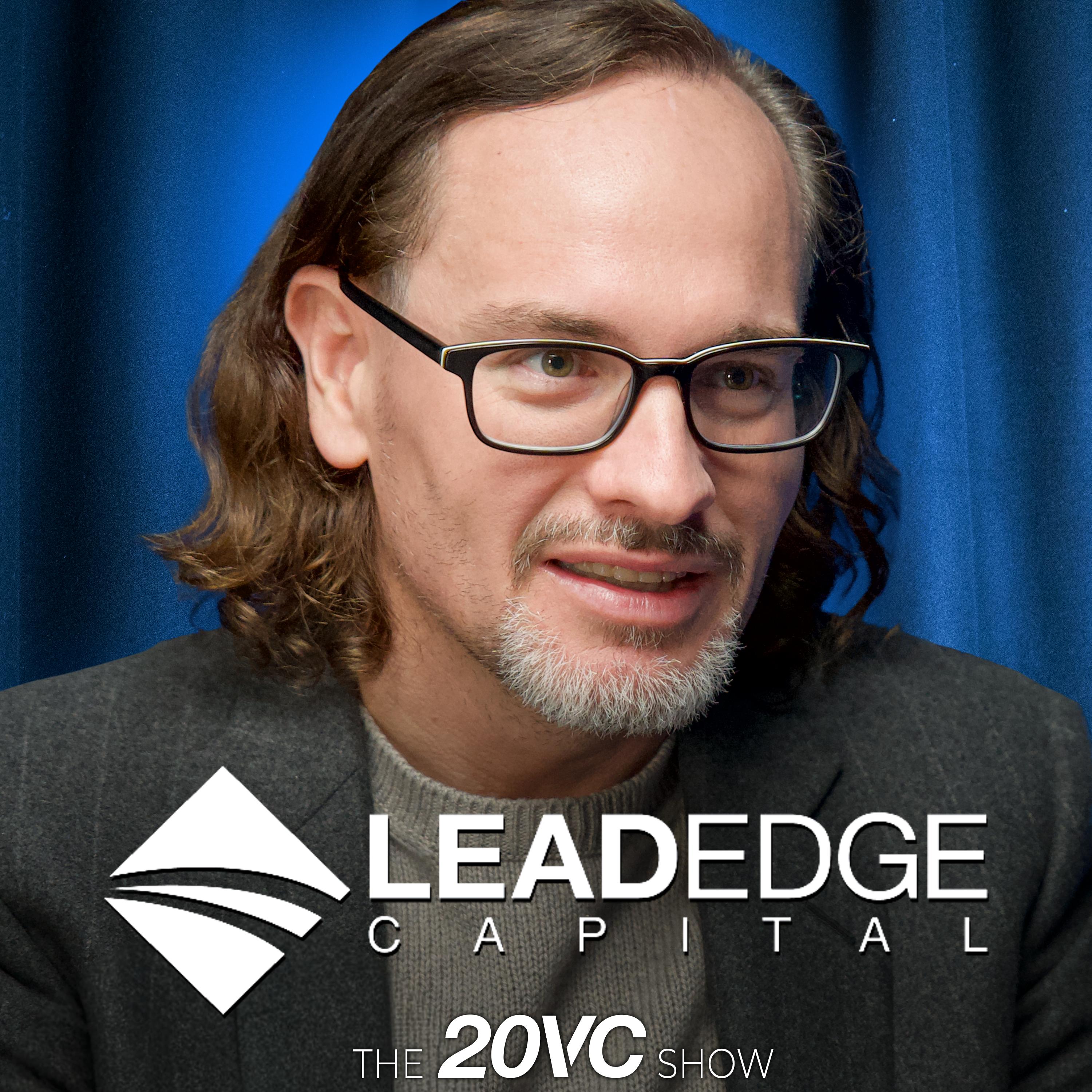
The Twenty Minute VC (20VC): Venture Capital | Startup Funding | The Pitch
20VC: Why the SaaS Apocalypse is BS | Why China Will Win the AI War | Why 50% of VCs Should Not Exist and are Tourists | Why Stock-Based Comp is the Hidden Sin of the Valley with Mitchell Green, Lead Edge Capital
01:00:27
Loading summary
Transcript199 lines
- [00:00]
A
What I'm the most excited about is there's going to be a really bad downturn if you don't have earnings or ebitda. There is no floor in a lot of these things. AI is not going to be about the next call center company or the next workday. ByteDance is the most advanced AI company in the world. Don't count China out. I bet they win the AI world. Don't underestimate Chinese creativeness and ingenuity to figure out how to reverse engineer and engineer things in much cheaper ways than Americans can do. Buying is glamorous. Selling is the job. There's 50% too many VCs, 50, 60% of people in this industry that actually probably add negative value to companies.
- [00:34]
B
This is 20 VC with me Harry Stebbings and for the show today we have Mitchell Green at Lead Edge joining us.
- [00:40]
C
I frickin love Mitchell and I'll tell you why. In a world of fluff and framework
- [00:45]
B
thinking investors, Mitchell Green is a money maker. Mitchell has co led or led investments in insane companies like Alibaba, Benchling, ByteDance, Grafana, among many. Across different cycles, he's shown ability to
- [01:00]
C
make money real DPI unlike anyone else.
- [01:04]
B
This was an investor nerd's dream show to do. But before we dive into the show today, this one's for the finance pros who want to drive real business impact with travel and expense. Rather than waste time chasing receipts or force people onto outdated tools that only add to month end chaos. Enter Navan, an AI powered travel and expense platform that helps save your company money through real time visibility, policy control and high employee adoption. It's easy to use. You can book a trip in seven minutes compared to and this is mind boggling the industry average of a whopping 45 minutes. And smart AI approves in policy bookings and blocks everything else automatically. And you can track travel spend in real time. See exactly how you're saving up to 15% on your travel budget. That's why the world's smartest companies like Anthropic, Figma, Stripe, Canva use Navan. Go to navan.com 20vc today to see for yourself. Find out how you could win two business class flights anywhere in the continental US because we all deserve a vacation, right? No purchase necessary rules apply.
- [02:10]
C
Good luck.
- [02:11]
B
While Navan streamlines travel and expense end to end, Airwallex helps you pay and move money globally. Founders, let's get real about the growth tax. You've raised VC funding and you're scaling globally and it's no longer about shipping product, it's about orchestrating operations across continents. But suddenly your payments and finance stack is choking your growth. You're logging into lots of different banking portals, waiting days, transfers and reporting across entities. It's operational drag and it's at your scale. It's costing millions. That's why I'm so excited to partner with AirWallets. AirWallets are more than just a banking alternative to HSBC or Citi. AirWallets brings you an intelligent financial operating system that powers how global businesses operate and grow, allowing you to manage and automate banking, treasury payments and spend. The most exciting part for me, they're heavily investing in agentic finance. If you're scaling globally, you need a banking and finance platform that's borderless real time and intelligence. Check out Air Wallets today and see how they're helping thousands of businesses like Canva, McLaren and deal scale at airwallets.com forward/20 VC terms and conditions apply. Your monies are safeguarded, not FSCS protected. See airwallets.com for more details.
- [03:23]
A
You have now arrived at your destination.
- [03:25]
C
Mitchell, dude, it is so good to have you back in the studio. I love doing these with you. And Larry are my favorites.
- [03:30]
A
You know why you gotta have a sign together?
- [03:32]
C
No, I do. It'd be great to have everyone together if you're in London together. We should do it and we should do it actually over like a dinner and mic everyone up 100%.
- [03:39]
A
It'll be amazing.
- [03:40]
C
Listen, I want to start with something that's actually quite disarming for a lot of investors today, which is bluntly, the Sass apocalypse, the Sassaca. And we're looking at the markets and they're just in the shitter. And I think there's a lot of people who are questioning whether they are actually good investors or whether we were just in a bullion cycle. Is this justified in terms of the downturn or is this an overreaction to AI and anthropic product releases?
- [04:06]
A
We are buyers. We're buying software stocks. Right now, a portion of our funds can be invested in public equities. So we're buying companies like Procore, Workday, Appian. We love Clearwater analytics, but it's in the process of being taken private so the stock doesn't move. Big investors in Toast, which we've been buying back. We were early investors in it and sold and are rebuying. These companies aren't going anywhere. The incumbents have distribution data and balance sheets. It's a fool's errand. To think all these companies are going to go away. Not being said. In any period when there is big periods of disruption, there will be new companies that are created, there will be incumbents that thrive and adapt. There will be some incumbents that blow up.
- [04:47]
C
Help me understand. I love your perspective, but I don't understand it. Workday is at 6.8% growth. Now we're seeing the cannibalization of the seat model. We're seeing bluntly no impressive use of any agent products within the existing incumbent set.
- [05:04]
A
Well, Workday's AI business is growing super fast inside it. Keep in mind they are $10 billion of revenue and like $3 billion of free cash flow. So there is law of large numbers for a lot of these companies. You know, look, it is not normal for companies to grow like Anthropic or OpenAI have. And oh by the way, Workday does it with serious profits or a company like Bytedance grows it, you know, 30% a year with massive profits. Like let's see what these companies would they would grow if they had profits. Look, I mean for seat based pricing for workday, I mean workdays is more like employment growth in the United States. But the company is like a low teens, high single digits grower. But again it is a huge business. It is like a $10 billion revenue company. I actually think what people got wrong and why a lot of these software stocks have actually sold off, looking back in hindsight is if you looked at the end of last year, street numbers were too high for this year. Just in general, like they didn't show enough decel. And what I mean by that is you'd have a company that was forecasted to grow like you know, that grew 20% last year where the street thought they would grow like 19.5% this year. It's a lot of large numbers. As companies get really big, they decel and street numbers in general all across software were too high. And so what will happen is Wall street analysts sell side analysts are like pigeons squirrels and as the stock goes down they're like oh now, now we got to lower my numbers and take the numbers down. And a lot of big public hedge funds or public market investors, you don't want to own stocks when numbers need to come down. You want to like own them when numbers are about to estimates are about to go up. What you're going to see is they're going to take numbers down at a bunch of companies, give it a quarter or two, companies will start to then beat numbers. Then they'll raise the numbers and the stocks will start to work. But it's probably dead money for a little while.
- [06:48]
C
I was always a big fan of Howard Marks and his investor letters and one of his big things is never try and catch a falling knife. I see what you see in terms of the opportunity, but I'm like, I have no idea where this is going to go. Honestly. A month ago I was looking at Duolingo going wow, what a buying opportunity. And the lesson I have on Duo is wow, there really is no floor
- [07:08]
A
if you don't have earnings or ebitda. There is no floor in a lot of these things. What we tell people is if you want to own them, just buy them over a month long period or buy them on down days. But just like if you're an individual and you think you want to own a million bucks, $200,000 of some name, buy $50,000 every time it, you know, it dips and sells off and maybe you'll never get fully filled but you just, you won't catch a bottom. But it's a funny thing is if you actually do the like long term analysis on buying just IND the NASDAQ or the S and P, it actually turns out just like if you look at very long term longitudinal data that if you just actually just buy it on a big down day, it's nearly impossible to time it.
- [07:46]
C
We mentioned workday. We also have seen recently in Workday Anil Bushri, the founder coming back. Not specifically about workday, but I'm unwaveringly negative on companies where the founder is not the CEO and we're in this AI transformation. Do you share that non founder led companies are inherently disadvantaged?
- [08:04]
A
I would agree with that partially though I do think there are very good CEOs you need like a growth mindset. And I believe that there are companies that are run for growth and there are companies that are run for margins. Anytime you have big technological transformations, you want the management team that is run by the company that is focused on growth, that are like they're growing. And by the way, those are oftentimes entrepreneurs. You know another way to think about it is oftentimes in companies are run for margin earnings or EBITDA margin, they're oftentimes heavily levered. Where I think the biggest opportunity to disrupt incumbents today is software tech enabled services. Any company actually can be a manufacturing company. It doesn't matter. Any company with a bunch of leverage on it because those companies don't have the cash flow to innovate. And by the way you can look at 99 in 2000 and look what happened. And so if we had sat here in 99, we would have debated are all the traditional retailers going to go bust and are all these e commerce companies going to be gigantic? If you look Today at the 10 largest e commerce companies in the United States, six or seven out of 10 of them are traditional retailers. They're people that were long way before 99. Walmart, Target, Home Depot, Lowe's. However, there were a bunch that went bust too. Sears, Kmart, Montgomery Ward, Bed Bath and Beyond. And you have to ask yourself why. Most of those companies had huge amounts of leverage so they couldn't innovate, whereas like Walmart, we didn't have leverage. And you're like, we're going all in. We're going to like bet the company on this stuff and you're going to see the same thing.
- [09:34]
C
I think today there's many things I want to do somehow. You said you run a company for growth, you run a company for margins.
- [09:39]
A
Yeah.
- [09:39]
C
If we take like a matter in a zuck, he's running it for growth, which is why free cash flows in the drains and now I think it's valued like 1100 x free cash flow.
- [09:49]
A
Well, the capex burned for all these things.
- [09:51]
C
He's pummeled for it. Yeah. Is it right to pummel him forward or is he in the right mindset for growth?
- [09:58]
A
This is the million dollar question. Is Apple right or is Google, Microsoft and Meta right? Apple spending very little and those other three or four companies are spending insane amounts of money. Time will tell. I would argue though, Mark Zuckerberg deserves to go for it. Like he's, it's his business. He built a damn business. I don't think you really have much to say to be like, oh don't bet on the guy. And by the way, he kind of has to because his competitors are doing the same thing as well. Look, I mean our view is that ByteDance is the most advanced AI company in the world. You know, it's very underappreciated by the western world, like how much AI they use and how much they're investing in it. Our view AI is going to change the world. It's an incredible thing. Now again though, we sat here in 99, the word social media doesn't show up. Who would never have talked about Facebook or anything. Right. It's $3 trillion value. Now AI is not going to be about the next call center company or the next workday. I truly believe what we're seeing right now in people investing in a lot of these AI companies across the board. Look, some of them are going to be gigantic. A whole bunch of them are going to bust. I actually think it's the stuff that's going to start over the next two to five years. Those are going to be the giant businesses and I don't even know what it is.
- [11:08]
C
We're going to go back to bytedance. But then do you agree with the play the game on the field analogy or. Or do you actually think there is such moving sands that actually an optimal strategy is to be conservative, not invest a ton right now, given the transience of markets and sit and wait for some form of new equilibrium to emerge?
- [11:28]
A
That's a great question. I think it depends on what business you're in. If you are an early stage venture fund where returns are made 100 x's or zeros, you should be investing in stuff. We like to always ask if I make an investment and it grows for like 18 months and it hits my numbers, am I like now in the money? The problem is when you invest at 100 times revenues or something, you can go at some crazy rate for 18 months and you're like well I'm still nowhere near in the money. So we always like to ask ourselves for that. But if you're trying like we're in the business of trying to make two to five times our money in three to seven years for like a 25 IRR. We don't drive zeros. We also don't have 20 X's I think we've had like two. 10X is ever something like that. But we've only had like you know, one or two zeros ever. This environment for us is just kind of weird. It's just, it's different.
- [12:13]
C
Like are you finding it hard?
- [12:15]
A
It is definitely harder to invest today than it was in 2017 for sure. Although there's like different pockets of opportunity. Like the secondary market for us right now is like exploding. And like our special sits business, we just did a deal in a company that you know, in a special sit and put 200 million to work and the company is now raising around at like 2x the price. You know, we invested that and literally it happened a month ago.
- [12:38]
C
When you look at a lot of the growth equity investments that you and a lot of people have made in the last few years, are they not made a lot more vulnerable in the new environment that we sit in? The well priced company up north in the UK that's doing accounting, look One
- [12:54]
A
of our companies is Grafana Labs. It's a giant business growing crazy fast. It's benefiting from a lot of this AI spend. You know, their customers are a bunch of, some of these big.
- [13:06]
C
But I would say that's a straight down the fairway Silicon Valley deal. It's with, it's with Sequoia and Yeah,
- [13:10]
A
but like when we invested, nobody knew what the company was like. It was a bootstrap. $12 million software company like us and lightspeed were the first two investors. It was bootstrapped. The guy actually built like a $12 million company.
- [13:18]
C
How did you find it?
- [13:20]
A
We cold calling, cold calling the CEO. So cold, cold call. So we have a team of 18, 22 to 24 year olds like pounding the phones, calling companies all day long.
- [13:30]
C
Learn from insight.
- [13:31]
A
Learn from insight.
- [13:31]
C
Yeah.
- [13:31]
A
So by the way, and they just replicate it with Summit and TA did. Yeah. So by the way, just had Jerry
- [13:35]
C
Murdoch on the show.
- [13:36]
A
Yeah, he's fantastic. So if the company calls you back, it's like hang up the phone. It's a ca. You call every two days for a month. That's who you want to get on the phone. And look at people are building like amazing companies. Like we have a business down in Florida called Pacemate. It makes cardiac monitoring software. So if you put like a pacemaker in your body or a defibrillator, it takes the data off the device. That data then is sent to the manufacturers like website. There's lots of different manufacturers, lots of different models. This is like single pane of glass software for cardiac clinics. By the way. It is like a 99% gross dollar retention business. These guys when we first invested it was like 20 million of revenue. It raised 8 to get there, but only burned 3. Was growing like 50% a year. Probably did like 45 million revenue last year a few years after we invested. By the way, we're using AI to benefit. Like we have a huge amount of people in the call center or like in the customer service, like analyzing the data, make sure all this stuff is like, is working. The company can now continue to grow and not act. I mean they don't have to, they're not going to fire all these people, but they can keep the same number of people and make people much more productive. And I think that's what people are missing that like, I think there's two things. One, this is going to lead to a giant productivity boom. Two, software companies have never been about like R and D. This is not semiconductor investing. Like it's very Different. So if you were to look at your average software company that goes public, if you look at cumulative spend since inception, it's usually around 30% is R& D. So a huge amount of these businesses are about sales and marketing, distribution, customer support, things like that. But AI will help a lot of those things.
- [15:11]
C
Are you worried that we might see. I'm sure you read the Citrini research piece or saw it come out and wipe billions off the stock market. Essentially saying that that's a more incredible thing. What?
- [15:22]
A
That some random person can write a research report. Imagine if we had Twitter in 2008. You know, it's amazing that people are listening to some random research firm versus listening to people like Stan Druckenmiller, Howard Marks, Ken Griffin, Steve Cohen, Mark Benioff, people like Mark Zuckerberg, Jensen Wong, who's like, software is not dead at all yet. A random research report can get 25 million views and takes itself the stock market. It's crazy.
- [15:46]
C
Is this not the ultimate sign there that we're seeing the casinoization of public markets,
- [15:52]
A
which actually makes it, by the way, that's the opportunity for long term investors. You buy, as Warren Buffett said, you buy when people are scared you'll be able to make lots of money.
- [16:00]
C
Or the flip side, you don't want to take part in entirely irrational markets which are no longer tied to value.
- [16:06]
A
Look, I was working at a hedge fund seeded by Julian Robertson in 2008 and 2009. This is nothing like this. This is like amateur hour. This is like nothing. This isn't even volatile compared to what was going on back then. The market was whipping, the indexes were whipping up and down like 8% in intraday moves, you'd have 15% swings. But that presents the opportunity. By the way, had you bought in 09 or late 08 and bought great companies, you could make a ton of money. This is the opportunity to buy stuff on sale.
- [16:35]
C
Okay, I'm going to push back on you there and say there was no fundamental technology inflection point in 2008 which could render an incumbent set relatively redundant, which there is today.
- [16:47]
A
The mainframe business is still a $5.5 billion market. Mainframes, they came out in 1950. Most banks are run off of mainframes. Oracle is a legacy software company. Microsoft is a legacy software company. SAP is a legacy software. They're some of the biggest software companies in the world. These companies are not going away. I will bet any amount of money on it. Now there will be some that will focus, focus on the Companies that have 90, 95, 98% gross dollar retention now there will be new giant companies created 100%. But most of these incumbents will not disappear. Some of them will innovate and become exponentially bigger. Some of them will grow 5, 10% a year. I mean there are a ton of software companies that have been around, you know, 20, 30 years that are still growing. And you know, I actually think the biggest disruption you're going to see is in like manufacturing is in like health care. You know, think about like the companies that can figure out how to get drugs to market much faster than anybody else. I think AI could potentially like huge parts of cancer could be solved, dementia could be solved because you can run drug trials faster. Think about manufacturing. If AI and robotics can come about, if you have two competing companies that make cars, one's levered, one's not levered. The one that's not levered is probably going to be able to invest a lot of resources into. It can be hugely beneficial for them.
- [17:58]
C
Going back to what we were just talking about, we're saying about the casinoisation and crazy it is. We mentioned productivity increases. Are you worried that we will see productivity increases but with that less and less consumers having jobs and a weakening of consumer wallets?
- [18:14]
A
Not really. There were a couple of million switchboard operators in 1980. There's been lots of jobs that have been lost over the years. Think about all the number of. There's been retailers over the years have gone bustling. People innovate. And it's funny, I was just talking to somebody at one of the world's largest banks, very senior person at one of the world's largest banks this week in London. And his point was, look, we have hundreds of thousands of people in like back in middle office. Those people have, we've trained them for 5 to 25, 30 years, right? These people are not all going to, we're not getting rid of them all, we're going to retrain them. And by the way, the people that don't want to be retrained will be okay, fine, go work for the government then because you know, you can do like old school jobs there. But like companies will retrain people, they'll do different things. It's remarkable. Throughout history there's been like lots of tech, technological disruption over the last hundred years. People find new things. If everybody's worried about everybody's gonna lose their job, then don't invest in any of these companies because it's gonna be a, it would be a complete Disaster. It's like I would, I guess I tell people, like, if you're worried about China invading Taiwan, you really shouldn't worry about your bytedance position because you're gonna have a lot bigger things to worry about at some point. By the way, the government would get very involved if all of a sudden all these jobs start to disappear and you have 10, 20, 30% unemployment. It's not, it's not happening. First of all, people always think this change comes faster than it does most big companies that are like financially regulated. You can't even go on to Claude or chat GPT. Like you can't even like get on the system to do work. And by the way, we're still five years in. It's literally like people woke up a month and a half ago and we're like, oh my gosh, all these companies are going to go away and like unemployment's going to 30%. Like it's nonsense, it's silly. We're going to sit here in 10 years and we're going to have like, it's going to be an amazing time to invest. You can have a bunch of amazing new companies come and created. You're going to have a bunch of them, you'll have some legacy and companies that went to zero, not all of them or anywhere near all of them. You're still going to go to retailers, you're still going to get your haircut. But I just think it's going to be like an amazing time to invest. And by the way, during periods of volatility and you know, the casino ization of the stock market, you want to buy fundamentally good businesses on multiples of earnings.
- [20:17]
C
Do you worry that the world is just being memed? That the world is being calcified? The world is just a fucking calcium poly markets replica.
- [20:25]
A
It's totally insane.
- [20:26]
C
Is that a momentary thing or is this a new world of social media? Dopamine junkies, real time?
- [20:32]
A
That's a great question. Look, I mean I've joked for years that social media is like the demise of society. This stuff needs to be regulated. It will be regulated. It is incredible though how fast information moves. Just imagine if like Twitter had been big in like 2008 and 2009. It's absolutely incredible. And I will say that the makeup of the stock market is different today than it was 20 years ago. Passive ETFs are much bigger. The retail stuff comes and goes, like retail trading. But you just have to buy good businesses when they're on sale. Like buy good businesses at Multiples of fundamental. If you don't have earnings, there is no floor. But if you have earnings like in free cash flow. Reason a lot of these stock or stocks and Internet stocks are actually still not cheap is because the stock based count like the stock based comp in a lot of these companies is totally nuts. Like the amount of equity compensation and dilution of like shareholders is very high. And I'm actually surprised more people don't talk about it.
- [21:29]
C
Why are we not talking about it? What do we not know that we should know? Are we in a new norm for the Snapchats and open eyes of the world to have unreasonably high SBC and no one question it?
- [21:40]
A
You know, some of the big public market investors have been questioning it for a while. It's surprising that more people don't talk about it and just look how much like stock option dilution there is. And a bunch of these big Silicon Valley companies. It's not as bad outside of Silicon Valley but like the dilution is real. I'm surprised more people don't talk about it.
- [21:56]
C
What should happen like if you're a SNAP holder. Evan is running a gifting program right now.
- [22:01]
A
Yeah, like I don't know, it's like we're not activist shareholders at all. I have a lot of respect for entrepreneurs like Larry Ellison who effectively did a levered recap of Oracle. He basically was like, I have all this free cash flow. I'm going to borrow debt and buy back an enormous amount of stock. And what did he do in the process? Pete didn't sell any of his own. So he just kept making the share can't go down, not up. People forget that in companies there's you know, it's market cap equals number of shares times price of shares. And so companies that respect, you know, that have discipline on that I think are some are powerful.
- [22:38]
C
We've seen so many names that are so well known be in the dumps and a lot of people are questioning oh well are the CEOs in the management team buying when they're in the dumps? You know, ServiceNow CEO who bought $3 million worth.
- [22:50]
A
I think Salesforce just came out. So they're gonna buy $50 billion of stock or some crazy number was like from the earnings report last night. No, I agree with you. By the way, companies should be buying back stock. Those that aren't buying back stock, you should question and ask why.
- [23:02]
C
Okay, but ServiceNows bought $3 million worth, which is less than his car collection.
- [23:07]
A
Yeah, I don't know, is the company buying a lot of stock back? I don't know. But you have to ask. Also ask how much Stock does the CEO of ServiceNow already own? Does he own $300 million of stock? But that should tell you something. The companies where the like founders are buying or the companies are buying huge amounts of stock back that to us would make one more bullish on that company versus like another company, 100%. But I would suspect as earnings come through, you will see more things like Salesforce. People put in place big buyback programs to start buying back stock here. I think you'll see it.
- [23:40]
C
We spoke about bytedance a little bit. Everyone for years has been like, oh, the ByteDance discount is so cheap. ByteDance is insane because there's the China discount and ByteDance is the China discount on the China discount. That sounds great, but it's only good for you as an investor if that discount chasm shrinks. What's it going to take for the discount chasm to shrink?
- [24:02]
A
I think it already to some degree already is. So private market implied valuation multiple should be determined by public market investments. You should argue a software company today should be getting done in the private markets cheaper than public markets. It definitely doesn't always occur like that. So Alibaba and Tencent should be two giant Chinese companies. Should represent roughly how ByteDance should trade. I haven't looked at them in the last like couple of weeks or month. They were trading like mid teens earnings multiples, not ebitda, not revenue earnings multiples. And they don't really grow. Now this is a business that you know, grows 25, 30% plus a year generates a tremendous amount of earnings. And you can stick like an earnings multiple on this company and get to a very, very big number like fundamental earnings. And I think Facebook's trading like 25, 30 times earnings right now. Like stick that multiple. But maybe that's too high because it's a western company. So then put the China company multiples on it. I think it is possible to see in a few years that this company is doing 70, 80, 100 billion of earnings in the next five years.
- [25:03]
C
Yeah, but in a de globalized Trump world, I'm just doing the kind of alternate argument here just to understand in a de globalized Trump world, it's not going to list in the U.S. is
- [25:12]
A
it 0% chance we'll list in the U.S. no different answers? I have no clue. But no, it'll list in Hong Kong. But people have been talking for years that they're going to delist all these Chinese companies, Baidu, ctrip, Baba, they never did. And keep in mind like Alibaba and 10 cents or Alibaba stock is like doubled off the lows over the last year. So like sentiment today on China is a lot better than it was 18 months ago when we were buying, you know, when we were buying bytedance stock. Like you know, we're buying it at prices around $200 billion. Like we thought the risk adjusted reward given the earnings power was just like incredible. Don't count China out. I bet they win. The AI world. I bet they win it. Look, the great thing in China is you can build a nuclear power plant in a couple of years. You can build power plants like no problem. We in the US we are going to run into major issues around power.
- [25:59]
C
Why do you think they win the war?
- [26:00]
A
Just because, because the power, resources consumption, like number of PhDs, how much they value science and technology. And look, there's things that could totally change it. Like nobody's really talking about quantum. We are not quantum experts at all. But is that something that could make these things like exponentially more efficient?
- [26:18]
C
How does that realization change how you invest? I completely hear you and I agree. I think we still dramatically underestimate the capability of China or just choose not to think about it or push it to one side. But if that is the realization, how does that impact your go forward mindset on investing?
- [26:33]
A
That's why we own a lot of ByteDance. But it's not like winner take all. It's not that ByteDance wins and Google and Facebook loses. A year ago when I was probably on the show, I don't know if we talked about Google, everybody thought Google was going to lose. They're like, ah, Google's dead. It's done right. Nobody's going to search it. Seen the stock in the last year, stocks like doubled now it's going to win everything. Now it's going to beat OpenAI and all these other things. No, like they're both, they're both going to be fine. The biggest question for us on these LLM model companies is can they ever turn like a real profit? I just don't know the answer and I don't think anybody really does right now. I think another thing you're going to see in the United States as it relates back to power and you really haven't seen much of it yet. Local community is getting like really upset. You're the small local town in Iowa or the small town in, you know, Kansas or Ohio or wherever in Virginia and you know, they built this giant data center. They employed all your people, they employed a ton of people locally to build it. They then built it. Now it sits there and has 50 local people that work there. And your local power prices have tripled and like is it polluting the environment and things like that? It's just a big ugly building. I think you're going to see real local pushback. And I don't think it's only the United States. I think it's probably Europe as well. And it's like, hey, you know these people that are not better off today than 20 years ago and these things are in their backyard and you know, people in Silicon Valley and the coast are making tens of billions of hundreds of billions of dollars off. I'm like, I think there's going to be like real pushback and there needs to be regulation on it.
- [27:56]
C
Do you not think climate is a luxury problem? We were also worried about it in the last three to five years and now no one gives a shit about it.
- [28:03]
A
We should be worried about it.
- [28:04]
C
Climate investors in the drains we should be worried about.
- [28:07]
A
It's probably important. Look, it's, we've always struggled with how to invest there because of how capital inefficient a lot of those businesses are. And I think like just China has some advantages in that respects whether it's like giant solar farms they can build or whether they, they can just, they do things that we, we can't do. But I would expect, look, if you look at the Internet, the biggest innovation in Internet is over the last decade or 15 years come out of China. If you actually want to look where E commerce is going and social media is going is go look at China. It was not a surprise to me when deepsea came out but don't underestimate Chinese creativeness and ingenuity to figure out how to reverse engineer and engineer things in much cheaper ways than Americans can do.
- [28:51]
C
Can I ask you going back to the. Not specifically on the ByteDance but I actually really want your advice on the sell side which is when you look at a ByteDance there's many opportunities to sell in a lot of these names. So not taking it ByteDance specifically how do you think about, you know what with 3x up on where we are, We've been in it for four years. Let's take chips off the table. How do you think about sizing positions over time and have you got any big lessons or advice from me on that?
- [29:18]
A
Buying is glamorous, selling is the job. Constantly re underwrite that is actually what it really is. And we're trying to make 2 to 5x in 3 to 7 years. If you put that in on a curve at the 25 IRR curve, put it into a fund, make a 2 to 2.5x net fund. That's what we're trying to do. That's what we tell our investors. So we're constantly just re underwriting to saying like, okay, if we were going to sell a bunch of ByteDance today at 550, which is where it's been reported that General Atlantic is selling a bunch and there's other people and we've been offered higher than that. I think it's always like, what is the probability it can double? And then to invite Dan's, we look at what fundamental earnings are and we're like, okay, this is double and no problem. Now if somebody came to us today and said, hey, I'll offer you $1.3 trillion, we'd sell a bunch. Because it's not that I don't think the company will do 100 billion of earnings in the next five years and that's 20 times that's worth $2 trillion. But like, there's a risk. What does it trade out on a multiple basis? What would we be on our total investment at that price?
- [30:14]
C
Sean, how far ahead are you paying for growth? And at a point, there's a really valuable moment to go, yes, you're paying four years.
- [30:22]
A
Yes, correct. What we like to say is this. I think this has actually kept us out of a lot of trouble too, which is like, are we in the money 18 months out? Like, that's what we think. With a reasonable multiple, are we in the money 18 months out?
- [30:32]
C
Can you like unpack that? What do you really mean?
- [30:35]
A
Like, if we invest today and revenues are $20 million with a reasonable model at 18 months out, are we in the money? Like with a reasonable multiple, not 50 times revenues, you had a price where if it's growing 50, 60% a year, eight times revenues, six times revenues, like, okay, I'm in the money. No, I haven't tripled my money. But like, I'm start. I'm in the money versus like, oh, Jesus, to be in the money, I'd still have to sell it for 30 times, 40 times revenue.
- [30:59]
C
Do you why? With your company, like the pacemaker company, I didn't want to pick on them. So 20 to 45 million, which is great, phenomenal, fantastic. But who's going to buy that company?
- [31:09]
A
I mean, there's a line of Strategics that would buy it. There's private equity firms that would buy
- [31:13]
C
it at a good multiple.
- [31:15]
A
Yeah, we'd make great money. By the way, we forgot what did I pay for it? Good investment and good company are two very fundamentally different things too. And you're trying to get the union of both of them. There's a lot of A plus companies at D minus prices. Nor do I also want to buy a D minus company at an A plus price.
- [31:31]
C
Do you not want to make that investment? You know I'm always taught by most people on the show that I've never made money with a good deal.
- [31:37]
A
See like I would strongly disagree with that statement. Like there are a lot of people that invested in good companies or great companies in 2020 and 2021 at really stupid prices and didn't make money. So it's like it's the intersection of both. It's not like you're not trying to buy a D asset at an A plus price. That's like zero. But like if you can buy a B plus company at an A plus price you can make like amazing risk adjusted returns. But we also buy A plus companies too. And you can buy like the great thing is is can you do like structured secondaries or can you do like really unique things like some of the stuff Larry will do and we'll do. And can you buy an A plus company or an A company at like a B minus C plus price? Those are like incredible deals. Can you get in like cheap to buying out old LPs out of an old fund that need liquidity? By the way, we're, you know, I joke that we're an Nvidia earnings miss away from like a recession. By the way, if you get that a bunch of old funds are going to be like, you know, they have horrible DPIs. You're going to have all these LPs that are like you know what, I'll sell an interest in my this 2013 fund or this 2015 fund and be able to buy stuff, you know, super cheap. But like look, there are also different beliefs. People are just like, oh look there are a lot of people in the venture business that are just like I will pay anything because I'm trying to get like the power law and I'm trying to find the next Google.
- [32:54]
C
Would you not advise me though that actually when you have a world where upside is relatively uncapped and you have trillion dollar companies or at least many more hundred billion dollar companies, I should be so much more elastic on my pre billion dollar entry price and paying 300 or 600.
- [33:10]
A
No, because most companies don't become that. The vast majority. It just depends what you tell your LPs. By the way, we tell our LPs make 2 to 5x in 3 to 7 years, rinse and repeat, generate 2 to 2 and a quarter x, 2 to 2 and a half x net funds with 29 hours. And it turns out if you can do that over like a 20 year period of time, like the best of the best.
- [33:26]
C
Dude, I'm very good friends with Jason Lemkin from Sasta who on a show with me very recently said, oh fuck this picking winners, early stage stuff. I just want to do an anthropic spv. It's much easier.
- [33:40]
A
It's not easy to do this stuff. I think 50% of people in the venture business should not actually be in the business. There's 50% too many VCs, maybe more. There might be 70. Actually. It's not only VCS, it's private equity, alternative access.
- [33:52]
C
What makes you say that?
- [33:53]
A
There's too much money and there's too many tourists and there's people that don't show investing. You need to show discipline on price. Go talk to the greatest venture investors on the planet and they'll be like price matters at the end of the day again. Let's see what all these companies get out at at the end of the day that are valued in the trillions of dollars. There aren't that many of them to be clear. And look how much earnings a company like Facebook and Google and Microsoft and Amazon and Nvidia generate profits. I think there's a lot of companies that are way ahead of themselves in terms of like valuations and what their profit numbers will be at the end of the day.
- [34:28]
C
Do you think we will have more or less money in venture in three years time though?
- [34:32]
A
Probably less in some point. I don't know if it's three years or five years or seven years for sure. People are going to wake up in 2030 and 2032 and realize it's oh my God, they're still all in this stuff from 2012 and 2015. If you weren't selling, when are you going to sell? That's actually the best advice I would give to young fund managers and people starting funds is liquidity. Windows open and close and when they are open, take advantage of them. You should be selling even if you're winners. Sell 20%, sell 30%, sell 5%. Your job is to return money.
- [35:05]
C
Companies are bought, not sold.
- [35:07]
A
Yeah, I guess marks are opinions. DPI is math. And so no companies are bought, not sold. That's not true. But you don't have to sell the whole company. If there's a round being done in a company that your investors in, especially if you're a small new fund, you can go to the founder and be like, oh, founder, you've taken some money off the table. Like, I won't be in business in five years if I can't get some liquidity back to your company. By the way, you can do the math. If you build the next giant company and you sell some at 500 million or a billion, like, who cares? Like you still own 80, 90% of your whole thing. But like LPs want money back and the people that stay in, they're going to be in business 10, 15, 20 years from now are people that will continue to give money back to their investors.
- [35:45]
C
Are you seeing LP sentiment change today around what they care about, do you think?
- [35:51]
A
Absolutely. I think you've started already seeing it. So we've always cared about dpi, but I think that we've, we've always been really disciplined. 2 to 5 x 3 to 7 years, like hit it, move on. You know, probably a third of our deals have been secondary sales. So people have accused us of being traders. That's fine, like I guess I'm a trader, but you know what, I gave money back to my investors and guess what? The investor is my client. Like they, you know, I have two clients, entrepreneurs and investors. Without investors, I don't have any money, I don't have a business. And so I think people need to remember who pays the bills. Investors are very, very, very focused on DPI now. And it is possible with a small early stage fund as a new relative upcomer in the first couple funds, you can actually generate amazing DPIs. It's a game you can play. I don't know if you've ever had like Fabrice grand on here or Jose Marin from like Aperture Labs. Those guys are like 10, 15 year LPs of ours friends. Those guys have played the game extremely well. They understand that not every company goes to the moon. Take some chips off the table, give it back to your investors, rinse and repeat.
- [36:49]
C
I think the advantage that a lot of these small funds have that most people don't consider is they're able to sell so much easier without really disturbing company progress at all. If your fabric is going to, with respect to him, he can sell very
- [37:01]
B
easily and it's not a big problem.
- [37:03]
C
If you are Sequoia correct, it's hard.
- [37:05]
A
It's like negative signaling 100% versus that's why I'm telling younger funds. Whether you're in venture growth buyouts, younger funds, you can be like, to the entrepreneur, hey, you're selling some stock. I really need to sell some stock here. Why? Because if I don't return money back to my investors, like, we won't be talking in three years because I'll need to find a new job because I won't have. I won't have my second fund.
- [37:26]
C
Do you worry about being a trader and that not being an attractive investor to founders?
- [37:32]
A
Nope. Because I believe if you help founders and do what you say you're going to do now, a lot of investors don't do that either. I think there's 50, 60% of people in this industry that actually probably add negative value to companies. The simplest lesson I think entrepreneurs, anybody can learn, and I learned it early in life, is just if you say you're going to do something, actually do it. The number of people that promise over promise and under deliver, be the reverse under promise, over deliver. And so if you've been really helpful to an entrepreneur, helped them recruit, helped them, like with customers. You sell 20% of your old ends, like, who cares? Keep helping them. We have companies we've sold 100% of that. We still help drive customers to like, it's like, great, by the way.
- [38:11]
C
Great.
- [38:12]
A
You helped me make like five times my money. Nobody else in the capital was liquid. We sold all of our stock. Keep helping you, please.
- [38:17]
C
What are the most common ways you see investors provide negative value to companies? For founders listening that they should watch
- [38:24]
A
out for burn money at all costs. Recruiting. They actually just act like they know how to run the business. By the way, I never run a company in my life, by the way. I know I have like 98% of venture investors or private equity investors. Get people around the table that have done what the entrepreneur is trying to do. So if like you're a $20 million AI company or a $20 million software company, find entrepreneurs around the table. Help the founder recruit people that have built businesses from 20 million to 200 million and get them around the table and get out of the way is truly the advice that I think, and I just think there's too many knuckleheads. The worst is somebody who went to Stanford Business school, worked for 18 months at a startup, and now comes in is a venture investor. And now they're experts. Be humble. Don't act like you know, because most of these, Bobby, myself included, have never actually run. If you want to start a venture fund or a growth equity fund, I've done that. I can give people advice on that. But like, if you're trying to figure out how to build out a great sales team, go talk to great sales leaders and get advice from that. So I actually think that's the best way that VCs and private equity people can help founders and entrepreneurs is connect them with people who have done it before and help them recruit. I truly think that's why Sequoia and Benchmark are great and Index are great because they help founders and entrepreneurs recruit amazing talent and people want to work for those funds. Portfolio companies, dude.
- [39:44]
C
I just say I'm a switchboard. I honestly just feel like the women in the 1960s connecting people all day because I'm like, no idea how to do that. Speak to my friend now.
- [39:52]
A
She's my friend. 100% great. Yes. And I think that's what the best entrepreneurs actually want. 100%. Yeah.
- [40:00]
C
Here's my mid view from seeing a load of companies. No, don't want that. You said that like, oh, a negative idea is like, hey, burn money, burn money. They say burn money, burn money because they need to see growth and they are looking at markets today going for me to get my next round of funding. The game's changed. It's no longer triple, triple, double, double. It's I need you to go from, from 0 to honestly 30, 40 for this to be interesting.
- [40:23]
A
Well, that's about wait, because that's the price that they paid in the deal. If you paid these asinine prices on the way in. By the way, what's really interesting to me in the market right now is people that spin out of leave anthropic or OpenAI and raise money at $2 billion or a billion dollars for a freaking idea. There's nothing more than an idea and a napkin to us. That seems complete lunacy. What I actually want to know, have any of those ever actually worked ever? Like, has anybody ever raised at some crazy price initially just like an idea on an app, like billions of dollars or $500 million? And if any of those things actually ever worked?
- [40:57]
C
I don't know. Anthropic.
- [40:59]
A
What was their first. I don't know. When did like Dustin Moskovitz invest? I think it was pretty small.
- [41:03]
C
It was like billions.
- [41:05]
A
No, no, I think the original seed deal was, was, was like much lower than that. But I thought like when Dustin and some of these guys Invested like the seed. It was like much lower, but I don't know.
- [41:14]
C
The astonishing is Dustin will make more money from his anthropic investment than he will from. Definitely from Asana.
- [41:20]
A
Definitely will.
- [41:20]
C
Definitely from Asana.
- [41:21]
A
I don't want to be Facebook though. I'm not sure about that.
- [41:25]
C
We said about kind of burn money and they want the growth is the triple, triple, double, double debt. There's so many SaaS founders who ping me every day and they're like I've been told for 10 years, triple, triple, double, double. And then we'll be in a good place to raise our next round. I'm in that third year where I've doubled and I'm now gone from 10 to 20 and no investor wants me.
- [41:46]
A
I think it's by the way, call us. We think those things are interesting because we can get them at potentially good prices. That's where it matters. What is your gross dollar retention? So here's the deal. It's the most important number in tech companies. Gross dollar retention. What I mean by gross dollar retention too because everybody wants to quote nets is gross dollar. You ended 2024 with 20 million in revenue. What did you end at 2025 with just those same customers. No upsells, just downsells. You know 18 is good. Like you want like 90%. Anything less than 18 we won't touch. Great. Is 19. Incredible. Is 19 five. Like you're looking for 90% gross is good. 95% is great. 98 is amazing. And by the way the reason why there's so much dead wood inventure and like all these living dead. There are so many companies with like 60, 70, 80% gross to dollar retention. Yeah. Good luck. I don't. And the problem, it's not when you're 10 million revenue. That's the problem. It's when you get to like 150 million of revenue and you're like have 70% gross dollar retention. You're just like churning through. And so that's why like the company that's got 95 gross dollar retention can grow really fast and not burn much money because they're not spending money on sales marketing to fill up the bucket.
- [42:56]
C
If you're a Thoma Bravo and you've got your Coopers and your Anaplan's where the companies are kind of growing at best mid teens. What happens to this generation of growth equity PE investors in tech?
- [43:10]
A
So I think growth equity and buyouts are very different. I think even buyouts are very okay. I think people like hellman and Friedman, if you want to go with a large cap. People like Hellman and Friedman and people like Primera are probably slightly more growth oriented and there are other firms that are probably more margin focused. I think it's probably a function of how much debt they have on their companies. To be honest, I have not looked and spent tons of time like studying the financials of coupa software or Anaplan and things like that. If I was them, like I know that all these companies, they drive ebitda margins from 5% to 40%. The question is how are they doing it? I would hope that they've done it mainly through like cutting really inefficient go to market and sales, marketing and gna. I would hope they haven't taken the engineering sales headcount from 200 to 20. I suspect they have not. But like that would worry me if they had done that, but I suspect they have not. By the way, these people are really smart people and the question is, if those companies have been bought with no debt, then they would be investing hugely, I'm sure in AI stuff like that. They probably already are. But for me, that's why what I said at the beginning, we worry about any company and any big technological disruption that is levered with a lot of debt on it, regardless if it's a software company or a manufacturing company or an accounting services firm or industrial services firm, whatever. With debt, you're just hamstrung with how much you can do because you have massive interest payments to buy.
- [44:35]
C
Do you not worry that given the casinoization of public markets and the volatility that ensues from a figma where it rides up to where it is to them being in the gutter and Atlassian, which is posting accelerating numbers and it's down 76%.
- [44:52]
A
You buy a company like Atlassian. That would be my argument.
- [44:55]
C
Okay, fantastic. I agree. I think Mike's amazing. Was a founder like company. Correct. From Canva. I'm looking at this going, there's no fucking way I'm going out. If I'm stripe, I'm going.
- [45:06]
B
Thank you.
- [45:07]
C
I feel very vindicated in my decision to stay private. Does this meme ified stock market?
- [45:13]
A
Not just it's not good for LPs,
- [45:15]
C
it makes the liquidity problem worse.
- [45:17]
A
Correct. So what will Change it when LPs go to the biggest venture funds in the world and private equity funds and say we're not investing in your next fund until you get liquidity in these names? That's the reality of it. But I Agree with founders, by the way, too. I do think there are. Look, there are companies that. There is something to be said for a company going public. I'm friends with a bunch of guys that run big public.
- [45:37]
C
You just had equipment check.
- [45:38]
A
Yeah, they went public, but stock's actually done quite well. And actually, it's like a derivative play. So it was our derivative play on AI build data centers. Right. You got to get a shovel, and you got to get, like, a dump truck. But again, that was a company in 2020 and 21 that everybody thought was, like, a tech company. It's not a tech company. It's like an equipment rentals business run by a couple awesome founders that are, like. That are studs and, like, killers. Now, we were able to partner with them to buy a bunch of secondary from people that were, like, desperate to sell. And, like, it's been an awesome business.
- [46:05]
C
That's how you got into that business.
- [46:06]
A
Yes. Bought a ton of secondary.
- [46:08]
C
You bought a ton of secondary from people who wanted to sell.
- [46:10]
A
Yeah, they were like, oh, this is a tech company. No, no, this is an rentals business that uses some technology, and it will drive higher EBITDA margins and better utilization rates. And by the way, they went public because they want to get their brand well known. There are a bunch of companies out there, you know, like the vivas of the world and datadogs. And why those companies go public? Crowdstrikes. Because big enterprise companies are like, hey, like, all right, you know, how big are you? Like, are you. Are you, like, survivable? Because you have the big public companies, like, being like, oh, Microsoft telling people, like, oh, this company's gonna go out of business. You're, like, not gonna business. It's like a $30 billion company. And so, like, being public helped helps, I think, with credibility. On the flip side to the entrepreneur, I get why they don't go public. They got a billion dollars of cash or $2 billion of cash, but so I think it is. So for us, it's really about finding entrepreneurs that, like, we are very confident we'll be public company. Like, we talk to them up front. Like, listen, if your plan is to try to stay private forever, you're just not for us. We just don't want to invest in you, but not because we don't. We don't disrespect you, but it's just like, we need to get out of
- [47:04]
C
stuff at some point, given the fluidity of secondary markets. If you spoke to a colleague, Collison, he was like, yeah, we absolutely Want to stay private forever. And you're like, great. But I can add there's very liquid secondary markets.
- [47:14]
A
Yeah, that's true, there is. Now our view is we want to back entrepreneurs, that if we think the thing has a very good shot at going public, we want to hear from the entrepreneur. It's like, look, I want to go public. By the way, you know how many more public companies it would be right now if these companies didn't have $600 million of cash in the balance sheet or a billion dollars of cash, so they only had 30 million. They'd all be public company. Just it's the amount of money that's available for these companies is incredible. Now again, who knows if I have legitly no clue if like Stripe is trying to buy PayPal, but if they're trying to buy PayPal, they would probably rather be a public company right now to do it. Unless they've got some sovereign wealth fund that's going to write them a $40 billion check.
- [47:52]
C
Just help me understand. Why would Stripe being public help them buy PayPal?
- [47:56]
A
Well, how are they going to pay for it now? Because if Stripe was 150 and I don't know what the market cap of
- [48:02]
C
$150 million for Stripe, if Stripe was
- [48:04]
A
worth 150 and PayPal's worth 50, well, they'd have a liquid publicly traded stock that they could then merge to get. They would be a cash offer and then the shareholders of PayPal would get liquid stock and they would sell the stock. That's an all stock merger. That happens all the time as public companies. PayPal shareholders are not taking private stock in Stripe. That's not going to happen. Public companies don't do all cash offers. Now could they go public in a reverse, in a reverse merger? Maybe that's the way. Maybe you reverse merger into, into PayPal again.
- [48:34]
C
There is no freaking way.
- [48:36]
A
I can't imagine that happens. The reality is is I think the only way it's a deal like that would happen then is like some sovereign wealth fund. Private equity funds don't have enough money to write like $40 billion checks in the, in the companies. And so if Stripe was really trying to buy PayPal again, who knows is it even true? If they were, if they were a public company right now and they were had 150 billion market cap probably be less now because the stock market had gone down or whatever, instead of 100 billion, they would be able to do a public merger. You could do one. It gives them less flexibility to do big M and A really big M and A. Obviously they have access to a lot of cash so they can go buy some billion dollar company, no problem.
- [49:11]
C
Do you think there is a massive disconnect between publics and privates when you look at a $150 billion stripe and a $45 billion Adyen and the same similar ish transaction volume?
- [49:20]
A
Yes. We see rounds get done.
- [49:23]
C
Wix is at 4.5 billion and RATLT's at 9 billion.
- [49:26]
A
Correct. Exactly what you think. I mean it's kind of silly. It's like do these private market investors look at the public markets?
- [49:32]
C
So should venture investors have more flexible mandates that allow them to adjust to asset classes where there is most opportunity at a given time?
- [49:39]
A
I think, I think, look, it surprises me that more growth in private equity investors can't do Publix inside their funds. I think he's opportunistically but like TCP can, I think iconic can I think ga. Probably so I guess probably people can. It surprises me that more people don't. But I think like early stage venture is extremely different than going to buy Atlassian right now or going to buy Workday or going to buy Salesforce or going to buy Toast or something like that. But what surprises me is that more funds. If you were an early investor in Toast and you're fully out of it and you love the company and the Stock's down like 60%, why not go buy it again? It surprises me more people don't do that.
- [50:17]
C
Totally get that. Going back to the equipment share style, you said about that size of IPO. A lot of people say the $3 to $10 billion IPO range is just you're too small for anyone to care. It's not meaningful in terms of size to actual markets.
- [50:32]
A
Is that fair in the world where like ETFs and passives have become huge and the number of fundamental investors is like shrinking. I don't think you want to be a two to. Ideally you don't want to be like a two to $3 billion company. But I don't think there's any reason you can be. You can't be a $7 to $10 billion company or 5 to $10 billion company. I think those are like legit. I think when you get like sub billion or 2 billion, it's like it's kind of just like a pain in the ass to be a public company investor. But you can do it. Like who says you can't do it? I actually we wish probably more would. Why? Because they'd Be great small cap stocks and they could actually you can hold them for 10 years and make a ton of money. Like look at Appfolio. The thing was like a billion, two billion. I think it was last. I think it was like 700 million dollar market capital in public. And I don't know what it's done last month or two but like it was like a 10x Shopify. Correct.
- [51:12]
C
It's a $2 billion public company.
- [51:14]
A
Exactly. By the way that's, that's what we would hope for. Like you want to find those next
- [51:19]
C
companies saying you have to be a certain size in terms of publics. If you apply that to funds we see $15 billion Andreessen tax, $10 billion thrive.
- [51:28]
A
I think it's insane. I think these funds are way too. And they just do the math, the fun math on like how they're clearly you, you have to have the next open, you have to have the next Google effectively or the math doesn't work. I don't think. And by the way you can. I've even heard people say like you don't even have to have one of them. You have like two or three of them. The amount of money being thrown at some of these funds and like the size of the funds is astonishing to me. I hope they prove me wrong because it's like good for me too. If these funds get so big, these companies get so big then they can buy a bunch of our companies like that. But you know, I respect people like benchmark or index. Index has grown but it's still, I mean index can raise as much money as it wants. Yeah.
- [52:05]
C
And it's actually relative. A billion five or whatever Index is
- [52:08]
A
tiny compared to these other funds. Like those guys are the best in the world. And so you know it's just, I think it just gets really hard. Like it's crazy. Like I.
- [52:15]
C
Well why let me push back on you there. There's 9 billion in Thrive's growth fund. If they are able to put 2, 3 billion into cursor or into databricks
- [52:25]
B
you can very much.
- [52:26]
A
Yeah but you're just, you have to run to write like $150 billion companies like that's really freaking big. But at steady state companies trade at 10 times earnings. Like I mean that's just historically we can argue is it 12, is it 8? Like at steady state when they don't really grow, they trade at 10 times earnings. You invest in something that's worth like it's worth $100 billion. You're effectively saying to make A double with dilution, it's probably $250 billion. Like that's making the bet. It's going to do $25 billion of earnings. There aren't that many companies that do $25 billion of earnings. Like it's freaking hard. So I now again, that doesn't mean you can't make a lot of money between then and the steady state, you know, if they go out and it's growing 50% a year. But again, I would say there's too much money chasing too few things. But again, AI is going to create a bunch of great new companies. And so like again, if anybody's going to be on the bandwagon to find the next giant company, you know, the social media equivalent in the next five years, it will probably be one of these funds. And so I can see the argument as well.
- [53:22]
C
Everyone says that you need to be big or boutique. So does that. Do you agree that you die in the middle?
- [53:26]
A
No, I don't think so. I wouldn't bet against people like Benchmark or Index at all. I think you can stay nimble. Those funds will invest earlier and they probably won't. Obviously their percentage ownership along the way will just get diluted over time. But I would give Index or Benchmark just as much probability to find the next OpenAI or anthropic as Thrive or anybody else.
- [53:50]
C
You seem very focused on praising Index, which I love. No, I love Danny and Fran. What specifically about index impressions?
- [53:59]
A
I just think just looking at the returns, it's just the returns in the funds. It's math. Look at their DPIs. They are amazing investors. There's a lot of people that get lucky like one or two funds. But if you can do this over like a 20, 30 year period and consistently put up like world class returns, you're doing something like very unique.
- [54:16]
C
Does king making exist? Kingmaking is when you get Sequoia and Andreessen and then Benchmark and then. And the names are so good and the money is so much that you make the winner in the market. No one else wants to go in because there's the Sequoia funded company which then's got iconic and then got and get everything else.
- [54:35]
A
But then yeah, what you're seeing now is there's like so much money. There'll be like multiple players in that space. Anthro, I give the guys at Menlo a huge, I give like Matt Murphy, he's a buddy of mine, a huge amount of credit. Like when they did Anthropic, it was not obvious like, it was highly. It was like, are you nuts? Like, he's right.
- [54:52]
C
So let's do a quick firearm. What have you changed your mind on in the last 12 months that I
- [54:57]
A
think AI is even going to be bigger than we thought it would be. Like, it's going to change the world in, like, so many more areas that we're not even, like, thinking about.
- [55:05]
C
What's the single most memorable first founder meeting you've had?
- [55:08]
A
Nat Friedman, founder of Xamarin. We whiteboarded how to save money with Starwood Airline points. Sorry, Starwood Hotel points and Delta Airline points. He's just a great, humble guy, normal guy. Anyhow, he runs obviously, AI at Facebook.
- [55:22]
C
You can invest in one seed firm, one Series A firm, and one growth firm. Which do you choose?
- [55:27]
A
A Series A fund would probably be Benchmark Growth fund would be myself because that's what I invest in. I have a huge amount of respect for the guys at Iconic, though. We don't really compete against them because they're more Silicon Valley and we're outside of Silicon Valley seed fund. We don't have much experience with them. But I think the found. I mean, those founder fund guys have, like, the returns are totally nuts.
- [55:47]
C
What's been the hardest decision you've made in your career? Doesn't have to be deal focused. It could be the scaling of the firm.
- [55:53]
A
The hardest decision has been to hire people that have the kind of same view on how to generate returns. And so it's like you're a cohesive
- [56:03]
C
group because yours isn't the sexy way.
- [56:05]
A
It's not the sexy way.
- [56:06]
B
Correct.
- [56:07]
A
And so like, the hardest decision is actually the hardest decision was should. Should we have in like 2017 and 18 and 16, when everybody. When we were paying five to seven times revenues for software companies and Iconic came in and started paying 10 times and just like winning the best deals and prices. We're like, we know these are the best companies. Should we do these deals? We did not. We were wrong.
- [56:28]
C
What was the biggest miss and how did that change your mindset?
- [56:31]
A
Oh, I mean, like, I mean, Procore, we were in it. Tiny amount. We did the deal with Bessemer, put a tiny amount of money in and like, we were in a position to lead the next round that Iconic did. And then two rounds later, we sold to them. Now, again, the decision to sell actually wasn't that big a deal because it wasn't that big a position. No, I mean, the mistake was not actually investing. Oh, I don't know. We also got $2 million in the Shopify IPO because we knew the founders that would have returned our second fund 2x had we just not sold the stock, didn't have to do anything.
- [56:55]
C
What investor do you most respect who does not get Spotlight?
- [57:00]
A
Probably my partner Nimei actually. I just think he's insanely disciplined. The loss ratios. Maybe he's lost money in one deal ever. No, again, he's never had 10xs or 20xs either. Probably my partner.
- [57:12]
C
Anyway, final one. What are you most excited for when you think about the next 10 years?
- [57:16]
A
What I'm the most excited about is there's going to be a really bad downturn. You know it's different than 99 and 2000 but there's going to be a really big, big downturn. Market system don't go up forever. Economies just don't go up forever. I think there's a lot of policies in the government in the world like right now that might end really bad and I think it's going to happen in the next 10 years. That'll be the best time ever to invest with combined the productivity booms like that you're going to have with AI. It's like you avoid the gen 1 AI companies just like if you had avoided the Internet 1.0 companies and then think about all the Internet companies that were started in like like 03 to 06. And I think the same thing could happen with AI could benefit like a Thrive or a Andreessen who are raising these new giant funds and they could potentially invest it during those periods as well.
- [57:58]
C
Always have money to play the game, right?
- [58:00]
A
If you don't have money, you're out of the game.
- [58:01]
C
So dude, this has been such a pleasure. Thank you so much.
- [58:04]
A
Thanks for having me on.
- [58:06]
B
But before we leave you today, this one's for the finance pros who want to drive real business impact with travel and expense rather than waste time chasing receipts and or force people onto outdated tools that only add to month end chaos. Enter Navan, an AI powered travel and expense platform that helps save your company money through real time visibility, policy control and high employee adoption. It's easy to use. You can book a trip in seven minutes compared to and this is mind boggling the industry average of a whopping 45 minutes. And smart AI approves in policy bookings and blocks everything out else automatically. And you can track travel spend in real time see exactly how you're saving up to 15% on your travel budget. That's why the world's smartest companies like Anthropic Figma Stripe Canva Use navan go to navan.com 20vc today to see for yourself and to find out how you could win two business class flights anywhere in the continental US because we all deserve a vacation, right? No purchase necessary rules apply.
- [59:09]
C
Good luck.
- [59:10]
B
While Navan streamlines travel and expense end to end, Air Wallets helps you pay and move money globally Founders let's get
- [59:17]
C
real about the growth tax.
- [59:18]
B
You've raised VC funding and you're scaling globally and it's no longer about shipping product, it's about orchestrating operations across continents. But suddenly your payments and finance stack is choking your growth. You're logging into lots of different banking portals, waiting days for transfers and reporting across entities. It's operational drag and it's at your scale. It's costing millions. That's why I'm so excited to partner with Airwallex. Airwallets are more than just a banking alternative to HHSBC or Citi. Airwallets brings you an intelligent financial operating system that powers how global businesses operate and grow, allowing you to manage and automate banking, treasury payments and spend. The most exciting part for me, they're heavily investing in agentic finance. If you're scaling globally, you need a banking and finance platform that's borderless, real time and intelligent. Check out Airwallets today and see how they're helping thousands of businesses like Canva, McLaren and deal scale@airwallets.com 20 VC terms and conditions apply. Your monies are safeguarded, not FSCS protected. See airwallets.com for more details.