Loading summary
Transcript94 lines
- [00:02]
Narrator (possibly Kyle Bonagura)
In October 2020, Kenny Hart, an investigation sergeant with the Benicia police department, sat alone in his office thinking about what to say. Benicia is a town of about 30,000 on the northern outskirts of the San Francisco Bay area, about a 40 mile drive from the Golden Gate Bridge. In 26 years as a cop, Kenny had seen it all. Homicides, violent crimes. He had patrol duty, a stint with a coroner's office, and with a sheriff's department. He was even pulled in on tips related to the infamous zodiac killings. And during his career, he had made more than his fair share of death notifications. But he wasn't sure any of that prepared him for the call he was about to make.
- [00:48]
Kenny Hart
I've never delivered this kind of notification, so I'm about to change a family's life forever. I had to prepare what questions I was going to get asked, and I had a whole bunch of questions. My head was spinning at that point in time, and I remember calling Paul. He didn't answer, so I left a voicemail. Hi, Paul, it's Kenny Hart with Vinny Shahpedi.
- [01:12]
Narrator (possibly Kyle Bonagura)
Can you give me a call back at 3500, Kenny was trying to reach Paul Wolf, a longtime college football coach who once led programs at Washington State, Eastern Washington. But Kenny had only known Paul for a few months when they connected about a case that had captivated Kenny like few others in his career.
- [01:35]
Kenny Hart
There was a little relief that he didn't answer because I don't know if I was fully ready to give that news yet. And I'm sitting in my office just like, wow. Had my door closed because I didn't want to talk to any of my detectives. I didn't want to be distracted because I knew the phone was going to ring probably at any point in time.
- [01:52]
Narrator (possibly Kyle Bonagura)
Kenny tried to steady his thoughts and select his words for when Paul called back. 41 years earlier, in July of 1979, Paul's mother, Dolores Marie Wolf, vanished from her home in Woodland, California, a quiet suburb of Sacramento, about an hour's drive from Benicia. She was never seen or heard from again. That's why when Paul called Kenny back, it was a conversation that neither man will ever forget.
- [02:22]
Kenny Hart
I think it was about five minutes later he called me back and he goes, hey, Kenny. The first words out of my mouth were, paul, we found your mom.
- [02:41]
Narrator (possibly Kyle Bonagura)
My name is Kyle Bonagara, and I'm Adam Rittenberg.
- [02:46]
Kyle Bonagura
This is a story about a woman's disappearance, but it's really the story of a search, a relentless pursuit by a relentless group of people.
- [02:55]
Slick (Matthew Wolf)
I said Wolf. You killed her. You know it, I know it, and everybody else knows it.
- [03:00]
Tony Rocha
We're gonna start a holy reign of hell on him.
- [03:04]
Slick (Matthew Wolf)
You can tell me or the police tomorrow where she's at, or I can blow your head off.
- [03:12]
Kyle Bonagura
But without finding Dolores, would there ever be justice or closure? Would her story fade into the night just like she did in 1979? Four decades later, one phone call would change everything. From Free Range Productions, this is the unforgotten. Season 3 Finding Dolores Wolfe Episode 1 Life of the Party.
- [03:43]
Narrator (possibly Kyle Bonagura)
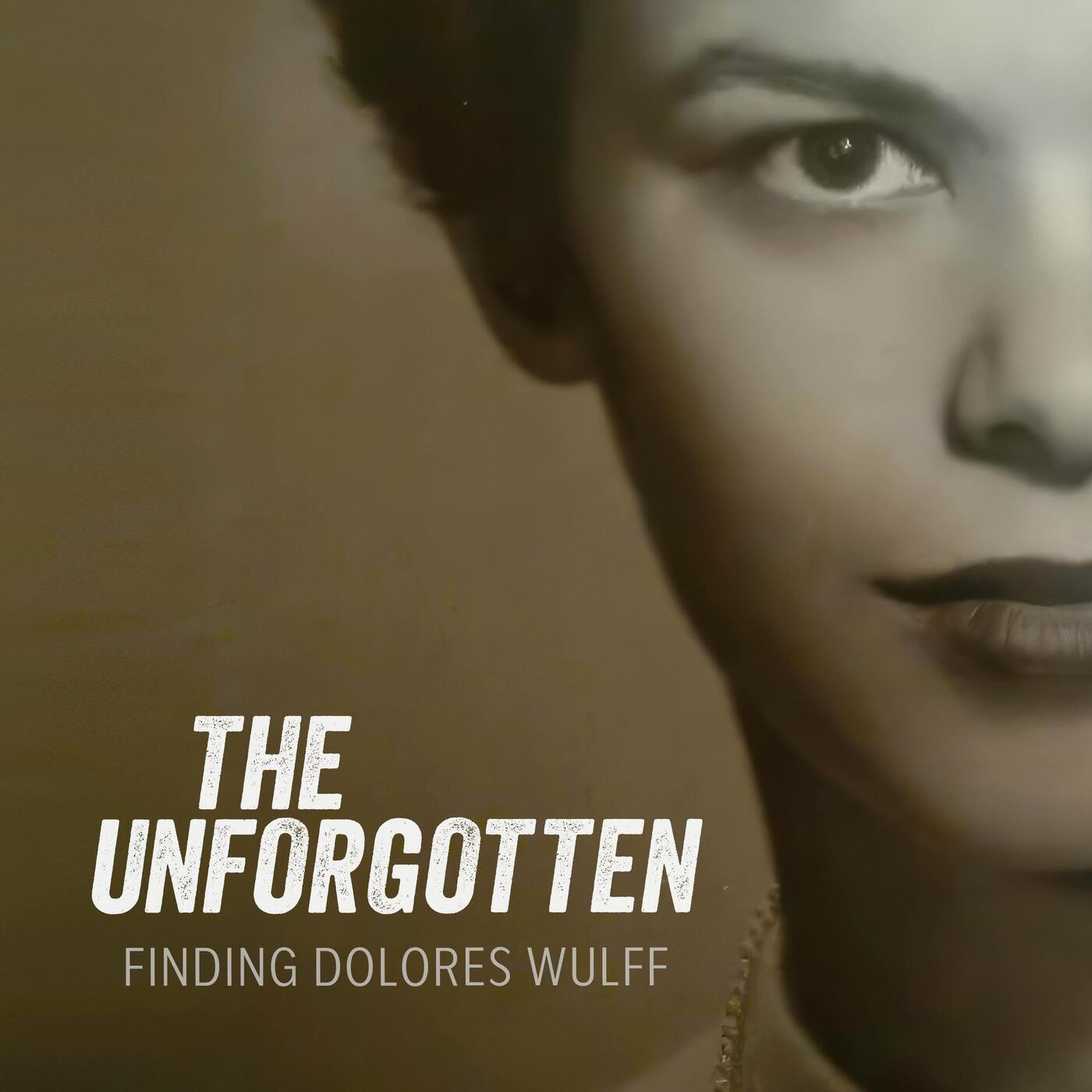
The first time I heard Kenny Hart tell the story of how he found Dolores Wolf, he was in the same chair where he made that call to Paul. It was the fall of 2020, and Adam Rittenberg, my colleague at ESPN, and I were on zoom, completely captivated by what he was telling us. Kenny wore a blue polo shirt with an embroidered badge that read Sergeant Benicia, Police. Behind him, a corkboard showed photos of his family, one of him in uniform, and a black and white photo of a woman with dark hair and a big smile. Adam and I saw it immediately. This was Dolores Wolf. We didn't know it back then, but Dolores Story would pull us in, unlike anything we had reported on before.
- [04:30]
Kyle Bonagura
Kyle and I spent the next 10 months working on a piece for ESPN.com focused on Paul Wolf, the college football coach. Our story was published in August of 2021, but Kyle and I couldn't stop talking about it. We were captivated by the events that led to Kenny's call to Paul and by all of the people connected to this case. We wanted to tell the complete story of what happened to Dolores, her disappearance, the search for her, and the incredible events that occurred in the years that followed. We will do that over the course of this podcast. The center of the story is Woodland, California. Technically a Sacramento suburb, Woodland has always had its own identity. Nicknamed the City of trees in the 1930s, it's a place where Victorian homes and old oaks line the streets. Woodland has some dense pockets of homes and businesses, but it's also surrounded by a vast agricultural area filled with farms and ranches where fertile fields yield almonds, alfalfa, pistachios, and other crops. Woodland is where Dolores Wolf was born and raised. It's where she would then build a life that revolved around her four kids and a large family. And it's where she disappeared from on the night of July 31, 1979. To fully understand Dolores and her life in Woodland, you have to begin with her family's journey. They were people who chose to Travel halfway across the world for a chance at a new beginning and ultimately, the American dream. In 1917, Frank Rocha, Dolores father and one of his brothers left the Azores, a small chain of islands off the coast of Portugal on a steamship to come to America. Settling in northern California, they became dairy farmers and grew alfalfa outside woodland. Frank married a woman named mary, and on November 4, 1933, they had their second child, naming her Dolores Marie. Here's Dolores son Paul.
- [06:39]
Paul Wolf
And again, she grew up not speaking English and had to learn the language somewhere around that first, second, third grade. So you know, her and her siblings always got put behind a year just because they were raised only speaking Portuguese.
- [06:52]
Kyle Bonagura
Dolores grew especially close to her youngest brother Matthew, who later in life became known as Slick.
- [06:59]
Slick (Matthew Wolf)
She's about four or five years older than I and she would read Donald Duck comic books to me. We were real tight. Both liked to joke and clown around. I remember one time I was walking by the middle bathroom that most people use, and she's standing in front of the mirror and she knows I'm coming and she's looking in the mirror and she says, you're beautiful, you're gorgeous. You may be the most beautiful woman in the world. I said, knock off that crap.
- [07:25]
Kyle Bonagura
Several days later, Slick positioned himself in front of the same mirror and waited for his big sister to pass by.
- [07:33]
Slick (Matthew Wolf)
I said, wow, you are one good looking dude. She's laughing as she goes around the corner and she sticks her head back around the corner and she says, is that mirror lying to you again?
- [07:45]
Kyle Bonagura
Slick became an elite athlete in the area. Many thought he could have gone pro in baseball. Dolores, meanwhile, wasn't a natural in sports, but one time she convinced her brother to come to one of her basketball games.
- [07:58]
Slick (Matthew Wolf)
He said, I'm the star of the team. I said, you gotta come watch me play. I go watch you play. Ugh, crap. Well, I watch girls basketball, so I went out there. He never got in the game.
- [08:12]
Kyle Bonagura
Dolores grew up in the Portuguese community, but she did not end up with a man of Portuguese descent. She met Carl Wolf in the Sacramento area. He was a large man, maybe 6 foot 1, 220, £230 with dark hair. He had grown up on a farm in Minnesota without running water and had moved to California shortly after high school. They were married in 1955 at a Catholic church in Davis, followed by a two week honeymoon back to Minnesota. Carl made a good initial impression on Dolores. Large family. Here's Dolores cousin Tony Rocha.
- [08:48]
Tony Rocha
He was very nice as I remember him, you know, he'd go on the driveway, we'd be all playing basketball. He'd come out and play basketball with you, stuff like that. So he was really well liked.
- [08:59]
Kyle Bonagura
The couple's first child was born in 1957, and they also named him Carl, but everyone would call him Carly. And for the purpose of clarity, in this podcast, so will we. Their daughter Anna Marie was born in 1959, and as far as anyone could tell, Carl and Dolores Wolf were a happy couple growing a family together. Tom was born in 1963, and finally, Paul in 1967. Here's Tom.
- [09:28]
Tom Wolf
She was the best mother anybody could ever want. Her kids were always perfect, and that's how I grew up. We were always treated with her doing nothing but being positive and praising us and lifting us up. I truly believed I was great because of her. She was in the middle of everything we did now. Before I drove, she was going to pick us up at the end of basketball practice or football practice or something like that. We figured we'd wait for an hour or two before she made it because she was always late. And we just learned how to live with that. That was just her nature.
- [10:07]
Kyle Bonagura
This is Dolores nephew, David.
- [10:10]
Paul Wolf
I remember she was always smiling, always laughing. Would pretty much do anything that we wanted as kids. If we wanted to go to McDonald's, she was the one that would take us.
- [10:23]
Narrator (possibly Kyle Bonagura)
If I was going to spend the.
- [10:25]
Paul Wolf
Night over there, she was always for it. And she was always in a good mood, at least when I was around.
- [10:33]
Kyle Bonagura
After Dolores kids grew older, she took a job as the secretary to the principal of Woodland High School, and she got to know everyone from the football team to the faculty to the cheerleaders. Most kids went to great lengths to avoid the principal's office, but they came to see Dolores. Here's Tom.
- [10:53]
Tom Wolf
The troublemakers loved her. The troublemakers were the ones that were in the office, and so she would deal with them. And some of my best friends were the troublemakers. And partially because they loved her and how that whole relationship was.
- [11:10]
Kyle Bonagura
Dolores also remained very connected to her Portuguese roots. She served as president of the Yolo Cabrillo Civic Club, which raised scholarship money for high school students of Portuguese descent and made sure her children understood their heritage. Here's Paul.
- [11:26]
Paul Wolf
We would always go to Portuguese functions, whether they're our relatives or just they always have Portuguese feed they call sodas feed, which is this disgusting orange soup with bread, and I would never touch that crap. But we'd have all these things where we go to, or the Cabrillo Club, which Were local Portuguese functions that we were involved in. And, you know, you do dances and those types of things. As a child, we'd do all that stuff.
- [11:51]
Kyle Bonagura
When we talked with members of her family, they all described Dolores the same way. Warm, funny, and devoted to her family and community. Maybe this is naive of us, but when we think of someone who disappears, we often imagine them isolated, unprotected, and vulnerable. Dolores Wolf seemed to have a strong support system around her. But there was another side to Dolores life, A depressing reality she dealt with in private and occasionally in public. This is her sister in law, Janet.
- [12:25]
Janet (Dolores' sister-in-law)
She always had jokes. She was very humorous. But then she had such a terrible sadness and crying over her life with Carl wolf.
- [12:36]
Kyle Bonagura
As Janet alluded to the warmth and laughter that defined Dolores life mask something much darker. After the break, Kyle will pull back the curtain to reveal the private torment she endured.
- [13:01]
Narrator (possibly Kyle Bonagura)
No one in the family we spoke to could pinpoint when exactly the marriage started to unravel. But Janet remembers episodes of Dolores crying about how Carl treated her as far back as 1963, when they were pregnant at the same time. This would have been when Dolores was pregnant with Tom, her third kid. Things got progressively worse as Carl's businesses faltered. First, there was a gas station in town, Then a u haul business attached to it. Those ventures had mixed results but ultimately failed. As that happened, Carl started drinking more heavily, and those on the Rocha side began to worry about his behavior.
- [13:44]
Tony Rocha
My other cousin named also Carl, it was Carl souza. He was my mom's nephew. He worked for Carl wolf at the station. And Carl had went in to use the bathroom while he was working his shift, and he noticed a hole in the wall. And he glanced up there and he just thought, oh, I'm sure it's nothing. And then he looked and he realized that he could see right into the office of the station through that hole.
- [14:11]
Narrator (possibly Kyle Bonagura)
What Tony is suggesting here is that Carl was using the hole to act as a peeping tom.
- [14:17]
Tony Rocha
That was clearly a sign that we were dealing with somebody that wasn't right.
- [14:23]
Narrator (possibly Kyle Bonagura)
Another woman we spoke with, who's now 80 years old and didn't want to be recorded for this podcast, Told us her husband worked part time at the gas station. One day, he saw Carl push Dolores up against a wall of the station. The man confronted Carl about his treatment of Dolores, but was told to, quote, mind his own business. He never returned to work a day for Carl wolf again and didn't even collect his final paycheck. Carl just had a way of making people around him Feel uncomfortable. After the gas station failed, Carl began working at the Farm Bureau insurance company in Woodland, where he pursued his female secretary. Despite her clear rejection, she would tell police that Carl parked outside her home to watch her and that she eventually quit her job to get away from him. Here's cousin Debbie Baker.
- [15:15]
Debbie Baker
We would be over there and we'd spend the night, and we'd be sitting on the couch and watching tv. And the boys had gone and taken their shower or bath. And each one of the boys would come out in their underwear. We were all kids. But then Wolf would come out too, in his underwear. And it wasn't boxers. It was, you know, and seeing a grown man and you're a kid and him dressed like that. So he was a strange person.
- [15:45]
Narrator (possibly Kyle Bonagura)
On another occasion, Debbie, who was 23 when Dolores went missing, was getting ready to take a bath at the Wolf house. But Carl tried to make her do it with the door open.
- [15:56]
Debbie Baker
He tried it with me that I couldn't close the door. And then I said, I'm not going to get in the bathtub. And I closed the door, and I think I locked it because I was afraid.
- [16:10]
Narrator (possibly Kyle Bonagura)
Debbie also remembered Carl's drinking, something she witnessed firsthand above the ovens.
- [16:16]
Debbie Baker
There was a cupboard and he had vodka bottles, and he'd pull that out and just drink straight out of the bottle.
- [16:23]
Narrator (possibly Kyle Bonagura)
Despite the story about the gas station incident, no one in the family was aware of any kind of physical abuse from Carl. If Carl was hitting Dolores, she never told anyone. And there was no obvious signs, bruises or anything like that. But that wasn't the case for Tom. He took a lot of physical abuse.
- [16:43]
Tom Wolf
We got into fights. I didn't have much of a chance against him physically at the time, so I didn't get very far. I just kind of took a beating. And then towards the end, where I started to fight back then we got into some pretty tough ones. And the worst one was I got hit across the side of the head and it popped my eardrum and had to have minor surgery on that to fix that.
- [17:06]
Narrator (possibly Kyle Bonagura)
When Carl and Dolores would get into arguments, it was common for her to call her brother Slick. He would come and get her, and she would stay with him and Janet for a while as things cooled off.
- [17:18]
Slick (Matthew Wolf)
Well, one time she called me up, not long before this happened, to go get her. I went and get her. And as believing he yells at her, I'm going to kill you. Well, I didn't think much of that. I felt like I was a wimp. I didn't say anything I should have said, this has haunted me. I should have said right then and there, if she dies, you die, is what I should have said. But I didn't say anything.
- [17:43]
Narrator (possibly Kyle Bonagura)
On one occasion, Dolores stayed with Slick for about a month. Then one day he returned home and saw her walking out with her luggage.
- [17:53]
Slick (Matthew Wolf)
Where you're gone, sis. I'm gonna go home. I said, you can stay here, sis. I don't care if you stay here for the rest of your life. And she said, no, let's see if I can work it out.
- [18:03]
Narrator (possibly Kyle Bonagura)
The pattern went on for years. Carl and Dolores would fight. One of them would leave. They would stay away for days or weeks, then try to reconcile. In April of 1979, it had gotten so bad at home that Dolores didn't just leave for a relative's place. She got her own apartment in town about five miles away. But all that seemed to do was make things worse. There was a consensus among the family that Carl felt so enraged by the idea of divorce and being forced to split their marital assets that Dolores moving out had the effect of an animal being backed into a corner. Cousin Tony lived in the same apartment complex Dolores moved to. And one night he received a call from his sister Mary asking him if he could go to the little league fields. Because Carl had used an ice pick to pop the tires on Dolores car. Dolores son Carly was already there, but he could use an extra pair of hands.
- [19:04]
Tony Rocha
And I said, yeah, I'll help him. So I had to drive over. I helped him. He had to go pick up tires because you only had one spare. And we fixed them all. Well, we get ready to leave. I go, carl, you can go home. She's going back, same place I'm going. I'll follow her back, make sure she gets in her apartment.
- [19:21]
Narrator (possibly Kyle Bonagura)
When Tony arrived at the complex, Carl was waiting in the parking lot.
- [19:26]
Tony Rocha
Dolores had just pulled into her parking spot. So I put my car in park, and I went running towards her apartment. Because after she ran, he followed her. And back when you're 22 years old and athletic. I beat Carl Wolf to the door, and he immediately stopped and started backpedaling. And I said, get the you know what out of here, Wolf. And he says, you guys are crazy. I just want to talk to her.
- [19:48]
Narrator (possibly Kyle Bonagura)
This came just after the family suspected Carl of trying to poison Dolores.
- [19:53]
Tony Rocha
She gave him a key to her apartment. And at one point, he put kerosene in her milk. And the reason we know it's kerosene, because she just smelled it. And then she gave it to my sister. Mary. And she worked at the health department. She took it to the health department, had it tested, and it was confirmed to be kerosene.
- [20:16]
Narrator (possibly Kyle Bonagura)
For me, this story was something that I've always had a tough time trying to, you know, to understand, because even if they didn't believe Carl was going to go through with his threats, the fact that there was kerosene in her milk felt like a clear attempt to kill Dolores. I don't know how else you could look at that and come to any other conclusion.
- [20:35]
Kyle Bonagura
Right. It shows a level of sophistication beyond a drunk guy. You know, just kind of rambling and making threats. Sometimes not drunk and more direct. But this is a clear attempt, like you said. And, you know, it was brazen. I mean, it was something that I think could have been traced back to Carl Wolf, but also maybe provides a peek inside what he was thinking and how he was plotting to actually have this as an option to get rid of his wife, as opposed to, you know, just the. Just the verbal threats against her life.
- [21:08]
Narrator (possibly Kyle Bonagura)
Yeah, there's a level of premeditation to this, and I think that's really important when you're talking about a potential murder, a disappearance. In some cases, if there's an accident, you could try to explain. Explain it another way. But you can't explain this. If there's kerosene and milk. It was clearly put there by a person with the intent to do harm and to do nothing about that after it was found. There's really not a good explanation for that part either.
- [21:31]
Kyle Bonagura
Well, yeah, other than the fact that Dolores just had this block against taking the next step, Going to the police, filling out a full report about all the threats that Carl had made against her. But to me, Kyle, it makes me, again, think about her family not taking him seriously. How could you not take him seriously after this was uncovered? That he wasn't just a drunk making threats, that he wasn't just a guy who wanted to avoid a divorce settlement, that this guy was actually capable of doing something extreme. And yet nothing happened from that point. That's probably the most difficult part for her family.
- [22:11]
Narrator (possibly Kyle Bonagura)
Even after he busted Tom's eardrum, Dolores made up a story to tell the doctors that the injury occurred when Tom jumped into a pool. She always resisted further action against Carl, even though she had people ready to act.
- [22:26]
Tony Rocha
Dolores was always saying, I don't want you to tell none of the guys, because I don't want the guys to confront Carl. So they were always trying their best to keep her happy because they were worried that he would take it out on her. And yeah, at that point it was clear that there was major problems and that he did have girlfriends. And at that point is when us guys started talking. And Dolores would beg it. He would say, please don't go beat Carla, because I'll be honest with you, there were people in the family that wanted to do harm, you know, and at least make a threat that if you go too far, this is going to happen. Delos begged us never, never, never to do it. You know, he'll never hurt me. She begging, begging, begging. So. And everybody would tell us, stay out of their business, get out of their business. So we did.
- [23:22]
Narrator (possibly Kyle Bonagura)
With people like Slick or Janet or Debbie, Dolores was open about the horrors her husband put her through, through. But she always seemed to hold on to hope that things could get better, that things could be tolerable. This was clearly a symptom of an abusive relationship, but all she wanted to do was focus on raising Tom and Paul. I drove up to Woodland in February 2025 and met Debbie at her home in town. We sat down at her kitchen table and over a couple hours discussed Dolores life. And as her pet cockatiel, Fred, chirped away in the background, May 24, 1979, is a date Debbie remembers well. It was a Thursday night just before her birthday, and the TV show Barney B. Jones was on at 10pm on Thursdays. Her older brother had just gotten out of the navy, and she got into an argument with him about who had control of the tv. That night, Debbie went to bed, and then a little bit before 10 o', clock, the phone rang and it was Dolores.
- [24:25]
Debbie Baker
And she was very upset. She begged me, she goes, will you come over? Because Wolf had called her. And she goes, I'm afraid he's going to show up or something, but would you come over? And I said yes. And I got dressed, went over there. So it was about 10 or so around that time, and we're sitting there talking, and I was on the couch and she was in a chair across from me. And I started hearing like the jangle of keys. And then I looked and I could see the doorknob was moving a little bit. So when I saw the door moving, I went over and looked through the peephole and I could see it was him. And I said, dolores isn't alone. I'm here. And then he goes, well, let me talk to you. I want to tell my side of the story. And I asked Dolores, and she let him in. So I opened the door, let him in, and he sat on the couch next to me and he was just saying that she needed to come back because her kids needed her and all that. And I think I mentioned divorce. And he put his finger in my face, looking me straight in the eye, and he goes, I will see her dead before she gets my property or my kids. And I said, you're threatening to kill her? And he goes, yes, and I mean every word I say. And he left shortly after. Delores was scared to death.
- [25:46]
Narrator (possibly Kyle Bonagura)
In the moment, did it feel like the threat was real or did it feel like it was just him talking.
- [25:50]
Debbie Baker
And trying to scare? No, I really thought he would do it because of the different things he was doing, following her around. I don't know how to explain it, but it was like I could see it in his eyes, he meant it. And I'm not the best at analyzing people, but it scared me and, you know, it worried me a lot. And then a few days later, she moves back at the house and she believes. My mom asked, why did you go back? And she goes, because he ignores me when I'm at home. She felt safer being at home with him. And she missed Paul and Tom. She was. He wouldn't let her see him. The kids.
- [26:31]
Narrator (possibly Kyle Bonagura)
Debbie was one of several family members who heard Carl make threats. There was one in particular that still haunts Dolores, sister in law Janet, more than four decades later when they were in dispute.
- [26:45]
Janet (Dolores' sister-in-law)
Dolores told me, he's telling me he's going to kill me. And I believe him. I said, oh, Dolores, you know, when it's yourself, you don't know people like that in the family. I said, I can't believe he could actually do that. I couldn't believe he could do that to her. But then he starts coming to talk to me and bringing the boys over, and he said, I'm going to kill her. I said, carl, you can't possibly mean that.
- [27:11]
Debbie Baker
I'm going to kill.
- [27:11]
Janet (Dolores' sister-in-law)
I said, and then she'll be gone. You'll be in jail. And what about the kids? What are you going to do? Well, I know a way to do it and not get caught.
- [27:22]
Narrator (possibly Kyle Bonagura)
The threats and the tension were building into the hot summer of 1979. After the break, Adam will tell you about when everything boiled over.
- [27:37]
Kyle Bonagura
On a Sunday afternoon in late July 1979, about 100 people gathered in the parish hall of Holy Rosary Catholic Church in Woodland. They were there to celebrate the 50th wedding anniversary of Antone and Anna Dolores, uncle and aunt. We tracked down some Super 8 film of the party, a three minute silent clip that offered a rare glimpse into Dolores world. The guests sat at tables covered with white tablecloths and drank from styrofoam cups. About halfway through the footage, Dolores appeared in a bright blue dress, a white flower in her dark hair, standing next to her father with cousin Tony holding his infant daughter nearby.
- [28:21]
Tony Rocha
We had a blast. My parents, 50th relatives, a hall full of Portuguese people, basically, and a few others. But we had a great time the night before.
- [28:31]
Kyle Bonagura
Dolores had helped make sandwiches with some of her cousins and arrived early the next morning to set up with Debbie, who had collected some 7 up bottles for centerpieces.
- [28:41]
Debbie Baker
We wrapped them in gold foil and made up and we were putting daisies in them. Dolores and I were in the bathroom and the only people there were Dolores, my mom and I, and my mom was in the hall. And Dolores goes, I'm going to be an opera singer. And she starts singing like she's at the opera. And my mom comes in and she goes, God, there are moose, moose calls. And we just started laughing. But see, that's how Dolores was. Dolores couldn't make anybody laugh. Her personality, you know, you could be at a funeral and Dolores could come in and make everybody laugh.
- [29:15]
Kyle Bonagura
Dolores, outgoing personality was on display throughout the party. She flashed her big toothy smile as she enjoyed time with her family. Woodland was the type of place at that time where the local newspaper, the Woodland Daily Democrat, published a brief story with a large headline and photo about the party listing many of the family members in attendance. Tony remembers everyone having a good time. But off to the side, a man stood alone tending the bar, but not really talking to anyone. Carl Wolf didn't look like someone who wanted to be there the whole time.
- [29:51]
Tony Rocha
Wolf's bartending. They had a bar set up. You could tell there on the out, you know, he's behind the bar the whole time. Dolores is out mingling with all the family and he's behind that bar and he's not leaving behind that bar because I think at this point he kind of felt like an outcast. So I didn't go up to the bar, but everybody else did. And. But you could tell right then and there, glancing, watching, that they were on the outs. They were on the outs big time because I don't even know if they even talked. They didn't drive there together. I know that for a fact.
- [30:24]
Kyle Bonagura
The party marked a celebration of Antone and Anna and their marriage. But for Dolores, it provided a brief reprieve from her own. She had moved out of the house on the outskirts of Woodland a few months earlier and had only recently returned to be under the same roof as Tom and Paul, who were then 16 and 12. Carly and Anna Marie had moved out but lived nearby. The Wolfs were in marriage counseling, but the problems in their home weren't going away. Carl had threatened to kill her multiple times, both to Delores face and in front of her family. Those threats had been mostly written off as the ramblings of a spiraling alcoholic. But Dolores expressed real concern, especially when talking with her sister in law, Janet.
- [31:10]
Janet (Dolores' sister-in-law)
Oh, she said it more than once when she would be over there staying with the two boys. She told me he was threatening to kill her. I mean, I'd stay up at night with her and let her talk. And that was when it first started. But he said to me, if that happens, promise me you'll take care of my boys. And sort of, of course I said that's not going to happen.
- [31:38]
Kyle Bonagura
Dolores was a devout Catholic and the idea of divorce was still taboo for some in the church. Even if she knew in her heart that her marriage was over and expressed that to others, she felt a looming sense of obligation to try and salvage things. Before Dolores moved back in with Carl and the two boys, she had actually filed for divorce. But it was something not many people knew.
- [32:03]
Debbie Baker
We were having a good time at the party and later on he wanted to go home and so she finally went because he was demanding and he could make the whole party miserable if he wanted to.
- [32:17]
Kyle Bonagura
Deloris went home with Carl, but she soon returned to Debbie's house to pick up some leftover sandwiches from the party.
- [32:24]
Debbie Baker
They had a big fight at home before she came over, so that's why she came late and she parked across the street and she had her bags of sandwiches and I walked her to her car because she asked me to because she was afraid. She didn't like the dark. And I walked her to her car and I stood there. She drove away and I stood there and watched her till she turned the corner. And that's the last time I ever saw her.
- [32:52]
Kyle Bonagura
That was a Sunday night. Two days later, Woodland was sweltering in the summer heat. By late afternoon, temperatures had soared into the high 90s. In a marriage counseling session at 4:30 at the church, Dolores indicated things with Carl were going well, but he did not agree. Carl told the therapist that he was disappointed with the state of their marriage, but they did not discuss the threats he had been making or anything that made the therapist concerned about Dolores well being. Carl and Dolores drove separately to the counseling appointment. When it was over, Carl swung by the grocery store to pick up bread and milk. When he got home, he mowed the lawn. Neither of the kids who lived at home was home that night. Tom, the 16 year old, was away at a week long basketball camp in the Bay Area. And Paul was spending the night at Uncle Slick and Aunt Janet's house celebrating his cousin David's 13th birthday. That left Carl and Dolores alone. What happened that night would change a family forever. While the details of exactly what happened will likely never be truly understood, one thing was clear. By the next morning, Dolores Wolf was gone.
- [34:11]
Narrator (possibly Kyle Bonagura)
This season on Finding Dolores Wolf.
- [34:14]
Janet (Dolores' sister-in-law)
Right away I just said my dad did it.
- [34:17]
Tony Rocha
Everything we could do to make his life horrible, we were doing it. I've been involved in a lot of.
- [34:23]
Paul Wolf
Crazy things, but at the end of the day, he's still your father.
- [34:26]
Tony Rocha
He's in jail.
- [34:28]
Kyle Bonagura
I gotta get him out of jail.
- [34:30]
Tony Rocha
Pretty soon I'm sitting on the stance and I'm getting accused of murder. How in the hell do we get to this point?
- [34:41]
Kyle Bonagura
The Unforgotten is a Free range production. Season 3 Finding Dolores Wolf is written and hosted by Kyle Bonagura and me, Adam Rittenberg. The story is edited and produced by Wes Ferguson, the executive producer at Free Range. Audio editing by Aislin Gaddis Audio production and sound design by Austin Sisler with Eastside Studios in Austin, Texas. Special thanks to ESPN.