Loading summary
Transcript82 lines
- [00:00]
Wes Ferguson
Hey, it's Wes. Before we get started, here is a sneak peek at season three of the Unforgotten. Coming August 4th.
- [00:09]
Carol Dawson
She said to me, jan, I know he's going to kill me. Promise me you'll take care of my boys.
- [00:16]
Narrator (Kyle Bonagara)
In July 1979, in the small town of Woodland, California, a mother named Dolores Wolf vanished from her family home. From the very beginning, everyone around Dolores suspected her husband was responsible.
- [00:32]
Family Member (possibly Matthew Rocha or another relative)
He yells at her, I'm going to kill you. Well, I didn't think much of that. I should have said right then and there, if she dies, you die.
- [00:42]
Narrator (Kyle Bonagara)
Carl Wolf had brazenly threatened to kill his wife Dolores, for years.
- [00:47]
Carol Dawson
He said, I know a way to do it and not get caught right away.
- [00:52]
Family Member or Narrator
I just said, my dad did it.
- [00:54]
Kyle Bonagara
They told us that our mother was gone and she was never coming back.
- [00:58]
Family Member (possibly Matthew Rocha or another relative)
I called him up on the phone. I said, wolf, you killed her. You know it, I know it, and everybody else knows it.
- [01:06]
Narrator (Kyle Bonagara)
For decades, Dolores family lived in the shadow of her disappearance. Searching, waiting, never knowing exactly what happened.
- [01:16]
Family Member (possibly Kenny Hart or another relative)
There wasn't even a quiver of hope that she was still alive. And so on we went with the search, you know, the search. Last of 40 years.
- [01:25]
Narrator (Kyle Bonagara)
Her loyal family was desperate for answers. They refused to let her story be forgotten.
- [01:31]
Family Member (possibly Kenny Hart or another relative)
So we said we were going to start a holy reign of hell on him.
- [01:36]
Family Member (possibly Matthew Rocha or another relative)
Well, you got two choices, Wolf. You can tell me or the police tomorrow where she's at, or I can blow your head off.
- [01:47]
Narrator (Kyle Bonagara)
I'm Kyle Bonagara, and along with my colleague Adam Rittenberg, we've spent years reporting about the decades long odyssey Dolores family endured as they searched for answers. For 41 years, they waited. And then after years of silence, came the call that changed everything.
- [02:08]
Family Member (possibly Kenny Hart or another relative)
Hi, Paul, it's Kenny Hart with Denisha pd.
- [02:11]
Kyle Bonagara
Can you give me a call back at.
- [02:13]
Carol Dawson
Thanks.
- [02:16]
Wes Ferguson
I've never delivered this kind of notification.
- [02:18]
Adam Rittenberg
So I'm about to change a family's life forever. The first words out of my mouth.
- [02:24]
Wes Ferguson
Were, paul, we found your mom.
- [02:27]
Narrator (Kyle Bonagara)
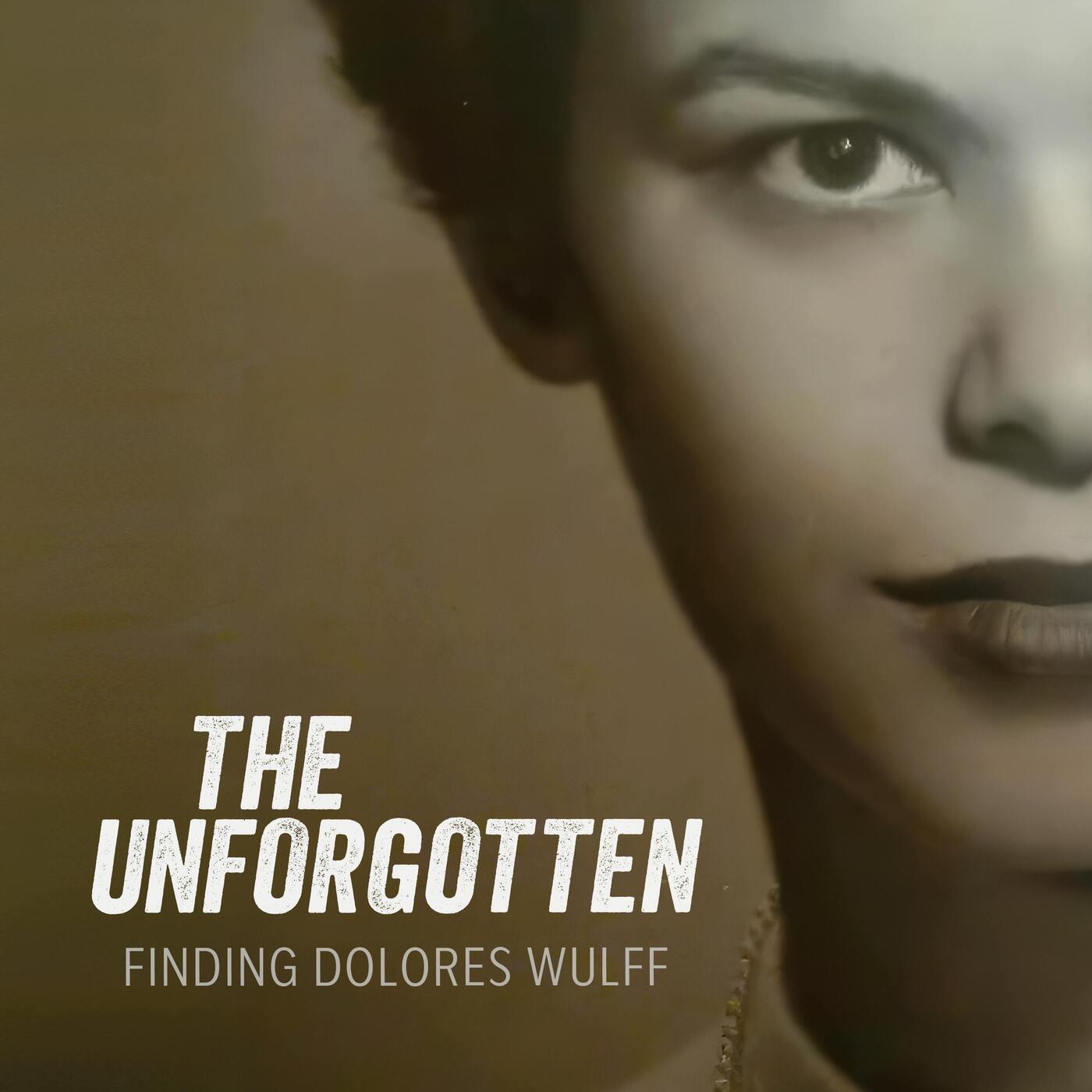
From Free Range Productions. This is season three of the Unforgotten. Finding Dolores Wolf.
- [02:41]
Wes Ferguson
Hey, Carol.
- [02:42]
Kyle Bonagara
How's it going?
- [02:43]
Carol Dawson
Hey, Wes. It's going really well. A little hot this summer, but, you know, that's Austin, Texas, for you. How are you?
- [02:51]
Wes Ferguson
I am in nice and cool, Colorado. Got out of Texas for a few days, but we're heading back pretty soon.
- [02:58]
Carol Dawson
Oh, well, try not to gloat.
- [03:02]
Wes Ferguson
Yeah, well, I'm really excited about this bonus episode of the Unforgotten that we have lined up today. And I've been calling it the crossover event of the summer, but my wife rolls her eyes every time I say that, so I think I'm gonna have to let that go. But in this episode, we are going to talk about season three of the Unforgotten, which is coming out right around the corner on August 4th. That's a Monday. And because you and I are the co hosts of season one, and we are still very much in the thick of telling that story, I just wanted to give you and all of our Season 1 listeners a chance to meet the guys who are behind season three of the Unforgotten. And the good news is they are here with us today. Adam and Kyle, would you mind introducing yourselves?
- [03:54]
Adam Rittenberg
Yeah, sure. Wes and Carol, it's great to be with you guys. My name is Adam Rittenberg, a senior writer for college football at espn. And this is my first major podcast venture. And so just thrilled to be part of the Unforgotten and obviously having a chance to work with Kyle on a project that we have thought about for years, really ever since we did a story similar to this big story on ESPN.com back in 2021. So we always felt this story was worthy of a narrative podcast. We're just thrilled that we're finally very, very close to getting this across the line.
- [04:30]
Kyle Bonagara
Yeah. And I couldn't say it any better. This is a project we've worked on for, thought about, and talked about for a long time, and it's such a good fit. Here to join this feed here on the Unforgotten. There's a lot of similarities with the story you guys reported in season one and the story that Adam and I have spent so much time on. So, yeah, thanks for having us here today and welcoming us into the Unforgotten family.
- [04:51]
Wes Ferguson
Can you just tell me the name of this season and then just give me the synopsis of what this story is about?
- [04:58]
Kyle Bonagara
Sure, yeah. So season three of the Unforgotten is called Finding Dolores Wolf. It's the story of a woman's disappearance from Woodland, California, small town outside of Sacramento in 1979. And we basically chronicle a family's 41 year odyssey to find her, to bring her home. It took 41 years, much, much longer than the family would have liked, longer than it should have taken, as we'll show during the course of the podcast. But eventually her body was located and her family was provided some sense of closure. And while that may seem like a spoiler, it's really not. That's just kind of the overview and just what happens along the way? There's so many crazy turns to land at that resolution that we're not giving away anything. It's by no means that sort of story.
- [05:49]
Carol Dawson
Well, I am personally thrilled to meet you guys, and I am also very curious about this story. I have a strong affinity with where you live and the setting that you're talking about. I used to live there myself during the course of my varied and adventurous life. And I particularly love Northern California, so can't wait to hear it. And I'm delighted to meet you both.
- [06:20]
Adam Rittenberg
Yeah.
- [06:20]
Wes Ferguson
Like Carol said, I'm so thrilled that you are now a part of the Unforgotten. And maybe if you could introduce us how you came to this story and why it matters so much to you.
- [06:31]
Adam Rittenberg
Sure. I'll start off, and Kyle will definitely follow. We were obviously doing our jobs as best as we could in 2020. It was a year unlike any other in our lifetimes, obviously. And certainly if you're working in media and in sports, you're certainly figuring out what's happening and will there be games and all sorts of things. So this is the fall of 2020. You know, Kyle and I are reporting on college football as best as we could from our homes, essentially. There were very little travel that was going on at that time. And then I got a note from a friend of mine who's actually a sports attorney named Juan Lozano, who Kyle knows as well, who sends me all sorts of things, and some of them turn out to be good stories, and some of them don't. He had found a post on Facebook from, I believe it was a relative of Paul Wolf's, and it explained what had happened and that there had been this identification, you know, 41 years after Paul's mom, Dolores, went missing from her home outside Sacramento. You know, they had identified her, and it didn't have all of the details, but it had some of the details. And I actually had never talked to Paul. I knew I knew of him. Kyle obviously knew of him as well, and I knew that something had happened in his past. I had not done extensive research on his family, but I just knew there was something, you know, pretty traumatic or something off the field that sort of was attached to him and his story. And obviously, in reading that post and doing some additional research, and I think there had been a few stories that had come out around that time, I thought this was something that could be a really good story for us to pursue at espn. And, you know, Kyle, who still lives in Northern California, I grew up there, but I Live in Chicago now. He was really kind of the perfect person to partner with on a piece like this. He went to Washington State, where Paul Wolfe coached, and so, you know, reached out to Kyle and. And we kind of got the ball rolling.
- [08:25]
Kyle Bonagara
It's one of those stories, too, where you see the initial information about it, right? A woman is identified. But I think what really drew us in later is talking with family members, talking with Paul, talking with authorities who are involved in it in various capacities. And there's just so many really interesting people who are connected to it in a bunch of different ways. And the more we talk to those people, the more we heard about, you know, their stories about experiencing all of this, the more intrigued we became. And it was just kind of peeling back an onion. You got through one layer, and the next was even more interesting. And that's how, you know, you know, five years later, we're still as invested. Maybe more so. Definitely more so than when this story first crossed our desk.
- [09:07]
Carol Dawson
Would you please tell me a little bit about who Dolores Wolf is and. Or was and who Paul Wolf is?
- [09:15]
Kyle Bonagara
Sure. I can go ahead and tell you a little about Dolores. So in 1979, Dolores Wolf was 45 years old. She was the daughter of Portuguese immigrants. Her parents immigrated to Northern California from the Azores, which is a small chain of islands off the coast of Portugal. Her father, you know, one day got into a steamship, crossed the Atlantic, and made his way all the way across the country. The Portuguese influence in her life growing up was significant. That was her first language. She was held back in school as a young girl because she was still learning English. Everything was Portuguese at home. So it was always kind of held back a year and. But, you know, obviously, that stuff passes. And then she grew up in the town of Woodland, California, which is right outside Sacramento. She grew up on this ranch, like, setting. It's very agricultural. All her family members were involved in farming and ranching and those sort of things. You know, by the time she's 45, she's a mother of four. She has three boys and a girl. Her oldest son had. Was recently married. He was in his early 20s. Her daughter, Anna Marie, was just about 19 or 20 at this point. Also just had moved out of the house recently. And then there was the two young boys who. Who were still at home. Tom, who was 16, and Paul, who was 12. And, you know, everyone you talk to about Dolores, they all say the same things. Big smile, big toothy smile, loves to laugh, very funny. Always ready with a joke. Quick wit, those sort of things. But more than that, she just loved her kids and loved her family, and everything she did in her life revolved around that really well thought of in the community. Was a secretary at a local high school, secretary for the principal. Just had a really bubbly way about her in this kind of small town in Northern California. But everyone you talk to says Paul was the baby. Paul was her pride and joy. And he later became a prominent football coach and an adapte to kind of walk you through a little bit of what he's been through.
- [11:16]
Adam Rittenberg
Right. So Paul obviously was 12 when this all happened, but developed into a really talented high school football player, actually, much like his father. Carl Wolf was on the same track to possibly play college football before he had an injury off the field later in high school. But Paul was an offensive lineman. He went to Washington State University up in Pullman, Washington, in the corner of the state, and ended up playing for some really good teams up there, including the 1988 team that went into the Rose bowl and upset UCLA when UCLA was number one. And then Paul ended up entering coaching and ended up becoming a head coach at Eastern Washington and then at Washington State. And at this time when this all happened, he was an assistant coach at Cal Poly University down in San Luis Obispo. But now he's the head coach there. And in between, you worked for the San Francisco 49ers and you kind of bounced around coaching offensive line at different spots. And so, you know, when we did our original piece, certainly he was the focus because of the sports connection and is definitely a big part of this story. But as Kyle referenced, there's so many other people that have incredible backstories and perspectives that we're going to bring out in this podcast in ways that we couldn't for our Digital piece for ESPN.com.
- [12:33]
Carol Dawson
So essentially what pulled you guys into this story, because you're both sports guys, sports reporters, was football.
- [12:41]
Adam Rittenberg
Right? Right. Yeah, it came across my desk, Carol, really, because of Paul Wolfe and the fact that this was his mother. And we could still tell this story for ESPN because it involved a college football coach, not necessarily a prominent coach, but someone who had been a head coach in the PAC 10 or was a PAC 12. I don't know if it changed over yet, Kyle, by that time, but certainly somebody who had rose up the coaching business at least. So that was our entry to the story. But as we found out very, very quickly, there were a lot of other people and elements of the story that made it worth telling on a grand scale.
- [13:18]
Carol Dawson
So football pulled you in. But it started you on a long journey to tell the story of a very long journey that a family had to go on and endured for 41 years. Correct?
- [13:32]
Kyle Bonagara
Yeah, no, that's right. That's. That's a perfect summation of kind of the process here. You know, this story isn't a story. The broader one wasn't something we told at espn. It's just like it diverted from sports very quickly. There's the Paul connection, and it's such a good story that we were able to write about Paul and spend a lot of time working on the story about Paul. But there's really the connections to sport, and there's some loose ones along the way pretty much end there. This is very much a story about family, about, you know, generational trauma, about never giving up hope, all those things police procedural. There's so many different elements here that we just, you know, fell into, were transfixed by, and have been for a long time. So, yeah, certainly a long journey for us, but a longer journey for the family.
- [14:15]
Carol Dawson
Wow. Oh, this is fascinating because, you know, I. I've had a similar experience with the story from season one that Wes and I have been reporting on now for quite a while, and it just keeps opening up more and more corridors and more and more doors to open and revelations to find behind those doors. And it sounds like you guys have had the same kind of experience. You know, it's always fascinating to discover that one single, solitary event might seem isolated at the time, but in fact, the repercussions. It's like sound waves or the circles of water waving when a stone is thrown into a pond just keeps going on and on and on and makes us realize how absolutely connected we all are and interconnected we are to one event that might seem all alone, but in fact, it never is.
- [15:18]
Kyle Bonagara
Yeah, that's exactly right. I mean, you start chasing one story and you get turned on to another aspect of it, and that takes you down another corridor that might lead you places that you wouldn't have expected. This story, we found ways to incorporate, you know, stories about COVID missions in Vietnam, the Little Rock Nine, desegregation of schools in Arkansas finds its way into this story. There's a Kim Kardashian reference in this story. All of these things are somehow related to Dolores Wolf and her disappearance. And. And more than that, it's her family. She was Dolores Rocha before she was married. The Rocha family is a big part of this story. There's a lot of really fascinating individuals as part of that clan who Are. You know, I think this is something Adam and I have joked a lot about, is just some phenomenal storytellers, too.
- [16:05]
Family Member (possibly Kenny Hart or another relative)
Right?
- [16:06]
Kyle Bonagara
It's not that they have great stories to tell, it's that they tell them well. And so it allowed Adam and I kind of to sit back and let these people who have these really interesting experiences share them with everyone else.
- [16:18]
Carol Dawson
Well, it sounds incredibly rich as well as very sad, and I can't wait to listen to it. I really am eager to hear what you guys have to tell.
- [16:28]
Kyle Bonagara
That's something that I've actually thought about, too, is like, it's such a good story just in terms of twists and just stuff that you wouldn't necessarily hear about, but it is sad. And I think that's something that we took a lot of pride in while writing the script and telling the story, is that you can't be too excited about it, too, because, you know, this is a terrible thing happened. There was a lot of trauma that was experienced on multiple levels by multiple people, and we were very cognizant about being careful in how we shared those stories. It's not all going to be fun and games over the next nine episodes, but we are very proud of the work we did in putting this together and into a format here that people, I think, will enjoy for the whole trip.
- [17:11]
Carol Dawson
So, will we ever find out what happened to Dolores Wolf?
- [17:15]
Kyle Bonagara
Guess you're gonna have to wait and listen to the podcast, Carol. We can't give away that right now, can we?
- [17:21]
Carol Dawson
I guess I will, yeah.
- [17:24]
Wes Ferguson
I mean, let's be real. The name of the podcast season is Finding Dolores Wolf. So you have to listen to find out how she was found. But, yes, there is resolution. And I've been lucky enough to read the scripts of the episodes as Kyle and Adam were writing the episodes. And I was with them in the studio when they were recording the podcast just a week or two ago. And I was really struck by how fitting this story is for the Unforgotten. And when we came up with this podcast and we came up with that name, The Unforgotten is about the people at the center of these stories. It's not about exploiting anyone. It's about remembering them and finding cases that should never be forgotten. And so I just felt like this story, it is true crime. There are twists and turns. It's the kind of story that you're going to get hooked on and you're going to want to listen to and not put down. But also, it just has so much heart, and it's about this close knit family that comes together and, you know, they fight back. They go to some extremes that I think maybe people might be surprised by in their effort to get justice for their mom, their sister, their loved one, Dolores, and find out where she is, what really happened to her. But at the end of the day, it is just a beautiful story of family and of one family that never gives up. Kyle and Adam, I mean, you guys are college football beat reporters. That's like the opposite of a true crime story. Did any of your experience in your past as reporters, as college football writers, did that factor into how you wrote this story, or was this a totally new experience for you guys?
- [19:18]
Adam Rittenberg
You know, I would just say, like, people kind of tie us to the games and the issues that are going on in the sport, and we all have to cover that, but we really do cover people and we try to write. I think some of the more compelling stories I've been involved in, and Kyle is probably the same, have just been about, you know, someone's personal story, someone's backstory. And so the research into who Dolores was, who her family was, what they did after the disappearance, you know, we have some interaction in our roles with law enforcement and lawyers and court documents and things like that. So that part wasn't necessarily that difficult. But it was different. I mean, the experience of writing a podcast and voicing a podcast was really, really different and enjoyable from what we kind of do on a daily basis. But in terms of digging into somebody's background and what makes them interesting and connecting different pieces, we actually do a decent amount of that even in our day jobs, but we just did it so much more so and in a deeper way for this type of story.
- [20:19]
Kyle Bonagara
Yeah, I think that's right. I think the biggest difference wasn't necessarily like, the topic. Right. Or like that it's a true crime story versus a football story. It was really just presenting a story in a podcast form is certainly a new experience. And the freedom to kind of go deeper than we usually would was a really cool experience putting this thing together. And I know Adam had a lot of fun with it. I had a lot of fun with it. It allows you to really leave no stone unturned. Right. We have the kind of the space to really explore tangents to the main story, which isn't usually the case. Of course, trying to record those down in Austin with us was new and different, so hopefully that part of it worked out as well.
- [20:59]
Wes Ferguson
Yeah, you guys have done an excellent job. And I can't wait for Listeners to hear the show when it comes out on August 4th. Maybe do you want to just say a little bit more about Dolores and her family situation, like, leading up to her disappearance?
- [21:14]
Adam Rittenberg
So I think one thing that's important for listeners to realize is just the dynamics around Dolores and her family, because it really struck us as we reported the story and obviously put the podcast together, that and this is where maybe Kyle and I are, or at least I can speak for myself. I may be a little bit naive. I think of a woman who goes missing and my mind automatically goes to, oh, she's isolated, she doesn't have anyone to turn to. She's on her own. And maybe that is naive or maybe that is more common than not. I think what struck me about Dolores story is that she was just the opposite. You know, she was surrounded by family. Her life was really revolved around her family in this larger kind of Portuguese American community in this rural area next to Sacramento. She didn't seem like somebody who was vulnerable because she had this brother who you'll find out in the story, Matthew Rocha, we'll call him Slick. You know, he's not somebody you'd want to mess with. And she had a lot of cousins who were that way. Her father was still alive, at least at this time. She just didn't seem like somebody who could really be in danger. But she was. And as you'll find out, her family, I think, did have some regret, definitely had some regret as to what happened because there were some warning signs and they ultimately couldn't protect her, but they did everything they possibly could after the fact that. To try to find her. And I think that's where there were a lot of different emotions and different layers to the story. But I think that's what really jumped out to me is that she was where she always was, which was woodland and living on the surface, a very happy and successful life. And yet there was this darkness behind the scenes that people weren't surprised by. Everybody knew what was going on in her marriage to Carl Wolf, and yet it wasn't enough to ultimately protect her.
- [23:07]
Carol Dawson
Okay, you guys are really wetting my curiosity a lot by what you've just said. Don't tell me anymore about the darkness, because I want to really. I really want to take this journey with you. I love the fact that by starting to listen to your podcast, I'm going to be going on a trip.
- [23:27]
Wes Ferguson
Very true. One of the interesting things for just my personal background, I've been a reporter and writer in Texas my whole life. Every podcast I've made has been a Texas story. I've worked for both of the biggest Texas magazines, and I've never. I don't think I've ever written an article or a story or anything that didn't have some connection to Texas. And there's very small. There is a small connection to Texas in this story, but really it's a California story. And I thought people might like to hear how you guys and I even got connected. So I'm from Kilgore in East Texas, and I went to junior college there, and we had a Dynasty student newspaper, just a college powerhouse newspaper called the Flare, where a lot of great journalists came through. And one of them, three or four years ahead of me, was the editor of the paper named Dave Wilson. And he's an East Texan who went on to great things, and he has worked as an editor and writer for ESPN for many years. And so you guys both work with Dave, and he's this, like, jovial, friendly, just kind of big personality guy. And you had been wanting to. You'd written this article for ESPN.com you wanted to go deeper and broader and tell the story of this family. And so Dave is the one who knew me, and he connected you to me. And, Carol, I know, like, you're also very much a Texas person, but you've lived in California, too. I wonder, do you have any thoughts on your time there? I mean, this story will have some personal resonance to you as well, being someone who has lived in the Bay Area in the past, right?
- [25:21]
Carol Dawson
Absolutely, Wes. I have lived in the Bay Area two different chunks of my life. I lived down the peninsula from San Francisco in Cupertino. And then later, after living overseas in several different countries, I returned and lived in San Francisco itself. You know, we all call it the city, and also in Marin. And I'm very familiar with the terrain that these guys are talking about, so I was very intrigued that this story is centered there. I grew up in Corsicana, Texas, as you know. My story about Shelley Watkins, which is our season one, is very much centered on my hometown. But I have always been aware that one thing Texas is crazy about is football. So a big connector. The fact that this story originates with football connections is something that I think every Texan listener is going to relate to, because Texans are fanatical about football. And everything from Friday Night Lights to all of our Friday Night except experiences growing up in this state will connect us to the football aspect of the story and what happens within the family of the Wolfs as Far as what I'm understanding, Paul Wolf becomes, so is all football oriented, but Northern California is a place all its own. It is very distinct from the piney woods of Texas, where you come from, Wes, or the Hill country where we live now in Austin. And just outside Austin, the hills of.
- [27:16]
Family Member or Narrator
Northern California look quite different from the.
- [27:21]
Carol Dawson
Whole country that we know.
- [27:23]
Family Member or Narrator
And it's beautiful, it's spacious, it has a much more temperate corner climate, a very different cultural atmosphere. And one of the things I've always loved about Northern California is the welcoming of immigrants. You know, there's a big Portuguese immigrant community, a long tradition, Italian, of course, especially in north beach, in San Francisco, the Chinese community, which is far more north beach oriented these days, just a huge catalog of welcoming and successful immigration stories. So I find this story of Dolores Wolf connected to her immigrant background to be very interesting in the same way that so many other kinds of immigrants.
- [28:19]
Carol Dawson
Are present and successful here in Texas. I think the immigration through line between the two states is profound.
- [28:32]
Wes Ferguson
Yeah, I think our listeners will be fascinated to drop into this world that in many ways will sound very familiar, but in other ways will be new to them. I also think it's pretty funny that Kyle and Adam, being Northern California guys, had to come to Texas to record the podcast. And, Adam, you're finally learning how to use y' all appropriately, right?
- [28:55]
Adam Rittenberg
That's right. And you know, I would say this, Wes, I'm not breaking any news here, but everybody on the ESPN staff, college football staff, knows way more about Kilgore, Texas than they should because of Dave Wilson. So we are very educated on that place and the junior college and his dad's auto dealerships and all the connections to college football. I mean, Dave is like an encyclopedia of Texas and college football things. So even though certainly neither Kyle nor I are native Texans, we feel a connection to the area largely through Dave and some of the other folks we work at, we work with at ESPN over the years.
- [29:32]
Carol Dawson
I need to hear you both use the word y' all in a sentence. Kyle, you go first.
- [29:38]
Adam Rittenberg
Kyle, go first.
- [29:39]
Kyle Bonagara
Y' all have been so good to us today, just having us on and inviting us onto the feed to talk about season three. We appreciate y' all and look forward to having our relationship growing.
- [29:47]
Carol Dawson
Oh, well done. Okay. Adam, you.
- [29:50]
Adam Rittenberg
Yeah, I certainly appreciate y' all as well, and y' all listeners and y' all accommodations and everything else that you've done for us to help get this podcast over the line. I had to catch myself a few times, though. It isn't natural yet. But maybe by the Time Season 3 of the Unforgotten is over, I'll have the y' all down. As a natural part of my speaking pattern, I'll say this.
- [30:13]
Kyle Bonagara
It is interesting how quickly your body wants to say it while in Texas and you start hearing it from other people. It does feel like people just pick it up almost immediately when they land. It's almost like part of your vocabulary at that point.
- [30:24]
Carol Dawson
I think you're absolutely right. You know, I grew up saying y', all, of course. And then when I moved first to Northern California and then later overseas, I had to unlearn y'.
- [30:36]
Family Member (possibly Kenny Hart or another relative)
All.
- [30:38]
Carol Dawson
And once I got back to Texas, I reincorporated y' all because I knew I was on safe ground again. But believe me, in England or Italy or New Zealand or which are some of the places I've lived. You say y' all and you're just going to be looked at cross eyed.
- [30:56]
Wes Ferguson
Yeah. I have kind of a funny story about East Texas accents, too. When I went to, when I was a freshman at Kilgore College, I had, I got a free dorm room and my neighbor in the dorms was a theater major and one of the first classes he took was voice and dictionary. And that's when we learned that we had East Texas accents. And so I remember hanging out in his dorm room practicing losing our East Texas accent. And so now I kind of code switch a little bit. I feel like a lot of times if I'm talking to someone who's not from Texas, then I kind of slip into that other voice. And then a lot of times people, as I've kind of gotten further in my career, people sometimes are disappointed. They say, why don't you sound enough like a Texan? And I said, well, give me a beer or two and then it'll come back out. But I think that y' all are well on your way to being honorary Texans. So I'm so grateful to you for putting in so much effort and research and care to telling this story so beautifully. And I cannot wait for our listeners to go on this journey with you. So, Kyle and Adam, thank you so very much.
- [32:07]
Adam Rittenberg
Yeah.
- [32:07]
Kyle Bonagara
Thank you, Wes. Thank you, Carol. And this has been fun.
- [32:10]
Adam Rittenberg
Yeah, I really appreciate you both and we're really thrilled to be able to share this story with your audience and have them understand, I guess, why it's been so impactful for us in our careers.
- [32:21]
Carol Dawson
I can't wait to listen to it and to enter this world that you create through this story.
- [32:29]
Wes Ferguson (closing remarks)
The Unforgotten is a free free range production. Season one, the Labor Day Ghost, was created by Carol Dawson and me, Wes Ferguson. Season three, Finding Dolores Wolf is created by Adam Rittenberg and Kyle Bonagara. This episode was produced by me with additional editing from Aislin Gaddis. Our theme song ghost is from Will Mechatron Jones. Thank you for listening. We'll be back soon.