Loading summary
Transcript104 lines
- [00:00]
Wes Ferguson
If you work in university maintenance, Grainger considers you an MVP because your playbook ensures your arena is always ready for tip off. And Grainger is your trusted partner, offering the products you need all in one place, from H VAC and plumbing supplies to lighting and more. And all delivered with plenty of time left on the clock. So your team always gets the win. Call 1-800-GRAINGER visit grainger.com or just stop by Granger for the ones who get it done.
- [00:31]
Michelle Pitcher
When we left off last time, Charles Flores had just made a decision that would change everything. He knew he was suspected of a robbery and murder. He had the car police were looking for in connection with the crime. Things were not looking good for him, so he chose to run. We've all heard about the concept of fight or flight, our instinctive response in times of stress or danger. In this case, Charles chose a little of both, but we'll get to that. For now, let's take a step back.
- [01:05]
Charles Flores
Testing, testing. One, two, three. Hello? Hello? Is it right?
- [01:11]
Michelle Pitcher
In this episode, you'll be hearing about Charles's dramatic, sometimes violent time on the run from police. You'll also be hearing a lot from Charles directly. By the time this episode comes out, Charles will have been on death row for almost half his life. He went in when he was 29 years old, and as of March 2026, he's 56. He's had a lot of time to think about what went down the night of January 28, 1998, and the choices he made after. He's also thought about how he got in a situation like that in the first place, what led him there.
- [01:45]
Charles Flores
The first 16 years of my life, I lived in West Texas, in Midland, and then we moved to Dallas when I was about 16. I was new, and I'd never been the new kid, and I didn't like it. And I was like, no, I don't do that no more. Yeah, I dropped out. 10th grade, I think.
- [02:02]
Michelle Pitcher
Charles is the youngest of six. He has four brothers and a sister.
- [02:06]
Charles Flores
All my brothers, we've all dealt with substance abuse issues.
- [02:11]
Michelle Pitcher
Time hasn't been kind to the family. Charles's parents are both gone. His brother Julian was murdered and a drug deal gone wrong in 2006. He was robbed, then thrown out of a moving car. In 2022, three of Charles's brothers died, seemingly one right after the other. His brother Antonio was murdered after someone intentionally ran him over with their car. Another brother, Jose, was found dead on a feeder road off of the 635 highway. Charles still isn't sure how he died. And Juan Charles's last brother died in a Texas prison of cancer. Now his sister, his last remaining family member, is terminally ill. It can be hard for Charles to reconcile all of this with his thoughts on prison. He's been the one facing prison time for murder. He's also been the victim's family. In Julian's case, Charles heard that the man who pushed him out of a moving car got 10 years.
- [03:08]
Charles Flores
They don't even consider people that do drugs that were in that part of town. They're not human, and then they're not white. You understand what I'm saying?
- [03:19]
Michelle Pitcher
The man who killed his brother Antonio, got 25 years in prison.
- [03:23]
Charles Flores
I remember when I was 25, I was crazy. I mean, I wasn't running people over, but, I mean, I get it, right? And he took a plea bargain for 25 years in CDC jail. You know, man, that's so conflicting to me, because I've been here 25 years, 26 years, however many years, and, man, I know. I know what it's like here, and I know people can change. And so if they gave that dude 99 years, I don't want that to happen to anybody, because I know what it's like. You understand what I'm saying? It's not just like, you know, oh, yeah, you know, throw them away. Like, I know what that's like. I know how that is.
- [04:08]
Wes Ferguson
So, Michelle, Charles Flores has been through a lot. Like you say, time hasn't been kind to the family. Why is this relevant to the story that you're telling about him?
- [04:19]
Michelle Pitcher
He talked about how it's difficult for
- [04:23]
Aislin Gaddis
him to kind of reconcile his, you know, various positions relative to the criminal justice system, if that makes sense. So he's obviously in prison for a crime that he says he didn't commit. He's been there for almost half his life. And when talking about the men who killed his brothers, he's astonished by how short their sentences were, relatively, how lenient their sentences were relative to what he got in comparable situations. But he also is saying he wouldn't really wish life in prison on anyone. He wouldn't wish the death penalty on anyone. So he's kind of in this very unique position where he straddles the line between, you know, being the person who wants justice for their family member and the person who is facing the reality of what that type of justice looks like in Texas.
- [05:26]
Wes Ferguson
Like, he's been on the side of the accused and on the side of the accuser.
- [05:30]
Aislin Gaddis
Yeah, exactly.
- [05:32]
Wes Ferguson
It's Insane that This guy got 10 years whereas Charles got, you know, sentenced to death.
- [05:40]
Aislin Gaddis
Yeah. And he pointed out to me, too, that that was another situation in which it was a murder in the course of a robbery. It was in the course of a drug deal gone wrong. So like we talk about felony murder here in, in Texas, that would make it eligible to actually be a capital case. And he was kind of ruminating on the idea that his brother's murder was also a situation in which the law of parties, the same thing that led to him being found guilty, would have
- [06:07]
Michelle Pitcher
been applicable, but just wasn't used in the same way.
- [06:12]
Wes Ferguson
Let's hop back into the story. In those days, leading up to the home invasion and murder of Betty Black
- [06:19]
Michelle Pitcher
back in 1998, no one could predict all of that tragedy. Charles's dad had a small roofing and construction business in Irving, a city between Dallas and Fort Worth. After leaving school without a diploma, Charles turned all of his attention to work. But it wasn't always what you might call honest work.
- [06:38]
Charles Flores
So I always had a job. All I had to do was get up and go to work, right. So I worked. I worked all the time. But I also, I got the smart idea that I'd also sell a little bit of dope while I was using it or whatever. Right. And it escalated, Right. You know, it was. First it was weed and then ended up messing with methamphetamine.
- [06:59]
Wes Ferguson
You are hearing from Charles while he sits in a visitation booth at his prison unit. He's behind glass, and he and Michelle are talking on these closed circuit phones. He has a mic on his side, but it's obviously not an ideal setup for audio. So you might occasionally hear the phone cord brushing up against him while he's talking, or he could get quiet when he moves away from the mic.
- [07:22]
Charles Flores
So again, like I said, everybody in my circle, they did the same thing. And in hindsight, you know, I see how messed up it was, but back then, I really didn't, you know, just normal. That was normalcy to me.
- [07:36]
Michelle Pitcher
Remember, hard drugs like meth, cocaine and heroin were all over the Dallas area in the 80s and 90s. In 1997, one of Charles old friends was just getting out of jail on bond for felony drug possession. This was Rick Childs. Seemingly out of the blue, Rick reached out to Charles. They'd known each other a few years back because at one point, Rick lived across the street from Charles parents. Rick apparently wanted to work with Charles on his side business. By the time they started hanging out again, Charles was a heavy drug User and known dealer, he lived with his future wife Myra and her three kids in a trailer home in Irving. That's where Charles, Rick and some friends were the night before Betty Black's murder.
- [08:19]
Charles Flores
I remember that night just being around friends, you know, friends were over at the house and we were looking for some product, right? For some dope. And we couldn't find none. And that's how it began.
- [08:34]
Michelle Pitcher
From Free Range Productions and the Texas observer, this is season five of the Unforgotten Riding Shotgun. I'm your host, Michelle Pitcher.
- [08:42]
Wes Ferguson
And I'm Wes Ferguson. This is episode three, Fight and Flight.
- [08:54]
Michelle Pitcher
The night of January 28, 1998 was a Wednesday. As it bled into early Thursday morning, Charles Flores was sitting in the back room of his trailer smoking weed and using meth with his buddy Rick and two other guys named Jonathan and Jamie. It's not important for you to remember their names, but they were the brother and cousin of Charles wife Myra. She was asleep in another room. From about midnight until just before 3am These four men stayed put in the trailer. But when the drugs ran out, they weren't ready for the night to end. Rick said he knew somebody who knew somebody who could get them some more.
- [09:27]
Charles Flores
That was Jackie the girl. Mrs. Black's daughter in law.
- [09:31]
Michelle Pitcher
Jackie you probably remember from the first two episodes was Rick's girlfriend Jackie. Jackie Roberts.
- [09:37]
Charles Flores
I didn't know none of those people. I don't know those people from man on the Moon. That's on the other side of other side of Town.
- [09:44]
Michelle Pitcher
This next part is hard to narrate with much certainty. There's some daylight between accounts of that night. But we do know some things for sure. The brother and cousin, Jonathan and Jamie, they left, leaving Charles and Rick to whatever deal they were cooking up. Charles and Rick then picked up Jackie from her place in Farmer's Branch. Then the three of them drove to an apartment where a friend of Jackie's lived near the Dallas Love Field Airport. At the apartment they were going to meet up with yet another man, his name was Terry, who would sell them the drugs for the agreed upon amount.
- [10:16]
Wes Ferguson
All right, hold on. This is a lot of names, so let's make sure we all got this. It's Charles obviously and his friend Rick. Then there's Rick's girlfriend Jackie. And they are at the apartment of Jackie's friend and they're meeting a guy named Terry who's selling them drugs, right?
- [10:33]
Charles Flores
So I didn't know these people. I was half thinking, man, these damn people might be cops. I don't know So I gave the money to Rick, and I said, you do the deal, right? And I'm sitting on the couch and they're doing it kind of like in the kitchen. So he does the deal, he weighs it, and he pays for it, and I don't do it right. I said, okay, let's go. Let's get out of here. And so we go back, we leave, back to my house. And then when we get back to the house, that's when we realize that it's short.
- [11:01]
Michelle Pitcher
In Charles's version of events, he was suspicious of the drug deal since he didn't know any of the players except Rick. So he handed the money over to Rick, who made the deal. Later at the trailer, when he realized they were shortchanged, Charles got mad. But he let it go. After Myra woke up and came out to see what was going on. His story of what happened after that is simple. He says he kicked everyone out of his trailer and went to bed.
- [11:27]
Charles Flores
You know, I was like, man, just. Just get out of here, man. I just need to leave. And so they left and she went back to bed. And yeah, you know, I just. I sat there and laid down and I'm like, man, what the hell happened, Right? Kind of just blew it off, you know? Cause I was mad at myself more than anything. I'm like, man, you knew better than be messing with anybody that you don't know type thing, you know what I'm saying?
- [11:48]
Michelle Pitcher
But there are a few other perspectives on that drug deal and what happened after. There were five people in the apartment when the deal went down. Charles, Jackie and Rick, plus Terry, who was supplying the drugs, and Jackie's friend who lived there. Her name was Judy. We know the most about what Jackie said happened that night. We have a transcript of her interview with police, and she gave a lot of detail. She said she called Terry up and they agreed on a deal. A quarter pound of meth for just under $4,000. Charles wasn't supposed to be there for the deal. You don't usually let connections meet directly. That's what middlemen like Jackie are for. But he insisted, saying he'd been ripped off too many times before to just hand over the money sight unseen. Jackie said Charles and Rick weighed and then tried the drugs before handing over the money. Charles insisted that Terry hadn't held up his end of the bargain. So Terry tossed in another quarter ounce, and then the three went back to Charles trailer. There, she said, Charles claimed they still hadn't been given enough. And his behavior changed. Suddenly he started threatening her saying it was her job to make it right to either get them more drugs or their money back. Jackie said she told him she knew where she could get some cash. Her estranged husband's parents kept a stash at their place not far away. She says Rick and Charles decided to rob the place rather than wait until morning. She could ask for the money. Jackie's story is the backbone of what prosecutors will go with. It places Charles at the drug deal as the ringleader, the man in charge. It explains how he knew about the cash at the Black's house, and it shows Jackie as a pawn. Terry, the drug dealer, remembers it slightly differently. He said both Charles and Rick thought they were being cheated. Terry said he threw in an extra quarter ounce because he didn't want any trouble. He also said he got a call later from Jackie where Charles got on the phone and said he still owed them more. Jackie's friend Judy knew the least about the drug deal. She didn't even know it was happening until Jackie showed up at her apartment with Rick and Charles in tow. But she let the deal go ahead. To Judy, Jackie seemed nervous at the apartment and the way she described Ricky was, quote, nervous up and down. She said Charles was, quote, cool, calm and collected. Judy says Charles did say the drugs were underweight, but she claims Terry said take it or leave it and then they left. Small differences in people's recollections will add up in the narrative of what happened that night. We want to keep them in mind, but also recall what we learned in the last episode about the nature of memory. These aren't neat puzzle pieces, they're jagged shards. After the break, the Point of no Return.
- [14:36]
Wes Ferguson
I've been really focused on my long term health since I reached 40, have been working out, trying to eat right and I have found that GLP1s have helped me a lot. Now with Brello, all that is even simpler. It's a wellness platform that's focused on long term health, longevity and performance. I love that it has clear upfront pricing and built in support and accountability and it's all in one simple platform. Go to brelohealth.com to see if you qualify and explore their GLP1 plans starting at $133 per month for your first three months plus access to their app, community and wellness classes. That's B R E l l o health.com Any information provided is for informational purposes only and should not be construed as medical advice. It is not a substitute for professional medical consultation, diagnosis or treatment. All Patients must consult with a healthcare provider prior to the prescription or dispensing of any medication, which will be done only pursuant to a valid prescription. Compounded drug products are not FDA approved and the FDA does not evaluate their safety, effectiveness or quality. Patients are encouraged to discuss the risks, benefits and appropriateness of any medications, including compounded products, with their healthcare provider before use. I've been doing a little spring reset with my clothes. These days we're heading into the hot season, so that means new T shirts, new shorts, new pair of shoes. And this time around, I'm focusing a lot more on quality over quantity. And that's why I keep coming back to Quince. The fabrics feel elevated, the fits are thoughtful, and the pricing actually makes sense. Quince makes beautiful everyday pieces using premium materials like 100% European linen, organic cotton, and super soft denim with styles starting around $50. I've bought a range of stuff from Quince and have been really surprised by the high quality for such a reasonable price. Refresh your spring wardrobe with quince. Go to quince.com unforgotten for free shipping and 365 day returns. Now available in Canada too. Go to q U-N-E.com quince/unforgotten for free shipping and 365 Day returns. Quints.com unforgotten we know that the morning
- [17:05]
Michelle Pitcher
of the murder, Rick leaves the VW Bug behind Charles's trailer. According to Charles, he had told him it was okay to park it there. After all, he didn't know the car had been used in a crime. Earlier that day, Rick will tell police that Charles had taken the VW Bug as collateral after the failed robbery. Later, Charles gets a call from his friend Ray, one of his buddies from the drug scene. Ray tells him to watch his back. Some guys in a black truck were looking for him, and word on the street was Charles had been involved in a murder.
- [17:37]
Charles Flores
And I was thinking, you know, maybe some other drug people or mafia type people. And I'm like, who in the hell is that? Well, they didn't end up being. Those were the narcs. Those were the Farmers Branch police narcs. And I don't know that. I don't know that they're cops. I'm just keeping my eye out for a black truck. I'm like, you know, who the hell are they gonna come out shooting or what? You know what I'm saying?
- [18:00]
Michelle Pitcher
At this point, Charles says he panics. Ray tells him the cops are looking for the VW Bug. Charles doesn't know Whether the guy is in the black truck or police. But he recognizes the picture that's emerging.
- [18:12]
Charles Flores
I know how it looks because I know they're looking for that car. It's involved in the house has been broken into and a murder has been committed. And I'm sitting with the car and I'm like, man, this done set me up.
- [18:28]
Michelle Pitcher
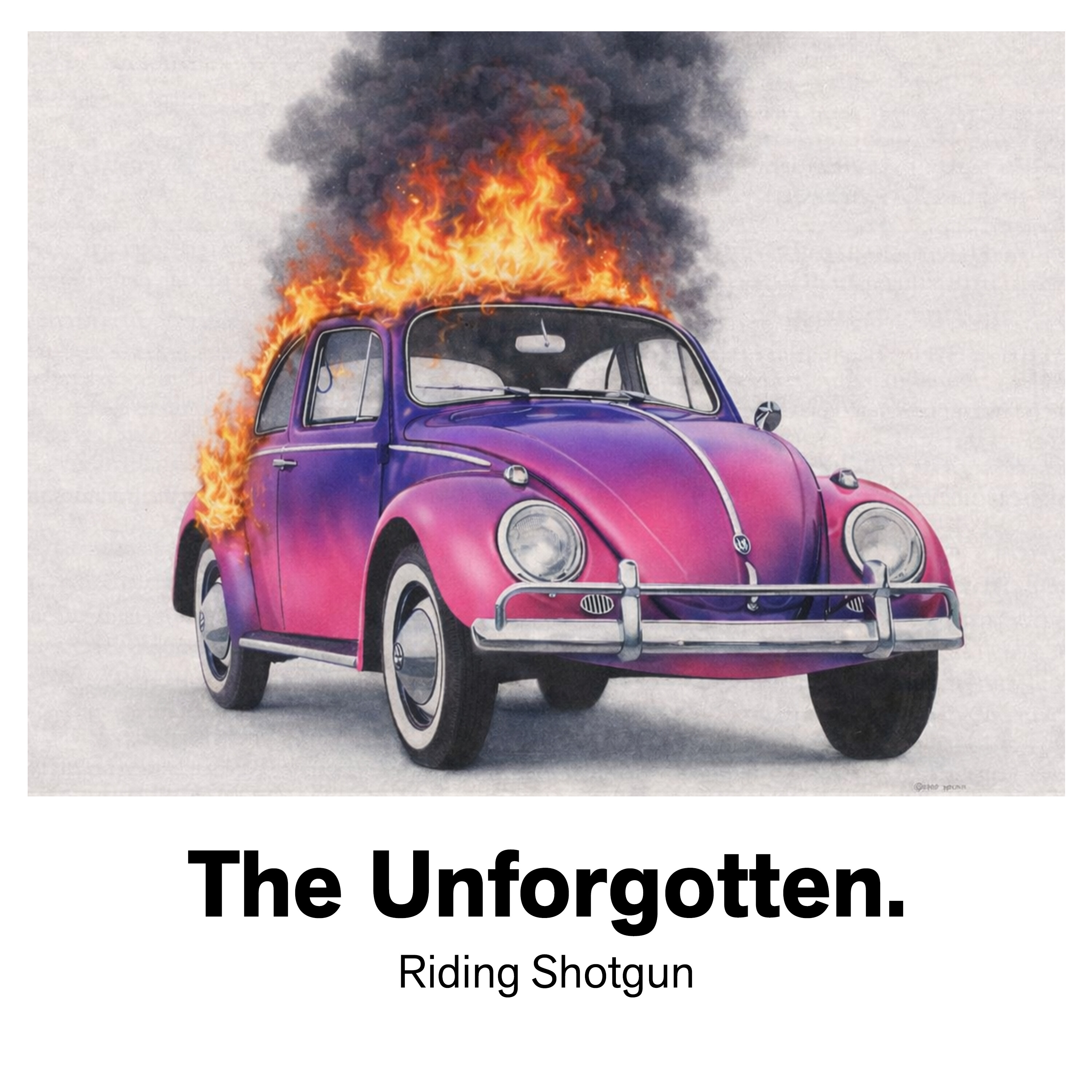
Charles told me what he did with the bug, but we also know the facts from police reports and trial records. He tried spray painting the car to cover up the paint job, but it was a poor disguise. There's only so much spray paint in this world. Then Charles, his wife Myra and her brother Jonathan tow the car to the I30 westbound frontage road around Sunset. It's an oddly public place to do this. But they weren't exactly being criminal masterminds. Charles doused the car in gasoline and lit it on fire. This is the point of no return. He's now officially tried to destroy one of the only pieces of evidence police had linked to the crime on Bergen Lane. That alone doesn't look good for Charles.
- [19:09]
Jason January
Afterwards, he shows his true colors.
- [19:12]
Michelle Pitcher
That's Jason January. He'll end up being the lead prosecutor in the case against Charles Flores.
- [19:18]
Jason January
If you see me, if you're a witness and you see me burning, you know, out on the side of the road with a gas can, torching a car to hide evidence, that's evidence of guilt. You're trying to secrete or destroy evidence in a murder case.
- [19:33]
Michelle Pitcher
There on the side of the road, the situation escalated. A passerby, this 38 year old man named James Jordan, was driving west on i30. Just before sundown, he saw the VW and another car pulled over on the shoulder and a man standing outside the car. He thought someone might need help. Then he saw Charles light the bug on fire. So the would be good samaritan decided to chase the getaway car. Charles speeding away with Myra and Jonathan, fired twice out of the driver's side window toward Jordan's car. He didn't hit Jordan or anyone else. But the chase continued for a while on surface streets. Eventually, Jordan lost sight of Charles and pulled over to call police.
- [20:16]
Wes Ferguson
That is such a wild story. Like, I don't think that I would be the guy chasing him down. Did you have any luck finding James Jordan?
- [20:24]
Michelle Pitcher
So he's got a very common name. Unfortunately, I wasn't able to track him down.
- [20:29]
Aislin Gaddis
He did testify at trial, so you got a glimpse into what was going through his mind during this kind of cinematic car chase.
- [20:40]
Michelle Pitcher
And he was pretty motivated by Some rage.
- [20:44]
Aislin Gaddis
He was mad. He thought that he was pulling over to help someone in need. And then he found out that they were up to something, no good. And so he kind of got this sort of like surge of vigilante justice and decided that he was gonna, you know, make sure that this person didn't escape the law. So, you know, you can tell kind of by the lawyer's questioning that police weren't really happy with that kind of behavior. They don't advocate for people to go on high speed car chases when they think someone is breaking the law. But he just felt very, very strongly that he had to make sure that whoever was torching a car on the side of the road didn't get away with whatever they got away with.
- [21:27]
Wes Ferguson
Yeah, we all have priorities.
- [21:28]
Michelle Pitcher
He also did have a passenger in
- [21:30]
Aislin Gaddis
the car, and we notably don't hear from her in the trial or I didn't see anything from her in the police report. So I would be interested to hear the things that she was probably shouting
- [21:40]
Michelle Pitcher
to him in the car.
- [21:42]
Wes Ferguson
It's hard to believe that Charles ever thought burning the car on the side of the road in the DFW metroplex was ever a good idea.
- [21:51]
Charles Flores
Hindsight's 20 20. We should have just took it to a supermarket parking lot and just parked it there. But I don't know, I guess watched too much TV or whatever, right? Thinking that we had to burn the damn thing and all of that. Right. So that's, that's how that happened.
- [22:05]
Michelle Pitcher
Jordan ID Charles as the man he saw burning the car. To investigators, that was damning evidence that confirmed their theory that Charles had something to do with the robbery and murder of Mrs. Black.
- [22:18]
Jason January
You couldn't find a more identifiable vehicle in a Volkswagen Beetle that's like spray painted pink and purple and all this stuff. I mean, totally obvious. And everyone remembers that. And lo and behold, afterwards, you know, Flores is out burning it on the side of the road and shoots at some, but chases them and shoots them when someone sees him.
- [22:41]
Michelle Pitcher
Charles tried his hardest to fly under police's radar. After burning the car, he holed up at home and at his friends houses. Police had surveillance on him at one point, but they didn't catch his ultimate escape act.
- [22:54]
Charles Flores
I decided, you know what, I'm going to leave. I'm going to get the hell out of here. And I took off. I took off to Mexico.
- [23:00]
Michelle Pitcher
By March, officials had caught on that he'd fled south. That month, articles in the Dallas Morning News announced that the police believed he'd fled to Brownsville right On the border. Charles's photo was all over the papers and FBI ads. He was officially a fugitive wanted for murder.
- [23:17]
Charles Flores
I think. Man, I think it was a couple of months, two or three months I was down there.
- [23:22]
Michelle Pitcher
He spent a few months in Mexico with a friend whose family all lived there. His life kind of continued on as normal. He partied, went to a bullfight. But after a few months, he made another crucial decision. He came back to Texas. I asked him why he risked it, why he came back. He had friends and family in Mexico. He theoretically could have stayed forever because
- [23:46]
Charles Flores
I got lonely and I got tired of being there, and I wanted to come home, you know? It was that simple.
- [23:53]
Michelle Pitcher
On April 18, 1998, Charles drove back over the Texas state line. That night, police officers in the city of Kyle, southeast of Boston, pulled him over on the highway for suspected drunk driving. Charles gave the officers a false name and id his brother's, actually. He had his Social Security card and everything. The cops were none the wiser, but they still decided to arrest him for drunk driving. Charles resisted physically trying to stop officers from cuffing him and putting him in the squad car. The tussle on the side of the road could have ended badly, but eventually officers were able to take him in. He was booked on a DWI and two charges of assaulting a police officer for his attempts to get away. Charles bonded out before police realized who he was. Charles had so far avoided arrest for Betty Black's murder, despite a few close calls. But his luck was about to run out.
- [24:54]
Charles Flores
You reached the Office of Investigator G.S. calloway with the Farmers Branch police department. Please leave a message, including the night's room. Your call, and I'll get back to you as soon as possible.
- [25:05]
Michelle Pitcher
I'm just going to let you know that Charles Flores parents brought him back up to Irving this weekend.
- [25:13]
Charles Flores
And anyway, so he's in town.
- [25:18]
Michelle Pitcher
You just heard a cassette tape recording from the Farmers Branch case file on Charles Flores. It might have been a little hard to make out a woman who doesn't give her name calls to say that Charles's parents had brought him back home to Irving that weekend. The tape is undated, so it's not clear when the call came in, but things came to a head on May 1.
- [25:38]
Charles Flores
They started trailing me. They got behind me, right? And I'm like. I remember seeing the truck, right? I'm like, what's going on? You know? And then I made a couple of quick turns, and boom, it was behind me. I'm like, about.
- [25:50]
Michelle Pitcher
That's cops, two FBI agents had been staking out Charles's parents house. On May 1st, the agents spotted him arriving at the house in a blue Volvo. When Charles left, the agents followed him. Pretty soon they realized they'd been spotted. Charles started driving like his life depended on it. He went over medians, turned the wrong way on one way streets. At one point he blew a tire and kept driving just on his rims.
- [26:18]
Charles Flores
So I took off, I took off and was running from him and I ended up crashing the car and jumping out the car and running off.
- [26:25]
Michelle Pitcher
He tried escaping on foot after he hit a man's car head on. That man's airbag saved his life. And in court, lawyers described Charles's car as looking like a, quote, accordion afterward. So it was a serious crash, but Charles still jumped out and ran. He made it to the backyard of a man named Eddie, who was hanging out on his porch and saw Charles and the police run by. Eddie decided to get in on the action. He pulled Charles down as he tried to scale a fence and agents placed him under arrest.
- [26:53]
Charles Flores
It was kind of pretty crazy and they finally chased my ass down and caught me. Kind of like cops, you know, program. So that's why. Yeah, very dramatic.
- [27:07]
Gretchen Swen
He panics. He has never denied any of that.
- [27:12]
Michelle Pitcher
That's Gretchen Swen, Charles's current appeals attorney.
- [27:16]
Gretchen Swen
I think, you know, there's a lot of shame and embarrassment, you know, especially for the, the stress it caused his family and that it certainly didn't help, but it was just pure fear. There's nothing sort of rational. There's no planning. Charles has done many stupid things, but he's never killed anybody.
- [27:37]
Michelle Pitcher
But these stupid things will haunt Charles not only throughout his trial, but through the decades of appeals that follow. And he wasn't done yet. In July of 1998, two months after his dramatic arrest, he tried one more time to get out of officer's grasp in that head on collision, the one that made his car look like an accordion. Charles, unsurprisingly, hadn't gotten out uninjured. He'd hurt his knee. And while being held in the Dallas County Jail, he was taken multiple times to the Parkland Hospital for treatment. On July 10, a sheriff's deputy was escorting Charles to the hospital in a wheelchair. Because he was in the chair, Charles had fewer restraints than usual. He couldn't be handcuffed. He needed to be able to wheel the chair. At one point, according to trial transcripts, Charles jumped out of the chair and grabbed the deputy's gun. As they wrestled, Charles also grabbed his mace and Sprayed them both. It was a huge scene, and doctors and hospital staff came running. A medical intern eventually took the gun away from Charles and other doctors helped restrain him.
- [28:40]
Jason January
He gets over to Parkland and then he jumps at the police officers that had him in custody. Grabs the weapon, gets the weapon.
- [28:49]
Michelle Pitcher
This is prosecutor Jason January, again in trial. He'll later refer to this incident as an alleged attempted capital murder.
- [28:58]
Jason January
Some brave souls there fought it away from him. He gets it back, and then he grabs their mace and starts spraying mace at everyone else. So, you know, flight is always evidence of guilt.
- [29:09]
Michelle Pitcher
Charles's lawyer interprets the Parkland hospital incident differently.
- [29:14]
Gretchen Swen
He'd been apprehended, he'd been wounded. He was in the jail in a wheelchair. They took him to Parkland. And then he tries to get away. You know, he can barely walk. He's sort of tackled by this security guard with a gun. And he gets the guy's mate. There's this whole, you know, long thing about the tug of war. And then somebody just walks over and takes the gun out because he's not going to kill the guy. And it, you know, it's almost, I mean, I hate to laugh, but it is almost comedic. But again, it's just like this raw panic of I got to be out of here. But he's not in that mode even. He does not commit any violence. He doesn't shoot his way out of Parkland
- [29:57]
Michelle Pitcher
this time period. The months between when Charles finds out that he's suspected of Betty Black's murder and when he finally stands trial are critical to investigators and prosecutors. You heard Jason January say it plainly, Flight is evidence of guilt.
- [30:13]
Jason January
One of the things is, once he had fled to Mexico and came back and fought officers in Kyle, Texas, just south of Austin. And once he gets back here and he's hiding, I believe at his parents house or whatever, the FBI surrounded him and he takes him on a big car chase and ends up hitting someone head on. And then he has. In the car wreck, he hurts his knee. He says he gets over to Parkland, and then he jumps at the police officers that had him in custody.
- [30:46]
Michelle Pitcher
January is arguing that all of the things Charles did after Betty Black was murdered could actually prove. Prove he committed the murder. It's not fingerprints at the crime scene, but January says evidence of flight can be just as damning. It has to do with what courts allow to be admitted into trial. Judges have determined that flight is admissible to support an inference of consciousness of guilt. In other words, prosecutors can show the jury everything the defendant did after the murder, if it looks like they were trying to avoid justice, then the jury can assume they were acting on a guilty conscience. They can assume that the only reason to run is because you did it.
- [31:26]
Aislin Gaddis
The argument against it is that he knew he was being targeted and so he ran out of fear.
- [31:33]
Charles Flores
Right, Right, sure.
- [31:35]
Jason January
What else would you say?
- [31:40]
Wes Ferguson
It's interesting how we all know that you have to be found guilty beyond a reasonable doubt, but I mean, how do we decide what reasonable doubt is? And in this case, it's like he was acting suspicious, you know? No. Like tangible proof that he did any of this. But yeah, like you said, why would an innocent man run?
- [32:01]
Michelle Pitcher
Yeah.
- [32:02]
Aislin Gaddis
I think that what a lot of us who haven't been on a jury don't appreciate is how much we ask of our jurors, how much discretion, how much and judgment we allow them to have. So they are actively asked to weigh evidence and decide what to believe. And those 12 people making that decision together becomes the truth. So it is, you know, just kind of like in a theoretical, not really that helpful discussion, really wild what jurors have to contend with, especially in a case like this where there's just so much, much going on.
- [32:45]
Michelle Pitcher
Charles has been adamant that fear, not guilt, compelled him to run. He's tried to explain this over the years. About 15 years ago, he was writing to a pen pal who happened to be a contributor to the New Zealand Herald. The writer published one of Charles's notes in 2010 under the headline Sell Notes from a Condemned Man. When I met with Charles in February, I asked him to read aloud what he'd written back then.
- [33:10]
Charles Flores
There are many things in my past that I regret and I'm ashamed of. I've been in jail before and I've used and sold drugs. And when I learned that I was wanted for capital murder, I did the worst thing possible that I could do. I ran. I knew that I would be sent to prison or worse forever, and this scared me. So I acted impulsively. In Iran, that does not make me guilty of capital murder. I was convicted and sentenced to die because of my criminal background, because I'm a brown man and because I do not come from an affluent family who could pay for an attorney to ensure my rights were protected at trial outside of court.
- [34:01]
Michelle Pitcher
Charles's flight and his run ins with police didn't do him any favors in the public eye. In news articles from the time, he was described as armed and dangerous. While he was still on the run, the Dallas Morning News was reporting on his criminal history. Which included a 1994 conviction for robbery and cocaine possession. One article referred to him as, quote, a big, tough capital murder suspect. In the spring of 1999, more than a year after Betty Black was murdered in her farmer's branch home, Charles Flores went to trial. Next time on the Unforgotten.
- [34:36]
Gretchen Swen
The jury then is being invited to convict because someone's just a bad person. Oh, he's done bad things, so you know we'll get him for this.
- [34:44]
Jason January
That was Flores. He was a dangerous criminal before and during and after.
- [34:49]
Wes Ferguson
And the hypnotized witness drops a bombshell that changes everything again.
- [34:55]
Charles Flores
Once it became obvious that the next door neighbor was going to testify, I knew at that point that it wasn't a fair trial.
- [35:14]
Wes Ferguson
Thank you for listening to the Unforgotten, a Free Range production Season five Writing Shotgun was created in association with the Texas observer, and the season is written, reported and hosted by Michelle Pitcher, a staff writer for the observer, editing by Aislin Gaddis, audio engineering and sound design by Austin Sisler with eSight Studios. I'm executive producer Wes Ferguson. For our newsletter@unforgottenpod.com.
- [35:54]
Michelle Pitcher
When you manage procurement for multiple facilities, every order matters. But when it's for a hospital system, they matter even more. Grainger gets it and knows there's no time for managing multiple suppliers and no room for shipping delays. That's why Grainger offers millions of products and fast, dependable delivery so you can keep your facility stocked, safe and running smoothly. Call 1-800-GRAINGER Click grainger.com or just stop by Grainger for the ones who get it done.