Loading summary
Transcript13 lines
- [00:02]
Toyota Truck Narrator
You hear that? That's not just a Toyota truck. That's the sound of no crowds, no alerts, no distractions, and no telling what you'll find next. You know, like a detour. So why would you ever take a tour? And you could take a detour. Toyota trucks.
- [00:30]
Adam Rittenberg
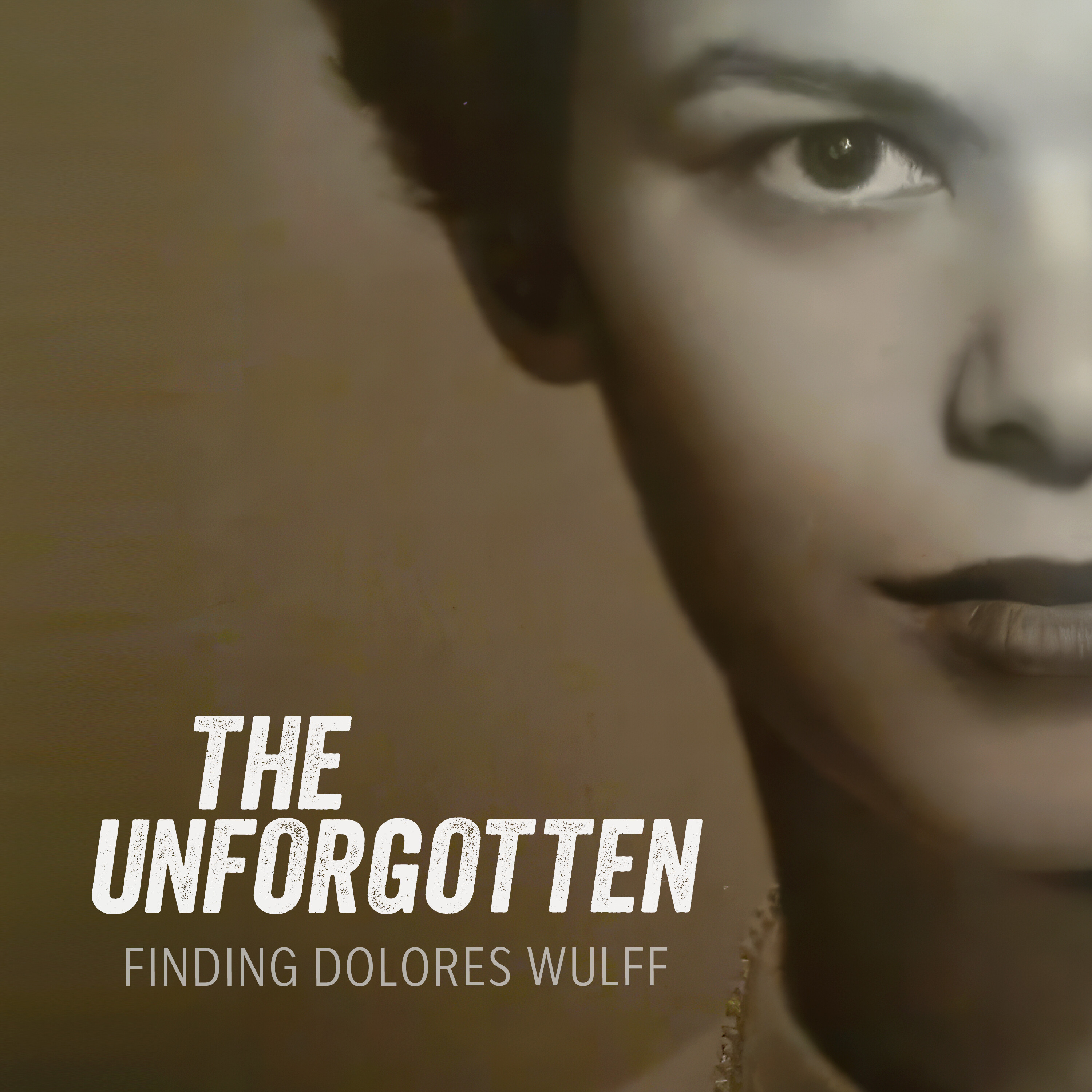
Hey, everyone, it's Adam Rittenberg and Kyle Bonagura, hosts of the Unforgotten Season three, Finding Dolores Wolf. And we are here to wrap up our final full episode, episode nine, Coming Home, which, which release released earlier this week. First of all, just wanted to shout out all the support throughout the run of this podcast. The really performed beyond our expert expectations, and we're just so grateful for all of you for listening and sharing and subscribing and reviewing the podcast. Continue to do that. Wanted to also thank Wes Ferguson, our executive producer at Free Range, AEN Gaddis, and Austin Sisler, who really helped us with the sound and the production of the podcast for all their work as we wrap this up. And so, Kyle, you know, coming home begins at a scene that I think neither of us will ever forget, the Dolores Wolf celebration of life, which took place in July of 2021 at a venue, you know, about 10 miles from the last place she was seen alive, her home on Hillcrest Drive in Woodland. And, you know, I think for her family, as we noted in the. In the podcast, something that they never thought was going to happen, all the people who were still alive and able to be there, who were remembered her and loved her and had never had a chance to celebrate her life, were able to do that on a very hot, sunny summer morning, early afternoon outside of Woodland. We were obviously there and honored to be there and take part in that event. What strikes you most when you think back to what that day meant and some of the scenes that we were able to witness out there near Woodland.
- [02:13]
Kyle Bonagura
Yeah, I mean, I think the term celebration of life gets thrown around a lot in those sort of circumstances. Right. But a lot of times it doesn't feel like a celebration. It's usually a lot closer to when someone has passed and there's still, you know, a lot of people in mourning or sad. And sometimes that feeling overtakes those sorts of events. But this one really did feel like a celebration. It was a very upbeat, you know, there was emotional, you know, moments to it, of course, when, especially during the speeches. But. But other than that, it really was a celebration. It was a lot of people who joined in the same place who don't see each other regularly. You know, it's a group of people that will never be together again. Right. It's, it's. It was a really special deal to be there and kind of just see how much joy it brought so many people that they were able to see people they hadn't seen in years, decades, you know, in some cases since, you know, since the early 80s. And so it almost, I mean, it didn't quite reach like, wedding level of celebration. There wasn't dancing or anything like that, but it was like it felt more like that than it did a traditional funeral service where, where there's a kind of this overarching theme of sadness. So, yeah, for me, that was always like, it really was a celebration. And I left there feeling like I knew Dolores a lot better than I had previously. We had heard a lot about her and from, from a lot of different people, but there was something different about that environment that allowed me to really feel like I even I had a better sense of who she was.
- [03:43]
Adam Rittenberg
Yeah, I think it was important for us. You know, we, we did. We really dedicated episode one to who Dolores was and I think we wanted to end the podcast again on the, the. On Dolores and, and, and her life rather than this horrible thing that. That happened to her. And that's certainly a big part of the story and was understood by everyone who was there. But you're right, it was very upbeat and positive and there were some great stories told. You couldn't get to all of them in terms of the audio there. But, but I know one thing that struck me was, you know, we had learned a lot about certain people in the podcast, but we didn't, we hadn't spoken to everybody at that point for our story for espn. And you know, one of the people that we hadn't spoke to was Anna. Dolores only daughter know at the time, she just wasn't comfortable talking to. To a couple of reporters. So that was the first time that we had heard her and met her and, and, and really able to, to kind of be in her presence and, and, and, and hear. Hear some of her memories of her mother and also what it meant to be back in Woodlands. So that was one thing that, that kind of stood out to me along with some of the other speeches that were made, but those were people that we had heard from and we kind of knew Matt Rocha jr's personality and, and his brother David and, and some of the others that spoke. But it was really striking to me to hear from Anna for the first time.
- [05:04]
Kyle Bonagura
Yeah. And she was really vulnerable and open about it too. And I think that. That this. As she was when I talked to her for this podcast, right, she was. It was. She went through a lot. Her. It was. It was a very complicated process for her over several decades. And she really. It seemed like she was like, at peace with it in a way that she was like, felt comfortable really sharing what she went through and kind of how she process it along the way. And so it was, you know, it looked like a very kind of therapeutic opportunity for her to address a lot of people and kind of try to put everything behind her. So, yeah, I'm glad she had the chance to do that and people got to hear from her because it was certainly a really important part of the whole day.
- [05:43]
Adam Rittenberg
You know, the other thing that we really try to highlight in this episode was, you know, our own almost retracing of those key sites where Dolores's remains were. Were found almost, or. Or stored, I guess, is a better term in reverse order. So we started out in. At the cemetery in Woodland, the St. Joseph Catholic Cemetery, where essentially all the. All the roaches in that area who have passed away are now buried, including Dolores, as well as some of the other family members, you know, names like Sousa and Baker that, you know, podcast listeners now are aware of. They're all in the same spot in the kind of central cemetery there, Woodland. So we start out there, and then we went to the. The cemetery in Vallejo near Benicia, where Dolores remains were. Were kept as a Jane Doe, you know, essentially in an unmarked grave at a normal cemetery not far from where she was discovered in the bay. And then we finished up, you know, kind of on the shorelines there in Venetia, near where. Near where the remains were discovered. So it was a pretty powerful thing, I think, for us to retrace those steps. What, what. What. What was the most profound thing to you when you think about what we did that day or things you saw or listened to or.
- [06:59]
Toyota Truck Narrator
Or.
- [07:00]
Adam Rittenberg
Or just experienced as we. As we kind of went back through time there.
- [07:04]
Kyle Bonagura
Yeah, so we visited the cemetery originally before Dolores's remains had been. Had been buried there. That was when Slick was still alive. And so I think it was really interesting to kind of go back and like, look, this is, you know, here's. There's. This is fine. There's a sense of finality. Right. You know, we. Especially after having sat with Slick and here's his. Here we are at his. At his grave, you know, next to his sister. And he had told us all about what it would mean to be there with her and then to see it, you know, that was an emotional moment for sure. But I, but I also think being at the original, the original cemetery down in Vallejo was, was, was really interesting because here's this, you know, unmarked grave at a place where, you know, she was essentially forgotten. Right? There was nothing to mark it didn't even, there wasn't even anything that said, like, a Jane Doe was buried here. And that's just the way that they do it at that cemetery. There are several Jane does in the cemetery with unmarked graves. And it's a little, you know, it's sad to think about that these people are buried among others who have, you know, people visiting them, leaving flowers and look, I think, you know, I'm not necessarily someone who gets a lot out of going to, to cemeteries for my own family members, but, like, that's not always the case. Right. And so I, I, I do think it's important for some people to have that option. And it's a way to kind of remember people for, for generations. Right. And so now that Dolores is buried in a, in a, in a place with her family allows her to be remembered in the same way. Just for people to go back there and if they want to have a moment and think about her and think about her memory, it's a lot more straightforward, a process to be able to kind of manage those emotions.
- [08:45]
Adam Rittenberg
No doubt, no doubt. It was a very emotional podcast and very emotional project for us. Just as kind of a last word. Neither of us have done anything like this in our careers, and I know it was incredibly satisfying for me to put this project together, obviously, with you, Great partner, great friend, and, you know, it was a long process. We wrote this story back in 2021. We had this vision for a bigger project, but it took a long time and it was really satisfying and exciting to kind of get to the finish line. What kind of stands out most to you? Just about what the project was, the story, and ultimately delivering it to a larger audience here.
- [09:26]
Kyle Bonagura
It's a really interesting creative process to lay out the story over. We did over nine episodes. What are the important things to cover? How do we best honor Dolores memory? How do we keep the trust of the Wolf and Rocha families and tell their story in a way that is a good representation of what happened. Right. There's a lot of moving pieces here, and it's a lot to piece together. So I, you know, I felt a lot of pressure to kind of make sure, though, that all the details were as, whereas. Whereas, you know, as accurate as Possible. Right. There's obviously conflicting opinions at times about how things took place, so you have to kind of navigate that, you know, at times. But, you know, I'm really proud of the work we did, and working with you has been fantastic. And it's. I mean, I've. I've listened to a lot of these types of podcasts over the years, so the chance to put one together has been. Has been a really rewarding experience. And then, you know, on top of that, I, I think we, we ran into a lot of roadblocks along the way to try to get to the finish line. So, you know, that, like, I, I think we both knew that this is a story that deserved to be tell, deserved to be told in detail, and the family deserved that. Dolores deserved that. So I' we were able to get it done.
- [10:37]
Adam Rittenberg
Yeah. And just another final thank you to the Wolf and Rocha and all the other families that were willing to trust us with their story. This is deeply personal, traumatic, something that impacted them for decades. And so I know we were both honored that they were willing to let us share this with the wider world. And we certainly hope you enjoyed it. We're not done yet. We're working on some potential bonus episodes of the podcast. And if there are any people in particular that our listeners would love to hear from, please reach out to us on social media or on email. But again, we, without giving too much away, we will have some additional episodes hopefully here for you soon. So finally, that for Adam and Kyle. Thanks again so much for listening to The Unforgotten Season 3, Finding Dolores Wolf, and we will see you soon.
- [11:33]
Unforgotten Podcast Host
Did you know we have a newsletter for the Unforgotten? It's totally free and you can sign up@unforgottenpod.com we're also on Facebook and Instagram and those are great ways to stay in touch. But the newsletter is cool because it's an email that we send straight to your inbox every time we have a new episode. You get to go behind the scenes with the series creators. We also share photos and case files when we have them if you want. We also have a premium version of the newsletter. It's pretty cool because it lets you listen early and ad free. So I hope you'll head on over to unforgottenpod.com and sign up for our newsletter today. Whether you sign up for the free version or the premium version, you're the reason that the Unforgotten is able to shine a light on these unsolved crimes and other cases. Of injustice that are so important to a lot of people. We just thank you for listening and we thank you for your Support. Again, that's unforgottenpod.com.