Podcast
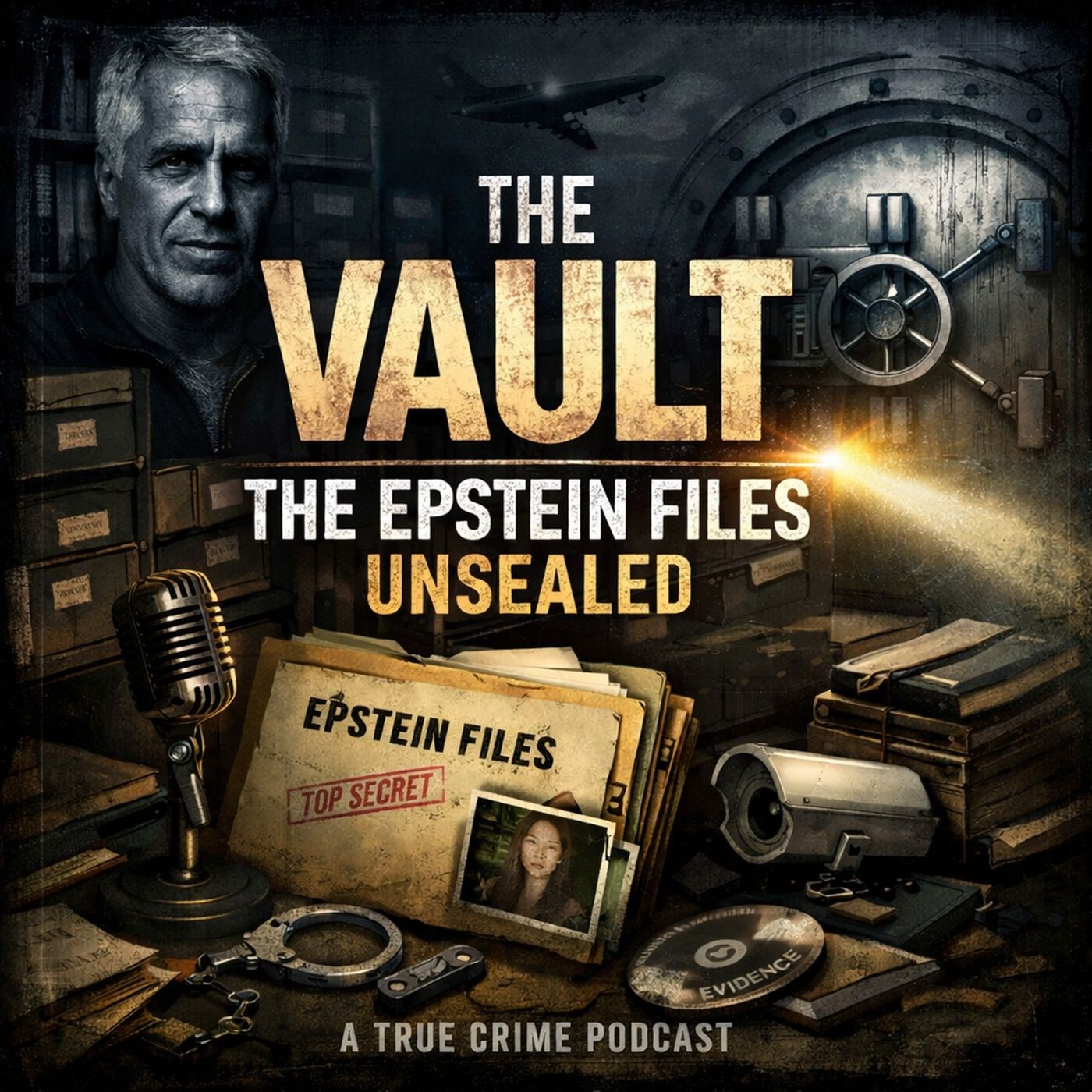
The Vault: The Epstein Files
Hosted by Bobby Capucci · EN
The Vault: The Epstein Files Unsealed is a deep-dive investigative podcast that pulls back the curtain on one of the most protected criminal networks in modern history. This series is built from the ground up on the actual paper trail—unsealed court records, depositions, exhibits, emails, and filings that were never meant to be read by the public. No pundit panels. No spin. Just the documents themselves, examined line by line, name by name, connection by connection—paired with precise, document-driven analysis that explains what the record truly shows.
Each episode opens the vault on newly unsealed or long-buried Epstein files and walks listeners through what they actually reveal about power, money, influence, and the systems that failed survivors at every turn. Alongside the filings themselves, informed commentary breaks down the legal strategy, the institutional behavior, the contradictions, and the implications hiding between the lines. From judges’ orders and sealed exhibits to sworn testimony and back-channel communications, the show connects the dots the media often won’t—or can’t. Patterns emerge. Timelines collapse. Excuses fall apart.
The Vault is a working archive in audio form, a living record of the Epstein case as told by the courts themselves—supplemented by rigorous analysis that provides context, challenges official narratives, and exposes where the record has been distorted, sanitized, or deliberately ignored. Every claim is grounded in filings. Every episode is anchored to the record. Listeners aren’t told what to think—they are shown what exists, what was said under oath, and what the commentary reveals about how those facts were buried, softened, or misrepresented.
If you want to understand how Jeffrey Epstein was protected, who circled him, how institutions closed ranks, and why accountability keeps slipping through the cracks, The Vault: The Epstein Files Unsealed is where the record finally speaks for itself—and where the commentary ensures the documents do what no press release ever will.
Each episode opens the vault on newly unsealed or long-buried Epstein files and walks listeners through what they actually reveal about power, money, influence, and the systems that failed survivors at every turn. Alongside the filings themselves, informed commentary breaks down the legal strategy, the institutional behavior, the contradictions, and the implications hiding between the lines. From judges’ orders and sealed exhibits to sworn testimony and back-channel communications, the show connects the dots the media often won’t—or can’t. Patterns emerge. Timelines collapse. Excuses fall apart.
The Vault is a working archive in audio form, a living record of the Epstein case as told by the courts themselves—supplemented by rigorous analysis that provides context, challenges official narratives, and exposes where the record has been distorted, sanitized, or deliberately ignored. Every claim is grounded in filings. Every episode is anchored to the record. Listeners aren’t told what to think—they are shown what exists, what was said under oath, and what the commentary reveals about how those facts were buried, softened, or misrepresented.
If you want to understand how Jeffrey Epstein was protected, who circled him, how institutions closed ranks, and why accountability keeps slipping through the cracks, The Vault: The Epstein Files Unsealed is where the record finally speaks for itself—and where the commentary ensures the documents do what no press release ever will.
382episodes
Episodes
Newest firstAll episodes
Tyler Robinson Preliminary Hearing Transcripts (Day 1-Part 4) (8/11/26)
Yesterday00:12:02Tap to summarizeDay one of Tyler Robinson’s preliminary hearing on July 6, 2026, largely centered on prosecutors beginning to construct a timeline of Charlie Kirk’s killing at Utah Valley University and establishing the authenticity of the surveillance footage and investigative records they intended to use against Robinson. Former UVU police officer Chris Bagley described the moment the gunshot rang out during Kirk’s September 10, 2025 event and the chaos that followed, while Utah State Bureau of Investigation agent David Hull walked the court through the enormous video-review effort undertaken after the shooting. Hull testified that investigators examined hundreds of hours of surveillance footage and ultimately tracked a person they believed was Robinson moving around the UVU campus at several different points that day. Prosecutors introduced surveillance recordings from multiple locations as they attempted to connect the person seen approaching the campus, moving toward the area surrounding the Losee Center, and later leaving the area to Robinson. Three separate videos depicting Kirk being shot were admitted, although Judge Tony Graf determined that their graphic nature warranted restricting their display to the attorneys’ and judge’s monitors rather than broadcasting them throughout the courtroom. Kirk’s widow, Erika, and his parents left the courtroom while the videos were reviewed. Prosecutors also introduced Kirk’s autopsy report through Hull, which listed his cause of death as a gunshot wound to the neck and the manner of death as homicideThe defense spent much of the first day attacking the manner in which the prosecution was getting its evidence into the record rather than attempting to disprove the entire prosecution theory at that stage. Kathryn Nester and Robinson’s attorneys repeatedly raised hearsay, foundation and authentication objections, arguing that investigators were being permitted to introduce reports, statements and records created by other people without those individuals appearing personally to testify. Judge Graf overruled most of those objections, reflecting the substantially lower evidentiary threshold governing a Utah preliminary hearing, whose purpose was only to determine whether probable cause existed to send Robinson to trial rather than whether prosecutors could prove guilt beyond a reasonable doubt. One significant exception involved an edited compilation of surveillance footage, which Graf declined to admit in that form and required prosecutors to replace with the underlying unedited material. Hull’s testimony also revealed the scope of the prosecution’s surveillance theory: investigators claimed Robinson had appeared on or around the UVU campus multiple times on September 10 and that they were attempting to stitch those appearances together into a continuous identification of the alleged shooter. By the end of day one, prosecutors had established the killing itself, the medical cause of Kirk’s death, the existence and authenticity of substantial video evidence and the beginnings of their effort to identify Robinson as the person captured in that footage. They had not yet presented many of the pieces expected to become more consequential later in the hearing, including the rifle and DNA evidence, Robinson’s alleged communications and admissions, and testimony concerning his roommate Lance Twiggs.to contact me:bobbycapucci@protonmail.com
Transcribe →Murder In Moscow: The Autopsy Findings in the Murders of Madison, Kaylee, Xana and Ethan (Part 1) (8/11/26)
Yesterday00:16:55Tap to summarizeThe autopsy reports for University of Idaho students Madison Mogen, Kaylee Goncalves, Xana Kernodle and Ethan Chapin documented the extraordinary violence of the November 13, 2022 murders inside the King Road residence in Moscow. Spokane County Chief Medical Examiner Dr. Veena Singh determined that all four died from multiple sharp-force injuries consistent with a large fixed-blade knife, including a weapon such as the Ka-Bar prosecutors said was used in the killings. Mogen suffered 28 stab wounds, including extensive injuries to her face, neck and upper body that damaged major blood vessels, a lung and her liver. Chapin suffered fewer wounds than the three women, but his injuries included devastating wounds to the neck and major blood vessels, including one wound reportedly measuring approximately seven inches deep. Singh concluded that all four victims experienced a high degree of pain or suffering before death, although Chapin's suffering was assessed as occurring to a lesser degree than that of the other victims.The reports provided particularly disturbing new details about Kernodle and Goncalves. Kernodle suffered numerous wounds across her head, neck, chest, abdomen, back and extremities, including injuries to her heart, lung and major blood vessels, and her autopsy was the only one that specifically identified injuries consistent with defensive wounds, supporting the conclusion that she attempted to fight off her attacker. Goncalves suffered a combination of sharp-force and blunt-force trauma that the medical examiner described as more severe in certain respects than the injuries suffered by the others; her injuries included bleeding around the brain, a fractured nose, significant facial trauma and a knocked-out tooth, as well as evidence suggesting that an object had been pressed across her mouth. Taken together, the newly disclosed autopsy findings provided a much clearer medical picture of what occurred inside the house and demonstrated that this was not simply a series of quick fatal stab wounds, but an exceptionally violent attack in which the four victims suffered extensive and, in some cases, markedly different injuries before their deaths.to contact me:bobbycapucci@protonmail.comsource:012725+Exhibits+S-1+and+S-1+a-e+to+States+Supp+Resp+to+Rqst+for+Disc+RE+Penalty+Phase+Experts.pdf - Google Drive
Transcribe →The New Mexico Epstein Commission Interim Report (Part 12) (8/11/26)
2d ago00:11:11Tap to summarizeThe New Mexico Survivors’ Truth Commission’s 119-page interim report described Zorro Ranch as a major and largely neglected component of Jeffrey Epstein’s broader operation, concluding that authorities failed for years to seriously investigate what happened there. According to the Commission, Epstein maintained an elaborate, highly controlled compound in New Mexico where survivors reported sexual abuse and where young women were routinely transported, housed and brought into Epstein’s orbit. The report pointed to witness testimony, flight records, seized electronic evidence and FBI material suggesting that Zorro Ranch was integrated into the same system of recruitment, secrecy and exploitation seen at Epstein’s other properties. Among the evidence discussed were computer folders labeled “ZORRO,” discs referencing nude photographs associated with the ranch, accounts of young women arriving by aircraft, efforts to impose restrictive nondisclosure agreements on workers, and survivor statements describing abuse in New Mexico. The Commission stressed that the evidence remained under review and that allegations involving individuals named in the report were not final findings of wrongdoing, but it said the existing record was already sufficient to show that Epstein’s activities in New Mexico deserved far more scrutiny than they ever received.The report was especially critical of institutional failures, saying New Mexico and federal authorities effectively passed responsibility to prosecutors elsewhere while Epstein’s conduct in the state went largely unexamined. It said the U.S. Attorney’s Office for New Mexico and state officials expected the Southern District of New York to handle Epstein, but New York prosecutors concentrated on crimes tied to New York and Florida rather than building a New Mexico case. Zorro Ranch was never searched while Epstein was alive and, according to the report, was not subjected to a comprehensive law-enforcement search until March 2026, nearly seven years after his death. The Commission concluded that this passivity allowed evidence to disappear, memories to fade and potential criminal cases to become more difficult or impossible to prosecute. It also opened separate lines of inquiry into Epstein’s financial dealings, his relationships with scientific institutions and wealthy associates, and the conduct of banks, including subpoenas to Deutsche Bank and JPMorgan. Its clearest interim observation was devastating: Epstein continued exercising wealth and influence after becoming a registered sex offender, operated much of his system in plain sight, and New Mexico law enforcement’s decision to rely on other jurisdictions left the conduct of Epstein and his co-conspirators in the state “unexamined and unpunished.” Final findings and recommendations were deferred while the Commission continued issuing subpoenas, interviewing witnesses and searching for additional survivors and potential perpetrators.to contact me:bobbycapucci@protonmail.comsource:NM Survivors' Truth Commission — Interim Report
Transcribe →The New Mexico Epstein Commission Interim Report (Part 11) (8/11/26)
2d ago00:18:19Tap to summarizeThe New Mexico Survivors’ Truth Commission’s 119-page interim report described Zorro Ranch as a major and largely neglected component of Jeffrey Epstein’s broader operation, concluding that authorities failed for years to seriously investigate what happened there. According to the Commission, Epstein maintained an elaborate, highly controlled compound in New Mexico where survivors reported sexual abuse and where young women were routinely transported, housed and brought into Epstein’s orbit. The report pointed to witness testimony, flight records, seized electronic evidence and FBI material suggesting that Zorro Ranch was integrated into the same system of recruitment, secrecy and exploitation seen at Epstein’s other properties. Among the evidence discussed were computer folders labeled “ZORRO,” discs referencing nude photographs associated with the ranch, accounts of young women arriving by aircraft, efforts to impose restrictive nondisclosure agreements on workers, and survivor statements describing abuse in New Mexico. The Commission stressed that the evidence remained under review and that allegations involving individuals named in the report were not final findings of wrongdoing, but it said the existing record was already sufficient to show that Epstein’s activities in New Mexico deserved far more scrutiny than they ever received.The report was especially critical of institutional failures, saying New Mexico and federal authorities effectively passed responsibility to prosecutors elsewhere while Epstein’s conduct in the state went largely unexamined. It said the U.S. Attorney’s Office for New Mexico and state officials expected the Southern District of New York to handle Epstein, but New York prosecutors concentrated on crimes tied to New York and Florida rather than building a New Mexico case. Zorro Ranch was never searched while Epstein was alive and, according to the report, was not subjected to a comprehensive law-enforcement search until March 2026, nearly seven years after his death. The Commission concluded that this passivity allowed evidence to disappear, memories to fade and potential criminal cases to become more difficult or impossible to prosecute. It also opened separate lines of inquiry into Epstein’s financial dealings, his relationships with scientific institutions and wealthy associates, and the conduct of banks, including subpoenas to Deutsche Bank and JPMorgan. Its clearest interim observation was devastating: Epstein continued exercising wealth and influence after becoming a registered sex offender, operated much of his system in plain sight, and New Mexico law enforcement’s decision to rely on other jurisdictions left the conduct of Epstein and his co-conspirators in the state “unexamined and unpunished.” Final findings and recommendations were deferred while the Commission continued issuing subpoenas, interviewing witnesses and searching for additional survivors and potential perpetrators.to contact me:bobbycapucci@protonmail.comsource:NM Survivors' Truth Commission — Interim Report
Transcribe →Epstein’s Death Didn’t End the Story. It Blew It Open (8/11/26)
2d ago00:20:31Tap to summarizeSeven years after Jeffrey Epstein was found dead in his Manhattan jail cell, the circumstances surrounding his death continued to fuel deep public distrust in the institutions responsible for holding him accountable. Epstein had been arrested only weeks earlier on federal sex-trafficking charges that could have finally forced a full public accounting of his criminal operation, his wealth, his associates, and the people and institutions that enabled him. Instead, he died in federal custody under conditions marked by extraordinary failures, including missed inmate checks, falsified records, severe staffing problems, exhausted guards, and serious issues with surveillance systems. Although his death was officially ruled a suicide and subsequent investigations supported that conclusion, the documented failures surrounding his detention created a credibility crisis that never went away. The phrase “Epstein didn’t kill himself” eventually became more than a theory about his death and evolved into shorthand for a much broader belief that powerful institutions protect influential people, conceal uncomfortable truths, and expect the public to accept explanations that often seem incomplete.Epstein’s death also ensured that the full scope of his operation would never be tested in a public criminal trial, leaving survivors, journalists, lawmakers, courts, and the public to reconstruct the story through civil litigation, congressional investigations, document releases, and years of piecemeal disclosures. Rather than fading with time, the Epstein scandal expanded into a larger debate over elite accountability, institutional protection, and the failure of law enforcement to fully investigate everyone who may have enabled or participated in his criminal enterprise. Questions have continued to surround who helped Epstein, what authorities knew, why opportunities to pursue additional suspects were missed, and whether the government ever seriously attempted to investigate the complete scope of his network. Seven years after his death, the enduring legacy of the Epstein case has become one of institutional distrust, with every new disclosure reinforcing the belief that the public has still not been given a complete accounting of what happened, who was involved, and why so many people escaped meaningful scrutiny.to contact me:bobbycapucci@protonmail.comsource:Jeffrey Epstein’s Death Was Supposed to Bury the Truth. It Did the Opposite. - POLITICO
Transcribe →Jeffrey Epstein and the Investigation That Never Expanded (Part 4) (8/11/26)
2d ago00:15:31Tap to summarizeFrom the earliest federal investigation of Jeffrey Epstein, the scope appeared strikingly narrow compared with the breadth of the conduct surrounding him. Investigators had evidence pointing beyond Epstein himself: recruiters who helped bring young women and girls into his orbit, employees who facilitated access to his properties, financial institutions that processed enormous sums of money, pilots who transported Epstein and his associates, and a network of powerful people who repeatedly appeared around him. Yet the federal response repeatedly centered on Epstein as an individual offender rather than treating the operation surrounding him as a potentially sprawling criminal enterprise. The extraordinarily broad non-prosecution agreement reached in Florida reinforced that approach by extending protection to unnamed potential co-conspirators instead of using those individuals as investigative pressure points. When Epstein was arrested again in 2019, prosecutors charged him with sex trafficking conspiracy and sex trafficking, but his death brought the criminal case against him to an abrupt end. Ghislaine Maxwell was later prosecuted and convicted, but the broader question remained: why had a network that operated across multiple jurisdictions for years produced so few federal prosecutions? Taken together, the history created the appearance of an investigation designed to establish responsibility for specific defendants rather than systematically identify every facilitator, recruiter, financial enabler, participant, and potential co-conspirator connected to Epstein's operation.The DOJ also had an extensive collection of investigative and prosecutorial tools available that could have supported a much broader inquiry. Federal authorities could pursue conspiracy charges, money-laundering statutes, financial-record subpoenas, grand-jury testimony, immunity agreements, cooperation deals, immigration and visa investigations, tax inquiries, asset-forfeiture proceedings, obstruction cases, and, where the evidence satisfied the statutory requirements, potentially racketeering theories aimed at an ongoing enterprise rather than isolated crimes. Following Epstein's money alone could have provided investigators with a roadmap through banks, corporations, trusts, shell entities, property transactions, payments to associates, and transfers involving victims or recruiters. Aggressively flipping lower-level participants could likewise have helped prosecutors work upward through the organization instead of stopping with its most recognizable figures. None of that automatically would have produced charges against every person associated with Epstein, because association itself was not evidence of criminal conduct, but the striking issue was how rarely the government's enormous investigative arsenal appeared to be deployed publicly toward dismantling the entire ecosystem that allowed Epstein's abuse to continue. The enduring criticism, therefore, was not simply that prosecutors failed to charge more people; it was that the government never demonstrated the kind of relentless, enterprise-wide investigation routinely employed against organized crime, trafficking organizations, fraud rings, and other complex criminal networks.to contact me:bobbycapucci@protonmail.com
Transcribe →Jeffrey Epstein and the Investigation That Never Expanded (Part 3) (8/11/26)
2d ago00:12:23Tap to summarizeFrom the earliest federal investigation of Jeffrey Epstein, the scope appeared strikingly narrow compared with the breadth of the conduct surrounding him. Investigators had evidence pointing beyond Epstein himself: recruiters who helped bring young women and girls into his orbit, employees who facilitated access to his properties, financial institutions that processed enormous sums of money, pilots who transported Epstein and his associates, and a network of powerful people who repeatedly appeared around him. Yet the federal response repeatedly centered on Epstein as an individual offender rather than treating the operation surrounding him as a potentially sprawling criminal enterprise. The extraordinarily broad non-prosecution agreement reached in Florida reinforced that approach by extending protection to unnamed potential co-conspirators instead of using those individuals as investigative pressure points. When Epstein was arrested again in 2019, prosecutors charged him with sex trafficking conspiracy and sex trafficking, but his death brought the criminal case against him to an abrupt end. Ghislaine Maxwell was later prosecuted and convicted, but the broader question remained: why had a network that operated across multiple jurisdictions for years produced so few federal prosecutions? Taken together, the history created the appearance of an investigation designed to establish responsibility for specific defendants rather than systematically identify every facilitator, recruiter, financial enabler, participant, and potential co-conspirator connected to Epstein's operation.The DOJ also had an extensive collection of investigative and prosecutorial tools available that could have supported a much broader inquiry. Federal authorities could pursue conspiracy charges, money-laundering statutes, financial-record subpoenas, grand-jury testimony, immunity agreements, cooperation deals, immigration and visa investigations, tax inquiries, asset-forfeiture proceedings, obstruction cases, and, where the evidence satisfied the statutory requirements, potentially racketeering theories aimed at an ongoing enterprise rather than isolated crimes. Following Epstein's money alone could have provided investigators with a roadmap through banks, corporations, trusts, shell entities, property transactions, payments to associates, and transfers involving victims or recruiters. Aggressively flipping lower-level participants could likewise have helped prosecutors work upward through the organization instead of stopping with its most recognizable figures. None of that automatically would have produced charges against every person associated with Epstein, because association itself was not evidence of criminal conduct, but the striking issue was how rarely the government's enormous investigative arsenal appeared to be deployed publicly toward dismantling the entire ecosystem that allowed Epstein's abuse to continue. The enduring criticism, therefore, was not simply that prosecutors failed to charge more people; it was that the government never demonstrated the kind of relentless, enterprise-wide investigation routinely employed against organized crime, trafficking organizations, fraud rings, and other complex criminal networks.to contact me:bobbycapucci@protonmail.com
Transcribe →Mega Edition: Jeffrey Epstein, Prince Andrew And Netflix (8/10/26)
2d ago00:43:29Tap to summarizeNetflix treated the Jeffrey Epstein scandal very differently depending on the project. In the 2020 documentary series Jeffrey Epstein: Filthy Rich, the streaming service put Epstein’s survivors at the center of the story and examined how his wealth, connections, lawyers, employees, and social standing helped him escape meaningful accountability for years. The series explored the 2005 Palm Beach investigation, the extraordinarily lenient non-prosecution agreement, Epstein’s relationships with powerful figures, and the machinery surrounding his abuse. Prince Andrew was part of that story because of his well-documented friendship with Epstein and the allegations made against him by Virginia Giuffre, including her account that she had been trafficked to the prince when she was 17, allegations Andrew denied. In that documentary context, Andrew’s association with Epstein represented one of the clearest examples of how Epstein gained access to elite circles and how the scandal extended far beyond Epstein himself.By contrast, Netflix’s enormously popular drama The Crown largely sidestepped Prince Andrew’s role in the Epstein scandal, even as the series moved into the period when Andrew’s relationship with Epstein was becoming increasingly consequential. Andrew appeared as a comparatively minor member of the royal family, and the show devoted far more attention to Charles, Diana, Queen Elizabeth II, Prince Philip, William, and the monarchy’s broader crises. Because The Crown ended its story in 2005, it stopped before the 2010 photographs of Andrew walking with Epstein in New York, Giuffre’s allegations becoming internationally prominent, Andrew’s disastrous 2019 Newsnight interview, and his subsequent withdrawal from public duties. Still, Epstein’s abuse was already under investigation by 2005, and Andrew’s friendship with him had begun years earlier, meaning the series had opportunities to foreshadow or examine that relationship but essentially chose not to. The result was a striking contrast within Netflix’s own catalog: Filthy Rich presented Epstein’s access to royalty as an important component of the scandal, while The Crown told the modern monarchy’s story with Andrew’s connection to one of the most notorious sex offenders of the era almost entirely outside the frame.to contact me:bobbycapucci@protonmail.com
Transcribe →Mega Edition: Why Did Epstein's Associates Cash Out With Pay Days From The Fund? (8/11/26)
2d ago01:01:58Tap to summarizeThe Epstein Victims’ Compensation Program was created as a way for survivors to obtain financial compensation without having to endure years of litigation, but even that process became another source of anger and controversy. Jeffrey Epstein’s estate was controlled by Darren Indyke and Richard Kahn, two longtime associates who were later accused in civil litigation of helping facilitate or enable aspects of Epstein’s operation, allegations they denied. Survivors and the U.S. Virgin Islands raised serious questions about the roles played by people surrounding Epstein, while the compensation program required claimants who accepted awards to sign releases that could extend legal protection beyond the estate itself. For survivors who had already watched prosecutors fail to fully unravel Epstein’s network, the idea that a fund created for their benefit could also provide legal insulation to people connected to that same network was deeply troubling.The controversy became even more infuriating because alleged facilitators and associates were able to fight over the structure, liability, and money surrounding Epstein’s estate while survivors were once again forced to navigate another complicated legal process. Instead of the compensation fund representing a clean break from the failures that had defined the Epstein case, it became another example of how the people around Epstein remained embedded in the machinery supposedly designed to provide justice to those he abused. The survivors had already endured years of institutional failure, an extraordinarily favorable non-prosecution agreement, and a justice system that left many alleged co-conspirators untouched. Seeing disputes involving alleged enablers reach into the compensation process only reinforced the perception that even after Epstein was gone, the system continued to devote enormous energy to protecting estates, defendants, and legal interests while survivors were left fighting for basic accountability.to contact me:bobbycapucci@protonmail.com
Transcribe →Mega Edition: Mary Doe And Her Allegations Against Jeffrey Epstein (8/11/26)
2d ago00:38:22Tap to summarizeMary Doe alleges that Jeffrey Epstein began exploiting her when she was just sixteen years old. According to her claims, he drew her into his orbit by preying on her vulnerabilities, offering financial support and a sense of belonging that soon gave way to dependency and control. Once she was ensnared, Epstein allegedly manipulated her through a combination of intimidation and emotional coercion, ensuring that she remained bound to him. This control was not incidental but deliberate—designed to make her feel as though she had no path to escape his influence or report his abuse without risking further harm or losing her only source of support.Her allegations mirror what many other survivors have said about Epstein’s calculated methods: a systematic pattern of grooming, exploitation, and long-term manipulation that relied on trapping victims in cycles of reliance and fear. Mary Doe’s claims underscore the predatory strategy Epstein employed across multiple victims—exploiting their youth, their economic needs, and their lack of power. Rather than isolated misconduct, the picture painted by her case is one of methodical abuse that was sustained over time, reinforcing the argument that Epstein’s crimes were built on structure and planning, not chance encounters.to contact me:bobbycapucci@protonmail.comsource:DisplayFile.aspx (vicourts.org)
Transcribe →