← The Victor Davis Hanson Show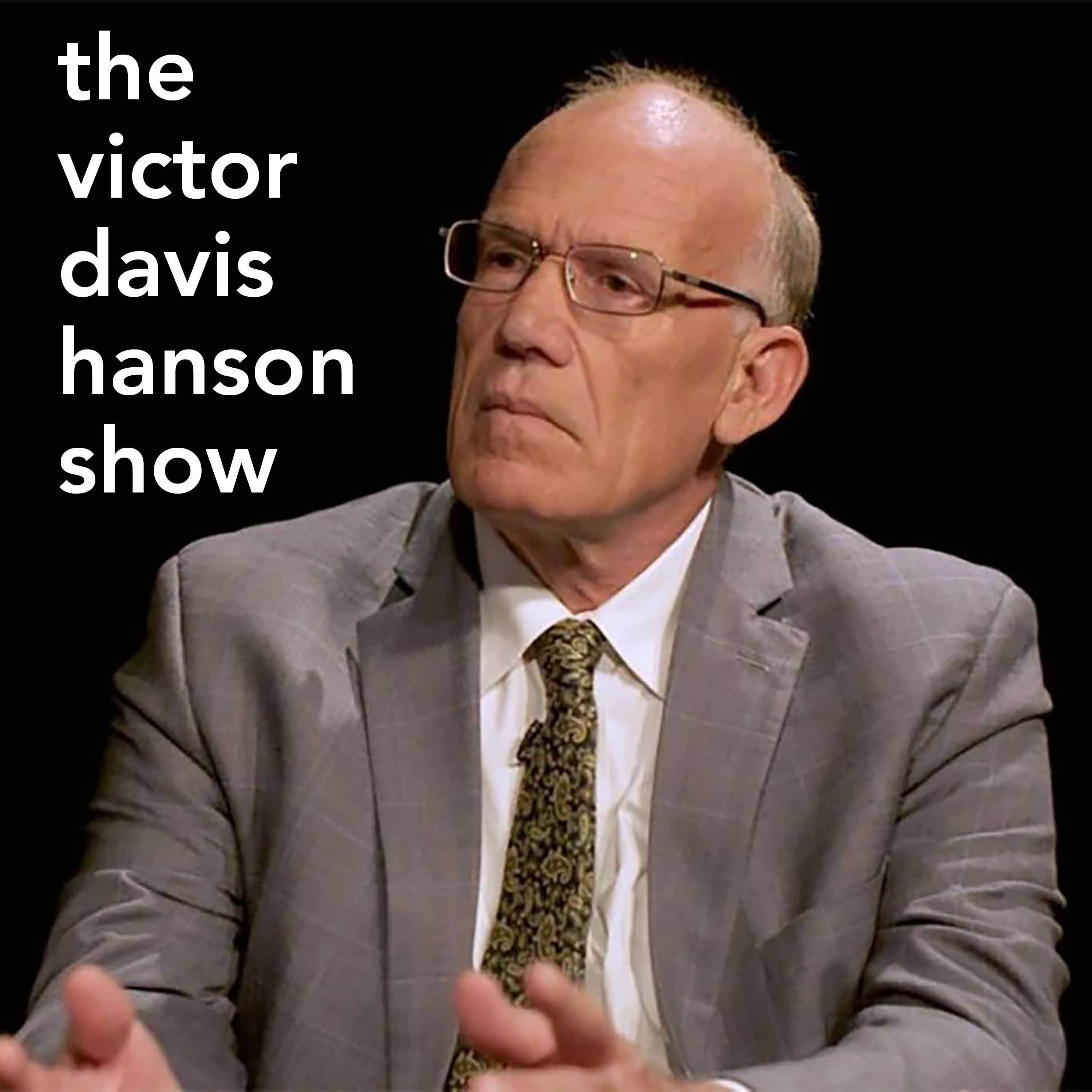
Loading summary
Transcript66 lines
- [00:00]
OpenPhone Representative
In today's fast moving world, your team needs to stay connected to your customers without mixed messages, communication silos or slow phone systems. A flexible and efficient business phone system isn't just nice to have, it's essential to succeed. Enter OpenPhone OpenPhone is the number one business phone system that streamlines and scales your customer communications. It works through an app on your phone or computer, so no more carrying two phones or using a landline. With OpenPhone, your team can share one number and collaborate on customer calls and texts like a shared inbox. That way any teammate can pick up right where the last person left off, keeping response times faster than ever. Plus, with AI powered call transcripts and summaries, you'll be able to automate follow ups, ensuring you'll never miss a customer interaction again. So whether you're a one person operation drowning in calls and texts, or have a large team that needs better collaboration tools, Openphone is a no brainer. See why over 50,000 businesses trust Openphone to manage their businesses calls and texts. Openphone is offering our listeners 20% off your first 6 months@openphone.com Victor that's O P E N P H O-N E openphone.com Victor and if you have existing numbers with another service, Open Phone will port them over at no extra charge. Open Phone no missed calls, no missed.
- [01:32]
Victor Davis Hanson
Customers hello and welcome to the Victor Davis Hansen Show. This is our weekend edition and this is Memorial weekend. So in our third segment, actually we will look at our current military and some of the things that are going on with it. The middle segment, our historical segment for the weekend is about 1942 in World War II. So perfect timing. And we'll look at a few news stories before we start those things. So stick with us and we'll come back after these messages.
- [02:06]
Sponsor Representative
Shopify helps you sell at every stage of your business.
- [02:09]
Victor Davis Hanson
Like that. Let's put it online and see what happens.
- [02:12]
Sponsor Representative
Stage and the site is live. That reopened a store and need a fast checkout. Stage thanks. You're all set that count it up and ship it around the globe.
- [02:20]
Victor Davis Hanson
Stage this one's going to Thailand and.
- [02:24]
Sponsor Representative
That'S wait, did we just hit a million orders? Stage Whatever your Stage Businesses that grow grow with Shopify.
- [02:32]
Victor Davis Hanson
Sign up for your $1 a month trial@shopify.com Listen, did you know you can.
- [02:37]
OpenPhone Representative
Get the photos on your phone printed for free and delivered straight to your door? Do it with Freeprints, the world's favorite way to print photos. Just visit freeprints.com to get the free Prints app and get your free photo prints. Now that's freeprints.com Freeprints has millions of five star reviews and has printed literally billions of photos.
- [02:58]
Sponsor Representative
It's easy.
- [02:59]
OpenPhone Representative
Just visit freeprints.com and get premium quality photo prints in your mailbox in just days. Go to freeprints.com or download the free Prints app directly from Google Play or the App Store.
- [03:16]
Victor Davis Hanson
Welcome back to the Victor Davis Hanson Show. Victor is the Martin and Neely Anderson Senior Fellow in Military History and Classics at the Hoover Institution and the Wayne and Marcia Buskey Distinguished Fellow in History at Hillsdale College. You can join him at his website, it's called the Blade of Perseus and you can find it@victorhansen.com Please come join us there for lots of free things that you can read from Victor and listen to podcasts and his watch his videos. And we have lots of things for our Ultra subscribers. So we'd love to have everybody as a subscriber for 6:50amonth or $65 a year and you can get our videos ad free if you're an Ultra subscriber. Lots of incentives plus the two articles a week and the Ultra video. So lots of incentives there. Victor, I know that we had a terrible thing happen right while we were recording our Friday edition and that was the slaughter of two Jews at the Holocaust Museum. They were staff workers there and they were I believe both of them were Israelis. The names are Yaron Liskinsk and Sarah Milgram and the person who killed them shouted Free Free Palestine as well. So I was wondering your thoughts.
- [04:37]
Sponsor Representative
This one was a German national would I think he migrated to Israel and the other was an American citizen that had determined to live in Israel. The shooter, Mr. Rodriguez, he was a very interesting person because he had a long association with a number of left wing groups, many of them funded by Left Wing MacArthur Foundation, Soros funded foundations and he'd been a guest at the Trump address to the joint session of Congress as a guest of Representative Garcia from Illinois, which shows you that this there's a nexus between the new Democratic left wing party and these groups that attack Teslas. They commit violence on campuses and they systematically and chronically harass Jews. So this guy came all the way from Chicago in a pre planned premeditated Luigi Mangione type assassin and he shot these two innocent 30 and 26 year old couple ready to get married. And he, I think he shot them 20 times. He shot 20 times. He and he killed them almost instantly. And then he dropped his gun and walked in and said he was. There's a shooting, he was a victim. And then everybody. It was kind of tragic because they were actually nice to him. And then he. He said, I'm the shooter. Free Palestine. And when the police came to arrest him, he kept shouting, free Palestine. Ilion Omar was asked about this and just. I had no comment. AOC said that she deplores all this, but she never mentioned the victims by name. They were abstractions to her. And it's going to fuel more and more anger about what the university's going doing, because this occurs simultaneously with Donald Trump's cutoff of student visas to Harvard University, which, by the way, went, of course, to a district court and got that blocked for now. But the point is, there was a former Stanford student who was a law review editor at Harvard, and he's on tape. And that notorious scene where he sees a Jewish student walking by and then he surrounds him and tries to intimidate him. And that's the type of activity that lowers a bar of what's acceptable. And the Harvard reaction to it. I think everybody should listen to this because Harvard is really being disingenuous when they say they're being picked on because that student was given a $65,000 scholarship by the Harvard Law School affiliates, and it was a de facto reward. He would have never gotten it unless he'd harassed a Jewish student. And at the same time, we had at Columbia, this kind of riotous graduation where they screamed and yelled, they wore masks, a lot of women confronted, attacked police officers. It just goes on and on. And what Harvard will not do, it always goes to the liberal. It cries, woof, woof, woof. Help me, liberal institutions. Help me, liberal judges. Help me, liberal media. Help me, liberal foundation. We're being attacked. We're the center of research. We're a powerhouse of the. Maybe, maybe not. But what you won't tell people is Claudine Gay was not the exception. She was routinely reflecting what goes on at Harvard. It is systematically anti Semitic, number one. Number two, it was gouging the federal government with surcharges on grants up to 60%. Number three, it had violated the Supreme Court order of 2022, which is it explicitly was mentioned and faulted for having racist graduations, admissions, promotions, hiring. It's still doing that. Number four, it has systematically counted on foreign students from China and from the Middle east to pay full freight, 110% to help help it financially. Number five, it doesn't really report fully, as Stanford didn't, and was taught the amount of money that China and Gutter have given Harvard to expand programs in the university that will favor their illiberal regimes and their illiberal issues and policies. And then in addition to this, it doesn't honor the First Amendment people. If you're a speaker and you go to Harvard or Yale or Stanford, remember Judge Duncan at Stanford? He just wanted to give a talk and all the trans community shouted him down, said they hoped his daughter was raped. The Stanford DEI person hijacked a leg. That's typical. So you can cry, harbored all the crocodile tears you want, but you are culpable because you and universities that are elite inculcate this anti Semitism and you lower the bar. When you have these demonstrations and people wear masks and they scream globalize the infant Intifada. And that's what this was, globalizing it. Then you get people come out of the woodwork and think, you know, everybody would like me if I shot some Jews in an iconic moment. And then when you add in the Luigi Mangione phenomenon or the Obrego Garcia phenomenon, that the left has canonized these despicable people. One an assassin, one a spousal beater, a human trafficker, an illegal alien, an 13. And they, I. They make them into icons. And a lot of people say, you know what, it doesn't really matter if I'm a criminal or a reprehensible person. If I act or I become a symbol, a symbol of a progressive cause, I'm going to get a lot of attention, support and indeed on. If you look at the social media, there were a lot of people who said that these two got what they deserve. There was.
- [11:02]
Victor Davis Hanson
And, and AOC called them. There were some, some people killed at rather than that it was fully anti Semitic.
- [11:12]
Sponsor Representative
I think that Ilion Omar or somebody in the squad said that about 9 11. I think Ilion some people got killed. Yeah.
- [11:19]
Victor Davis Hanson
Well that's the left.
- [11:21]
Sponsor Representative
You can believe, believe me, if one of the protesters, if you had some MAGA person come in or anybody shoot one of the protesters, then the whole country would shut down like we saw at Charlottesville. And even that was, you know, that both sides attack on Trump was disingenuous.
- [11:42]
Victor Davis Hanson
Yeah. It seems to me that that left is thinking out of the box if you're a young kid is to side against all of that violence that the left seems to support.
- [11:53]
Sponsor Representative
Money and elitism. There was a profile, I think it was in the Free Beacon, might have been in the Washington Examiner. People can correct me about the people who have been Arrested for violently, violently demonstrating at Columbia. There were six iconic people, to use that word. They all were very wealthy. They all went to prep school at 80 to $100,000 a year tuition. They lived in beautiful homes. They were on allowances. Their parents were very wealthy professionals. Some of them inherited wells, all left wing. And it just begs the question, what do they learn at these prep schools other than to hate the United States, hate Israel, hate US Institutions in history and feel that that's cool and performance art, virtue signaling, and they're never challenged. And they go to these universities and they mix in with people from China or the Middle east and they get energized and it's not going to stop. Everybody thinks Trump is overreaching. He's not. He's trying to say to the world that these universities are doing a lot of damage, they do a lot of good, but they have to stop what they're doing. And because most of these judges are alumni of these law schools, they have long standing ties with them and they rule against Trump on every term. We'll see what happens.
- [13:21]
Victor Davis Hanson
So let's turn to. I know you wanted, we talked a little bit on Friday about Trump meeting Ramaphosa, but you said you had more to say today, so I'm just going to open it up for you.
- [13:31]
Sponsor Representative
Well, since that meeting, you know, what happens is the DNC operatives send out talking points. We saw that with the Mueller investigation. All of a sudden you would turn on cnn, NBC, npr, and it would say, walls are closing in. The walls are closing in on Donald Trump. And then they would say, bombshell explosion, bombshell disclosure. And it was like, why are they just mimicking? And then when they had the Mueller team, the All Stars. The All Stars. The All Stars. The All Stars. Well, they send out these little talking points and like mindless echo chambers. They just. Because these people are stupid. These anchor people, they just are news readers. So they, as soon as Ramposa left, it was ambush, ambush, ambush. He was ambushed. He was ambushed, just like Zelenskyy. And you think, okay, what is the classic definition of ambush? It is a surprise attack from a concealed or hidden position. Was that anywhere near an ambush? Was he surprised when he went into the White House? No. Why do we know? No, because if you look at all of the media coverage of why he requested the meeting, Donald Trump didn't request it, so how could he be ambushed? He said, I want to meet with Donald Trump. And then all of the left wing media fawned on him and he said, we're going to set them straight about land appropriation. We don't do that and we don't kill. So he came in there to confront Trump and Trump said, if he's going to come in here and argue with me, then he's going to get a blasted. He's going to get a blast from some videos. So that whole ambush thing was bogus. They were giddy. The left was before this happened because he was boasting. And by the way, Ramposa, everybody thinks, well, he's not like Maleme or whatever. The guy is the crazy, crazier South African leader, the one that says, kill the boar, kill the farmer. But he said that the 49 or something, farmers were cowards, cowards by leaving the United States. And I guess what he meant was, well, if you look at all the people in the last 30 years who have been killed, the left doesn't call that a genocide. Maybe it's not, but it's somewhere, depending on how you define if some. If a white boar is in town and somebody shoots him, is he a farmer or not? Or da, da, da. You don't count the rapes, he assaults. So just the murders are somewhere between 1500 and 3500. So what he's saying is, to the 7% of the population, you don't want to play the odds. The odds are in your favor. You won't be killed by a black gang. And by the way, more blacks, 20,000 get killed. So it's just a problem. And you want to say, you idiot, that is a different phenomenon. Those are blacks and they are killed in crimes by other blacks. They're not targeted as a minority race and not targeted to acquire their property. So anyway, he went in there and why did he go in there? Why did he go in there? He went in there because South Africa, this is what's so non reported, everybody. It is the most racialist, anti Semitic, anti American and violent country in Africa. It is. Statistics show that. So it had a free tariff, free market, no tariffs with the United States. This country, this is the country that votes against us every occasion at the UN and sided with the International National Criminal Court and put out an arrest, a warrant on Netanyahu. And so they get free stuff. And what do they do with that? Free trade, no tariffs. They put tariffs on ours. All of our agricultural stuff has tariffs on it. And they're running a $9 billion annual surplus. So Trump looks at this and he says, well, let me just look at what they've been doing. Number one, you've got this Nut running around the third most popular party in a big stadium saying, kill the boar, kill the farmer. And by the way, the New York Times said this is not a provocative slogan because it's just dated to the justified, to the apartheid era. No, it isn't. It happened in 2023. He did it to a full stadium. And the Equity Court, whatever that is in South Africa decided that, guess what? That was not hate speech. I want to ask the South African government, if saying that you want to kill a racial minority is not hate speech, then what is hate speech? What do you have to do to earn the title hate speech? So Donald Trump knew that he, he was angry about that. He was angry about the surplus their ambassador gave. Because, see, there's a whole expatriate community of South Africans here and they're all left wing. I'm not talking the black majority government. And they are on intimate terms with the left wing establishment here and they ritually trash the Trump people. So this guy who was the ambassador said that Donald Trump was a white supremacist and he was trying to reignite a victimhood among white people. So the Marco Rubio kicked him out and he. Were they embarrassed? No, they thought that he was a hero when he went back. So Trump is saying, these guys took advantage of our free trade and they ran up this huge surplus. They put tariffs on us. They are illiberal and racist. They oppose Israel. They oppose us. We had to kick out their ambassador because he fanned hatred toward me while he was a guest in our country. And then Elon Musk was asked to bring starlink. Everybody said, you know, we don't, we can't make, we can't provide free Internet to South Africa. Elon, you do it to everybody else. You saved Ukraine, you saved the people that lost their homes in la. Why don't you bring Ukraine, your Ukrainian system to here, to South Africa, to our remote areas? And he said, okay. I said, oh, but we have racial laws here that say any foreign investors have to hire up to a third. Not hire, but partner with, I. E. Surrender a third of their franchise here to black people determined by their race. And Elon Musk said, forget it, that's racist. They said, no, no, it's just. And we kind of do the same thing here in the United States, which is racist. So Elon said, no. And then they said, basically, you mean you're not going to give us Internet just because you want to take a third of your South African? See, what I'm getting at, everybody is they Are they live in la la land. They think that it's still Nelson Mandela, who was a great man, he wanted conciliation and it's not. He's gone. That that period of reconciliation is over with. And you've got a racist, violent, anti western, anti American, anti semitic country that has been given a lot of magnanimity. As I said, no tariffs. Nine billion. Did I say 500 million in foreign aid as well?
- [21:18]
Victor Davis Hanson
500, yes, I know.
- [21:20]
Sponsor Representative
Half a billion dollars in foreign aid. So Trump just looks at the world empirically, comes in and says, well, this isn't Nelson Mandela anymore. This guy Ambassador said I was a racist and he attacked me. This Ramposa said that any I want to help farmers that are threatened with death. He, he said they're cowards. He denied that. They said kill a borrow. And I just saw a tape with a full stadium of everybody cheering him just a year and a half ago, and your own court saying, it's not hate speech. So I'm sick of it. We give you $500 million a year and all the left thinks you're going to come in here and confront me and teach me and tutor me. I don't think so. So what he did was he leveled a 30% tariff, and that will shock the South African economy. And then the $64,000 question is, Ramaphosa, why did he call those 48 people cowards since the thrust of his and all government since Mandela is to get rid of the white majority and say that they're responsible for their grandfather's apartheid? Okay, because he looks at Zimbabwe and he thinks, wow, Mugabe got rid of all those farmers and the agricultural sector collapsed and the whole country collapsed. So basically he's saying to the Boers, you have all the land, you have a dis. And they do have a disproportionate, not of all the land necessarily, because most of it's at least half of it's public, but a private land that's farming. They, that 7% probably owns, I don't know, two thirds of it. But it's one of the most productive agricultural sectors and it's one of the chief foreign sources, along with rare metals and precious metals of South Africa's foreign exchange. So basically he's saying you're cowards and it's a lie that you're being targeted. But I don't want you to leave. I want you to stay here and play the lottery and see if you can get by another year without. You know, the odds are pretty good. You're not going to be killed. I'm not going to do anything to condemn anybody who's killing you because I just denied it to Donald Trump. And it's ridiculous. You want to say to South Africa, we like you, we don't hate you, we wish you well. But you know what? You don't like us anymore. And so we're going to just separate as friends. And that separation means no more trade surpluses, no more no tariffs, no more student visas, no more green cards, no more visitor visas, no more, more $500 million in foreign aid, no more ambassadors like that clown. No more. And that's got the left just I guess he thinks Ramposa and all of the people who've been writing op EDS from South Africa, they really do think that when they come over here and they are adored by the Council on Foreign Relations, the Brookings Institute, Harvard, all these institutions, the foundations, the universities, the media, the Democratic Party think this is the real America. And so I can say and do anything I want. These people are guilt ridden. They feel so bad about colonial I will shake all of them down. And they don't understand that at this moment for three and a half more years, they don't have power. It's the people they hate have power. And it doesn't do any good if you're the ambassador to go on a big video link and trash to all your left wings adore adoring constituents in America that how awful Donald Trump is when you don't have any power. So when Marco Rubio says go back home, they have to go back home. And Kamala Harris and Joe Biden and Jill Biden and NPR can't help you.
- [25:17]
Victor Davis Hanson
And if anybody wants to find a supremacist country, it's not white supremacist countries. It's black supremacist countries that get closest to our worst examples historically. So, Victor, I have a new sponsor, Free Prints. With more than 1 million 5 star reviews, free Prints is the world's favorite way to get premium quality photo prints. No subscription, no commitments, just a thousand free prints a year. Go to freeprints.com or download the Free Prints app directly from Google Play or the Apple Store. So we'd like to welcome our new sponsor Free Prints and hope everybody gives them a try. So I wanted to also talk about just this morning news came out that they are identifying and this is allegedly identifying whistleblowers because there's been no confirmation on this. But apparently a whistleblower has identified the auto pin signers as Anita Dunn, Bob Bower and Ron Klain. And I was wondering if you had any thoughts on those as the people in charge basically is what they're saying.
- [26:34]
Sponsor Representative
Communications grandee in the Obama administration that had to be let go because she told in the, I think it was a high school audience that one of the great heroes, one of her great heroes was Mao Zedong, the greatest mass murderer, 70 million people in history. Ron Cain was the architect of the cabal around Joe Biden not to tell people the truth about his mental state. So the question is, you know what they're going to do. They're going to say, well, a lot of presidents have auto pins. So Joe Biden came to us and he said, I've explored this issue in depth, pros and the cons. I've come to a consensus on my own and here's what I want you to do. Sign these. But I'm so occupied. Right. Go do it. And that's a lie. He has no idea what they were doing. But how do you prove that? I don't know how you prove it because all presidents use auto pins. And unless you get someone who says something like he discussed to me that he wanted this policy that Biden didn't or didn't know about and so he just did it on his own. Or worse yet, somebody comes in and says I needed an auto pin, you know, pardon for Fauci or Adam and they got money or something. But if you don't have that, I don't know how you're going to statutorily. I don't think how you can do anything.
- [28:01]
Victor Davis Hanson
Yeah, you can do. Okay. And then I have one more thing before the break because I've been wondering this for a while. We have two justices, Brett Kavanaugh and Amy Comey Barrett who don't always vote or sorry rule in the side with the administration's interests. And John Roberts. And so they were, they are Trump appoint. And I was wondering, do you think that Trump made a mistake or do they just reflect Trump himself, who is not necessarily completely conservative in his life.
- [28:34]
Sponsor Representative
He's you ask Donald Trump who are the justices that you most admire on the court. He will say, number one, Clarence Thomas, number two, Alito, number three, Gorsuch. And then he will, he will be worried about Kavanaugh to a lesser extent, but especially Comey Berrett and Roberts who he didn't appoint. So and then if you were to ask him, and I'm just surmising, well, why did you appoint those? There's two exegesis and they're not mutually exclusive. Number one, there is a long standing phenomenon, whether it's Justice Brennan, Justice Souter, Justice Earl Warren, you name it, Justice Harlan, that when a Republican appoints a judge, there's a 50, 50 chance that they will, quote, evolve. And why is that? That is mostly because the atmosphere of Washington, the culture of Washington, is hard on a conservative and easy on a liberal. And number two, the larger judicial temperament and community. I'm talking about the law journals, the law schools, the media in general. Do you really want to fight them all? I mean, people said about Clarence Thomas that they hoped he died. He had high cholesterol. You saw what they did to Kavanaugh at the hearings. They just reduced him into a rapist. He was completely innocent. They defamed him, defiled him. So that's one thing that they evolved. And so when Trump came in in 2017, he didn't. He said, I've hardly ever been to Washington. And so they said, well, you've got to get Jim Mattis at Defense, you've got to get Rex Tillerson at State, you've got to get Bill Barr coming in to replace Jeff Sessions. Okay? And then you said, you've got to get Leonard Leo in the Federal Society. And he is an expert. So he made a list of judges. Many of them were conservative. He was the one that recommended Gorsuch, but not all of them were. And he evolved himself. Now he's running a huge media conglomerate with a grant of over a billion dollars. But he was not a conservative as people wanted on the court. He wasn't an Alito person. He wanted to get somebody who was conservative but wouldn't be controversial and be easily confirmed and go right through. And the only thing I don't understand is if you look at what people said about Roberts or what Dianne Feinstein said about Comey Barrett, that she was a captive of a religion, Catholic religion, or what they did to Kavanaugh, you would think they would not. They would know what the left is about. I wish I could say that politics shouldn't and don't play a role in these decisions, but my gosh, Coney Barrett just recused herself on a matter about whether a Catholic school should be given, you know, voucher money, and that ensured that it wouldn't. Four, four. And Justice Roberts joined the other side. So I guess what I'm saying is when a Republican president appoints a judge, you should imagine the shelf life of their conservative opinions are about a year. And then they start evolving. In most cases, not in the case of Alito or Clarence Thomas, that said, that is not true of the Democrats. When they pick somebody, Judge Kanji Jackson or Elena Kagan or any of them, they are not going to Sotomayor. They're not going to evolve and be conservative or even moderate. And that's true of the Democratic Party in general. This new Democratic Party, when you see votes, there's not one vote that voted for the budget. On the Democratic side, they have absolute discipline and they enforce that discipline with their social media and all those pack money because if you deviate from them, look what happened to Schumer. He just tried to, you know, he just kind of slightly disagreed on a couple of issues and suddenly he's 30 points down in a primary. So they will go after you and punish you. And the Republicans are sort of live and let live.
- [33:33]
Victor Davis Hanson
All right, Victor, let's go ahead and take a break and then come back and talk about World War II, 1942. Stay with us and we'll be right back. Work takes up most of your time. That's why you should use stamps.com to save time with your mailing and shipping and have flexibility to focus on more informal, important things. Stamps.com can handle all your mailing and shipping needs with rates up to 88% off. USPS and UPS. Add flexibility to your day with stamps.com Go to stamps.com program to sign up for a special offer. No contract, Cancel Anytime. That's stamps.com program. Welcome back to the Victor Davis Hansen Show. You can find Victor on X. His handle is at VD Hansen and you can find him on Facebook. Look at Hanson's Morning Cup. So if social media is your news outlet, then please join Victor on those outlets. Victor. So we have 1942, the big year in which the battles all turned and the Allies won. Midway, Ellerman and then Stalingrad occurred against the Germans and the Russians. So great battles. Looking forward to hearing about that.
- [34:50]
Sponsor Representative
That year, 1942, as the war started on September 1, 1939, the United States did not get into it until December 10th and 11th after Germany and Japan, it declared war on Japan and Germany and Italy declared war on it. And then Russia had got in about six months earlier, June 22, when it was invaded. Up until June 22 and even probably into November, the war was just going all for the Axis towers. So when 1942 started, take the Pacific, Pearl harbor had just happened. The Japanese had sunk one of the newest Prince of Wales brand new battleship off the coast of Singapore. And the tried and true battlecruiser repulsed, destroyed them. It had already absorbed Southeast Asia. So almost immediately it was able to bomb the Philippines from those bases and to bomb Singapore. They took Manila in January of 1942. That was less than. That was just a month after Pearl harbor. And that had forced the Americans. They had over 100,000 Philippine allies and maybe 25,000 assorted troops under MacArthur. They retreated to the Bataan Peninsula and then they went to the island of Corregidor in the harbor, but they were all gone by April. General Wainwright MacArthur fled in March to Australia. Kind of a miraculous retreat on a submarine and power boat, PT boats. But then the Japanese had absorbed all of the Philippines. In February, Singapore had surrendered. They had declared war on Holland, which didn't exist. It had been overrun by the Germans. And they got all of the Indonesian deals. And by the way, all of you out there who keep bringing up, and I don't think many in this audience through the horrific bombing of Japan and the horrific atomic bomb, I would like to ask you to give me an alternate scenario how you stop the Japanese military machine. Because they at the time they bombed Pearl harbor and as 1942 ensued, they had half of China, Shanghai and Beijing. They had shortly all of Burma. They were right next to India. They had all of Malaysia. They were shortly going to buy April to have all of the Philippine, they had all of the Mariana Islands, they had Taiwan, they had all of the Korean peninsula. They had everything except one little island called Midway and Pearl harbor and Australia. And they had bombed Darwin and they had basically cut the ability of the United States to supply Australia. And what did they do when they did that? Did they retaliate against Americans or British? No, they had just started. We hadn't done anything to them. But they began as soon as Singapore was over. They began massacring people. As soon as they got Americans, they started torturing them. The Bataan Death March, as soon as they went into Indonesia and which the Dutch East Indies, they started butchering people. They. They took 20, I think it was 22 at the Banaka massacre. They took 22 Australian nurses who surrendered. They put them on a beach, they raped them and they put them in the ocean. They machine gunned them. They did that systematically like the Germans did from the very beginning. How are you going to stop that? So for the first six months in the Pacific, there was a vestigial Australian navy, a vestigial Dutch navy, very small. And then our small little navy because mostly cruisers and destroyers, because the battleships had been taken out and most of the carriers, they were still in Europe. We only had three in the Pacific. And my point is that almost every battle we lost. So From January of 1942 to May of 1940, the Japanese ran wild, and they were not stopped until there was a draw at Coral Sea. And for the first time, Admiral Fletcher confronted the Japanese fleet. Neither side saw each other. First battle were the ships never saw each other. It was all done by carrier planes. So they stopped the Japanese conquest of Port Moresby and they were going to take over all of what was remaining of the Pacific. In that battle, they destroyed a flight carrier and they damaged. They really damaged two of the biggest carriers that were at Pearl Harbor. One, they knocked most of its planes out, the other, they damaged it. But they lost our biggest carrier. It was sunk the Lexington. And they almost sunk the Yorktown. So in terms of tonnage, the Japanese won. In terms of strategy, we won. But most importantly, they took the Yorktown back to Honolulu. They shut down the power grid. It was almost destroyed. In 2017, 48 hours, they. They fixed it and they put workers on it. And then they. When they went out to save Midway, they cracked the Japanese code. They knew the Japanese now were going to go to Midway on their way to Pearl Harbor. And they had the Wasp, the Hornet, but they had the Yorkau, these, excuse me, the Enterprise and the Hornet and the Yorktown. And the Japanese did not have six carriers because two were damaged or their planes were damaged. One was. And they couldn't do what we did with the Yorktown. They were in dry dock for months. So at the Battle of Midway, it should have been 6 to 2, but it was 4 to 3. But it was really these. Their carriers were bigger than ours. And everybody knows what happened at Midway. It was the incredible Victory. And the United States sank all four of those carriers and they lost the Yorktown. And they had. The Japanese had. We had old Devastator, antiquated torpedo. Out of 40 Devastators, 39 were killed. And by the way, they killed anybody they got their hands on. If Americans found a Japanese aviator, they did not execute him. If the Japanese did, they either put weights on his shoes and threw him in the water, beheaded him. So that was the turning point. And at that point, things Americans got confidence. And the whole way to look at the Civic in 1942 is we had gone on this. We had basically turned over to the War Production Board, do what you need. And we had 25 Essex carriers. Each one was better than any carrier in the world. We had the North Carolina battleships were Always the Iowa class, that was the best battleship in the world, much better than even the bigger Musashi or Yamamoto. Four of them. We had about 30 cruisers. It was a huge fleet and it was already being built. So the question was, can you survive? And the turning point was Guadalcanal in the fall. And by December, the Japanese failed to take Guadalcanal. We took it in five naval battles. We lost two carriers, but we defeated the Japanese. And at that Point, Point, 1943 was on the horizon and we were going to win.
- [42:49]
Victor Davis Hanson
Can I ask a question before you go on, why you said that the battleships were better? Do you have specific reasons why they were better? Were they better armed, better defended? Did they have better armor on? Were they faster?
- [43:04]
Sponsor Representative
Is that so? The Iowa class battleships, I think, and people can correct me, I think they had nine, 16 inch gun, which except for the mushasi, Yamamoto had 18. They were the biggest in the world. They were faster than any battleship. They were 45,000 tons. They were bigger than any, much bigger than the Bismar, somewhat bigger, and they were economical and they had the most sophisticated radar. So. And the Mushashi and the Yamato were these huge 18 inch gun battleships and 70,000 tons. But they were so expensive to. They called them the Hotel Yamato. They, they, they didn't have the oil. They did. And they were vulnerable to air power. They didn't have good radar and they were both sunk. But none of the Iowa class battleships were ever sunk. And I don't think any of the Essex carriers, they were damaged at Okinawa. And we were making the Ghetto and Beto class submarines which were the best in the world. So at the end of the year we had stopped them at Guadalcanal in the European theater. Everything had been bad. All of 39, all of 40, all half of 41. Poor Britain was all by itself. It was fighting. In February of 41, it was fighting Rommel. And Rommel would take Tobruk again. And there was a point By November of 40, excuse me, in early 42, Rommel had checked him. And there was a point, I would say somewhere around November of 42, maybe September, it looked like Germany was going to win. And by that I mean Army Group south was about 30 miles from Grozny and about 100 miles from the Caspian Sea, big oil fields. So it was just about ready to cut all of Russia's oil off and appropriate it. And they had taken all the Don river and, and they made a terrible mistake. They split their forces in two because of the Iconic name Stalingrad. And they sent General Paulus to Stalingrad, which they didn't really need. They could have just all forced themselves to the Black Sea. Van Manstein had taken the Crimea, Sevastopol. And when you look at the convoys, the Americans really hadn't adopted to the convoy system, they didn't really understand it and the British had to teach them. And they really hadn't started instituting sophisticated sonar in numbers. So early 42, the, the German U boats were racking up just unsustainable losses on the Canadian and American ships coming to save England. And then the blitz that had ended in early 41 was still, they were still bombing Britain. But somewhere around May, June, July, August, things started to change a little bit because the United States was in and we began to send planes to Britain. I think the first mission was in July of 42. We didn't know what we were doing. We thought the Flying Fortress could fly daylight bombing, unescorted. It was a great bomber and we took just horrific losses. The British had tried that in 39 and 40 and said, no, you have to go at night, you have to have groups of three to five planes that meet over the target. Do not talk about the Norden bomb site precision. It's impossible in the cloudy weather of Europe and it's not that good anyway. Just use area bombing de house people. And a series of raids at Hamburg, Cologne and Bremen. They, they, they just inflicted horrendous damage on German Cities in early 42, mid 42. But even then, at that point, if I go back to November, the Russians were being beaten across in the second year of the war. They thought they were going, the British, the Germans were going to take Moscow and finish that. They didn't even try. They said, we're going to go into the south and get all of the strategic materials and oil. And then they were. They planted a Nazi flag on the Caucasus Mountains. And then Rommel had taken Tobruk and he was only 130 miles from Alexandria, near the Suez Canal, and he was moving forward. And at Tobruk he captured 35,000 troops and oil and food. Malta was still under siege. They hadn't quite taken it yet. They didn't ever took it, but they thought they were going to take it. The submarines were doing wonderfully. And then everything started to change. In November, the Americans landed in North Africa, their first adventure. Montgomery stopped Rommel at El Alamein. The British came like this across Egypt, Libya and met the Americans coming from Morocco and Algeria and Tunisia. The Americans started to Listen to the British. And they started to understand they had to be more careful with bombing. They were planning already the invasion for summer of 1943 in Sicily and Italy. And then most importantly, the Germans came that close from taking Stalingrad. They almost took it, but they had split their forces. And they were trying to get von Manstein to come back and save Paulus and give up on the oil fields, which is. That was crazy because they almost took them. But by winter of 1942, December, the entire 6th army was trapped and Manstein couldn't get to it. And it would surrender. The entire army, it probably killed 200,000 of them. And they surrendered over 100,000 in February of 43. At that point, Germany could not ever win the Russian war. And by the end of 42, you could start to see that the bombing campaign was doing real damage. And there were less damage done to Britain and the Allies with escorts and air cover and sonar were starting to get the edge over the U boats. And in the Mediterranean, Rommel was on the way to defeat. He was fleeing back. They would surrender. He wasn't going to be there, but they would surrender in 43. The whole bigger than Stalingrad, all of the German forces in North Africa were trapped between the Americans and the British. And then Hitler kept reinforcing them. If he had done that to Rommel earlier, he would have won. But he cut Rommel off. And anyway, so the year ended with, I think Churchill said it best. It's not the beginning of the end, it's the end of the beginning. And he went to the United States and they crafted a plan that'll be the Casablanca Conference of unconditional surrender. And they began to send through Iran and through the Arctic Circle massive supplies to the Soviet Union. Massive 25% of all their war materials and resources. And the Soviet army, that army and population that had already lost about 8 million people, it was going to lose 20 million, grew larger and larger and larger. And they were eventually killed three out of four German soldiers in World War II. So 42 was the. The end of 42 was a turning point when no longer Italy, Germany and Japan could win. The next question is, it's one thing to beat them as In World War I, it's another thing to demand unconditional surrender and occupy their homeland and force them to give up everything and, and comply with your demands. And that would cost a lot of soldiers. And that's what 43 and 44 and 45 were about.
- [51:56]
Victor Davis Hanson
Okay, and then I just have one question on that, actually. When did the Allies Churchill and FDR understand that they could could win this war? And I asked that because I believe that they met in Marrakech in 1941 and unconditional surrender was decided already there. Was that just pre war planning in case or did they already have a sense that we can take this war?
- [52:24]
Sponsor Representative
When you got to remember what they were up against and they was only one country, it was Great Britain. So after July of 1940, it was just the British Empire and it was losing everywhere except North Africa. And it was going to lose once Rommel got the. So there were two things that they thought would change. Churchill said that Stalin and Hitler would never be good partners. But as long as they were partners, they could not win because Russia had the biggest army in the world and Germany had the most proficient. And Germany was going to supply it with industrial goods to upgrade its military, and Russia was going to supply it with all the natural. And the United States had no intention of fighting that war. We would not have gone into the European theater if Japan had not attacked Pearl Harbor. And even when they did, I don't think we would have fought Germany unless they had first declared war on us. So once Germany found invaded the Soviet Union, that was the biggest big blunder of the war. And the second was declaring war on us. So once you look, Churchill looked at this and he said if you look at the population of the British Empire, if you look at the population 150 million of the United States, 220 of the Soviet Union, if you look at the GDP, if you look at the size of the navies, if you look at the world's United states was producing 90% of the world's aviation future fuel. If you look at the American economy, there is no way that these countries can win. And he was very confident of that. And all he had to do was to convince Roosevelt. It didn't take much convincing that you can't fight this like you did World War I. You've got to go into a complete, like we did mobilization like the Soviets are. And that means you've got to have a command economy. But you've got to turn it over to all of your captains of industry and just let them go wild. And he did. And as I said earlier, at the end of the war, the United States economy was larger than all of the belligerents in World War II put together. It had more planes than all of the Axis put together. And it had a, as I said, a GDP bigger, but it had a navy larger than the Japanese. German, Italian, British, Russian navies combined. And that's something everybody should remember. That what that generation did, that was just in three and a half years, four years they were, they just and then by 1943, as we'll see next time, everybody should remember. Just because you know you're going to win doesn't mean that's going to be everything is going to be less costly. The most costly year of the war, you could argue was the second half of 1944, from June of 1944 to September of 45 in the Pacific. That is where we had Normandy and the drive, you know, the invasion of Europe and the morass in Italy and the disaster bombing losses and Okinawa, Iwo Jima, Peleliu. So when we were on the ascendants, the effort to make them humiliated, defeated, unconditionally surrendered is what cost us all of the loss.
- [56:03]
Victor Davis Hanson
Well, thank you, Victor, for that, especially on this Memorial Day. We will go to some messages and then we'll come back and talk a little bit about our own military for a Memorial Day special. So stay with us and we'll be right back.
- [56:21]
Sponsor Representative
Foreign.
- [56:25]
Victor Davis Hanson
Welcome back to the Victor Davis Hansen Show. These podcasts are now on YouTube and on Rumble and Spotify. So please come join us there. If you're a practitioner of either any of those. I guess they're still social media platforms. So, Victor, we've got lots of changes in our military and I thought that would be an interesting thing for Memorial Day. Trump recently has talked about the US Golden Dome they're calling it. It's something Reagan was looking to plan a defense dome of the United states in the 1980s and he got much criticism about. Yeah, they called it Star Wars.
- [57:08]
Sponsor Representative
We have a missile system based in California and Alaska that will shoot down probably North Korean missiles. It will not stop hypersonic missiles from China or Russia. But he wants to build upon that, I think, and use satellite. And the Israelis, I mean, the Israelis have David Sling Arrow and Patriots, they have a tripartite system and even then once in a while the Houthis get a missile through. But they have this system where they have cheaper short range missiles for drones and they have computers that show the trajectory at launch where it's likely to land. So you don't waste a missile if it's going to land in the desert or something. And then they have a medium and then they have a final last one. They get fast, high, you know, high velocity, larger missiles. And that's what I think. We're working with the Israelis to have a Tripartite system. The problem with it is, I think Michael Hanlon wrote a long article. He's a very good scholar. Military matters is it's going to cost a trillion dollars and we're running a $2 trillion annual deficit. And the big beautiful bill, which I support, and I think it's necessary, unfortunately, when you add the tax cuts and the tax cuts for Social Security and TIPS and maybe all that other stuff, I know it'll grow the economy. But their argument is don't look at revenues, federal income and federal expenditures because they will still have a big deficit. Look at the incentives that we created in this field to grow the economy. But every time anybody's made that argument, we still end up with deficits. So how we're going to spend trillion dollars over four or five years, I don't know. But Memorial Day, we should say something about Memorial Day. I just would like to distinguish, I think every Memorial Day people get confused between Memorial Day and Veterans Day. They're both evolutions of earlier commemoration days. Veterans Day was Pharmacist Day, and it was commemorating the 11th hour of the, of the 11th day of the 11th month when you had an armistice in World War I. And then sometime I think it was in the 60s or 70s that became veterans Day. And you're not just going to honor the end of World War I, actually, because World War II made World War I, World War I and no longer the Great War. So then they said, we're going to honor all veterans, regardless of which war. And then Memorial Day was a Civil War day. It was a spring day. It was called Decoration Day after the end of the Civil War. And that's when people put flowers. You know, flowers were in bloom in May, and they put flowers on all the Civil War debt. It was kind of a reconciliation between north and South. So decoration. I can remember when Memorial Day, I was in high school, and they made that a national holiday. I think it was 70, 71. But Memorial Day is different than Veterans Day. It honors the people who died. I think when I wrote World War II book that I had looked at the data, there's 1.2 million people have died in all of our wars put together. And that counts people from sickness, not just from enemy action, but people who died in the war theater from disease, accident, et cetera. And for all practical purposes, when we say the 1.2 million who are honored on Memorial Day, we're talking about two wars. The 650 to 700,000 in the Civil War and the 450 to 480,000 in World War II. And then there's about 117,000 in World War I and much less in 1812. Spanish American War, Vietnam, 55,000, Korea, 35,000. But the great tragedies as far as human loss were the Civil War and World War II and those who are what we commemorate. And I don't know if the young people are told that in high school. I don't think they are. I don't think there's a class that says today is Memorial Day. It's an outgrowth of Decoration Day. It honors all of the people who've died, the 1.2 million. And then later, this is Veterans Day. It's an outgrowth of Armistice Day, and it honors all the people who served in the U.S. i don't think anybody tells them that because I think if I went, I think it was 1988. I asked my humanities class what Veterans Day was. Nobody knew what it was. Somebody I remember kept telling me, it's veterans. I said, what do you mean, veteran? Well, it's veteran teachers and veteran workers. And that's, that's the limit. Civic. We don't have any civic education anymore.
- [62:34]
Victor Davis Hanson
Yeah, it's definitely in a crisis. Before we go on, Victor, I would like to welcome back one of my favorite sponsors, Quince. Quince has all the things you actually want to wear, like organic cotton silk polos, European linen beach shorts, and comfortable pants that work for everything from backyard hangs to nice dinners. And I have to say that I have a beautiful purse. I've got lots of items from Quince, but I really enjoy my purse. I use it every day. The best part, however, is everything with Quint is priced 50 to 80% less than what you'd find at similar brands. Which is the reason, I think I keep going back to Quint. But by working directly with top artisans and cutting out the middlemen, Quint gives you luxury pieces without the crazy markups. And Quint only works with factories that use safe, ethical and responsible manufacturing practices and premium fabrics and finishes. So elevate your closet with quince. Go to quince.com Victor for free shipping on your order and 365 day returns. That's Q-U-I-N-C-E.com Victor to get free shipping and 365 day returns. Quince.com Victor and we'd like to thank Quince for sponsoring the Victor Davis Hansen Show. So, Victor, I had other things about our military. I'd like to thank all of our military personnel and all of our bases across the world, I think we have over 180 bases. I would like to note especially that Donald Trump has added more troops to the border. So we have over a hundred, 110,000 troops that are now patrolling the border and helping the border Patrol. And I hope that's a good relationship.
- [64:25]
Sponsor Representative
Yeah, they're protecting federal property there. And they're doing. There's almost. I think it's 99% secure. I mean, there's very few people coming across. Massive. We don't talk about much about the wall, but I think the wall is resuming again, they're billing it. The great difference is that they stop, catch and release. They do deport people. And they've warned people, if you come over illegally and you're deported, you can't come back legally. That's a deterrent. And then they've told the Mexican government, you have $171 billion surplus with us. You've got cartels that kill 50 to 100,000 people in some years with fentanyl. You've got $63 billion in remittances sent back to Mexico, another 60 billion. And we can alter all of that. We can go after the cartels if we have to. We can stop all the remittances. We can put tariffs at that 107. And you. Unless you cooperate. So they're trying to cooperate on the border, which means what they knew they didn't cooperate under Biden. And Trump had a little aside the other day and asked him about the auto pin. He was really good. He said, we don't know who was doing what. Who did this. Nobody in their right mind would have done what they did. Who did it? Who opened the border? Who let all these criminals in? Who let 10 million we've never seen. He was exasperated and he was right to be. It didn't make any sense.
- [65:55]
Victor Davis Hanson
And his work is proof that you didn't need further legislation.
- [65:59]
Sponsor Representative
Comprehensive immigration reform. I don't know how many people wrote me and said, you, Shame on you. The Republicans block comprehensive immigration reform. If they had have supported that, 5,000 illegals a day allowed up to this problem would be solved. No, it would not. It wasn't. You needed a new law, you needed a new president.
- [66:25]
Victor Davis Hanson
And two other things. The Navy has been asking for new technology, groundbreaking technology systems in unmanned surface vessels. So they want to start using the technology so that we don't have our men necessarily out there. And there's an operation going on this late May. It's called Operation Mojave Falcon, it's a practice. It's an exercise involving the army reserves, about 9,000 across five states. So our military is busy in practicing and keeping on top of things.
- [67:00]
Sponsor Representative
That's different now is for better or worse, and I think for better, we're not going to get into optional military engagements on the ground. Offensive operations in Afghanistan and Iraq. Because we're looking at China and Russia and Iran and North Korea doesn't mean that we don't have that capability to have a land war. You never know, you might have to have one. But basically they are thinking, what are the existential threats? And if they're North Korea and Iran, you don't want to invade those countries. You want to deal with them with air power, missiles or bomb. If you're dealing with China, it's going to be one front, and that is they're going to go across the South China, the Taiwan Strait, 90 miles or so. So how do you deter them? You're not going to. You don't need amphibious forces to invade China. You don't need a big expeditionary force. But you do have to tell the Chinese, if you come across that strait, you're going to lose all of your amphibious craft and the soldiers in them. So what does that mean? That means if you have a mothership, a destroyer or a small light carrier or something with 500 maritime drones or 500 submarine drones, you can flood that zone and so they would not dare go across. And you can do the same thing with aircraft. I think I said on a podcast that I listened to a lecture not long ago by a titan of Silicon Valley when he was explaining the difference between an aircraft, the most sophisticated aircraft we had, and the best pilots enduring nine GS versus a tern or something, a maneuver that requires 19 GS, which a drone can do. So if you have all of these drones. And the problem that Trump is that when you look at the main suppliers, the Boston Group, Raytheon, Northrop, Lockheed, General Dynamics, they make their money, not always, but on big ticket items, you know, very expensive $150 million airplanes, missiles, et cetera. But these startup, little smaller companies, as we've seen from Ukraine, they can make really great drones for like 20,000 bucks. Our predators and reapers cost, I don't know, $20 million. They're so sophisticated and big. So I think there's going to be an emphasis to get startup off the shelf technology by smaller companies to make drones, maritime drones, land drones, air drones to augment, because they're going to be used defensively. That's why I think I read a story account that 75% of all Russian soldiers are killed by either GPS, artillery or drones in Ukraine.
- [70:18]
Victor Davis Hanson
So exciting new things from our military.
- [70:21]
Sponsor Representative
And AI as well. And lasers. They're going to use lasers. The Israelis have already used them, the British have used them.
- [70:29]
Victor Davis Hanson
Them, yeah.
- [70:30]
Sponsor Representative
And test. And if they have lasers and then AI and drones, it's going to be a whole different. I think you're going to see the advantage going to the defense. And we're already seeing that in Ukraine. For Russia to fulfill its strategic goals and allow Putin to say it was worth it, he's going to have to take half of Ukraine. I don't think he can do. I think he's winning the border war, but I don't think he has the wherewithal to his exterior lines will grow and their interior lines will shrink. And they are mastering drone craft. They're probably the best people in the world at producing drones now.
- [71:10]
Victor Davis Hanson
So excellent work. Especially I think it's our Trump administration and Pete Hegseth are taking the military in the right direction now. So we look forward to the greater strength despite budget, budget constraints.
- [71:25]
Sponsor Representative
We're not going to worry about race. We're not going to worry about sexual orientation. We're not going to worry. We're just going to worry about battle efficacy. And he's kind of like the border. As I said earlier, they all said 45,000 short. All what all the Lloyd Austin military did is every year when they were 10, then 20, then 30, then 40 short recruit, they would just say we didn't need that many. So we're not sure. We just downsized and all of a sudden HECSEF comes in. In the first hundred days, we have 45,000 additional recruits and we know who they are and why they joined and why they had not joined and why they were ostracized before. It didn't require a new law, just like the border. It just said we need a new defense secretary. What we went through with Lloyd Austin, I don't know. I mean, we went through the Afghans Afghanistan disaster. He was AWOL for what, eight days. No one even knew where he was. And we had a president that didn't know where he was. So if you think about it, our nuclear deterrent was in the hands of whom? It wasn't that Biden, maybe it was Anita Dunn, I don't know. But it wasn't in the hands of the Secretary of defense. That's so funny about the left, because they went after Pete. Hexsett on everything. But they never said a word about Austin. That he just walked off the job and got a prostate. I mean, I felt bad for him. Prostate. But he was suffering from prostate cancer and had a serious operation and didn't tell us. And Biden apparently was too from prostate cancer and didn't tell us.
- [73:10]
Victor Davis Hanson
Well, Victor, as we often do at the end, I just have a comment from a reader or actually, yes, this is a reader on the website and his name is Jeff Smale. S M A L E. And it's about flying on airplanes. Here it is. Yeah.
- [73:28]
Sponsor Representative
Why we hate Right now, everybody. Why we hate flying. I had, I did it three years ago, but I updated it.
- [73:34]
Victor Davis Hanson
All right, so here he says, I stopped flying over 20 years ago for a lot of issues already met mentioned by Victor. And may I add, the people with the headphones that do not stop the music from escaping and torturing everybody within a few rows of them. The final straw was the inability to get exit row and bulkhead seats no matter how early I booked. I'm 6 foot 4 tall, only to discover upon boarding multiple finals, 5 foot 5 foot 5 and 5 foot 9 tall. Airline employees filling those seats with ever shrinking seats and ever rising costs for everything from aisle seats to carry on bags on top of the boorish behavior of way too many passengers. I don't know how anyone can handle flying today. I can't.
- [74:29]
Sponsor Representative
I can't either. Thank you. I can't either. I have flown nine times since January and a guy, another guy wrote me a note and he said, you said once on a podcast that you were pretty healthy until you got on a plane and then you met everybody and the plane. He said, he said the following. Wear a mask for the first two minutes because the filtration system doesn't really work when you're taking off or taxing. We're attack not two minutes when you're taxing. Then once the filtration works, it kills the viruses, but not when you board that plane and not when you're taxing. I didn't know that and I appreciate that. And then he said another thing. He said, you must use. I get nervous on planes, so sometimes I, I have urinary frequency, so I use the bathroom two or three times on a five hour flight, especially if I drank certain things like ginger tea or something. But my point is that he said, when you go to the restroom, you're going into the sum total of all the diseases on the plane. And when you use the restroom, you must put the lid down. When you flush, because if you don't, it shoots all of it into your nostrils. By the way, Victor, that might be where you got your sinus infection. Not from the pressure, but it was a very enlightened. But I'm 71 and I think I do about 20 out of state flights a year. And I'm gonna, I'm going to hang up my boarding pass and it's not going to be missed. I'm not lying. I had about four people this week said would you please come? And no, no. And it's not directed at them. It's just. I don't know what it is. I go to an airport now and I see the long lines for check in and then I see all these. I was at SFO and I was in. I see all these. I was in Detroit coming home from Hillsdale and I got in line and I put my stuff in. I have the tsa, you know, you keep your shoes on. And so I thought this is going to be a breeze. And my little bag and everything. And they had a employee and she was doing this, hey, why? Everybody was waiting and then she. A bag came by and there must have been some shampoo or something. And so she goes here, what do you think? And they started discuss it. And I swear it was about 10 minutes and everybody was lined up. And then finally we all said, we need to catch a flight. What are you doing? And she didn't even turn around and answer. And well, if I was at those places, I would get in a bad mood. Everybody coming up to you. But when you see the people that check your eye, they're all rude and they're angry and when there's no correlation between the number and line trying to get security and the number of people who are milling around talking to each other, you can have everybody there with nobody in line and you can have a line a mile long. And they're not all there on their job, so it's really mismanaged. And then when you get on the plane, as I wrote in this why we hate flying, it's just everybody gets miraculously cured in flight and no longer needs the wheelchair. They need the wheelchair to get overhead and then they want to get a connection and they got cured. I'm not being mean to the people who really do need it, but it's just multiplied geometrically. The use of wheelchairs. The skybridge is. It's an art. I wouldn't want to do it, but I don't know why they would fly. And the pilot takes all that effort to get there on time for connections. And then they would have a rookie in the skybridge, and he bumped the plane about five times. And you look at the person and you think, why am I here? Please don't get angry. I don't know what I'm doing. And then it's. It's. One person wrote me. I think it's on the thing that I listed all the things that are bad. And I said I didn't like. When you're all sitting down, you're boarding, you're late boarding, you got to make a connection. And one guy gets up and says, where's my sunglasses? It's up there. So when he gets in the overhead, he looks around, He's. He bought. We blocks 50 people, right? And you want to say, sit down. But, you know, he just. And then he kind of moves, and they try to move around him, and he does. He's just oblivious. He's so. So one narcissist can destroy a whole flight, his connections. But this guy said, well, you forgot one thing. And that is during the flight, a guy thinks, I'm gonna get my reading glasses. And he opens up and all this thing comes down. He hits people in the. I lost a computer that way. A person hit it. Yeah. And it's. I don't know. My worst flight was a poodle that passed wind the whole time at my feet. I didn't pay all that money for a ticket to have a dog right next to me for five and a half hours. So the problem with the airlines is all geared toward the eccentric exceptional case, not the majority case. They don't think, what is. How do we please and satisfy the vast majority of people rather than how can we accommodate every weirdo? So the person that comes in with thongs on yoga pants, beach wear, and a Taco Bell, a Taco Bell dinner and eats. That's who they accommodate with a parakeet in a cage. And it's just. I'm 71. I. I'm not. I'm kind of whining now, but maybe this sinus infection did it for me. I'm not doing anymore. No way, no how.
- [80:30]
Victor Davis Hanson
All right?
- [80:31]
Sponsor Representative
Unless somebody calls up and says, my Gulf Stream is on the tarmac at Fresno.
- [80:36]
Victor Davis Hanson
It's waiting for you.
- [80:38]
Sponsor Representative
I won't mention anything, but one time somebody told me that, and I went out there and I got on. I walked up to the Gulf Stream. I won't. I can't be too descriptive. Do. Because somebody will detect it. They said, we'll Fly you. So I walked up to this beautiful Gulf Stream 5 and I, you know, I, I, I said I, I gave my name at the desk. A private, you know, private thing. And they said, you're, your plane's out there. So I walked out and so I walked over this Gulf Stream, this. I started to get up on the step and said, who are you? And I said I'm getting on this flight. He goes, we're hunting, we're going to Mammoth. I said this isn't my plane. Do you know where the other plane is? And they said that way. And it was this little Piper Club with two seats in it and a carburetor. I won't go on what happened on the flight. But my God, I said no more, no more, no more, please.
- [81:34]
Victor Davis Hanson
Well, we would like to end our show with a shout out from Victor and his team at Hughes here at Sanwise Enterprises Incorporated to all of our military personnel, our soldiers, our commander in chief and our secretary of Defense for all that they do for us. So little love sent out to every single one of you.
- [81:57]
Sponsor Representative
We still have the best military in the world. The reasons of the tragedies of Afghanistan, Iraq and things like that. Our military is put in impossible situations. Afghanistan was an impossible situation. And yet they performed heroically. There was no way there was a strategic victory possible in that godforsaken place. People should forget that because I've heard people on the right say, well, they lost Vietnam. No, they win on the battle. They tactically win every battle. I was embedded twice in Iraq. I've never seen more courageous. I went on a Black Hawk tour for a few days. When I see this 18 year old kid out on a little platform on Blackhawk with no outside the helicopter itself with a 30 or 50 caliber machine gun. And he's talking to me.
- [82:48]
Victor Davis Hanson
The image is very clear. Yeah.
- [82:50]
Sponsor Representative
And I said, you get shot at? Oh yeah, all the time. I'm lucky I haven't been killed yet. And I thought where do you get people like that? That's, that was an. Remember the end of. I'm just last calling the best Korean movie. I think even Peggy Noonan mentioned it in the Wall Street Journal today. She had a little thing think I on great movies and she had some good taste. Best years of our Lives with the Bridges of Tokyo Ray with Frederick Marks. Bill Holden gets killed very tragically. And then Reagan copied that line when Frederick Mark at the ends he says where do we get such people? Where do they come from? They fly all and they land in this little place and they and they come out. And Reagan had used that line. It's a great line from a great actor.
- [83:37]
Victor Davis Hanson
And with that, we'd like to thank our audience as well. Send in a little love to you on this Memorial Day. We hope you all enjoy it. And thank you, Victor. That was excellent. This is Sammy Wink and Victor Davis Hansen, and we're signing off.
- [83:50]
Sponsor Representative
Thank you for watching and listening. When an online shopper places an order, how that package arrives matters.
- [84:00]
Victor Davis Hanson
I'm al Kohler, the CEO of ShipStation. Our promise is to make that process.
- [84:05]
Sponsor Representative
As easy as possible for you.
- [84:07]
Victor Davis Hanson
ShipStation provides a robust platform to manage everything you sell, automate manual shipping tasks, and get the lowest possible carrier rates. Keep your team and your customers happy. Go to shipstation.com to sign up for your free trial. That's shipstation.com.