← The Victor Davis Hanson Show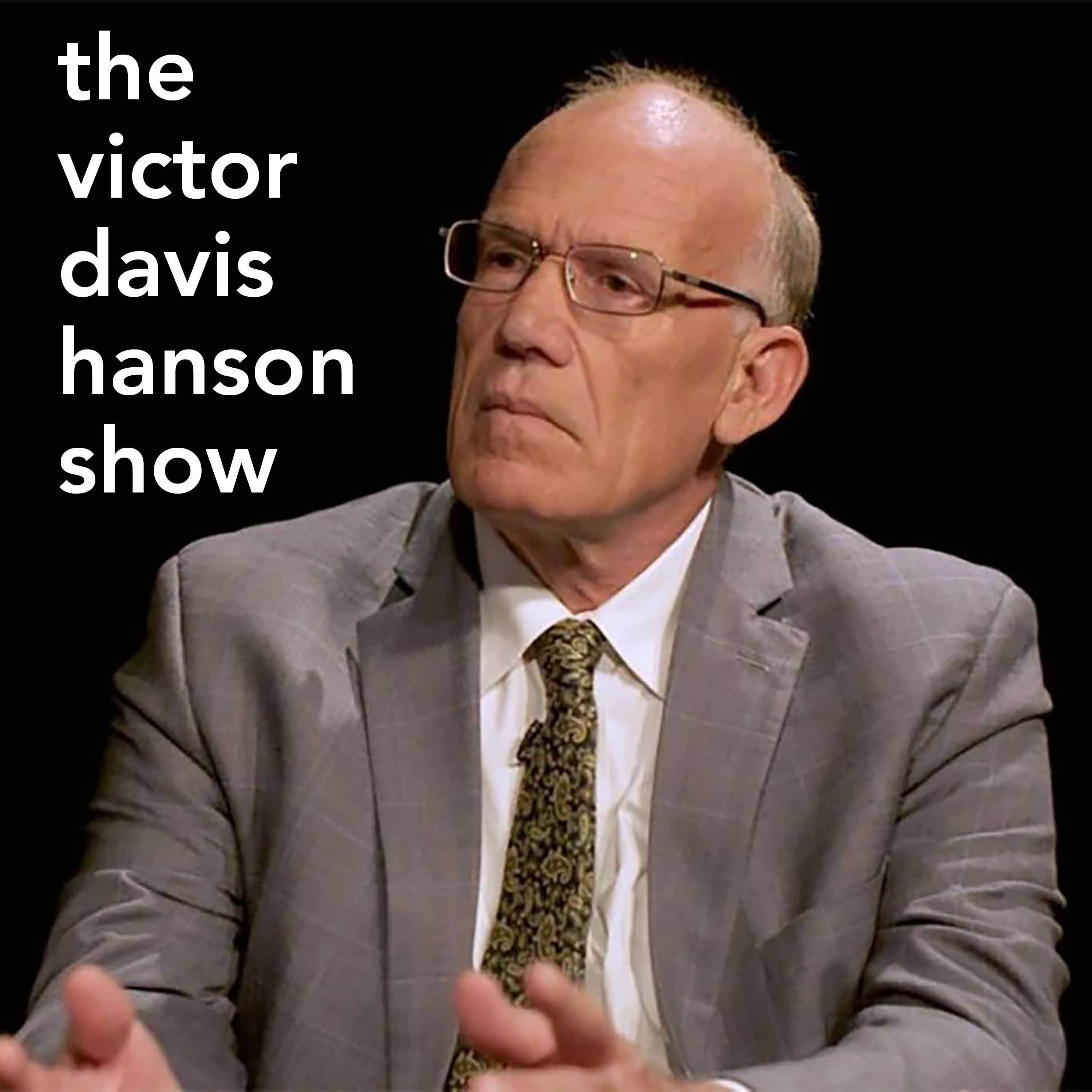
Loading summary
Transcript71 lines
- [00:00]
Commercial Narrator
Flu season is here, and Covid cases are still climbing across the country. When people start getting sick, medications disappear fast. And that's why we trust all family pharmacy. They help you prepare before it's too late. Right now, they've dropped prices on Ivermectin and mebenzazole by 25%. Plus you can save an extra 10% with the code Victor10. You'll also get 10% off antibiotics, antivirals, hydroxychloroquine, and more of the medications you.
- [00:30]
Jack Fowler
Actually want on hand.
- [00:32]
Commercial Narrator
Whether you're fighting off a cold, protecting your family from flu season, or staying ready in case Covid makes its way into your home, having a few months supply brings peace of mind and control. They work with licensed doctors who review your order online, write the prescriptions, and ship your meds straight to your door. Go to allfamilypharmacy.com Victor and use the code Victor10. Today, when empires debase their currency, citizens who hold gold survive the transition. That's not opinion, it's documented fact. Trump's economic warning isn't speculation, it's pattern recognition. The same signals that preceded every major currency crisis are flashing now. Unsustainable debt, foreign nations dumping our bonds, and central banks who hoarding gold. But Trump's also revealing the solution. The IRS strategy he's used for decades is available to every American. It's how the wealthy preserve their fortunes when paper currencies fail. American Alternative Assets has documented this strategy their free 2025 Wealth Protection Guide. It shows exactly how to position yourself before the turbulence Trump's warning about arrives. Call 888-615-8047 for your free guide. That's 888-615-8047 or visit. Victor loves Gold.com. the patterns are clear. Make sure you're on the right side of them.
- [02:16]
Victor Davis Hanson
Foreign.
- [02:22]
Jack Fowler
Ladies. Hello, gentlemen. Hello, my slurping friend, Victor Davis Hansen. This is the Victor Davis Hansen Show. I'm Jack Fowler, the host of this show. Victor is the Martin and Eli Anderson Senior Fellow at the Hoover Institution and the Wayne and Marcia Buskey Distinguished Fellow in History at Hillsdale College. He's a man with the website the Blade of Perseus. You'll find it@VictorHansen.com you notice Victor's background's a little different. He is in Palo Alto, I believe, today. So that's the People's Republic of Survive. Victor. We are talking on Sunday, September 14th. This particular episode will be up on Tuesday the 16th. There's still so much related to the assassination of Charlie Kirk to talk about. So Victor, we will. That's okay.
- [03:11]
Victor Davis Hanson
I was just saying I was going to get a pillow.
- [03:13]
Jack Fowler
I know. As long as you're not taking a sit spat math, we'll be okay.
- [03:17]
Victor Davis Hanson
I'm a sad sack.
- [03:19]
Jack Fowler
That's all right.
- [03:21]
Commercial Narrator
Well, we.
- [03:23]
Jack Fowler
Yeah. Well, you're not decomposing. Not yet anyway. I guess we should start off the show, Victor, by getting your thoughts about the Erica Trump the very powerful statement. Excuse me, Erica Kirk very powerful statement. She made her pledge to CTP USA Turning Point USA expand and become more powerful. And then also related to the murder investigation, some criticisms of Cash Patel's. We'll get to those and we'll have. We have a few other topics to get your take on and we'll do all that when we come back from these important messages.
- [04:04]
Commercial Narrator
If you're running a business, you know that every time you miss a call, you're leaving money on the table. When every customer conversation matters, you need a phone system that keeps up and helps you stay connected 24 7. And that's why you need OpenPhone. OpenPhone is the number one business phone system that streamlines and scales your customer communications. It works through an app on your phone or computer. So no more carrying two phones or using a landline. With OpenPhone, your team can share one number and collaborate on on customer calls and texts like a shared inbox. That way any teammate can pick up right where the last person left off, keeping response times faster than ever. Plus say goodbye to voicemail. Their AI agent can be set up in minutes to handle calls after hours, answer questions and capture leads so you never miss a customer. So whether you're a one person operation drowning in calls and texts or or having a large team that needs better collaboration tools, Openphone is a no brainer. See why over 60,000 businesses trust Openphone. Openphone is offering our listeners 20% off your first six months at openphone.com Victor that's O P E N P H O-N E openphone.com Victor and if you have existing numbers with another service, Open Phone will port them over at no extra charge. Open Phone no missed calls, no missed customers.
- [05:37]
Sponsor Narrator
Cooler temperatures are rolling in and as always, Quince is where I turn for fall staples that actually last. From cashmere to denim to boots, the quality holds up and the price still blows me away. Quince has the kind of fall staples you'll wear non stop, like super soft 100% Mongolian cashmere sweaters. Starting at just $60, their denim is durable and fits right and their real leather jackets bring that clean classic edge without the elevated price tag. What makes Quince different? They partner directly with ethical factories and skip the middlemen so you get top tier fabrics and craftsmanship at half the price of similar brands. When the weather cools, my Quint sweaters are a go to my cashmere short sleeve that works under any jacket, formal or casual, or my thick long sleeve go everywhere do everything sweater that pairs with any pant or jogger. Quint's products are my favorites, which is why I went to Quint's to buy my recent very beautiful purse that leaves the house every time I do. Keep it classic and cool this fall with long lasting staples from quince. Go to quince.com Victor for free shipping on your order and 365 day returns. That's Q-U-I-N-C-E.com Victor for free shipping and 365 day returns. Quince.com Victor and we'd like to thank Quince for sponsoring the Victor Davis Hanson Show Foreign.
- [07:28]
Jack Fowler
We are back with the Victor Davis Hansen Show. Just quickly want to urge folks to subscribe to Victor's website, the Blade of Perseus. It's $65 a year or 650amonth if you want to stick your toe in the water and you subscribe in order to read Victor's exclusive articles2 every week, the exclusive video he does every week for the Blade of Perseus. Plus there are a ton of free links to Victor's various appearances, books, archives of these shows, etc. So all that said, Victor, let me just read quickly a headline and a few paragraphs from a story here. Sleeping Giant likely woke up for Turning Point USA after Charlie Kirk's assassination The Assassination of Charlie Kirk is brought to this is from an article, excuse me, in Fox News by Cameron Arcand. Assassination of Charlie Kirk is brought light to his organization Turning Point USA and what comes next for the group known for mobilizing young people in the conservative movement. During live streamed remarks on Friday night, his widow, Erica Kirk stressed individuals getting involved with tpusa, adding that the annual America Fest conference in Phoenix this December will continue as scheduled. Quote to everyone listening tonight across America, the movement my husband built will not die, kirk said. It won't. I refuse to let that happen. No one will ever forget my husband's name and I will make sure of it. It will become stronger, bolder, louder and greater than ever. My husband's mission will not end, not even for a moment. I'LL make Turning Point USA the biggest thing that this nation has ever seen. She later added, I love you, baby. Rest in the arms of God. Victor, your thoughts on Erica Kirk herself and your thoughts about the future of the important organization her husband founded and now in her hands?
- [09:20]
Victor Davis Hanson
Yeah, I thought it was really courageous because her husband had just been killed, the children are orphaned. She was in a state of shock. But she wanted to add the additional message that this is not the end, but it's the beginning of a next phase in his honor, the celebration of him. And indeed, after her talk, 18,000 people reportedly signed up for Turning Point. And you listening to her? I'm not going to make any predictions, but she has that same ability to communicate that Charlie did. So I don't know what will be the future, but I think she'll play a prominent role in it. And it's worldwide. There were these huge demonstrations all over the world, in South Korea and in Europe. And you get the impression that it was the straw that broke the camel's back and it was juxtaposed to these awful murders we've seen of Irania Zerutska that and by the way, de Carlos Brown, we found out his whole family are felons and brothers, a killer, too. And they've all been revolving in and out of the criminal justice system. We had that horrible murder we talked about, about the poor veterinarian, and then we had this couple in your area, Queens, that were killed, butchered, their home. And I think people are just saying, you know what? I'm tired of all of it. I'm just tired of all of the lies. And we're not supposed to talk about antifa. We're not supposed to talk about all these 403 Cs or 403s that are funding these groups. And we're not supposed to talk about all these people in the military, in the bureaucracy, teachers, professors who are gloating over his death. We're not supposed to say anything. We're supposed to say both sides. Both sides. It's not both sides. And you can see it's not both sides by how many times people mentioned January 6th where there wasn't one person violently killed except a Trump supporter versus 35 that were killed in five months of looting, riot, mayhem. 1500 officers attacked, all leftists, all condoned. Very few of those arrested were ever indicted and almost none were convicted in prison. So I think everybody's tired of all of it. And it's starting a massive maybe she and others like her can be ride the crest of the way and direct it in a positive way. But whatever is going on, I think the left really has made a mistake. As soon as he died, all these people came out and gloated. They weren't even the leftist antifa people, they were those people. But they were teachers, they were professors, they were military officers. It was just. And they all thought they could just say this and it would be mainstreamed. The Internet creates this cowardly culture where no one knows you or gets to you or confronts you or you don't face anybody. Then you can act very brave with these atrocious postings. And then in addition to that, it was just the news. I mean, Katie Tour we talked about and Matthew Dowd and Jasmine Crockett immediately started talking about herself. Oh, I need protection. No, you're. You were one of the instigators of a hate speech. You couldn't finish a talk without demonizing white people. That's all you do all the time. And then, you know, it gets so angry when they say, well, Donald Trump said he shouldn't have said it, but he said if he shot somebody's supporters, that was not advocating that. He said, if that's how weird the support is for me. It's unlike Gavin Newsom that said, we're going to get these so. And bloody them up or punch them in the mouth. We're going to punch Trump in the mouth. Joe Biden, semi fascist. We're going to take you behind the gym and beat you up. So it's been different, this desperate effort by Nancy Pelosi and others to contextualize all this. But when you look at Steve Scalise and the Republican leadership that was attacked, you looked at the young couple at the Jewish Museum in D.C. you look at Luigi Mangione, that whole debacle, you look at the attacks on Rand Paul, Josh Shapiro, the guy was a pro Hamas, pro Palestinian nut. I understand there were people in Minnesota that may have. That guy that was crazy may have had right wing sympathies, but he was appointed to a board by Tim Waltz. So I don't know what he was, but it is not both sides. It's the left. Fascist. Fascist. Fascist. Fascist. Fascist. Fascist. Fascist. Fascist. Hitler, Hitler, Hitler, Hitler. They did it with Bush, but not to the same. And that permeates the atmosphere. And people like this nut Tyler Robinson, who was gloating, by the way, about the killing on social media or his little chat group and saying, maybe I'll get the award or maybe my doppelganger did it. And then we have all this deviancy that we mainstream. So he's got his roommate who dresses like some kind of animal picture. Furry, I guess he's a furry, yeah, whatever that is. And we're supposed to accept that. And that is completely a mental disorder. But we're not supposed to say that. So I think a lot of people are saying this country cannot survive unless it goes back to traditional American norms. In the nuclear family has to be the dominant paradigm. That doesn't mean you oppress gays or single parents or illegitimacy. But you have to have a critical mass that are a nuclear family and you have to reproduce the species. And the blue state model and the progressive agenda is antithetical to that. Let's just face it. And it's violent. It's violent because it feels there's no consequences. That they control the law enforcement, the DA's, that they can do things. This guy doesn't really think when he shot Charlie Kirk that anything was going to happen to him. He really didn't. He thought he was either going to get away or it was just a lark. And we'll see what Utah does. Final thought real quick is where does this madness come from? The media madness? I was thinking about this, Jack. I mean, this murder took place on a campus which was appropriate because not in the good sense, but you trace every one of these things. The pronouns. List your pronouns on your memo. Transgenderism is a new civil rights issue. You're a transphobe. If you don't want biological males competing in female sports, all of that comes from the university. Separate dorms, separate spaces, separate graduations based on race, racial repertory, admissions. California legislature just passed that. Again, contrary to the Prop 209 that comes from critical race theory in the university. You can take almost every pathology that has been manifest either in the Palisades fire or all these killings, these interracial killings, and you can trace the genesis of it to higher education. Where else do Jews get chased into a library by people? Where else do people who beat up a Jew get an award from Harvard University? I mean, that's what it is. Where else does a professor say, you Jews get to that side of the classroom, you other people get over here? That was at Stanford where I'm speaking. So higher education has a lot to account. And that's besides the turning out these ignorant students that don't know anything after paying thousands of dollars and having the country 1.7 trillion in hock to pay these inflated costs and then have 1.1 million foreign students who are not audited. No background check. And then they form a nucleus in many cases, whether they're Chinese nationals or people from illiberal regimes in the Middle east, they're just not audited there. It's espionage or whether it's anti Semitic protests. So the campus has a lot to. It has a lot to answer for is what I'm trying to say. Well, go ahead.
- [18:24]
Jack Fowler
I'm going to read a spot here, Victor, because we'll pick up on what you just said. When empires debase their currency, citizens who hold gold survive the transition. That's not an opinion, it's documented fact. Trump's economic warning isn't speculation, it's pattern recognition. The same signals that preceded every major currency crisis are flashing now. Unsustainable debt, foreign nations dumping our bonds, and central banks hoarding gold. But Donald Trump's also revealing the solution. The IRS strategy he's used for decades is available to every American. It's how the wealthy preserve their fortunes when paper currencies fail. American Alternative Assets has documented this strategy in a free 2025 Wealth Protection Guide. It shows exactly how to position yourself before the turbulence. Trump's warning about arrives. How do you get it? Call 888-615-8047 for your free guide. That's 888-6158 or visit victorlovesgold.com the patterns are clear. Make sure you're on the right side of them. And we thank the good people from American Alternative Assets for sponsoring the Victor Davis Hanson Show. Victor, a few more points on what you just said. First of all, I just have to make a plug. The guy over my shoulder here, William F. Buckley Jr. Founder of the conservative movement, founded it through his book God. Amen it Yale. So, yeah, you know, this has been the issue for conservatives for 75 years now, fighting the madness of the campus. And the fact that Charlie Kirk was, my opinion, was making great gains on campuses is the reason he was so hated.
- [20:14]
Victor Davis Hanson
Yeah, that's a good point. And just, just to add real quickly, almost immediately there was a whole corpus of lies about the motivations and background of this Tyler Robinson. We were told this is the right searching for a George Floyd moment number one. Charlie Cook had no criminal record. He was an outstanding citizen. He was a father, happily married with children. He formed a nonprofit organization to help people. Very tragic that George Floyd died in police custody. But he was a eight time career, career criminal. He had served prison. He put a knife to the abdominal region of a woman whose Home. He broke in for a home invasion. He would have never been in contact with the prip if he had the police. If he'd not been trying to pass counterfeit currency and not then tried to resist arrest. He would have been fine, probably, if he had not been on methamphetamines and fentanyl or a recent case of COVID Did Officer Chauvin put his knee on his neck beyond what I think was. Maybe, maybe not. I think he probably did, but there's no comparison. One, two, the reaction. Nobody's out rioting for five months. There's not $2 billion of damage. There's not a courthouse or precinct or church torched. There's not 35 people murdered. There's not free zones where they take over territory and downtowns of our cities. So that's not the reaction that the George Floyd people did. And then the motivation. He's not a right wing shooter. His parents may have been moderate Republicans, but just read what he wrote on his shell casings. It was antifa stuff. It was trans stuff. It was sick stuff. Listen to what his roommate and people said about him. His high school people knew. Everybody knew he was a left wing, angry people. And we're going to find out if there is any connection between his trans partner and the question of trans at the moment he shot him. That's very mysterious. I'm not a conspiracy thing. But I don't know whether he had some type of microphone or earpiece or somebody gave him a single. But it is coincidence, put it that way. It could be accidental coincidence. But there is no evidence at all that he is a right wing. He is a left wing pro antifa. That's why he engraved his bullets. And his lifestyle was deeply embedded in the left. And so just stop all that. So all of these myths that promulgate about it is just disgusting.
- [23:06]
Jack Fowler
Well, Victor, you know, it's interesting if we get your thoughts a little more on this furry madness. I saw a video the other day of a lesbian woman who was talking about, why am I? Because why am I a color on this flag? Why am I the L in the lgbtq? Why am I associated with these furries? There's a cabal of them who like to be infantile people with man boy lovers. And you know, Rick Grinnell went on this sometime recently, like, look, I'm a gay man. I don't want to walk. See us have gay pride parades, walking bottomless in the streets. Like, why are we affiliated with these clear mental cases?
- [23:55]
Victor Davis Hanson
Because no one speaks out all they have to do is say, right in our bed. And then say, we do not want to be associated with this movement. We are people who are same sex attracted, but we're otherwise just normal citizens. And we do not like public intoxication, nudity, fornication. We don't like to have these insulting anti religious parades that gay people do. We don't know what furry is. We don't like biological men destroying women's sport. They can do that and maybe they will.
- [24:32]
Jack Fowler
Yeah, well some of the lesbians I know who organize have protested the affiliation with trans women, whatever the hell that is, have been beaten up and have faced violence. So the trans movement and its embrace of violence has get more and more documented every day.
- [24:49]
Victor Davis Hanson
I'll say one thing, everybody says, well, there's only been three or four trans. You know, we had the Charlotte shooter and there was a tangential relation here and we had, I mean the Tennessee shooter, we had another one, but there's actually been four. And everybody said, well see, there's been all these dozens for years. Yes, but the trans movement was not in the public mind, in the arena until the last five or six years. So the proper diagnostic is to go back and say when was trans mainstreamed and people became aware of it and then see what is the percentage of people, not what you say on the university campus, but, but what clinical psychology said about trans dysphoria as a percentage of the demographic. And then see at that point where it became well known to people, at that point, how many of the mass shooters were trans? I don't have that answer, but I have a suspicion that scientific literature will show about one or two per 100,000 people. And once the trans movement was known of the last mass shootings, it will be higher, much higher than that demographic. And then we need a discussion or what are these neuropsychotic complications of taking very strong antidepressants with strong hormonal treatments, etc. Etc.
- [26:20]
Jack Fowler
Well, and as we've had one of the fathers of a trans kid write us and we've talked about it a couple times, it's also then immersion into a social media, as he calls it, a cult, which is a force multiplier.
- [26:33]
Victor Davis Hanson
What he means by that, Jack, is that all of a sudden, if you look, the next Hollywood star is bragging that their child is trans. I mean, it's just. But in the era of, I mean we knew that there were gay actors all the time across time and space and maybe they were cross dressers, but 10 years ago 20 years ago, 30 years ago, did people. Was that a common phenomenon among actors to have children that you that were trans? I don't think it was. And so I don't think these polls undergraduate was at Brown or Brown or Dartmouth. I think it was Brown said that 20% or 25% of the students thought they might consider transitioning. That's what he means when he says it's a call.
- [27:21]
Jack Fowler
Yeah. Well, Victor, before we go to the break and after the break, we want to get your thoughts on Kash Patel. I just want to say an impression of Erica Kirk. She kind of reminded me of Caroline Levitt, the president's press secretary. Comshead. Just really strong, forceful, unflappable woman and especially in the face of this horrific tragedy of the murder of her.
- [27:47]
Victor Davis Hanson
That's a very good point, Jack, because we're always told by the feminist left that what they want are confident, articulate, well prepared, strong women. And yet when you and when you see them like Margaret Thatcher, they melt down. And so what they mean by that is kind of a Karen person. There was a demonstration. I'm in Palo Alto, but there was a demonstration. Not somebody just told me that there was a demonstration. She went to Stanford Shopping center. And I said, well, I guess it was all Karen's. She said, yeah, they were all strong, powerful women my age that were very sure of themselves and that's the model. But when you see Caroline Levitt or Ms. Kirk, I think the difference is that they're not only well prepared, well spoken, confident, which the left supposedly approves and wants in today's woman. But I don't know how to say this without being controversial, but it's not just that they're conservative, but they're also beautiful. And so that gets them very upset because I see that that's not Victor concocting that it is what people say about Carolyn Levitt, to take one example, oh, she has too many nice clothes or oh, she thinks she has great legs. They always comment on her looks, the left does if she's a Barbie type. But they can't stand the idea that there's a beautiful young 27 year old woman who can stand before the most seasoned, cynical, skeptical, crazy left wing reporters and go head to head with them. Yeah, I give Kaylee McEnhelley a lot of credit because she was sort of founded that idea that you could be a very attractive, well prepared Trump press secretary and not be afraid of the press. Amen.
- [29:43]
Jack Fowler
Well, Victor, when we come back from this break, we're going to get your thoughts on the controversy of Kash Patel's performance, the FBI director in response to the murder of Charlie Kirk and we'll get to that when we come back.
- [30:02]
Sponsor Narrator
You might be wondering when is the right time to add collagen to my diet? How about today? Collagen production starts to dwindle in your 20s. By the time you've hit your 50s, decreased collagen contributes to wrinkles, sagging skin and joint discomfort. Native Path collagen can help. It's packed with only type 1 and 3 collagen fibers, the ones your body needs most for healthy joints, skin, bones, hair, nails and gut. Plus it's third party tested for purity with no fillers, no additives and no artificial junk. Two scoops a day of native path delivers 18 grams of protein. Mix it into your coffee, tea or any drink. It's completely flavorless and easy to use right now. Get a special deal at a fraction of the retail price plus free shipping available@getnativepath.com Victor with over 4 million jars sold, thousands of 5 star reviews and a 365 day money back guarantee, this is your moment to take control of aging before symptoms get worse. Go to getnativepath.com/Victor now. Supplies are limited and demand is surging and we'd like to thank Native Path for sponsoring the Victor Davis Hanson Show. So you just got back from summer vacation. Maybe you might have even had to book two rooms because of your snoring. Some vacation, huh? Snoring can be an underlying cause of high blood pressure, heart disease, stroke and even memory memory loss. Here is my advice. If you want every night to be a true vacation, you need to get yourself xipa that's happy Z spelled backwards. ZIPA is a doctor designed mouthpiece that not only moves your jaw forward, but is also the only device with a patented tongue seat belt to keep your airways open and the snoring away. The snoring can stop as soon as the first night. XIPA was proven in a 600 patient clinical trial and sold over half a million units. From now until the end of October, show your family you actually care by purchasing a limited edition pink zipa. Not only will you save $10, but zipa is on a mission to raise 50,000 for breast cancer research and they will donate another 10,000 to the Susan G. Komen Breast Cancer foundation. Go to Zyppah.com and use the code pink or text Victor to 511511 Put your snoring on a permanent vacation and help a worthy cause with the snoring devotion we Trust by visiting Zyppah.com and use the code PINK or text Victor to 511511. Remember, ZPA is happy Z spelled backwards. Text fees may apply. And we'd like to thank ZEPA for sponsoring the Victor Davis Hansen Show.
- [33:28]
Jack Fowler
And we are back with the Victor Davis Hansen show again. We are recording on Sunday the 14th of September. This episode will be up on Tuesday the 16th. Victor is in beautiful but crazy Palo Alto, California in the shadows, I guess of the Hoover Institution. Beautiful building which must stick in the craw every day.
- [33:50]
Victor Davis Hanson
Much of the folks, yes, they have certain words, they have certain word for the way it looks.
- [33:56]
Jack Fowler
Yeah, well, Victor Kash Patel has come in under criticism, including from some conservatives, I think Laura Ingraham, Steve Bannon and others for his quote unquote performance during the investigation of the murder of Charlie Kirk. Any thoughts about that?
- [34:17]
Victor Davis Hanson
I didn't understand that because I went back and looked at all the people who criticized them. I knew they would from the left, but from the right, their criticisms were centered on two things, that he was in Washington and then he announced prematurely that the second suspect was in custody, the shooter that was mistaken. And at the time he had gone to a restaurant and the restaurant was expensive. I don't know, I've been to Washington restaurants, they all seem expensive to somebody from Selma. But that's a sin. I mean he's the head of the, the FBI. The Utah FBI office was on it. There were local law enforcements. He was monitoring it. He was planning to go out there with Bongino and I guess he prematurely said it looks like we got him. And they didn't. And so he corrected it and then they did get him and they got him in what, less than three days. That was pretty good if you look at the four or five days of. And I don't know how long the Sarnavs took, but there were people going on Fox News that said don't expect to catch this guy, he's off the roof. Because at that point they only had that silhouette that looked irregular on the top of the roof. And then it was gone. And he said, I heard it maybe 20 times. I watched non stop Fox that day. And they said there's just a forest out there. He just jumped off and he's gone. And, and then people would come on and say, you know, there's this something called the Rocky Mountains and you go in there and it's very hard to get you. And he might have a network of friends and we should not expect the FBI to find him very quickly. But the FBI did find him very quickly. They did all the right things. They went through everybody's private security systems, the neighborhood. They went through the entire corpus of the university's cameras. They talked about everybody there who had a cell phone. And within 24 hours, 24:30, they had a picture of him. And then they released almost everything you needed to know about him. And they said very clearly and they got on social media, they tapped into that, they talked to us. They knew almost everything about him. And they worked with the, you know, they worked with all these different federal and state. I didn't see what was so bad about, except that he made a premature statement. And I think he will not do that again. But at this point, you do not want to fire the head of the FBI over that mischaracterization. I've known him for about 20 years. He was the lead investigator for Devin Nunes House Select Committee on Intelligence. And he was the one, along with Congressman Nunes, that broke the entire Christopher Steele. At a time when the FBI was saying we never paid him anything. They did. And they found that out. He was a contractor. And we never used this dossier at all to get fiso. They did. They not only used it, but they doctored, they changed an affidavit. I don't know why the person FBI lawyer did that was not in prison much longer. But all of the things we know about the dossier, it came out of Devin Nunes and Cash Patel. And they were all threatened by the. Initially in the last days of the Obama administration, but especially as the Obama administration went out, they were doing things that they shouldn't have done. And then when they came in, they were being threatened by career rogue people. Remember Rod Rosenstein said I could have you people indicted. And if you do this and that, if you're so I don't see why there's a big outcry and I think it's already died down. To tell you the truth, he's not going to resign and he shouldn't.
- [38:22]
Jack Fowler
I do want to encourage our listeners, especially new ones or new viewers, to the archives of the podcast. I think one of the best episodes you ever had, Victor, was your interview with Cash Patel. It was last year. And nobody, I think, at that time thought that he was going to be named head of the FBI. But it was a terrific discussion.
- [38:44]
Victor Davis Hanson
So I want to remind people what they did to him when he left. He should have been a renowned catch. He was a masterful investigator. And he couldn't get a job because during the Biden years, he was completely ostracized, both by government and by corporations that did not want to hire him. And I would see him once and I think twice at the Las Vegas airport. I talked to him. I've had dinner with him a number of times. And they really went out to de platform him. And his sin was he had helped expose the Steele dossier, and he wasn't quiet about it. So this was part of the Trump strategy. Tulsi Gabbard, rfk, Pete Hegses to appoint people who had been in conflict with the agencies they were going to run and in some cases had been targets of abuse by the very agencies they were going to run.
- [39:43]
Jack Fowler
Well, Victoria, I want we're going to read a spot in a little bit, but before we do that, get your take on another issue, and you kind of touched on a related issue. But Here's a headline. Survey 34% of students believe in violence to stop campus speech. The sixth annual College Free Speech Rankings released by the foundation for Individual Rights and Expression Fire and survey partner College Pulse, showed that a growing number of students nationwide views violence as acceptable response to speech. And at least in some circumstances. The survey of 68,510 college students at 257 universities found that 34% now say using violence to stop someone from speaking on campus is acceptable, at least in rare cases. That is an increase of 10 percentage points points over the last four years. And this poll was done before the assassination of Charlie Kirk. Any thoughts on that?
- [40:45]
Victor Davis Hanson
Well, I'm speaking 200 yards from the Stanford Law School. 300 yards. And when Judge Duncan, a Federal circuit judge, was speaking to Stanford Law students, the LGBTQ community, mostly the trans community, I guess they disrupted his talk. And then on spec, the diversity law officer hijacked his lecture, read a prepared statement blasting him, the guest, for incurring the wrath, and then they tried to drive him out. He had to be protectively escorted with security. And as they went out, they were yelling things like, I hope your daughter is raped. These were Stanford Law students. And so were any of them dismissed? No. And were any of them suspended? No. No. That's incredible. So that was what the left means when these students, when they mean when they say they believe in violence, they believe in a particular type of violence. They believe that you illegally occupy the Stanford free speech zone for four months. And then when a small little Jewish group tries to put posters with permission of all the hostages faces, then they go and tear them down. Or they believe they walk by you when you're walking to your office and get in your face and start screaming and yelling at you. That's what they call violence. Or they believe in the case of antifa, they show up and they try to attack one or two people, especially speakers at campuses, etc. What they do not mean is they don't say, I'm a student and I believe in violence. And I'm driving down to Bakersfield in a caravan with my college buddies and my antifa strongmen and I'm going to go into downtown Bakersfield and start attacking forms of resistance. Like I think I'll go after the, I don't know, the future farmers of America, Bakersfield. I'll go after the police. They don't do that. And you know why they don't do it. And so.
- [43:01]
Jack Fowler
Heine stopped.
- [43:03]
Victor Davis Hanson
Yeah, it's just like the 1970s. Weatherman, underground Symbionese Liberation Front, Black Panthers. They were all urban and they had particular targets, but they were not people who would fight back at them. And they were all predatory. They're very similar to that period in American history from 1880 to 1920, when we had large immigrations from Eastern Europe and from Italy and other places that were still experiencing the fallout from the 1848 Revolution or there were earlier revolutions under the czar and people fled that were left wing anarchists and that caused sort of a nativist rebellion. Remember it was Rome rebellion and some.
- [44:00]
Jack Fowler
Romanism. Rum Romanism and rebellion.
- [44:03]
Victor Davis Hanson
Yes. And that was. We're bringing an Italian anarchist who believe the anarchist movement was very popular, Catholic. So that was kind of a nativist reaction to it. But there was a lot of violence then as there was in the 1960s, late 60s and 70s, as there is I think in the start now. But I just don't believe that this generation of antifa or Black Lives Matter is going to really do what they say they do. I just don't do it. I think, I think they realize that they've lost the public dialogue worldwide. I think you're going to see big changes in government in Europe if they don't. If they allow these people, these conservative candidates to stay on the ballot. And we'll see here too. But if you are upset about what's been happening, as we've discussed today, the answer is not to get violent. The answer, I don't even think is to go on and make fun of people. That's bad. It's just simply to register and vote. And then the biggest thing that would honor Charlie Kirk is for one of the few times in American history would be for the in party in a first midterm of an administration. This is kind of a first midterm of Trump's second administration to win the House and the Senate in a big margin. We're all said that he's going to lose the House, he may lose the Senate. This happens to everybody. President, don't get upset. Don't let it happen. Get whole armies of young people to register and get out and vote and just tell the Democratic Party we're sick of you. You people have been condoning violence. You've been calling the president United States, all these names you lie about all of these types of shooting and we're just tired of it. We're tired of the DA's, we're tired of the blue state model. We're tired of all of it. And we're not going to take anymore. And so we're going. But unlike you, we're not going to anonymously trash people on social media or commit violence and shoot people. What we're going to do is vote you out of power.
- [46:12]
Jack Fowler
Well, I have a after the break. I'll ask you another question before that, but I think I'll raise this article. Rod Dreher has written about violence, potential violence in Europe. But first, first I want to tell our listeners and viewers about our friends@besthotgrill.com Football is back. So is tailgating. Whether it's Friday night lights Saturday, college or pro Sundays, Solaire Tailgate Infrared Grills set up fast, heat up quickly, only three minutes to searing hot temperatures. Just like the big backyard Solaires. A Solaire grill will make you the master of the tailgate with the juiciest, most flavorful food in the parking lot. And the fast grilling times leave you more time to enjoy the pregame festivities. They also cool down fast so that you won't miss a minute of the game. The USA made Solair anywhere, everywhere and all about Infrared Grills are portable and perfect for any grilling on the go. From picnics to camping RVs to boating, but especially tailgating. Amaze your tailgating friends with the great food you grill with your Solaire Infrared Grill. Learn more about these fantastic grills and Solaire's try before you buy Demo rental program@besthotgrill.com that's best hot grill.com Besthot grill.com We thank the good people of Solaire for sponsoring the Victor Davis Hansen Show. Victor, you know, let me ask you about JK I just want to mention along the lines your, your what? We just talked about J.K. rowling, the, you know, the great author who was kind of a woman left of center and has been tormented into becoming a champion of free speech, especially by the attacks on her by the trans community she wrote following the murder of Charlie Kirk the other day. If you believe free speech is for you, but not your political opponents, you're a liberal. If no contrary evidence could change your beliefs, you're a fundamentalist. If you believe the state should punish those with contrary views, you're a totalitarian. And if you believe political opponents should be punished with violence or death, you're a terrorist. I think that's pretty darn accurate assessment of things, but I may be off a little bit. And your thoughts on her thoughts, Victor?
- [48:33]
Victor Davis Hanson
You know, I've been in the public square 40 years, in a minor way, perhaps, but when I try to criticize somebody, I try to double check. I think I've had one retraction and it was on a historical point and about 3,000 columns. I try to be very careful before I criticize someone. And I've had a lot of people who wrote me, whom I've criticized and said, thank you, we don't agree. But you weren't ad hominem. It's very important not to be ad hominem. And when I've done, I don't know, maybe 50 debates, I've always tried to, at the end of the debate, not be angry at the person. But I will tell you that it's not the same with the left. And I think it's partly ideological. The right is sort of a live and let live. Politics is a compartment of my life. My family, my church, my community, my business, my career is more important than my ideology. But for the left, it consumes people because they think they're morally superior. Because the left was always for the victim. And so therefore any means necessary or justified to correct the alleged injustices that allow victims to persist victimization. So I think we got to be very careful and make that point. It's a left wing phenomenon at this point, what the violence is coming from. And they're not, they're not apologetic, they're unapologetic about it. And I think until there are consequences at the ballot box, they're going to continue to do it. And I think we're going to have a whole new conversation about race. I think people are going to come out of the woodwork and say, we want to help the black community. We being the Hispanic community, the Asian community, the LGBT community, the white everybody. And why that? We mean we want parity, not mandates of equality, quality of result, but a quality of opportunity. We'll do our part for equality, but we want especially males of the black community to send a message that they want their two parent family percentages the same as every other community and the way they had almost been in the 1940s and 50s as Thomas Sowell has so well documented. And we want the crime rate, violent crimes in America. We wanted about, we don't want any. But if it's going, it's not going to be any different than our demographic. Three or 4% of blacks are black males 15 to 40. That 3% will commit 3% of violent crimes, not 50%. And we will work on that and we'll have a national dialogue. What do you need from every other resource to help get that message that rap music, hip hop music will be sort of like soul music in the 60s or jazz. It will be a wonderful black medium, but it will not have things like kill Popo or kill the bitch or kill the ho and all that stuff. It's not going to be there. We're going to self police it. And I think if they if that, that would really. But that conversation can't be taken. You can't talk about it, just like you can't talk about biological men and women's sports because of the odium that comes from the left. But I think now you can talk about it. That's my point. I think people are going to say do your worst, I'll do my best, good luck. But we're not going to take it anymore. And I think that doesn't mean that we're going to emulate the left's tactics. We're going to take the high road. But.
- [52:18]
Jack Fowler
Well, let's drill down on that a little more, Victor, when we come back from these final important messages.
- [52:29]
Sponsor Narrator
If you're like me, you have a lot of product on your bathroom counter. Well, I have found the secret serum and it's Vibrant Super C Serum. The ingredients in this one bottle can replace your day creams, eye creams, night creams, neck creams, wrinkle creams and even dark spot reducers. Made in the USA with the highest quality ingredients including vitamin C, hyaluronic acid, vitamin B5 and vitamin E. Super C serum delivers noticeable results, simplify your skin care routine, get a healthier complexion and minimize wrinkles and age spots with vibrance. I just began using Super C serum last week and I love it. My skin feels so much better. Soft, soft, moist and fresh. And by the way, it smells beautiful, like the orange blossoms outside my kitchen door. Give it a try and you'll love it too. And if you don't find it better than your current skincare routine, you'll get a full refund. Go to vibrance.com victor to save up to 37% off and free shipping. That's Vibrance V I B R R I A n c e vibrance.com Victor and we'd like to thank Vibrance for sponsoring the Victor Davis Hansen Show.
- [53:48]
Commercial Narrator
You had no idea how much damage gaining and losing weight could do. Doctors call it weight cycling. Half of Americans do it. And if you do it enough, you are at risk of diabetes, liver damage, heart attack and stroke. Weight cycling is when you lose 10 or so pounds, but then you put the pounds back plus a couple more. That puts tremendous strain on your organs leading to serious health issues. Bottom line, most people need to stop weight cycling. And here's a great way. Non prescription Lean was created by doctors. Lean is an oral supplement, not a GLP injectable and the science is impressive. Its studied ingredients also target weight loss in three powerful ways. Lean helps maintain healthy blood sugar. Lean helps control appetite and cravings and Lean helps burn fat by converting it to energy. And burning fat helps keep the weight off. If you want to lose meaningful weight at a healthy pace and keep it off, add Lean to your diet and exercise lifestyle. Get 20% off when you enter Victor@takelean.com that's code Victor@takelean.com.
- [55:02]
Jack Fowler
We'Re back with the Victor Davis Hanson show recording on Sunday the 14th of September and this episode is up on the 16th. Jack Fowler, that's me. I write a weekly email newsletter called Civil Thoughts and you can get it. You go to civilthoughts.com sign up every Friday. It comes in your inbox in the afternoon and it has 14 recommended readings. I know you're going to like it. I get a lot of emails from folks saying they deeply appreciate it. It's totally free. We're not selling your name. Civilthoughts.com Victor's Self Medicating there.
- [55:39]
Victor Davis Hanson
He's gonna that's salt water everybody. It's called X Clear Saltwater.
- [55:47]
Jack Fowler
We want you around Victor.
- [55:48]
Victor Davis Hanson
So that's from that three months ago operation.
- [55:51]
Jack Fowler
So keep up with the salt water. Hey, so I mentioned before Roger had a picture and then we had a piece you just talked about Thomas Sowell. But one of our Listeners of Vivek I hope I say his name right. Sub Rahmanyam and he was writing about the Thomas Sowell, which we've totally, We've so forgotten. What was it like to be a black in America in, say, 1960? And it's a radically, radically different world.
- [56:23]
Victor Davis Hanson
I know what it was like because I was all mound in 1960, even in a small town. But more importantly, as someone who had lunch twice a month with Tom for 15 years, I asked him, and it was prejudice, whether, I mean open and overt in the south, but maybe insidious. And what it did to people like Tom, it made him not just want to excel, but to excel and be preeminent above everybody as a personal challenge. And he knew he had the talent. I mean, very few people have that natural talent, but he had a tremendous work ethic and he was defiant. He was going to do his way and if people left or right criticized him, it just rolled off his back. But, you know, he said something to me, I don't want to quote him if he didn't want it to be known. He said, you know, he was talking about. We were talking about a health issue. And he said, there were some phenomenal black doctors when I grew up, Victor. He said they knew everything. And I said, well, explain to me. And he said, I went to them all the time. He said they were better than white doctors because they had to be to get into medical school and then to get residency. And they were dealing with inner city problems, immigration problems, but they saw every type of disease, injury, trauma. They were empirical, they were classically trained as doctors, and I was so lucky to have been around them. But he said, once you lowered the standards for that particular group, then it was hard. So I said, well, would you extend that analysis today? And he said something like the following. I'm quoting from about 10 years. He said, well, I kind of prefer Asian doctors now. And he didn't mean it racially. I said, now why would that be? And he said, because it's so hard for them to get into medical school. He said, this isn't a racial question at all. It's just which particular group does society target on with discrimination or reverse discrimination? And which group do they not do that? And he said, if you're in a particular group and you're stigmatized collectively, it tends to make talented people defiant and then they overcome these. He said, I'm not advocating that there should be these hurdles, but unfortunately, when society wrongly makes them, as they have done for 30 years with Asians who they claimed were overrepresented. So when you see an Asian doctor, you see, get the impression that it was very hard for him to get into medical school. That's just the way he thought. It was always contrarian in a way that people. I think that was one of his powers. He would sit back and look at society and observe it and then see its quirks and then point them out. And he was often misunderstood because he was fearless and explicating his observations. But he was often right. I knew, really, I was in a club with a very good African American doctor. And I used to talk to him a lot about Frank Snowden. He was a famous black classicist that was a really brilliant guy. And he had a brilliant son who was at Yale. Historian Snowden. But I would talk to him about medicine and he was a great surgeon. And he would tell me what it was like trying to go to medical school in the 50s and trying to get residencies in the 60s and all of the different patients he saw and how overworked he was. And the result of it is, by the time he was in the 60s and 70s, a lot of very distinguished white surgeons were consulting him when they had a problem and said, hey, have you seen this thing? Have you ever treated something he had? And it was. I think we need to get back to that. That we just look at people's individuals and we don't put these barriers on the collective as we do. And if we have all. We have medical school and we have all Asian ophthalmologists, I'm not. I mean, I don't really. I just want the best pilots. Ophthalmologist, sort of like I extend the same thing to professional sports. I wouldn't want a quota system in the NBA or something. Blacks are overrepresented. Why can't we just have 12% blacks in the NBA? Because the African American community would say, rightly so. We believe in merit and black athletes excel in basketball because we have acculturated it, we put time in it, we study it, we encourage people to work hard, and therefore we dominate. And if you don't like it, then maybe you should try to do the same thing we are. But we don't apply that ideology to other fields.
- [61:10]
Jack Fowler
Well, quick follow up on this piece again. It's by Vivek Subramanyam and he says, first of all, the Thomas Sowell book that has so much of this comparative generational info is wealth, poverty and politics.
- [61:25]
Victor Davis Hanson
That's one thing.
- [61:26]
Jack Fowler
Just one little vignette. He said, less well known is the success of schools like the Dunbar High school in Washington, D.C. and overwhelmingly impoverished black school, which in 1953 sent 81% of its graduates to college, more than any white school in the Tri State area. So things were quite different once upon a time. How'd they get that way, Victor? And I guess we have to blame one thing. According to this, it's Lyndon Johnson's.
- [61:55]
Victor Davis Hanson
I said it before when I was farming and I needed a job because I was losing money and I had been out of Graduate School. Four years of the Ph.D. and I was on a tractor. So I went to Cal State and I made a thing, a pitch. I said I could teach Latin. Well, we don't want Latin, Greek. And then I met another. No, no, we'll give you one Latin class. And then I thought, oh, my God, I made $400 a month, maybe I could make eight. So I went to go see the other dean. He said, well, you know, we have a high minority. This is a 55% Hispanic, 10%, 15% Hmong and poor white. We don't. They don't go to Cal State to take Latin. I said, it's not about Latin and Greek. It's about training young people to speak right. Well, get a master's maybe, but go into education, law, medicine. I can place these people all over the Ivy League if they if in, you know, graduate schools. But not even now any graduate school. Just give me a chance. Oh, no, no, no. So finally they did. And you know, for 20 years, I would say all my students, with very few exceptions, were either part of the Oklahoma diaspora, that their grandparents or parents came from Oklahoma in the 1930s-40s, or they were Mexican Americans or they were foreign nationals from Mexico, or they were part of the Hmong Southeast Asia diaspora. And I, it was wonderful. I never saw any difference whatsoever in natural talent predicated on race. I know a lot of people say, well, there are so too. I didn't see it, but I did. You know, I just. And we did send dozens too. They became very successful. But it was completely what I'm getting at, Jack. It was an antithesis of the DEI attitude. These people are oppressed. They're victims. They need special help. And, you know, it was when I, when I had a seminar in ancient history, I said, you're going to speak perfect English and you're not going to use any notes. And the person would come up and say, well, you know, stop. No, you knows, you're not going to say, you know, once, yeah, yeah, no uhs. No uhs either. No notes. And we could. We had a wonderful faculty. We had about four wonderful professors with me finally. But. But it was successful. And the biggest challenge. Where did it come from? It came from la raza. I had la raza professors that would come over and say, you're expropriating their culture. My students culture is not Western, it's Latin American. I said, I don't really care what you think their culture is. They're in the United States, and I want them to succeed. And you succeed in America when you can write well and speak perfectly. And that's what we're going to do. And these people know more grammar and syntax than most of the whole faculty in your program. And so. And the left, that was the big. That was when I really got upset at the left. I mean, I had been kind of a maverick in my family, voting conservatively, but it was only after I saw that the people who were the most opposed to upward mobility of individuals as minorities were the left because they wanted them to be an oppressed collective that needed their representation and their careers. Let's.
- [65:22]
Jack Fowler
You know, I'm going to hold off this Rodrier story for our next episode. But since you raised family, Victor, and we're going to. We have to be a little shorter on our recordings today. But let's talk about your mom, who was a judge. What would your mom think about these magistrates, which I know there's a difference between a judge and a magistrate, but that a magistrate can magistrate as a verb without any education, any formal education. And yet if you wanted to be a barber in the same North Carolina town that that magistrate over let these lunatics out to murder people, you would need over a thousand hours of training to cut somebody's hands.
- [66:06]
Victor Davis Hanson
She would be. I mean, she grew up in the house where I'm living in, and she was the fourth generation to live there. No one had ever gone to college. And her father had three girls, she and her sister, and her oldest sister was completely bedridden with polio. So my grandfather said, you girls have to get educated because you're not going to be able to go out and save the farm. That was the idea. Save the farm. Save the farm. Save the farm. And so she was 17 and she ran for student body president. And she was elected at high school, first one to be a woman. And then she immediately started haranguing about the Japanese relocation because all of our. We had a lot of neighbors and she was an activist and went to the local Selma Enterprise and with Lowell Pratt and got a lot of articles written and then helped my grandfather get people to make sure that farms that were confiscated, the rent was put into a deposit account and the larger corporations didn't buy them up, which happened. My father had a football scholarship to play with Alonzo Stagg at University of Pacific. That was a big powerhouse football. And he and his first cousin, who was really his brother because his first cousin's father was blind and his mother died during childbirth. He was an only child. So the two of them were big Swedes and they played tight ends for Alonzo Stagg. And so my mom met him and went to UOP and got a ba but she wanted to be a lawyer to help the farm. So Stanford was not taking people with uop. They weren't taking people that had bas from UOP and they weren't taking people who were women. So she went up to Stanford and got another BA from Stanford, then was admitted as one of the first women, I think 1944. And she got this degree. I still have some of the letters where they are very well meaning letters, but they say, Pauline, you're doing very well, but you'll never be able to compete with men. And if you were able to compete with men, they have to be the breadwinner. And you would be taking a job during the war away from a man. And then she would write polite letters, but I'll tutor, I'll do this. So she did very well. And then being Stanford right at the end of the war, when everybody was at war, they did have a need for lawyers. She couldn't get a job. So she waited till my father Victor was killed. Everybody thought Victor would make it because he only had one battle, Okinawa. And they thought that Bill would be killed, my father, because the B29s were a disaster. They were dropping out of the sky. They were crashing on tenon. They had 1600 miles. He had to fly 40 missions, but he survived. So they quickly got married and there were no jobs. My father was farming 20 acres and trying to go teach high school. And then he was trying to get a master's to teach college and farming. They had no money. We had an 800 square foot home that he moved. He found a wrecked house. It was 800 square foot. He moved it onto the farm. My grandfather let him do it and I lived there till I was seven. Then he built himself a little add on. But he never connected the houses. So we grew up with two houses next to each other, one with a kitchen, living Room and one with the bedrooms and rain. We'd get all wet. My mom would say, I did get a law degree. Don't you think we could have a cover between the two homes? And we worked on the farm nonstop on weekends and after school. But anyway, so my mom was 41 and no one would hire her. And then finally we were really in trouble. And then when we were little kids, she got a job at the appellate court being a researcher. And she was really good at it. She was very bright and she was dynamic, and she worked her way up to the head attorney. And then when she was 50, she was made a superior court. She had a wonderful colleague, Annette Lerul, who was also another woman who. And they were just two women. And then they made her appellate court. And then she was really one of the highest ranking, one of the first appellate court women in California, if not the first, I'm not sure. And then she got a meningioma brain tumor. They said it was benign, but it wasn't. And she died young. She got it when she was 63. She died at 66. And she was. But I'm getting the Tom Soul point is that when I would come home and I'd say, you know, I'm at. I'd say, I'm at graduate school. Everybody went to, you know, prep school. And there's only four of us in the PhD program in classical languages. And I'm supposed to go to archaeological digs in the summer. I'm supposed to take intensive French so I can speak it as well as pass it. And here I am out here pulling Johnsongrass in the summer. I said, mom, you can't be a graduate student. I'm 22 years old and drive home every week and help grandfather, my grandpa on the ranch or with the raisins, because I can't compete. And she said, you think that's bad? And then when I didn't get a job because they were only, you know, 1975, they weren't hiring white males and nobody got a job. And then I came home and she said, well, then farm. I didn't get a job and be the best you can. And when I got a part time job, I waited five years. I went up to Fresno State for four years in a row. And I'd say, I would like a job teaching Latin. Oh, we don't need. We have a. We don't need you. And by the way, nobody with a PhD in Classics Farm. So your background is so hokey. You're farming and you do this. And then she would always tell me, that's not bad. You're doing wonderful. Keep going. I said, mom, I'm going to be 30 years old pretty soon, and I made $6,000 this year, and I'm trying to save this farm with you. And my grandfather had died. My father was working both jobs. My grandmother, we were living with my grandmother who had Alzheimer's. She was 90. And I said, three kids and she was wonderful. And she said, and then when I do it. And I started writing books right before she passed away, she said, well, you're doing just what I did and I have no worries and you'll be fine. But just. She did give me a piece of advice that stop working so much, enjoy things. So I was really lucky. I had a wonderful mother, father, grandparents. That's why I really think that's one of the reasons I really like character. Charlie Kirk. We had a talk, I think it was August 23rd, after my interview. And I had talked to him in Phoenix the year or year and a half before. And he said to me, don't you think the problem is not political? I said, yes. And I said, the red state model works, the blue state model doesn't, but that doesn't mean you abandon the blue state model. And he said, no. That's where I went. I went to Pennsylvania, Michigan. We won the most states because we got 17 to 18% of the youth vote. 17% larger margins in 2024 than we did in 2020. And we appealed to social issues. And he kept saying, you've got to tell young people to stop the prolonged adolescence, stop the victimization. I know it's hard to buy a house. The party has to work on home. Buying cheap energy, cheap gas, buying cars, buying houses, getting married in your mid-20s, having children before you're 30, get on the road. That's what he was saying. And it was exactly what I'd heard. As you know, I got married when I was 23 and had three kids by the time I was 30. And I didn't have them, obviously, but that was what he was trying to say and stop this. Six units here. Nine units here. Two units here. Eight years to graduate, part time job here. Angry that no one impreached my genius. I have a BA in sociology and I'm making 20,000. And a guy with a high school degree and a welder is making more. This is unfair, the Mandami crowd complaint. So that's why I really like Charlie, because he understood that if the Republican Party could create an ethos in which younger people were really proud of their country and the system. And they felt that by marrying and creating a nuclear family and having two or three children and raising them not to be in the therapeutic mode then they were doing a lot for the country. I didn't hear anybody saying that, to tell you the truth. I wasn't saying that.
- [75:19]
Jack Fowler
Well, he was a fan of the show, Victor. I saw him at a conference once and I saw said something. He says, you're the guy that does. We weren't on video yet. You're the guy that does the Victor Davis Hanson song. You could tell from your voice that he made fun of the way my Bronx accent, which is okay.
- [75:37]
Victor Davis Hanson
Yeah, he mentioned that to me. And he mentioned Sammy, too. Yeah, he listens to us.
- [75:43]
Jack Fowler
Yeah, the great Sammy.
- [75:44]
Commercial Narrator
So.
- [75:44]
Jack Fowler
Well, Victor, we're going to conclude today with how we typically do. I'm going to read a comment or two. Let me just read two here. They're both from. I'm pretty sure they're from YouTube, by the way. We had a show the other day. I think it's close to 300,000 people have seen it on YouTube and probably 1500 plus comments. So it's tough to read them all, folks. But here's one from Robert White, 8931, who writes, thanks, VDH, for your call to register and to vote in the midterms. An excellent way to honor Charlie Kirk. Thanks also for the great history lesson. I think that he was listening to your. The show you just did with Sammy in part on General Sherman was terrific. And then there's one from Kaiser Durden, who writes, I worked in Charlotte and used the light rail for one week. Stopped after I got confronted by a homeless guy with a knife in the parking lot one evening returning from work. Charlotte is a savage jungle.
- [76:47]
Victor Davis Hanson
Wow. I would just comment before we leave on one thing that I got really angry about. And I mentioned it. I think I mentioned it. It was on a Newsmax show or it was on an interview I did right before Charlie died. He commented on the light rail murder of Arania Zerits Zarutska. I'm pronouncing that right. And he said, this racial stuff has to stop. And Van Jones blasted him after he died. Remember that? And he said, you should be ashamed. There was no evidence. There was evidence. Van Jones. There was all sorts of evidence. When she came into that light rail, she did not stereotype people by their race. She sat right down in front of a bar man with a hoodie on. And to her right I think there were two or three other black people. When that person decided to kill somebody because he said things, he was as close to the three black people who were sitting completely adjacent to him than he was the white person. So let's say there's four people. He had a 25% chance to kill the white person. He chose the white person. He bypassed the three black people. Then when he got out, we were told that the video had been doctored or he did not say, I got the white girl. Maybe I said I would apologize. I haven't seen evidence that he didn't say that because I heard it on the tape. I don't know if you did, Jack, but I heard it twice. Said got the white girl. But Maybe it was Dr. But the point I'm making is I saw something in National Review by. Is it Philip Klein? I like him. I like what he writes. But he said you can't blame the three African American people for walking by. They may have been scared. He had a point. But I think he missed the message because they were eyeing. I saw especially the woman across from her were eyeing for a second what that guy was doing. They didn't say anything. They froze, okay? They froze. I could see that they were scared or they thought if they did anything they'd end up in jail or accused like Daniel Penny was accused. But then he got up and he was dripping blood. You could see it. And then you could see her. Once he got up, just staring, looking for some moment before eternity. And they all got up, there was nobody stopping them. Then they all got up and walked right by her in her death rows. Couldn't someone just say, hold her hand and say, I'm with you? Nobody did. So what I'm suggesting is if he did say that, which the video records, and I haven't seen evidence that it was, Dr. Then it was racial. And if he decided of all the victims he was going to kill and he had just as much propensity of two people sitting right to his side, he picked somebody of a different race and then people of a different race didn't do anything. Now you can suggest that that was all accidental. I'm not sure it was. And that's what Charlie Kirk was trying to say. And for him to attack him after he died and say he was trying to create racial foment, he was trying to be empirical.
- [80:07]
Jack Fowler
And yet the empirical is victor. Of the hundred thousand people, five white men between the ages of 15 and 64, 5.2 of the 100,000 will commit murder of black women 7.2. So black women are more likely to be murderers than white men are. And then of Black men it's 95, that's 18 times what a white man. So these numbers and that's just murder. It doesn't need to talk about white.
- [80:43]
Victor Davis Hanson
On black people need to, they don't need to stereotype people, but they need to talk about it because it's something that liberal whites know. They're afraid, they know it, they navigate around it, they accuse people who mentioned it, but they know it. And they don't have a solution for it except to call people racist. And the black leadership on the left, not the right, but on the left feels that it fuels their career as the official spokeswoman. And what Charlie said I went back and looked at. He essentially said if a young, attractive 23 year old black woman walked into a light rail and there was a white guy, scruffy looking, with a hoodie on and there were two, I think there were three black people there, there were three white people in the seats adjacent to him and the black girl sat in a sea of white people and this white person carefully, premeditatively took out his knife, went over and slashed this girl's neck and then walked out and said, got the black girl. Why three white people looked to the side as he was doing this and didn't do anything. And then as she looked around as he, the murderer left and now there was no immediate threat and all three of the white people then walked right by her, gave her a glancing look as she was falling into her death rows and didn't even attempt something. Then America might probably have had a George Floyd reaction. Yeah, yeah.
- [82:21]
Jack Fowler
Well, you can't solve it unless you accept what the it is. So you have to.
- [82:26]
Victor Davis Hanson
And I really got angry that Van Jones besmirched his reputation when he couldn't reply. That was all. Yeah.
- [82:34]
Jack Fowler
Well, Victor, you've been terrific as you always are. I know you're there with your salt water and pills and drinks.
- [82:40]
Victor Davis Hanson
Whatever I have, I'm going to find out because once you go to, you go into the labyrinth, the medicine up here, you don't come out.
- [82:49]
Jack Fowler
We'll be on the other end waiting for you. So thanks very much for all you did. Again, I want to urge people to visit Victor's website, the blade of Perseus. Victorhansen.com, do subscribe if you're on Twitter. Excuse me X Victor's handle is dhanson on Facebook, VDH's Morning cup and there's a great Victor Davis Hansen fan club there. Civilthoughts.com Sign up for my newsletter thanks very much folks. We will see you soon with another episode of the Victor Davis Davis Hanson Show.
- [83:18]
Victor Davis Hanson
Bye Bye. Thank you everybody for listening and watching.
- [83:24]
Blue Apron Advertiser
You open the fridge. There's nothing there. So what's it gonna be? Greasy pizza? Sad Drive Thru Burgers Dish by Blue Apron is for nights like that. These are the pre made meals of your dreams. At least 20 grams of protein. No artificial flavors or colors. No chopping, no cleanup. No guilt. Keep the flavor. Ditch the subscription. Get 20% off your first two orders with code APRON20. Terms and conditions apply. Visit blue apron.com terms for more.