← The Victor Davis Hanson Show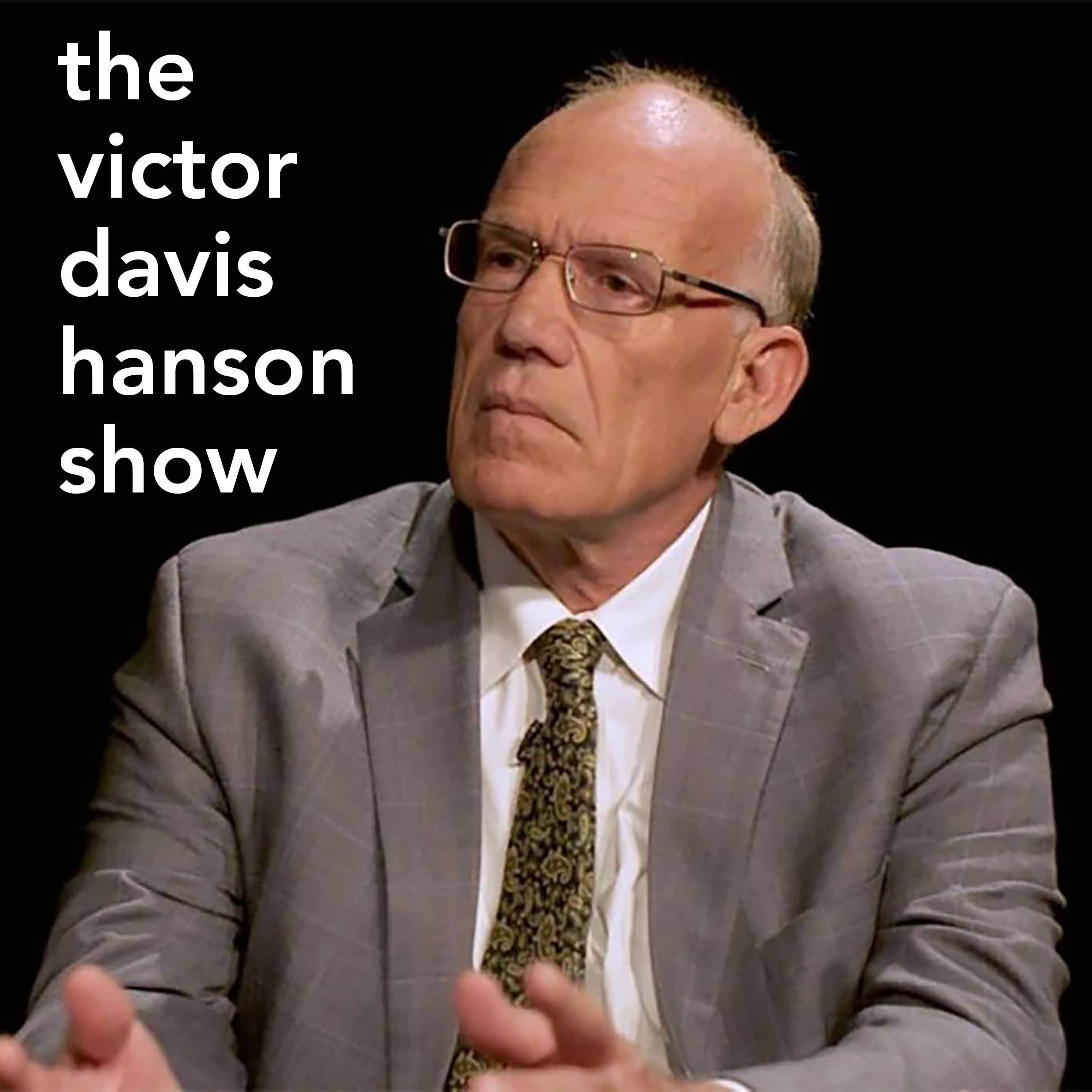
Loading summary
Transcript110 lines
- [00:00]
Advertiser
Notice how the days are shorter but your to do lists aren't. Power through your busy days with Factors no prep, no mess, meals from breakfast to dinner and anything in between. Factor has easy, nutritious options to keep you fueled and feeling your best. Whether you like routine or you enjoy mixing things up, Factor has you covered with 35 different delicious meals every week and over 60 additional convenience options that you can add to your box like keto cookies, pressed juices and smoothies. Don't let shorter days slow you down. Stay energized with America's number one ready to eat meal delivery service. Because Factor's Meals are chef prepared and dietitian approved, you're going to love not only how Factor's Meals taste, but also how they support your goals. And check this out. Factor is cheaper than takeout and dining out. Put the money you save towards holiday shopping or reaching your financial goals. Head to Factor Meals.com 50Victor and use the code 50Victor to get 50% off your first box plus free shipping. That's code 50Victor@Factor Meals.com 50Victor to get 50 percent off your first box plus free shipping while your subscription is active.
- [01:21]
Victor Hansen
Hello everybody, this is Victor Hansen and I'm alone today as I do often with our interviews, Jack and Sammy. You'll be hearing from them later in the week, but I'm bringing back one of our guests who's appeared a few times on the interview, Stephen Quay. If you remember, he was the distinguished business person, but also an MD scientist, author, head of Atossa Therapeutics, researcher. He wrote a book, remember in 2021, which we talked about at length the origins of the virus and he did a lot of discussion online with us about the genetic sequence and was one of the first people to really argue persuasively for a Wuhan lab origin of the virus at a time when we were getting a lot of disinformation. But what we want to talk to him today about is the status of public health, but especially what he sees as the challenges in the new Trump administration. And look at some of these appointees, some of whom he knows, some of them I know, and many of them were against the grain. And remember we, we said in the last podcast that there is a there, there is a tendency with Donald Trump to pick people to run agencies that they have been targeted by. And that's certainly true of Cash Pat, the FB whom the FBI had surveilled. It's true of Pete Hexeth, who was very unpopular after he wrote the War on Warriors. Tulsi Gabbert was put on a no fly or a terrorist watch list and now she may be the Director of National Intelligence. And Jay Bacharya is the same thing. The NIH was not very friendly to him, especially here at Stanford University. So Stephen, it's good to have you back. And my first question is, why don't you weigh in or give me your thoughts on any of the recent picks, whether that would be the cdc, the fda, NIH and what might happen at HHS under rfk.
- [03:31]
Stephen Quay
Yeah, I think that's a great place to start. I mean, I'd like to focus on HHS and the FDA and the nih, which are actually under hhs. But those three organizations have the biggest impact on America Americans lives. I mean, HHS is quite a remarkable organization, right? They have a $1.7 trillion budget. They only have 83,000 employees. Compare that to DOD with $825 billion, so about half as much and 3 million employees. So they are leveraging a lot of money inside that organization. Their mission, they say their mission is to protect public health, to provide human services and to focus on vulnerable populations. And so if you understand the structure, CDC N, fda, cms, the Social Security folks all come under hhs. So it is the largest umbrella organization in the federal government. And so its appointment is by definition really critical.
- [04:32]
Victor Hansen
Have you ever had any intervention, action, association, whether formal or informal or just general knowledge of rfk?
- [04:42]
Stephen Quay
Yeah, so I was interviewed by him when he did his own book on the COVID origin. So I spent a little bit of interview, you know, in an interview with him. I have tried to review sort of his last five years of public statements for you and you know, for our listeners here to try to get a sense because I think if we ground ourselves in what he has been saying and his, he has been shifting some of his positions, but you know, he has sort of five major focuses. Enhanced vaccine safety, transparency. This does not mean stopping vaccines, but more being sure that the package, a description of the safety data is available to parents and doctors so they can, they can make their decisions about it. He wants to reform food safety regulations. It's many people may not know, but there are many, many food additives that are not approved for human use in Europe, but that are in our food chain here in the US and that would be a great place to start because, you know, if the Europeans have found substitutes and if they don't want to include them, that's, you know, that's an important thing. You know, combat chronic Disease. I mean, we are, we are at a crossroads. We have 40% adult obesity level. Severe obesity is 10% chronic diseases, 6 in 10Americans. So focusing on chronic diseases and the role that lifestyle decisions play, you know, heart disease, diabetes, cancer, obesity, that's his number three, as I see it. Number four, he wants to address environmental health risks. So he's big on fluorinated water and on pesticides. We can talk about the fluorinated water issue. I'm not as wrapped around the axle as he is about it, but in any case, and finally, he wants to restructure health agencies to make them more available to the public and to remove corporate influence. I don't think people understand the two fold impact of having the FDA's budget be supported by pharmaceutical companies. Number one. And number two, the round robin of people at the FDA going to pharmaceutical companies without any hiatus, without any break.
- [06:51]
Victor Hansen
That's a potential point.
- [06:53]
Stephen Quay
Conflicts of interest.
- [06:54]
Victor Hansen
I think in an earlier podcast, it's, it's very analogous to the military where four star generals or defense secretaries rotate out or rotate in from, or rotate out to Raytheon, General Dynamics, Northrop, Lockheed. And you get the impression they draw on their former colleagues and even subordinates to sell them policies, sell them projects, sell them weaponry that might not otherwise be approved or might not not be in the, in the cost of benefit analysis of the American people. But the same thing is true, I guess, of the pharmaceuticals and the hhs.
- [07:34]
Stephen Quay
But yeah, it is. Victor, I believe that President Trump in his first term actually did an executive order that there was a, I want to say five years, if I remember correctly, but there was a high, you know, there's a time when you, you could not go, you could not leave the government and go and work in a company that was regulated by.
- [07:52]
Victor Hansen
It sounds from what you've said, I mean, the media has demonized rfk and he's, as you said, he said some controversial things. But I guess what I'm getting from your brief exegesis is that these four or five general areas that he's marked out, we don't know exactly how he's going to implement, but what he said is in the right direction, that you can see that all of them need to be addressed and have not been addressed in the past.
- [08:22]
Stephen Quay
Absolutely, Victor. And so, for example, his vaccine position is kind of interesting. Starting in 1986, the manufacturers of vaccines told the government, we can't make these if you don't give us indemnification for liability for side effects. So a bill was passed There were a dozen or so vaccines at that point in time, and they're now 86 vaccines. And none of the companies have financial liability for side effects related to the vaccines. They're all covered by the federal government. That's a, that seems to be a funny situation. If they're safe and effective. I mean, you wouldn't think, you wouldn't think you would need that kind of financial coverage.
- [09:00]
Victor Hansen
You gave an earlier broadcast with us, podcast with us where you outlined some of the ambiguities of the MRNA vaccines. And I think, as I remember the gist of your argument, an argument can be made. It was almost genetic engineering rather than the traditional approach to vaccines, and therefore it hadn't been, although it had efficacy. I think you early on expressed some reservations about the period of the usual safety analysis that transpired. It was rushed, A, and B, it was a very radically new way of making a vaccine. And maybe even the word vaccine in its traditional usage might not accurately describe what was actually going on with the Moderna and Pfizer.
- [09:48]
Stephen Quay
Yeah, that's absolutely right. I mean, the mechanism that they work has never been used in a drug or pharmaceutical in history. And so there's always unintended unknowns when you go into that kind of space. We know some of them now that are pretty detrimental. And so, yeah, I mean, you know, I don't like to be, you know, hindsight is 20 20, so I don't like to fault people who are in the, in the trenches at the time. But I think there's, there's a point now where it's very interest. The CDC has said the pandemic is over. The WHO has said the pandemic is over. That was both in May of 2023, but the current HHS head has kept us under the pandemic emergency authorization. Now, one consequence of that is that these vaccines do not need to be shown to be safe and effective at the approval level that would be required by a normal vaccine. The thought is that when you're in an emergency situation, if emergency is declared by the head of hhs, then you will not cut corners, but you'll be more lenient. But these vaccines probably could not stay in interstate commerce if HHS said the pandemic was over. I can tell you that if RFK gets nominated, that will be his day one operation to say that, yes, the COVID pandemic is over and therefore these things need to be approved like a conventional vaccine. I'm not sure they can pass that threshold.
- [11:22]
Victor Hansen
Yeah, I think he's Going to get wide support. I was looking at some figures of the level of participation in the original two vaccinations, which Fauci and we had talked about that, not literally, but by inference basically said that if you get these two experimental vaccinations, you will not be infectious and you will not. And you will not be infected. And yet I got Covid. I think it was eight months. I've had it three times. The first time was eight months after the vaccination. But the point I'm making is that 68 or 67% of people got that vaccination. But when you look at the latest booster, Stephen, it's gone down to about 25%. Yeah. People are only about a quarter and I think that might even be high now. Or getting their regularly advised vaccinations. And when you go into a Rite Aid or Walgreens, it's amazing how they push that. And I get, I get an email almost every month saying. Or from my doctor's office or from one of the drugs, drug schools that you haven't. Victor, you have not got your booster. It's time to get in. I've only had one booster and I regret that. But whatever, the RFK will have public support behind him. We're going to take a quick break and we're going to be right back. We're with Dr. Stephen Kwei and we're discussing this new. I guess it's not a revolution. It's a counter revolution of the Trump administration, as exemplified by the appointments. And we're looking at those in the health industry. And we'll be right back.
- [13:03]
Advertiser
Finding the perfect gift can be pretty overwhelming. I always want to make sure that I'm giving gifts that people actually want. This year, I found the perfect spot for timeless gifts made from premium materials. You've got to check out Quince. Quince lets you treat your loved ones and yourself to true quality at an affordable price, no matter what you're looking for. All Quince Items are priced 50 to 80% less than similar brands. By partnering directly with top factories and cutting out the cost of the middleman, Quince passes the savings on to you. Quince is on the nice list. They only work with factories. They use safe, ethical and responsible manufacturing practices, and they use premium fabrics and finishes for that luxury feel in every piece. And I should know. As the cold weather has arrived, I'm keeping toasty warm with my handsome Quince navy blue Sherpa gift Luxury this holiday season without the luxury price tag. Go to quince.com victor for 36065 day returns plus free shipping on your order. That's Quince Q U I n c e.com Victor to get free shipping and 365 day returns.
- [14:19]
Quince Advertiser
Quince.com Victor Hey, prime members, have you heard? You can listen to your favorite podcasts ad free. Good news, with Amazon Music, you have access to the largest catalog of ad free top podcasts included with your prime membership. To start listening, download the Amazon music app for free or go to Amazon.com adfreepodcast that's Amazon.com ad freepodcast to catch up on the latest episodes without the ads.
- [14:48]
Victor Hansen
We're right back with Dr. Stephen Kwei. Stephen, can we go to the NIH and maybe you could just explain how that is a little different in the sense that that's where all the $50 billion in research money is bundled. And it seems like that one particular branch of hhs, the National Institute of Health, draws the most attention from people like us in academia and that have been in academia. And that's where the money gets dispersed for research. And there must be, and there is the suspicion, there's a lot of politicalization of that. And maybe in the last four or five years with DEI and things, there's, there's a sense that Jay Bacharya may come in and try to bring the NIH back to where it was maybe 10 or 15 years ago. But maybe I'm just speculating.
- [15:44]
Stephen Quay
No, I think that's, that is the hope, if I, if I can put it that way. So, yeah, you're absolutely, absolutely right. So the NIH in Bethesda, Maryland, has an internal research program. So they have their own buildings, labs, people, and then they have an external program where they write checks to every, you know, academic scientist doing medical research in the country and even overseas. So that's, that's their charter now. I mean, it's, to me, it's interesting if you look at historically, the appointments have not, I don't have all the details on this, but the appointments don't necessarily come about because of what I see in the community. But what has happened is that whatever is the prominent medical research going on in the country, in terms of discussions, in terms of what people on the street know about people that lead that charge often become head of the NIH. So the evidence for that, in the 90s, we were finding all kinds of factors that drove cancer. That was the big thing. We were finding cancer drivers all over the place. A UCSF doctor named Harold Varmus, Nobel Prize winner, became NIH head because he was at the forefront of that particular research in the 90s. Jump a decade and what do you have? You have the Human Genome Project, which was said to be, I talk about overpromised and under delivered outcomes. That was probably one of the best. But in any case, so Francis Collins, who led the government's, you know, research on coming up with the 6 billion letters of the human genome, he became the NIH head. This is the first time that an epidemiologist has become head. And this is really a critical difference. All the other heads, all the other approaches to NIH are trying to develop treatments for individual patients. And it's laudable, it's wonderful, it's an interesting post. But Jay's approach to medical research, to medical investigation, to those sorts of things, is to look at the effects of healthcare policies, decisions on populations. So he will do the population studies and then look at what policies drive what outcomes. And clearly, I think the public is saying what the policies you guys did with respect to the, to the COVID Vac, you know, the COVID pandemic didn't work. They didn't work for us, they didn't work for our children, they didn't work for the people. And so we've brought in somebody who understands this discipline and can, can truly make changes. Now. He had a rough time. I mean, he first came to attention in, I want to say, March or April of 2020 when he did a little study in Santa Clara county, showed that there are a lot of asymptomatic cases and therefore, if the numerator is death and the denominator is cases, it wasn't a highly lethal virus for most people. It was, it was actually, you know, under 1%. And he was chastised for that and really, really criticized heavily. And of course, he's absolutely right. It's absolutely true. You know, and then, and then he went on to the, to the great, the Barrington Declaration, which he and three other epidemiologists put together to say we should be protecting the elderly and the people at high risk, and then we should let the herd immunity go through the population.
- [19:09]
Victor Hansen
One thing I've noticed about Trump, as I remember, Francis Collins was appointed by Obama. But, you know, Trump came in not being a politician and not understanding that medicine and healthcare policy, like any other discipline, is, can be political. So he just left all those people in. He didn't touch Fauci. He left Berks with her former job. He left Collins. I think Collins had been there for, gosh, 10 or 12 years, 12 years and two left. But now Trump has come in after the epidemic and realizes that these high profile positions at cdc, at fda, at nih, at hhs, at National Institute of Allergies and Infection, they are, have. There's a political element. And so he's taken kind of a micro interest in them and he's really selecting people that reflect dissidents or they're not con. They're not part of the prior consensus as I see RFK and J. Bacharya. I can remember on campus when the Stanford Faculty Senate censored him and the argument was that although he had an md, he did not have a medical license, even though he had a PhD in economics of healthcare. He never said he was a doctor. He said he had been trained as a doctor, but he wasn't licensed. But they then use that to go after him and say that he was out of his lane, not qualified, even though that he was commenting on how one discusses cdc, FDA policies in the general. That's what is. And the economic ramifications of it as a more as a PhD than a practicing physician, which he wasn't. He was an md but they went crazy about it and they tried to. They censor him again. And of course, they went after Scott Atlas at one time and tried to yank his medical license and then did censor him and he's still censored. They tried to lift the censorship of Scott and it failed.
- [21:24]
Stephen Quay
But.
- [21:25]
Victor Hansen
And to the disrepute of Stanford. But it does seem that Trump now has really elevated these appointments that they're in the pop. I don't remember. Maybe you can correct me 10, 20 years ago if you said, who do you think will get cdc? Who will get nih? Who will get fda? Who will get. I don't think anybody talked about it, but now it's almost like the Defense Secretary they seem to be. Because we realize after the epidemic and Fauci and everybody, the enormous powers that they hold that transcend medicine, they get into the economy and freedom and everything else.
- [22:05]
Stephen Quay
Yeah. And I think another thing that RFK did during his own presidential candidacy that he's bringing to bear here is the concept that Americans are not healthy. And it's not being addressed, it's not being talked about, it's not being focused on for me. I mean, I don't want to make too much of this, but you know, I was growing up when JFK was president, of course, and he, you know, he had that little presidential fitness program. Yes, he was very much in favor. He talked in fact, to some of his lectures about the national security interest of having a healthy population.
- [22:43]
Victor Hansen
He did remember the 50 mile hikes.
- [22:46]
Stephen Quay
Exactly. JFK.
- [22:48]
Victor Hansen
Remember, my father had us go on one. Gosh. It was. Kept saying if we can go four miles an hour. And we were. I think we quit about miles.
- [22:56]
Stephen Quay
Exactly.
- [22:58]
Victor Hansen
But that was a big thing. And touch football and all of that stuff. That was really good.
- [23:05]
Stephen Quay
Yeah.
- [23:06]
Victor Hansen
Trying to bring that, bring that back. I think.
- [23:09]
Stephen Quay
Yeah, I think he is. And I think, I think it's going to be welcome. There are so many things we could do better with our lifestyles. I think everyone. It's kind of an interesting problem for me. I can't figure out how to solve it. We sort of know all the things that we should do and yet I think part of our biology drives us to not do them. If I can put it that way. Right.
- [23:33]
Victor Hansen
It seems like everything has high fructose corn syrup in it.
- [23:37]
Stephen Quay
Absolutely.
- [23:37]
Victor Hansen
Yeah. And I noticed, I saw a statistic, one out of every four Californians who is admitted to the hospital for any reason whatsoever. Nothing to do with weight or anything, but any reason that has a blood test, one in four is diabetic and that has excessive blood sugar. And I go to a. I'm in a rural area, but there's a big supermarket and after RFK had been on record, I go in and I just look at the number of people and I just say to myself, I'm going to look at the first 10 people, the first 20 people and see if they're obese. And I, And I can see it in my community, it's up to about 60%, 70%. And it's, it's. And I look at the carts and it seems to me, I mean that the amount of Mountain Dew, Coca Cola, Pepsi, that's not even, not even diet, not that diet would be that much better. But this is pure corn syrup and then processed food. Everything is frozen peas, frozen pasta, frozen this, frozen that. And I think that's what he's trying to. I think he is going to get confirmed. And I think his success or failure would be to. As a somebody who looks at the political thing is how well he sticks to the things that you just outlined, Steve, and doesn't get into the autism and all of that stuff that he's talked about. And that's what his critics are going to fixate on. But yeah, yeah, because those are controversial. I'm not saying they're true or false, but his arguments that vaccines can create autism.
- [25:19]
Stephen Quay
I know, yes, highly controversial. And it just uses up the time. I mean, yeah, I think Trump learned and is teaching these folks probably, I'm guessing that one of the strategies of the party not in power is just to distract everybody from morning till night. Just distract them on Monday and then go in on Tuesday and distract so that they cannot achieve their objectives. And you know, in so doing they defeat, they defeat their objectives. So I think being disciplined, everyone's going to have to be very disciplined in his organization to say, hey, these are the five things I'm working on today. And I don't want to hear about the latest thing from the newspaper or something.
- [25:58]
Victor Hansen
I think that's absolutely right. You can see that on the border they've been very careful to say they're going to do the deportions in iterations. And the first one will be very popular. It's the 151.5 million that already have immigration deportation orders on those individuals. And the next one is the somewhere between 300 and 500,000 felons. So and I think they feel that they'll build support slowly by doing something that are not the controversial. And those, the last iteration of people who have been here, say five years, they're not on public assistance. They're working. I think they want, if they can do the earlier ones, then they'll be able to work something out in a bipartisan fashion. And I think the same thing's true. What you outlined on health. If RFK does those, they have enormous public support and then maybe anything else he wants to do, he's going to have to. But he'll have a goodwill built up if he does that.
- [27:02]
Stephen Quay
Exactly. Yeah.
- [27:04]
Victor Hansen
What about the C. CDC and the fda? Either one.
- [27:09]
Stephen Quay
Yeah. So the, the FDA nominee is, is Dr. Marty McCary, British born American surgeon. He's at Johns Hopkins. You know, very, very skilled, very high level surgeon. Yeah. As a former pilot, I kind of smiled when one of his claim to fames was to create what, what he called the surgical checklist. So, you know, if you're a pilot, you, you operate by your checklist and if you don't follow the checklist, you are eventually going to crash. It's, it's that simp simple. So he introduced that to surgery and it's remarkable what a simple thing it was. But it made him sort of one of the most influential people in 2013 in healthcare. So he doesn't have industry experience, which is good. He's not involved with drug development, which is good. Again, I've analyzed what he has said about what he wants to do with the fda. And again, he has sort of five topics. One is to enhance transparency. So we're fighting to get a million pages, 1 million pages of paper from the Pfizer vaccine development that the FDA is blocking. They said, we'll give it to you in 75 years. People went to court, they're peeling back the onion on that. But I mean, that kind of thing, I mean I, you know, it's just, it's bad pr. It's probably bad, you know, maybe there's stuff in there that they really are concerned about or something. But he wants to accelerate drug approvals. This is, can be a little bit controversial, but what is Donald Trump's. I mean, I think one of the best things he did, and it doesn't get a lot of notoriety, but what he passed a policy or a law, I don't know the legal aspect, but it was the right to try. And so basically it was a situation where if you have a doctor and you have a patient and they have a very serious condition, maybe a terminal condition, and there's a drug that looks like it might work, the paperwork goes away, you get to try it on this patient. And that has been individually popular, amazingly popular. I don't know the young lady's name. He has a young Gen Z ER that does his social media. She apparently is the beneficiary of that treatment for a condition she had herself. And this is public information, so I'm not speaking about her out of turn. But she went to work for him after his policy saved her life, basically. So these kinds of things are important. So addressing conflicts of interest at the ftc, promoting evidence based medicine and improve public health communication. So communication is a common theme here because we've, we've had four years of lack of communication and so that's a pretty easy thing to.
- [29:47]
Victor Hansen
I think that's a really good point you just, you just made because all of them, I know the left has criticized them for this fact, but in the case of Makari and Jay at NIH, as well as Bobby Kennedy and I think you could argue Dr. Oz, which is at Medicare, Medicare, Social Security, medicine, CMS. Yeah, all of them have been on TV a lot. So they're all skilled communicators and a lot of them have been on Fox. I think I've been on some Fox News where they came in right before me and I heard them in the green room or the electronic green room. So all of them know how to communicate. And that was one of the successes of Anthony Fauci, that during the AIDS academic he developed those tools.
- [30:38]
Stephen Quay
Yes.
- [30:38]
Victor Hansen
That he could speak well and I don't, I have my own criticisms of him. But one thing, one of the reasons he was successful was that he knew how to handle the media pretty well. How about, we've done the FDA. How about the. Any other CDC or Dr. Oz? I don't know much about Dr. Oz other than his TV Persona, but I was kind of curious that that position in charge of the Medicare medical or Social Security, that element of healthcare, government health care, I don't know what the prior requisites for that would. That seems much more social policy than it is. Maybe to the same degree of medical expertise as the ones we've talked about.
- [31:36]
Stephen Quay
Yeah, it is, it is trying to figure out how to, how to take the dollars you have, excuse me, and spread them as successfully as possible, you know, across communities and that sort of thing. He has spent time talking about some of the Medicare programs like the Advantage. So he does have some personal expertise in this. I guess self taught nonetheless, but so. And I think we cannot underestimate his ability to communicate with people. If you talk to people who are in the Medicare Medicaid system, it's a labyrinth. Right. And so if he can figure out ways to make it more user friendly so people can get to their doctor and they can, you know, get the appointments and that sort of thing, he can make incremental changes there that could be very useful.
- [32:26]
Victor Hansen
I, I don't know. Did you know much about the former representative, Dave Weldon?
- [32:32]
Stephen Quay
I don't. He.
- [32:33]
Victor Hansen
He's a doctor from Florida and I guess he was a doctor. I guess he was a. And he will be at the, I guess he'll be at the CDC. And in terms of the budgets, the CDC, the FDA, they're in the, are they in the eight to $10 billion range? And then the big one is NIH because of the disbursement.
- [32:52]
Stephen Quay
That's right. And then of course CMS is huge because it's just a disbursement budget.
- [32:56]
Victor Hansen
But have you had personal, have you had personal grants or interactions with NIH in the past?
- [33:04]
Stephen Quay
Oh, yeah, yeah. So, you know, I was at Stanford for a decade and I had the usual R01s, as they're called, which is a investigator sponsored grant. I have VA grants because I had a lab at the VA there in Palo Alto as well. So there, you know, they, I saw.
- [33:23]
Victor Hansen
They had $700 million at Stanford. Yeah, it was the second largest university to receive. I don't Know what that's going to, I'm not even going to speculate because I, I know Jay Bataria and I've, he's, he's a wonderful person, but it's going to be ironic. I don't, I, I, I'm going to use that neutral term that the university was on record, if you, at least if you look at the vote of the, of the faculty senate and the medical school, that they censored him, and yet he's going to be in charge of all NIH grant, not on the micro level, but as the general administrator. And I was told, and this is just, I haven't looked at the data, but many of these new grants have elements that came in the last five years. In other words, awareness, sensitivity to emphasis on what I guess I would call dei. In other words, the social ramifications of what your research, even though it's what would be the social race, class, gender, environment, what's your background in that environment. That might predicate the granting of this request and I think both because of the Supreme Court's ruling on affirmative action, but also Jay Bhajaria's outspoken opposition to that type of cultural interference in pure medicine, that a lot of those grants, both at Stanford and elsewhere, are going to be questioned, or at least their policy would make people revert back to more of the science and less of the social implications.
- [35:03]
Stephen Quay
I think that's exactly right. And I think these folks will be able to push back the DEI things at their level in their organizations. You know, we still have the education system, the college system, where it's, it's, it's, it's hard to imagine what you would do to turn it, turn it around in some of those organizations where they have 80, 90% alignment, you know, in terms of their political views on the faculty.
- [35:31]
Victor Hansen
Yeah, I just don't, I don't see as a historian, when you look at these systems of audit, like commissar system in the Red army in World War II, when you have large numbers of people who are not producing anything, but they're monitoring and they're monitoring from an ideological point of view, and you predicate a cancer prevention research or surgical technique or a new pharmaceutical, and then somebody who's not productive is now supposed to evaluate that and say, what is the ideological litmus test that this meets or does not meet other than strict medicine? I understand that everything has cultural environmental ramifications, but it reminds me so much of the Soviet system where every scientist, every engineer, every general was evaluated not just on the efficacy of what they were doing in their field, but the degree to which they resonated, class struggle and the party line. And I think it really hurts science. I was going to ask you, we've gone through most of these, but you're still the CEO of this company at Tawson, we talked about breast cancer. Are you going beyond that recently or what's the most recent?
- [37:00]
Stephen Quay
Yeah, I mean, I'm in San Antonio, Texas, where there's an annual meeting, breast cancer research, the largest one in the world, 11,000 people, 102 countries represented. So, and we're presenting the results of a two year study that's pretty compelling. What we do is identify women that have a high density on their mammograms. So their mammograms are really white is what it means. And then we give them a low dose of a drug that is side effects. When we broke that, when we broke the code, the side effects were the same as the sugar pill. And it lowers the density. And the consequence of that is it lowers the incidence of cancer. So I'm going to go full tilt over the next couple years on this concept of being able to identify women. So you don't think about your breast health till you're 40, unless you got a huge family history, but you get your mammogram at 40. And if you're one of the 10 million women that have high density, maybe you'll go on this drug that we're developing for prevention. And if the numbers work out, it would be about half of breast cancers would be prevented. So instead of 250,000 a year, it'd be 120.
- [38:03]
Victor Hansen
Is the high density a genetically determined factor or is it on diet and weight?
- [38:09]
Stephen Quay
It's really interesting. That's a really great question. There's a genetic component, there's a diet component. It's a very complicated process. And the science is also kind of complicated because the cancer occurs in 3% of the breast that's not producing the density. 97% of this is a stroma. It's just a supporting tissue. And yet that background is what determines the cancer. It's almost like it's a neighborhood effect. So if you have a bad cell in a good neighborhood, you don't get cancer. But if it's in a bad neighborhood kind of thing, then it does develop into cancer. So this is, this has really, really been good science. And I'm excited to move it forward and excited to be bringing, you know, bringing it to an FDA that may be talking about, you Know, accelerating approvals because it's one thing to treat cancer and we're great at that, but it would be so much better to prevent it.
- [39:04]
Victor Hansen
You know, sounds. So I. I had a. My mother died of cancer. It was a rare. It was mostly they were. It was a meningioma that are usually benign, but hers was one of the 10% was malignant it and that very quickly gravitated to the breast. And her grandmother died of breast cancer. Her sister, she died at 65. And her sister, my aunt, died at 49 of breast cancer. And the third sister died at 60 of kidney cancer that also had a breast component. And I had a daughter who died at 26 of very rare form of leukemia. And we never really knew whether it was. I'm speaking from this farm, all these people grew up in this farm. And whether it was the organophosphates organochloride revolution of the 40s, 50s and 60s, or whether it was genetic. Because one of the things that was strange about it, I had a first cousin that went and talked to some epidemiologists is that none of the males in this family got cancer. Yeah, it was. And they were in the same environment. All the females did. Almost all of them, in fact.
- [40:19]
Stephen Quay
That really points to a genetic basis, doesn't it?
- [40:22]
Victor Hansen
Yeah, I think so. And I've been poisoned because if you put the. There was something called dimethylate. It was a big.
- [40:29]
Stephen Quay
Oh yeah.
- [40:30]
Victor Hansen
And that was something that was. It was sold under the. The label defend. And before the integrated pest management theories came out about selecting of pesticides, if you had a vineyard and you had spider mites and you had worm, instead of giving you a bacillus that killed the worm and a very specific one to kill the mite, another one to kill the hopper. The pesticide company or salesman would come out and say, hey, Victor, why do you want to go up and down through your field with that awful stuff three times? We can give you a super. And this was created in the 60s. So I did it in high school with my. My grandfather had me do it. And then I did it a lot, but mine. And I got. At one point, the pump broke, the piston pump. And I went to fix a hose and I got a shot of the full stuff and I was sick about three or four months. Same thing with herbicides. So I don't know. All I know is that I haven't gotten cancer yet. And I've been exposed directly to it, to that stuff for a long time. But all the women and my mother her two sisters, my daughter, and also unfortunately my sister in law who lived here. She died of leukemia. But it's, it's, it's.
- [41:49]
Stephen Quay
Yeah, it often can be genetics coupled with environment. You know, it's not a one factor process.
- [41:54]
Victor Hansen
When you, so you would have a protocol that a person, a woman would go in, get her annual breast X ray. Mammogram.
- [42:03]
Stephen Quay
Mammogram, yep.
- [42:03]
Victor Hansen
And then, and then what is the determining fact of low density versus high density for eventual manifestation of a tumor?
- [42:13]
Stephen Quay
Well, it's a pretty smooth gradient. So it's measured on a percentage basis. So you can go as low as 4 or 5% or 95 plus percent. In the trial we did in Sweden, we were focusing on the top 20% in density, which produce 60% of the cancers over the next two years. So you got of balance treatment versus versus what you can do.
- [42:39]
Victor Hansen
And once a person develops that density, does it ever regress on its own or is it just get more cute?
- [42:46]
Stephen Quay
You can make it regress with exercise, raise testosterone, lower estrogen. So it's very malleable.
- [42:58]
Victor Hansen
And if your drug were to be approved and a person who had a high density mammogram, then they would be put on the protocol and then they would be checked annually. And the idea is that that density would start to return to normal.
- [43:14]
Stephen Quay
Yeah, well, in the, in the six months of treatment, it, it, it dropped very, very significantly. It, it changed much rapidly, that much more rapidly than all of us thought. We're kind of expecting it to be kind of a low.
- [43:26]
Victor Hansen
So it's not that, it's not that it neutralizes the high density. So the high density doesn't turn in. It actually reduces the high density density rather than.
- [43:34]
Stephen Quay
Oh, that's correct. That's correct. You measure the efficacy based on the change in density after six months. So you can see it, which is kind of gratifying for the patient, gratifying for the doctor because you can see the efficacy.
- [43:44]
Victor Hansen
Does your research still focus mostly on breast cancers or have you. I remember, yes.
- [43:50]
Stephen Quay
Yeah, yeah, yeah. We were doing a little bit on Covid at one point in time, but we're focusing on that. And we're also focusing in the immediate time after diagnosis. It was called the neoadjuvant setting. So trying to make the tumor smaller before women go to surgery. So that's a second focus for us.
- [44:05]
Victor Hansen
Is that something, something that the United States does well or poorly vis a vis European countries? As far as breast cancer survival rates.
- [44:12]
Stephen Quay
And detection, we have, we have slightly better survival rates. We spend a lot more. But we do have better survival rates in the US Rather than in Europe.
- [44:23]
Victor Hansen
We do. And I remember in the Obama administration they did that with a PSA for prostate cancer they suggested. And I think that's been reversed. But they also said that especially federal subsidized mammograms, they weren't as necessary. Has that been walked back in the last four or five years or is it still, I don't know if you remember, the Obama medical groups said that maybe you don't need an annual mammogram or a psa. And then there was kind of a backlash and I don't know where we are that now.
- [44:53]
Stephen Quay
U.S. preventative Task Force was the group that said maybe you don't need them because the problem is that, you know, maybe 60% of women will have a biopsy in the 10 year period. One out of eight are positive. So seven out of eight biopsies are nothing. So there's a lot of healthcare spinning your wheels and anxiety and that sort of thing. So that is one of the reasons that they're being a little more cautious about mammograms. But there was a natural experiment done by Covid when the clinics closed and we now are seeing the uptick in cancers that you would expect from failing to follow screening modalities. PSA is a completely different story. It's kind of a very strange, easy to measure, hard to interpret what it means for care entity.
- [45:41]
Victor Hansen
We're going to take a quick break and we'll be right back with Dr. Stephen Kwei.
- [45:48]
Credit Karma Advertiser
With Credit Karma. Finding the right credit card for you is easy. Our app analyzes user profiles to suggest personalized recommendations. Visit creditkarma.com today to explore cards tailored to your needs. Credit Karma. Simplifying your financial choices. Your business deploys AI pilots everywhere. But are they going anywhere or are they stuck in silos, exhausting resources, unable to scale? Maybe you don't need hundreds of AI pilots. You need a holistic strategy. IBM has 65,000 consultants with gen AI expertise who can help you design, integrate and optimize AI solutions. So you're not just deploying AI, you're scaling it across your business. Learn more@IBM.com consulting. IBM let's create.
- [46:36]
Victor Hansen
And we're back. I'm Victor Davis Hansen and I'm interviewing today's solo without Sammy and Jack and Dr. Stephen Quay. And we're on our last segment. Just get back a little bit to Covid because you brought up a good point and I think it's going to come up in all of the hearings for rfk, but especially J. Bhattacharya and that is this. And it came up. I was at a faculty meeting. It came up vis a vis some people nominated for positions. I think the Scout Atlas position and the J. Bacharya position that when you shut down the entire economy, the K through 12 schools and you did that for almost two years and the medical system itself shut down the incidents of suicide, total death rates versus normal years before COVID or after Covid missed, missed medical procedures, substance abuse, spousal abuse, suicides, mental health issues, lost work, damage to the economy, damage of to. We had some people at Hoover who looked at the damage of young people at a formative age missing 2 years of school and they really didn't catch up in their reading ever to when they got into the 12th, 7th or 8th grade. Excuse me. Do you think that that issue is more or less settled? That that lockdown should have been much more targeted and less just blanket and that the. The Atlas Bhattacharya view of things which was contrary to the Collins Fauci Burke's. Is that settled now or is it still controversial?
- [48:22]
Stephen Quay
It's probably still controversial, but the. But the science is settled in terms of looking at the effects because you do have states that did you have these natural experiments where one state will do one thing, another state does another and then an epidemiologist can compare and say, well, which turned out better? And so the lighter touch was uniformly better in sort of all the parameters that are being measured.
- [48:46]
Victor Hansen
Something like Florida versus California or something.
- [48:49]
Stephen Quay
Exactly, exactly. Yeah.
- [48:53]
Victor Hansen
It's kind of ironic. Well, it still gets me angry because I was at Stanford University and I am there at the Hoover Institution when all of this hit the proverbial fan. And people that I had known that were. I mean Scott Atlas had been. He had been the chairman of the neuroradiology department. I remember when he brought him over to. From the medical school in Hoover. But he had been 20 years writing extensive things. Not just, you know, he wrote that big volume, edited the big volume on neuroradiology, but he had also written extensively on public policy and Jay Bacharya had written and John Yannidis, the epidemiologist. And I remember him primarily because during the controversy over the blood testing, the Theranos blood testing experiment where you could take two drops. He is an epidemiologist, wrote persuasively before it was exposed as a fraud. This will be very difficult to get one drop and have an accurate multifaceted blood test. But. And then I think we also had a Nobel Prize medical biologist who was applicable. He applied research and theoretical Michael Levine and all four of them. It was very ironic, Stephen, because we had this Nobel Prize winner, Levine and we had this marquee epidemiologist, John Yianidis. And then we had Jay Bhatcharya who had written about public health policy. And then we had Scott Atlas, who suddenly bec came to the attention of the Trump administration, became an informal advisor to them and quickly gave advice contrary to the triad of Collins, Burks and Fauci. But they were all at Stanford University, the four, and they were about the only. There were others, Martin Kuhl and others, but they were the ones that were getting the controversy. And you thought, you would think the university would like that type of debate and say here at Stanford University, we challenge orthodox and we have orthodoxy and we're having this intense debate and there's arguments that are emerging on both sides and we welcome. But that didn't happen. The president of the university, the provost, they were censored and their careers were almost ruined.
- [51:27]
Stephen Quay
It would have shown such leadership.
- [51:29]
Victor Hansen
It would have.
- [51:30]
Stephen Quay
It is remarkable that the president doesn't see the strategic value of stepping up.
- [51:36]
Victor Hansen
They had so much stepping above, sort.
- [51:38]
Stephen Quay
Of above the fray and say that's what we do in universities. We, we debate.
- [51:42]
Victor Hansen
Yeah. And I, I wrote I think two or three op eds and think this is a golden opportunity. And I, I went on Fox and said that this is a golden opportunity to really show the Stanford Medical Yes. Resources that we have that when you have Nobel Prize winner or the, the single great mind that exposed what was going to happen at the. Before it collapsed by just saying when that, when that young researcher was telling everybody this is a miraculous development. And here was Dr. Yani say it may be getting a lot of pizzazz and you may have celebrities, but when you look at the actual science.
- [52:20]
Stephen Quay
Yeah.
- [52:20]
Victor Hansen
This has been tried before and it'll be very, very difficult following for, for this to be accurate. And it can be very dangerous if it gives false or.
- [52:29]
Stephen Quay
Yeah, for sure.
- [52:30]
Victor Hansen
And he was, he was proven right and Stanford thought this was wonderful. And then I can remember Jay as a colleague of Scott Atlas. He was very blunt, but on many health issues, especially the cost to benefit analysis, he was not controversial on that and people at Stanford welcomed him outside of the Hoover community. And then as soon as that quartet challenged the orthodoxy of Fauci and Burks, to a lesser extent Collins, he wasn't as visible. They were completely, I mean they were censored and, and there was a move to dismiss some of them and it was just. I've never seen anything like it in my life. It was even.
- [53:14]
Stephen Quay
Was that the first time that's happened with, with, with Dr. Fauci? Of course. Because in 2014 when a couple gain of function experiments in the Netherlands and the Wisconsin Said said, ah, this is, this is too scary. Maybe we should quiet stop this. You know, slow down a little bit. A group called the Cambridge Research Group was put together to write letters to, you know, advise Obama, President Obama at the time, excuse me, and Fauci. Fauci would call them up individually and say, look at, you know, your support of. This is bad for your. For your research. Your research.
- [53:48]
Victor Hansen
I think he's. I just read had. We're talking about Anthony Fauci. Everybody remember that he's come up in the news in a different context and that is the Biden administration and it's waning. 40 Days is thinking about something we've never done before. Preemptory pardons, in other words, giving people a. In the case of his son. But who knows how long it could be a decade of exemption from any criminal exposure, but not just known criminal exposure, but possible or theoretical that might turn up with the release of documents. And Dr. Fauci is one of the persons, and I'm told largely because he. Largely because of his statement under oath that he was not using National Institute of Allergy and Infectious Disease money, it was not being routed through Echo Health to support gain of function. And I think he was asked directly by Rand Paul, is the United States government using funds or resources to support gain of function research in China? And he said no. And I think people were struck by that assertion. But in any case, one of the things we're going to see in this counter revolution is all of that policy and all of that demonization of these doctors and people who descended, I think are going to come back into the public sphere. And I think that's created a sense of fear on the part of Dr. Fauci. I just like to ask what happened? What is the. I guess I'm confused about the National Institute of Allergies and Infectious Diseases, which is a subset of nih, but how did that subset end up with such power under Fauci? He was never the director of nih, which was his nominal superior. Was Collins, in theory, the person that Fauci reported to.
- [55:56]
Stephen Quay
Yes, that's what, that's what the org charts would say.
- [56:00]
Victor Hansen
How do you make that domain that is very important. But how did he make it into such a more, how did he get more prominence than the CDC director of the NIH?
- [56:13]
Stephen Quay
Very simple, very straightforward. After 9 11, Dick Cheney said that bioweapons research and surveillance and prevention should be moved out of DoD into the NIH. And Fauci was put in charge of that, I want to say, 18 years ago. So he has had two silos to play in NIAID and also then the DoD bioweapons program, most of it is still.
- [56:39]
Victor Hansen
And he, but he was also referenced in the public sphere for the AIDS epidemic as well, wasn't he, Was he still at ni? That's where he's been his whole life. Life.
- [56:49]
Stephen Quay
Yeah, it is, it is, yeah. So 1980, the AIDS, the AIDS first appeared and, and he was, he was there as a, you know, a young, a young doctor champion AZT and other drugs. So that's where he cut his teeth on aids.
- [57:06]
Victor Hansen
Wow. So anyway, I don't, I, I get the impression that the new director of the direct of the National Institute of Allergies Infectious Diseases will, that that bureau will resort back to one of many bureaus within the HHS or under the nih. But it won't have that same prominence, will it?
- [57:33]
Stephen Quay
Yeah, I don't, I don't think so. I don't think there'll ever be someone who can consolidate power the way Dr. Fauci did in the near term at least.
- [57:40]
Victor Hansen
Yeah. Well, let's. Any final comments you want to make, Stephen? Because no, almost.
- [57:45]
Stephen Quay
This is, this has been really good. I hope you're, hope your listeners enjoyed it. We've.
- [57:49]
Victor Hansen
No, it's good to get insight on all of these appointments and as I said, as we said earlier, they, they've taken on a level of prominence we haven't seen before and I think that's a result of the COVID controversies and the, I don't think anybody really understood that somebody in the NIH or the cdc, either by statute or by force of personality would have the ability to lock down the entire country. I think, I don't, I think in retrospect they're going to see that Fauci and to a lesser extent Collins and Birx had that power and they're going to be very skeptical of. Yeah, that. I don't know if that's good or bad, but it does seem that he, he exercise a level of power that's unprecedented for a doctor in American history.
- [58:38]
Stephen Quay
It is. And he was ill trained for it. Yeah.
- [58:41]
Victor Hansen
Yeah. I don't think he was trained for it. And I think a lot of people were hurt by that. And everything that I grew up with, as a just a layperson looking at the medical field, I had enormous respect for Lancet, that was always the prestigious British medical journal. And when they did that investigation under Peter Dasic's, I guess you would say, people who were not disinterested, and then they had to retract it about the Wuhan lab, and then Dr. Fauci, his testimonies under oath, and sort of now Collins and to a greater extent, Redfield have backtracked. You get the impression that whatever that was, it there, it was weaponized and politicized. And I don't think we'll ever quite know the true story of what happened, but there was a lot of damage done to the country, psychological damage. I just look back, and I don't think that the reaction to George Floyd and the rioting and all that would have been as intense had people not been locked down and not. I don't think that would have.
- [59:50]
Stephen Quay
Excuse me. Other people have made that observation, Victor. Absolutely.
- [59:55]
Victor Hansen
Yeah. Well, anyway, thank you very much, Stephen, and I hope you'll come back. And I'm sure there's going to be some controversy about some of these appointments and their policies, and I hope that'll be considered good. But thank you for coming.
- [60:10]
Stephen Quay
Thank you, Victor.