← The Victor Davis Hanson Show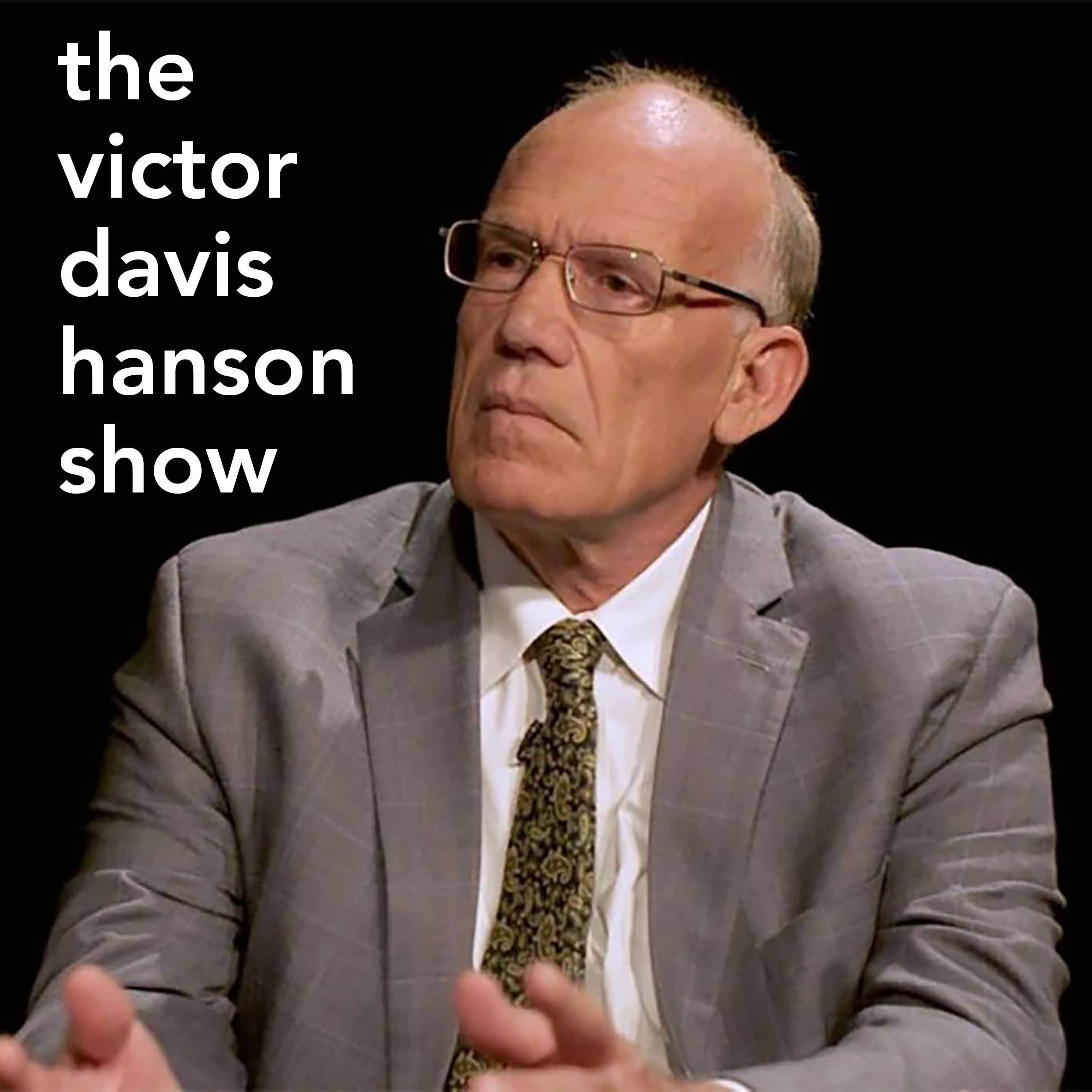
Loading summary
Transcript82 lines
- [00:00]
Shopify Narrator
Shopify helps you sell at every stage of your business. Like that. Let's put it online and see what happens.
- [00:05]
Victor Davis Hanson
Stage and the site is live.
- [00:08]
Shopify Narrator
That reopened a store and need a fast checkout. Stage thanks. You're all set. That count it up and ship it around the globe.
- [00:14]
Victor Davis Hanson
Stage this one's going to Thailand and.
- [00:17]
Shopify Narrator
That Wait, did we just hit a million orders? Stage Whatever your Stage Businesses that grow grow with Shopify. Sign up for your $1 a month trial@shopify.com Listen, if you're running a business.
- [00:31]
OpenPhone Advertiser
You know that every time you miss a call, you're leaving money on the table. When every customer conversation matters, you need a phone system that keeps up and helps you stay connected 24 7. And that's why you need OpenPhone. OpenPhone is the number one business phone system that streamlines and scales your customer communications. It works through an app on your phone or computer, so no more carrying two phones or using a landline. With OpenPhone, your team can share one number and collaborate on customer calls and texts like a shared inbox. That way any teammate can pick up right where the last person left off, keeping response times faster than ever. Plus say goodbye to voicemail. Their AI agent can be set up in minutes to handle calls after hours, answer questions and capture leads so you never miss a customer. So whether you're a one person operation drowning in calls and texts, or having a large team that needs better collaboration tools, OpenPhone is a no brainer. See why over 60,000 businesses trust OpenPhone. OpenPhone is offering our listeners 20% off your first six months@openphone.com Victor that's O P E N P H o n e openphone.com Victor and if you have existing numbers with another service, Open Phone will port them over at no extra charge. Open Phone no missed calls, no missed customers.
- [02:16]
Jack Fowler
Hello ladies. Hello gentlemen. Welcome to the Victor Davis Hansen Show. Victor is the Martin and Eli Anderson Senior Fellow at the Hoover Institution and the Wayne and Marcia Buskey Distinguished Fellow in History at Hillsdale College. He has a website, the Blade of Perseus. The address is victorhanson.com you should subscribe. Why? Because Victor writes two pieces exclusively for the Blade of Perseus every week and he also does an exclusive video for it. By the way, there's tons of free stuff at that site, but it's $6.50 a month. If you want to discount it, take the whole year, it's $65. The Blade of Perseus we are recording Today is Saturday 30th August, and this episode will be up on Thursday the 4th. I apologize, we're a little out of date from that, but I'm going to be on the road. So we're recording here on Saturday. But we have plenty of interesting topics to get Victor's take on, including one he started to talk about at the end of our last episode. It made him stop.
- [03:23]
Victor Davis Hanson
The gun.
- [03:23]
Jack Fowler
It made him stop. Yeah, but Donald Trump wants to double the amount of Chinese students at American universities and colleges. And then in the dust of that, his administration put out news about curbing F1 visas that will affect students. So it's this mishmash to me anyway.
- [03:47]
Victor Davis Hanson
They need to get on the same page on that. As I said before, at Stanford, where I work, I mean, the Stanford Review ran a long series of espionage activity, and they interviewed Chinese nationals who were very worried because they did not want to participate in what they said was mandatory reportage of sensitive data. Today in the Wall Street Journal, there's an account of a young woman who was an American who learned Mandarin, and she was targeted by an agent of the Chinese government. And then she did investigation because she knew Mandarin and everything. And she found out that he had contacted a lot of people trying to win them over or blackmail, whatever, to be bring them to China, offer them a trip to China to use them as informants. During the Trump first administration, Stanford was fined several million dollars for not reporting gifts from the Chinese government. We all knew the sordid history of the Confucius Institutes on campus that were fronts for Chinese espionage, among other things. We had, I think, a neuropsychiatrist psychologist visiting Stanford University that was a major in the People's Liberation Army. So everybody should start with a premise that China, because of their authoritarian system, is never going to be. It's never going to be quite like the United States and the west as far as research and development. Just go back to World War II. And as brilliant as Germany had been in the 19th century in chemistry, engineering, medicine under the Nazis, all of those research lanes were controlled by the Nazi hierarchy who were incompetent. So when people were trying to find easily maintained tanks, they were trying to build the most. The super, you know, tank that was 100 tons, or the tiger two, or they were trying to use jet fighters for bomber, all these crazy things, or they were still trying to build battleships. They had built battleships and not one single carrier. And that was all decisions that canceled out formerly open and free German research, which the world's among the world's best and the Same thing with China. Everything is controlled by the pla, and that means they'll never attract people who feel they can just think and experiment. So I don't agree ideologically with Silicon Valley, but the people I've met there, for all of their crazy politics, they're brilliant.
- [06:42]
Jack Fowler
Can I ask you to hold your thoughts for a second because I'm going to continue when we come back from these important messages.
- [06:54]
Boll & Branch Advertiser
Like you When I bought my last pair of shoes, I looked for stylish comfort and beautiful engineering and that might make you think Italian, but if you're buying sheets, it should make you think bowl and Branch. The colors, the fabric, the design. Bowl and Branch sheets are made with long lasting quality, offering extraordinary softness to start and getting softer and softer for years to come. Bowl and Branch sheets are made with the finest 100% organic cotton in a soft, breathable, durable weave. Their products have a quality you can feel immediately and become even softer with every wash. Plus, bowl and branch comes with a 30 night worry free guarantee. I've been sleeping like a baby in my bowl and Branch sheets which keep me cool on those hot summer nights and they're the perfect place for sunrise and morning coffee. So join me. Feel the difference an extraordinary night's sleep can make with bowl and branch get 15% off plus free shipping on your first set of sheets@bullandbranch.com Victor that's Bolenbranch B O L L A N D B r a n c-h.com Victor to save 15% off and unlock free shipping, exclusions may apply and we'd like to thank Bowling Branch for sponsoring the Victor Davis Hansen Show. Cooler temperatures are rolling in and as always, quince is where I turn for fall staples that actually last. From cashmere to denim to boots, the quality holds up and the price still blows me away. Quince has the kind of fall staples you'll wear non stop, like super soft 100% Mongolian cashmere sweaters. Starting at just $60. Their denim is durable and fits right and their real leather jackets bring that clean, classic edge without the elevated price tag. What makes quints different? They partner directly with ethical factories and skip the middlemen so you get top tier fabrics and craftsmanship at half the price of similar brands. When the weather cools down, my quint sweaters are a go to my cashmere short sleeve that works under any jacket, formal or casual, or my thick long sleeve go everywhere do everything sweater that pairs with any pant or jogger. Quince products are my favorites, which is why I Went to Quint's to buy my recent very beautiful purse that leaves the house every time I do. Keep it classic and cool this fall with long lasting staples from quince. Go to quince.com Victor for free shipping on your order and 365 day returns. That's Q U I N C E dot com Victor for free shipping and 365 day returns. Quince.com Victor and we'd like to thank Quince for sponsoring the Victor Davis Hansen show.
- [10:17]
Jack Fowler
We are back with the Victor Davis Hansen Show. I did something terrible, Vic.
- [10:21]
Victor Davis Hanson
I interrupted.
- [10:21]
Jack Fowler
So many people see the comments. Shut up. Stop interrupting. Okay. Anyway, continue on, my friend. Please continue on. You know, maybe you want to pick up here what was already a problem, as you've discussed many times on these podcasts, that we had 300,000 Chinese students in America. Donald Trump wanting now to expand that to 600,000.
- [10:45]
Victor Davis Hanson
If we know that the students are paying 110% and they are money machined for the universities that are corrupt. If we know that the government is buying strategic acreage near military bases whether to spy on them or to have communities where they have people near there they can associate after hours, buy 1,000 acres next to a missile base or something and then put some Chinese owners of farmland there or whatever and they can associate in off hours and hope they get whatever the strategy is. That's not good. And we know that we have a problem with espionage with 300,000 students as it is. And we know about the Chinese balloon fiasco. We know about Fang Fang who I encountered. And we know that idiots like Swalwell fell for that. And anybody who saw that woman and heard her would know what she was an espionage activist. And he. I don't know what you had a U.S. congressman on the, on the House Intelligence Committee cavorting with a Chinese act of a spy. So they're everywhere. I'm not bashing Chinese at all. Some of the greatest critics that warn us the most are Chinese Americans, especially from Taiwan. So why would you do that? As a bargaining chip with Qi. It doesn't make any sense. We should use it as a bargaining chips not to increase to 600, but to say we're going to be zero. Zero. You want to play hardball? Zero. Not one Chinese national will come to the United States and that would really mean something because they know that their research and development in the military Sphere is about 90% dependent on getting the technology from us. You know, you just look at China, everything about them. I mean, they hate us. They Keep telling us that Chinese traditions are ancient and more hallowed than ours, that they're antithetical to the West. And then what do they do? You look at their uniforms, their medals, their hats, their boots, their guns, their tanks, their tactics, their strategy, their ships, their planes. They're all copies of everything that we do. Everything. There's no indigenous Chinese tradition in the Chinese military except authoritarian. Everything else is borrowed or copied from the West.
- [13:18]
Jack Fowler
Victor. Five of my children, all of my children graduates of the University of Connecticut. And as the years went on, especially my last, my youngest son actually roomed with some kid whose father was a vice mayor of some Chinese city with like, I don't know, 2 or 3 million people in it. I don't know the name of it. And it was a clearly a growing Chinese student community there that lived off campus, many of them. And they all, like, on Thursday had to go visit their uncle, which. What the hell was that all about? But for every student who's there, that's one student from Connecticut, Connecticut taxpayers that can't get into the school, that their taxes are paid for. You know, so that's on a more provincial level. I don't understand that.
- [14:04]
Victor Davis Hanson
Why would we have a Muhammad Khalil take up a spot at Columbia while he protests about divest. You know, because of Israel. And he's the pro Hamas spokesman, and he takes up a spot, all these people take up. There's 1.1 million of them. And the university says, well, they have money and they'll pay more than an American. And they radicalize our campuses. They radicalize our campus, especially on questions of the Middle East. And they monitor people who are for Taiwan or for Israel. So why do we do this? And the answer is, we should be clamping down on this. And I know the old left wing well. You know, they go back and they fell in love with our culture and our food. They walked down Telegraph Avenue in Berkeley. If they were alive, they. They made it alive. Or they went to Sausalito. They went to the wineries in Napa Valley.
- [15:01]
Jack Fowler
They.
- [15:02]
Victor Davis Hanson
They went to that new industrial park by Candlestick Park. It's just so fascinating. And they just love it here. They're so impressed with us. So they go back to China and they liberalize China, and they say, you know, what, did you go to Columbia or Harvard? And they wear T shirts, Yale on them. And their favorite university is Stanford, and they're loyal alumni. No, no, no, no, no, no, no. That's all show, but that's what the left thinks that we are so liberal and so sophisticated and so affluent. They just love our freedom. No, they don't. They hate it. The government I'm talking about. So it's kind of like they're saying the same thing with the Middle East. You know, Jack, if they come over here from the Middle East. Well, they did come over and Muhammad Atta came over from the Middle east and he and his buddies went to strip shows and gambling in Vegas and that really fortified him to kill a bunch, you know, thousands of Americans. So I don't buy that argument that the more you are acculturated from a traditional oppositional society to America by Americans, the more you're going to love us.
- [16:14]
Jack Fowler
Victor we have another immigration related topic to get your take on. But first, flu season is here and Covid cases are still climbing across the country. When people start getting sick, medications disappear fast. And that's why we trust all Family pharmacy. They help you prepare before it's too late. Right now they've dropped prices on Ivermectin and mebendazole by 25%. Plus you can save an extra 10% with the code Victor10. That's V I C T O R. The number one, the number zero. Victor10. You also get 10% off antibiotics, antivirals, hydroxychloroquine and more of the medications you actually want on hand. Whether you're fighting a cold, protecting your family from flu season, or staying ready in case Covid makes its way into your home, having a few months supply brings peace of mind and control. They work with licensed doctors who review your order online, write the prescriptions and ship your meds straight to your door. Go to allfamilypharmacy.com Victor and use the code Victor10 today. And we thank the good people from all Family Pharmacy for sponsoring the Victor Davis Hanson Show. Victor I don't know. It seems like this was. It seems to me there's pushback from the 600,000 Chinese students idea that Trump has spun up. And in the aftermath of it, here's a headline, Trump deputies curb student visas. President Donald Trump's deputies are capping migrant student visas at four years, making it more difficult for white collar migrants to sneak into American professional jobs. The new rule will make it harder for foreigners, mostly Indians, to hopscotch their way from job to job to green cards via various college courses and President George Bush's huge optional practical training work permit program. The modest curbs are good news for American graduates and their parents. The changes were denounced by Pro Migration Groups, especially by pro Indian advocates.
- [18:21]
Victor Davis Hanson
I'll just read a quote here from.
- [18:22]
Jack Fowler
One of the most brutal I've seen over the last 40 years, claimed one Indian advocate. The new F1 rules effectively closes the F1 to H1B program pipeline.
- [18:35]
Victor Davis Hanson
I wouldn't criticize a country that went from 500,000 Indian immigrants to 5 million in less than a decade. And so Indians are the most non Hispanic group that are entering the United States. And I don't think it's a wise thing when you have a very liberal policy that favors India and Indian Americans are now the highest income group. Mr. Mandami, are you listening? When you talk about going after white affluent areas, you go back and look at all of the data. So called whites are about number eight. So you're the most affluent group in the United States. You are the most recent influx and you are on a trajectory to have the most legal immigrants and a lot of illegal immigrants per year. And you're criticizing the United States for being worried that people are coming over here under the guise that they have rare expertise not found in America. And yet when they get these jobs, typically the concerns that hire them don't pay them as much as Americans and they don't turn out to have the same level of expertise. So I don't think that any immigrant group should, after being treated so well by the United States, should start criticizing us as xenophobic or restrictionist or any of that. Go to India and see how you're treated. Go to China and see how you're treated. Go to your any of these countries. And I think one of the maga, I think everybody listening would agree with me, almost everybody, that what Trump captured, I don't think he created. But people are tired of this. They're tired of people who have beneficia from the United States. And I'm talking about you, Ilyan Omar. You came over here from a godforsaken country. And then the first thing, you and I think you violated immigration law with your brother and don't want to get into it. And then you start talking about us as a trashy, dirty country. And we have dictators here worse than in Somalia. We don't need that. And so I don't understand why Mr. Khalil, who likes Hamas so much, has to go to Columbia. Why doesn't he go to all these universities in Saudi Arabia, Kuwait, Egypt? They're all there. They're right next door. But why come over to the Great Satan and then start attacking us? Why does Obrego Garcia walk down the corridor and say, this is a corrupt government, corrupto gubernero, you know, in Spanish. If he doesn't like it, go back. I don't understand this. They think everybody here is a left wing professor, that they meet at a rally or protest and they think, oh, Professor Smith, this left wing kook is typical of America. He's not. He's not. So they live in a bubble. And I just don't think people appreciate anymore. They don't want people coming from other countries who attack the United States policies. I love the Sikh community. I have so many friends here. I live in a Sikh area. I would say without exaggeration, once a month a Sikh, very affluent farmer comes by my house and wants to know if I want to sell it to him. They're very industrious, they're very successful in business and they love farms and farmhouses and they own, I would say the majority of farmland now in my area. But that being said, I don't think it is wise for that community to rally around this truck driver who not only killed three people by a flagrant violation of a traffic law in Florida or any law anywhere in the world and then sat in his cab with his brother being filmed with no concern about the people who were dying because of him, and then he gets out on the street and doesn't seem to be affected and then he runs back to California and all of a sudden we're saying that he should not be, what, Charged with vehicular manslaughter. And you get the Sikh community to write 2 or 3 million signatures on his behalf. I don't get it. I don't get it at all. That's a new attitude. I mean, the Sikh community is politically left wing. I think that's largely true, but it's been very law abiding. I don't see why they would champion a despicable person like that who was an illegal alien and wiggled his way through getting a license that he was not qualified for and then went to another state and just rudely, selfishly, flagrantly, dangerously just jackknife across entire interstate and killed three people and sat in the cab where they were dying or already dead without a trace of emotion in his face. And then he flees and we're supposed to rally and say don't dare charge him with murder or homicide. What was it then? So I had this discussion with a good friend of mine. I really like him and I just politely suggested that at the local temple that I drive by every day, that it Might be just wise to put an American flag in addition to the Indian flag and the Sikh national flag. Just put an American flag there. That would be good. You know, no big deal.
- [24:21]
Jack Fowler
Just as a, as an observer, Victor, an uneducated observer, I increasingly find India important to us just for geopolitical purposes. And Donald Trump had seemingly good relations with India in his first term and the leader there, they are a terrific.
- [24:44]
Victor Davis Hanson
Potential counterbalance to China and Russia.
- [24:48]
Jack Fowler
Yeah.
- [24:48]
Victor Davis Hanson
So how did it. For two reasons. One, he wanted India to stop buying illicit Russian oil. And India said that we are so dependent on Russian trade, Russian weaponry, we need to stay on the good side of Putin. So we're going to continue to buy oil to the detriment of Ukraine. Okay. And then they made a good point. They said, China, you don't. You go after us and, but you don't. And we're your friends, but you don't go after China and they're your enemies. So if you're going to a secondary boycott on us, we expect you to do it to China. And that was kind of murky, whether we were going to do that or not. And then second, it depends how you calibrate goods, services on the trade deficit surplus. But India claimed that their surplus with us was not truly a very big surplus because of services, financial services, etc. Or whether you count the money going out. But they are the second largest recipients, correct me if I'm wrong, of an ethnic group as far as remittances. So they get, I think they get $25 billion a year sent to the Indian economy from Indian Americans or Indian resident green card holders in the United States. So when Trump came along, I think he said under pressure, he had had this good relation with Modi, who was a fellow conservative. And then, and he said, you know, I've got to do something with Putin. Everything doesn't work with that guy. So I'm going to have a secondary boycott. And then India objected, and then it went downhill on trade tariffs and the secondary boycott. And now we have, as we're speaking today, there's a mini summit with what, Putin, Xi and Modi, and that encompasses 1.4 billion, 1 point billion and 240 million people. So you're talking almost three and a quarter billion people. And so we got to be very careful about that. That's a nexus that we do not want to be anti Western, all of it.
- [27:05]
Jack Fowler
Well, we're going to get your take, Victor. Next on a, on an interesting, important trip, troubling story out of Scotland, which like England is a place where young girls, white girls, are subject to the abuse of the Pakistani immigrant community in those countries. And we'll get your take on this story and many other topics when we come back from these important messages.
- [27:36]
OpenPhone Advertiser
When empires debase their currency, citizens who hold gold survive the transition. That's not opinion, it's documented fact. Trump's economic warning isn't speculation, it's pattern recognition. The same signals that preceded every major currency crisis are flashing now. Unsustainable debt, foreign nations dumping our bonds, and central banks hoarding gold. But Trump's also revealing the solution. And the IRS strategy he's used for decades is available to every American. It's how the wealthy preserve their fortunes when paper currencies fail. American Alternative Assets has documented this strategy their free 2025 Wealth Protection Guide. It shows exactly how to position yourself before the turbulence. Trump's warning about arrives. Call 888-615-8047 for your free guide. That's 888-615-8047 or visit victorlovesgold.com the patterns are clear. Make sure you're on the right side of them. Do you ever just want to turn off the news and ignore politics? That's understandable. It's overwhelming. But here's the thing. We're citizens of a republic. The decisions made by our government affect our everyday lives. In order to be a good citizen, you have to read and understand the United States Constitution. And that's why I'm so excited that Hillsdale College is offering a brand new free online course called the Federalist. This course explains how the United States Constitution established a government strong enough to secure the rights of citizens and safe enough to to wield that power. And today it's our responsibility to pay attention, to be vigilant, they may say, in order to preserve and protect Republican self government. Hillsdale's online course, the Federalist, includes 10 lectures, each about 30 minutes long. You can take the course at your own pace. There's no cost to sign up. I'm like many a college alumnus who's benefited from the Federalist course. It's filled those big gaps with exceptional and unbiased analysis that was all too often missing from our higher education experience. Go right now to Hillsdale Edu VDH to enroll. There's no cost and it's easy to get started. That's Hillsdale Edu VDH to enroll for free Hillsdale Edu vdh.
- [30:15]
Jack Fowler
We're back with the Victor Davis Hansen Show. We're recording on Saturday Saturday 30 August, and this episode is up on Thursday September 4th. Victor. The headline is from the Scottish Daily Express. Axe wielding Dundee teen who defended friend from migrant man becomes social media hero. Into the story here, Police said the 14 year old girl, I have not seen her name on any, has been charged and will be reported to the relevant authorities. But video footage is going viral with one person describing it as iconic. Yeah, yeah. Like a little girl screams at a migrant, recording them before brandishing an axe and a knife to warn him off. People are asking what is happening to this country? She's a child, a little girl, someone's daughter, and she's screaming at a grown foreign man to leave her alone. We shouldn't be living like that. This, Victor, this is just another example of things we've heard about grooming, gangs, suicidal England.
- [31:17]
Victor Davis Hanson
Yeah, it's what a lot of French philosophers had told us about what it is. What's creepy is you can hear the migrant people talking. Oh, she's got a knife. Put that away. You know, so they're there in the vicinity. And some reports said she was protecting a friend. One said she was protecting her sister. But this had been going on where they were being dogged by these two immigrant males and therefore she was armed. And it was like a scene out of Braveheart. You know, she brought her Scottish weapons from the 19th, from the 11th century and said, you know, I'm going to go down fighting. And so everybody thought that that would be inspirational, but not the Scottish government or the British government. And I don't know what to tell you if you can't make that moral distinction between an epidemic of grooming and child trafficking among Islamic immigrants, mostly single males who came into Scotland or Britain or Wales or Northern Ireland illegally. And you're worried about their feelings to the detriment of hundreds, if not thousands of young girls who have been groomed and forced into sex acts, nudity, pornography, prostitution. And you're not outraged and you have no moral compass anymore. And this was Britain, the morality of the Western world for, you know, centuries. Foundation of morality. And I don't know what's happened to it, but I know that I beat a dead horse. But I suggest Everybody go read three seminal texts. Petronius, Satyricon, it's a novel about 61, 60 AD in Rome. Suetonius, the 12 Caesars, about Julius Caesar and the next 11 emperors. That would be good. And I would suggest that you read Tacitus Annals about the emperors and the life in Rome. You can see what affluence leisure does to a society and everything is in that. If you want to talk about transgenderism, it's in the satiricon. If you want to talk about mass violence and gratuitous violence, it's in there. If you want to make spitting or making fun of the military, it's in there. If you want to talk about a corrupt, sex crazed money craze, food crazed elite, it's in there. If you want to see a contrast, then you go read Livy's history or Horace's poems or maybe Virgil's early poems and you can see the difference. And it's just something about the west. When you combine free markets and consensual government, which are the only alternatives that work, you create a very affluent free person and you get rid of religion or community or family concerns or shame culture and you get what we have here in the United States or in Britain.
- [34:21]
Jack Fowler
Yes, or Germany.
- [34:23]
Victor Davis Hanson
Yeah, or Germany. Just moral midgets. I don't want to make fun of little people, but just people who have no morality. It's all situational and transactional and that's what's happened to this country. And I, I see it all the time, I really do.
- [34:42]
Jack Fowler
Yeah, happened in Britain under the watch of Boris Johnson. So supposedly the Conservatives a supposed.
- [34:50]
Victor Davis Hanson
He was really a bad prime minister.
- [34:53]
Jack Fowler
Yeah, yeah.
- [34:53]
Victor Davis Hanson
I mean he could recite 500 lines like nothing of the Iliad, but when it came to being logical immigration, he was a total failure. I don't know what. I just think that the only good news about all of this is there was a. There's been a lot of demographic news stories in the mainstream media and usually from the left. It's worried and it really is shocking that this lifestyle we're talking about blue state homelessness, Trans Soros type prosecutions, bankruptcy, pension crises, crime ridden Minneapolis, Chicago, Baltimore, it doesn't work. And two things are happening. People up to the tune of 4 to 6 million a year are fleeing. But this is the real all of those states in these cities, the top 10 for infertility are all blue and the top 10 for fertility are all red. And so there are cosmic forces at play that are different from government and they're not just insidious and organic. And that lifestyle, as AOC said, you shouldn't bring children in. The world in a warming planet is toxic to family construction and it's falling apart. And the idea of a young professional woman who's going to go to the big city and get a job and fashion or media or government and be a left wing activist and put off child running, not get married and find a metrosexual counterpart male and go through six or seven different relationships. And all of that, that doesn't translate into fertility. And fertility is the key to civilizational health. If you don't have fertility, you have a shrinking aging population. You can really see it. The symptoms in the literature that I talked about, Jack, because there was a crisis of fertility, we think given prosopography and studies that Rome had about a 3 to 4%, 3 to 4 child fertility in the 2nd or 3rd century BC but by the imperial, early imperial period, it was down to one. And you can see what happens when you have one. You have an aging population. And they had a word for it, captores, the grabbers. And one of the themes in the Satyricon is there's all these older people and they're wealthy and they have no children. And so what you do is you find a way to ingratiate yourself sexually or, or you work for them and you're always conniving to change the will and get their money and they know it and they use it against you. So then they are manipulating young people sexually, they're manipulating young people psychologically. And there's this tension, but it's the background of say the Satyricon, when they have these excursions at Croton, a very wealthy part of southern Italy, is that nobody's having children. They're just living for the appetites and they're gaining a lot of money through the acquisition of this huge empire. They go from Italy and North Africa to 70 million people in a million square miles. And they get all this money. It's kind of like Silicon Valley and it pours into southern Italy, especially the Bay of Naples, Pompeii, Herculaneum, and you get this enormous kind of like the British homes, Downington Abbey estates of the 18th and 19th century from the British Empire. And then they don't marry and have children and they are targets of young operators and they are operators that prey on young people in a weird I'll give you my fortune if you do this and this for me. Maybe I'll do this and this and I'll get your fortune and then maybe I can change the will. That's a big thing about changing the will. And poetry juvenile talks about that.
- [39:18]
Jack Fowler
Yeah, well, it seems like we're facing more of a Logan's Run or Soiling Green or some. Something especially China. The upside downness of its demographics are. I mean, it's catastrophic Japan.
- [39:32]
Victor Davis Hanson
There's only one good thing that I can think about, falling fertility, and it is there's been a lot of literature written about it, is that the propensity to go to war seems to be reduced. That can be bad if you have an aggressor who wants an unjust war to destroy you, of course. But if you're China may find that its population does not want to send their only child to fight in some optional war. And I think that may be why Russia, if Russia gives any concessions, it's because it has a very low fertility rate and it's shrinking and they've lost probably a million and a half dead wounded a million at least dead wounded, missing captive in the Ukraine war.
- [40:18]
Jack Fowler
Well, we're going to talk a little more about pathology here of the left and its views of America. But first I want to take a moment for our sponsor, DeleteMe. Delete Me makes it easy, quick and safe to remove your personal data online. At a time when surveillance and data breaches are common enough to make everyone vulnerable, Deleteme can help. Deleteme is a subscription service that removes your personal info from hundreds of data brokers. Deleteme isn't just a one time service. Deleteme is always working for you, constantly monitoring and removing the personal information you don't want on the Internet. Take control of your data. Keep your private life private by signing up for Delete Me now at a special discount for our listeners today. Get 20% off your delete Me plan by texting Victor V I C T o R to 64000. The only way to get 20% off is to text Victor to 64000. That's Victor to 64000 message and data rates may apply. We thank the good people from Deleteme for sponsoring the Victor Davis Hanson Show Victor headline here. Poll 0% of Democrats satisfied with direction of the US New polling shows that partisanship in the US has reached new heights, with less than 1% of Democrats satisfied with the direction of the country under President Donald Trump, compared to 74 of Republicans. Gallup released a survey this week in which they noted they recorded their highest gap on that metric when asking whether people are happy with the current direction of the country. A total of 76% of Republicans said they are satisfied, but 0% of Democrats felt the same. It's hard to believe it's like North Korean elections upside down.
- [42:13]
Victor Davis Hanson
Subtext is please, please can we have 12 million million illegal immigrants coming? Can't we get back to 10,000 unaudited illegals coming with no background checks. Can't we get more hotels for them? Please, please. Can't we have 9.2% hyperinflation at least one or two years. Can't we get. A president doesn't know where he is and he wanders around and surrounded by a cabal of unknown advisors and their left wing agenda. Can't we have more Afghanistan. That's great. Let's get another one. Maybe we can separate from Israel and we can get Iran to be empowered. Maybe we can tell Vladimir we gotta get a present that says of Vladimir Putin. Well, whether you go into another country depends on some minor invasion. That's a big thing, too. You know about Biden, the left never talks about that. That Biden put a hold on offensive weapons. He said that his reaction would depend on whether it was a minor invasion. He told Putin to cut it out. When he's attacking in cyber fashion American industries and nonprofits, he really appeased him. And now all of a sudden, when somebody doesn't do that, they're upset. I don't understand. You know what's really weird is the worst offenders of this Pavlovian expanse are really never Trumpers. If you think about Jack, people that you and I knew for years, David Frum, Bill Kristol, Mona chair. I used to go speak on your cruises that you organized for National Review with a lot of these people. And John Bolton, I think he was on one or two. I met him at the. I don't understand that when confronted with the most radical left wing agenda of the last four years that they suddenly just said, hey, just forget everything I've told you, everything I've wrote, written everything I spoke to you, every book I've written, it didn't matter. Now I am a Camilla. Joe Biden supporter.
- [44:09]
Jack Fowler
Yeah, well, the. Yeah, it's kind of basic, I think, jealousy. And I'm, I'm the genius in the room. How come no one's listening to me? I remember one of those people you cited, someone told me whatever room he's in, he is the smartest person in the room. And they believe that, too.
- [44:29]
Victor Davis Hanson
I get some anecdotes about that, too.
- [44:30]
Jack Fowler
But hey, you know, Democrats back in that story, 0% liking the direction of America. But an increasing number of Democrats seem to be liking one of your favorite politicians, Gavin Newsom. And here's a story.
- [44:45]
Victor Davis Hanson
Yeah, he's climbing in the Democratic poll.
- [44:48]
Jack Fowler
Yeah. Here's a new poll from the morning consult shows Newsom support has grown in the primary field. Over the past few months, Paul found 19% of Democrats plan to support the governor, compared to 11% in June and only 5% in March. Kamala Harris's support has slipped from. I'm surprised she has any support, but that's mind boggling. 36% now at 29%, the pollster noted the other potential candidates, including Representative AOC and Pete Buttigieg, have virtually the same level of backing as they had in our first look this year. So Gavin is rocking it on social media. He thinks making fun of Trump, Peg, Seth, JD Vance, etc.
- [45:32]
Victor Davis Hanson
Thing like this or the hand movement. The thing about Gavin is you always say what is Gavin not doing when he's campaigning for president? And he does. He quit his podcast when he had that little flirtation with I'm going to be a moderate with Charlie Kirk and Steve Bannon and stuff. I don't think he does that anymore. He hired these two weird social media people to copy Trump's style and kind of bait Trump. But Gavin, why don't you just go down to Los Angeles and get a trailer and park it in Pacific Palisades and then walk through that whole neighborhood, monitor these people who want to get a permit to rebuild. Just do that and don't get into all of your boards. Coastal. All these people who want to build high rises and low and just, just deal with the people who already own the property and want to rebuild and then you can go in and have a big summit on energy and say why is one quarter of the state not paying their power bills and why do we have the highest kilowatt watt charging from Southern California Edison and PG&E in the continental United States and then have the next day a summit on energy gas and why are two to three refineries threatening to leave and if they do, given your mandates, how much storage you have to have in, you know, capacity and storage that we are going to have, everybody says it's going to be six or seven dollars a gallon, you know, in California. Jack on Thursday I filled up on El Camino Real in the Menlo Park Atherton area as I was driving away from a doctor's appointment. And I paid $6.70 for regular gas. So it's already upon us. And why, why doesn't he. Why do we have no. There's a big fire right now. I can see, smell it. It's about 40 miles away in the Sierra. It's burned 20,000 acres near Shaver Lake and Dinky Creek. It has 0 contained. Gavin, why don't you be preemptive about these things? Why don't you allow people to glean the forest? Why don't you tell the timber companies, I think there's only two logging mills left to come back and you know, groom the forest they used as they used to do. There's so many know I just mentioned driving. I think I saw three on just my little Odyssey. I felt like I was Odysseus trying to get home from Troy. I saw two big shutdowns on the interstate system and all cars backed up, backed up, backed up. When you have 27% of the population that was not born in the United States, which is the resident population, California, that is a civic education challenge. Why don't you reinstate civic education? Immersion, integration, assimilation so that we get everybody on the same driving page so that they understand American driving rules and they don't do dumb things, which we mentioned about truckers. We have all these problems, but he doesn't want to, you know, his attitude is good riddance. When 300,000 high earners and we're having 1% of the population, 1% of the households pays 50% of the income tax and they're leaving and we had a $76 billion budget to start the physical. Why doesn't he just say I'm going to outshine Ron DeSantis. We're going to have lower taxes, we're going to have the best infrastructure, we're going to have the best schools instead of the bottom 10. We're going to get our test scores that are compared to like they were in the 60s and 50s. California used to be a model. I remember there was a guy named Glenn Dunkey, I think his name was, he was a chancellor of the CSU and he said these are the hundred and something community college. Here is the 23 CSU, here are the nine flagship UC. It was a tripart brilliant system and it was, it educated a whole generation. But it's kind of just turned into a DEI politicized weaponized educational system. So there's all these problems, energy, infrastructure. But why just spend the whole time baiting Donald Trump and defending illegal immigration? We have half of the illegal immigrants. Look at downtown Los Angeles. It's deserted now. Why doesn't he just talk about the water? We talked about water in the earlier broadcast. Why doesn't say I'm going to take the 7 billion that you people of California voted for, water storage and I'm going to build the Los Banos Grandes, the temperance flat and the sites reservoir and that will give us 5 million, 5 million new acre feet and we will not have a drought. Wet years will store that in our low elevation reservoirs, period. And I will promise I will not take that money and use it to blow up one more dam. And he could do that, but he's not.
- [50:42]
Jack Fowler
Well, Victor, we stay on paltry politics a little more, just very quickly, and then we're going to take a break and we have another topic or two at the end of the show. But I'm wondering your thoughts. Donald Trump's talking about the Republican Party having a convention before the 2026 midterm elections. It sounds kind of cool to me. Maybe it might be an invigorating thing. You have any thoughts about that?
- [51:10]
Victor Davis Hanson
The both parties are talking about it. I think that Donald Trump would be more like the Republican convention that we saw in 2024 with the late Hulk Hogan and all the other people were there. But a Democratic convention, I don't think they really want one. I think it would be too uncontrollable. I mean, you have so many radical, crazy people. Can you imagine showcasing them right before the midterms? They say they're going to have one, but I doubt they're going to have one.
- [51:39]
Jack Fowler
The meeting they had earlier this year to elect their, their leadership.
- [51:45]
Victor Davis Hanson
It was a clown show.
- [51:47]
Jack Fowler
Clown show indeed. Yeah.
- [51:48]
Victor Davis Hanson
Well, we're the woman who was lecturing everybody on indigenous people's property. You know, this was Minnesota, belonged to this group. When I hear that, you know, I think, well, what particular tribe did you take your land from? And then that tribe, what tribe did they take it from? I mean, the Lakota Sioux were really imperialistic tribes. They conquered a lot of tribes. And which, you know, which did you do? And would you like to have that culture in the United States? Now you hate Western culture, but get rid of a tripart government, get rid of independent judiciary, get rid of, you know, free market capitalism, Bill of Rights. You can do all that and go back to an indigenous paradigm. If you don't want to do that, then why are you lamenting the fact that this system that is rewarding you under DEI auspices is so successful? Why would you go up there and then just performance art and kind of fake it out like you're a native person and this land really belongs to Native people and you'd like to give it back to them and give it back.
- [52:56]
Jack Fowler
Give your part back, give your house back.
- [52:58]
Victor Davis Hanson
Give it back. Yeah, give it back. You don't need to have a CAT scan or glaucoma drops or you don't need to get blood tests. You don't need any of that. You can just have traditional folk medicine. Well, Victor, performance art.
- [53:13]
Jack Fowler
Yeah, well, that's just so hateful of the United States, too, which is one of the topics which we're going to talk about when we come back from the break. Donald Trump has an executive order on outlawing the burning of the American flag. And then if we have time, there's an important gubernatorial race coming up in Virginia. And we'll get your thoughts on that when we come back from these final important messages.
- [53:42]
Boll & Branch Advertiser
If you're like me, you have a lot of product on your bathroom counter. Well, I have found the secret serum and its vibrant Super C serum. The ingredients in this one bottle can replace your day creams, eye creams, night creams, neck creams, wrinkle creams and even dark spot reducers made in the USA with the highest quality ingredients, including vitamin C, hyaluronic acid, vitamin B5 and vitamin E. Super C serum delivers noticeable results. Simplify your skin care routine, get a healthier, complex complexion and minimize wrinkles and age spots with Vibrance. I just began using Super C serum last week and I love it. My skin feels so much better, soft, moist and fresh. And by the way, it smells beautiful, like the orange blossoms outside my kitchen door. Give it a try and you'll love it, too. And if you don't find it better than your current skincare routine, you'll get a full refund. Go to vibrance.com victor to save up to 37% off and free shipping. That's Vibrance V I B R I A n c e vibrance.com Victor and we'd like to thank Vibrance for sponsoring the Victor Davis Hansen Show.
- [55:06]
Jack Fowler
We're back with the Victor Davis Hansen Show. Victor, on our last podcast, I did mention that I recommended people visit the White House website, if only to read some of the presidential proclamations and executive orders which have some terrific who was ever writing these? I assume it's a group of people. I think they do a great job. And here's one on the prosecuting the burning of the American flag, an executive order Donald Trump put out the other day, desecrating it. The flag. The flag is uniquely offensive and provocative. It is a statement of contempt, hostility and violence against our nation, the clearest possible expression of opposition to the political union that preserves our rights, liberty and security. Burning this representation of America may incite violence and riot. American flag burning is also used by groups of foreign nationals as a calculated act to intimidate and threaten violence against Americans because of their nationality and place of birth. I think, Victor, a lot of people think flag burning is an old issue, but it's not an old issue to Donald Trump. Any thoughts?
- [56:13]
Victor Davis Hanson
No, it's not. I mean the Supreme Court has kind of ruled that it's your. I have to be careful because they had certain exceptions, but they've ruled that it's your constitutional right. And there's no federal statute that I know of anymore that prohibits it. So I don't know how you can just as a federal offense. I mean you can by fiat you can say it's against the law, but the way that he's been doing these executive orders to have teeth, he says if you are a university and you have a trans program and you are using biological males on your teams, then you're not going to get federal funds. And that is how that edict then overrides state legislation and doesn't have federal legislation required. But how do you do with the flag burning? What levers do you have to enforce it? I don't know. You don't have the force of law, you just have an executive order. But the enforcement of the executive order requires the suspension or threat of such. And so maybe if you have a university where you know they're burning the flag as part of a graduation or something, you could do it if it was sponsored. But for individual people just to go out and burn it. I don't think that he's going to be able to enforce it. I wish there was a way you could enforce it. I think I beat that anecdote. I had one of the brightest students I've ever had who we named unnamed and he was here illegally. I really worked with him and he's very successful now. But he was out with a demonstration during the 187 days when for a brief moment the voters by a large margin in California voted to cut off state money to illegal immigrants like welfare, etc. And then it was ruled on constitutional as everybody knew it would given our left wing courts. And this student was out there when they were burning the American flag and they were all wearing wavy Mexican flag. I said why would you wave the flag of the country you do not want to go back to and you're burning the country under no circumstances you wanted to leave. And he never really answered. He just said, well I'm just angry but you know that doesn't make any sense. So that got people very angry at those anti ICE raids When you had Mexican nationals burning the American flag, and yet they were protesting. They didn't want. Want to go back to Mexico. And then you had Ms. Sheinbaum, the president of Mexico, interfering and offering them legal help while there were simultaneous. Then they had a kind of a riot in Mexico City against Americans who wanted to buy gentrified property. The whole relationship with Mexico is asymmetrical because it's all predicated on we're big and they're small and they're a victim and we're a victimizer. So then we allow certain treatment by them to us that we're not supposed to say anything about, whether it's 62 billion in remittances or it's 170 billion in surpluses, or it's 20 billion in cartel profits, or they kill 70,000Americans a year through disguised fentanyl drugs, or it's Mr. The prior president of Mexico who brags that he sent 40 million people here into the United States, and he urges all of them to vote against Republicans, and then they interfere with all of these ICE raids. And we just don't do that with Mexico. We did in the 19th century. But this whole immigration thing does not work in a pluralistic society. If you combined it with ethnic chauvinism, it just doesn't work. You look at Brazil or Israel, I mean, not Israel, but Brazil or India, and it does not work. You can't have caste and separate groups that are fighting each other and their primary allegiances to people who look like them or pray like them. It doesn't work. You have to be pluralistic, and you have to give up your essential identity to the group identity. And at work with a melting pot.
- [60:33]
Jack Fowler
E pluribus unum. Yeah, indeed. Back on the flag. Victor, though, do you think Americans have a greater passion for their flag than, say, a Norwegian has for the Norwegian flag? And I say this two reasons, two anecdotes. One you mentioned before National Review Cruise, and we were in Norway, and it was a day that I remember the tour guide saying, yes, this is one of the 13 days that, that the Norwegians can hang their flag outside their home. And I'm thinking, like, what? You can't hang it outside your home all year long. It's against the law to hang it outside on the 14th day. And then the other anecdote was, I wearing America. I used to wear ties all the time with American flags on it. And there was a Canadian lady with me, and she said, oh, this is a lovely tie. And I said, by the Way, if I was in Canada, would I be wearing a tie with a Canadian flag on it? She says, oh, no. You know, I just, I got from that that we, we have a deeper relationship with our flag than other countries.
- [61:31]
Victor Davis Hanson
Yeah. Canadians think they're citizens. They're cosmopolitans. They're politi of the cosmo. They think they're citizens of the world from. They have so many existential problems. They've got a big problem with immigration that's not being, being assimilated, especially in British Columbia. They will not pay their 2%, much less their 5%. NATO contributions. They're running up a 63 billion surplus with US 75% of Canadians now poll. They don't like Trump in general in the United States in particular. So we got a big problem. One of the best politicians in my life from Canada was Stephen Harper. Remember him? He's a wonderful prime minister. And if he had been there, I think it would have been, it would have been much.
- [62:19]
Jack Fowler
Yeah, different outcome.
- [62:20]
Victor Davis Hanson
It would have been much better. So anyway, I've been to every European country, I think, except maybe one or two in Eastern Europe. And I've been to every Middle east country, I think if I count landing there and being in the airport for a day, except Iran, maybe one other. And of all the countries I've seen, you know, the two countries that have flags all the time and they're very proud of Israel.
- [62:46]
Jack Fowler
Yeah, that's true.
- [62:47]
Victor Davis Hanson
And Greece on Oki Day, the day that General Metaxas told Mussolini that he, Okie, you cannot invade our country. I think it's October 27 or 28th, 27th or 28. It just, you're just bathed in Greek flags. They're kind of similar. They're blue and white and they're everywhere. So the Greeks are very patriotic people and they love waving the Greek flag and it comes from, I think Israel, like Greece, is a beleaguered nation. They're a small. I think Greece and Israel have roughly the same population, somewhere between 10 and 12 million. And they live in rough neighborhoods. With all due respect to our listeners, I'm not being at all unfair, but they live in the neighborhood with Turkey. And Turkey has an historical dislike of Greeks, Armenians, Kurds and now Israelis. And that's tough. So one of the manifestations, they can't afford to be not patriotic.
- [63:54]
Jack Fowler
Well, last topic here, Victor, as we round out the show today. Headline here, here. Well, Lieutenant Governor Winsome Earl Sears, she's a lieutenant governor of Virginia and her Democrat opponent, former Congresswoman Abigail Spanberger, they're the leading candidates for the upcoming gubernatorial elections. I think it's the case that New Jersey, Virginia and Mississippi, maybe Kentucky have elections and they're kind of considered bellwether elections in their way. Anyway, it seemed like Spanberger was quite ahead of the lieutenant governor. But at a rally the other day, let's see, a Spanberger campaign volunteer held a sign. Hey, winsome, if trans can't share your bathroom, then blacks can't share my water fountain. And this is. Yeah, this has blown up and changed the dynamics of this, of this race. And there's another related story that Robert Johnson, who's the head of black, who's a Democrat, he just dumped half a million dollars on Winsome Sears campaign in reaction to this.
- [65:08]
Victor Davis Hanson
So anyway, that's a real tip off because think of the logic. If the trans person is going to be discriminated, then you can't drink. In other words, I'm willing to go back to Jim Crow for the trans community. That's what I'm willing to do.
- [65:28]
Jack Fowler
They're already halfway there anyway, right?
- [65:31]
Victor Davis Hanson
Well, they are. This was Glenn Youngkin. So, I mean, he barely squeaked by. He's been a great governor, but the problem with Virginia is that.
- [65:42]
Jack Fowler
Sorry, I meant the left is already in that Confederate mindset. Oh, yeah, yeah, yeah.
- [65:47]
Victor Davis Hanson
But it's weird that, you know, I had this schizophrenic existence for I guess, eight years in college and then I was a visiting professor and fellow at Stanford for two years and then 21 years. Oh, no, no, gosh, I'm getting old. 22 years at Hoover on the Stanford campus and then I come back to this very supposedly conservative area. And I can tell you that if you talk about refined, racial condescending people, there's a lot more in the left wing Bay area. It really is. They say things that. I think I told you that story about the guy ahead of me that had a polluting car. I mean, he was a landscaper, Hispanic and poor guy, you know, he was trying to. He was overloaded with clippings and had a little bit of too much smoke. And then I got on campus and someone, I said, oh, I feel so.
- [66:44]
Jack Fowler
Sorry for that guy.
- [66:45]
Victor Davis Hanson
They're going to go crazy. And he said, this guy said, well, they called in, but I think there were 10 or 11 people had already called to get him arrested and then he had been pulled over. That's why I mentioned it by the police. I think if he had run a stop sign, they wouldn't have cared, but that was a mortal sin. And when you talk, it's just out here that when you have people of the middle class and they're all interacting and it's mostly poor and middle class people, then it's not a feigned artificial diversity. It's just people have no choice. They have to deal with each other. You know what I mean? And so called white people don't try to virtue signal that I have a black. They just don't care what the person's color is. And the same was true of Hispanics or black. But in the Bay Area it's all, it just seems contrived and there's tension. I don't know what it is, but there is among left wing people. And then when you start to think of it, Jack, the Democratic Party, we've talked about this, it really has embodied the Confederate antebellum ethos. I mean they're really into racial essentialism. They've taken the one drop, 1/16th rule of the old Confederacy and they've turned it into Elizabeth Warren and Ward Churchill and everybody getting into affirmative action on 1/16 drop of this or that. They've taken the state's rights, you know, nullification. We're South Carolina, we'll go to war before. We'll, you know, honor your tariffs or. And that's with 600 sanctuary cities and these blue Confederates states. It's, it's. And you know the other thing about the old Confederacy, it didn't have a middle class. It had a plantation elite. And then it had a huge slave population. And then there was a white poor class. But they were not a white poor class of independent shopkeepers and small farmers like the north or end up with our industrial class. And that's kind of like blue states, they have the worst disparity in income and the smaller middle class. California's poverty rate is about 21% and 1/3 of the people on public assistance in the country are in California. And it's really just a bunch of wealthy people and high professional salaries and then poor people. And the middle class is leaving. So it's very Confederate is what I'm getting at. They nullify federal law. They, they just fixate on race. They have caste systems. They don't encourage middle class homeownership or affordable prices. It's like let the elite plantationists do what they want on the coast. Have you noticed one last thing?
- [69:33]
Jack Fowler
Yeah, sure, sure.
- [69:34]
Victor Davis Hanson
The blue states have become red and the red states have become blue. So if you want opportunity in the United States and you want to go to a university that's not anti Semitic and it's not racist and there won't. It'll be safe. You should go to a southern university in a red state or maybe, you know, Wyoming. But if you want to go to a place that's going to be highly weaponized, politicized, anti Semitic, go to a blue state. And the same thing is true about crime. And somebody's going to say, well Victor, Memphis is dangerous, so is used. Yes, but they're a tall in red states and they are run by left wing mayors and left wing city councils. But generally the blue states are more crime ridden, there's less fertility, there's more class division and inequality. And the Confederacy after the war and after Jim Crow started to become more racially integrated and it's got less government and its GDP is growing greater than many of the Northern. The northern states are adopting their old red state racial fixation, chauvinism, nullification, all those Confederate policies they've embraced. It's really weird.
- [70:57]
Jack Fowler
Yeah. Well I hope back on Virginia, I hope winsome governor prevails.
- [71:04]
Victor Davis Hanson
Everybody likes her. They all she's very well spoken and she's a good candidate and I hope she wins.
- [71:10]
Jack Fowler
Yeah. Let us pray the Democrats will let us pray. Hi Victor, you've been great. And as I'm saying now increasingly at the end of these podcasts we have so many new listeners and viewers now, especially since Victor Davis HANSEN shows on YouTube. Some of these shows are episodes are over 200,000 folks. So thanks. Many people leave comments. We try to read them. I try to. I know the great Sammy Wink does also. Here are two I'll share. It's one's from Dougie Dorit826 who writes VDH makes a history lesson feel like chicken and dumplings on an empty tummy. Just love this guy. That's pretty funny. Pretty right. And then one more 8:20 Hurley J writes, VDH, you are a gem. You and I are the same age and we were both born in the San Joaquin Valley. Maybe that's the link. But I watch you a lot and I've never heard anything from you that I disagree with.
- [72:12]
Victor Davis Hanson
Thank you.
- [72:13]
Jack Fowler
Yeah, pretty cool. Lots of people say similar things. Thanks. Those folks who take the time to write the comments, especially the ones that say Fowler, shut up. Speaking of Fowler, he writes a free weekly email newsletter for the center for Civil Society. It's called Civil Thoughts. You can get it. How do you get it? Go to civilthoughts.com, sign up every Friday. It will arrive in the afternoon in your inbox. And it has 14 recommended readings. Great articles I've come across the previous week that I think you'll enjoy. And I know people are liking it. We're not charging, we're not selling. Your name. Civil thoughts.com Victor Davis Hansen's website is the Blade of perseus. Go there. Victorhansen.com do subscribe. Victor, you've been terrific. I hope. I hope you have a good week. Yes. And we will be back soon with another episode of the Victor Davis Hansen Show. Bye bye, folks.
- [73:07]
Victor Davis Hanson
Thank you everybody for listening and watching.