← The Victor Davis Hanson Show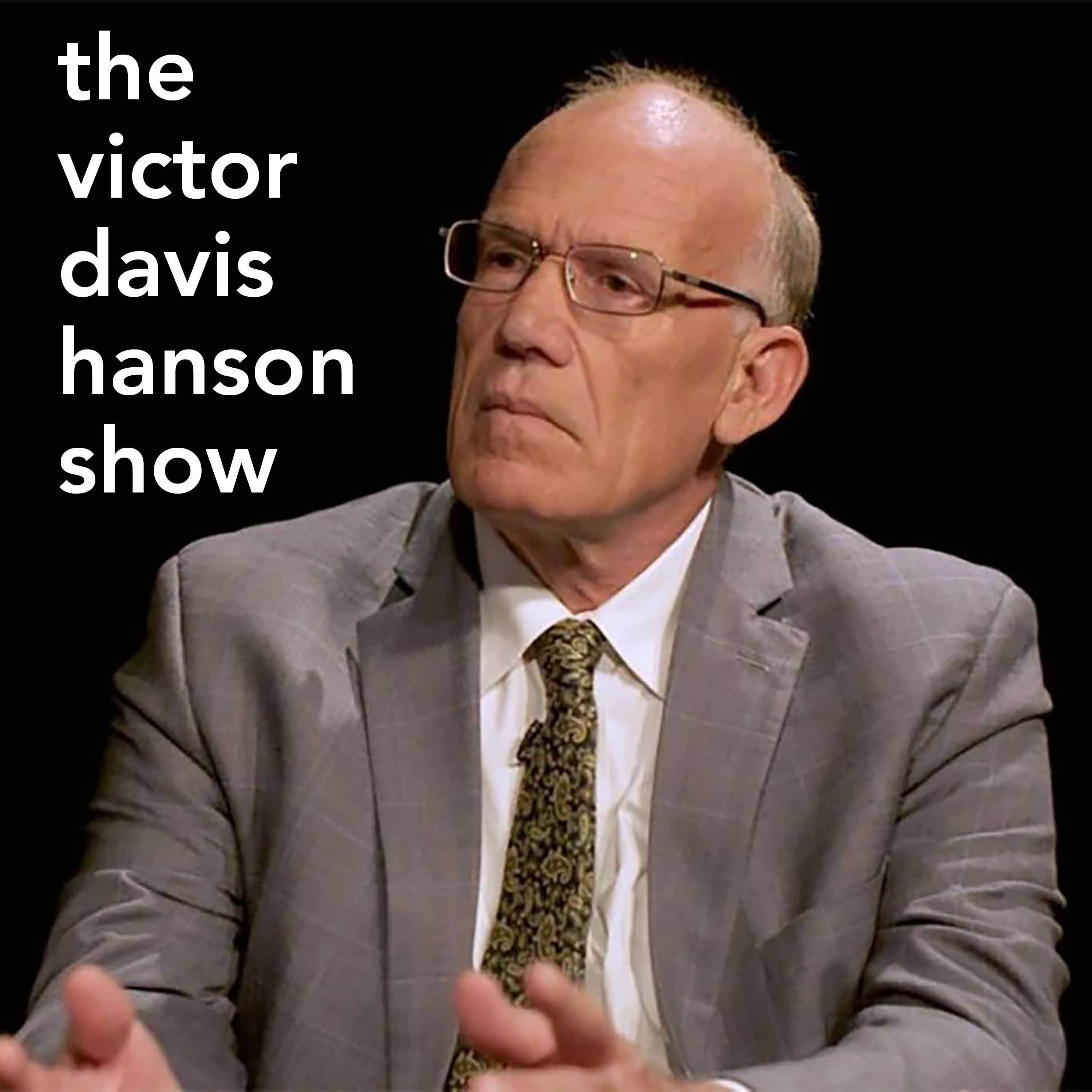
Loading summary
Transcript54 lines
- [00:00]
Sammy Wink
If you're running a business, you know that every time you miss a call, you're leaving money on the table. When every customer conversation matters, you need a phone system that keeps up and helps you stay connected. That's why you need OpenPhone. OpenPhone is the number one business phone system that streamlines and scales your customer communication. It works through an app on your phone or computer. So no more carrying around two phones or using a landline. With OpenPhone, your team can share one one number and collaborate on customer calls and texts, just like a shared inbox. That way any teammate can pick up right where the last person left off, keeping response times faster than ever. Plus, with AI powered call transcripts and summaries, you'll be able to automate follow ups, ensuring you'll never miss a customer interaction again. So whether you're a one person operation drowning in calls and texts, or have a large team that needs better Collaboration Tools or OpenPhone is a no brainer. See why over 50,000 businesses trust OpenPhone to manage their businesses calls and texts. OpenPhone is offering my listeners 20% off your first six months at openphone.com Victor that's O P E N P-H-O-N-E.com Victor and if you have existing numbers with another service, OpenPhone will port them over at no extra charge. OpenPhone. No missed calls, no missed customers. And we'd like to thank OpenPhone for sponsoring the Victor Davis Hansen Show. Hello and welcome to the Victor Davis Hanson Show. This is our Friday Sorry, this is our Weekend Edition and we have something special in the middle segment. And this week Victor's going to be talking about 1941 in World War II. So we know lots of the exciting things happen in 1941. And most of all, I guess for us Americans is Pearl harbor is invaded in that year. But before that, we'll talk a little bit more about the news. We've got Ben Cohen of the famed Ben and Jerry's interrupting congressional hearings with RFK. And Newsom has blamed Trump for a $12 billion deficit in California. And then finally, Germany, for our first segment, has sent out police against a new party, the Kingdom of Germany, which is a nationalist party. So we'll go with those stories first, but stay with us for these messages. This message comes from Greenlight. Ready to start talking to your kids about financial literacy? Meet Greenlight, the debit card and money app that teaches kids and teens how to earn, save, save, spend wisely and invest with your guardrails in place. With Greenlight, you can Send money to kids quickly. Set up chores automate allowance and keep an eye on your kids spending with real time notifications. Join millions of parents and kids building healthy financial habits together on greenlight. Get started risk free@greenlight.com Wondry welcome back to the Victor Davis Hansen Show. So, Victor, I think the first thing I would like to talk about is your California, your local apparently Gavin Newsom has said that Donald Trump has responsibility for the $12 billion deficit that California has with the May revision of his proposed budget. And I was wondering your thoughts on the wonderful California governor.
- [03:52]
Victor Davis Hanson
It's entirely absurd. I mean, we're speaking in the middle of May and the stock market is right exactly where he was shortly before he took office January 10th or 12th. It's right where it was during the campaign. It went up a little bit on news that he had won in November and then it settled down. So it's regained all of the losses that we were told by the Wall Street Journal and others were going to be signifiers of a recession. You look at energy prices, they're near historic lows. You look at inflation, it was 2.3. You look at GDP, they're going to readjust the GDP higher. You look at corporate profits, they're up. You look at investment. Trump announced this week, and I think it's been reified, ratified too that he's got $10 trillion in commitments for foreign investment into the United States. So all of that hasn't even been digested. So the economy is not responsible for Gavin Newsom. What's responsible for Gavin Newsom Having a $12 billion deficit is the following. The highest income tax in the United States at 13.3 of any state. I think it's the sixth highest sales tax, the highest gasoline tax, the highest price gasoline, the highest priced electricity, half the nation's home, nearly half the Nation's illegal immigrants, 200 to 300,000 of the professional class and upper middle class leaving per year, schools that are rated in the bottom 10 of the 50 states, a poverty rate about 21%. Like almost like Appalachia. That is the problem. And what caused that problem. You have from La Jolla to Berkeley, about a 50 mile radius of the ear Ocean, some of the wealthiest people in the world and you can calibrate that by real estate or zip codes or anything. And they have created what they feel is heaven on earth, a utopia, and they're not subject to the consequences of their own ideology. So what does that mean? We shut down elect a nuclear power plant, we shut down some Oil plants. We put all these solar farms in. We have an excess of solar energy in the daytime and then we pay expensive imported energy at night. We thought we were going to store it at Moss Landing. We had two catastrophic fires, cost over a billion dollars. We've thrown down a rat hole, $30 billion for high speed rail, not one foot of track laid. It's the most mismanaged and incompetent, incompetently managed state in the Union. It's not all Gavin's fault. He inherited that from Jerry Brown. Jerry Brown and all of these people, when they destroy the state, they all go off to a pleasant. Dianne Feinstein had a big beautiful home on the shores of Lake Tahoe. Barbara Boxer went down to Rancho Mirage and had a beautiful place. Kamala Harris lives in Brentwood. Gavin Newsom just bought a big beautiful home in the Bay Area. Jerry Brown is on his Grass Valley off the grid estate. So that's what they do. Nancy Pelosi can't decide whether she'll go to her mansion in San Francisco or her palazzo in Napa Valley. But they are the people who did this. They did not care about the average Californian, whether their schools were safe and competitive. They didn't care whether they could afford gas. They didn't care whether they could afford timber and lumber. They shut down the timber industry, they're shutting down the refinery industry. They didn't care that one quarter of the population does not, is not or will not pay their power bill. That's it. He will not touch any of those issues. Not one. So he'll just blame Donald Trump and he'll kind of say we can't afford to give any more free health care to illegal aliens. That was his idea. And he will tinker around and he'll do his little jaw, jaw jazz jazz with his hands and his slick hair and he'll say that he's going to the middle and he's preparing for 2000. But he won't ever undo the damage that he and Jerry Brown and other leftists have done. Because to do that, they would rather be ideologically orthodox and have everybody poor than to be unorthodox and have everybody well off.
- [08:30]
Sammy Wink
To what extent do you feel that the California legislature is responsible for?
- [08:36]
Victor Davis Hanson
There is. We have 52 seats in Congress. I think we only have 11 Republicans. We have a state Senate and a state Assembly. They have super majorities. So the Republicans are. There is no statewide Republican office holder, no state controller, no attorney general, no lieutenant governor, no governor. And so. And all of the court system. The appointees have been there now for what will be 16 years. So the Schwarzenegger appointments are there. Well, earlier they're all retiring. And so they have the judiciary, they have the legislative, and they have the executive branch. And the only thing that's going to change are two things. One, whether the Silicon Valley grandees who have $9 trillion in market capitalization, and these are people like formerly of California, Elon Musk, David Sachs, Ben Horowitz, Andreessen, Larry Ellison, whether they divorce themselves entirely from the left wing project they're starting to, and then just say, you know what, we're either going to move out of this state or we're not. We're not going to subsidize all this stuff. You make it impossible to do business and you're hurting the middle class. And then whether the Hispanic community, which as we've talked about just pulled 62% in favor of Donald Trump's 100 days, get, get it and say all of these Latino elites that go to universities, they're no different than these out of touch so called white elites and they're two peas in a pod. And all they care is climate change, transgenderism, the new Green Deal, dei, esg. But they do not care about us. They do not care to get timber here, rare earth materials, natural gas, gasoline, all of these rich things we could do. They'd like to blow up dams on the Klamath river rather than use the money allotted for dams to build four or five more. So we have water. There's some signs. So if those two groups said we've had it with the progressive agenda, we could change. But so far they haven't.
- [10:48]
Sammy Wink
Well, let's turn then to the federal level. And as Congress does, they were, I don't know, questioning RFK Jr about his budget for the HHS and for some reason the Ben and Jerry. Ben Cohen of Ben and Jerry fame, although he sold the business, decided it was the moment to stand up and say what sounded very incoherent on the, on the video. But on his X account he said he was yelling at them because they were killing kids in Gaza by buying bombs and kicking kids off of Medicare here in the United States as a result of the low funds due to buying.
- [11:38]
Victor Davis Hanson
Well, his theory is like this for him to be coherent and he's never been coherent. And by the way, he's a billionaire. Ben and Jerry sold out, I think to Lever Brother. What is that? Lever Brothers concern? So they took their huge amounts of cash and then they got even More huge amounts as consultants. And then they endow left wing causes. So this group came in and dispersed in the gallery. He was, it was kind of a conspiracy. He was one of them. And then at opportune times, they each popped up like little toys, you know, jack in the boxes. And then they were really. The security is very different under this Republican Congress. They get them out very quickly. So then he watched everybody pop up and scream and he thought that the security people were occupied. And he started in on his rant. And his rant was, as always with him. And most of the hard left was completely incoherent because he said they were cutting aid to kids on Medi Cal. That was Gavin Newsom who said, we can no longer, longer give free health care because we can't afford it to illegal aliens. And half of all births in California are on medi cal. And 40% as it is, is on Medi Cal. We have in the last 40 years had about 20 million illegal aliens. Half of them are in California and we can't afford it. So basically his argument is, well, if you're anywhere in the world, if you're in China and you're poor and you're in Africa and you're poor, and if you're in Mexico and you're poor and you come across the border, we owe you health care. Well, we don't have any. I don't care. We owe you health care. Why doesn't he set up a clinic? He's got a billion dollars. If he's worried, would he lose 100 million? No, he didn't. He wouldn't even care. Why doesn't he just go to Fresno and say this is the Ben and Jerry's health clinic and he can spend, I don't know, 20 million on the building. He can put 80 billion in endowment. He can get, I don't know, 10%, maybe he can get 5 or 6 million and run it as a free health clinic. He won't do that. He'll go around and go, I got a new ice cream. Jerry Brown, Jerry Garcia cookie crumble lime, peppermint twist, who cares? You're completely incoherent and irrelevant. And I wish they had arrested him. I mean, and then the other half of his argument was killing children. We, we. And that's because our ally Israel supply weapons too. But he didn't say one word. What caused this round of violence? It's called October 7, 2023. It was at peace. Jake Sullivan, the national security advisor for Joe Biden, he didn't Know why it was true. He just bragged in an NBC Meet the Press. He said, oh, Middle east, this is the. My portfolio in the Middle east is the quietest in two decades. He didn't credit Donald Trump at all. And then I guess it was six days, maybe it was three days later. It just blew up with a massacre of 1200 innocent civilians. And they can't, you know, Ben, they came across the border and invaded a sovereign nation. And then they concentrated on women, the elderly and children, and they tortured them, they beheaded them, they burned them, they raped them, they took cost. They did everything out of the medieval handbook. And you didn't even mention that. And then Israel retaliated. In addition to that, they sent, they being Hamas and Hezbollah, sent about 20,000 rockets. What were those intended for, Ben? Were they intended at military targets? No, they were intended to kill. Whom? Women and children, Civilians in Israel. So what you're complaining about is that your side, that you side with, Hamas, Hezbollah are incompetent. They can only kill people when they're not looking or they're surprised, or they' women, children or elderly. But when they get into a real war, Israel can beat them and knock down their missiles and do what they want. And so you're angry that your side is incompetent because you would wish them to be competent so they would go into Israel and kill people, but they can't, unless the people are surprised at a rock concert or something. He's a despicable person. He really is.
- [15:59]
Sammy Wink
Yes. And you forgot the fact that the Hamas put their bombs and their men and their military behind these kids that end up getting killed. So.
- [16:09]
Victor Davis Hanson
And they put them, they put them, they put their own civilians in front at hospitals, mosques and schools, and then they hide because they're cowardly. And then they expropriated, probably over two or three billion dollars in United nations relief, American aid, your EU aid. And what do they do with all the billions? 10, 30, 40 billion. They build an underground labyrinth. Why didn't they build hospitals and skyscrapers and parks? Because they didn't want to. They would rather be poor and destitute and kill Jews than be well off and leave the Jews alone. That's their attitude. And he doesn't get it, or he does get it, but he's so full of hatred that he can't be rational.
- [16:55]
Sammy Wink
Let's turn then to the international world and the Germany. Apparently there is a new nationalist party, and I think this is my question, actually the whole idea of nationalism. But a new nationalist party in Germany that is called the Kingdom of Germany. And the Germans have decided that it is an unacceptable party. So they raided this last weekend, 800 police went out to basically decapitate it. I mean they raided the houses of the leadership in that party and they banned the party in general. And I was wondering not so much about the party itself, but the whole idea of nationalism. I know what the German authorities are worried about. They're like, well the Nazis were nationalists and nationalism can be a dangerous thing. But nationalism is not necessarily dangerous. I mean Trump in a way is a nationalist because he's putting a priority on America. So he's building a nation, he's doing things on foreign nation, which is a nationalist sentiment. So I was wondering if.
- [18:01]
Victor Davis Hanson
Well, they have no confidence in themselves, the Germans, don't they? Look at, they were a very young nation. They were formed in 1871 following the Franco Prussian war. And the people who formed that country were largely under Bismarck. They were the von people from what was Pomerania, East Prussia, the eastern part and then the great state and the military orders Prussians. And they gave up their sovereignty as a small kingdom to be German. But they dominated Germany. They were the ones that surrounded themselves with Kaiser Wilhelm. They were the ones who during the Depression joined the Hitler group because he favored the military. They were the ones that were the four star generals in World War II. And in the German mind, even though they no longer exist, something like them will come back. And so they feel they have to engage any means necessary for a noble end. But they to preserve democracy. But they're destroying it because they can't say to them, you have a different paradigm, you have a right wing paradigm. The alternative for Germany does too. You can participate. All we have to do is follow the same rules that we do. And we have communist parties, socialist parties that are your left wing counterparts. We just don't want to have violence and we do not want you to try to overthrow the. And that's all they have to do. And they didn't do that because they're terrified. They have no confidence in their institutions. So they never asked two questions. Number one, why are they so afraid of them? And number two, where do these come parties come from? And did they come during the German economic miracle in 2002, 3, 4, 1990? They were maybe something like them, but they had no, no residence. They came because the people, the Christian Democrats, the socialists, all of them destroyed Germany. How did they destroy it? They dismantled their coal plants, they dismantled their oil plants, they dismantled their nuclear plants and they went to wind and solar. And their power is unpredictable, unreliable, five times more than anywhere else. And they ended up buying electrical power from France. That's what generated by nuclear power. They've destroyed their auto industry, basically. They have zero gdp. They have no borders. Yes, we can, we can do this. We can do this. That's what Merkel said. We can open our borders and bring in over a million people, 2 million, and get 16% of our population not born in Germany. No, you can't, Ms. Merkel, because you have no history, none. You have always been a blood and soil nation. Going back to Tacitus Germania, you should know that if you want to change. You could have said the we are going to integrate, assimilate, intermarried non Germans, but we're going to do it very slowly because it's a new thing for us. Instead, she just let them in and created these massive ghettos of people who were Islamicists. They have no intention of, of accepting Western civilization or German culture. And you know, you go to Berlin and there's these conclaves of Kurds, Turks, Arabs, and they're not assimilating at all. And that's what they've created. And so that's why these countries, these parties are emerging. They're saying, why don't we just cut back on immigration, make it legal, only start to be competitive again, deregulate, build nuclear plants and get back into the game as the powerhouse of Europe. And they can't do that.
- [21:52]
Sammy Wink
All right, so last thing before we go to our break. The Ukraine talks seemed to have been moving along, but Putin has decided that he's not going to meet just with Zelensky, apparently. And Donald Trump has said that the reason Putin won't meet with Zelensky this Friday, so it's already passed by the time you're watching this, but that he won't do it because Trump's not going to be there. And so I'm not, I'm not sure what's happening, but an update on the Ukraine ceasefire talks.
- [22:30]
Victor Davis Hanson
Well, he understands the situation. Putin does. He does not have. He's lost a million dead, wounded and missing, and he can't go back to the Russian oligarchic class, the apparat, and say to them, I invaded my idea. I preemptively invaded. I didn't take Kyiv. That was a failure. But this is what I got. And it was worth a million dead, wounded Russians and the destruction of most of our military equipment that'll take us 10 years to rearm. And here's what I got. They're not going to be in NATO. And people in Russia are going to say, I don't think they ever wanted to be a NATO anyway, or they weren't immigrants and, and now the Donbas is forever ours. And they're going to say, well, it was sort of that way when you invaded. And then he's going to say, Crimea now is Russian. Everybody understands that now. Well, yeah, that's kind of nice, but we already controlled it. And then he's going to say, I'm 40 to 60 miles westward of where I was when the war started on February 22, 2022. And they're going to say, yeah, you made a little progress West. It's mostly Russian speaking people, but that wasn't worth a million casualties. So he knows that he can't, he's caught. Because he, he has enough power not to lose a war, depending on whether Europeans or the United States, how well we arm Ukraine. He does not have enough power to advance beyond where he is. So he can't. And he can't. He's trapped. Can't really, doesn't really want to continue the war because he doesn't have the, as I say, the wherewithal unless he goes nuclear or something. He can't. And he can't stop because he hasn't got enough yet. And he can't have a ceasefire because people are going to get angry at him. That's it. So he thinks that Donald Trump gave him an opening when he criticized Zelensky and he would put pressure, and he has put pressure. But when he looked at what Donald Trump was offering him, it wasn't enough in his mind to make a deal and still stay in charge of the President of Russia, the federation. So what he wants is Trump go over there and get him in a room and say, Zelensky's a monster and you've got to give me this. And if he's not careful, Trump's going to put a secondary boycott on oil sales. And when you look at what Saudi Arabia and Qatar and the Emirates are talking about and what Trump's talking about, they're talking about. And one of the reasons Trump has not been really tough as he could be on Iran, he wants their oil on the market. So you have Iranian oil, you're going to get more pumping from the Middle East. The United States is pumping like crazy. You're starting to see a rise in electric EV vehicles. And if that price starts to drop below 50, getting 50 barrels, Russia will have no income. So he's desperate and he wants Trump there so he can basically cajole him into giving him a couple more bones because he doesn't have enough, he feels, to survive his presence.
- [25:27]
Sammy Wink
It sounds like Trump is sort of a necessity in these cease talks. So Putin can also say, well, it was hard to stand up to the Americans.
- [25:35]
Victor Davis Hanson
Is that I say that I went eye to eye to Trump. I went eye to eye to Trump. When I got came out of the room, Romeo was ours. Donbass was ours. They weren't going to be a NATO. The new DMZ is to the west of where we were. It was all worth it. Good luck with that.
- [25:53]
Sammy Wink
All right, Victor, let's go ahead and take a break and come back and talk a little bit about 1941 in World War II. Stay with us and we'll be right back.
- [26:07]
Victor Davis Hanson
Time is our most precious commodity and we've heard from so many listeners who've asked for advice about how they can spend it wisely to improve themselves and the people around them. Hillsdale College is offering more than 40 free online courses. That's right, more than 40 free online courses. Learn about the works of C.S. lewis, the stories in the Book of Genesis, the meaning of the US Constitution and the rise and the fall of the Roman Republic, or the history of the ancient Christian Church with Hillsdale College's free online courses. You can even take Victor Davis Hansen's class, the Second World Wars. This free seven lecture course will help you to understand this massive and complex conflict in a new way. It will give you a clear picture of why the war was fought and how the allied powers ultimately triumphed in order to save the west from a new form of tyranny. This class is taught by Victor Davis Hanson and Hillsdale's President, Larry P. Arne. The course is self paced so that you can start whenever and wherever. Go right now to Hillsdale Edu VDH to enroll. There's no cost and it's easy to get started. That's Hillsdale Edu VDH to enroll for free Hillsdale Edu vdh.
- [27:34]
Sammy Wink
Welcome back to the Victor Davis Hanson Show. You can find Victor at his website, victorhansen.com Please come join us there. There is Ultra material exclusively for subscribers at 650amonth or $65 a year. We'd love to have you all. And there is other work that Victor does, American Greatness articles and all of the podcasts are available on audio and slowly we're making them available to subscribers as ad free videos. So another good reason for you to subscribe at Victor Davis Hansen's website. Also for you who are new, I forgot to state that Victor is Martin and Neely Anderson Senior Fellow in Military History and Classics at the Hoover Institution and the Wayne and Marsha Busky Distinguished Fellow in History at Hillsdale College. So Those are his two affiliations. So Victor, I'm excited to learn about 1941 in addition to actually the invasion of Pearl or the attack on Pearl Harbor.
- [28:41]
Victor Davis Hanson
Making our way through this slow odyssey of iconic events of the 20th century. We it's been months ago. We started with the 1906 Russo Japanese War, the Panama Canal, the income tax of 1913, the Great Depression, the events that led to World War II. And on 1941 was the key year in which the word World War II appeared. So as we said 1939 and 1940 there was the Great War, World War I and then there was the Polish war, the Scandinavian War, the Danish war, the Lowland Low Countries War, you name it. But there wasn't a concept generally agreed upon until three powers, big powers got into the war and that was Japan and Russia and the United States. And that all happened in 1941. But at the as a war, as the year opened up, all the cards were in the hands of Italy and Germany and Japan, the Axis of Steel, the Pact of Steel. And what do I mean by that? Half of China was under Japanese control. There were no more colonial powers in the Pacific. Japan had muzzled its way, nuzzled, muzzled, broke, broke into Southeast Asia and was controlling the Mekong Delta. It was preparing to take over the Dutch East Indies Shell oil field and it was eyeing Singapore, the Philippines and the Marianas, Pearl harbor etc and all during that period. So the United states then initiated 1941 Lend Lease as well as lend lease programs and that would to supply Britain and after June, Russia. So what was the geostrategic map say in February or March of 1941? It was pretty good. All of Scandinavia the Finlish war ended in March of 1940. So Helsinki was now pretty much pro German. Russia had let it alone, it was neutral. And if you look at Copenhagen, it was occupied. Sweden was pro German. Norway was occupied. Paris, a great capital. All of France was occupied. Vichy were doing the work of the Germans in parts of France, central and southern France, Belgium, Luxembourg, the Netherlands occupied no such existence anymore. Their colonies taken over by the Japanese or soon to be the Germans. You look at the all the Atlantic ports, the great ports that Germany had wanted so badly in World War I for u boat operations, they were all in the hands now of Germany and they were being developed into reinforced concrete submarine pens. And then the only countries that were we would call free were Yugoslavia and Greece. And as you know, and Mussolini had invaded in 1940, Greece. In October, Metaxas the General said, no, OK, you can't come. And that war was going on and by May Greece would be completely occupied, as was all of Yugoslavia and Crete. The battle for Crete was over by May. And then in North Africa the Italians had collapsed and the Commonwealth troops had taken Tobruk, the key port in eastern Libya. However, they had sent Erwin Rommel down with two divisions in February, March, April. And he had been spectacular. And with just a very small force he had pushed the British and he would soon push them out of Tbruk the next year. So what am I trying to get at? The only country that was viable was Great Britain. The two countries that will decide the war were not going to enter the war. In 1941, the United States had already decided to rearm. It was starting to rearm. It was trying to build a huge fleet. It had weapon systems on the drawing boards that people were talking about. Sophisticated radar, napalm, four engine bombers, beyond the B17, all of that was in this planning stage. And then there was Russia and the Soviet Union was on the side of Germany. So then Hitler said, well, the only problem we have is Britain. And then Admiral Raeder and Donets came to him, the head of the fleet and the submarine fleets respectively and said, you can't take Britain. There's no way we can get across the channel. They've got 15 battleships, they've got eight carriers, eight into 10, they've got about 60 cruisers, they've got hundreds of destroyers, they've got submarines everywhere. You know, they had. Bismarck was sunk in the spring 1941 and most of the British capital ships then were either sunk or they went into hiding in Norwegian fjords. So what was he going to do? So he had started the blitz as soon as he had unified his victories in Europe. And all summer long of 1940, as we said, he couldn't affect anything. He got very close by August, September and suddenly, in anger that the British had had an inconsequential raid at Berlin, he switched his tactics and he no longer hit radar stations and British airfields and went into carpet bombing with incendiaries, killed 50,000 civilians. But that allowed the British Air Fleet, the Spitfires and Hurricanes to come back and the radar to come back. And then they started to inflict unsustainable damage. So by February, March, April, the blitz was over with. So then Hitler got together and said, well, we've won the war and what do we do? The United States is not going to enter it. Japan is our ally and it's handling China and all of the European colonies and we've got the Soviet Union. And what they should have done is just stopped. And they would have won. They could have cut a deal with Britain. I don't think Churchill would have accepted it. So what they decided was the way to defeat Britain and its empire is to invade a country with 240 million people that is 35 times larger than Germany and is almost 5,4000 miles long. And if we do that and knock Russia out, then Britain will be isolated completely and we will have all the oil and we'll have all the wheat and food and everything, and then we'll have a peace. And some of the people were very worried about this and they started to bring up certain things. Guderian said, have you looked at the Russian tank? They have a Stalin tank, but more importantly, they have this T34. They're better than anything we have. And Hitler ignored him. And then Halder said to him, there are more divisions than you think. They may have 400 divisions. And Hitler wanted to go in and make. And then other generals said, you know what? If you look at our losses in Poland in 39, in France in 1940, in the battle for Crete, they lost a thousand logistical planes. We are not yet back up to full strength. And they had not been mobilizing yet fully. They thought the war would be over very soon. Hitler countered and said, we've got all this armament, we've got the, the Skoda arms work from the Czechs. We've got the entire armament from 3 million French Army. We have their airplanes and tanks. We've got. We've stripped Europe bare. And they said, yeah, but it's a motley group. They're not coordinated. So they were bickering about what to do. And finally Hitler ordered on June 22, a surprise attack on the Soviet Union with the largest invasion force in history to this day, somewhere around three and a half million to four million. And they were going to invade all the way from the, the Baltic Sea all the way down to Southern Europe. And they were going to. Army Group south was going to go in from Eastern Europe and go all the way the first year and take the Crimea and hopefully get all the way to the Donner Volga rivers. Army Group center was going to have about a million men and they were going to go take Moscow, and Army Group north was going to go take St. Petersburg, Leningrad. And once they did that, it was about 600 miles. They were going to join in Moscow and then they were going to build a fortified line east of European Russia and declare victory. And so they invaded on June 22nd. In the first 11 days, General Halder was the head of the uber command of Germany.
- [38:09]
Sammy Wink
Before you go forward from that, I just want to ask, to what extent do you think Hitler's decision was made on the fact that Stalin had done so much damage to his general corps in his purges and show trials?
- [38:24]
Victor Davis Hanson
I was going to get to that. There was about six reasons why he did something so stupid. Everything looks stupid in retrospect, but the proper historian has to not judge in retrospect with the benefit of hindsight, but ask what was the general knowledge at the time and what was the general consensus? The general consensus at the time was that they could conquer them in three to four weeks. And the answer was, why would they think something so stupid? When you look at how huge the Soviet Union was and how big its armies and how. Well, first of all, as you said, during the 1937-39 purges of the officer corps, they shot 30,000 officers. Hitler said, see, they're leaderless. But some of the problems were that some of the younger officers, like Konev and Ostovsky and Zhukov were pretty good. And when you wiped out the old guard, they got a chance. And they proved after the first disastrous year, they were pretty good. That was one reason he did it. The second reason he did it is he didn't know how to take Britain, as I said, and he thought he needed the resources of Russia and that catastrophic defeat of the Soviet Union to force Great Britain all alone, to capitulate or to make a deal. And he thought that the United States might come into the war, but he needed to get Russia out of the war. He felt if he got Russia out of the war, the United States would not come in. At least in the European theater. There was a third catalyst for it. He looked at the arithmetic or the calculus of World War I, and he said to himself, the war started in July, August of 1914, and we fought from 1914 to November 1918, and we never really got more than 80 miles west. In other words, the indomitable French army and the British army held even when this newly created Soviet Union collapsed after the Treaty of. I mean, during the revolutionary fervor, the czar collapsed and the Communists took over and they were incompetent. Even when he cut a piece in February 1918 and he put 500,000 free troops from the Eastern Front, they still couldn't win. And that was because of the arrival of a million Americans. So he said, well, on the east, we fought for three years and defeated the Russians. We defeated the Russians, but on the west, we never defeated the British and the French, but this time we defeated the French and the British. You know, May 10th to June 27th, we defeated them in six weeks. And therefore, if we lose, the use the calculus of World War I, two and a half years versus never four years. So if we defeated these guys in six weeks, we can defeat the Russians again in five weeks. They're the easier. And people said to him, yes, but they're communists and they're much more ruthless than the czar, and they have stolen a lot of technology from the United States and from us, and they're rearming. The other thing that made him want to go in. Molotov had visited Germany and he looked over the arrangements of the Ribbentrop. Molotov, Ribbentrop. And they said to him, we just cut off 10% of Finland. And Germany was really mad about. They were pro Finnish and they were also pro Lithuanian, pro Estonian and pro Latvian. And they said. Molotov said, we're going to take the Baltic states. And then they said to them, and there's parts of Bessarabia and parts of Romania and parts areas of Eastern Europe that are disputed, and we're going to take them and we're never going to get. We carved up Poland and we're going to take Roman Catholic Western Poland, and it's going to be called Ukraine, which it is today. And they kept demanding things. And Hitler, you know, they were being bombed at the time. And so Molotov said, well, if you're so successful, why are we in a bunker? And not that the British were very effective. So they got down to nitty gritty. And after they left, Hitler said, I cannot stand those people. They're not trustworthy. They made demands on me. How dare they? I did all the heavy lifting in Poland. They haven't done one thing. They're parasitical. And then there was a fourth thing. They looked at their relative military capabilities. And Hitler said to his generals, I invaded Poland. I gobbled up two thirds of it, 25 days. They came in late, they had trouble taking one third. I gobbled up the Scandinavia, I gobbled up all of Western Europe within a year. And what did they do? They invaded Finland, little tiny Finland In November of 1939 and November, December, January, February, March, they couldn't even take Finland. And Finns didn't get any armament from anybody. And we kept out of it. And they killed a half a million Russians. They are incompetent. So they purged their officer corps. They are incompetent and they're arrogant and they're making these demands on me. And I'm looking at World War I and they didn't do very well. And we did very well in World War I, even though we lost, but we're doing, we're winning now. So that's the decision to double cross Stalin on June 22nd. No one can understand is how they were able to assemble three and a half million men right on the border. And Stalin shot people. Anybody who said they were going to invade, he had ordered them shot. Even the day they invaded, he shot commanding officers. Then we get to. So at that point, when he invaded, it was no longer the Great War of World War I. People began to call whatever this was the Second World War in the Anglosphere and in the United States, people were calling it World War II. So the last tessera for this mosaic was what was the United States going to do? So we were panicking. In January, we moved the Seventh Fleet from the safety of San Diego and put it in an exposed position at Pearl harbor. We brought back MacArthur from retirement and put him in charge of the Philippines. And he had a huge army. He had over 100,000 Filipinos, he had 20,000Americans. He had about 15 submarines. He had a cruiser or two. He had a huge Filipino force. And he was going to hold the Philippines. We thought he also had, I think it was 20 something B7 brand new B17s. He had 40 brand new P40s, which weren't that bad of a plane. So he was out there, and so we were getting prepared. And so then the Japanese looked at everything and they were angry that we had started lend lease to the Russians, which were their enemy. They wanted Western Russia. They were kind of bogged down in China and they were mad at the United States that cut oil imports, cut their oil and steel imports. And then the other incentive was, as I said, they looked at all these rich territories that were orphaned. The Dutch East Indies, the French, Southeast Asia, and especially they saw beleaguered British, the great harbor at Singapore, and Malaysian rubber. And they looked at the United States and they thought, they're out. They put their neck way out in the middle of nowhere, all the way to Pearl harbor and they don't have as many carriers as we do. And then Yamamoto said, everybody thinks Yamamoto was this poet. No, he wasn't. He was a warmongering, militaristic, cutthroat guy. He'd studied in the United States. He was kind of utopian, cosmopolitan. But he said to the Tojo government, if you don't let me attack at Pearl Harbor, I'm gonna resign. So he caused the war. And then when he did, he said, I can only raise hell for six months and they will cede if we punish them enough. The Americans do not want a war, so we'll just tell them we'll call it quits. They had no idea. They should have studied Antietam or Gettysburg or Shiloh and seen the Americans don't give up. At least that generation didn't. And so then the Japanese looked at the geostrategic and they said, there's only three carriers in the Pacific. We have 10. We have a bigger fleet, we have better pilots, we have better planes. And the Germans are at the subway station in Moscow on December 1st and they're going to take Moscow within days and Russia's going to collapse and we got to get in this war so we can get some booty. And Germany was telling them, don't invade from the west because Japan had said to them, maybe we should land at Vladostalbek instead of attack and we'll come, go east and we'll meet the Germans in the Ural Mountains and we'll divide up all the loot and we'll carve it up and we'll have kind of half of China and half of Asia and Russia. And the Germans said, no, no, no, no, no, you're scavengers. This is our stuff. We get to keep the stuff. A year and a half later they would be begging the Japanese to invade from the. So anyway, at that point they decided to go bomb us at Pearl Harbor. They were right about that. The fleet was exposed. They were right about it was too far eastward without reliable logistics. But they had no idea about what America would react the way they would react. And they had no idea of the ability of Americans to build a fleet within two years that was larger than all the fleets combined in the world or to fight a two front war. Japan kept saying, they can't fight a two front war. We have. And Americans said, they can't fight, they're fighting in China and now they're going to be fighting the British and the Americans in the Pacific. But they thought that they had Pacified China, they hadn't. And so the war, 1941, ended as World War II, with the entrance of Japan, Britain, the United States. For those reasons, 1942, just to give a little glimpse, the whole question would be, can the Axis Powers very quickly end the war before the economies of the United States and the British Empire fully mobilize and the Soviet Union rearm? And for a brief moment, it looked like that was going to happen. In summer of 1942, the Germans had rebounded and they were at Stalingrad. They were right near the Caspian Sea. They were just about ready to take Grozny and get the oil fields. They were not that far from Moscow. They thought they were going to come up from behind Moscow. It looked like St. Petersburg, Leningrad was going to fall. When you look at Europe, Rommel had just taken Tobruk and he was starting to mobilize. And it looked like he could invade Egypt. He was only 90 miles from El Alamein, and he could go in and take the Suez Canal and meet up with army groups south maybe. And it looked like the Japanese, for after Pearl harbor, they had run wild, and the Americans and the Dutch and the Australians had lost every battle. And then they were coming up. But right around May, June, July, their luck ran out. So at the Battle of Coral Sea and Midway, the Battle of Stalingrad, and the American landing, the Battle of El Alamein in late in fall. El Alamein, Midway, Coral Sea, Stalingrad changed the whole picture. And then it was curtains for Japan, Italy and Germany.
- [50:18]
Sammy Wink
Yeah, so I probably missed this, but did you explain the strategic interests of Japan? What were they going to do? Take the Hawaii? Were they just trying to knock out the US military? And to what end would that take them? For example, why didn't they just turn around and go at Singapore, go at the Philippines? Why go all the way out to Hawaii? Just because Yamamoto had this desire or.
- [50:48]
Victor Davis Hanson
No, because if you look at the map and you look at the strategic design of what they call the Greater East Asia Co Prosperity Sphere, it had all of these spokes and it was all based on natural resources. And it had a propaganda to keep white Europeans out and let Asians be Asians under the Japanese, who treated Asians far worse than the Europeans in the Americas. But. But the idea was to take India, Burma and to take Singapore and Malaysia, to take Southeast Asia and then to build a defensive ring around it. And the problem was that right in the middle of it was the Philippines. And the Philippines had a much bigger force than any, than anything. I mean, there were it was. They had Corregidor, which was considered indestructible. It was like Gibraltar, the island fortress. They had a huge bomber fleet there and they were sending. And they had MacArthur there. So in their way of thinking, we can't tiptoe around the Philippines. We can take Indonesia and get the oil. We can take the rice belt in Vietnam and we can take the rubber in Malaysia. We might even be able to take parts of India and Burma and Singapore. But ultimately we're just going to be tiptoeing around the United States 7th Fleet and especially the Philippines. So why not just go for broke and take the Philippines and humiliate them and take Wake island and take the Marianas and soon we will take Midway island and then we'll take Hawaii and then we'll just say we want to quits. And they'll have no ability to go once they have no ports out in The Pacific, it's 3,000 miles. There's no. They looked at the map and said, all these islands are in the Co Prosperity Sphere. When you look at San Francisco and San Diego and Portland and Seattle, it's nothing for 3,000 miles till they get to Hope Hawaii or they get to the Aleutians or they get to the Philippines. And we're just going to make a big iron ring with our fleet and just say, anytime you want to quit, we're willing to quit. We got. We're not mad at you. We just took your stuff and we're going to conquer China and we'll call it. And they were very naive. They didn't understand the American idea. They had no Yamamoto. Tojo had taken a train ride through the United States and his early general Tojo and Yamamoto had been two years at Harvard and the postgraduate school Naval Post as a foreign student. And Mitsoka, the foreign minister who would resign, he was a visiting student in high school in Oregon. So all of them knew the United States. But Americans are so arrogant. They thought, anybody has been in the United States loves us. No, they think we're decadent and wealthy and that they could use our resources better than we could. So Tojo and Yamamoto and Matsuoka, they all said to themselves, these guys are really rich and they're very powerful, but if we hit them really hard, we'll shock them. And they won't want to fight because they let Britain burn to the ground during the blitz and they didn't help them, so they won't even help themselves. They just completely misread the American reaction and they did not Want to have a world war. They knew they were not capable of it. They were bogged down in China. They were overextended. They didn't have any natural resources. They thought that's why they waged the war, to get Asian resources without getting the United States involved. That's what they wanted. And when we got involved, they knew they were doomed. The only way they thought they could win the war is kill so many Americans on the islands. Okinawa, Iwo Jima, Tarawa, Peleu, Philippines, that the United States couldn't take the casualties.
- [54:45]
Sammy Wink
So the role that Hawaii played in the geostrategic ambitions of Japan was they were going to hit that first. They thought the Americans won't really do very much because they're just. They'll let themselves be hit and we'll turn around and we will take the Philippines, I think Guam, too, and Singapore.
- [55:09]
Victor Davis Hanson
They took the Philippines by April. It lasted till April. They took Singapore, they took the duchies in. They had everything. They had the Marianas. They had Tinian, they had Saipan. They took Formosa. They had everything. The only mistake they made was that when they went out there, they had six carriers and they thought they'd been discovered. But they had the ability to ruin Pearl harbor for two years. So when they bombed, they only had two waves. And they knocked out the airfields, and they did a lot of damage to the fleet. But the battleships were World War I, 1918 battleships. And if they had gone out there to. To fight, find the fleet, they would have all been destroyed at the high seas, and everybody would have been killed because they had no ability to catch the carriers. They would have been spotted, and there were no carriers there. The Wasp was in Europe, and the Saratoga was on a mission to supply Wake Island. And the Enterprise was back, I think back in the United States, or there was only. And the Lexington was on a mission. So they thought there would be four. Four carriers there, and there was none. So they didn't even take out the carriers. If they were wise, what they would have done is stayed there for a week and just kept hitting and knocked out all the oil supplies, all the repair shops, all the industrial corps, and knocked out the whole ability. And later Americans said if they'd hit the oil tanks, we had a year's supply of oil there. If they had hit the repair facilities, we would not have been able to operate. They could have done that. They could have even landed and taken the island, but they were just afraid to.
- [56:56]
Sammy Wink
All right, Victor, well, let's go ahead and take a Break and then come back to talk a little bit about the United States military. Welcome back to the Victor Davis Hansen Show. You can find Victor at X. His handle is DD Hansen. And on Facebook, Facebook at Hanson's Morning Cup. So join him there if those are your social media outlets. So, Victor, let's turn to the US Military. I understand that Pete Hagseth has planned to reduce the number of generals in the US Military. And I was wondering if you thought that was a good idea.
- [57:36]
Victor Davis Hanson
Well, based on traditional calculus of the number of troops, enlisted men versus the number of four stars, three stars, two stars, one stars. We are overstaffed, as we always are in peacetime, it seems like so. And that's going to be very controversial because an officer, I mean it's, I'm not saying it's easy, but major to lieutenant colonel is doable. Lieutenant colonel to colonel is doable. There's a big jump from colonels. Most of them don't make one star. One star to two star is kind of not easy. I won't say the major general is easy, but the next step from major general to lieutenant general third three star, that's hard. And the three to four is a little harder. What I'm getting at is you're going to tell people who feel that they have done everything possible and reached the pinnacle of power. Four star generals are almost like deities in the military. And you're going to cut them and they're going to cut a lot of them. They're going to do other things that they're going to be very angry. If you're a four star general or admiral, I don't want to name names, I do not want to stereotype, but that is a very good salary. They get a wonderful pension. But more importantly, they as they came up through the ranks, they have thousands of subordinates that they knew as a captain, as a major, as a lieutenant colonel, as a colonel, as a 1, 2, 3. They have a whole network of people and they ended up in the Pentagon at some point, four star. So when they come out of there, they go to work for Raytheon or the Boston Arms Group or Northrop or Lockheed or General Dynamics and they make a fortune. They can make two or three million dollars a year, not even, and you know, in a good year with stock option, they can end up fabulously wealthy. So what you're telling them, you're going to abort all that, that's going to be very controversial. And there's other things he's talked about and one of them is procurement that we're not going. I mean, Trump announced the fifth generation fighter. Well, those are going to be 150 million minimum. The F22 was 170 million. The F35 is about 100 million and we don't have a lot of those. So he's looking at the Ukraine war and he's saying let's get drones. Let's get a whole fleet of drones in the air, on the ground and in the ocean and then let's have master drone ships piloted by people that can direct them in the air. And as I said, I was listening to a lecture by a technocrat, probably the most famous Silicon Valley person other than Elon Musk, and he pointed out that why pay 70 to 170 for a pilot that can only endure a torrent at 9G's when a drone can do 19G's? So they're going to. That's what he's looking at, a whole new way of procurement cut down the whole basis of how the Pentagon functions. I doubt have you noticed another thing to be Quite frankly, I haven't seen one retired general weigh in on Donald Trump. And I won't mention names, but just a mere five years ago, we were told that he was like the people on the other side of the beach at Normandy in Nazi. We were told that he was a Mussolini. We were told he built cages on the border just like the Nazis built Auschwitz. We were told that he a was congenital liar. We were told that he should be removed, the sooner the better. And we were told by two lieutenant colonels that Milley should intervene and get rid of him. We were told by General Milley that he had diagnosed as Dr. Milley professor of Psychiatry, he had diagnosed his commander in chief as not too stable. So he decided to call up his People's Liberation army counterpart and said, you know, if it comes to existential tensions and I think that our, our commander is a little bit too ready to consider the nuclear I will call you first and warn you. So all of Those under Article 88 of Uniform Code of Military what I just delineated were actionable offenses that according to the statute which recovers retired general and active, they would be subject to court martial for publicly disparaging the commander in chief are the main officers of the government. This was all done after Douglas MacArthur said terrible things about Truman in 1951. And they got together and they said, well, the army says this and this Army Air Force that's becoming the Air Force says this and the Navy says This, and the Marine says this. And we need a uniform code for everybody. And they put it. So it involved everybody, but they also said, we can't have another MacArthur.
- [62:45]
Sammy Wink
Didn't Truman fire MacArthur by chance? Okay, he did understand that.
- [62:49]
Victor Davis Hanson
Fired MacArthur. MacArthur came a national iconic hero. He had a ticker tape parade. Everybody thought he was going to run for the Republican nomination. And then two things happened to him. Number one, there was a guy called Ike, and Everybody loved Ike MacArthur. They respected him, but he was vain, glorious. Ike was just a Kansas, Texas guy. And he was just aware, shucks. And he was a. He got along with everybody. He was an administrator. He worked for MacArthur. MacArthur didn't like him or he trashed him. So once Ike, who was the president now of Columbia University, once he said he was going to run in the 52 convention, they gave a little speech for MacArthur, and I think Wainwright, his subordinate, that he kind of abandoned on the Philippines and spent. Spent four years in a prison of war. He was emaciated. He. He gave this speech for MacArthur and he got like 10 delegates. And why did he not get popular? Because after his ticker tick parade, he was the most popular general in history in the United States. And they asked him, they brought him in there, and the Democrats asked him, what's your plan for Korea? And he said, there's no substitute for victory. And they kept asking him, so how many troops would you need? Well, I need this. And they said, oh, my gosh. Were disarmed. And then they said, would the Russians intervene? He said, no. He said, well, you said that about the Chinese. You said if you went out up to the Yellow river, they wouldn't intervene. And a million of them did. And we had the longest, most humiliating retreat in American history back down to South Korea, and we lost Seoul. Well, you didn't let me use nuclear weapons. So you think a commander should have nuclear weapons in the field? Yeah. And so he didn't do well in congressional testimony. And by this time, he was doing all this, Ike was saying, when they nominated him, Ike, because, you know, he was still a very powerful guy. MacArthur kind of a tragic figure, really. And then Ike was saying, I will go to Korea. And they said, what are you going to do? I will go to Korea. Will you try to take all of Korea back? Like MacArthur wanted to do? He wanted to reinvade again. And, you know, a lot of people made the argument that after 1919 52, given Matthew Ridgeways, genius who restored all of South Korea, took back Seoul, and probably inflicted a million casualties on the Chinese, they were beaten. And so if he had at that point, had they invaded, they might have taken the whole thing back. But Stalin said he would not let that happen and he had nuclear weapons at that point. So. And Ridgway, the hero was now he didn't, he didn't want to do it. And so he had, he said, you know what, if you go back up there, the American people will be fickle and we won't have a lot of public support. We'll have to completely mobilize to rearm and we'll be right next to nuclear Russia on the border and China, let's just consolidate what we have and work with the South. But every time they ask Ike, I'm going to go to Korea, what are you going to do? I'm going to solve the problem. So when he came in in 1953, he took a look at it and he said, no, I can invade North Korea and getting a big endless for a war. I am going to solidify where we are. And you know, they had some six months of this and that and then he solved it and get a truce and that was the end of MacArthur as a political person.
- [66:17]
Sammy Wink
Yeah. What happened to all of these self appointed American savers like Millie who was willing to breach his, you know, his orders, his responsibility? What happened to them when Joe Biden who was really demented, did not have not a word. Is that weird?
- [66:40]
Victor Davis Hanson
Yeah. Milley had said that Donald Trump was non compos mentez and he would have to intervene. He didn't say a word after that. Afghanistan humiliating. 13 brave Americans were killed. 50 billion in munitions handed over to terrorists which are being on the terrorist mart right now, being sold. We gave up a billion dollar embassy, a 300 million dollar retrofitted baguum. He didn't say a word. But he did say a word all during the campaign. Remember he gave an interview and said that Donald Trump was a certified fascist. And then he thought, hmm, if I keep saying this and he wins the election this time around, he's going to court martial. They're going to court martial me because he'll get a defense secretary. That won't be Jim Mattis. And they will court martial me. And they would have. Pete Hexseth will court martial anybody who breaks the Uniform Code of military justice article 88. He will court martial them and they know that. So they're all quiet. And we haven't heard a word out of General Hayden and we haven't heard a word out of General McCaffrey. And we haven't heard a word out Of General McChrystal and we haven't heard a word out of Admiral McRaven. And they were all very vocal and they, I guess they either think Trump is not the existential threat that he was or they believe that Pete Hecseth will institute court martials about anybody who retired or active disparages the commander in chief.
- [68:10]
Sammy Wink
Yes, I guess we have to write it all down to Trump derangement syndrome or something because it certainly is seen as inconsistent.
- [68:18]
Victor Davis Hanson
I never understood why AM I Andrew McCabe and Rod Rosenstein discussed Rod Rosentin wearing a wire so they could go talk to Trump and then they could find him in an embarrassing conversation and then they would have it on tape and then go in and play it and then to the Congress and then they would or to the cabinet and then they would vote for him to be removed on their 25th Amendment. And the same people were, didn't say a word when Joe Biden, Biden had that disastrous interview with Robert Hur of which his own speechwriter destroyed the tapes, you know, when he, when he violated classified material talking about it with Joe Biden. But the point I'm making, that tape, they didn't want the tape out. Now the tape is going to be released and where will those people be? Will they come forward? Will Andrew McCabe come forward and said oh my God, I listened to that Robert, her tape. What was I doing? I had the wrong president. He is completely incapable. Rod, why didn't we get a, why didn't we go talk to Biden and trap him? Not gonna say a word. Just like Jake Tapper the other day was on tv. He's been on TV for all week saying that, well, you know, Chuck taught it wasn't just his handlers that lied to us, it was the press. So I've got a co authored book coming out and we're gonna tell, but we're gonna break it wide open and tell everybody how this somnolent derelict media didn't do their duty and tell the truth that their president was unfit to serve. And then people started saying, well didn't you do an interview with Laura Trump and bite her head off when she said just that. And then I, I think John Davidson or somebody in The Federalist wrote 11 times times Jake Tapper attacked and ridiculed people who mildly suggested that don't that Joe Biden was not all there. So that's the story. The media is utterly corrupt.
- [70:27]
Sammy Wink
Yes. And so were the generals.
- [70:32]
Victor Davis Hanson
That's What I said earlier, when people say, what is Donald Trump doing? Well, he's cutting all these deals. He's got foreign policy stuff galore. He's got investments, he's got trade wars, he's closed the border. But he also understands that the problems were caused by the Progressive Project. And the Progressive Project does not rely on public support for their power. They feel that even though people don't like their positions on transgenderism, on an open border, on massive illegal immigration, on dei, on esg, on the New Green Deal, they don't care. They feel we got these big foundations and they give stuff to all these groups that are suing, you know, to stop my. And they run the bureaucracies. The whole federal government is embedded with anonymouses that will pop up anytime. Lois Lerner, a James Comey, Anthony Fauci. They're everywhere. And they have the media, a Chuck Todd, a Jake Tapper, and they have the universities that train all these people. So then they got together in their four years of the wilderness. Apparently, Trump got his little brain trust and they said, well, we can deal with the Middle east and we can stop the Ukrainian war and we can get investment, we can cut down the trade deficit, but the left is just insidious. So somebody said, well, why? Nobody likes what they have. And then somebody must have said, go after the media. Get rid of npr, get rid of pbs. Attack them like they attack you. And then somebody said, well, these universities are utterly corrupt. They take Chinese and Middle east money, report it. They violate the Supreme Court decision. They have racially segregated dorms, celebrations, safe spaces. They raise their tuition higher than the rate of inflation. This whole student boondoggle is a blank check for them. They have Chinese people on their faculty. They have people that are spying. Stanford just has a big expose about it, the Stanford Review. And they don't really. They're anti Semitic to the core. They don't listen and they are racist and they don't defend the Bill of Rights. Go after them for that and you get two birds with one stone. We're gonna prune them back. And so foundations, they're gonna have a new. I don't know how it's gonna affect the Bradley, a smaller conservative, but they're gonna go after foundations and tax their endowments because they don't feel. They're really not. They're deeply embedded in politics. They're going after the universities. And then I didn't mention gouging the government with 40 to 50% surcharges. So they're going to go after the universities, they're going to go after the media, they're going to go after the foundations, and they're going to go after the federal government bureaucracy and cut it with Doge. So they're trying to say to themselves, all of these problems, we're dealing with the symptoms but not the root cause. What caused the Biden administration to do these stupid things to open the border, to flee Afghanistan, to turn on Israel, to get all these foreign students here? Ah, I know it was these institutions. So we're going to bring them to account and I don't know if that's going to be. That's why it's a real, as I said, a cultural counter revolution.
- [73:47]
Sammy Wink
Well, maybe one symptom of this culture that you're talking about is in our judiciary. And a case that we've been talking about in front of the, I think it's the Wisconsin judge from Milwaukee, Dugan, who is now being indicted. Her claim is she's pleaded not guilty and she has. Her argument is, is that she's immune from prosecution over official actions taken by her. I was wondering your thoughts on that.
- [74:19]
Victor Davis Hanson
You know, when Trump was facing Letitia James, Fanny Willis, Jack Smith, Alvin Bragg, Eugene Carroll, Remember now that all of the cable left wing networks, they always had, they got their talking points and then they all mimicked them and it was no man is above the wall. No person, no persons above the wall. What do you think about the no persons above the wall? So here she is and she's committed felonies, she's violated her oath of office, she's actively in a conspiratorial fashion with the public defender who alerted her, deliberately tried to impede a federal officer from making an arrest and used in a conspiratorial fashion, her own courtroom, secret little passage the door out to liberate someone who would be arrested, putting federal agents in danger. In addition to that, she was derelict. She just walked out of the middle of a trial. So she's got a lot of felony exposure. But she's not above the law. She thinks she's above the law. That's what the weird thing about the left, they always say that nobody's above the law, but they really do believe that they're above the law. That's what these representatives did when they went in New Jersey and they attacked ICE officers and Border Patrol people. They thought, I'm a representative. Remember AOC and Hikem Jeffries? You know, Hikem Jeffries every day is revealing that they're gonna have to get rid of him because he is an utter incompetent. He just mouths the same old thing. He has no imagination. They ask him a question and his brain goes, what was the pre selected talking points I got on email this morning? Which one do I plug in? Kind of like Kamala Harris. He doesn't answer a question. And I mean, AOC is a lot more adept than he is. Even Jasmine Crockett is, in a crazy way.
- [76:15]
Sammy Wink
I don't know about that. Yeah, maybe.
- [76:17]
Victor Davis Hanson
And they say that's a red line. They said, what do you mean that's a red line? If they take them off committees, if the Congress punishes them, much less if they face crim, that's a red line. And then they also, you better not. What are you going to do if they broke the law? They broke the law. What if Kevin McCarthy, when he was speaker of the House had said to, I don't know, the media, he said, listen, if you indict Donald Trump, that's a red line. You better not do that. They would have gone crazy. They're basically calling for an insurrection. If you, you know, and they already have. When Chuck Schumer said we're going to go into your congressional districts and disrupt, and then Governor Pfitzer said we're going to go to the streets and be disruptive, they were calling for what we're seeing now. Not one of them has ever said, got up in front of the Congress or went on major network news and said, we deplore all this street violence against Tesla. I'm asking all, all of our supporters, do not take the law in your own hands and attack the Tesla brand in any shape or form. I'm telling all of you students who are protesting against Israel, do not use violence or you will. Not one of them has said it. Just like not one of them has said, let's end the bloodletting in the Ukraine war. It's a million and a half lives have been destroyed.
- [77:35]
Sammy Wink
They're either so desperate or they lack leadership. I think they lack leadership. I think they don't.
- [77:40]
Victor Davis Hanson
Great malady. In the United States, there's a third of the country, an affluent third of the country, and they feel that the country's too stupid for them. And they made so much money under globalization, they have so many titles and degrees that they deserve special compensation to run the country the way they think they should, even if the stupid hoi polloi don't appreciate them. That's who the Democratic Party is. And then they have the subsidized poor. Poor. The subsidized poor feels that I am a victim because of I don't know what history, my race, my gender, my sexual interest. And I deserve government support. And anybody that doesn't do that is a ruthless S.O.B. that's their attitude. And that's the Democratic Party, those two groups.
- [78:24]
Sammy Wink
Well, Victor, we're at the end of our show. So we have a comment made on your website on your most recent article, the Real Hundred Days. And, and it's by Susan Winter. She said, and it's very sweet to Trump. So, hi, Trump out there. Trump is attempting the nearly impossible task of turning the Titanic away from the iceberg. It's sort of what we've been talking about. God bless that man. I hope he shakes things up just as much in his second hundred days. So thank you, Susan. We appreciate that comment and we hope Trump hears it.
- [78:57]
Victor Davis Hanson
Compare that to Biden when Biden came in. I mean, what is Trump not trying to do? He's trying to solve the Ukraine war. He's trying to solve the Iranian nuclear project. He's trying to get the hostages and solve the Middle Eastern war. He's trying to close the border. He's trying to deport 10 million people came in illegally under Biden. He's trying to develop energy. He's trying to reboot the entire world trade system. He's doing all of these things thing. He looks at him sometimes and you think he's 78 years old. He looks tired. But who wouldn't be? I have a tiny little S infection and he's got 10 times the energy that I do. I admire him.
- [79:37]
Sammy Wink
Yeah, so do I.
- [79:39]
Victor Davis Hanson
He's indestructible. He's that Nietzsche. And anybody that doesn't kill him makes him stronger.
- [79:44]
Sammy Wink
Yeah.
- [79:45]
Victor Davis Hanson
Anything, Anybody?
- [79:46]
Sammy Wink
Yeah, there's nobody quite like Trump. They've been seeing a lot of people saying he's the best president in their entire lifetime. He's doing so much.
- [79:56]
Victor Davis Hanson
He certainly, the thing that's different about him is when he sees a problem and he thinks he talks to people, he does consult, calls people all the time on the phone. Jamie Dimon, you know, Elon, Mike Johnson, the Congress. Then he makes a decision. He doesn't say, well, I'm going to get a committee, a sober and judicious and they're going to report back to me in six months, the pros and cons, and then I'm going to have an audit body overlook them and then they'll get me a proposal and I'll consider it two years from now. He doesn't do any of that. Just does it. And sometimes, you know, he gets in trouble, but sometimes, like his plain deal, he just gutter says, you can't get your boy planes. You don't have any planes. That thing is too old for you. Mimicking their accent the 83 that's befitting a president. You need a new one. We have a new one, don't we? How old is our. The one with the Titanic interior. Give it to him. Trump says, I'm not going to insult these people. We're going to do a big 200 jet deal. Am I going to say, no, I can't take your plane. I'm morally superior to yours. So he calls up everybody and say, you can't take anything from the emoluments clause. So he said, okay, give it to the Air Force. Can the government. Yes. Then I'll use it for four years. And then they said, well, what do we do with it? And he said, well, they gave us a base. Nobody said anything wrong with that. They remodeled it. People give us stuff all the time. Yes, but you're going to use this gift, this Air Force plane, after they have to go through it, make sure there's no bugs in it and everything. And then, well, Reagan got a plane. When he left, they gave every. I saw it in the museum. So then they said, yes, now he's okay. Everything I've said except the plane goes to the Trump Library or Foundation at that point. It's so beautiful inside. Mr. President, I have a slight suggestion. You have your 757. It doesn't. It's got modern parts. This thing is ancient, even though it's, I guess it's 10, 13 years old, but it's a 747. You don't want to fly around the United states in the 747 as a private citizen. It's a gas guzzler. Take this plane and do just what Reagan did, just park it outside the Trump Library. And everybody would love to go and look at it because it's unlike any other plane in the world. And that way you're not going to be criticized that you took something from a federal government. So tomorrow just say, well, they gave us the El Udaid Air Force base, military base, Naval base, and then they remodeled it for us, spent another billion. And it's handy. And people do all this and they want to give this plane to the Air Force, and our planes aren't going to be ready. And frankly, this plane's 40 years old, so we've got to get a new plane and Boeing let us down. So we're going to use this plane for four years. And then when I'm out of office, JD Vans or Margo Rubio will use it until the new Boeing planes. And when the new Boeing planes come, we're going to park it as a gift to the government. And I happened to be the president, and it will go to the library and we'll take the keys away and you can't fly it. And he'll be a win, win, win, win situation.
- [83:12]
Sammy Wink
That would be a win, win.
- [83:13]
Victor Davis Hanson
Nobody wants to fly this huge plane. Do you know one person in the United States that has a 747 that flies around with it? That's why the left is so crazy. He's going to take this plane. He's a private citizen. It'll take a year's salary to maintain it and ply it and put the gas in it.
- [83:33]
Sammy Wink
Well, Victor, that's the end of our show. And thanks to all of you for joining the Victor Davis Hansen Show. And thank you, Victor, for that entertaining weekend episode. I appreciate it.
- [83:43]
Victor Davis Hanson
Thank you.
- [83:44]
Sammy Wink
And this is Sammy Wink and Victor Davis Hansen, and we're signing off.
- [83:49]
Victor Davis Hanson
And thank you, everybody for watching and listening.