← The "What is Money?" Show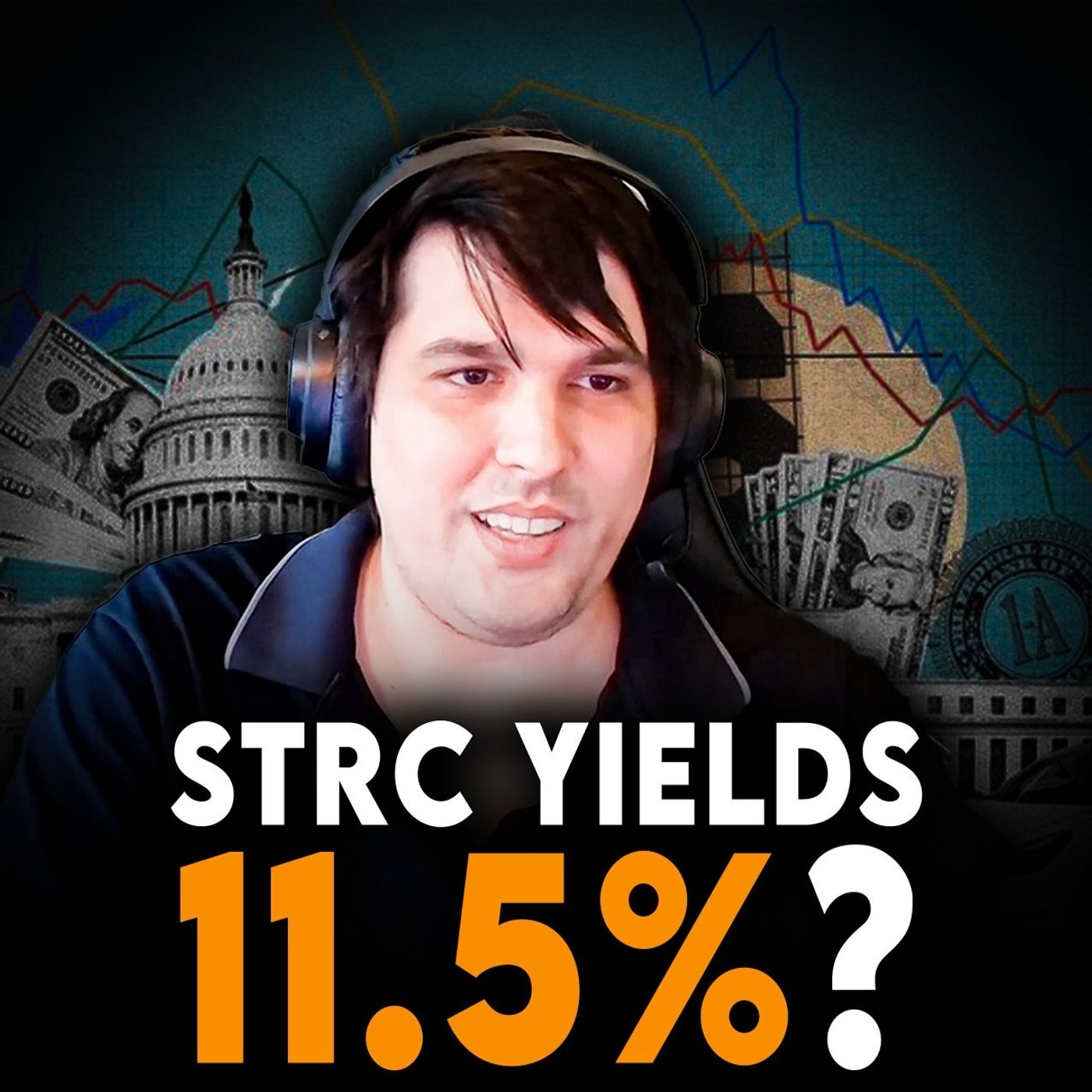
The "What is Money?" Show
How STRC Is Generating Real Yield in a World of Fake Money w/ Radu Chichi
01:39:25
What happens when a fixed monetary base collides with a world that needs credit to grow? In this conversation, Eric Stacks sits down with Radu Chichi — software engineer, Bitcoin thinker, and author of the essay "Bitcoin Doesn't Need to Stretch" — to unpack one of the most misunderstood debates in the Bitcoin space: the relationship between hard money, credit, and economic elasticity. The conversation covers why mainstream economists and Bitcoin maximalists talk past each other, how Michael Saylor's Strategy is engineering a reflexive flywheel that most people haven't grasped yet, why fractional reserve banking may have a legitimate place on a Bitcoin standard, and how the great demonetization of real estate, equities, and commodities is already quietly underway. This conversation explores the deeper forces shaping human behavior, institutions, and the future of civilization.
Loading summary
Transcript335 lines
- [00:00]
Adam
You think your house is going up in value, but it's actually depreciating like your car is. You just can't see it because the unit that you're measuring the house's value in is losing spending power fast enough to create the optical illusion of the increase in value in the house, but not fast enough so that it makes the car go up in value in dollar terms. But if you're in Venezuela, your Toyota Corolla could double in value in Bolivar in 12 months.
- [00:23]
Radu
Yeah, and if you have this sort of like economic distortion on a global scale, then you can't expect to have like rational economic actors. Because if everything is distorted how you know, like how to invest or to
- [00:32]
Adam
do anything, I'll go as far as saying I think it creates like a low grade state of psychosis. People are like confused and they may not even be fully aware of what's happening. But I think intuitively we know when we're getting screwed. Things aren't clear and you can't make sense of stuff. It's hard enough to live. Life is difficult. When you add this layer of complexity in there, it's very discouraging. We're in the beginning stages of the Great Demonetization, where all of this monetary premium spread out amongst treasuries, equities, real estate, collectibles, commodities. This monetary premium on all, all of these things because people are using them as money, which is a real problem.
- [01:07]
Radu
And people don't know they're being used as money. They just see prices going up for everything.
- [01:11]
Adam
It's the Cantillon effect. You know, the property owning class is getting wealthier at the expense of the non property owning class. And then the people that are getting screwed vote for things such as wealth tax, which is basically more violation of property rights. And the idea of confiscating property and redistributing it sounds really good till you're in the bracket of individuals that's getting redistributed. All right, Radu, welcome to the show again.
- [01:48]
Radu
Thanks for having me. It's good to be here.
- [01:51]
Adam
Yes. I listened to your recent episode with Robert. That was a very fun conversation to listen to. You guys unpacked a lot of the more fun philosophical implications of bitcoin. So I thoroughly enjoyed listening to that. And you wrote a piece here, so we're having you back on the show again because you wrote a piece. Bitcoin does not need to stretch. Felt like that was. It's a pretty good piece and I want to unpack it here. So if you would want to go ahead and just tell us a little bit what got you down this thought process and.
- [02:27]
Radu
Yeah, yeah. So I guess just for a bit of context, the last conversation I had on the show was more centered on the engineering and some of the spiritual aspects of bitcoin. This article that I wrote is more centered on the economics of bitcoin and how a future would look like on a bitcoin standard from, like, economics point of view. And the reason I wrote this is that I think a lot of people in the bitcoin community kind of end up talking past the tradfi economists, and likewise the tradfi economists are like, end up talking past the bitcoin, the bitcoin advocates. So I think, I think it's important to find common ground and understand, like, where people are talking past each other and why that's even happening. Yes. So that's. That was the inspiration for writing this. And I also think a lot of people are not necessarily very familiar with the concept of credit, which is why I think it makes sense to dig into it a bit more.
- [03:36]
Adam
Yeah. And I, you know, I see a lot of people messed up over strategy and what Sailor's doing. You know, Sailor's lost the plot. He's a spook. He's this, he's that. And if you, you know, have been following sailors since he hit the scene, that idea that he's doing something nefarious is a little hard to grasp. And so for me, I've kind of almost in some sense defaulted to the idea that, like, this guy hasn't changed and he must be aware of things that your average individual isn't in some of these products that he's created with strategy. You know, at first glance, almost seemed like he's like opening a portal to suck all this capital into bitcoin and create a bridge between bitcoin and the existing financial financial world, which I find, personally, I like the idea because I think we have to get from where we are today into this bright orange future in the smoothest, I don't know, most logical, rational way possible. And I think some of the bitcoiners just would like to see the dollar hyperinflate and us to go through some insane Max, Mad Max situation into a bitcoin standard. And I don't think that's one ideal or two probable. So, yeah, so let's unpack this history of credit and you can go ahead and just jump in and share your thoughts wherever you think is appropriate.
- [04:58]
Radu
There's this meme circulating or it has been circulating a while, for a While that like 1 in 100 people understand Bitcoin and 1 out of 100 Bitcoiners understand what Michael Saylor's doing, the strategy.
- [05:10]
Adam
Oh, I like that.
- [05:12]
Radu
Because to understand. I mean, to understand bitcoin, you kind of have to understand hard money and technology and put it all together. And to understand what Michael Sabre is doing, you have to put that all together with traditional finance. And it requires a few leaps that I guess it just needs quite a bit of knowledge to make all those leaps together.
- [05:36]
Adam
That makes sense. Totally makes sense.
- [05:38]
Radu
Yeah. So I'm trying to figure out where to start from.
- [05:45]
Adam
Well, let's frame the big ideas. I think one of the core misunderstandings with economists and bitcoiners is elasticity.
- [05:54]
Radu
Yeah.
- [05:55]
Adam
And you wrote about why bitcoin doesn't need to stretch and what should stretch instead. So I don't know if that derails your thought process or not, but that was a starting place.
- [06:04]
Radu
I. Yeah. So, yeah, I think we can start from there. So in the bitcoin community, there's this very strong idea that people hold on to that. If you're not holding on to your keys, it's not your bitcoin. And nothing else is. You shouldn't hold anything else. You should just hold a bitcoin. But if you think about how credit works and how credit scales, I think you. You find out really quickly that it's not a scalable mechanism for the global economy. Mostly because. Go ahead.
- [06:47]
Adam
Bitcoin main chain bitcoin is not effective to handle all the global activity. Effect.
- [06:55]
Radu
Yeah, well, so the idea is that bitcoin is hard money and that's all it is. But in order to have like a real productive economy on top of it, you need lending. You need people that have money to lend to people that don't have money. And you need to scale that mechanism up to the whole world. And essentially that's what credit allows you to do. And that's essentially what the dollar allowed you to do. Because, like, if I want to lend someone some bitcoin, I no longer have it. They have it. But I don't want to be the person that assesses, like, is this person trustworthy? Will they pay me back? Right. And what effectively happens, like when you lend some bitcoin, you get a claim in return, you get a promise that you're going to be paid back. And that's essentially how banking forms. Right. You have an institution that does. It lends, I guess, on behalf of everyone that has the money in the bank and they get a small yield. Right. And the promise is essentially what the dollar used to be. Right. The dollar is the promise that you have a claim on the gold.
- [08:09]
Adam
Yep.
- [08:10]
Radu
And the, the reason this system works at scale is because not everyone claims all the dollars at the same time for gold. This is back when the dollar was backed by gold. Not anymore.
- [08:21]
Adam
Right.
- [08:22]
Radu
Because if, if you think about it like if I lend someone some bitcoin, I don't. I no longer have it, but I have a promise. Right. If I were to claim the promise right away, then the whole system breaks apart. Right.
- [08:39]
Adam
That's the issue with fractional reserve banking,
- [08:42]
Radu
which I think is. I think it's a real innovation, fractional reserve banking. I think a lot of people in the bitcoin space don't like it because it's. I mean, eventually in time, it can implode if the risk is not managed well. But that doesn't mean that it shouldn't exist, and it doesn't mean that risk in itself is bad. Right.
- [09:05]
Adam
Okay.
- [09:06]
Radu
Just the fact that bitcoin is not risky at all doesn't mean that risk is bad. I guess it's bad now because bitcoin is in this like, monetization phase where it grows like 30 to 40% a year. So it doesn't make sense to take any risk at this point in time.
- [09:22]
Adam
Yeah, yeah. Bitcoin's CAGR is the new hurdle rate.
- [09:26]
Radu
The new hurdle rate, yeah. Yes. But in the future, like, if the world's economy is back to bitcoin, if we're on a bitcoin center, it's not going to grow 30% a year. Like, I first think that this is just the moment in time for this hyper bitcoinization phase that we're going through.
- [09:47]
Adam
Yeah. So on a true bitcoin standard, bitcoin's appreciation in terms of purchasing power would reflect the productivity gains within the global marketplace, the gdp, effectively.
- [09:57]
Radu
That's right.
- [09:59]
Adam
But feel free to correct me in any of the ways that I'm wrong or there's a better way to say it. I got no qualms against that.
- [10:04]
Radu
Yeah. So it would grow year over year, but it will not grow by 30%. And if you wanted real, like much higher growth, you'd have to take risk and you'd have to invest in businesses or start a business. And it makes sense. Right.
- [10:19]
Adam
Like, totally.
- [10:21]
Radu
There's no future economy where the most all productivity comes from just holding money. Right. It comes from businesses actually doing productive. The economy.
- [10:34]
Adam
Yep. Makes Sense.
- [10:39]
Radu
Yeah.
- [10:39]
Adam
So I think the issues with our fractional reserve banking in the past was based. The problems that we have are predicated upon our inability to audit the base layer. Correct?
- [10:52]
Radu
Yeah. So actually I guess we have to go back at history. So if we think, if we think about how money has evolved like in history, we initially converged towards hard money which was gold. And then we developed this banking layer on top of it and credit. And I guess that happened with Florence. I guess they brought it to some amount of scale. But I think once you scale it up past a certain point, then you end up running into several problems. So I guess, and I guess that's what led to the Fed initially because you had like you had banks failing because they would overextend credit and that would lead to systemic issues in the system. So the reason the Fed kind of got created was to kind of put a backstop and prevent like systemic, like collapse of the old system.
- [12:01]
Adam
So I think about that as exposure of the dishonesty and I think that there's like a game theoretic conundrum and by all means, you know, fill in the holes or correct me if my thinking is wrong, but the reason why we needed warehouses or custodians know, become banks is because of the physicality of gold. If I wanted to go from, I don't know, the Netherlands to Italy to buy a villa. Yeah. And I take a covered wagon with some gold, some bandits will just prick me and steal all the gold. But if I can take a certificate then that's much safer. Right. But then you have this issue with the market participant that can get away with their dishonesty for creating more liabilities than they have assets on reserve. They have an advantage in the marketplace. And then the game seems to be okay, don't get exposed for being, you know, under collateralized effectively.
- [12:57]
Radu
Yeah, I'm trying to think so I guess that's one reading. Another reading would be that there's nothing inherently wrong with being under collateralized as a bank as long as you manage risk effectively. The problem is that in the past you kind of had no choice but to use the banking system because you're not going to hold. I guess once you get past a certain point of gold that you own, you're going to hold out a bank or with some custodian. I think, I think back then everyone had to sort of participate in the banking system. Whereas with Bitcoin like you can participate, you can choose to put your, your Bitcoin at a bank that's using this fractional approach and get yield. And the only way you get yield is based on risk. Right. But you can also like opt out. Like you're not forced to participate and I think that's, that's a lot healthier. Yeah, you have the option. Right. Like you know, you're, you're not forced to take risks if you don't want to. You have an opt out mechanism which
- [14:14]
Adam
further incentivizes the banks to, I don't know, be more favorable to their customers.
- [14:20]
Radu
Yeah. I mean you can also like easily transfer your Bitcoin from one bank to another bank if you don't like it.
- [14:27]
Adam
Yes.
- [14:28]
Radu
The other thing is that on a gold standard it was very hard to like audit how much gold the bank had or if it was close to, you know, breaking or. But now with like Bitcoin being digital and all, it's very easy to audit. And I think, I mean, I'm guessing in the future there's going to be pressure for VAX to share like their leverage ratios, their proof of reserves and so on. So. Yes, so the risk is going to be priced in and then people can make a choice on whether to use a bank based on the yield they offer and their leverage ratio and so on.
- [15:08]
Adam
Yeah. And that dynamic rewards the institutions that are more responsible and prudent. Yeah, I think proverbially. Proverbially out over their skis.
- [15:20]
Radu
I think so. But it's. Yeah, but, but I mean it's also an engineering breakthrough because before we couldn't do this at all. So it was to some, to some degree it was unavoidable.
- [15:35]
Adam
Yeah, that makes sense.
- [15:42]
Radu
Yeah. I think, I think the idea of an IOU is not appreciate enough I think in the Bitcoin community because on the one hand you did have the physicality with gold. It was like difficult to manage and carry and so on. But I think that's just one level. Like the other level is the fact that it allows for credit to exist in the system by introducing claims on gold or claims on Bitcoin. And I think that's also how the futures that look like with future banks. Because my, my view is that in the future, you know, you can have some Bitcoin and cold storage and that's essentially like an unprotective asset. It just sits there and keeps you safe. And then you can have some Bitcoin in a bank that gives you yields and it exposes you to some degree of risk and you'll be able to see like how much risk the bank is taking. And so on. And like, you know, you can withdraw, put in a different bank. And also in that future, like if a bank collapses, it's not going to be as brutal as it is or as it was before on a whole standard because. Because of the optionality. Right. Like you don't have to have all, all your assets with a bank. Yeah.
- [17:03]
Adam
And the ease of taking.
- [17:06]
Radu
Yeah, the ease of taking possession of your.
- [17:07]
Adam
The underlying asset.
- [17:09]
Radu
Right. It's also going to force the banks to be more disciplined with the risks they're taking.
- [17:13]
Adam
Yes.
- [17:14]
Radu
And the transparency is also going to force them to be more disciplined. So the big idea there is that Bitcoin would act as a forsy function to keep everyone sort of like disciplined and aligned.
- [17:28]
Adam
Yes. And then in turn create a much healthier, more sustainable version of credit.
- [17:37]
Radu
I think so. But, but even in this, even in this world, I still think there's a place for fractional reserve banking. It would just. Okay, it would just be that the risk is a lot clearer. And, you know, initially, probably, as we go for this transition, there's probably going to be a lot of bitcoin banks that fail. But eventually, like, what's going to emerge is, you know, the correct strategy for managing this. So probably, like, for the first couple of decades, it might make sense to not trust the banks as much. And, you know, as we go further along, you know, the banks will learn how to manage their Bitcoin and people will trust them more.
- [18:24]
Adam
Yeah, I think about that with the ETFs, I think that in time, if more of the ETFs issue proof of reserves, the market's going to want to use those ETFs as opposed to the ones that don't. So it's like you're rewarding the prudence and the audit honesty. This is inversion in the incentive structure. It's like the game theoretic conundrum I grapple with sometimes is in the past, the banks that could get away with the most dishonesty effectively were the ones that gained market share and then they colluded and, you know, created bank holidays and whatever to basically prevent the bank runs and then allowing them to get flushed out. And I think that that's. It's the opposite with Bitcoin as the underlying asset, because you can audit the supply so effectively and take possession of the underlying assets so easily anywhere in the world, 10 minutes, boom, it's yours.
- [19:19]
Radu
Yeah, but I mean, it also depends what we mean by dishonesty. Are we saying that anything that's under collateralized is dishonest. Because. Because if we say that, that means that's sort of like making a statement that fractional reserve banking is bad, which I don't think is necessarily. Necessarily is. I just think the risk should be more transparent. The marketplace.
- [19:44]
Adam
Yeah. When I speak to the dishonesty, I guess that's, that's what I'm. I'm looking at is I think it will. Especially in the world we live in today, most people are unaware of how the banking system works and how much of the money that they gave to the bank, the bank actually holds in reserves or not. And so the system in turn kind of creates this blurry situation where people are unaware. And so I kind of just default to thinking that that's, that's dishonesty and it's effectively a extension of a dishonest ledger. You know, in some ways you could say, like, I'm a Booth disciple. I love Booth and his work. And you have a dishonest ledger with the single node at the Federal Reserve. Everything downstream of that is corrupted in some capacity.
- [20:29]
Radu
Yeah, for sure. It's become essentially politically captured by one note, the Federal Reserve. I lost my thought. Oh, yeah. I was going to say, I think one big thing that happened is that when we transition from the, from hard money standard to the fiat standard, where you can essentially collapse like two separate layers into one, you've collapsed like the hard money layer and the credit layer into just credit or fiat. Because when you hold dollars, essentially your. You're not holding money, you're sort of like holding your creditor to the Fed. Right. And I think that's what causes a lot of confusion right now because these layers are no longer separate. So money. So people just associate dollars with money, but it's not actual money, it's just credit.
- [21:38]
Adam
Yes. And this is, this is post 1971 is where this really became. That was an inflection point.
- [21:44]
Radu
Yeah. And it's credit that's not based on anything, just based on beliefs.
- [21:53]
Adam
Yes.
- [21:56]
Radu
I do think, though, like, I have a much more generous reading of history than I think a lot of people in the Bitcoin space. I think the reason we got here was more reactive than it was like, what would you say? Due to malicious intent? Because what happened is like, if you go back before the Fed was even created, we had independent banks. There was no central bank. We had independent banks and that were not managing risk effectively. And the reason the Fed was created was to, like, created this sort of like, central coordinator to like, provide a backstop and act as A lender of last resort to prevent the system from failing.
- [22:42]
Adam
So you think it was from, from good intention?
- [22:45]
Radu
I think it was from good intention. Okay, so. And I, I think it was, it was reactive. And I don't know if there was a better way to do it on a gold standard. Looking back, like, obviously, like once you do it, it lends itself to political capture and, you know, dishonesty. But the question is, how do you do it without, without that element, you know.
- [23:18]
Adam
Yeah, the techno that we had a technological limitation.
- [23:21]
Radu
Right. Yeah. So, so you have to do it and you have to. Okay, I have to faith, I have faith in the government to handle this. And whoever is in charge of the government or the Fed have full trust that they're going to manage this risk for us. And that's a big ask. Right. But at the same time, I don't know if there was a better way to do it than doing that.
- [23:46]
Adam
Yeah, I agree with that. I do. You needed a derivative system on top of gold for it to scale. And that that derivative system, if you will, became politically hijacked and corrupted.
- [24:01]
Radu
So, so this was like when the Fed was first, first created, like I know, 1913 or something like that. And then what happened is we had the Great Depression and the Great Depression happened. I think it was mostly because of overextending credit. Overextending credit. So even on a hard money standard, we still had systemic issues that were global. And then, and then World War II happened and then we ended up on a point where the US had most of the gold. We had this Great Depression behind us and we had to invent a system that would avoid that. So the best way to avoid that was to remove this link to the dollar. So I think it was done in good attention, like going back just by reading the history. The problem is that once you have a central node that manages the money supply, then it went to substitute corruption and mismanage, mismanagement. So fundamentally I think it was the technological limitation. I don't think it was like bad intentions from the start.
- [25:23]
Adam
Yes.
- [25:25]
Radu
And some degree I think it was inevitable. Like this is, this is just the path that we have to go through.
- [25:35]
Sponsor/Advertisement Voice
Would you rather have one Bitcoin today or two Bitcoin a few years from now? Bitcoin mining is a tried and true strategy for accumulating Bitcoin. Over a two to four year time frame, successful miners have consistently accumulated more Bitcoin than they otherwise would with a traditional dollar cost average strategy. Blockware mining as a service enables you to Start mining bitcoin from your laptop. Blockware handles everything from securing the miners to sourcing low cost power to configuring the mining pool. They do it all. Plus, with blockware's one of a kind mining marketplace, you can buy and sell live bitcoin miners with just a few keystrokes. In this marketplace, buyers get to purchase live machines at vetted facilities, enabling them to mine with zero lead time. And sellers get the opportunity to liquidate their machines and hosting contracts at will. This means you can mine bitcoin with zero long term commitment and high liquidity on your mining rigs. Blockware will even cover your energy bill for one week per mining rig when you sign up at mining.blockwaresolutions.com breedlove again, that's one free week of bitcoin mining at mining.blockwaresolutions dot com breedlove and on top of this offer, you can also use code breedlove to get $100 off your first mining rig with blockware solutions.
- [27:01]
Adam
Yeah, I definitely agree. So we've merged the credit layer with the base layer money by getting rid of the gold standard. And that's kind of where we're at today. We have this free floating, I don't know, fiat currency where it's credit based system, but what the base layer is is also effectively the same currency. So you have an issue with the elastic layers. So a fixed base versus the elastic layers.
- [27:39]
Radu
Yeah. So the idea there is that you want the fixed base to provide foundation, like an economic foundation. Because fundamentally, like when you think of money, money is supposed to be like an economic measuring unit, you know, like an inch for value. But if, if the measuring unit inflates, then you can't measure anything anymore. Right. Because the inch is supposed to stay fixed. Right. So that's, it's supposed, it's supposed to provide you like an anchor to everything else. Yeah.
- [28:17]
Adam
And it creates an optical illusion in the marketplace where they think, people think things are going up in value, but they are in dollar terms. So you have, without completing the algebraic equation, like you need to know how many units are in money supply to actually be able to see effectively. I saw a chart swan bitcoin put out like two years ago, the S M P over the last hundred years. In dollar terms, hockey stick up to the right. But if they adjust for M2, it was down like a half a percent a year on average.
- [28:48]
Radu
Yeah, that's interesting.
- [28:53]
Adam
Yeah. Talk to people who don't understand bitcoin. One of the things I talk about is like, hey, you think your house is going up in value, but it's actually depreciating like your car is. You just can't see it because the unit that you're measuring the house's value in is losing power fast, losing spending power fast enough to create the optical illusion of the increase in value in the house, but not fast enough so that it makes the car go up in value in dollar terms. But if you're in Venezuela, your Toyota Corolla could double in value in Bolivar in 12 months. So it's the broken, broken ruler to kind of circle back to what you're speaking to.
- [29:33]
Radu
Yeah. And if you have this sort of like economic distortion at a global scale, then you can't expect to have like, rational actors. Rational economic actors. Because if everything is distorted how, you know, like how to, how to invest or how to do anything.
- [29:51]
Adam
Yeah. And I think it, I think I'll go as far as saying I think it creates like a low grade state of psychosis as well. People are like confused and they may not even be fully aware of what's happening. But I think intuitively we know when we're getting screwed and things aren't clear and you can't make sense of stuff. You know, it's hard enough to live and make sure you don't stub your toe, drive off a cliff, you know, whatever.
- [30:13]
Radu
It's.
- [30:13]
Adam
Life is difficult. When you add this layer of complexity in there. It gets, it's very discouraging.
- [30:20]
Radu
Right. And also you don't have any certainty for the future. Like, you can't plan if the currency is losing value and everything around you is losing value.
- [30:31]
Adam
Yeah.
- [30:32]
Radu
Or there's no like, definitive measuring stick. Right. Because ideally you want to just not think about it and just hold money and not, not care about macroeconomics and the gold standard and the bitcoin standard and all this stuff.
- [30:48]
Adam
Yes. Just put your head down, master a craft.
- [30:51]
Radu
Yeah.
- [30:52]
Adam
Take care of your f. Yourself and your family. Live a good life.
- [30:56]
Radu
Yeah, pretty much. Yeah. So maybe it makes sense to dive a bit deeper into what strategy is doing because we haven't covered that. So. Are you familiar with Stretch? I guess. And their credit instrument
- [31:19]
Adam
strike, is that
- [31:20]
Radu
the Stretch is their Stretch, their flagship product?
- [31:24]
Adam
No, I'm unfamiliar with Stretch. Is Stretch the one that they're paying out 10% yield basically on?
- [31:30]
Radu
Yeah, I think right now it's like 11.25%.
- [31:34]
Adam
Yeah, let's unpack that because that messes up a lot of the purists a little bit there.
- [31:41]
Radu
Yeah. So like you said earlier, that product's meant to be a bridge to bring in, like, traditional finance or traditional capital and funnel that into Bitcoin. Because essentially, if you're operating on the assumption that Bitcoin is going to grow 30 a year, then you can offer, like, a product that gives 11% yield and you can structure it financially such that it stays fixed at a hundred, like a hundred dollars, also called the par value. Okay. And if you have like, a product that stays like, close to $100, it provides 11%. Like, that's a. That's a pretty big financial innovation. Assuming that it stays at close to 100, it provides 11%.
- [32:36]
Adam
And how is that different than BlockFi? Because I think that. I think we're in a time where, you know, a bunch of people that may have been more open to a product like that are more adverse to the idea of a product like that because BlockFi blew up, you know, hey, offering 8% yield, probably a bunch of cross collateralization and weird trading and whatever. But why is what strategy is doing different than what BlockFi did?
- [33:05]
Radu
Yeah, so you're still buying at equity, so you have to trust that they're managing risk effectively because they're. They're an operating company. But at the same time, you can see that it's. Well, they have like $50 billion in Bitcoin, and I think. I don't know how much stretch, but like $3 billion of stretch. And because it's a preferred stock, the preferred stock shareholders have a senior claim on the bitcoin, not the balance sheet, which means that if the company gets liquidated, the preferred stock shareholders have a higher claim on that Bitcoin than Michael Saylor does.
- [33:51]
Adam
Oh, okay, that's interesting.
- [33:53]
Radu
So if the company goes under, like, the first people that get paid, there's an order, right? The first people are the bondholders and the preferred stock shareholders, and then the last ones are the common equity holders. And that's. That's what Michael Saylor has. Right. He has common equity. So if this whole thing fails, he would be the last one that gets paid.
- [34:16]
Adam
Interesting. I did not know that.
- [34:19]
Radu
Yeah, so, but of course, like, if you hop. If you have preferred share, you're limited to 11% in yield and it stays fixed. So you lose all the upside. Correct. And all the ops, all the upside goes to the common equity shareholder. But if this whole thing blows up, you know, it's the common equity shareholders that lose, like Michael Saylor. It's not the ones holding the preferred shares.
- [34:48]
Adam
Gotcha. So Bitcoin would. Their bitcoin would have to crash like 90% for it to become. And even at that threshold, 50 billion of Bitcoin, 3 billion of stretch. So 90%, you're at 5 billion worth of Bitcoin. They get liquidated at some point. And those stretch preferred stock holders would be whole.
- [35:21]
Radu
If it got liquidated. But Bitcoin dropping 90% is not enough for them to get liquidated because, Well, they have dividend payments that they. Well, they have obligations. Right. One on some of the obligations are the convertible bonds that they issued which they plan to retire. So the capital structure that they're aiming for is that they want the prefs to sit at the top and not have the bondholders above it. So in the future would be the stretch holders that would have the highest claim on the bitcoin. That's what they're targeting.
- [35:58]
Adam
Okay.
- [35:59]
Radu
And then if, if Bitcoin dropped 90%, the only obligation they would have would be the dividends, which is right now it's like $80 million. Oh, I need to check. Let me see.
- [36:17]
Adam
Didn't he just issue some convertible bonds to and held cash in the last couple of months is my understanding. He just took on a bunch of capital and for the first time didn't put it into bitcoin and held it as a cash reserve to cover situations such as this?
- [36:37]
Radu
Yeah, he. It wasn't a convertible bond. He just issued stock. So he sold equity and raised a bunch of cash that they're just sitting on. And the point in that cash is, in case there's a big drawdown, like you said, to be able to pay it for like two or three years without touching the common equity or touching anything else.
- [36:58]
Adam
Gotcha.
- [36:59]
Radu
So it serves as a buffer.
- [37:02]
Adam
Yes.
- [37:03]
Radu
So even if it. Well, let me see. Trying to figure out how much they pay in dividends per year. Okay. $850 million a year that they have to pay in dividends and they can suspend dividend payments. So even if it draws down 90%, they're still okay. Like they can, they can do a lot of refinancing or whatever. They have the cash reserve. And if, even if that happens, the preferred stock shirt, even in the worst case scenario that it gets liquidated, which won't, the preferred stock shareholders would have a higher claim on the bitcoin than anyone else, assuming the bots get retired, of course. So in that case, you know, the, the ones holding stretch would come out on top compared to Sailor.
- [38:02]
Adam
That makes sense.
- [38:05]
Radu
But you know, he. That's not, that's not going to happen because, you know, he wouldn't be doing this if he didn't believe in his common equity. Right.
- [38:13]
Adam
Yeah. So I got two questions. Where does the yield come from? How is he generating this 11%? And does strategy have a bitcoin price that is a liquidation point? Because, you know, I mean, with bitcoin's recent draw down to 60k. 60 some odd k. Yeah. You know, a bunch of bears and naysayers are just all over him on Twitter.
- [38:37]
Radu
Yeah.
- [38:37]
Adam
He's underwater, unrealized losses, blah, blah, blah. It's going to go under. So what is that point? If there is one, and then going back to stretch, where's the yield come from?
- [38:49]
Radu
Yeah. So the yield mostly comes from issuing common equity and that, I mean, you can say that's dilutive to the common equity, but at the same time, if you also buy bitcoin and you increase bitcoin per share in bitcoin terms, it's accretive. Yeah. And if bitcoin goes up, like we think will, 30% a year, then, you know, just, just printing some common equity to pay the dividend is not, is not a big deal.
- [39:24]
Adam
Gotcha. So he's issuing, he's diluting the shareholders. But this, the strategy is still accretive to the shareholders because each share is being backed by more bitcoin.
- [39:36]
Radu
That's right.
- [39:37]
Adam
Gotcha.
- [39:38]
Radu
And at the same time, there's also reflexive element to it because since bitcoin is a finite asset and they're able to buy bitcoin at scale, by buying bitcoin, they're driving up the price of bitcoin which drives up the price of the bitcoin they have on the balance sheet, which drives up the stock, which allows them to buy even more bitcoin. So he's engineered this for like reflexive flywheel.
- [40:02]
Adam
Yes.
- [40:02]
Radu
Just from buying bitcoin.
- [40:04]
Adam
It's mind blowing, really.
- [40:06]
Radu
It is.
- [40:07]
Adam
It's a positive feedback loop.
- [40:09]
Radu
Yeah.
- [40:10]
Adam
And then if anybody attempts to catch them, they push them further away.
- [40:14]
Radu
Right. Like you can't. If you decide to compete and also buy like billions of bitcoin.
- [40:21]
Adam
Yes.
- [40:22]
Radu
You just like make him, make him go even faster by driving the price of bitcoin up.
- [40:28]
Adam
Yes.
- [40:30]
Radu
And the other interesting thing is that when bitcoin tends to go up, not only does the stock go up because of bitcoin, but there's. It goes up in terms of the premium to its bitcoin holdings, if that makes sense. Yep. So the stock would be valued at like maybe 2m nav. Which would be twice their bitcoin holdings, which means that they can issue more shares to buy even more bitcoin during a bull run. So by buying bitcoin, taking bitcoin off the market, they increase the chance of a bitcoin bull run happening, which lets them buy even more bitcoin during the half bitcoin bull run.
- [41:11]
Adam
God, so wild. Yeah, I think we're going to, I think Saylor is going to go down in the history books as the greatest trader in financial history. I think he's going to be somebody who's going to be celebrated if this all works.
- [41:27]
Radu
And it's crazy that it's not that complicated. You know, it's just, it's just a matter of seeing it and executing the execution is not that difficult. You know, assuming you have like the
- [41:38]
Adam
capital, a public company sourced it, it's open source. He's, he's literally committing his life to going around and educating people. I'm actually surprised that nobody else has done this. You know, none of the big dogs have, no large corporations have implemented this, this strategy. Strategy. And it's a little shocking honestly.
- [41:57]
Radu
And it took like four years to have like a second mover, which I think was Meta Planet. Like for four years he was open sourcing this and no one did anything until, until Metaplanet did. And they went from like a 10 million dollar hotel company to having like $4 billion of Bitcoin. It's incredible.
- [42:17]
Adam
Well, as Sailor would say, maybe, maybe none of these other, none of the other big companies have a need to know yet. They have an existential crisis that they're unaware of.
- [42:27]
Radu
Yeah, and I, I guess even like in order to accept that this is real and it's happening, you kind of have to, you kind of have to shed a lot of assumptions about the world, you know, and I think that's very hard to do. So if you, like you said, if you don't have a need to know, I think it's psychologically hard to accept that this is even a real thing, you know?
- [42:53]
Adam
Yeah, that's from like the, the side of, I don't know, the traditional fiat world and the players that are successful in that game. But then on the flip side of it, you have these purist maxis that also are adverse to what Sailor is doing because it seems like it's fiat games. So I think on both sides you have a lack of understanding around what's happening.
- [43:15]
Radu
Yeah, for sure. I'm trying to remember someone was talking about this exact same thing. Yeah, you have, you have two different worlds, and they operate in completely different universes. And they're not really aware of, like, how each of the. How the other world operates. And Sailor was able to bring these two worlds together, you know, into this, I don't know, what. What would you call it? Singularity kind of company.
- [43:47]
Adam
Yes.
- [43:47]
Radu
So he's bridging these two universes, and as a result, you know, he's reinventing financial markets.
- [43:58]
Adam
Yeah. So kind of going back to your. Your piece here, we have the fixed base versus elastic layers. Why is it a problem when the base money itself is elastic, like fiat? We've kind of covered a little bit of that. And then credit without printing. So it seems that what Saylor's doing is a different version of printing. He's printing common stock.
- [44:26]
Radu
Yeah.
- [44:28]
Adam
So why is that different than what we have with the dollar?
- [44:37]
Radu
I mean, with. With the dollar, effectively, you have one political organization deciding how. What would you call it, the base layer works for the whole world, since the whole world is kind of pegged to the dollar.
- [44:59]
Adam
You have a monetary policy that's being run by individuals, a small group of individuals, versus a programmatic monetary policy, truly democratically controlled.
- [45:10]
Radu
Right. And that affects the whole world, even if. Even if you're not. Because it can't be unplugged from the system. Right. You have to. If you, if you live in this world, you kind of rely on the dollar standard, whether you want to or not.
- [45:25]
Adam
Yes. As Dixon would say, too, the proof of weapons network is what backs the dollar. So that kind of almost ties in a little bit, at least in my thinking. Jason Lowry's work.
- [45:38]
Radu
Yeah.
- [45:38]
Adam
This kinetic power projection stalemate that we've come to with the technological limitations of the reality that we were living in. Now with proof of work, we're going to end up in an era with electric power projection to figure out. I forget how he says it. Basically come, you know, the state and chain and custody of property rights, or the property is going to be controlled by this electric power projection, moving us into an era of soft war.
- [46:09]
Radu
Yeah, I only partly agree with that because I think you're still going to have the kinetic power projection. It just won't apply to the bitcoin network and to, I guess, the most important property that exists. But it would still apply to everything else. Like you still need to defend your house and your borders and whatnot.
- [46:30]
Adam
Yes. Yeah. Yeah.
- [46:31]
Radu
So I don't think the military goes away anytime soon. I just think the bitcoin system is going to operate like, in a sort of, like Parallel world.
- [46:41]
Adam
Yes.
- [46:42]
Radu
That's not governed by. By that system. Yeah. I wanted to add to the credit discussion earlier. So what Michael Saylor is doing, but strategy is. Well, he's running a company, so it's different than, you know, running the monetary base for the whole world. Like, he's executing a strategy and he's essentially like, taking money from everyone that wants to let 11% yield. So he's essentially targeting the traffi world, not the bitcoin world. Because the people in bitcoin, they have bitcoin. Right. That's going up 30% a year. They don't need 11% return in dollars.
- [47:28]
Adam
Yes.
- [47:29]
Radu
So he's starting. He's targeting that pool of capital which is most of the capital in the world, and he's channeling all that capital into bitcoin.
- [47:40]
Adam
Dumb question. That's. Is that what he refers to when he's talking about the fixed income market?
- [47:48]
Radu
Yeah. As I understand it, the fixed income market is just the market that, you know, it gives you a, like a steady yield. Could be wrong. Let me, let me ask.
- [48:04]
Adam
Yeah.
- [48:04]
Radu
It's. It's debt securities that pay a predetermined stream of income. So a yield like, like stretch.
- [48:14]
Adam
Gotcha.
- [48:18]
Radu
Yeah. And the crazy thing is that he's able to. He was able to make a product that's better than virtually anything else in this market just based on that assumption that bitcoin is growing 30% a year. If it's not going to do that, and if it stays at 1% a year for the next 20 years, the strategy is not going to work as intended. But if you believe Bitcoin grows 30% a year, that can make a product that's much better than everything else out there.
- [48:54]
Adam
Yeah. And the reason his product is better than all of its competitors is because of the base layer.
- [49:01]
Radu
Yeah. Because it's centered on bitcoin.
- [49:05]
Adam
Yes.
- [49:08]
Radu
It wouldn't work with gold. Like, if he, if he was buying gold, this wouldn't work because all gold is not growing 30% a year. And, and then there's a. The market cap for gold is way higher. I think it's like 20 times higher. So. And there's also the. I mean, there, there's a lot of complexity just with gold that did not make a word. But with bitcoin, no, it's auditable, it's scarce. They can drive the price up by buying bitcoin, but gold thinks you just increase the net for gold and they would mine more gold. Yeah.
- [49:47]
Adam
As the margin goes up, you're going to increase the economic incentive to go rip up the forest floor and dump more on the market.
- [49:54]
Radu
Right. So yeah, Let's see.
- [50:08]
Adam
So I got. Risk is the price of elasticity. Do you want to unpack that a little bit? You say elasticity and risk are the same thing. Can you walk us through that? Intuition.
- [50:24]
Radu
Yeah. So essentially. If you have a credit layer, you want to be able to, You want to be able to lend against the fixed asset. And, and if you manage risk well, you can, you can be under leveraged. Sorry, under collateralized. So you can have fewer bitcoin than claims that you issue on top of it. And that, well, if you do that effectively, there's always risk. Right. Because all the creditors can come and claim their bitcoin. But if you, if you model that correctly, like that's not going to happen and you increase economic output because now you can lend to people that don't have money and have a productive use for that money. People that didn't have money before. Right. And then that creates, you know, productivity in the economy and increases money velocity. But, and, and you want that credit layer to sort of like expand and contract based on how, based on the economic outlook. And the way you manage risk areas is you do this thing of expanding and contracting the credit on top of your fixed base.
- [51:57]
Sponsor/Advertisement Voice
One of my highest health priorities is keeping my brain in top shape. To take care of my brain power, I do many things such as striving to read, write, exercise and meditate daily. One of the latest tools in my BrainPower toolkit is Mindlab Pro. Mindlab Pro is a nootropic supplement that is scientifically proven to enhance your brain power. When I take mindlab Pro, my mind feels like it has a better grip on the world. My thinking is more lucid and the articulation of my speech is radically improved. Mindlab Pro has been tested in rigorous double blind, placebo controlled human trials and has been proven to enhance brain power for users in every age group. Mind Lab Pro is an advanced formulation of 11 nootropic ingredients and is backed by research from over 1400 human trials conducted over the past 32 years. So if you're looking to enhance your brain power, Mindlab Pro is an excellent solution. Go to mindlabpro.com breedlove to start enhancing your brain power today. Again, that's mind lab pro.com breedlove
- [53:06]
Adam
so, so you're, you're looking at like a layer, an L2 or L3 where there's effectively more satoshis trading in the Marketplace than the 21 million Bitcoin, not, not
- [53:21]
Radu
Satoshis, but IOUs or Satoshis. And you'd have more essentially on the market. And you want that to expand and contract based on the economic outlook. You don't want to have just like a fixed layer that does everything like,
- [53:42]
Adam
and why, why in that situation would be, would it be okay to be under collateral? Under collateralized. And why wouldn't there be a situation where you'd have a bank run effectively where everybody wanted the underlying asset all at the same time?
- [54:04]
Radu
Why,
- [54:07]
Adam
why is the risk any different than 200 years ago on a gold standard with gold certificates and gold in the warehouse?
- [54:17]
Radu
Yeah. So the risk would be different because. So there's two elements to this. I think before you didn't have like an opt out mechanism, you kind of had to have your goal at a bank because you can really secure your gold. You could have I guess maybe a private vault, but it would not be a scalable thing to the whole population. But now since you can take self custody, you can keep part of your bitcoin secure or you can use a custodian, not a bank. The way I imagine the future is you're going to have custodians or vaults that don't lend your bitcoin out and don't provide a yield. And you pay a fee to have it to have them secure your bitcoin. But at the same time you also have banks that provide a yield and you give them your bitcoin that they can use it productively by lending it out and generating returns.
- [55:16]
Adam
That makes sense. So you have two forms of banking institutions. One to prevent you from a $500 wrench attack.
- [55:23]
Radu
Yeah.
- [55:24]
Adam
And then another to provide, you know, yield in that institution is going to mitigate risk and find people to lend to.
- [55:32]
Radu
Like, like the same way we construct portfolios today where you know, you might have, you might keep 50% in SFP or 20% of like tech stocks in the future. I think you'd keep some amount, you know, with custodians or a soft custody if you want. And that's some amount to generate returns with banks, generate some yield. And that, you know, that comes with a certain level of risk. It shouldn't like even in that world, like it's not like banks, I mean even 100 years ago, it's not like banks collapse every year. You know, it's like maybe every 20 or 30 years there's a, the collapse. But there's still a small risk I guess and you have to be comfortable with that risk. So you have this allocation, you know, no risk, some risk that generates a steady income stream and then probably another bucket would be investing it productive companies. So that's the allocation that I'm picturing that makes sense. So that's, that's one way it's different than it was before. The other way that it would be different is that since bitcoin is auditable and gold wasn't, there'd be like another forcing function that would make the banks be more disciplined.
- [56:52]
Adam
Yes.
- [56:52]
Radu
Because then, you know, the market will say, well, I'm not going to keep my bitcoin at a bank I can't trust. Unless you issue proof of reserves, they don't issue it. And then you'd have this competition amongst banks, you know, to be, to appear more trustworthy.
- [57:08]
Adam
Yes.
- [57:11]
Radu
And that's, you know, that's going to be like a mitigating factor for bankrupts, you know, and it's going to instill discipline in the banking sector.
- [57:21]
Adam
Yeah. And to get, to get to that period in time, I would imagine that a lot of institutions are going to blow up and a lot of people are going to get hurt through the process.
- [57:31]
Radu
I think so.
- [57:31]
Adam
I think this is, this is a time where, you know, maybe it's more prudent to be more conservative because we're, we're, we're a long ways away from that future at this point.
- [57:43]
Radu
Yeah, I think it's going to be a learning process. And I think this will only make sense once we're on a bitcoin standard. Because when, when bitcoin is growing like 30 to 40% a year, you don't want to take any risk. Right. You just want to, want to hold on to your bitcoin. Totally. Yes. But in a world where it's already monetized, you know, it runs the whole world, you, you do want to take some amount of risk. Right. With your money and put it to productive use. But that's probably like 30, 40 years away.
- [58:16]
Adam
So sooner I hope. Sooner, I hope.
- [58:21]
Radu
But yeah, I mean, I think the other important thing is like, we, we all want bitcoin to go up as fast as possible. But I think it's important for it to be gradual because if it goes up to like 10 million overnight, that's going to be extremely disruptive to existing businesses. The existing world.
- [58:44]
Adam
Yes.
- [58:45]
Radu
I don't think, I don't think. I mean, people want to see $10 million Bitcoin, but they're not thinking about, like, how the world looks like if you have 10 million overnight. Yeah, I don't think it would be a good, a good day for anyone.
- [59:00]
Adam
Yeah, for me, I, I just really, I, I, you know, the idea of unlocking productivity across 8 billion people and getting 8 billion people to work in this global free market, the productivity gains are going to be enormous. And you know, I mean, there are people dying on the streets right now because they can't afford housing. And I really love to see that change. So for me it's more, you know, about let's fix the money, fix the world than it is. I just personally want to get rich. I think that that's a nice byproduct of this revolution. But we got real problems in the world and I'd like to see that stuff change.
- [59:35]
Radu
Yeah, I mean that's another thing that we haven't covered. The fact that people use things like real estate as a store of value, whereas Bitcoin has a store of value, then you know, the, the price of real estate is going to fall down dramatically. Right. It's going to be down, it's going to go down to its utility value rather than its value as a, as an asset.
- [59:58]
Adam
Yes. Where you have abundance and money, you create scarcity and everything else. And where you have scarcity and money, you create abundance in everything else. The money is the hardest thing in the marketplace.
- [60:08]
Radu
Yeah.
- [60:08]
Adam
Why am I going to get rid of the money? To project my capital into the future.
- [60:13]
Radu
Right.
- [60:15]
Adam
And that's, and I kind of think about the time we're in now. We're in the beginning stages of the great demonetization where all of this monetary premium spread out amongst treasuries, equities, real estate, collectibles, commodities, this monetary premium on all, on, on all of these things because people are using it, they're using them as money, which is a real problem.
- [60:38]
Radu
Right. And it creates that global distortion effect that we're talking about.
- [60:43]
Adam
Yes.
- [60:44]
Radu
And, and people don't know they're being used as money or most people don't. They just see prices going up for every day.
- [60:52]
Adam
Yes. It's the Cantillon effect. You know, the property owning class is getting wealthier at the expense of the non property owning class.
- [60:59]
Radu
Right.
- [60:59]
Adam
And then the people that are getting screwed then vote for things such as, you know, wealth tax, which is basically more violation of property rights. And the idea of confiscating property and redistributing it sounds really good till you're in the bracket of individuals that's getting redistributed from. So it's one of the Things I see happening in the world today where like there's a lot of really smart people. Johnny Harris, I don't know if you're familiar with Johnny Harris. He's got a YouTube channel. He makes documentary style YouTube videos. They're phenomenal. He did one recently about, you know, wealth. What's the difference for an individual who make what, what, what is the difference in their lives if they're making 100 grand a year, million a year. 100 million a year. Or they're billionaires. And right at the end, he just fumbles. He's, he's identified a problem in the world. Fumbles right at the goal line and is like, we need to effective effectively. His, his solution is, is we need wealth taxes, we need more regulation, we need to redistribute the property of these wealthy people at the top. And that's tough as a bitcoiner. I'm just like, oh, it's, it's Keynesian economics that's bifurcating our society and causing these problems.
- [62:11]
Radu
Yeah. I think another relevant point is that if you're on a hard money standard and you have a bunch of money that you're not using, that effectively, effectively takes the money out of circulation and it makes everyone else's capital more valuable, Right?
- [62:28]
Adam
Yes. So something you said that I want to. Sorry to derail you, but I wanted to circle back before we went too far having credit on top of bitcoin. Why do we need to stimulate economic activity by increasing the amount of tradable monetary units or derivatives or whatever. You, you mentioned velocity of money. Why do we need to mess with the velocity of money? Wouldn't that be something that happens naturally? Because I've thought about this a lot. Like, I'm not going to forego buying ribeyes for dinner tomorrow night because I'll be able to buy more of them per unit of money that I'm holding. So I think it just makes people more prudent. So why would, why do we need to meddle with the money supply to increase the velocity of money. And you might not be saying that, but I'm just curious.
- [63:27]
Radu
Yeah. So essentially, if you want to. So there's always going to be people without money that need money for some productive use. You know, like, I know college is not popular these days, but say they want to go to college and they need to pay for college or they want to start a business and there's going to be people with money that want to return on their money, like a small yield. So you want to Bridge that somehow you want to lend out capital, you know, from. You want people with capital to be able to lend out their capital at minimal risk to get returns. And you want people with no capital to be able to take on like loans to do whatever they need to do, right?
- [64:17]
Adam
Yep.
- [64:19]
Radu
And say if, if we reduce this to just two people, right. I give someone some capital, I lend it out. What I get back is a promise that I'm gonna be repaid in the future. And if you don't have. I'm just trying to think in the limit. Like if you just have two people, like there's no global economy, it's just two people. Right. If you have a promise, you can't, you're effectively time locked until that bitcoin comes back to you for you to have that bitcoin, right?
- [64:58]
Adam
Yeah.
- [64:59]
Radu
Because you don't have the bitcoin anymore. Like you have to wait for the person to give you the bitcoin back. If you have an institution that manages this, you can either like again be time locked. So you have to wait until the person that you gave the, they gave the money to comes back with the money. Or you can remove that limitation and you can say, okay, you can, you rather could claim it whenever you want. So I guess that would work with the dollar. Like you could claim gold right away if you wanted to. And of course if you do that, then you introduce the risk of backgrounds because not everyone can claim it at the same time. But in practice, once you have enough economic participants, you can manage that risk. And if properly managed, you can prevent that from happening. And that creates economic activity. Right. You have more people lending out money for productive uses. You have credit expanding and then contracting as necessary. And again the problem there is that you need someone to manage the risk and it introduces risk in the system. But arguably that's. That creates a lot more economic activity than not doing that. That makes sense, right?
- [66:30]
Adam
It does. And as
- [66:33]
Radu
like it, it allows the, it allows the bank to, you know, to generate returns for the people that. I mean like a bank can't generate returns if, if it doesn't run fractionally just. And they can come up with a, the. I'm sure they have different economic models too, but fundamentally this idea of running fractionally allows them to extract overturn and it allows them to pay the people that lend out bitcoin a small yield. And if it's managed well, it works. It produces more economic output than if it's not done at all. But again, the problem is you introduce risk.
- [67:17]
Adam
Yeah.
- [67:17]
Radu
And my argument is, I think, I think it's fine to have that risk and I think it's also inevitable, like banks are going to do this, but it's fine because in the bitcoin future you're going to have an opt out mechanism and there's going to be that discipline anyway.
- [67:34]
Adam
Yeah. So the credit will expand and contract appropriately accordingly.
- [67:39]
Radu
Yeah. And then people will get educated to be like, okay, this is, this is too much for me to trust it. I'm not even going to use this back anymore.
- [67:47]
Adam
Yes. And so the difference between that future scenario and what we have today is the credit is ever expanding. Currently we have some micro, you know, contractions, you could say, with quantitative tightening. We just went through a tightening period. The Fed is reducing its balance sheet, but it's one step back, two steps forward.
- [68:07]
Radu
Yeah. I mean the problem initially is that you have backgrounds. Some banks would fail and that would cause systemic issues for everyone. So then that eventually led to having fiat and a monetary policy and this backstop. But the problem is that now there's no discipline at all. Like everyone is getting a bailout. Right. Like all the banks get a bailout if they fail. And I think what you want is you want that discipline. You also want risk taking, but you also want risk, an opt out mechanism for everyone in the world. And I think in a bitcoin future you have all those things, whereas before, like technologically limited. Right.
- [68:51]
Adam
Yeah. We're almost preventing the Darwinian thing from playing out where we're allowing unprofitable, irresponsible actors to continue to persist at the cost of the non property owning class. The most economically vulnerable people are the ones that are suffering.
- [69:08]
Radu
Right.
- [69:08]
Adam
The mechanism that allows our, you know, current system to be bolstered up.
- [69:12]
Radu
Right. And then the banking class is the one that gets all the benefit from the bailouts, you know.
- [69:18]
Adam
Yes.
- [69:18]
Radu
Because if, if, if they don't have any existential risk, they can just take as much risk as possible and then be bailed out and then everyone else.
- [69:27]
Adam
And so there's no incentive to not become.
- [69:29]
Radu
Right. That the incentive, the incentive is to take as much risk as possible because it's going to be fine. They're not going to be wiped out.
- [69:37]
Adam
They drive their business off a cliff and someone else dies.
- [69:41]
Radu
Right. So that's. The whole system is like all the incentives are misaligned currently.
- [69:50]
Adam
Yes.
- [69:54]
Radu
The way I view it is you want risk taking, I think you want fractional reserve banking, but you want it to be disciplined by the market. You know, if a Bank fails, let it fail. And then you want the opt out mechanism that Bitcoin provides. And I think that's gonna ensure like maximum discipline and maximum, you know, economic output.
- [70:18]
Adam
Okay, that makes sense. And then what would, you know, the purist maxi would, would say that you wouldn't need to stimulate economic output. Like I understand we're definitely going to end up with banks and, and, and derivatives of sorts. And you know, that's, that's the logical next step. And in a lot of ways that's exactly what Saylor is doing.
- [70:48]
Radu
Well, I think, I think the big, the bitcoin maxi view is correct. In the environment we're in where Bitcoin grows 40% a year, like there's no need to take any risk. I think in this world like 50 years from now, that view is not going to apply as much anymore. Yeah.
- [71:10]
Adam
In that world the risk analysis would be significantly different. As a lender, you're thinking, is this business venture capable of yielding enough return to pay back the bitcoin plus some interest on the bitcoin in the form of bitcoin. So the lender looks at it differently and then the borrower is going to be thinking, I need to be much more conservative and I need to be much more certain that this entrepreneurial venture is actually going to succeed and I'm going to be able to, I don't know, return enough of a margin to pay back the money that's appreciating in spending power versus depreciating. So you're going to be much more risk adverse. And that risk analysis is going to be a lot, you're going to be, you're not going to travel so far out on the risk curve.
- [71:55]
Radu
Yeah. And the banks would also be way more risk averse. Like they wouldn't just lend out money to everyone that's asking for money.
- [72:03]
Adam
Yes, yes, yes.
- [72:07]
Radu
So, yeah, that, that equation, that equation is going to change drastically.
- [72:12]
Adam
Yeah. So people who have a surplus of capital are going to be appreciating in terms of their spending power, but there's still going to be an incentive for them to take a percentage of their portfolio and try to capture more than just the appreciation on the purchasing power by giving it to a bank who's going to lend it out to some entrepreneur.
- [72:37]
Radu
Yeah.
- [72:38]
Adam
And you think no matter what happens in the future, that kind of market demand will still be there?
- [72:46]
Radu
I think so. I think it's inevitable. Okay. Like it's going to be driven by market incentives, not by ideology.
- [72:55]
Adam
That makes sense. Yes.
- [72:56]
Radu
I think it's just going to emerge as something we do.
- [73:01]
Adam
Yes.
- [73:04]
Sponsor/Advertisement Voice
So there's a very special place called the Farm at okefenokee. That's a 1,000 acre regenerative farm community about 45 minutes northwest of Jacksonville, Florida. The farm is a completely off grid community. It has total food, water and energy independence. Everything on the farm is 100% organic and it even features wild boar and bear hunting. The Farm at Okefenokee is right next to the Okefenokee National Wildlife Refuge where you can do camping and canoeing tours. So if you're like me and you're interested in the self sovereign lifestyle, then you can get your own lot on the farm at Oki Finoke. If you tell them that I sent you once you get a lot, you can build one of three custom cabin options. So if you value freedom, self sovereignty and living in touch with nature, then join me and my family. We have lot number 21 and we're going to be building a cabin there starting December 2025. To learn more about the Farm at okifenokee, go to okifarm.com and make sure to tell them that I sent you.
- [74:14]
Adam
No problem. I'll let you take a look there. And then I guess I, I got a couple more questions to kind of circle back to strategy and what strategy is doing. I think a lot of our viewers would be interested in unpacking that a little bit further if there's more to be unpacked.
- [74:31]
Radu
Mm.
- [74:32]
Adam
Because I think a lot of people are concerned that, you know, sailors playing fiat games in, in the new world with this new monetary instrument, don't. They don't quite understand exactly what he's doing. And then one's ability to assess the risk is also a little bit challenging. I mean, I've listened to some of their presentations and just as a normal dude who doesn't want to be lied to, stolen from or poor, it's kind of over my head. You know, I'm like, I got some sats and simple, simple financial strategy. I don't know exactly what this guy's doing.
- [75:07]
Radu
I mean, I think that view makes complete sense because if you have something growing 30 to 40% a year, you're naturally going to be extremely cautious with any other investment. Like why would you even entertain anything else, Right?
- [75:21]
Adam
Yeah.
- [75:21]
Radu
If you have, if you found something that's so, so good and I guess pure innocess. But yeah, I guess when I look back at my journey, like in 2020, I was like 80% allocated to Bitcoin and 10% to MicroStrategy. MicroStrategy has been way more volatile since then, but it's outperformed bitcoin quite a bit. Not as much now because now it's. I think it's 1.5x what Bitcoin return. So. But at its peak, it was quite a lot more.
- [76:07]
Adam
And what do you think if, you know, we could speculate a little bit. What are the next 10, 20 years look like for strategy? Let's, let's assume Sailor's right and we compound it. 30% a year. I believe it's 30% a year. $21 million Bitcoin in 21 years.
- [76:25]
Radu
Yeah.
- [76:26]
Adam
So I think it's a 30% CAGR, which, that is a, that's an interesting one in itself. If you do the math, we should appreciate it. 80, $90,000 a month on average to get to $21 million of Bitcoin in 20, 20 some odd years, which is incredible.
- [76:43]
Radu
Yeah, I mean, that's on average, I guess in 2035, it's gonna go up a lot more like in a month it does now.
- [76:52]
Adam
Yeah.
- [76:55]
Radu
But yeah, I think, I think they're gonna buy exponentially less bitcoin with. Well, they're gonna spend more and more dollars to buy less and less bitcoin with it. Right. Because the bitcoin price is going to keep rising and as the company grows, they're going to have access to more and more capital. So I think Michael Sailor said that they're targeting probably 7.5% of the whole bitcoin supply. How much would that be?
- [77:29]
Adam
You know, like maybe 1.4 million. Some more coins?
- [77:33]
Radu
Yeah, something like that. So, you know, I'm convinced they're going to keep buying. They're not going to stop. That's going to keep driving the bitcoin price up and also as a result, it's going to keep driving their stock up. I think eventually they're going to be the most valuable company in the world because what other company can accumulate 1.4 million bitcoin at this point?
- [78:01]
Adam
I don't think it's possible. I don't.
- [78:03]
Radu
No, I don't think so. And the thing is, like, the, the companies that maybe could. They don't have the incentive to, you know, to throw away their whole business and, and flip to buying as much bitcoin as possible. The, their incentive is to be conservative. You know, like Apple is not going to give up their business to become a bitcoin treasury company like overnight.
- [78:27]
Adam
Yeah, well, at some point, you know, there, there's a fiduciary responsibility to provide value to the shareholders. At some point, they're hurting their shareholders by not having bitcoin.
- [78:37]
Radu
Yeah, yeah. So. So, yeah, let me correct that. So I think, I think there's two different terms that. I think there's two things that get conflated. Like, one is to have bitcoin on your treasury and just, you know, hold it as money. The other one is to do this financial engineering that Michael Saylor is doing, you know, where they issue equity to buy more bitcoin. Like they're printing equity and printing preferred stock to buy more bitcoin. I think right now we refer to both of them as bitcoin treasury companies, but I think they're very different.
- [79:14]
Adam
That makes sense.
- [79:17]
Radu
And I don't see a world where Apple starts doing financial engineering to accumulate as much bitcoin as possible. They might sell iPhones and convert that into bitcoin, but they're not going to issue Apple stock just to buy bitcoin. I don't see the hog.
- [79:33]
Adam
Yeah. So what do you see? The biggest risks that strategy is facing?
- [79:43]
Radu
Biggest risk? Yeah, I mean, that's the crazy thing. I think the risk is fairly minimal. I think the only. Because I think the strategy is fairly simple to execute. I don't think it's rocket science. You know, they, I think their, their team is only like 10 people, the team that does this. And at one point I'm going to be. That's.
- [80:13]
Adam
That's incredible in itself.
- [80:15]
Radu
At one point they're going to be a trillion dollar company with 10 people running the strategy. You know,
- [80:21]
Adam
and so would you say strategy's success is really built on bitcoin succeeding and staying decentralized and secure? You know, because I think about Booth, you know, he talks about, you know, as long as this thing's decentralized and secure, it's imposing this new discipline on our civilization. And then this, this recent flare up with core versus knots and bip110 and the conversation around C Sam hitting the, you know, getting mined by a block large op return, that made me kind of a little concerned is the most concerned. I've been in my time in Bitcoin since 2017, you know, this, this protocol, the only thing that you could do to mess the protocol up would be to centralize the nodes. And so if you had some sort of CSAM issue also in a period of time where we're talking about, you know, Epstein and all these bad things that these elites have been doing, so it's, it's Very prevalent in the mainstream consciousness. And so if you had something like that, we could have major fud, you could have some jurisdictions or countries just straight out outlaw, you know, nodes. And so if the nodes consolidated and you had Amazon, Google, Meta, BlackRock and such, they ran nodes, you could, you could have centralization issues. Because one of the things you and Robert talked about and you know, I, I, I find myself speaking in terms of, you know, certainty when I'm thinking about Bitcoin, but it's really probability probabilistic. I think it's so probable this thing succeeds that it's easy to speak in terms of certainties. But this is, you know, this is all predicated upon Bitcoin succeeding and staying decentralized and secure. So I'm kind of curious what your thoughts are on that.
- [82:19]
Radu
Yeah, so obviously for strategy to succeed, Bitcoin has to seat in terms of Bitcoin becoming centralized. Well, I guess. When we talk about Bitcoin becoming centralized, are we talking about like micro strategy accumulating a large share of Bitcoin? Are we talking about mining, Are we talking about nodes?
- [82:55]
Adam
Well, I guess all three because I think what we're seeing happen is you're having centralization, there's a force centralizing, attempting to centralize hash rate potentially the nodes. That's where my Spidey senses kind of flare up a little bit when we're talking about this core versus knots thing. And I'm not, yeah, I'm not super tech in the technical weeds with all of it, but just from a higher level general perspective, I'm like, okay, this could potentially open an attack vector for, for the nodes and then you have the centralization of the holdings. And so with this more recent sell off, I saw a graph and the deets, I can't remember any of the details, but effectively like not a whole lot of Bitcoin moved on the main chain, but we just crashed from 125,000 to $60,000. So how's that happening? That's, that's because of, you know, the custodians, the ETFs, treasury companies, whatever. So these claims on Bitcoin are pushing the Bitcoin price down in dollar terms. And that is somewhat seemingly a result of centralized holdings.
- [84:05]
Radu
I'm not sure that's because of centralized holdings, because the companies that buy Bitcoin, they're not selling their bitcoin, Right? They're in theory they're the ones providing a backstop to Bitcoin price because they're just taking the bitcoin supply and locking it away. I would say that the drop I think is mostly due to leverage in the system. Like people taking a lot of leverage, getting wiped out, becoming forced sellers and then ending up in a sort of reflexive flywheel that he's pushing the price down. That'll be my best guess for what, what happens that makes sense in terms of like centralization. Like so I guess we have to go. So in terms of holdings, MicroStrategy now has like 3% of the Bitcoin supply, something like that. But MicroStrategy is also, it's centralized in terms of governance, like Michael Saylor is running it. But in terms of ownership it's decentralized. Because I think Michael Saylor owns like less than 10% of the stock and everything else is sort of like distributed. So the, the ownership itself is sort of like decentralized, the governance centralized. But even then like it's still 3% now and it's probably going to top out I at 7%. I don't, I don't see that as a risk in terms of mining centralization. Michael Sailor was making a good point that because mining is driven by E6 which is specialized compute doing shot to 56 like no existing tech company can get a monopoly on mining. Because if you put all of AWS and all of Google Cloud and all of these things together, they would still not be able to compete with all the ASIC miners and all the Nvidia GPUs. Because the ASIC miners are specialized just for doing SHA256.
- [86:14]
Adam
Yes.
- [86:14]
Radu
And they simply don't have that compute. Yeah.
- [86:18]
Adam
It's my understanding, I believe Saylor said something along the lines of if you took every single computing advice device on planet Earth outside of the ASICs.
- [86:28]
Radu
Yeah.
- [86:29]
Adam
You would not have enough hash power to effectively 51% attack the network.
- [86:33]
Radu
Right.
- [86:35]
Adam
That is pretty mind blowing in itself.
- [86:37]
Radu
And then even if you did like you like you might.
- [86:40]
Adam
You're better off mining the coins.
- [86:42]
Radu
Yeah. Even if you did, you'd be better off mining. But then even if you decide to attack, it's not like can break it that much. Like it reversed like the past maybe few transactions or you block the network from running. That's assuming you get all the compute and you're able to like mount this offensive thing which requires like global coordination. Whatever. Yes. So even then it's not, it's not going to break Bitcoin. And that's also assuming there's no like defense being mounted up as a response to this because you can't, you can't hide, like doing all that. Yeah, it would be visible, I guess. And then in terms of like node centralization, I haven't put that much thought into it, so I can't really speak to it.
- [87:37]
Adam
When I think about node centralization. I think that at worst you could have the western world make it unfavorable or illegal to run a node. But then you have the game. You have the game theory. You couldn't stop everybody on planet Earth from running a node. You'd still have people running nodes all over the place. And so you could centralize the nodes to a certain degree, but you know that escape hatch would always exist.
- [88:08]
Radu
Right. And then you don't need specialized compute to run the nodes. So everyone can just run a node that prevent this centralization from happening.
- [88:19]
Adam
Which I think the people who are on the side of Bitcoin is money. And we shouldn't have spam and JPEGs. You know, I think that that is also based upon the idea of we want as many nodes as possible. Like I was thinking about this last night. It'd be amazing if I could just have a node, 1 terabyte node on my 2 terabyte iPhone running all the time, updating every 10 minutes.
- [88:39]
Radu
You could.
- [88:39]
Adam
If you could get from whatever the number is, 60, 70,000 nodes, I could be entirely wrong about that. That's what I heard last. To millions of nodes globally, that's, that's moving in the right direction.
- [88:55]
Radu
Yeah, Yeah, I agree. So I don't think the risk is that high, personally. It's fairly minimal. Like if everyone. I just, I just don't see it happening.
- [89:13]
Adam
Yeah, that's refreshing to hear because, you know, there's been a lot of conflict in the bitcoin community right now. Things are a little, little intense. I wasn't around for the block size wars. I got in a little bit after that. But this, this seems, it feels like it parallels that in a lot of ways.
- [89:30]
Radu
It is. But
- [89:34]
Adam
yeah, I just. As long as this thing stays decentralized and secure, it's imposing a new, new discipline on us.
- [89:44]
Radu
Yeah, it's interesting to think of the block size wars because initially in Satoshi's white paper, it was described as peer to peer electronic cash. And I think like the consensus that emerged is that it's not cash. Right. And that everything should happen at a higher layer, like the transaction layer, and that bitcoin should stay as a settlement layer.
- [90:11]
Adam
Yes.
- [90:11]
Radu
And I think that's the correct view and it's interesting to see that Sort of like diverges from the title of the paper. But I think it does it in the right way.
- [90:23]
Adam
I heard Robert speak about this. That cat. Maybe it was sailor too. That cash. The original meaning of the word cash was the underlying asset, like gold on reserve. So if you're gonna, you're gonna have final cash settlement, you were gonna move the underlying asset from once, one institution to another.
- [90:43]
Radu
Yeah, I guess that's open to interpretation. You can argue to it. For me, when I think of cash, I don't think of the settlement layer underneath, I just think of the layer on top of it.
- [90:56]
Adam
Yes.
- [91:00]
Radu
But yeah, I think the consensus that emerged is the right consensus and it's interesting to see that the right thing emerged despite. Despite not being described as like a settlement layer in the paper.
- [91:17]
Adam
Yeah. And to circle back to the greater idea of the whole conversation here is, is that you're going to have layers emerge on top of this final settlement layer. And one of those layers is going to be a credit system.
- [91:29]
Radu
Yeah.
- [91:29]
Adam
Which is going to be vastly different than the existing credit system, but parallel in some ways.
- [91:35]
Radu
Yeah, I think so.
- [91:38]
Adam
I like it. Do you have any other thoughts you wanted to share? Do you want to poke through your
- [91:46]
Radu
outline again or any other thoughts? I think, yeah, I think overall it's helpful to look at it from like an engineering point of view and not from moral point of view where we, you know, we look at the current system as a sort of like moral failing. Well, that it was maliciously designed. I think we did the best with what we had at the time. And I think, you know, what we came up with was inevitably prone to corruption. There was just no other way to do it. I think that's just generally a better way to look at things because I think there's one side of Bitcoin where people are mad at, I don't know, they're mad at the system for good reason because it failed a lot of us. But. I think looking at it for this more generous interpretation of history I think is more constructive.
- [93:01]
Adam
Yes. For me, looking at it through a similar lens, just the idea that there wasn't a better way to do it has like, helped me just be a happier person. It's real easy to just become black pilled and kind of, I don't know, subscribe to the Whitney Webb perspective of the world. And you know, if you look at the world that we live in today, we default to being cooperative and honest. Most people do. And we were limited to the. We had a technological limitation with this yellow, shiny Rock.
- [93:33]
Radu
Yeah.
- [93:34]
Adam
And, you know, and. And looking at it from that perspective, like, actually, we've done pretty well given our technological limitations. That has definitely helped me to be less of a frustrated individual. And I think that that's something that's very important for people to kind of soften the anger and the distaste that they have towards the world. And I do think that that distaste that most people have towards the existing system could in turn, limit their perspective on what could happen and be okay. Kind of going back to the whole idea of this. This conversation and credit on top of bitcoin, just because credit on top of gold didn't really work, you're effectively saying that we can have credit that does work if we don't, if we have a better base.
- [94:21]
Radu
Yeah, 100%.
- [94:25]
Adam
Yeah, man. I dig it. Cool. Well, in a lot of ways, I wish Robert was available today for this conversation. This would have been a nice one to have him sit. To sit in on with him. But, yeah, I enjoyed listening to the two of you talk. I like your thought process, and I enjoyed reading this piece. And I would advise anybody who's interested that's made it this far in the conversation to go to your Twitter Lizard WizardBTC and read your piece. Bitcoin doesn't need to stretch. I believe you have it currently pinned on your page.
- [95:01]
Radu
I believe so.
- [95:02]
Adam
Pretty good one.
- [95:03]
Radu
Thank you. Yeah. And I'm looking forward to see what people think and engage in conversation on Twitter.
- [95:14]
Adam
Yes.
- [95:15]
Radu
Because I think. I think. I think this subject needs a lot more discussion.
- [95:20]
Adam
I. I agree entirely.
- [95:22]
Radu
The.
- [95:22]
Adam
The purists. You know, there's a growing movement of people that are becoming adverse to what sailor is doing. And being somebody who's followed sailors since the beginning, I don't think he woke up one day, hit his head, and became an entirely different person. And so, you know, it's also one of those things where it's like, if you're in the Trojan horse and you're being wheeled into the castle, you might shut your mouth. So the. The sailor. The sailor that we once had that said, you pushed me too far. I lost my keys. Go yourself. That sailor, I think, still exists.
- [95:55]
Radu
Yeah, I think is the.
- [95:56]
Adam
Still the same guy, but I just think he's. He's in the castle, sitting inside the Trojan horse right now, and.
- [96:04]
Radu
Yeah, yeah, for sure. And I think, you know, he's the biggest champion of this community. You know, I'm excited to see how strategy is gonna develop over time, how it's gonna reach the number one like ranking in the world.
- [96:20]
Adam
Yes.
- [96:22]
Radu
Now, it's kind of weird to be rooting for like a billionaire because that's not a position we're generally in. But I think in this situation, you know, sailors are like the underdog in the billionaire class and we're all kind of rooting for him.
- [96:39]
Adam
Totally agree.
- [96:41]
Radu
Yeah.
- [96:42]
Adam
Yeah. Well, cool. Radu, this has been very fun. I appreciate your time and your work.
- [96:49]
Radu
Yeah, thank you so much. Thanks for having me.
- [96:53]
Sponsor/Advertisement Voice
For the past 25 years, I've been reading roughly one book per week. Almost entirely difficult nonfiction books, the kind that really shift your thinking. Books on physics, money, power, psychology, spirituality and philosophy. The real stuff. But I get it. Most people don't have time to read 50 books per year. So I hand selected my favorite non fiction books and distilled each one of them into a course that you can take and in 50 to 100 times faster than it would take you to read the entire book. Each course gives you the key insights, mental models and frameworks that matter. We launched with 15 book courses and we are building toward a library of 100 by the end of year one. So if you are a seeker of truth, wisdom and personal growth, then my book course is for you. To sign up go to course breedlove IO. Again, that's course.feedlove IO. We lock our doors, we encrypt our hard drives and we use strong passwords. But most people leave one thing wide open, their phone line. Sim swap attacks are one of the fastest growing methods of digital theft. In minutes, a hacker can clone your accounts, reset your passwords and drain your life. Unfortunately, this is not science fiction. It happens every single day. Afani is the only mobile service protection designed exclusively to protect you from SIM swap attacks. Fani offers military grade encryption on their product and offers up to $5 million of SIM swap insurance. And to date, there have been exactly zero SIM swaps on any of Afoni's over 50,000 protected accounts. So you don't need to live in fear. You just need to protect your weakest link. Go to afani.com breedlove to secure your phone line today. Again, that's Afoni. E f a n I.com breedlove thanks for watching. If you enjoyed this episode, click here to find more just like it. And here to find our most recent episode. Also, make sure to like this video to help shine light on the corruption of money. And be sure to subscribe to this channel to stay connected.