← The "What is Money?" Show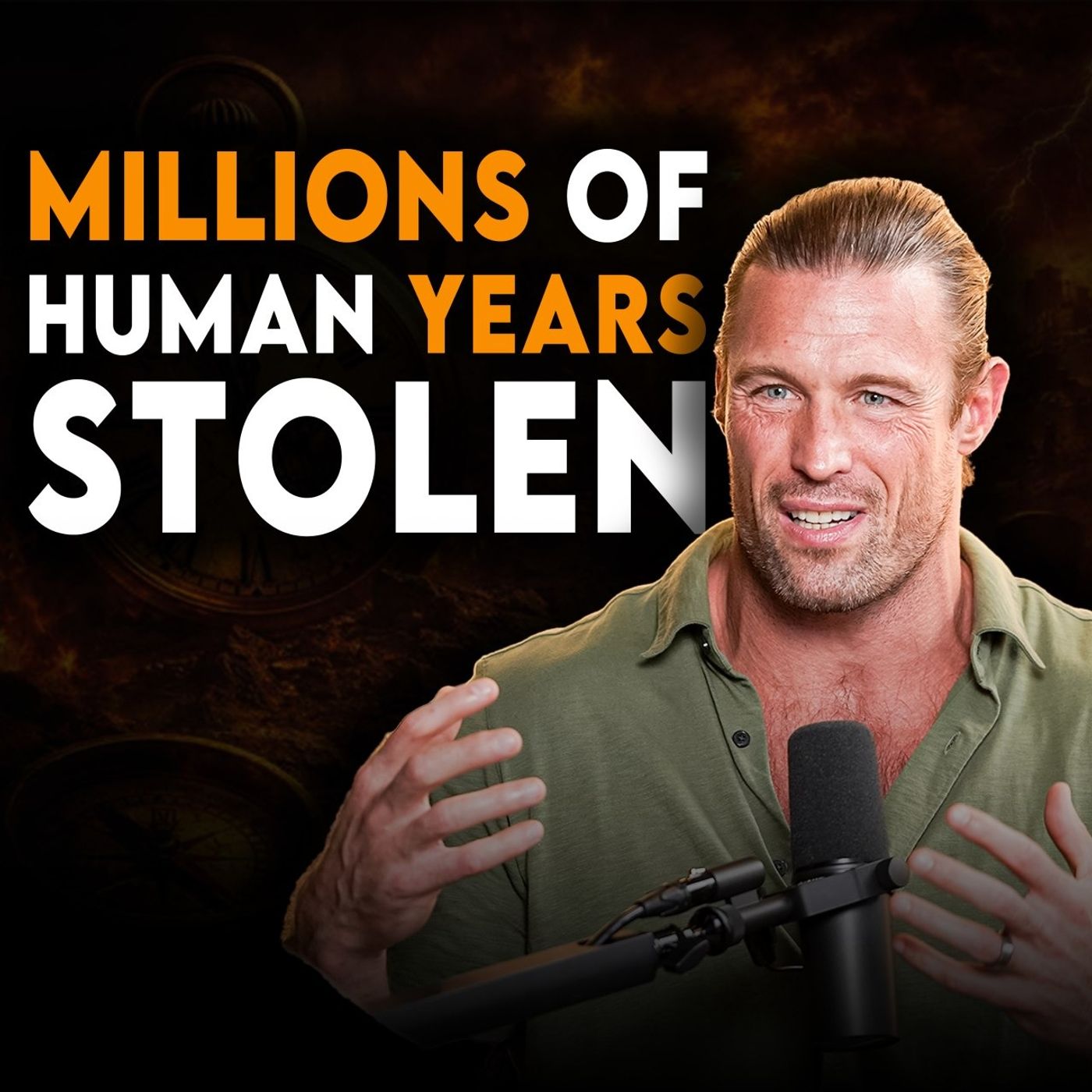
The "What is Money?" Show
The Hidden Math Behind How Inflation Steals Millions of Years of Human Labor w/ Deepak Sharma
01:47:57
What if 100 million years of human labor were stolen in a single policy decision — and almost no one noticed? In this conversation, Robert Breedlove joins Deepak Sharma — entrepreneur, media founder, and host of the It's Not That Deep podcast — for a wide-ranging exploration of money, freedom, and the hidden architecture of human behavior. The conversation moves from the nature of money as pure optionality and the language of human action, to the mechanics of fractional reserve banking as legalized fraud, to the staggering math behind how the Covid-era money printing effectively stole 2 million lifetimes of productive labor from savers. Robert and Deepak also go deep on the psychology of scarcity and abundance, manifestation and meditation as tools for reprogramming behavior, the male drive to create and compete, and why the human superpower of programmability is either your greatest weapon or your greatest vulnerability. This conversation explores the deeper forces shaping human...
Loading summary
Transcript312 lines
- [00:00]
Robert Breedlove
There was this super bowl commercial at one point and he was like, I'm Joe Biden, I love ice cream. He's eating the ice cream cone and then he's like, you know, the prices of ice cream have gone up too much. And these ice cream producers, I'm going to tell them they can't do that because Joe likes ice cream. And, you know, they don't need to be so greedy. Here we are in 2024, whatever the year was, living in the information age, and there is this senile old child sniffing guy on TV eating an ice cream cone. Politician, by the way. This guy produces nothing, telling everyone that he is going to shame or, I don't know, legislate the greedy ice CRE producers to not increase their prices. Does anyone actually believe that there's a bunch of greedy ice cream producers sitting around like, oh, we're just going to just squeeze them on the ice cream? I was like, no. Like, how do we never talk about the money printing? The fact that a politician who won a popularity contest can go on the super bowl and make an ad like that and they're not chopping off his head the next day. It's like people really don't understand what's going on at all. So this was during COVID when the US printed $6 trillion. So we're talking about like a 30 to 40% increase of the total US dollar money supply. So you take this number, right? Six trillion. That's a six followed by 12 zeros. And then you look at the average annual wage in the United States, which at that time was around $60,000. So that's a six followed by four zeros. You take 12 zeros minus four zeros and you get a one followed by eight zeros and you get 100 million. That is the number of years worth of productive labor stolen through the counterfeiting of US$6 trillion dollars. This is a watered down, like less visible form of slavery.
- [01:49]
Deep
Robert Breedlove, welcome to the 1%.
- [01:52]
Robert Breedlove
Thank you, Deep. I am glad to be here.
- [01:54]
Deep
Look, most people win at one thing, but I feel like you've got it down when it comes to health, wealth, relationships. That's what I want to get into today, brother.
- [02:03]
Robert Breedlove
Well, well, that's way too nice of you.
- [02:06]
Deep
I want to kind of start off by asking you the question that I feel like you've been pondering, you've been asking. I want to hear your take on it. What is money?
- [02:15]
Robert Breedlove
Yeah, that is definitely like the question I'm always asked first. And I do Feel I was telling you guys offline. Like, I feel super fortunate to have stumbled upon that question when I did. As I was telling you earlier, as we were talking about, like, naming podcasts, when we started them, I was looking for something that was an invitation into the Bitcoin rabbit hole rather than, like, let's say a promotion, an active promotion. And so I found this question to be like. It's been asked many times. First of all, it's not like I originated it, but I felt like over the past five years, in doing the podcast, it's become an increasingly salient topic. You know, we've had a lot of inflation. I just mentioned, like, Russia had, you know, hundreds of billions of their reserves frozen. So kind of showing it at the geopolitical layer, like, what is money? What is not money? So people are very, very much fighting over this definition and wrestling over this definition. And it's very important, and it's very important for everyone. Because money, as anyone who's been alive for two seconds can probably tell, is a major influence in your life, right? It determines many things, right? Determines your degrees of freedom, determines your access to food, good quality food, health care, ability to move about. One good definition of money is that it's just pure optionality in the marketplace, meaning it affords you the widest set of options in any given set of circumstances. So when you're dealing with uncertainty, as we always are, right, as we face the horizon of the future, which we cannot see very far into the reality and unpredictability of, it's always presenting itself to us, right? There's always surprises around the corner. Let's say, well, what's the optimal strategy for dealing with conditions of uncertainty? It's options. It's options. You don't know what you're going to need. Is it going to rain and you're going to need an umbrella, is it going to be a drought and you're going to need some water? Well, you don't know. But if you save in, well, you could buy the umbrella or you could buy the water, right? Something simple like that. So optionality ends up being a very good definition for money and also a good synonym for freedom, right? Like, not freedom so much in the deeper philosophical sense, but just in a very pragmatic sense. Like what, you know, what purchasing power can you bring to bear? Purchasing power would be the economic term referring to, you know, what capital and goods you can command in the marketplace, right? You know, what do they say? Let your money talk for you. Put your money where your Mouth is, talk is cheap. All of these adages that we have about the use of literacy as a relatively low signal medium, right? I can sit here and tell you I'm going to put $10 million into your business tomorrow. And that carries a certain degree of signal. But if I wire you the money tomorrow, or even more strongly, if I send it to you in bitcoin and an irreversible transaction, then that's a much higher signal of my intention to work with you and do business with you, right? So money, that's another good definition, is that it's one of the strongest communication tools we have. It's been variously defined as the language of power, the language of value, or even the language of human action itself. So that we are, through all of our buy and sell decisions or saving. Like, if you save, you're basically abstaining from consumption. You are signaling to the marketplace your preferences. You're signaling like, if I buy a car, I'm signaling to the marketplace, make more cars like this in this place. If I sell that same car, I'm signaling the reverse, right? Like, hey, we don't need this so much. There's extra supply on the market, because I don't. I prefer not to have it. And so people are communicating their actual preferences one another all the time in this dynamic communication system. System. And so, yeah, there's a couple of definitions now, in doing the show for five years, I literally. I have a running document with probably 80 definitions. There's so many. And just one last thing I'll say because, like, this one is a little bit more deep. So, sorry, deep. But I'm writing a book right now, and we're really trying to do something a little bit artistically ambitious, and that is to take sort of some deeper esoteric, philosophical things I and my co author, like, we've learned over the years getting in, not just Bitcoin, he actually has a master's degr in philosophy and is much more studied than I am. But just some of the deeper aspects of reality that we've encountered, we start talking about. People often think there's only the objective and the subjective, right? You know, there's like objective facts in the world and then your subjective experience of them. And like, that's it. There's some kind of, like, fundamental dichotomy built into the structure of reality. That's not true. Right. There's all kinds of things that are between subject and object. And it actually seems like most things are this betweenness in a way. Subject, object is a category that we impose on reality. Whereas reality is actually much more flow.
- [07:13]
Deep
Like it should be easier for us
- [07:15]
Robert Breedlove
to categorize it as 1. That's right. Decomplexifying reality. But reality fundamentally, you know, they often call it the fabric of reality, but it should be something, I guess you could say it's like the liquid fabric of reality. Reality is very. It's a flow structure, it's energetic, it's energy, frequency and vibration. So that things that move a certain way, you know, tend to influence things near them. And this could be anything from a tuning fork to human beings to stars. Right. It's like it's all this interconnected vibrational structure. And so this is the very deep, weird answer. But one of the most popular metaphors for money is liquidity. Well, one of the most popular metaphors, and by the way, this between subject and object, Philosopher John Vervecki calls this the transjective. So it's neither subjective nor objective. It's neither or both. Right. The example he commonly uses is evolution by natural selection. So obviously there's objective constraints in the world, but there's also sexual selection, which is subjective. So natural selection as a process is transjective. It's neither objective nor subjective. That's how most of reality is. And so liquidity being a good metaphor for money, liquid is also a really good metaphor for this transjective nature of how reality actually works. So that the real deep answer, I think, to the question what is money? Is that it's a good metaphor for understanding the structure of reality. And so that's. We're writing a book on that, so there's a lot to unpack there, obviously.
- [08:44]
Deep
But that's super interesting.
- [08:45]
Robert Breedlove
I wanted to give you three wide
- [08:46]
Deep
ranging answers for sure. And each of those is a whole podcast in and of itself. But I think, you know, from my perspective, and you know, something that's very recent and I've been trying to study and learn a lot more of is just our relationship with time and the universe and kind of our fabric of being something that's just been coming up so much is like, I think. And most people, I think, are operating in this frame of, you know, we have the present, the past, the future, but in like a more quantum lens, which I'm not qualified to talk about, I'm still just opening up this door and learning about. Right? Yeah. But it's all happening like all at once. Yes, pretty much. Right. And so how much of people's money beliefs, I guess, is in flux versus what is like almost set in stone? I'll make it a little bit more of a clear example for me. So, I mean, growing up, immigrant parents did the best they could. Middle class upbringing, there's always food on the table. We never had a lot of money. A lot of that scarcity, I feel like, became very internalized. And when I went off and started my own business, started actually making money, had no idea what to do with it. I blew it. I moved to Miami, living the life. We got the dinners, the yachts, whatever. And what I believe to be this duality between scarcity and abundance is this constant fight. But what you're posing here is that there's a some sort of flow in between and you can almost reconcile the two.
- [10:27]
Sponsor/Ad Voice
Wow.
- [10:28]
Robert Breedlove
Yeah. First of all, thank you for like sharing. That's like kind of a vulnerable thing. But I can relate to it as well. Like, and I, maybe this is common among people that don't come from much financially, but if you get access to money, a lot of money quickly when you come from those conditions, like easy come, easy go. Because I, I had the same experience earlier in life and yeah, man, what's what to say about that? I, you know, it's very popular these days to tell people not to operate from a scarcity mentality. Right. You should always be thinking in abundance. And this is very much kind of in that vein of manifestation and positivity and all well and good actually. And I do genuinely subscribe to that, to tenants of that in many ways, like I try I mentioned earlier. Right. I've have a history of being somewhat frustrable by even little things like, you know, technology not doing what it you want it to do in a moment.
- [11:21]
Deep
Yep.
- [11:22]
Robert Breedlove
And so I used to get this kind of frustration energy often that would rise up in me. But I found that just learning, not learning, basically forcing myself to laugh or sing when I feel that energy. Over time eventually like developed a habit where I'd kind of start laughing at it. And I actually genuinely find myself now belly laughing at my own frustrations throughout the day, which is fucking fantastic. Right. I was able to retrain and not that I'm perfect at this, but like it's better and then. Or if you have an especially long frustration, I will like start singing to the Lord and I say the Lord is my refuge and like sing this whole song anyways, it's been very helpful. So I do subscribe to like manifestation, if you want to call it that, broadly. I'm not a professional at it. I'm not good at it. I've had A meditation practice on and off throughout my life. And I have found in those periods where I'm very serious about my meditation practice, the manifestation and the visualization and the goal achievement, they all like really do well. But the challenge I've had actually, and this is probably somewhat toward your, the answer to your question is like I would, then I would increase my meditation practice. In times of scarcity, let's say when I'm struggling, things are bad, you know, I need to fix things. Whatever is it, it's personal business, whatever it is, I would lean into meditation hard. You know, I'd meditate an hour a day. I'd work like I get so aligned and focused. But then when times of abundance would come after that, it was the first thing that I would procrastinate and give up. It was like so easy to be like, oh, I need to go sit still for an hour. Like, you know, once your life starts going and things are good, you're like, why would I go sit still for an hour right now? I got shit to do, you know?
- [13:00]
Deep
Yeah.
- [13:01]
Robert Breedlove
And so, yeah, I think we're, this is weird. Like human beings, we are again designed by evolution obviously to be these load bearing creatures. We're goal seekers, right? Like we literally run towards challenge and adversity all the time. Every day. Everyone's got an idea, everyone wants to do a thing, everyone's got a dream, right? We're all hustling, we're all like trying to do something. Not everyone maybe, but many people. And so that pursuit does need that sense of abundance that you, that it is possible. But then in a way you have to deal with the realities of economic scarcity. Now scarcity here I think the word gets distorted a bit. People when they say scarcity mindset, it's almost like the mindset of someone who's impoverished or, or is, you know, they're just defeatist or they're negative.
- [13:54]
Deep
But it's a real thing. But we have limited constraints and, and resources. And that's why I'm like, I'm trying to. Yeah.
- [14:01]
Robert Breedlove
Yes. So, and that's why economics is so important. This is literally scarcity is the starting point of economics, right? It's like, how do humans act under conditions of scarcity? And now we need to define scarcity because this doesn't, it's not so much that negative, like bad outlook, scarcity, that's the wrong connotation. This is like scarcity that is as real as gravity. And what it, how it's defined in economics is like anywhere, demand exceeds supply. And so maybe a more colloquial way to say this is like man's reach always exceeds his grasp. We always want more than what is available, as you may have noticed. Like it doesn't matter how much you have, you always want something else.
- [14:42]
Deep
We always move the goalposts as well.
- [14:44]
Robert Breedlove
And we're always moving. Like the very fact that you're moving and doing anything indicates that you have a goal, right? Which means you have a state, you have a preferred set of conditions that you've imagined in the future that you would rather be true than your present conditions, right? And this can be as simple as, hey, I'm thirsty, I'm going to walk to the kitchen and get some water, right? I'd rather not be thirsty, so let me go to the kitchen and get some water. But this can be as big and complex as a, you know, multinational business or whatever it is. But the very fact that we are goal oriented creatures moving through space and time, trying to bring about desired results through our actions and our movements like this implies scarcity, right? Why? Well, it's time, it's space, right? You occupy space. Space is not infinite here on the earth, right? It's scarce, you're mortal, you have only a fixed amount of time. There's only so much, you know, wood and skill and expertise and all of these things. There is demand. There's more demand for them than there is supply. And so reconciling with the reality of scarcity is the purpose of free markets. That's what price signals do when we're communicating preferences to one another. And that's how supply and demand resolve, right? Through the price signal. So this whole thing like we, we're able to solve more problems per capita, which is like, we can solve more problems per unit of time, let's say when we engage in like open source free markets, which is basically saying you're, you're not coercing anyone, you're letting everyone just vote with their wallet. And violence is illegal. Stealing and violence is illegal. Everyone deals with one another on a consensual basis. That's what a free market is. That's not the world we have today, as you may have noticed. When that happens, we solve the most problems possible per unit of human time. And so that is the abundance I think we're ultimately after, right? The spiritual abundance, the mental abundance, all of these things. That's individual. People have to cultivate that themselves. But let me tell you, you know, how many cavemen do you think we're doing, Joe? Dispenza meditation retreats versus how many people in 2026 are doing them. Right, right. We liberate ourselves for these higher pursuits of abundance and study of wisdom traditions and, you know, rituals and meditation practices and all of these things. We unlock the freedom to do more of that as we increase material abundance. And we increase material abundance, we optimize it through free market economics.
- [17:06]
Deep
That makes sense to me. The part that, you know, I always trying to reconcile is, you know, on the more spiritual woo woo side, you will hear so many people be like, oh, man, like, you just got to think abundant. You just got to be abundant. And I try to act in accordance to that. You know, when it comes to maybe my business or dating or anything, very optimistic. You have to have like that viewpoint. But then also you got to reconcile that. Well, wait, this is my bank account currently.
- [17:37]
Robert Breedlove
That's right.
- [17:38]
Deep
And maybe all the meditation in the world, you know, might not fix that today. But it's funny you mentioned kind of going in these periods of meditation when maybe things are tough and then kind of abandoning it when. When you're doing well. Right. I can, I can relate. Hard. And a mutual friend of ours, Brandon Epstein, you know, I had him on the show at the time, I had just decided to move back to Miami after doing a period in Colombia. I spent six months there last year and truth be told, and I made a public video about this. And that's something I also appreciate about you, how vulnerable and honest you are with everything at most things in your
- [18:17]
Robert Breedlove
life, trying to be better about it. But thank you.
- [18:19]
Deep
Yeah, I posted this video basically being like, hey, look, things are tough with the business right now and I gotta make a call. Do I continue spending the amount personally I spend just to live in Miami just because I want to or, you know, do I. Do I pull back a little bit? I posted that. I go down there. But then when I, you know, came back to do some podcasts and stuff, had this episode with him and he took me through one of these, these meditations. And as you may know, you know, he does this mental performance stuff and helps people rewire limiting beliefs and whatnot. And I was like, cool. Like, I've done some hypnosis stuff. I believe in it. But how does that apply to me right now? You know, how we're always thinking.
- [19:01]
Robert Breedlove
Sure.
- [19:02]
Deep
And he takes me through this incredible transmutation of a belief live on the episode. Amazing. Where, you know, I had to share something that I felt like is a blockage. And for me, you know, I'll even share it now. For me, it was always reaching and staying at 100k a month with my partners.
- [19:20]
Robert Breedlove
You shared this with me when we met.
- [19:21]
Deep
Yeah, that's right. Yeah. So for me, which, by the way,
- [19:24]
Robert Breedlove
you go, like, how relevant is money? Right? That was a major block for you.
- [19:27]
Deep
Major block. I'd say the biggest every other area in life. I'm not saying I'm perfect, but I'm calm about I don't have that internal friction around. So that's one of the things I want to talk to you about. Today is like the money piece, though I feel like dictates so much of my frustrations, so much of my feelings of scarcity, so much of my feelings probably of inadequacy, of lack of skill, whatever. Whatever it is. And he just went through this exercise, closed my eyes, rewired the belief, push it away, whatever. I thought it was like a few minutes. It was like almost 20 minutes. Wow. I chopped up that piece up and I listened to that meditation every single morning for like 45 days. And again, money was a little tough at that stage. After I did that, 100k months. Wow. Like, it worked. Yeah. The minute I started, I got that. I stopped doing the meditation. And then. And then the. The bank account went back to below 100k months, and it was like, now I've gotten back to it and whatever. But I want to hear your thoughts on that a little bit deeper on just like, how much do these beliefs around money actually dictate your reality?
- [20:42]
Robert Breedlove
Well, I mean, again, thank you for. That's an awesome story. And, well, I don't know, frankly, again, I don't know how the fuck can I possibly know, but I do, you know?
- [20:55]
Deep
Well, I'll reframe it. How. How much have they affected your money?
- [20:59]
Robert Breedlove
Well, man, you said so many things I want to grab onto, but it's like one of them is there is this. I'm going to call it a masculine energy, right? That it's. It's assertive, it wants to go into the world, it wants to solve problems.
- [21:11]
Sponsor/Ad Voice
Problems.
- [21:12]
Robert Breedlove
It wants to, you know, either create value or take value, kind of depending on which. You know, if it's the lighter masculine energy, it's more entrepreneurial. The darker tends to be a little more conquistador, you know, statist kind of variety, organized crime, you know, but we want, right? And why? Because, well, we've probably got some women at home that want, right? So we typically go out into the world, solve problems, hopefully, if we're on the entrepreneurial path. And not create problems for people as the other path does. And we solve problems and we bring home the bacon, so to speak, or the bread if you're a vegan and you feed, you know, you feed your wife and children and all. So there's like this, there's this Darwinian thing where it's like, I think some of that energy. Oh man, we gotta be quick, like not to judge it too quickly. It's like you accept this aspect of your animality that it's actually useful and
- [22:07]
Deep
it's, it's not this bad thing that we should just completely.
- [22:11]
Robert Breedlove
That's right. It's not at all, it's not at all actually. And like again, this is why the ethic of private property is so important. Like those two paths that I described, right? You can either go into the world and like deal with people consensually, non violently and productively. So it's one plus one equals three. Basically you're playing a positive sum game of free market economics. Or you know, there's a big spectrum here. But I'll go to the other end of the spectrum. You can go out and deal with people in the world non productively, coercively, extractively. Right? Where 1 plus 1 equals 1.8. Basically because you're, you're decreasing the incentive to be productive in the world. You're destroying capital rather than creating capital. And so you can walk down either one of these paths as a man. But the, the, the dividing line between the two and the constraint that we need that keeps us honest and optimally productive is private property. And again, when I say that people think real estate, but just think of it like this, it's like do not steal, do not steal, do not kill. Basically it's a prohibition on stealing and killing. And if you understand that if you kill someone, you've basically stolen their life, you could really just crystallize it in saying do not steal. Yeah, so long as you're not stealing and you're dealing with people on a, you know, opt in, opt out basis and all domains, business, specifically trade, just then, then one plus one equals three and. Right again, this is not an opinion. This is the reality that's deduced from first principles economics, right? That when people. It's called the inequality of exchange in economics. So the very fact that you and I both agree to do a trade consensually, right. I'm going to trade you coffee mug for iPhone stand. The fact that we both agree to that trade implies that you value coffee mug more than you value what you're giving up and I do the reverse. I value what you have more than what I'm giving up. So we both experience what's called a psychological profit. We at least think we're better off. We could be wrong, of course, because the future's uncertain, but we at least leave the trade thinking we're better off if the exchange is not consensual. And you know, gun to the head, give me your wallet. Like, well, the guy that's giving up his wallet did not want to give up his wallet, obviously. So there was no value created for him, there was value destroyed. So it's only through consent. Consensual trade, which is governed under an ethic of do not kill, do not steal, AKA private property that we optimize and maximize wealth production, which can be understood as the number of problems we solve per unit of human time. And so that energy that you have, that frustration, like ah, you wanna, it's like, okay, good, yes, fucking tap into that shit and then channel it, right? Like come up with a solution, right? See what people need and try to go and solve that. Yeah, this is like the right path to walk with that type of energy. And then
- [24:59]
Sponsor/Ad Voice
would you rather have one bitcoin today or two bitcoin a few years from now? Bitcoin mining is a tried and true strategy for accumulating bitcoin. Over a two to four year time frame, successful miners have consistently accumulated more Bitcoin than they otherwise would with a traditional dollar cost average strategy. Blockware mining as a service enables you to start mining Bitcoin from your laptop. Blockware handles everything from securing the miners to sourcing low cost power to configuring the mining pool. They do it all. Plus, with Blockware's one of a kind mining marketplace, you can buy and sell live bitcoin miners with just a few keystrokes. In this marketplace, buyers get to purchase live machines at vetted facilities, enabling them to mine with zero lead time. And sellers get the opportunity to liquidate their machines and hosting contracts at will. This means you can mine Bitcoin with zero long term commitment and high liquidity on your mining rigs. Blockware will even cover your energy bill for one week per mining rig when you sign up at mining.blockware solutions.com BreedLove Again, that's one free week of Bitcoin mining at mining.blockware solutions.Com BreedLove and on top of this offer, you can also use code breedlove to get $100 off your first mining rig with Blockware solutions.
- [26:24]
Robert Breedlove
I wanted to talk about your, your meditation thing too, because that's super interesting. I've never done that. First of all, I've done meditation, but. And I've done a Joe Dispenza meditation retreat. Actually. I did a seven day retreat and it was very powerful. I'm trying to get back into his work now. I wouldn't, I'm very new to it still, so I don't have a lot.
- [26:40]
Deep
I'm reading his book right now, Becoming Supernatural and I want to go to one of his retreats later this year.
- [26:46]
Robert Breedlove
Same am I Chris Vasquez, who you mentioned earlier, like he's big into Joe's work.
- [26:50]
Deep
Oh yeah. And the most successful people I know, like, yes, he's, he's one of the ones that unites across like that whole realm. Most people are like, nah, he's legit. I will say, listening to some of his meditations, I'm like, dude, like, his voice just kills me. Like sometimes it's hilarious. But I try to submit.
- [27:11]
Robert Breedlove
But anyways, he's so good, dude. Like seeing him live, he's so good with the science. And then he, he interjects himself frequently with humor. And so there's kind of this pattern interrupt. He's fantastic. Yeah, I went in a bit skeptical myself, but by day seven of that retreat had a very profound experience and I want to get more into it, but like, so although I've had a meditation practice, it was more of a vipassana meditation. So I'm really just like, you know, trying to get into the, the shunyata, the place of no, no time, no space and just kind of have that spiritual shower experience. I wasn't meditating on things, I wasn't manifesting things. It was much more of a traditional practice as I understood it.
- [27:49]
Deep
Right.
- [27:50]
Robert Breedlove
But what you described, I mean, I think it's another one of these demonstrations that reality is fundamentally vibrational. Right. That you could sit with a thought and an a vision. Right. You were imagining yourself in this place of having a hundred thousand plus income per month and you're like mentally, you know, imaginally rehearsing this. Yeah. And there's a different. By the way, the, the imaginal is an interesting thing. It's not the imagination of like, hey, think of a sailboat. You see an image of a sailboat. There's the imaginal where you play a role. Right. And like you'll see like when a kid. The example Vervet uses is the kid that ties the cape around his neck, picks up the stick and pretends he's Zorro. Right. He's not envisioning something in his mind. He's playing. He's playing it out. He's playing a character. Right. When you're a kid and you play pretend.
- [28:39]
Deep
Yeah.
- [28:39]
Robert Breedlove
That's that imaginal stuff. And so when you're doing that, you know you're creating a certain pattern. Like you're creating a simulation of that reality that you want to see drawn into to you. This. I think it. So in physics they call this entrainment. Are you familiar with that term?
- [28:57]
Deep
Nope.
- [28:58]
Robert Breedlove
So entrainment is when. Anytime. Again, everything's a vibrational system. But anytime one vibrational system is near another vibrational system, they eventually come into harmony. Now this is in a lot of domains. You can hit a tuning fork that has a certain attuned to a certain frequency. And if the another tuning fork which is not touching it is at the same frequency, it will start to vibrate at the same frequency due to the airwaves. So these things start to harmonize.
- [29:24]
Deep
Yeah.
- [29:24]
Robert Breedlove
Women that spend too much time together. Menstrual cycles synchronize. People that applaud for a long time. The applause starts to synchronize. Right. Human action. We're always imitating one another. If you spend enough, they say you are the average of the five people you spend the most time with. All of this stuff grounds out in the physical concept of entrainment. So it's just basically when one vibrational thing gets near another one, they start to come into harmony. That's how all this thing works. And so I think you are doing that in a way is you're creating the little simulation in your mind. Yeah. And you're starting to intentionally purposely imprint that thing on the reality. Or you're just. Maybe you're just reprogramming your imaginal where you show up as the guy. You're playing the role more effectively that you've been rehearsing to become the guy that makes 100k a month.
- [30:10]
Deep
Well, I don't.
- [30:11]
Robert Breedlove
Right. But it's. So it's an entrainment that becomes training.
- [30:14]
Deep
Right.
- [30:14]
Robert Breedlove
You are training yourself.
- [30:16]
Deep
Yeah.
- [30:17]
Robert Breedlove
And is. This is my favorite words of Musashi is that the way is in training. Aristotle said this.
- [30:23]
Deep
You know.
- [30:23]
Robert Breedlove
Virtue is not a thing, it is a habit. Right. You have to cultivate it through repetition.
- [30:27]
Deep
Yeah.
- [30:28]
Robert Breedlove
Excellence is a habit. You have to do it over and over again.
- [30:31]
Deep
Yeah.
- [30:31]
Robert Breedlove
So all of this and if you look at the. Obviously entrainment and training have a similar etymological root. Right. They both have the word train in it. Train means to pull forward. So what you're doing is you're imagining that future that you want. And through repetition, you're pulling it forward, you're pulling yourself towards it.
- [30:51]
Deep
Exactly.
- [30:51]
Robert Breedlove
And I don't know, like, is that real? Is that. But I at least know you're rehearsing for to do it.
- [30:57]
Deep
But is it any less real than what we're doing right now? Like, we might think that this is somehow more real than that, but the tuning fork example shows you that that is just as real, the same as, like, our consciousness is what we truly are. Our meat suit is just like a vessel.
- [31:19]
Robert Breedlove
Yeah.
- [31:20]
Deep
It. We are not our breath, we are not our thoughts. But I think we get closer when you start to reconcile it with your beliefs. That's why I've been thinking a lot more. I keep bringing up this word belief because it's a.
- [31:34]
Robert Breedlove
It's almost like I would go with intention, maybe intention, like in a moment. What is the intention in the moment?
- [31:39]
Deep
Exactly. And I. I almost look at it like a version of. This is not the right word, but I think I'm limited in my vocabulary on this. But it's almost like brainwashing yourself.
- [31:49]
Robert Breedlove
That's right.
- [31:50]
Deep
Gaslighting yourself into a certain reality. When. When Kobe would visualize, you know, scoring 81 points, I think I'm not Kobe. I don't know. But he would actually go and do that before it was done.
- [32:05]
Robert Breedlove
Yes. Yes.
- [32:06]
Deep
Right. I don't think that he was just like, boy, it'd be nice to score 81 points. Cool. Done. Let's go. I think there's a difference. And I love that word entrainment because it makes it a lot more real. Yes. And so that's the thing that I'm trying to like, because I'm not going to lie, my default state is very skeptical to all this stuff.
- [32:24]
Robert Breedlove
Sure.
- [32:25]
Deep
I'm like, yeah, yeah. I grew up Indian parents. I've heard it all. I've seen the astrology. I've seen all of it. Nuff forget that. You're not going to look at my palm and tell me how my life is going to go. Right. But that's the ego.
- [32:38]
Robert Breedlove
That's.
- [32:39]
Deep
That's me thinking I know something based on whatever my worldview is. But I've kind of just had to throw my hands up a little bit and accept some of this stuff. I had this. I had this. I was. I was smoking cigarettes at one point and horrible habit I had got into. Just like having Nicotine and whatever. And I told myself all these stories, these beliefs. Ah, bro, I work hard. I sell. I don't have any other real vices. Like, you know, when I have a drink or something and I have a cigarette that turned into having a cigarette when I'm not drinking, whatever. Of course, I'm like, I gotta cut this out. I. And a buddy of mine, he was like, yo, dude, I can like, get you to stop that, like, overnight. Like, okay, whatever, bro. He's like, no, no, dude, let me. Let me do a session with you. So he does this hypnosis, this hypnotherapy, and I'm totally, like, coherent. I'm sitting here just like I am right now, and he's just asking me some questions, like. Like therapy. Basically. I'm like, all right, like, whatever. But then I see what he's doing throughout this. He's asking me leading questions about, like, the type of person I want to be or the type of person I believe myself to be, the type of people I associate myself with. And I never touched one again. I never touched a cigarette again. Now I'm, like, repulsed by the.
- [33:59]
Robert Breedlove
Was there a point in the sequence of questioning that it just went off or.
- [34:02]
Deep
Yeah, it's so. So he. This one line of questioning where he was like, well, when was the first time you had one? I was like, oh, I was. I studied abroad. I was in Norway. I studied in Norway for about 10 months. And it was my first time having freedom. I'm just describing this to him, and I'm. I'm around all these friends and all this stuff, association. And I had this association with, like, oh, freedom to do whatever I want with my body. Good or bad.
- [34:27]
Robert Breedlove
Yes.
- [34:27]
Deep
Right, right, right. And then he'd ask me another question. He's like, also, did your. Does anyone in your family smoke? Well, my. My dad did a lot, and. And then I used to rip up his cigarettes, and my dad would get pissed. It's like, oh, interesting. And he just shut up. He let me make the association. I was like, oh, there's something there, isn't it? I hate to go all therapy with it, but a lot of it does go back to your childhood. Ah, fuck. I guess I associated freedom.
- [34:56]
Robert Breedlove
Yeah.
- [34:56]
Deep
With, you know, my dad wanted the freedom to be able to smoke or some fucking deep reason. Whatever. Yeah. And I associated this time in my life with being on my own, not living with my parents, doing what I want with. With smoking. Maybe that was me just trying to soothe myself and feel free.
- [35:14]
Robert Breedlove
Dude, honestly, that's A really cool story. And, I mean, I think this, again, dovetails with everything we're talking about, because the. The training's happening all the time. Like, you're alive all the time. Right. So long as you're alive and you're breathing as you're living and you're eating and you're engaging in conversation and you're doing things. Right. Yeah. Whatever those things you're doing repeatedly are becoming what you are. Right. Like, if you go and run long distance every day, well, then you're going to get real really good cardio shape and really skinny. And you can go long distance. If you read a book every day, you're going to, you know, have a bigger vocabulary. You're in the training process all the time. You can't opt out of it, basically, but you can do it either consciously or unconsciously.
- [35:55]
Deep
Yep.
- [35:56]
Robert Breedlove
Right. And it sounds like you had made maybe an unconscious association with freedom or liberation, personal liberation, or maybe it was a happy time in your life. Whatever. The thing was something positive with this ritual.
- [36:08]
Deep
Yes.
- [36:09]
Robert Breedlove
Right. And they often talk about. And I'm not no expert on this, but, like, I've heard these addiction experts talk about the importance of breaking ritual or, like, whatever the. Whether it's cigarettes or heroin or anything in between, there's always, like, some rituals.
- [36:21]
Deep
Could be Netflix, could be sex. Yes. Could be anything.
- [36:23]
Robert Breedlove
You have to have a way to, like, crack that ritual, because that's the. It's the groove that people fall into. Right. It's where. That's what a ritual is. Right. It's like a habit. It's an unconscious thing. It's the thing you do without thinking about it.
- [36:35]
Deep
Yeah. You.
- [36:36]
Robert Breedlove
Everyone's had the experience of, like, driving 30 minutes somewhere, and all of a sudden you're like, whoa, what happened? Like, what you've been thinking. Maybe.
- [36:42]
Deep
Yeah. Well, not.
- [36:43]
Robert Breedlove
Maybe not the whole drive, but a lot of the drive. Are you just. Why? Because driving is unconscious. You've been doing it for 20 years. Right. It's not that complicated.
- [36:49]
Deep
Versus the first. You're a woman to drive.
- [36:53]
Robert Breedlove
Sorry, ladies, that was a joke.
- [36:54]
Deep
The first time you had to drive, though, you're thinking about 50 different things. You're checking mirrors. Yes, whatever.
- [37:00]
Robert Breedlove
And this is the purpose of consciousness, actually, is to zero in on that novelty. Or. That was like the example, I think Peterson gave this example of the piano player. When you first sit down and play with those piano keys, you're slowly, deliberately, mistakenly doing this. Right. And you just keep doing those repetitions. But the goal is to be able to sit at your piano recital and just flow, not even think about it at all. You've encoded that memory into your body so deeply that it just comes out of you. And so there's this good. A useful relation between the conscious and the unconscious. But if you're unconscious about your unconscious patterns, that's the problem. Right? And you don't. And what you said earlier, you used the term brainwashing, but that's. Here's how we say it on the show. I've said if I could deliver one message to people that have watched the podcast for five years, there's probably more than one, but this is a very important one, is the realization that the human superpower is that we are highly programmable. Or, you know, you could, you know, more fancy ways, like maybe highly malleable or cognitively adaptive or flexible. Like we. That is the software running. We are running, especially when we're connected with each other through tools like literacy and numeracy and money and all of these other things that, like, extend our cognition. We can actively reprogram ourselves in very interesting ways. Yeah, you know, like the stories you tell yourself, the rituals you do, the incentives you pour yourself into, you know, your physical environment. You know, meditation, physical training, therapy. Like, there's so many tools and techniques. Right. Of ways to retrain or reprogram yourself. And if you don't take that process, if you don't take your own superpower of reprogrammability seriously and consciously, then you're. You're not going to be the author of your own story.
- [38:54]
Deep
You're just on autopilot.
- [38:55]
Robert Breedlove
You're going to get written into someone else's story. Story. And so that's like the message I want to deliver to people. It's. You're trying to get them to unplug from the matrix.
- [39:04]
Deep
It's taking back the frame. And, like, that's what I love about, you know, maybe I shouldn't even call it meditation, but that. That transmutation of that belief, I. What I like about that, as opposed to just sitting for 60 minutes in silence, which is great. I've done that. And I have a hard time sticking to something for a long enough period of time to see the result if I can't connect it to, like, what is this clearly going to do for me? And I'll put that aside for now. I still think I should meditate that.
- [39:33]
Robert Breedlove
Yes.
- [39:33]
Deep
I'm not just trying to cop out a meditation.
- [39:35]
Robert Breedlove
I think I should do more manifestation, too. And I actually, we are actively working on this. So I'm. I'm taking it seriously too.
- [39:40]
Deep
But to me, the thing that I find that I can just connect more to reality is, hey, I got this problem, or I got this thing I want to change. I want to go in and snipe that. Yeah, let's work on that. Because if I've identified that, the biggest friction point for me is that I don't have enough money to do the things I want to do or live the life I want to live, or go on the dates I want to go on, or travel, whatever. If that's my internal programming and I've identified it consciously, then subconsciously it's in every cell in my body and I'm probably giving that energy up. I want to fix that. So for me, if I can go in and snipe that one thing and replace it with, you know, more. More abundance. And you know what he actually said it had nothing to do with money. Funny enough, even though it has everything to do with money, the belief that I replaced it with was, you are more than enough, regardless of how much money you are making. Because really, there's some kind of deficiency where I feel like I'm not enough unless I make X.
- [40:44]
Robert Breedlove
Yes.
- [40:45]
Deep
Which is just. I know that to be not true. But then I don't live that way.
- [40:50]
Robert Breedlove
That's right.
- [40:51]
Deep
Same way. It's like, I know cigarettes are bad, but I'm smoking them.
- [40:55]
Robert Breedlove
Sure.
- [40:55]
Deep
So it's like, I personally see so much more value if people can identify what is that thing that you think is holding you back? Because we all kind of know. You all kind of know. I mean, maybe not all of us, but. But I'd like to think that the
- [41:12]
Robert Breedlove
ongoing process of discovery.
- [41:14]
Deep
Yeah, for sure. It's. It's self awareness.
- [41:16]
Robert Breedlove
Right.
- [41:16]
Deep
It comes back down to that. But I don't know, that's just something that's helped me. So, you know, I. I think the meditation's great. I struggle with just sitting in stillness for any more than 30 minutes. I'm like, okay, enough's enough. Same thing with a yoga class. I do yoga, but I get to like the 35 minute point. And I'm just getting kind of antsy. I'm like, how many fucking downward dogs am I going to do? Like, my hips are still.
- [41:39]
Robert Breedlove
All right. I'm going to take you to a better yoga class for sure. Take it. A hardcore flow that won't even let you think.
- [41:44]
Deep
I want to switch gears a little bit to one thing that, I mean, I told you earlier, gone to business school. And I feel like I learned nothing about business. One thing that in my economics class that I just, you know, I found out about, but just never made sense to me was this concept of fractional reserve banking. I know you're gonna have a field day with this, but break down to me the importance of people understanding what a scam that truly is.
- [42:12]
Robert Breedlove
Yeah, no, it's a really important question. And it's one of these terms, I think one of the. I don't recall if I said this on camera or off camera, but, you know, one of the sayings I've used before is if you don't understand the game of money, how the game of money is being played, than you probably are the game being played. Yeah, right. So it's very important that you understand things like fractional reserve banking. And the reason it has such an esoteric term is because that's part of the game, the obfuscation, right? To use fancy language and words so that people don't, you know, look any more deeply into it and just assume the experts have it under control. Like, that's all part of the psychological manipulation of this. So, like, fractional reserve banking, although it is an accurate, accurate term, it's, you know, it's kind of purposefully dense. And what you should really call it is just a pyramid scheme or fraud. You know, like, it's that simple. If you. What a bank was originally intended to do was to, you know, one of the functions is to be a custodian. So the bank would hold real money in its vaults. Like gold.
- [43:24]
Deep
Gold, yeah.
- [43:25]
Robert Breedlove
Yes, right. Metal, really. It's called specie, typically in the fancy word, but it's physical metal. It's gold. The banks would issue paper derivatives on top of this, you know, an iou, basically. And these are just deposit receipts. So it says, you know, hey, this piece of paper is worth one ounce of gold from this bank, right? So you can take that paper to the bank at any time and redeem your real money. So the paper is not the money. The gold is the money. The paper is the map to the territory or the menu for the food or just the financial contract, right, that says, hey, this bank owes me this much gold. And now this gave people a lot of advantages because, well, gold is physical and cumbersome, and there's security risk associated with moving it around. Hard to use it in small transactions. So it's much easier to deal with paper and later on electronic representations of paper than it is physical gold. So now you get into the situation where, all right, bank is holding gold. People and market actors are using the paper currency. But this is gold backed. So that system works, right? So long as it's maintained one to one. Which is to say, and if you think about this from the bank's perspective, you, customer, are depositing your gold with me bank. So what do I have now on my balance sheet? I have a liability. I owe you that gold. Yeah, right, yeah, deep foot. 100 ounces of gold on deposit. I owe deep 100 ounces of gold. Now I've given you that paper as proof of that, that I'll honor that obligation. And then the asset I have in my books is the gold, right. Sitting in the vault, right. Like I don't own it though, because there's a liability that basically covers it. Right. So 100% of my assets are matched by 100% of my liabilities. I've got 100 ounces of gold on deposit, but I owe deep 100 ounces. Right? So that's a full reserve bank. That's an ethical, non fraudulent full reserve custodial bank. That's what a bank is supposed to do. Fractional reserve is. I mean if you followed me this far, you could probably guess what it is, right? It's like you just issue more paper than you actually have in gold and
- [45:38]
Deep
just hoping that people aren't going to go and ask for their gold.
- [45:42]
Robert Breedlove
You're betting that enough people won't come back at the same time and ask for their gold. So a very simple example, right? Let's say you put the 100 ounces on deposit. You're my only customer. I've issued this paper. Let's say it's $100. So it's a dollar per ounce. What if I go in this issue? It's my currency, right? My gold backed currency. I'll just create another hundred dollars and I'll spend that or loan that into circulation. Well then what I've done is I've increased the money supply, but I haven't increased the good, which is the, what's the currency supply? Sorry. This is why I call it currency counterfeiting. Sometimes I call it money printing, but you want to get more technical. You basically counterfeited this iou. You've put it into circulation, but it's not backed by any real assets, right? There's still only 100 ounces of gold. So now as long as, and let's say these dollars get into, you know, 200, each dollar gets into one person's hands. We got 200 different people holding $200 after the circulation. The bank is basically betting that at no point in time will 100 people in total come and redeem their gold from the bank at once. Right. That would be what's called a bank run. If you've ever seen the movie A Wonderful Life, I think is the old movie, but it's got a bank run in it. So, you know, these have happened countless times throughout history. You show up to the bank, I've got my deposits left. What do you mean? You loan out all my gold and it's all gone. How did that happen? It's like. Well, the answer is they were probably running a fractional reserve bank. They fraudulently, fraudulently overissued paper that their gold reserves could not justify. They did this for purposes of generating interest income to themselves as a bank by lending that paper out or just spending it directly. And so, yeah, fractional reserve banking is fraud. Yeah. And if you hold savings in a fractional reserve bank, which is all fiat currency institutions in the world. Well, what's the nice way to put this? People that like to say my money is in the bank. Well, it's not money, it's not yours and it's not a bank. That's what fractional reserve making us.
- [47:41]
Deep
And so at a certain point, though, our currency that's in circulation was backed by gold.
- [47:49]
Robert Breedlove
That's right.
- [47:50]
Deep
And what was it like the 1970s? Something it like stopped.
- [47:54]
Robert Breedlove
1971 was the official break. Yes.
- [47:57]
Deep
When it stopped being backed by gold altogether. So now these IOUs are just in circulation and the bank's screwed if a certain percentage of people go back and try to retain it for anything.
- [48:11]
Robert Breedlove
Well, the thing now is that actually the whole idea of a bank run, although it can still happen with just dollar reserves, like a version of it, but the dollars themselves are no longer redeemable for gold. So you actually never have that. There's no constraint now for the central
- [48:25]
Deep
bank's just propped up on an idea.
- [48:28]
Robert Breedlove
It's a pyramid scheme. It's a confidence game. Right. As long as people, as long as there's enough demand to keep holding the currency as a savings tool. So your whole demand to hold dollars, basically. And so long as those people keep producing enough goods and services that the inflation doesn't cause a hyperinflation, doesn't lead to hyperinflation, then you can run the pyramid scheme for a period of time. But as you counterfeit more currency and people start spending it more quickly because you have to do that because prices are going up, then eventually the currency will Go into hyperinflation. Got it. This is the end state of basically every fiat currency that's ever existed. It either hyperinflates or the country is conquered by another. Another country, basically.
- [49:12]
Deep
And you were explaining recently as well that with them just printing more and more and more money. Like give me that stat again that we were talking about right before the episodes. Like. Yeah, however many hundreds of millions of dollars printed.
- [49:28]
Robert Breedlove
Yeah, yeah, crazy one, yeah. So the numbers, this was the actual expansion of the US dollar supply after the start of the pandemic. So this was during COVID when the US printed again. You could check the numbers on this. I think the conservative figure is $6 trillion. So they expanded the money supply by $6 trillion. I think the money supply prior to that was like in the mid teens. So we're talking about like a 30 to 40% increase of the total US dollar money supply. We're only looking at the US and the Fed, by the way, this does not include all the other central banks of the world that also did something similar. So you take this number, right? Six trillion. That's a six followed by 12 zeros. And then you look at the average annual wage in the United States, which at that time was around $60,000. So that's a six followed by four zeros. Okay, you take 12 zeros minus four zeros and you get a one followed by eight zeros. Right. You divided basically 6 trillion by 60,000 and you get 100 million. That is the number of years worth of productive labor stolen through the counterfeiting of US$6 trillion. Right. Because if you counterfeit US$6 trillion and each person's working for an average of $60,000 a year, well then you just stole that labor from savers and now you can go and buy those people's labor. Right. How much of it? 100 million years worth.
- [51:01]
Deep
That's, that's insane.
- [51:02]
Robert Breedlove
Which is insane. Right. And now to like make it more of a. To bring it home and like think about it in terms of number of people. Each person, you know, works an average of 50 years. Let's say from the age of 20 to 70, you divide the hundred million by 50 and you end up with 2 million lifetimes worth of productive labor energy stolen through the counterfeiting of six trillion US dollars.
- [51:26]
Deep
So insane, man.
- [51:27]
Robert Breedlove
And so when you quantify it that way and bring it down to the personal level, I think it's more. It's important for people to like appreciate. This is not some abstraction, often high finance. It's just you Know, floating around and not affecting people. It's like, no, no, this is a watered down, like less visible form of slavery, right? People, an institution that can counterfeit currency can steal your time and energy, right? It is an economic parasite and you can quantify the damage that it does, pretending like it doesn't exist and you know, like believing all the, the latest news cycle and all the other, you know, all this misdirection that comes with the money printing. I loved when Joe, Joe Biden was in office. There was this super bowl commercial at one point and he was like eating an ice cream cone. He's like, I'm Joe Biden, I love ice cream, I love that. And at some point he's eating the ice cream cone and then he's like, you know, the prices of ice cream have gone up too much. And these ice cream producers, I'm going to tell them they can't do that because Joe likes ice cream. And you know, they don't need to be so greedy. I'm like, oh, oh my God, here we are in 2024 or whatever the year was, you know, living in the information age and there is this senile old child sniffing guy on TV eating an ice cream cone. You know, the politician. By the way, this guy produces nothing. Like his entire salary is paid for by via theft, right? He just, he's backed by the monopoly on violence. So that's his power, telling everyone that he is going to shame or, I don't know, legislate the greedy ice cream producers to not increase their prices. And people believe that. Like, does anyone actually believe that there's a bunch of greedy ice cream producers sitting around like, oh, we're just going to just, just squeeze them on the ice cream? I was like, no, like how do we never talk about the money princess? Like that is the only thing that's driving all the prices up. Not the only thing, prices move naturally, but this systematic increase in the prices of commodities, of gold, of real estate, all of the things that cannot be counterfeited. This is almost wholly a symptom of money printing, AKA currency counterfeiting. And so although I'm very optimistic about the long run potential of humans, I'm quite pessimistic where we are right now in terms of our understanding of economics and economic principles. Like the fact that a politician who won a popularity contest can go on the super bowl and make an ad like that and they're not chopping off his head the next day. It's like people really don't understand what's going on at all in the economics. This guy, he's completely lying. Everything he says is complete and utter bullshit. He might as well be telling you that gravity is, I don't know, working upside down or something. Like it's, it's utter nonsense. And yet no one's tuned in enough to economic reality to understand it. And so I often say we're living through the, hopefully the end of the economic dark ages. But it's, it's bad, it's really bad that people don't understand this stuff. It affects them a lot and it leads to clown world consequences like Joe Biden on TV eating ice cream.
- [54:38]
Sponsor/Ad Voice
One of my highest health priorities is keeping my brain in top shape. To take care of my brain power, I do many things such as striving to read, write, exercise and meditate daily. One of the latest tools in my brainpower toolkit is Mind Lab Pro. Mindlab Pro is a nootropic supplement that is scientifically proven to enhance your brain power. When I take Minelab Pro, my mind feels like it has a better grip on the world. My thinking is more lucid and the articulation of my speech is radically improved. Mindlab Pro has been tested in rigorous double blind, placebo controlled human trials and has been proven to enhance brain power for users in every age group. Mindlab Pro is an advanced formulation of 11 nootropic ingredients and is backed by research from over 1400 human trials conducted over the past 32 years. So if you're looking to enhance your brainpower, Mindlab Pro is an excellent solution. Go to mindlabpro.com breedlove to start enhancing your brain power today. Again, that's mindlabpro.com breedlove
- [55:47]
Deep
yeah, well, I mean, and to make it a little bit more real for like the everyday person, I mean I think, I think people understand to some level that printing money does make things more expensive. I think like, but don't people feel like, like what can they do about it? Like kind of people just throw, throw their, throw their hands up. So, or, or do you just think there's just a complete dissonance and people just have their head buried in the sand and they don't even know about this at some level.
- [56:19]
Robert Breedlove
I think it's both honestly and I think it is trending a good direction. I can't imagine a world 25 years from now where the youth in the world of AI and the Internet and Bitcoin, I can't imagine those kids which would then be adults buying into the central bank propaganda. There's just no fucking way. Why would I use a paper money that you can print to infinity? Why would I use your shitcoin Federal Reserve when I have access to money that nobody can print, Right? Money that nobody can steal, nobody can print? Like, I just feel like that narrative is going to play out in our favor over. Over the years. Sorry, what was it? What was the question, though?
- [57:03]
Deep
Just basically the. The dissonance around inflation versus do you think that people are educated on it enough, or do you just think they're not educated at all? Or do you think they know, but they're like, what can I do about it?
- [57:17]
Robert Breedlove
Yes, yes, yes. So going the right direction, as I was saying. But I wanted to maybe share something a little more personal here. It's part of my journey into this, actually. I discovered the book the Creature from Jekyll island, like, 20 years ago. This is before Bitcoin, right? Bitcoin's 17 years old. So this is a few years before bitcoin came into existence. The book the Creature from Jekyll island, in short, tells the story of the inception of the American central bank, but then it also goes into, like, the history of money, the nature of money, other central banks. My takeaway from that book was like, oh, my gosh, the. This is the biggest scam in the world, and this is the root cause of so many problems. You know, the propaganda, the fake news, big pharma, endless wars, you know, on and on and on. All the symptoms of things that people point out that are evil in the world, like. Well, the most. Honestly, I think they all have their root, to some extent, in the corruption of money. I discovered that before the existence of bitcoin in the book Creature from Jekyll island. And I felt that feeling of disenchantment, like, what can I do? What can you do? I shared the book with some people and talked about it, and there was similar feedback. People are like, okay, great, but what are we going to do about it? And at the time, there was no good answer. There was legitimately no good answer. There were a lot of guys that were gold bugs. They're like, oh, we just need to take all your, you know, purchasing power out of the system and live off the grid. It's like, okay, so take it all out of the bank, put it all in gold, bury it in my yard or put it in a safe.
- [58:54]
Deep
And then, like, it's not very fungible, not very convenient to print around.
- [58:58]
Robert Breedlove
How do you go to the coffee shop, right? Like, we bring some gold dust with you. Like it's, it just, it's not practical basically. Right. And so there was no good answer, but now I think Bitcoin offers a pretty damn good answer. It's like if you understand that saving and a money that someone else can print is just unnecessary counterparty risk. Right? You're giving someone the keys to your survival in a way to some extent. And look, not to some extent, to a complete extent. Let's be frank.
- [59:33]
Deep
Yeah, I said everything.
- [59:35]
Robert Breedlove
The Indian rupee. I'm sorry, the 500 rupee banknote in India. I forgot what year this was. But there's a point. There's a 500 rupee banknote that at one point was deauthorized overnight. Right. So people that save in this physical note and they've got it under their mattress or in their safe or wherever. Well, the central bank said one day said no, that doesn't work anymore.
- [59:59]
Deep
Don't accept that.
- [60:00]
Robert Breedlove
Gone. Poof. Gone. Right. So you now whoever you are, you could have as Many Ben Frank $100 bills as you want, bro. Stashed in safes and stash houses all over the world and caves like it doesn't matter. The Fed can still be off, like deactivate. Yeah, it's not money, it's. It's a, it's a currency with a very significant counterparty risk built into it. And it's not resolvable by taking it out of the bank, putting it on your mat. That's not how it works. And so I think that, yeah, that is a very important thing for people to understand. And in doing so, let's say you've come to the conclusion, hey, corruption of money is bad. I need to get myself out of this system. And this is one of the most beautiful things about Bitcoin. It's simultaneously very selfish. Right. Like okay, I don't want to hold a money from just a purely self interested standpoint, there's no incentive for me to want to save. And a money that someone else can print or steal or that goes down in value.
- [61:10]
Deep
Exactly.
- [61:10]
Robert Breedlove
So the printing is going down or the deauthorization or stealing. Right. Which would be the. Yeah, anything that can be compromised. Anyone that can compromise my purchasing power, that's not in my interest. Right. So when I take my purchasing power and put it in Bitcoin, I'm serving my own self interest. I'm putting it in something that cannot be printed. Bitcoin has fixed supply of 21 million and it's very difficult to steal if you custody it properly. Now there's some sophistication around that and some things to learn and all that, but it can be done. It can be secured in ways that no other asset can, like a very high degree of security. Right, okay, so that's the selfish part of it. But here's the selfless. You've now taken your energy, your purchasing power, or your economic energy, if you want to think about it that way. It's your economic lifeblood. You have withdrawn it from this predatory system that literally prints money to extract your economic energy, to go out and create all these endless wars and fake food and big pharma, all the things, right? So you have starved the beast at the same time, you have protected yourself. And so bitcoin is this kind of unity of opposites in that it's both selfish and selfless simultaneously. And so you can cast a vote against the corrupt system by holding your savings in bitcoin while at the same time optimizing the security of your purchasing power. Talk about a fucking win win situation. And people just haven't woken up to this yet.
- [62:41]
Deep
Going back to how we started the podcast, I mean, we, you know, we said scarcity is not necessarily a bad thing in this situation. It sounds to me it's as bad as gravity. Right?
- [62:51]
Robert Breedlove
Is gravity good or bad?
- [62:52]
Deep
Exactly.
- [62:52]
Robert Breedlove
Just is.
- [62:53]
Deep
We have a scarce supply of bitcoin and you said it was how much fixed supply? Fixed?
- [63:00]
Robert Breedlove
21 million. Yeah.
- [63:01]
Deep
21 million.
- [63:02]
Robert Breedlove
Yes, yes.
- [63:03]
Deep
So explain, like I'm five, someone who doesn't understand bitcoin at all, how that works, you know, at a high level for. For the rest of humanity.
- [63:14]
Robert Breedlove
Yes, got it. Well, way easier said than done, but here it goes. So, yeah, I think it's worth us revisiting the word scarcity, because often, you know, we said that man's reach always exceeds his grasp. Right? We always want more than what is available. That's what scarcity is. When? Now. Not everything is scarce, by the way. Even things that are valuable aren't necessarily scarce. Oxygen is a good example, right. That there's so much of it, we don't price it, we don't fight over it, we just breathe it. It's obviously very valuable to life, but it's not scarce. Why? Because there's. The supply exceeds the demand. Right. There's so much of it relative to our demand, for that is not scarce
- [63:56]
Deep
until you have smog in your city.
- [63:57]
Robert Breedlove
But yeah, of course, of course, of course. So there's this common kind of misconception. So we're going to use the strict economics definition of scarcity, right? It's when there is. People want more of the thing than there is of the thing. Scarcity. Right. But people often describe Bitcoin, and you did there as well, right? Like Bitcoin's supply is a scarce 21 million. People often use the term. Myself included, use the term scarcity to describe a property of money. So people assign many different. Many different numbers of properties to money. I narrow it down to 5. I won't elaborate on them now, but I'll just name them. And so it's divisibility, durability, recognizability, portability, and scarcity. Scarcity, meaning in relation to the supply. Right. So here's a way. I think the intuitive way to think about it is this. Okay. Everyone understands money is that which we use. This is a very basic definition, I think, that which we use to buy goods. Right, okay. But goods are the things that take labor, energy, and time to produce.
- [65:12]
Deep
Yes.
- [65:13]
Robert Breedlove
Right. Okay. Labor, energy and time are scarce, like due to thermodynamic reality, Right. That they're. Energy cannot be created nor destroyed. You are mortal. All the things we said earlier, right? You occupy physical space. It takes scarce resources to produce goods, but money is a representation of those scarce goods. We also said that money is the thing that gives you the widest set of options in the marketplace. Okay? So it can be used to acquire any good, basically, in the marketplace. So therefore, you tie all that together. Money as a concept is always scarce. We will always want more money than there is money, because money is a reflection of all the goods. Just like we want more goods than there are goods forever, we will always want more money than there is forever. Right? So what you really want in money is something that has an inflexible supply. Right? This is why gold became money, because its supply increases very slowly and predictably over time. So that, you know, if you store economic energy in it, or purchasing power or your lifeblood, that people will not be able to print it rapidly and debase your livelihood, your energy. Right? So gold had a very inflexible supply in addition to actually satisfying those other monetary properties I mentioned earlier. That's what makes it good money.
- [66:40]
Deep
So it didn't have the portability piece.
- [66:42]
Robert Breedlove
Correct? Correct.
- [66:44]
Deep
That's what makes it imperfect.
- [66:46]
Robert Breedlove
This is why I think it's such a useful framework for getting it. And yeah, that's basically it. You know, it's like I almost stopped using the term scarcity and went with like, you know, supply integrity or irreproducibility. Is it Like a fancier word. But essentially it's that it's. And money is a reflection of the goods. The goods are always scarce. So you would prefer to have a money just like the goods are hard to produce. You'd prefer to have a money that's hard to produce so that someone doesn't just produce it easily and steal the goods. You see what I'm saying? It's a balance thing.
- [67:22]
Deep
Got it.
- [67:22]
Robert Breedlove
If that makes sense.
- [67:23]
Deep
Yeah, no, that makes sense. And then so from a standpoint of someone who's, okay, they're on board with this, okay, I want to get some bitcoin, you know, are you suggesting that the everyday person opts out of putting their savings in the bank and, you know, set up a wallet, go on an exchange, purchase bitcoin and then leave it there? Is that what you're suggesting?
- [67:52]
Robert Breedlove
No, my suggestion is quite simple. Just study bitcoin. Where would someone start, a fancier way or a less bitcoin way to say that? Because I know this, that term can be like off putting to a lot of people for sure. The thing called bitcoin derangement syndrome we've talked about where there's a lot of these academics that have just been, you know, decrying Bitcoin for 10 years and they just will never have the humility to admit that they're wrong. Anyways, if you don't like the word bitcoin, my advice is simple. Study the nature and history of money. Just do that. I'm not here to tell you, like I, I really don't like the word should. I don't like to be prescriptive unless I'm asked specifically for my advice, which I'm also hesitant to give oftentimes because the devil's always in the details.
- [68:41]
Deep
Right.
- [68:44]
Robert Breedlove
But the advice to study the nature and history of money, that's. You're not going to lose, right? You're going to give up some time, some energy, some attention.
- [68:52]
Deep
You ask your own questions and arrive at your own conclusion.
- [68:55]
Robert Breedlove
And I think you will gain so much insight into how history actually works, how human psychology, Psychology actually works. The, you know, the motivation behind all the wars. It's like it's. Yeah, money makes the world go around, as they say. A deep study of it is always a worthwhile endeavor.
- [69:12]
Deep
Okay, I'm going to ask this selfishly because, yeah, I'm afraid to admit this to you, or I'm embarrassed to. To admit this to you, but I think I fall in a little bit of the camp of I get so overwhelmed with the whole crypto world. And I remember when we started this business, however,
- [69:33]
Robert Breedlove
crypto is an absolute shit cesspool.
- [69:36]
Deep
It's a worm, by the way.
- [69:38]
Robert Breedlove
Yeah, well, just so don't be depre. But bitcoin and crypto are two different universes, okay? People still think they're the same thing, but they're actually. They could not be more opposite.
- [69:47]
Deep
Okay, I'm going to want to dive into that. But, you know, what I'm trying to say here is back when we started this business five. Five years ago, we'd have clients want to offer us to, you know, pay. And. And so I got my base level knowledge of setting up a wallet and whatever, and my first time ever actually buying some coins or whatever, I had this buddy, and he would always be talking about crypto and doing web3 and all this stuff, and he'd just be making so much fucking money, dude. And I'm just like, bro, at the time, this is right before I started my business. But at the time, he was like, yo, Deep. Like, I'm not gonna give you any advice or, like, tell you what to do, but you keep asking me about this. I'll tell you what I'm doing right now. You can do it or not. And I'm like, yeah, I had this. I had this fixed Inc. Like, I had my salary coming in from my job and all this extra money, and I'm like, I want to grow it faster. I don't. This ETF is too slow for me, dude. I need. I need, like.
- [70:47]
Robert Breedlove
I want to, like, where's the jet fuel?
- [70:49]
Deep
Yeah, let's do some shit. I bought this speculative coin called Fart
- [70:54]
Robert Breedlove
Coin, the archetypal shitcoin.
- [70:58]
Deep
Oh, yeah, absolutely. And he was making tens of thousands. So much money off this stuff. And at that point, there was a rug pull. And this isn't the fart coin that's maybe a little bit more popularized. At the time, it didn't have its ico. I was just, like, learning about all this shit. I just put a bunch of money. I lost a bunch of money overnight. Yeah. And I'm just like, you know what? This whole world is crazy to me. I'll buy some Ethereum or whatever just to be able to make some transactions. At the time, NFTs was a big craze. I had a bunch of clients who were in this web3world. I just never took the time to fully understand it. And you know what? I threw my hands up in the air and I'm like, I just don't like Any of this. I don't get it. I understand. When I give you a dollar and you give me a good. That just makes sense to me. So with all that being said in watching your content and talking to you, I'm less scared of it now. I want to start learning about money. Where do I start?
- [71:59]
Robert Breedlove
Oh, wow, man. Who again? You know, this is why it's one of these questions is very difficult to answer because you always want to. To meet your audience where they're at, and you really don't know where people are at on that journey.
- [72:18]
Deep
Oftentimes ask me whatever you need to forget about the audience.
- [72:20]
Robert Breedlove
Just you. So do you read?
- [72:24]
Deep
Yeah.
- [72:24]
Robert Breedlove
You like to read entire books?
- [72:26]
Deep
Yeah.
- [72:26]
Robert Breedlove
Okay.
- [72:27]
Deep
Yeah. I don't finish every book I start.
- [72:29]
Robert Breedlove
Sure, sure. I asked because I mostly read. So my like, strongest recommendations are books. But oftentimes people.
- [72:37]
Deep
My preferred is listening to an audiobook while reading.
- [72:40]
Robert Breedlove
Okay. That's a really good way to have more retention. I've heard. I have actually haven't done it myself, but that's.
- [72:46]
Deep
Yeah, I have a hard time just reading. I'll do it at night, but I usually fall asleep after like 10. Yeah.
- [72:52]
Robert Breedlove
Okay. All right. So, man, where to start learning about money, man?
- [72:58]
Deep
Just from what you know about me and where I'm at? Like, what's, you know, Goodness.
- [73:04]
Robert Breedlove
I'm going to give you a book that. It's a little bit obscure, but I really think it's superb. It's by the late, great libertarian philosopher, Christian libertarian philosopher Gary North. Okay. And what I really appreciate about Gary's writing style is that he has such short, deliberate, simple sentences. Just like. It's impressive to read the way he writes because he's taking very deep ideas about money and ethics and all of, like, how these things are all mixed together. He does in this book. There's a few books of his that I could recommend, but I'll recommend the book Honest Money. Okay. It's very clearly written. It's an excellent introduction to the nature of money. It goes a little bit into the history of money. Enough for you to understand, like, what's been going on. There's deeper dives into the history, but it's very good on the nature. And it's interpreting all of this through the Bible, actually, which is actually very useful because you get a lot of the ethical interpretation that makes a lot of sense. And again, his writing styles is so crystal clear. Like, it's fantastic. And it's a short book. So it's like, it's profound. It's short it's well written, it covers a lot of ground. I would often point people there. I also have to give, you know, that's a slightly older book, I don't know, maybe 20, 30 years old, more modern. The book the Bitcoin Standard by Saif Dinamous, you know, it does an excellent job as well, going through nature and history of money for the first two thirds of the book, three quarters of the book maybe. And then it talks about bitcoin, how it solves, like, a lot of the problems that it's laid out for you. So although it's titled the Bitcoin Standard, don't let that name or that title be off putting. It actually is a great synopsis on nature and history of money. And then it shows you how bitcoin kind of fixes a lot of those problems. I mean, you could always go to whatismoneypodcast.com But I mean, the thing there, honestly, episode one that I did with Michael Saylor, like we recorded for 11 hours and we chopped it into a bunch of episodes. That's been one of the most popular piece of pieces of bitcoin content on the Internet. People absolutely fucking love that. I don't take any credit for it because it's all sailor. He's a. He's a brilliant, eloquent guy. But there's. Although he's not like going specifically into the Austrian economics so much as Seifudine and Gary north do. He has this, his own sort of, you know, engineering interpretation of history and energy and technology and anthropology and all these things. It's a very entertaining and educational journey. But, you know, the first nine episodes I think are 11 hours and we have 17 episodes total, close to 20 hours of content. So not for the faint of heart necessarily.
- [75:54]
Deep
Oh, for sure.
- [75:56]
Robert Breedlove
You know, we have over 700, not seven. We have over 600 episodes on the podcast. We have a lot of Bitcoin 101 content. You can follow me on social media like I'm trying to do. I've spent years tweeting and writing about bitcoin and so now I'm trying to do a little bit more, I guess just my own personal brand, like things that I'm into. So, you know, I'm into personal fitness. I've been into fitness my whole life and now recently I've gotten really into it. I've been open sourcing peptides, anabolics, every recovery, sleep protocol, like everything that I do. Fitness wise, I'm just like open sourcing it. And so the idea there is somewhat inspired By Bitcoin. This is open source software, is like just radical disclosure of like everything that you do to demystify men's fitness. You know, there's like all these guys arguing online all the time. Is this guy natural? Is he not natural? You know, they're all. It's so silly. Like, why don't you just. Everyone just tell what you do and like get on with your life.
- [76:52]
Deep
I appreciate that about you, by the way. You know, you've been very forthcoming about that recently and you said on one video that you, you went basically you pushed as far as you feel like you could. Naturally. Yeah. And then. And then kind of switched over. Walk me through that a little bit.
- [77:11]
Robert Breedlove
So, I mean, I don't have a perfect journey like anyone, right? But I. The advantage that I have is I started, I'm pretty sure I started trading Olympic lifting when I was 11. Like when I was doing football and wrestling, I would do Olympic lifting the off season. I'm 40 now, so I've been lifting for almost 30 years. There was one point in college, I did a few weeks of testosterone injections and I did some injections of what I thought was Trin, which is like a very strong steroid, but I actually don't think it was that. Now that I've studied the side effects I had, I kind of myself up. My libido was messed up and all of these things, so I think it was something else. But anyways, I had like this brief period in college where I like did stupid shit, taking steroids. And then from that point on I was like, I'm not touching that stuff again. You know, I mess myself up. I'm just not. I'm just going to be natural for the rest of my life. So basically from like 1920 until, you know, 40. Not 40, 39 and a half, I was training natural. And then I July, late July 2025, started doing peptide therapy very seriously to heal leaky gut. I started doing testosterone replacement therapy, started taking testosterone and then I had this goal to like get in the best shape of my life when I was 40. And so I started trying other hardening anabolics and all of these things like hit peak condition. And indeed that's what I did. I had, you know, I was 227 pounds, 8.5 body fat.
- [78:41]
Deep
Wow.
- [78:41]
Robert Breedlove
And I'm 6 4. So like it was like crazy superhero shape, right? Like, but not, by the way, not shape you maintain. This is something like literally do and you hit a peak and you take some pictures and you're like, hey, look at me, I look good. But then you can't walk around like that all the time. So now I'm already like, you know, gaining weight back, I'm cycling off everything. And, and so the idea is to continue just disclosing that journey. You know, I cycle up, I cycle down, I'll post photos. But here's what I look like on this, here's what I look like on that, here's what I look like completely natural. And like, so the idea is that 20 years ago when I was getting into this, you don't know, like as a young man, you don't know, like there's so many guys that would be taking anabolics and then saying I'm natural by my creatine, you know, was like kind of this standard thing. Like it's very. And as a young man, you don't know, you're like, oh fuck, give me that creatine. You know. And like I worked at a gnc, so like, I don't know, I just saw this kind of game from the inside and I just figured as a young man, like if you're a 20 year old man today, it's getting a little bit better. I think with social media, more people are disclosing things that they're doing, but there's still a lot of just guys lying about it.
- [79:52]
Deep
Yeah.
- [79:52]
Robert Breedlove
And so I, you know, again trained for 30 years. I have photos of me like in the best natural shape I could ever get in when I was around like 37. And then I have, you know, photos of me in unnatural shape. And so I'm just like chart and track all of this as I go and just keep open, sourcing it. Well, the idea of it just being an educational tool of people. Yeah. Also the blood work and all the labs, like, you know, there's all kinds of controversy out there. Like, how bad are these things for you? What do they do? Like, well, I'm just going to publish all my labs and all my blood work. I'm already doing all of this stuff, I'm already tracing it meticulously. I'm just going to open source it effectively so that other people can, you know, benefit from that insight. And so it's kind of like doing what Brian Johnson's doing to some extent, but in a non vegan, non transhumanist way. Like just the guy, just, just the open source biohacking for the normal Jim Bro athlete.
- [80:45]
Deep
I think that's refreshing. I think we need more of that. You know, I think you obviously have an Incredible physique, but at the same
- [80:52]
Robert Breedlove
time it's all smoke and mirrors.
- [80:54]
Deep
Just, just showing people, you know, hey, this is my peptide stack. I, I saw you made a video about retatrutide versus Tirzepatite. I've tried tirzepatide, you know, in the past. Yeah, I had fantastic results. Yeah, you know, I think I dropped like 25, 30 pounds. Yeah, like a couple months. But then I was like, you know what, let me get off this. We try to do it the right way, whatever. But it's like all it goes back to kind of how we started this podcast and we're talking about beliefs, right? If you're going out there and you have this movie star physique and whatever, and some impressionable 17 year old kid sees that and they're like, oh man, like, you know, I could do that naturally or whatever, it's like, well no, this is what you could probably do naturally.
- [81:40]
Robert Breedlove
That's right.
- [81:40]
Deep
This is what not what's not. Just, just being more of an open book I think is so important.
- [81:45]
Robert Breedlove
And dude, thank you. And like, so, so there's a very
- [81:52]
Sponsor/Ad Voice
special place called the Farm at okefenokee that's a 1000 acre regenerative farm community about 45 minutes northwest of Jacksonville, Florida. The farm is a completely off grid community. It has total food, water and energy independence. Everything on the farm is 100% organic and it even features wild boar and bear hunting. The Farm at Okefenokee is right next to the Okefenokee National Wildlife Refuge where you can do camping and canoeing tours. So if you're like me and you're interested in the self sovereign lifestyle, then you can get your own lot on the Farm at Okefenokee if you tell them that I sent you. Once you get a lot, you can build one of three custom cabin options. So if you value freedom, self sovereignty and living in touch with nature, then join me and my family. We have lot number 21 and we're going to be building a cabin there starting December 2025. To learn more about the Farm at okefenokee, go to okifarm.com and make sure to tell them that I sent you.
- [83:02]
Robert Breedlove
There's this thing called the Fat Free Mass index. I actually didn't know this until I recently hit this peak, but it basically is a composite metric of your lean mass and your body fat percentage. And so it creates a score from, you know, call it 15 to 25. And essentially, you know, mathematically and biologically it's not possible For a natural man to be above a 25, you know, like to be at 25, you have to be, you know, genetic 1%, you know, peak age, probably between the ages of 28 and 35, something like that. And you're, you've been training your whole life. And, and, and you know, eat right. Like, you have to hit all the 1% marks to be at 25 naturally. Right. And even then you're not going to do it for long, just like when you're in your prime. And that's it. Okay. The peak that I hit recently, unnaturally was a 25.7. All right, so there's people online. Oh, you don't need to do that
- [83:56]
Deep
to get that physique.
- [83:57]
Robert Breedlove
All I do is eat plants and do pull ups in the wilderness or, you know, some stupid. And you're like, no, dude, biologically and mathematically it's not possible for you to get to this level of fitness, period, without taking some of these exogenous things.
- [84:12]
Deep
Yeah.
- [84:12]
Robert Breedlove
And so that type of information I just think is so important. And like, there's still silly arguments. These guys online, like, oh, is he nutty or not? And it's like it's typically just two meatheads going back and forth like, oh, I'm nutty, you're not. It's like, guys, just do your DEXA scan.
- [84:27]
Deep
Yeah.
- [84:27]
Robert Breedlove
Put the data online. You can calculate your FFMI and then you'll quickly tell. You might not know completely because they could be, they can have a high FFMI and still be unnatural, you know, but if you're above, some of these guys are like way above a 25. Like, if you're above a 25, then you're clearly unnatural. Like it's not possible to not be. And so anyways, it's just like, I guess it's kind of a carryover from like this pursuit of radical truth in Bitcoin and corruption of money theme. Like just trying to apply that to, you know, a domain that I'm interested in, which is, which is working out and fitness. Yeah.
- [85:02]
Deep
And so, and that's the power of social media. I mean, you know, not, not here to plug my business or anything, but we literally call it put out content. Because I'm not here today. If I don't start this podcast, I'm not able to quit my job, leave communist Canada, come down to beautiful Florida, meet the people that I get to meet if I don't put out content. So I want to kind of ask you a little bit about, for you, I mean, obviously Putting out content has had a pretty tremendous impact. What. What are your thoughts now today on people who are on the fence of telling their story and being vulnerable and authentic and open?
- [85:38]
Robert Breedlove
Oh, man. Well, I'm not an expert at all in this domain, and I'm really, like, very introverted. It was intensely challenging for me to even start the podcast and be on camera and talk and all of that. But through doing a lot of repetitions, like anything in life, you eventually get used to it. And I also think the older you get, like, some of my social anxiety or whatever I had that was. That was inhibiting me. I think it just kind of died the past few years. You just get a certain age, you're like, I just don't give a. Just run the camera. Who cares? But that. So now I'm. I'm still, like, just right at the cusp of trying to be more extroverted and super authentic and raw online and just talk about these things and flow and riff. I've done it on the podcast, but it's like I've been hiding behind my intellect a little bit, you know, like, we're always just in the realm of ideas, and I didn't talk much about me. But then over the years, as I got more comfortable, I started to reveal more about myself. But I have found there to be tremendous value in that discovery. Disclosure. Yeah, like just one, for instance, like when I was open about my autoimmune condition, so many people came back with, like, all these different suggestions that were very useful information that was very useful, you know, different gadgets and, like, it was very helpful in my journey, basically. And so I think we have, again, I say this as someone that resisted the social media paradigm, right? As an introverted person that doesn't want to be on camera necessarily. And I'm kind of an older millennial, so I didn't grow up with a smartphone. You know, I was. I think I was early 20s when I got my first one. So I'm not, you know, I'm not a digital native even. Right. I mean, we grew up on computers, but not. I'm not a smartphone native. So I've resisted the onset of this paradigm. But now I think you have to come to a point where you just accept that it is the new media paradigm. Your feelings actually don't matter, you know, I'm sorry you're not comfortable. We'll do the reps and get comfortable. Yeah, right. There's people out there that will get value from your story, whatever it is, whatever nerdy niche Thing you're into.
- [87:40]
Deep
Yeah.
- [87:41]
Robert Breedlove
The Internet is this giant machine that is just rich in niches. Yeah. And you can go into whatever little tiny crevice, rabbit hole you want and talk about it. As long as you do it authentically and passionately and knowledgeably, then people will find value. Right. And your audience will seek you out. So I think you just have. In a way, I feel like I capitulated. It's like, resist, resist, resist, resist. And finally, I'm just like, let go. Just. Just let me try to embrace this thing fully.
- [88:09]
Deep
Yeah.
- [88:10]
Robert Breedlove
Even if it's uncomfortable, dude, I'm going through. And the feedback you get from people is the reward. I mean, obviously, you can build business, you can make money, you can develop a business that is location independent, somewhat time independent. You can make your own schedule. Like, if you're podcasting, you can choose when and who you talk to and all these things. But the real reward I've gotten is like, yeah, when people get value out of your work, you know, like this thing, this episode you did, or this thing that you wrote that I read actually changed the direction of me or my family's life.
- [88:40]
Deep
Yeah.
- [88:41]
Robert Breedlove
And you're, like, talking to them at a conference. Like, I get chills. Even just, like, mentioning it. It's amazing. I'm like, yeah, all day. I will. I would love to do that. So, like, that is accessible to anyone. Anyone can do that.
- [88:51]
Deep
Now.
- [88:51]
Robert Breedlove
Just do your thing. And, like, my number one piece of advice is like, do the thing that deeply interests you. Yeah. Don't compromise. Don't try to be, oh, well, this person did this. So let me try to do that. Like, there's always that sort of. Again, we're always imitative a little bit, but, you know, you've got a thing that you're super into. Listen to that as your primary guide.
- [89:12]
Deep
Yeah. Let that drive you. And, you know, it goes back to what we were talking about before the show. Shout out to my good friend Michael Smoke, Higher Up Wellness. And, you know, he came on the show, we had an incredible episode, but he built his whole following off just pulling out his phone and yapping, Just talking about whatever. Whatever is on his mind at that moment, putting that out. And so I have him on the show, and I remember one of the comments someone commented on on the episode, and it had. Yeah, I read the comments sometimes, and I'm like, you know what? This one stuck to me because I was sharing my story about working a 9 to 5 job. I'm in the federal government. I'm working in the pensions department. I just, like, put a bullet in my brain. Like, I worked that job for almost six years. I hated it. Hated it so much. But I'm grateful for how much I hated it because I did something about it. Anyways, that resonated with someone in the comments, and they just said, like, dude, I'm working in pensions right now. I just felt called from God or whatever. I got to get on the call with this guy. I get on a call with him. He ends up telling me his name's Lewis. Shout out Louis. He got in some crazy car accident. He became a cop, and they're going like, 120 miles an hour. Got in a crazy car wreck, and he had to go get a bunch of surgeries and stuff. And he gets this job in the pensions department in the uk. I'm talking to him, and I'm like, dude, I got nothing to sell you. I know this is weird. I'm just this guy getting on a call with you. I just. I. That really inspired me, right?
- [90:44]
Robert Breedlove
We.
- [90:44]
Deep
We get on. I'm like, dude, I want to get on more calls with you, see how I can help you quit your 9 to 5 one way or another. But you got to do something for me, because I'm doing this challenge right now that Michael Smoke told me to do and has had hundreds of thousands of people on social media do now, which is just pull out your phone. No excuses, just rip content. You got to do it too. He's like, nah, dude, I gotta wait till my surgery's done. And they, nah, man, that. You got a great story. Put it out on social media. He's like, all right, fine, I'll do it since you're doing it, like, and I appreciate this. Whatever. First Post gets like, 90,000 views. He gets like, 900 followers. He hasn't missed a post since. And so it's just like, the power of putting out content. Like, it makes me uncomfortable too. I don't want to pull out my phone and just. Yeah, I feel very awkward, cringe all the things. I just know the power of it. So if anyone's listening to this, like, we're all products of just, like, not listening to that stupid feeling. Just put it out anyway, dude.
- [91:47]
Robert Breedlove
All right, so I'm going to share something that's amazing, by the way. The great, great share. I actually. I want you to tell me more about that, actually, because I am still trying to learn how to just rip.
- [91:58]
Deep
Like, dude, rules are after this part. I'm going to. I'm to going.
- [92:01]
Robert Breedlove
I'll Tell you do you do it daily?
- [92:03]
Deep
Is that every single day you basically pull out your phone and you make a 60 second video. Like it. I'll do it one right now.
- [92:10]
Robert Breedlove
All right, all right.
- [92:11]
Deep
So you literally just pull out your phone.
- [92:12]
Robert Breedlove
60 seconds.
- [92:14]
Deep
So you literally just pull out your phone. This is the higher up challenge. I'm here with my boy, Robert Breedlove, and you just pull out your phone. You just yap to the phone for 60 seconds at least. You're just going to post once a day. Yeah, every single day. Minimal edits. You're just talking to the camera. There's really not much to it. And then you just keep going. You just keep going every day. But you go back and you look back. Okay, what could I have done a little bit better? Yeah, I could have probably had a little bit of a better hook on this video, you know.
- [92:42]
Robert Breedlove
Oh, so it's not posting it every day.
- [92:44]
Deep
You are posting every day. Yeah, yeah. You just literally, you just take this out.
- [92:48]
Robert Breedlove
You literally drop it.
- [92:50]
Deep
60 seconds minimum. Because that helps you get into your flow of consciousness.
- [92:54]
Robert Breedlove
Right.
- [92:54]
Deep
Become a better communicator, like actually get a point, have some examples, hit a few different things and then you hit post. You don't do no crazy edits.
- [93:03]
Robert Breedlove
You don't do anything for a moment of inspiration or do you just force yourself to go?
- [93:07]
Deep
So I usually try to wait until I have something worth talking.
- [93:12]
Robert Breedlove
Sure, right.
- [93:13]
Deep
But because it's a challenge, do sometimes. I'm busy. Dude, it's 11pm I didn't get my post up and I'm like. And I have like a list on my phone of like some things that I can talk about or like, you know, if you live interesting enough life, you'll. You'll think of something. So see, I'm well over a minute now. I don't know how this post is going to perform, but I'm going to get it up anyways. And that's the exercise. Just do the rep, get it done. One percent better, baby. My boy.
- [93:41]
Robert Breedlove
Love it.
- [93:41]
Deep
Robert Breedlove. We're going to get this podcast philosophy
- [93:44]
Robert Breedlove
of reps. That's it.
- [93:45]
Deep
It's just Reps, baby.
- [93:46]
Robert Breedlove
And 1% better daily is a 37X at the end of the year, which I'm sure you know.
- [93:50]
Deep
Absolutely. Yeah.
- [93:51]
Robert Breedlove
The power of compound interest.
- [93:52]
Deep
That's it. So that's literally.
- [93:54]
Robert Breedlove
Okay. All right. That's fucking cool. I'm like working my way towards that. You've seen some of the stuff I've been posting, but sometimes I do like, I'll either script it slightly. Like it's, like it's something that I have a moment of inspiration. I want to say a thing but then I want to say it in a tight time way.
- [94:09]
Deep
Yeah.
- [94:09]
Robert Breedlove
I don't want to, like I tend to be long winded or whatever. So like I've done, I'll write an outline and then I'll do the rant and it's sub two minutes. It's not quite stream of consciousness, but it's close.
- [94:19]
Deep
Yeah. So you definitely don't have to go all out, you know, crazy whatever one minute stream of consciousness which you can do for you since you're not starting from zero content wise. You can just kind of find what you are going to commit to for. I like to think of it in the next 30 days. Let's not make this this crazy. Okay. For the next year I'm going to put out whatever 30 days. You're going to rip one piece of content and you set your own rule.
- [94:47]
Robert Breedlove
Yeah, right.
- [94:48]
Deep
Maybe for you it's you know, up to a minute.
- [94:50]
Robert Breedlove
Yeah.
- [94:51]
Deep
Maybe for you it's, you know, your exper. Your. You got your hooks canned out and maybe, maybe one or two points that you want to hit. You take a look at that before and then go. Yeah, but you want to make it as low friction as possible.
- [95:06]
Robert Breedlove
Yeah.
- [95:06]
Deep
Don't make this something where you need a team and you got to sit down and set up the. That's exactly all that.
- [95:11]
Robert Breedlove
Yeah, that is exactly it. That's part of the fatigue I hit with the podcast. It was like all of the production and the team and then we try to apply the same thing to doing social media content. Like I felt like a performative monkey sitting with the lights and the scripts and the teleport. I'm like, this is not it. I just want to put a iPhone on a tripod on a desk and
- [95:28]
Deep
just you could be going for a walk. You could be a muscle beach you could be on in the ocean, you could be spending time with your wife, you could be doing whatever and just be like when you get that, that moment of consciousness for you, maybe just think about what would be an interesting hook. Okay, got it. And maybe one or two examples and then how do I make this a teachable lesson for my audience? Yeah, yeah, just have that container. You can make infinite content.
- [95:55]
Robert Breedlove
That's right. Yeah. No, that's, that's great feedback. So yeah, we'll definitely talk more about that. Like I do have a lot of ideas, but I haven't applied this structure to them. So that's why I'm learning. I do want to share this because I think it'll be valuable to the audience and perhaps to you. And it's sort of coming on the back of what you were just saying of, you know, setting these goals, right? 30 days of 1 minute of content per day. Which, by the way, guys, come on. He can't commit to that.
- [96:21]
Deep
How many one minute thing a day?
- [96:25]
Robert Breedlove
Like, even if it's uncomfortable, I get it, it's uncomfortable. But even if you just turn that camera on and look at it for a minute, like, you can do that
- [96:31]
Deep
and we're all busy, dude. Yeah, like, but you can make a minute.
- [96:34]
Robert Breedlove
Of course. So there is. I learned about this recently, and I think this is like damn near sacred knowledge or something. Chris Vasquez actually introduced me to this idea that was explored more deeply on the Huberman podcast of this part of the brain called the. It's. The AMCC is the acronym. The Anterior Mid Cingulate cortex. And basically, this is the muscle, if you will, in the brain that's responsible for tenacity, willpower, and grit. So anytime you either do a thing that you don't want to do, or you don't do a thing that you want to do, which is to say you overcome resistance. Right. That own that. There's a great book on this too, the War of Art. It's fantastic. Fantastic.
- [97:24]
Deep
The resistance.
- [97:25]
Robert Breedlove
We all face it, we all deal with it. It's like, you know, it's fucking comes in all these forms and you got to. You are trying to slay it all the time. The AMCC is the muscle that grows as you slay or overcome the resistance. Right. It's an actual feature of your neural architecture that physically expands as you, you know, do you overcome resistance, basically. And so the reason I consider this to be sacred knowledge is because there are all these things in my life. Like, I try to be very disciplined. I have a bunch of goals. I'm very, you know, I'm somewhat structured, but I'm also creative. So, like, I get pulled a lot of different directions. I have people in team, you know, it's like there's a lot of moving pieces to say the least. Right. So there are many things in my life that I want to accomplish, but like anyone, I have these internal frictions or inhibitions. You know, an easy one for me in. In. In the gym, in physical training, I don't like doing cardio. I don't like to go on the StairMaster and just walk for 20 minutes. Like, I don't want to walk on an incline and just stare at the, you know, whatever stupid thing on the TV screen. Like, it's just not my thing. I'm. I like to walk. I'll go outside and walk, but I don't like just doing the cardio, you know, in that way. And so. But it's actually a very useful thing to do, you know, when you're cutting weight and, like, you need to get up early in the morning, which is also can be difficult to do. And you want to go in there and do fasted cardio so you can really burn, like, fat. And so I basically took this conscious knowledge of the amcc, which, like, in a way, we all know this. We know that if you conquer the resistance, you get stronger and better and all that. But, like, having this scientific explication of it gave me this, like, very formal awareness of now when that feeling would come up, you know, like, oh, I don't want to do cardio. I could now reinterpret that signal and be like, oh, that means I need to go do the cardio, right? Or like, oh, I just. Let me eat the whatever. You know, for me, junk food is like healthy granola and milk, but like this. Just because I'm old and I don't eat that many carbs. But, like, that's like my dessert, but sometimes I don't need it, you know, Like, I've eaten too much of it or I've already had enough carbs or whatever the thing is. And I'm like, but I want it, you know, like, oh, I need to go eat this bowl of chocolate chip granola.
- [99:43]
Deep
Yeah.
- [99:44]
Robert Breedlove
And then I'm like, taking this signal, like, well, what part of you. Basically. No, you don't. Right? And you can check in with your body. It's like, look, what part of you really wants that granola? Like, is it the fat kid sweet tooth or is it like, you actually need some carbs and you're hungry and your body wants it? And so reinterpreting all these, like, inner signals that we get through the filter of the AMCC has been very useful for me. And so, like, if you're feeling resistance.
- [100:09]
Deep
Yeah.
- [100:10]
Robert Breedlove
When deep is challenging you to go and record one minute a day for 30 days straight, well, then your AMCC is pathetic, bro. Like, you better start flexing that little muscle and do the one minute a day and grow that thing. And then before you know it, you can. You can conquer and climb bigger and bigger mountains, so to speak.
- [100:26]
Deep
It goes back to, you know, what this show is all about and why I rebranded it to the 1% because I think everyone can conceptually understand the 1% wealth, you know, health, relationships, all that stuff. Right. But for me, what it means is getting 1% better every day. I post it on my social media every single day. There's days I don't want to train, there's days I don't want to get up early. There's days I just got my dick kicked in by the business. I just, I'm just, I'm on my 17th meeting and I'm. But I got to show up, I got to be a leader. My feelings don't really matter right now. I just got to perform 1% better. That it gives me solace. It gives me like, you know what, maybe I didn't get the 25% gain that I want. You know, maybe the fart coin didn't make me a fucking millionaire, but maybe if instead I put just a little bit of that money into bitcoin, just a little bit. Just a little bit. Just a little bit. I'd be a lot further along.
- [101:28]
Robert Breedlove
Yeah, I mean that is, it's the right orientation, the long term orientation.
- [101:34]
Deep
Totally.
- [101:35]
Robert Breedlove
And it's, you know, we have a lot of things trying to get us to be more short term, short, short term oriented. Yeah. But naval, he's got this great definition of wisdom is very basic, just understanding the long term consequences of your actions, which none of us can fully. But you know, as you get further along in life you start to see patterns from a longer perspective and like if you don't apply that knowledge looking forward, then what are you doing?
- [102:04]
Deep
Yeah, totally.
- [102:05]
Robert Breedlove
You know, so the 1% is, that's. What did Einstein say that compound interest was the eighth wonder of the world? Something like that, yeah. You know, the one at 1% daily gain is a 37x by the end of the year.
- [102:17]
Deep
Might have been Charlie Munger maybe.
- [102:19]
Robert Breedlove
Who? Some old wise man.
- [102:21]
Deep
Yeah, for sure.
- [102:22]
Robert Breedlove
The power of compounding. Again, back to training. Right. Like why do you work out every day? Why do you read every day?
- [102:31]
Deep
It works both directions though. Well, it works compound negatively as well.
- [102:35]
Robert Breedlove
Absolutely. It can be a virtuous cycle or a vicious cycle, of course. And, but just, I don't know, once you experience that flywheel effect at doing anything, and again, in the beginning it's always hard to start or do anything, but if you've ever done something long enough to experience that compounding effect, it's fantastic. It's what we're designed for. Right. You're like, evolving.
- [102:59]
Deep
Yeah.
- [102:59]
Robert Breedlove
Your evolvability, in a way. And that feeling is, like, deeply satisfying, you know, whether. Whatever. If it's sport, if it's whatever the thing is, whatever the endeavor, whatever the goal. But you've stuck with it long enough and you've seen that, like these compounding returns on your effort, man, it's one of the best feelings in the world.
- [103:16]
Deep
Then you have proof to yourself, you know, I do this exercise every morning where I sign a contract with myself. I literally sign it and date it, and I have my three wins of the day, and I kind of get myself in that headspace because I felt like I'm not. Okay, business owner. Your to do list is never done. It's just like when I tap out, I can't do any more for the day. This helps me kind of frame, you know, WINS and getting 1% better every day. And now I have something to me about physically writing, like, absolutely. All the digital stuff aside, like, there's something for sure about that for me, but for sure. Look, Robert, we could sit here for hours. I'd love to have you on again. This is. This is incredible.
- [104:00]
Robert Breedlove
Yeah, man, thank you.
- [104:01]
Deep
We talked a lot about money today. But, you know, I'm honored that you gave me the even more important asset. Your time and the audience, I'm sure, learned a lot.
- [104:09]
Robert Breedlove
Yeah.
- [104:10]
Deep
Where can people find you? You know, find the upcoming book, your social media. Now's the time. Shout it out. Yeah.
- [104:16]
Robert Breedlove
Well, I mean, thank you for having me. You're an excellent interviewer. Thank you so much. This was definitely fun. Yeah. You know, whatismoney.podcast.com. let's get links to all of the podcast stuff. X is my biggest platform at breedlove22. B R, double E, D, L, O V E2 2. Instagram is same thing, but there's an underscore, so breedlove underscore22. And yeah, I mean, I. Whatever. We're going to just keep trying to create value for people, basically, you know, and I. It's evolving somewhat. It's. It's not just pure intellectual, educational, philosophical podcasting. You know, I want to try to be a little more embodied with my philosophy and. And so I don't know how that's going to come through exactly. I'm trying to, you know, learn how to extrovert online. So. But yeah, these are the ways people can find me. And I hope people got some value out of this.
- [105:16]
Deep
Absolutely, brother. Thank you so much. I really appreciate your time. 1%, baby. Let's get it. Thanks, man.
- [105:23]
Robert Breedlove
Appreciate it.
- [105:25]
Sponsor/Ad Voice
We lock our doors, we encrypt our hard drives, and we use strong passwords. But most people leave one thing wide open their phone line. SIM swap attacks are one of the fastest growing methods of digital theft. In minutes, a hacker can clone your accounts, reset your passwords and drain your life. Unfortunately, this is not science fiction. It happens every single day. Afani is the only mobile service protection designed exclusively to protect you from SIM swap attacks. Fani offers military grade encryption on their product and offers up to $5 million of SIM swap insurance. And to date, there have been exactly zero SIM swaps on any of Afani's over 50,000 protected accounts. So you don't need to live in fear, you just need to protect your weakest link. Go to afani.com breedlove to secure your phone line today. Again, that's Afani. E f a n I.com breedlove for the past 25 years I've been reading roughly one book per week. Almost entirely difficult non fiction books. The kind that really shift your thinking. Books on physics, money, power, psychology, spirituality and philosophy. The real stuff. But I get it. Most people don't have time to read 50 books per year. So I hand selected my favorite nonfiction books and distilled each one of them into a course that you can take in 50 to 100 times faster than it would take you to read the entire book. Each course gives you the key insights, mental models and frameworks that matter. We launched with 15 book courses and we are building toward a library of 100 by the end of year one. So if you are a seeker of truth, wisdom and personal growth, then my book course is for you. To sign up. Go to Course Breedlove IO Again, that's course.
- [107:34]
Robert Breedlove
Thanks for watching. If you enjoyed this episode, click here to find more just like it.
- [107:39]
Sponsor/Ad Voice
And here to find our most recent episode. Also, make sure to like this video to help shine light on the corruption of money and be sure to subscribe to this channel to stay connected.