← The "What is Money?" Show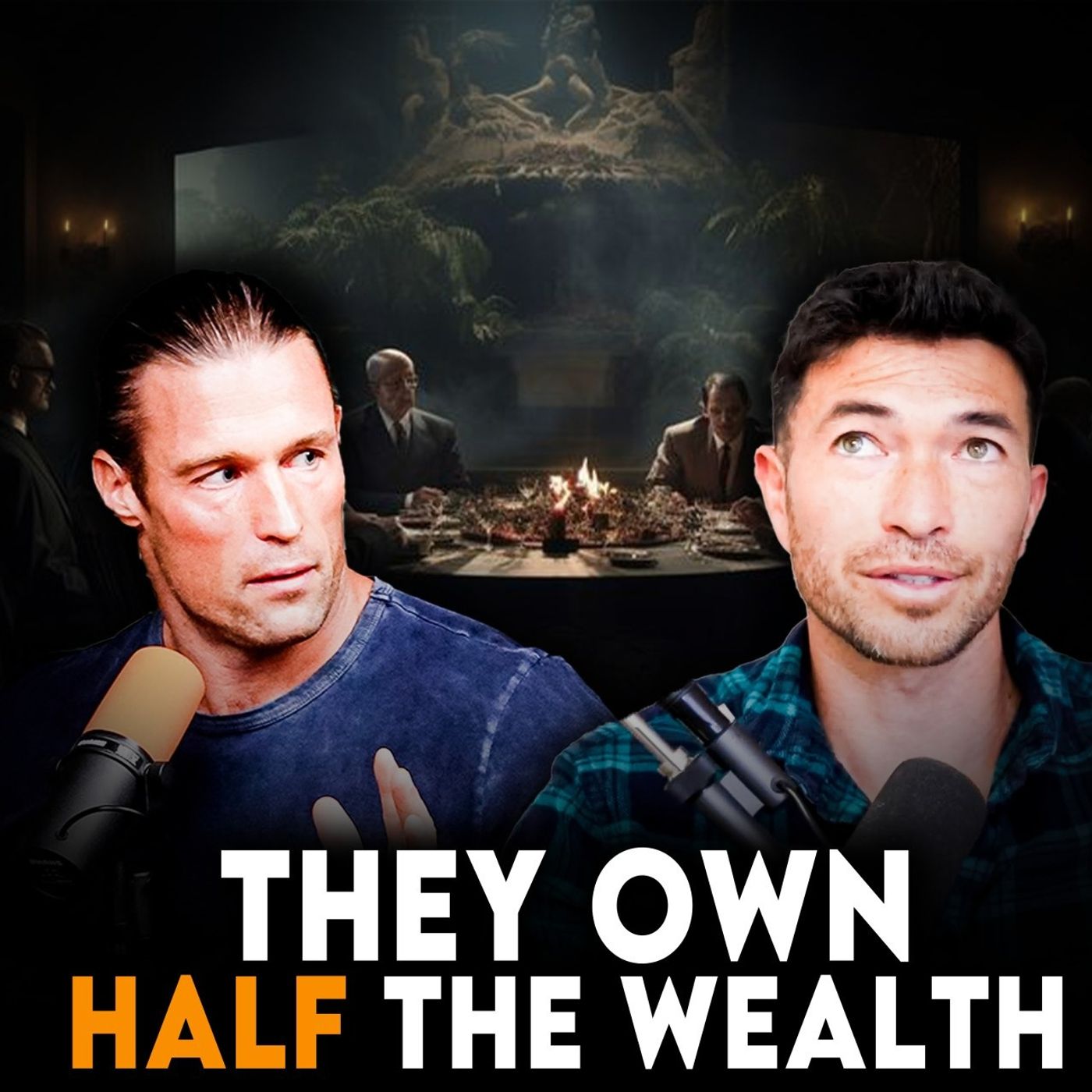
The "What is Money?" Show
The Real Power Structure Behind the World's Money System w/ Before Skool
02:47:11
What if the dollar in your pocket is, by any honest definition, a counterfeit? In this conversation, Robert Breedlove joins Mark Wooding — artist, philosopher, and creator of the After Skool and Before Skool channels — for a sweeping journey through the five pillars of a meaningful life, anchored by a deep dive into the nature of money, power, and Bitcoin. The conversation spans the corruption of language and the magic of words, time preference and why money printing destroys long-term thinking, the debt-based oxymoron of fiat currency, why Bitcoin and crypto are not the same thing, and what the number zero and the printing press tell us about whether Bitcoin can actually be stopped. Robert explains why roughly 30 families are rumored to own over half of all global wealth, why the Federal Reserve is legally authorized to do what would land any civilian in prison, and why Bitcoin — like mathematics — cannot be suppressed by force. This conversation explores the deeper forces shapi...
Loading summary
Transcript308 lines
- [00:00]
Robert Breedlove
You asked who owns the Fed earlier. The rumors are There are about 30 families on Earth that are the ultimate beneficial owners of all the stock and all the central banks in the world with the exception of the non western central banks, let's call them, which are in countries like Iran and I'll let you read between the lines on that one. Those 30 families are said to own over 50% of the world's wealth, 8.5 billion people. Half of that wealth is in the hands of a few thousand. The US government has beside it a non governmental organization called the Federal Reserve. It's a privately owned institution. It is legally authorized to counterfeit currency. So if you counterfeit or fabricate a 100 bill, we go to jail for that. That is the exact same activity that the Federal Reserve engages in. By the trillion. There is absolutely zero economic distinction between the Federal Reserve money printing or quantitative easing or any of these other euphemism that it loves to decorate itself with. There's no economic distinction between those activities and counterfeiting. The central bank exists beside the US government. So the Federal Reserve is issuing shitcoin called USD. They have the sole privilege to print USD. US government has the sole privilege to print shitcoin called US treasury ust. The US government can print as many bonds as it wants to borrow USD from the Fed. Literally. There's no ceiling, there's no supply cap and they use that.
- [01:39]
Mark
Robert Breedlove, it's great to see you.
- [01:41]
Robert Breedlove
Hey Mark, thanks for having me.
- [01:43]
Mark
First of all, you have a great name, Breedlove.
- [01:46]
Robert Breedlove
Thank you so much.
- [01:47]
Mark
Congratulations.
- [01:49]
Robert Breedlove
That was my mother's. A birthday gift, my first birthday that my mother got for me. It's her last name, so I'm very grateful to have it. Although I was made fun of quite a bit as a kid for it.
- [02:01]
Mark
Does it have anything to do with breeding and loving?
- [02:03]
Robert Breedlove
Neither actually. Okay. It's derived from this Scottish clan. It means wolf hunter or wolf trapper. So apparently we were hunting or trapping wolves at some point in my lineage.
- [02:20]
Mark
So nearly the opposite of breed and love.
- [02:22]
Robert Breedlove
Yeah. Maybe hunting wolves is a way to love your family. I don't know if you're protecting them.
- [02:27]
Mark
Well, words are funny like that, you know, you get things like awful. It used to mean you're full of awe and now it's connected to being bad or some of the most beautiful words.
- [02:39]
Robert Breedlove
Humiliation is the same way. It's, you know, now we think it's like embarrassment, but it used to just be the process of acquiring humility.
- [02:50]
Mark
There you go.
- [02:51]
Robert Breedlove
Oh, it's funny.
- [02:52]
Mark
Some of the most beautiful words I can think of. When you talk to people in other countries, you say, what's the most beautiful English word? And they'll say something like diarrhea.
- [03:01]
Robert Breedlove
It's funny, I've never heard that.
- [03:05]
Mark
Or alopecia or something. These beautiful words often mean things that aren't quite so beautiful.
- [03:12]
Robert Breedlove
I think it's in the movie Donnie Darko where I got this. But they say the most phonetic phrase in the English language is cellar door.
- [03:24]
Mark
What does that mean, phonetic?
- [03:25]
Robert Breedlove
Well, phonetic just sounds beautiful.
- [03:28]
Mark
Cellar door.
- [03:30]
Robert Breedlove
So, yeah, I guess verbally aesthetic, you know, or sonically aesthetic, it sounds beautiful. And it does.
- [03:38]
Mark
Actually.
- [03:39]
Robert Breedlove
I found myself. Cellar door.
- [03:40]
Mark
Cellar door. Beautiful. There you go. Yeah. I'm a big fan of Tolkien, and I. I'm just. I marvel at the. All the names that he came up with, like Galadriel, Gandalf, Gondor. And I'm like, there's something too, like certain letters or evoke, like. Like M's and R's. Yes. And S's kind of make us feel uneasy.
- [04:01]
Robert Breedlove
Like murder.
- [04:02]
Mark
Slytherin, Sauron. And then these G's and D's, like, Gondor sound honorable God.
- [04:09]
Robert Breedlove
Interesting.
- [04:10]
Mark
I don't know, there's something to, like, the. The harmonics of it that lifts you up.
- [04:13]
Robert Breedlove
Interesting. Yeah, That's. I don't know much about this topic, but I have found the word Christ to be very powerful. Something about it just. Yeah. You know, I don't know what are. I'm writing a book, and we're talking a lot about the nature of words. And one of the things, you know, we. It's all metaphorical, ultimately. So we describe words as, like, containers for concepts or that even concepts themselves don't really exist until we crystallize it into a word. And then the word itself is really just a point of shared agreement. You know, like, we all agree that this thing has a certain meaning so that we can converse, but there does seem to be this sonic quality to the words, like almost a vibrational imprint of the word itself. Has some, you know, super linguistic utility, if that makes any sense. Right. There's something to the word in the way it sounds, in the way it's written that can influence us in a way other than its conceptual contents. And I don't know much about it, but it's, you know, if there's certain words that are just like that.
- [05:24]
Mark
Well, words have magic. That's why we call it spelling.
- [05:27]
Robert Breedlove
Yes, exactly. Exactly.
- [05:29]
Mark
It's funny how most words will have, like, a Double meaning. You know, like when you get up in the morning, you say good morning, but morning is. Is a sad thing and interesting. We try to get through the week and weak weakness is not good. And when we get to the weekend, we're weakened. You know, all these words that we use in just common, everyday speak kind of are like casting spells on us a little bit, I feel.
- [05:52]
Robert Breedlove
Interesting. Yeah, I. I want to learn more about it for sure.
- [05:59]
Mark
Anyways, before we go too deep, I wanted to connect with you today because I feel like we have a lot in common. And it seems like you've taken many of my interests a few steps farther than I've taken them. There's five basic pillars of life that I look at. There's the financial, health, social, mental, and time. There's many more, but those are kind of the five main ones. And I would love to kind of first jump through some of those pillars and just get maybe your 2 cents and some of the hacks and some of your philosophies towards those. And so when I look up your name, you are synonymous in the finance world, big time, especially with bitcoin. So I was wondering if we could, like, maybe just dive into the finance pillar first, which is something I don't cover too often on my channels, but I think you've done a great job of bridging philosophy with finance.
- [06:57]
Robert Breedlove
Thank you so much. I want to write down the five pillars just so I have them in front of me.
- [07:02]
Mark
You said financial, time, financial, health, social, mental, and time.
- [07:09]
Robert Breedlove
Okay, got it.
- [07:10]
Mark
It's actually from a good book by. I'll throw it up on the screen. It's called the Five Pillars of Wealth, Five Types of Wealth by Sahil Bloom.
- [07:19]
Robert Breedlove
Oh, Sahil. Yes, I know, Sahil. Yeah, yeah, I think that's very. That's a very useful framing. And I'll start with, I guess, the financial. So it's funny when people ask me what I. You know. What is the name of your podcast? Once I know you have a podcast, let's say the what is Money? Show. And the first thing they typically say if they haven't listened to it is they're like, oh, it's a finance podcast. And funny enough, you know, we talk about everything on the show, almost everything. You know, it's very, very wide ranging in our topics. But finance per se is one of the things we talk about least. Unless you understand, like, we talk about the nature of money a lot, but we're not talking necessarily about what people, you know, like, what. I went to college. I Got a degree in accounting and finance. And the finance that we studied in college is not what we talk about on the show, right? These are like discounted cash flow models and the weighted average cost of capital and all of these decisions that executives use to kind of guide their businesses, make investment decisions, allocate capital, et cetera, et cetera. We talk about that very little on the show. Um, but if you understand finance as more, you know, I guess more specifically, we talk a lot about money, or monetary history and monetary ontology, if you will, or the nature of money, if you want to say it less esoterically. And I found that to be. And a lot of people have, you know, joined us for the ride, have found that to be a very useful study. And so, you know, why is that? Well, first of all, obviously, money is a very significant influence in our lives, right? It determines. Largely determines the degrees of freedom you have, largely determines where you are in the socioeconomic hierarchy, right? Which has a big influence on your social status, which has a big influence on your ability to reproduce. So it becomes very Darwinian very quickly, right? And so one. And we go through many definitions of money on the show, but one that's very simple yet useful is that money is the thing we use to acquire goods. And people typically say goods and services, but I'm just going to compress it to goods, because services are just intangible goods, basically. It's still a good. A good being just what solves a problem, right? It's a solution to a problem. So money is the language or the instrument or the medium we use to acquire goods. And so goods being solutions to problems are very closely related to just basic survivability, right? And anyone that's been alive as an adult for more than a day probably knows, you know, the. The amount of purchasing power you have, which typically people think of as like, amount of dollars in their bank account directly corresponds to your livelihood, right? Your survivability in the world. Another good definition of money is that it is just the instrument that offers you the widest range of options in the marketplace. So any solution that can be brought to bear on any problem, money is a means to obtaining that, right? Basically, people will sell you anything, any good, any service that they have for money. That's another definition of money. So as you deal with the world, which is to move forward in time, we're always facing the horizon of uncertainty, right? You know, tomorrow is not promised. You know, you know, life is. Sure, there's a lot of different aphorisms that Capture this. But there's always uncertainty around the corner. We never know what's going to happen. And so what is the optimal strategy for dealing with uncertain conditions? And the answer is optionality, which a less fancy way of saying is just a wide set of options. Right. It's because you don't know what's going to happen. If I don't know what's going to happen, then the more options I have at my disposal, the more adequately I can respond to different situations as they present themselves. And so money is a representation of those options. Right. And that it can be, to use a finance term, it's like a call option, Right. That you have a right to exercise this option on any good in the marketplace that any market actor can bear. And so with that comes great power. Right. Great survivability. So that's maybe a couple of answers on the financial pillar, but I'll pause there and see where you want to take that.
- [12:13]
Mark
Yeah, that was well explained. I don't have like a high level financial vocabulary, so I appreciate you explaining it to me like I'm a fifth grader, I might need it on a kindergarten level.
- [12:26]
Robert Breedlove
That's how I come to understand it myself. So you're more than welcome.
- [12:30]
Mark
Yeah, it sounds like. You know, I liked what you said about opening the optionality, where it's kind of like if you have problems and those problems require money to fix them and you have the money, then you don't have problems.
- [12:46]
Robert Breedlove
Well, we must be careful. Of course. There are many problems money cannot solve. Right. Naval's famously said that. What do you say? A fit body, a household full of love and a quiet mind. Maybe it's a peaceful mind. So three things money can never buy. You know, a fit body, household full of love, and a quiet or peaceful mind. I think he said I could be wrong about the third one. So as potent of a problem solver as money is, it does not solve all problems. And any person that is terminally ill, for instance, would often trade any amount of money that they have for just a few more days in the world. So although it is, I think, the most powerful material incentive that we have as civilians, and by civilians I mean participants in civilization, it's not everything, right? It's not. There are deeper things like life itself, spiritual pursuits, virtue, you know, if you're acquiring money unethically, for instance, stealing or coercing or killing, as many, many people have in the past, and many people do today, many criminal organizations, including the state, all specialize in acquiring money in that way I don't think it serves, you know, you can. Well, what does Christ say? What does it profit a man to gain the whole world? Should he sell his soul? Right. You don't. Even if you get to that position of financial supremacy, you know, you're a multi billionaire. I think if you acquired it, acquired it the wrong way, you're not going to feel good. You're not going to be living a peaceful life. You're not going to be, you're not going to have fulfillment. You're going to have the opposite. You're going to be looking over your shoulder. You're going to be, you're going to be leading a very suboptimal life.
- [14:50]
Mark
I love that quote you just mentioned from, from Matthew. And the following quote is, what would you exchange in order to gain your soul back? And you know, that puts it into perspective. Yes, there's, there's no price somebody would pay or there, there should be no price. But I, I was reading the comments. I just posted that on my Instagram, that quote. What's the quote? Sorry, let me grab it. Yeah, let me grab it up real quick. It's from, Sorry, it's from Mark 8:36. For what shall it profit a man to gain the whole world, yet lose his own soul?
- [15:31]
Robert Breedlove
You just posted that.
- [15:33]
Mark
I just posted that.
- [15:34]
Robert Breedlove
Wow. I did not creep on your profile
- [15:36]
Mark
before this like three days ago.
- [15:38]
Robert Breedlove
That's an interesting synchronicity.
- [15:40]
Mark
And it was funny because there was a few comments of people that said, oh, I would do it. I, I have a price to sell my soul. And I, I responded to the guy, I said, you know, the funny thing is you're probably selling your soul and you're getting nothing in return.
- [15:57]
Robert Breedlove
Yeah.
- [15:57]
Mark
Because a lot of people sell themselves out for nothing. It's a famous Dostoevsky quote. Your worst sin is you have destroyed and betrayed yourself for nothing.
- [16:07]
Robert Breedlove
Yes. Yeah, there's another, I mean, I love all of these quotes that are filled with monetary metaphors. I think this is another area. Money is very interesting to me in that it gives us many conceptual metaphors that help us understand domains that are non monetary. Right. We're citing one here. You know, what does it profit a man to gain the whole world should he lose his soul? Right. The, the very concept of profit itself is a monetary, it's we, we gain awareness of the concept of profit through an embodied experience of exchanging and dealing. Right. We know what a profit is, we know what a loss is through money. Basically. There's another one that comes to mind you know, many a man thinks he is buying pleasure when in fact he is selling himself to it.
- [17:01]
Mark
Benjamin Franklin, I don't know. Yeah, that's from Benjamin Franklin. I just posted that one too.
- [17:07]
Robert Breedlove
Amazing.
- [17:08]
Mark
That's crazy. See, we're on the same wavelength.
- [17:11]
Robert Breedlove
Really amazing man. He has a lot of good ones. Ben Franklin, not to get off track, but my favorite one of his, I think this was him. I stopped attributing quotes because I like have messed up the attribution so many times that I just gave up. So I'll often say, like a wise man once said, but I think this was. Benjamin Franklin said, rebellion to tyranny is obedience to God.
- [17:37]
Mark
Yeah, it was definitely a forefather. Yeah, Thomas Jefferson or Benjamin Franklin for sure.
- [17:41]
Robert Breedlove
It was on one of their family seals. And so yeah, there's this, you know, if you acquire economic gain or economic advantage, but you're doing it through acts that are, you know, vicious or non virtuous or unethical, you know, still, you know, basically stealing, harming or coercing or killing. Right. If you're doing any of those things, then although you might, you know, you'll enjoy some short term gain certainly. Right. Like if you're successful, right. You successfully steal whatever amount of money it is or whatever the goods are great, you've increased your survivability in the short term. But what you've done, when you zoom out and I think this becomes, I think people. Well, I don't know, I was going to say when people become parents, they tend to see the bigger picture a little more because you actually have a child and you see that they're a reflection of you, the good, bad and the ugly. Everything that you're bringing to the table, so to speak, they mirror it back to you. And so it kind of is a reality check for you when you see certain behaviors in your child that you would not condone. But then you realize, oh my goodness, they got that from me. Or where they got it. And so when you zoom out a bit and you realize that acquiring resources or money unethically, what you're actually doing is you're pulling at the thread that binds civilization. Again, civilization being, let's just say the process by which we interact with one another consensually, we interact with one another within the limiting principles of life, liberty and property. All right, so we don't coerce one another or harm one another, we don't kill one another and we don't steal from one another. These are kind of like the socially encoded biblical Ethics by which, on which the west is built. When you violate those things, right, you're pulling at that thread, right? And this gets a little bit deeper into how a lot of human interaction is imitative. So if I go into the world and I make a bunch of money stealing from people and I become this rich guy, you know, mafioso or statesman or whatever it is, well, you're communicating to the next generation through your actions that that is the right path to take. Right. Because everyone wants, everyone prefers abundance to poverty. And so they see you, mafioso or statesman, at the top of the hierarchy and you got there through stealing. Well, then you're sending a pretty strong signal to the next generation that those are the patterns of action they should engage in to acquire wealth. And so then you have to ask yourself, okay, well, if you're a parent, do you want your child or their children or their children living in a world where everyone's pulled at that thread and the whole thing comes unraveled and we're all just living in some kind of animalistic fight to the death over every sandwich kind of environment? Or do you want to live in a world where people follow rules, right. Consensually adopted rules that we have, ethics that there's a reasonable expectation you can go into the world and conduct yourself peacefully and productively and not have to face the threat of murder over every sandwich. And so when you start zooming out and thinking more long term about your actions, I think you'll quickly see that the unethical path of wealth acquisition is no good.
- [21:21]
Mark
Well said. And it seems like we are seeing too many threads being pulled because we're at this point where you're talking about the younger generation. When I talk to younger kids, it seems like the idea of saving for retirement is just not even on the table. Sure, what's the point? Civilization's not even going to be here in 50 years.
- [21:42]
Robert Breedlove
Or.
- [21:42]
Mark
And then they look up and they see all these scammers and grifters and politicians that do insider trading. All these people have, who have taken advantage and kind of cut corners, seem to have gotten ahead.
- [21:57]
Robert Breedlove
Yes.
- [21:57]
Mark
And it can lead to extreme cynicism.
- [22:00]
Robert Breedlove
Yes.
- [22:02]
Mark
I don't know. Is there, is there a path to reverse course here?
- [22:07]
Robert Breedlove
You know, I think it's first useful to bring up the concept of time preference. And again, I'll try to like, not. This is an economics term. It's mostly used in, in what's typically called Austrian economics, but which is in fact economic science itself. The economics that's Taught at university is not economic science. It's a pseudoscience, really, a fabricated narrative to justify the centralization and monopolization of money, basically. So you learn Keynesian economics at university and that just tells you that government is God and it controls the economy by pulling these levers. Print money, withdrawal money. It's a very antiquated industrial age metaphor. They even describe them as levers. And you're like, really? The economy is a machine. How could it possibly be a machine when an individual person is clearly a complex adaptive system, right? There's no lever you can pull to change my metabolic rate or whatever where you're these complex adaptive systems. When we're all connected in the world, 8.5 billion people, how could that not be a complex adaptive system? How would that reduce to some machine that you could just press buttons and pull levers? So there's that whole Keynesian economic model which is really just, you know, I would describe it very uncharitably as a cover story. Eric Weinstein has this great quote that the. What does he say? The idealism of every age is the COVID story for its greatest thefts. And so central banking touts itself as the institution which saves economies and which controls price inflation and minimizes unemployment and all these wonderful noble moral goals. You know, a lot of, a lot of idealism, let's say, built into its narrative, when in fact it's. It's quite the opposite. So not to deviate from the point, but there's Keynesian economics, which is an untrue pseudoscience, and then there's Austrian economics, which is not in the mainstream curriculum because it doesn't. It's an economic science that doesn't serve the interest of the state because it says quite the opposite, actually. The more free people are, the stronger the rules are between us by which we interact, the more peaceful and productive we become. And again, there's a little bit of. There's an intuitive element here because if you and I go to play basketball with one another, there's a certain shot that's a two point shot, right? And then outside the three point line, it's a three point shot, right? There's many other rules, but we'll just focus on the scoring. If at any point we're playing one on one, I just pull out a gun and say, hey, my shots all count. Three now or four or five. Right. Is that still a game of basketball? Like, not really. I mean, you know, it's. We're not playing a game, we're not playing basketball anymore. We've degenerated into some kind of political struggle. There's actual coercive power dynamics taking place rather than the consensual game of basketball. Okay? So the same is true in economics when you start twisting. Everyone's supposed to honor life, liberty and property, right? Do not harm, do not steal, do not kill. But when certain institutions start twisting those rules to their own advantage, the game degenerates. It's no longer a positive sum game of economics, it becomes a negative sum game of political struggle, basically. And so time preference is one of the core teachings of Austrian economics and is noticeably absent in all other schools of economics, including Keynesianism. And this basically says that we, you know, so as humans act in the world, right, That I have goals and I have tools. Roughly speaking, I'm always using my tools to pursue goals. Okay? So now these tools could be anything, right? Not just physical tools, but, you know, my body, my knowledge, my time, my metabolic energy, all of these things, they're called means to ends. But I'm using tools and goals as like a decomplexifying terminology. So anything that you do involves the use of these means or tools, which are inherently scarce, meaning that there's not. You always want more of them than are available. And so time would be the most obvious here, right? We would all. Anyone that has not committed suicide would prefer to have more time than less, right? And so time preference basically says that since means are scarce, that everyone universally prefers the same level of satisfaction sooner rather than later, right? I'd rather have the apple today than the apple tomorrow. Why? Because tomorrow's uncertain. Tomorrow may never come, right? So there's actually. It's a universal. It's the one objective aspect of valuation or preference that humans have that we always prefer the same level of satisfaction, the same solution to our problem. We prefer to have that sooner rather than later, okay? So from that fact of time preference, we derive things like the interest rate. Now, I want to not get too far afield and try to answer your question, though. What is it that we can do about everyone? You know, we've pulled on the thread, society's coming apart, we see short termism becoming more rampant, right? People don't even think they can afford to buy a house or have a family. So you get this YOLO mentality, right? Especially among the young. They're like, fuck it, I can't even, you know, I can barely make ends meet paycheck to paycheck, much less plan to have a house or plan to have a family or plan to, you know, save and invest and build a business, you do anything that's further out on the, on the time horizon, right? What's driving this? And I think the answer largely is the money printing, right? And it's also not just the money printing, but the, the taxation more broadly. But if we just focus on the money printing, you know, the rate. So time preference being the. It's really, it's technically the rate at which you value the future to the present. But as the future becomes more uncertain, let's say as uncertainty rises, your time preference also rises. You're not able to plan for the future because it's increasingly uncertain. Okay, so a higher time preference would be a lower time horizon. It's a little bit counterintuitive because they say high time preference bad, low, low time preference good. But when you think about it in terms of uncertainty, right, as uncertainty comes down, time preference tends to also come down, which means you can plan more for the future. So what's happening here is like, well, when you print money, you are stealing the purchasing power from savers. So the money, as we said earlier, you're holding these dollars or whatever the currency is in savings as a means to address, you know, it's. It's the widest set of options to address anything that the uncertain future presents you with, okay? As the central bank prints money, it's stealing those options from you. It's stealing your ability to address the horizon of the future. It's compressing your time horizon. It's actually raising your time preference by injecting uncertainty into, into the marketplace, by stealing your purchasing power. Purchasing power through counterfeiting currency. Sorry if that's a mouthful, but like, that's what's happening. It's like the material incentive landscape is being distorted in such a way that young people, they don't need to be conscious of this at all, right? This is all unconscious. For 99.99% of humanity, most people don't know what a time preference is, but they still have it. So it's this money printing that distorts people's material incentives and causes them to be more focused on the short term, right? Which then ends up in, oh, well, let me just. If this long term doesn't matter, well, then I'll just steal from you. Who cares, right? I don't care about the reciprocity of our relationship over a long time horizon because I'm not concerned with the long term. I'm just concerned about now, you know, so who would be? What's like the Archetype of the ultimate high time preference behavior. It's a caveman. Right. Caveman, big stick, sees other cavemen, slightly smaller stick. He doesn't care about the ongoing reciprocity of the relationship, caveman A between caveman B. He just wants the food or the women or the. Whatever the guy's got. He's going to go bash him over the head and take his stuff. That's the ultimate high. That's where this like caps out, you know, is pure barbarism. And the opposite of that would be, oh, let's all cooperate under the principles of life, liberty and property. And if we all agree not to harm, steal or kill one another, we can actually become radically more productive. We can extend our time horizons. We can save and invest for the future. We can build giant multi decade, multi century enterprises. We can increase productivity. We can increase human flourishing. So that's the spectrum we're moving along. And I think it's all driven by really the integrity of private property.
- [32:00]
Mark
I think you can see this stark contrast in these two different cultures that I'm going to describe. I was reading an article recently about the Quakers and how they were a big part of the industrial revolution and there was a lot of trade going on between Europe and America and a great deal of trust was involved in those trades. And in the Quaker religion, to lie is like you're going to hell.
- [32:26]
Robert Breedlove
Yeah.
- [32:27]
Mark
Your word is everything to them. So Quakers were able to trade across continents without even contracts.
- [32:36]
Robert Breedlove
Yes.
- [32:36]
Mark
And because they knew that they had such a strong bond to their word.
- [32:39]
Robert Breedlove
Yes.
- [32:40]
Mark
They were able to do business seamlessly.
- [32:43]
Robert Breedlove
Yes.
- [32:43]
Mark
And it created some of the biggest businesses that are still here today. And then you kind of. I'm thinking of like the contrast when you go to a country where they, they don't have those same values. Yes. And everybody's just pulling at the threads. You, you feel it. You go there and everybody's just completely down.
- [33:03]
Robert Breedlove
Yeah.
- [33:04]
Mark
Living in these like huts with tarps on top. And then you have some king and his family who's sell, sold the country out for the resources. And in those situations, the king can't trust anybody except for his immediate family. So he'll put his incompetent brother in charge of the railroads, his cousins in charge of all the ships. They don't, you know, you can't get the best man for the job.
- [33:30]
Robert Breedlove
Yeah.
- [33:32]
Mark
You've got to just put in the few people that you think you can trust because all other values have completely eroded away. And so I'm just thinking of Those two contrasting things. And we're like, you're saying we're skidding towards this situation where everybody's just got to get it now because tomorrow's so uncertain.
- [33:50]
Robert Breedlove
That's exactly right. Do you know what year the Quakers, what century or year?
- [34:00]
Mark
Let me look this up.
- [34:02]
Robert Breedlove
I would almost, I mean, I haven't studied them.
- [34:05]
Mark
17th century.
- [34:07]
Robert Breedlove
Okay.
- [34:08]
Mark
They were founded in the 17th century.
- [34:10]
Robert Breedlove
Okay.
- [34:13]
Mark
I'm sure there's still a few Quakers out there.
- [34:15]
Robert Breedlove
Yeah. So we had largely, I mean, there was a bimetallic standard. So both gold and silver were used widely as money in those centuries. Right. The 17th into the 19th. And eventually gold sort of won out in monetary competition to become the universal monetary standard. Now gold is, it's sound money. Right. And so the reason gold wins as the universal monetary standard is because its supply increases the most slowly and most predictably. So again, if we described money as like, what is this thing that I can hold, you know, value or purchasing power in, such that I have the widest set of options to deal with whatever the uncertain future presents me with? The monetary asset that supply is most resistant to inflation will be that thing. Right. It's the thing that has the most, the least uncertainty or the most certainty in it. Right. Okay. So the money printing that we just described, that's causing people to be more short term oriented, sound money is the opposite of that. So when you can hold your savings in gold or money that cannot be printed arbitrarily, you become more long term oriented, which is say you have a lower time preference. And this is because you can reliably go into the marketplace, solve problems for people, earn profits, store those profits in a money that cannot be compromised or debased, and you increase your wealth or you increase your purchasing power or value that you can then reinvest to go out and build things for the future. So you are actually capable of longer term orientation and planning as the money that you hold your savings in has a more predictable supply curve, basically. And so that's why gold became money. That's also the reason Bitcoin is the perfect money, which I don't want to preempt too much of that, but it's the same principle. Right. But just taken to like, Bitcoin has removed all uncertainty from the money supply curve. There's zero uncertainty about how much Bitcoin will ever exist. And we can't say that for any asset or any money in the history of the human race. And so when sound money exists and is used widely, you get a Movement away from that situation you described, where you have the central power, right? One guy, his family has all the wealth. He has expropriated and coerced everyone else out of their existence. So it's very high concentration of wealth and very few hands, a lot of nepotism, right? He's just hiring his family and his cousins, regardless of their competence, to run all the critical businesses and infrastructure. And you get this very impoverished, violent, unpredictable, centralized society, right? And so sound money goes the other direction, right? When everyone can now engage with one another and hold their wealth in something that can't be easily compromised. And now, look, gold's not perfect here because it is physical. It can still be seized. And I think the more you go into that, the more you see that the physicality of gold actually has been historically an incentive for human warfare, violence, crime, et cetera. But it is, to the extent you can safeguard it and secure it, which you can, right? That's what vaults are and safes and all of these things, you actually create the conditions in which you can get more of the decentralized wealth creation, which is more like the Quakers you described. Also the Protestant Reformation that was founded on this idea that you're doing work in your current life. It's all about delayed gratification, like, what's the least I can consume, what's the most I can save? And this is worship, in a way. You're like you're honoring God through maximizing your savings and minimizing your consumption and serving the next generation. And that compounding effect across generations is actually what gives rise to capitalism. The ethic of capitalism is born from the Protestant Reformation. There's lots of good books on that. But I would argue that there's a layer deeper, like the Protestant Reformation itself is born on the integrity of the sound money that it's using. You need the material incentive landscape to work for individuals so that they can create this compounding effect across time. And 17th to 19th centuries, it sort of worked. But the problem with gold, as I just said, is that it's physical, which presents the problem of it can be extracted by force. And it also presents the problem that it's not very portable or transactable across space. Right. If you're dealing with someone on the other side of the planet, it's hard to send the gold across the planets. You know, like, you need the ships and you need the security and you need all this. And there's a lot of risk. It's much easier and more convenient to just centralize the custody of the gold and have the banks, which. That's what a bank is, and have the banks settle with one another on a ledger, you know, to say, oh, you know, you owe this guy that many ounces of gold. And they're just basically doing ledger entries back and forth. But the problem is now you've. You're trusting the bank, you're trusting the custodian. It's a trust me, bro situation. Right. You've moved out of that world where settling physically in gold, you're not really. You don't need to trust anyone. It's like, I paid you the gold. We're good. No one knows how to counterfeit the gold. So you now have an asset that no one can counterfeit, deauthorize, and is somewhat hard to steal, depending how you secure it. But once you get into this centralized model of let me just use the paper that's redeemable for gold, I now need to trust the issuer of the paper not to defraud me. And even if the issuer of the paper and all the bankers are saints and everyone does it perfectly, that's not enough. Because then you also have to trust that the government and the state won't come in and seize the assets of the bank or give themselves cheap loans or whatever it is, which many, many, many governments and states have done across history. So there is this incentive trap that relates to gold that's very hard to escape. And fortunately, we have bitcoin.
- [41:06]
Mark
Yeah. So this arrives us neatly to bitcoin. Your name is synonymous with bitcoin. You're one of the.
- [41:12]
Robert Breedlove
I don't know if you take that as a compliment.
- [41:14]
Mark
Yeah, I mean, when I look you up, bitcoin is the main thing that comes up. And I mean, did you ever imagine yourself to be like this spokesman for bitcoin?
- [41:25]
Robert Breedlove
No, not at all. I've told the story many times, so I won't. I'll give the compressed version here, but I had read the Creature from Jekyll Island 20 years ago, roughly, this is before bitcoin existed. And so I had come to this realization that the corruption of money was like, the main problem in the world. But at the time, I didn't think there was a solution. It's like, what's the solution? We all go back to a gold standard. I mean, that doesn't work for all the reasons I just mentioned. And so I didn't think there was a solution. I didn't think we were going to have a solution. And then bitcoin came on the Scene. And it took me a long time. I didn't realize bitcoin was the solution to the centralization of gold and central banking problem. And it took me until about 2000. Well, I got my first and only tattoo in 2018, which is the bitcoin logo under my right arm.
- [42:19]
Mark
Okay, so now you're really committed to.
- [42:20]
Robert Breedlove
And, you know, at the time, I'm. What am I? You know, early mid-30s, 33. So it's not like an impulsive decision. I didn't. I don't have any other tattoos, but I came to see that bitcoin is the solution to this meta problem, which is the corruption of money. And so I take that as a compliment because I think bitcoin is, you know, obviously the biggest innovation in the history of the human race, perhaps, or at least on par with other tectonic innovations. So if you say that my. My name is synonymous with bitcoin, I just feel very fortunate to have been part of this in any way that I can.
- [43:05]
Mark
Yeah, I. I don't have a lot of experience with crypto. I do have some. I've been in it for a while, but I don't have much. And I actually did a video trying to explain the basics of crypto, and I. I didn't like that video. It was actually one of the few videos I took down. It had a really good history lesson about currency inflation and the debasement of currency and what they did in Rome. That part was awesome. How they used to have these, like, pure gold coins, and then they would bite them. And then. Yes, you end up with these, like, crappy little thin coins that are crudely mimicking what they used to have.
- [43:43]
Sponsor/Advertisement Voice
Right.
- [43:44]
Mark
Used to hold value. But, yeah, I took that video down because, God, there's just so many scams and so much volatility with the crypto. I just felt, like, uncomfortable even putting words out there around the topic and being connected to it. So I've been accused of doing softball interviews. And so I need to probably bring up some of the criticisms of bitcoin and crypto and just get your response to them.
- [44:16]
Robert Breedlove
Well, can we. Before the criticisms come up, we really need to disambiguate, because a lot of people think they're the same thing. They think bitcoin equals crypto and crypto equals bitcoin. And, you know, I don't know a good analogy here. But these things are basically. They're complete opposites. So crypto, the operative word is decentralized. There is no such thing as a crypto Asset that is decentralized other than Bitcoin. Bitcoin is the only decentralized crypto asset there is and ever will be. And now what does that mean? That means that nobody, no company, no group controls Bitcoin. That is not true. That statement cannot be said for any other crypto asset. So in Bitcoin we say bitcoin, not shitcoin. Shitcoin. Every, every non bitcoin crypto asset is a shitcoin. And that's a very useful heuristic, kind of shortcut way of thinking about it. But the actual unpacking of it is this operative word of decentralization. Now here's another analogy that might be useful. I don't know how old you are. How old are you?
- [45:38]
Mark
37.
- [45:39]
Robert Breedlove
37. So you remember when the Internet was becoming a thing, right? Like you probably remember the world pre Internet slightly, because I was, I don't know, 11, 12, 13, 14, as the Internet's kind of starting to do its thing. And so I kind of remember the world pre Internet and then saw the rise of the Internet and now, you know, Internet has eaten the world, so to speak. You may remember a time when certain Fortune 1000 companies, right, some of the biggest companies in the world, as the Internet was rising, they were, there were a lot of companies that said, you know what, we don't need the Internet. We're going to build our own private, permissioned intranet, right? Their own little private company Internet that would have all the bells and whistles of the Internet and, but they would control it, right? It's a walled garden. They would permit people to come in and out. You know, it's a, it's a little computer network that they control. Okay, Fast forward to 2026. And there's one Internet and there's zero intranets. Why is that? Right, why is that? And it's as with most things in life, it can be traced down to economic incentives and economic principles, for that matter. So as it turns out, there's a distinct economic advantage to an open, open network in which people can opt in or opt out at their own discretion, right? That's what the Internet is. It's just an open set of rules or a set of open source protocols, to be more specific. You know, HTTP, tcpip, smtp, these are all protocols, or you could think of these as like languages that we've all agreed to speak in online so that we can deal with one another in a way that we don't need to ask permission. And so what's another you know what's a more relatable open source protocol? The English language. We're doing it right now. No one controls it. Right. I didn't invent it. I don't think you invented it. Right. We just have these protocols which are not only the definitions of words but also the grammar. Right. You know, also sort of just conversational standards. Right? Like you pause and you let the other person speak. There's all this, these agreements built into the English language that is this open source software. It does change over time, but not unilaterally, right. There's no committee that says, hey, we're going to decommission this word. And here's a new word, right? It just happens organically at the edges. That is, that's open source software. That's what the Internet is made of, and that's what Bitcoin is made of. So the intranets that these Fortune 1000 companies thought they would have instead of the Internet is kind of like trying to create your own private English language. Okay? What's the problem with it is that you now have to spend resources on, on protecting your turf, right? Like, so the people that are permitted, permitted to use it and not permitted to use it, you have to expend resources enforcing that boundary, right? So there's a cost to keeping your network private, basically. And now you also need. So not only do you have to defend the turf of the boundary, but you also have to enforce the rules because it's not. People aren't opting in and opting out, right? Like you've got people, participants inside of this walled garden and you're telling them what the rules of English are, so to speak. So if they go out and misuse the language, then you need to impose some penalty on them. Whereas in the open source network, the opposite is the case. There is no turf to defend. There's no boundary ever. It's all opt in, opt out, right? You want to use the Internet, great. You don't want to use the Internet, okay, go do whatever you want. And so the Internet, and there's no rules to impose because it's all opt in, opt out. So the whole Internet becomes this kind of organic structure like the English language that out competes because it doesn't have to expend these resources on turf protection or rule enforcement. It is economically superior to the closed source, private English or intranet model. Okay? Now going all the way back to Bitcoin. Bitcoin is the Internet of money or the English language of money. All of these shitcoins are the intranets of money or the private English language, which, you know, what is that language that they tried to create? Esperanto, Was that what it was called?
- [50:32]
Mark
I don't know.
- [50:34]
Robert Breedlove
You could look it up, but like there was an, actually an attempt to create a language and you know, control it in the way I'm describing. I think it's called Esperanto and it failed miserably for the same reasons. So sorry for the long answer, but we must disambiguate Bitcoin, not shitcoin. These things could not be more antithetical. Shitcoins are much more like fiat currency with the exception that they're not violently enforced, they're not violently imposed, but they are deceptively imposed. There's all this, you know, I call it innovation theater. You call it smoke and mirrors where you know, Ethereum will say, hey, we're the next Bitcoin, or hey, we're the, the decentralized world computer or we're this, we're that. It's all bullshit. It's all bullshit. It's all scams, it's all rug pulls, it's all pyramid schemes. And Bitcoin is the opposite to all of that, right? It's just crystal clear open source software. Nothing can be hidden. Opt in, opt out. Totally decentralized and therefore the only crypto asset worth the name.
- [51:40]
Sponsor/Advertisement Voice
What if I told you that you could lower your tax bill and stack Bitcoin at the same time? Well, by mining bitcoin with blockware you can. New guidelines from the big beautiful bill allow American bitcoin miners to write off 100% of their mining hardware investment in a single year. That's right, a 100% write off. So if you had $100,000 of income or capital gains, you could write off that entire AM amount by investing it in bitcoin mining hardware. Blockware's mining as a service allows you to start mining Bitcoin right now with minimal effort. Blockware handles everything from securing the miners to sourcing low cost energy to configuring the mining pool. They do it all. You can stack Bitcoin at a discount every day and save big when tax season comes. So you can get started today by going tomining blockware solutions.com BreedLove Again, that's mining.blockware solutions.com BreedLove
- [52:43]
Mark
that's well explained. Yeah, because in my mind I had conflated bitcoin. I've attached it to crypto. Yes. And you know, when you hear about all these scams and Rug pulls. It makes you a little skeptical of all of crypto.
- [52:57]
Robert Breedlove
Yes. Or.
- [52:58]
Mark
Or including bitcoin. My experience with these sketchy funds that you have to, like, exchange all these wallets and convert all these things. I don't know what I'm doing. But my cousin was like, you got to get in on this thing.
- [53:11]
Robert Breedlove
Yeah.
- [53:12]
Mark
These daos or whatever.
- [53:13]
Robert Breedlove
Yeah.
- [53:14]
Mark
And so he convinced me to put some money into this thing, and we watched it go up and up and up, and it literally counted your money in Lamborghinis. It said. It said, there's a red flag. Yeah. Week. Week two, you've earned half a Lamborghini. Week three, you got a full Lamborghini or something like that. And then I was like, this is amazing. And then my cousin, you know, two weeks later, he's like, dude, get your money out now. And I said, I. I can't. I'm not. Buy a computer right now. I'll do it when I get home. He says, no, no, no. You got to do it now. And, like, literally the next day, it went down to zero. Yeah. And I'm like, what happened? What do we. He's like, that's it. You know, it's. It's gone.
- [53:56]
Robert Breedlove
Yeah. And that's.
- [53:57]
Mark
That.
- [53:58]
Robert Breedlove
That's the core difference.
- [53:59]
Mark
Yeah.
- [53:59]
Robert Breedlove
There's never been a rug pull in bitcoin, and there never will be because there's no one to pull the rug. There's no central party. Right. It's like, there's never going to be a rug pulling gold. There's no entity that can come out and be like, oh, we're gonna, like, you know, what would they do? Well, you can't print the gold. Right. The rug pull is when you print a bunch of the token and sell it on the market. You basically dump on the market to steal all the value. You can't do that with gold. You can't do that with bitcoin. But all the shitcoins exist exclusively for that purpose, no matter what they say. No matter what, you know, smoke and mirrors, they may present you with. Take it from someone who's been around for 10 years. And you could also. Don't take my word for it, actually. You could go and just consult with a bitcoin maximalist cohort online. They'll. They'll give you all the painful stories. You know, you're not alone in your. Your loss. Your rug pulling, there have been probably tens of thousands at this point in the past 10 years.
- [54:58]
Mark
Well, I guess that poses another problem for bitcoin, because it It. It's too perfect. You know, there. It's not inflationary, so people are not using it as a money. They're holding it because it's deflationary. They're like, why would I spend Bitcoin today when I can hold it till tomorrow? And this and the Bitcoin will be worth more tomorrow, and I can get more tomorrow. So I'm not gonna. I'm just gonna hold it. And so I. I think another big criticism is the utility. You know, people are just holding it as a security. They're not. Is it gonna bridge that gap across that chasm and. And start being used in everyday trades?
- [55:39]
Robert Breedlove
Yeah. So this is. Let me try to just answer it directly, and then I'll get to the second part of the question, which is more like the medium of exchange. So let's first of all think about what that means. Okay, so if you go into the marketplace, you provide goods to someone, right? Again, services are immaterial goods. So you do something for someone, you solve someone's problem. You know, for most people, this is going to work, right? You go to your employer, you do some things, some activities, and then you get a paycheck, okay? Those activities are there's a customer somewhere inside of your employer. That's what all businesses are, right? All businesses have customers to provide for, to provide goods for. So you contributed to the production of goods or the solution of a customer's problem or problems, and you were paid in money for providing those goods, right? Now, if you just hold that money and don't do anything with it, right? You hold it as savings. What's the big picture impact of what you've done? You've gone into the marketplace, you've added it to the quantity of goods or the productive output, if you will, or the total amount of solutions available in the marketplace. You've increased that, right? You've increased the solutions available to the world. And you were paid in money, but you haven't spent the money, okay? Now when you spend the money, now, that's you going back into the marketplace and having someone solve problems for you, right? You need a new pair of shoes, you want a new car, whatever the thing is. But until you spend that money, you have solved problems for other people, but have not had problems solved for you in turn, okay? So that's a really good thing. That's a great thing. That's deferred gratification right back to the Protestant Reformation and capitalism. This is what it's built on, right? Go out and solve problems for other People and then defer your consumption or defer your own problem solving until later. This increases the aggregate quantity and quality of goods in the world. Or the capital stock is another term economists use. So that's amazing, actually. Okay, so when you go and you acquire bitcoin coin and there's a big incentive to just hold it, well, how did you acquire it? Okay, you traded dollars for it, probably. Okay, how did you get the dollars? Well, you went to work probably in the situation I just described. So you went and created more goods for the world, but you didn't consume goods in turn. So you added to the productive capacity of society, but you did not subtract from it. And then you used that to buy a savings technology called vehicle or savings technology called Bitcoin that is a the best vehicle for holding your purchasing power into the future. So saving is amazing. Saving, it's good for you, it's good for the world. It's one of these few acts that's both simultaneously selfish and selfless. Okay? And so for bitcoin specifically, savings is the utility. This is the value prop. This is the core value proposition of bitcoin. There are others, but savings is the thing, right? And this is why gold is also. Why is it a $22 trillion market? Gold, not Bitcoin, because it's of its savings, its ability to save purchasing power or value into the future. This is what makes gold. This is why gold trades. You know, the industrial use case of gold, which gold is used in computers and dentistry and all these things, that's like a 2 to 4 trillion dollars market. But gold's market cap is like 20 to 24 trillion. That whole difference at 90% of gold's market cap is all demand for gold as money for holding purchasing power into the future, for gold as savings in the language we're using here. So that's a big, big use case. That is the utility of gold by far, right? It's 10x more utility and savings than it is in computers or dentistry. Okay, so Bitcoin is like the perfect savings technology because it has a perfectly fixed supply. No one can debase it, right? You can create more of anything, any good, you can create more of including gold. You simply cannot create more Bitcoin. Therefore, relative to the supply of bitcoin, as the stock of goods goes up in the world, the amount of goods you can acquire per unit bitcoin increases. So this is the pie. The bitcoin price always goes up. We call it number go up technology. And so you know what's a simple, simple way to say this. In a world where everyone wants to print money, and now with the advent of crypto, crypto, everyone can print money. You can go and launch the after school coin right now. It'll take you 15 minutes on the Ethereum blockchain. You can go sell this token to your whole fucking audience and then you too can rug pull them. You can do that. Anyone can do that now thanks to Ethereum and all the other shitcoin platforms, right? So in a world where everyone wants to print money, and now in a world where everyone can print money thanks to crypto, the money that nobody can print will win. It is in everyone's best interest to hold the money that no one can print. This is why gold became money. This is why bitcoin is the perfect money. So the savings is the utility. So that criticism, I think, is utterly invalid. And now the second part of your question. I'll just answer it quickly. Does bitcoin ever become used as a medium of exchange? There's an economist named William Jevons, and he wrote about the ascendancy of gold as money. And he said originally it was used as a collectible. So people would use it as like ornamentation, jewelry, just collecting it. And then over time, because it has this inflexible supply, it grows in value, right? So the number of goods tradable for gold is going up, right? So the purchasing power of gold is going up. Eventually it becomes a store of value, which is what we know gold as today, a savings technology. Once it stores enough value, it starts being used as a medium of exchange. So people start to transact in gold, right? So gold becomes more of what we widely consider money to be like a universal medium of exchange. And then finally, when enough people are transacting in gold, then we start to denominate and think and negotiate in, in gold in terms of pricing. We price things in gold, so it becomes a unit of account. And so that sequence is the evolutionary history of gold collectible, store value, medium of exchange, unit of account. My hypothesis is that Bitcoin will follow the same path, right? Initially it was a collectible. You could go online and click. Literally there were bitcoin faucets. You could go to a website and click a panel and it would give you 50 Bitcoin, right? It's not even an asset at that point. It's just this like, weird Internet funny money. Then eventually, because bitcoin is costly to produce and it has its rules, you know, make it a very useful money, which we can get more into it starts trading for quote unquote, real money, right? People start exchanging dollars for bitcoin. And now initially it was pegged at, you know, approximately at its production cost, which was like, you know, less than a, it was either less than a few cents or it was, I think it was six tenths of a cent when it was first traded. And that was just the energy that went into the production of the bitcoin basically. And now it's progressed, right? Bitcoin's no longer 6/10 of a cent or whatever it was. It's 60,000 plus US dollars per bitcoin. So now it's progressed from collectible to store value. And over the past 17 years of Bitcoin's existence, it has been the best store of value in the history of the human race. There is not, it's not even a, not even a contest, right? Bitcoin is the best performing asset in the history of the human race by like a long, long, long shot. Okay? So it's now very effective as a store of value. It has already cleared trillions of dollars of transactions. So people do use it to settle, to trade and settle exchanges. So it is evolving from store value into medium exchange and then very few people, although some people do denominate prices in bitcoin. Right. I think of my net worth in terms of Bitcoin. I often say if it doesn't make sats, sats are the subunits of Bitcoin. If it doesn't make sats, then it doesn't make sense. So why would I go out and take risk investing my bitcoin in a business enterprise? You know, you take market risk, execution risk, et cetera, et cetera. When, if the bitcoin is outperforming and I take basically no risk holding the bitcoin, I'm just taking volatility risk. But you hold the asset in self custody. I don't need to trust anyone. If that outperforms the prospective business investment, then it doesn't make sense for me to invest in it. And so you get this very high bar for what's called in finance, value investing that you only want to invest in deals that are expected to outperform the risk free rate as they often term it in finance. But it's gone from. It used to be the value of holding gold, it's become US Treasuries. Yeah, that's the path bitcoin follows. And I think that it simplifies a lot of things. It's like why, if you can just hold Bitcoin and get a certain level of return per unit of risk. Why would you take on additional risk for less return? It doesn't make any sense. So therefore, you'll never invest in a deal unless it's expected to outperform Bitcoin. But again, people might be like, oh, well, that's hoarding money. And then that's idle capital. And that's just like. No, it's not. Go back to the first thing I said. You're increasing the quantity of goods by working and saving. You're not subtracting from it. So it's not a bad thing. It's actually the, the I, it's what we want to do in economics. We want to increase the quantity of goods in the world. That's what saving is.
- [66:33]
Mark
So right now we're looking at the complete obliteration of the US dollar, essentially because of the debt. The debt is spiraling out of control. And are you just sitting on the sidelines watching this debt and you're kind of like, oh, this is good. This is good for Bitcoin. The more money we print, the better Bitcoin looks every day. Is that, is that kind of a good relationship to. Good way of looking at it?
- [66:59]
Robert Breedlove
Well, you know, that happens regardless of Bitcoin's existence. The, the. I guess we first need to understand what's happening here, right? People are like, how can the national debt be 37 trillion or whatever the number is now? Like, you know, and then you, you hear these Keynesian economists say completely asinine things like, oh, the debt doesn't matter because we owe it to ourselves. It's like, what? That is such a poor understanding of how economics actually works. There's no ourselves, there's individuals. Right? Again, the Austrian economic or the praxeological viewpoint is that we are individual actors. We all act in accordance with. We use tools to pursue our goals individually. You can't say something about ourselves. There's not some big indivisible unit called ourselves that we borrow and lend from. It literally makes no sense. And so what's actually happening is that the US Government has not inside of it, but let's say beside it, a non governmental organization called the Federal Reserve. This is a central bank. It's a privately owned institution. It is legally authorized to counterfeit currency. So if you or I, you know, counterfeit or fabricate a $100 bill, we go to jail for that. Right? That is the exact same activity that the Federal Reserve engages in by the trillion. Right? $6 trillion. Roughly printed in 2020. There is absolutely zero economic distinction between the Federal Reserve money printing or quantitative easing or any of these other euphemisms that it loves to decorate itself with. There's no economic distinction between those activities and counterfeiting. Yet you or I go to jail. The Federal Reserve does it to save the economy and to manage inflation. The irony of that too, right? The institution that's printing the money that's driving the price inflation says it's here to protect you from inflation and to dampen the business cycle and to make sure there's full employment and all these other nonsense ideas. Okay? The central bank exists beside the U.S. government. The U.S. government. And okay, so the Federal Reserve is issuing shitcoin called USD. Okay? They have the sole privilege to print USD. US Government has the sole privilege to print shitcoin called US treasury ust. Okay? The US Government can print as many bonds as it wants to borrow USD from the Fed, okay? So government issues shitcoin UST ad infinitum. Literally. There's no ceiling, there's no supply cap. It's a one node database. You can just increase the supply as much as you want. And they use that to borrow shitcoin from the Fed called USD, which can also be issued ad infinitum. No supply cap, one node on the database. There's no trust minimization at all. It's a total. Trust me bro, just trust me. Seven guys in the Fed that you won't over issue the currency. And trust me, I don't know how many people inside the US Government that actually have a political process behind the issuance of ust that transaction happens and before any of those dollars. So now the government has US D in their possession and the Fed has UST The Fed is being paid interest on UST by the government, okay, in the dollars that they borrowed. So before any of those dollars go into circulation, you're already paying interest to the currency counterfeiting cartel that is the Fed. So the dollars themselves are born into existence at interest. This is, this is the problem. Another good definition of money. Money is the final extinguisher of debt. That means when I owe you, I have a debt to you, I can give you money to satisfy the debt, right? What is happening with this UST USD circle jerk is that you have a debt based money, right? It's a, this is why I, I call it a currency rather than money because it doesn't make sense to call it money. It's like, well if it can't extinguish debt, it's born out of debt. You're paying interest to the Fed, then it's not really money. You can. And another way to think about this, you can never fully discharge the liability that's associated with the dollar. So if I take all the dollars out of my bank account, I'm like, okay, great, I'm now out of the banking system. I've got all these dollars, I am safe let system under my mattress or in a vault or wherever, and I'm out of the system and I'm good, right? And a lot of people do this. A lot of people think, oh, if I have physical cash, I'm safe. You can still have your purchasing power stolen from those physical dollars through currency counterfeiting. You can also have those notes deauthorized overnight, literally the press of a button. You could study the case of the 500 rupee banknote. The Central bank of India. Many Indian civilians were saving physical 500 rupee banknotes. And literally overnight one day the central bank comes out and says, that's no longer money, that's no longer a currency that we accept that's acceptable. And then poof, it's just gone. So no matter how many 500 rupee banknotes you had in your vault or under your mattress, it's just gone. Literally, poof. So how is that money? That's not money. Right? It's, it's, this is the oxymoron of fiat currency is that you can't have a debt based final extinguisher of debt. That doesn't make sense. And so what is the practical reality of that is like you hold those dollars and you think, oh, I can use this to settle debts. But you always have the counterparty risk in the Fed that they're going to print money and can steal from you. So there's a, there's a liability built into the money.
- [73:28]
Mark
I had never had anybody explain this to me in such simple terms. I never really understood, okay, bonds, Federal Reserve, central bank. What do all these things mean? I didn't realize. So like, who owns the central bank?
- [73:42]
Robert Breedlove
Well, that's a great question. And it's actually not publicly available data.
- [73:49]
Mark
Wow.
- [73:50]
Robert Breedlove
Now the publicly available answer would be that the large private banks own the Federal Reserve, but you don't know who owns the large private banks. So they're, you know, when you trace it down to the ultimate beneficial ownership, which is the term they use in finance, it's like, who actually, after you go through all the layers of, you know, intermediary businesses, who are the people that ultimately own this thing. It's untraceable. We don't know who owns the Fed. We don't know who these shareholders are. We do know the shareholders are paid a 6% annual dividend, though. So for the privilege of monopolizing and counterfeiting currency, which, by the way, and this is somewhat intuitive, it's a business that never loses money. Obviously, there was a central banker in New Zealand that said it really well. He said that central banking is a great business to be in. We print money and people believe it. So for the privilege of being in that business that you print money and people believe you get paid a 6% annual dividend, and the business is never unprofitable because you're literally in the money printing business. Like, how could it. It could never be unprofitable until it actually hyperinflates and then the, you know, the business is out of business, so to speak.
- [75:16]
Mark
So the funny thing is, a bigger, a bigger crime than counterfeiting money is destroying money. If you took a thousand dollars in cash and burned it on camera right now, you might have somebody show up at your house. Because to insult money is to insult their entire little game. They're doing yes or not money, but. And to insult their fiat currency.
- [75:38]
Robert Breedlove
Yes. Yeah. Because again, I mean, money holds great power. Right. And so there's a symbolic power associated with it. Same reason, you know, flag burning has often condemned compromises, that projection of political authority. And so, you know, you know, I
- [76:01]
Mark
really, really liked what you just said about money. A good definition is money is the extinguisher of debt.
- [76:06]
Robert Breedlove
Yeah.
- [76:07]
Mark
And I'm thinking, okay, if I could give you a seashell and you'd say, oh, that cancels all your debts, then that seashell is by definition money.
- [76:15]
Robert Breedlove
That's right.
- [76:16]
Mark
And so it's kind of changed the way I'm looking at just things like if I buy a motorhome that has a lot of utility, is that money? If somebody says, hey, you owe me for all the. I remodeled your house. And I said, oh, would you take this motorhome as payment? And that is an extinguisher of debt. It's not maybe the most efficient. That's how they used to do with bartering. But I don't know, I mean, it's kind of made me look at things I gather as assets or put, put my money in savings as.
- [76:49]
Robert Breedlove
Yes.
- [76:50]
Mark
In a different way, perhaps.
- [76:51]
Robert Breedlove
Yeah. So you're, you're keying in on something. That this is actually a very useful insight as Well, I think, and it's again from the Austrian school, that every good, every asset has some degree of money ness. And what that means is that when you hold an asset, if you hold it with the intention of consuming it or investing it, then that's this demand for the good as a good, right? You're either going to, whatever, I've got some steak in the refrigerator, right. I'm going to eat it. So that's a consumption good. But if I have that same steak in the refrigerator and my intention is to go and trade it with people or to go and pay off some of my old debts with it, then that is, that's, that's means the steak has some money ness to it. Like to the extent other people will accept it in the satisfaction of debts. There's a moneyness built into it. And so money itself is literally just the good that has the most money ness. It's the thing that's accepted by the most people as an extinguisher of debts. But every good below it, right, has less liquidity, as you would say in finance, but it still has a, still has some moneyness, just a lower degree of moneyness. And at the very bottom of that would be very obscure things, right, that no one really wants. You know, maybe like a, you know, a 1952 purple telescope. You know, something is just like so obscure and it's like, well, there's just two guys on Earth that want that and think in satisfaction of their debts. Whereas something like water or beef, you know, is much more universally demanded. Yeah.
- [78:35]
Mark
I have a friend who has an amazing trailer that he renovated. It's got solar panels. It's like he's ready for the zombie apocalypse and he's got all these guns and that's what he's put his money into. And I'm thinking, wow, if hits the fan, everything that you've put your money into is going to be worth infinitely more. It's, it's going to be priceless.
- [78:54]
Robert Breedlove
Yes. So, yeah, in the dystopian, in a dystopian reality, right, if we move into a world that has no Internet, electricity or AI, then, you know, gold bullets, food, community, anything that is any good that's much more associated with like, survivalism, you know, like these preppers and which sounds like your friend is perhaps one of them, all of those goods explode in value, right? Because, well, you're just trying to survive. But I think that world, I mean, I assign that world a lower probability than our continued progression into the digital age where we do have electricity, Internet and AI. And I think in that world
- [79:45]
Mark
I
- [79:46]
Robert Breedlove
see bitcoin as the dominant money. Not to say these other things don't have value, but you're in a world
- [79:51]
Sponsor/Advertisement Voice
where there's
- [79:53]
Robert Breedlove
much more cooperation and much more technological abundance, so you're less dependent on gold and guns and canned food for your day to day survival. Yeah.
- [80:08]
Mark
I think another problem with bitcoin though is it's presented as this open source thing that everybody can get involved in. But then when you really look at it, just a few players hold the vast majority. These whales, they hold the vast majority of bitcoin and it already seems like it's skewed towards just a few players hold all the power in this space. And if I'm just an ordinary person and I try to get in on it, I can get one little tiny fraction of one bitcoin. It just doesn't feel like I have much of a say in the game compared to these guys that got in earlier, these whales.
- [80:44]
Robert Breedlove
Well, that's actually, I'm glad you said that. A say in the game, because that's the key difference. You are correct. First of all, there are, well, like the ownership of really any asset, there is a degree of wealth concentration. There's no asset in the world that's like perfectly equitably distributed, that doesn't exist. So there is that in bitcoin as well. But the difference with bitcoin is that even those whales have no say in the game, meaning that they cannot change the rules of the system. All right, as the example I gave you at the beginning of the conversation, if we're playing basketball and I pull out the gun and I say my shots count five, yours count two. That's me corrupting the rules of the game. Right? No one can do that in bitcoin, not even a satoshi. Right? If a satoshi comes back and satoshi supposedly has around a million bitcoin, right? So he has the largest stash of bitcoin of anyone. He could not change the rules, he could not increase the supply. He could not make bitcoin more corruptible. He couldn't do any. I mean, you can have. Of course, there is the short term price risk where if someone has a lot of bitcoin, they can sell it all at once, they can dump it. Right. And push the price down. But this does nothing to change the integrity of the rules that cohere the network. And that's the key difference. That is the key, key difference. Just like English, as we said earlier, just like The Internet. There's no party, no individual that can unilaterally change the rules. And that's what makes the system fair and equitable for everyone. So although the wealth concentration does exist, as it exists with all assets, it cannot be exacerbated by manipulation of the rules. So, okay, you asked who owns the Fed earlier, and again, we don't know. But the rumors are There are about 30 families on Earth that are the ultimate beneficial owners of all the stock and all the central banks in the world, with the exception of the non western central banks, let's call them, which are in countries like Iran, and I'll let you read between the lines on that one. Those 30 families are said to own over 50% of the world's wealth. That's right, 330 families. So call that, you know, a few thousand people, if you wanted to be very generous, own over half of the world's total wealth, 8.5 billion people. Half of that wealth is in the hands of a few thousand. So that wealth concentration is exacerbated as more money is printed, as the rules are corrupted, as we continue to engage in this game of political struggle that contravenes the positive sum game of economics. So the integrity of the rules is what upholds peaceful gameplay. Another way of saying this, if I have the power to change the rules of a game, I have the power to win that game forever in perpetuity, right? If we're playing poker and you lay down a full house and I lay down two pair, okay, well, a full house beats two pair. But if I can just change the rules, well, I'll say, you know what? This hand, my two pair beats your full house. And the next hand, when you know, it goes in reverse, I'll just switch the rule back and I'll win again. You'll never defeat me because I have the power to change the rules. The power to change the rules is the power to win forever. Another way, one of the great. Was it Clausewitz, the German philosopher on warfare? He said, sovereign is he who decides the exception. So if I decide the exception to the rules, well, then I am the sovereign, right? I reign over you and everyone else that plays the game. So what is Bitcoin? Bitcoin is an exception. Proof money. There are no exceptions. No exceptions can be made. Therefore, no one is sovereign in Bitcoin. Therefore everyone, since no one is sovereign over anyone else, everyone is sovereign in themselves. All right? It's the ultimate power to the people. It's the ultimate economic democracy. And so you know that's it. It's a big innovation. It's like, you know, hard to get. As you may have noticed. I'm grasping for so many different metaphors and analogies, but it's like, try describing the number zero to someone in, you know, the fourth century. You know, like how, how do you describe how big of a deal that is? It's like it's just this little. What? It's just an, it's just an idea. It's just a category for no categories or a number for no numbers. How does that change the world? Yet zero gave us calculus. Calculus is basically the mathematics of continuous motion. And calculus is the bedrock of every modern science, without exception. And so without calculus, you don't have the industrial revolution, you don't have the scientific revolution, you don't have the Protestant Reformation, you don't have modernity without the number zero. So talk, imagine talking about that to someone in the fourth century and you're like, hey, look, it's going to change everything. Like this agriculture shit is done, bro. We're going into the industrial age and then we're going into the digital age. Like it's going to blow your mind. And then it's like, I have no idea what you're talking about. That's what we're dealing with. We're dealing with like the discovery of an absolute. It's just an idea, but it changes everything. It literally changes everything. It's 0% inflation money. We've never had anything like it.
- [87:00]
Sponsor/Advertisement Voice
One of my highest health priorities is keeping my brain in top shape. To take care of my brainpower, I do many things such as striving to read, write, exercise and meditate daily. One of the latest tools in my brainpower toolkit is Mind Lab Pro. Mindlab Pro is a nootropic supplement that is scientifically proven to enhance your brain power. When I take mindlab Pro, my mind feels like it has a better grip on the world, my thinking is more lucid, and the articulation of my speech is radically improved. Mindlab Pro has been tested in rigorous double blind, placebo controlled human trials and has been proven to enhance brain power for users in every age group. Mindlab Pro is an advanced formulation of 11 nootropic ingredients and is backed by research from over 1400 human trials conducted over the past 32 years. So if you're looking to enhance your brainpower, Mindlab Pro is an excellent solution. Go to mindlabpro.com breedlove to start enhancing your brain power today. Again, that's mindlabpro.com breedlove
- [88:10]
Mark
well, another massive obstacle I see for Bitcoin is just that these 30 families who control the whole world are not going to just sit idly by and be like, oh, this new thing's coming and it's just going to take us out.
- [88:21]
Robert Breedlove
That's right.
- [88:21]
Mark
I mean these people that are in power now are going to do everything in their power to stop this from chipping away at any of their power.
- [88:30]
Robert Breedlove
Yes.
- [88:31]
Mark
And they have all the power now. They could shut off your Internet. They could say, hey, look at this guy Robert, he's preaching some stuff. Let's, let's ruin his life. And now they have all your data, they have the AI surveillance. I mean, they could destroy your life. Any dissenter, any person that's stepping out of line. And there's plenty of ways that they could destroy bitcoin in other ways that are far more nefarious. And I'm, I wouldn't put it past them.
- [89:00]
Robert Breedlove
Well, that's an interesting claim actually. And I think that is the multi trillion dollar question is how, how does anyone stop Bitcoin? Again, the study of the number 0 is useful because so 0 was discovered in India and it came to the west through the Arabs. So we call it the Hindu Arabic numeral system. We all worldwide take zero based mathematics for granted today. It's the universal language of numeracy. We all use it. There's no exception to it.
- [89:34]
Mark
I can't even imagine numbers without zero.
- [89:37]
Robert Breedlove
You know, Roman numerals, Right?
- [89:39]
Mark
Yeah. There was no zero. But even, even still, I could imagine a primitive person having three rocks and then you take away the three rocks and say, now what do you have at zero?
- [89:49]
Robert Breedlove
It's a complicated question though because it's like, okay, you have nothing, but like, do we need something to represent nothing? It's actually a very weird philosophical kind of conundrum. And then the guy, so the Indian mathematician that discovered zero, his name is Brahmagupta, it's a very fascinating stuff I wrote. I have an essay on this if you want to read it sometime. The number zero in Bitcoin, because I do think that that is the level of innovation we need to be thinking at. And it also speaks to the unstoppability of Bitcoin. So Brahmagupta, just quick aside, he discovered this in meditation, apparently. So the experience of shunyata or nothingness that you can get to in meditation, you know, no time, no space, no place. That was the category. Or, you know, that's the, the no time, no place, space. He Was trying to represent in mathematics was zero. Anyways, it's an interesting study discovered in India, comes through Arab channels, merchants largely into the West. Why does it spread? Why does zero based mathematics spread? Because when you perform calculation and negotiation using a zero based numeral system, you can perform calculations that are less prone to error, they take up less page space, and you can do the calculation faster. So if you're a merchant and one merchant's using Roman numerals and another one's using zero based mathematics, the guy running the zero based mathematics software is going to outcompete the guy running the Roman numerals. All right? Again, it's just economics. And I can do calculation faster, more correct and in less space than you. Therefore I can run circles around you, right? I'm running better software. It's like a business using the Internet or AI competing with a business that isn't. Okay, so zero spreads when it gets to the West. It is opposed in every sense of the world ever since. Every sense of the word opposed. So there was like this Aristotelian metaphysics that upheld the view of the world that there was the atom, right? The indivisible subunit that made up everything. And there was nothing below the surface of the atom. So there was no, literally nothing. There was a finite boundary when you zoomed in, and likewise when you zoomed out, there was a finite boundary like a macrocosmic shell. And so this Aristotelian metaphysics, which underpinned the philosophy and religion of the church, the medieval church basically said there is no infinity and there is no void. Okay? So when zero comes to the west, zero implies infinity, by the way. Right? It's. There's a thing called the Riemann sphere, and you basically zero and infinity are reflections of one another. And so this thing comes to the west, merchants are using it. It's a superior software package, but it contradicts the philosophy underpinning the prevailing power structure, which is the medieval church. Eventually, zero is outlawed, literally made illegal. And as Victor Hugo famously said, there's nothing more unstoppable. What is it? Nothing more. Yeah, nothing more unstoppable than an idea whose time has come. And so it didn't matter, right? Didn't matter who was in power, it didn't matter what degree of force they brought to bear. You can't stop something, you know, especially an idea that is superior in its utility to other ideas. Right. What's another way of saying you can't point a gun at a math problem. You can't point a Gun at mathematics. Right. You can't use the tools of coercion and force to suppress mathematics. Another sort of. This is a little bit tangential, but I think it's useful. The printing press, which many people popularly know, like, led to the demise of the medieval church. So the medieval church had a monopoly on book production. But then when Gutenberg invented the printing press, the cost of books collapsed. Books went from being this luxury item to being something that was very affordable. And so with that affordability of books came the spread of literacy and the spread of numeracy. And eventually you get the Protestant Reformation. Right? Luther nailing the nine to five theses on the door. And then that created the whole fork from Catholicism into Protestantism and the Reformation and capitalism, like we said earlier. Right. Okay. The medieval church also tried to stop the spread of the printing press. They tried to outlaw it. They tried to ban it. You know, once they realized, hey, this thing is an existential threat, let's put our foot on it. And now the printing press is much. It's more than an idea, right. It's a physical thing, but it is really just kind of a simple machine. And so what happens when they try to do that? They try to suppress the printing press. The printing press starts being put to its most subversive use case and that people start printing books on how to build printing presses. And the idea of the printing press spreads even faster because the church is trying to stop it. Okay. This is also called the Streisand effect.
- [95:33]
Mark
It's like Will Smith trying to get people to not talk about his wife.
- [95:37]
Robert Breedlove
Exactly, exactly.
- [95:39]
Mark
There you go. Now the whole world's talking about his wife.
- [95:41]
Robert Breedlove
Exactly. So the Streisand effect is. Barbra Streisand was a famous actress or whatever. She had like this. She has. Or had. I don't know, maybe she sold it. She had, let's say, a home in Malibu on the coast, Very beautiful home. And she was very particular about no one ever photographing it. Right. She really fought tooth and nail to, like, to have her privacy. And she didn't want people to see her home and all this stuff. It has become one of the most photographed homes on earth. You know, like this. This when you try to resist and squeeze and stop, especially information or useful ideas. In this case, just photographs, right? From flowing, you can actually create the opposite effect. And so I think with Bitcoin, the interesting thing is, like, yes, all of the existing power structures are arrayed against it. This is the most liberating, one of the most liberating ideas that has ever existed are liberating technologies. It is an existential threat to central banking and all these entrenched power structures. But then the question of how becomes very acute. It's like, well, how do you stop this thing? And I think the equivalent question is how do you turn off electricity everywhere forever? Because it's not like you said, oh, they can turn off the Internet, they can coerce. You talking about me? They can do all these things. They can shut down electricity grids, they can shut down Internet, they can coerce individual individuals that are speaking out about it, whatever. They can do all these things. But that doesn't do anything to harm the Bitcoin network. Actually, if anything, this signals to network participants that hey, you know, our reliance on that centralized power grid wasn't such a good thing. So maybe we should figure out a way to produce electricity in a more of a decentralized way. Or hey, are my reliance on that centralized Internet service provisioning wasn't such a good idea because they just shut off the Internet. So why don't we look into more decentralized mesh network Internet architecture, right? You start to create demand for. If you. What is this like, it's like a whack a mole thing, right? Like you whack one, hey, let me just whack centralized Internet service provisioning. It's like, well, people still need to move information around. So you create demand for all these alternatives that circumvent the centralized solution. And so I think any overt power moves on the bitcoin network will just cause an acceleration and a proliferation of circumventual, if that's a word, technologies, technologies that circumvent the threat of centralized force. So you could say that the state is really good. And here's some case study on this. You could check out BitTorrent, which was like a decentralized Internet protocol in the 90s. I think this is when people were streaming music with Napster and all of that. You know Napster was shut down, right? Napster was a centralized business that was providing the service that was pirating music and that was illegal. So the state comes in and shuts them down. Well, eventually there's an Internet protocol or protocol that comes out called BitTorrent. And it's just this open source software. It's running everywhere and nowhere. It's chopping songs into little bits and it's providing the same service that Napster did, but in a decentralized way. There's no company, there's no CEO, there's no hq, it's just software running everywhere and nobody could stop it. State couldn't stop it. Like so fuck, it's just software, right? Like where do I point the guns? It's just this idea floating around in cyberspace. Bitcoin's the same thing. It's like, what are you going to do? What are you going to do? And here's one last case study. I'll leave it at this. China has had a long, interesting relationship with bitcoin and I guess it's been two and a half years now they outlawed bitcoin mining. If you check me on the timeframe, maybe it's only two years. And when China and bitcoin mining is where the rubber meets the road for bitcoin, right? This is where the computers that are mining bitcoin, they're competing in the mathematical puzzle that solves, that resolves every 10 minutes and awards the miner new bitcoin. They're expending energy and they're expending energy through these application specific integrated circuits. So these are ASIC miners. These are computers that do one thing and they mine bitcoin, basically. So this is the physical footprint of the bitcoin mining network. And all of these devices are like roughly the size of a shoebox. They're plugged into electricity and they're doing one thing, they're, they're guessing solutions to the mining puzzle, right? So this is the physical and energetic footprint of the bitcoin mining network. This is also what secures the network. China, the largest and most authoritarian and brutal regime in the history of the human race. Right? The CCP, they have like 1.5 billion people under control, so to speak. You know, like it's a, it's a big ass statist kind of dystopian prison they've got going on over there. They outlaw bitcoin mining. What happens? The bitcoin hash rate, which is the measure of how much energy is going into the bitcoin mining network, it declines in the short run, I think 30 to 40% maybe in the wake of this, of China making it illegal. But then all of a sudden the hash rate rebounds super strong. It rebounds back to where it was and goes right back to its is already growing very fast. So it comes down for a few months and then it just rips right back up past where it was us. And everyone's like, huh, what happened there? And so the answer is something like this. These mining units are again, they're just the size of shoeboxes. So if China makes It illegal for you to plug in this device in China and mine bitcoin? Well, what do miners, as rational economic actors do? They pack these things into shipping boxes and they ship them somewhere else and they plug them back in and they start mining again. Right? So that's what happened, right? You make it illegal in one place, you swat the hand of power down. The bitcoin network has this kind of this amorphous sort of liquid architecture that all these things just get boxed up and shipped elsewhere and plugged back in. And so if the largest and most authoritarian and most technologically advanced regime in the history of the human race cannot stomp out the most physical footprint of bitcoin, which is bitcoin mining, then what government is going to do anything about bitcoin? It's like the test has already been run. We've got the biggest, baddest, nastiest government over here, and they tried to stop it and they failed miserably. So who's next,
- [102:50]
Mark
Huh? That's a good point. I mean, so just getting practical. This doesn't have to be financial advice for anybody, but do you recommend instead of saving, you know, you get your paycheck, let's say you get $5,000 a month, your paycheck, instead of putting that in the bank, do you recommend just putting that straight into bitcoin?
- [103:10]
Robert Breedlove
No, no. I. I don't like the word sure should very much. I try to use it as little as possible.
- [103:19]
Mark
Me too.
- [103:20]
Robert Breedlove
But I will use it intentionally here. And I think that people should study the nature and history of money. And you could say it, you could say, study bitcoin, which leads you into, okay, what is bitcoin? Bitcoin is money. Okay? What is money? And once you get there, you're in this nature and history of money question. But I say should because I don't think there's any downside to that effort. There's this good quote by Sailor, something like, you spend 60,000. I might be wrong on the number here. You spend 60,000 hours in your life working for money. You should spend at least 100 hours studying what it is. And that I think is really good financial advice. I'm not going to tell you what you should buy, what you shouldn't buy. You know what? You should build a worldview that you have conviction in. And then you should construct your portfolio accordingly. Right? Own things that make sense for you and that you understand. Otherwise you're going to get shaken out, you know, like. So I don't tell people, buy bitcoin, you should do this, you should do that. I just think you should study it.
- [104:43]
Mark
It's a great point. You can't argue with that point. I can't. Nobody can argue in favor of ignorance.
- [104:50]
Robert Breedlove
Exactly.
- [104:52]
Mark
And yeah, yeah, I always thought of money. I have a one. This is a little aside, but I view money as energy, and emotion is energy in motion. So if you can create emotion, that's where you can tap into money. And I see this all the time in commercials. They barely talk about their product. They try to get an emotional rise out of you, and then right at the point where you're at peak emotion, they sell you. I had a friend who was a personal trainer who did this tactic brilliantly. He would say to his clients on the first day, I want you to bring a photo of you when you were at your fittest. They would bring a photo of them at 20 years old. They'd gained £100 since then. And he said, all right, now I want you to pick up 100 pounds worth of weight and walk around. And he'd have them walk around until they broke down crying. And at that point, he would sign them up for, like, six months of training, and they pay whatever. They paid a crazy amount because he would get them to that point. I was like, that's very manipulative. But it's insightful to. You know, you get somebody emotional, you can sell them on something.
- [106:03]
Robert Breedlove
That's a great point, man. I. Yeah, I don't. It's an interesting question I've wrestled with in the past is like, where's the line between manipulation and persuasion? And, you know, I don't know. It seems like he didn't deceive them. He didn't. It didn't. I don't know. I don't think he violated any ethical principles in doing that, but that's obviously very persuasive.
- [106:27]
Mark
Well, Immanuel Kant had a. He tried to strip all religion out of ethics and just get down to the core of what. What is ethics? And he found out that do not use people as a means to an end.
- [106:40]
Robert Breedlove
Yes.
- [106:41]
Mark
People must be the end.
- [106:42]
Robert Breedlove
End in themselves. Yeah.
- [106:44]
Mark
So I just did a video about this with Mark Manson.
- [106:47]
Robert Breedlove
Yes.
- [106:47]
Mark
And we use the example of if I get my burrito. If I get a burrito for my wife, that is ethical.
- [106:53]
Robert Breedlove
Yes.
- [106:54]
Mark
If I get a burrito for my wife, social sleep with me.
- [106:57]
Robert Breedlove
Yes.
- [106:57]
Mark
That's unethical, because I'm using her as a means to another end.
- [107:01]
Robert Breedlove
Yes.
- [107:02]
Mark
So I always think about that with the things I create, the content I create. I'm like, the audience is my end.
- [107:07]
Robert Breedlove
Yes.
- [107:08]
Mark
I never want to use them as a means to an end.
- [107:10]
Robert Breedlove
Yes.
- [107:10]
Mark
And I, I feel like that's a good rule to live by.
- [107:12]
Robert Breedlove
That's beautiful. And then. Yeah. So you're back to like, the importance of intentionality in creating the world. Right. I do think it gets a little more complex when you try to examine your motivations. You know, like, sure, part of you is probably getting your wife that burrito because you love her and, you know, you want to take care of her, but maybe there's another part of you that's like, I'm really trying to get in her pants tonight too, you know, and so it does get quite complicated. And then I agree we should always treat people as ends in themselves. And that while people are always a mystery to us, if you try to instrumentalize them and control them, it's like, well, that's not going to work because people aren't pebbles. Right. You don't pick them up and move them over here and move them over there. Like we're these self directed, auto poetic processes. Right. Like we were very unpredictable, basically, I guess would be the short answer. But we also need to be means to one another's ends. That's what capitalism is, Right. It's like, okay, you have a goal of releasing a podcast. I'm your guest. I'm a means to the. To the end of your. To your goal. I'm a means to your goal of releasing a podcast. Now, I'm doing it consensually. So therefore I think it's ethical. I don't feel like I'm being used or manipulated into this. Blink twice if you're scared. So consent, I think consent ends up being this very critical line. This very critical line. And it's very critical in libertarian philosophy and the Austrian economic tradition that the very fact that you're doing something consensually that would both agree to it is a performative affirmation that we find the activity to be valuable. All right? I wouldn't do this. I wouldn't. Because anything that I do, I'm not doing everything else. Right. I've selected this path of action at the exclusion of all other pathways of action. So that again, performatively affirms or proves that I find this activity to be the most valuable activity to do with my time and energy right now. Okay? So, because I agreed to it, but now if you put a gun to my head and say, hey, come on my podcast, and I'm like, oh, now you're putting me under, you're, you're putting my physical integrity under duress and you're saying, do this or else. Well, now all of a sudden, if I appear on your podcast, it's not, I'm not proving to you that I valued that above all else. I'm proving to you that I valued that above the loss of my life. And so I think that's the most important thing. And maybe I don't know what Kant said about that. I will say that Mises considers himself Kantian. Mises is one of the godfathers of Austrian economics, where I get, I shouldn't say my, I don't know, my thinking is very heavily influenced by Mises, also Rothbard, Hoppe, others. But consent is this very key line. It is the line that's, it is the line that really defines civilization. Right? We're back to life, liberty and property. It's like, okay, don't take someone's life against their consent. Don't harm someone against their consent. Don't take someone's stuff against their consent. Other than that, you can kind of do whatever you want. All right, so these are limiting principles that actually unlock a lot of human freedom. And the example, just a quick example I'll give you on that. You know, we all agree, at least in the US to drive on the right hand side of the road. Now you might think, oh well that's, that's a limiting thing though, all right? Now we've given up the option to drive on the left hand side of the road, so now we're all less free. But by following that rule, we actually increase our freedom of movement a lot. Right? Because if we all just drove on the left or right hand side of the road, well, there'd be fucking pile ups and car accidents and like, you couldn't get anywhere, right? The roads would be clogged. But we all agree to the limiting principle. Hey, let's all drive on the right hand side of the road. Well then all of a sudden we have much more freedom of movement and much lower probability of car accidents. So limiting principles are not contradictory to freedom. They actually enable freedom. And that's what private property is. Private property. Do not kill, do not harm, do not steal. When you honor these limiting principles, you unlock human productivity, you optimize human productivity. And human productivity leads to higher standards of living, leads to human flourishing.
- [112:12]
Mark
It's well said. Yeah, I remember you saying something about private property being like the core value that holds everything together. I never really thought about how important private property is until you said that.
- [112:26]
Robert Breedlove
Yeah, I. That's why, you know, private property is a bit abstract for people. They tend to think like, oh, is it real estate? So I try to go to those like, well, it's life, liberty, property. Which means do not kill, do not harm, do not steal. If we do. If we just agree to those three things, that's like our equivalent to, hey, let's all drive on the right hand side of the road. And so they're limiting principles, things we're agreeing not to do, options we're taking off the table. But in taking those options off the table, we're actually unlocking crazy wealth creation and all the options that come with that.
- [113:00]
Mark
Yeah, it's wild because we're coming into this time where the message going into the future by Davos, the World Economic Forum is, you will own nothing and be happy. Every business model is based on a subscription now, where you're paying money, but you don't ever own the thing that you're buying. Like, I have every song in my pocket, but I don't. You know, Spotify could shut me down, and I don't have a single song. You know, I don't have a cd. Yeah, you don't really own the things that you think you own. You know, we might be moving into a world where nobody owns their car and everybody's just stepping into Ubers all the time. And I don't know, I look at situations where people don't own the thing and they don't really have skin in the game. You know, you never get a nice garden. People don't take care of apartment buildings that they're just renting from. And it's sad because homeownership in America is becoming this dream. It feels like I've been trying to become a homeowner for a decade. It feels like I'm running on a treadmill and I'm trying to catch this, like, helium balloon that's just, like, flying farther away, you know? And it's. It's sad because when you're renting, you're like, oh, why would I invest in the garden? You know, it's not my house. Why would I fix this place up? You know, it's not mine. You don't. You don't have any ownership of it, so you don't take pride in it. I guess I don't like the word pride, but.
- [114:22]
Robert Breedlove
No, it's. You're. Again, you're. Man, you would love the Austrian school. You're, like, intuiting so many of the Principles and ideas they've elaborated on extensively. So what?
- [114:34]
Mark
I got to check this out.
- [114:35]
Robert Breedlove
Yeah, I'm happy to recommend some books. So we often. You most often hear the term private property rights, right? So, as in you have the right to enjoy the good, to enjoy the services the good gives you, right? Whatever the thing is, right? If it's the food and I own it, well, then I have the exclusive right to consume it and enjoy the satiety it gives me. And that right basically entails that I get to exclude everyone else and say, no, you can't eat my steak. It's my steak. Right? So that's the right we're talking about or the rights, you know, as in the sense of entitlements that we're talking about when we discuss private property rights. But we often forget that rights and responsibilities are two sides of the same coin. If I just throw the steak out in the sun tomorrow and let it sit for 24 hours, well, that's irresponsible. It's not going to be edible, right? A more like, I guess, normal example would be your car. Okay? You have the right. You, if you own your car, you get to drive it whenever you want, right? My truck is sitting in my driveway right now. I don't just let anyone drive it whenever they want. Like, only I get to drive it whenever I want. Everyone else is excluded unless I decide, hey, I want to rent it out, I want to loan it to a friend. Like, that's my decision, right? I can consent to it. That's my. Those are my rights, my private property rights in my truck. But what, what are my responsibilities? Well, if I don't change the tires and, you know, get it. Get the oil changed and take care of it, if I don't maintain it, if I don't do maintenance on the truck, then I will not be able to enjoy its use. I won't have. I'll have rights to a hunk of scrap metal sitting in the driveway, right? It's like, it's. So you have to be responsible for taking care of the goods in order to enjoy the goods. And so that's why these things go hand in hand. The private property, right, which is exclusive ownership, which is saying, hey, everyone, this is mine, just like those things are yours. We're not going to steal. We're not going to hurt each other. We're not going to kill, okay? We're going to pretend that everyone has the exclusive rights to their own goods and then we can trade them consensually, right?
- [116:55]
Mark
Via Contract.
- [116:56]
Robert Breedlove
When we actually do that, we create the incentives for me to take care of the truck because if I didn't have the exclusive rights to it and everyone could just use it whenever they want, then why would I have an incentive to maintain it? I'd have the village rental car. Why would I foot the bill if everyone is driving the, you know, my car sits in the driveway 90% of the time or whatever. Right. If people were just out driving it the other 90% of the time, and then I. Then I'm expected to pay all the maintenance on that. That doesn't make any sense. It's an asymmetry of rights and responsibilities. So you have to have these things married together.
- [117:31]
Mark
Yeah. I think a different way of saying that is the more responsibility you adopt, the more authority you have, because everything that you're responsible for, you have authority over.
- [117:41]
Robert Breedlove
Yes, yes. And you know, the root word of authority is to author. Right. So you have the ability to write your own story to the extent you have authority over yourself and the things of value that you own. And if the state takes the authority from you. Right. They tax it, or they seize it, or they print money and steal your purchasing power, well, then you're losing your ability to self author. Your life is being diminished.
- [118:12]
Mark
Yeah. I mean, you see it with people who take lots of handouts from the government or they're on all these, you know, just stimulus, whatever. Yeah. They're getting a benefit in the short term, but they don't really have any authority over what they can do, or their livelihood is always in jeopardy or dependent. And know, it reminds me of like what you hear parents say all the time to their kids. They're like, you know, listen to me, because I pay for your food, I pay for your shelter. And the kid's like, no, I'm going to do things my way. And they're like, okay, well, if you want to pay for all your clothes and your health insurance and all, go, go ahead and do it. But until that day, you're under my roof, you're under my authority. It's. It's kind of like this relationship. So, I mean, if you look at your life and you have no authority over your life, you need to look the other way and adopt responsibility.
- [119:01]
Robert Breedlove
That's correct. I think that's well said. Yeah. And responsibility is a fascinating word too. It's not just an obligation for caretaking. It is that. But another sense of the word is like the ability to respond. So again, if I don't take responsibility for doing the maintenance on my truck. Well, then when a riot breaks out and I need to leave Miami, I'm not going to have the ability to respond to that because my truck doesn't work. All right, so you again. That's kind of bleeds over into rights, but it just speaks again to how these things are. They're two sides of the same coin. That's why our semantics just end up talking about both. It's like you can't have one without the other. You can't have rights to something, to a thing you're not responsible for for Right. And you can't be responsible for a thing that you don't have rights to. It's an. It's an isomorphic relationship between owner and asset. And it's. It is the foundation of civilization itself. I mean, this is Mises. He goes, if history can teach us one thing, it is that civilization and private property are inexorably bound together. It's like the definition of civilization. And the purpose of civilization is to have this exclusive ownership relationship with the do not harm, do not kill, do not steal. And then we increase our total economic abundance as a result. This is why we come together. This is why we can become more than the sum of our parts, acting in cooperation rather than in isolation. It's the human superpower.
- [120:38]
Mark
Well said. I mean, man, this has been a great conversation. And we've only hit one of the pillars.
- [120:44]
Robert Breedlove
Oh, geez.
- [120:45]
Mark
We only hit the financial pillar.
- [120:46]
Robert Breedlove
Can I do a quick bathroom break? And then maybe we could just run through the last. Last few pillars?
- [120:53]
Mark
Sure, yeah, of course.
- [120:54]
Robert Breedlove
I just need two minutes.
- [120:56]
Mark
Yeah.
- [120:57]
Robert Breedlove
Okay.
- [120:59]
Mark
Well, yeah, I mean, some of the other pillars, we don't have to hang on them too long, but, you know, you are a man of great physical structure, seemingly good health. I. I was looking this up. Only 1% of the population has a visible six pack.
- [121:14]
Robert Breedlove
Oh, really?
- [121:15]
Mark
So you are. You're probably in the 1% of that 1%.
- [121:19]
Robert Breedlove
Wow. Recently, yes, but not always.
- [121:24]
Mark
So, yeah, I mean, do you have any health advice for people?
- [121:30]
Robert Breedlove
Well, I'll just, like, share a little bit of my. My journey over the past 10 years. So. I just turned 40. When I was 30, I was diagnosed with an autoimmune condition called lichen planus. Fortunately, it's just instilled. I still have it, but it's just cosmetic in its symptoms. Mostly I can have the occasional flare up where it's painful and it manifests as lesions on my tongue, so I can make eating and talking difficult. Fortunately, I don't have those Very often traditional Western medicine, when you go in and they'll. They diagnose the autoimmune condition. They just told me a few things. Basically they said, hey, we don't know what causes it. There is no cure for it. All you can do is manage the symptoms for the rest of your life, you know, which is like steroid creams and things like that. And I was like, well, that's kind of an unacceptable answer. No, I reject that answer. So, like, I'm going to go figure this out. As you do a little bit of research, you'll quickly zero in on more of the functional medicine perspective that all autoimmune conditions have to do with the gut. And as it turns out, I was also at this time dealing with some, some food intolerances, like gut inflammation, specifically with like, gluten and fried foods. They would irritate the gut. I would feel like, kind of physically inflamed. And I didn't know that was related to the autoimmune condition, but I learned through this study. And so I went on this long journey of like, okay, what can I do to heal, to correct my diet, to try and heal my gut, to try and mitigate the autoimmune? Indeed, I tried everything. Like, I, you know, I did veganism at one point, which was like, early on, and I was convinced by the California propaganda, I guess, that you needed to be a vegan to heal all these things. And within. I mean, I don't think. I think I did it for six weeks and I just felt like I was going to die. Basically. I was getting pale and weak and the autoimmune was worse than ever. My gut was more inflamed than ever. Like, just not for me. And so through a lot of trial and error, I eventually found the keto diet, which is very low carbohydrate, very high fat protein. And I eventually even tried the carnivore diet, which was just basically eating beef and salt for a long period of time. That helped me heal a lot of gut inflammation over the years. But then I was. It's like an evolving. One of the things I've really learned about the health journey is that early on I considered this thing. It was a problem that needed to be solved. Like, oh, I have an autoimmune thing. I need to go fix that. Like, there was some final solution that I was seeking to. But over the years, I've learned that it's much more about learning. Hmm. It's like you learn to live with it and learn from it, right? Like your body's communicating to you, hey, I don't like these things. So you start to change your diet and change your lifestyle to eat things and do things that your body likes more. So you start to look at it more as like an ongoing process rather than some check the box, like I need to solve this problem. And so that, that's been useful. And I, the symptoms changed over the years. You know, like I, I was able to solve some things and then other things would, would pop up. And the thing I was dealing with most recently was just carbohydrate intolerance. Like I had, I had lowered a lot of the inflammation. I like, you know, was good, I had made a lot of progress. But for whatever reason, maybe through the, even the carnival, it could have been eating carnivore for too long because there was a long tier that I just beef and salt and then it, I, it seemed like I had a difficulty, I had difficulty digesting carbs. So the carbs would give me inflammation. So that was like the latest set of symptoms I was trying to deal with. And it reached the 10 year mark back in again. I'm 40 now, so this is like when I was 39 and a half, July of last year. And I had tried peptides before. I'd done BPC157, like at the recommended dose of 300 to 500 micrograms a day as a treatment for the inflammation and autoimmune. But it didn't really move the needle for me. And so when I got to this 10 year mark, I'm like, you know what, I'm just going to go for it for the longest. I was trying to do the natural detox. I thought let me just do all the non pharmaceutical ways. And although as I've gotten more into peptides, I don't really consider them to be pharmaceutical so much. I mean they're synthetic amino acids. So they're like signaling to the body to do different things. So they are, I mean they're synthetic in the sense that they're created in a lab, but they're also native. Right? Native to the body. And that we do have these signaling systems or at least versions of them in us already. And so I was like, I'm just gonna do, I'm gonna go really hard on the peptides and see if, cause the research I was saying is like people have actually healed and the, the diagnosis which is like kind of not the diagnosis. I had all these tests done over the years. You know what's Going on, what's going on? And then you get to this point where they can't diagnose anything. So the diagnosis by default becomes leaky gut. So you have like, impermeability in the cell lining and the, the intestines. And so food that you eat, you know, gets into places it shouldn't get, and then it causes problems. One of the most touted solutions to leaky gut is this stack of peptides, BPC157TB500KPV and GHKCU. And so I was working with some functional medicine guys and I'm like, I'm just gonna go for it. Also working with a guy that was helping me do a microbiome rehab at this time. I'd worked with multiple people over time. So between July and October last year, I can't fully distinguish which solution was more contributory to my healing because I was doing them at the same time. But in doing those peptides, BPC115TB500KPV, GHKCU at relatively high, do not really. I mean, I was doing like a double, the standard dose. Okay. I'm also a big guy. I'm 235 pounds, 64. So like, I tend to have a high tolerance for things. Doing that simultaneously with the microbiome rehab with a functional medicine guy, I healed leaky gut in like three months. And now I can eat, I eat normal again. Now I can eat carbs. I can do all the things. And like, it's. Let me tell you, dude, it's very easy to take things for granted. Like, there are so many years, I'm like, I wish I could just eat a piece of fruit and not feel like shit, you know? And now to be able to eat carbs again is just truly amazing. I have a lot of gratitude for it. And so, you know, what is the lesson here? I don't exact. I think, I think in this day and age, we have a lot of tools available to us, obviously all the research tools, and then we have a lot of the actual, you know, bio molecular tools like peptides and these other things. Traditional mainstream western medicine is not going to be your friend in any of those regards. Right. Again, the autoimmune condition, they just tell me like, you're shit out of luck, basically. And then when I go into the functional medicine path, like, oh, no, there are solutions to this. Maybe we can't heal it permanently, but man, you can get so much better. And so take back to the idea of responsibility. Take responsibility, don't just Defer all of your decision making on your health to some guy in a white coat. Right? They don't have education or incentive for that matter to tell you about nutrition and alternative modalities. So hopefully that's helpful on the health thing. And then, yeah, like, getting in shape. I also, you know, I started taking, I just turned 40, so I started taking testosterone. My free T was low and so I started taking testosterone. And then I made this decision as well that I wanted to like get in the best shape of my life at 40. I basically trained naturally my whole life, which they say naturally is like not using peptides, not using testosterone, not using anabolics. And again, based on just the research that I did, I'm like, oh, well, people, you know, people have used all these things for a long time at different degrees. So I have this really strong foundation. I've been training for 30 years. I started Olympic lifting when I was 11. Here I am turning 40. So I've been lifting weights for almost 30 years, three quarters of my life. And I'm like, let me, I did a lot of research on everything. I was like, let me run this experiment and see what kind of shape I can really get in. I knew what kind of shape I could get into naturally, but I didn't know what I could get into if I was taking testosterone and anabolics and peptides. And so that's what I did. And I, at the age of 40, basically February, which is just over a month ago, I hit, I'm 6, 4, I was 227 pounds and I got down to 8.5% body fat. Now that's not really a sustainable thing. You don't typically, most people say you don't want to be less than 10% body fat consistently. Right. You can train to get to that level. And then you should probably back off a little bit and let the body have kind of a norm more normal amount of body fat. And that's basically what I did. And you know, I did some photo shoots and all the things. So like there's this, you know, here I am at peak physical condition and then now my intention is to continue and I open sourced everything that I did. Like, here's everything that I did. Here's all the data spreadsheet of everything that I've taken on a daily basis for the past seven months or eight months. My intention now is to continue to do that. You know, I'm cycling off of everything now. So I'm just going to continue to track what I take. And the Results. So I'm trying to open source the data for young men. And the idea behind it was when I got into fitness 20 years ago, I would have really loved someone that showed me the ropes, you know, like, what is all that? Like, how do you get in shape? Because there's a lot of guys online that are just lying to you, right? They'll take a lot of anabolics and peptides to get in really good shape. And then they'll say, hey, sign up for my coaching program or hey, I eat a lot of chicken and broccoli or hey, buy my creatine. That's how you get in this kind of shape. And just knowing that that's bullshit. Having been someone that's trained for 30 years, I wanted to. It just seemed like a ripe opportunity to be able to go in there and be like, no, let's just tell it how it is, you know, let's demystify this for young men. That would be valuable for them. And the fact that you can just do that and that's like some kind of radical thing. Fortunately, there's a lot more guys I think doing this, they're just being honest about what they do. So I think there's a good trend there. I'll leave it at that. For health. So there's a very special place called
- [133:25]
Sponsor/Advertisement Voice
the Farm at okefenokee that's a 1000 acre regenerative farm community about 45 minutes northwest of Jacksonville, Florida. The farm is a completely off grid community. It has total food, water and energy independence. Everything on the farm is 100% organic and it even features wild boar and bear hunting. The Farm at Okefenokee is right next to the Okefenokee National Wildlife Refuge where you can do camping and canoeing tours. So if you're like me and you're interested in the self sovereign lifestyle, then you can get your own lot on the farm at Okefenokee. If you tell them that I sent you once you get a lot, you can build one of three custom cabin options. So if you value freedom, self sovereignty and living in touch with nature, then join me and my family. We have lot number 21 and we're going to be building a cabin there starting December 2025. To learn more about the Farm at okefenokee, go to okifarm.com and make sure to tell them that I sent you.
- [134:33]
Mark
I recently saw a video of you on the Miami Beach. It went viral. This video, I think, I don't know how many it had, I don't know how many views? But tons.
- [134:44]
Robert Breedlove
Millions.
- [134:45]
Mark
And I just, I went through like the comments and I just loved your honesty in that video. You were like, yeah, I'm taking testosterone. I'm 40 years old. I've trained this way for 30 years. And you can't get these results naturally. I think that was very refreshing to hear, that level of honesty. And I saw that in all the comments. Everybody's like, thank God somebody's just coming forward and saying it. Because we're so tired of these guys. Even like, professional level Olympia bodybuilders are very, very afraid to even mention steroids.
- [135:18]
Robert Breedlove
Yeah.
- [135:19]
Mark
And it's like, dude, it's so obvious. It's okay to say it now.
- [135:22]
Robert Breedlove
Yeah.
- [135:23]
Mark
I mean, you have like Dwayne Johnson, the Rock.
- [135:26]
Robert Breedlove
Oh, yeah.
- [135:27]
Mark
Saying he's all natural. And I'm like, you're, you're in your 50s. Yeah. And you put on 40 pounds of muscle like that. That's not going to happen naturally.
- [135:35]
Robert Breedlove
Yeah, exactly, man. I mean, I think this is the information age that's just changing people. Like my fitness photographer put it, well, he's been in the game for a long time. He goes, those guys come from a world where if you admitted to any steroid usage that you would lose all your contracts. Right. It's like, it's like career suicide to admit to any of that. But that's pre social media, pre digital age. And the digital age is like, just tell the truth. Because if you don't tell the truth, I mean, the comment you're going to get lit up in the comments section basically.
- [136:07]
Mark
Right.
- [136:07]
Robert Breedlove
Like, people see through the bullshit. And so, I don't know, it just seemed like I just seemed like I felt like I was the right candidate to do this. I was like, well, I trained natural for a long time. Like, I know what my ceiling is. I'm not saying I have the best genetics or anything, but like, for me, this was the ceiling. And like I posted pictures like, here I am at my peak, natural. And here I am unnatural. And so just to show people what it actually looks like. And then it is funny because you get so many guys. Another thing guys were doing in the comments is like, no, I'm in way better shape than you. I don't even lift that much. I just like eat plants and go outside. Well, there's a metric called the fat free mass index. So you can actually get, you know, I got a DEXA scan, right. So it scans you head to toe. What's your lean mass? What's your skeletal mass? What's Your fat mass, what's your fat percentage? You can calculate a thing called the fat free mass index from that. And it tells you, like, what is your per unit? Your. What is it? Your. Well, fat free mass index. So what is your lean mass per unit of body fat? Basically? And you get this score between, I think it's like 15 and 25. Okay. Anything above 25 is, like, impossible, basically. Like, to get a 25, you have to be top 1% genetics, top 1% athleticism. Been training your whole life, eating right your whole life, you know, proper, like, best age, like, peak physical age. So somewhere between, like, say 27 and 35, something like that. Like, you need all these factors. You're basically a one in a million or more to get a 25 naturally. Right. Without anabolics or peptides. At my peak photos, I was at 25.7. And so you have all these guys. Like, I'm literally just on the other side of what's possible naturally. But then you have thousands of guys, oh, no, I'm so much in better shape than you. And I don't do anything but eat chicken and broccoli. I'm like, dude, the mathematics and biology just say you're full of shit. Like, I don't know what else to tell you. And so it's like an interesting, like, mirror to hold up to people when they're saying, like, you know, people just say stuff online, basically, and so, like, don't put so much value into it sometimes.
- [138:24]
Mark
Well, another hilarious response that you see so commonly is, is just the comment that says steroids.
- [138:30]
Robert Breedlove
Yeah.
- [138:31]
Mark
Oh, it's all steroids.
- [138:32]
Robert Breedlove
Yeah.
- [138:32]
Mark
You know, Jay Cutler looks the way he does because of steroids, or, you know, these football players are this strong because of steroids. And it's like, okay, maybe steroids were a factor, but you can't just sit in the couch and take steroids and then become Saquon Barkley or.
- [138:47]
Robert Breedlove
That's right. The other thing I found frustrating about that is, like, it's just like saying supplements, you know, like, it's such a broad category. I mean, there's steroids that children and women take. You know, there's steroids that are more stereotypical, like, make you have psychological issues and all that. So there's a whole giant spectrum. And the stuff that I took, actually, I took Primobolin Master on Anavar Windstrol. Most of those are pretty mild. Some guys might say Winstrol is a little bit harsher. I took that towards the end. It, like, makes you more, you know, cut looking, but I took those with testosterone. I took, you know, low to moderate dosages relative to professional athletes. And so that's, in my opinion, at the more conservative end of the spectrum, there's things that way. At the other end, there's one called Trin that like, makes guys crazy. Apparently, like, you lose your mind, but you also get very big and very strong very fast. So.
- [139:51]
Mark
Yeah, I mean, the concerning thing is that young, younger guys are doing this. Yeah. I think because of social media, they get a very skewed sense of what is possible. Yeah. And they're. There's this, the trend twins. These like teenage guys that are gone all in on trend and they're, you know, it does age you. Sure it does. I mean, it can destroy your fertility for life. There's all these things. And you look at a teenage kid guy doing it and you're like, yeah, man. You know, I, I'm, I'm more okay. I'm definitely okay with like, older guys doing that. I feel like at one point in my life, it's kind of like a parachute.
- [140:25]
Robert Breedlove
Yes.
- [140:26]
Mark
At a certain point, you're going to pull that parachute out.
- [140:28]
Robert Breedlove
Yeah.
- [140:29]
Mark
And I don't want to go my whole life without the parachute.
- [140:31]
Robert Breedlove
Yeah, yeah, exactly, that's. And honestly, like, again, I don't like the word should. To each their own. But if it's my son, I'm going to suggest he wait as long as possible. I'm like, try to get to 40, basically, all natural. And if you train Serious until you're 40, you're gonna have very strong bones. When I did my DEXA scan, my skeleton, the density of my skeleton is 2.5 standard deviations above the population. I'm like, I have a skeleton that's more dense than 99.98% of the human race. Because I've been lifting heavy weights for 30 years. You know, like, I have forged a skeleton of steel. Not to say you can't do that with other stuff, but it's like building the strong bones, the strong connective tissue, learning the training, learning the mental game, learning the discipline. Like, do all of that to the max before you consider, you know, enhancing your performance with anything. So I'm really glad I did that. Honestly. It just seems like, well, it's what I would want my son to do. Like, just get to 40, son, and then you can decide what you want to do.
- [141:43]
Mark
Until then, you're under my authority. Yeah, I mean, that's, that's great health advice. Very. The honesty is very much appreciated. So the other pillar is social.
- [141:56]
Robert Breedlove
Yeah.
- [141:57]
Mark
Relationships, if I may say so. You have a very beautiful wife.
- [142:01]
Robert Breedlove
Thank you.
- [142:01]
Mark
Congratulations. Thank you. So, you know, any advice for young men out there looking for romance or looking to have that social pillar?
- [142:14]
Robert Breedlove
Well, I should, first of all, just admit that this is the one I feel like, least qualified to comment on because I. Well, I'm introverted by nature, and I think a lot of my weaknesses as a person probably show up in relationship. I just. I don't know. You know, we all have our. Our blind spots and whatnot, and. It's. Yeah, I don't. I. I like the social. I'm very. Especially now that I've gotten older. Like, I can spend a lot of time in solitude and be very. Okay. Like, I really like the work that I do. I can keep to myself a lot. I do like to spend time with, you know, the men that push me to excel. So, like, other guys that are high, but I don't need to see them often. You know, I see them, like, once every two weeks or whatever. In me. I mean, look, marriage is work. Everything in life is work. And I know that sounds almost cliche as I say that, but if you get into Bitcoin, I think you'll also start to revere that term work. It's not a bad thing. Anything of value requires work to produce. And so when we met, fortunately, I was at a place in my life where I was just like, look, I'm just going to be in radical truth and just say, here's all the good, bad, and ugly about me. Whereas in past iterations of dating, I had tried to really emphasize the good and downplay the bad and ugly. And so I think that gave us a good foundation. But it's still like, as we've gotten deeper, more of our own childhood traumas, blind spots, et cetera, come up, and we have to work through it. And it's not easy. You know, it's often.
- [144:20]
Mark
I
- [144:22]
Robert Breedlove
like the masculine and the feminine. Man, I really think that they're. The ancient Greeks had this term, tonos, which is like the dynamic tension between opposites. And they considered this to be, like, the engine of all creation, that you needed this tension between opposites for anything new to be created. And man, it really feels like that. Or the masculine and the feminine, when we get along, it's spectacular and amazing, and, you know, we're creating a child together. Like, all of the things are amazing. But then in those times of disagreement, you just can't find a way sometimes to even get on to just communicate. You can't get, you know, it can be very difficult. And so what is the advice? I mean, I think radical truth is a great foundation. But then don't explain. Expect to ever be at some kind of like steady state final destination in your marriage or relationship. Like it's something you're gonna have to continuously feed and work on all the time. You know, a lot of books have been helpful for me. I think just learning, trying to study feminine logic or psychology is very helpful that. I heard this saying that men love idealistically and women love opportunistically. And so we do. Like, I think the man tends to be like, you know, there's a deep instinct in men. It's like we want to protect and provide for the women and the children. Right. I think women's evolutionary path is a, it's less idealistic than that. It's like they've been, they've had to survive more frankly in crazy conditions that men have created. Right. Like we've been going to war and doing all this crazy shit for, for so long that women have to develop other tools for dealing with us. And so I don't know, there's this whole other, like, I'm just still learning it, but this whole other dimension to human psychology that, you know, it's very oriented to feelings. And this is where I think I'm just, this is a weak point of mine. I'm much more of a hyper intellectual type guy. When I'm in therapy and whatnot with doing my shadow work, they're like, you know, your problem is you're not feeling your feelings. And I'm like, what does that mean? Like how, like how do you feel? And so I'll intellectualize, but like, it's hard for me sometimes to just feel my feelings. And then that is where the feminine operates. Like they're 100% feeling their feelings. And so, you know, again, I don't feel like super qualified to give advice on this. But just, you know, study, do the work and don't, don't expect some final destination or steady state in any relationship. It's always, always changing.
- [147:13]
Mark
Well, that is great advice because if you said you had the keys to figuring it all out, I would have been super skeptical and completely discounted you. I definitely don't. Yeah, I think the humility is very refreshing. And you know, you're, you're a very hyper masculine guy, so naturally you're going to attract a hyper feminine woman because, you know, that's how the universe balances itself. Out. You know, that's the curse of being a hyper masculine man is you're going to get this extremely feminine woman, even if she is masculine, she's going to turn feminine when she's around you.
- [147:46]
Robert Breedlove
Um, yeah, it's, it's man. I don't know, it's so endlessly confusing. And then Carl Jung has this interesting quote. He's like the most masculine man. In the most masculine man you'll find a feminine soul and the most feminine woman you'll find a masculine soul. It's like it, it's just layers and layers and layers, you know where.
- [148:06]
Mark
Oh, the, the anima and the animus.
- [148:07]
Robert Breedlove
Yeah. Like even, even when like we're in disagreement, like I can't just always be the structured, planning, fixed, firm masculine guy. Like there's times where I have to soften and be like, hey sweetie. Like I could, you know, tell something's going on, like, you know, open up to me. So it's just, I think when you frame it as like the engine of creation, then it becomes less about like men, women, and it's more about like, oh no, this is how like mother Nature works, is how reality works. And we're just, we are expressions of those principles. And so that makes it a little more, I don't know, enjoyable.
- [148:42]
Mark
Oh, I mean, 100% to that Carl Jung anima, anima thing or anima animus thing. There in every masculine man there's like a little feminine girl. And I'm learning that now I have a 16 month old daughter and I've always tried to be like masculine, provider, protector, whatever. But then with her she'll put like glittery stickers on my face and stuff. And I think that's funny.
- [149:05]
Robert Breedlove
Yeah.
- [149:06]
Mark
You know, that's like quite fun actually.
- [149:08]
Robert Breedlove
Yeah.
- [149:08]
Mark
And I'm like, you know, why do I find this to be so fun? And you know, we'll goof off and giggle and like, like, you know, that's been in me the whole time.
- [149:15]
Robert Breedlove
Yeah, the daughters. Yeah, man, they really, I think. Well, I, the other thing I would say is just like having children is very difficult but the most spiritually enriching thing I think anyone could do. And so, yeah, don't. I was very afraid to have children before I had them. I have a 7 year old daughter from a past girlfriend and yeah, one of the best. Just, it's the best. Like once I had her I'm like, I want to have as many as I can. So. Yeah, that's what we're working on.
- [149:53]
Mark
Yeah. Oh, it's the best. Yeah. All right. I mean, that's great. Social relationship advice. Mental.
- [150:02]
Robert Breedlove
Yeah, mental. Well, you know, I'm big on the book thing. I really think I tried to do 40 pages a day, which is like, roughly a book a week. I've been doing that for a long time. And read whatever you want, whatever interests you. You know, don't feel like you have to complete a book just because you started it. Don't feel afraid to jump around in the book. Like, don't feel like you have to go page one through, you know, 300. Like, feel free to jump around. There's a great book, actually, called how to Read a Book, talks about synoptic reading. And the book itself, I think, is pretty good as a philosophy book, but it also gives you these ways to approach a book. Basically, you read the table of contents and the index first, and then you figure out what you're trying to learn from the book, and then you can jump around. And so there's some good stuff there. Therapy, man. Like, we all have our things. We've all been through our stuff. But I think. And the world seems to be much more open to it now. But I remember when I was younger, especially, like, my parents, they looked at it as, like, taboo. It's like, no, I'm not. If I go to the. If I go to therapy, that implies there's something wrong with my head. You know, they used to call it the shrink. I don't know if you ever heard that term. But, like, someone that shrinks your head, it's like, no. There's a million different types of therapy out there. And there's. I think I have received a lot of value from it. Just learning how you think, how you talk to yourself, how you talk to others. You know, I think there's a lot of upside to be had there. So don't be shy about going to therapy. I mean, I know there's not mental, necessarily, exercise. We talked about it earlier. Like, it's so good for your mental. It's so good for your mental. Like, before I do any podcast, I have to exercise. My brain can only operate at a certain frequency if I don't exercise. But if I go and I exercise and I get the blood flowing and all that, it's like my brain is at a higher RPM or something. And so, you know, those things all dovetail together. And what else? Mental. You know, I. I've been radically sober for some time now, and I think you should just pay attention to that in yourself. Like, whatever the things you're into if you're drinking or you're, you know, using recreational drugs, just, like, know that you can reprogram yourself to make other things your vice. Like, for me, it was, like, not. I would never describe myself as an alcoholic, but there was a period in time where, like, I would have a couple of glasses of wine a few nights a week, Right. So two to four nights a week, I'd have one to two glasses of wine each night, you know, and that. Whatever you could. I don't know where you draw the line, but you can take that same circuitry that likes wine or whatever the thing is, and you can reprogram yourself to, like, exercise instead. Typically takes me, like, when I quit drinking. For me, it feels like three weeks is the magic number. It's like you kind of want to have that glass of wine the first three weekends you're not drinking. And then after week three, my body just forgets about it completely. And if I've been getting up and working out instead, that's the new thing I'm super into and look forward to. So just know that you're. You're adaptive.
- [153:48]
Mark
You know, you're not.
- [153:49]
Robert Breedlove
Just because you're into a thing right now doesn't mean you have to be there forever.
- [153:53]
Mark
Yeah, that's a good point. Today is the last day of Lent. It is April 2nd today, and I gave up Instagram. Nice. That is my vice. I, you know, I convince myself that I'm doing it for work, but I tend to just go on there and doom scroll. And I found myself almost looking forward to the times where I could just like, hide off in the corner and just fry my brain.
- [154:17]
Robert Breedlove
Yeah.
- [154:17]
Mark
And I was like, you got to give this up for Lent.
- [154:20]
Robert Breedlove
Yeah.
- [154:20]
Mark
And like, you're saying in three weeks. I was really like, what am I gonna do after my wife and daughter go to bed? I'm just gonna, like, sit here and watch TV and just actually watch tv. What the hell? I need to scroll and watch tv. But, yeah, after about three weeks, I kind of got over it a bit, and now it's the last day of Lent, and I can. Tomorrow I can redownload it again. And I'm like, am I really going to just download it again and go back to doing what I was doing?
- [154:47]
Robert Breedlove
Yeah.
- [154:47]
Mark
I don't even know if I want. I don't really want to do that. Yeah.
- [154:51]
Robert Breedlove
Did you. So you'll appreciate this because you're a deep thinker. I'm really into John Vervaeke. He's like this cognitive scientist and philosopher, but he has a good podcast. One of the things I learned on there recently was that because like, in the real world you would never see a sequence of things as disparate as like, oh, you know, dogs and then an airplane and then a cooking show and then some fitness content. Like, you would never see these things in succession in the external world because there's like, you have to switch scenes, right? You know, go from the dog to inside the gym, to the political debate to the airplane. Like there's all these different transitions that need to occur when it's external data. Only in your mind can you actually flip through those scenes that quickly, right? Like you could think about a dog and then you can think about the gym and you can think about like you can in your imagination. You go place to place to place very quickly. So apparently when you consume, you scroll and you're scrolling through these, you know, social media, the social media feed, and it's feeding you those things that are very disparate. You know, politics and then the dog and then the gym and then the this and then the guy's deep sea diving, like all these like crazy succession of things. Your brain gets tricked into thinking it's internally generated content and therefore finds it more trustworthy and therefore like lets the guard down, so to speak, and you become more impressionable to these things. And so anyways, you could like dive into that more deeply. But the people that really research it, like quit smartphones, they go back to dumb phones that just text and call. And so I'm interested in learning more about that because I do feel, well, I do feel the addictive tendency to the scrolling as well. And it's gotten worse recently because I've been doing more social media work, you know, so like, like you said, it's for work. It's like, oh, well, let me. You know, I have an agency that manages my social media. So like we're constantly in there talking about stuff and going back and forth and it's like hard to draw that line between, you know, work in this case and an addictive tendency towards doom scrolling.
- [157:10]
Mark
Yeah, I'll go in for work and then I'll be scrolling for 10 minutes. And I was like, wait, what did I go on here for exactly? Oh yeah, work. And then I'll go back on and I'll scroll for another five minutes. Oh yeah, that's the work.
- [157:20]
Robert Breedlove
Yeah, exactly.
- [157:21]
Mark
You know, it's, it's become, it's gotten to a point where it's almost impossible to pay attention to, to one Thing.
- [157:26]
Robert Breedlove
Yes.
- [157:28]
Mark
So yeah, we've, we gotta like pull our attention back. Like pulling the leash of a dog and.
- [157:33]
Robert Breedlove
Yes.
- [157:33]
Mark
Train it. Yes. Yeah. All right. Yeah. Mental. That's, that's good advice. And the last thing, time we could cover this real quickly. But something I struggle with is, is delegation and managing time. I'm like a creative person where like for after school I curate all the content, come up with the scripts, record them, do all the animation, drawing myself, then I edit the video, then I manage the YouTube. All the social media posts are by me. If you see a comment, it's actually me typing. You know, everything is by me. And I, I have not been good at delegating or offloading things from my plate.
- [158:19]
Robert Breedlove
Well, I, first of all, that's, that's probably why the quality of your work is so high. Right. That you're, you're intimately involved in every facet of it.
- [158:30]
Mark
Thanks.
- [158:33]
Robert Breedlove
I mean, I guess I've struggled with that too to some extent, but then you do, you know. Well, it's the, it's like a quality quantity trade off. You know, if you want to grow and scale, then of course you're going to have to have, you're going to delegate more things, but you don't want to delegate things at the expense of the quality. And so that's a tough trade off to navigate. Like just to speak more to time directly. You know what I, for me, I find that the earlier I get up, if I want to optimize my productivity, I'm up at 5am, I'm at the gym by 6:30, I get up, do the electrolytes, coffee, Peptides gym, gym by 6 or 6:30. Sauna, cold plunge, lift, cardio. Cardio could be a walk. StairMaster or a walk on the beach, something like that. Home by 9:30, 10 in the morning. All right, Each shower cleaned up, ready to work by 11am or 11:30. And then you just work until dinner time, you know, 7, 7:30. And then you go to bed. Right. Like basically in bed by 9:30, asleep by. Or really in bed by 8:30 or 9. Asleep by 9:30, up at 5 or 5:30. Right. That's like when I, I did that for several months at the end of last year. And dude, I don't know what the magic is about just doing it earlier in the day and having the exercise under your belt. I mean I know the exercise like gets all the RPMs going in the brain and whatnot, but then also somehow earlier in the day I'm more productive. So it feels like you have more time for me when I do that versus if I just sleep in until 7 or 8 in the morning. And then I, you know, even sometimes I try to get up and work and then work out later in the day. My work, I'm just slower mentally and slower. There's less hours in the day and then I go and work out at night and like, I don't feel as much motivated to work out. And so the whole thing just feels less productive and like there's less hours in the day. Is that true for everyone? I don't know. That's just what's true for me. And. But it's difficult, man. It is difficult to get on that pace and maintain it. But again, it's a three week thing. If you can do it for three weeks, just force yourself to do it for three weeks. It gets to the point where like I'm falling asleep at 9 or 9:30, like, you know, wherever I'm at, I'm literally just going to fall asleep on the spot. So I better be in bed and then I'm waking up ready to go at 5 or 5:30. And so when you can get into that rhythm, man, it's super cool.
- [161:20]
Mark
Yeah, that's great advice. Mark Twain had a great quote, eat a frog first thing in the morning and the rest of the day is going to be easy. So, you know, I figure you want to do your hardest thing first.
- [161:31]
Robert Breedlove
Yeah.
- [161:32]
Mark
And I find that my willpower gradually goes down throughout the day.
- [161:36]
Robert Breedlove
Yeah.
- [161:37]
Mark
So I'm not super strict with myself. I will allow myself to veg out, maybe eat dessert, watch some crap reality tv. But I've got to start the day with the workout, the discipline, the practices. Then I get into some very high level educational content and then I allow myself to maybe listen to a podcast. Then I spill into some political nonsense and then by the end of the day I'm watching just utter garbage. But as long as I started on the good foot. Yeah, it's okay to degenerate.
- [162:10]
Robert Breedlove
That's funny. That's funny. Yeah, I think that's. Yeah. Well said, right? Early to bed, early to rise makes men healthy, wealthy and wise.
- [162:20]
Mark
Oh yeah. Well, Robert Breedlove, I knew we're going to connect pretty well on this. I had a sense of it.
- [162:29]
Robert Breedlove
Yeah. This is really good, man. Your work's amazing, by the way. I want to work together. Honestly, I think you're. What do you call it? Sketch form?
- [162:38]
Mark
Is it whiteboard animation?
- [162:40]
Robert Breedlove
Whiteboard animation. So that mode of content I think lends itself super well, to the abstract money stuff, because, you know, what are you supposed to show? You don't show the guys in suits. That doesn't convey any information to you. But when you do all of this animation, you can reify a lot of abstract concepts.
- [163:03]
Mark
Thanks.
- [163:04]
Robert Breedlove
And so I'm interested to work with you on that.
- [163:07]
Mark
Yeah, there's dozens of topics I wrote down that could be their own video. And it's funny, a lot of people thought that I was using a software program to make my videos or AI. And I recently made a video about AI Slop. And I, for the first time, I showed myself from like a wide angle view creating the whole video. And people are like, whoa, you actually draw that? I'm like, yeah, I. I draw it all physically on a whiteboard.
- [163:34]
Robert Breedlove
Wow. You draw.
- [163:35]
Mark
None of it's on a computer. I'm just recording myself.
- [163:38]
Robert Breedlove
Wow. How long does that take?
- [163:41]
Mark
About two weeks per. Yeah, but it's. It's fun. Like, there's nothing I'd rather do than draw all day.
- [163:48]
Robert Breedlove
Well, dude, be grateful for that. You have, you know, meaningful work, man. It's such a blessing, honestly.
- [163:58]
Mark
Thanks. Yeah, totally, man. Well, I, I bless you and your wife on this journey.
- [164:05]
Robert Breedlove
Thank you, sir.
- [164:05]
Mark
You're going through and I'm sure we'll cross paths in person at some point.
- [164:10]
Robert Breedlove
Yeah, I would like that. It's been. Been awesome to talk to you.
- [164:13]
Mark
You too, sir. All right, man. This has been a great podcast and thank you. Robert Breedlove. Where can people find you?
- [164:19]
Robert Breedlove
Yeah, so x is at breedlove22b, r, double e, d, l, o v e22 Instagram, breedlove22 and then whatismoneypodcast.com what is money?
- [164:33]
Mark
Great podcast. All right, thanks so much.
- [164:36]
Robert Breedlove
Thanks, man.
- [164:39]
Sponsor/Advertisement Voice
We lock our doors, we encrypt our hard drives, and we use strong passwords. But most people leave one thing wide open. Their phone line. Sim swap attacks are one of the fastest growing methods of digital theft. In minutes, a hacker can clone your accounts, reset your passwords, and drain your life. Unfortunately, this is not science fiction. It happens every single day. Afani is the only mobile service protection designed exclusively to protect you from SIM swap attacks. FANI offers military grade encryption on their product and offers up to $5 million of SIM swap insurance. And to date, there have been exactly zero SIM swaps on any of Afoni's over 50,000 protected accounts. So you don't need to live in fear. You just need to protect your. Your weakest link. Go to afani.com breedlove to secure your phone line today. Again, that's Afani E f a n I.com breedlove for the past 25 years I've been reading roughly one book per week. Almost entirely difficult nonfiction books. The kind that really shift your thinking. Books on physics, money, power, psychology, spirituality and philosophy. The real stuff. But I get it. Most people don't have time to read 50 books per year. So I hand selected my favorite non fiction books and distilled each one of them into a course that you can take in 50 to 100 times faster than it would take you to read the entire book. Each course gives you the key insights, mental models and frameworks that matter. We launched with 15 book courses and we are building toward a library of 100 by the end of year one. So if you are a seeker of truth, wisdom and personal growth, then my book course is for you. To sign up go to course Breedlove IO. Again, that's course Breedlove IO.
- [166:48]
Robert Breedlove
Thanks for watching. If you enjoyed this episode, click here
- [166:51]
Sponsor/Advertisement Voice
to find, find more just like it and here to find our most recent episode.
- [166:56]
Robert Breedlove
Also, make sure to like this video
- [166:58]
Sponsor/Advertisement Voice
to help shine light on the corruption
- [167:00]
Robert Breedlove
of money and be sure to subscribe to this channel to stay connected.