← The "What is Money?" Show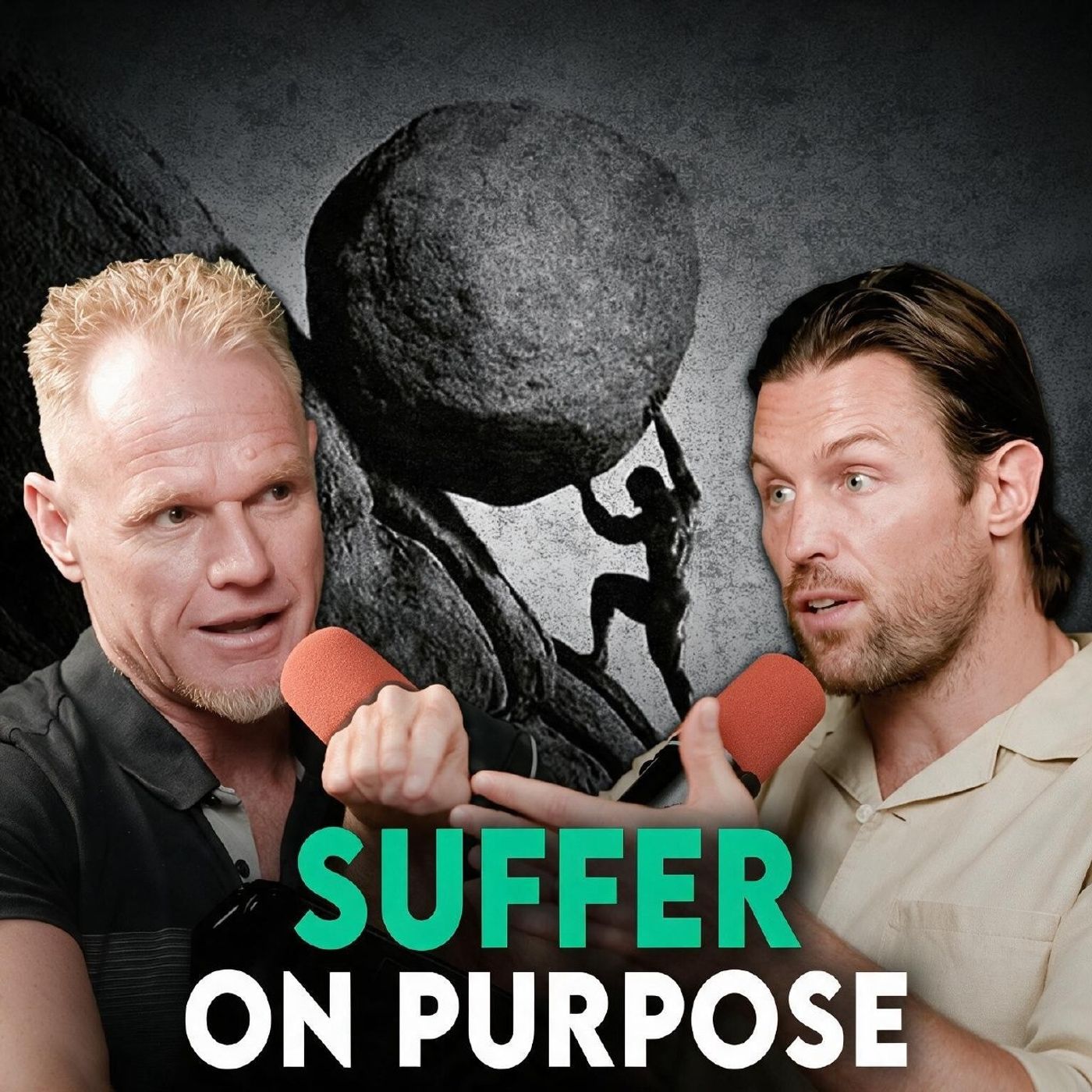
The "What is Money?" Show
Why Suffering on Purpose Makes You Stronger w/ Guy
01:27:39
What does the burn of a bicep curl have to do with wisdom? In this conversation, Robert Breedlove joins Guy Sengstock — artist, philosopher, co-founder of the Circling® Approach, and one of the most quietly profound practitioners in the space of human transformation — for a deep exploration of embodiment, discipline, and what reality demands of those who want to grow. The conversation moves from the formative role of physical training and voluntary suffering in building identity, to pain as information theory — why the world only forces you to update your frame when you stop being able to predict it, to the difference between practice and ritual, what it means to truly see another person, and why the body never lies about who you are. Robert and Guy meet at the intersection of somatic truth, cognitive science, and the philosophy of action, tracing a through line from Olympic weightlifting to the Circling approach to Bitcoin and self-sovereignty. This conversation explores the dee...
Loading summary
Transcript332 lines
- [00:00]
Brett
The idea is not this thing floating around in this magical space called your head. The idea is only useful when, like, the structure of the thinker is harmonized with or mirroring the structure of that which is thought about. Mind and matter come into conformity. Khan meaning, like together and form, meaning the eidos essence of a thing. And so when they participate in the same essence, that's when you really have deep knowledge, this deeper sensibility that we would associate with wisdom. You know, attuning yourself to be able to more likely do the right thing at the right time, in the right place for the right reason. You're accessing levels of knowing below the propositional, seeing through other people's eyes, knowing what it's like to be a thing, knowing what it's like to do a thing, you know, I mean, those are affordances, aren't they?
- [00:52]
Jason
There was a one moment, and this moment, I think, has been foundational for me, for everything good in my life. I remember I was there, it was like my second or third weekend, and I'm doing this bicep curl and I'm sore and it's burning and I'm like, why am I doing this? Like, everything about me didn't want to do this. Why am I doing this? And I looked up in the mirror and I saw this bump there that wasn't there before. I remember that moment because in that moment, a future got tied to that sensation of burn. And that burning burn revealed something to me. It revealed that thing that we all know.
- [01:37]
Brett
So, yeah, age of like, what am I, age 11? I'm just kind of out of shape, pudgy, video game loving kid. You know, I, I liked to play on the playground and things like that. I wasn't completely, you know, 100% unathletic, but I was not in sport. I was not in any disciplined, programmatic sport whatsoever. But then when my, my mom got together with my stepdad at age 8 and I, I call him my dad, his, his name is Frank. He's pretty much the, the man that raised me. And he had this policy, you know, I think it was. Yeah. So age 11. So I guess that's when I started middle school. It's like once you start middle school, you don't have a choice. It's like you're in sport and there's just, there's no, there's no other conversation about it.
- [02:28]
Jason
Right?
- [02:28]
Brett
So it's like you can, you can talk about what sport you want to play, but you're, you're in sport and you're doing it every season, right? So it's not like one season a year. It's like all seasons. You're doing a thing. He also kind of had this. A similar policy about yard work and landscaping. Him and his brother owned a lot of rental properties around town, and for whatever, I guess they actually enjoyed just the physical labor of landscaping because he had, you know, he had a normal job, but then on the weekends, his. Him and his crazy brother would, like, go spend 10 hours doing all this landscaping. And he would always say, well, yeah, we want it done right, you know, into the property really well, and we enjoy it. Like, we, like, you know, doing the work. So. Whereas me as a kid, I'm like, what is wrong with you guys? Like, just hire someone to do this work. This is the worst I've ever seen in my life. And anyways, he would, like, take my brother and I along as well and, you know, teach us about hard work. And he'd give us some incentives, you know, if we put in good work, he'd give us, like, a CD or something, or a video game at the end of the day, something like that. And so I'm very grateful that I had that push. Yeah, I think all kids need that push. It's like, it doesn't come natural, you know, maybe for some kids, but I. I think for most, you know, kids just want to be kids. Our kids want to chill and be lazy and do whatever. And so he pushed us big on both of those fronts. And so for me, it was initially American football, wrestling. These are my sports that I did, you know, season. So football's in the fall, wrestling's in the spring, basically. And then summer, we'd go to the swimming pool a lot, and we did, like, a bunch of little, you know, athletic things. So we had to, like, be outdoors and doing a thing all the time. And so that was a fantastic start. But then I got doubly lucky because when I was practicing, I'm So, yeah, we're doing wrestling practice at a recreational center outside of my school. And in that same room that we were in, like, half the room was wrestling practice. And the other half of the room, a man named Stephen Fauer had started his private Olympic weightlifting academy. And so we're in there doing wrestling practice, but then on the other side of the room, there's all these people on these wooden platforms, wearing these wooden shoes, doing these, like, weird, stompy lifts, you know, and they, like, snatch and clean and jerk and all these things. And. And I'm like, what in the world is this all about? And so long, short. My friend, one of my close friends started. He was very small and skinny. I was more of like the heavier type body type. He was very small and skinny. So his parents put him in that Olympic weightlifting academy to gain weight for football and wrestling. And so he started to really enjoy it. He's talking to me a lot about it. And then eventually I joined as well and, and man, that completely changed my life. Like, that became my sport, my focus really made me who I am, shaped me significantly, you know, in terms of setting long term goals, you know, training very programmatically. Like we're following very, very regimented. Sets, reps, volume fluctuations. Like Steve had it down to a science. There were different levels of achievement. You know, there's like green, yellow, blue, red level. Like you're.
- [05:56]
Jason
Which.
- [05:56]
Brett
There's a formula that based on the amount you lift per your body weight, you achieve these different levels across different lifts. So it's very gamified. It was competitive across everyone. And so, yeah, it taught me goal orientation. Programmatic training, visualization is very big in weightlifting.
- [06:18]
Jason
Oh, he was, wow.
- [06:19]
Brett
It's a very technique driven sport. Yeah, these explosive overhead lifts and people often think, oh, you just need to be really strong. It's like, well, you do, but you also need to be very coordinated and explosive. You're moving a very large weight very fast overhead and you're catching it in a full squat and you're standing up like it's a crazy maneuver. If you've never seen someone do a full snatch, like an Olympic style snatch, go check it out on YouTube, right? Go check out an Olympian doing an Olympic style snatch. It's a crazy athletic maneuver and it's not a meathead, you know, jacked bench press thing.
- [06:52]
Jason
It's.
- [06:52]
Brett
It's much more dynamic and athletic. And so, yeah, that became my main sport. I competed from age 13 to 17. I eventually held some American records in the 16 and under category. I competed internationally representing Team USA. It like made me a little tiny subculture celebrity for a while. So I kind of got that whole experience of like, you know, you were. Yeah, I mean, in that world, which is a very small. Yeah, period. But, you know, the young kids are coming up like, oh, you know, will you sign my thing? And all that stuff. And, and you know, you train to per. You know, you're performing, right? You go up onto a platform. It's just you, all the lights and the cameras and the attention and the audience are like, on you. It's like, okay, You've done this lift 10,000 times now you get three shots in competition, right. A lot of, lot of pressure. And so. Yeah, I'll pause there, but I mean, it just, I think it became very formative for me in terms of my personality, in terms of who I am now, in terms of just who I am.
- [07:57]
Jason
Yeah, totally, totally. I, you know, it's listening to you. I'm just, I'm aware of that. The through, like the through line for me is this kind of. There is something about training and particularly lifting weights, right. That is. So you can't lie about it.
- [08:17]
Brett
Yeah, exactly.
- [08:18]
Jason
Right. You either looked at it or you didn't. Right. You either like did the training and did the work and achieved the, the actual thing. There's something so reality disclosing about it, right. That, that, that, that particular relationship over and over and over and over again, like really does teach you about the world, right. In a very, you know, concrete way. I, I would say it's a lot, very similar for me. This was, I, you know, I think about like, if I hadn't started gotten into lifting weights when I was. Because I started when I was 11 with my dad at the gym. And man, I think about, of all the things I've done and meditation and you know, all the different stuff I've studied, the thing that's made the, like the biggest difference is that, right? So for me there was, you know, I, I had a learning disorder, you know, grew up in a pretty crazy alcoholic family. A lot of instability, emotional instability. Everything that came along with that came, came along with that for me. And my dad brought me, I remember my dad brought me to the gym. We lived in Downers Grove just outside of Chicago. And Carlton Fisk, who's kind of a famous, he's famous for hitting this home run in, in, in the playoffs in Boston, but he retired in as a, as a White Sox, Chicago White Sox. And he was kind of an idol of mine. And I'll, I'll never forget when my dad took me into the gym. He was there and I was, I remember just being struck by him, right. Like in some sense, you know, as this a little 11 year old who was, you know, studying, you know, baseball cards. And I would keep the stats, I'd write down the stats in the paper and I'd call my dad about them and. Right. To see him and see him working out and to be in the presence of like in some sense my ideal. Right. Just infused something in me. Now my dad, right, Like a lot of things at that time he would start things and never finish it. But he got, it got something into me that I kept bugging him. I'm like, hey, let's go to the gym, let's go to the gym. And you know, he never would go to the gym. And finally he just, he, he went down to the park, parks and recs and we moved to Arizona and he just got me a trainer. And there was this guy, John Vaughn, who is this? This volunteered to meet with me three times a week and work out at this little like gym in the basement basically in Cottonwood, Arizona. Right. It was like the only gym in town at that time. And I remember I, I would, I would, I'd, I'd leave school at seventh grade and I'd walk down there and I was the only one that would walk down there. And I remember the first two weeks just being sore all the time. And I didn't, I didn't yet connect that soreness to anything good. But I knew if I didn't show up, right, he would call the cops and report me missing. Right. He was really anal and he, I, you know, and, and then there was a one moment and this moment, I think has been foundational for me, for everything good in my life. I remember I was there as like my second or third weekend and I'm doing this, this bicep curl and I'm sore and it's burning and I'm like, why am I doing this? Like, everything about me didn't want to do this. Why am I doing this? And I looked up in the mirror and I saw this bump there that wasn't there before. Yeah. And I remember that moment because in that moment a future got tied to that sensation of burn. And for me as like a 12 year old at that time, right, that, that was everything. Right. And that burn, I think in a non conceptual way revealed something to me. Right. That it revealed that thing that we all know that we respect in other people is like, you know, the world, when you want to do something in the world, the world doesn't go, hey, all right, I'll open myself to. Right?
- [13:00]
Sponsor
Yeah.
- [13:00]
Jason
You have to confront it. You have to like, you have to, you have to suffer through it. So there's this sense of that was the first time where pain became something that I craved, that I, that I wanted. Right? Discipline. Right. And that changed everything for me. It changed the way I performed in school. It, it like it gave me this. I was of course the only one that was lifting weights in junior high. So by like in popcorn or football. I just started demolishing people. Right. And it coordinated me even socially. All these kinds of things came down to that. This. This kind of confronting reality and voluntarily, like, being willing to voluntarily suffer it. Right. For something beyond it. And that. That pain transformed into something I liked that was that. That. That sits at the heart of almost everything I call good in my life.
- [14:00]
Brett
That's so cool, man. It reminds me of. This is maybe a silly quote, but I liked it. It was something like, if you tell God you want to win a marathon, he doesn't give you a medal, he gives you a pair of running shoes.
- [14:20]
Jason
Yeah.
- [14:21]
Brett
You know, it's like, as you said, the world doesn't just grant your wishes. Right. The world is not a genie. But if you really want a thing and you, you know, there's a will, there' way, you really embark on that quest.
- [14:34]
Jason
Yeah.
- [14:36]
Brett
You start to carve a path, and it only. It's like, to know it conceptually is one thing. It's like, oh, I need to work out to build muscle. Okay, cool. Everyone knows that. But when you're in there working out and you hate every minute of it.
- [14:51]
Jason
Yeah.
- [14:52]
Brett
It's like your body hasn't yet been conditioned to associate the reward with the pain. Right. Or the reward with the suffering or however you want to phrase it. But there, There, there does come that moment, Right?
- [15:06]
Jason
Yeah.
- [15:07]
Brett
And it's not just, you know, obviously the aesthetic piece is important, but there's also like the. The endorphin release, the, you know, the high you get after the workout.
- [15:18]
Jason
Yeah.
- [15:19]
Brett
During the workout. Eventually, you know, is that your body almost. I've noticed this with foods as well. Like, sometimes you eat a food, often when you're young, you're trying more new foods, and, like, you won't like it at first.
- [15:31]
Jason
Yeah.
- [15:32]
Brett
You know, Brussels sprouts or whatever the thing is. But, like, if you keep eating it for a while, your body's like, oh, wait, I actually like this thing. You know, it's got some Whatever vitamins in it that my. That the metabolism likes. So the taste sort of recalibrates.
- [15:45]
Jason
Yes.
- [15:46]
Brett
You know, the acquired taste, I guess, would be the descriptor we use here. And so there's this acquired taste element to the training as well, where you need to keep going into the pain voluntarily, albeit you're dragging yourself into it day in and day out. But eventually you can make that little connection, you know? And. Yeah, I was thinking, often on the show we say pain is information. Like, it's. It's the only Thing that will cause you to put yourself in a new formation. Kind of a play on words with information. Because obviously if you are successful in the strategy you are running, right. Whatever you're doing, if you're just having success with it, well then you don't have that feedback from the world to change formation.
- [16:36]
Jason
Right.
- [16:36]
Brett
So you're just going to stay in the formation that you're in, whether that's the business or the training program or the attitude or the mental model or whatever. But once you get that feedback, that's like, hey, hey, no, you're wrong here. You know, this is where you're, you're this whatever your body or your mind is not fit to what is true. And you feel the twinge of that pain kind of peeking in. That's what causes you to be like, oh wait, I've missed something. You know, almost something like transcendent has broken through your mo. Your frame.
- [17:09]
Jason
Yeah.
- [17:09]
Brett
And now it forced you to update your frame. Right? To. It informs your frame. And so, and I was thinking information theory. They describe information as surprise. You know, like if you can predict a thing, well then it doesn't carry any in any information.
- [17:26]
Jason
Right.
- [17:26]
Brett
It's like if the pattern is abab forever, well then the next B or the next A doesn't tell you anything new. You already knew the pattern is a B, you know, ad infinitum. But if all of a sudden you see a C, you're like, oh, wait, that's new, you know, that's a surprise.
- [17:44]
Jason
Yeah.
- [17:44]
Brett
And that's information. So I don't know, I was just thinking how you see the bump, you see the bicep and you're like. Yeah, you're kind of surprised.
- [17:52]
Jason
Totally, totally.
- [17:53]
Brett
There's like, there's information there for you, but then you're also associating it with the actual information you encoded into your arm through repetition and training to get that bump to appear.
- [18:04]
Jason
Totally.
- [18:04]
Brett
So in a way you've like revealed more of reality. Like, oh, this is how reality works. But and again, in a non conceptual way.
- [18:12]
Jason
Right.
- [18:13]
Brett
You've burned it into your being. You've literally burned it into your physiology.
- [18:18]
Jason
Totally.
- [18:19]
Brett
And there's something so profound about that that I don't.
- [18:22]
Jason
Yeah.
- [18:23]
Brett
It reminds me of the thing like, you know, you don't learn to swim by reading about water.
- [18:29]
Jason
Yeah. Yeah.
- [18:30]
Brett
You just got to get in the water and move.
- [18:33]
Jason
Yeah.
- [18:34]
Brett
And, and adapt.
- [18:35]
Jason
So. Yeah. And that thing about. Well, just think of the word understand. Yeah. Right. You, you just described lifting weights, Right. In a certain sense, this this, you know, I, I don't think it's, it's an accident, right? Making this connection to philosophy, right? And philosophy most originally started, you know, philosophy is such in Greece, right, Where, you know, the, the ideal, right, are these statues that are, have perfect proportionality, right? That, that is, that you're, that, that symbolizes, you see through it, right? And there's something about this, this kind of sense of definition and proper proportionality, right, that is a, that sparked, right? Because I was thinking about this in, in this sense now. There's all kinds of ways, of course, like with everything where, you know, in the bodybuilding culture, it could be the most shallowest thing in the world, right?
- [20:02]
Brett
However,
- [20:05]
Jason
I think the thing that we're keying in on in this conversation is not the body is idle, but the body is icon, right?
- [20:17]
Brett
Could you just double click on those terms? I've heard you use them before, but I think most people not be familiar.
- [20:22]
Jason
Yeah, so an idol is something that you, you know, it's like, it's like basically you worship, you worship the letter. You don't worship the thing the letter says, right? Or the word says, right? You, you get attached to the, to the, the shape or the form, right? And you, you idolize it. You kind of, you, you give away all your power to it, right? Whereas an icon, right, is you see through it to something that goes beyond what, that, what the shapes say, you see through it, right? And I think the Greeks really had this, this, this way where the body and the athlete, right, in the proportions in the torso, all of that it is, is emanates, right? Not something to worship as a body, but something to, to see through. And I think the body itself, you know, is. Mercel Ponty did a lot of work on this. Like the body not as objects, right? Not as anatomy. A lot of times when we think about the body, we think about, we think about like we kind of do this third perspective view and we see it as an object. That's not, that's not the body that we live. The, the body is the way we have a world, right? The body is, this is not really a thing as it's lived, right? It is in some way you could say that. I think this is why we can really admire people who are really in shape, right? There's a non conceptual hit that we get because it communicates not, not the end point, right? Not the summation of a thing, but we're seeing actually through that, that, oh, this person is actually his, his, his body in some sense is A. A testimony to an ideal that he has been able to conform himself to. Right. And that. It's that ideal that we want to admire. Right. That we want to. And in admiration, we want to mimic in that deeper sense of the word. Right. So the body is this kind of like, not this form or this object, but actually it's. It's kind of an icon that we can see through it to the good, the true and the beautiful in. In this. In this deep way.
- [22:57]
Sponsor
Yes.
- [22:58]
Brett
Yeah, I. Yeah, this one's challenging, right. Because,
- [23:04]
Jason
yeah.
- [23:04]
Brett
You see the. The body in front of you, it's very easy to think maybe one layer deep and like, oh, here's. I, like, product process is kind of a useful dichotomy. It's like, oh, here's the product of, you know, a lot of whatever this guy did. Hard work, certain workout routine, supplements, peds, whatever the thing may be. And I guess the. The idolatry would be, oh, just worshiping that form. Right. It'll be like, oh, this. Just to have that body is everything, but it's not the actual value. Like, if you go one layer deeper is more. So the process that gave rise to. Or that produced that product, that is the body.
- [23:51]
Jason
Yeah.
- [23:52]
Brett
So all of the, you know, again, the self discipline, the, you know, the science, even that goes into it, the study of anatomy, the physiology, the, you know, years of training, the dedication, commitment, self discipline, all of these things that are more processual, if that is a word, are the real. Like, that's what's really valuable about what you see in front of you. And that is. I guess you would say that's more icon, like. Right. Like if you can see through the body.
- [24:26]
Jason
Yes.
- [24:26]
Brett
The processes that produced it.
- [24:29]
Jason
Yeah, yeah.
- [24:30]
Brett
Then you're like, oh, that's why I would assign such a high value to it. And yes, it's tricky, though. It's very tricky because I, you know, I'm gonna, like, if I flip the tables around, I'm like, oh, when I see the. A feminine for, you know, a woman's body that I really like, it's so easy for me to objectify that. Right, right. Like in a. Like an animal level, you're just like, oh, you know, she's so sexy. I want to do, you know, want to talk to her and get to know her and make love to her, whatever. But it's. But you're. Well, there's an appreciation there as well, right. That it's like, oh, this is where all of this stuff gets, like, very Darwinian to me. Like, when you get way down into the body. It's like, oh, what's driving all of these behaviors and thoughts and perspectives? It's like. Yeah, well, they're the activities and forms that are fitness signaling or fitness, I guess, signaling. Those are the things that we're elevating. Right. And we're, we're celebrating.
- [25:36]
Jason
Yeah.
- [25:37]
Brett
And so. Yeah, I guess, I don't know, I guess we get, we always have. Always for me at least, always have been like Darwinian sort of worldview.
- [25:48]
Jason
Yeah.
- [25:48]
Brett
No matter which way I, I go down the rabbit hole.
- [25:51]
Jason
Yeah. Well, there's, there's that sense in which, you know, I, I mean, as a, as like a teacher. Right. That there's, I definitely get that experience. I've had, I've had both of those experiences many times of somebody like, who has idolized me and somebody who has genuinely admired me. Right, right.
- [26:21]
Brett
Yes.
- [26:22]
Jason
They feel really different. Right. They feel really different for me. The, the, the, the idolizing. I just, I just, I instantly feel all of my insecurities and what they're not seeing and like, I just get really self conscious and.
- [26:36]
Brett
Yes.
- [26:37]
Jason
Right. I kind of like, I, I, it's, it, and it's tempting because there's a, almost kind of like a cocaine high or some kind of euphoria that one can, can get out of that. But I don't know, my personality structure just doesn't really like that too much.
- [26:56]
Brett
I, I agree completely, by the way.
- [26:58]
Jason
Yeah. But when someone admires me, right. I'm realizing like, there's, it, it's interesting. It's a real different experience. It's like I found, I find it evokes a generosity in me. I just want to pour myself into them. Right. And I think what that is, is because in the world of admiration, right. In the deepest sense, right. This is actually how we become people, right. It, it evokes this. We want to imitate them. But I think what makes it admiration is that they're not, they're not seeing me as this form that they're wanting to possess or envy. Right. They're seeing what the form actually communicates. Right. That there's something about the North Star that I've been facing for a longer time than them, Right. That is akin to theirs. Right. And it awakens theirs. And so I'm, this is what I'm idealizing for. So I just want to pour myself into them. Right. In that deeper sense.
- [28:04]
Brett
Yes, yes, yes, yes.
- [28:06]
Jason
And there's a, there's a way, I think that the, you know, the body is Such an interesting thing of like, you know, what are you looking at, right? When you see somebody in really good shape, right? There's, there's a sense of, there's, you know, all kinds of different people have different reactions to it, right? But oftentimes there's a preconceptual sense of respect.
- [28:36]
Brett
Yeah, right.
- [28:37]
Jason
Like there's. Because what you're seeing is the, the body as a testimony to this element of reaching for something that is inexhaustible, right? That is the good, the true, the beautiful. And the thing about the good, the true and the beautiful is it's really hard to say anything definite about them because pre, presupposes anything that you can say about it, right? And so when we, or like there's something about the body, right, that is this one place that comes into form that actually communicates this inexhaustible, atoning, attuning right way. And you know, of course in philosophy one of the things that in the, in the Plato academy they apparently they had this sign right of do not enter unless you've studied geometry. Right now we're starting to get rationality. Ratios, proportionality, right? This, these, this, these elements of beauty, right? And there's a way that the kind of like there's something about that when the deltoids develop and is defined and it's distinguished. You're, you're not just seeing those definitions of those distinguish, distinguish this sense of inexhaustibility, right. That comes our aim in that, in that deep sense like in kind of bringing it back to Darwin. Darwinism. You know, I often think about this, this is where my thinking goes with, with Darwinian stuff. I always have this question. I'm like yeah, survival of the fittest. Why, why survival? Like why, why keep surviving, right? There's, there's, I can't help but feel into a, some kind of valuing structure in there, right? Some kind of deintrification, right. Going on there. That, like that I always kind of find myself perplexed about of like all the, all the things that it could be, you know, fitted to what. Why have it go on, right? Why enterprise things, right? Push against that in this sense.
- [31:06]
Sponsor
What if I told you that you could lower your tax bill and stack bitcoin at the same time? Well, by mining bitcoin with blockware you can new guidelines from the big beautiful bill allow American bitcoin miners to write off 100% of their mining hardware investment in a single year. That's right, a 100% write off. So if you had $100,000 of income or capital gains. You could write off that entire amount by investing it in bitcoin mining hardware. Blockware's mining as a service allows you to start mining bitcoin right now with minimal effort. Blockware handles everything from securing the miners to sourcing low cost energy to configuring the mining pool.
- [31:46]
Brett
They do it all.
- [31:47]
Sponsor
You can stack bitcoin at a discount every day and save big when tax season comes. So you can get started today by going to mining.blockware solutions.com breedlove Again, that's mining.blockware solutions.com Breed Read Love.
- [32:08]
Jason
Yeah,
- [32:11]
Brett
what immediately hit me there was, I don't know which evolutionary biologist. I think it was the saying that replicators replicate. Like it's just what genes are doing, right. It's like one way, one frame for it perhaps is like these little, little, you know, information packets about survival strategies. Yeah, and I agree with you. Survival, it's, it's, it is the right term in one sense. But also, you know, we, you know, we're great examples of this. We do a lot of things that aren't purely for survival. Right. It'd be hard to, yeah. Say, oh, well, why am I not stocking more food for the winter right now when I could just when I'm just, you know, leisurely hanging out by the pool, recording a podcast, you know, it's like, well, this isn't survival optimizing necessarily. I guess survival optimizing would be you going to stack some more food right now rather than philosophy. So there's like a little bit, I don't know, survival might be too strong of a word in some instances for us, but I do think it's a useful framing that, you know, life is this set of survival strategies propagating through blood, bone and flesh. You know, and they're all competing against one another. They're also competing to be fit for reproductive success in their environments. And the intelligence of nature depends upon that ongoing contest, you know, that dying and renewing and rebirth. And so a lot of what I think we're talking about is like when you encounter that physique, it doesn't, by the way. We're really focused on the body here, which makes a lot of sense, but this could also be in some other domains.
- [34:03]
Sponsor
Right?
- [34:03]
Brett
So like when you encounter, let's say the physique that's very fit and in good proportion. You know, for me, it's like when I've hung out with professional athletes,
- [34:15]
Sponsor
you
- [34:16]
Brett
get this sense of like, oh, These guys are, like, really competent in a physical domain. You know, like, if it's a boxer and you, like, feel the energy, like, this guy could beat this out of anyone here. You know, like, almost like I. I met. I analogize it to being next to, like, a grizzly bear. You know, you're like, there's some power here that's indescribable. You know, it's just. It is what it is, and you can feel it in your bones. And so I think maybe that there's some of that in terms of what people experience when they're near someone that's, you know, very. With a lot of athletic prowess, let's say. But I've also had these experiences where I'll go to a yoga festival and I'll meet one of these yogis that's been. You know, I don't know what they've been doing, meditating for 50 years and doing yoga. And they're like. Their eyes are like illuminated glass. You know, their presence is so calming and soothing, and it's like they. It's not physical power per se. It's more like a spiritual power, whatever you'd like to call it. But there's also something there. You know, there's a gravitas, there's a power, there's an aura. And so, you know, even in business, like, I've been in board meetings with guys that are super sharp, very successful businessmen, and, like, you can tell who the guy running the room is. You know, like, the whole. He is the central axis to the whole affair. And that's a different form of power.
- [35:43]
Jason
Right.
- [35:44]
Brett
What is it? Intellectual or business power? I'm not really sure. So although we're focused on the body, I think this exists in multiple domains in terms of its competence, ultimately. Right. Or. Or productive superiority. What is the term here? Superior fitness. Right. I'm trying to think of the Darwinian term. We're pursuing fitness payoffs. And so someone that has accumulated a lot of those payoffs and is literally oozing in them, whether it's in the business domain, the spiritual domain, the physical domain, we sense that, you know, we're like, oh, wow, this person is the real deal, you know?
- [36:22]
Jason
Yeah, yeah, we sense that.
- [36:25]
Brett
Yeah, totally. Yeah.
- [36:26]
Jason
Yeah. We're. There's something about the. And we literally sent. We feel it. Yeah, right. And in that sense, we can. We. It's. Yeah, you're right. When somebody really does possess that certain something. Right. That shines through them, like, there's something in us that is already attuned. To that kind of thing. We feel it first and then form ideas about it. This not something almost non conceptual.
- [37:00]
Brett
Yes.
- [37:01]
Jason
Find ourselves in the presence of. Right? And it's truly strange way. There's something. There's something about that. You know, we. You can even see it in our. In our ways of like peering into it. There's a. Like even trying to describe it. There's something irreducible. Right. To it. Right. And that irreducibility is really compelling to me. Yeah. And I think it's that irreducible, that certain something or other that you can't quite name, right. That speaks of, you know, the way Nishitani and Verveki. Right. Speak to this. No thingness. Right. This thing that. That which is not yet a thing, yet it. You can. You can hear it somehow, even though it isn't a something and can call to you and make a claim on you. Right? Calls you into it. Right. This. This deep sense. Right. Of the word. And that is when you think about the word Phylia, Sophia or philosophy, right? Philia is my understanding of phyliac love, right. Is the love of. Of fellowship. Right. It's the love of peership.
- [38:29]
Brett
Y.
- [38:30]
Jason
Right. So to be peers, right. Is to stand beside each other and to peer. There's this element, right? And Sophia being wisdom, right? Like in wisdom. Wisdom has this element of like someone who's wise. They don't have all the information. Right. It's not about. Right. It's got this humility deeply, deeply woven into it. Right? Because it kind of admits that so much. It admits of. Of those things that are really, really important do have an ingraspability to them, right. They cannot be possessed, right? So there's this kind of interesting way where one is this deep way that this kind of peership, we stand. We stand together and we peer right into this inexhaustibility. And then when people emanate that sense, right. We're drawn to them. Right. We want to mimic them. Right. We want to be like them. Not because we literally want to be them, but because we are called by the same thing that they're called to. And they may be more developed. Right.
- [39:50]
Brett
Further along the way.
- [39:52]
Jason
Yeah.
- [39:52]
Brett
Yeah. No, that is so good. I was. You know, they talk about Steve Jobs having this reality distortion field, you know, and it's hard to say what domain he was competent in. I mean, he was so competent in so many domains. You know, he's thinking on multiple levels, right. And that he's obviously, he's a genius promoter of products, but he's also a genius designer. You know, maybe not the designer per se, but like he, you know, had a lot of input and oversight on the design teams and the design direction. You know, he was, I remember seeing a documentary that he would like, obsess over the human hand and like how it gestured and interacted with surfaces. And in trying to get to that sort of very intuitive interface for the design, the computer and us basically, and the proofs in the pudding, right, we're all using Apple products and iPhones and et cetera and. But he's also, you know, a very ruthlessly pragmatic businessman. Clearly he built the most valuable company in the history of the world. Maybe that's not true today, But I guess SpaceX took that throne recently. But there was a time when Apple was the most valuable. And he also, you know, founded the company, took it to a place, gets fired, company goes to near bankruptcy, they bring him back and then he makes it the most valuable company in the world. So it's almost like this archetypal entrepreneurial hero's journey. And so that. I think he's just such an excellent example. I was never in his presence, but I could only imagine, I mean, that's what, that's what I think people are referring to when they talk about his reality distortion field. It's like you're just in the presence of a guy that's on, so competent on so many levels, right. That he's literally setting the tone of the reality that you're in.
- [41:41]
Jason
Right?
- [41:41]
Brett
And I, you know, that irreducibility you were talking about, I, I think of this through the language of action, as you would probably not be surprised to hear me say. And there's. In the book we're writing, we use the word axion, so A X, I, O, N, and it's meant to describe action as such, which is, and here's, here's maybe a way to think about it. So in a performative contradiction, if I say to you right now, hey, guy, this sentence is not in English,
- [42:21]
Jason
well,
- [42:22]
Brett
clearly I'm lying, right? In an irrefutable way. Like not even. It's a performative contradiction in the sense that my demonstration of using English to compose the sentence.
- [42:33]
Jason
Yeah.
- [42:34]
Brett
Speaks louder than any explanation I could ever give you as to why my sentence is true, right? So like, you know, beyond any shadow of any doubt, like, you don't never need to hear me compose another argument to know that what I just said is definitively untrue, right? Because I'm in a performative Contradiction. Same thing. If I say, hey, I'm asleep, you know, it's like, well, no, you had to be awake to say it. So that's not possible. The question then. And so this is the essence of that is. Well, actions speak louder than words. Yeah. Okay, but what is it that's actually speaking, like, how do we name. If you name it an action? Well, then it's just the word action.
- [43:17]
Jason
Yeah.
- [43:18]
Brett
There's something unnameable that's speaking louder than any words I could ever compose in a performative contradiction.
- [43:26]
Jason
Yeah. Yeah.
- [43:27]
Brett
And so that is where I take it. It's like, oh, it is action which ultimately defines us.
- [43:35]
Jason
Yeah.
- [43:36]
Brett
I don't think many people would argue with that. There's that great line in the Dark Knight. Rachel says something to Batman, like. Or he says something to Rachel, like, hey, this is not me. You know, he's like, being the billionaire playboy at the hotel, and he's got two models swimming in the pool or whatever. And he says something as he's exiting with the two models in his car. He's like, rachel, this is not me. There's so much more underneath. And she's like, it's not who you are underneath, Bruce. It's what you do that defines you.
- [44:07]
Jason
Yeah.
- [44:08]
Brett
And like, that is it, I think, is. There's nothing. Again, we can say whatever we want, but it doesn't matter what we say relative to what we do.
- [44:18]
Jason
Yeah.
- [44:18]
Sponsor
And so that.
- [44:20]
Brett
That's. And then. So I guess these people that we're describing, Steve Jobs or maybe, you know, being in the presence of Michael Jordan on the basketball court or whatever, top performer, you're experiencing that. It's like, this is the pinnacle of human action in this field. Or fields. Yeah. And so whatever that feeling of awe or reality distortion or whatever it may be, it's like you're in that vortex of. I don't know if the word archetypal is right, but the guy that's closest to the archetype. Right. I can only imagine someone like Jesus Christ. It's like, well, those people were in his presence, right. These apostles followed him, and then their stories about him. Talk about a reality distortion field. It literally distorted all of human reality forever up until. Till this very day.
- [45:15]
Jason
Yeah, totally.
- [45:16]
Brett
And so, I don't know. I. You know, I don't pretend to have, like, an understanding of this, but these are just, like, things that I think about.
- [45:23]
Jason
There's a mystery there. You're right. There's a mystery there. Right. Actions speak louder than words. Right. Because. Yeah. And this. This Thing that you, in, in talking about doing this conversation you had mentioned about, you know, this thing where you can't actually find the point where the, you find the. You, the object not acting. And every moment you're, you're behaving right, you're, you're. There's, you're never, you're never settled, right. Into a thing that's not an action. You're always a constant action and always pursuing a goal.
- [46:06]
Brett
Always.
- [46:07]
Jason
Yeah, yeah, yeah, totally. You know, this is why. When I went to art school, I took like lots of life drawing classes and I had really like, amazing teachers. And there's one, this one teacher that it was really funny to hear him talk about drawing the human form, right? And he would say things like this. He'd say, like, you know, the human form is the most difficult thing, thing to render and capture, right. Its essence, whether it be realistic or abstractly. And what he says is, because it's with the human form that every single part of the form is a communication, right? Like everything. Like, so that's one of the things about it. It's like, it's like life drawing, drawing human beings, it's really difficult to do because if one part of it is dead, it doesn't communicate. It has such a high demand that every part of it communicates. Right. In this way. It really kind of tells you so much about what we are, right. In this sense. Right. That we are through and through action all the way down, right? Yeah, in this deep way. And it seems to me, it's like I know that for me in my own life, there's all kinds of things that I, I tell myself that I want.
- [47:38]
Brett
Yeah, sure, yeah.
- [47:41]
Jason
But at the end of the day, like, at some point I just gotta have to ask myself, what did I end up? Like, I find out what I want through, like, what I actually do. Right. In some way.
- [47:51]
Brett
Yeah.
- [47:51]
Jason
And there's that kind of way that like actual action discloses what, what calls forth the action, what your real God is. Yes, right.
- [48:02]
Brett
Yes, yes, yes, yes, yes.
- [48:03]
Jason
Including all of your mistakenness about that God. Right. Like all of those things. Right. There's a, there's something deeply humbling about.
- [48:11]
Brett
Yes, yes, yes.
- [48:14]
Jason
About this, about this sense. Right. Like,
- [48:20]
Brett
well, the, the, just to chime it, like the, you know, Jordan Peterson would say something like, God is the value that's highest in all of the hierarchies of value.
- [48:32]
Jason
Yeah.
- [48:32]
Brett
And the praxeologist would say, okay, every acting man has an internally rank ordered set of priorities or values. Yeah. And you're doing them every day. It's like, oh, this is what's most important first. This is what I'm going to do next. Second, third, fourth. Now I could write down my rank ordered list of values to you and tell you, hey, I want to be, you know, I don't know, the best motorcycle rider in the world, something like that. You know, that's my highest value. But until I get on the motorcycle and start training and working toward a goal like it's, it means nothing. Right. My again, my explication is meaningless next to demonstration. Now, if they're in alignment, great, you know, then you're in.
- [49:13]
Jason
Yeah.
- [49:13]
Brett
It's the opposite of performative contradiction. You're in performative affirmation.
- [49:17]
Jason
Yeah.
- [49:17]
Brett
And I think that, you know, again, just to go back to the, the
- [49:21]
Sponsor
great, the greatest men,
- [49:24]
Brett
I think one of the defining features and, and this is so funny. Like we keep saying define right. Which is, you know, okay, to define a word, you draw a boundary around it. Right. This is what this word means and what it, everything else is what it doesn't mean.
- [49:41]
Jason
Yeah, yeah.
- [49:41]
Brett
And we're saying also that action is what defines us. And so what we do is what we are and what we don't do is what we are not.
- [49:53]
Jason
Yeah, right.
- [49:54]
Brett
Again, it's boundary drawing. Right. You're circumscribing something like that. And so the greatest men, you know,
- [50:03]
Sponsor
again,
- [50:05]
Brett
I guess what is this? This is like the edge case of what is possible is like to die for your values, to state this is my highest value, and then to die for it. Yeah. You have now transcended performative contradiction because you made the statement and you gave everything for it and therefore defined yourself, your legacy. You become, you can transcend and become something like a symbol, like a religious symbol. And so I'm thinking of like Socrates dying for justice.
- [50:38]
Jason
Yeah.
- [50:39]
Brett
You know, William Wallace dying for freedom.
- [50:42]
Jason
Yeah.
- [50:42]
Brett
Christ dying for agape.
- [50:45]
Jason
Yeah.
- [50:45]
Brett
Like these men. I don't know if it's. I think it's transcended the possibility of performative contradiction, basically by fully defining themselves to the point of death for the value that they professed.
- [51:01]
Jason
Yeah. And strangely enough, I've never heard it like this. In some sense, they fully took the form of the inexhaustibility. Right. Of the virtue of the thing. Right. By becoming no thing, their form actually still says it. Right. It still defines it, but through the ultimate of definition of not being able to define it. Right. But being, having it, giving a testimony to it. I've never thought about it Quite like that.
- [51:32]
Brett
It's kind of a final definition in a way. Right. It's like once you've given your life doing a thing.
- [51:38]
Jason
Yeah.
- [51:38]
Brett
Well, then you have nothing left to give. So now, again, that flow structure that you are, no man stepping in the same river twice. Well, all of a sudden, you're not in a flow structure anymore. You're a dissipative structure. You're dead.
- [51:51]
Jason
Yeah.
- [51:51]
Brett
So all of your actions up until that point are now static and ossified and mythologized, potentially.
- [51:58]
Jason
Yeah.
- [51:58]
Brett
Whereas up until that point, it's dynamics like, oh, well, Socrates, maybe at the very end, he could have been like, ah, you know what? Fuck it. I'm gonna go. You know, go injustice or whatever the thing was. But when you die for it, it's like you. With some kind of finality, like a philosophical finality. You're like, no, this is what I. This is what defined me.
- [52:18]
Jason
Yeah.
- [52:19]
Brett
And so.
- [52:19]
Jason
Yeah.
- [52:20]
Brett
And then those people become deified in a way. You know. You know, maybe that's too strong of a word, but they're. We hold them very high in the hierarchy.
- [52:27]
Jason
They become a symbol, they become an icon. Yes, yes. They become an icon to that very standard.
- [52:34]
Brett
A standard by which we judge justice or. You know, I'm reminded of those bracelets in the 90s. What would Jesus do? WWJD. Yeah. It's like anytime you were gonna to do something, the idea was like, look at the bracelet.
- [52:47]
Jason
Yeah.
- [52:47]
Brett
And, you know, assess yourself based on the standard of Jesus.
- [52:52]
Jason
Yeah. Oh, yeah, yeah. So interesting, you know, and to bring. Bring it back to what you were keying in on with. With geniuses. Right. Steve Jobs. It's interesting. Like, he. My understanding is like, wasn't. Wasn't.
- [53:19]
Brett
Didn't.
- [53:20]
Jason
What Jobs do is like, he really keyed in on user experience. Right. That was his. One of the things he was like. It's. That's the thing that was most salient to him.
- [53:31]
Brett
Yes, Right.
- [53:32]
Jason
Was. That's the. That's the thing that we must be. The organizing principle upon which everything else happens.
- [53:39]
Brett
Yes.
- [53:40]
Jason
Which was one of the things that distinguished him and I think kind of made him a genius. And also kind of, you know, it at some. At some level tells you kind of what a genius is in some sense. Right. You know, Verveiki talks a lot about your salience landscape. Right. And right. Technically is when, you know, the salience is so loud. Right. Of the beer commercial. Right. Like, everyone knows. Right. That if you drink beer, you're going to get tired and have a hangover but yet they do. You know, there's women and beaches and all this kind of stuff. Right. It's like, it's, it's like what's the most salient isn't. Isn't connected to what's most real. Right. However, I think in, in people who are geniuses in some domain, it's like their salience landscape. Right. What's most salient to them is more connected to what's actually most real. Yeah, right. And this starts to sound like wisdom. Yeah, right. It's like wisdom isn't knowing the right information. It's knowing what to pay attention to. It's knowing what to not pay attention to. It's got this element of, of attunement. Right. In that way. So my understanding was like, you know, user experience before Jobs was always this add on after, you know, the, the engineers would tell you like what was possible, right. And then, and then user experience was this thing that you just tried to make it as usable as possible. And Jobs went basically like, he didn't go, hey, can you guys, you know, tell me what you can build, right. And then we'll figure out how to use it. He was more like, I wanted to do this.
- [55:39]
Brett
Yeah.
- [55:39]
Jason
And then the engineering came in relationship to that thing that was most valuable and having his eye on that. And of course that ended up being the difference that made the difference. Right. All the way down. And he was.
- [55:54]
Brett
And he was ruthless about it, right. Oh, it's impossible or can't be done. He would literally just get new engineering. And again, to your point, it's like you're. He's appreciating the quality, I guess that will actually make a computer company successful.
- [56:13]
Jason
Yeah.
- [56:13]
Brett
And you had to make. And this is maybe a funny metaphor in light of what we're talking about, but he needed to make computing sexy, you know, he needed to make it intuitive. It needs to be. People don't need to be thinking about how to engage with it. They need to be able to just naturally figure it out in a way. And so like the swiping, all the things we take for granted now, not that this is like the pinnacle of design, but for the time, man, when you think about what came before the iPhone, it was orders of magnitude change and usability and navigability. And again, all these, by the way, these were these words ended ability. These are all affordances, right. These are the Gibsonian real relationships between an agent of action and an arena of action. And Jobs just unlocked so many of them in, in his product Design. And he. To your point too, it wasn't an afterthought. It's not like, hey, what can we, what can we do? And then let's make the user experience.
- [57:16]
Jason
Yeah.
- [57:17]
Sponsor
Within the.
- [57:17]
Brett
With again, defined by what we can do. He's like, no, no, no. Yeah, here's what we're going to do. Everything else will be defined by that.
- [57:27]
Jason
Yeah.
- [57:28]
Brett
And yeah. I don't know.
- [57:31]
Jason
It's a great example. And it's. And in some way he was able to, you know, he's just an example of this, right? Like, we can find examples of any kind of domain, right? It's kind of having. And this is where, this is where it starts to get even more philosophical in the, in the genuine sense of the word. It, in some sense he was able to mind a principle, right? This kind of like the originating source of a. Of. Of the gathering of a domain. Right? Like, and he had his eye on the principle. And a principle is a really interesting thing, right? Like when you think about, you know, we use that word all the time, right? Like, and, and as long as you don't ask me, I know exactly what I'm talking about when I talk about principles, right? Like, it's the principle of the matter. Hard to define yourself. What is a principle? Right? It's, it's, it's by definition none of the things, the, the things it gathers, but it itself is not ever one of the things. G. That's gathered.
- [58:47]
Brett
Yeah.
- [58:48]
Jason
So like in some way, you could say, like in, in people who are deeply wise or have a deep sensibility or are brilliant in a particular domain, they're able to speak, hear, listen, act. Right. With the smallest amount of effort. Right. To just the right thing that connects to everything else in that domain. Right. Having a deep sensibility for something, having a genius for something is in some sense be able to. To mind, sense, be open to the organizing principle. Underneath that, it's that interesting point where it's not, it's the thing that you can't get it through measuring all the relations. It's a sense, right? And when you're tapped into it, you can like see the thing that's most relevant, that connects to everything else and respond to it, right? Yes. And alter that. That. That seems to me. What? Well, that. That's wise.
- [60:04]
Brett
Yes, yes, yes.
- [60:09]
Sponsor
One of my highest health priorities is keeping my brain in top shape. To take care of my brain power, I do many things such as striving to read, write, exercise and meditate daily. One of the latest tools in my Brainpower toolkit is Mind Lab Pro. Mindlab Pro is a nootropic supplement that is scientifically proven to enhance your brain power. When I take mindlab Pro, my mind feels like it has a better grip on the world, my thinking is more lucid, and the articulation of my speech is radically improved. Mindlab Pro has been tested in rigorous double blind, placebo controlled human trials and has been proven to enhance brain power for users in every age group. Mind Lab Pro is an advanced formulation of 11 nootropic ingredients and is backed by research from over 1400 human trials conducted over the past 32 years. So if you're looking to enhance your brain power, Mindlab Pro is an excellent solution. Go to mindlabpro.com breedlove to start enhancing your brain power today. Again, that's mind lab pro.com breedlove
- [61:18]
Brett
yeah, there, you know, we mentioned the word, I think somewhere early in the podcast, I think I said it actually, like, the world doesn't just grant you wishes, you know?
- [61:28]
Jason
Yeah, yeah.
- [61:29]
Brett
You ask for what did I say that? You know, you ask God to win a marathon, he doesn't give you a medal, he gives you running shoes.
- [61:34]
Jason
Yeah.
- [61:35]
Brett
Okay, so reality is not a genie. Right. It doesn't just grant your wishes, but genie and genius have a shared origin.
- [61:44]
Jason
Yeah.
- [61:45]
Brett
And so what did the genius Steve Jobs do? Yeah, he granted people's wishes, but these are wishes that weren't even articulated. This is the brilliance of the entrepreneur. I now go back to Henry Ford's quote. He goes, had I sold people what they told me they wanted, I would have sold them faster horses.
- [62:08]
Jason
Yes.
- [62:08]
Brett
You know, rather than the mechanized horseless carriage we call the automobile. Right. So the genius of the entrepreneur is to like, get beyond deeper than the explicated preference or value of the customer and be like, no, no, no, no. I see how you actually interact with this technology or, or maybe even deeper than that. It's like you're trying to get a certain outcome, right?
- [62:33]
Jason
Yeah, yeah.
- [62:34]
Brett
And so what tool best facilitates you getting that outcome better, faster, cheaper?
- [62:40]
Jason
Yeah.
- [62:40]
Brett
And that's what the entrepreneur is getting the sense of and attuning himself to. Yeah, to your point. And it is, I would get, I mean, wisdom is so strange to me. But the idea of like doing the right thing at the right time in the right place for the right reasons, it's just got the word right loaded into it everywhere. And it's like, you can't make that an algorithm. Right. There's no formula for that. Oh yeah, what did he Go. What does he say? Go on the perfect first date, right? Or like, how do you. How far do you stand from someone at a funeral? You know, all these little things, it's like you can't. These are not formulaic, right. There's a rhythm associated with it which, which brings.
- [63:27]
Jason
It brings it into this sense of. I mean, I think about, like, how do you develop a deep sensibility in something, right? How do you do that? Right. In some way, the only way that I. Now some people seem to just have a gift, right? Steve Jobs seems to be somebody who has just like a gift. I don't know if that's an intellect or what exactly that is, right. However, when we think about wisdom, the, like the archetype of the wise, right. Are. Is somebody who's old, right? And I think. I think that speaks to the way one becomes wise is through experience, right? Yeah, of course. And it's almost like it happens in the body in some deep way, right? It's like you go through experience after experience after experience. I notice, like with. With teaching, because one of the main things I do is. Is do these like year long trainings teaching people how to circle. And the way I teach after 30 years. Right. Is not the way I taught in the first year. Right. In fact, I would say that I, as. As time has gone on, I know less and less about what it is to learn that.
- [64:52]
Brett
Correct?
- [64:52]
Jason
Right. Like, I know less and less of what I'm gonna say. It's less and less formulaic, right? Yes. Because it's like. And I noticed that when someone asks me to make it really formulaic, right. That I get in that moment that I'm actually not following a formula, right. There's something else happening, right? This kind of deeper sensibility that could only happen through experience, right?
- [65:17]
Brett
Yeah.
- [65:18]
Jason
And so kind of bringing it back to this notion of this other element of. To train.
- [65:28]
Brett
Yes.
- [65:29]
Jason
Right. Like there's something that's happening in training that. In what calls forth that training, right? Especially this element about voluntarily doing something hard, right? Like, and then taking this thing that's like the most amount of pain one could experience, right? The burn. So I don't know about you, but I cr. I like literally crave that burn, right?
- [66:01]
Brett
Oh yeah.
- [66:03]
Jason
It's like. But there's been a deep transformation of my experience of that burn, right? Where it becomes the symbol, right. Of this future that I love, such that that burn is something I actually end up craving. Right?
- [66:19]
Brett
Here's a good question. And I'm not actually. I have no idea So I hope it's a good question. But like, I. When I reflect upon that burn and my changing relationship with it from, let's say, the first time I lifted weights to 30 years later of lifting weights.
- [66:34]
Jason
Yeah.
- [66:35]
Brett
Do you think it's the actual experience of the burn that has changed, or is it the interpretation?
- [66:41]
Jason
Oh, yeah, yeah. Oh, yeah, it's the. It's the interpretation.
- [66:44]
Sponsor
Yeah.
- [66:46]
Jason
However, it's really strange. It's hard to draw a clear boundary because the interpretation actually, like, has me. It becomes more.
- [66:56]
Brett
Yes, right, right, right.
- [66:57]
Jason
More refined. Right. Like, I'm upset if, you know, I. The next day, I'm not sore. Right. Like. Like, oh, I didn't. You know, there's this kind of the. It's, it's. It's hard to find the line. But, yeah, I think, I think, yeah, it's totally the interpretation in orientation. Right.
- [67:17]
Brett
Yeah. Which is just so I don't. Important to remember, no matter what you're going through, you know, like, it might seem like the most miserable thing in the world now I'm outside the working out domain. Domain could be a personal crisis or a, you know, a sickness or a loss of a lot. Like some war, you know, anything that we typically associate with.
- [67:36]
Jason
Yeah.
- [67:36]
Brett
A bad experience. But at some point, perhaps with the benefit of hindsight, there is this opportunity to interpret it anew, you know. But whether that's doing the experience again and interpreting it differently or looking back and interpreting it differently. So, yeah, I don't know, there's some hope kind of built into that, I think.
- [67:58]
Jason
Oh, totally. Oh, totally. And this, this. This relationship, You know, to, like, I like to talk about. I. I think about this one distinction a lot of, like, the difference between being exposed and being vulnerable. Right. Like, vulnerability is always so bound with courage. Right. Because it's got this. It's like you're vulnerable when you, when you turn toward. Right. Yeah. You stand up. Whereas exposure is more like, you know, your pants get pulled down, you know, in the playground and everyone turns and laughs and need therapy for the next 20 years. Right. Working through that memory. But like, if you, if you, if your friends dare you and you consciously go out in the playground and you, like, pull it down and you're like, hey. And everyone turns and laughs. That becomes a, like, that becomes a moment of pride.
- [68:59]
Brett
Yes, yes.
- [69:00]
Jason
Right. In a strange way. So there's. It's, it's funny as we're kind of going into this, there is, I think, something about. Because I. I've often talked about this thing. I love when I go to the gym. I love the stupids, right? I love just like where you just go to failure and like, for the next 30 seconds you're just. You're just.
- [69:25]
Brett
Oh, yeah, yeah, yeah, yeah.
- [69:27]
Jason
Some kind of.
- [69:29]
Brett
Yes. You're way out of the propositional space.
- [69:32]
Jason
Yeah, yeah, I caught. I call it. Yeah. I call it dumb guys. Transcendence.
- [69:37]
Brett
Oh, yeah, yeah. That's a good one.
- [69:40]
Jason
But I think there's really something there, right? Like this. And it has to do with what you're talking about, this interpretation of this, right? Of, like, there's a little. There's a little death, right? We talk about going to failure, right? Like, there's. Why do we love that feeling, right. Of that experience? Because in some sense it's like, it's so deeply in what we're practicing over and over and over again is kind of suffering on purpose in a disciplined way. Loving it. Right? Because we're kind of. In some way, we're. We're at the ground of our relationship with reality. Right. And reality always wins, Right. And in some sense, like, to. To. To meet that and, like, is this kind of release from death, right. In some. In some deep way. I think there's something quite. I don't hear talked about much, right. With training that is like, there. There's enacting a symbol there.
- [70:50]
Brett
Yes.
- [70:52]
Sponsor
Yeah.
- [70:53]
Brett
I. Well, I, you know, maybe I can tie this back to your earlier question and it's just something worth reflecting on forever, right? Like, how do you cultivate wisdom? How hard enough to define it? But then, you know, assuming you can get some, you know, approximate definition of what to aim at, which I guess, you know, virtue is kind of that collection, right. It's like, yeah, here's the things we've. All the wise people that have come before you have gathered together as the qualities you should seek to cultivate in yourself to become wise.
- [71:30]
Jason
Yeah, yeah. Right.
- [71:31]
Brett
Now, it's not guaranteed, I guess, Right. You could try to be honest and patient and kind and courageous. And it's not guaranteed you're going to, like, make the right decision at the right time and. Well, actually, it's guaranteed you're not like. But you can get more. You can be more likely, I guess, to act right or act wisely when you've cultivated virtue versus when you have not consciously gone.
- [71:56]
Jason
Yeah.
- [71:57]
Brett
Process.
- [71:58]
Jason
Yeah.
- [71:59]
Brett
And okay, so great. All right. It's virtue. Well, how do you do that? Well, like the way you do everything in the gym. Right. It's. I call it the philosophy of reps. Yeah. For the Gym, bro. It's like, look, man, just keep doing it, right. Like you catch yourself lying in a moment, correct yourself, you know, correct yourself in front of others, which you're going to feel even more pain.
- [72:24]
Jason
Right.
- [72:24]
Brett
You're going to feel the social anxiety to stop and be like, oh, you know, sorry guys, what I just said, actually I fubbed it a little bit. That was untrue. Here's what I meant to say.
- [72:34]
Jason
Yeah.
- [72:35]
Brett
By doing that versus just like kicking yourself in your head later, you're actually going to feel more pain and you'll inform your future actions to be more honest than if you didn't say it out loud.
- [72:45]
Jason
Totally.
- [72:46]
Brett
Right. So yeah, the philosophy of reps, training, consciously doing the uncomfortable thing, almost especially when you don't want to do it. Right. That's when self discipline is even possible. If you're feeling good that day and you want to go to the gym. Well, is it self discipline? I mean, not really. It's the thing you want to do.
- [73:05]
Jason
Right.
- [73:05]
Brett
The day you wake up and you've got a, you know, tight schedule and whatever, you've got a million reasons not to go. And you go, that's the self. That's exercising the self discipline.
- [73:15]
Jason
Yeah.
- [73:15]
Brett
And, and for the scientific minded audience, you know, the, the, the amcc, the anterior mid singulate cortex, that part of the brain that you can literally exercise by doing a thing you don't want to do or resisting doing a thing you want to do.
- [73:32]
Jason
Yeah.
- [73:32]
Brett
So it's not just. This isn't just philosophical.
- [73:35]
Jason
Right.
- [73:35]
Brett
Banter. There's a, there's a neural neurobiological correlate to everything we're saying. Amcc, you can look it up. Huberman's got a podcast on it. And so I think training and like it is just the most. It's how reality works and it is.
- [73:53]
Jason
Right.
- [73:54]
Brett
This is why I'm obsessed with Musashi's phrase, the way is in training.
- [73:58]
Jason
Yeah.
- [73:59]
Brett
And then again in the book we're tying training in the sense we're talking about it. There's also like Aristotle, you know, he talked about erite or excellence as habit.
- [74:09]
Jason
Yeah. Yeah.
- [74:10]
Brett
You are what you repeatedly do, basically. So again, back to cultivating roachi. But you could tie all of that philosophical perspective on it directly with the physics concept of entrainment, which says that when you bring, you know, one oscillating system in the proximity of another oscillating system, they start to harmonize over time. Right. The, the, the almost stereotypical example is like you put two women live together and like eventually their menstrual cycles start to harmonize.
- [74:41]
Jason
Yeah.
- [74:41]
Brett
You see people in an audience applauding. Right. If they applaud long enough, eventually the applause falls to harmony. The thoughts you repeatedly. You know, this is why it's so important to do work on yourself and. And metacognitively examine the thoughts that are recurring because they're entraining you. Right. If you just complain a lot, well, then you're entraining yourself to be someone focused on the negative things in your life rather than the positive. You know, you have a gratitude practice, you're doing the opposite. Right. You're being grateful for the things you have and pointing energy to that. So I think there's. I'm not saying that again, this is a formula for wisdom.
- [75:19]
Jason
Yeah.
- [75:19]
Brett
But if we trust that virtue, as discovered by our ancestors, is something that is more wise than less.
- [75:27]
Jason
Yeah.
- [75:28]
Brett
Then you can train yourself, which is the equivalent to in training yourself physically, you're training yourself, you know, culturally, I guess. Like, you're like, hey, I'm going to do this fitness program. I'm going to do this thing. Like you're directing your own life, but then you're activating this physics process or phenomena phenomenon called entrainment.
- [75:51]
Jason
Yeah.
- [75:51]
Brett
And all of these. This is why what you do is what defines who you are. It's not just an opinion. It's like.
- [75:59]
Sponsor
No, it's.
- [75:59]
Jason
Yeah.
- [76:00]
Brett
There's a lot of consilience around this fact.
- [76:02]
Jason
Yeah. Yeah. You're. To me, you're, you're. You're. The word dwell, as I've been listening to you, has come up a lot. You're talking, I mean, all the things that you're really talking about really get at this notion.
- [76:15]
Brett
Yes.
- [76:15]
Jason
The deeper sense of not a location. Right. But to dwell in a place. Right. To, to be in the place, to act within the place, be around people that are enacting that and training you in this really, really, really, really deep way. And also, you know, this also too get difference. This. There's. There's kind of like the post Cartesian notion of truth and then there's like the classical epistemology. Right. Where like since Descartes, it's been basically truth means, you know, having. Right. Proposition about things in the world and they correlate. Right. Yeah. And so I can, in that world, all I need to do is change my propositions or get the right propositions, but I actually don't need to change in the matter. It doesn't require my own transformation. Right.
- [77:16]
Brett
Yeah.
- [77:18]
Jason
Yet philosophy in the in. In the ancient sense of the word had this deeper classical sense which it's like truth. Truth was. Was conforming with things. Right. Like it had this element of like. No, like not. Not just having correct ideas, but it was to come to conform. Right. To join inform is how you are connected with things. Right. So you have all these, you know, in the Stoics and Plato Academy and there's all this, this. These sense of like initiation rights.
- [77:58]
Brett
Right, right, right.
- [77:59]
Jason
Kind of dwelling with each other. They wrestle in the Plato Academy. Right. That, you know, the, the Olympics, the game, the. You know, the, the. The. The athletes would train when there was music going on and the polis. And like all of that was in part of. Of these different ways. Right. That were them attempting to dwell in what was most transcendent in some way. Yeah. This place where. And that's what's so. So compelling about this. Right. Like literally compelling selling. Right. Is this place where your relationship which. With which is most transcendent, the most unsayable. Right. Comes into grant what you live in. Right. Starts to take. Takes up form and guides the formations and the training and entrainment and what you're inside of. Yes.
- [79:00]
Brett
No, I think it's beautifully said and that.
- [79:05]
Sponsor
Yeah.
- [79:05]
Brett
That word conform. Right. This is also I think related to. Viveki refers to like contact epistemology. Right.
- [79:14]
Jason
Where it's. Yeah.
- [79:15]
Brett
The idea is not this thing floating around in this magical space called your head that, you know, may or may not map onto the world. It's like. No, no. The idea is only useful when like the structure of the thinker is. Is harmonized with or mirroring the structure of that which is thought about. You know, like the mind and matter come into conformity.
- [79:42]
Jason
Yeah.
- [79:42]
Brett
Con meaning like together and form meaning, you know, the. The eidos essence of a thing. And so when they participate in the same essence.
- [79:52]
Jason
Yeah.
- [79:52]
Brett
That's when you really have deep knowledge. And it's knowledge that's way deeper than the propositional. Right. Like I'm thinking of, you know, in the Bible when it will say things like, oh, he. And he knew his wife, you know, somebody. He made love to his wife. It's not talking about he knew like her name or something. You know, it's like, no, they can literally physically conformed together in the act of lovemaking. And that verb know is what was used.
- [80:16]
Jason
Yeah.
- [80:17]
Sponsor
And so.
- [80:19]
Brett
And I think that to what you were saying earlier, like the sensibility,
- [80:25]
Jason
this
- [80:25]
Brett
deeper sensibility that we would associate with wisdom.
- [80:29]
Jason
Yeah.
- [80:30]
Brett
You know, attuning yourself to Be able to more likely do the right thing at the right time, in the right place for the right reason.
- [80:38]
Jason
Yeah.
- [80:40]
Brett
It seems. I mean, to try and put language to it. I think it is that it's like you're getting to know. So you're accessing levels of knowing below the propositional.
- [80:51]
Jason
Right, right.
- [80:53]
Brett
You know, you know, Vervecki's got all the participatory, the procedural, the perspectival. Right. Seeing through other people's eyes, knowing what it's like to be a thing. Knowing what it's like to do a thing. You know that those. I mean, those are affordances, aren't they? I mean, that's basically what is an affordance. Right. It's the conformity between an organism that wants to do a thing and the possibility of doing the thing. Possibility itself. Almost like meta.
- [81:21]
Jason
Real thing.
- [81:22]
Brett
Yes.
- [81:23]
Jason
Yeah.
- [81:23]
Brett
And so. And maybe this is just a unique thing us Westerners are going through because we're in the propositional tyranny and we think, oh, everything's ideas and.
- [81:32]
Jason
Yeah.
- [81:33]
Brett
But. But it's. And maybe the ancients had. They were obviously much more in tune with it that.
- [81:38]
Jason
Yeah.
- [81:38]
Brett
It's not all propositions, like propositions are the tip of the iceberg, really.
- [81:42]
Jason
Oh, totally, totally. Yeah, yeah, yeah. There's that. Yeah. There's that sense where. There's that sense where, you know. And the kind of autophatic tradition. This is one thing I've noticed that that place where, you know, oftentimes in these dialogues, we kind of get at this place of like, where it's like there's the. The thing shining forth. Is shining forth, the thing withdrawing into the mystery. Right. This. And oftentimes in. In like a dialogue that that place starts to compel the very words that it bucks. Right. Like this. This b. It begs the words that it bucks. It's this begging, bucking quality. Right. Is where you hit that place where you can't quite say it, but it still shines forth. But here's the important part is it lays a claim. It becomes the motivation of you wanting to get closer to it. Right. And the entrainment of that. Right. I think is why on some level. Right. That when you see a body like a. Like a really well developed, like athletic body as icon, you're seeing through into that relationship, that proper relationship, being entrained with what is worthy of being trained by. Right. That we can't not value as human beings.
- [83:10]
Brett
Yeah.
- [83:10]
Jason
In that deeper sense of the word.
- [83:12]
Brett
Yeah. I think that's a great place to put a Button on it. It's like, yeah, the. The pinnacle. Fruit of evolution. Something like that. It's like when you see that body that's incredibly fit. And again, could also be these other domains we've talked about.
- [83:30]
Jason
Yeah.
- [83:32]
Brett
You know, a spiritually powerful person or a beautiful young woman who's just very reproductively fit and we're all like, oh my God. Celebrating her beauty and she's a movie star, whatever. Like, that's. Yeah, we're experiencing that thing that's undeniable. It's like, it's. This is the process that gave rise to all of us. And here it is in its most amazing form.
- [83:52]
Jason
Yeah, yeah. And so we're all struck portion defined. Right. Like, like. But the very thing it's defining is the thing that can never be actually consumed. Right. It's, it's, it's, it's the body. Is this just really cool in between place that.
- [84:12]
Brett
Yes.
- [84:12]
Jason
Forms what is unformable.
- [84:15]
Brett
Yes, yes, yes, yes.
- [84:19]
Jason
Love talking to my friend.
- [84:20]
Brett
Yeah, yeah, dude, likewise. And we barely scratched the surface, so we'll have to do another one of these real soon.
- [84:27]
Jason
We'll take some of this. I'll do. Let's do some thinking on this and we'll come back and. Because this is. I actually do not see. I don't know anywhere that anybody that talks about this, these deeper things as it's connected to actually training, essentially.
- [84:43]
Brett
Yeah, yeah, yeah, I agree. I agree. And I. Well, I love the idea of shining more light on it.
- [84:51]
Jason
Yeah.
- [84:52]
Brett
When I say the way is in training, people are like, what do you mean? Like, I went to work and I had two weeks of training and I didn't like it.
- [84:59]
Jason
Totally, totally. All right, my friend.
- [85:02]
Brett
All right, brother. Thank you so much.
- [85:03]
Jason
Bye bye.
- [85:06]
Sponsor
We lock our doors, we encrypt our hard drives, and we use strong passwords. But most people leave one thing wide open. Their phone line. SIM swap attacks are one of the fastest growing methods of digital theft. In minutes, a hacker can clone your accounts, reset your passwords, and drain your life. Unfortunately, this is not science fiction. It happens every single day. Afani is the only mobile service protection designed exclusively to protect you from SIM swap attacks. Afani offers military grade encryption on their product and offers up to $5 million of SIM swap insurance. And to date, there have been exactly zero SIM swaps on any of Afani's over 50,000 protected accounts. So you don't need to live in fear. You just need to protect your weakest link. Go to afani.com breedlove to secure your phone line today. Again, that's Afani E f a n I.com breedlove for the past 25 years, I've been reading roughly one book per week. Almost entirely difficult nonfiction books. The kind that really shift your thinking. Books on physics, money, power, psychology, spirituality and philosophy. The real stuff. But I get it. Most people don't have time to read 50 books per year. So I hand selected my favorite nonfiction books and distilled each one of them into a course that you can take in 50 to 100 times faster than it would take you to read the entire book. Each course gives you the key insights, mental models and frameworks that matter. We launched with 15 book courses and we are building toward a library of 100 by the end of year one. So if you are a seeker of truth, wisdom and personal growth, then my book course is for you. To sign up. Go to course Breedlove IO. Again, that's course Breedlove IO.
- [87:15]
Brett
Thanks for watching.
- [87:17]
Sponsor
If you enjoyed this episode, click here to find more just like it. And here to find our most recent episode. Also, make sure to like this video to help shine light on the corruption of money and be be sure to subscribe to this channel to stay connected.