← The Who What Wear Podcast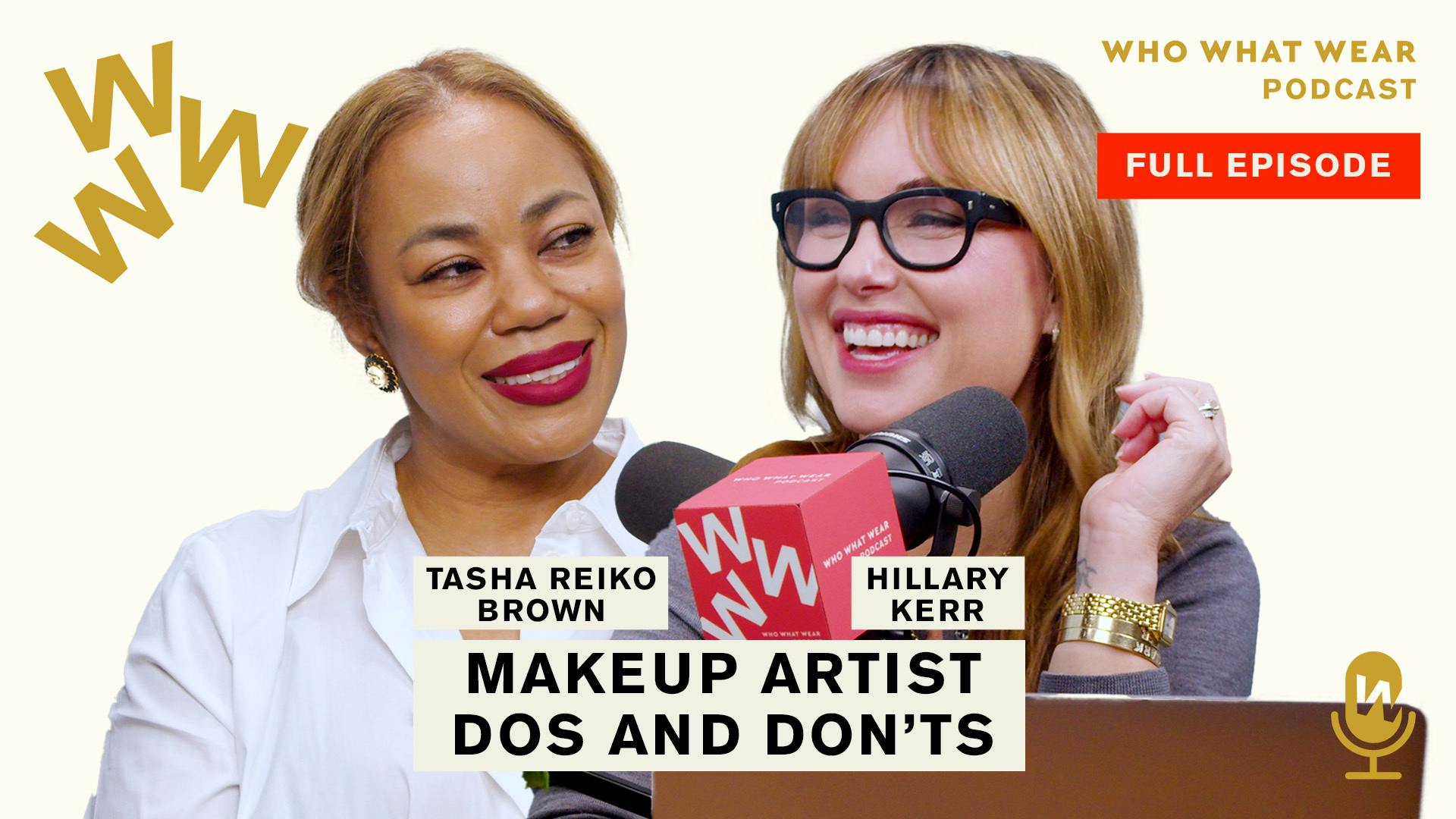
The Who What Wear Podcast
Makeup Artist and Groomer Tasha Reiko Brown Talks Working With Michael B. Jordan, Her Two-Eye-Shadow Maximum, and Her Favorite Foundation
00:43:44
Loading summary
Transcript166 lines
- [00:02]
A
Tell me if I'm alone here. Who, what where listeners. But shopping used to feel more fun before all the algorithm fed blah and the endless sea of dupes. But I have a confession. I found that fun feeling again on ebay. Because on ebay, it's not just shopping. It's a full on fashion pursuit. And when you find the thing, that adrenaline hit is real. Like when you squeeze that rare Adidas collab that's lived on your mood board. The Dior saddlebag you ripped out of a magazine in 2007 and never got over. Or something like The Cecily Bonson GT2160s that sold out in five seconds. Yeah, those. It's about the thrill of finding pieces that feel like me. And I want you to find pieces that feel like you. There's always more to discover. Ebay has millions of pre loved finds from hundreds of brands backed by ebay. Authentic guarantee ebay. Things people love. Welcome to the who what Where Podcast. I'm your host, Hilary Kerr, and today
- [01:21]
B
I am sitting down in studio with
- [01:24]
A
makeup artist and groomer to the stars, Tasha Laiko Brown. Tasha works with some of your favorite celebrities and mine. We're talking about people like Gabrielle Union, Tracee Ellis Ross, and Oscar nominee Michael B. Jordan.
- [01:39]
B
Today we are talking about her work this awards season.
- [01:42]
A
What goes into grooming men for the red carpet. It's not what you would think. And the foundation that she uses on all of her clients for a fresh and effortless look. It's all coming up on who what where.
- [02:01]
B
Tasha, welcome to the who what where podcast. I am so excited to have you here. Thank you for taking the time out of your insanely busy schedule. You were giving us the download just a minute ago. How many things are you working on right now?
- [02:13]
C
So many things. We're in the middle of an award season push and just finished one press tour and currently doing three simultaneously while also writing articles for who would where, doing things for Chanel and all the other things and momming up a storm. So it's a lot.
- [02:31]
B
Well, we are very lucky and blessed to be graced with your presence. Today I want to talk about your incredible career and your incredible clients and all of the work that you do.
- [02:41]
A
But before we get into all of
- [02:43]
B
that, can we start by talking a little bit about how you got your start in beauty and what you were up to before that? Because it is a little birdie told me it was something quite interesting.
- [02:52]
C
It was something quite interesting. It was New York. New York was always interesting back in those times. New York is still interesting, but it was more interesting back then. Yep. I started in art, doing graffiti. The biggest canvas, the freest canvas. And it was just that time in New York. It was fun. It was creative. You can do it in the middle of the night. It was after the club, when you still had all of that energy going
- [03:18]
B
and you needed to displace it. Somehow in art, you need to displace it.
- [03:21]
C
So you would just. I mean, me and friends, we would work on a piece, we'd climb up the thing, go to the rooftop, work on a piece all night long. And then there was this amazing moment, like, you're left the club, Alcohol hasn't worn off, you're doing a great meal, you and your friend, like, free creating. And then the sun starts to come up, and it sort of like, keeps building into, like, a crescendo. Like, you start hearing, like, the city moving a little bit and then waking up. And by the time you hear the cabs and the cars going, you're like, okay, now it's time to go to sleep.
- [03:53]
B
Yeah.
- [03:53]
C
And then you wake up and do it all over again.
- [03:55]
B
I love it on so many levels. At what point did you start to think like, oh, I'm actually interested in sort of the beauty side of things. Art on a smaller canvas, if you will.
- [04:05]
C
Art on a smaller canvas. Well, I moved from the larger canvases because I got too old to keep ducking and dodging police when they would catch you doing that.
- [04:16]
B
Fair.
- [04:17]
C
So I eventually moved to smaller canvases, and acrylic and faces came along through. I think it was just, like, inorganic. I don't think I found it or was looking for something else to do. In my mind, I was going to keep doing my canvases. I was going to show in galleries. It was going to be just this artist bohemian, like, inside of my warehouse, like, throwing paint everywhere type of existence. I think it just sort of came to me, but because of my background, it was just very, very organic transfer just to sort of switch canvases. The canvases kept getting smaller and more
- [04:51]
B
intimate, so until they become human size and just little faces. Faces. So do you remember an early moment when you did someone's makeup and you realized, like, oh, I am actually quite good at this. This could be a thing I do.
- [05:06]
C
It was my younger sister. My younger sister is. She's so beautiful. She looks exactly like my mother. And she has this really sharp jawline, a really tiny, tiny, little petite face. So almost like when you're kids, your first victim is your sister. When you Start doing makeup. It's either the Barbie doll head and then you move on to a living. So as my younger sister, I would see all of these beautiful looks. And it was just the era of it was a lot easier to see if that makes sense. Now it's like, no makeup makeup. It's a little bit more invisible. But this makeup back then was kind of, kind of looked like paint by numbers. You can kind of copy it a little bit easier. You know, I had Kevin Aucoin's book, I had Sam Fine's book, which taught me the basics of beauty. So I could see it in print. And I would copy and I would do the looks on her. And I remember looking at her and it's your little sister. She's not interesting. You know, it's like I see her every single day, but I remember looking at her and going, do you look exactly like Whitney Houston right now? I've done something. You look beautiful. You look amazing. And wanting to do a photo shoot. And I was like, you know what? I think I've got something here. If I can get a compliment of my little sister, I've made it. And she complimented me several times. So I was like, you know what? I can do this. And I had my mom's old LV bag filled with like eight products. And I was like, I've got it now, guys. I've got my makeup kit. I'm off to conquer the world.
- [06:24]
B
Which you did.
- [06:25]
C
I did.
- [06:26]
B
But let's talk about those early days. Like, how did you find clients in the beginning? What was that process like? And how were you honing your own style? Because I think, like, the way that your work is often described is fresh and effortless and you are self taught. So how did you sort of hone in on what that was and what you wanted it to be? Because as someone who has also worked with makeup on a personal level, like, it's not innate. There is artistry, there is obviously skill. There's all of these things. How did you, how did you hone in on all of that?
- [07:01]
C
I think the way you create art is the way you see the world. Like, I would watch my grandmother put up makeup, I watch my mother put on makeup. The makeup I do on myself always tended to be lighter and fresher because with my naked eye, I just didn't like the way a lot of makeup looked. It always just looked like hiding to me. When I saw artists and they did sort of that very heavy handed, very obvious, I was like, oh, it feels like you're Feeding your ego. And you want people to see that you're really good at makeup versus what looks better on that face and what actually serves the moment. And I think that was when I was like, you know what? I'm gonna. My friend William told me. I was like, oh, William, you know, I can't really do that. Cut, crease, and all the stuff that people are doing. He said, well, nobody asked you to. I was like, oh, but it was such a freeing moment. He's like, nobody asked you to do it. Like, do what you do, and your client will find you. And so I was like, you know what? I'm gonna stick to what I think is beautiful. This is what I do. This is my brand. And a client whose vision aligns with that will find me. Which worked out in the end. You don't wanna have to sell them on your style every single time. So it's a much, much more beneficial creative partnership if you guys both see things the same way.
- [08:15]
B
Yes, yes, I get that. So talk to me about building trust with a client. So, you know, in this day and age, you know, you have an amazing portfolio. Anyone can see your incredible work. They can see it on Instagram, they can see it on their favorite celebrities. But when you actually go to work with someone, how do you build that trust? Especially if you haven't worked with them before, or if you want to take someone, even who you've worked with more than once, and do something a little bit different? Like, how do you cement that relationship, build that trust, get everyone comfortable?
- [08:45]
C
I think it starts by, again, you have to have that creative synergy. Like. Right. Like, the way I see you is also how you see you. Like, we both see you in the same way. So I'm not constantly selling you on a vision that doesn't align with how you want to be seen. So once you have that, I communicate in a lot better with photos, because with words, what I think is this, and what you think is this is. It doesn't always match up. So I'm still very old school, and I will put together, like, five or six images. I'm like, this is the world that I'm thinking. I can't quite cut and paste and create this exactly on you, but this is what your makeup will feel like. And then we sort of organically create it. So I think that is just the best way to communicate in pictures. And you gain trust, I think, over time. I think that's with. With any relationship. I think people treat the makeup artist relationship is a very intimate space. Because one, I'm in your home on your face. I'm. I'm helping you present your best self to the world. So I think you just build trust with time. And after a while, I mean, there are some gambles, and you have to know when to take the risk. Right. Like, this is your first Oscars. Maybe we. Maybe we don't go too far out of the pocket, because I'll see it on your face. You'll be uncomfortable if you. You're not fully aligned. It'll show up in every photo. But you know what? It's a screening. Let's go for it. You know, so as long as you kind of understand the client, but you also need to understand the industry as well. And I think that also builds trust in the long run. And then after a while, you hit your stride, and they're just like, do whatever you want. Yeah, do whatever you want to do. So, yeah, it's time. It's time. And it's communication.
- [10:22]
B
I love that. Okay, so talk to me a little bit too. So you have your client. Then you also have. You're working in conjunction with a hairstylist, and you're also working with a stylist. And then there are, like, publicists and managers and boyfriends and girlfriends and wives and husbands and sisters. Little sisters. Yes. And everyone has an opinion. How do you balance all of that and what's the best way? What is your favorite way of working in the grand scheme of things?
- [10:47]
C
I think it's communication and confidence, but I think a lot of the. The reasons why the look comes together cohesively is communication ahead of time. The hairstylist, I'll ask them, where are you going? Because if he's going big and I go big, suddenly everything's big, and it looks like we weren't even in the same room. So as long as I'm never, you know, most makeup artists face chart. I don't face chart because the energy's different. I'm different. The next day. I don't want to take this piece of paper and try to recreate, you know, I can just kind of give you a world and where I'm going, and then I just like to organically create it so I can pivot if hair is like, you know what, to the sky. I'm going big. I'm going huge. It's going to be just a thing. Then I can sort of stay in that world, and I can shift or I'm pulling it back. It's all you, a lot of face. Then I can Add to it. Kind of push the gas a little bit on the face. If I'm confident and I know I nailed it, argue with everybody in the room, managers, publicists. This what you think it is is exactly what I think it is, and here's why. And I have enough respect and body of work behind me that you can trust me just a little bit on this.
- [11:54]
B
How do you work with a stylist? Like, does it start with the look? Does it start, like, how do you think about that piece of it? Because, you know, in certain cases, you might have, you know, Carla Welch was on the podcast, and we're gonna talk. I mean, Carla, the greatest. And we're gonna talk about her and how you guys work together in a second. But she was saying, you know, like, there are moments when a dress goes missing or something doesn't show up and you have to pivot at the last minute. So there are those moments when the look itself is changing up until the last second. How do you go from there?
- [12:26]
C
It always has to start with the wardrobe, because that visually takes up the most space. Right?
- [12:30]
B
But this is the prime real estate.
- [12:31]
C
It's the prime real estate. But. But if there has to be, like, a synergy, right? Like, everything has to. For it to be a look, there really has to be. Everything has to be cohesive. Otherwise, it's just everybody's doing whatever they want to do, and it's just. It's kind of all over the place. I work with amazing stylists, and I trust them. Like, I work with Jason Bolden, who is a phenomenal human, but phenomenal friend. Phenomenal stylist.
- [13:00]
B
What a talent.
- [13:01]
C
A lot of talent there, and I trust his talent. So when he. That's also something that. It's not just trusting them. It's that they're inspirational. Right. Jason brings in a dress. I am excited to paint to that dress. You know, Carla put something together. I'm excited to paint to that. So I think I get a lot of my creativity and excitement from things that the stylists are bringing in, because, you know, the face. The face is the face. But when you bring in new clothes, then I get to play, and then I get to push it in different directions. So I tend to take most of my cues from. I mean, it has to come from the stylist. It always comes from what they're wearing.
- [13:35]
B
I also want to talk about your relationship with Chanel, because you have a long standing one and a really wonderful partnership. And how did that come about Chanel?
- [13:45]
C
It came about Very organic. We align in that we're very much art first. Right. So they would sponsor me when I wasn't doing. I didn't need a big name. They just wanted a pretty face and pretty work. And their products match my aesthetic. Right. Natural is a style. Very clean, very quality, very luxury, very chic, very timeless, yet modern. I mean, the house of Chanel has been around for so long, but it still feels very of the moment, while also carrying classic colors and classic pieces that, you know, work with the lineage of the House of Chanel. So I think it's such a. When an artist, when your tools align with how you create, I think that's just a beautiful partnership and that's what it's been with. Like, I don't know how long I've been working with Chanel because it feels like they've always been there. But yeah, it's just been a beautiful partnership and I'm really, really lucky. Not just the brand and the product, but, but the people, the team, they're amazing and they're really, really invested in creating beautiful things.
- [14:43]
B
So I feel like they understood artists very early on in the grand scheme of things. You know, 20 years of who, what, where I've been watching. I know that team as well. We have worked with the beauty team so many times over the years and like, they really got the artistry very early on and the importance of celebrating makeup artists.
- [15:01]
C
They get it and they, you're right, they were one of. I mean, that's why I can't remember how long I've been working with them because they got it really early on in. Really good at just identifying. I mean, not just things that are of the moment, but just identifying, like, beautiful work. Their taste level is so high and that they always want to create something beautiful and long lasting. And I really, really enjoy that about them.
- [15:24]
B
I want to talk about some of your long term clients as well. And I of course, have to start with Mr. Michael B. Jordan. You two have been extremely busy as of late. As you mentioned earlier, we've got. You've on this sinners press tour, awards season, so many things going on. Tell me, how did you first two get connected? And I'm so excited because I have not talked about the groomings. I've not interviewed anyone about the grooming side of things in a minute and I'm so interested to hear more about that. But first, how did you two get connected?
- [15:57]
C
We, you know, it's so funny. Mike has just always sort of been there. I've always seen him around he probably during Black Panther. I had so many talent on Black Panther. Like, I was working. I was second on Chadwick. You know, I had Letitia full time. I had Ryan full time. I would cover Winston sometimes. So I was always around.
- [16:17]
B
That's a lot.
- [16:17]
C
It's a lot. And I think a few times I covered Lupita for Nick. So I think, oh, my goodness. I was always around, and I think I would just see him everywhere, and I kind of think he was like, you're very, very much always here. But I would see him just on. When I was working with other talent that were his friends, and I would work with him. We always ended up in New York at the same time. So when he had something in New York, I would work with him in New York. Just sort of on and off through the years. And he's. He's so consistent, and so he's always just been the most lovely person.
- [16:50]
B
I can imagine how some things differ working with men versus working with your female clients. But what is the process like? Is it more what I imagine it would be more intensive on skin care, but I don't really know. So as the expert, could you walk me through? And it doesn't have to be client specific in this sense, but, like, what is the process like of working with a male client?
- [17:11]
C
It's a lot more difficult because when it's. It's like how the brain reads makeup, right? Like, if I. You look at women and your brain expects to see, like, if I see mascara, expected. If I see lip liner, like, they're. The brain sort of accepts makeup, right? On men, one, their skin is very different. Just there's like a thicker skin to, like, I don't want to use a very satin product that sort of gives it all a glow everywhere. You just want to use something a little bit more matte. And on men's skin, it's not doing makeup, it's hiding makeup. So you have to be spot on. So even if. If I miss the mark with women just a little bit, like, oh, we have to go a little more heavy because of blemish or this or that. On men, you really have to be spot on. Not just the color, but the texture. I wouldn't say it's more intensive. I'm just saying you really.
- [18:00]
B
No room for error.
- [18:01]
C
There's no room for error. You really need to know what you're doing. And sometimes it's three different products just for different zones of the face. It's a lot of different. And I tend to use a Thicker product of makeup. Because if you use something a little too satiny, the brain will read it as false on men. So you have to use something that's a little thicker, that matches their skin a little more matte. And then there's the. The beard and the shaving of it all. And there's different tips and tricks. Right. So you have someone that's really fair and you need to bronze them. Well, men, their hair short, so you got to take that bronze. You got to keep it going back here. Otherwise you. You can't. You want it to be more cohesive. Cohesive, yeah. And there's just. Just different tips and tricks for men that you do. But I also don't use a ton of product on men, which is, again, why you have to be spot on. Because it's different. Where I. Women, I can melt concealer into foundation, and there's just a whole lot men, sometimes it's just the precision of it all.
- [18:58]
B
Okay, that makes sense. So walk me through, like, with a client. Like, I'm gonna call him Michael B. Jordan, because I am. He's not Mike to me. Like, what do you. What does the process look like product wise? What works for men?
- [19:11]
C
Hydration. I always start with levels of hydration. I do a lot of lymphatic drainage techniques, especially if it's somebody I work with long term, I will just start incorporating. Sometimes I'm only gonna see you once and you go away. So certain things I do won't be beneficial. But if I'm working with you in the long one, like on a press tour.
- [19:28]
B
Yeah.
- [19:29]
C
Then let's incorporate red light. We'll incorporate different techniques because your skin needs to sur this level of manipulation for like, three months at a time. And I just. I think with lots of hydration, lots of massage techniques, very minor, minor, minor coverage. Not really using powder, just blotting tissues. Just. I have a lot of handsome clients. Most of them don't need much. I'm being honest.
- [19:54]
B
Yeah. Building the lily.
- [19:55]
C
Yeah. Like, I got. So it's just little things here and there, but it's. It's the precision of it.
- [20:02]
B
Okay. I think that's so cool. I love the fact that it's like, it's the focus on skin care, I think obviously, like, that's key to anyone's look in general. Like, if the skin is really happy, everything else looks better, Right?
- [20:15]
C
Yeah. Not. Not one skincare routine fits all. So you really have to. You know, it's like, I see sometimes people start makeup and they'll sit down and they'll just start like, I actually have to talk to you about your skin because I don't want any surprises to pop up like, like, oh, so maybe I should have used something oil free because now, now we're working with a little rash that's going to. So I do kind of just want talk to you about your skin care, see what you're using. Bonus points if I can peek in your bathroom and really like look at what, what's going on. Like, let's see what you're using from start to finish.
- [20:48]
B
Yeah.
- [20:48]
C
If the barber's there, what are you using? Post shave. Like just lots of conversation so I really get a grasp on what the skin is doing and how best to care for it and, or manipulate it. That's, that's where I like to start. Just with knowledge. I love that because I just can't go in there. I don't know what's going to happen. And the stage that I'm working on is so big that no mistakes.
- [21:11]
A
Tell me if I'm alone here, who, what, where listeners. But shopping used to feel more fun before all the algorithm fed law and the endless sea of dupes. But I have a confession. I've found that fun feeling again on ebay. It's not mindless scrolling, it's a fashion pursuit. And when you score that rare Adidas collab or the Dior saddlebag you've been manifesting, it's a rush. Ebay has millions of pre loved finds from hundreds of brands backed by ebay. Authenticity guarantee. Ebay things people love.
- [21:50]
B
Okay, so I also want to talk about Gabrielle Union. She is a former both who, what, where and Marie Claire cover girl. She is possibly one of the most stunning humans known to mankind. There's something otherworldly going on there because she is outrageously beautiful and does not appear to age.
- [22:10]
C
She. It's so hard doing her makeup because she looks better without it.
- [22:14]
B
Oh God, that's amazing.
- [22:18]
C
She opens the door and I'm just like, let's just do a little mascara and push you out there. I mean she is, it's not just that she's beautiful, it's that she's beautiful inside and out, right? She just has like this radiance that. And she's just like helpful, happy, wise. And to watch her move into all these different spaces and inspirational. She's, she's perfect. To watch her move into all these different spaces of businesswoman, she's several businesses, actress, producer, watching her mom, watching her wife and she does it all. I don't know. She says this way about her that it's just like a little. You know, sometimes you can just feel people have a little magic about them. She has a little bit of magic about them while being obviously amazingly beautiful.
- [23:01]
B
She's all the things. So how did you two start working together?
- [23:05]
C
I think it was through her hairstylist, Larry Sims. I think he was like, you know what? Gab needs somebody for something. And the first time we worked together, it was so easy. And it was one of those moments where I did her makeup and I was like, oh, I get your face.
- [23:20]
B
Can you talk to me about this look that just happened? Yes.
- [23:24]
C
Goat premiere. That look?
- [23:26]
B
Yes. Like a few days ago.
- [23:27]
C
A few days ago, yes. We did that look at the Jennifer Hudson show in the green room because she was going. She did the Jennifer Hudson show. We changed the makeup, and then she left. My assistant Krishna, who's amazing, was there helping me. The dress. There's a lot going on. I mean, that's a close crop, but then it also has a cutout. There's some color. Yep. So when the dress is doing that much, I can't also. I think we've talked about. I can't turn it up.
- [23:52]
B
Can do the most as well.
- [23:53]
C
Can't do the most as well. So this was just. You know what? Let's do a beautiful nude lip. It kind of has a little peachy, so it pulled in the bottom color. Classic smoky eye. We'll just let the dress. Dress.
- [24:04]
B
This is a weird question, but do you remember, like, with that smoky eye, like, what were some of. Like, what were the tones? Or do you remember any of the products? Same thing with the lip. Because I'm always curious also, how do you make it look sultry and fresh faced at the same time? Because those two things are hard. Like, it's smoky, but it's still, like, so radiant. And I don't think those two things always. Like, that feels like a. Well, it's. It's a very narrow line to walk to get both of those at the same time. And you did it amazingly.
- [24:34]
C
You have to be really subtle. Right. So the reason why this works is because we didn't do a ton of blush and a ton of contouring everywhere else, because that's when the smokey eye just. It doesn't look as radiant. It doesn't look as fresh. We're gonna do a smokey eye. Smoke the eye and back off of everything else. Yeah, it's when you don't back off of everything else and you keep Everything. Right. And then it just. It looks.
- [24:54]
B
Which is fine, but it looks hard
- [24:56]
C
and it looks heavy, and it doesn't. It loses that freshness. So I think wherever. If I put a lot of energy on the eye, I pull everything way back, so there's not as much. There's no other tips and tricks. It's literally. There's, like, one color. It literally is like, this brownish black color that is a single. It's a Chanel eyeshadow. It's one of the singles. And because it bl. It's just really creamy. It's a really creamy blend. It's the Stilo U eye pencil from Chanel. Because it's waterproof, once it sets, it's there. It's there till you decide it's no longer there.
- [25:32]
B
Because that's also an interesting point. I think that oftentimes people think of smoky eye as, like, five different colors all blended together, instead of, like, smokey. Being about the technique of smoking the product rather than applying, like, multiple shades of something.
- [25:48]
C
I don't ha. I don't know how to apply multiple shades of eyeshadow. If you go back through my work, I think 90 of the time, you see one eyeshadow color.
- [25:57]
B
No way.
- [25:58]
C
If there's.
- [25:58]
B
Sorry. That was very exciting.
- [26:02]
C
Sometimes there's two, but there's never, like, a thing where there's two, and then there's a little shimmer in the corner. Yeah, that. That's just way too much for me. I'm like, you get two eyeshadow colors, and that's crazy.
- [26:14]
B
You're done.
- [26:15]
C
That's wild. We're somewhere else. If you get two eyeshadows. So that literally is just one. But it's smoky because of the. It's gradient. Yeah. It's not just, like, all solid dark. That's where it gets heavy and closes. It's just. You just blend it and blend it and keep blending it, but on the very inside of the eye, there's more intensity. So it's more about smoky eyes in about 95 colors. So it looks like a. Like a.
- [26:41]
B
Yes.
- [26:42]
C
It's just really technique, but everything. I really, actually really love this. I haven't looked at it since.
- [26:47]
B
Well, it's beautiful.
- [26:48]
C
Yeah. And the peach lip, it, you know, you want to acknowledge, again, like, working with the stylist, you want to acknowledge the colors that are in the clothes. So the lip is that very, like, peachy, not pinky, because then we have the peach in the dress. So. Yeah. And everything else is really backed off. I don't Think there's any blush, really?
- [27:05]
B
Like, look at that beautiful shine and that glow, too. I was like, it's my favorite foundation.
- [27:09]
C
That's what that is. I use that foundation on every single person.
- [27:14]
B
I don't know.
- [27:18]
C
It's the Chanel. It's the Chanel. It's the Healthy Glow foundation. It's the beige foundation. Okay. And that foundation, it's not just beautiful on the red carpet, like, with your naked eye, you can't see it, and you really just work it into the skin. It blooms, it bonds down to the skin. It's only going to be that one foundation. Sometimes I'll take a bit. A little bit of the. It's the Chanel Latin foundation. It's a little bit thicker, just maybe in the center of the face. But every single face I've done on the red carpet has less than two eyeshadows. And the Chanel Levige foundation.
- [27:51]
B
That is some artistry. So do you use multiple shades for foundation?
- [27:57]
C
No, because I think that's when you get into too many, that's when it loses its radiance.
- [28:01]
B
Why?
- [28:01]
C
Why?
- [28:02]
B
Why would I suggest more products?
- [28:03]
C
I think that's when it loses its radiance. I think when I apply makeup, they're sitting in a high chair, and I kind of tend to think of myself as a spotlight. So I imagine, like, me looking at them in a spotlight, hitting them, and it kind of goes like this, Right? So all of the faces I do, there is sort of a light is hitting them, and the edges seem a little darker because that's typically. I'll just go in with a little bit of bronzer, or if that's not appropriate, the concealer is half a shade lighter, and I buff it out. But all of my hand motions, light goes up, Right? So I'll the face up, up, up, out, out, out, out, and up, out and up. So when I see people apply and they sort of are drawing like, yes.
- [28:47]
B
You're like, no doubt.
- [28:48]
C
Everything goes up, up. And the brushstrokes sort of help me achieve that very face.
- [28:53]
B
Okay. I also want to talk about. Okay, this is also stunning. So as we discussed when you first got here, we talked about this amazing look. I love the fact that there's so much color and shape, and it's so interesting. And then Tessa looks unbelievable, and I love that. It's like. It's a more. It's a stronger eye. It's that beautiful cat eye. Talk to me a little bit about what you were thinking, how you landed
- [29:21]
C
on this, specifically, a little bit Stronger of a face. Because I wanted the dress. You know, it's a lot of arm. Yeah. So I just wanted it to read a little bit more, like, I was pushing the evening aspect of it. So I wanted more makeup. If it's. If it was too light, I feel like we would lose her face a little bit. And because her hair is pulled back, I was like, you know what? Let's do a strong face, but neutral. That dress has a lot of color in it also, so I can't. And shape a lot of. A lot of shape a lot. It's a lot of dress. And even though that's a really strong makeup look, the color choices make it feel fall away, so it just compliments her face without pulling any focus from the dress. I didn't also wanna. That dress has so many colors. I didn't wanna match it, per se. That's little.
- [30:10]
B
No matchy matchy.
- [30:11]
C
Yeah, no matchy matchy. I was like, let's just.
- [30:13]
B
That's not you.
- [30:14]
C
Let's just pop your features. But neutral colors, they'll go away. All you'll see is shape, dress, face.
- [30:21]
B
What is your trick for an excellent cat eye?
- [30:24]
C
I struggle with the cat eye because I drink so, so, so, so, so much coffee.
- [30:32]
B
I appreciate the honesty, and I'm.
- [30:34]
C
I. I get frust. Most of us like artists. I get frustrated if I don't get it the first time, and then the second, if we have to go a third time, it just. It doesn't work for me. So what I like to do is they'll just look right at me, and that way I'll put a dot where I want the liner to end and keep looking at you, and I know it's even. And then I'll just back my way in. So it works better to go outside in than to just sort of. Some artists are great. They can freehand it and end up at the same place. I can't do that, so I have to make sure it's even. And then I'll just go to the dot and back it in super quick, super easy. I don't have to guess it. I know I won't get fried. Now. I've got micellar water. I'm cleaning it up, and I'm taking up the product underneath, and it. The frustration sort of kills the moment. And makeup works in layers, and once you have to start removing things, like building is easy, but removing it, it's like it didn't sit the same way all the time. So outside in.
- [31:34]
B
Okay. So I have questions about longevity when it comes to makeup, obviously, like, red carpet is not the same. It's not film. So it's not like you have the same look for a long time, but you still. It's like you're getting ready. You have to get there. You're on camera.
- [31:47]
C
The.
- [31:47]
B
The lights are one thing. The lights inside are different. How do you make sure that something is going to stay the way that you want it to over the course of an evening? Like, what are some of the. Anything that us folks at home could use from that longevity factor, you have
- [32:03]
C
to choose the right products. I think it's the right products. It's the way you put it on. When I talk to most women, and like, my friend Rosie the other day, she told me, she's like, oh, I don't like this product because I'm shiny in like an hour or two. And I just, you know something, I can't. It doesn't make me matte. It's literally pressed powder. And I was like, well, walk me through this. She's like, well, you know, I started my moisturizer with rosehip oil, and I was like, immediately. No.
- [32:29]
B
Immediate, no.
- [32:29]
C
You have to think about it from start to finish. Not just makeup, but we have to back it up into skincare. If you want a look that's going to last a long time, it has to bond to the skin. It's never going to do that with oil. It's never going to do that with the moisturizer. That's too emollient if you're really oily. I know I'm not supposed to, but sometimes I'll say, just barely put moisturizer on. Yeah. Or get a gel moisturizer and just put it around your eyes. Thinking about things from skincare on.
- [32:54]
B
Right.
- [32:55]
C
Start with the way you want to end. If you want to end matte, start matte. If you want something that's going to stay a long time, pick formulas that are going to help you along the way. I typically only set lightly with powder. Go, go. Use a little more because we need this to really, really last. And I think for red carpet, I will give it just a little bit over powder because I know she's going to be in traffic for an hour and the oils will sort of break, break through. And there is no worst case scenario. Worst case, it's not as glowy as I'd like it. Best case, it hits it perfect. And I do send. It's a cute little book. If it's in any bag, it's just Chanel BLOTTING sheets. Oh, yeah, I'll send that. Just quick tip. When people blot, I always see them go like this.
- [33:39]
B
Yes.
- [33:39]
C
No, it's almost like when you spill water. You can't just go like this. It doesn't. You have to sit it there and let it soak it up. Right. Like you sit the towel and you'll watch it draw the water. So put the blotting sheet.
- [33:51]
B
Hold it, give it a beat.
- [33:53]
C
Give it a minute. Hold it, Give it a minute. Hold it. Give it a minute. And just in the center of the face.
- [34:00]
B
For our folks at home who are maybe not in a red carpet situation, but they know they're going to be photographed. Everyone's being photographed all the time these days. What are any tips or tricks aside from like, yes, you want to make sure that your products play nicely together from skincare on. Like, are there certain things where, like, these formulas always work together or these things always photograph well? What are some of those like, for? For us civilians, like, what should we know when doing our makeup at home?
- [34:26]
C
I think you should look at what you don't like. I think you and you. Oh, I went to this party and they took photos and I did. I just look washed out. It's. Sometimes it takes a minute to really get someone's face right because I did her makeup and then I'm like, looking back the photos, I'm like, oh, her face eats blush. I need to do a little too much. I need to keep going with that. Right. Like, you sort of learn not how you do it, but how it photographs. And I think you just apply that to your own face. Look at what, what didn't you like about the last time you were photographed? You looked a little washed out. We need to go, we need to do a little bronzer or we need to do a little blush and more than we think, Right. Another. I looked at a photo of myself. I was like, why can't I see my eyes? I'm wearing so much mascara. It's like, ah. I actually need, like a top liner to really, really make things pop. So look at what you don't like and then just correct those things. I don't think you need to go out and purchase a whole new beauty wardrobe. Most likely the things that you need are the things that you have. It's just applying them correctly or applying them to maximum effect. So look at what you don't like and then just do little, little tweaks and you'll get there. It's the same logic I use for red Carpet.
- [35:33]
B
I have a face that eats makeup, so that makes a lot of sense.
- [35:36]
C
But there's also this thing where I'll do makeup sometimes and someone will look at it and go, wow, it's a lot. I'm like, it's a lot because you're in your robe in the kitchen at home, but if you picture it with, like, gigantic Lauren Schwartz earrings on a carpet, lots of flash in an hour and a half. Do you know what I mean? Like, if you. So even when I'm doing makeup, sometimes I have to visually picture the end results right. Of where you will be, the environment, and make sure that. So I think also think about it that way. It's like, this looks like a lot at home in my mirror, but will this look like a lot in the setting at the bridal shower? Yes, I think think about it that way, too.
- [36:13]
B
Do you have any predictions for 2026? Whether that's products or techniques or styles or anything that you think is going to be big in 2026?
- [36:23]
C
I think multiples are going to be big in 2026. What are multiples? Multiples are like, oh, like a lip
- [36:28]
B
and I like a lip and cheek.
- [36:30]
C
Like a lip and cheek. Something that's very. All the things I'm seeing are very. The packaging is moving towards, like, lip and cheek stick, lip and cheek stain. Lip and cheek. I see a lot of oil stains that I think are beautiful, that I feel like brands are expanding and doing a lot of lip because stains typically were more of that drier, matte texture. Now it's like a stain that has a glossiness to it. I love multiples because I love, like, a coordination happening. You don't have to sort of try to mix and match too much. You can get a lot done with a little bit of product. I always. I mean, every year where skin is going cleaner, cleaner, cleaner. The best version of you with not a lot of product. And obviously that makes me really, really happy.
- [37:11]
B
And I think considering you came from those Kevin Aucoin books, which is the opposite of that, it's like, I love it.
- [37:20]
C
I loved those books and I.
- [37:22]
B
Their art.
- [37:23]
C
Sam Fine's book just literally taught me the basics. I didn't even know what the basics were. The Kevin Aquan books are of the moment, but you can interpret that. The building blocks so many different ways. And I see those building blocks still. But we just have. Our product is so. It's expansive. I go into Sephora and I see different textures and colors, and I. And I really enjoy it. I see some Things that I can tell are trends. Like some mooses. I'm like, that's not going to last. Because it's not. You know, I mean, I'm like, it's. It's not practical. It's fun to play with.
- [37:52]
A
Yeah.
- [37:53]
C
But I really think that all the products that I'm seeing coming in 2026 are not really trends like that. I think they're really just mainstay products that are just beautiful. I see a lot of cushion things happening.
- [38:04]
B
Yeah.
- [38:05]
C
Which are fun because cushion things before were very thin. Like you got to be 12, because it's not really going to. Yeah. Go over any type of coverage. But now there's like cushion things and they have a lot of pigment, which is amazing. And I like. I see color, but I see color happening in a. Away from the 5, 6 colors. I see colors more in washes. Yeah. I can see interesting colors that are beautiful and like one shade over the
- [38:30]
B
lid, which is more your style anyway. So that works out nicely. I'm questions about. I know that you're not supposed to have favorites, but you have favorites and they are in your kit and they're the things that you always pull. We know the foundation you and I were talking earlier. The lip that you're wearing right now has got to be one of those mainstays. What are some of your like.
- [38:48]
C
Like.
- [38:48]
B
Absolutely can't miss products that your Desert island products.
- [38:51]
C
Your.
- [38:52]
B
You can only have one products. Like the things that you will turn to over and over and over again.
- [38:57]
C
Solution 10 by Chanel. Anybody can. It doesn't matter if you just did a peel, a laser. It only has 10 ingredients. I can use it on someone. I don't really know their skin. I know it's not going to react at all. It's just going to give me hydration. And that is one product every artist should have. Right. Because other moisturizers. Sometimes I don't know how it's going to react with. If you've done. If you use a lot of retinol. Like. So that is that it. I have to have it. If I don't have it, I don't know what I'm going to do because there's a nervousness of using a new product. Another Chanel, the Balmassential. It's the glowy. It's like painting with light. And even if I. Heavy isn't my esthetic, but sometimes the skin demands it. But it's a cheat code. I just kind of put it over the face. And because powder isn't the last thing you see, it's that glow. It's that light hitting it. The eye is just tricked, and it's like, oh, there's nothing there. So it kind of makes everything heavy look light, and it makes everything light look angelic. I love these morph pencils. I think that's how you say it. Morph. Probably $8 or $9. They're lip liners, but they have, like, five different shades of brown. And a good brown lip liner is really, really hard to find because some of them will pull red, even brown shadow. Sometimes just a true dirt, earthy brown. And I like to do a nude lip, and you always have to anchor it with a brown. So I have these four brown pencils
- [40:27]
B
that I would save and fire.
- [40:30]
C
I don't know who I'd be without them because they anchor all my light with. So those are three that I absolutely have to have. I need my tweezerman tweezers. Then the pointy ones. Yes. For men, because sometimes the beard hair gets a little. I have to have those. And also for, like, really tiny. Those little, little ones. I have to pull those in my personal stash. I need my retin a every day, 15 minutes after you wash so you don't peel. Everyone that says it makes them peel. Because the dermatologist didn't tell you you have to wait 15 minutes after you wash your face to your face is fully dry. If you do that.
- [41:02]
B
No peel.
- [41:03]
C
No peel.
- [41:03]
B
Do you moisturize after or no?
- [41:05]
C
No, because I put it on at night. I'll just do an eye cream. And I only use it at night because the sun and it's a little. Little risky. No, I don't. I do that at night. But I do love this goop sunscreen. Wait. Glow screen.
- [41:22]
B
Glow screen. Super goop. Yes, super.
- [41:24]
C
Yes, super goop. That's super goop. Glow screen. I use.
- [41:28]
B
It's like vampiric in the best possible way. You're just like. I glistened in a wonderful way.
- [41:33]
C
In a wonderful way. It's so. Because for me, it's easy way for me to wear sunscreen. It works as a primer. It gives you a little bit of glow.
- [41:39]
B
A little grip, too.
- [41:40]
C
A little bit of grip, too. And it has. It's, you know, not. It's like one of those things. Not one sunscreen fits all. It comes in so many different shades. I think I'm sunset, and I wear it every single day.
- [41:52]
B
Can you give us any hints about what we can look forward to for the rest of awards season?
- [41:58]
C
The rest of lots of hydrated skin. All right. Lots of hydrated skin for the rest of award season. I have so many friends that are stylists and they're like giving me sneak peeks. The fashion is going to be so, so good for the rest of this award season.
- [42:12]
B
We've got all those new creative directors,
- [42:14]
C
new creative directors and they're so excited,
- [42:16]
B
ready to turn it out.
- [42:18]
C
And a lot of typical brands that are typically only just women are dressing men and it's just. Yeah, I'm really excited for the fashion. I don't know what that means yet, how I'm going to paint to it, because I do so on the day of, but I'm really excited.
- [42:33]
B
I am so excited to see. Thank you so much for taking the time out of your incredibly busy schedule to sit down with me. This was such a delight on so many levels and I'm just like, my, my face hurts from smiling.
- [42:44]
C
This was so great. Thank you so much for having me.
- [42:53]
B
A huge thank you to celebrity makeup
- [42:55]
A
artist and groomer Tasha Lako Brown. She's also one of our editors in residence. You can now watch all episodes of
- [43:03]
B
the pod on our new who What
- [43:05]
A
where podcast YouTube channel. So please subscribe and check us out there. If you have any guest suggestions or any other feedback, find us on social at whowhat Where. See you next Wednesday on the who what Where? Podcast. This episode was produced by Hilary Kerr, Summer Hammeris and Natalie Thurman. Our production assistant is Raven Yamamoto. Our audio engineers are at Glen Canyon Audio, and our music is by Jonathan Leah.