Loading summary
Transcript152 lines
- [00:00]
A
Runaway country with Alex Wagner is brought to you by Wild Alaskan Company. I try and eat more fish. I try and eat healthily. I try and eat things with vitamins that are sustainable, delicious and don't pollute the environment. So you know, boom. Seafood, fish, let's go. Well, Wild Alaskan Company offers the best way to get wild caught. High quality seafood delivered to your door on your schedule. Each box comes with individually portioned filets which are vacuum sealed. They're easy to prep and they are great for any meal, no matter how quick or how elevated. All the fish is quick frozen fresh from Alaskan waters, which helps lock in its freshness and its texture and its flavor, as well as key nutrients like omega 3s. It's fish you can trust with no GMOs, antibiotics or other additives. Every order supports sustainable harvesting practices as well as Alaskan fishermen whose history is tied to the region and the practice. I'm into the cod right now. I'm not gonna lie. A firm, delicious white fish. You can do anything with it, especially in grilling season. Although, you know, sometimes it's nice to oven roast it a little bit. I like a marinade the night before or the morning of. Boom. So much flavor, so much freshness. Sustainable, delicious. Wild Alaskan company is so confident that their fish is the best that they offer a 100% satisfaction and money back guarantee. So you can try your first box risk free. Go to wildalaskan.com Alex for $35 off your first order of premium wild caught seafood. That's wildalaskin.com Alex for 35 bucks off your first order. Thank you Wild Alaskan for sponsoring this episode.
- [01:39]
B
All new drinks are now at McDonald's with refreshers like the Strawberry Watermelon Refresher and the Mango Pineapple Refresher with popping Boba to crafted sodas like the Sprite Berry Blast with berry flavors and cold foam. Who knew ice cold drinks could be so fire six. All new drinks are here now at McDonald's.
- [02:06]
C
Refreshers contain caffeine.
- [02:09]
A
Hi everyone. Remember back in March when Senator Mark Wayne Mullen was trying to get confirmed as a new DHS secretary to replace Kristi Noem? Noem oversaw the murder of two Americans, Renee Nicole Goode and Alex Preddy. And there was a national outcry over the brutal tactics being used by Border Patrol and ICE agents.
- [02:29]
D
I work beside them every single day to not just secure a homeland, to bring peace of mind and confidence to the agency. My goal in six months is that we're not in the lead story every single day. My goal is for people to understand we're out there, we're protecting them.
- [02:51]
A
Well, it's been four months since Mark Wayne Mullen became DHS secretary and this is is where things stand. Over 60,000 people are being held in ICE detention centers. The conditions in these ICE prisons are so bad that some detainees have resorted to suicide. Over 20 people have died while in detention. And the immigration raids, the focus of so much public outcry earlier this year, they continue. But under Secretary Mullen, ICE is not necessarily focused on blue cities and the attention they command, but is instead cracking down on migrants all over the country. 2000 immigrants are being seized every day with almost no media coverage until now. In the past 10 days, ICE agents have shot and killed two unarmed men, both of them fathers.
- [03:41]
C
Unmarked cars followed my dad who only wanted to get back to work and back to us.
- [03:47]
A
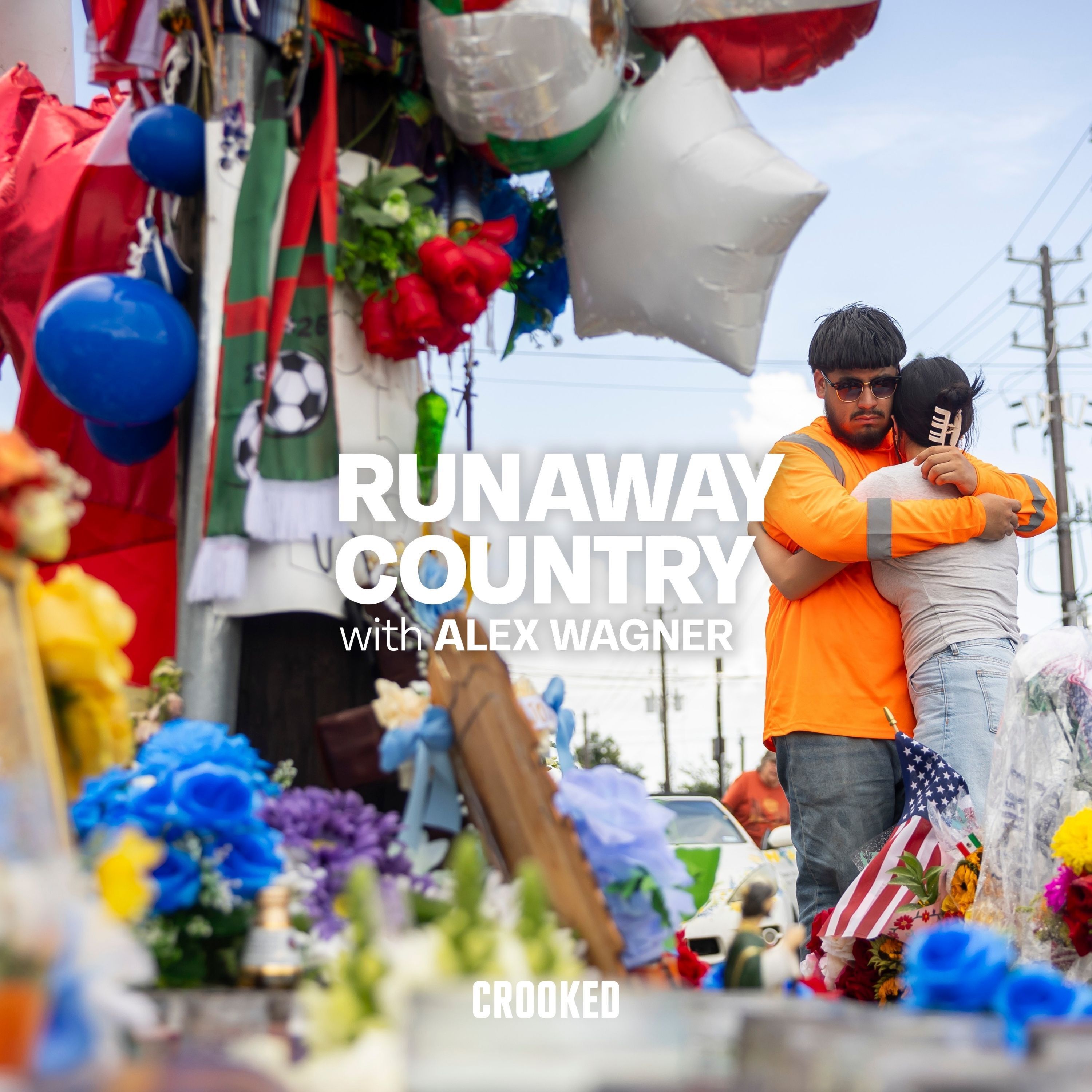
That's Ronaldo Salgado speaking at a press conference last week. His father, Mexican national Lorenzo Salgado Araujo, was gunned down by ICE agents in Houston on July 7th. Araujo had been living in the US for 35 years and he had no criminal record. He was not the person ICE agents were seeking. A few days later, On Monday morning, 26 year old Joan Sebastian Duran Guerrero was shot and killed by ICE in Biddeford, Maine in front of his wife and and three year old daughter who was still in her bluey pajamas. Guerrero had a Social Security number. He was authorized to work in the US and he was also not ICE's intended target. Both Guerrero and Salgado Araujo were killed while driving in Houston. Agents shot Salgado Araujo after attempting to pull him over. DHS claims he tried to use his vehicle as a weapon, but other passengers in his van say that was not the case in Maine. DHS also initially claimed that Guerrero was using his car as a weapon, but later said that the ICE officer was fearing for public safety as the vehicle attempted to flee the scene. The killings have renewed public outrage. Here's coverage from Fox 26 in Houston and CBS 13 in Maine.
- [05:04]
D
This can't happen.
- [05:07]
A
This is terrible that this stuff is happening.
- [05:12]
D
People see that these are real families
- [05:15]
A
that are being affected by it.
- [05:17]
D
No matter what they try to do. We will continue to be a community that was founded by built by four immigrants.
- [05:30]
A
On Tuesday, ICE announced it would suspend a majority of vehicle stops, but President Trump is not happy about that. On Wednesday morning, in his first comments about these killings, Trump posted to Truth Social Media the Men and women of ICE are doing a great job, one that has to be done. We must be strong, tough and smart. And we cannot give up one of ice's most important and effective crime fighting tools, the traffic stop. Once we do, we are playing right into the criminal's hands. Once again, Donald Trump is on the wrong side of morality. But in the long term, will his brutal immigration policy, one that bets on public distraction and hidden cruelties, will it actually transform the country? I'm Alex Wagner. And this week on Runaway Country. Do the killings of the last week renew public debate over mass deportations and DHS brutality? Or has Donald Trump shifted the goalposts on immigration permanently? To understand where American voters are, I'm talking to the bulwarks, Sarah Longwell. Sarah runs focus groups across the country and has fantastic, highly useful insight into how people think about ICE and its campaign of terror. But first, to get an idea of what it is like on the ground in Houston, I'm talking to Juan Proagno, CEO of the League of United Latin American Citizens, lulac. He's been working with the Salgado family as they mourn the loss of their beloved father. Here's our conversation.
- [07:03]
B
All right.
- [07:04]
A
Well, first, thank you for taking the time out of what is a very big moment to talk with us and give us some perspective on this. Mr. Prono, can you tell us how the family of Lorenzo Salgado Araujo is doing now?
- [07:16]
C
Yeah, I mean, they are in the process of, you know, preparing for a funeral. They're still going through the grieving process. And as you can imagine, you know, it's been a really terrible tragedy, a complete shock to the family. And they've had to go through extra hurdles even in just retrieving Lorenzo's body, so they could probably mourn for him and plan his funeral.
- [07:43]
A
Can you elaborate on that? I mean, they've had a hard time getting the body back.
- [07:47]
C
Oh, yeah. I mean, certainly early on, Alex. And I think one of the things that we talked about was that, you know, he was shot in the vehicle, his body was removed from the vehicle. So the video that we see was obviously after he was shot, the officers were on top of his person. And my understanding that they had him there for about 20 to 30 minutes before the ambulance came to pick him up. In that time, they took all of his personal, identifiable information off of his person. And then when he arrived at the hospital, you know, they had to, I guess, check him in as a John Doe. All of that delayed, you know, the process for Even, you know, where his father was, where his state was while in the hospital, and even getting notification that he had passed away. So, you know, what should be a simpler, much easier process that, you know, is dignified for the family was complicated significantly as a result.
- [08:47]
D
Wow.
- [08:47]
A
Adding insult upon deep wounds. I have to ask, because his. His killing happens last week, and then on Monday, there's a killing in Maine.
- [09:01]
C
Yeah.
- [09:01]
D
Did the.
- [09:02]
A
Have you talked to the family about what happened in Maine? I mean, I can't imagine going through that grief and then witness a similar, eerily similar situation unfold halfway across the country.
- [09:13]
C
Yeah. With. With. With Johan, Sebastian.
- [09:16]
A
Go.
- [09:17]
C
And so I have not talked to them about it. I know that, you know, we just mentioned it in passing, and their focus was that you're really their father, and so they really wanted to just focus on their dad. And, you know, they understand that this is obviously a systemic issue. That's very, very clear. You know, my dad said even a couple days ago that I hope that this would be the last person who is tragically killed by ice. And two days later, this happens. So even the statement that a Homan made that they would stop these enforcement actions in vehicles and then Trump basically flying it back less than 20 hours later really shows that they have absolutely, positively no interest in changing their tactics and continuing to move forward with these excessive enforcement actions.
- [10:10]
A
Can you tell me how. I mean, I know that you're in contact with the family. Can you tell me a little bit about your personal reaction to all of this, working as the CEO of lulac, and sort of how it makes you feel more broadly about the conversation concerning immigration and the public interest in it?
- [10:29]
C
The worst part of this job is that I literally have had to stand next to many families, many next of kin, who've lost a loved one and the most terrible ways. Esmeralda Cantu, who lost her daughter, for example, Vanessa Guillen's mother, who lost her daughter. And many cases like this. And every single person grieves differently. Every family grieves differently. It's been incredible to see Ronaldo and Lorenzo Jr speak out so eloquently about their father, but this one certainly really touched home for me because Lorenzo is a year younger than I am. Wow. So he's a father of three, and I'm a father of three. In the case of Johan, he's Colombian, and my mother is from Colombia, and my family is a big part of my family is from Colombia, and he has a very small daughter who's three years old. And so my heart breaks for these folks. But there is anger, you know, and yeah, you know, because they are really hunting Latino men. And so, you know, I've tried to kind of take a step back and just get some perspective. And, you know, it doesn't help because, you know, they don't publish racial data anymore for all the persons that are held in detention. But at least kind of what we can extrapolate, about 80 to 90% of the people held in detention today are Latino men.
- [12:16]
A
Wow. They really are. They're really hunting. You're right. I mean, there's no other word for it. They're hunting Latino men.
- [12:22]
C
In the case of Lorenzo, you know, he. It was a Magnolia park, which is 97% Hispanic, for example. And so, you know, they also, the ethnic, ethnic dynamics are also pretty interesting. He's a Mexican national, a large Mexican American community, and the outpouring of support. But on the flip side of that, Yon and Maine, and so that's a small community. It's like 22 to 25,000 people. There's about 500 Latinos there. There's not a really big Colombian community there to mourn him. And so the question of, is the outcry basically the same as the national att that he gets the same? And so those are things that we look at very, very closely. We know what the national response was for Renee Goode and Alex Pretty. And we understand that Latinos in this moment need to stand up for themselves. And they have had. We had a petition that 175,000 people signed within 48 hours demanding an independent investigation. The outpouring of support for Lorenzo on GoFundMe has been wonderful. They've raised over $500,000, but none of that's going to bring back their father. And so even asking for justice could ring hollow. And so the only thing that there is is really accountability to ensure that we know exactly what happened, who shot his father. And then just tracking the cat and mouse game between the local district attorney, their investigation, and the feds who are continuing to keep all the perpetrators, the evidence from the family.
- [14:06]
A
Yeah, I mean, how, how much does it concern you that there's not the same videotape in these two deaths that there was when Alex Preddy and Renee Nicole Goode were shot.
- [14:18]
C
Yeah, that's one of the things that we looked at very carefully. You know, we, we started immediately to reach out to some of the local Latino owned businesses that had vantage points from the street. They shared videos with us. The different agencies were knocking on their doors. They Were concerned if they should allow them in, should they give them access to their phones or computers? So they were important for sharing it with us. And we did some reporting on that. But the concern is really prevalent right now in the community. There's a lot of fear, but there's also, you know, a lot of distrust when it comes to our federal government basically doing the right thing.
- [15:00]
A
Yeah, understandably. I mean, the statements are always contradictory. They always put the onus on the unarmed person who is killed or murdered might be a better term for it. I have to ask you how you talk about the community. We know that in 2024, there were a lot of Latinos who supported harsher immigration policy. A lot of Latino men went for Trump. Do you think things have meaningfully changed in the Latino community, for example, in Texas and. Or do you think that this is an inflection point, that the death of Mr. Salgado Araujo is an inflection point for that conversation and could actually change minds?
- [15:37]
C
There's absolutely no question that we certainly are seeing that across the board. You know, Alex, we watch this very, very closely. I mean, obviously you can just take a look at the President's poll numbers in regards to sentiment, even within his own party. The dissatisfaction that there is with immigration policy, the dissatisfaction that there is with immigration enforcement action. You can see in the midterm elections and primaries and special elections that Latinos are basically beginning to snap back to support Democrats. There is a built in 20% advantage, if you will, with Democratic Party. The question really is, will the Democratic Party and the candidates really kind of sort of take the mantle and speak up? And so, you know, we're looking very closely, for example, and see, okay, Talarico made statements about Lorenzo.
- [16:36]
A
James Talarico.
- [16:38]
C
Yeah, James Talarico. And so, you know, we're obviously running for Senate, but took him a day and a half. So, you know, we want something more forceful. And so we've talked with a lot of elected officials, and their question is, well, where are Yuan? Are we ready to abolish ice, for example? And so I think we do have to be very pragmatic about it. And so certainly reforms are in order. But at least at the most basic, basic level, let's just understand, right, that ICE can't shoot people in cars, through windows because you have bystanders, for example, that could potentially be harmed. And we all already know that. They just don't have probable cause. And they walk everything back from it was a target enforcement to it. It wasn't a targeted Enforcement that the vehicle was used as a weapon when it wasn't, because we have video evidence of that, that the officers basically shot in self defense when they were clearly, clearly, clearly not in any jeopardy, if you will. And so the lies continue. And so we don't believe ice, we don't believe dhs, we don't believe that the FBI will actually, really, truly run an independent investigation here. And so, you know, we are a bit limited because it is a federal agency. And the process for, the process for justice doesn't necessarily go directly through the courts. We have to file an FTCA claim that takes six months before you can actually file a claim in court in front of judge. And so all of those things are hampered and slowed down as a result.
- [18:21]
A
In the meantime, there are people on the other side of the story who are scared and probably very worried for their, you know, the men, the people in their lives. But we talk about how Latino men have been targeted, like as they go to work, as they drive down the street. You know, in Maine, Mr. Guerrero had a Social Security number and a work permit. He was allowed to be here, but that didn't stop him, that didn't ensure him from being killed at the hand of ice. How are people in the community thinking about their daily lives right now?
- [18:52]
C
So, you know, there has been a lot of fear. And so I think what I would like to try and center is, you know, post Renee Nicolka, post Alex Bradley, pretty post the firing of Christino and Bovino, things tempered down, right? Most folks would consider that it tempered down because the national media, press weren't necessarily covering as closely. Right. During that time, we get a little bit sense of justice because you had a Democratic governor, Democratic attorney general, Democratic mayor. They really pushed for the investigation and sued the federal government in order to make that happen. But I want to be very clear, the detention, the deportations didn't stop.
- [19:39]
A
Yeah, no, they're continuing apace very much.
- [19:41]
C
You know, DHS even like two weeks ago was announcing we had to train 10,000 people in a week's time, maybe 2,000 people basically per day. And so, you know, we have to be cognizant of that. They have all the money in the world, all the resources, plus an additional $70 billion after the 170 billion they received and the big beautiful bill, terrible bill. And so they have all the money that they need to continue this all the way through the end of President Trump's term. And so, you know, my hope now is that Latinos are very, very clear that this president this administration and this agency have no regard for our community. They will continue effectively unabated. And my hope is that they will vote their values and their virtues and realize that the only thing that's going to change this dynamic is a change in leadership and a change in Congress where we will have real oversight and accountability for once.
- [20:42]
A
God. And in the meantime, how do you get to work? I don't know. What a nightmare. Juan Proanio from lulac it's really like it's so we try and cover the story as much as we possibly can, and that is woefully insufficient. And if there is any thing to come from all of this, hopefully it's renewed scrutiny and renewed broader activism, not just in Latino communities, but in communities across the country to say this is unacceptable and this is un American because this is all being done in our name. But thank you for sharing your insight and your firsthand perspective on all of this. I really appreciate your time.
- [21:17]
C
Thank you. Alex, thank you so much for your reporting on this.
- [21:20]
A
After the break, we'll put this all into context with the bulwarks. Sarah Longwell Runaway country is brought to you by ActBlue. If you have been listening to this podcast, you already know the stakes. ActBlue is the platform that's been powering Democratic campaigns for over two decades, giving candidates up and down the ballot the tools they need to fundraise, organize, build websites and win. And this year, they've launched an organizing platform built specifically for the people doing the work. ActBlue field tools taking back the House and winning local elections across the country does not start in October. It happens now in the doors knocked and phone calls made by volunteers this summer. That energy is out there, and ActBlue Field Tools is built to mobilize it at scale. It's already helped more than 350,000 volunteers get to work across all 50 states, handling texting, phone banking and canvassing so your team can focus on what actually moves voters meaningful conversations with real people. Plus, all of the features work together in one platform, making it easier than ever to mobilize your community wherever you are. ActBlue never sells your data or personal information so you can stay focused on what matters most donating, organizing and helping Democrats win this November, the elections could come down to just a few hundred votes. The work that wins those races starts this summer, and it starts with you. Get started@actblue.com Crooked Runaway country is brought to you by Oneskin. You've heard me talk about one skin before and whether you are someone who tries every new skincare product that hits the market or you've been using the same two things for years. At some point, most of us realize our skin is just not keeping up the way it used to. That is what Oneskin changed for me. It did not just make my existing routine better. It actually I think worked like different than anything else I've tried. OneSkin's OS1 peptide is specifically engineered to address fine lines and dullness that creeps in over time. You know what I'm talking about. So you're getting everything you expect from great skincare. With OS1 doing something most skincare does not do. And with summer here, that matters even more because up to 80% of visible skin aging starts with sun exposure. But One Skin's new limited edition summer bundles have you covered. It's their skincare and SPF essentials paired together. Make sure to check it out before they're gone. I am using my Oneskin exclusively and morning and night, I'm loving the feel of it, the weight of it, the hydrating aspect of it. I'm into it. And that's not just my experience. One Skin's results are backed by four peer reviewed clinical studies, over 10,000 five star reviews, and they've been recognized by Bloomberg as a leader in skin longevity. You really don't need a complicated routine to get healthier, younger looking skin. Born from over a decade of longevity research, Oneskin's helping you unlock your healthiest skin now. And as you age, for a limited time, try one skin with 1515 off using code ALEX@OnSkinCo. Alex, that's 15% off OnSkinCo with Code Alex. After you purchase, they'll ask where you heard about him. Please support the show and tell them we sent you. Sarah, it is always a treat to have you on. And I feel like I issued this caveat of like, I'm sorry it has to be under these circumstances, but that's just our life where it's like always some horrible.
- [24:43]
D
This is what we signed up for.
- [24:44]
A
Exactly.
- [24:45]
D
We signed up for this, right? We're gonna talk about the news. The news is bad and we're here to do our best with it.
- [24:49]
A
We're gonna do our very best and that's all we can do as people and podcast hosts in the age of Trump. Okay. I was listening to the Bulwark this week, as I do every week, and Stuart Stevens was on with Tim Miller and he called ICE a death squad. And some people might think, oh, that's hyperbole, is it really a death squad. But the events of this week have really made it hard to argue that ICE is not death squads for people who have not been paying attention to the murderous rampages of our of Trump's paramilitary organization. On last week in Houston they fatally shot a 52 year old man named Lorenzo Salgado Araujo in Houston, Texas. He's been in the country for 35 years. He was, I do not believe the intended target of the the arrest and ended up being shot and killed from his car. On Monday in Maine. ICE killed 26 year old Juan Sebastian Guerrero in Maine or Joan Sebastian Guerrero. His wife and child were apparently there as he was shot and killed. His daughter was in her bluey pajamas. Sarah, I don't know if you've heard the statement from dhs, but I'll read it for everybody who has not yet heard it. On July 13, 2026 at approximately 7:00am ICE was conducting targeted surveillance on the last known address of an illegal alien with a final order of removal. An illegal alien departed the residence in a vehicle. ICE law enforcement attempted to conduct a vehicle stop. The vehicle attempted to flee the scene. The vehicle attempted to flee the scene and fearing for public safety, an officer discharged his weapon. The driver of the vehicle was struck and emergency services were immediately contacted. He passed away from his injuries. The Biddleford police that's in Maine and the FBI responded to the scene. The DHS Office of Inspector General has been notified and like all discharge of firearms this will be investigated. Okay Sarah, first, what is your read on this situation as you consumed it as both a citizen and someone who follows this issue and the news very carefully.
- [26:59]
D
So I'm going to separate these into two things. There is what does Sarah Longwell think? And then there is what do I know listening to voters, they think or don't think about what's happening because for me, you know, the masked agents running around the country with Stephen Miller and Donald Trump saying get them, get them, get them. Right. Like putting a lot of pressure on them to be maximalist in the way that they pursue their job has been the, it has had flares like in Minnesota, but it is the through line, the scariest through line of the Trump, the second Trump term. Not because like there are things that I think are having more immediate everyday impact on a lot of Americans, but this is the place where they are violating people's humanity in the most outrageous ways. Like there's constitutional violations everywhere, there's legal violations everywhere, but they are murdering people in the street. You think about Something like birthright citizenship. And you're like, that is black and white in the Constitution. And this is a viola, like the fact that conservatives, who I always kind of reach over because I have these stacks of pocket constitutions sitting here, because as a young conservative, they mailed them to me all the time.
- [28:20]
A
Democrats now it's a Democratic stocking stuffer.
- [28:23]
D
It's like, that's right.
- [28:24]
A
Hold on to this puppy.
- [28:25]
D
And so, like the Republicans, the extent to which they do not care about this Constitution that I grew up with them telling me they revered, in the case of something like birthright citizenship. But their ability to dehumanize people is one of the things that it has the echoes of history that are the scariest. And so that's how I feel about it. And I feel the fact that we have continued to throw funding at this agency, that the Congress has done nothing to really rein them in, all of that. These are some of the worst abuses in the Trump administration. But let me talk about voters, because that's what.
- [29:02]
A
And we won. I think we have some sound from one of your most recent focus groups as well, and I'm very eager to get voter perspective on this.
- [29:09]
D
Just the other night, we were doing a focus group, swing voters in swing states, they had not heard of either of these shootings. And this is really important. Voters will tolerate or not tolerate things you can't even get their opinions on. They don't know about them. And I think that one of the differences between what is happening right now with ICE versus what happened in Minnesota is that in both cases in Minnesota, we had actual video footage of the shootings, and voters were able to make their own evaluations of what was happening. The scariest part of these new ones is that you only have DHS's version of events. And what we know from the earlier two is that DHS lies about what happens. Yeah. And so I think that right now this is going to hit differently than what we saw in Minneapolis, because there's not footage and the American public is not engaged in it.
- [30:09]
A
I would also draw another. Another difference between the deaths, the murders of Alex Preddy and Renee Nicole Goode is those were two white Americans. And that's true. In the case of Mr. Guerrero in Maine, I believe he had a Social Security number and a work permit. So he was not here undocumented, whereas Mr. Araujo in Houston, Texas, was, though he was, I believe, in the process of trying to get legal citizenship or legal residence. But that's a. I mean, that is a difference maker. In addition to the lack of footage. Having said that in the people like, I read the statement from DHS and I'm like, it's very, very carefully worded. The vehicle attempted to flee the scene. There is some. And we're recording this. You know, everything needs to be timestamped. It's Tuesday afternoon. The vehicle attempted to flee the scene. They refer to the driver in other parts of the statement in part because it sounds like Mr. Guerrero was working on the brakes of his car before this shooting happened. There's some eyewitness testimony that said he was trying to fix his brakes. And as he was murdered, he said, I was trying to stop, I tried to stop. So I think that DHS is trying to be careful. And it's verbiage by, by, by saying that the vehicle attempted to flee the scene, which maybe suggests that he never was actually trying to do anything that should have raised the ICE alarm to the degree that he was murdered. I mean, it's just having said all this, we're going to get more details as this comes out. Do you think because of Alex Preddy and Renee Nicole Goode there is. Have you heard any skepticism on the part of these swing voters when it comes to the accounts from DHS and ice? Like has that changed their perception of the accounting from the federal government?
- [31:56]
D
In the swing voters, not so much now. Democrats and Democratic leaners, tons of skepticism. They don't trust Trump, they don't trust his dhs. They could name Kristi Noem. A lot of what makes certain types of swing voters swing voters. There's, there's lots of different kinds in my book. I do like there's, I do an anatomy of a swing voter and there's six different types. But for the purposes of this conversation, let's, let's break them into two broader categories where one, people are swing voters because they are high information voters who are evaluating between two things that they seem, see clearly and know about. Then there's a lot of low information voters as the other kind of swing voters who are only, only as good as what they know. And what they know is very little. And so these are not voters who are saying, I don't trust these accounts or I know how to parse what you know. DHS is saying they don't think like that.
- [32:52]
A
But you don't think they know what happened with Alex Preddy and N. Renee. Good. Right.
- [32:56]
D
They did because it was a national conversation where everybody got to look at the footage as their own personal Rorschach test. And let me Let me. The thing about voters in general is that they think that anything that is like in law enforcement, in the area of law enforcement, they think those jobs are hard and they think that they're complicated and they are glad they're not. They don't have to be the ones to make those split second decisions.
- [33:20]
A
Right.
- [33:21]
D
And I think that you end up like right now when it comes to immigration broadly. Look, the vast majority of Americans want the border closed. That is like a true thing. The vast majority of Americans do not want people being shot in the streets, especially people. And they do not want people deported who have been here a long time. Like, they're sort of against the excesses of either way. They're like, well, we can't just have an open border where people are coming in from these other countries and we don't know who's here. And they also say, but stop deporting people who've been here for 25 years and are my neighbors. Right. They're. They're not.
- [33:52]
A
What part of mass deportations now did they not understand?
- [33:56]
D
Ooh, people didn't hear it. I know. I mean, and, and this is where JBL and I would fight. Our, my, my co. Podcast person, he would say what, he would agree with you. He would like be totally on your side about this. He'd be like, they were holding signs, they kept placards, we're going to deport, you know, 50 million people or whatever insane number it was. He's like, how many people do they think are in the country? But I will tell you, listening to voters, and I know this upsets people because it seems like you just want to grab them and say, come on, what were you thinking? I just hear it over and over again from people with deep Hispanic accents. They say, I thought he was going to deport criminals. And they'll say like Hispanic voters will say, I feel like we get a bad rap because of the criminals, so I want them to get the criminals out. And so the number of people part of the problem is sometimes people, it's not because people are bad, in my opinion. It's because they're good. And their good person assumption is that people will act with decency towards people with a certain amount of rationality.
- [34:57]
A
I feel like, I don't want to argue with you, but it's like Donald Trump, you thought was going to act like proportionally and like with best intentions.
- [35:05]
D
They heard, well, okay, I can, I
- [35:08]
A
can, I don't want, I don't.
- [35:09]
D
No, no, no, I'll wrestle with you.
- [35:10]
A
I don't want to put you in this position.
- [35:12]
D
This is good.
- [35:12]
A
No, no, no, no, no.
- [35:13]
D
I. This is. People, people, People stay too far away from the harder conversations. And I think it. It we should. Here's what Donald Trump does that I think has really worked with voters. He has told them a full story about immigration that locks into things they already believe. So when he says they're bringing drugs, they're bringing crime, they're rapists, and I think some of them are probably good people. You've got in there a bunch of different things where Donald Trump has managed to tell a story to people that involves, do you know people who die of fentanyl? Many of them do, especially people in the Midwest. Fentanyl is not coming in because of Mexican immigrants. Okay? But he says they're bringing drugs, and people know that drugs is a problem. They're bringing crime wherever people see crime. He's managed to tie crime and immigration together in people's minds. Rapists, you know, and obviously that's why every story about an illegal immigrant committing this crime for people reinforces something that Donald Trump has said over and over again, right? Like this is a full story. He's also connected it to terrorism. So all of these things that people are afraid of, when people are afraid, they cannot access their compassion, right? And so you are people. People do feel. And because this is the thing, people also feel like people should come into the country, but they've got a more people. They want immigrants to be here. They don't hate immigrants, okay? So, but what they say, it's called the moral alibi. They say, I want them to come the right way. Now that from a fairness perspective, which fairness is a very important thing for voters, they say, well, I just want people to come the right way. Here's the thing about voters, though. They assume that the right way, right, Is just. They say, come legally. An American voter has literally no idea how that's done. They've never gone through it, right? So they just don't know. So in their head, there's a moral alibi saying, just come the right way, and that's all you have to do. And so for them, it's like, please don't be cruel to people. They don't want the cruelty, they don't want the excess. But they do believe that we should have a border, that it should be secure, that we should know who's in the country. And so those things are being put up against each other all the time. And they understand that Donald Trump, they understand his Excesses. But also, why did they vote for him in the first place? Why? It wasn't because he said he was going to build a wall. The wall wasn't real. Right. He didn't build a wall, but nobody held that against him. Why? Because it wasn't about a wall. It was about somebody saying, I'm going to take immigration seriously and act like we really have a border. This is not me. Just forget Sarah Law.
- [37:44]
A
Yes, I know, but I just, I
- [37:47]
D
have listened to voters on this front. And so right now we live in the world of Donald Trump's excesses. And so you will see in the vicissitudes of public opinion, people upset with Donald Trump's excesses right now.
- [38:01]
A
Right.
- [38:01]
D
That they're saying he's doing this thing. I didn't think he would. I wanted it to be dangerous criminals. On the other hand, though, they elected him because they do want someone to take the border seriously.
- [38:09]
A
We actually have. I think you perfectly encapsulate the tension inherent in this worldview. Right. Which is, I would say, uniquely uninformed and unable to wrestle with the complexities of the particular moment.
- [38:22]
D
Would you like to meet an average American voter?
- [38:24]
A
Totally. But we have some sound, I think this is from the focus group that you're talking about. I've seen a couple families around in my neighborhood. They're like my landscaper. I've had him for 15 years and he's amazing. His family's here and now he's being detained and might get deported. And it's just a really tough spot I don't have one way or the other. I guess I'm just selfishly happy that I'm not the one having to do it or being personally affected, but that's very unfair to say.
- [38:57]
C
And I know that.
- [38:58]
A
That's it. Right. It's. I, I didn't want you scooping up the gardeners and I don't want you murdering fathers in front of their children. Seems like a really tough job. Really complicated. But I mean, they're deporting 2,000 people a day. I think people, we really as in, I mean, we beat the drum on immigration fairly regularly here on runaway country. But generally speaking, speaking, the mass media has not focused on immigration deportation rates in the time since Mark Wayne Mullen has taken over as the Secretary of, of dhs. I mean, the quotas continue and they're pretty much close to meeting them. 2000 people a day is mass dragnets. Like, you're getting people at court, you're getting people at traffic stops. There is A temporary hold on I stops at traffic, you know, in cars. Because it's clearly becoming an issue if you look at the news of the last week. But they are going after people in very much the same way that they were before. Maybe there's not as much footage about it around it, but this stuff is still happening, and yet we're not really paying attention to it. And that, I think, lulls voters, like the person in the focus group to say, oh, like, I feel like inherent in her statement is this. This is a kind of, like, the occasional thing that happens and, like, it's. It's messy, and I'm glad I don't have to deal with it. But there's no real clocking or understanding that this is like hundreds of thousands of people every day are in this situation you describe where it's gardeners and construction workers and fathers and brothers and uncles getting ripped from their families and sent to deportation, in and held in conditions that are subhuman and may never see their families again. That's what's being done in our name and their name.
- [40:33]
D
Yeah, you know, I. We went to the whole Bulwark crew. We went to Minneapolis. Me too, kind of on the. On the. On the back end of things. And we went and visited the spots where Alex Preddy had been shot and Renee Good had been shot, and. And we did a couple of shows there, and we actually ended up adding an extra one because there was this appetite for people. And one of the things that we heard. And we also went and stood with a bunch of the people who were standing in the snow every day watching the ICE facilities, and the volunteers who were making sure that when ICE would just release families, like mothers with children, without their shoes, without their cell phones, without a coat, into the snow, there were volunteers there to, like, scoop them up and give them those things. And so it was an incredible thing.
- [41:14]
A
I saw that, too. And I gotta say, it's like, if you needed some sort of affirmation that we were not a poisoned country, the response of the community in Minneapolis was it.
- [41:24]
D
That's right. The thing that everybody told us is they were like, please tell people it's not over. To please tell people. Like, they think that. They think that. But this is a phenomenon of a couple things. Both the Trump era, in which the level of corruption, depravity. I mean, look, I got a million things I want people to focus on. Todd Blanche is about to go in for a hearing to be the head of the Department of Justice. Todd Blanche, who is the architect of the Epstein cover up, who is the person who has been leading the vindictive prosecutions against people like James Comey, who put forward the idea that Trump should have this irs, you know, slush fund and be immune from prosecution for forever. Like this guy is completely unqualified. That's a five alarm fire for democracy. The way that we are deporting people in the night and shooting immigrants and letting masked agents roam free in the country is a five alarm fire for democracy. Donald Trump's corruption in which he is enriching his kids and himself from the voters is a. And selling pardons to people is a five alarm fire for democracy. And in the middle of all of that, people just have their regular lives.
- [42:39]
A
Right.
- [42:40]
D
Oh, also, did I mention there's a war in Iran where the Straits on the Straits off, you know, like, like just think about what people have to process. And so when it, when all is said and done for people who are not sick the way that we are and following politics the way that we are.
- [42:56]
A
Right.
- [42:56]
D
They're not either nerds or demented, you know.
- [42:59]
B
Yeah.
- [42:59]
D
People who are just out of their minds. They are filtering things through what is my lived experience. And so what does that mean? Are my gas prices high now? I'm mad about.
- [43:08]
A
Well, right. The Iran war has resonated in that respect. But I do think immigration.
- [43:13]
D
No, I agree. This is this personal consequences. Right. It's the if. If it touches them, if the if it's their gardener, if it's their neighbor that they know. There was this great story about a small town in somewhere, I can't remember, this is probably a year ago where they voted for Trump at like 80%. But then ICE came in and deported Carol. Carol had lived there for 30 years. I just remember her name was Carol. And the town lost its mind.
- [43:37]
A
Yeah.
- [43:38]
D
Why? Because Carol was a real person who mattered to them. It had consequences for them. And they were like. But we didn't mean Carol.
- [43:45]
A
More from Sarah right after the break. Runaway country is brought to you by Honey Love. I'm just really into comfort. I mean, you know, call me old, but it matters to not be uncomfortable. And especially matters if your clothing is uncomfortable. So when I find something that's comfortable and makes my shirts look good, I'm all in finding the right bra. That's what I'm talking about. It can be frustrating as you get older. What used to work just doesn't anymore. You want the lift and you want the shape and the support, but you also don't want stiff wires digging into your back or bulky padding that feels like your January Jones and Mad Men. And that is exactly where Honey Love stands out. Their bras are designed to provide lift and structure using innovative bonding technology instead of uncomfortable underwire so you get that secure and lifted feel without the poking, pinching or constant adjusting. Their new Crossover Contour bra is a great example of that. It combines the best selling wireless design with molded foam cups to help create a smooth, natural shape, which is especially helpful for mature breasts that may want a little extra structure and support. Treat yourself to the most advanced bras and shapewear on the market. Use our exclusive link to save 20% off honeylove@honeylove.com Alex that's honeylove.com Alex after you check out, they'll ask where you heard about them. Please support Runaway country and tell them we sent ya. Experience the new standard in comfort and support with Honeylove. Runaway country is brought to you by Fable. Most of us have a graveyard of glasses at the back of the cabinet. The delicate ones we're too afraid to use or the scratched ones we feel kind of guilty about. I have a lot of mismatched tumblers from years past. It's not cool. And you know what? Fable is changing all of that. Their glassware is made in Japan at a facility with over 120 years of glass making heritage. It's ultra thin and lightweight. It really is guys, the kind of cups that feel elegant in your hand. I love drinking iced tea out of them, but they are actually very tough. They are ion toughened and that makes them 1.6 times more durable than regular glass. They are also scratch resistant and dishwasher safe. These are the kinds of glasses you can actually live with every single day and maybe even let your kids use. Whether it's a tall glass of water, a G and T on a Thursday night, or making your iced coffee feel a little more intentional. These are glasses that show up for all of it. Visit fable.com crooked and use code CROOKED15 for 15% off your order. That's fable.com crooked 15% off and a better way to bring things home
- [46:25]
B
Can
- [46:25]
A
I just play like I think you know? It's so invaluable to have your perspective on this because you're out there talking to the people who are going to decide many of these key races in 2026 and in 2028. And I don't think people, especially listening to Crooked Media or the Bulwark are aware of like what's happening in conservative media every hour Every day on this topic. And we have, like, a little bit of sound that I would love you to help process with me, Sarah, which I want to play for everybody right now.
- [46:55]
D
The truth is, they're sending their worst to the United States. Case in point, Juana Ravalo Mendez from El Salvador. The twice deported illegal with a lengthy rap sheet is being charged with rape and abduction in Fairfax County, Virginia.
- [47:11]
A
A semi truck crash involving an illegal
- [47:13]
D
alien putting immigrant CDs right back in the spotlight. Michael Bond, an illegal immigrant from Haiti, was arrested last week for a crash that killed a Pennsylvania state trooper. Well, a disgraced Wisconsin judge gets just a slap on the wrist for helping
- [47:27]
A
an illegal migrant evade ice.
- [47:30]
D
So disappointing.
- [47:31]
A
Go home. Get out. We know our country's better than yours. That's because we filled it with our work ethic and our culture and our values. You being here only dilutes it for us, those who built it and live it. And half of you people, more than half, you won't assimilate. We don't want you. We don't care if you're offended. Get out. Go home. Go back to fucking Haiti. I mean, she makes me want to throw up. Yeah. Take a shower. Like, have a slip myself into a coma so I can forget that she just said that. That is the fuel and there is the fire. Right? Like, endless news stories that, like, immigrants are ruining the country. They're all criminals. They need to be taken out. Anybody who offers them safe harbor is colluding with them in their crimes. They all need to fucking go. Get out of here. Get. Literally, get like, get off my front porch. The angry old white woman. Which leads me to my question, Sarah. Like, I get that there's an economic piece of this. I get that there's a national security piece of this, but isn't there, like, are we just dancing around it by not talking about the latent racism in all of this? That, like, this can happen to brown people and that really, it's like, we don't need them here. It's. Megyn Kelly distills it to its essence, which is it's about us versus them. It's a zero sum game of race. And if they're winning, we're losing. So get them out of here.
- [48:48]
D
Are we dancing around the racial piece? I feel like the racial piece is nice. They're putting it like it used to be dog whistles and now it's not.
- [48:56]
A
Yeah.
- [48:56]
D
I mean, they're eating the dogs. They're eating the casters, making up lies. And then, because that was about Haitians too, and yeah, black and brown people. I want to make sure that I'm able to characterize this as the way I think voters perceive this, which is there is an intentional, and we've seen this throughout history, an intentional attempt to other people who already feel less familiar to Americans because let's say they have accents or. And especially if you come from a place that is like predominantly white and somebody is showing you this stuff, like, imagine there's a reason they use the word invasion. Yeah, there's a reason. Like they are trying to scare people. This is a people who don't live in the right wing ecosystem. Let me give you a different example. Let's take immigration out of it, but let's stay with race though. I was talking to somebody the other day, an older person who suddenly started talking to me about how, I mean, this person has never shown an interest in sports in their entire life. And they were telling me about Caitlin Clark in the WNBA and the horrible things that were happening to her. And I was like, okay, this person lives in a right wing ecosystem, not a sports one, but somehow has managed. The right wing information that this person lives in is saying, look at the black WNBA players beating up on this white NBA player. And that is like, this is not a person who I think is racist or that would not be how I would characterize this person at all. This person is now though, being just hit all day. Like, this is a part of this is an information ecosystem that again goes to a sense of people have this like fear, right? If you are hit with images all the time of people who seem like they are doing violence, especially then you're like, these people are doing violence to people like me. And also that's why I don't like Democrats, because Democrats won't grapple with the fact that these people are doing violence to people like me. Like, that is the right wing psychology that is dominating this. And the part that I think I have some sympathy, although, you know, I wrestle with this genuinely, is like, what do you do do when you are hit every day with these images and these messages? Now you choose to some degree to live in this ecosystem, right? You choose what you decide to let enrage you. But also a story is being built that is like the one about the basketball made me crazy because I was like, you know, who doesn't care about this or who? Caitlin Clark. Caitlin Clark doesn't need you to defend her. She knows that she's playing basketball and that, you know, this is rough and tumble and she's just glad people are watching WNBA sports. And would you just stop talking about this like we're in a race war. But people, I don't know. This is the information environment people are living in, and it is meant to take their nervous systems and make them live at 11 like our people. I feel sorry for people because they live in fight or flight in America right now because our information ecosystem makes us feel that way.
- [52:11]
A
I think that it's also. I mean, I'm gonna put a little more blame on the shoulders of people who are consuming this garbage. It's. There is something energizing about hatred. I mean, there's something elemental. Like, I'm not an evolutionary scientist, but I do think part of it is our natural proclivity towards tribalism, which is ingrained in, like, millions of years of evolution. But also the feeling of belonging and power that hating other people gives you. Like, there is something energizing about it. And clearly Trump has realized that the fish will feed off of this, and so he keeps throwing the scrum in the water and that's. That's on them too, like red. It's exhausting. I find it exhausting to be angry and hateful and. And like, guiding, like, hate missiles towards fellow Americans. That's just not how I want to live. But people are content to do that, and they continue to feed themselves these poison fruits.
- [53:02]
D
Okay, this is such a good point. Your point about tribalism. Let's just take this for one second that you're right about the evolutionary part of it. But why. Why are we tribal? We are tribal because it's in there to keep us. Like being eaten by lions and bears. Right? It's an evolutionary thing. Also, not an evolutionary scientist, but this is like, a pretty obvious one. Like, why on Survivor does it still hurt when the tribe has spoken? When you get kicked out of the tribe, that sense of being kicked out of a tribe hurts us somewhere deep in our human, like, the fibers of our existence, because it's meant to protect us from bad things. Right. And so we need our tribes. And also, I think that the way that I also do it to sort of try to understand people without making it.
- [53:50]
B
All new drinks are now at McDonald's with refreshers like the strawberry watermelon refresher and the Mango pineapple refresher with popping boba to crafted sodas like the Sprite Berry Blast with berry flavors and cold foam. Who knew ice cold drinks could be so fire six. All new drinks are here now at McDonald's.
- [54:17]
D
Refreshers contain caffeine feel like they are terrible because I. I keep trying to.
- [54:22]
A
Yeah, I get it.
- [54:23]
D
I. I work to feel the best of them is people are as lonely right now. Like, they are so lonely and so desperate for something to fend off. I see this. I see this in people, man. The way that they. You're right. They let hatred be a part of a journey for them where they seek solidarity with people because they're so lonely. And they feel like, now I can be in a tribe because we have these others that we dislike, and that is why. And yes. And they will use whatever other rings they can do. Right. And they'll say, I'm not racist because they are friends with lots of black people. Or it's not that they don't want any immigrants to come, but I do think that people are unable to necessarily see in themselves how. How much easier it is for them to other people because they do not feel as familiar to them as Carol did when she was there. Because Carol was.
- [55:20]
A
Everyone is Carol. Every one of these people is Carol.
- [55:24]
D
This is why part of, like, our leadership, the. America's a miracle. America is a miracle. Of changing the lens of tribalism from color and creed and other things and saying, like, no, America, we have a. Well, actually, we are. We're a creedal nation. And we're like, if you believe these things.
- [55:47]
A
Right. Don't tell J.D.
- [55:48]
D
vance you're an American.
- [55:49]
A
Don't tell J.D. vance that we are a creedal nation. No.
- [55:51]
D
Well, I will tell, because it's true.
- [55:53]
A
Well, I completely agree, but his whole thing is it's blood and soil nationalism. That's what makes an American. I mean, that is fundamental, but that's what the fundamental issue is right now. Right. Like, and I do think Trump has shift. I mean, I wonder what you think about this. Like, has Trump shifted the Overton window on immigration forevermore? Like, I'm old enough to remember when there was a bipartisan push for immigration reform in part led by Senator Marco Rubio. Like, I'm old enough to remember when dreamers were a sacrosanct subset of the electorate and even Republicans believed they shouldn't be deported. And now you see, you know, you witness these. This hagiography around the life of Lindsey Graham, and it's like, there's a guy who believed in bipartisan immigration form who later in, you know, as he pledged fealty to Trump, was like, deport the dreamers. I mean, the goalposts have moved so far down the field. I wonder how permanent you think that is. Especially with J.D. vance and potentially a Trump air on the ticket.
- [56:46]
D
Okay. I think both things. This is, I, this is, this is gonna be a real. Trump has both. He has re anchored certain values. Okay? So even though he lost in court on birthright citizenship, voters talk about birthright citizenship now a lot. And a lot of Trump voters, their values have been re anchored from. Well, it's a constitutional thing and like, it just is what it is to. This shouldn't be allowed. Even if it's in the Constitution, it shouldn't be allowed. Okay? So he has managed to re anchor values. And just by way of contrasting that Nixon, when he did Watergate, still had, you know, like 50% of Republicans still approved of him when he left office. But he didn't re anchor everyone's values. Everyone wasn't like, this is okay, right? Everybody's like, yeah, this is wrong. Trump has re anchored a lot of values. That being said, is it permanent? I don't think it's permanent.
- [57:46]
C
Good.
- [57:47]
D
I don't think it's permanent.
- [57:48]
A
Why?
- [57:48]
D
You know why? Because there's nothing that is wrong with America today that can't be solved by what is right with America. America. Sarah Longwell for president.
- [57:58]
A
Yes, she can.
- [57:59]
D
Because we're a creedal nation. If you go back to who we are at our root values as Americans, it is pluralism. It is a country that is meant to be different from every other country in that anybody with freedom in their hearts can come to America and become an American. It is essential to who we are. And America's journey, I think, is from the Civil War to civil rights to gay rights and women's rights is us re establishing our creedal values at every turn. It is us having to look around and be like, oh, wait, you know, I'm gonna, we're gonna, we're gonna go off and we're gonna try to do, you know, whatever we're doing. Slavery. And, and then a bunch of Americans are like, we shouldn't do slavery a, because it's morally wrong, but it's against what America says we're supposed to stand for. And somebody goes, see, it's right here in black and white. And this is, this is what we do as Americans, right? We, we, we re discover who we are. This is not about changing America. It's about rediscovering who we are and who we've always been, usually in a new, refreshed way. But, like, we can do it, and I believe we will do it. See how crazy my hair is now from putting my hands in my face.
- [59:12]
A
I'm loving it so much I feel
- [59:13]
D
like winds me up.
- [59:14]
A
The hairstyle mirrors the agita or excitement and I'm here for it. More of my conversation with Sarah Longwell in just a moment. But first, Big news. Big News. Runaway country is now available ad free. You just have to become a friends of the POD subscriber today and get ad free episodes of Runaway country as well as more of your favorite crooked podcasts ad free as well, including Pod Save America, Pod Save the World, Love it or Leave it and Offline with Jon Favreau. Subscribers also get tons of bonus content including Polar Coaster with Dan Pfeiffer, which is my must listen to delivers expert takes on polls in the media, ad free breaking news episodes that feature real time analysis and more Pod Save America including the Only Friends podcast and the open Tabs newsletter. Today's new episode of Only Friends is one where John and I go deeper on this week's biggest stories and unpack even more of the series. This insane and terrible news cycle. There's so much more. Plus, best of all, your subscription supports independent progressive media that will never be owned by someone with the last named ellison. Head to crooked.com friends to subscribe now. Runaway country is brought to you by the new podcast series from Future Hindsight. An Unfinished Uprising Occupy Wall street is the story of the improbable becoming possible. In 2008, millions of people were devastated by an economic crash caused by Wall street greed, but it wasn't until 2011 that there was a mass response from the left. A call to protest went out and thousands of people responded. They raged against a system that was rigged against them and tried to create their own anti capitalist village in a small Manhattan park. The movement quickly spread across the country, inspiring hundreds of occupations and a new generation of activists. An Unfinished Uprising is told through the voices of activists who camped out in Zuccotti park for almost two months. Getting inside the drama of a movement that grew rapidly, felt both transcendent and chaotic, and then violently flamed out. Occupy changed the national conversation about capitalism. It popularized the language of the 99%, and it inspired a generation of activists. As we approach Occupy's 15th anniversary this September, this series offers a reminder that collective action can reshape what seems possible to listen. Search for Future Hindsight wherever you get your podcasts. First of all, J.D. vance and his old fucking family proved the point that America's a creedal nation. His wife is Indian, his children are mixed race children like me. Like we are moving in that direction. Whether the right chooses to acknowledge it or not, we will be a majority country of color in the next few years. Like, it's. It's happening. Like, you can try and round everybody up and put them in subhuman detention centers and get them to self deport or shatter their families and make life so unlivable that they just don't even want to survive here. But the reality is brown people are making children and having them, and they're American, no matter what you want to do about birthright citizenship. To that end, like, as we talk about the, you know, I feel like we are in a particularly challenging moment because we are at that demographic hinge point. Like, we're not in the middle of a huge civil rights moment the way that we were in the 1960s. We're not dealing with slavery and its aftermath the way we were in the 1860s. We're dealing with the demographic reality, which is dawning on white people in many ways in many places, that the country is changing and it doesn't look like them or what they thought America was gonna look like. And so it's this forced reckoning, and we happen to have elected Donald Trump in spite of or because of that. Right. I wonder, as we talk about, like, what happens in the bigger picture. I must bring this up because we're like months from a midterm election, and I think there are a lot of questions. You mentioned the 3, 5 alarm fires for democracy that are happening, and there are many more on that list. I'm sure if we wanted to spend more time on them, but we don't.
- [63:19]
D
We could do that the whole time. We could literally fill the whole show
- [63:22]
A
a litany of like, yeah, does disastrous shit that's happening. One of the things we focused on in recent weeks is what's happening to detainees once they're disappeared. Right?
- [63:31]
D
Yeah.
- [63:32]
A
And I know you guys talked about this on the Bulwark, or I talked to Tim about it on the board. The fuck am I talking about? I talked to Tim about it on the Bulwark. The death of Mohammed Nazir. I think it's Patiowal, who is an Afghan veteran who served and, like, fought and served us along U.S. allied forces in Afghanistan. He died in ICE custody in March. The autopsy has not been released. His death is being ruled an accident. Documentation says he suffered anaphylaxis due to an adverse drug reaction. That is on the heels of ICE stopping reporting the deaths of detainees, which they struck the requirement to report the Deaths of within 30 days of people being released. The detention centerpiece Right. Is a limited and specific part of the immigration agenda that I feel like Democrats can and should have better oversight on if and when they take back Congress. Are you optimistic at all that Dems can claw back power from ICE if they retake the legislative branch? Or do you think that Trump has enough sort of support among the public for these. I mean, just the death squads that he can kind of continue on and have, like, Democrats who are in key races or vulnerable or worried about the presidency, sort of stay quiet?
- [64:53]
D
Yeah. My answer to this is always the same basic alchemy, which is the answer is always yes, they can, if they are capable of effectively communicating the excesses of what Trump is doing to the American people, such that the American people are. Because I think that, like I said before, I think right now we are living in a space where people are concerned about the excesses. Right. Because the border is more or less closed. And so now it is like, we cannot treat people this way. Like, I think you can get public opinion on your side on that. Dems have been kind of afraid of their shadow on the immigration stuff. And it's weird because we have been pounding on this at the Bulwark and trying to tell Democrats, don't be afraid of this. Yes, Democrats don't have a great track record on immigration. True. And so voters don't necessarily trust them, but they actually trust them over here when it comes to, like, human rights abuses. And it's also just offense. I'm sorry, go on. Offense. On all of these issues where you get voters in a place where they say, yeah, I wanted them to deport criminals, I didn't want them to deport this person, and I don't want them murdering people. I don't want them to kill Carol. And so, like, you should say, they're killing Carol. And also. And it is. And the way that you get to the place that I was talking about before, where you remind people of who we are, is to show them what Trump is doing, those excesses and say, this isn't who we are. This isn't who we want to be. And that's why I think what Democrats should do is, is make a commitment to saying, like, we are going to take the border seriously as a party, but we are not going to do this. We can be. We will keep you safe. We have an obligation to keep you safe, American. But also, we know that you don't want us to be this version of America. And so, like, we are not going to treat people this way. I think that Democrats Struggle, I think, to do kind of the two step there.
- [66:59]
A
Yeah, yeah, they do.
- [67:01]
D
And I'm not sure all Democrat voters want them to. Right, right.
- [67:04]
A
And that's why they struggle.
- [67:06]
D
And that's why they struggle. But I do think Democrats are gonna have to figure out that the vast majority of the country sort of wants both those things and how to be the party that gives them both those things. Both a border that is closed and a sense that, like, we care how people are coming in and out of the country. Even if it's like, hey, we've gotta go back and start talking about comprehensive immigration reform again. Even if that's not gonna happen until, like, until the point that it does. I know that's not gonna happen tomorrow, but we have to start rebuilding a case that we can't live like this as a country where, you know, right. Where we're just like, we have to. Everybody's sort of coming in and then like, we have death squads to deal with the problem. Like, that shouldn't be how we live. Americans don't wanna live like that.
- [67:49]
A
Well. And we have to make sure that everybody knows that when one of these people is killed, that's Carol. Like that they're all like, this is why the names are important. This is why the family stories are important. This is why the video footage is important. This is why not just brown people and Latino activist organizations talking about this is important. Should be white people and neighbors and community leaders. And this needs to be. It's our problem. It's not their problem. It's our problem as a country. Which is one of those.
- [68:15]
D
When I was in Minnesota. Can I just say, like, when I was in Minnesota, standing in the, like. And I, I was so cold. I kept asking, dude, I was like, how are you doing this? How do you live?
- [68:25]
A
How do you.
- [68:26]
D
These like 70 year old white women in long. They were like, oh, well, I have three pairs of long underwear on. And like, look at my. You know, they stood there every single day and like, kept watch. Like, this was the thing that really stuck with me is the way that they kept watch as like a conscience to make sure that ICE was acting. And so anyway, I, I don't know it there. The point is. Your point is well taken. Right where. And, And I think these people really do exist. But we have to continue to like, show up for the country we want to have. And like posting on Twitter, like, I just, it's so living in a world where people like the sort of slacktivist. I post and I, I post My rage. And that's how I like. People were standing in the snow day in and day out for seven and a half hours just to like bear witness and make sure that nothing bad was happening to the immigrants in ICE's detention.
- [69:22]
A
I will never forget being out there. It was like nighttime, it was so cold. And we saw this young kid get released from ICE custody and he had no jacket on and he was in his like a T shirt and it's like, you know, sub zero temperatures. And just immediately this young woman was there with a walkie talkie and a cell phone and escorting him to a car. And I was like, thank fucking God for you. Because he has now seen the worst of America and now he's seeing the best of America. And at least there are two halves to that story and not just one side. If you are listening to this, these detentions are happening all over the country. We don't think of Biddeford, Maine as the hot seat of mass deportations. Right. It's like they are seizing people at courthouses, they are seizing people at work sites. Oversight from Democrats is necessary, but so is oversight from citizens. Anyway, Sarah Longwell, who has always the best perspective on this one in particular. Sarah, I was so intrigued by reading your piece about birthright citizenship on the Bulwark. That was really what began this. We must get Sarah on immigration. And of course the focus group work you're doing adds a lot of dimension to the story that can otherwise be fairly 2D. So dude, thank you for bearing with my rage and thank you to your hair for being so fucking fantastic.
- [70:40]
D
Man, my hair's going through it right now.
- [70:41]
A
It's so good right now. I like the volume. I like the volume on top. It's like giving a little KD Lang. Like it's like a soft pompadour a little bit, but better. Like it's very good. Highly.
- [70:52]
D
That's what happens when you. I too feel rage. I just, I also want, I think that rage without action totally feels impotent. And so I am constantly thinking, okay, like where are people and what can you convince them on so that we can move this forward? Because otherwise we just sit here with our rage and it's not good for anybody.
- [71:11]
A
Nope, doesn't move the ball. Thank you for being a two time guest. We look forward to the three time guest on I'll come back anytime.
- [71:18]
D
You're the best.
- [71:19]
A
Please. God, you guys, you guys are the best. Over there at the Bulwark. Much strength. Good luck out there.
- [71:24]
D
All right, See ya.
- [71:27]
A
That's our show for this week. Don't forget to check out the show and our rapid response videos on our YouTube channel. There are two this week, runaway country with Alex Wagner. And if somehow you're not sick of me yet, take a look at my substack, how the hell with Alex Wagner. Last but not least, if you have been impacted directly by the Trump administration and or its policies, please send us an email or a one minute voice note@runawaycountryokked.com and we may be in touch to feature your story. Big thanks to everyone who's written in already. Runaway country is a crooked media production. Our show is produced produced by Ilona Minkowski, Emma Ilech, Frank, Haley Jones and Anisha Banerjee with help from Eric Schutt, Kenny Moffat and Charlotte Landis. Production support from Ben Hethcote, Katie Long, Adrian Hill and Matt De Groat. Our staff is proudly unionized with the Writers Guild of America East.
- [72:17]
B
All new drinks are now at McDonald's with refreshers like the Strawberry Watermelon Refresher and the Mango Pineapple Refresher with Popping Boba to crafted sodas like the Sprite Berry Blast with berry flavors and cold foam. Who knew ice cold drinks could be so fire six? All new drinks are here now at McDonald's.
- [72:44]
C
Refreshers contain caffeine.