← The Wirecutter Show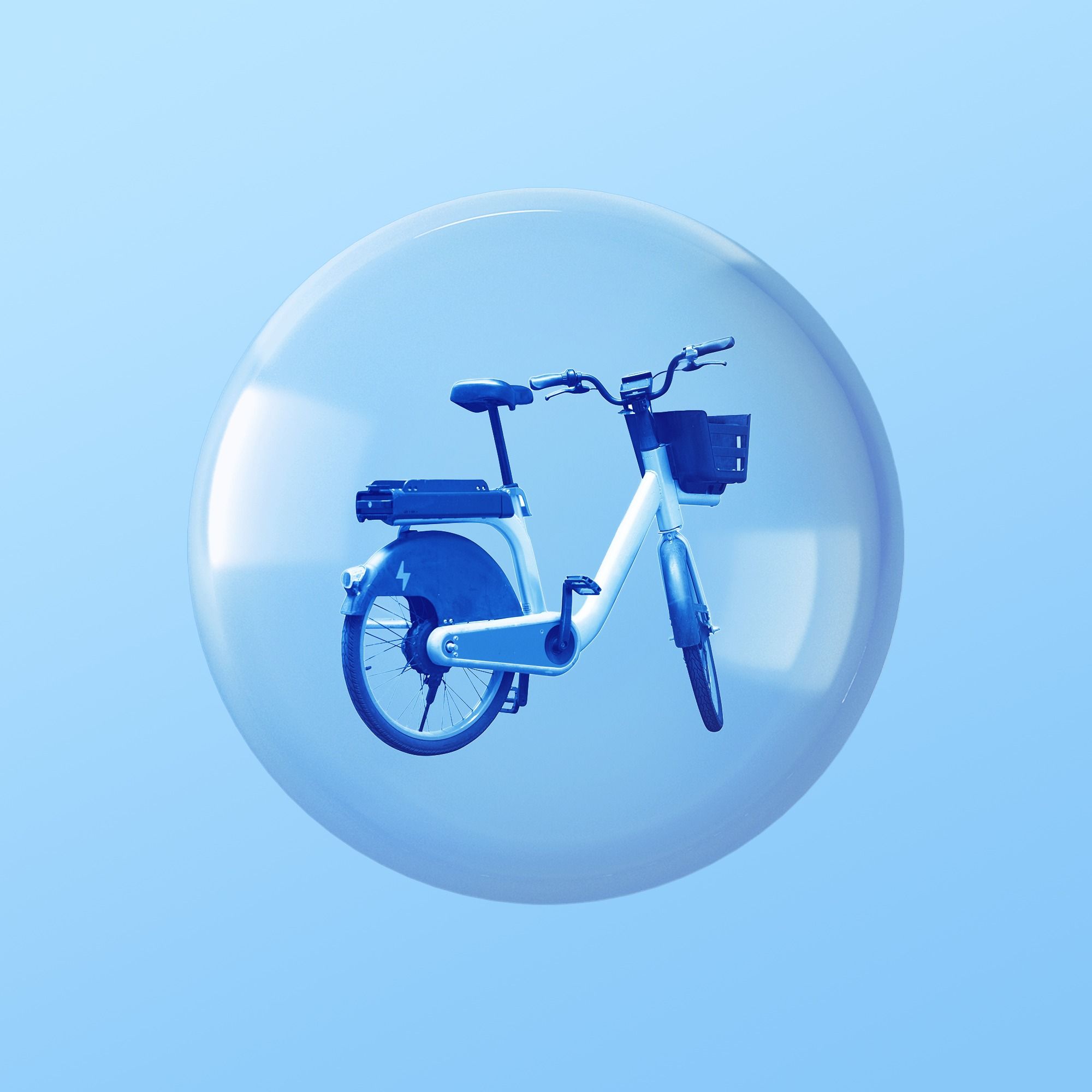
The Wirecutter Show
Is an E-Bike the Answer to Your Commuting Woes?
00:15:36
E-bikes can be a fun, affordable, eco-friendly alternative to cars. Listen for expert advice on repairability and safety to boost your commute.
Loading summary
Transcript64 lines
- [00:03]
Christine Cyr Clisette
I'm Christine Cyr Clisette.
- [00:04]
Kyra Blackwell
I'm Kyra Blackwell.
- [00:06]
Christine Cyr Clisette
I'm Rosie Guerin.
- [00:07]
Chris Ryan
And you're listening to the Wirecutter Show.
- [00:20]
Christine Cyr Clisette
Hey there, it's Christine. This episode we're turning to a very timely topic, the fall commute. Maybe you've been away for the summer on vacation out of your regular routines and it's now time to get back to business. It's time to commute back to work, maybe taking your kids to school. And electric powered bikes have become increasingly popular for commuters. They can be appealing if you don't want to take public transit or you don't want to drive your car, or maybe you, you want to get outside, but you don't want to ride an old fashioned pedal bike. They can also be an affordable and environmentally friendlier way to get places than by car. But ebikes also have their own particular safety and repairability issues. If you've considered getting one or even if you own one, you'll want to listen to this episode. After the break, Kyra is going to talk with Wirecutter senior editor and resident bike expert Chris Ryan, whose team has tested a ton of these E bikes. She's going to give the inside scoop on safety, repairs and the cost of E bikes. After the break, Kyra with Chris Ryan. Be right back.
- [01:30]
Chris Ryan
Foreign.
- [01:34]
Rocket Mortgage Announcer
The Wirecutter show is supported by Rocket Mortgage. Your home is an active investment, not a passive one. And with Rocket Mortgage, you can put your home equity to work right away. When you unlock your home equity, you unlock new doors for your family, renovations, extensions, even buying your next property. Get started today with smarter tools and guidance from real mortgage experts. Find out how@rocketmortgage.com Rocket Mortgage LLC. Licensed in 50 states. Nmlsconsumeraccess.org 3030.
- [02:06]
Wayfair Announcer
Wayfair loves fall. The crisp air, the cool nights and of course, the seasonal lattes. And as your trusted destination for all things home, Wayfair's got everything you need to cozify your space, from comfy recliners to warm bedding and autumn decor. Wayfair even has espresso makers so you can make that latte at home. You know the one? Head to Wayfair.com today to shop curated collections of easy, affordable fall updates. That's W A Y F A I R.com Wayfair Every style, every home. Gun injuries are the leading cause of death for children and teens in the United States. Some people avoid talking about gun violence because they don't think they can make a difference but every conversation matters. When it comes to gun violence, we agree on more than we think. And having productive conversations about gun violence can help protect children and teens. Learn how to have the conversation@ agreetoagree.org, brought to you by the Ad Council.
- [03:18]
Kyra Blackwell
Welcome back. Today I'm talking with Chris Ryan, a wirecutter, senior editor, and our bike expert. Welcome to the show, Chris.
- [03:25]
Chris Ryan
Thanks for having me.
- [03:27]
Kyra Blackwell
So I've seen electric bikes all over New York City for years. So is an E bike technically a bike or is it an electric vehicle?
- [03:35]
Chris Ryan
It kind of depends. On what what state you're in and the type of E bike. Almost all states treat most E bikes like regular bikes. You don't need to have a license to ride one. You don't need to register them. Alaska and Hawaii are the two states that are the outliers. Big surprise. Alaska, you do need a motorcycle license for any E bike. And in Hawaii, you have to register your E bike, whatever kind it is, and pay like a $30 fee.
- [04:03]
Kyra Blackwell
What are E bikes most useful for?
- [04:05]
Chris Ryan
Why?
- [04:06]
Kyra Blackwell
Why would somebody even want one?
- [04:08]
Chris Ryan
Well, there are a lot of reasons. If you want to commute to work or school and you don't want to get all sweaty and if you don't have somewhere to shower when you if you used to be active and used to ride bikes but you've gotten older and you can't as easily, or if you have disabilities or if you just haven't been that active and you want to start riding and it's a good way to get started. And some people use them instead of a second car. I know a lot of people in my city do that. It's cheaper than a car for insurance purposes for sure. And also you get to skip the traffic.
- [04:38]
Kyra Blackwell
I have always wanted one, but I've been most discouraged by the idea of storing it anywhere because, you know, even if you're riding into the office, you have to take it somewhere to park it. Or like when I'm storing it in my home, I always wonder if it's too heavy to carry into my apartment up like one flight of stairs. So how heavy are they generally? And are they really hard to maneuver when you're trying to store them?
- [05:01]
Chris Ryan
They are heavy. A regular commuter type E bike weighs between 40 and 60 pounds. That's like a bike with two wheels and just one seat. Looks like a regular bike, except with a motor. But a cargo bike can weigh up to £100. So yeah, that would be challenging in the city. I do know a guy we work with who keeps his electric cargo bike in the front garden of his brownstone. He locks it with some very, very serious locks.
- [05:27]
Kyra Blackwell
Yeah, I can imagine.
- [05:28]
Chris Ryan
So, yeah, it is a hard thing. It's harder in the city than a lot of places.
- [05:31]
Kyra Blackwell
So if you're considering one, it's safe to say that you have to also consider where you're going to be putting it when you're not using it, and if you can maneuver it to that space.
- [05:40]
Chris Ryan
Yes, exactly.
- [05:41]
Kyra Blackwell
Can you still get a good workout on an e bike? It kind of seems like you're cheating because the motor is doing most of the work.
- [05:47]
Chris Ryan
Well, the kind of e bikes that we're talking about are called pedal assist e bikes, and they have a sensor in the motor that can tell how hard you're pushing on the pedals, and then it amplifies the strength. So if you're pushing not very hard, it gives you a little bit of assist, and if you're pushing really hard, it gives you a lot of assist. You can also adjust the assistance level. Usually the lowest mode is called something like eco mode, and that lets you work a lot harder. And then if you want more help, you dial up the level of assistance. The trade off is range. If you're at a really high level of assistance, like turbo, they sometimes call it, your battery will run out a lot faster.
- [06:26]
Kyra Blackwell
Oh, so it's either you let the bike power itself or you power it. And it's all about a trade off of, like, how much battery life you need for your.
- [06:33]
Chris Ryan
Exactly, exactly. But you definitely have to be pedaling.
- [06:43]
Kyra Blackwell
I know that even regular bikes can be expensive. You know, you can still spend thousands of dollars on a really nice one. How much do e bikes generally go for?
- [06:51]
Chris Ryan
Kind of a similar range. You can find them online for a couple hundred dollars. I wouldn't buy one of those. They won't have a warranty. They won't be safe. Really. They probably won't perform very well. And at the highest end, the most expensive ones I've seen have been, like, $14,000. Really nice components, really light, relatively light. Our main pick is $2,500.
- [07:17]
Kyra Blackwell
Okay, and what do you get? Just curious. What do you get when you get a $14,000 bike? I understand that it might look cooler, it might be a little bit lighter, but otherwise, does it have, like, an.
- [07:26]
Chris Ryan
Actual turbo attached to it? Well, then you're getting a really fancy bike and all the other senses, too. Like, if you're getting a mountain bike, an e mountain bike that costs $14,000, it's going to have a carbon frame. It's going to have a really good motor, it's going to have a long range battery and it'll also have really nice, like really good suspension, like all the stuff that you pay for. I mean, you can buy a regular mountain bike for $14,000. I wouldn't do it, but you can. And then cargo bikes, you're also getting all kinds of customization and seat posted drops so you can fit different people of different sizes.
- [08:03]
Kyra Blackwell
What do you mean when you say cargo bike?
- [08:06]
Chris Ryan
So a cargo bike is a bike that either has a bucket in the front that you can carry cargo in or a child or it has like a bench behind where the rider sits. You might have seen them on the street, we call those long tail bikes. And you can put a couple of child seats on that bench and maybe big panniers in the back. So a cargo bike is for carrying a couple of kids or a lot of cargo.
- [08:41]
Kyra Blackwell
So, Chris, if somebody is interested in buying an E bike, what are the first things you think they should consider?
- [08:47]
Chris Ryan
Well, they do want to figure out are they going to be riding just themselves? Do they need to carry a kid to school? Are they going to be using it for shopping? So figuring out if you want a regular E bike or a cargo E bike, you can put a rear bike rack on a regular E bike, not a cargo bike, and you can put a kid seat on that. So if you have just one kid, a regular E bike might be. Might be all you need.
- [09:07]
Kyra Blackwell
And what about where you should actually be looking to buy these E bikes? Because I imagine you can't just go to like your local Walmart and pick one out.
- [09:15]
Chris Ryan
You should look to see what your local bike shops carry because you'll really want support when you have an E bike. Even more than with a regular bike, they require maintenance. And you also will want someone to help you with warranty stuff if need be. So it's good to have local support. So you'll want a bike brand that someone locally will be familiar with and be able to get parts for.
- [09:38]
Kyra Blackwell
I want to hear what the most surprising thing your team has found in these testings.
- [09:43]
Chris Ryan
Something that our writer on our regular E bike found is that not only can you not really repair your own bike's, motor companies don't provide documentation or access to parts. And most shops don't even try to repair the motors. If something goes wrong, if it stops working or there's a problem with it, they ship it back to the manufacturer and the manufacturer warranties it. And the Shop just puts in a new motor. As our writer for that guide said, he can look up a complete parts diagram for his motorcycle, his gas powered motorcycle, and order all those parts himself. But you can't do that with an E bike. In fact, our top pick, one of the reasons we picked it was that you actually they do have a parts list available online. Some of the parts they won't sell you, you have to go through a shop, but at least there's a list. A lot of manufacturers don't have. That. That was probably the most surprising thing. Well, that and the fact that a lot of companies don't promise to keep parts available for forever. Like if you can't repair the motor, if it goes bad and it's out of warranty, you just have to buy a new motor. But a lot of companies don't promise to keep those motors available. And motors do change shape. Like different generations of E bikes, the batteries get kind of more integrated and more streamlined. The motors, they attach differently, they might get smaller. So if the company's no longer using that motor in its new bikes, it's eventually going to run out of those motors. And so another reason that we picked our top pick was that that company, Specialized does say that they will continue to make motors for that bike and all the parts for that bike available for eight years after they stop making that bike.
- [11:28]
Kyra Blackwell
It kind of sounds like something that we talked with Rachel Wharton about. She works on the appliance team and she was discussing how a lot of appliances these days seem like they are dying faster. But really it's because the technology keeps changing. And so instead of just replacing one part, you're probably just gonna have to buy a whole new fridge or dishwasher. Essentially, it's the same idea. These things keep changing and you will no longer have the part to fix it.
- [11:53]
Chris Ryan
Yeah, that's exactly the problem that we're worried about with bikes. And when you're talking multiple thousands of dollars, you think you're going to be having that bike for a long time. And you know, I just bought a regular bike at a bike swap that's 25 years old and I could have ridden that bike home. I will always be able to find parts for that bike. But E bikes, that's a little worrying.
- [12:15]
Kyra Blackwell
So then how long should you expect an E bike lifespan to last?
- [12:19]
Chris Ryan
I mean, the bike part should last for decades.
- [12:22]
Kyra Blackwell
The bike part meaning what?
- [12:24]
Chris Ryan
Meaning the frame, the brakes, the gears. I mean, eventually you do have to replace gears, but everything except the motor and the battery and the Controller. Like all the electrical parts, they're the limiting factor. So you should be able to keep it for 10 years.
- [12:41]
Kyra Blackwell
And how much maintenance do you think an E bike owner should expect during that 10 year lifespan?
- [12:46]
Chris Ryan
Well, they definitely require the same regular monthly maintenance as a regular bike. You keep your tires inflated and you replace them when they wear out. You lubricate the chain and replace the chain regularly, too, and you replace the brake pads. And you'll probably need to do all those things more often than with a regular bike because the bike's a lot heavier, which means all those parts get more use. And you'll need to charge the battery and probably, I don't know exactly how often, but I would say within a few years, you'll need to replace the battery itself. And a replacement battery for our top pick is a little over $1,000. But you do not want to buy. And I know it's really tempting to look on Amazon and be like, oh, look, there's a replacement battery that costs a lot less that says it's compatible, but you don't want to get one of those. They're the ones that are starting fires.
- [13:36]
Kyra Blackwell
Okay. So don't cheap out.
- [13:37]
Chris Ryan
No. And it might destroy your charger and it might hurt your bike. It's not worth the savings.
- [13:42]
Kyra Blackwell
Okay, got it. So you should probably just go back to the manufacturer and get that manufacturer's lithium battery for your bike if it dies.
- [13:49]
Chris Ryan
Yes.
- [13:50]
Kyra Blackwell
Is there anything else that you should be looking for? Because these lithium ion batteries can be really dangerous. Are there certifications that people should be looking out for to make sure that they're safe?
- [13:59]
Chris Ryan
Absolutely. We only considered bikes when we were figuring out which bikes to test that were legal to be sold in New York City, which has probably the most stringent requirements right now in the country. And New York City's requirements are that the battery be certified by an accredited testing laboratory for compliance with Underwriter Laboratory Standards 2264. That's for the battery. And also UL Standards 2849, which covers the whole electrical system.
- [14:30]
Kyra Blackwell
Okay. And the certification means that you can trust it. If you see that slapped on the label, then it's going to be safe.
- [14:36]
Chris Ryan
It is definitely going to be safer than a Rando battery with no certification. But you still have to be careful and treat the battery with respect.
- [14:42]
Kyra Blackwell
I've heard some horrific stories about E bike batteries just exploding. So why is that happening? What's the deal with that?
- [14:50]
Chris Ryan
Spike's battery is like a collection of smaller batteries. They're called cells that are all bundled together and they have to drain and then recharge properly. And to make sure that happens, the battery has something called a battery management system. That system keeps the batteries from draining and recharging unevenly because when they're doing that unevenly, then you can get into a runaway overheating situation, which is a fancy way of saying bursting into flame. Cheap batteries don't have good battery management systems and they're pretty poorly built in general, which all adds up to pretty big fire hazard. But even with a good battery, even with a high quality battery, charge it while you're at home. Don't leave it on the charger and go out and don't charge it at night when you're asleep. It's just not safe.
- [15:49]
Kyra Blackwell
Chris, is there anything else that you think somebody should consider before buying an e bike? Anything we missed?
- [15:54]
Chris Ryan
Theft, unfortunately, is something people should be thinking about. How are you going to protect your bike? And you want to look into insurance. Some homeowners policies don't cover E bikes because they consider them motorized vehicles, even though the state doesn't. But some do cover them if they're pedal assists. So you kind of, you have to look into your homeowner's policy or renter's policy. You can sometimes buy add on coverage what they call a rider or even standalone insurance. But I would definitely insure your bike and I'd also register it. There are a couple of different nonprofits that have online registries. The one I use is bikeindex.org and that way if your bike is recovered, people will know how to find you. And then you can also prove it's your bike.
- [16:36]
Kyra Blackwell
And also always wear a helmet.
- [16:38]
Chris Ryan
Always wear a helmet. Very true.
- [16:42]
Kyra Blackwell
Well, thank you so much, Chris. I've learned so much and I loved having you you on the show.
- [16:47]
Chris Ryan
Oh, it was fun. Thank you. Thanks for having me.
- [16:52]
Kyra Blackwell
If you want to find out more about Wirecutter's e bike coverage, go to NYTimes.com Wirecutter or find a link in the show notes. That's it for us until next week.
- [17:10]
Rocket Mortgage Announcer
The Wirecutter show is supported by Rocket Mortgage. Your home is an active investment, not a passive one. And with Rocket Mortgage, you can put your home equity to work right away. When you unlock your home equity, you unlock new doors for your family, renovations, extensions, even buying your next property. Get started today with smarter tools and guidance from real mortgage experts. Find out how@rocketmortgage.com Rocket Mortgage LLC. Licensed in 50 states. Nmlsconsumeraccess.org 3030.